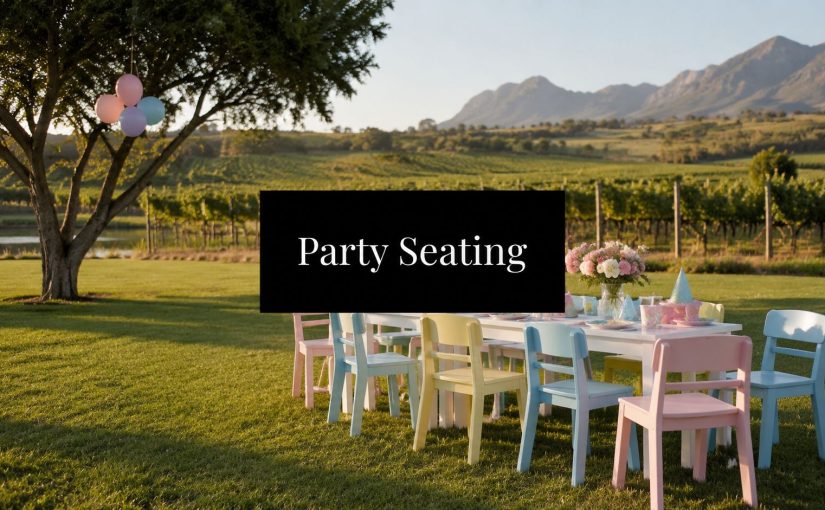
Kids Teepee Tents Cape Town Event & Party Rental Guide

You’re finalising a wedding on a Stellenbosch wine farm, or a family-friendly corporate function in Cape Town, and the brief sounds simple enough: make a kids’ area that feels special, doesn’t clash with the main décor, and won’t become a supervision headache halfway through the event. That’s where many planners lose time. A plastic play corner looks cheap. A soft play setup can feel too young for mixed-age groups. A generic table with crayons gets ignored after ten minutes.

Kids teepee tents solve a very specific event problem. They create a defined zone for younger guests, they photograph well, and they work across venue types that are common in the Cape, from garden parties and wine estates to school halls and marquee setups. Used properly, they add atmosphere without demanding a full themed production budget.

What matters is getting the details right. In Cape Town and the Winelands, weather can turn quickly, venues often have uneven ground, and access windows for setup are rarely generous. A teepee that looks lovely online but takes too long to install, traps heat, or shifts in the wind is not helping you on show day. The right one does the opposite. It gives you a practical, attractive kids’ zone that holds together under real event conditions.

Creating Magical Spaces Why Kids Teepees Are Essential

You are on site at a Stellenbosch wedding. The florist is finishing the entrance, catering is pushing to plate on time, and the couple wants the children entertained without a bright plastic corner pulling focus from the room. A well-styled teepee setup solves that brief fast. It gives children a space that feels special and gives adults a clear sense that the event has been planned properly.

That matters in Cape Town and the Winelands, where venues range from polished city spaces to lawns, barns and cellar rooms. A kids’ area has to look right in all of them. Teepees do that well because they read as soft, neat and intentional, whether you are working in Constantia, Franschhoek or Paarl.

A cozy, leaf-patterned children's play teepee with cushions and books, set up on a wooden floor.

Why planners keep choosing them

The value is practical before it is decorative.

A teepee gives children a defined place to settle, read, draw, rest or step away from the noise. That reduces the usual drift of toys, shoes and snack plates into guest walkways. At weddings and corporate family days, that simple bit of structure makes the whole event feel calmer.

It also helps with styling. Canvas, timber and layered textiles sit more comfortably with wedding décor, harvest tables, vineyard furniture and neutral event palettes than bright moulded play equipment. If the client wants a children’s area that photographs well and does not fight the rest of the scheme, teepees are one of the safer choices.

They are flexible too.

One planner may need a reading nook beside a family seating area. Another may need a quiet retreat for younger guests at a long lunch where speeches run over time. At a birthday, the same format can carry the theme with bunting, cushions and activity baskets. For broader styling ideas, it helps to review kiddies party decor ideas for local events so the teepee zone feels connected to the rest of the setup.

What creates the strongest result

The tent alone is not the feature. The full setup is.

The best installations use scale, texture and function together. A teepee with proper floor cushions, a low play surface, books or quiet activities, and enough room for children to move comfortably looks finished. One dropped in a spare corner looks like a late addition. Clients spot the difference immediately.

I see the same pattern across Cape Town venues. Smaller spaces benefit from one or two well-dressed teepees with disciplined styling. Large wine estate lawns can handle a fuller mini-lounge with multiple tents, picnic rugs and activity stations. Budget should go into the pieces guests will notice first: clean fabric, coordinated soft furnishings and a layout that makes sense from the main room.

Parents planning private celebrations often borrow ideas from interiors because the visual logic is similar. If you want a useful reference for soft, layered child-friendly styling, designing a magical nursery sanctuary shows the kind of restraint that works well at events too.

Where teepees earn their keep

Some uses are consistently strong:

Event type Best use of kids teepee tents
Wedding Quiet play lounge near family seating, away from the busiest traffic routes
Birthday Main styled feature with cushions, bunting and simple activities
Corporate family day Calm retreat for younger children between scheduled entertainment
Matric or school function Soft seating corner for siblings or family breakaway areas

Used well, kids teepee tents do more than fill space. They bring order to the children’s zone, improve the look of the event, and give Cape Town planners a format that works across changing venues, shifting weather and very different client expectations.

Choosing Your Teepees Dimensions Materials and Styles

Not every teepee is event-grade. Many look decent in product photos and fail the first time they face a rushed load-in, coastal humidity or a hard venue floor. When you’re hiring for events, construction matters more than trend.

Professional-grade kids teepee tents use high-density cotton canvas, typically 0.98 inches thick, and solid wood supports such as Finnish pine, which helps with breathability and durability. Quality models can also be set up in under 10 minutes, which matters when your team is working across tight venue schedules, as noted in this guide on how to choose a teepee for kids.

A helpful infographic showing five essential factors to consider when selecting kids teepee tents for events.

Start with footprint, not colour

Planners often begin with style. Start with space. A teepee might suit the brief visually and still be wrong for the venue if guest flow, access routes or furniture spacing get compromised.

Check these first:

  • Venue surface: Grass, decking, paving and indoor flooring all affect stability and layout.
  • Walkway clearance: Keep clear routes for parents, catering staff and venue teams.
  • Sight lines: Adults should be able to supervise without standing inside the kids’ area.
  • Function of the tent: Reading corner, activity pod, chill-out nook and dining add-on all need different internal space.

If the event is in a marquee or hall, account for all the other temporary infrastructure before you confirm your teepee quantity. A useful starting point is reviewing the broader types of tents for events so your kids’ area doesn’t compete with the rest of the event build.

Materials that hold up in the Cape

Cape Town conditions punish cheap materials. Thin synthetic fabric can feel stuffy indoors and age badly when exposed to sun and sea air. Weak poles loosen over repeated rentals. Lightweight consumer connectors often wobble after a few builds.

What works better:

Feature Better choice Why it matters locally
Fabric Cotton canvas Breathes better in warm halls and humid coastal conditions
Poles Solid wood such as Finnish pine More stable and more reliable over repeated setups
Connectors Reinforced joints Better for frequent transport and assembly
Rope support Proper guy-ropes where needed Helps outdoor stability

A tent can look soft and child-friendly while still being properly built. Those two things shouldn’t be in conflict.

Cheap teepees usually fail in boring ways. Loose joints, sagging fabric, awkward assembly and visible wear. None of that helps a premium event look premium.

Shape, style and capacity

A lot of planners underestimate how much shape affects use. Traditional narrow triangular designs can work for a single styled nook, but if you need children to sit inside comfortably for a story session or quiet activity, a roomier structure makes life easier. Verified trade guidance notes that hexagonal designs offer 15-20% more internal floor space than traditional triangular canvas teepees in comparable applications.

That doesn’t mean every event needs the largest option. It means you should match style to function:

  • A narrow boho teepee works for a photo-friendly reading corner.
  • A broader layout suits activity-based setups better.
  • A neutral canvas style gives you more freedom with cushions and bunting.
  • Heavily themed prints can date quickly and clash with formal events.

What planners should inspect before confirming

Ask for current photos of the actual rental stock, not only supplier catalogue images. Then check the unglamorous details:

  1. Canvas condition. Look for staining, fading and stretched seams.
  2. Pole finish. Splinters, chips and rough cut ends are red flags.
  3. Setup method. If the supplier can’t explain setup cleanly, expect delays.
  4. Accessory quality. Mats, rugs and cushions need to match the same standard as the tent.

A well-selected teepee feels easy on event day because the hard decisions were made earlier.

The Rental Process A Cape Town Timeline

A Friday wedding in Franschhoek can look calm on the schedule and still go sideways by 10 a.m. if the kids’ corner was booked late, the venue only allows load-in through a side gate, and the weather turns between Paarl and Stellenbosch. Teepee hire works best when you treat it like core event infrastructure. Book it with the same discipline you use for furniture, power, and catering equipment.

A timeline graphic showing four stages of event planning named Advance Sales, Pre Event Prep, Show Day, and Post Event.

A working timeline that keeps you out of trouble

In Cape Town and the Winelands, timing affects cost, stock choice, and whether setup stays under control on site. Summer weekends get congested fast, especially once you add farm roads, narrow access points, and shared supplier windows at popular venues.

4 to 8 weeks out

Define the job the teepees need to do. A quiet retreat for younger children needs a different layout from an activity corner at a birthday or a supervised kids’ zone at a wedding. Confirm the venue, guest count for children, likely age range, and whether the setup must work indoors if weather changes.

Get these details before requesting pricing:

  • Venue access and strike times
  • Surface type, such as lawn, decking, gravel, or indoor flooring
  • Backup position in case of wind or rain
  • Distance from parking to setup point
  • Any venue restrictions on candles, heaters, or hanging décor

2 to 4 weeks out

Request an itemised quote. You need to see exactly what is included: teepees, mats or rugs, cushions, styling pieces, delivery, installation, collection, and cleaning terms. A vague quote usually becomes an expensive one once transport, stairs, or after-hours collection are added.

Pricing varies widely in this market. The final figure usually shifts based on styling level, travel to the venue, crew time, and whether the supplier is building a simple reading nook or a fully dressed kids’ area.

Questions worth asking before you pay a deposit

Deposits get paid too quickly on attractive photos. Ask operational questions first.

  • Who sets up and who signs off on placement? That matters at large venues where access routes are long and setup teams are under time pressure.
  • How much time is needed on site? A manor house in Constantia is different from a wine estate with a long haul from parking to lawn.
  • What is the wet weather plan? "We’ll see on the day" is not a plan.
  • What condition is the current stock in? Ask for recent photos if the event is premium.
  • What is expected after the event? Clarify food, spills, damage, and late-night collection.
  • Can the supplier work around the venue’s loading rules? Some Cape Town CBD venues and Winelands estates are strict.

For the wider planning flow, it helps to keep a detailed event planning checklist template so the teepee hire sits with your other rentals, supplier timings, and venue notes.

A strong rental brief includes the plain operational details. Gate width, staircase access, gravel paths, generator noise nearby, and where children will actually sit to eat all affect whether the setup works.

Package thinking versus per-unit thinking

Per-unit hire suits planners who already have styling stock and enough crew to finish the look properly. It gives you control, but it also pushes more coordination onto your team. If one supplier brings the tents and another brings soft furnishings late, the whole area reads unfinished.

Packages cost more upfront, but they can save money once you count labour, transport, and last-minute add-ons. In the Winelands, that matters. A venue might look close on a map and still require a long round trip, extra setup time, and careful timing around ceremony access.

A practical comparison helps:

Approach Works best when Risk
Per-unit hire You already have décor stock and styling crew Extras and labour can stack up quickly
Styled package You need a ready-built kids’ corner Less room to customise if the package is fixed
Hybrid hire You want supplier stock plus your own styling layer More moving parts to coordinate

Final confirmation before show day

Three checks prevent most event-day problems:

  1. Approve the final layout against the venue map or floorplan.
  2. Confirm delivery and collection times the day before, with a named contact on site.
  3. Set a weather decision deadline for any outdoor installation.

Cape Town weather changes quickly, and mountain wind can make one side of a property usable while another becomes a poor choice. The planners who stay calm are usually the ones who locked in a backup position early and confirmed it with both the venue and the hire team.

Setup and Styling for Winelands Events

The best kids teepee tents don’t look rented. They look like they belong exactly where they’ve been placed. That takes restraint. Too many accessories, and the setup feels cluttered. Too little, and it looks unfinished.

A boho-style teepee tent decorated with cushions and flowers set up in a beautiful vineyard.

A wine farm wedding in Stellenbosch

At a Stellenbosch wedding, the smartest placement is often just off the main reception zone rather than directly beside it. Children stay connected to the event, but the teepees don’t compete with speeches, service routes or the dance floor. On grass, a grounded palette works best: natural canvas, oat or stone-coloured cushions, simple rugs, and a few floral touches that echo the tables rather than copy them.

What doesn’t work is over-styling. Glitter-heavy props, bright plastic toys and character branding usually jar against the venue.
A wedding setup like this benefits from:

  • Layered floor coverage so shoes can come off comfortably
  • Low lighting choices that create glow without heat
  • Quiet activity items such as books, soft toys or drawing boards
  • Clear perimeter spacing so servers and parents can move easily

A Constantia garden birthday

Birthday parties give you more freedom. In a Constantia garden, the teepee cluster can become the hero feature rather than a side element. Here you can push colour more confidently, provided it still feels intentional.

Use the tents as a village rather than as isolated pieces. Grouping them creates stronger visual impact and keeps children together in one zone. Add mats between units so the setup feels connected. Keep food and craft tables close, but not so close that spills and paint end up on the canvas.

If children are meant to use the teepees, don’t fill every opening with décor. Leave enough empty space for sitting, crawling in and out, and supervision.

A beachside family event near Blouberg

Beach and wind-exposed venues need a stricter approach. The teepee area should sit in the most sheltered practical position available. This is not the place for delicate styling that topples over or lightweight décor that blows into neighbouring setups.

For coastal outdoor events:

Styling choice Good idea Bad idea
Cushions Heavier floor cushions Very light scatter cushions
Décor accents Weighted baskets and secure bunting Loose paper signage
Flooring Mats with grip and edge control Rugs that curl at the corners
Placement Sheltered edge with supervision Open wind corridor

The accessory checklist that actually helps

A good styling kit is usually short.

  • Floor rugs or mats that define the footprint
  • Supportive cushions in washable fabrics
  • Bunting or simple garlands fixed securely
  • One activity anchor such as books, colouring or soft toys
  • Subtle lighting only where venue rules and safety allow
  • A nearby adult chair for supervision without crowding the setup

Some planners try to force the teepee zone into every event theme. It’s better to let the tents soften the event and then use colour through textiles and a few accents. That keeps the look current and easier to adapt from one brief to the next.

Layout matters more than Pinterest

The prettiest arrangement on a mood board can still fail on site. At real events, children run, guests cut through spaces, and venue staff need access. Keep the entrance side of each teepee facing the most visible direction. Don’t push them into a dead corner where adults can’t see inside. Don’t block them behind lounge furniture because the area looked balanced on paper.

The setups that work best in the Winelands are usually the calmest ones. Good placement, strong textiles, enough breathing room, and styling that supports the venue rather than shouting over it.

Safety First Local Regulations and Best Practices

The fastest way to lose control of a children’s area is to treat safety as a styling detail. In Cape Town and the Winelands, conditions change quickly. A calm setup at 10am can be dealing with wind, heat, damp grass, or a venue manager’s access concern by lunchtime. Teepees need to be specified and installed with that reality in mind.

For planners, the standard is simple. If a supplier cannot explain the fabric specification, anchoring method, cleaning routine, and supervision requirements clearly, the stock is not ready for a live event.

What good planners check before booking

Start with the materials. Fabrics should be suitable for event use and kept in clean, sound condition with no frayed seams, weak ties, or damaged poles. If the teepees will sit indoors near lighting, extension leads, heaters, catering traffic, or other temporary structures, ask direct questions about fire safety and placement. Vague answers are a warning sign.

Then check how the setup will behave on the venue surface. A teepee that looks stable in a showroom or warehouse can shift on lawn, sink slightly after irrigation, or sit unevenly on old decking. I see this often at Winelands venues where one children’s corner moves across grass, stone, and timber within a few metres. That change in surface affects anchoring, rugs, edges, and how children enter and exit the tents.

Check these points on every job:

  • Fabric condition and fire safety suitability
  • Ventilation, especially indoors or under a larger tented structure
  • Anchoring or weighting suited to the exact surface
  • Clear walkways around ropes, mats, and décor
  • Full adult sightlines into the children’s area
  • Safe distance from heaters, candles, plugs, and trailing cables

Local conditions raise specific risks

Cape Town wind is the obvious factor, but it is not the only one. Summer heat can build up inside enclosed play areas, particularly in marquees, school halls, and estate function rooms with limited airflow. Winter brings damp ground, muddy access routes, and more last-minute layout changes when outdoor plans shift indoors.

Venue type matters too. Historic wine farms often have uneven paving, gravel courtyards, low walls, and decorative planting that look lovely in photos but create trip points around a kids’ setup. Private homes can be harder than formal venues because the safety boundaries are looser. Pets, pool access, braais, portable speakers, and family traffic all end up near the same zone unless someone plans it properly.

Safety also affects presentation. A neat, well-spaced teepee area looks more polished because nothing is forced into the wrong place.

A practical event-day checklist

Use this before guests arrive and again after final styling:

  1. Inspect poles, joints, and ties for wear, movement, or poor assembly.
  2. Check the ground contact points so each teepee sits evenly and does not rock.
  3. Secure mats and rugs with flat edges and no corner lift.
  4. Test visibility from the nearest adult seating or supervision point.
  5. Remove excess décor from entrances, crawl space, and escape paths.
  6. Confirm airflow if the area is indoors, under canvas, or in afternoon sun.
  7. Keep heat and ignition sources well away from fabric, cushions, and baskets.
  8. Review numbers per tent based on age, activity, and available space.

Common mistakes that create avoidable problems

Avoid this Why it causes trouble
Setting up in a breezy passage between buildings Wind pressure and movement make the area less stable and less comfortable
Using decorative lights that produce heat Enclosed fabric and soft furnishings raise the fire risk
Mixing too many small rugs and floor cushions Edges shift, bunch up, and create trip hazards
Using worn stock with faded fabric and loose fittings Presentation drops and failure points increase
Placing the kids’ area where adults cannot monitor it easily Supervision becomes slower and less reliable

Children use teepee spaces hard. They crawl, lean, pull, climb, and drag cushions around. Good safety practice accounts for that from the start, especially at Cape Town and Winelands events where weather, venue surfaces, and access constraints can change the plan on the day.

Partnering for Perfect Parties with ABC Hire

A well-run teepee setup comes down to five things. Good stock. Sensible sizing. Clean logistics. Strong styling choices. Proper safety discipline. Miss one of those, and the children’s area becomes harder to manage than it should be.

That’s why the supplier relationship matters so much. A reliable hire partner doesn’t just deliver tents. They help you avoid the common operational mistakes that cost time on event day. They understand Cape Town access issues, Winelands travel timing, changing weather, venue restrictions and the difference between a setup that looks good in a photo and one that still works three hours into service.

For planners, that kind of support changes the job. You spend less time chasing missing details, less time adjusting weak equipment on site, and less time patching around poor presentation with extra décor. Couples, hosts and event managers may only notice the finished result, but planners notice the process. The smoothest events usually come from the strongest rental partnerships.

The point isn’t to make the kids’ area extravagant. It’s to make it feel easy, polished and dependable. When the teepee zone is well chosen and properly installed, it gives younger guests a place of their own and lets the rest of the event breathe.


If you’re planning an event in Cape Town, Stellenbosch, Franschhoek or Paarl and want a children’s setup that’s stylish, practical and professionally handled, speak to ABC Hire. Their team can help you hire the right event pieces for your venue, timeline and budget so your kids’ zone feels considered from setup to collection.

10 Unforgettable 18th Birthday Event Ideas

It usually starts with a familiar Cape Town brief. The 18-year-old wants something that feels current and grown-up. The parents want the event to stay polished, well-run, and worth the spend. Then the practical questions arrive fast: will the venue handle wind, where will guests park, how much seating is enough, and what happens if the celebration runs from late afternoon into a colder evening?

An 18th needs better planning than a standard birthday. The occasion marks legal adulthood in South Africa, so the event carries more weight than a casual party, but it still needs energy and personality. The best results come from choosing a format that fits the guest of honour, then building the event around how people will use the space.

In the Cape Town and Winelands market, execution makes the difference. A good concept can fall flat with poor layout, too few tables, weak lighting, or no cover plan. A simpler idea, handled properly, often delivers a stronger night.

That is the point of this guide. These 18th birthday event ideas are built for local venue types, local conditions, and real guest flow. Each one pairs the style of celebration with practical setup advice and direct furniture rental options from ABC Hire, so you can move from inspiration to a workable event plan without guesswork.

1. LED Furniture Garden Party

A Cape Town garden at 5:30 pm can carry an 18th beautifully. Guests arrive in daylight, photos happen before anyone looks tired, and the event shifts naturally into a lit evening setup once the sun drops. For families who want something stylish without booking a formal ballroom, this is one of the most workable options in the Cape Town and Winelands area.

It suits private homes in the Southern Suburbs, estates around Stellenbosch and Franschhoek, and venue gardens with a level lawn and a proper service area. The setting matters. LED furniture looks polished in a controlled outdoor space. In a dark corner of a rough garden, it can look scattered and underplanned.

A sophisticated outdoor garden lounge area featuring stone furniture with warm glow lighting at dusk.

How to make it work

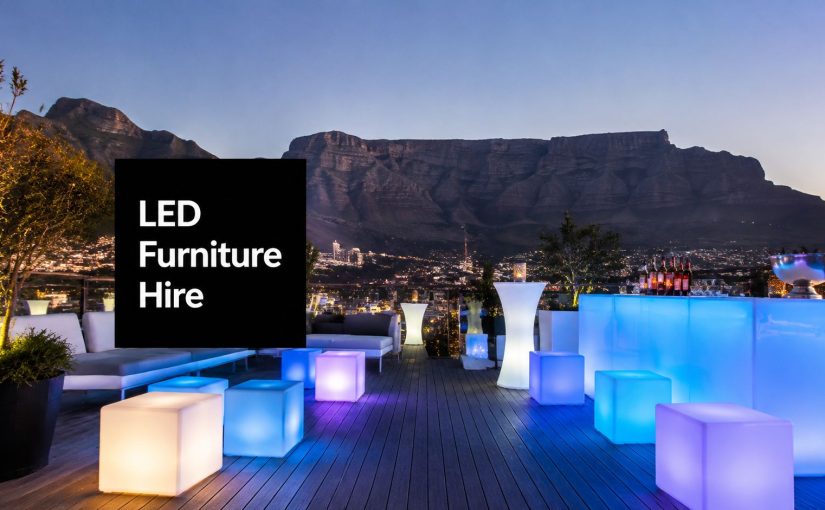
The best results come from zoning the event properly. ABC Hire’s LED tables, LED cubes, LED bar counters, and lounge seating should define how guests use the space. Set a clear arrival point, keep the drinks area visible, and place softer seating on the edge so family members who want conversation are not pushed into the middle of the music.

A layout that works in practice usually includes:

  • A lit social core: Place LED cocktail tables and bar stools near the bar or welcome drinks station so guests gather there first.
  • A relaxed side lounge: Use lounge seating, cubes, or low tables for conversation and phone charging, especially once the evening cools down.
  • An open party zone: Keep a clean stretch of lawn, decking, or flooring free for dancing. If furniture creeps into this space, the energy drops fast.

My rule on LED pieces is simple. Every item must either light the event or direct movement. If it does neither, it is décor clutter.

This format also needs stronger logistics than people expect. Power access, extension routing, weather cover, and a catering prep area need to be checked before you confirm the furniture order. I have seen good gardens fail because the host focused on glowing tables and forgot about wind, damp grass, and where staff would work.

For a more grown-up version of the same mood, these adult birthday party setup ideas from ABC Hire are a useful reference.

Summerland-style estate gardens, modern Winelands courtyards, and private homes with clean outdoor flow all suit this concept. Add festoon or string lighting above the LED pieces so the garden has depth, not just bright points at ground level. Test every unit before guest arrival, and if the party runs past sunset in Cape Town’s cooler months, bring in enough lounge seating and heating to keep the space usable.

2. Polished Cocktail Reception

Guests arrive from school circles, extended family, and family friends, and they all need to feel comfortable in the same room within the first ten minutes. A cocktail reception handles that well. It gives an 18th birthday a more grown-up tone without locking everyone into a formal plated dinner.

This format works best at Constantia villas, boutique Winelands venues, CBD rooftops, and private homes with clean indoor-outdoor flow. In Cape Town, the venue matters less than the circulation. Guests should be able to enter, collect a drink, find a perch, and move into the room without hitting a bottleneck at the bar or dessert table.

Get the floor plan right first

The fastest way to weaken a cocktail event is to assume guests will stand all night. Teenagers may. Parents, grandparents, and family friends will not. If there are too few seats or too few surfaces for drinks and canapés, the event starts to feel underplanned within an hour.

ABC Hire’s cocktail tables, bar stools, café tables, and lounge units solve that if you use them with intent. I usually set the room in three layers. High tables close to the bar for quick interaction. Small café tables for older guests and anyone who wants to sit properly. A lounge pocket away from the speakers for conversation and photos. For hosts looking for a more mature version of this setup, these adult birthday party ideas from ABC Hire show the same approach in a wider range of event styles.

Service rhythm matters just as much as furniture. At a Franschhoek or Constantia venue, the event should unfold in stages. Welcome drinks on arrival. Passed canapés once the room has settled. A short speech while guests still have attention. Then music lifts and the bar takes over. If everything happens at once, the room loses shape and the birthday person ends up competing with the function.

Keep one quieter lounge area on purpose.

That trade-off is worth making even if it means slightly less space near the dance area. Every strong cocktail event needs a place where people can hear each other, especially at an 18th where different age groups are sharing the same celebration.

Styling should stay restrained. Crisp linen, glassware that suits the drinks menu, and furniture spacing that leaves room for staff to move. Oversized props, club-level sound from the start, and too few tables for plates usually work against this concept. A polished cocktail reception succeeds because it feels easy for guests, even though the planning behind it is tight.

3. Festival-Style Birthday Celebration

Late afternoon on a Stellenbosch lawn, guests arrive in groups, the bar starts working immediately, and the birthday person is not trapped in one crowded spot all night. That is why the festival format works so well for an 18th. It gives the event energy without forcing every guest into the same rhythm at the same time.

This setup suits wine farms, large private gardens, and outdoor venues in the Cape Town and Winelands area where there is enough depth to build separate zones properly. Space matters here. If the site cannot hold a food point, a lounge area, a dance pocket, and practical service access, choose another concept.

A relaxed outdoor mini festival setting with people lounging in comfortable chairs on a gravel patio.

Build distinct zones

The best festival-style events feel loose for guests and tightly planned behind the scenes. Start with circulation. Guests should be able to collect a drink, find friends, sit down, move to music later, and step out of the noise without crossing the same congested patch over and over.

ABC Hire’s modular lounges, bean bags, LED tables, and casual seating are useful because they let you create clear shifts in mood while keeping the furniture palette consistent. One area can be relaxed and picnic-led. Another can be cleaner and more exclusive for family or close friends. The DJ pocket can then read as its own destination instead of taking over the whole event.

A practical layout usually works best:

  • Food zone: Place it away from the speakers and give caterers enough room to restock without cutting through the lounge.
  • Main lounge: Use low seating, coffee tables, and scattered soft seating so guests settle early instead of hovering.
  • VIP pocket: Keep this slightly raised in finish, with neater furniture groupings and better lighting for photos.
  • Shade and weather cover: Use umbrellas, stretch tents, or an indoor fallback. Cape Town wind and Winelands evenings can change the plan fast.

Furniture discipline matters. Festival does not mean random. If every chair style is different and every zone is fighting for attention, the event starts looking like leftover hire stock instead of a styled celebration. For hosts who want a stronger visual concept, these adult party theme ideas can help shape the colour palette and styling direction without turning the event into a costume party.

Venue choice makes or breaks this format. A broad Franschhoek lawn, a Paarl property with proper parking, or an estate venue with built-in restroom access can carry it well. A narrow suburban garden usually cannot. The common failure points are predictable: no power plan, no weather backup, poor lighting on pathways, and one overworked patio trying to function as the stage, bar, and buffet at once.

Get the bones right first. The atmosphere follows.

4. Themed Black-Tie Gala Dinner

A gala dinner is for the birthday person who wants drama, photographs, and a sense of occasion. It’s one of the strongest 18th birthday event ideas when the guest list includes family, mentors, close friends, and a few important older guests who expect a polished evening.

This works best in venues that already have architectural presence. Steenberg-style rooms, Franschhoek heritage buildings, and hotels with formal interiors give you a head start. If the room already feels elegant, you won’t need to overspend trying to force glamour into a blank shell.

Theme with restraint

Masquerade, old Hollywood, monochrome glamour, or vintage formal all work. What doesn’t work is over-theming the room until the birthday disappears behind props.

ABC Hire’s banquet tables, dining chairs, statement lounge pieces, and bar units help formal spaces feel structured instead of stiff. For broader inspiration on styling directions, this guide to party theme ideas for adults gives useful starting points that can be adapted for an 18th.

The key is to let the theme show up in three places only. Table styling, lighting, and one focal installation. Once every surface is themed, the event starts reading like a matric dance instead of a coming-of-age dinner.

“Formal works when guests know where to arrive, where to sit, and when the room changes mood.”

A celebrant’s table can work, but keep it integrated with the room rather than placing the birthday person on a stage all night. Add a short speech segment, then move into music or light entertainment. The best gala dinners feel ceremonial at the start and social by the end.

5. Beach or Riverside Sunset Celebration

Guests arrive while the light is still warm, the water is calm, and the room has not yet become cold and dark. That timing is what makes this format work. A sunset celebration can feel effortless, but it needs tighter planning than many indoor parties.

Bloubergstrand, quieter coastal pockets, private river venues near Robertson, and waterside homes in the Winelands all suit this style. The setting gives you the backdrop, but the site has to handle access, power, toilets, parking, and a clean transition from daylight into evening. I usually advise clients to build the run sheet around sunset first, then fit food, speeches, and music around that window.

Outdoor wicker patio furniture set with vibrant green cushions placed on a deck at sunset.

Plan for the site, not just the view

Beach and riverside events punish bad furniture choices. On sand, flimsy seating shifts, sinks, and starts looking tired within an hour. On grass or decking, you have more flexibility, but pieces still need weight and stability once the wind picks up.

ABC Hire’s outdoor lounge seating, occasional tables, and climate control equipment are a practical fit here. Wicker-style sets and solid lounge pieces look right for the setting and stay put better than lightweight plastic options. If the party continues after sunset, heaters and a sheltered zone stop the event from emptying out the moment the temperature drops.

Three things need to be solved before styling starts:

  • Wind: Use weighted bases, protected food stations, and candles or décor that will not blow over.
  • Warmth: Add patio heaters, throws, or a covered section for older guests and anyone dressed lightly.
  • Ground surface: Create stable walkways or matting if guests are arriving in heels or formal shoes.

Lighting also needs more attention than hosts expect. Sunset gives you a great first hour, then the site changes fast. Use festoon lighting, table lamps, or low ambient lighting to keep the event usable and flattering after dark, especially around seating, serving points, and paths to the bathroom or parking area.

The usual mistake is assuming the location will carry the party on its own. It will not. A successful beach or riverside 18th still needs enough seating, a serviceable bar or food station, clear circulation, and furniture that matches the setting instead of fighting it.

6. High-Energy Dance Party Club Experience

The doors open at 8 pm, the lights drop, the DJ starts properly, and the room needs to make sense immediately. Guests should know where to dance, where to get a drink, and where to sit without asking. That clarity is what makes a club-style 18th feel polished instead of chaotic.

This format suits private venues, warehouse-style halls, larger homes, and estate function spaces around Cape Town where sound, security, and access can be controlled. The best versions are planned as night events from the start. If the room still reads like a daytime function with coloured lights added later, the atmosphere falls flat.

Build the room around the dance floor

Start with the floorplan, not the décor. Put the DJ in a position with clear sightlines and enough power supply, then keep the dance floor open around that focal point. Guests should be able to move between the entrance, bar, lounge area, and bathroom route without cutting through the middle of the dancers every time.

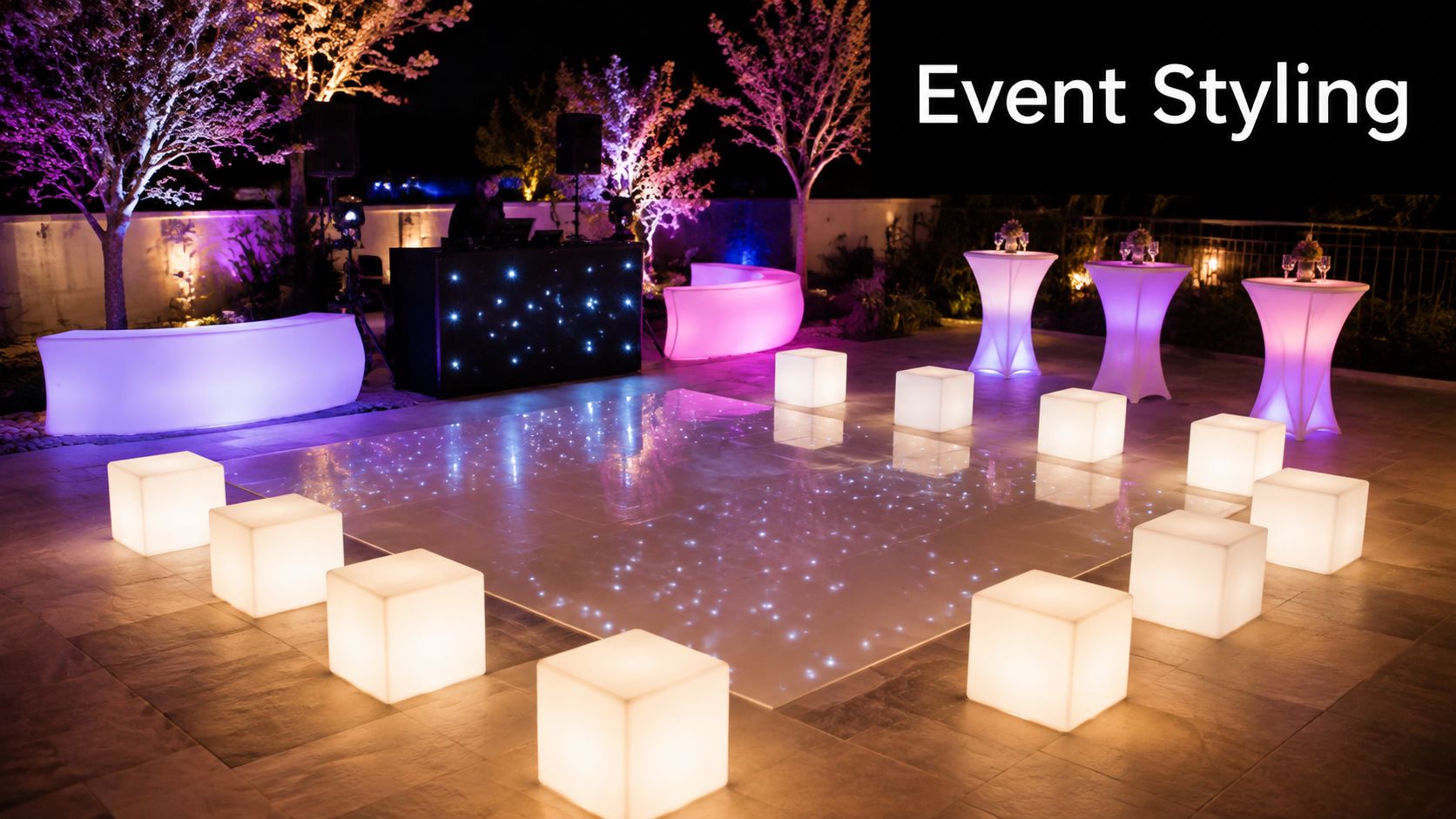
LED furniture works well in this setup because it adds light, shape, and atmosphere while still being functional. ABC Hire’s LED cubes, bar units, and illuminated cocktail tables are useful here, especially in darker venues that need visual definition without bulky styling. Use them to mark out the lounge and bar zones so the room feels intentional from the first hour.

The second zone matters just as much as the dance floor.

A good club-style party needs a proper retreat area for guests who want to talk, post photos, or take a break without leaving the energy of the event. Low seating clusters, ottomans, and compact tables keep that section social. If every chair is lined along the wall, the venue starts to feel like a school hall with better lighting.

One practical mistake comes up often in Cape Town venues. Hosts push too much furniture into the room, then lose the movement that makes a dance party work. Keep the lounge tight, keep the dance floor generous, and leave clear service paths for staff if food or drinks are being circulated.

Sound also needs discipline. A powerful setup is part of the appeal, but if the lounge area is as loud as the floor itself, conversation disappears and older family guests leave early. Split the room properly. Let the dancers have volume, and give everyone else a space where they can stay part of the party without shouting.

7. Adventure Activity Experience Event

The day starts in hiking shoes, harnesses, or wetsuits. By late afternoon, guests want cold drinks, shade, and a place to sit that does not feel like an afterthought. That is why this format works best as a two-part event in Cape Town and the Winelands.

Choose an activity with a clear finish point, then build the celebration nearby. In practice, that usually means mountain or reserve venues for hiking and zip-lining, dam or lagoon settings for water activities, or farm and estate properties that can host quad biking followed by a meal. The mistake I see is trying to run the adventure and the party in the same window. Guests arrive at different times, people are hungry before the activity ends, and suppliers struggle to set up around moving groups.

The better plan is simple. Let the activity carry the first half. Let the setup carry the second.

Keep the recovery space properly planned

After physical activity, comfort becomes part of the event design. ABC Hire’s café tables, lounge seating, and dining furniture help turn a rough handover point into a proper celebration area. Start with shaded seating for the first arrivals back, then add a bar or refreshment station, and finish with a dining or cake zone for the formal moment later on.

This matters even more during the Cape Town summer season, when outdoor suppliers and popular venues book up quickly. If the adventure ends at a remote site or a working farm, confirm access times, vehicle access, power, and where furniture can be offloaded before the day. Good-looking furniture is wasted if the delivery team cannot get it close to the setup area.

A structure like this tends to work well:

  • Arrival and sign-in: Keep waivers, directions, and timing clear.
  • Main activity: Pick something broad enough for mixed fitness levels.
  • Recovery setup: Water, shaded seating, and easy snack service first.
  • Celebration phase: Bring in speeches, cake, photos, or sundowners once everyone is settled.

The best version of this event is inclusive. A challenging activity can be exciting, but if half the guest list sits out, the birthday loses momentum. Choose experiences with spectator appeal, lighter participation options, or a nearby lounge area so non-participants are still part of the occasion.

For planning inspiration from another tourism region that packages experience and celebration well, these best Hunter Valley wine tours show how transport, scenery, and pacing can be coordinated into a stronger guest experience.

Keep the finish comfortable, the handover clean, and the furniture practical. That is what turns an activity booking into a real 18th birthday event.

8. Winery Estate Multi-Course Tasting Event

For a birthday person who prefers conversation, food, and a polished setting, a winery estate dinner is one of the most refined 18th birthday event ideas available in the Winelands. It suits smaller guest lists especially well.

Franschhoek, Stellenbosch, and Paarl estates already provide the scenery and atmosphere. Your job is to make the event feel curated, not corporate. A tasting-style evening should move at a measured pace, with each course, seating arrangement, and speech moment planned before the day starts.

The room should support conversation

ABC Hire’s dining furniture, serving tables, and lounge accents work best when used to soften the estate setting rather than compete with it. Long tables create a communal feel. Smaller rounds can be better for mixed family groups who don’t all know one another well.

This type of celebration also reflects the broader appetite for premium, intentional milestone gatherings in South Africa. If you need inspiration from another wine tourism market, these best Hunter Valley wine tours show how operators package transport, scenery, and tasting flow into a more coherent experience.

A proper estate event also needs transport planning. Guests shouldn’t have to puzzle out logistics after dark on country roads. If older family members are attending, keep walking distances short and avoid layouts that require people to move repeatedly between terraces, lawns, and dining rooms.

What works is a menu with rhythm, moderate styling, and enough time for people to talk. What doesn’t work is forcing a party atmosphere into a tasting dinner too early. Let the event earn its energy.

9. Exclusive House Party or Private Mansion Celebration

The appeal is obvious. Guests arrive at a private villa in Camps Bay, Constantia, or the Winelands, the views are excellent, and the birthday person gets a setting that feels personal rather than hired. The catch is that a house only works if it can operate like an event venue for one night.

I’ve seen impressive homes fail as party spaces because the basics were wrong. Tight parking, too few bathrooms, weak lighting on stairs, limited power for catering or sound, and no clear wet-weather backup will cause more trouble than any décor choice. Before you commit to the property, test access, service areas, noise limits, and how guests will move after dark.

Use the house in zones

The best private home celebrations are planned by area, not by room count. Set welcome drinks on the terrace or at the entrance court. Keep the main social zone around the pool, lawn, or largest entertainment space. Place food service where staff can replenish without pushing through guests, and keep dancing in the area with the least sound bleed into neighbours' properties.

That layout makes the evening feel intentional and keeps pressure off the house itself.

ABC Hire’s lounges, bar counters, dining furniture, cocktail tables, and outdoor seating are useful here because they give each zone a job. A rental bar creates a proper arrival point. Lounge groupings stop guests from dragging dining chairs across the property. Extra tables near the pool or garden solve the problem every house party has by 8pm. Nowhere to put a drink. If you’re planning this format, ABC Hire’s guide to house party rentals will help you assess what the property still needs before you approve the layout.

The main trade-off is cost versus control. A private mansion event gives you freedom over timing, suppliers, and styling, but the house rarely has enough matching furniture, service surfaces, or lighting on its own. Hosts who rely on existing furniture usually end up with awkward seating gaps, cluttered kitchen counters, and outdoor areas that become unusable after sunset.

For Cape Town and Winelands events, I recommend budgeting first for the infrastructure that makes the property function well. Start with enough seating, enough tables for drinks and catering, bar units, and lighting for pathways, bathrooms, and outdoor gathering points. Add statement pieces after that. The event should feel polished, comfortable, and easy to host from the first arrival to the final pickup.

10. Charity Gala or Philanthropic Coming-of-Age Event

This is a strong option for a birthday person who wants the event to say something about who they are becoming, not only what they like. A charity-focused 18th can still be elegant and celebratory. It just needs a clear balance between occasion and cause.

The event can be formal or semi-formal. A sit-down dinner, a stylish garden reception, or a curated auction-style evening all work. The key is to support a legitimate organisation and make the giving element easy for guests to understand.

Keep the charity visible, not overpowering

A meaningful philanthropic event doesn’t need to feel sombre. It should still look like a birthday. Use strong table settings, comfortable lounges, and a polished welcome area, then build the giving moment into the programme through pledges, donation cards, or a curated auction.

This approach can also work across a wide range of budgets. In the Western Cape, there’s a clear gap in practical, budget-aware 18th birthday content for middle-class families, especially where affordability matters alongside style, according to this discussion of budget pressure in 18th birthday planning.

That’s useful because a charity event doesn’t have to be extravagant to feel substantial. A well-styled hall, school venue, church function room, or private garden can carry the concept if the furniture is chosen properly and the event has a clear host voice.

Best practice: Put the celebration first in the room design, then layer the fundraising mechanism into the guest journey so it feels natural.

Guests respond well when they understand the cause, see where the event is heading, and still have a good evening. What doesn’t work is making the birthday feel secondary or vague. It’s still a coming-of-age celebration. The charitable element should deepen that meaning, not erase it.

10-Way Comparison: 18th Birthday Ideas

Event 🔄 Implementation Complexity ⚡ Resource Requirements ⭐ Expected Outcomes 📊 Ideal Use Cases 💡 Key Advantages / Tips
LED Furniture Garden Party Medium, requires power, setup and weather planning LED furniture rentals, reliable power supply, setup crew High visual/photogenic impact for evening events Evening garden parties focused on social media moments Ambient lighting and modern aesthetic; schedule at sunset and test lighting
Sophisticated Cocktail Reception Medium, guest curation and formal coordination Elegant high-tops, professional bartenders, curated menu High sophistication and networking opportunities Family-friendly adult introduction, mentors and small-to-medium groups Refined atmosphere; use golden-hour timing and varied seating
Festival-Style Birthday Celebration High, complex logistics, permits, multi-vendor coordination Large venue, multiple vendors, staging, security, staffing Very high engagement and memorable large-scale experience Large guest lists, community gatherings, day-long events Diverse entertainment zones boost engagement; designate VIP and flow
Themed Black-Tie Gala Dinner High, formal service, detailed timing and décor Formal catering, themed décor, live entertainment, formal seating Exceptional memorable and prestigious experience Formal milestone celebrations, high-profile guests Timeless elegance; pick venue with suitable architecture and lighting
Beach or Riverside Sunset Celebration Medium, weather and access logistics crucial Weather-resistant furniture, windbreaks/shade, permits Strong natural visuals and relaxed elegance Waterfront locations, casual-to-semi-formal sunset events Natural backdrop reduces décor needs; provide wind/heat solutions
High-Energy Dance Party Club Experience Medium-High, soundproofing and technical setup required Professional DJ, sound and lighting systems, dance floor Very high energy and guest engagement Music-focused adult celebrations, nightlife-style parties Energetic atmosphere; create chill zones and hire pro technicians
Adventure Activity Experience Event High, coordination with activity operators and safety teams Guides, safety equipment, transport, casual post-activity setup Unique, bonding experiences with high memorability Active, outdoorsy groups and team-building celebrations Builds camaraderie; select mixed-fitness activities and ensure safety
Winery Estate Multi-Course Tasting Event Medium, coordination with estate and sommelier Wine estate venue, sommelier, formal dining setup, transport Sophisticated, educational and celebratory for legal-age milestone Winelands events, small-to-medium refined guest lists Educational wine pairing; arrange transport and formal seating
Exclusive House Party / Private Mansion Celebration High, property logistics, security and vendor coordination Luxury property rental, full furniture inventory, staffing, security Highly personalized, private and upscale experience Intimate upscale gatherings, overnight stays, exclusive guest lists Complete customization and privacy; hire property management and cleaning
Charity Gala / Philanthropic Coming-of-Age Event High, balancing fundraising and celebration logistics Charity partnerships, auction items, formal event setup, PR Meaningful legacy with fundraising impact and prestige Socially conscious celebrants and community-focused events Purpose-driven celebration; clearly communicate goals and vet partners

Your Partner in Celebration Executing the Perfect Event

Good themes are easy to find. Good execution is harder. That’s where most 18th birthday event ideas either become memorable or fall apart.

In Cape Town and the Winelands, the pressure points are usually the same. Outdoor weather changes quickly. Venues can be beautiful but awkward. Guest lists almost always mix teenagers, family, and older family friends, which means one layout has to support very different ways of socialising. The answer isn’t more décor. It’s better planning.

Start with the guest experience. How will people arrive, where will they gather first, where will they sit, and what happens once the event changes pace? A garden glow party needs power and flow. A gala dinner needs clear table planning. A private house celebration needs enough hired furniture to stop the property from feeling under-equipped. These are practical decisions, but they shape the atmosphere more than most styling choices do.

That’s also why rental selection matters. The right furniture does more than fill space. It directs movement, defines premium areas, supports catering, and gives the event visual structure. LED furniture can turn an ordinary lawn into a night venue. Lounge groupings can soften a large hall. Dining sets can make a temporary marquee feel considered instead of improvised. Climate control equipment can save an outdoor event when temperatures drop after sunset.
For milestone functions, this isn’t optional. Families often spend heavily on the look of the event, but if they neglect layout, seating comfort, and practical infrastructure, guests feel the problem immediately. The room becomes harder to use. Speeches drag because people are standing awkwardly. Food service bottlenecks. Dance areas don’t lift because there’s no clear social centre.

ABC Hire is well placed for this kind of event because the inventory suits the formats that work in this region. If you need LED furniture for a modern garden setup, banquet or dining furniture for a formal dinner, bean bags and modular lounges for a festival layout, or climate control for an exposed outdoor venue, the pieces are available from one supplier. That simplifies both planning and setup.

If your event includes larger numbers, seasonal demand, or a venue with multiple zones, book earlier than you think you need to. Late planning narrows your options fast, especially around holidays and school celebration periods. If your function includes security or access control considerations, it’s also worth reviewing some external expert advice on event safety alongside your venue planning.

The strongest 18th celebrations aren’t always the most expensive ones. They’re the ones where the room works, the furniture suits the format, and the event feels like the birthday person. That’s the difference between a party that looks good for ten minutes and one that carries the full evening properly.


If you’re planning an 18th in Cape Town, Stellenbosch, Franschhoek, Paarl, or the surrounding Winelands, ABC Hire can help you turn the idea into a practical event plan. From LED furniture and lounge seating to dining setups, bean bags, bars, slush machines, and climate control, the team can match the right rentals to your venue, guest list, and style of celebration.

Childrens Plastic Slide Guide for Cape Town Events

A lot of elegant events run into the same practical problem. The adults are sorted. The styling is polished, the catering is timed, the seating plan is locked in. Then someone asks, “What are the children going to do?”

At a wedding in Stellenbosch or a corporate family day in Cape Town, children need more than a token colouring table. Parents want to relax for a while, but they also want to see that the children’s area is safe, tidy, and well managed. That’s where a childrens plastic slide starts making sense, not as random party equipment, but as a deliberate part of the event plan.

A well-chosen slide gives children a clear play point, helps keep movement contained to one zone, and fits surprisingly well into premium events when the scale, colour, and placement are right. It doesn’t need to look like a municipal playground. It needs to look intentional.

Adding Joy to Your Event with a Childrens Plastic Slide

A childrens plastic slide works best when it solves two problems at once. It gives children something active to do, and it gives adults confidence that the children’s entertainment hasn’t been left to chance.

At formal events, the mistake I see most often is treating kids’ entertainment as an afterthought. A planner spends weeks choosing linens, lighting, and lounge furniture, then adds a few scattered toys the day before. The result is predictable. Children lose interest quickly, parents hover nearby, and the children’s area spills into walkways and dining spaces.

A slide changes that dynamic because it creates a natural centre for play. Children queue, climb, slide, repeat. That rhythm matters at an event where you want energy in one designated area rather than all over the venue.
Three happy children playing together on a green plastic slide in a sunlit outdoor garden setting.

Why it suits adult-focused events

A wedding reception in Franschhoek isn’t a kiddies party, and it shouldn’t feel like one. The answer isn’t loud, oversized equipment that fights the styling. The answer is a compact, clean-lined slide placed in a supervised corner with soft flooring, shade, and a few age-appropriate add-ons.

That setup works because it respects the event. The children get movement and play. The adults keep the tone of the day.

A good children’s area should lower stress for parents, not add visual clutter for the planner.

For hosts who want to build out that zone properly, ideas from kiddies party decor inspiration can help with colour matching, layout, and how to make the play corner feel intentional rather than improvised.

More than just “something to do”

Slides also fit into a broader movement play setup. If you’re planning for younger guests who need active play rather than screen time, this list of 10 gross motor activities for kids is useful for thinking beyond one item and creating a simple, balanced children’s zone around it.

The strongest event setups usually keep the play offering focused. One slide, one soft activity, one shaded rest point. That’s often more effective than filling the area with too many disconnected items.

Choosing the Right Slide for Your Event and Guests

The right slide depends on who’s attending, where it’s going, and what kind of event you’re running. Get one of those wrong and the slide either won’t be used properly or won’t sit comfortably in the space.

A helpful infographic titled Choosing Your Perfect Plastic Slide Checklist with six key safety and sizing tips.

Match the slide to the age group

Age comes first. Not theme, not colour, not what looked nice in a photo.

For younger children, gentler slides are the safer choice. For optimal safety, platforms should be no higher than 81cm for toddlers and preschoolers, while school-aged children’s platforms should generally not exceed 1.8 metres, and toddler slides should have a recommended incline of 24 degrees or less according to playground slide guidance.

That matters in real event planning because mixed-age groups can tempt organisers to choose one “middle ground” option. In practice, that often disappoints older children and overwhelms younger ones. If most guests are under school age, choose for them. Don’t scale up just because a few older cousins may attend.

A quick rule of thumb:

  • Mostly toddlers and preschoolers. Choose a low platform, easy steps, and a short run-out at the bottom.
  • Mostly primary school children. You can consider a larger unit, but keep supervision and landing space in mind.
  • Broad age mix. Separate activity zones usually work better than expecting one slide to suit everyone.

Measure the venue properly

Planners often measure only the equipment footprint. That’s not enough.

You need room for the climb side, the slide exit, adult supervision, and a buffer so children aren’t stepping straight into service routes or guest seating. At outdoor venues in the Winelands, lawns can look generous until florists, mobile bars, and lounge clusters go in. In city venues, paved courtyards can become tight very quickly.

Practical rule: If the children can exit the slide straight into a waiter’s path, the slide is in the wrong place.

Check these before confirming any hire:

  • Surface condition. Level ground matters more than appearances. Grass can hide dips. Paving can become slippery.
  • Shade position. Morning shade and afternoon shade aren’t the same thing at an all-day event.
  • Access route. A slide that fits the lawn but can’t move through a narrow gate creates avoidable delays.

If you’re comparing broader active play options as well, this Ocodile climbing sets guide is a helpful reference for how children’s equipment choices change depending on age, footprint, and supervision needs.

Choose for the event style

A formal wedding needs a different slide setup from a casual birthday.

At a black-tie reception, the best option is usually a neat, compact slide in a discreet family area with soft neutral styling around it. At a corporate family day, visibility often matters more. Parents want to spot their children from seating or networking areas without walking across the venue.
If your event leans more playful overall, combining a slide with larger activity rentals can make sense. For example, planners looking at broader children’s entertainment formats often compare slides with options discussed in bouncy castle hire in Cape Town. The key difference is footprint, visual impact, and how easily each option fits a refined event setting.

Understanding Plastic Slide Materials and Safety Features

The material matters more than most clients expect. A childrens plastic slide can look similar in photos across suppliers, but the actual performance on event day depends heavily on what it’s made from and how it’s built.

Why HDPE is the standard

High-density polyethylene, or HDPE, is the industry standard for commercial slides because it is weatherproof, UV-stabilized, and maintains a significantly lower surface temperature than metal, a critical safety feature for events in sunny climates like Cape Town and the Winelands, as explained in this slide material guide.

That lower heat retention is not a minor detail in the Western Cape. A slide may be perfectly fine at setup time and far less comfortable later in the afternoon if it sits in direct sun. Metal is the obvious risk, but not all plastics perform equally well either. Better-quality HDPE is more dependable outdoors, especially for summer functions.

A close-up view of a green and tan playground slide with black handrails and text saying Safe Materials.

What to look for beyond the material

Good material doesn’t fix poor design. The slide still needs sensible safety features and a layout that works for event use.

Look for these details:

  • High side walls. These help keep children centred during descent, especially when they twist or lean.
  • Rounded edges and smooth joins. Event equipment gets repeated use, so sharp mould lines or rough seams are a red flag.
  • Stable hand support. Children need secure grip points on the way up, not just a slippery ladder.
  • A clear exit area. The base should allow children to finish the slide and move away cleanly.

One of the strongest indicators of quality is how the slide behaves after repeated transport and setup. Cheap units often loosen, flex too much, or develop stress points around the climb section. That’s where commercial-grade equipment earns its keep.

Heat, hygiene, and repeated use

For high-end events, I’d treat a slide the same way I’d treat lounge furniture or catering equipment. It must still look clean and presentable after transport, setup, and a full service period.

HDPE helps here because it’s easier to clean and more resilient outdoors than many alternatives. That matters when an event starts with a polished morning setup and ends after hours of dust, grass, juice spills, and sunscreen-covered hands.

A simple children’s area also pairs well with softer accessories. If you’re building a toddler-friendly zone around a slide, products similar to the Playz ball pit collection show the kind of soft-play add-ons parents often expect in younger age-group setups.

If the surface gets hot, the steps feel flimsy, or the landing area crowds too easily, the slide isn’t event-ready no matter how attractive it looked online.

Renting vs Buying a Slide for Event Use

Many consumers compare hire and purchase too narrowly. They think about the visible item only. They don’t think about storage, transport, cleaning, inspection, event-by-event suitability, and what happens when the unit no longer matches the venue or guest age mix.

That’s why the total cost question matters. As noted in this overview of playground slide considerations, many discussions overlook total cost of ownership, even though rental flexibility is especially important in seasonal event markets like the Winelands.

The real difference in practice

Buying can make sense if you operate a permanent children’s facility or host frequent events in the same controlled venue. In that scenario, one consistent setup may justify ownership.
For most event planners, venues, schools, and private hosts, hiring is usually the cleaner option. Event needs change too much. A compact slide may be ideal for a wedding welcome area, but too small for a school function. A larger unit might suit a family day, but look out of place at a formal lunch.

That flexibility is the core advantage. You choose for the event in front of you, not for every possible future event.
Rent vs Buy comparison for event planners

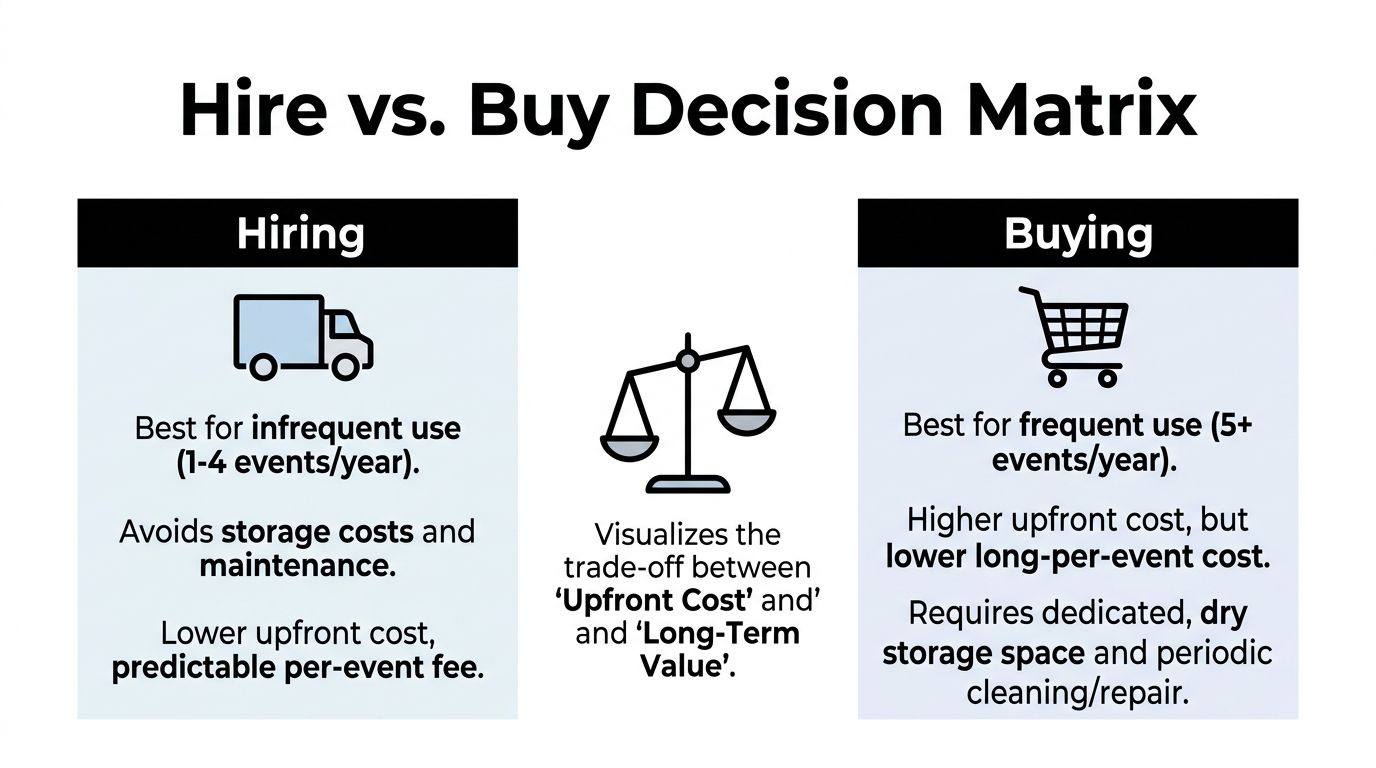
Consideration Renting from ABC Hire Buying Your Own
Upfront commitment Lower commitment for one-off or occasional events Higher commitment because the asset stays with you
Storage No long-term storage burden after the event You need secure, clean storage between uses
Transport logistics Delivery and collection can be coordinated as part of the event plan You must arrange suitable transport each time
Maintenance Ongoing upkeep is handled as part of the rental model Cleaning, checks, repairs, and replacement become your responsibility
Event fit You can choose a unit that suits each venue and guest mix You work around the one model you own
Aesthetic flexibility Easier to match different event styles over time One purchase may not suit every event tone
Risk management Professionally managed inventory reduces admin for the organiser The owner carries the burden of condition monitoring
Seasonal demand Practical when your need is occasional or uneven through the year Harder to justify if the unit sits unused for long periods

What buying tends to hide

Ownership sounds simple until the slide has to live somewhere. It needs to stay clean, dry, and protected between bookings. Someone must check fittings, watch for wear, and make sure it still presents well enough for a client-facing event.

Then there’s transport. A slide isn’t useful if it can’t move efficiently from storage to venue, through access points, and back again without damage.

Hiring makes the most sense when the slide is part of an event operation, not a permanent play installation.

When hiring is the stronger choice

Hiring is usually the better fit when:

  • The event profile changes. Weddings, school functions, and brand activations don’t need the same equipment.
  • You value a polished look. Rental stock is chosen for presentation as well as function.
  • You don’t want operational drag. Your team already has enough to manage on event day.
  • You need adaptability. Different lawns, courtyards, and indoor-outdoor spaces call for different choices.

Buying can still work for repeat-use environments. But for event-specific use, especially in premium venues where layout and presentation matter, hiring is often the more efficient and less troublesome route.

Easy Setup and Maintenance for Your Hired Slide

A childrens plastic slide only performs well if it’s placed correctly. The safest unit can still become awkward if the ground is uneven, the run-out is blocked, or the play area is mixed into guest traffic.

Start with the ground, not the slide

Check the installation surface before anything else. At Winelands venues, grass is common and usually forgiving, but it can slope more than it appears. In urban courtyards, paving may look neat while creating a harder, less forgiving landing environment.

The landing area matters most. While specific South African injury statistics are not readily available, global recall data shows how serious falls can be, and CPSC recall information underlines the importance of proper impact-absorbing surfacing extending out from the base.

That should shape placement decisions immediately. Don’t install a slide where children finish onto bare paving, gravel, or a decorative edge.

Event-day setup checklist

Use a short, disciplined check rather than relying on visual judgement alone.

  • Confirm the surface is level. Small tilts change how stable the slide feels to a child.
  • Keep the base clear. No décor stands, no side tables, no gift boxes near the exit path.
  • Create a soft landing zone. Use suitable impact-absorbing surfacing where needed.
  • Protect the queue area. Children need enough room to wait without bunching onto the steps.
  • Check sun exposure during event hours. Conditions at setup may change by mid-afternoon.

The best place for a slide is rarely the most photogenic corner. It’s the place with the safest approach, clearest supervision line, and best landing conditions.

Keep it usable through the day

Maintenance on event day doesn’t need to be complicated, but it does need to be consistent. Wipe away sticky spills, grass clippings, and dirt before they build up. If the event runs for many hours, assign someone to recheck the area periodically, especially after meal service when children often return to play all at once.

Three simple habits help:

  1. Recheck after setup traffic. Other suppliers sometimes shift nearby items without realising they’re narrowing the play zone.
  2. Keep shoes, bags, and cups out of the exit area. That’s where clutter appears first.
  3. Pause use briefly if the surface becomes unsafe. A short reset is better than pushing through with a compromised setup.

A tidy slide reads as safer to parents as well. That perception matters at premium events, where guests notice whether children’s entertainment has been managed with the same care as the rest of the function.

Local Compliance and Partnering with ABC Hire

In the Cape Town and Winelands event market, “safe enough” isn’t a professional standard. If children are using equipment at a wedding, corporate function, school event, or private celebration, the organiser should think in terms of commercial suitability, sensible placement, inspection, and accepted playground safety principles.

Why local compliance needs attention

South Africa doesn’t offer a handy set of local event-specific slide statistics for planners to work from, and that gap often leads people to underestimate the issue. In practice, the lack of local numbers doesn’t lower the duty of care. It raises the need for caution.

For public-facing or larger guest events, planners should favour equipment and setup methods aligned with recognised playground safety thinking, including principles associated with SANS 1176 for playground equipment. That doesn’t mean every wedding needs to feel like a municipal audit. It means the basics must be right. Stable equipment, sensible age fit, proper surfacing, and clear supervision all matter.

Where professional rental support matters

A specialist rental partner removes a lot of avoidable risk because they already think about the questions many clients miss:

  • Is the unit suitable for repeated event use?
  • Has it been checked between hires?
  • Will it fit through the access route at this venue?
  • Does the setup area allow for safe use and easy supervision?
  • Is the look of the item appropriate for the event standard?

That’s the difference between acquiring a slide and integrating one properly into an event plan.

When children’s equipment arrives as part of a managed rental operation, the organiser doesn’t have to solve every technical detail alone.

For planners coordinating broader logistics, event management insights for Cape Town are helpful because children’s entertainment should sit inside the wider operational picture, not outside it.

The practical takeaway for Western Cape events

For weddings in Stellenbosch, family days in Cape Town, school functions in Paarl, or private celebrations in Franschhoek, a childrens plastic slide can work exceptionally well. But it only works when the equipment suits the guest age, the venue layout supports safe use, and the supplier understands event realities rather than just product delivery.

That combination is what gives hosts peace of mind. Children stay engaged. Parents can breathe. The event keeps its polished feel.


If you’re planning an event and need reliable, well-presented children’s entertainment that fits a premium setting, ABC Hire can help you choose the right setup for your venue, guest mix, and event style across Cape Town and the Winelands.

Hire Top Events Companies Cape Town for Your 2026 Event

You’re probably doing what most clients do at the start. You’ve got a date range, a rough budget, a venue shortlist, and about twelve browser tabs open for events companies Cape Town. Everything looks polished. Everyone says they handle “full service”. Very few explain how the event gets built on the ground.

That gap matters in Cape Town more than people realise. A beautiful plan can still fall apart if the planner doesn’t work smoothly with specialist suppliers, venue teams, technical crews, and rental partners. The strongest events aren’t created by one company doing everything alone. They’re built by a well-led team of specialists with clear roles, clean handovers, and one shared event brief.

That matters whether you’re planning a Winelands wedding, a CTICC conference function, a matric dance, or a private celebration that needs more than the standard table-and-chair package. If you hire only for style, you can end up with weak logistics. If you hire only for logistics, the event can feel flat. The sweet spot is a planner who can lead the process and knows when to bring in the right specialists.

Navigating the Cape Town Events Landscape

Cape Town gives you range. You can host a formal gala in the city, a wedding in Stellenbosch, a product launch in an industrial venue, or a sunset celebration in Franschhoek. That variety is exactly why the search for events companies Cape Town can feel messy. Not every company is built for every format, and not every venue suits the plan you have in your head.

A scenic view of Table Mountain and the coastline with a modern event venue in Cape Town.

Cape Town’s event economy is also larger and more mature than many clients expect. Cape Town hosts 52% of South Africa’s international conferences, which gives local planners access to a developed network of venues, suppliers, and technical support according to Research and Markets coverage of the South African event management industry. That depth is good news for buyers, but it also means you need to separate polished marketing from real delivery capability.

What makes Cape Town different

A planner here has to think beyond décor boards and running orders.

  • Weather shifts fast: Outdoor ceremonies, tented receptions, and brand activations need backup thinking.
  • Venues operate differently: City venues often have strict access times. Winelands venues may involve transport delays, narrow roads, and limited power points.
  • Guest expectations vary: A corporate audience at the CTICC won’t respond the same way as a wedding crowd in Paarl or a school formal in the southern suburbs.
  • Supplier coordination is everything: Furniture, lighting, catering, entertainment, power, and security all affect one another.

A useful outside perspective on guest movement and event transport planning comes from All Black Limo LLC event blogs, especially if your event includes VIP arrivals, conference delegates, or multiple venues in one programme.

The local shortcut that saves time

Most clients start by comparing full-service planners. A better first move is to understand how local teams collaborate. A practical overview of that workflow sits in this guide to event management in Cape Town, which helps frame the relationship between planners, venues, and rental suppliers.

Practical rule: In Cape Town, the right company isn’t the one that says yes to everything. It’s the one that knows which parts should stay in-house and which parts should go to specialists.

Defining Your Event Vision and Core Needs

Before you ask for quotes, get specific. “Elegant but relaxed” sounds clear until three suppliers interpret it in three different ways. One sends gold ghost chairs and formal linens. Another proposes lounge pods and low seating. A third prices a conventional banquet layout because that’s what they use most often.

That’s why the first real job isn’t finding events companies Cape Town. It’s writing a brief that gives your planner and suppliers something solid to work from.

A creative professional writing in a notebook at a desk with abstract colorful liquid art elements.

Start with the guest experience

Don’t begin with colour palettes. Begin with the room you want people to walk into and the way you want them to behave in it.

Ask yourself:

  1. What should guests feel on arrival? Calm, impressed, playful, luxurious, energetic, intimate?
  2. What should they do during the event? Sit for long periods, move between stations, dance, network, photograph everything?
  3. What will they remember the next day? The food, the ceremony, the lighting, the lounge areas, the branded moments?

Those answers shape everything else. If guests need to mingle, rigid seating plans can work against you. If the event happens at night outdoors, furniture and lighting become part of the experience, not an afterthought.

Build your non-negotiables list

Strong briefs separate must-haves from nice-to-haves. That prevents budget drift and stops planning meetings from becoming circular.

A practical brief usually includes:

  • Event type and purpose: Wedding, launch, conference dinner, matric dance, birthday, awards function.
  • Venue style: City, beachside, farm, estate, private home, campus.
  • Mood: Formal, modern, celebratory, understated, youthful.
  • Operational priorities: Fast setup, weather backup, crowd flow, accessibility, easy strike after midnight.
  • Specialist requirements: LED furniture, slush machines, mobile bars, climate control, lounge seating, statement pieces.

Local context changes the brief

South African events need local intelligence, not imported assumptions. Event planning here requires culturally aware decision-making that reflects local customs and practices, and approaches that work in other markets often need adaptation for local audiences, including destination weddings in Stellenbosch, according to The Event Company’s guidance on event proposals and best practices.

That shows up in practical ways. Service timing, menu style, speech structure, family expectations, formalities, and even seating patterns may differ depending on the crowd. A planner who understands Cape Town won’t treat your event as a generic template.

If your brief doesn’t mention guest comfort, weather exposure, and how people will move through the venue, it’s incomplete.

A simple brief format that works

Use this before your first supplier call.

Brief item What to write down
Event purpose Why the event exists and what success looks like
Guest profile Who’s attending and how formal or relaxed they’ll be
Venue reality Indoor, outdoor, mixed, access times, power limits
Visual direction Clean, bold, romantic, luxury, playful, minimal
Functional needs Seating, bars, dance floor, shade, heating, cooling
Specialist add-ons LED pieces, lounge zones, activation stations, slush machines

Clients who do this early get better proposals. They also spot weak planners faster, because weak planners respond with generic packages instead of customized ideas.

How to Find and Vet Cape Town Event Companies

A good shortlist isn’t built from search rankings alone. Some events companies Cape Town market themselves well but rely heavily on outsourced execution without strong project control. Others have excellent operational depth but weaker online presentation. You need a filter that tests both style and substance.

An infographic titled Finding Your Perfect Event Partner in Cape Town with six steps for choosing vendors.

What to look for before you make contact

Start with relevance, not popularity. A planner who mainly handles luxury weddings may not be right for a school formal. A company built around conferences may struggle with a design-led private party.

Check these first:

  • Recent work: Look for events similar to yours in size, tone, and venue type.
  • Operational clues: Setup photos, behind-the-scenes content, team presence on-site, not just finished hero shots.
  • Service boundaries: Can they explain what they handle directly and what they source through partners?
  • Venue familiarity: Cape Town city bowl, Atlantic Seaboard, and the Winelands all create different logistical demands.

Ask harder questions in the first call

The first consultation should tell you how they think. Don’t ask only, “Can you do this?” Ask how they solve problems.

Try questions like these:

  • Who manages supplier communication on event week?
  • How do you handle specialist rentals that sit outside your own inventory?
  • What happens if weather shifts the setup plan?
  • Which parts of the event require final sign-off from the venue?
  • Who’s on-site from your team on the day?

A serious planner answers directly. A weak one hides behind broad assurances.

The best event companies don’t just present ideas. They explain dependencies, timing, and points of failure before those problems become expensive.

Sustainability and BBBEE are not side issues

If you’re planning a school event, private celebration, or any function with procurement criteria, ask about sustainability and BBBEE status early. Don’t leave it until contract stage.

A useful data point here is that 62% of school and private event queries in Cape Town seek affordable eco-friendly options, and reusable furniture can reduce costs by 20% to 25%, according to True North’s reporting on sustainable and BBBEE-compliant event practices. Yet many companies still don’t explain these options clearly on their websites.

That matters because “eco-friendly” can mean very different things in practice. It may involve reusable furniture, reduced single-use décor, smarter transport planning, or a tighter rental schedule that avoids unnecessary duplication. Ask for specifics.

How to assess fit with specialist vendors

Many clients miss the mark at this point. They hire a planner, then assume all specialist items will slot in smoothly later. Sometimes they do. Sometimes they don’t.

Look for planners who can work well with:

  • Furniture rental firms for lounge setups, bars, dance floors, and statement pieces
  • Power and climate suppliers for outdoor comfort
  • Security providers for access control and guest safety
  • Venue coordinators who control loading times and floor protection rules

If your event has public access, high-value equipment, or a late finish, it also helps to review practical considerations around security for event hire, especially when multiple vendors are loading in and out.

For design-heavy events, this guide to event decoration hire is a useful reference for understanding how decorative rentals, practical furniture, and layout planning overlap.

A shortlist should be small and deliberate

By the time you finish vetting, you shouldn’t have ten options. You should have a focused list of companies that match your event type and planning style.

Keep on the shortlist if they… Remove from the list if they…
Show relevant recent work Rely on generic galleries
Explain supplier coordination clearly Stay vague about who does what
Understand your venue type Push one standard package
Discuss sustainability or procurement honestly Avoid the topic
Ask smart questions about guest flow and logistics Talk only about décor

Three strong options are easier to compare than a pile of pretty proposals.

The Essential Vendor and Logistics Checklist

Creative direction gets the client excited. Logistics determines whether the event survives contact with reality.

That’s especially true in Cape Town, where one event may happen in a central venue with strict dock access and another on a wine farm with uneven ground, shifting weather, and long setup routes. If you want your planner to build a proper dream team, assess how they manage specialist vendors before you approve the concept.

A professional desk setup featuring a checklist document and a digital tablet displaying logistics event planning diagrams.

Inventory versus partnerships

A common mistake is assuming a company with a large website gallery owns everything shown. Many planners don’t. That’s not a problem if they’re transparent and their supplier network is reliable.

The better question is this: Do they know how to integrate external vendors cleanly?

That includes:

  • Load-in sequencing: Furniture can’t block lighting access. Bars can’t land before flooring is protected.
  • Design compatibility: LED items, couches, cocktail tables, and climate equipment must fit the event style.
  • Single point of control: Someone needs authority on site when suppliers arrive at different times.

Specialist rental firms add real value. For example, post-2025 load-shedding recovery led to a 35% spike in demand for climate control and supplementary power solutions like LED furniture for outdoor events in the Western Cape, according to Catalyst Events. Full-service planners often meet that need through specialist rental partnerships rather than holding all that stock themselves.

The questions experienced clients ask

Use this checklist in your meetings.

Insurance and liability

  • Ask for proof of cover: A professional team should be able to provide insurance details without fuss.
  • Check venue requirements: Some venues require supplier compliance documents before load-in.
  • Clarify damage responsibility: Know who pays if a hired item damages floors, walls, or staging.

Setup realities

  • Access windows: How many hours do they have on site?
  • Crew size: Is the schedule realistic for the amount of furniture and décor involved?
  • Strike plan: Late-night breakdown needs as much thought as installation.

Technical practicality

  • Power planning: Outdoor bars, lighting, DJ gear, and climate equipment all compete for supply.
  • Weather backup: Wind, heat, and moisture affect layouts, soft furnishings, and electronics.
  • Surface conditions: Gravel, grass, decking, and polished concrete each change what can be installed safely.

“Can you source it?” is the wrong question. Ask, “How will it arrive, where will it go, and who signs it off on site?”

Don’t ignore guest comfort

Clients often focus on visual impact and leave comfort until too late. That’s backwards. If guests are too hot, too cold, cramped, or unsure where to gather, the event feels poorly run no matter how attractive it is.

The right specialist stock makes a difference. Lounge seating changes how long guests stay in a space. Climate control changes whether a tented reception feels elegant or exhausting. LED furniture changes the atmosphere of a night event without relying only on overhead lighting. ABC Hire is one Cape Town supplier that offers items such as LED furniture, bean bags, slush machines, tables, chairs, and climate control equipment for events in Cape Town and the Winelands.

International guests add another layer

For destination weddings, conferences, and executive events, logistics don’t stop at the venue door. Guests may also need practical guidance around travel money and local transactions. If you’re hosting attendees from abroad, Zaro's insights for currency exchange can help you think through that guest-facing detail before arrival day.

The red flags that usually surface late

Here’s what tends to go wrong when logistics haven’t been tested properly:

  • Last-minute substitutions because the planner didn’t confirm specialist stock early
  • Venue disputes over access, floor protection, or electrical load
  • Messy layouts because the furniture supplier never received the final floor plan
  • Uncomfortable guests because heating, cooling, or shade was treated as optional

Logistics aren’t glamorous. They’re also the reason polished events look effortless.

Understanding Quotes Contracts and Timelines

A quote tells you what the event might cost. A contract tells you how the relationship will work when things change, suppliers miss timings, or the weather turns. Clients who only compare totals usually miss the actual risks.

The strongest event agreements link money, scope, and accountability in one place. That matters because successful events depend on clear, measurable objectives tied to trackable KPIs, and events without defined objectives from the contract stage suffer resource waste and diluted impact, according to Panacea’s guidance on event production planning mistakes.

Read the quote line by line

Start by checking whether the quote separates planning fees, rentals, labour, transport, setup, strike, and contingency items. If everything is bundled into broad categories, ask for detail.

Look closely at:

  • Included items: Exact furniture counts, lighting elements, staffing hours, delivery zones.
  • Excluded items: Venue fees, permit costs, generators, security, overtime, corkage, post-midnight labour.
  • Substitution terms: Can the company swap products or vendors if stock changes?
  • Revision limits: How many quote revisions are included before admin fees start appearing?

A cheap-looking proposal can become expensive if key operational costs sit outside the first draft.

Contract clauses worth slowing down for

Many clients skim the legal pages. Don’t.

Payment schedule

Deposits, progress payments, and final settlement dates should be obvious. If suppliers must be paid before event week, that should be spelled out.

Cancellation and postponement

Cape Town events can shift because of weather, venue issues, or client-side delays. The contract must explain what happens to deposits, rentals, and third-party bookings in each scenario.

Force majeure

You want clear wording on what counts as an uncontrollable event and how both parties respond.

Change control

If you increase guest count, add a bar, move outdoors, or extend operating hours, there should be a process for approving the extra cost in writing.

Decision check: If a dispute happened two days before the event, could you point to the contract and settle it quickly? If not, the contract is too vague.

Timelines protect quality

Good timelines don’t just protect the planner. They protect the client from rushed decisions and stock shortages.

A practical sequence usually looks like this:

  1. Brief approval
  2. Venue confirmation
  3. Initial concept and budget
  4. Specialist supplier holds
  5. Final layout sign-off
  6. Operational confirmations
  7. Final guest and timeline update
  8. Event execution
  9. Post-event review

For clients who need a working document to keep all of that visible, this event planning checklist template is a useful planning aid.

Put success in writing

Even for weddings and private events, it helps to define what “worked” means before the day arrives.

That might include:

  • guest flow working as intended
  • comfort in outdoor areas
  • on-time transitions between programme moments
  • sponsor visibility for branded events
  • a clean breakdown with no venue penalties

For corporate events, that KPI conversation should be sharper. If your planner proposes interactive lounges, LED features, or branded installations, ask how those choices support engagement, dwell time, photography moments, or sales conversations. A good company won’t dodge that. They’ll build it into the scope.

Bringing It All Together for Your Cape Town Event

The dream team model works because every event has one lead and several specialists. The lead planner protects the vision, controls timing, and manages communication. The specialist suppliers bring the items and expertise that make the event feel finished rather than generic.

Winelands wedding

A couple books a venue between Stellenbosch and Franschhoek. The setting is strong, the light is beautiful, and the ceremony lawn looks perfect on a site visit. Then the detailed planning starts. The reception is in a marquee, the access road is tight, the afternoon runs hot, and the venue’s built-in furniture doesn’t suit the look.

A smart planner doesn’t pretend those issues are minor. They bring in a rental partner for the exact seating, lounge pieces, and climate support the event needs. The florist and lighting team then work from the same floor plan. Guests arrive to a space that looks elegant, but more importantly, it feels comfortable and organised from cocktail hour through dancing.

Corporate brand activation

A marketing team wants a Cape Town launch that feels current, not corporate in the tired sense. They hire a full-service event company to run production, registration, staffing, and programme flow. That planner then pulls in specialist rentals for illuminated pieces, bar units, interactive zones, and guest seating that encourages people to stay and talk.

The activation works because each part has a clear function. The planner runs the event. The AV team controls presentation timing. The furniture supplier helps shape the environment people photograph, share, and remember. No one is guessing on the day because the layout, power needs, and setup order were settled properly in advance.

Matric dance or university formal

These events often carry tighter budgets and higher emotion. Schools and committees want a big impact, but they also need safe movement, durable furniture, and a setup that won’t collapse under pressure.

The right event company keeps the brief disciplined. Instead of trying to recreate a luxury gala badly, they build a smart room. Lounge clusters for photos. Practical seating for parents and staff. Statement items where students gather naturally. A dance floor that fits the venue. Security and access planning that don’t feel heavy-handed but still protect the event.

That’s what good event work looks like in Cape Town. Not one company claiming to do everything. A planner who knows when to lead, when to delegate, and which specialists can turn a good concept into a memorable event.


If you’re building your event team and need a specialist rental partner for furniture, LED pieces, slush machines, or climate control in Cape Town, Stellenbosch, Franschhoek, or Paarl, ABC Hire is one option to consider alongside your planner and venue team. The key is to bring specialist suppliers into the conversation early, while the layout and logistics are still being shaped.

Outside Patio Heaters: Your Cape Town Event Guide 2026

The problem usually starts at the best moment of the event.

The sun drops behind the Stellenbosch mountains, the speeches are done, the band starts to sound better, and guests drift outside with a glass in hand. Then the temperature turns. Not dramatically. Just enough that shoulders tighten, older guests head indoors, and the outdoor area you paid to style so carefully suddenly empties.

That’s why outside patio heaters matter so much in Cape Town and the Winelands. Our weather doesn’t usually ruin an event in one obvious blow. It chips away at guest comfort through evening chill, moving air, exposed courtyards, and venues that feel sheltered in daylight but very different after dark.

Generic heating advice misses that local reality. A planner in Franschhoek doesn’t need broad lifestyle content about “creating cosy ambience”. They need to know which heaters still perform when the breeze picks up, how to place them around lounge pockets, what to do when power reliability is a concern, and when renting is smarter than owning.

Keeping Guests Warm The Ultimate Guide to Outside Patio Heaters

A polished outdoor event can still fall short. The food is right, the lighting is right, the florals are right, but guests still migrate away from the space you wanted them to use. In practice, temperature is often the reason.

Cape Town planners know this pattern well. Rooftops in the city bowl, wine estate courtyards, garden ceremonies that turn into evening receptions, and school functions on open lawns all have one thing in common. They look better outdoors than indoors, but they need active heating if you want guests to stay comfortable.

A group of friends enjoys drinks on a scenic outdoor patio while standing near a space heater.

The wider market tells the same story. The global outdoor heating market reached USD 4.44 billion in 2026 and is projected to grow to USD 5.59 billion by 2030, which shows how outdoor heaters have shifted from a luxury item to a practical requirement for hospitality and events, according to outdoor heating market projections from Research and Markets.

What actually changes when heating is planned properly

Well-heated outdoor spaces behave differently during an event. Guests settle instead of circulate nervously. People stay through dessert, speeches, and the dance floor transition. Venue flow improves because you’re not forcing everyone into one indoor fallback space.

That matters for more than comfort alone:

  • Wedding timing works better: Sunset photos and first dance moments don’t compete with guests looking for blankets or indoor corners.
  • Corporate networking lasts longer: People keep using the terrace instead of abandoning it after the formal programme.
  • Venue styling pays off: Lounge furniture, bars, and outdoor dining layouts stay occupied as intended.

Practical rule: If your event relies on an outdoor area after sunset, heating shouldn’t be an add-on. It should be part of the floor plan.

Why local conditions change the decision

In the Cape, warmth on paper and warmth on site aren’t the same thing. A heater that looks powerful in a catalogue can underperform badly if it’s fighting moving air, poor placement, or the wrong layout.

A useful heating plan has to answer real event questions:

  • Where will guests stand, sit, queue, and talk?
  • Which areas are exposed to wind?
  • Is the heat meant to cover dining, a ceremony transition, or a cocktail lounge?
  • Are you better served by portable gas units or directional electric infrared models?

Outside patio heaters work best when they’re treated as event infrastructure, not decorative extras. Once you approach them that way, the decisions become far easier and the event feels controlled from the moment the temperature drops.

Choosing Your Heat Source Gas vs Electric Patio Heaters

The first decision isn’t style. It’s how the heat behaves.

Gas and electric patio heaters warm people in different ways, and that difference becomes obvious at an outdoor event. Gas feels more like a bonfire. It creates a surrounding pocket of warmth. Electric infrared feels more like sunshine. It sends heat toward people and surfaces directly.

A comparison infographic between gas and electric patio heaters showing their specific pros and cons.

When gas heaters make sense

Gas units are the classic event choice for a reason. They’re portable, visually familiar, and easy to place where no power point is available. For open lawns, courtyard edges, and temporary layouts, that flexibility matters.

They also suit events where the heater needs to move with the plan. If the venue team is building a bar extension on one side and a cigar or lounge area on the other, gas gives you more freedom to adapt on site.

Gas is often the practical option when you need:

  • Portability: No dependence on nearby electrical supply.
  • Fast layout changes: Easier to reposition during setup.
  • Traditional event styling: Many clients still like the tall, visible heater format at entrances, patios, and standing areas.

That said, gas isn’t the automatic winner for Cape Town conditions. In exposed spaces, some of that warmth can feel less effective because the air movement strips away comfort faster than expected.

Where electric infrared pulls ahead

Electric infrared is the smarter option in more scenarios than many planners realise. According to electric patio heater performance guidance from Woodland Direct, electric patio heaters convert up to 98% of their energy into radiant heat, warming people and objects directly rather than trying to warm the surrounding air.

That matters in the Western Cape. When the air is moving, radiant heat usually feels more dependable because it’s directed where guests are. It’s also quieter, cleaner in presentation, and often easier to integrate into a polished venue design.

A few practical strengths stand out:

Heater type Best use case Main trade-off
Gas Open layouts with limited power access Needs fuel management and more ventilation awareness
Electric infrared Seated zones, covered areas, windy sites Needs suitable power access and deliberate placement

A heater that warms the air can feel impressive beside the unit. A heater that warms the guest usually performs better at the table.

The trade-offs planners should look at first

Don’t choose by product category alone. Choose by event behaviour.

If the event is mostly seated, electric infrared often wins because it can target dining rows, lounge clusters, or specific conversation zones. If guests are moving constantly across a broad area, gas can be useful because it creates more general warmth around circulation spaces.

Also look at operations:

  • Setup complexity: Gas needs bottle handling and replacement planning.
  • Venue restrictions: Some venues are more comfortable with one heat source than the other.
  • Visual impact: Tall gas heaters are visible design elements. Electric bars and mounted units are usually more discreet.
  • Power planning: Electric depends on a stable supply, so event managers need to think ahead when power reliability is a concern.

If you’re comparing fuel systems more broadly for outdoor entertaining, this outdoor living fire table fuel comparison is a useful read because it frames fuel choices in plain operational terms.

For planners who want a closer look at portable gas options used for events, ABC Hire’s guide to gas patio heaters is relevant for understanding where that format fits.

What works in real event conditions

For exposed rooftops, breezy terraces, and long seated dinners, electric infrared usually gives more reliable guest comfort. For entrance points, roaming cocktail spaces, and venues without convenient electrical access, gas still has a strong place.

The mistake is expecting one heater type to solve every problem. The better approach is matching the heater to the way the space will be used. That’s what separates a warm venue from a venue that merely contains heaters.

How to Calculate Your Event’s Heating Needs

Most heating problems aren’t caused by buying the wrong unit. They’re caused by underestimating coverage.

Planners often start with the guest count and stop there. That’s understandable, but heaters warm spaces, seating zones, and activity areas. The cleaner starting point is the physical footprint you need to cover.

A professional woman using a digital tablet to manage HVAC climate control for event planning.

Start with the BTU rule

A reliable rule of thumb is to multiply the square footage by 20 BTUs. Based on patio heater sizing guidance from BBQGuys, a 1,000 square-foot garden venue would require 20,000 BTUs of heating power.

That gives you a planning baseline. It doesn’t mean one heater is always enough. It means your combined heating output should be built around that requirement.

A simple way to size an event

Use this sequence before you request a quote or sign off on a layout:

  1. Measure the usable event area
    Don’t count the whole property. Count the spaces guests will occupy after dark, such as the dining section, bar terrace, lounge area, and walkway between marquee and main building.

  2. Apply the BTU formula
    Multiply the square footage by 20 BTUs to get your total heating target.

  3. Break the space into heat zones
    A dinner table section needs different coverage from a standing cocktail cluster. Heating works better when divided into zones than when treated as one big outdoor void.

  4. Match output to guest behaviour
    If people will sit for long periods, use more deliberate, targeted coverage. If they’ll move around, spread heat across circulation points.

A practical event example

Take a Winelands reception with a dining tent opening onto an outdoor lounge and bar. On paper, the outside footprint may seem manageable. In reality, guests don’t distribute evenly. They gather where the music is lower, where the drinks are, where smokers step out, or where family groups can sit and talk.

That’s why planners should think in layers:

  • Dining edge: Keep heat near seated guests, not only at perimeter corners.
  • Lounge pocket: Create a self-contained warm zone that invites people to stay.
  • Transition routes: Short paths between spaces can feel colder than the main area if left untreated.

Guests remember cold gaps more than warm corners. One neglected transition area can make the whole venue feel underheated.

Range and radius are not the same

This catches people often. A heater’s range is the broader area it can contribute to. Its radius is the distance from the unit where warmth is meaningfully felt.

That distinction changes your layout decisions. A heater may technically cover an area, but if the warm radius doesn’t reach the outer seats or the queue line at the bar, those guests still feel cold.

A useful planning check is to map heaters against these questions:

  • Where are people seated longest?
  • Where do people stand still instead of moving through?
  • Which side of the layout is most exposed?
  • Will one unit leave obvious cold pockets between tables or couches?

What works better than one oversized heater

For many events, several properly placed heaters outperform one high-output focal unit. Multiple units let you overlap coverage, protect vulnerable seating groups, and respond to the shape of the venue rather than forcing the venue to respond to the heater.

That’s especially true in L-shaped patios, split-level gardens, and venues with partial walls or planting that interrupts heat flow. Outside patio heaters should follow the event layout, not the other way around.

If you’re unsure, map the venue the same way you’d plan lighting. Start with where guests need to feel comfortable, then build the heat around those exact moments and positions.

Strategic Heater Placement for Safety and Warmth

A good heater in the wrong place is still the wrong heater setup.

At events in Cape Town, placement decides whether heat reaches guests or disappears into open air. It also decides whether the setup feels polished or becomes an obstacle around service routes, decor installations, and tightly packed furniture.

A tall outdoor patio heater placed on a stone terrace with chairs and a small table.

Start with the non-negotiables

Before you think about warmth, think about clearance and movement. Heaters should never compete with draping, florals, tent lines, low branches, signage, or busy service lanes. A beautiful layout can become awkward fast if waiters are weaving around heater bases or guests are brushing past hot equipment on the way to the bar.

In practical event terms, avoid placing heaters:

  • In pinch points: Entrances, buffet approaches, and tight walkway turns
  • Near soft styling elements: Drapes, linen-heavy lounges, and hanging decor
  • Where guests back into them: Especially around cocktail clusters with no defined seating
  • Beside children’s activity zones: Even at family-friendly events, heaters need controlled space around them

Cape Town wind changes everything

Placement in the Western Cape is not just about distance. It’s about direction. According to guidance discussing Cape Town winter wind impact on patio heater performance, average winter wind speeds of 15-25 km/h can reduce the effective heating radius of standard mushroom-style propane heaters by up to 40%.

That’s why a textbook layout often disappoints on site. A heater placed symmetrically for visual balance can still underperform if it’s exposed to the prevailing breeze.

What works better is deliberate positioning:

  • Use structures as shields: Walls, planters, pergola edges, and tent sides can help protect heat zones.
  • Angle for exposure: Don’t line up every heater in a perfect visual grid if one side of the venue takes the wind.
  • Reserve the most protected positions for seated guests: Standing guests can tolerate cooler conditions for shorter periods than diners or older family members.

For planners weighing portable options for patios and entertaining spaces, this guide to gas porch heaters is a useful reference point.

Wind doesn’t remove heat evenly. It finds the weakest edge of the layout first.

Build warm microclimates

The most effective event layouts create small warm zones rather than trying to heat every open square metre equally. Think in terms of lounge pods, dining banks, and sheltered pause points.

Three placements tend to work well:

Event area Better placement approach Common mistake
Outdoor lounge Heat the seating cluster directly Putting one heater too far behind the furniture
Dining terrace Spread units to overlap along seated rows Heating only the perimeter
Walkway or entrance Warm the arrival or waiting point, not the full path Trying to heat long open routes end to end

What doesn’t work

Some setups look logical during daylight and fail completely once the air cools.

Avoid these habits:

  • One heater for visual effect only: If it’s acting as decor, it probably isn’t doing enough heating.
  • Perimeter-only planning: Guests usually feel the cold in the middle gaps and exposed corners.
  • Ignoring the late-night shift: After dinner, people move. Your warm dining area may become a cold dance-adjacent lounge unless the layout anticipates that flow.

The best heater placement always follows guest behaviour, wind exposure, and safety discipline at the same time. If one of those three is ignored, comfort drops quickly.

The Smart Choice Renting Patio Heaters from ABC Hire

Buying heaters makes sense for a fixed, repeat-use environment with stable storage, in-house maintenance, and a predictable event format. That’s not how most event work in the Cape runs.

A wedding planner may handle an exposed wine estate this month, a private home in Constantia next month, and a corporate courtyard after that. Those aren’t the same heating jobs. The equipment, quantity, transport plan, and setup logic change every time.

Why rental suits event operations better

Commercial demand is the strongest part of this category. According to Technavio’s patio heater market analysis, commercial users account for the largest revenue share, which fits what event planners already know. Professional operators need flexibility more than ownership.

Renting usually solves significant problems:

  • No storage burden: Heaters are bulky, and off-season storage is rarely free space.
  • No maintenance admin: You don’t need to test, clean, repair, or manage wear between events.
  • No locked-in inventory mistake: If your next venue needs a different format, you’re not stuck with the wrong units.
  • Simpler budgeting: You cost the equipment into the event instead of carrying ownership overhead across the year.

Ownership sounds cheaper until operations get involved

On paper, buying can feel like control. In practice, it often means transport, bottle coordination, condition checks, storage scuffs, and last-minute failures becoming your responsibility. Event teams already manage too many moving parts to add equipment lifecycle management unless necessary.

Rental keeps the decision focused on suitability. You choose what fits the venue and the guest experience, rather than trying to force the same owned stock into every event.

The more varied your event calendar is, the less useful a one-size-fits-all heater inventory becomes.

Where a rental partner adds value

The practical gain isn’t just access to equipment. It’s reducing the number of heating decisions you need to carry alone. For event work around Cape Town, Stellenbosch, Franschhoek, and Paarl, ABC Hire offers climate control equipment within a broader event rental operation, which helps when heating needs must align with furniture layouts, lounges, and evening flow.

That matters because heating isn’t isolated from the rest of the setup. A good plan considers where guests will sit, where the bar goes, where LED furniture draws attention, and how people move after speeches or dinner.

Rental is usually the smarter route when your priority is execution, not ownership. For most planners and venues, that’s the primary job.

Budgeting for Warmth Costs and Local Cape Town Rules

Heating decisions are rarely only about comfort. They’re usually tied to power access, venue rules, and what the client is willing to spend for the hours that matter most.

In Cape Town, budget planning gets more complicated because the most obvious heater choice is not always the most practical one once you factor in energy costs and power reliability.

What the running cost conversation really looks like

The cleanest comparison is this. According to South Africa-focused outdoor heater cost and carbon guidance, propane heaters run at R15-25 per hour for a 46,000 BTU equivalent, while electric infrared runs at R8-12 per hour on off-peak tariffs. The same source states that South Africa’s 2026 carbon tax is R159 per tonne CO2e, and that gas heaters become 20-30% more expensive to operate post-tax compared to electric models.

For planners, that doesn’t mean gas is wrong. It means gas needs a stronger reason to be the chosen format.

A practical budgeting view looks like this:

Budget factor Gas heaters Electric infrared
Hourly operating view Higher running cost band Lower running cost band on off-peak tariffs
Power independence Strong advantage Depends on available supply
Carbon-sensitive planning Less favourable post-tax Usually the easier fit

Load shedding changes the answer

Electric often looks better until the power plan is weak. If the venue has unreliable supply, no backup, or a heavily loaded event setup already drawing from the same system, electric needs scrutiny.

The same South Africa-focused outdoor heater cost and carbon guidance notes Stage 2 load shedding averaging 4 hours per day in Cape Town winters, which is exactly why planners can’t assess heater type in isolation.

A sensible local approach is to ask:

  • What power supply is confirmed for the event window?
  • What else is drawing from the same source?
  • Does the venue have a tested backup plan?
  • Would a mixed heater strategy reduce risk?

For planners comparing purchase versus hire options while weighing those trade-offs, this overview of patio heaters on sale helps frame the broader decision.

Local rules matter more than many hosts expect

Venue and municipal compliance usually comes down to practical controls rather than one universal checklist for every site. Gas appliances may trigger stricter venue oversight around placement, handling, and operating conditions. Covered structures may also impose tighter rules than open patios.

The safest approach is to confirm these points early with the venue or event manager:

  • Whether gas appliances are allowed in the intended area
  • Whether covered or semi-enclosed spaces have special restrictions
  • Who is responsible for setup approval on site
  • What access routes are required for emergency movement and staff circulation

Don’t leave heater compliance to event day. By then, your layout is built, the furniture is in, and the alternatives are worse.

Budget for the right kind of certainty

The cheapest heater on paper can become the expensive choice if it underheats the event, conflicts with the venue rules, or depends on a power plan nobody verified. Good budgeting includes operating cost, but it also includes reliability, compliance, and the cost of solving mistakes late.

For Cape Town events, warmth is a logistics decision as much as a design decision. The best planners price it that way from the start.

The Ultimate Event Heating Checklist

A strong heating plan is easier to execute when it’s reduced to a simple working checklist. Save this for your next site visit.

Planning phase

  • Map the live event footprint: Mark the areas guests will use after sunset, not the full property.
  • Note wind exposure: Identify open corners, rooftop edges, courtyard funnels, and doorways that pull cold air through the layout.
  • Choose the right heat style: Match the heater type to the venue conditions, guest flow, and power access.
  • Calculate heating output: Use the venue size to work out the required coverage before you decide on quantities.

Booking and pre-event phase

  • Confirm the final floor plan: Heating only works when it matches where guests will sit, stand, queue, and circulate.
  • Check venue permissions: Verify any restrictions around gas use, covered areas, and placement zones.
  • Confirm power readiness: For electric units, make sure the intended supply is available and suitable.
  • Plan for changes: If the weather turns or the wind shifts, know which areas can be prioritised.

Event day phase

  • Walk the layout again: Check clearances around draping, florals, furniture, and service paths.
  • Switch on before guests need it: Outdoor areas should feel warm on arrival, not warm half an hour later.
  • Brief the crew: Staff should know who is responsible for monitoring heaters during the event.
  • Watch guest behaviour: If a lounge area empties while another stays full, the heating pattern may need adjustment.

The best time to fix a cold area is before the first guest decides to leave it.

Patio Heater Rental FAQs

Can outside patio heaters be used under a marquee or covered area

Sometimes, yes. It depends on the heater type, the structure, airflow, and the venue’s operating rules. Covered spaces need extra care with placement and clearance, and gas units generally need more caution than open-air setups. Always confirm the venue’s requirements before finalising the plan.

How many heaters do most events need

There isn’t one standard answer because it depends on the size of the area, the layout, and how exposed the venue is. A seated dinner, for example, needs a different approach from a cocktail event spread across a terrace and garden edge. Start with the event footprint, then build the heater count around that rather than around guest numbers alone.

Are gas or electric heaters better for Cape Town events

Neither is universally better. Gas is useful when portability matters or power access is limited. Electric infrared is often the stronger performer for targeted comfort, especially in spaces where air movement makes ambient warmth less reliable.

Do heaters work well with styled lounge setups

Yes, if they’re integrated properly. A heater can anchor a lounge pod, support outdoor bar seating, or keep a transition space active after dark. The strongest results usually come when heating is planned alongside furniture and guest flow rather than added after the styling is done.


If you’re planning an outdoor wedding, corporate function, private party, or venue setup in Cape Town or the Winelands, ABC Hire can help you match the right heating equipment to the space, layout, and practical constraints of the event.

Wooden Tray with Handles: An Event Planner’s Guide

You’re often making a decision about trays when the rest of the event already feels busy. The menu is signed off, the linen colours are nearly final, the venue wants service timings, and someone asks a simple question: “Do we have trays for welcome drinks?” That’s usually the moment a wooden tray with handles moves from afterthought to detail that affects both the look of the event and the pace of service.

In the Western Cape, that detail matters more than people think. A tray sits in full view during arrivals, canapé rounds, lounge service, dessert displays, and drinks stations. If it looks cheap, the whole setup feels less considered. If it’s awkward to carry, staff slow down, glasses wobble, and the event starts to feel less polished than it should.

The Unsung Hero of Event Styling and Service

A well-chosen wooden tray with handles does two jobs at once. It supports service and it adds visual warmth. That combination is why it works so well at vineyard weddings, city launches, private birthdays, and formal school functions.

At a Winelands wedding, guests usually encounter the tray before they notice the table plan or floral details. A server arrives with flutes, stemless cocktails, or bottled water. The tray frames the first impression. Wood feels grounded, tactile, and appropriate in a setting where stone, vineyard views, oak trees, and natural linens already shape the mood.

A hand holds a wooden tray with two champagne flutes against a sunny vineyard background.

Why it changes the feel of service

Plastic trays can do the basic job, but they rarely enhance the room's aesthetic. Wood softens a formal setup and gives casual service more intention. Handles also matter. A tray without proper grip points may look neat on a table, but in live service it’s harder to lift, turn through guests, and steady when glasses shift.

Practical rule: If a tray will move through a crowd, handle comfort matters as much as appearance.

That’s especially true during welcome drinks and roaming canapé service, where staff need stable weight distribution and enough confidence to move naturally instead of cautiously.

A local hosting tradition

There’s also a strong regional fit. The use of wooden trays in the Western Cape has deep historical roots, drawing from colonial Dutch and British influences introduced during the 17th to 19th centuries, when Cape Town served as a key refreshment station. By the late 1700s, with over 1,000 ships docking annually, durable serving ware was essential. That tradition sits within today’s provincial furniture manufacturing sector, which contributes R12.5 billion in the Western Cape, according to the background cited in this history of serving trays.

That history doesn’t mean every event needs a heritage look. It does explain why wooden service pieces still feel so natural here. In Cape Town and the Winelands, they don’t look imported into the setting. They look like they belong.

How to Choose the Right Wooden Tray for Your Event

Choosing the right tray starts with one question. Is it mainly for active service, static display, or both? Once that’s clear, the right size, material, and finish become much easier to judge.

A step-by-step infographic titled Choosing Your Perfect Wooden Tray showing five key selection factors for serving trays.

Start with size and workflow

In event service, tray dimensions aren't just a styling decision. They affect turning space, load balance, and how quickly staff can work. Functional details such as weight distribution and handle design directly impact staff efficiency and reduce spillage risk during high-volume service, as noted in this guidance on tray sizing and ergonomics for service workflows.

A small tray can look elegant for a premium drinks round, but it may force too many return trips. A larger tray increases carrying capacity, yet it can become clumsy in tight aisles or crowded cocktail hours. That’s why event planners should choose for the service path, not just the mood board.

Here’s a practical guide for common setups:

Event Type Recommended Tray Size (cm) Best Suited Material Styling Note
Welcome drinks at a wedding 40 to 50 x 30 to 40 Acacia Warm tone suits vineyard and garden venues
Cocktail canapés at a corporate event 40 to 50 x 30 to 40 Beechwood Cleaner look for structured service
Static bread, cheese, or amenities display 40 to 50 x 30 to 40 Pine or acacia Rustic finishes work well with layered textures
Dessert handoff or coffee station service 40 to 50 x 30 to 40 Beechwood Neutral wood keeps branded elements visible

The dimensions above align with common rental tray sizing used in Western Cape event operations.

Pick a wood that matches the venue conditions

Acacia is a strong all-rounder for events. In the Western Cape rental context, trays are commonly acacia or beechwood, often sized 40 to 50cm long, 30 to 40cm wide, and 4 to 5cm high, weighing 2 to 6kg. Acacia also suits the demands of many local events because of its hardness and steady feel in the hand.

Beechwood tends to read slightly more refined and neutral. It works well in city venues, gallery launches, conference spaces, and contemporary private homes. Pine can be visually appealing for rustic styling, but it’s usually better where the tray will spend more time on display than in heavy roaming service.

If you’re building a broader tablescape around natural materials, it also helps to think beyond the tray itself. Pairing timber service pieces with compostable details can keep the whole catering setup coherent. This guide to sustainable catering packaging is useful if you want the serviceware and tabletop details to feel intentional rather than mixed at random.

Finish changes the mood

Finish is where many planners either sharpen the concept or lose cohesion.

  • Natural oil finish: Best for vineyard weddings, garden lunches, and events where linen, rattan, dried florals, or timber furniture already lead the palette.
  • Dark stain: Better for black-tie functions, premium whisky service, evening canapés, and sleek brand events.
  • Light or whitewashed tone: Useful when the room needs airiness, especially with neutral florals and soft upholstery.

For a complete room, the tray should relate to your furniture tone. If your event uses timber seating or farmhouse tables, this article on wooden tables and chairs for event styling helps align the larger rental pieces with the smaller service details.

The best tray choice usually disappears into the event. Guests notice the atmosphere, not the decision behind it.

Creative Styling and Serving Ideas

A wooden tray with handles earns its place when it does more than carry glasses. The strongest event styling uses trays as mobile decor, practical service tools, and visual anchors in spaces that would otherwise feel scattered.

A wooden tray holding an assortment of gourmet cheeses and fresh figs in a sunny vineyard.

Weddings in the Winelands

For vineyard weddings, trays work best when they echo the venue rather than compete with it. A simple example is welcome drinks served with one garnish detail repeated across the event, such as rosemary sprigs, citrus ribbons, or edible flowers. The tray ties that first service moment into the wider design story.

Another reliable approach is a grazing or bread service moment near the pre-drinks lawn. A wooden tray can hold artisanal rolls, small cheese portions, preserves, or napkins for a compact display that feels personal instead of overbuilt.

Good wedding uses include:

  • Welcome drink rounds: MCC, gin spritzes, or sparkling water served as guests arrive from the ceremony.
  • Ceremony comfort station: Programmes, tissues, bottled water, or fans arranged neatly for easy guest access.
  • Lounge styling: Candles, guestbook cards, or late-night snack cones grouped on one surface instead of spread loosely across furniture.

Corporate and branded events

In city venues, darker wood tones often work better than rustic finishes. They sharpen the contrast against glassware, branded dessert elements, and clean-lined furniture. For product launches, trays are useful for mini dessert passes, bottled drinks, or compact gift handouts that need to move with the guest flow.

One of the smartest uses is at a registration or networking lounge. Instead of letting business cards, mints, pens, or amenity items drift across a counter, a tray creates a controlled focal point. It gives small practical objects a finished presentation.

Keep the tray styling disciplined at corporate events. Fewer items, stronger arrangement, cleaner impact.

Private parties and layered table moments

At milestone birthdays or engagement dinners, trays can shift from service to decor during the evening. Early on, they may carry signature drinks. Later, the same tray can become a base for candles, after-dinner sweets, or coffee condiments.

If the cake table needs more height and variation, combine trays with dedicated display pieces rather than using the tray as the hero for everything. A styled stand proves useful. For ideas on building that dessert area properly, see this guide to a wooden cake stand for event displays.

The tray works best when it has one role at a time. Trying to make it serve drinks, hold signage, support florals, and display favours all at once usually creates visual clutter.

Pairing Trays with Your Event Furniture and Linens

Cohesion is what separates a nice event from one that feels properly designed. A wooden tray with handles may be small compared with tables, seating, bars, and lighting, but it can either reinforce the room or feel like an afterthought dropped in at the end.

The simplest way to pair trays well is to think in three layers. Start with the furniture silhouette. Add the textile texture. Then use the tray as the linking material element.

A wooden tray holding a refreshing drink, a lemon-garnished cocktail, and a small bowl of fresh blueberries.

Use contrast on purpose

Wood has natural grain, warmth, and slight visual irregularity. That makes it excellent against furniture that is sleek or illuminated. At evening events, a timber tray paired with LED furniture creates a deliberate tension between organic and modern. The tray prevents the setup from feeling too cold. The glowing furniture stops the timber from becoming overly rustic.

This contrast works particularly well for:

  • Night-time lounges: Wood softens acrylic, LED, and polished surfaces.
  • Brand activations: Timber adds tactile interest to otherwise sharp visual branding.
  • Cocktail corners: A tray of garnished drinks reads better when the base has texture.

Match undertones, not exact shades

Trying to match the tray perfectly to every timber surface usually backfires. Different woods rarely look identical under venue lighting. Instead, match undertones. Warm woods can sit together even if the grain differs. Neutral pale woods can pair well if the rest of the palette is restrained.

A few combinations work repeatedly:

Tray look Best furniture pairing Linen direction
Light natural wood White trestle tables or pale timber seating Oatmeal, ivory, stone
Mid-tone acacia Farm tables, cross-back chairs, cane details Natural linen, sage, muted floral prints
Dark stained tray Black cocktail tables, ghost chairs, LED bars Crisp white, charcoal, deep green

Let linen do the softening

Linen is where the room gets depth. A smooth wooden tray on heavily textured fabric feels more considered than wood on wood on wood. If the tray is visually strong, keep runners and napkins more relaxed. If the room already has a lot of woven texture, use a cleaner tray finish so the tabletop doesn’t feel too busy.

A tray should echo the event language. If the room says refined, don’t introduce a rough rustic piece just because it’s made of wood.

That applies to drinks stations too. A tray carrying cocktails, napkins, or favours should feel related to the surrounding bar, side table, or console. When every small piece speaks the same visual language, guests may not name the reason, but they’ll feel that the event is organised.

Mastering Rental Logistics in the Western Cape

The tray itself is only half the decision. The other half is logistics. If quantities are wrong, delivery windows are tight, or the trays aren’t suited to local weather conditions, a good-looking item quickly becomes a planning problem.

In the Western Cape, climate matters more than many clients expect. Different wood types and protective finishes respond differently to humidity cycling, which affects rental longevity and maintenance in Cape Town and the Winelands, especially for outdoor service environments, as noted in this article on wood durability in humid conditions.

Work out quantity by service style

The best starting point isn’t guest count alone. It’s how the event is being served.

For example:

  • Roaming welcome drinks: Count how many service staff will be circulating at once, then add a few extra trays for reset, bar backup, or breakage cover.
  • Static displays: Count the stations. Bread station, coffee point, lounge amenities, dessert handoff, bathroom baskets, and gift table may all need separate pieces.
  • Hybrid service: Combine active waiter use with display needs so the same tray inventory isn’t double-booked in your run sheet.

That planning becomes easier when the broader furniture order is coordinated at the same time. This guide to renting furniture for events is a helpful reference if you’re aligning trays with bars, tables, lounge items, and delivery timing.

Ask the right rental questions early

Before confirming trays, ask these practical questions:

  1. Will they be used indoors, outdoors, or both?
  2. Are they carrying glassware, plated items, or decorative objects only?
  3. Do you need matching trays throughout, or a mix of display and service styles?
  4. Will the event team have a dry back-of-house area for temporary storage?

Those questions tend to uncover the true requirement fast.

What works and what doesn’t

What works is a tray plan tied directly to your floor plan and service schedule. What doesn’t work is adding trays at the end as “miscellaneous styling” with no assigned use.

A planner should also expect a rental provider to be clear about inclusions, handling expectations, and where delivery and collection fit into the event timeline across Cape Town, Stellenbosch, Franschhoek, and Paarl. Trays may be small, but on a large event day they behave like operational equipment. Treat them that way and the event runs more smoothly.

Professional Care and Handling of Rented Trays

Professional handling protects the look of the tray and keeps returns straightforward. That matters because timber reacts badly to the wrong cleaning habits, especially after a long service shift with spills, condensation, and fast pack-down.

A 5-step maintenance protocol used in the local rental context can support 95% durability over 200 rental cycles, with 85 to 90% client satisfaction, according to the referenced benchmark for wooden rental tray maintenance.

The handling habits that help

The most important rule is simple. Don’t soak wooden trays. Wipe off spills quickly, hand-wash with a pH-neutral soap, and keep harsh chemicals away from the finish.

A sound post-event routine looks like this:

  • Inspect first: Check for cracks, loose handles, rough edges, or signs of fresh damage before washing.
  • Wash gently: Hand-wash rather than sending trays into aggressive cleaning systems.
  • Dry properly: Air-dry them horizontally instead of stacking them wet.
  • Sanitise correctly: Professional sanitisation methods should protect hygiene without saturating the wood.
  • Store with airflow: Keep stacked trays separated enough to avoid trapped moisture.

The shortcuts that cause trouble

The common mistakes are predictable. Staff leave trays with wet glass rings overnight. Someone stacks them while still damp. Another person uses a strong degreaser meant for metal prep tables. That’s how finishes dull, timber lifts, and mould risk starts.

Never treat a wooden tray like stainless steel. It needs a gentler cleaning rhythm and a dry finish before storage.

If you’re managing a venue or catering team, it helps to brief casual staff on that difference before pack-down starts. Most tray damage happens after the event, not during service. A careful final half hour often saves a lot of frustration later.

Your Partner in Creating Memorable Events

A wooden tray with handles does more work than its size suggests. It helps shape the guest welcome, supports smoother service, anchors small styling moments, and links practical event operations to the overall visual story. When the tray is chosen well, it feels effortless. When it’s chosen badly, staff notice immediately and guests often sense that something is slightly off, even if they can’t name it.

The strongest results come from thinking about the tray in context. Match the size to the service pattern. Match the wood tone to the room. Use it where it adds order, not clutter. Respect the care requirements, especially in coastal and outdoor conditions.

For planners building proposals or visual decks, presentation matters too. If you need sharper mock-ups or cleaner supplier-style visuals while developing your concept, this guide to PhotoMaxi for AI product photos is a useful resource for improving the way event elements are shown before the day itself.

Good event planning often comes down to small decisions made properly. A tray is one of them. It isn’t just a carrier for drinks or canapés. It’s part of how the event feels in motion.


If you’re planning a wedding, corporate function, matric dance, or private celebration in Cape Town or the Winelands, ABC Hire can help you pull the full event look together with furniture and accessories that are practical, polished, and ready for service.

Woven Table Mats: Your Event Styling Guide for Cape Town

You’ve booked the venue. The florals are sorted. The menu makes sense for the room. Then you look at the table setup and something still feels unfinished.

That flat, slightly generic feeling usually isn’t caused by the big items. It’s caused by the missing layer between the plate and the table. In Cape Town and the Winelands, where venues range from polished city spaces to weathered farm tables and open-air courtyards, woven table mats often solve that problem faster than a full redesign.

They add texture without bulk. They warm up hard surfaces. They give each place setting a proper frame. They also force better styling decisions, because once a woven mat is on the table, every other element has to earn its place.

The Secret to an Unforgettable Tablescape

A good tablescape doesn’t start with abundance. It starts with balance.

At a Winelands wedding, you might have raw timber tables, soft linen napkins, glassware catching the late light, and a floral palette that feels effortless. Yet the table can still look scattered if there’s no visual anchor under each setting. The same happens at a corporate dinner in Cape Town. Crisp crockery and branded details are in place, but the table still reads as functional rather than considered.

That’s where woven table mats do their best work. They introduce structure, warmth, and contrast in one move. On wooden tables, they stop everything from blending into one brown plane. On clothed tables, they create a second layer that makes the setting look finished rather than covered.

A beautifully set dining table with elegant glasses, golden cutlery, and lush green hydrangea centerpieces for events.

The detail matters commercially too. The global placemats market was valued at USD 2.16 billion in 2024, which tells you these pieces aren’t an afterthought in modern dining and event styling according to this table linen history overview.

Practical rule: If the table feels flat, don’t add more décor first. Add a tactile base layer and reassess.

The mistake I see most often is treating woven mats as purely decorative. They’re not. They affect scale, spacing, material contrast, and how premium the event feels in photographs. They also have to work with service, heat, cleaning, and the realities of reset time.

If you’re refining your broader table design, this guide to choosing exquisite table linens is useful because it helps you think about mats as part of the full linen story, not as isolated accessories.

Choosing Your Texture A Guide to Woven Mat Materials

Material choice separates a beautiful setup from a practical one. The right woven table mat should suit the event’s mood, but it also needs to survive plating, clearing, transport, and storage.

Some fibres are forgiving. Others look brilliant for a few hours and become high-maintenance the moment service starts.

An infographic displaying five different types of woven mat materials including rattan, jute, seagrass, cotton, and bamboo.

Natural fibres for softness and character

Rattan gives you that structured, artisanal look many planners want for vineyard weddings and long-table lunches. It holds its shape well and brings a stronger visual line than softer fibres.

Seagrass usually feels more relaxed. It’s ideal when the brief calls for coastal elegance or a laid-back layered look. It pairs well with stoneware, soft neutrals, and unfussy florals.

Water hyacinth has a slightly fuller, rustic character. It works best when you want obvious texture and don’t mind the mat being part of the visual statement rather than a quiet background detail.

These natural options can also handle warm service well. Natural fibres such as rattan, water hyacinth, and seagrass provide a protective thermal barrier against hot dishes, which makes them useful when catered plates are landing fast and the table needs a practical buffer.

PVC for volume, speed, and repeat use

For heavy event rotation, woven PVC often outperforms natural materials. It won’t give you the same handcrafted feel, but it solves problems quickly.

For professional use, it’s worth looking for PVC woven mats with heat tolerance up to 100°C and Martindale abrasion ratings over 15,000 cycles so they can manage hot plates and repeated use without damage, as outlined in this guide to choosing the right woven placemats for event-ready performance.

That matters for brand activations, school functions, conferences, and any event where turnaround speed matters more than hand-finished texture.

Material Look & Feel Best For Durability & Care
Rattan Structured, earthy, refined Vineyard weddings, outdoor lunches, bohemian styling Durable, but needs careful cleaning and dry storage
Seagrass Relaxed, natural, slightly softer visual line Coastal events, intimate dinners, organic styling Robust in use, but can be fussy in damp conditions
Water hyacinth Rustic, fuller texture, decorative Farm venues, layered tablescapes, casual-luxe setups Attractive but needs more attentive maintenance
Woven PVC Clean, consistent, modern Corporate events, high-volume functions, fast resets Strong for repeated use, wipe-clean, suited to frequent handling

What works and what doesn’t

A common mismatch is using delicate natural mats at high-traffic events with plated service, oily mains, and tight strike times. They look excellent at setup and tired by the end.

What works better is matching the mat to the pressure on the event:

  • Low-touch elegance: choose seagrass or rattan for intimate weddings and styled shoots.
  • High-turnover service: choose woven PVC where hygiene, durability, and easy reset matter.
  • Rustic with discipline: use stronger natural fibres when the venue aesthetic matters, but keep the rest of the table restrained so the texture doesn’t become visual noise.

The most successful woven mats don’t just match the colour palette. They match the workload.

Perfect Proportions Sizing Mats for Common Event Tables

Even a beautiful mat looks wrong when the scale is off. Too small, and the plate appears to spill beyond the setting. Too large, and the table starts feeling crowded before the glassware even arrives.

For formal events, the safest benchmark is bigger than many people expect. Industry guidance recommends a minimum of 35cm x 50cm for rectangular mats and 38cm for round mats to give modern dinner plates proper coverage and a more luxurious finish, as noted in this overview of recommended placemat sizes for formal settings.

A green bowl on a blue plate placed on a woven table mat on a wooden table.

Round tables

On round guest tables, woven mats need to support the place setting without fighting the table shape. A 38cm round mat is a reliable choice when the plate itself is generous and the event leans formal.

Use round mats when you want the setting to feel softer and more fluid. They’re especially effective if the floral centrepiece is already lush, because they stop the table from becoming too angular.

If you’re working with clothed rounds, the cloth drop and underlay also affect visual scale. This guide to tablecloths for round tables is worth reviewing alongside mat selection so the proportions read properly from floor level and in photos.

Long tables and trestles

Rectangular woven table mats suit banquet lines, harvest tables, and corporate dining layouts because they reinforce the geometry of the table.

Use the 35cm x 50cm format as your starting point for formal dining. It gives enough depth for charger, plate, cutlery framing, and folded napkin placement without the setting looking undersized.

A few rules make the layout cleaner:

  1. Keep each mat aligned to a common table edge.
  2. Leave visible table or linen between settings so guests don’t feel boxed in.
  3. If the table already has a runner, choose mats that complement the runner width rather than compete with it.

Mixed layouts and odd venue furniture

Cape Town venues often mix rounds, banquet tables, and occasional narrow service tables in one event. In those rooms, consistency matters more than forcing the same mat shape everywhere.

Use one weave family across the event, then change shape to suit the furniture. That keeps the look organised while respecting the function of each table.

A woven table mat should frame the plate, not disappear under it and not dominate the whole place setting.

Tablescape Inspiration for Cape Town and Winelands Events

Cape Town events rarely happen in neutral, blank rooms. There’s usually a strong setting already in play. Vineyard views, mountain backdrops, city architecture, exposed brick, sea air, or old cellar walls all push the table in a certain direction. Woven table mats work best when they respond to that setting rather than trying to overwrite it.

An elegant outdoor table setting with fresh flowers, grapes, and wine glasses, featuring the text Winelands Charm.

Winelands wedding tables

For Stellenbosch or Franschhoek weddings, natural woven mats shine when the venue already has warmth built in. Think timber tables, cream runners, brass cutlery, and glassware with a slightly softer silhouette.

What works:

  • Natural weave with linen: a woven mat under a clean napkin keeps the setting tactile without looking busy.
  • Loose florals and fynbos: these pair naturally with textured mats because both have an organic, slightly irregular character.
  • Restrained crockery: if the mat has visible pattern and depth, keep the plate simple.

What usually doesn’t work is layering too many rustic signals at once. Heavy timber, thick runners, dark napkins, woven chargers, and bold mats can make the table feel weighed down.

Corporate events with polish

At city venues or waterfront spaces, woven mats can still work. You just need a cleaner hand.

Use darker or tighter weaves with minimalist crockery, sharper fold lines, and florals that are more sculptural than romantic. This creates contrast without losing professionalism. The table still feels designed, but it doesn’t drift into wedding territory.

For branded events, mats are especially useful when you need texture without introducing another colour. The neutral base lets the brand accents stay in the flowers, menus, or lighting rather than scattering the identity across every surface.

The boho-glow look for evening receptions

One of the more interesting local styling shifts is the move toward combining natural texture with modern light. A 2026 SA Event Planners Association survey noted the boho-glow theme, with 47% of planners looking for ways to combine woven textures with LED furniture for evening receptions, referenced in this write-up on woven décor and event styling trends.

That combination works because the contrast is deliberate. The woven mat grounds the table with something tactile and familiar. The LED element adds atmosphere and edge.

A good application looks like this:

  • Natural woven mats on dining tables.
  • LED cocktail furniture used nearby as a glowing secondary zone.
  • Warm candlelight or ambient pin-spotting to bridge the rustic and modern elements.
  • Glass and metallic details that catch both natural and artificial light.

This article on decor on table is helpful if you’re balancing mats with centrepieces and don’t want the styling layers to compete.

Natural texture and artificial light can work together beautifully. The trick is to let one ground the space and let the other lift it.

Protecting Your Linens Woven Mat Care in a Coastal Climate

A lot of people treat woven mats like a simple finishing detail. In Cape Town, that’s a mistake.

With Cape Town's average annual humidity at 74%, untreated natural fibre décor such as woven mats is highly susceptible to mould, which means rental-quality stock needs strict storage and treatment protocols to stay event-ready, as noted in this reference on woven mat care in humid conditions.

The real local risk

Natural fibres absorb atmosphere as much as they absorb spills. After an outdoor event, a mat may look dry but still hold moisture in the weave. Stack it too quickly, wrap it too tightly, or store it in a poorly ventilated room, and that faint organic smell arrives first. Visible mould often follows.

This is why woven table mats need handling routines, not just cleaning products.

What actually works after service

For most event use, the practical sequence is simple:

  • Shake out loose debris first. Don’t rub crumbs deeper into the weave.
  • Spot clean immediately. Use a lightly damp cloth rather than soaking the mat.
  • Dry fully before stacking. Airflow matters more than speed.
  • Store with space around the stacks. Dense packing traps lingering moisture.

Natural fibres don’t respond well to aggressive wet cleaning. If you flood them, they can distort, tighten, or develop odour later even when the stain appears gone.

For broader fibre-care principles, this guide to Birmingham sisal rug cleaning advice is useful because sisal has similar practical sensitivities around moisture, staining, and controlled cleaning.

Red wine, oil, and venue dust

The problem stain matters. Red wine needs blotting, not scrubbing. Oily residue needs lifting before it spreads through the weave. Fine venue dust settles into textured mats quickly, especially after outdoor setup.

The wrong instinct is to clean harder. The better approach is to clean earlier and dry better.

Field note: The best-looking woven mats at event time are usually the ones that were stored correctly the week before, not the ones that were scrubbed hardest on the night.

Rent or Buy A Practical Decision Guide for Event Planners

Buying woven table mats sounds sensible until the logistics arrive. You need enough of the same style, enough spares for damage, enough storage to keep them flat and dry, and enough labour to inspect them after every use.

That’s manageable for a venue with stable stock needs and dedicated storage discipline. For most planners, hosts, schools, and once-off corporate teams, it becomes a burden very quickly.

When buying makes sense

Buying can work if you use the same event format repeatedly and the design brief hardly changes. A venue that runs consistent long-table dining or a brand team with a recurring activation format may prefer ownership for control and immediate access.

Even then, you need systems:

  • Storage space: natural fibre mats can’t just be pushed into damp cupboards or compressed into random crates.
  • Cleaning discipline: someone has to inspect each mat, deal with stains properly, and remove damaged stock from rotation.
  • Style commitment: once you buy in volume, you’re tied to that look for longer than most trends last.

Why renting is usually the smarter move

For most event professionals, renting solves the least glamorous but most disruptive parts of the job. You avoid storage, replacement, maintenance, and the visual fatigue that comes from reusing the same styling layer on every brief.

You also get flexibility. A woven mat that suits a Franschhoek wedding may be wrong for a city product launch. Rental allows you to choose for the job instead of forcing the job to fit the inventory you own.

The convenience side matters too. Hiring from an event furniture specialist means mats arrive as part of a broader setup plan rather than as a loose décor problem you still need to manage separately. If you’re weighing that broader question, this guide to renting furniture for events gives a useful overview of why rental often makes operational sense.

The practical checklist

Ask these questions before deciding:

  1. How often will these exact mats be used? If the answer is occasional, ownership is hard to justify operationally.
  2. Who will clean and store them properly? If there’s no clear answer, buy with caution.
  3. Does the event style change from client to client? If yes, flexibility is valuable.
  4. Is your team already stretched on setup and breakdown? Extra inventory usually creates extra friction.

The trade-off in plain terms

Buying gives control but adds responsibility. Renting limits the back-end workload and usually improves consistency on event day because the products are selected for purpose, not because they happen to be sitting in storage.

For woven table mats in particular, that trade-off matters more than people expect. These pieces are small, but they’re not low-maintenance.

Create Your Perfect Event Setting with ABC Hire

The strongest tables don’t rely on excess. They rely on the right layers used well. Woven table mats earn their place because they do several jobs at once. They soften hard tables, define each setting, support the wider colour palette, and bring a tactile finish that photographs beautifully.

The practical side matters just as much as the visual side. Material choice affects heat resistance, durability, and cleaning. Size affects guest comfort and the overall balance of the table. In Cape Town, storage and moisture control matter more than many planners realise. And for evening events, woven texture can even bridge rustic styling with modern lighting in a way that feels current rather than forced.

That’s why these mats work best when they’re chosen with the full event in mind. Not as a last-minute add-on. As part of a disciplined styling plan.

If you want a setting that feels considered from the first guest arrival to the final photo, woven table mats are one of the simplest upgrades you can make. The key is choosing them with a stylist’s eye and an operator’s realism.


For expertly curated event furniture, textured table styling, and standout pieces for Cape Town and the Winelands, ABC Hire can help you build a setting that looks polished and works hard on the day. From elegant dining setups to LED furniture for evening receptions, the team understands how local venues, weather, and event flow shape the details that matter.

Rent Tables and Chairs: A Cape Town Event Planning Guide

You’ve found the venue. The mountain view is perfect, the wine farm says sunset photos will be spectacular, and the guest list keeps changing by the day. Then the practical questions land all at once. How many tables fit without cramping the room? Which chairs look right in a cellar, on a lawn, or under a clear marquee? Can the delivery truck get to the site without drama?

That’s where generic advice falls apart. Renting furniture for an event in Cape Town isn’t the same as planning in a flat city with predictable weather and easy loading bays. Here, one event might be on a Clifton rooftop with limited lift access, the next on a Stellenbosch estate with gravel roads, and the next on an exposed lawn where the Cape Doctor can undo a weak setup in minutes.

Tables and chairs are not a minor line item. They’re the base layer of the whole event experience, and in the South African party supply rental market they accounted for about 29.65% of total rental revenue in 2023, driven by wedding and corporate demand in places like Cape Town and the Winelands, according to Grand View Research’s party supply rental market report. That tracks with what planners deal with on the ground. If the furniture choice is wrong, the room feels wrong, service slows down, and guests notice.

This guide is built for Cape Town conditions. It deals with wine estates, city venues, wind, access, style choices, and the budgeting logic behind the quote you receive. If you need to rent tables and chairs for a wedding, brand launch, matric dance, birthday, or corporate dinner, this is the practical version.

Planning Your Cape Town Event The Smart Way

A Cape Town event usually starts with a beautiful idea and runs straight into a logistics problem.

A couple wants long harvest tables under oak trees in Constantia. A corporate team wants a polished dinner setup inside a Stellenbosch cellar. A school wants a formal look for a matric dance, but the hall has awkward pillars, a narrow side entrance, and no proper storage space for early delivery. None of those events fail because the vision was poor. They fail when someone treats furniture as an afterthought.

Start with the venue, not the Pinterest board

The first decision isn’t chair colour or table shape. It’s whether the furniture will suit the actual site.

Cape Town venues vary wildly. A CBD venue may have stairs, strict loading times, and almost no room for back-of-house stacking. A Winelands venue may have enough open space, but the surface could be lawn, gravel, brick, or uneven ground near a vineyard edge. A beachside venue may look relaxed and simple, but salt air and wind make “simple” setups harder than they appear.

That’s why the smartest planners ask these questions first:

  • Access reality: Can a truck reach the drop-off point easily, or is there a long hand-carry section?
  • Surface condition: Will standard chair legs sink into grass or sit unevenly on gravel?
  • Weather exposure: Is the dining area protected, partially exposed, or fully outdoors?
  • Venue rules: Are there fixed setup windows, noise restrictions, or staff requirements?

A beautiful venue doesn’t make furniture planning easier. In Cape Town, it often makes it harder.

Comfort drives the event more than people expect

Guests forgive many things. They don’t forgive discomfort.

If tables are too large for the room, service becomes clumsy. If chairs feel flimsy, the event looks cheaper than it should. If the setup ignores sun, wind, or awkward circulation paths, people spend the evening adjusting themselves instead of enjoying the event.

The practical move is to work from the guest experience backwards. Ask how long people will be seated, whether they’ll dine formally or mingle, and how much movement the event needs. A wedding reception, a conference lunch, and a milestone birthday all need different furniture logic, even if the headcount is similar.

Local planning beats imported advice

A lot of online content about how to rent tables and chairs comes from overseas markets. It doesn’t help much when your real issue is a steep Franschhoek driveway, a lawn ceremony that shifts to dinner service, or a windy cocktail hour at a wine estate.

Cape Town events reward planners who think locally. Choose furniture that fits the venue style, survives the conditions, and arrives in a way the site can handle. That’s the difference between a setup that photographs well for ten minutes and one that works for the entire event.

Matching Furniture Styles to Your Event and Venue

Style matters, but not in isolation. The best furniture choice is the one that looks right and behaves properly in the venue you’ve booked.

In South Africa’s party rental market, chairs and tables hold a 58% market share as of 2024, with 27% growth in demand for high-end furniture, especially premium resin and Chiavari styles in Cape Town’s event scene, according to Market Reports World’s party and event rental market report. That demand makes sense. Clients don’t want functional furniture only. They want furniture that helps define the room.

An infographic showing four event furniture styles: Classic Elegance, Modern Minimalist, Rustic Charm, and Boho Chic.

Formal weddings and polished receptions

For vineyard weddings, cellar dinners, and black-tie functions, refined chair styles usually carry the room. Chiavari chairs work well when the brief is elegant and structured. They suit formal florals, layered place settings, and venues with classic architecture.

Resin chairs are useful when you want a clean look without pushing too far into ornate territory. They’re especially practical for venues that blend indoor and outdoor elements, because they sit visually between formal and functional.

Use this style family when the event includes:

  • A plated dinner: Guests stay seated for longer, so visual consistency matters.
  • A ceremony-to-reception flow: The same chair may need to work in more than one setup.
  • A high-detail décor scheme: Fine furniture lines support candles, linens, and floral work rather than fighting with them.

One mistake shows up often. People choose a luxury chair, then pair it with a table that doesn’t match the tone. Elegant seating and purely utilitarian trestle tables can work, but only if the styling plan is intentional.

Corporate events and clean layouts

Corporate furniture should look sharp without becoming fussy.

Rectangular banquet tables usually make more sense for conferences, training days, staff functions, and gala dinners where room efficiency matters. They’re straightforward to lay out, easier for AV teams and caterers to work around, and better suited to spaces where every square metre counts. In venues around the city and Paarl, they often solve more problems than round tables.

For launches or networking functions, cocktail tables can create movement. They give people somewhere to rest a drink and still keep the room social rather than static.

A good corporate setup usually prioritises:

  1. Fast guest flow through registration, refreshments, and seating
  2. Visual neatness for presentations, branding, and photography
  3. Flexible reconfiguration if the room shifts from talk to networking

If the event has a more natural brief, wooden tables and chairs for events in Cape Town can soften a corporate setup and stop it from feeling too generic.

Lifestyle parties, birthdays, and matric dances

Private events give you more freedom, but they still need discipline. A birthday in Camps Bay and a matric dance in the Southern Suburbs don’t call for the same furniture, even if both need impact.

Cocktail tables help when people will mingle, dance, and move between zones. Lounge-style pieces can work for relaxed celebrations, but they need enough supporting surfaces nearby. Too many soft seating pieces without practical table space creates clutter fast.

LED furniture is where evening events can become far more memorable. It works best when used as a deliberate design feature, not as random novelty. LED cubes, benches, or glowing poseur tables can define an entrance, bar area, dance-floor edge, or after-dark lounge section. For school formals and brand activations, that lighting effect can do a lot of visual work with relatively few pieces.

Practical rule: Choose one dominant furniture style, then add one feature element. Don’t mix three or four statement styles in the same room unless a stylist is controlling the entire design.

Quick Guide to Table Types and Seating Capacity

Table Type Shape Common Sizes (Cape Town) Seats Best For
Banquet table Rectangular 6ft and 8ft Varies by layout Corporate functions, buffet lines, formal halls
Round banquet table Round Standard event sizes 6 to 10 guests Weddings, social dinners, conversation-focused seating
Cocktail table Round standing table High table format Standing use Launches, birthdays, networking
Harvest-style table Rectangular Long communal format Depends on table length Vineyard weddings, rustic events
Café-style table Small round or square Compact footprint Small groups Breakaway spaces, lounge corners

The strongest event rooms don’t “have enough seating”. They use furniture to support the tone of the venue. A Cape Town wedding on a wine farm should feel rooted in the setting. A Waterfront product launch should feel crisp and deliberate. The right furniture makes that happen.

Calculating How Many Tables and Chairs You Really Need

Most furniture mistakes aren’t style mistakes. They’re maths mistakes.

A room can have beautiful tables, excellent chairs, and expensive décor, yet still feel cramped or oddly empty because the layout was guessed. In local event planning surveys, 70% of layout failures stem from unassessed spatial constraints, according to this guide to renting party tables and chairs. That’s exactly why a venue walkthrough matters so much in Cape Town, where pillars, uneven courtyards, cellar walls, garden edges, and awkward service routes are common.

A professional woman examining event floor plan layouts on a tablet while miniature furniture models are arranged nearby.

Start with guest count, then add breathing room

For seated dinners, which are common in Winelands weddings, the clean rule is one chair per guest plus 10% spares, and that same source notes that seated dinners are common in 65% of Winelands weddings. The spare chairs matter more than people think. Last-minute guest changes, supplier meals, ceremony repurposing, and family seating adjustments all happen.

For round table planning, the same source notes that round tables seating 6 to 10 guests are used in 55% of Stellenbosch receptions. Round tables work well when conversation is part of the experience. Long rectangular layouts tend to suit formal programmes, narrower rooms, and family-style dining.

Use this sequence when you calculate numbers:

  1. Lock the working guest count
    Don’t work off the first invite list. Use the latest realistic attendance number.

  2. Choose the event format
    Full seated meal, mixed seating, or mostly standing. The format changes everything.

  3. Select the table shape
    Round tables favour conversation. Rectangular tables often use space more efficiently.

  4. Add spare capacity
    Extra chairs solve more event-day issues than extra tables.

The spacing rules that stop a room feeling tight

Guests don’t experience your floor plan as a drawing. They experience it as leg room, aisle clearance, and whether they have to scrape past someone every time they stand up.

The practical measurements from the same guide are essential. Allow 5 to 6 ft aisles for movement, especially where waiters, photographers, guests, and venue staff will cross paths. If you’re planning a busy reception, that aisle width protects the evening from constant bottlenecks.

A useful working checklist:

  • Chair spacing: Give each guest enough width at the table to sit comfortably.
  • Back-of-chair clearance: Make sure people can get in and out without knocking adjacent tables.
  • Main circulation route: Keep one obvious route open from entrance to seating area.
  • Service access: Don’t force catering staff to squeeze through decorative gaps.

If the room only works on paper when every chair is pushed in perfectly, it doesn’t work.

A practical Cape Town example

Take a Constantia venue with indoor dining and an outdoor pre-drinks area. The instinct might be to maximise the dining room because the guest list feels fixed. That’s usually the wrong approach.

A better approach is to plan the dining room for comfort first. If round tables fit well without pinching the aisle widths, use them. If one extra table destroys the flow between the kitchen door and the guest area, remove it and revise the seating mix. It’s better to have one slightly larger table than a room that staff can’t move through smoothly.

For mixed-format events, map the zones before counting furniture:

  • Arrival zone: welcome drinks, check-in, or guest waiting area
  • Main seating zone: dining or formal programme
  • Service zone: buffet, bar access, clearing route
  • Overflow zone: a small area for last-minute changes or moved furniture

That’s also why it helps to review chair hire options for different event formats before finalising numbers. The physical footprint of the chair affects the room more than many planners expect.

What works and what doesn’t

What works is a floor plan tested against the actual venue. That includes columns, doors, DJ position, dance floor, gift table, cake table, and any weather backup plan.

What doesn’t work is copying an online seating chart from another country and hoping it translates to a Cape Town site. A wine estate lawn, an urban loft, and a school hall need completely different furniture density. The right quantity is never just about guest count. It’s about guest count plus movement, service, and the actual shape of the venue.

Decoding Rental Prices and Crafting Your Budget

Furniture pricing feels confusing when you only look at the per-item rate. The smarter way is to understand how rental companies build the quote in the first place.

A common pricing method starts with a base rate of 10% of the item’s purchase cost, then adjusts for transport and timing. In the local methodology cited by RentMy’s guide on starting a table and chair rental business, that often means a 15% premium for Winelands transport and a 20% premium during the November to March peak period. If you’re planning in Cape Town, especially for Stellenbosch, Franschhoek, or Paarl, that structure makes practical sense.

A table detailing rental pricing for lunch, dinner, and banquet tables alongside various chair options for events.

What the quote is really covering

You’re not only paying for a chair or a table. You’re paying for inventory ownership, cleaning, transport, handling, risk, and timing.

In Cape Town, delivery can be straightforward or difficult. A city hotel with a loading bay is one thing. A wine farm with distance between parking and setup area is another. The furniture may need to be carried further, handled more slowly, or delivered in a tighter time window because the venue limits supplier access.

That’s why two similar-looking quotes can differ. One supplier may be pricing for clean access and standard timing. Another may be pricing for stairs, gravel, long walking distances, or an event date in the busiest months.

Build your budget in layers

The easiest way to avoid surprises is to budget the furniture in categories rather than as one total.

Use this structure:

  • Core hire items: tables, chairs, and any feature furniture such as cocktail or LED pieces
  • Transport: delivery and collection, especially for outlying areas
  • Setup and breakdown: if the venue or event schedule needs labour at specific times
  • Risk items: deposits, damage terms, or replacement charges if something goes missing
  • Change margin: a small cushion for late guest-count shifts or layout adjustments

A lot of event budgets break because planners compare line one only. They focus on the cheapest chair rate and ignore the operational cost around it.

Budget note: The cheapest furniture quote often becomes the most expensive one once access issues, timing, and service gaps appear.

For broader budgeting discipline, these essential financial tips for event planners are worth reviewing before you approve suppliers and lock the final event scope.

Where people overspend and where they shouldn’t cut

The most common overspend is hiring premium furniture for every zone when only one zone needs it. If the hero space is the reception area, put the visual weight there. A service corridor, supplier meal area, or hidden prep zone doesn’t need the same treatment.

The most damaging cost-cutting usually happens in transport and setup assumptions. Clients assume furniture will “just arrive” and somehow be in place. In Cape Town, that assumption causes friction quickly. If access is tricky, if the venue has fixed delivery slots, or if weather may force a fast layout change, service matters as much as style.

Good budgeting is less about chasing the lowest number and more about matching spend to importance. Put money where guests see, use, and feel it.

Mastering Logistics From Delivery to Collection

Good event furniture doesn’t rescue bad logistics. In Cape Town, logistics decides whether the setup looks effortless or frantic.

Local knowledge matters most. A supplier can have attractive inventory and still struggle badly if they don’t understand the region’s venues. The Western Cape has narrow estate roads, steep driveways, old buildings with limited access, lawns that turn soft after irrigation, and weather that shifts fast. Anyone can promise delivery. Not everyone can deliver cleanly under local conditions.

Two delivery workers in casual clothing and safety gear unloading stacked chairs from a black delivery van.

Cape Town problems that generic guides ignore

A few examples come up again and again.

Franschhoek estates often involve long private roads, tight turns, and unloading points that aren’t close to the event area. Stellenbosch farm venues can look easy on a map but involve gravel stretches, uneven surfaces, and strict timing because multiple suppliers are sharing access. In the city, the challenge changes. There it may be basement loading, passenger lifts, security check-ins, or no parking near the entrance.

Outdoor sites add another layer. Wind changes table placement, lightweight décor choices, and the time required to secure a setup. On lawns, chair stability matters. On exposed patios, the layout has to account for guest comfort, not just symmetry.

What a strong rental process looks like

The reliable process is unglamorous, but it works.

Before event day, confirm the actual delivery route, not just the venue address. Ask where the truck parks, where items are offloaded, how far staff must carry them, and whether any gate, staircase, lift, or path changes the plan. A proper logistics conversation also includes collection. Late-night collections, next-morning pickups, and venue lock-up times all affect how the event closes.

Check these points before approving the order:

  • Vehicle access: exact route, gate width, and unloading area
  • On-site path: stairs, slopes, gravel, grass, or long carrying distances
  • Setup window: when the venue allows furniture in
  • Weather backup: indoor fallback or revised plan for exposed spaces
  • Collection timing: same night or next day, and who signs off

Local experience shows up in the questions a supplier asks before they arrive.

Why venue familiarity matters

A supplier who has worked repeatedly in Cape Town and the Winelands usually spots trouble early. They know that one venue’s lawn drains poorly, another venue’s side gate saves time, and another site’s cellar access means furniture must be loaded in a specific order. That knowledge reduces stress because fewer decisions are left to event day improvisation.

What doesn’t work is treating logistics as admin. It isn’t. It’s operational design. If the furniture arrives late, arrives in the wrong loading sequence, or can’t be positioned efficiently, the florist, planner, caterer, and venue team all feel the knock-on effect.

Choose the rental partner that understands local roads, local weather, and local venue behaviour. In Cape Town, that’s not a nice extra. It’s part of the product.

Your Ultimate Rental Checklist and Top Questions Answered

By the time you’re ready to place the order, most problems are avoidable. The key is to confirm the details that people usually rush.

A proper rental process isn’t only about choosing attractive furniture. It’s about making sure the style, quantity, access, timing, and terms all line up. If you want one planning document that helps you keep those moving parts under control, this event planning checklist template for Cape Town functions is a useful companion.

The rental checklist that prevents last-minute issues

Use this list before you confirm your hire:

  • Finalise the actual guest count: Work from your most current RSVP picture, not your original invite estimate.
  • Confirm the event format: Ceremony only, seated dinner, cocktail event, or a mix. Furniture numbers depend on this.
  • Measure the venue properly: Include awkward corners, pillars, service doors, bars, stages, and dance floor requirements.
  • Choose furniture for the site: Match chair and table style to terrain, weather exposure, and venue tone.
  • Review access with the venue: Don’t assume trucks can get close to the setup point.
  • Check setup and collection timing: Make sure the venue, planner, and supplier all have the same schedule.
  • Ask about cleaning and condition standards: You want to know how furniture arrives and what happens if weather affects it.
  • Understand the damage terms: Clarify breakage, loss, stains, and who signs off after the event.
  • Plan a backup layout: Especially for outdoor Cape Town events where wind or weather can force changes.
  • Keep a small flexibility margin: Guest counts and floor plans often move slightly in the final days.

Questions clients ask right before booking

How far in advance should I book?

As early as possible if your event falls in the busy season or uses premium furniture styles. Peak dates in the Winelands and city event calendar go quickly, especially when weddings, brand events, and school functions overlap. If your venue is popular and your furniture style is specific, don’t leave booking until the final stretch.

Can I change the order later?

Usually yes, but changes become harder as the date gets closer, especially once delivery routes and loading plans are scheduled. Small adjustments are often manageable. Large style changes or major quantity shifts are more disruptive because inventory may already be allocated elsewhere.

Should I rent extra chairs even if my guest list looks stable?

Yes. A modest spare allocation helps with family reshuffles, supplier seating, ceremony transfers, and late confirmations. Running short on chairs causes immediate stress. Having a few extra rarely does.

Order for the event you’ll actually run, not the perfectly controlled version you hope for.

Are round tables or long tables better for Cape Town weddings?

It depends on the room and the mood. Round tables usually help conversation and suit classic receptions. Long tables can look striking in wine estates, courtyards, and rustic venues, but they demand more discipline in room planning. Neither is automatically better. The venue should decide with you.

What should I tell the rental company upfront?

Give the full picture early. Share the venue name, whether the setup is indoors or outdoors, the likely guest count, access limitations, event timing, and any styling direction already decided. If the site has stairs, gravel, lawn, or wind exposure, say so from the start. That’s the information that shapes the right quote and the right operational plan.

Final decision filter

Before you sign off, ask three simple questions.

Does the furniture suit the venue?
Does the quantity suit the room?
Does the delivery plan suit the site?

If the answer to all three is yes, you’re in a strong position. If even one is fuzzy, fix that before you pay the deposit. Furniture hire looks simple from the outside. In Cape Town, the details decide everything.


If you need a rental partner that understands Cape Town venues, Winelands logistics, and the practical side of stylish event setups, ABC Hire is well placed to help. From weddings and corporate functions to matric dances and private celebrations, the team can guide you on the right tables, chairs, LED furniture, and delivery plan for your specific venue and event format.

Gold Candle Holders: A Cape Town Event Guide

You’re usually at the same point when gold candle holders become part of the conversation. The linen is chosen. The florals are nearly right. The venue is beautiful, but the tables still feel flat once the sun drops or the first guests walk in. They need warmth, reflection, and a focal point that doesn’t fight the rest of the styling.

That’s where gold candle holders earn their place. In Cape Town events, they solve more than one problem at once. They add height without bulk, glow without clutter, and formality without making a room feel stiff. They also adapt well across weddings, gala dinners, matric dances, and milestone celebrations, which is why experienced planners keep returning to them.

Generic retail advice doesn’t help much when you’re designing for the Western Cape. A holder that looks lovely in a showroom can fail fast on a windy wine farm, look too yellow under venue uplighting, or create a transport headache if you’ve chosen the wrong scale. Good event styling comes from knowing what works on an actual setup day, not only what photographs well online.

The Timeless Allure of Gold in Event Design

By the time a Cape Town room shifts from late afternoon light to dinner service, gold starts doing work that plain décor cannot. It picks up candlelight, warms the table, and gives the whole setting a finished feel without asking for more flowers, more colour, or more volume.

That staying power is its main appeal. Gold has been used in ceremonial and formal interiors for centuries, and it still earns its place at modern events for a simple reason. It reads as occasion, not novelty. In our experience at ABC Hire, gold appears in the majority of high-end Western Cape events because clients want a look that photographs well, feels polished in person, and still makes sense five years from now.

A luxurious wedding table setting featuring elegant gold vases, blooming roses, and tall glowing candles.

Why gold works so well on a table

Gold reflects light with more warmth than silver and more presence than clear glass. On a dinner table, that difference is obvious. It softens hard finishes, helps candles register in a large room, and stops neutral palettes from falling flat after sunset.

It also gives planners flexibility. Gold sits comfortably with crisp white florals, earthy Winelands textures, black-tie place settings, and contemporary corporate styling. If the brief already includes metallic accents elsewhere, such as gold side tables for lounge areas, candle holders carry that finish across the venue in a controlled way. The room feels connected rather than over-decorated.

A good gold finish also handles mixed lighting better than many clients expect. Under warm festoon bulbs it feels rich. Under cooler LED venue lighting, the right tone still reads refined instead of brassy. That distinction matters on setup day, especially in venues where you only see the final lighting state a few hours before guests arrive.

Gold does not need to dominate the table. A restrained layer of gold usually looks stronger than trying to turn every detail metallic.

Why it suits Cape Town so naturally

Western Cape events ask décor to perform across changing conditions. A Stellenbosch wedding may start in hard sun, move into wind at cocktail hour, and finish in a dim barn or cellar. A city gala might need to look sharp for a daytime media arrival and still feel warm by dinner.

Gold adapts well across those shifts. It holds its own in daylight, then becomes more atmospheric once candles are lit. That makes it particularly useful for local planners balancing beauty with practicality. One finish can work across garden marquees, hotel ballrooms, wine estates, and corporate functions without looking out of place.

It also aligns with what many Cape Town clients want now. Luxury, but not excess. Warmth, but not clutter. Reusable pieces that hire well across multiple event formats, rather than disposable décor that adds cost and waste. Gold candle holders meet that brief better than many trend-led alternatives.

A Practical Typology for Event Planners

A planner standing in a Franschhoek venue at 4pm has a different problem from a client browsing décor online. The question is not which gold candle holder looks nice on its own. The question is which one will still read well after load-in, florals, place settings, shifting light, and a full room of guests.

That is why I group gold candle holders by job first. Some create height. Some build a pool of light close to the table. Some protect a flame from wind on an exposed terrace. Some carry enough visual weight to hold a large arrangement together.

An infographic displays five types of gold candle holders: pillar, taper, votive, hurricane lantern, and candelabra.

The five core types worth knowing

Type Best use What it adds Watch out for
Taper holders Formal dining tables, long banquet runs Height and vertical rhythm Too many can block sightlines
Pillar holders Statement tables, entrance features, larger rounds Substance and a steady glow Can look heavy on smaller tables
Votive holders Layering across tables, bars, and cocktail areas Sparkle and intimacy They disappear if used too sparsely
Hurricane lanterns Outdoor settings, pathways, exposed terraces Flame protection and presence Need enough scale to avoid looking incidental
Candelabras Focal tables, dramatic receptions, stage-adjacent décor Grandeur and structure Can overpower low floral work

In Western Cape work, the strongest layouts usually mix two of these roles rather than relying on one type everywhere. Tapers can give a banquet run structure, while votives stop the base of the table from feeling empty. On a wine estate lawn, hurricanes often do the hard work because they keep the lighting scheme alive once the evening wind picks up. Candelabras have their place, but they need room around them and a brief that can carry that level of formality.

Finish affects the result as much as shape

Clients often focus on the silhouette and miss the finish. On site, the finish is what decides whether gold reads refined, soft, or slightly harsh under venue lighting.

  • Polished brass look: Strong for black-tie dinners, hotel ballrooms, and sharper corporate styling.
  • Matte gold: Better with textured linen, modern florals, and tables that need warmth without too much shine.
  • Antique gold: Useful in cellars, heritage venues, and spaces with timber or stone.
  • Champagne-gold tone: Safer with blush, cream, sand, and muted neutral palettes.

I usually caution planners against mixing too many gold tones on one table unless the variation is clearly intentional. What looks layered in a showroom can look mismatched once the venue adds glassware, charger plates, and candlelight.

Matching type to event mood

Romantic tables rarely come from height alone. They come from light at several levels. Lower votives, a few medium holders, and selective height often feel more considered than a row of identical tapers.

Corporate work is different. Cleaner repetition tends to win. A single holder style repeated down a long run gives order, especially in Cape Town conference venues and gala spaces where branding, staging, and timing already create enough visual noise. If the scheme includes a lot of reflective detail, mixing gold with glass candle holders can keep the table from feeling visually heavy.

Practical rule: Pick one hero form and one supporting form. More than that on a guest table usually weakens the composition.

The sustainability question is now part of the brief

Corporate clients in the Western Cape ask far more questions about reuse, material origin, and transport than they did a few years ago. In practice, that changes what planners shortlist. Pieces that survive repeated hire cycles, travel well to outlying venues, and do not need constant refinishing are easier to justify than decorative items chosen only for a single look.

That does not mean every client wants a lecture on materials. It means planners need sensible answers. Is the holder durable enough for multiple setups? Can it be paired with LED candles when a venue restricts open flame? Will it still look good after a season of corporate dinners, weddings, and end-of-year functions?

Good gold candle holders earn their place by doing the job repeatedly, not by looking impressive for one night.

Matching Holders and Candles for Flawless Execution

The fastest way to make an expensive setup look amateur is a bad candle fit. A taper that leans, a pillar that sits too loosely, or a holder that dwarfs a short candle will pull attention for the wrong reason. Guests may not know why the table looks off, but they’ll feel it.

Start with compatibility before style. The candle must sit securely without wobbling, forcing, or excessive packing. If a taper is too slim for the cup, you get a visible lean. If it’s too thick, planners often try to shave it down on site, which wastes time and leaves the finish looking untidy.

A clean way to decide

Use this simple matching logic:

  • Slim, elegant holder: best with tapers that suit the holder cup properly and won’t list once lit.
  • Broad, stable holder: better for pillar candles where the candle’s footprint needs support.
  • Glass-shielded holder or hurricane: useful where air movement is a concern.
  • Small cup or votive vessel: ideal for tea lights, votives, or LED inserts rather than improvised wax choices.

Height matters too. A very tall holder paired with a short candle can feel top-heavy visually. A low holder with an overlong taper can look precarious. The best combinations feel proportionate before they’re ever lit.

Real flame or LED

This is rarely a style-only decision. It’s an execution decision.

Option Best for Strengths Limitations
Real wax candles Indoor dinners, sheltered receptions, intimate tables Authentic flame, scent-free warmth if chosen correctly, classic movement Sensitive to wind, venue rules, drip risk, burn-time management
LED candles Outdoor events, long functions, venues with restrictions, high-traffic installs Consistent look, no open flame, reusable, stable through the evening Lower-end versions can look artificial

Real wax has a quality LEDs still imitate rather than replace. The flicker is irregular. The glow changes naturally across the evening. For certain dinner settings, that’s still unmatched.

But LED often wins in professional event conditions. It removes the need to relight candles, reduces risk near draping and florals, and performs far better outdoors. Good LED candles also make mixed-height installations much easier to manage because every point of light stays consistent from the first course to the final dance. If you’re styling smaller accent pieces such as votives with candles, LED inserts can be especially helpful where access for relighting is awkward.

If the setup is exposed, difficult to monitor, or subject to venue restrictions, LED is usually the more professional choice.

What usually doesn’t work

A few combinations fail repeatedly on live events:

  • Underweight holders with long tapers: They look elegant until a guest bumps the table.
  • Large florals with tiny candle points: The flowers dominate and the candlelight disappears.
  • Mixed candle temperatures: Warm real flame beside cool-toned LED looks mismatched.
  • Improvised wax fitting: Tissue, foil, and rushed packing tricks don’t hold up through service.

Execution is what guests remember, even if they don’t realise it. The holder and candle should look like they belong together from the first minute.

Styling Gold Candle Holders for Signature Cape Town Events

A gold candle holder that looks perfect in a studio mock-up can fail quickly on a real Cape Town event. Set the same piece on a long table in Franschhoek, a hotel ballroom in the CBD, or a school dance venue in the northern suburbs, and the result changes with the wind, the light, the service style, and the distance guests view it from.

That is why styling has to start with venue conditions, not only with reference images. Gold works because it reflects light, adds warmth, and reads well in photographs. But it only does that properly when the holder suits the job.

Two wine glasses and gold candle holders set beside a vibrant floral bouquet overlooking the ocean.

Winelands weddings

A common challenge we see at Stellenbosch and Franschhoek weddings is late-afternoon wind. Couples often want fine tapers and delicate styling, but exposed tables need more protection than the brief suggests. Flames flicker out, lightweight holders shift, and a table that looked balanced at setup can feel messy before starters are served.

In that setting, gold candle holders need to do practical work. Weighted bases matter. Glass-shielded designs matter. Finishes that still look clean after dust, handling, and temperature changes matter.

A setup that usually holds its shape includes:

  • One low floral centrepiece: enough presence for the table, without blocking conversation
  • Protected candlelight: hurricanes or shielded gold holders placed where they will stay lit
  • Controlled height: a few taller elements for rhythm, not a full table of unstable tapers
  • Spread of light: smaller holders around the main arrangement so the table glows evenly

The usual mistake is copying a still photograph from a calm indoor setting. On a wine farm, low and protected often performs better than tall and delicate.

Corporate gala dinners in the city

Corporate styling needs warmth, but it also needs restraint. In Cape Town city venues, guests are often looking at the room from multiple vantage points. Entrance, stage, table, and brand installation all need to feel connected.

Repetition usually does the heavy lifting here. Use one gold tone across guest tables and feature areas. Keep the candle format disciplined. If the event already has strong branding, screens, or coloured lighting, the candle holders should support the room rather than fight for attention.

A few choices make a visible difference:

  • Keep finishes consistent. Mixing bright polished gold with brushed or antique tones often looks accidental.
  • Use cleaner shapes for finance, tech, and awards events where the brief is formal and structured.
  • Limit mirrored surfaces if the lighting design is already reflective. Too much bounce can make the tables feel hard rather than warm.
  • Check sightlines from the stage. What feels subtle at table level can look cluttered in wide event photography.

The best corporate candle styling reads clearly in the room and still looks inviting in close-up.

Milestone birthdays and matric dances

These events allow more character, but they still need control. Gold can easily tip into looking overdone if every surface gets the same treatment.

For milestone birthdays, I usually group holders in small clusters on focal points such as cake tables, gift tables, bars, and lounge settings. The gold becomes the thread that ties the space together, while flowers and linens carry the personality.

For matric dances, impact belongs at the arrival and photo areas first. That is where taller gold pieces usually earn their keep. Dining tables often work better with simpler, lower holders that keep the room polished without making the setup feel too formal for the age group.

Three layout moves that usually work

The cluster

Best for round tables, lounge areas, and feature corners. Mixed heights create depth and keep the arrangement from looking flat. One stronger anchor piece, supported by smaller holders, usually looks more resolved than a group of equal-sized items.

The line

Best for banquet tables. A linear run gives the table rhythm and keeps the eye moving through the room. Alternate candlelight with florals or table details so the centre does not become one solid strip of metal and flame.

The frame

Useful for bars, stages, and signing tables. Place holders at the outer edges so the surface remains usable and the feature still has shape in photos.

Space matters. Gold candle holders improve a table most when light can travel between them, rather than getting trapped in an overcrowded arrangement.

The Essential Logistics Renting vs Buying in the Western Cape

Buying gold candle holders looks sensible until the practical work begins. A single event might need multiple styles, different heights, backups for breakage, and enough quantity for guest tables, feature areas, and transitions such as bars or entrances. Once you start adding all of that up, ownership becomes a storage and handling problem, not just a décor choice.

For one-off events or occasional use, renting is usually the cleaner decision.

What buying really involves

Purchased holders need somewhere safe to live between events. Metal finishes can mark, tarnish, scratch, or dull if they’re packed badly. Wax residue also takes time to remove properly, especially from textured or antique-style pieces.

Then there’s the style issue. If you own one look, you’ll be tempted to force it into every brief. That’s rarely good design. A polished gold taper holder that suits a formal dinner may be wrong for a rustic wedding or a branded activation.

Why renting usually wins

Renting gives planners flexibility. You choose what fits the brief, scale the quantity to the venue, and avoid holding stock that may not suit the next event. It also reduces the cleanup burden after a long setup and strike.

In the Western Cape, that convenience matters more than many people expect. Events often involve travel to Stellenbosch, Paarl, Franschhoek, or more remote venues where transport, packing, and return timing affect the whole production schedule.

Here’s the trade-off clearly:

Consideration Buying Renting
Upfront spend Higher for quality pieces and quantity Spread across the event only
Style variety Limited to what you own Easier to match each brief
Storage Your responsibility Not your concern after collection
Wax cleanup Ongoing task Usually reduced or handled through rental process
Transport risk You carry it every time Shared with a rental workflow
Scalability Harder for larger events Easier to increase quantities as needed

Best use cases for each

Buying can make sense for venues or stylists with constant repeat use, enough storage, and a very defined look. If the same holder appears in event after event, ownership may suit your workflow.

Renting suits most engaged couples, private hosts, schools, and many planners handling varied briefs. It keeps the focus on event design rather than maintenance, repair, and stock control.

If an item has to be cleaned, wrapped, stored, counted, transported, unpacked, repacked, and protected from damage, you’re not just buying décor. You’re taking on operations.

That’s the part people tend to underestimate. Gold candle holders are compact compared with furniture, but at event scale they still become inventory. Renting removes most of that load.

Safety Maintenance and Post-Event Care

Candles only feel effortless when the safety planning is solid. Whether you’re using real flame or LED, someone needs to decide where the holders sit, what surrounds them, and who checks them during service.

With real candles, distance matters. Keep flames away from low-hanging foliage, loose draping, menus, paper place cards, and anything guests may shift accidentally. Also confirm the venue’s open-flame rules before finalising the design. Some venues allow candles only in enclosed glass, while others prefer LED throughout.

On-event handling that prevents problems

  • Check stability first: Every holder should sit flat before the candle goes in.
  • Trim the area around the flame: Florals and ribbons can migrate during setup.
  • Assign responsibility: Someone should know who lights, monitors, and extinguishes candles.
  • Avoid last-minute substitutions: A candle that “sort of fits” usually becomes a safety issue later.

LED candles simplify most of this. They remove open-flame risk, perform better in exposed areas, and make strike easier at the end of the night. For many planners, that reliability is worth more than the romance of real flame.

Looking after the finish

Gold finishes need gentle handling. Wiping too aggressively, scraping wax carelessly, or stacking pieces without protection can mark them quickly. If you’re ever unsure how to care for gold surfaces without damaging them, jewellery care guides can be surprisingly useful. This guide on how to safely clean gold rings offers a good reminder that soft materials and non-abrasive methods protect the finish better than harsh shortcuts.

For rentals, the process is simpler. Items should arrive event-ready, and post-event handling usually means basic care, safe collection, and not forcing wax or residue off in a way that causes damage. If in doubt, ask the rental company what they want touched and what they’d rather handle themselves.

Your Event Planner's Gold Candle Holder Checklist

The easiest way to get gold candle holders right is to make the decisions in the right order. Venue rules first. Holder type next. Candle choice after that. Styling comes last.

A wedding planner journal with a gold candle holder on a table next to fresh flowers.

Questions for the venue

  • Open flame policy: Are naked flames allowed, enclosed only, or not at all?
  • Wind exposure: Which tables or zones are most exposed after sunset?
  • Surface conditions: Are tables level and stable enough for taller holders?
  • Pack-down timing: How quickly must décor be cleared after the event?

Questions for the rental company

  • Finish and style consistency: Will all pieces in the order match in tone and condition?
  • Candle compatibility: Which candles fit each holder properly?
  • Transport and collection: How are fragile items packed, delivered, and collected?
  • Outdoor suitability: Which holders are weighted, enclosed, or better for exposed venues?

Pre-event checks

  • Confirm quantities: Count guest tables, feature areas, bars, and backup pieces.
  • Review placement: Check sightlines, floral height, and guest comfort.
  • Test the look: Place one full sample table before the team repeats the layout.
  • Decide on lighting: Real wax or LED should be final before setup day.

Post-event checks

  • Extinguish or switch off: Do a full sweep before strike begins.
  • Handle with care: Don’t stack metal pieces loosely or scrape at residue.
  • Separate damaged items: Flag issues clearly rather than hiding them in the return.
  • Confirm collection plan: Make sure packed items are in the agreed handover point.

A beautiful candlelit table doesn’t happen because gold was chosen. It happens because the holder, candle, venue, and styling brief all agreed with each other.


If you need gold candle holders, LED candles, event furniture, or a full styling support rental partner in Cape Town and the Winelands, ABC Hire can help you build a setup that looks polished and performs properly on the day.

Wine Glasses Crystal: Your Cape Town Event Guide 2026

You’re probably deep in the detail phase right now. The venue is booked, the menu is close, the wine list looks strong, and then one deceptively small decision lands on the table. What should guests drink from?

At a Cape Town wedding or Winelands event, that choice matters more than people expect. In a region built around wine culture, guests notice the glass in their hand almost as quickly as they notice the label on the bottle. The right stemware makes a table feel finished. The wrong stemware can make an otherwise polished event feel hired in a rush.

Crystal has become the default premium choice for good reason. It isn’t just about sparkle or status. It’s about weight, rim feel, clarity, service practicality, and how well the glass performs during a long lunch in Stellenbosch, a sunset reception in Franschhoek, or a corporate dinner in Paarl.

Setting the Scene for an Unforgettable Event

A couple plans a wedding on a Stellenbosch estate. The florals are soft and restrained. The linen is textured but not fussy. The wine selection has been chosen with care because the venue sits in the middle of the Winelands and serving wine well isn’t optional. Then the table setup arrives, and suddenly the finish of the whole room depends on details most guests won’t name but will absolutely feel.

A sophisticated table setting with crystal wine glasses and white napkins at a vineyard during a sunny day.

That’s where wine glasses crystal choices start to separate a premium event from a merely decent one. The glass catches late afternoon light differently. It sits better on the place setting. It makes the first pour feel intentional.

There’s also a strong local reason this has become standard practice. In the Western Cape, crystal wine glasses account for 65% of premium glassware hires for weddings, and ABC Hire has seen a 25% year-on-year increase in crystal rentals from 2020-2025, servicing over 1,200 events annually within the Winelands' R14 billion wine tourism economy, according to this report reference.

Why this matters in the Winelands

The Cape Winelands carry their own expectations. If you’re pouring estate red under oak trees in Franschhoek or serving Cap Classique at a mountain-view reception, the vessel becomes part of the experience. Guests may not talk about “rim quality” at the table, but they do register whether the service feels refined.

Historically, wine glasses were much smaller than they are today. Modern event service has shifted with wine culture, presentation standards, and guest expectations. That’s why crystal now feels less like a luxury extra and more like the correct choice for a serious event.

Practical rule: If the wine itself is part of the event story, crystal shouldn’t be an afterthought in the hire list.

What planners usually realise too late

Glassware often gets left until the end because it seems straightforward. It rarely is. Shape affects service. Stock levels affect flow. Cleaning standards affect whether the glasses arrive brilliant or cloudy. And in the Cape, weather, dust, hard water, and transport all influence what works on the day.

For that reason, crystal needs to be chosen as both a design element and an operational one. When it’s handled properly, it lifts the room. When it’s chosen badly, it creates unnecessary stress.

What Makes Crystal Wine Glasses Different

Crystal is often discernible, even without its technical explanation. Its greater brilliance, noticeable weight, and finer rim are readily apparent. The simplest comparison is this. Standard glass is like a clear, serviceable screen. Crystal is the higher-definition version. Both do the job, but one shows more depth and refinement.

The difference starts with composition. Crystal uses mineral additives that change how the material behaves during production. That allows makers to create thinner, more elegant forms than you’d usually get from standard soda-lime glass.

The structural difference you can actually feel

A major point of distinction is the rim. Crystal wine glasses can have rims as thin as 1mm, compared to 2-3mm for standard glass. This is possible because mineral additives lower the working temperature, allowing thinner walls that can enhance flavour delivery by 15-20% and are up to 30% more resistant to impact after annealing, as noted in this material comparison.

That sounds technical, but in practice it means three useful things for events:

  • The rim feels finer: Guests don’t get that thick, blunt edge you often notice on basic hire stock.
  • The bowl looks cleaner: Crystal usually appears sharper and more polished on the table.
  • The glass can still cope with service: Thin doesn’t automatically mean fragile when the glass has been made properly.

Crystal vs Standard Glass At a Glance

Attribute Crystal Glass Standard Glass
Rim thickness Can be as thin as 1mm Typically 2-3mm
Visual effect Brighter, more brilliant appearance Simpler clarity
Feel in hand Heavier, more refined Lighter, more utilitarian
Bowl design Allows thinner walls and elegant shaping Usually thicker and less delicate
Service impression Premium and occasion-led Functional and straightforward

Lead crystal and lead-free crystal

For event work, the conversation usually lands on two categories. Traditional lead crystal is the historic reference point. Lead-free crystal, often called crystalline, aims for a similar look and feel with a formula better suited to modern hospitality use.

From a planner’s point of view, the key issue isn’t the chemistry lesson. It’s whether the glass delivers the finish, durability, and consistency the event needs. For rentals, lead-free crystal often makes practical sense because it balances elegance with repeated handling.

Good crystal should look sharp under daylight, hold its own under evening lighting, and feel deliberate in the hand. If it only looks good in a showroom, it isn’t the right rental choice.

Why “premium” should mean something specific

A lot of people use “crystal” loosely. For event planning, that’s not enough. You want to know whether the stem is stable, whether the base sits flat, whether the bowl shape matches the wine list, and whether the stock is maintained properly between hires.

That’s the key distinction. Crystal is not just a prettier version of a wine glass. It’s a material and service standard that affects how the event looks and how the glass performs once guests start using it.

The Sensory Benefits of Using Crystal Glassware

The appeal of crystal isn’t only visual. It changes how wine is experienced from first pour to last sip. At a premium event, those small differences add up quickly because guests are handling the glass for hours, not minutes.

A close-up view of a crystal wine glass filled with deep red wine against a blurred background.

A fine rim gives the wine a smoother path onto the palate. A clearer bowl shows colour more cleanly. A better-balanced stem feels more secure when guests are standing, circulating, or moving between ceremony and reception. None of this is abstract. It affects comfort, aroma, temperature, and overall perception.

Temperature, sparkle and stability

Some physical advantages translate directly into event service. Crystal's superior thermal conductivity keeps chilled wine cool for up to 15 minutes longer than standard glass. Its higher refractive index (1.52+) creates a prismatic sparkle under event lighting, enhancing perceived luxury, while its density enables a heavier base that reduces tip-over risk by 22% at crowded events, according to this crystal versus glass analysis.

For Cape Town events, that matters more than it might elsewhere. Outdoor receptions warm up quickly. Guests carry glasses across lawns, decks, gravel courtyards, and marquees. A glass that holds temperature better and stands more securely helps service teams avoid unnecessary spills and replacements.

Why the wine seems better served

Crystal doesn’t make a mediocre wine great, but it does help a good wine show itself properly. The thinner rim keeps the glass from feeling intrusive. The clarity lets guests appreciate the hue of a rosé or the depth of a red. The overall build encourages slower, more attentive drinking.

That’s useful if your wine list has range. If you’re serving local rosé alongside more classic European styles, it helps to understand what guests may respond to in the glass as much as in the bottle. For readers comparing styles, this guide to the best English rosé wine is a good reference point because it highlights how subtle aromatic wines benefit from proper presentation.

The sound and feel of occasion

There’s also an auditory cue people associate with quality. Crystal has that crisp, clean ring when raised for a toast. It’s a small detail, but events are built from small details.

  • For weddings: the toast feels more ceremonial.
  • For brand events: the table reads as premium in person and on camera.
  • For private dinners: guests instinctively slow down and treat the setup with more care.

A premium glass changes behaviour. People hold it differently, pour more carefully, and pay more attention to what they’re drinking.

That behavioural shift is one of the less discussed reasons crystal works so well at polished events. The guest experience becomes more considered because the object itself signals that the moment matters.

Choosing the Right Crystal Glass Shapes for Your Wine List

Once you’ve decided on crystal, the next question isn’t “Do we need wine glasses?” It’s “Which shapes do we need, and where can we simplify?” That’s where many event plans either become elegant or overcomplicated.

An infographic titled Crystal Glass Pairing Guide, showing five different wine glass types with descriptions for each.

Start with the actual wine list

A wine estate lunch and a city corporate launch need different thinking. If the event has a focused wine menu, shape matters more. If service needs to move quickly and stock must stay manageable, a smaller range of versatile shapes is usually smarter.

Here’s the practical way to choose.

Common shapes and when they work

Bordeaux glass

Use this for fuller-bodied reds. The taller bowl gives the wine space, and the narrower opening helps direct aroma upward without making the glass feel too wide in service. It suits structured reds often poured at formal dinners.

Burgundy glass

This is the broader-bowled option. It works well for more delicate, aromatic reds because the wider bowl encourages a softer opening of the wine in the glass. It looks dramatic on the table, but it also takes up more room, which matters if your place settings are tight.

Standard white wine glass

A narrower bowl helps preserve freshness and directs aroma in a more focused way. This shape is often the most efficient choice for Chenin Blanc, Sauvignon Blanc, Chardonnay, and general white wine service at weddings.

Champagne flute

This remains useful when the brief is visual formality and bubble retention. It’s especially effective for arrivals, welcome drinks, and toast moments where guests will be standing.

Universal glass

For many events, this is the workhorse. A good universal crystal glass handles red, white, and even some sparkling service reasonably well without making the table look mismatched. If the event prioritises flow over strict varietal service, this is often the best answer.

Matching shapes to South African favourites

For local event planning, these are sensible pairings:

  • Pinotage: often sits well in a Bordeaux-style or a modern universal glass, depending on how bold the producer’s style is.
  • Chenin Blanc: benefits from a standard white wine glass that keeps the wine feeling fresh and focused.
  • Methode Cap Classique: works in a flute when you want a formal presentation, especially for receptions and speeches.
  • Cabernet Sauvignon and Merlot: usually reward the added bowl size of a Bordeaux shape.

The angled-rim trend

A newer talking point in the Winelands is the rise of angled-rim crystal glasses. They’re visually distinct, which matters for couples and planners who want a fresher table look, but there’s also a functional argument. Local tests by the SA Glass Testing Lab indicate these modern designs can improve red wine oxygenation by 15% compared to standard rims, a key factor for millennial couples who make up 75% of Cape Town weddings and seek unique, sensory-focused details, according to this trend reference.

That doesn’t mean every event should rush to use them. They work best when the event design is contemporary, the wine programme is part of the guest experience, and the planner wants a visible point of difference.

Selection shortcut: If you’re serving one red, one white, and a sparkling wine, a universal crystal glass plus a flute is often enough. Add specialised red glasses only when the wine service is a centrepiece, not just a drinks function.

What usually doesn’t work

Trying to hire too many shapes can create service friction. Staff sort incorrectly. Tables feel crowded. Clearing becomes messy. Replacement risk climbs because more fragile stock is moving through more hands.

The strongest events usually choose one of two routes. Either they do a tightly edited premium setup with universal glasses and disciplined service, or they commit fully to a curated wine programme with distinct glass shapes and the staffing to support it. The awkward middle tends to cause the most problems.

Styling and Planning with Crystal for Events

Crystal does more than hold wine. It changes how a table reads from a distance. On a long harvest table, it adds rhythm and height. On a sleek black-tie layout, it sharpens the geometry of the setting. On a rustic-luxe farm wedding, it provides contrast against timber, linen, stone, and candlelight.

Several crystal wine glasses are arranged on a wooden table alongside a green vase and architectural plans.

Fit the glassware to the event style

For Paarl farm venues, crystal stops natural textures from looking too plain. For city launches and corporate dinners, it prevents minimalist tables from feeling cold. The glassware acts like jewellery for the table. It doesn’t need to dominate, but it should finish the look.

If you’re refining the full tablescape, centrepiece scale matters just as much as stemware selection. A practical reference for balancing height, florals, and table function is this guide on a centrepiece for table.

Quantities that make service smoother

There isn’t one perfect formula for every event. The right quantity depends on whether guests are seated throughout, whether there’s a pre-drinks phase, and whether wines change during the meal. Still, some planning habits consistently work better than others:

  • Ceremony to reception flow: If guests move with drinks in hand, allow for transition glasses rather than counting only seated covers.
  • Multiple wine styles: If red and white are served side by side, separate glasses keep service cleaner and reduce constant clearing.
  • Formal toast timing: Keep sparkling glasses tied to the actual run sheet. Setting them too early can clutter already busy place settings.
  • Outdoor events: Build in breathing room. Wind, uneven ground, and guest movement increase handling pressure.

Aesthetic choices that pay off

The best crystal layouts usually follow a few simple rules:

  1. Keep the stems aligned rather than scattered.
  2. Don’t overcrowd small tables with too many bowl sizes.
  3. Match the scale of the glass to the plate and cutlery, not just the wine.
  4. Use crystal where guests will notice it most, such as the main dining setup and welcome drink station.

For hosts who care about the broader drink presentation, it helps to look beyond wine too. Good glass selection across the bar can elevate your tasting experience, especially when the event includes spirits service after dinner.

Styling works best when every item has enough space to be seen. If the glassware is squeezed between oversized florals and crowded place settings, even beautiful crystal loses impact.

A well-planned setup makes crystal look effortless. That only happens when the styling and service plan are worked out together.

Your Complete Rental Guide for Crystal Glassware in Cape Town

Beyond glossy inspiration, the practical work begins. Hiring crystal for an event in Cape Town or the Winelands is less about choosing the prettiest glass and more about choosing a rental setup that can survive transport, setup, service, clearing, and post-event handling without becoming a headache.

Ask the rental questions early

Most problems come from assumptions. A planner assumes cleaning is included. A venue assumes the hire company will handle collection the next morning. A client assumes “crystal” means the same quality across every supplier. Those assumptions cost money and time.

Before confirming any hire, get clarity on:

  • Breakage terms: Know what counts as acceptable wear versus billable damage.
  • Cleaning responsibility: Confirm whether glasses return dirty, rinsed, or fully washed.
  • Packing method: Ask how the stock is crated and labelled for dispatch and return.
  • Glass consistency: Check that all units in the order match in height, bowl shape, and finish.
  • Replacement flexibility: Ask what happens if final guest numbers change close to the event.

Cleaning is the hidden issue

In the Winelands, cleaning is where many otherwise strong plans go wrong. A key challenge in the Winelands is cleaning, as 68% of local planners report glassware damage from improper methods. The region's hard water (180-250 mg/L CaCO3) can cause clouding on crystal, making professional rental services with bespoke, non-abrasive cleaning protocols essential to avoid damage, according to this cleaning and maintenance reference.

That’s a serious local consideration. Hard water marks can make crystal look tired very quickly. If a venue relies on rushed rinsing, hot water, rough cloths, or stacked drying in a back-of-house area, the glasses won’t look premium for long.

What works and what doesn’t

The following patterns show up repeatedly in real event conditions.

What works

  • Hand-wash protocols with non-abrasive products: These help preserve clarity and avoid scratching.
  • Controlled sorting after service: Staff should separate stems carefully instead of piling mixed glassware into tubs.
  • Shade and stable handling areas: Outdoor events need a proper staging area away from direct heat and foot traffic.
  • One clear return process: When caterers, venues, and planners all know the pack-down method, breakage usually drops.

What doesn’t

  • Last-minute glass swaps: Mixed ranges can wreck the look of the table.
  • Venue sink clean-ups with harsh scrubbing: Clouding and chipping often originate here.
  • Over-ordering exotic shapes without a handling plan: More variety usually means more sorting errors.
  • Loose transport in generic crates: Crystal needs proper compartmentalised packing.

Rental success has less to do with choosing “the best glass” and more to do with choosing a system that protects the glass from warehouse to wash-up.

Think beyond the unit count

A good rental decision includes the operational chain. Who unloads? Who places the glasses? Who clears during service? Who is responsible if a venue helper tries to speed-clean crystal with the wrong cloth or detergent? If nobody owns those moments, the breakage risk moves straight back to the client.

For planners coordinating multiple tabletop elements, it also helps to review the broader service mix alongside your glassware plan. This guide to cutlery crockery hire is useful because it frames tabletop rentals as one integrated decision rather than separate checklists.

Practical checks before you sign off

A clean rental process usually includes these steps:

  1. Request actual product photos
    Catalogue images can be generic. Confirm the exact glass line being supplied.

  2. Check stem height against your tablescape
    Tall bowls can clash with low-hanging florals or compact place settings.

  3. Confirm venue conditions
    Outdoor gravel, narrow passages, and remote loading access all affect how safely crystal can be handled.

  4. Align the hire order with the run sheet
    Welcome drink, main meal, speeches, and after-party service each create different glass needs.

  5. Clarify return condition in writing
    Don’t leave cleaning expectations to verbal assumptions.

When crystal is worth the extra effort

For a casual backyard braai, standard glass may be enough. For a Winelands wedding, a formal matric dance, a premium launch, or a milestone dinner where presentation matters, crystal usually justifies itself. It performs better visually, supports the wine service more convincingly, and tells guests the host paid attention.

The key is to treat crystal as equipment that needs a proper plan. When planners do that, the result looks polished and the rental process stays manageable.

Making a Brilliant Impression with Every Sip

Crystal wine glasses do more than decorate a table. They sharpen presentation, improve the feel of service, and support the quality of the wine being poured. For Cape Town and Winelands events, they make particular sense because the setting, the wines, and the guest expectations all run higher than average.

If you’re planning a premium event, the strongest results come from pairing beautiful glassware with practical logistics. That includes styling, quantities, transport, handling, and the wider drinks setup. If you’re also refining beverage service overall, a mobile bar service can help tie the full experience together.


If you want crystal glassware that looks right on the table and works in real event conditions, speak to ABC Hire. Their Cape Town team supports weddings, corporate functions, matric dances, and private events across the city and the Winelands, with the practical rental experience needed to help you get the details right.

📍 Cape Town + Winelands