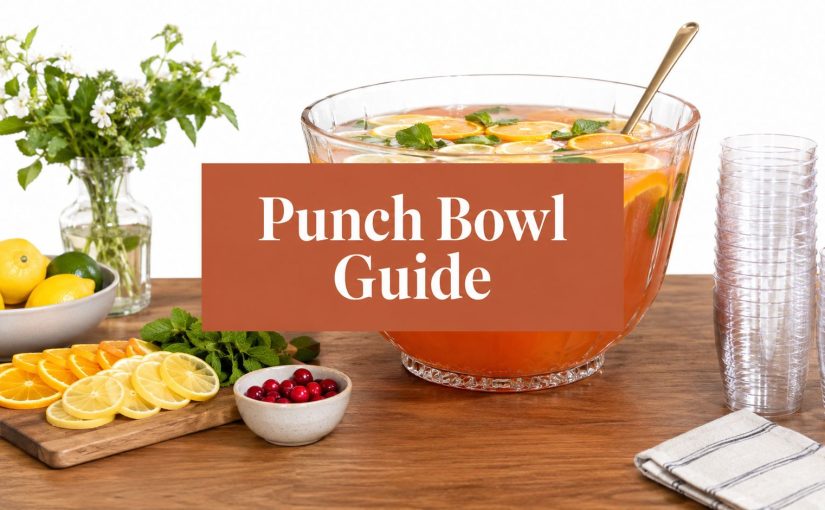
The guests are arriving at a Winelands venue, the welcome drinks are due on the tables, and the punch bowl looks exactly right in the photographs. Then the first rush begins. The ladle is working constantly, the ice is melting into the drink, fruit is warming under the afternoon light, and the runner realises nobody agreed when to refill it.
A punch bowl set is more than a decorative centrepiece. It's food-contact catering equipment, a measured vessel, a self-serve station and a reusable rental item that must survive transport, service and cleaning. The right setup can reduce pressure on the bar. The wrong one creates spills, dilution, breakage and avoidable hygiene risks.
What a Punch Bowl Set Actually Does at an Event
At a Cape Town wedding, a well-placed punch station gives guests an immediate drink while bartenders concentrate on wine, beer and made-to-order cocktails. It also creates a visual welcome point, particularly at a garden ceremony, harvest table or reception entrance. That benefit disappears quickly if the bowl is too small, the ladle is awkward or nobody owns the refill responsibility.
The useful way to think about a punch bowl set is as a compact drinks service system. The bowl holds the beverage, the ladle controls the pour, the underliner catches drips, and the cups determine how quickly guests move through the station. Ice inserts, float rings and matching ladle rests can improve presentation, but they only work when the basic service flow is sound.
Practical rule: If the duty manager can't explain who checks, refills and cleans the station, the set isn't ready for guests.
Where the bowl earns its place
Punch works particularly well during the welcome period, at a daytime garden function or alongside a bar that needs to manage a short arrival rush. It can also suit a non-alcoholic station at a school formal, university function or corporate activation, provided the drink is clearly labelled and the cups are easy to reach.
It's less effective when the menu depends on individual customisation. A bowl cannot replace a cocktail bar where guests expect different spirits, garnishes or sweetness levels. It also doesn't suit every modern catering layout. South African event coverage increasingly discusses pass-around bowl food, food stations, harvest tables and individually portioned formats, which makes a punch bowl more useful as a presentation-led self-serve point than as the central catering solution (Fork & Nice's discussion of harvest tables).
The historical detail still matters
Shared drinking vessels have a documented association with communal drinking in South Africa-adjacent colonial material culture. Iziko Museums of South Africa in Cape Town preserves social-history ceramics and glassware, including a donated blue glass bowl, giving planners a locally grounded reference for the long relationship between large serving vessels and social occasions (Iziko's published annual report).
That history doesn't make every bowl suitable for service. It does explain why the format still feels familiar. The operational test is simpler: can the set stay clean, cold or appropriately warm, stable and replenished throughout the event?
Sizing the Set to Your Guest Count
Start with two inputs, your confirmed guest count and the likely number of servings per person. Use 150 ml as the working serving size for planning, then adjust according to the rest of the drinks menu. A wedding with wine and cocktails may need more punch than a corporate launch where guests primarily choose beer or wine. A school formal may need more because the bowl can function as the main drinks station.
The calculation is straightforward:
Guest count × servings per guest = total servings
Then convert servings into litres and allow for the actual bowl capacity. A 10-litre bowl yields roughly 65 servings, a 14-litre bowl about 90 servings, and a 20-litre bowl around 130 servings. These figures are planning estimates based on the 150 ml serving size and should be treated as service capacity, not a promise that every last millilitre will be poured.
A working sizing table
| Guest Count | Servings per Guest | Litres Needed | Suggested Bowl Setup |
|---|---|---|---|
| 50 | 1.5 | 11.25 litres | One 14-litre bowl |
| 80 | 2 | 24 litres | Two 14-litre bowls, or one 14-litre plus one 10-litre |
| 100 | 2 | 30 litres | Two 14-litre bowls plus staged reserve |
| 150 | 2 | 45 litres | Three 14-litre bowls on separate stations or staged refills |
For 80 guests at two servings each, you need about 160 servings. That points to two 14-litre bowls, or a 14-litre bowl paired with a 10-litre bowl. One 20-litre bowl may look substantial, but it creates a service problem because the team can't refill it without interrupting the station.
Count stations, not just litres
Large functions need distribution as well as volume. For 150 guests, three 14-litre bowls on separate stations can reduce queues and keep one runner from carrying full liquid vessels across a busy floor. If the bar package already includes welcome drinks, review the staffing and beverage split before ordering extra punch capacity. A practical reference for comparing service formats is the BeeHive Mobile Bar package guide, which helps planners think about punch alongside broader mobile-bar requirements.
Leave reserve liquid in labelled food-safe containers, not in an unmarked bucket behind the bar. The runner should know which batch belongs to which bowl, whether it contains alcohol, and when it was mixed.
Choosing Glass, Acrylic or Metal for the Cape Town Venue
Material is a venue decision, not just a styling decision. A glass punch bowl can anchor a formal Winelands table beautifully, while acrylic is usually easier for a rental team to move, clean and replace. Metal can provide a strong visual centre, but it needs more attention to temperature and condensation.
South African hygiene rules require food-contact items to be clean, smooth, non-absorbent and free of chips or cracks. That standard applies whether the bowl is glass, acrylic or metal. The material changes the practical risks, but it doesn't lower the cleaning requirement.
| Material | Presentation | Breakage Risk | Weight When Full | Thermal Hold | Best Fit |
|---|---|---|---|---|---|
| Glass | Formal, clear and traditional | Higher in transport and service | Heavy | Generally stable, but vulnerable to thermal shock | Controlled indoor weddings and premium tables |
| Acrylic | Clean, flexible and rental-friendly | Lower breakage risk, but scratches over time | Lighter | Suitable for normal chilled service | Large events, outdoor venues and busy stations |
| Metal | Striking, modern or heritage-inspired | Dents and surface damage are possible | Heavy, especially with ice | Conducts temperature quickly | Branded activations and styled beverage displays |
Glass makes a statement, but demands discipline
Cut or thick-walled glass looks at home beside formal crockery and polished stemware. It also allows the beverage colour to become part of the design. The trade-off is obvious during load-in. Full glass vessels are awkward to carry, vulnerable to knocks and expensive to replace if a rim chips.
South African catering guidance notes that normal glass withstands temperature changes of about 42°C, while tempered glass can handle about 130°C. The same catalogue advises immediate cleaning after use and warns against microwaves, open elements, ovens and stacking unless the item is specifically rated for it (South African catering-supplies glassware catalogue).
Acrylic is usually the operational choice
Food-grade acrylic or polycarbonate suits garden venues, school functions and high-turnover rental work. It's lighter to transport and less likely to create dangerous shards if dropped. Scratching and clouding remain concerns, so staff shouldn't use abrasive pads or stack pieces that aren't designed for stacking.
Metal bowls photograph well, particularly for a gin-based punch, copper-toned brand activation or rustic farm setting. They conduct heat rapidly, so use a separate ice insert rather than relying on the bowl wall to keep the liquid chilled. For a broader look at bowl formats and materials, planners can review Monopack ltd bowl options before specifying a set.
Setting Up the Punch Station Step by Step
The station should be set up in the same order every time. That consistency lets a junior runner follow the brief without improvising around a slippery bowl, misplaced cups or a garnish tray sitting in direct sun.
Start with the base
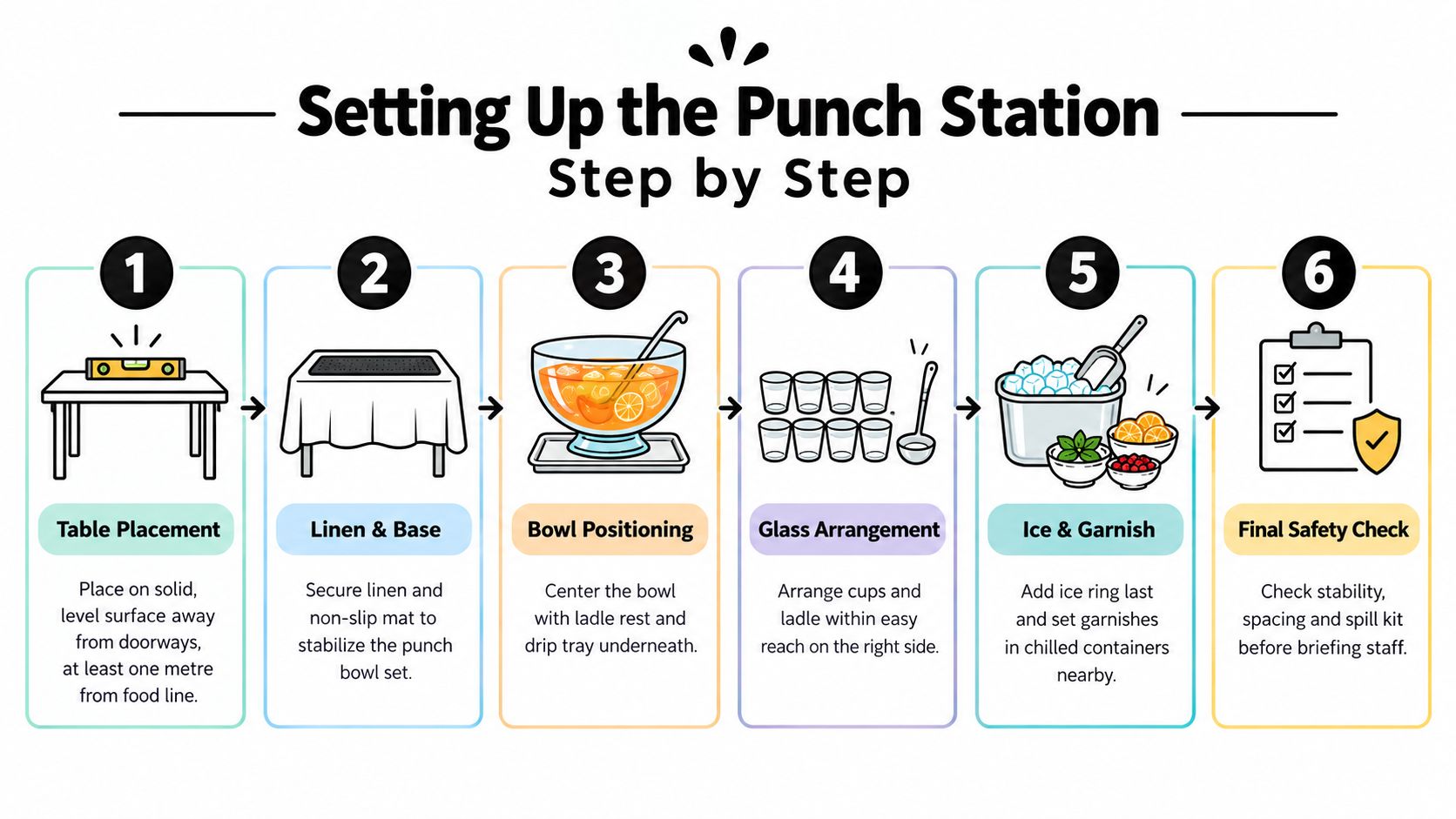
Choose a solid, level table away from doorways and service crossings. Keep the station at least one metre from any food line so guests reaching for cups don't collide with plates, trays or buffet traffic. Secure the linen, add a non-slip mat if required, and check that the table doesn't rock when pressure is applied to one corner.
Place the service pieces in order
- Drip tray first: It protects the linen and gives the ladle a defined landing area.
- Bowl in the centre: Check that the base sits fully on the tray and doesn't rock.
- Ladle and rest: Keep the ladle handle clear of the liquid and place it where guests can lift it without reaching across the bowl.
- Cups on the right: This works for right-handed guests and keeps the pour path predictable. Leave enough space for a guest using a mobility aid to approach without twisting.
- Ice separately: Use a nested bowl, insert or float ring where possible. Loose ice in the punch can dilute the drink quickly and makes the final servings inconsistent.
- Garnish last: Put citrus, herbs and flowers out immediately before doors open, preferably in chilled containers until that point.
If two punches are being served, use separate signs with the drink name and alcohol status. Brief the runner to refill when the bowl reaches about one-third full, then clean spills immediately rather than waiting for the next scheduled check.
Hygiene and Food-Safety Rules You Cannot Skip
Every ladle, cup, bowl and garnish utensil is a food-contact item. The South African hygiene regulations require these items to be clean, smooth, non-absorbent and free from chips or cracks. They must be washed before first use and again as needed during or immediately after service, and chipped or cracked crockery and utensils must not be used (South African food-premises hygiene regulations).
That means you shouldn't assume a rental set is ready just because it arrived wrapped. The person signing for the equipment should inspect it, wash it where required, and keep damaged pieces out of service.
Use a quick setup inspection
Run this check before beverage contact:
- Look closely: Inspect the rim, base and ladle for chips, cracks, clouding or residue.
- Check stored items: Smell cups and the bowl. A stale storage odour usually indicates that the set needs washing before use.
- Swipe the rim: A clean finger or approved inspection method should find no grease, grit or dried residue. Wash and rinse again if it does.
The regulation also requires food-contact surfaces to be smooth, rust-proof, non-toxic and cleanable. That matters when a metal bowl has decorative joins or when an acrylic vessel has deep scratches that can hold residue.
Keep the station understandable
Place allergy information where guests can see it. Identify citrus, sulphites, dairy ingredients and alcohol rather than expecting guests to ask the bartender. Use separate ladles for different beverages, and never move a used ladle from an alcoholic punch into a non-alcoholic bowl.
For local venue compliance, the City of Cape Town directs food businesses to follow the national hygiene requirements. Treat the punch station as regulated food service equipment, not as decorative furniture. ABC Hire's guidance on drink dispenser and glass hire is also useful when coordinating beverage vessels with the rest of a rented service setup.
Garnish and Flavour Combinations That Hold Up on a Buffet
A garnish has to survive handling, light, temperature changes and repeated ladle movement. Sliced apple and banana brown quickly, while soft fruit can break apart and cloud the bowl. Citrus wheels, frozen berries, firm herb sprigs and edible flowers generally hold their shape better, although garnish should still be added as late as practical.
Wedding service
For a wedding, a rooibos and white-peach punch gives the bowl a distinctly South African flavour direction without relying on heavy decoration. For 10 litres, use a rooibos-led base with white-peach juice or purée, then add rosemary sprigs and firm white-peach slices near service. Keep the rosemary restrained, because too much woody herb can dominate the drink.
Place peach slices and flowers in chilled containers until the station is ready. Add the rosemary last so it stays upright and aromatic rather than sinking into the ladle path.
Corporate launches
A citrus-ginger kombucha punch suits a brand activation where the beverage needs to signal freshness and a lower-alcohol or alcohol-free direction. For 10 litres, build around citrus, ginger and kombucha, then use candied ginger and thyme as the visual accents.
Kombucha can be lively and acidic, so taste the finished batch before guests arrive. Keep the garnish separate until the team has confirmed the balance. Planners developing alcohol-free menus can use this non alcoholic cocktail mixers guide for ideas on building depth without making the bowl taste like diluted juice.
School formals and family functions
A berry-lemonade punch is simple to identify and easy to serve. For 10 litres, use a lemonade base with frozen mixed berries. The berries provide colour and a cooling effect, while avoiding the need for a separate fruit garnish bowl.
Keep the ladle, cups and napkins aligned so young guests aren't reaching over the liquid. A wooden serving tray from ABC Hire's guide can help contain cups and small garnish dishes, but it should stay dry and stable rather than becoming a second crowded surface.
Running Service, Refills and Clean-Down on the Day
A reliable punch station needs a printed playbook. The duty manager should know what happens before guests arrive, when the runner refills, how the team handles used cups and what returns to the rental warehouse.
South African market context supports this flexible approach. The glassware market in South Africa was estimated at USD 71.27 million in 2024 and is projected to reach USD 119.07 million by 2033, with a projected compound annual growth rate of 5.89% from 2025 to 2033. Drinkware is identified as the largest segment, which places shared beverage vessels such as punch bowls inside a wider event-glassware category (South Africa glassware market summary).
The printed station routine
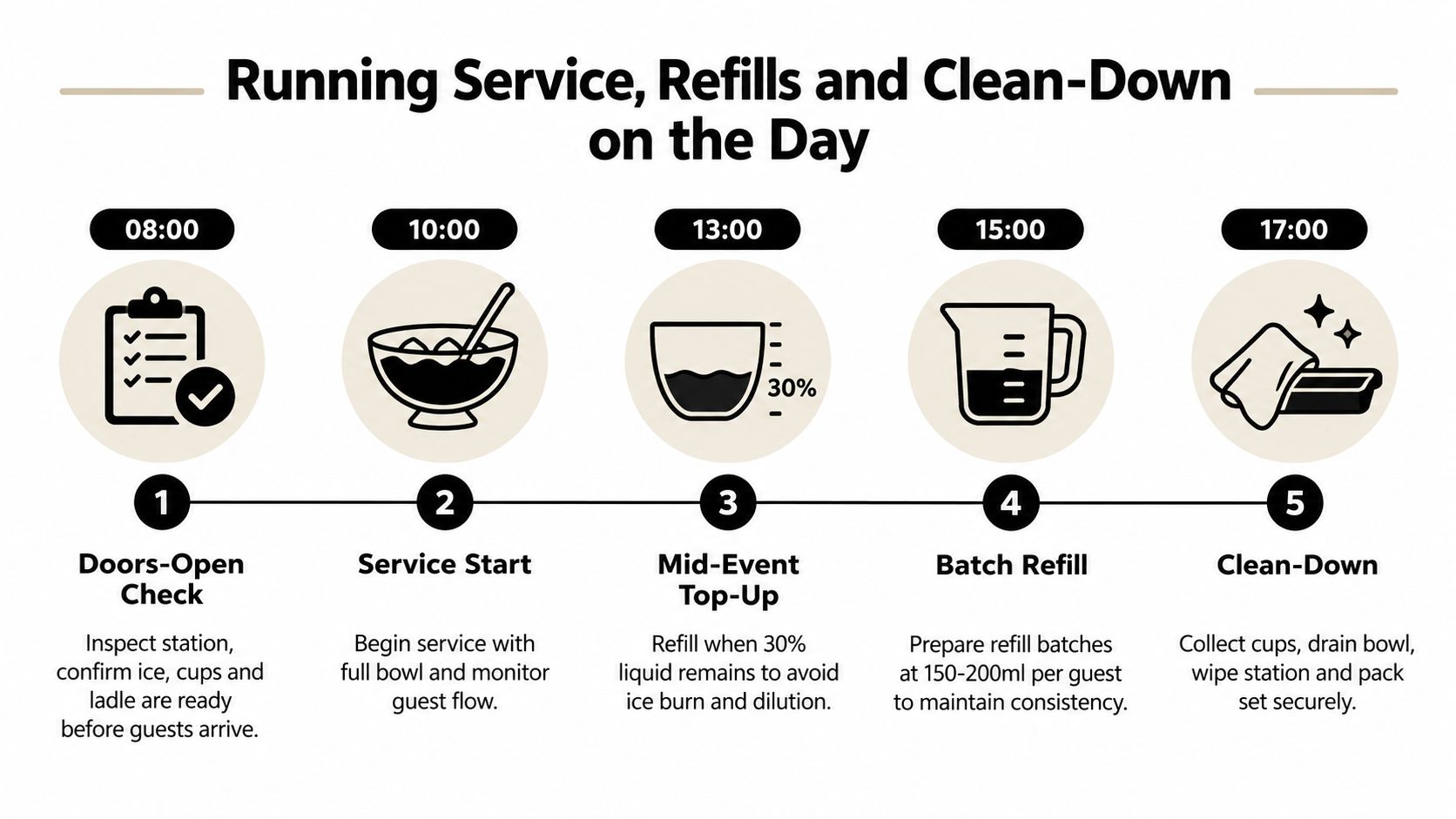
Before doors open, inspect the table, bowl, ladle, cups, ice and labels. Confirm the reserve batch, spill kit and waste container are in position. Taste and smell the punch before service, and record the setup time.
During the first service period, watch the queue rather than the bowl alone. A station can look full while guests are waiting because the ladle is too small or the cups are placed too far away. Keep the liquid level comfortably above the ladle opening and top up before the bowl becomes difficult to serve.
At the mid-event check, refill when approximately 30% of the liquid remains. That prevents the ice from dominating the remaining drink and gives the runner a clear trigger that doesn't depend on guesswork.
Batch, taste and temperature
Prepare refill batches consistently instead of adding random quantities of juice, mixer and alcohol directly to the bowl. The supplied service workflow uses 150 to 200 ml per guest for batch-refill planning, but the exact volume should follow your guest count, remaining stock and venue service plan.
Wine- and spirit-based punches should be served chilled, while fruit-juice punches also need temperature control and frequent checks. Don't rely on a metal bowl alone for cooling. Use a suitable ice insert, keep reserve batches cold, and taste at the 60-minute and 120-minute checkpoints to catch dilution, oxidation or flavour drift before guests do.
Where chilled storage is limited, review the venue's equipment plan alongside ABC Hire's bar refrigerator size guide. A refrigerated reserve is easier to manage than repeatedly adding warm liquid to a bowl.
Close the loop after service
Stop adding fresh garnish before draining the bowl. Collect cups and waste separately, pour out remaining liquid according to the venue's waste procedure, rinse the bowl and ladle, and dry the set before packing it. Don't stack pieces unless the manufacturer or rental inventory specifically allows it.
Separate cracked or chipped units immediately and label them for the rental team. Record what was returned, what was damaged and who handed it over. Reusable tableware only remains sustainable when the operator can clean it efficiently, preserve it through repeated use and identify losses before the next event. That matters in a market where South African event buyers increasingly ask about reusable décor, lower-waste service and the lifecycle value of durable equipment. The biodegradable tableware market in South Africa is forecast to grow from USD 8.9 billion in 2025 to USD 16.7 billion by 2031, increasing pressure on suppliers to explain how reusable items are managed (South African event décor sustainability coverage).
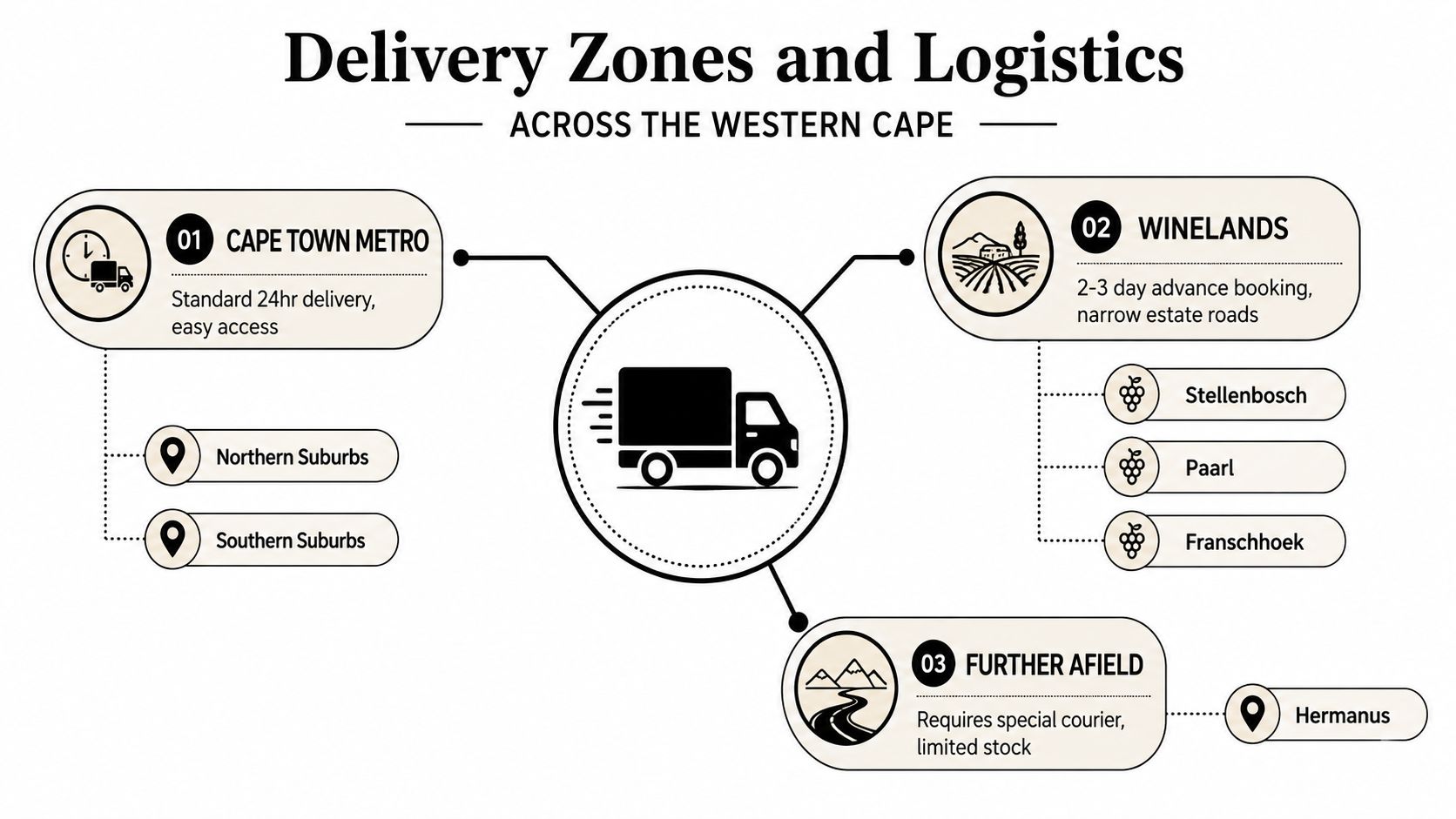
ABC Hire supplies event furniture and accessories for weddings, corporate functions, school formals and private celebrations across Cape Town, Stellenbosch, Franschhoek and Paarl, with crockery and beverage-service items available to coordinate with the wider setup. Visit ABC Hire to discuss a punch bowl set, supporting tables and the practical equipment needed to keep the station stable, presentable and serviceable from guest arrival through clean-down.