
You’re probably doing what most clients do at the start. You’ve got a date range, a rough budget, a venue shortlist, and about twelve browser tabs open for events companies Cape Town. Everything looks polished. Everyone says they handle “full service”. Very few explain how the event gets built on the ground.
That gap matters in Cape Town more than people realise. A beautiful plan can still fall apart if the planner doesn’t work smoothly with specialist suppliers, venue teams, technical crews, and rental partners. The strongest events aren’t created by one company doing everything alone. They’re built by a well-led team of specialists with clear roles, clean handovers, and one shared event brief.
That matters whether you’re planning a Winelands wedding, a CTICC conference function, a matric dance, or a private celebration that needs more than the standard table-and-chair package. If you hire only for style, you can end up with weak logistics. If you hire only for logistics, the event can feel flat. The sweet spot is a planner who can lead the process and knows when to bring in the right specialists.
Navigating the Cape Town Events Landscape
Cape Town gives you range. You can host a formal gala in the city, a wedding in Stellenbosch, a product launch in an industrial venue, or a sunset celebration in Franschhoek. That variety is exactly why the search for events companies Cape Town can feel messy. Not every company is built for every format, and not every venue suits the plan you have in your head.
Cape Town’s event economy is also larger and more mature than many clients expect. Cape Town hosts 52% of South Africa’s international conferences, which gives local planners access to a developed network of venues, suppliers, and technical support according to Research and Markets coverage of the South African event management industry. That depth is good news for buyers, but it also means you need to separate polished marketing from real delivery capability.
What makes Cape Town different
A planner here has to think beyond décor boards and running orders.
- Weather shifts fast: Outdoor ceremonies, tented receptions, and brand activations need backup thinking.
- Venues operate differently: City venues often have strict access times. Winelands venues may involve transport delays, narrow roads, and limited power points.
- Guest expectations vary: A corporate audience at the CTICC won’t respond the same way as a wedding crowd in Paarl or a school formal in the southern suburbs.
- Supplier coordination is everything: Furniture, lighting, catering, entertainment, power, and security all affect one another.
A useful outside perspective on guest movement and event transport planning comes from All Black Limo LLC event blogs, especially if your event includes VIP arrivals, conference delegates, or multiple venues in one programme.
The local shortcut that saves time
Most clients start by comparing full-service planners. A better first move is to understand how local teams collaborate. A practical overview of that workflow sits in this guide to event management in Cape Town, which helps frame the relationship between planners, venues, and rental suppliers.
Practical rule: In Cape Town, the right company isn’t the one that says yes to everything. It’s the one that knows which parts should stay in-house and which parts should go to specialists.
Defining Your Event Vision and Core Needs
Before you ask for quotes, get specific. “Elegant but relaxed” sounds clear until three suppliers interpret it in three different ways. One sends gold ghost chairs and formal linens. Another proposes lounge pods and low seating. A third prices a conventional banquet layout because that’s what they use most often.
That’s why the first real job isn’t finding events companies Cape Town. It’s writing a brief that gives your planner and suppliers something solid to work from.

Start with the guest experience
Don’t begin with colour palettes. Begin with the room you want people to walk into and the way you want them to behave in it.
Ask yourself:
- What should guests feel on arrival? Calm, impressed, playful, luxurious, energetic, intimate?
- What should they do during the event? Sit for long periods, move between stations, dance, network, photograph everything?
- What will they remember the next day? The food, the ceremony, the lighting, the lounge areas, the branded moments?
Those answers shape everything else. If guests need to mingle, rigid seating plans can work against you. If the event happens at night outdoors, furniture and lighting become part of the experience, not an afterthought.
Build your non-negotiables list
Strong briefs separate must-haves from nice-to-haves. That prevents budget drift and stops planning meetings from becoming circular.
A practical brief usually includes:
- Event type and purpose: Wedding, launch, conference dinner, matric dance, birthday, awards function.
- Venue style: City, beachside, farm, estate, private home, campus.
- Mood: Formal, modern, celebratory, understated, youthful.
- Operational priorities: Fast setup, weather backup, crowd flow, accessibility, easy strike after midnight.
- Specialist requirements: LED furniture, slush machines, mobile bars, climate control, lounge seating, statement pieces.
Local context changes the brief
South African events need local intelligence, not imported assumptions. Event planning here requires culturally aware decision-making that reflects local customs and practices, and approaches that work in other markets often need adaptation for local audiences, including destination weddings in Stellenbosch, according to The Event Company’s guidance on event proposals and best practices.
That shows up in practical ways. Service timing, menu style, speech structure, family expectations, formalities, and even seating patterns may differ depending on the crowd. A planner who understands Cape Town won’t treat your event as a generic template.
If your brief doesn’t mention guest comfort, weather exposure, and how people will move through the venue, it’s incomplete.
A simple brief format that works
Use this before your first supplier call.
| Brief item | What to write down |
|---|---|
| Event purpose | Why the event exists and what success looks like |
| Guest profile | Who’s attending and how formal or relaxed they’ll be |
| Venue reality | Indoor, outdoor, mixed, access times, power limits |
| Visual direction | Clean, bold, romantic, luxury, playful, minimal |
| Functional needs | Seating, bars, dance floor, shade, heating, cooling |
| Specialist add-ons | LED pieces, lounge zones, activation stations, slush machines |
Clients who do this early get better proposals. They also spot weak planners faster, because weak planners respond with generic packages instead of customized ideas.
How to Find and Vet Cape Town Event Companies
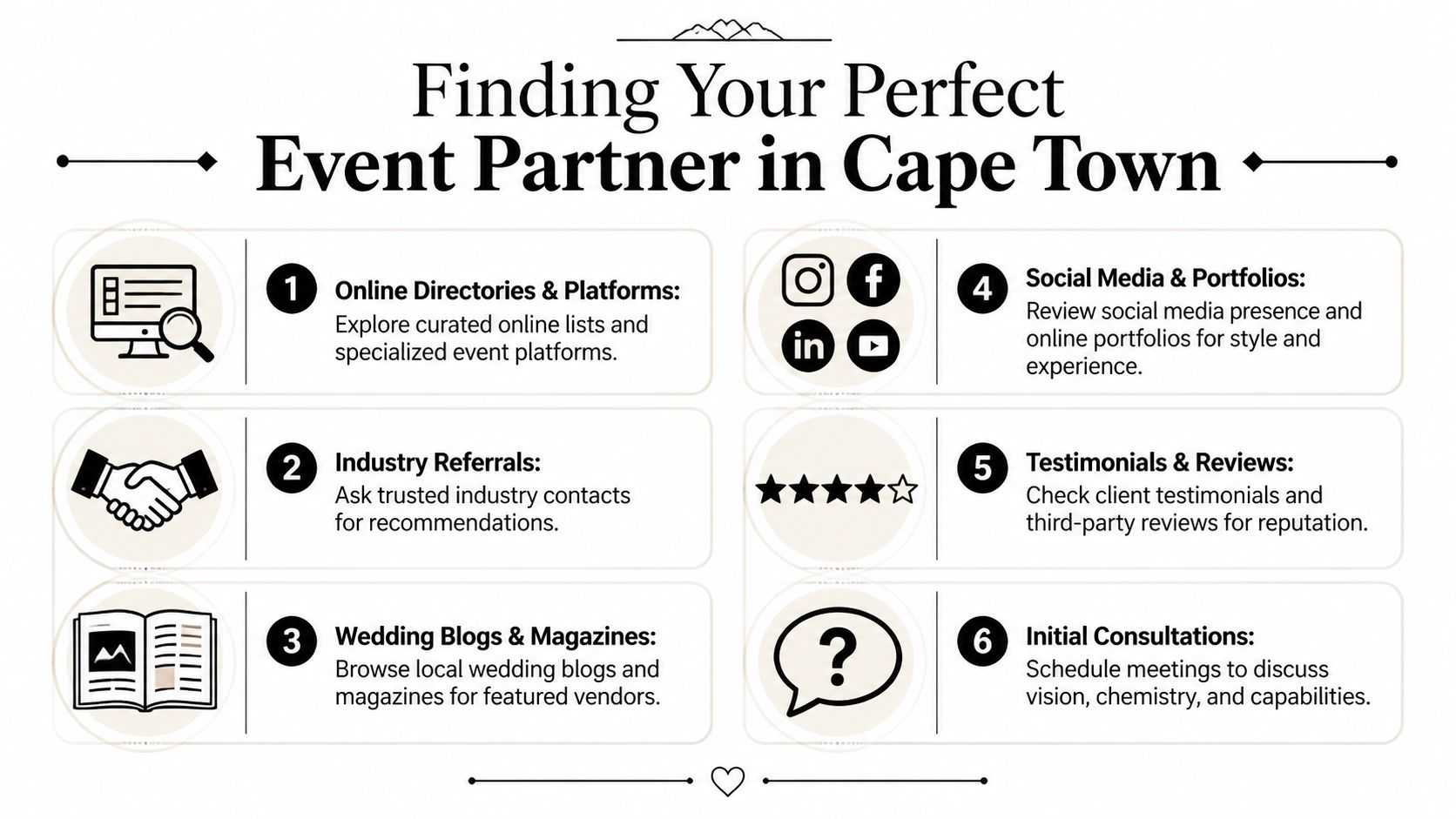
A good shortlist isn’t built from search rankings alone. Some events companies Cape Town market themselves well but rely heavily on outsourced execution without strong project control. Others have excellent operational depth but weaker online presentation. You need a filter that tests both style and substance.
What to look for before you make contact
Start with relevance, not popularity. A planner who mainly handles luxury weddings may not be right for a school formal. A company built around conferences may struggle with a design-led private party.
Check these first:
- Recent work: Look for events similar to yours in size, tone, and venue type.
- Operational clues: Setup photos, behind-the-scenes content, team presence on-site, not just finished hero shots.
- Service boundaries: Can they explain what they handle directly and what they source through partners?
- Venue familiarity: Cape Town city bowl, Atlantic Seaboard, and the Winelands all create different logistical demands.
Ask harder questions in the first call
The first consultation should tell you how they think. Don’t ask only, “Can you do this?” Ask how they solve problems.
Try questions like these:
- Who manages supplier communication on event week?
- How do you handle specialist rentals that sit outside your own inventory?
- What happens if weather shifts the setup plan?
- Which parts of the event require final sign-off from the venue?
- Who’s on-site from your team on the day?
A serious planner answers directly. A weak one hides behind broad assurances.
The best event companies don’t just present ideas. They explain dependencies, timing, and points of failure before those problems become expensive.
Sustainability and BBBEE are not side issues
If you’re planning a school event, private celebration, or any function with procurement criteria, ask about sustainability and BBBEE status early. Don’t leave it until contract stage.
A useful data point here is that 62% of school and private event queries in Cape Town seek affordable eco-friendly options, and reusable furniture can reduce costs by 20% to 25%, according to True North’s reporting on sustainable and BBBEE-compliant event practices. Yet many companies still don’t explain these options clearly on their websites.
That matters because “eco-friendly” can mean very different things in practice. It may involve reusable furniture, reduced single-use décor, smarter transport planning, or a tighter rental schedule that avoids unnecessary duplication. Ask for specifics.
How to assess fit with specialist vendors
Many clients miss the mark at this point. They hire a planner, then assume all specialist items will slot in smoothly later. Sometimes they do. Sometimes they don’t.
Look for planners who can work well with:
- Furniture rental firms for lounge setups, bars, dance floors, and statement pieces
- Power and climate suppliers for outdoor comfort
- Security providers for access control and guest safety
- Venue coordinators who control loading times and floor protection rules
If your event has public access, high-value equipment, or a late finish, it also helps to review practical considerations around security for event hire, especially when multiple vendors are loading in and out.
For design-heavy events, this guide to event decoration hire is a useful reference for understanding how decorative rentals, practical furniture, and layout planning overlap.
A shortlist should be small and deliberate
By the time you finish vetting, you shouldn’t have ten options. You should have a focused list of companies that match your event type and planning style.
| Keep on the shortlist if they… | Remove from the list if they… |
|---|---|
| Show relevant recent work | Rely on generic galleries |
| Explain supplier coordination clearly | Stay vague about who does what |
| Understand your venue type | Push one standard package |
| Discuss sustainability or procurement honestly | Avoid the topic |
| Ask smart questions about guest flow and logistics | Talk only about décor |
Three strong options are easier to compare than a pile of pretty proposals.
The Essential Vendor and Logistics Checklist
Creative direction gets the client excited. Logistics determines whether the event survives contact with reality.
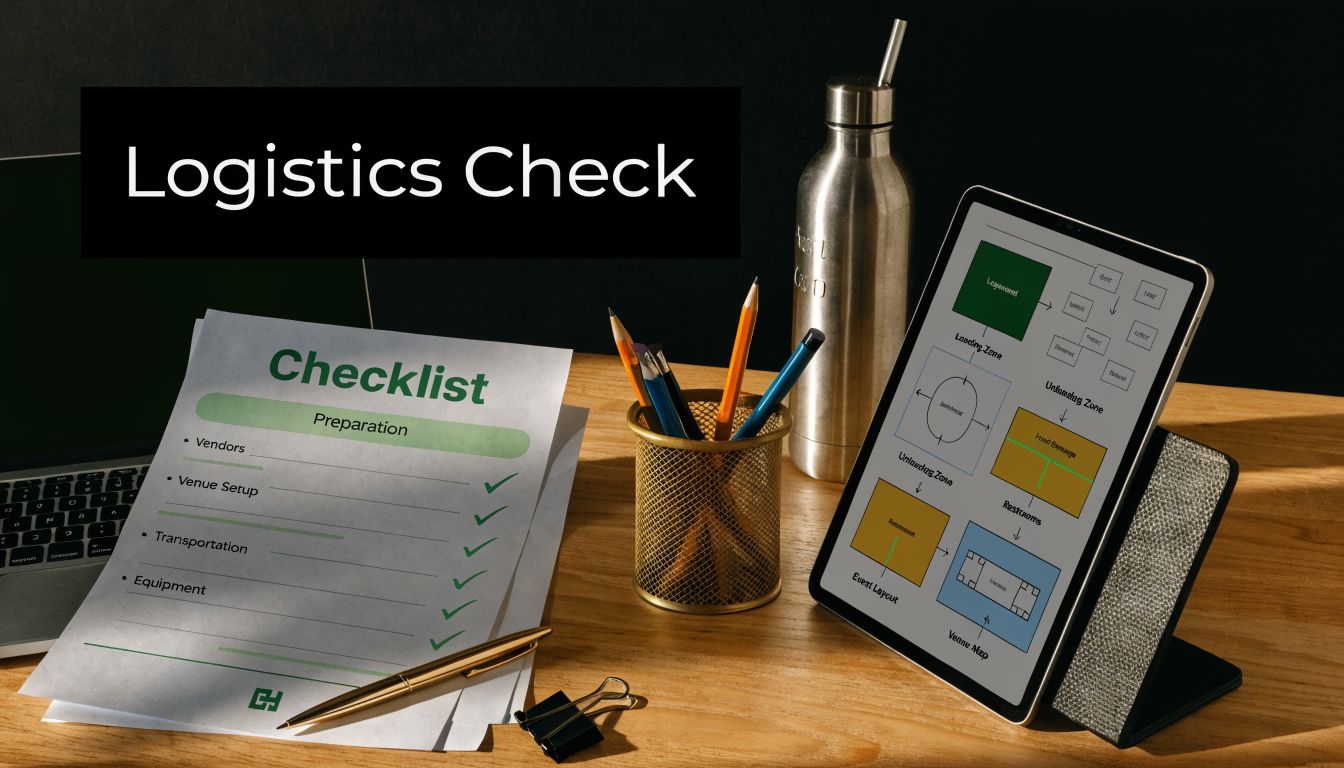
That’s especially true in Cape Town, where one event may happen in a central venue with strict dock access and another on a wine farm with uneven ground, shifting weather, and long setup routes. If you want your planner to build a proper dream team, assess how they manage specialist vendors before you approve the concept.
Inventory versus partnerships
A common mistake is assuming a company with a large website gallery owns everything shown. Many planners don’t. That’s not a problem if they’re transparent and their supplier network is reliable.
The better question is this: Do they know how to integrate external vendors cleanly?
That includes:
- Load-in sequencing: Furniture can’t block lighting access. Bars can’t land before flooring is protected.
- Design compatibility: LED items, couches, cocktail tables, and climate equipment must fit the event style.
- Single point of control: Someone needs authority on site when suppliers arrive at different times.
Specialist rental firms add real value. For example, post-2025 load-shedding recovery led to a 35% spike in demand for climate control and supplementary power solutions like LED furniture for outdoor events in the Western Cape, according to Catalyst Events. Full-service planners often meet that need through specialist rental partnerships rather than holding all that stock themselves.
The questions experienced clients ask
Use this checklist in your meetings.
Insurance and liability
- Ask for proof of cover: A professional team should be able to provide insurance details without fuss.
- Check venue requirements: Some venues require supplier compliance documents before load-in.
- Clarify damage responsibility: Know who pays if a hired item damages floors, walls, or staging.
Setup realities
- Access windows: How many hours do they have on site?
- Crew size: Is the schedule realistic for the amount of furniture and décor involved?
- Strike plan: Late-night breakdown needs as much thought as installation.
Technical practicality
- Power planning: Outdoor bars, lighting, DJ gear, and climate equipment all compete for supply.
- Weather backup: Wind, heat, and moisture affect layouts, soft furnishings, and electronics.
- Surface conditions: Gravel, grass, decking, and polished concrete each change what can be installed safely.
“Can you source it?” is the wrong question. Ask, “How will it arrive, where will it go, and who signs it off on site?”
Don’t ignore guest comfort
Clients often focus on visual impact and leave comfort until too late. That’s backwards. If guests are too hot, too cold, cramped, or unsure where to gather, the event feels poorly run no matter how attractive it is.
The right specialist stock makes a difference. Lounge seating changes how long guests stay in a space. Climate control changes whether a tented reception feels elegant or exhausting. LED furniture changes the atmosphere of a night event without relying only on overhead lighting. ABC Hire is one Cape Town supplier that offers items such as LED furniture, bean bags, slush machines, tables, chairs, and climate control equipment for events in Cape Town and the Winelands.
International guests add another layer
For destination weddings, conferences, and executive events, logistics don’t stop at the venue door. Guests may also need practical guidance around travel money and local transactions. If you’re hosting attendees from abroad, Zaro's insights for currency exchange can help you think through that guest-facing detail before arrival day.
The red flags that usually surface late
Here’s what tends to go wrong when logistics haven’t been tested properly:
- Last-minute substitutions because the planner didn’t confirm specialist stock early
- Venue disputes over access, floor protection, or electrical load
- Messy layouts because the furniture supplier never received the final floor plan
- Uncomfortable guests because heating, cooling, or shade was treated as optional
Logistics aren’t glamorous. They’re also the reason polished events look effortless.
Understanding Quotes Contracts and Timelines
A quote tells you what the event might cost. A contract tells you how the relationship will work when things change, suppliers miss timings, or the weather turns. Clients who only compare totals usually miss the actual risks.
The strongest event agreements link money, scope, and accountability in one place. That matters because successful events depend on clear, measurable objectives tied to trackable KPIs, and events without defined objectives from the contract stage suffer resource waste and diluted impact, according to Panacea’s guidance on event production planning mistakes.
Read the quote line by line
Start by checking whether the quote separates planning fees, rentals, labour, transport, setup, strike, and contingency items. If everything is bundled into broad categories, ask for detail.
Look closely at:
- Included items: Exact furniture counts, lighting elements, staffing hours, delivery zones.
- Excluded items: Venue fees, permit costs, generators, security, overtime, corkage, post-midnight labour.
- Substitution terms: Can the company swap products or vendors if stock changes?
- Revision limits: How many quote revisions are included before admin fees start appearing?
A cheap-looking proposal can become expensive if key operational costs sit outside the first draft.
Contract clauses worth slowing down for
Many clients skim the legal pages. Don’t.
Payment schedule
Deposits, progress payments, and final settlement dates should be obvious. If suppliers must be paid before event week, that should be spelled out.
Cancellation and postponement
Cape Town events can shift because of weather, venue issues, or client-side delays. The contract must explain what happens to deposits, rentals, and third-party bookings in each scenario.
Force majeure
You want clear wording on what counts as an uncontrollable event and how both parties respond.
Change control
If you increase guest count, add a bar, move outdoors, or extend operating hours, there should be a process for approving the extra cost in writing.
Decision check: If a dispute happened two days before the event, could you point to the contract and settle it quickly? If not, the contract is too vague.
Timelines protect quality
Good timelines don’t just protect the planner. They protect the client from rushed decisions and stock shortages.
A practical sequence usually looks like this:
- Brief approval
- Venue confirmation
- Initial concept and budget
- Specialist supplier holds
- Final layout sign-off
- Operational confirmations
- Final guest and timeline update
- Event execution
- Post-event review
For clients who need a working document to keep all of that visible, this event planning checklist template is a useful planning aid.
Put success in writing
Even for weddings and private events, it helps to define what “worked” means before the day arrives.
That might include:
- guest flow working as intended
- comfort in outdoor areas
- on-time transitions between programme moments
- sponsor visibility for branded events
- a clean breakdown with no venue penalties
For corporate events, that KPI conversation should be sharper. If your planner proposes interactive lounges, LED features, or branded installations, ask how those choices support engagement, dwell time, photography moments, or sales conversations. A good company won’t dodge that. They’ll build it into the scope.
Bringing It All Together for Your Cape Town Event
The dream team model works because every event has one lead and several specialists. The lead planner protects the vision, controls timing, and manages communication. The specialist suppliers bring the items and expertise that make the event feel finished rather than generic.
Winelands wedding
A couple books a venue between Stellenbosch and Franschhoek. The setting is strong, the light is beautiful, and the ceremony lawn looks perfect on a site visit. Then the detailed planning starts. The reception is in a marquee, the access road is tight, the afternoon runs hot, and the venue’s built-in furniture doesn’t suit the look.
A smart planner doesn’t pretend those issues are minor. They bring in a rental partner for the exact seating, lounge pieces, and climate support the event needs. The florist and lighting team then work from the same floor plan. Guests arrive to a space that looks elegant, but more importantly, it feels comfortable and organised from cocktail hour through dancing.
Corporate brand activation
A marketing team wants a Cape Town launch that feels current, not corporate in the tired sense. They hire a full-service event company to run production, registration, staffing, and programme flow. That planner then pulls in specialist rentals for illuminated pieces, bar units, interactive zones, and guest seating that encourages people to stay and talk.
The activation works because each part has a clear function. The planner runs the event. The AV team controls presentation timing. The furniture supplier helps shape the environment people photograph, share, and remember. No one is guessing on the day because the layout, power needs, and setup order were settled properly in advance.
Matric dance or university formal
These events often carry tighter budgets and higher emotion. Schools and committees want a big impact, but they also need safe movement, durable furniture, and a setup that won’t collapse under pressure.
The right event company keeps the brief disciplined. Instead of trying to recreate a luxury gala badly, they build a smart room. Lounge clusters for photos. Practical seating for parents and staff. Statement items where students gather naturally. A dance floor that fits the venue. Security and access planning that don’t feel heavy-handed but still protect the event.
That’s what good event work looks like in Cape Town. Not one company claiming to do everything. A planner who knows when to lead, when to delegate, and which specialists can turn a good concept into a memorable event.
If you’re building your event team and need a specialist rental partner for furniture, LED pieces, slush machines, or climate control in Cape Town, Stellenbosch, Franschhoek, or Paarl, ABC Hire is one option to consider alongside your planner and venue team. The key is to bring specialist suppliers into the conversation early, while the layout and logistics are still being shaped.