10 Inspired 60th Birthday Event Ideas for Cape Town

Turning 60 deserves more than a restaurant booking and a cake table pushed against the wall. In Cape Town, most families planning this milestone are juggling a familiar mix of questions. Do you keep it intimate or invite the full extended family? Do you host at home, move to a wine estate, or choose a venue closer to town? How do you make it feel polished without letting logistics take over the celebration?

That's where good planning changes everything. South Africa's population estimates show that people aged 60 and older make up a substantial and growing part of the population, and with the national population at about 62 million in 2022, milestone celebrations like 60th birthdays sit firmly inside a broad family-event culture rather than a niche category (South African 60th birthday planning context). In practice, that's why the strongest 60th birthday event ideas usually centre legacy, family connection, and a setting that works for children, grandchildren, siblings, and old friends in one room.

Cape Town and the Winelands make this even easier. Between private homes, vineyards, restaurants, gardens, and purpose-built venues, you've got options for every style of host. The key is choosing a format that suits the guest of honour, then backing it with the right rentals so the event feels intentional from the first arrival drink to the last family photo. If you also need a broader operational view, ABCO Security's event planning guide is a useful planning reference.

1. Elegant Dinner Gala with LED Ambient Lighting

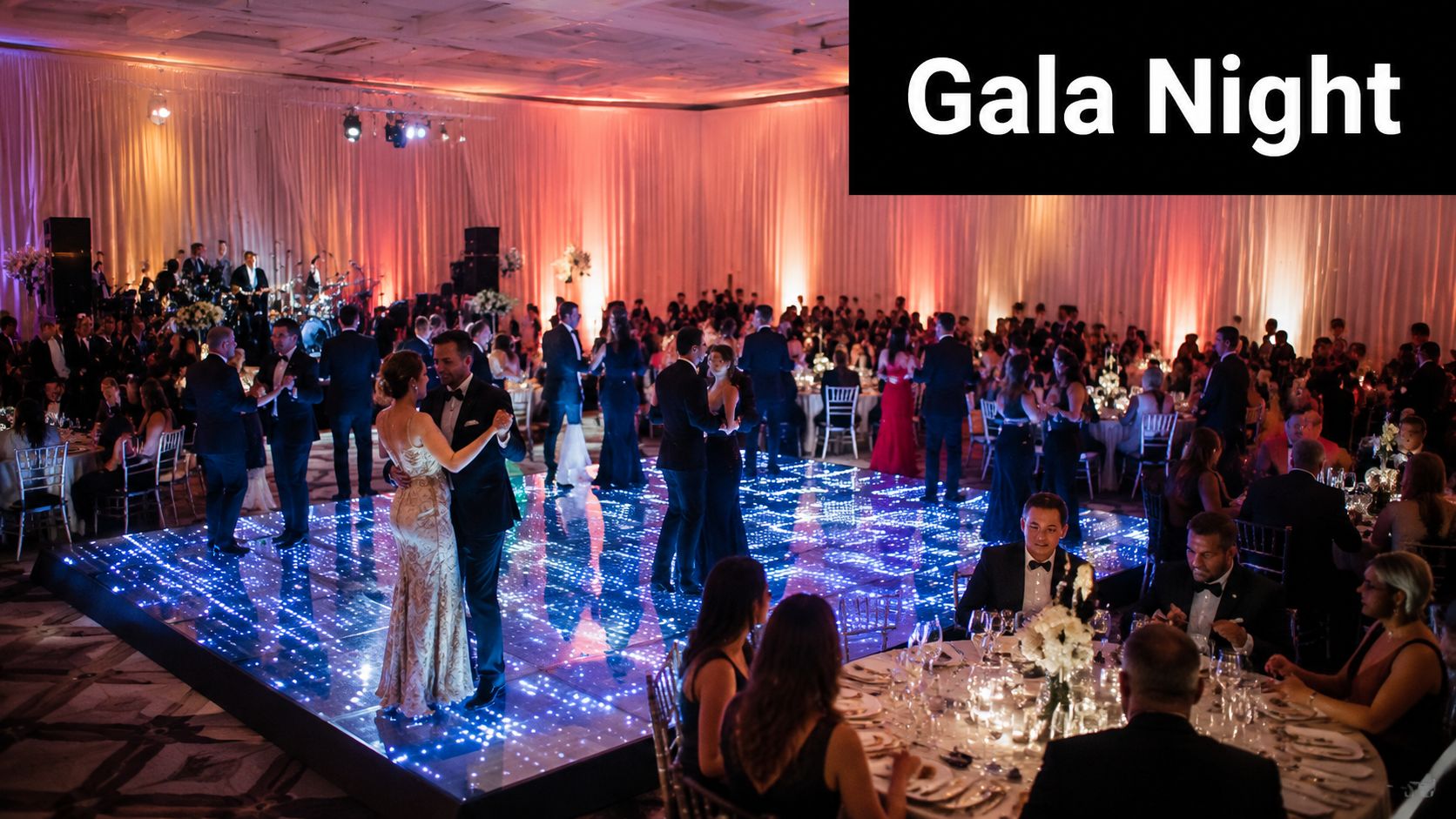
A sophisticated gala dinner featuring guests in formal black-tie attire seated at a long banquet table.

A formal dinner still works beautifully for a 60th. Not because it's traditional, but because it gives the occasion weight. If the guest of honour values good food, proper speeches, and a room that feels dressed for the moment, an elegant gala is hard to beat.

I'd look first at venues with a strong evening atmosphere. Steenberg Wine Estate, private dining spaces near Nobel Square, and Constantia vineyard settings all suit this format. The strongest version is usually a seated dinner with a welcome drink, a short speech section, and a softer lounge area for guests who want to chat after dessert rather than head straight home.

What makes the room feel premium

ABC Hire's role here is less about quantity and more about finish. Clean banquet tables, elegant chairs, crisp linen, and LED furniture used sparingly can completely lift the room. I like LED cubes or bar units as accent pieces rather than flooding the whole event with colour.

A better approach is to let the dining tables stay classic, then use ambient lighting around the entrance, cake display, or drinks area. Rechargeable table lamps for event tables also solve a common problem at evening dinners. They give you a warm glow without messy cabling across guest areas.

Practical rule: If you're using LED furniture, keep the colour palette restrained. One or two tones always looks more expensive than a rainbow wash.

What doesn't work is mixing too many styles. A formal dinner with nightclub lighting, novelty centrepieces, and casual seating feels confused. For a 60th, cohesion matters more than spectacle.

2. Garden Party with Lounge Furniture and String Lights

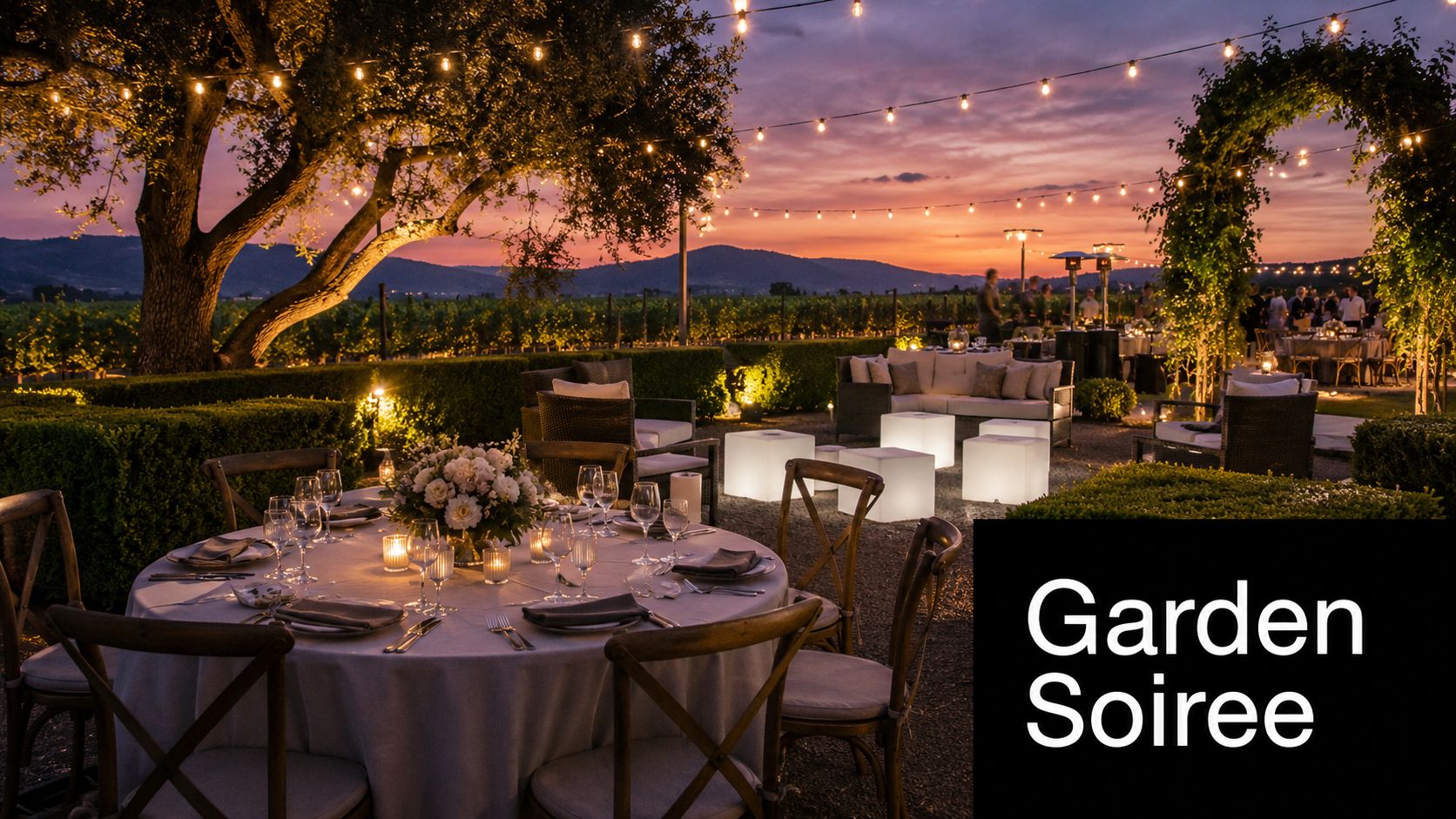
A cozy garden party at twilight with comfortable lounge seating, glowing string lights, and guests mingling.

Some of the best 60th birthday event ideas don't feel formal at all. They feel easy. A garden party is perfect for a host who wants conversation, sunshine, and enough structure to feel special without pinning everyone to one long table for hours.

This format suits Kirstenbosch-style settings, vineyard lawns in Stellenbosch and Franschhoek, or generous private gardens in the Southern Suburbs. Cape Town's Mediterranean climate, with warm, dry summers and wetter winters, is exactly why outdoor lunches, sunset drinks, and evening garden parties are such a natural fit in the city and surrounding wine areas (Adobe Express on 60th birthday settings).

Make it comfortable for every age

A garden event only works if comfort comes first. Older guests need supportive seating, shade, and easy walking routes. Younger guests need room to move. ABC Hire's lounge furniture helps create smaller social pockets so guests can settle naturally instead of hovering awkwardly near the food table.

Use a mix of:

  • Structured seating: Place standard chairs near dining or tea stations for guests who don't want low lounge seating.
  • Relaxed lounge zones: Bean bags and outdoor couches work well for grandchildren, cousins, and the later part of the event.
  • Layered lighting: String lights add atmosphere, but you still need practical lighting at pathways, buffet areas, and loos.

What usually fails is underestimating weather. Even in a beautiful month, wind can flatten a lovely garden setup. Have a tent option, weighted décor, and a backup furniture layout ready before the day starts.

3. Wine Tasting and Vineyard Celebration

A scenic wine tasting setup with glasses, a decanter, and a charcuterie board overlooking rolling vineyard hills.

For Cape Town clients, this is one of the easiest strong concepts to sell. A vineyard celebration already gives you scenery, atmosphere, and a built-in sense of occasion. That matters when you want the birthday to feel special without relying on heavy décor.

Grande Provence, Boschendal, Rickety Bridge, and private cellar or lawn spaces around Stellenbosch all lend themselves to this format. Start with a guided tasting or a casual arrival pour, then move guests into a long lunch or sunset dinner. It suits mature guests particularly well because the pace is naturally calmer.

Use the setting properly

Don't over-style a wine estate. The venue is the theme. ABC Hire is most useful here when you need to extend the venue's built-in offering with extra tables, cocktail furniture, lounge seating, or weather cover in a way that still blends naturally.

Wine barrels can also be used well if they're handled tastefully. They work for welcome drinks, guest books, cake displays, or memory-photo styling. ABC Hire's notes on wine barrels for sale and event styling give a good sense of how to use them without turning the event into a prop-heavy set.

If the family wants to add a travel-style luxury touch for out-of-town guests, there's also inspiration in how premium tastings are packaged in other markets, such as these Seattle luxury wine tour options.

Keep the schedule loose. A wine tasting that runs too long can drain energy before the meal even starts.

The mistake I see most often is making the event all about wine and forgetting that not every guest wants a tasting flight. Always include strong food service, water stations, shade, and a non-alcoholic drinks plan.

4. Casino Night and Entertainment Extravaganza

A group of elegant people enjoying a sophisticated casino night game at a roulette table.

A casino night is for the celebrant who doesn't want solemn speeches and sentimental music all evening. It turns the birthday into a social event with movement, laughter, and enough activity to keep different guest groups engaged.

This works best in hotels, private function venues, or larger restaurants where you can separate gaming, bar, and lounge areas. Radisson Blu-style spaces are ideal because they already understand service flow. Guests arrive, collect play money, move between blackjack or roulette, then drift back to the bar or lounge without dead space.

Where ABC Hire makes the format work

Casino tables alone won't carry the room. You need support areas. ABC Hire's cocktail tables, bar furniture, LED seating, and lounge units help create those pause points where guests can rest, talk, or watch the action.

Use the room in layers:

  • Gaming floor: Bright enough for visibility, but not harsh.
  • VIP corner: A more comfortable seat for the guest of honour and close family.
  • Bar and canapé zone: Slightly separate, so queues don't block the gaming tables.

This format falls apart when it's treated like fancy dress instead of event design. If there aren't enough seats, older guests tire early. If the sound is too loud, the room becomes work. Keep the entertainment polished and the floor plan practical.

5. Destination Weekend Getaway Celebration

A one-night party isn't the only answer. For some families, the better idea is to stretch the occasion across a weekend and let the birthday unfold at a slower pace. This works especially well when relatives are travelling in from Gauteng, overseas, or other parts of the Western Cape.

A lodge in the Winelands, a coastal stay near De Kelders, or a mountain property outside the city can turn the 60th into a shared memory rather than a single dinner. The trick is not overscheduling it. Mature guests usually enjoy one anchor event, one relaxed meal, and plenty of time to rest or catch up.

Keep the logistics lighter than the idea sounds

South African planning decisions often lean toward formal venues, private hospitality, and indoor-outdoor flexibility, which is one reason Cape Town and the Western Cape remain such strong destinations for milestone events (South African hospitality and event-setting context). A weekend celebration should still borrow from that logic. Create one main hosted moment, then let the venue do the heavy lifting around it.

ABC Hire can be especially useful when the accommodation venue is beautiful but under-equipped for entertaining. Extra outdoor dining furniture, cocktail tables, lounge pieces, heaters, and lighting can turn an ordinary patio into the main event space.

What doesn't work is trying to produce a wedding-sized programme for a birthday weekend. People need downtime. If every hour is managed, the guest of honour often ends up more tired than celebrated.

6. Cocktail Reception and Dancing with DJ Entertainment

This is the right choice for a 60-year-old who still loves a lively room. A cocktail format has more movement than a seated dinner, but it can still feel elegant if the layout is done properly.

Think rooftops in town, estate venues that catch sunset beautifully, or country clubs where guests can move easily between terrace, bar, and dance floor. Start with passed canapés and signature drinks while there's still natural light, then shift the room gradually into a dance-led evening. That transition matters. If the dancing starts too early, older guests feel pushed. If it starts too late, the event loses momentum.

Design around the non-dancers too

A good birthday dance event isn't just about the dance floor. It's about giving everyone a way to enjoy the night. ABC Hire's high-top tables, LED bars, lounge seating, and occasional tables help split the event into usable zones.

I'd usually plan:

  • A social entry zone: Drinks and small-group conversation.
  • A seated comfort zone: For guests who want to stay present without standing all night.
  • A dance zone: Clear, visible, and not squeezed between dining furniture.

The DJ should read the room, not perform at it. A 60th is rarely improved by volume alone.

What usually goes wrong is trying to force nightclub energy into a birthday crowd. Keep the music broad, familiar, and danceable. A few era-specific favourites will do more than an aggressive late-night set.

7. Themed Costume Ball or Masquerade Evening

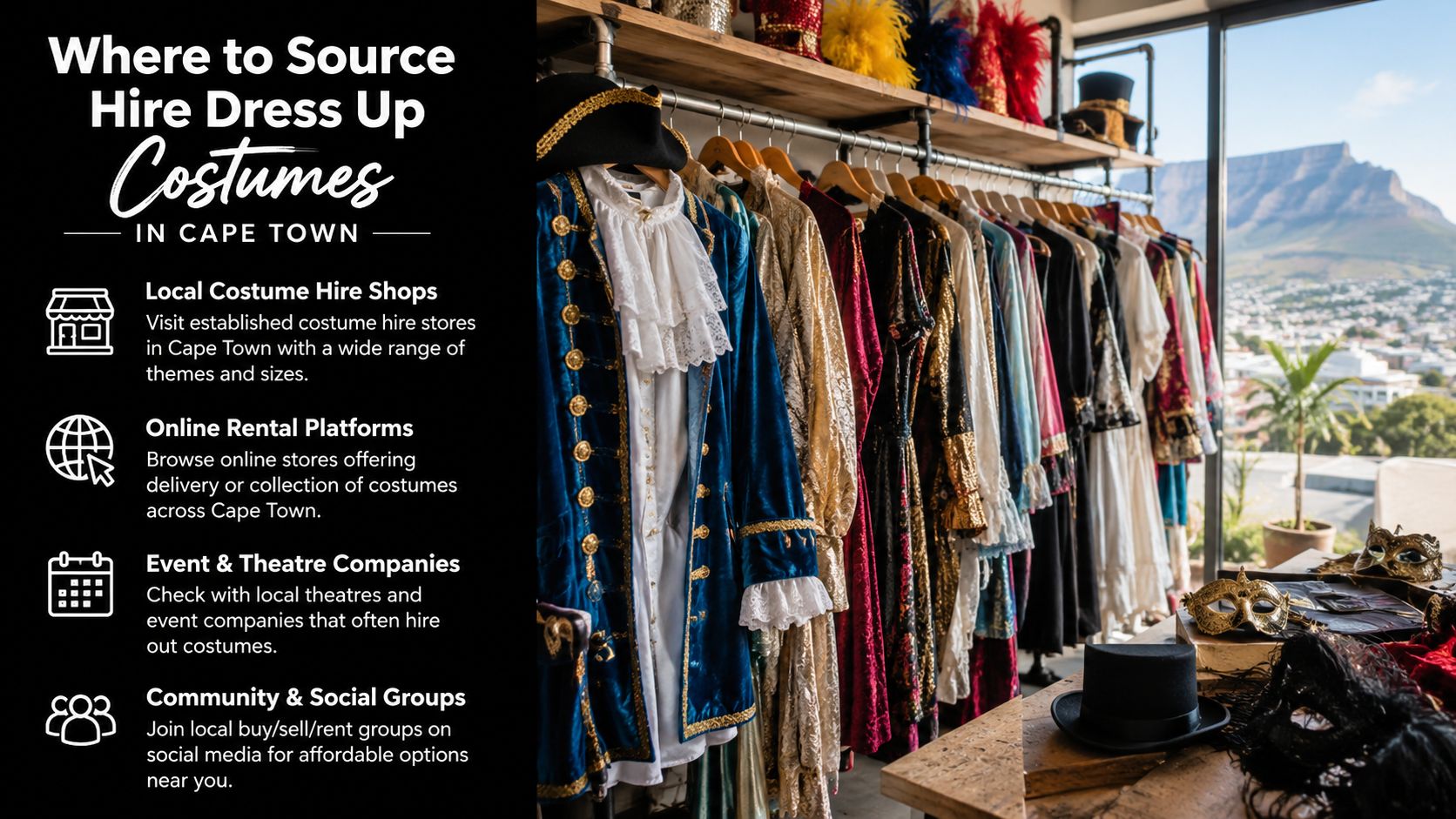
A themed event can be brilliant, but only when the host is passionate about theatre and dress-up. If that's the celebrant's personality, a masquerade, black-tie costume evening, or decade-inspired ball can become one of the most memorable 60th birthday event ideas on this list.

Steenberg-style venues, luxury hotels, and polished country clubs handle this format well because they already have a sense of occasion. The best themes give guests enough direction to participate without making them panic over costumes. “Masquerade elegance” is easier than something overly specific. “Black and white formal” is easier than “recreate a precise historical era.”

Build the theme through the room, not just the invite

ABC Hire's furniture lets you carry the concept visually without custom-building every element. LED pieces can match the theme colour, lounge furniture can frame a photo area, and elegant bar setups make the room feel immersive.

A few practical rules help:

  • Keep the dress code simple: Guests need clarity, not a costume brief.
  • Create one photo focal point: A backdrop, statement chair, or styled entrance gives the event a visual centre.
  • Avoid novelty overload: One strong theme reads as elegant. Five theme ideas in one room reads as confused.

This format fails when guests don't understand what's expected. Send references, examples, and a clear tone. If people arrive feeling underdressed or overdone, the event starts awkwardly.

8. Family Reunion and Multi-Generational Celebration

This is often the most meaningful option. In South Africa, 60th birthdays frequently carry a family-reunion quality, especially when children, grandchildren, siblings, cousins, and long-time friends are all part of the same invitation circle. That makes memory-sharing, family-style seating, slideshows, and story-led moments especially appropriate for the occasion.

The budget reality matters too. South African household spending pressure and the ongoing impact of food, utilities, and transport costs make shorter formats, shared catering, and reusable hire-based décor more practical than expensive one-off entertainment for many families (budget-sensitive birthday planning in South Africa). In real terms, that often means a half-day or early-evening gathering works better than an all-day programme.

Plan for age range first, décor second

A proper multi-generational setup needs zones. One large open space rarely serves everyone well. Country estates, farms, parks with venue infrastructure, and large home properties are the strongest fit.

ABC Hire can make this format far easier to execute with:

  • Dining infrastructure: Tables and chairs that can handle family-style meals.
  • Casual comfort: Bean bags and lounge pieces for teens, cousins, and relaxed conversation.
  • Weather support: Tents, heaters, or fans depending on season.

If grandparents and grandchildren can both settle comfortably, the event is usually on the right track.

What doesn't work is over-programming. Families don't need constant activities. They need seating, shade, decent food flow, and a few meaningful moments like a toast, a slideshow, or a tribute table.

9. Charity Gala Fundraiser with Celebrity Host

A charity-led 60th works for the person whose milestone is tied to purpose. Instead of merely gathering guests to celebrate a birthday, the evening channels attention toward a cause the celebrant cares about. Done well, it feels generous and substantial. Done badly, it feels like a confused fundraiser attached to a private party.

This format suits established venues such as hotel ballrooms, premium event spaces, and country clubs where registration, dining, and an auction or pledge moment can happen cleanly. A host with a public profile can help, but only if they suit the tone of the event. You don't need fame for its own sake. You need someone who can guide the room with confidence.

Keep the event balanced

The birthday still matters. Don't let the fundraiser swallow the celebration completely. ABC Hire's formal seating, bar setups, LED accent pieces, and lounge furniture can help divide the room into donor reception, dining, and social areas without making the evening feel corporate.

The strongest structure is usually:

  • Arrival reception: Enough time for guests to connect and settle.
  • Hosted dinner: Short speeches, clear pacing.
  • Fundraising moment: Focused and respectful, not drawn out.

What doesn't work is trying to imitate a major public gala on a private-party budget. Keep the production values clean and the guest experience comfortable. A polished smaller event almost always feels better than an overstretched grand one.

10. Outdoor Festival-Style Celebration with Food and Market Vendors

A festival-style 60th is ideal for a sociable host with a broad guest list. It suits families who don't want a formal meal and prefer movement, choice, and a more casual atmosphere. This is the kind of party where one guest is eating from a food station, another is sitting in a lounge pocket with a glass of wine, and the grandchildren are running between lawn games.

Agricultural estates, open gardens, and venue lawns with proper access are the strongest setting. In the Cape, this format shines when the weather is good and the celebrant wants energy without black-tie pressure. It's also one of the easiest ways to make a large gathering feel relaxed rather than crowded.

The layout decides whether it works

A festival event must be plotted carefully. Guests need clear movement routes, shade, enough seating, and one visible focal point for speeches or the cake moment. ABC Hire's lounge furniture, cocktail tables, standard seating, lighting, and weather cover are central here because the venue often starts as a blank canvas.

If the weather looks uncertain, tent hire options for Cape Town events should be part of the plan from the beginning, not a last-minute panic. The best setups combine covered dining, open social areas, and a protected service zone for vendors or caterers.

A few details make a big difference:

  • Central celebration point: Guests need to know where key moments will happen.
  • Rest zones: Not everyone wants to stand with a plate.
  • Visible signage: Vendor-style formats need direction to feel organised.

The biggest mistake is assuming “casual” means “self-running”. It doesn't. Festival-style events need more layout discipline than many formal dinners.

Top 10 60th Birthday Event Ideas Comparison

Event Implementation 🔄 (complexity) Resource Requirements ⚡ (speed/efficiency) Expected Outcomes ⭐📊 (quality/impact) Ideal Use Cases 💡 (tips/fit) Key Advantages ⭐
Elegant Dinner Gala with LED Ambient Lighting High, formal seating plans, staging and advance booking High, premium catering, LED furniture, climate control High, upscale ambience, memorable photography Upscale milestone 60th galas at formal venues Sophisticated atmosphere; strong visual impact
Garden Party with Lounge Furniture and String Lights Moderate, flexible layout with weather contingency Medium, outdoor lounge furniture, string lights, power access Moderate, relaxed, intimate socialising Day/evening garden celebrations, casual-elegant events Natural setting reduces décor needs; comfortable mingling
Wine Tasting and Vineyard Celebration Moderate, venue coordination and tasting logistics Medium-High, wine selection, sommeliers, delivery to estate High, educational, refined guest experience, scenic photos Winelands events for wine-appreciative guests Unique, refined experience; built-in conversation starter
Casino Night and Entertainment Extravaganza High, licensing, professional dealers, dedicated gaming spaces High, gaming tables, dealers, entertainment, power infrastructure High, energetic, highly interactive guest engagement Entertainment-focused adult parties and themed evenings Very engaging; lively and memorable entertainment
Destination Weekend Getaway Celebration Very High, multi-day scheduling, accommodation logistics Very High, lodging, transport, activities, extended staffing Very High, immersive, lasting memories and deeper connection Close-family multi-day milestone getaways Multi-day variety; strong bonding and exclusive feel
Cocktail Reception and Dancing with DJ Entertainment Moderate-High, separate zones for cocktail, catering, dance Medium-High, DJ, sound/lighting, high-top and lounge furniture High, energetic socialising followed by dancing Social, active celebrants who want mingling + dance Versatile; balances sophistication and lively entertainment
Themed Costume Ball or Masquerade Evening High, detailed décor, theme communication and coordination High, themed props, specialized décor, costume-friendly setup High, immersive, highly photogenic and memorable Creative formal celebrations (masquerade, decades, black-tie) Striking visuals; strong guest participation through costumes
Family Reunion and Multi-Generational Celebration High, multi-zone planning for varied age groups High, large-capacity seating, diverse activities, catering High, inclusive family bonding and broad appeal Large family gatherings with children, adults, elders Family-focused; activity variety and multi-generational fit
Charity Gala Fundraiser with Celebrity Host Very High, charity partnership, auction logistics, talent booking Very High, celebrity fees, auction items, premium production High, fundraising results, media/PR exposure Celebrants combining milestone with philanthropic aims Meaningful impact; increased visibility and donor engagement
Outdoor Festival-Style Celebration with Food and Market Vendors Very High, permits, vendor coordination, large-site logistics Very High, stages, multiple vendors, power, sanitation High, diverse entertainment, high attendance potential Large-scale, public or community-focused celebrations Broad appeal; variety of activities and attractions

Your Partner in Crafting Milestone Memories

The best 60th birthday event ideas aren't automatically the grandest ones. They're the ones that fit the guest of honour properly. Some people want a polished seated dinner with speeches and fine wine. Others want a shaded garden lunch, a dance floor at sunset, or a whole family gathering that feels warm, familiar, and easy to enjoy. In Cape Town and the Winelands, you can do all of that well. The setting options are already on your side.

What matters next is execution. A beautiful venue can still feel underdone if the seating is wrong, the lighting is flat, or the flow between drinks, dining, and socialising hasn't been thought through. That's where experienced rental support stops being an add-on and becomes part of the event design itself. Guests notice comfort immediately. They notice whether there's enough seating, whether the bar area works, whether the outdoor setup feels intentional, and whether the room carries the right mood once the sun drops.

ABC Hire is especially valuable because milestone birthdays often need flexibility more than spectacle. You might need formal chairs and banquet tables for dinner, then lounge furniture for later. You might need LED furniture to sharpen the atmosphere without rebuilding the venue. You might need bean bags for a younger crowd, heaters for a cooler evening, or a tented backup that protects the event without making it feel boxed in. Those details are what make a birthday feel calm, polished, and worth remembering.

In practice, the strongest 60th celebrations usually share a few things. They respect the age range of the guest list. They don't overcomplicate the schedule. They give the host room to enjoy the event rather than manage it. And they use furniture, lighting, and layout to support the experience instead of treating rentals as an afterthought.

That's also why hyper-local planning matters. A Cape Town rooftop behaves differently from a Constantia lawn. A Stellenbosch wine estate needs a different setup from a Southern Suburbs home. Wind, access, transport, service timing, and sunset all shape the final event. Generic ideas aren't enough. You need an event format that works in this region, for this family, with this kind of guest flow.

If you're planning a diamond jubilee in Cape Town, start with the personality of the celebrant. Then match the venue, atmosphere, and rental plan to that person. Once those three things line up, the rest becomes much easier. With the right furniture, lighting, and practical support in place, the celebration won't just look good in photos. It will feel good in the room, which is what people remember years later.


Planning a 60th should feel exciting, not overwhelming. ABC Hire can help you shape the setup from the ground up, whether you need elegant dining furniture, lounge seating, LED pieces, bean bags, climate control, or a full event rental solution for Cape Town, Stellenbosch, Franschhoek, or Paarl. Reach out to discuss your date, venue, and vision, and build a milestone celebration that feels effortless on the day.

10 Epic 21st Birthday Party Ideas for Cape Town 2026

It is 6 pm on a Friday in Cape Town. The family wants something polished, friends want a proper party, half the guest list is asking about parking, and someone has already suggested “just book a table.” That approach usually falls apart once numbers grow, weather shifts, and the night needs to carry from arrival drinks to speeches, dinner, and dancing.

A good 21st birthday party starts with format, not decoration. The right idea has to suit the guest mix, the venue, the season, and the transport plan. In Cape Town and the Winelands, that usually means choosing a concept that works with the setting instead of fighting it.

South African 21sts also tend to carry more structure than a casual birthday night out. Families often expect a hosted element, friends expect energy, and the organiser needs the event to run on time. Giggster's guide to planning a 21st advises setting the guest list early and keeping a buffer for plus-ones and late additions in the same booking plan, which is practical advice for Cape Town venues where capacity, parking, and shuttle timing matter most. 21st birthday planning guide from Giggster

From an event planning side, the biggest mistakes are predictable. People choose a pretty venue with no wet-weather backup, underestimate seating, skip a proper bar setup, or assume the venue will cover every operational detail. It rarely does. That is where a rental plan makes the difference. ABC Hire's stock gives you the basics that turn a loose idea into a functioning event. Tables, chairs, glassware, lounge furniture, bar counters, catering equipment, and marquee options for sites that need weather cover.

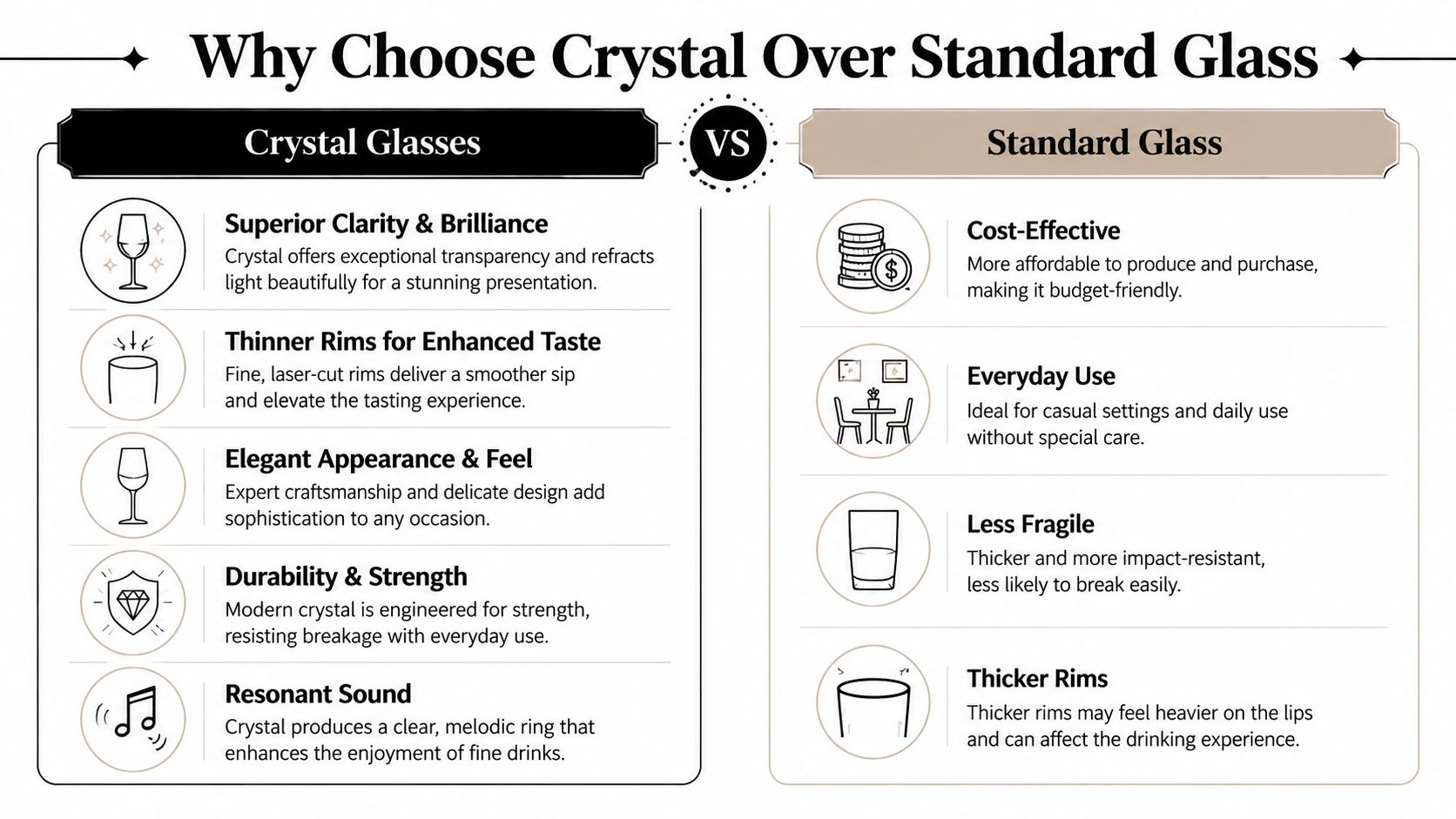
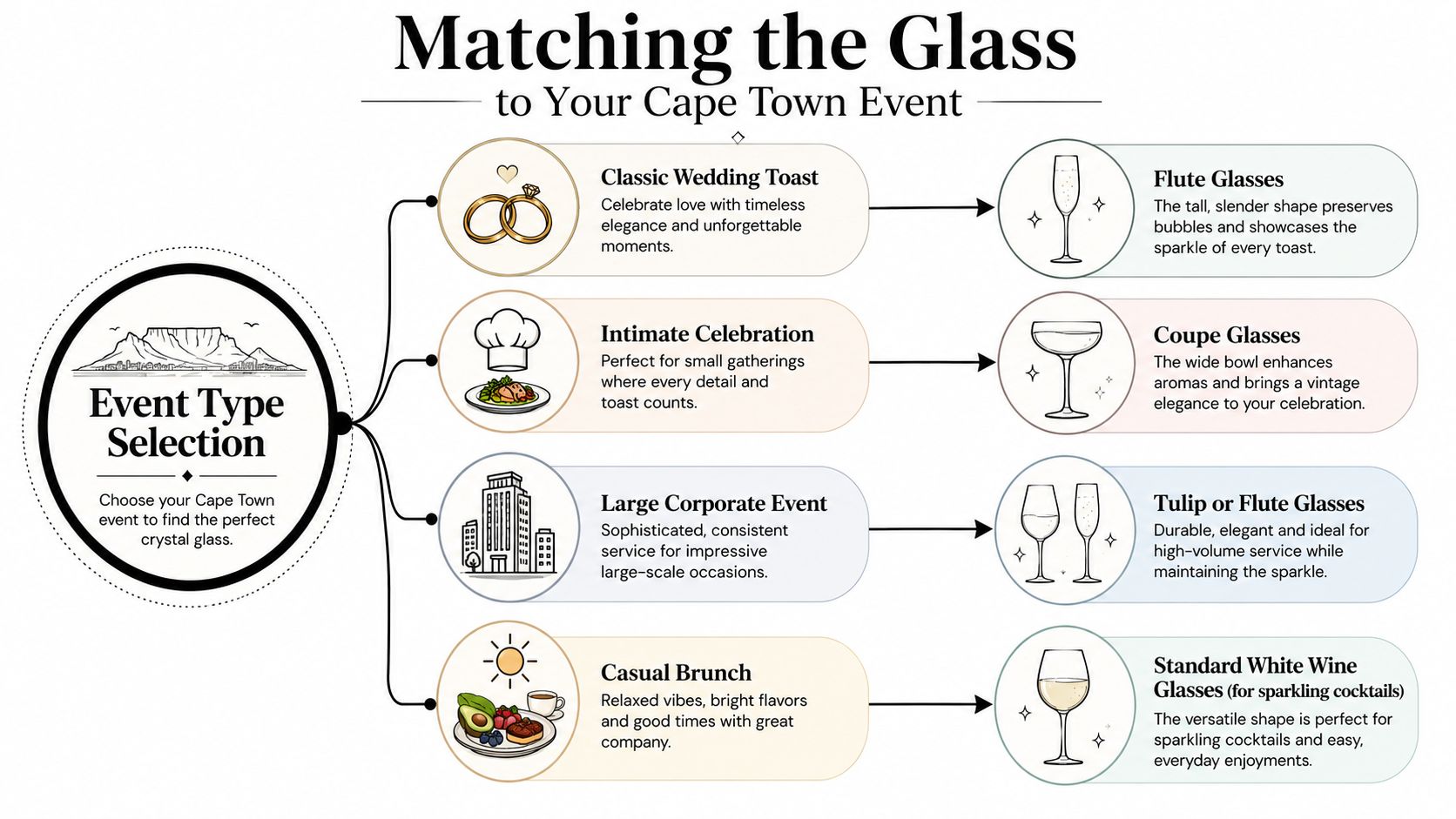
If you are serving wine, bubbly, or cocktails, the glassware also needs to match the style of party. ABC Hire's guide to wine glasses and crystal for events is a useful starting point before you lock in quantities.

The ten ideas below are built for real Cape Town and Winelands conditions. Each one links the theme to local venue types, guest-flow decisions, and the specific ABC Hire items that make setup easier and the event feel properly hosted.

1. Elegant Wine and Gin Tasting Experience

If the birthday person likes a polished atmosphere more than a loud dance floor, this is one of the easiest 21st birthday party ideas to get right in the Cape Winelands. Stellenbosch and Franschhoek already give you the backdrop. You don't need to overdecorate. You need to sharpen the guest experience.

A server pours red wine into a glass on a table set with snacks overlooking a vineyard.

Waterford Estate, Delheim, Grande Provence, Mont Rochelle, and Rickety Bridge all suit this format because they already understand paced hospitality. The mistake people make is treating a tasting like it's enough on its own. It isn't. A 21st still needs a hosted arrival, proper seating pockets, food that lands on time, and a clear transition from tasting to celebration.

Make it feel like an event

Use one long lunch table if the group is small and close-knit. For bigger groups, break the room into cocktail zones with high tables, lounge seating, and one anchor area for speeches or cake. ABC Hire's cocktail tables, quality chairs, and bar counters work well here because they keep the setup elegant without fighting the venue.

A polished tasting also depends on glassware. If you're planning pairings, read ABC Hire's guide to wine glasses and crystal for events before locking the service style.

Practical rule: If guests are tasting first and partying later, serve substantial food before sunset, not after people have already started drifting into “we'll eat later”.

What works best in the Winelands

  • Book transport early: Shuttle vans or designated drivers matter more here than almost any other party format.
  • Keep the menu regional: Canapés, shared platters, and harvest-table service suit this style better than messy finger food.
  • Build in non-alcoholic options: Premium juices, sparkling alternatives, and a proper coffee station stop non-drinkers from feeling like an afterthought.
  • Use sunset well: A late-afternoon booking with a view gives you the photos without forcing a full-night production budget.

This format suits mixed groups especially well. Parents, friends, and partners can all enjoy it without the night feeling too young or too formal.

2. Tropical Beach or Pool Party

Some 21st birthday party ideas only work on Pinterest. A beach or pool party works in real life if you control the layout. The theme is easy. The challenge is wind, wet surfaces, changing temperatures, and guests who need somewhere to sit that isn't a random towel on the lawn.

A refreshing cocktail with a pineapple garnish sits beside a colorful tropical pool float in a pool.

Private villas in Camps Bay and Constantia are usually the strongest option because they give you bathrooms, prep space, and cleaner power access for music and lighting. Beach clubs and pool venues can work too, but only if the booking includes a proper bad-weather fallback. In Cape Town, that isn't optional.

A tropical brief doesn't need heavy décor. Bright towels, citrus-toned florals, punchy signage, and one well-styled bar zone do the job. Then spend the rest of your budget on comfort. ABC Hire's bean bags, bar counters, slush machines, and outdoor-friendly seating are more useful than novelty props.

Keep the zones separate

The best pool parties have clear boundaries. Put food in one dry zone, bar service in another, and swimming away from both. Guests naturally spread out if you give them a reason to.

Cape Town weather is famously variable, and local guidance around outdoor party planning rarely answers the practical question of shelter, lighting, heaters, and backup setups. That's exactly why outdoor event rentals matter in the Western Cape, where wind and weather disruption are recurring planning issues, as noted in this Cape Town-focused party planning discussion.

Don't let the pool become the whole party. The strongest version is a social event with a pool, not a pool with nowhere else to be.

Smart rental mix for this theme

  • Bean bags and lounge seating: Good for poolside socialising without forcing everyone onto dining chairs.
  • Slush machine station: Frozen cocktails and mocktails fit the theme and keep service fast.
  • Shade or tenting: Essential for midday sun and useful later if the wind picks up.
  • LED furniture: Best added for the evening switch, especially if the party runs from day into night.

This theme suits a younger crowd, but it still needs adult planning behind it. Done well, it feels effortless. Done badly, it feels scattered within an hour.

3. Sophisticated Cocktail Bar and Mixology Night

At 9 pm in Cape Town, the weak version of this party starts to show. The bar queue gets long, guests order drinks nobody can make quickly, and the birthday person spends the night solving small problems instead of enjoying it. A good cocktail-led 21st avoids that completely. Keep the venue tight, the menu short, and the service setup clear from the start.

This format works well for a celebrant who wants city-night energy without splitting the group across three venues. In Cape Town, I'd look at a private room in the CBD, a rooftop in Woodstock, or a small function space in Sea Point where sound, access, and staffing are easier to control than in a busy public bar. Winelands options can work too, but only if transport is organised properly. Once guests are driving back from Stellenbosch or Franschhoek, the mixology concept usually loses momentum.

A group of four hikers stands on a mountain summit celebrating while watching a beautiful sunset.

The room needs to feel like a real bar, not a hall with drinks added later. ABC Hire's LED bar units, bar stools, cocktail tables, and lounge seating help create that layout properly. Put the main bar where guests see it immediately, keep one side for service, and leave enough standing space for conversation. If you're still weighing staffed service against a self-contained setup, ABC Hire's guide to mobile bar service for events gives a useful planning baseline.

Build the night in three phases

Start with one welcome cocktail on arrival. Then run a short guided mixology segment for the main guest group. After that, switch to open service with a reduced menu that bartenders can execute fast.

That structure solves two common 21st problems. It gives the event an activity early on, and it stops the bar from becoming slow once the room is full.

I would not offer a full craft list at a 21st. It sounds impressive, but it slows service and pushes costs up quickly. Two signature cocktails, one simple highball, one mocktail, and a wine or beer fallback is usually the sweet spot.

What to get right

  • Choose a venue with a contained footprint: Rooftops and private rooms work best when guests stay connected to one central bar.
  • Keep the menu tight: Drinks should share base spirits and garnishes so service stays quick.
  • Serve proper food: Sliders, loaded flatbreads, skewers, or substantial canapés hold guests far better than light snack bowls.
  • Use rentals to shape flow: Bar stools at the edges, not directly in front of the counter, keep turnover healthy.
  • Create one visual focal point: A back bar display, signage wall, or lit shelving gives the party a clear identity in photos.

This style suits a 21st that wants polish without the overhead of a formal dinner. It also scales well. For 25 guests, you can create a smart private lounge feel. For 60, you can build a full bar-centred party with enough structure to keep the energy steady all night.

4. Festival or Music Concert Experience

If the guest list is large and the birthday person is known for music, this is the version that people remember for years. It also demands the most discipline. Festival styling only works when the flow is managed properly.

A farm venue in Stellenbosch, Paarl, or Franschhoek is usually the cleanest fit. You've got more space for sound separation, parking, and multiple zones. A city venue can work, but once neighbours, loading times, and sound limits become tight, the vibe starts getting trimmed back.

Build a mini-line-up, not a marathon

Most private parties make the mistake of booking too much entertainment with no breathing room. A better format is DJ on arrival, live set during peak energy, then DJ again. Add one acoustic or sax roaming element only if the venue supports it.

Use ABC Hire LED furniture and bean bags to create a proper chill-out section. Festival parties need somewhere for guests to step out of the crowd without leaving the event. That's where rentals do real work. They shape behaviour.

A festival party fails when every area feels the same. Guests need a stage-facing zone, a bar zone, a seating zone, and a quieter edge.

The operational side matters more than the décor

  • Anchor the entrance: Wristbands, welcome signage, and one clear check-in point make even a private event feel intentional.
  • Layer the lighting: Don't rely only on stage lights. Walkways, bar fronts, and seating clusters need their own illumination.
  • Handle weather upfront: Outdoor music events in the Cape need tenting, heaters, or a fallback indoor room.
  • Space the food: One central queue creates frustration. Split food service if the venue is large.

This is one of the strongest 21st birthday party ideas if the host wants scale. It's not the cheapest route, and it's not forgiving if you under-plan. But when the venue, sound, and furniture layout all line up, it has real impact.

5. Glamorous Black-Tie Gala or Formal Dinner

A 21st doesn't have to be casual to feel young. In fact, some of the best milestone birthdays I've seen in Cape Town lean fully into formality. That works especially well when the guest mix includes family, close family friends, and university friends who can all dress up and settle into a structured evening.

Hotels and estate venues are your strongest base here. Think The Twelve Apostles, Taj Cape Town, or a polished Winelands property with a private dining room or ballroom feel. The room should already have presence. You're refining it, not rescuing it.

Formal only works when service is tight

The reason guests enjoy a black-tie dinner is because the evening feels easy from their side. Place cards are clear. Welcome drinks are ready. The speeches happen before people get restless. The dance floor opens at the right moment.

ABC Hire's tables, chairs, and lounge pieces help if the venue needs softening or a better after-dinner transition. I often like formal dining up front, then a separate lounge and dance area after dessert so the night doesn't stay stiff.

Where hosts usually get this wrong

  • Too many speeches: Keep only the speakers who'll contribute meaningfully.
  • No transition plan: Guests need to know when dinner becomes party.
  • Overdecorating the table: Flowers, candles, chargers, and menus can quickly crowd the place setting.
  • Ignoring younger guests: Add a late-night snack or DJ shift so it doesn't end as a family dinner with cake.

A formal 21st works best when the celebrant likes ceremony. It suits milestone photo moments, polished fashion, and a keepsake feel. It also ages well. Five years later, the photos still look strong.

6. Adventure and Outdoor Activity Party

For some people, the last thing they want for a 21st is a room full of chairs and speeches. If the birthday person is active, give them a day that starts with movement and ends with comfort. Cape Town is built for this.

A sunrise Table Mountain hike followed by brunch is the obvious option, but there's more range than that. Ceres zip-lining, Stellenbosch trail riding, sea kayaking, and paragliding-linked celebrations can all work if you split the day properly. The activity is phase one. The celebration is phase two.

Plan the recovery first

Outdoor celebrations fall apart when the organiser focuses only on the adrenaline part. Once guests finish the activity, they need shade, water, somewhere to sit, and proper food. That's where ABC Hire's tables, chairs, bean bags, and outdoor lounge pieces become useful. You're creating a landing zone.

A lawn at a guesthouse, a private garden, or a farm venue near the activity base often works better than trying to host at the adventure site itself. People want to decompress after the action.

The best active 21st is half outing, half hosted celebration. If it stays in “group excursion” mode all day, it won't feel like a milestone.

Good fit for smaller, tighter groups

  • Choose one headline activity: Don't stack too many physical demands into one day.
  • Time brunch or lunch well: Food should be waiting close to arrival.
  • Add low-effort social games: Giant Jenga, cards, or lawn games work after adventure better than anything too competitive.
  • Make comfort visible: Blankets, bean bags, and soft seating tell guests they can settle in.

This is one of the most practical non-bar options. That matters locally because alcohol-related harm is a real concern in South Africa, and a more inclusive format can suit mixed-age guest lists, non-drinkers, and designated drivers, as discussed in this 21st birthday planning article with sober-friendly ideas.

7. Retro or Decade Theme Party

If you want a party with built-in participation, go retro. Guests know what to wear, the playlist writes itself, and the theme carries the room before anyone even gets to the bar.

An 80s neon party works brilliantly with ABC Hire's LED furniture. A 90s or Y2K version suits low couches, bar stools, bean bags, and a layered lounge setup. This theme doesn't need a premium venue. It needs a venue with enough blank canvas to let the styling read clearly.

Pick one era and commit

A common mistake is trying to combine too many references. Choose one decade or one cultural lane within that decade. A full neon 80s brief is stronger than “retro but also disco but also nineties but also rave”.

Music should lead the planning here. Once the playlist is right, build the room around it. Photo wall, costume touch-up station, one dance pocket, one seating zone, and one snack table that fits the mood.

Rentals that make the theme visible

  • LED cubes and bars: Perfect for 80s-inspired colour and nightlife feel.
  • Couches and ottomans: Better for 90s lounge energy or house-party styling.
  • Cocktail tables: Useful when guests are dressed up and circulating often.
  • Bean bags: Best kept to chill zones, not the main dance area.

This format also works well for hosts on a tighter budget because the personality comes from music, dress code, and furniture styling rather than expensive floral work. If the guest list is sociable and likes a bit of theatre, retro is one of the safest 21st birthday party ideas you can choose.

8. Destination Weekend Getaway

Some birthdays are better stretched over a weekend. That's especially true in the Western Cape, where a short drive can completely change the feel of the celebration.

Franschhoek, Stellenbosch, Hermanus, and De Kelders are all strong options depending on whether the birthday person wants wine, coast, food, or outdoor adventure. The smartest version is a central villa, guesthouse, or boutique property with one main hosted event rather than trying to turn the whole weekend into a packed itinerary.

Keep one anchor event

A getaway only feels like a proper 21st if there's one clear celebratory moment. That could be a Saturday dinner, a sunset braai with a dressed-up lounge setup, or a long lunch with speeches and cake.

If the accommodation is stylish but under-furnished for entertaining, bring in ABC Hire tables, chairs, bar counters, and soft seating to enhance the main night. This is one of the easiest ways to make a rental house feel like an event venue.

Best for organised friend groups

  • Set expectations early: Shared budgets, room allocations, and transport plans need to be decided upfront.
  • Leave breathing room: Guests don't need an activity every hour.
  • Pre-book the important parts: Restaurants, tastings, and transport fill up before people expect.
  • Use rentals strategically: Focus on the one meal or party moment everyone will remember.

This theme works because it gives guests more than a party. It gives them a trip, a backdrop, and time together. It's also one of the more forgiving formats if the celebrant doesn't love being the centre of attention every minute.

9. Luxury Private Venue Event with Premium Catering

Guests arrive at a Constantia villa expecting a birthday dinner, then walk into a proper hosted event: champagne at the entrance, a staffed bar on the terrace, dinner under lighting that flatters the room, and a late-night lounge area that keeps the party going after dessert. That is the appeal of a private luxury venue. You control the guest list, service standard, timing, noise level, and overall finish.

In Cape Town and the Winelands, this format works best at private villas in Constantia and Bishopscourt, boutique estates in Stellenbosch, and small exclusive-use venues in Franschhoek where the setting already carries some weight. The mistake I see most often is assuming a beautiful property is automatically event-ready. It rarely is. Many high-end homes have great views and weak flow, too little seating, no proper bar point, and dining furniture that looks good in photos but fails once 30 guests need to sit comfortably.

Build zones with a purpose

Luxury events feel polished because the room plan is clear. Put welcome drinks in one area, keep dinner in another, and create a separate lounge for the later part of the night. Guests should never be guessing where to stand, where to collect drinks, or where speeches are happening.

ABC Hire is useful here because the inventory solves practical venue problems fast. Their premium couches and ottomans help fill oversized rooms without making them feel empty. Dining tables and chairs give you a consistent look across the meal. Bar units matter more than people expect, especially at private venues where the kitchen or house counter is too far from the action.

If you are serving a plated meal or a polished buffet, use ABC Hire's guide to cutlery and crockery hire for events before you lock in your numbers. It is one of the easiest ways to avoid a premium menu being let down by mismatched place settings.

Catering needs the same level of discipline. A private chef or premium caterer suits this format far better than casual drop-off food, because timing, plating, clearing, and staff presentation shape the whole night. For readers comparing international high-end catering approaches, this piece on bespoke catering for Var birthdays is a useful reference point.

Why hosts choose this format

Hosts are spending more carefully, but they are spending on the parts guests notice. Better furniture. Better tableware. Better service. Less throwaway décor.

That shift is easy to see in Cape Town. Clients booking private venues usually want a birthday that feels exclusive without the unpredictability of a public restaurant or club. ABC Hire fits that brief well. LED lounge pieces, bar modules, slush machines, and climate-control equipment all help improve a private venue that looks impressive on arrival but still needs party infrastructure to run smoothly.

10. Gaming and Esports Tournament Party

Not every 21st needs to orbit around alcohol. For a lot of Gen Z hosts, gaming is the social engine. If that sounds niche, it isn't. A well-run gaming party can be one of the most interactive 21st birthday party ideas on this list because guests have a role from the moment they arrive.

You can host this at a gaming café, a tech-friendly event space, or a private venue with enough power, screen placement, and internet stability. The key is to decide whether the event is mainly competitive, mainly social, or a hybrid. Most birthday groups do better with a hybrid.

Build for players and spectators

ABC Hire's bean bags and couches are ideal here because gaming parties need soft seating with sightlines. If only the players are comfortable, half the room disengages. You want one tournament area, one casual gaming area, and one lounge section where people can chat, eat, and wait for the next round.

Lighting matters more than people think. Keep the screen area controlled, then let LED furniture and subtle accent lighting shape the rest of the room. Too much harsh overhead light kills the atmosphere.

The social version usually beats the hardcore version. If the bracket is too serious, non-gamers check out fast.

What to include so it still feels like a birthday

  • Tournament board or screen: Guests like seeing progress in real time.
  • Casual side games: Racing, sports, rhythm, or party games keep everyone involved.
  • Comfort food: Pizza, sliders, popcorn, and easy-grab snacks work better than plated service.
  • Lounge furniture: This is what stops the event feeling like a school computer lab.

If you want a more lifestyle-driven version of the event, there's also inspiration in broader hospitality thinking around bespoke catering for Var birthdays, especially around tailoring food to the social format rather than defaulting to a standard party menu.

Top 10 21st Birthday Party Ideas Comparison

If you are choosing between ten very different 21st birthday formats, the fastest way to get to the right one is to compare effort, spend, guest fit, and venue demands side by side. In Cape Town, that decision usually comes down to wind, transport, guest mix, and how much infrastructure the venue already has versus what you need to bring in from ABC Hire.

Item 🔄 Implementation complexity ⚡ Resource requirements ⭐ Expected outcomes 📊 Ideal use cases 💡 Key advantages
Elegant Wine and Gin Tasting Experience Moderate, venue booking, tasting host coordination, transport planning High, premium pours, glassware, catering, venue fees Memorable guided tasting with a more mature social tone Wine farms in Stellenbosch or Constantia, smaller guest lists, mixed family and friend groups Strong Cape Winelands fit, easy to pair with harvest tables and glassware from ABC Hire
Tropical Beach or Pool Party Low to moderate, permits, weather backup, outdoor setup Moderate, loungers, umbrellas, sound, shade, coolers Relaxed, social, photo-friendly party with strong summer energy Clifton, Camps Bay, private pools, large friend groups Natural scenery lowers décor spend, ABC Hire umbrellas and casual seating solve comfort fast
Polished Cocktail Bar and Mixology Night Moderate, bartenders, licensing checks, bar layout, glassware management Moderate to high, spirits, mixers, bar units, ice, staff Interactive party with high engagement and strong visual appeal City Bowl venues, private homes, rooftop spaces, smaller adult groups Signature drinks add personality, mobile bar counters and stools from ABC Hire make home venues work
Festival or Music Concert Experience High, entertainment booking, staging, sound, permits, crowd planning High, artists, lighting, stage, security, toilets if outdoors High-energy celebration with broad guest appeal Large properties, Winelands estates, music-first groups Big atmosphere, multiple zones, strong value if the guest list is large enough
Glamorous Black-Tie Gala or Formal Dinner High, seating plan, catering timeline, formal styling, staffing Very high, premium venue, dining furniture, linen, service staff Timeless milestone event with polished photos and a structured flow Family-inclusive 21sts, formal venues, winter evenings Clear schedule, strong dining experience, ABC Hire tables, Tiffany chairs, and linens help private venues match hotel standards
Adventure and Outdoor Activity Party Moderate, activity provider booking, timing, transport, safety planning Moderate, guides, gear, transfers, catering Active day out with strong group bonding Hiking groups, water sports groups, daytime birthdays Experience-led format, less spend on décor, easier to keep the schedule focused
Retro or Decade Theme Party Low to moderate, décor sourcing, dress code coordination, playlist or DJ direction Low to moderate, props, lighting, dance floor, furniture Social, fun, and usually easy to fill with energy early Home parties, smaller halls, costume-friendly groups Flexible budget, easy brief for guests, ABC Hire dance floors and themed lounge furniture carry the room
Destination Weekend Getaway High, accommodation, activity bookings, travel logistics, group coordination Very high, villas, transport, meals, deposits Longer celebration with more intimate group time Small close-knit groups heading to Franschhoek, Hermanus, or Langebaan More time together, layered itinerary, better for guests willing to commit to travel costs
Luxury Private Venue Event with Premium Catering Very high, full event coordination, supplier scheduling, custom floorplan Very high, exclusive venue, premium catering, staffing, rentals Fully managed, highly personalised celebration with strong guest comfort High-budget private estates, milestone family events, formal mixed-age crowds Full control over layout and menu, premium look, ABC Hire can furnish blank venues properly
Gaming and Esports Tournament Party Moderate, screens, power, internet stability, tournament scheduling Moderate, consoles or PCs, seating, snack service, tech support Competitive and social atmosphere that suits the right crowd Indoor venues, teen-to-young-adult guest groups, weather-sensitive dates Strong spectator potential, scalable budget, lounge seating from ABC Hire keeps non-players involved

The practical filter is simple. Pick the format that suits your guest list first, then test whether the venue and season support it without forcing expensive fixes on the day.

Your Perfect 21st Starts with a Plan

The best 21st birthday party ideas always come down to fit. Fit for the person, fit for the guest list, fit for the venue, and fit for Cape Town conditions. A theme can look great on a mood board and still fail on the day if there's nowhere to sit, no shelter from wind, no transport plan, or no clear structure to the night.

That's why I always advise hosts to decide on three things first. What kind of energy do you want, who absolutely needs to enjoy the event, and what time of year are you planning around. Once those are clear, the rest becomes much easier. You can choose a venue that supports the format, not one that fights it.

In South Africa, a 21st still carries weight as a coming-of-age milestone, and guests usually expect something more considered than a casual drinks gathering. That doesn't mean everything has to be formal or expensive. It means the celebration should feel intentional. Even a relaxed beach setup or gaming night works better when there's a visible plan for arrival, seating, food, and flow.

For Cape Town and the Winelands, weather deserves special respect. Outdoor parties need a proper backup. Evening events need warmth and lighting. Private homes and small venues often need more furniture than people realise because built-in seating is rarely enough once the whole guest list arrives. That's where rentals stop being an add-on and start being part of the event design.

It's also worth being honest about the role of alcohol. Plenty of 21sts include it, but the strongest parties don't rely on it as the only activity. Good hosts give people other reasons to stay engaged. Tastings, music, games, lounge zones, strong food service, and comfortable seating all help create a night that feels full without becoming chaotic. That's especially important when your group includes non-drinkers, designated drivers, younger siblings, or older family members.

From a planning point of view, the most reliable formats are the ones that give guests something to do and somewhere to be. A wine tasting works because the experience is paced. A black-tie dinner works because the service rhythm carries the room. A pool party works because there are clear zones. A festival setup works because guests can move between energy levels. A luxury private event works because each space has a purpose. That's the thread running through all ten ideas.

If you're still choosing, keep it simple. For a polished crowd, go with wine tasting, cocktail night, or a formal dinner. For a social younger crowd, beach, retro, or festival usually lands well. For a celebrant who wants less tradition, adventure, destination weekend, or gaming makes more sense. There isn't one correct way to turn 21. There is only the version that suits the person and is executed properly.

And if you want something more memorable than a standard photobooth setup, this alternative to photobooths is also worth a look when you're thinking about guest interaction and keepsake moments.

ABC Hire is strongest when the brief needs to move from idea to reality. If you've already picked the theme, the next step is making the venue function like the party you've imagined. LED bars, lounge furniture, cocktail seating, tables, chairs, bean bags, slush machines, heaters, and practical event extras all help turn a good concept into a proper 21st.


Planning a 21st in Cape Town or the Winelands? ABC Hire can help you turn the idea into a workable event with the right furniture, bar setups, lounge pieces, slush machines, and climate-control rentals for your venue. Reach out early if you want the best stock options and a setup that fits your guest list, style, and season.
Rent a Fridge for Drinks: Cape Town Event Guide

You've probably had this moment already. The bar plan looks sorted, the caterer is confirmed, and then someone asks a simple question: where are all the drinks going to stay cold?

That question matters more in Cape Town and the Winelands than most planners expect. A fridge for drinks at a summer wedding in Stellenbosch, a corporate launch in the CBD, or a matric dance in Paarl isn't just a convenience. It affects service speed, presentation, stock control, and whether guests get a crisp beer or a lukewarm can pulled from a struggling venue fridge.

Generic advice about drink coolers usually assumes a home kitchen, steady indoor temperatures, and no interruptions. Event work is different. You're dealing with marquees, garden venues, indoor-outdoor flow, staff opening doors constantly, and the local reality that power planning can't be an afterthought.

Why Your Event's Success Hinges on a Great Drinks Fridge

A planner once described the drinks setup at a Winelands wedding to me in one sentence: “Everything is beautiful until service starts.” That's accurate. The flowers hold. The lighting holds. The timeline usually shifts a little, but it survives. Beverage service is where pressure shows first.

Take a hot afternoon wedding under canvas. Sparkling wine needs to arrive in good condition. Beer must be properly cold. Water and soft drinks have to be easy to grab in volume. If the only cold storage is a venue kitchen fridge already packed with garnish, desserts, and supplier overflow, the drinks programme falls apart quickly.

Guests notice beverage temperature immediately. They may not remember the make of the oven or the wattage of the sound rig, but they will remember warm sauvignon blanc, flat mixers, and a bar queue that never moves.

Service flow matters as much as cold temperature

A proper fridge for drinks does two jobs at once. It holds stock at the right temperature, and it supports the way drinks are served. Those are not the same thing.

An undercounter unit behind a bar helps bartenders work fast without cluttering the visual look of the counter. A glass-door display unit helps guests see options instantly. A larger storage unit in the prep area lets staff restock without running to a distant kitchen every few minutes.

A drinks fridge at an event is part of the service system, not just part of the equipment list.

That's why it helps to think beyond “we need something cold” and instead think in terms of bar layout, stock rotation, and backup planning. If you're comparing venue options, this practical look at a refrigerator for rent for events is useful because it frames cooling as an event operation issue rather than a home appliance decision.

Western Cape events have their own pressure points

Local conditions change the calculation. Heat builds fast at outdoor venues, and indoor-outdoor formats mean fridge doors open more often than they would in a closed restaurant setting. Power reliability is another issue that home-focused buying guides barely touch.

That's also why beverage planning often overlaps with menu planning. If your team is serving iced drinks, canned refreshers, or chilled coffee as part of the guest experience, practical catering resources such as how workplaces can serve cold coffee can spark useful ideas for hot-weather service formats.

A good rental decision saves you from emergency ice runs, awkward bar delays, and stock that's technically cold in places but inconsistent in the glass.

Choosing the Right Fridge Type for Your Event

There isn't one perfect fridge for drinks. There's only the right unit for the way your event serves, stores, and presents beverages.

In Western Cape event work, climate fit changes what works. Standard appliance reviews often assume mild indoor conditions, but hot, dry summers and indoor-outdoor setups around Cape Town, Stellenbosch, Franschhoek, and Paarl create a different cooling problem. For mixed menus of wine, beer, and soft drinks, a single-purpose unit can underperform, which is one reason multi-zone and specialised rental units are increasingly useful in hot-weather service planning, as noted in this beverage cooler category overview.

A comparison chart showing three types of event fridges: display, back-bar, and walk-in cold rooms.

Display fridges for visibility

A glass-door merchandiser works like a visual menu. Guests can see what's available without opening the door repeatedly, and brand teams like them because labels face forward cleanly.

They suit:

  • Brand activations: Product visibility is part of the brief.
  • Self-service zones: Guests can make quick choices without asking staff.
  • Casual private events: Water, mixers, and canned drinks stay easy to access.

The trade-off is appearance versus deep storage. These units look organised out front, but they're not always the right answer if the primary need is bulk stockholding in the back-of-house.

Back-bar fridges for cleaner service

An undercounter or back-bar fridge is the workhorse behind a staffed bar. It keeps the facade tidy and puts key stock within arm's reach of bartenders.

This is often the right choice when:

  • the bar design matters
  • the planner wants bottles hidden from guest view
  • speed at service matters more than visual display

For weddings especially, this style usually integrates better with a custom counter, draping, or a furniture-led bar build.

Bulk cooling for stock management

A chest cooler, upright storage fridge, or cold room setup belongs behind the scenes. Guests don't need to see it. Staff do.

Use this when:

  • Volume is high: Bars need reserve stock nearby.
  • Menus are mixed: Separate overflow stock by category.
  • Service is long: Restocking needs to happen smoothly throughout the function.

A lot of bar problems come from using one attractive fridge for every job. Front-of-house and storage are different jobs. Treat them separately and the whole operation feels calmer.

Portable units for awkward venues

A portable electric cooler or mobile refrigeration unit is useful when the venue layout doesn't support a traditional bar position. Think lawns, temporary bars, dressing areas, supplier holding zones, or satellite beverage stations.

These units are not about glamour. They're about flexibility.

If your planning extends into wider beverage equipment choices, this guide on beverage machines for Oklahoma businesses is worth a look for its broader thinking on matching service equipment to use case, even though the market context is different.

Quick comparison for planners

Fridge Type Best For Capacity Aesthetic Impact
Display fridge Guest-facing beverage display Moderate High visibility
Back-bar fridge Staffed bar service Moderate Low visual intrusion
Bulk storage fridge or cold room Back-of-house reserve stock High Functional only
Portable cooler Mobile or awkward layouts Variable Low to moderate

Selection rule: If guests need to choose the drink, favour visibility. If staff need to serve fast, favour access. If the event needs sustained stockholding, favour storage first and appearance second.

Calculating Fridge Capacity for Your Guest List

Most planners don't struggle because they forgot to order drinks. They struggle because the cold storage plan was too vague.

Saying “we need a big fridge” doesn't help a rental company or a bar team. What you need is a stocking plan based on service style, not guesswork. The shape of the stock also matters. Cans stack differently from wine bottles, water bottles, and large soft drink bottles.

An infographic showing a formula and worked example to calculate the number of fridges needed for events.

Start with a simple planning formula

Use this as a working event estimate:

Number of guests × event duration in hours × expected drinks per guest per hour = service volume to keep cold

That gives you a planning baseline. From there, adjust for the kind of event:

  • Weddings: Arrival drinks may spike demand early.
  • Corporate functions: Soft drinks, mixers, and water often move steadily.
  • Matric dances and school events: Non-alcoholic drinks usually dominate, so shelf layout matters.
  • Private parties: Service can be less predictable if guests self-serve.

Add a practical buffer

Cold storage always needs breathing room. Fridges cool better when stock is organised and air can move. If shelves are jammed edge to edge, recovery after door openings slows down.

That means your target isn't “fit everything somehow”. Your target is “hold key stock cold, accessibly, and with room to rotate”.

A useful check is to separate your drinks into three groups:

  1. Fast movers such as water, soft drinks, and popular beers
  2. Service-led items such as sparkling wine or premium wine
  3. Reserve stock that staff can pull from later

Size guides can assist with this. A quick read through how bar fridge size affects event planning helps translate broad fridge categories into something closer to actual event use.

Match the fridge to the stock shape

A fridge for drinks can be the right size on paper and still be wrong in practice.

Common problems include:

  • Too many shelves for tall bottles: Good for cans, frustrating for wine.
  • Deep but awkward interiors: Stock gets lost at the back.
  • One all-purpose unit: It ends up serving beer, mixers, water, and wine badly rather than any one category well.

Don't calculate only by litres or external dimensions. Calculate by how your actual beverage formats will sit inside the unit and how often staff need to reach them.

For mixed events, I'd rather see two well-positioned units with clear roles than one oversized fridge doing front-of-house display, reserve stockholding, and wine service all at once.

Mastering Logistics Power and Placement

The best fridge for drinks can still fail on event day if the logistics are sloppy. Most of the actual trouble shows up before the first bottle is loaded.

In Cape Town and the Winelands, power reliability changes how you plan refrigeration. For events, that makes rented, backup-capable cooling more practical than relying on a venue's built-in fridge, and local operators increasingly use portable refrigeration that works with generator support so beverage service can continue during load-shedding, a point reflected in this discussion of backup-capable cooling and operational risk.

Two technicians in uniform positioning a large double-door glass refrigerator in a modern event space.

Check the power path before delivery

Ask four questions before the truck arrives:

  • Where is the plug point? Don't assume it's near the bar position.
  • What backup power exists? Generator planning should include beverage cooling, not only lights and sound.
  • How far is the cable run? Long distances affect where you can place units safely and neatly.
  • Who controls the circuit? Venue staff should know what else is drawing from that line.

If the fridge needs to sit well away from the nearest supply, extension planning becomes part of the refrigeration plan. This practical look at using a 20 m extension cord for event equipment is useful for thinking through cable routing and placement without creating guest trip hazards.

Placement affects performance

Fridges need more than electricity. They need sensible positioning.

Put the unit on stable, level ground. A fridge perched on grass, paving that dips, or a makeshift platform will give you trouble. Doors may not seal properly, staff will fight the layout, and the whole setup looks temporary in the wrong way.

Keep enough surrounding space for ventilation. In a hot marquee, this matters even more. A fridge pushed tight against draping, decorative panelling, or a back wall without airflow has to work harder.

Build service around movement

Good placement reduces steps. Bad placement creates queues.

Think about who needs access:

  • Bartenders need quick reach to core stock.
  • Barbacks need a restocking path that doesn't cut through guest traffic.
  • Guests need visible, intuitive drink access if the event includes self-service.
  • Caterers and venue staff need to move around the bar without squeezing past open fridge doors.

A few practical rules solve most issues:

  • Keep reserve stock separate: Don't let the main guest-facing fridge become the only store.
  • Avoid direct sun: Even brief afternoon exposure can work against the cooling cycle.
  • Protect door swing space: A fridge blocked by décor, linen, or furniture slows everyone down.
  • Position near the point of use: Water station fridges belong near hydration points, not hidden in a prep kitchen.

If a bartender has to leave the bar station to fetch every second bottle, the fridge is in the wrong place even if it's technically cold.

One provider in this space is ABC Hire, which offers mobile fridge and bar fridge rental as part of broader event equipment supply in the Cape Town area. That kind of bundled event understanding can help when refrigeration has to fit into a wider furniture, bar, and power layout rather than stand alone as an appliance drop.

Pro Tips for Fridge Setup and Flawless Service

Delivery is only half the job. Setup decides whether the fridge for drinks performs properly once guests arrive.

The most common mistake is loading a warm unit with warm stock and expecting it to catch up during service. It might eventually. Your guests won't wait for that.

An infographic titled Pro Tips for Fridge Setup and Flawless Service with four steps for managing event refrigerators.

Set the right temperature for the stock

For beverage quality, a drinks fridge should operate in a band of about 1.1°C to 10°C, with more specific targets by drink type. Beer is commonly held at 1.1°C to 3.3°C, soft drinks at 1.6°C to 4.4°C, and wine at a warmer 7.2°C to 18.3°C. For mixed-stock events, dual-zone cooling is technically the stronger option because it avoids over-chilling wine or serving beer too warm, as explained in this guide to beverage refrigerator temperature control.

Beer likes a colder range. Soft drinks and water also want a cold service temperature. Wine usually needs a warmer setting than the rest of the bar stock.

That's why a single fridge packed with lager, sauvignon blanc, sparkling wine, mixers, and still water often gives uneven results. If wine quality matters, separate it or use a dual-zone unit.

Load for airflow, not just for maximum count

Cold air has to move. If staff wedge stock into every gap, the centre of the fridge may stay colder than the edges, and recovery after door openings gets slower.

Use these setup habits:

  • Pre-chill drinks before loading: The fridge should maintain temperature, not do all the heavy lifting from ambient.
  • Group by category: Keep beer together, mixers together, water together.
  • Face labels forward only where visibility matters: In staff-use fridges, access matters more than display.
  • Leave operating space: Don't block vents or pack the top shelf so tightly that air can't circulate.

A wedding bar often works best with service stock in front and replacement stock sorted behind the scenes. That stops staff rummaging during peak service.

Keep service disciplined during the event

Fridge performance drops when the door becomes a casual meeting point for staff. Open, grab, close. That rule sounds basic, but it matters.

A few event-day habits help:

  • Assign restocking responsibility: One person should monitor core lines.
  • Check the thermostat display periodically: Don't assume all is well because the unit is humming.
  • Rotate colder stock forward carefully: Use the unit's colder zones strategically if needed.
  • Avoid mixed-purpose loading: Don't let garnishes, desserts, and staff food creep into the drinks fridge.

If wine is central to the menu, it also helps to think about selection alongside temperature. This piece on the wine you should always have in your fridge is useful as a menu-planning prompt for hosts deciding what to keep ready to serve.

Operational habit: The better the stock discipline, the less the fridge has to recover from unnecessary door openings and messy loading.

Budgeting for Your Rental and Choosing a Partner

The cheapest fridge hire option can become the expensive one if it arrives late, looks tired, or isn't suited to the venue. In events, refrigeration value sits in reliability, cleanliness, and fit for purpose.
A rental quote usually includes the unit itself and some form of delivery arrangement. What changes from supplier to supplier is everything around that core: timing windows, distance charges, after-hours collection, setup expectations, and whether the team understands event service or only equipment drop-off.

What to look for in the quote

Read beyond the item name. “Bar fridge” can mean very different things depending on the supplier.

Check for:

  • Delivery and collection terms: Especially for Winelands sites and remote venues.
  • Power expectations: Ask what the unit needs from the venue or generator plan.
  • Cleanliness and presentation: Guest-facing units should look event-ready.
  • Replacement support: If something goes wrong, who do you call and what happens next?

A good partner will ask you questions about guest count, beverage mix, venue access, and service style. A weak one just asks for a date and address.

Price matters less than suitability

A planner's real cost isn't only the hire line on the invoice. It's also the consequence of a poor decision: warm drinks, bar delays, supplier stress, and staff making improvised fixes during service.

Choose the company that can answer practical questions clearly:

  • Can the fridge handle a mixed beverage menu?
  • Is it suitable for guest-facing display or only back-of-house?
  • What happens if power becomes an issue?
  • Will it fit through the venue access points?
  • Can it be positioned where service occurs?

A reliable rental partner reduces decision load. That matters when the rest of the event is already pulling for your attention.

Local knowledge counts here. A supplier who knows Cape Town event flow, Winelands access quirks, and hot-weather service challenges will usually save you time long before the first delivery vehicle leaves the depot.

Frequently Asked Questions About Drink Fridge Hire

How far in advance should I book a fridge for drinks?

Book as soon as your date and venue are confirmed, especially for peak wedding season and year-end functions. Fridges aren't always the first item planners think about, so the scramble often happens late. The earlier you book, the easier it is to match the right unit to your layout instead of taking whatever is still available.

Can I put a rental fridge on grass?

Sometimes, but only if the surface is firm and level enough to support the unit properly. Soft lawn, uneven ground, or a slope can affect stability and door sealing. If the fridge has to go on grass, ask the supplier what base or platform is appropriate.

Is one fridge enough for wine, beer, and soft drinks?

Sometimes for a small event, but it often isn't the best setup for a mixed menu. Different drinks serve better at different temperatures, and a single unit can force compromise. If wine quality matters and beer volume is high, separating stock usually gives better results.

Can a venue's built-in fridge do the job?

It may help, but I wouldn't build the full drinks plan around it without checking capacity, location, access, and who else needs that fridge on the day. Venue fridges are often already committed to catering, garnish, or house stock. Dedicated rental cooling gives you control.

Can fridges be branded for a corporate event?

In many cases, yes, depending on the fridge type and the branding method. Glass-door units and guest-facing merchandisers are the usual starting point because they support visibility. Ask early, because branding often needs coordination with the hire company and your production team.

How early should the fridge be switched on?

Early enough for the cabinet to pull down properly before loading starts. The key point is not to treat arrival and service time as the same thing. Give the unit time to stabilise, then load with already chilled stock where possible.

What's the biggest day-of mistake?

Overloading and poor placement. A fridge hidden in the wrong spot, crammed too tightly, and opened constantly won't perform the way you need it to. Most event cooling problems come from setup choices, not from the idea of renting refrigeration in the first place.


If you're planning an event in Cape Town, Stellenbosch, Franschhoek, Paarl, or the surrounding areas and need a practical cold-storage setup, ABC Hire can help you assess the right fridge for drinks based on service style, venue layout, and event logistics.

Wooden Serving Board Hire: A Cape Town & Winelands Guide

Guests are due in under an hour. The florist is adjusting the final stems, the bar team is chilling bottles, and the food table still looks flat. Then the boards arrive, the cheeses come out of refrigeration, the charcuterie is layered properly, and the whole room changes. A well-chosen wooden serving board doesn't just hold food. It gives the table weight, warmth, and a sense that the event has been styled with intention.

That matters in Cape Town and the Winelands, where settings do a lot of visual work on their own. A vineyard lawn in late afternoon light doesn't need fussy styling. A city launch in an industrial venue doesn't want rustic clutter. The board you choose has to support the mood, the menu, and the movement of service.

It also has to survive the reality of local events. Outdoor heat, breeze, transport to remote venues, quick turnarounds, and food that sits beautifully for photos but still needs to be practical for guests. That's where many people get stuck. They know they want the premium grazing-table look. They're less sure about board size, timber tone, food safety, or whether buying a stack of boards is even sensible for one event.

Elevate Your Event with the Perfect Grazing Board

A grazing setup often becomes the place guests gather first. At a Winelands wedding, that usually happens before anyone has found their seat. Guests drift from the welcome drinks to the harvest table, and the boards become part of the atmosphere. They soften trestle tables, break up crisp linen, and make abundant food feel generous rather than over-styled.

The best setups don't look crowded with props. They look grounded. Wood does that naturally because it brings texture and contrast to glassware, ceramics, polished cutlery, and pale napery. If you're layering event décor, it helps to think about the board as part of the tabletop composition rather than an afterthought. A good reference point is how surface textures work together across the whole setting, especially when you're combining serving pieces with candles, florals, and place settings, much like the styling ideas in this guide to decor on table layouts.

Where the board changes the whole look

At vineyard weddings, long rectangular boards usually suit the setting because they echo banquet tables and create a relaxed, generous line. They work well with torn bread, fruit, hard cheeses, and shared-style service.

At a corporate launch, the brief is often cleaner. Guests are standing, circulating, and balancing a drink in one hand. In that setting, smaller boards placed in clusters across cocktail tables or presentation stations often work better than one oversized centrepiece.

Practical rule: If guests need to move while they eat, style several accessible boards instead of one hero board that causes a queue.

Ambition is easy. Practicality is the trick.

Most planners start with the visual goal. They want a table that feels premium, editorial, and generous in photographs. The substantive decisions come immediately after that.

  • Board scale: Too small and the food looks cramped. Too large and it can feel under-filled.
  • Board style: A chunky rustic slab suits a farm-style lunch, but it can look heavy at a modern product launch.
  • Venue conditions: Sun, wind, and moisture all change what works on the day.
  • Service flow: Staff need room to replenish, clear, and reset without destroying the styling.

Wooden boards have a long history in food preparation and serving. Wooden chopping boards are documented as early as 3000 BC in ancient Egypt, and by the Middle Ages wooden boards had become common in affluent European households, later evolving further in the early 1900s when hard maple block construction improved durability, as noted in this history of wooden board development. That heritage still matters because the appeal of wood hasn't changed. It feels useful, tactile, and welcoming.

For events, that same appeal needs to be managed with a stylist's eye and a production mindset. A beautiful board is only successful if it looks right in the room, holds up through service, and doesn't become one more fragile item to worry about.

Selecting the Ideal Wooden Serving Board for Your Event

Some boards are decorative. Others are event workhorses. You need to know the difference before you build a menu around them.

A board for a plated bread service isn't the same as a board for a full grazing spread. A board that looks lovely in a showroom can be awkward once caterers start placing soft cheese, cured meat, preserves, and warm canapés on it. Selection starts with appearance, but it should end with function.

A collection of various rustic wooden serving boards of different shapes and sizes displayed together.

Start with material

The use of wooden boards for serving has deep roots. By the Middle Ages, wooden cutting boards were common in affluent European homes, with durable hardwoods like maple and oak valued for their ability to withstand use while protecting knife blades, as described in this overview of historic wooden board use.

For modern events, material choice still affects performance.

Wooden Board Material Comparison Best For Aesthetic Care Level
Oak Hearty grazing tables, bread service, rustic weddings Classic, sturdy, grounded Moderate
Acacia Rich food displays, premium canapé stations, darker styling schemes Warm, varied grain, elegant Moderate
Bamboo Lighter casual setups, daytime events, clean modern styling Light, neat, contemporary Moderate to higher attention for presentation consistency

Oak reads solid and established. It works particularly well when your venue already has natural texture, such as wine barrels, timber tables, stone walls, or lawn settings.

Acacia has stronger colour variation. That can be beautiful with pale cheeses, figs, crackers, and brass-toned serving ware, but it's less predictable if you want every board to match exactly in photographs.

Bamboo gives a cleaner visual line. It often suits daytime corporate events, wellness launches, or contemporary catering where the food palette is bright and minimal.

If you like handled pieces for easier placement and movement, this feature on a wooden tray with handles is useful for thinking through grip, portability, and presentation.

Shape controls the way guests move

Rectangular boards create direction. They're the best choice when you want a strong visual runner down a long table or you're dividing a spread into sections like breads, charcuterie, cheeses, and fruit.

Round boards feel more social and self-contained. They suit smaller clusters, side stations, lounge setups, and any event where guests gather in pockets rather than one long line.

Long narrow boards are excellent for:

  • Table runners of food: especially on harvest tables
  • Passed visual impact: when staff carry them to stations before final placement
  • Linear styling: where repeated shapes create rhythm down the table

Round boards are better for:

  • Intimate stations: four to eight guests circling naturally
  • Cocktail environments: where traffic comes from all sides
  • Soft visual breaks: between florals, candles, or signage

A board should make service feel easier. If it forces guests into a bottleneck, it's the wrong shape even if it photographs well.

Size should match the menu, not just the guest count

People often ask for a formula, but event styling rarely rewards rigid maths. A canapé-led event needs less board space per person than a grazing meal where the board is doing the work of a starter or shared main moment.

Use this decision guide instead:

  1. For light nibbles, choose smaller boards spread across multiple points so guests can reach them quickly.
  2. For a feature grazing table, use larger boards with space left between food groupings. Empty negative space is part of the premium look.
  3. For full grazing service, think in zones rather than one giant board. Bread on one, charcuterie on another, cheese on another, condiments in bowls between them.

The mistake I see most often is overcommitting to one oversized board. It sounds dramatic, but it's harder to transport, heavier to style on site, and awkward to replenish cleanly. Several coordinated boards nearly always look better and work better.

Artful Styling and Presentation with Cape Flair

A strong board starts with placement, not food. Put it in the wrong spot and even beautiful produce looks accidental. Put it in the right spot and the whole table feels intentional before a single olive lands.

At Cape events, local ingredients do a lot of the visual heavy lifting. You don't need imported excess to make a board feel luxurious. Biltong, droëwors, local cheeses, fresh figs, stone fruit, preserves, nuts, olives, crusty bread, and seasonal greenery already give you colour, texture, and a strong sense of place.

A wooden serving board featuring blue cocktails, cheese, cured meat, olives, pickles, and sliced radishes.

Build the board like a stylist

Start with anchor points. These are the visual stops that make the arrangement feel stable. Small bowls of olives, ramekins of preserves, and little dishes for honey or chutney work well because they hold wet ingredients and break up the flatter elements.

Then create a line through the board. On many event boards, that line is a folded charcuterie run through the centre. Some stylists call it a salami river. Whether you use salami, bresaola, or neatly layered cured meat, the principle is the same. It gives the eye somewhere to travel.

After that, place your larger pieces.

  • Cheese first: hard wedges and soft rounds shape the composition
  • Meat next: folded or rolled for height
  • Carbs around the edges: crackers and sliced bread frame the board
  • Fresh produce last: figs, grapes, radishes, and herbs fill gaps without looking forced

Make abundance look edited

The premium look isn't about packing every centimetre. It's about contrast. Dense clusters next to breathing room. Matte bread against glossy olives. Pale cheese against dark timber.

Three styling habits separate polished boards from messy ones:

  • Vary height: stack crackers loosely, fold cured meats, and let grapes spill slightly
  • Repeat colours: if you use fig, repeat that tone elsewhere with cured meat or preserves
  • Keep garnish relevant: rosemary, thyme, or subtle fynbos can work, but only if it suits the food and doesn't smell distracting

Leave some timber visible. Guests need to see the board itself for the display to feel premium rather than overfilled.

Cape ingredients that always earn their place

For Winelands weddings, I like boards that echo the local scenery and the season. That usually means local fruit, earthy tones, and ingredients that can hold their shape during service.

A few combinations work consistently well:

  • For a vineyard afternoon: brie, mature cheddar, fig preserve, green grapes, seeded crackers, walnuts, and torn sourdough
  • For a Cape heritage angle: biltong, droëwors, hard cheese, pickled onions, roosterkoek pieces, and chutney in small bowls
  • For a modern city launch: clean-cut cheeses, charcuterie ribbons, cornichons, radishes, olives, and crisp flatbreads with restrained greenery

Style for the event type, not your mood board

Rustic weddings can carry more texture. Boards can be broader, looser, and layered with fruit and bread in a more generous way.

Corporate boards need cleaner edges. Guests often grab quickly, so pieces should be easier to lift, less drippy, and arranged with more obvious access points. That means fewer sprawling garnishes and better spacing.

For private milestone celebrations, the sweet spot is usually somewhere in the middle. Guests want the warmth of abundance, but hosts still need food that's easy to refresh without pulling the whole display apart.

A board should look inviting from a distance and easy to eat from up close. If it only does one of those jobs, it needs refining.

Essential Food Safety and Board Care for Events

Wood still gets unfairly treated as the risky option by people who assume plastic is automatically more hygienic. In event work, that assumption can lead to bad habits, especially when plastic boards are heavily scored, poorly cleaned, or used far beyond their best condition.

A 2020 scientific study demonstrated that wood has inherent antimicrobial properties, with bacteria surviving for significantly less time on wooden surfaces than on stainless steel, polycarbonate, and aluminium, according to this summary of wood's antimicrobial performance. That matters because it shifts the conversation away from myth and back to proper handling.

A person wiping down a wooden serving board with a green cloth against a black background.

What smart event teams do on the day

The board itself isn't the whole food-safety story. Service conditions matter just as much. Outdoor heat, long setup windows, and repeated guest contact all affect how food should be managed.

These habits make the biggest difference:

  • Use barriers where needed: parchment paper under very oily, acidic, or strongly coloured items can protect the board finish and simplify cleanup
  • Clean spills fast: soft cheese, jam, chutney, and fruit juices shouldn't sit on the surface any longer than necessary
  • Dry properly after cleaning: boards should never be packed away damp
  • Separate prep from presentation: don't treat the styled board as an all-purpose kitchen chopping surface during service

What doesn't work

Leaving boards in the sun while the catering team handles something else is a common mistake. So is washing them quickly and stacking them flat while still damp. Both shorten the board's useful life and raise the risk of odour, staining, or warping.

Another bad habit is overloading one board with every wet ingredient on the menu. It might look lush for ten minutes, then the crackers soften, oils spread, and the board starts looking tired.

Professional-looking boards stay fresh because someone is managing them during service, not because they were styled beautifully once.

If your team is refining backstage cleaning routines, this article on preventing mold growth via WipesBlog.com is useful as a general reminder about moisture control, airflow, and why damp equipment should never be closed away before it has dried properly.

Why managed stock is often the safer option

For one-off hosts, board care tends to become an afterthought. The event ends, the leftovers are dealt with, and the boards are washed late, stored badly, or forgotten in a garage or scullery. That's where quality drops fast.

Professionally maintained stock usually performs better because the condition of the board is part of the service standard. Surfaces are checked, cleaned properly, dried correctly, and rotated before they become tired-looking. For events where presentation and hygiene both matter, that level of consistency is worth more than owning a pile of boards that only look good on day one.

The Smart Way to Source Boards in Cape Town and the Winelands

Buying boards sounds sensible until the logistics arrive. Then you're storing bulky items, transporting them to venues with narrow access, protecting them from damage, and hoping they still look polished after multiple uses.

That problem gets sharper in the Cape. Wooden boards used for events in South Africa face specific durability challenges, including high UV exposure at outdoor venues and coastal salt air in Cape Town, which means rental stock needs specialised maintenance and treatment protocols between uses, as noted in this overview of South African event board challenges.

A four-step infographic illustrating the smart sourcing of wooden serving boards for professional event planning.

Why hiring usually wins

For most weddings, launches, and private functions, hiring makes more sense than purchasing. Not because buying is wrong, but because events place unusual pressure on serving ware.

You're dealing with:

  • Transport risk: large boards knock against each other in transit
  • Storage issues: timber needs suitable conditions between events
  • Style variation: one event may need pale minimal boards, the next darker rustic pieces
  • Maintenance labour: proper cleaning, drying, and conditioning takes time

Hiring lets you match the board selection to the brief instead of forcing every event to work around what you own.

A practical sourcing process

The easiest sourcing process is usually the simplest one.

  1. Confirm the event style
    Rustic wedding, polished corporate launch, private birthday, or a formal school event. The brief shapes the board choice.

  2. Map the food format
    Shared grazing, bread service, canapé stations, or mixed displays. This tells you whether you need statement boards, clusters, or both.

  3. Check venue realities
    A Stellenbosch farm, a Franschhoek estate, and a Seapoint rooftop all ask different things of the setup team.

  4. Choose convenience over clutter
    If the boards need to arrive clean, consistent, and ready for service, professional hire reduces the variables.

For anyone balancing boards with the broader event setup, this guide to furniture for hire in Cape Town is a useful reminder that serving pieces never stand alone. They need to work with tables, seating, bars, and the service footprint around them.

The smartest event purchases are often the ones you don't make. If an item needs ongoing care, storage, and transport planning, hiring it can protect both your budget and your sanity.

Where rental is especially useful

Hiring is particularly practical for destination weddings in the Winelands, corporate teams hosting roadshow-style activations, and private clients who want a refined food display without building a permanent inventory.

It also helps when your brief changes late. A caterer may expand the grazing station. A planner may decide to split one table into three. A venue may shift service indoors because of wind. Flexible stock solves those problems more cleanly than trying to improvise with whatever boards happen to be in a cupboard.

Bringing Your Unforgettable Display to Life

A memorable grazing display isn't built by accident. It comes from matching the wooden serving board to the occasion, styling it with restraint, and treating food safety and board care as part of the design process rather than backstage admin.

That's why the best event tables feel effortless. The materials suit the venue. The food is arranged for both beauty and access. The practical side has already been handled before the first guest arrives.
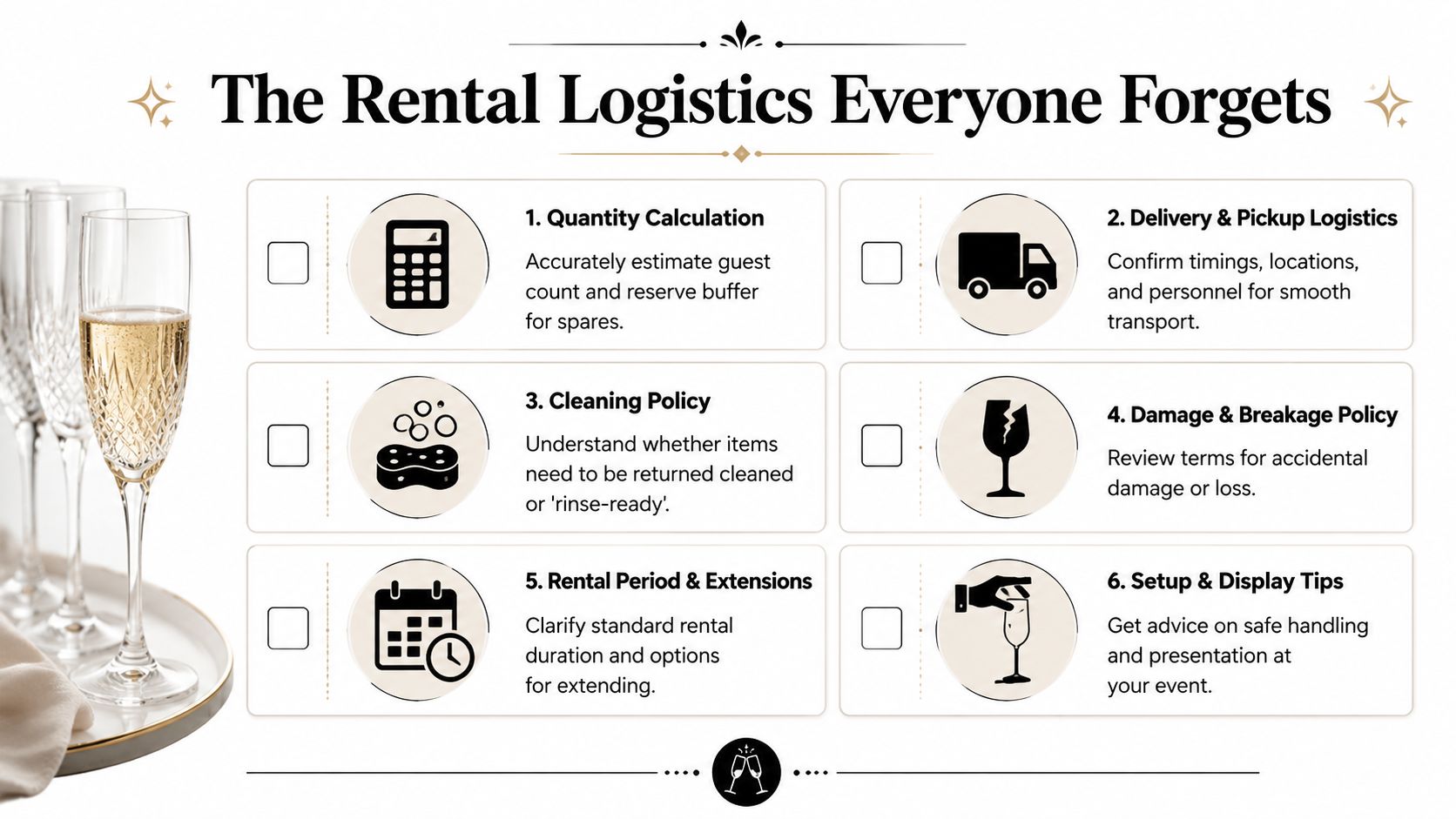
If you're planning the broader guest setup at the same time, it can help to look at related event layout ideas such as Premier Marquee Hire's table and chair services, especially when you're thinking about how serving stations, seating, and circulation work together.

The strongest displays in Cape Town and the Winelands always strike the same balance. They feel generous, relaxed, and polished, but they're grounded in good choices. The right boards make that possible. Professional hire often makes it easy.


If you're planning an event in Cape Town, Stellenbosch, Franschhoek, Paarl, or the surrounding areas, ABC Hire can help you build a polished event setup with quality rental pieces that work beautifully in real venues and real service conditions.

10 30th Birthday Bash Ideas for Cape Town & Winelands

You book a beautiful Cape Town venue, send the invites, and then the primary work starts. The wind picks up in the late afternoon, half your guests want to dance, the other half want to sit with a good glass of wine, and suddenly a generic party plan looks very flimsy. A 30th works best when the setup matches the guest mix, the venue rules, and the way people move through the night.

That is why broad birthday roundups rarely help much in this region. A rooftop in the CBD needs a different furniture plan from a Stellenbosch garden, and a Franschhoek dinner party has different transport and timing pressures from a Sea Point cocktail event. I always start with flow first. Arrival drinks, seating, service access, weather backup, and where the energy should build after dinner.

Hiring usually solves more problems than buying. Good rental pieces give the party a polished finish, keep setup efficient, and spare you from storing, transporting, or clearing bulky furniture the next day. If you want ideas for elegant party rentals for Cape Town celebrations, start with the event style and guest experience, then choose stock that fits the venue footprint instead of forcing the venue to fit the furniture.

The 10 ideas below are built for Cape Town, Stellenbosch, Franschhoek, Paarl, and nearby areas. They are practical formats you can execute, with the kind of lounge seating, bars, tables, lighting, and decor rentals ABC Hire supplies for local parties that need to look premium and run properly. For hosts considering statement lighting or contemporary visual elements, Jumbotron Screens, LLC architectural LED solutions also show how LED features can shape a space without making it feel overdone.

1. Glamorous LED-Lit Rooftop Dinner Party

Silhouetted couple enjoying drinks at an elegant outdoor rooftop restaurant overlooking the city skyline during sunset.

Guests step out of the lift, take a drink from a glowing bar, and hit Table Mountain or harbour views before they even ask where to sit. That is why rooftop dinners work so well for a 30th in Cape Town. They give you a built-in sense of occasion, but only if the setup is handled properly.

This format suits hosts who want dinner to feel polished rather than loud. In the city, that could be a CBD terrace, a Sea Point rooftop, or a V&A-facing venue. In the Winelands, the same idea shifts into a terrace dinner with open valley views and a slower pace.

What decides whether it feels premium or clumsy is the floor plan. Rooftops punish bad layout fast. Guests bunch at the entrance, servers fight for space, and windy corners sit empty. I usually zone the event in three parts: a visible arrival bar, a defined dining area, and a looser after-dinner pocket for drinks and photos. LED cocktail tables work well near the entrance because they help with wayfinding and immediately set the tone. Deeper in the venue, keep the dining setup warmer and less flashy.

For furniture and styling, use pieces that can handle transport, tight lift access, and exposed conditions. elegant party rental options from ABC Hire are useful here because rooftops often need a cleaner, more modular setup than ground-level venues. For visual references, Jumbotron Screens, LLC architectural LED solutions show how lighting can shape a venue without making it look like a nightclub.

What makes it work

Keep the colour story tight. One or two LED tones are enough. Warm white with a restrained accent colour usually photographs better than full-spectrum lighting, and it keeps faces, florals, and food looking right.

Timing matters just as much. Start cocktails before sunset so the skyline does some of the work for you, then move guests into dinner as the light drops. If the event starts too late, you lose the view and the rooftop becomes just another dark venue with wind.

Practical rule: Secure the rooftop first, then solve wind, warmth, and access. Guests will forgive a shorter menu. They will not forgive freezing through speeches with nowhere to rest a glass.

A few decisions make this format easier to execute:

  • Arrival flow: Put the first drinks point where guests naturally stop, not in a hidden corner.
  • Weather backup: Add heaters, throws, or a covered fallback plan for Cape Town wind after dark.
  • Service routes: Leave clear lanes for staff so dinner service does not cut through guest clusters.
  • Access details: Send lift instructions, parking notes, and entry information before the event day. Rooftops are awkward when guests arrive lost.

2. Chic Garden Party with Lounge Seating

An outdoor garden lounge area with comfortable bean bag chairs and floral arrangements on a sunny lawn.

If your idea of a great 30th is social rather than showy, a garden party is one of the strongest options in Cape Town and the Winelands. It suits mixed-age guest lists, it photographs beautifully in natural light, and it gives you flexibility on food style. You can do grazing, canapés, harvest tables, or a relaxed braai with much better presentation than people expect.

This is also one of the easiest formats to enhance through furniture. Instead of rows of standard chairs, build lounge pockets. Use upholstered seating, bean bags for a casual zone, a few standing cocktail tables near drinks, and one hero area for the cake and speeches. The setup feels intentional and guests naturally spread out rather than clustering around one table.

Where hosts usually get it wrong

Too many hosts treat the lawn as the venue plan. It isn't. You still need defined zones, shade, and a weather fallback. A beautiful garden can feel flat if everything sits in one open patch.

A late-afternoon slot is usually best, especially in Stellenbosch, Franschhoek, Constantia, or private gardens in the southern suburbs. It gives you softer light and a gentler temperature curve. Add insect repellent discreetly in baskets and keep lighting low enough to feel warm, not theatrical.

Garden parties only feel relaxed when the host has already dealt with shade, wind, and toilets.

For a “dirty 30” spin that still feels grown-up, create a glow corner after sunset with LED side tables and bar units, while the rest of the lawn stays softer and more natural. That contrast works particularly well at vineyard homes and estate gardens.

3. High-Energy Dance Club Experience

A modern, colorful LED-lit bar counter at a nightclub event with a DJ performing in the background.

Some 30th birthday bash ideas should be loud, late, and unapologetically social. If the birthday person is the one who keeps the dance floor alive at every wedding, don't force them into a formal dinner. Give them a club-style night with a private section, serious lighting, and a DJ briefed properly.

Cape Town gives you good options for this. A cocktail venue in town, a private section in Camps Bay, a venue with DJ capability in Stellenbosch, or even a blank-canvas event space in the CBD can all work. The key is to separate the dance energy from the rest of the room. Guests who want to talk still need seating and bar access without shouting over the bass all night.

Build the room around movement

LED bars, lit cubes, and high-tops work well in this format because they visually anchor the room after dark. This isn't the place for delicate decor details that disappear once the music starts. Focus on shape, light, and circulation.

If you're hiring in lighting support, ABC Hire's guide to par can lighting is useful because wash lighting changes the room far more effectively than random decorative fixtures. Use it to define the dance floor, entrance, and VIP seating.

A practical nightclub-style setup often includes:

  • A proper song brief: Give the DJ your must-play list, your never-play list, and key songs tied to friendship groups.
  • Transport planning: If people are drinking, organise rides, shuttles, or a clear pickup zone.
  • A soft seating pocket: Not everyone wants to stand for hours, especially at a 30th with mixed groups.

The mistake here is trying to please everyone with one format. Club-style parties work when they commit. If your crowd wants deep conversation and a quiet dinner, choose another idea.

4. Elegant Wine Tasting and Dinner Experience

A wine tasting dinner is one of the most naturally local 30th birthday bash ideas you can choose. In Stellenbosch, Franschhoek, Constantia, and Paarl, you already have the setting. What makes it memorable is curation. A rushed tasting in a public cellar door won't feel like a milestone event. A private or semi-private tasting followed by a paced dinner usually will.

This format suits smaller groups especially well. If the birthday person values food, wine, and a calm atmosphere, a seated estate evening beats a noisy venue every time. Delaire Graff, Grande Provence, Babylonstoren, Steenberg, and similar estates all give a different mood, from sleek to rustic-luxury.

Keep it personal, not performative

Ask the estate to tailor the experience to the guest of honour's actual preferences. If they love old-world styles, build around that. If they want lighter, easier drinking with strong food pairings, keep the tasting accessible. The point isn't to impress people with jargon.

You'll also want transport sorted before invitations go out. Wine dinners fall apart when half the guests plan to drive and then spend the evening negotiating around it. Make the decision for them with a shuttle or central collection point.

A few details matter more than fancy extras:

  • Menu balance: Heavy, rich courses can flatten the room. Keep the progression clean.
  • Seating plan: Put conversationally compatible guests together. Long silent tables are a waste of a good venue.
  • Photo timing: Vineyard shots and sunset portraits need to happen before everyone sits down.

This style doesn't suit guests who want a chaotic, dance-heavy night. It's for people who want a proper occasion, measured pacing, and food and wine that carry the celebration.

5. Outdoor Festival-Style Celebration with Food and Entertainment

Festival-style birthdays work well when the guest list is broad and the birthday person hates being trapped in one formal setting. This setup gives people reasons to move. You can have a drinks zone, a lawn-game area, a food station run, a shaded lounge pocket, and a music focal point without forcing every guest into the same rhythm.

It's a strong fit for larger private properties, estates with outdoor event lawns, or rural Winelands venues where guests can spread out. This format also handles family groups well. Parents can chat in one zone, friends can gather at the bar, and the dancing crowd can form later without disrupting everyone else from the start.

Design it like a small event, not a big picnic

The practical side matters here. If there's no map, no wayfinding, and no staging order for food and entertainment, the party feels loose in the wrong way. I'd rather see fewer elements done properly than a field full of random rentals.

Use lounge clusters and high-top points to create natural stopping areas. Add one clear visual anchor, often the bar or main food station, then build outward. If you want a more adult version of a beer-garden feel, resources like navigating craft beer events can help with flow ideas.

Don't put all the seating at the edges. People sit where the action is, not where the planner hoped they'd migrate.

This party style needs a weather backup from the start. In the Cape, “we'll decide on the day” is not a plan. A covered option, tenting, or an indoor spillover area should already be costed and discussed before deposits are paid.

6. Intimate Cocktail and Tapas Evening

Not every 30th needs a dance floor and a giant cake moment. For many people, the best celebration is a sharp guest list, strong cocktails, and enough seating for everyone to stay put for a few hours. This is one of the easiest formats to get right, but only if you resist overcomplicating it.

A cocktail and tapas night works well at places with an established bar programme or in a private venue where a mixologist can run a compact service setup. In Cape Town, this could be a private room in a cocktail bar, a refined restaurant corner, or a home event with hired bar furniture and canapé service. In the Winelands, it suits smaller restaurant venues and stylish private homes.

Focus on pacing

The biggest mistake is turning tapas into a standing event with not enough food. If guests are drinking, they need substance, not decorative bites that vanish in one pass. Ask for a sequence that starts light, then becomes more filling.

This format also benefits from excellent seating. People stay longer when they're comfortable. A combination of lounge chairs, bar stools, and small tables is better than one large dining arrangement if conversation is the priority.

A good setup usually includes:

  • One signature cocktail: Tie it to the host's taste, not just the theme.
  • Shared plates with range: Include familiar options alongside one or two more adventurous dishes.
  • A toast moment: Plan it. Don't leave speeches to chance once people are midway through their second drink.

This is one of the most versatile 30th birthday bash ideas because it can skew stylish, romantic, social, or understated depending on the venue and guest list.

7. Adventure-Based Celebration with a Scenic Finish

Adventure-based birthdays only work when the activity fits the crowd. That sounds obvious, but it's where many hosts go wrong. A sunrise hike up a route that half the group can't comfortably manage doesn't feel aspirational. It feels poorly judged. The smarter version is a moderate activity followed by a proper finish: brunch, picnic, sundowners, or a catered lawn setup.

Cape Town gives you range here. Table Mountain viewpoints, Cape Peninsula walks, paddling outings, or water-based sessions can all be paired with a post-activity celebration. The finish matters as much as the adventure. If the group arrives hungry, windswept, and has nowhere comfortable to sit, the concept loses its shine quickly.

Plan the recovery space

Rentals often prove more beneficial than people expect. A post-hike lawn setup with bean bags, cocktail tables, cool drinks, and shaded seating feels thought-through. A cooler box in a car boot does not.

Keep the activity length sensible. Most guests are happy with a shorter, scenic outing before settling into the social part of the day. Have water, towels, snacks, and a weather fallback ready from the start.

A few practical calls:

  • Match the route to the least experienced guest, not the fittest one.
  • Use qualified guides where the terrain or water conditions justify it.
  • Set up the celebration while the group is out, so the return feels like an arrival.

This style suits energetic hosts who value experience over polish, but it still needs polish at the finish.

8. Themed Costume or Decades Party

A themed 30th can be brilliant or painful. The difference is commitment level. If the host loves the concept and the venue supports it, guests usually lean in. If the theme is vague, half the room will arrive dressed for a different event and the whole thing will feel forced.

Good local options include Gatsby-style evenings at older estates, 80s or 2000s nostalgia nights at private club spaces, or a “dirty 30” concept that uses glow elements and playful styling without becoming tacky. Furniture matters more than people expect in themed parties. The wrong tables and seating can kill the illusion faster than a weak playlist.

Choose one story and stick to it

Theme parties need visual discipline. Don't mix retro props, nightclub LEDs, rustic furniture, and luxury florals unless you have a very clear design hand guiding it. Pick one direction and make every element support it.

If you want inspiration for more grown-up themed formats, ABC Hire's adult birthday party ideas is a useful starting point. Then narrow the brief. One decade, one colour story, one strong entrance moment, and one dedicated photo backdrop is usually enough.

A costume party succeeds when guests know exactly what “counts” as on-theme.

Send visual references with the invitation. Not a long explanation. Just enough to show guests the tone, colour direction, and whether you're aiming for polished, funny, or full theatricality. That removes guesswork and improves participation.

9. Luxury Spa or Wellness Retreat Celebration

Some people reach 30 and want the exact opposite of a loud party. If that's the brief, don't apologise for it. A wellness celebration can feel indulgent, social, and memorable without a late finish. In the Cape and the Winelands, the setting already does much of the work. Retreat-style properties, spa hotels, and wellness-focused estates give you the calm backdrop that this concept needs.

This works best as a half-day, full-day, or weekend format with a tight guest list. Treatments, a sauna or hydro-style sequence, light meals, and one celebratory dinner or lunch are often enough. If you add too many scheduled activities, it stops feeling restorative.

Comfort still needs production

Even relaxed events need structure. Confirm who wants treatments, who only wants to join for meals, and whether anyone is coming from Cape Town for the day. Transport becomes important quickly when guests are scattered across the city and Winelands.

For private wellness events, hired furniture can also make shared spaces feel more exclusive. Lounge seating by the pool, a clean drinks station, and elegant outdoor tables create a resort mood without requiring a huge decor build.

This format is ideal for hosts who want quality time and a slower pace. It isn't ideal for a large guest list or a crowd expecting heavy entertainment. Keep it honest. A wellness party should feel intentional, not like a party that gave up halfway through.

10. Exclusive Private Event Space with Premium Experience

Guests arrive at a private villa in Constantia or a tucked-away Winelands venue. There's a staffed entrance, a proper welcome drink point, a clear place for gifts, and enough seating that nobody starts hunting for a chair in the first twenty minutes. That is usually the difference between a standard 30th and one that feels genuinely premium.

A private event space works best for hosts who want control. You set the arrival experience, the music level, the pacing of dinner or speeches, and the point at which the party shifts from formal to social. In Cape Town, that control matters because many beautiful venues still come with practical constraints such as noise limits, staircase access, wind exposure, or tight supplier loading times. The venue can look exceptional online and still be awkward in real use.

Hiring the right pieces solves a lot of that quickly. For this format, I'd usually start with the room plan before talking about decor. Get the seating mix right first. Add a defined bar area second. Then build one visual anchor, usually the entrance, cake table, or main dining setup. ABC Hire's modular lounge furniture, cocktail tables, dining chairs, bars, and lighting pieces make that process easier because the room can be shaped around the guest count instead of forcing guests into the venue's default layout.

Premium comes from good decisions, not excess

A polished private event rarely needs more items. It needs better choices. One quality lounge cluster near the bar will do more for the mood than scattering random seating around the room. A proper bar back setup improves service speed. A dedicated cake and speech area stops the event from losing momentum while staff and guests try to improvise.

This format also suits hosts who are mixing age groups, friendship circles, or family with work guests. A private space gives people room to settle into different pockets of the event without the atmosphere feeling split. Some guests can stay near the dining tables, others can move to the lounge area, and the dance floor can build later without disrupting dinner.

There are trade-offs. Private venues often need more production than restaurants or hotel spaces. You may need to bring in furniture, glassware, extra lighting, generators for outdoor sections, or weather cover if the site is exposed. That is exactly why this option rewards early planning. If the venue is mostly a shell, the hire schedule, supplier access times, and pack-down rules need to be confirmed before you sign off.

My rule for this kind of 30th is simple:

  • Protect comfort first: enough seating, shade or heating, clean bathrooms, and an easy bar queue.
  • Create one strong focal point: entrance, dining table, or statement lounge setup.
  • Plan movement: arrival, mingling, dinner, speeches, dancing, and departure should each have a clear place.
  • Use rentals to raise the finish: matching furniture always looks more considered than whatever the venue has in storage.

Done properly, a private event space gives you the most personalized version of a 30th birthday. It feels exclusive because it is built around your guest list, your timing, and your style, not around another venue's standard package.

30th Birthday Bash: 10-Option Comparison

A 30th in Cape Town can look effortless on the night and still be hard work behind the scenes. The best option is usually the one that fits your guest count, venue constraints, weather risk, and setup budget, not just the one that sounds good in a group chat.

Use this comparison to choose fast, then plan properly.

Event Option Implementation Complexity 🔄 Resource Requirements ⚡ Expected Outcome ⭐ Ideal Use Cases 📊 Key Advantages / Quick Tips 💡
Glamorous LED-Lit Rooftop Dinner Party Medium-high. Requires supplier timing, building access checks, permits in some locations, and a backup weather plan High. LED rentals, dining furniture, lighting, catering, heating or cooling, service staff High. Strong visual impact and excellent evening atmosphere City-based milestone celebrations with a view-focused guest experience Advantage: Big visual return for a moderate guest count. Tip: Confirm lift access, power supply, and wind exposure before booking LED pieces and dining setups from ABC Hire.
Chic Garden Party with Lounge Seating Medium. Layout, ground conditions, shade, and rain cover need attention Medium. Lounge furniture, low tables, ambient lighting, umbrellas or stretch tent options Medium-high. Relaxed, social, and easy to personalise Home gardens, boutique venues, and Winelands lawns for mixed-age groups Advantage: Guests settle in quickly if seating is generous. Tip: Build clear zones with lounge clusters, bar placement, and dining pockets instead of spreading furniture too thinly.
High-Energy Dance Club Experience Medium. Sound, lighting, security, and guest flow need proper coordination High. DJ setup, lighting, bar infrastructure, cocktail tables, stools, security High. Strong party energy with late-night momentum Friend groups who want dancing to be the main event Advantage: Reliable energy in an indoor setting. Tip: Add some soft seating or bar tables from ABC Hire so guests have a place to land between sets.
Elegant Wine Tasting and Dinner Experience Medium. Estate timing, transport, pairings, and service pacing matter High. Sommelier or host, curated menu, premium tableware, transport planning Very high for wine-focused groups. Refined, educational, intimate Smaller groups who care about food, wine, and conversation Advantage: Refined, educational experience. Tip: Keep the table design restrained and spend the money on good glassware, comfortable chairs, and transport home.
Outdoor Festival-Style Celebration with Food & Entertainment High. Multiple suppliers, guest movement, weather cover, and power planning all need management Very high. Tents, staging, food vendors, mobile bars, loos in some cases, wide furniture inventory High. Broad guest appeal and lots of activity Bigger guest lists, family-plus-friends mixes, and open outdoor venues Advantage: Works well when guests want choice. Tip: Map the site early and rent enough seating, shade, and lighting to keep every zone usable after sunset.
Intimate Cocktail and Tapas Evening Low-medium. Easier to produce, but timing and service still shape the feel Medium. Bar setup, glassware, cocktail furniture, tapas menu, lighting High for smaller groups. Social, polished, and easy to host Close friends, stylish but lower-fuss celebrations, shorter guest lists Advantage: Strong atmosphere without a full-scale production. Tip: A compact bar, a few highboys, and one well-dressed lounge area often work better than over-decorating the room.
Adventure-Based Celebration (Hiking, Paddling, Water Sports) High. Safety, permits, transport, changing facilities, and weather all affect the plan Medium-high. Guides, gear, water, transport, and a simple finish setup High. Memorable group bonding with a strong sense of occasion Active groups who prefer an experience over a traditional party Advantage: The activity gives the event its identity. Tip: End with a proper recovery setup, shaded seating, drinks, and easy catering, rather than expecting guests to disperse straight after.
Themed Costume or Decades Party Medium. Theme clarity and guest buy-in decide whether it lands Medium. Decor, props, music direction, furniture, entertainment High. Interactive and highly shareable if the theme is clear Creative hosts who want guests to participate, not just attend Advantage: Good themes create instant energy. Tip: Choose one visual direction and support it with rentals, backdrop pieces, and lighting instead of trying to reference every decade at once.
Luxury Spa or Wellness Retreat Celebration High. Bookings, treatment slots, accommodation, and transport need advance control Very high. Treatment packages, meals, facilitators, premium venue, overnight logistics Very high. Calm, indulgent, and guest-focused Wellness-minded groups and celebrants who want a slower pace Advantage: Best for a host who values quality time over late-night entertainment. Tip: Check what the venue already includes before hiring extras, then bring in only the furniture and dining pieces needed for private meals or sunset drinks.
Exclusive Private Event Space with Premium Experience High. Venue rules, supplier access, production schedule, and full-service coordination all matter Very high. Premium venue, furniture hire, catering, staffing, lighting, decor Very high. Smooth, luxury experience with professional execution Hosts who want control over the full guest experience and have the budget to match Advantage: Highest level of customisation. Tip: Ask for access times, cut-off times, and pack-down rules in writing, then use a supplier like ABC Hire to keep the furniture and styling consistent across every zone.

Your Unforgettable 30th Birthday Bash Awaits

A great 30th usually reveals itself in the first ten minutes. Guests arrive, find the entrance easily, know where to put a drink, have somewhere comfortable to sit, and can tell what kind of night they're walking into. That first impression comes from planning the room, the service flow, and the practical details properly.

The strongest ideas in this guide work because they suit the host, the guest list, and the setting. In Cape Town, that might mean protecting a rooftop dinner from the evening wind, giving a garden party enough lounge seating to stop guests scattering, or arranging transport properly for a wine estate celebration in the Winelands. Good parties are rarely built on the theme alone. They come from clear decisions about layout, lighting, furniture, timing, and guest comfort.

Rentals play a big part in that because they let you build for the venue you have, not the one you wish you had. A blank private space can feel polished with the right tables, chairs, bars, and lighting. An outdoor setup often needs bean bags, cocktail tables, heaters, or shade to feel finished. For milestone birthdays, hiring usually makes more sense than buying one-use items that still need delivery, setup, and collection sorted out.

Entertainment should fit the format. If you want something interactive without turning the whole night into a performance, this guide to DIY karaoke entertainment for events offers practical ways to add a singalong moment that still keeps the party balanced.

Keep the concept clear. Spend where guests will notice it most. Cut anything that looks good on a mood board but creates work on the day.

If you're planning a 30th in Cape Town, Stellenbosch, Franschhoek, Paarl, or nearby, ABC Hire can help you build a celebration that looks polished and works on the day. From LED bars and cocktail tables to bean bags, slush machines, tables, chairs, and climate control, their range makes it easier to turn a good party idea into a well-executed event.

Kids Teepee Tents Cape Town Event & Party Rental Guide

You’re finalising a wedding on a Stellenbosch wine farm, or a family-friendly corporate function in Cape Town, and the brief sounds simple enough: make a kids’ area that feels special, doesn’t clash with the main décor, and won’t become a supervision headache halfway through the event. That’s where many planners lose time. A plastic play corner looks cheap. A soft play setup can feel too young for mixed-age groups. A generic table with crayons gets ignored after ten minutes.

Kids teepee tents solve a very specific event problem. They create a defined zone for younger guests, they photograph well, and they work across venue types that are common in the Cape, from garden parties and wine estates to school halls and marquee setups. Used properly, they add atmosphere without demanding a full themed production budget.

What matters is getting the details right. In Cape Town and the Winelands, weather can turn quickly, venues often have uneven ground, and access windows for setup are rarely generous. A teepee that looks lovely online but takes too long to install, traps heat, or shifts in the wind is not helping you on show day. The right one does the opposite. It gives you a practical, attractive kids’ zone that holds together under real event conditions.

Creating Magical Spaces Why Kids Teepees Are Essential

You are on site at a Stellenbosch wedding. The florist is finishing the entrance, catering is pushing to plate on time, and the couple wants the children entertained without a bright plastic corner pulling focus from the room. A well-styled teepee setup solves that brief fast. It gives children a space that feels special and gives adults a clear sense that the event has been planned properly.

That matters in Cape Town and the Winelands, where venues range from polished city spaces to lawns, barns and cellar rooms. A kids’ area has to look right in all of them. Teepees do that well because they read as soft, neat and intentional, whether you are working in Constantia, Franschhoek or Paarl.

A cozy, leaf-patterned children's play teepee with cushions and books, set up on a wooden floor.

Why planners keep choosing them

The value is practical before it is decorative.

A teepee gives children a defined place to settle, read, draw, rest or step away from the noise. That reduces the usual drift of toys, shoes and snack plates into guest walkways. At weddings and corporate family days, that simple bit of structure makes the whole event feel calmer.

It also helps with styling. Canvas, timber and layered textiles sit more comfortably with wedding décor, harvest tables, vineyard furniture and neutral event palettes than bright moulded play equipment. If the client wants a children’s area that photographs well and does not fight the rest of the scheme, teepees are one of the safer choices.

They are flexible too.

One planner may need a reading nook beside a family seating area. Another may need a quiet retreat for younger guests at a long lunch where speeches run over time. At a birthday, the same format can carry the theme with bunting, cushions and activity baskets. For broader styling ideas, it helps to review kiddies party decor ideas for local events so the teepee zone feels connected to the rest of the setup.

What creates the strongest result

The tent alone is not the feature. The full setup is.

The best installations use scale, texture and function together. A teepee with proper floor cushions, a low play surface, books or quiet activities, and enough room for children to move comfortably looks finished. One dropped in a spare corner looks like a late addition. Clients spot the difference immediately.

I see the same pattern across Cape Town venues. Smaller spaces benefit from one or two well-dressed teepees with disciplined styling. Large wine estate lawns can handle a fuller mini-lounge with multiple tents, picnic rugs and activity stations. Budget should go into the pieces guests will notice first: clean fabric, coordinated soft furnishings and a layout that makes sense from the main room.

Parents planning private celebrations often borrow ideas from interiors because the visual logic is similar. If you want a useful reference for soft, layered child-friendly styling, designing a magical nursery sanctuary shows the kind of restraint that works well at events too.

Where teepees earn their keep

Some uses are consistently strong:

Event type Best use of kids teepee tents
Wedding Quiet play lounge near family seating, away from the busiest traffic routes
Birthday Main styled feature with cushions, bunting and simple activities
Corporate family day Calm retreat for younger children between scheduled entertainment
Matric or school function Soft seating corner for siblings or family breakaway areas

Used well, kids teepee tents do more than fill space. They bring order to the children’s zone, improve the look of the event, and give Cape Town planners a format that works across changing venues, shifting weather and very different client expectations.

Choosing Your Teepees Dimensions Materials and Styles

Not every teepee is event-grade. Many look decent in product photos and fail the first time they face a rushed load-in, coastal humidity or a hard venue floor. When you’re hiring for events, construction matters more than trend.

Professional-grade kids teepee tents use high-density cotton canvas, typically 0.98 inches thick, and solid wood supports such as Finnish pine, which helps with breathability and durability. Quality models can also be set up in under 10 minutes, which matters when your team is working across tight venue schedules, as noted in this guide on how to choose a teepee for kids.

A helpful infographic showing five essential factors to consider when selecting kids teepee tents for events.

Start with footprint, not colour

Planners often begin with style. Start with space. A teepee might suit the brief visually and still be wrong for the venue if guest flow, access routes or furniture spacing get compromised.

Check these first:

  • Venue surface: Grass, decking, paving and indoor flooring all affect stability and layout.
  • Walkway clearance: Keep clear routes for parents, catering staff and venue teams.
  • Sight lines: Adults should be able to supervise without standing inside the kids’ area.
  • Function of the tent: Reading corner, activity pod, chill-out nook and dining add-on all need different internal space.

If the event is in a marquee or hall, account for all the other temporary infrastructure before you confirm your teepee quantity. A useful starting point is reviewing the broader types of tents for events so your kids’ area doesn’t compete with the rest of the event build.

Materials that hold up in the Cape

Cape Town conditions punish cheap materials. Thin synthetic fabric can feel stuffy indoors and age badly when exposed to sun and sea air. Weak poles loosen over repeated rentals. Lightweight consumer connectors often wobble after a few builds.

What works better:

Feature Better choice Why it matters locally
Fabric Cotton canvas Breathes better in warm halls and humid coastal conditions
Poles Solid wood such as Finnish pine More stable and more reliable over repeated setups
Connectors Reinforced joints Better for frequent transport and assembly
Rope support Proper guy-ropes where needed Helps outdoor stability

A tent can look soft and child-friendly while still being properly built. Those two things shouldn’t be in conflict.

Cheap teepees usually fail in boring ways. Loose joints, sagging fabric, awkward assembly and visible wear. None of that helps a premium event look premium.

Shape, style and capacity

A lot of planners underestimate how much shape affects use. Traditional narrow triangular designs can work for a single styled nook, but if you need children to sit inside comfortably for a story session or quiet activity, a roomier structure makes life easier. Verified trade guidance notes that hexagonal designs offer 15-20% more internal floor space than traditional triangular canvas teepees in comparable applications.

That doesn’t mean every event needs the largest option. It means you should match style to function:

  • A narrow boho teepee works for a photo-friendly reading corner.
  • A broader layout suits activity-based setups better.
  • A neutral canvas style gives you more freedom with cushions and bunting.
  • Heavily themed prints can date quickly and clash with formal events.

What planners should inspect before confirming

Ask for current photos of the actual rental stock, not only supplier catalogue images. Then check the unglamorous details:

  1. Canvas condition. Look for staining, fading and stretched seams.
  2. Pole finish. Splinters, chips and rough cut ends are red flags.
  3. Setup method. If the supplier can’t explain setup cleanly, expect delays.
  4. Accessory quality. Mats, rugs and cushions need to match the same standard as the tent.

A well-selected teepee feels easy on event day because the hard decisions were made earlier.

The Rental Process A Cape Town Timeline

A Friday wedding in Franschhoek can look calm on the schedule and still go sideways by 10 a.m. if the kids’ corner was booked late, the venue only allows load-in through a side gate, and the weather turns between Paarl and Stellenbosch. Teepee hire works best when you treat it like core event infrastructure. Book it with the same discipline you use for furniture, power, and catering equipment.

A timeline graphic showing four stages of event planning named Advance Sales, Pre Event Prep, Show Day, and Post Event.

A working timeline that keeps you out of trouble

In Cape Town and the Winelands, timing affects cost, stock choice, and whether setup stays under control on site. Summer weekends get congested fast, especially once you add farm roads, narrow access points, and shared supplier windows at popular venues.

4 to 8 weeks out

Define the job the teepees need to do. A quiet retreat for younger children needs a different layout from an activity corner at a birthday or a supervised kids’ zone at a wedding. Confirm the venue, guest count for children, likely age range, and whether the setup must work indoors if weather changes.

Get these details before requesting pricing:

  • Venue access and strike times
  • Surface type, such as lawn, decking, gravel, or indoor flooring
  • Backup position in case of wind or rain
  • Distance from parking to setup point
  • Any venue restrictions on candles, heaters, or hanging décor

2 to 4 weeks out

Request an itemised quote. You need to see exactly what is included: teepees, mats or rugs, cushions, styling pieces, delivery, installation, collection, and cleaning terms. A vague quote usually becomes an expensive one once transport, stairs, or after-hours collection are added.

Pricing varies widely in this market. The final figure usually shifts based on styling level, travel to the venue, crew time, and whether the supplier is building a simple reading nook or a fully dressed kids’ area.

Questions worth asking before you pay a deposit

Deposits get paid too quickly on attractive photos. Ask operational questions first.

  • Who sets up and who signs off on placement? That matters at large venues where access routes are long and setup teams are under time pressure.
  • How much time is needed on site? A manor house in Constantia is different from a wine estate with a long haul from parking to lawn.
  • What is the wet weather plan? "We’ll see on the day" is not a plan.
  • What condition is the current stock in? Ask for recent photos if the event is premium.
  • What is expected after the event? Clarify food, spills, damage, and late-night collection.
  • Can the supplier work around the venue’s loading rules? Some Cape Town CBD venues and Winelands estates are strict.

For the wider planning flow, it helps to keep a detailed event planning checklist template so the teepee hire sits with your other rentals, supplier timings, and venue notes.

A strong rental brief includes the plain operational details. Gate width, staircase access, gravel paths, generator noise nearby, and where children will actually sit to eat all affect whether the setup works.

Package thinking versus per-unit thinking

Per-unit hire suits planners who already have styling stock and enough crew to finish the look properly. It gives you control, but it also pushes more coordination onto your team. If one supplier brings the tents and another brings soft furnishings late, the whole area reads unfinished.

Packages cost more upfront, but they can save money once you count labour, transport, and last-minute add-ons. In the Winelands, that matters. A venue might look close on a map and still require a long round trip, extra setup time, and careful timing around ceremony access.

A practical comparison helps:

Approach Works best when Risk
Per-unit hire You already have décor stock and styling crew Extras and labour can stack up quickly
Styled package You need a ready-built kids’ corner Less room to customise if the package is fixed
Hybrid hire You want supplier stock plus your own styling layer More moving parts to coordinate

Final confirmation before show day

Three checks prevent most event-day problems:

  1. Approve the final layout against the venue map or floorplan.
  2. Confirm delivery and collection times the day before, with a named contact on site.
  3. Set a weather decision deadline for any outdoor installation.

Cape Town weather changes quickly, and mountain wind can make one side of a property usable while another becomes a poor choice. The planners who stay calm are usually the ones who locked in a backup position early and confirmed it with both the venue and the hire team.

Setup and Styling for Winelands Events

The best kids teepee tents don’t look rented. They look like they belong exactly where they’ve been placed. That takes restraint. Too many accessories, and the setup feels cluttered. Too little, and it looks unfinished.

A boho-style teepee tent decorated with cushions and flowers set up in a beautiful vineyard.

A wine farm wedding in Stellenbosch

At a Stellenbosch wedding, the smartest placement is often just off the main reception zone rather than directly beside it. Children stay connected to the event, but the teepees don’t compete with speeches, service routes or the dance floor. On grass, a grounded palette works best: natural canvas, oat or stone-coloured cushions, simple rugs, and a few floral touches that echo the tables rather than copy them.

What doesn’t work is over-styling. Glitter-heavy props, bright plastic toys and character branding usually jar against the venue.

A wedding setup like this benefits from:

  • Layered floor coverage so shoes can come off comfortably
  • Low lighting choices that create glow without heat
  • Quiet activity items such as books, soft toys or drawing boards
  • Clear perimeter spacing so servers and parents can move easily

A Constantia garden birthday

Birthday parties give you more freedom. In a Constantia garden, the teepee cluster can become the hero feature rather than a side element. Here you can push colour more confidently, provided it still feels intentional.

Use the tents as a village rather than as isolated pieces. Grouping them creates stronger visual impact and keeps children together in one zone. Add mats between units so the setup feels connected. Keep food and craft tables close, but not so close that spills and paint end up on the canvas.

If children are meant to use the teepees, don’t fill every opening with décor. Leave enough empty space for sitting, crawling in and out, and supervision.

A beachside family event near Blouberg

Beach and wind-exposed venues need a stricter approach. The teepee area should sit in the most sheltered practical position available. This is not the place for delicate styling that topples over or lightweight décor that blows into neighbouring setups.

For coastal outdoor events:

Styling choice Good idea Bad idea
Cushions Heavier floor cushions Very light scatter cushions
Décor accents Weighted baskets and secure bunting Loose paper signage
Flooring Mats with grip and edge control Rugs that curl at the corners
Placement Sheltered edge with supervision Open wind corridor

The accessory checklist that actually helps

A good styling kit is usually short.

  • Floor rugs or mats that define the footprint
  • Supportive cushions in washable fabrics
  • Bunting or simple garlands fixed securely
  • One activity anchor such as books, colouring or soft toys
  • Subtle lighting only where venue rules and safety allow
  • A nearby adult chair for supervision without crowding the setup

Some planners try to force the teepee zone into every event theme. It’s better to let the tents soften the event and then use colour through textiles and a few accents. That keeps the look current and easier to adapt from one brief to the next.

Layout matters more than Pinterest

The prettiest arrangement on a mood board can still fail on site. At real events, children run, guests cut through spaces, and venue staff need access. Keep the entrance side of each teepee facing the most visible direction. Don’t push them into a dead corner where adults can’t see inside. Don’t block them behind lounge furniture because the area looked balanced on paper.

The setups that work best in the Winelands are usually the calmest ones. Good placement, strong textiles, enough breathing room, and styling that supports the venue rather than shouting over it.

Safety First Local Regulations and Best Practices

The fastest way to lose control of a children’s area is to treat safety as a styling detail. In Cape Town and the Winelands, conditions change quickly. A calm setup at 10am can be dealing with wind, heat, damp grass, or a venue manager’s access concern by lunchtime. Teepees need to be specified and installed with that reality in mind.

For planners, the standard is simple. If a supplier cannot explain the fabric specification, anchoring method, cleaning routine, and supervision requirements clearly, the stock is not ready for a live event.

What good planners check before booking

Start with the materials. Fabrics should be suitable for event use and kept in clean, sound condition with no frayed seams, weak ties, or damaged poles. If the teepees will sit indoors near lighting, extension leads, heaters, catering traffic, or other temporary structures, ask direct questions about fire safety and placement. Vague answers are a warning sign.

Then check how the setup will behave on the venue surface. A teepee that looks stable in a showroom or warehouse can shift on lawn, sink slightly after irrigation, or sit unevenly on old decking. I see this often at Winelands venues where one children’s corner moves across grass, stone, and timber within a few metres. That change in surface affects anchoring, rugs, edges, and how children enter and exit the tents.

Check these points on every job:

  • Fabric condition and fire safety suitability
  • Ventilation, especially indoors or under a larger tented structure
  • Anchoring or weighting suited to the exact surface
  • Clear walkways around ropes, mats, and décor
  • Full adult sightlines into the children’s area
  • Safe distance from heaters, candles, plugs, and trailing cables

Local conditions raise specific risks

Cape Town wind is the obvious factor, but it is not the only one. Summer heat can build up inside enclosed play areas, particularly in marquees, school halls, and estate function rooms with limited airflow. Winter brings damp ground, muddy access routes, and more last-minute layout changes when outdoor plans shift indoors.

Venue type matters too. Historic wine farms often have uneven paving, gravel courtyards, low walls, and decorative planting that look lovely in photos but create trip points around a kids’ setup. Private homes can be harder than formal venues because the safety boundaries are looser. Pets, pool access, braais, portable speakers, and family traffic all end up near the same zone unless someone plans it properly.

Safety also affects presentation. A neat, well-spaced teepee area looks more polished because nothing is forced into the wrong place.

A practical event-day checklist

Use this before guests arrive and again after final styling:

  1. Inspect poles, joints, and ties for wear, movement, or poor assembly.
  2. Check the ground contact points so each teepee sits evenly and does not rock.
  3. Secure mats and rugs with flat edges and no corner lift.
  4. Test visibility from the nearest adult seating or supervision point.
  5. Remove excess décor from entrances, crawl space, and escape paths.
  6. Confirm airflow if the area is indoors, under canvas, or in afternoon sun.
  7. Keep heat and ignition sources well away from fabric, cushions, and baskets.
  8. Review numbers per tent based on age, activity, and available space.

Common mistakes that create avoidable problems

Avoid this Why it causes trouble
Setting up in a breezy passage between buildings Wind pressure and movement make the area less stable and less comfortable
Using decorative lights that produce heat Enclosed fabric and soft furnishings raise the fire risk
Mixing too many small rugs and floor cushions Edges shift, bunch up, and create trip hazards
Using worn stock with faded fabric and loose fittings Presentation drops and failure points increase
Placing the kids’ area where adults cannot monitor it easily Supervision becomes slower and less reliable

Children use teepee spaces hard. They crawl, lean, pull, climb, and drag cushions around. Good safety practice accounts for that from the start, especially at Cape Town and Winelands events where weather, venue surfaces, and access constraints can change the plan on the day.

Partnering for Perfect Parties with ABC Hire

A well-run teepee setup comes down to five things. Good stock. Sensible sizing. Clean logistics. Strong styling choices. Proper safety discipline. Miss one of those, and the children’s area becomes harder to manage than it should be.

That’s why the supplier relationship matters so much. A reliable hire partner doesn’t just deliver tents. They help you avoid the common operational mistakes that cost time on event day. They understand Cape Town access issues, Winelands travel timing, changing weather, venue restrictions and the difference between a setup that looks good in a photo and one that still works three hours into service.

For planners, that kind of support changes the job. You spend less time chasing missing details, less time adjusting weak equipment on site, and less time patching around poor presentation with extra décor. Couples, hosts and event managers may only notice the finished result, but planners notice the process. The smoothest events usually come from the strongest rental partnerships.

The point isn’t to make the kids’ area extravagant. It’s to make it feel easy, polished and dependable. When the teepee zone is well chosen and properly installed, it gives younger guests a place of their own and lets the rest of the event breathe.


If you’re planning an event in Cape Town, Stellenbosch, Franschhoek or Paarl and want a children’s setup that’s stylish, practical and professionally handled, speak to ABC Hire. Their team can help you hire the right event pieces for your venue, timeline and budget so your kids’ zone feels considered from setup to collection.

Gold Candle Holders: A Cape Town Event Guide

You’re usually at the same point when gold candle holders become part of the conversation. The linen is chosen. The florals are nearly right. The venue is beautiful, but the tables still feel flat once the sun drops or the first guests walk in. They need warmth, reflection, and a focal point that doesn’t fight the rest of the styling.

That’s where gold candle holders earn their place. In Cape Town events, they solve more than one problem at once. They add height without bulk, glow without clutter, and formality without making a room feel stiff. They also adapt well across weddings, gala dinners, matric dances, and milestone celebrations, which is why experienced planners keep returning to them.

Generic retail advice doesn’t help much when you’re designing for the Western Cape. A holder that looks lovely in a showroom can fail fast on a windy wine farm, look too yellow under venue uplighting, or create a transport headache if you’ve chosen the wrong scale. Good event styling comes from knowing what works on an actual setup day, not only what photographs well online.

The Timeless Allure of Gold in Event Design

By the time a Cape Town room shifts from late afternoon light to dinner service, gold starts doing work that plain décor cannot. It picks up candlelight, warms the table, and gives the whole setting a finished feel without asking for more flowers, more colour, or more volume.

That staying power is its main appeal. Gold has been used in ceremonial and formal interiors for centuries, and it still earns its place at modern events for a simple reason. It reads as occasion, not novelty. In our experience at ABC Hire, gold appears in the majority of high-end Western Cape events because clients want a look that photographs well, feels polished in person, and still makes sense five years from now.

A luxurious wedding table setting featuring elegant gold vases, blooming roses, and tall glowing candles.

Why gold works so well on a table

Gold reflects light with more warmth than silver and more presence than clear glass. On a dinner table, that difference is obvious. It softens hard finishes, helps candles register in a large room, and stops neutral palettes from falling flat after sunset.

It also gives planners flexibility. Gold sits comfortably with crisp white florals, earthy Winelands textures, black-tie place settings, and contemporary corporate styling. If the brief already includes metallic accents elsewhere, such as gold side tables for lounge areas, candle holders carry that finish across the venue in a controlled way. The room feels connected rather than over-decorated.

A good gold finish also handles mixed lighting better than many clients expect. Under warm festoon bulbs it feels rich. Under cooler LED venue lighting, the right tone still reads refined instead of brassy. That distinction matters on setup day, especially in venues where you only see the final lighting state a few hours before guests arrive.

Gold does not need to dominate the table. A restrained layer of gold usually looks stronger than trying to turn every detail metallic.

Why it suits Cape Town so naturally

Western Cape events ask décor to perform across changing conditions. A Stellenbosch wedding may start in hard sun, move into wind at cocktail hour, and finish in a dim barn or cellar. A city gala might need to look sharp for a daytime media arrival and still feel warm by dinner.

Gold adapts well across those shifts. It holds its own in daylight, then becomes more atmospheric once candles are lit. That makes it particularly useful for local planners balancing beauty with practicality. One finish can work across garden marquees, hotel ballrooms, wine estates, and corporate functions without looking out of place.

It also aligns with what many Cape Town clients want now. Luxury, but not excess. Warmth, but not clutter. Reusable pieces that hire well across multiple event formats, rather than disposable décor that adds cost and waste. Gold candle holders meet that brief better than many trend-led alternatives.

A Practical Typology for Event Planners

A planner standing in a Franschhoek venue at 4pm has a different problem from a client browsing décor online. The question is not which gold candle holder looks nice on its own. The question is which one will still read well after load-in, florals, place settings, shifting light, and a full room of guests.

That is why I group gold candle holders by job first. Some create height. Some build a pool of light close to the table. Some protect a flame from wind on an exposed terrace. Some carry enough visual weight to hold a large arrangement together.

An infographic displays five types of gold candle holders: pillar, taper, votive, hurricane lantern, and candelabra.

The five core types worth knowing

Type Best use What it adds Watch out for
Taper holders Formal dining tables, long banquet runs Height and vertical rhythm Too many can block sightlines
Pillar holders Statement tables, entrance features, larger rounds Substance and a steady glow Can look heavy on smaller tables
Votive holders Layering across tables, bars, and cocktail areas Sparkle and intimacy They disappear if used too sparsely
Hurricane lanterns Outdoor settings, pathways, exposed terraces Flame protection and presence Need enough scale to avoid looking incidental
Candelabras Focal tables, dramatic receptions, stage-adjacent décor Grandeur and structure Can overpower low floral work

In Western Cape work, the strongest layouts usually mix two of these roles rather than relying on one type everywhere. Tapers can give a banquet run structure, while votives stop the base of the table from feeling empty. On a wine estate lawn, hurricanes often do the hard work because they keep the lighting scheme alive once the evening wind picks up. Candelabras have their place, but they need room around them and a brief that can carry that level of formality.

Finish affects the result as much as shape

Clients often focus on the silhouette and miss the finish. On site, the finish is what decides whether gold reads refined, soft, or slightly harsh under venue lighting.

  • Polished brass look: Strong for black-tie dinners, hotel ballrooms, and sharper corporate styling.
  • Matte gold: Better with textured linen, modern florals, and tables that need warmth without too much shine.
  • Antique gold: Useful in cellars, heritage venues, and spaces with timber or stone.
  • Champagne-gold tone: Safer with blush, cream, sand, and muted neutral palettes.

I usually caution planners against mixing too many gold tones on one table unless the variation is clearly intentional. What looks layered in a showroom can look mismatched once the venue adds glassware, charger plates, and candlelight.

Matching type to event mood

Romantic tables rarely come from height alone. They come from light at several levels. Lower votives, a few medium holders, and selective height often feel more considered than a row of identical tapers.

Corporate work is different. Cleaner repetition tends to win. A single holder style repeated down a long run gives order, especially in Cape Town conference venues and gala spaces where branding, staging, and timing already create enough visual noise. If the scheme includes a lot of reflective detail, mixing gold with glass candle holders can keep the table from feeling visually heavy.

Practical rule: Pick one hero form and one supporting form. More than that on a guest table usually weakens the composition.

The sustainability question is now part of the brief

Corporate clients in the Western Cape ask far more questions about reuse, material origin, and transport than they did a few years ago. In practice, that changes what planners shortlist. Pieces that survive repeated hire cycles, travel well to outlying venues, and do not need constant refinishing are easier to justify than decorative items chosen only for a single look.

That does not mean every client wants a lecture on materials. It means planners need sensible answers. Is the holder durable enough for multiple setups? Can it be paired with LED candles when a venue restricts open flame? Will it still look good after a season of corporate dinners, weddings, and end-of-year functions?

Good gold candle holders earn their place by doing the job repeatedly, not by looking impressive for one night.

Matching Holders and Candles for Flawless Execution

The fastest way to make an expensive setup look amateur is a bad candle fit. A taper that leans, a pillar that sits too loosely, or a holder that dwarfs a short candle will pull attention for the wrong reason. Guests may not know why the table looks off, but they’ll feel it.

Start with compatibility before style. The candle must sit securely without wobbling, forcing, or excessive packing. If a taper is too slim for the cup, you get a visible lean. If it’s too thick, planners often try to shave it down on site, which wastes time and leaves the finish looking untidy.

A clean way to decide

Use this simple matching logic:

  • Slim, elegant holder: best with tapers that suit the holder cup properly and won’t list once lit.
  • Broad, stable holder: better for pillar candles where the candle’s footprint needs support.
  • Glass-shielded holder or hurricane: useful where air movement is a concern.
  • Small cup or votive vessel: ideal for tea lights, votives, or LED inserts rather than improvised wax choices.

Height matters too. A very tall holder paired with a short candle can feel top-heavy visually. A low holder with an overlong taper can look precarious. The best combinations feel proportionate before they’re ever lit.

Real flame or LED

This is rarely a style-only decision. It’s an execution decision.

Option Best for Strengths Limitations
Real wax candles Indoor dinners, sheltered receptions, intimate tables Authentic flame, scent-free warmth if chosen correctly, classic movement Sensitive to wind, venue rules, drip risk, burn-time management
LED candles Outdoor events, long functions, venues with restrictions, high-traffic installs Consistent look, no open flame, reusable, stable through the evening Lower-end versions can look artificial

Real wax has a quality LEDs still imitate rather than replace. The flicker is irregular. The glow changes naturally across the evening. For certain dinner settings, that’s still unmatched.

But LED often wins in professional event conditions. It removes the need to relight candles, reduces risk near draping and florals, and performs far better outdoors. Good LED candles also make mixed-height installations much easier to manage because every point of light stays consistent from the first course to the final dance. If you’re styling smaller accent pieces such as votives with candles, LED inserts can be especially helpful where access for relighting is awkward.

If the setup is exposed, difficult to monitor, or subject to venue restrictions, LED is usually the more professional choice.

What usually doesn’t work

A few combinations fail repeatedly on live events:

  • Underweight holders with long tapers: They look elegant until a guest bumps the table.
  • Large florals with tiny candle points: The flowers dominate and the candlelight disappears.
  • Mixed candle temperatures: Warm real flame beside cool-toned LED looks mismatched.
  • Improvised wax fitting: Tissue, foil, and rushed packing tricks don’t hold up through service.

Execution is what guests remember, even if they don’t realise it. The holder and candle should look like they belong together from the first minute.

Styling Gold Candle Holders for Signature Cape Town Events

A gold candle holder that looks perfect in a studio mock-up can fail quickly on a real Cape Town event. Set the same piece on a long table in Franschhoek, a hotel ballroom in the CBD, or a school dance venue in the northern suburbs, and the result changes with the wind, the light, the service style, and the distance guests view it from.

That is why styling has to start with venue conditions, not only with reference images. Gold works because it reflects light, adds warmth, and reads well in photographs. But it only does that properly when the holder suits the job.

Two wine glasses and gold candle holders set beside a vibrant floral bouquet overlooking the ocean.

Winelands weddings

A common challenge we see at Stellenbosch and Franschhoek weddings is late-afternoon wind. Couples often want fine tapers and delicate styling, but exposed tables need more protection than the brief suggests. Flames flicker out, lightweight holders shift, and a table that looked balanced at setup can feel messy before starters are served.

In that setting, gold candle holders need to do practical work. Weighted bases matter. Glass-shielded designs matter. Finishes that still look clean after dust, handling, and temperature changes matter.

A setup that usually holds its shape includes:

  • One low floral centrepiece: enough presence for the table, without blocking conversation
  • Protected candlelight: hurricanes or shielded gold holders placed where they will stay lit
  • Controlled height: a few taller elements for rhythm, not a full table of unstable tapers
  • Spread of light: smaller holders around the main arrangement so the table glows evenly

The usual mistake is copying a still photograph from a calm indoor setting. On a wine farm, low and protected often performs better than tall and delicate.

Corporate gala dinners in the city

Corporate styling needs warmth, but it also needs restraint. In Cape Town city venues, guests are often looking at the room from multiple vantage points. Entrance, stage, table, and brand installation all need to feel connected.

Repetition usually does the heavy lifting here. Use one gold tone across guest tables and feature areas. Keep the candle format disciplined. If the event already has strong branding, screens, or coloured lighting, the candle holders should support the room rather than fight for attention.

A few choices make a visible difference:

  • Keep finishes consistent. Mixing bright polished gold with brushed or antique tones often looks accidental.
  • Use cleaner shapes for finance, tech, and awards events where the brief is formal and structured.
  • Limit mirrored surfaces if the lighting design is already reflective. Too much bounce can make the tables feel hard rather than warm.
  • Check sightlines from the stage. What feels subtle at table level can look cluttered in wide event photography.

The best corporate candle styling reads clearly in the room and still looks inviting in close-up.

Milestone birthdays and matric dances

These events allow more character, but they still need control. Gold can easily tip into looking overdone if every surface gets the same treatment.

For milestone birthdays, I usually group holders in small clusters on focal points such as cake tables, gift tables, bars, and lounge settings. The gold becomes the thread that ties the space together, while flowers and linens carry the personality.

For matric dances, impact belongs at the arrival and photo areas first. That is where taller gold pieces usually earn their keep. Dining tables often work better with simpler, lower holders that keep the room polished without making the setup feel too formal for the age group.

Three layout moves that usually work

The cluster

Best for round tables, lounge areas, and feature corners. Mixed heights create depth and keep the arrangement from looking flat. One stronger anchor piece, supported by smaller holders, usually looks more resolved than a group of equal-sized items.

The line

Best for banquet tables. A linear run gives the table rhythm and keeps the eye moving through the room. Alternate candlelight with florals or table details so the centre does not become one solid strip of metal and flame.

The frame

Useful for bars, stages, and signing tables. Place holders at the outer edges so the surface remains usable and the feature still has shape in photos.

Space matters. Gold candle holders improve a table most when light can travel between them, rather than getting trapped in an overcrowded arrangement.

The Essential Logistics Renting vs Buying in the Western Cape

Buying gold candle holders looks sensible until the practical work begins. A single event might need multiple styles, different heights, backups for breakage, and enough quantity for guest tables, feature areas, and transitions such as bars or entrances. Once you start adding all of that up, ownership becomes a storage and handling problem, not just a décor choice.

For one-off events or occasional use, renting is usually the cleaner decision.

What buying really involves

Purchased holders need somewhere safe to live between events. Metal finishes can mark, tarnish, scratch, or dull if they’re packed badly. Wax residue also takes time to remove properly, especially from textured or antique-style pieces.

Then there’s the style issue. If you own one look, you’ll be tempted to force it into every brief. That’s rarely good design. A polished gold taper holder that suits a formal dinner may be wrong for a rustic wedding or a branded activation.

Why renting usually wins

Renting gives planners flexibility. You choose what fits the brief, scale the quantity to the venue, and avoid holding stock that may not suit the next event. It also reduces the cleanup burden after a long setup and strike.

In the Western Cape, that convenience matters more than many people expect. Events often involve travel to Stellenbosch, Paarl, Franschhoek, or more remote venues where transport, packing, and return timing affect the whole production schedule.

Here’s the trade-off clearly:

Consideration Buying Renting
Upfront spend Higher for quality pieces and quantity Spread across the event only
Style variety Limited to what you own Easier to match each brief
Storage Your responsibility Not your concern after collection
Wax cleanup Ongoing task Usually reduced or handled through rental process
Transport risk You carry it every time Shared with a rental workflow
Scalability Harder for larger events Easier to increase quantities as needed

Best use cases for each

Buying can make sense for venues or stylists with constant repeat use, enough storage, and a very defined look. If the same holder appears in event after event, ownership may suit your workflow.

Renting suits most engaged couples, private hosts, schools, and many planners handling varied briefs. It keeps the focus on event design rather than maintenance, repair, and stock control.

If an item has to be cleaned, wrapped, stored, counted, transported, unpacked, repacked, and protected from damage, you’re not just buying décor. You’re taking on operations.

That’s the part people tend to underestimate. Gold candle holders are compact compared with furniture, but at event scale they still become inventory. Renting removes most of that load.

Safety Maintenance and Post-Event Care

Candles only feel effortless when the safety planning is solid. Whether you’re using real flame or LED, someone needs to decide where the holders sit, what surrounds them, and who checks them during service.

With real candles, distance matters. Keep flames away from low-hanging foliage, loose draping, menus, paper place cards, and anything guests may shift accidentally. Also confirm the venue’s open-flame rules before finalising the design. Some venues allow candles only in enclosed glass, while others prefer LED throughout.

On-event handling that prevents problems

  • Check stability first: Every holder should sit flat before the candle goes in.
  • Trim the area around the flame: Florals and ribbons can migrate during setup.
  • Assign responsibility: Someone should know who lights, monitors, and extinguishes candles.
  • Avoid last-minute substitutions: A candle that “sort of fits” usually becomes a safety issue later.

LED candles simplify most of this. They remove open-flame risk, perform better in exposed areas, and make strike easier at the end of the night. For many planners, that reliability is worth more than the romance of real flame.

Looking after the finish

Gold finishes need gentle handling. Wiping too aggressively, scraping wax carelessly, or stacking pieces without protection can mark them quickly. If you’re ever unsure how to care for gold surfaces without damaging them, jewellery care guides can be surprisingly useful. This guide on how to safely clean gold rings offers a good reminder that soft materials and non-abrasive methods protect the finish better than harsh shortcuts.

For rentals, the process is simpler. Items should arrive event-ready, and post-event handling usually means basic care, safe collection, and not forcing wax or residue off in a way that causes damage. If in doubt, ask the rental company what they want touched and what they’d rather handle themselves.

Your Event Planner's Gold Candle Holder Checklist

The easiest way to get gold candle holders right is to make the decisions in the right order. Venue rules first. Holder type next. Candle choice after that. Styling comes last.

A wedding planner journal with a gold candle holder on a table next to fresh flowers.

Questions for the venue

  • Open flame policy: Are naked flames allowed, enclosed only, or not at all?
  • Wind exposure: Which tables or zones are most exposed after sunset?
  • Surface conditions: Are tables level and stable enough for taller holders?
  • Pack-down timing: How quickly must décor be cleared after the event?

Questions for the rental company

  • Finish and style consistency: Will all pieces in the order match in tone and condition?
  • Candle compatibility: Which candles fit each holder properly?
  • Transport and collection: How are fragile items packed, delivered, and collected?
  • Outdoor suitability: Which holders are weighted, enclosed, or better for exposed venues?

Pre-event checks

  • Confirm quantities: Count guest tables, feature areas, bars, and backup pieces.
  • Review placement: Check sightlines, floral height, and guest comfort.
  • Test the look: Place one full sample table before the team repeats the layout.
  • Decide on lighting: Real wax or LED should be final before setup day.

Post-event checks

  • Extinguish or switch off: Do a full sweep before strike begins.
  • Handle with care: Don’t stack metal pieces loosely or scrape at residue.
  • Separate damaged items: Flag issues clearly rather than hiding them in the return.
  • Confirm collection plan: Make sure packed items are in the agreed handover point.

A beautiful candlelit table doesn’t happen because gold was chosen. It happens because the holder, candle, venue, and styling brief all agreed with each other.


If you need gold candle holders, LED candles, event furniture, or a full styling support rental partner in Cape Town and the Winelands, ABC Hire can help you build a setup that looks polished and performs properly on the day.

Wine Glasses Crystal: Your Cape Town Event Guide 2026

You’re probably deep in the detail phase right now. The venue is booked, the menu is close, the wine list looks strong, and then one deceptively small decision lands on the table. What should guests drink from?

At a Cape Town wedding or Winelands event, that choice matters more than people expect. In a region built around wine culture, guests notice the glass in their hand almost as quickly as they notice the label on the bottle. The right stemware makes a table feel finished. The wrong stemware can make an otherwise polished event feel hired in a rush.

Crystal has become the default premium choice for good reason. It isn’t just about sparkle or status. It’s about weight, rim feel, clarity, service practicality, and how well the glass performs during a long lunch in Stellenbosch, a sunset reception in Franschhoek, or a corporate dinner in Paarl.

Setting the Scene for an Unforgettable Event

A couple plans a wedding on a Stellenbosch estate. The florals are soft and restrained. The linen is textured but not fussy. The wine selection has been chosen with care because the venue sits in the middle of the Winelands and serving wine well isn’t optional. Then the table setup arrives, and suddenly the finish of the whole room depends on details most guests won’t name but will absolutely feel.

A sophisticated table setting with crystal wine glasses and white napkins at a vineyard during a sunny day.

That’s where wine glasses crystal choices start to separate a premium event from a merely decent one. The glass catches late afternoon light differently. It sits better on the place setting. It makes the first pour feel intentional.

There’s also a strong local reason this has become standard practice. In the Western Cape, crystal wine glasses account for 65% of premium glassware hires for weddings, and ABC Hire has seen a 25% year-on-year increase in crystal rentals from 2020-2025, servicing over 1,200 events annually within the Winelands' R14 billion wine tourism economy, according to this report reference.

Why this matters in the Winelands

The Cape Winelands carry their own expectations. If you’re pouring estate red under oak trees in Franschhoek or serving Cap Classique at a mountain-view reception, the vessel becomes part of the experience. Guests may not talk about “rim quality” at the table, but they do register whether the service feels refined.

Historically, wine glasses were much smaller than they are today. Modern event service has shifted with wine culture, presentation standards, and guest expectations. That’s why crystal now feels less like a luxury extra and more like the correct choice for a serious event.

Practical rule: If the wine itself is part of the event story, crystal shouldn’t be an afterthought in the hire list.

What planners usually realise too late

Glassware often gets left until the end because it seems straightforward. It rarely is. Shape affects service. Stock levels affect flow. Cleaning standards affect whether the glasses arrive brilliant or cloudy. And in the Cape, weather, dust, hard water, and transport all influence what works on the day.

For that reason, crystal needs to be chosen as both a design element and an operational one. When it’s handled properly, it lifts the room. When it’s chosen badly, it creates unnecessary stress.

What Makes Crystal Wine Glasses Different

Crystal is often discernible, even without its technical explanation. Its greater brilliance, noticeable weight, and finer rim are readily apparent. The simplest comparison is this. Standard glass is like a clear, serviceable screen. Crystal is the higher-definition version. Both do the job, but one shows more depth and refinement.

The difference starts with composition. Crystal uses mineral additives that change how the material behaves during production. That allows makers to create thinner, more elegant forms than you’d usually get from standard soda-lime glass.

The structural difference you can actually feel

A major point of distinction is the rim. Crystal wine glasses can have rims as thin as 1mm, compared to 2-3mm for standard glass. This is possible because mineral additives lower the working temperature, allowing thinner walls that can enhance flavour delivery by 15-20% and are up to 30% more resistant to impact after annealing, as noted in this material comparison.

That sounds technical, but in practice it means three useful things for events:

  • The rim feels finer: Guests don’t get that thick, blunt edge you often notice on basic hire stock.
  • The bowl looks cleaner: Crystal usually appears sharper and more polished on the table.
  • The glass can still cope with service: Thin doesn’t automatically mean fragile when the glass has been made properly.

Crystal vs Standard Glass At a Glance

Attribute Crystal Glass Standard Glass
Rim thickness Can be as thin as 1mm Typically 2-3mm
Visual effect Brighter, more brilliant appearance Simpler clarity
Feel in hand Heavier, more refined Lighter, more utilitarian
Bowl design Allows thinner walls and elegant shaping Usually thicker and less delicate
Service impression Premium and occasion-led Functional and straightforward

Lead crystal and lead-free crystal

For event work, the conversation usually lands on two categories. Traditional lead crystal is the historic reference point. Lead-free crystal, often called crystalline, aims for a similar look and feel with a formula better suited to modern hospitality use.

From a planner’s point of view, the key issue isn’t the chemistry lesson. It’s whether the glass delivers the finish, durability, and consistency the event needs. For rentals, lead-free crystal often makes practical sense because it balances elegance with repeated handling.

Good crystal should look sharp under daylight, hold its own under evening lighting, and feel deliberate in the hand. If it only looks good in a showroom, it isn’t the right rental choice.

Why “premium” should mean something specific

A lot of people use “crystal” loosely. For event planning, that’s not enough. You want to know whether the stem is stable, whether the base sits flat, whether the bowl shape matches the wine list, and whether the stock is maintained properly between hires.

That’s the key distinction. Crystal is not just a prettier version of a wine glass. It’s a material and service standard that affects how the event looks and how the glass performs once guests start using it.

The Sensory Benefits of Using Crystal Glassware

The appeal of crystal isn’t only visual. It changes how wine is experienced from first pour to last sip. At a premium event, those small differences add up quickly because guests are handling the glass for hours, not minutes.

A close-up view of a crystal wine glass filled with deep red wine against a blurred background.

A fine rim gives the wine a smoother path onto the palate. A clearer bowl shows colour more cleanly. A better-balanced stem feels more secure when guests are standing, circulating, or moving between ceremony and reception. None of this is abstract. It affects comfort, aroma, temperature, and overall perception.

Temperature, sparkle and stability

Some physical advantages translate directly into event service. Crystal's superior thermal conductivity keeps chilled wine cool for up to 15 minutes longer than standard glass. Its higher refractive index (1.52+) creates a prismatic sparkle under event lighting, enhancing perceived luxury, while its density enables a heavier base that reduces tip-over risk by 22% at crowded events, according to this crystal versus glass analysis.

For Cape Town events, that matters more than it might elsewhere. Outdoor receptions warm up quickly. Guests carry glasses across lawns, decks, gravel courtyards, and marquees. A glass that holds temperature better and stands more securely helps service teams avoid unnecessary spills and replacements.

Why the wine seems better served

Crystal doesn’t make a mediocre wine great, but it does help a good wine show itself properly. The thinner rim keeps the glass from feeling intrusive. The clarity lets guests appreciate the hue of a rosé or the depth of a red. The overall build encourages slower, more attentive drinking.

That’s useful if your wine list has range. If you’re serving local rosé alongside more classic European styles, it helps to understand what guests may respond to in the glass as much as in the bottle. For readers comparing styles, this guide to the best English rosé wine is a good reference point because it highlights how subtle aromatic wines benefit from proper presentation.

The sound and feel of occasion

There’s also an auditory cue people associate with quality. Crystal has that crisp, clean ring when raised for a toast. It’s a small detail, but events are built from small details.

  • For weddings: the toast feels more ceremonial.
  • For brand events: the table reads as premium in person and on camera.
  • For private dinners: guests instinctively slow down and treat the setup with more care.

A premium glass changes behaviour. People hold it differently, pour more carefully, and pay more attention to what they’re drinking.

That behavioural shift is one of the less discussed reasons crystal works so well at polished events. The guest experience becomes more considered because the object itself signals that the moment matters.

Choosing the Right Crystal Glass Shapes for Your Wine List

Once you’ve decided on crystal, the next question isn’t “Do we need wine glasses?” It’s “Which shapes do we need, and where can we simplify?” That’s where many event plans either become elegant or overcomplicated.

An infographic titled Crystal Glass Pairing Guide, showing five different wine glass types with descriptions for each.

Start with the actual wine list

A wine estate lunch and a city corporate launch need different thinking. If the event has a focused wine menu, shape matters more. If service needs to move quickly and stock must stay manageable, a smaller range of versatile shapes is usually smarter.

Here’s the practical way to choose.

Common shapes and when they work

Bordeaux glass

Use this for fuller-bodied reds. The taller bowl gives the wine space, and the narrower opening helps direct aroma upward without making the glass feel too wide in service. It suits structured reds often poured at formal dinners.

Burgundy glass

This is the broader-bowled option. It works well for more delicate, aromatic reds because the wider bowl encourages a softer opening of the wine in the glass. It looks dramatic on the table, but it also takes up more room, which matters if your place settings are tight.

Standard white wine glass

A narrower bowl helps preserve freshness and directs aroma in a more focused way. This shape is often the most efficient choice for Chenin Blanc, Sauvignon Blanc, Chardonnay, and general white wine service at weddings.

Champagne flute

This remains useful when the brief is visual formality and bubble retention. It’s especially effective for arrivals, welcome drinks, and toast moments where guests will be standing.

Universal glass

For many events, this is the workhorse. A good universal crystal glass handles red, white, and even some sparkling service reasonably well without making the table look mismatched. If the event prioritises flow over strict varietal service, this is often the best answer.

Matching shapes to South African favourites

For local event planning, these are sensible pairings:

  • Pinotage: often sits well in a Bordeaux-style or a modern universal glass, depending on how bold the producer’s style is.
  • Chenin Blanc: benefits from a standard white wine glass that keeps the wine feeling fresh and focused.
  • Methode Cap Classique: works in a flute when you want a formal presentation, especially for receptions and speeches.
  • Cabernet Sauvignon and Merlot: usually reward the added bowl size of a Bordeaux shape.

The angled-rim trend

A newer talking point in the Winelands is the rise of angled-rim crystal glasses. They’re visually distinct, which matters for couples and planners who want a fresher table look, but there’s also a functional argument. Local tests by the SA Glass Testing Lab indicate these modern designs can improve red wine oxygenation by 15% compared to standard rims, a key factor for millennial couples who make up 75% of Cape Town weddings and seek unique, sensory-focused details, according to this trend reference.

That doesn’t mean every event should rush to use them. They work best when the event design is contemporary, the wine programme is part of the guest experience, and the planner wants a visible point of difference.

Selection shortcut: If you’re serving one red, one white, and a sparkling wine, a universal crystal glass plus a flute is often enough. Add specialised red glasses only when the wine service is a centrepiece, not just a drinks function.

What usually doesn’t work

Trying to hire too many shapes can create service friction. Staff sort incorrectly. Tables feel crowded. Clearing becomes messy. Replacement risk climbs because more fragile stock is moving through more hands.

The strongest events usually choose one of two routes. Either they do a tightly edited premium setup with universal glasses and disciplined service, or they commit fully to a curated wine programme with distinct glass shapes and the staffing to support it. The awkward middle tends to cause the most problems.

Styling and Planning with Crystal for Events

Crystal does more than hold wine. It changes how a table reads from a distance. On a long harvest table, it adds rhythm and height. On a sleek black-tie layout, it sharpens the geometry of the setting. On a rustic-luxe farm wedding, it provides contrast against timber, linen, stone, and candlelight.

Several crystal wine glasses are arranged on a wooden table alongside a green vase and architectural plans.

Fit the glassware to the event style

For Paarl farm venues, crystal stops natural textures from looking too plain. For city launches and corporate dinners, it prevents minimalist tables from feeling cold. The glassware acts like jewellery for the table. It doesn’t need to dominate, but it should finish the look.

If you’re refining the full tablescape, centrepiece scale matters just as much as stemware selection. A practical reference for balancing height, florals, and table function is this guide on a centrepiece for table.

Quantities that make service smoother

There isn’t one perfect formula for every event. The right quantity depends on whether guests are seated throughout, whether there’s a pre-drinks phase, and whether wines change during the meal. Still, some planning habits consistently work better than others:

  • Ceremony to reception flow: If guests move with drinks in hand, allow for transition glasses rather than counting only seated covers.
  • Multiple wine styles: If red and white are served side by side, separate glasses keep service cleaner and reduce constant clearing.
  • Formal toast timing: Keep sparkling glasses tied to the actual run sheet. Setting them too early can clutter already busy place settings.
  • Outdoor events: Build in breathing room. Wind, uneven ground, and guest movement increase handling pressure.

Aesthetic choices that pay off

The best crystal layouts usually follow a few simple rules:

  1. Keep the stems aligned rather than scattered.
  2. Don’t overcrowd small tables with too many bowl sizes.
  3. Match the scale of the glass to the plate and cutlery, not just the wine.
  4. Use crystal where guests will notice it most, such as the main dining setup and welcome drink station.

For hosts who care about the broader drink presentation, it helps to look beyond wine too. Good glass selection across the bar can elevate your tasting experience, especially when the event includes spirits service after dinner.

Styling works best when every item has enough space to be seen. If the glassware is squeezed between oversized florals and crowded place settings, even beautiful crystal loses impact.

A well-planned setup makes crystal look effortless. That only happens when the styling and service plan are worked out together.

Your Complete Rental Guide for Crystal Glassware in Cape Town

Beyond glossy inspiration, the practical work begins. Hiring crystal for an event in Cape Town or the Winelands is less about choosing the prettiest glass and more about choosing a rental setup that can survive transport, setup, service, clearing, and post-event handling without becoming a headache.

Ask the rental questions early

Most problems come from assumptions. A planner assumes cleaning is included. A venue assumes the hire company will handle collection the next morning. A client assumes “crystal” means the same quality across every supplier. Those assumptions cost money and time.

Before confirming any hire, get clarity on:

  • Breakage terms: Know what counts as acceptable wear versus billable damage.
  • Cleaning responsibility: Confirm whether glasses return dirty, rinsed, or fully washed.
  • Packing method: Ask how the stock is crated and labelled for dispatch and return.
  • Glass consistency: Check that all units in the order match in height, bowl shape, and finish.
  • Replacement flexibility: Ask what happens if final guest numbers change close to the event.

Cleaning is the hidden issue

In the Winelands, cleaning is where many otherwise strong plans go wrong. A key challenge in the Winelands is cleaning, as 68% of local planners report glassware damage from improper methods. The region's hard water (180-250 mg/L CaCO3) can cause clouding on crystal, making professional rental services with bespoke, non-abrasive cleaning protocols essential to avoid damage, according to this cleaning and maintenance reference.

That’s a serious local consideration. Hard water marks can make crystal look tired very quickly. If a venue relies on rushed rinsing, hot water, rough cloths, or stacked drying in a back-of-house area, the glasses won’t look premium for long.

What works and what doesn’t

The following patterns show up repeatedly in real event conditions.

What works

  • Hand-wash protocols with non-abrasive products: These help preserve clarity and avoid scratching.
  • Controlled sorting after service: Staff should separate stems carefully instead of piling mixed glassware into tubs.
  • Shade and stable handling areas: Outdoor events need a proper staging area away from direct heat and foot traffic.
  • One clear return process: When caterers, venues, and planners all know the pack-down method, breakage usually drops.

What doesn’t

  • Last-minute glass swaps: Mixed ranges can wreck the look of the table.
  • Venue sink clean-ups with harsh scrubbing: Clouding and chipping often originate here.
  • Over-ordering exotic shapes without a handling plan: More variety usually means more sorting errors.
  • Loose transport in generic crates: Crystal needs proper compartmentalised packing.

Rental success has less to do with choosing “the best glass” and more to do with choosing a system that protects the glass from warehouse to wash-up.

Think beyond the unit count

A good rental decision includes the operational chain. Who unloads? Who places the glasses? Who clears during service? Who is responsible if a venue helper tries to speed-clean crystal with the wrong cloth or detergent? If nobody owns those moments, the breakage risk moves straight back to the client.

For planners coordinating multiple tabletop elements, it also helps to review the broader service mix alongside your glassware plan. This guide to cutlery crockery hire is useful because it frames tabletop rentals as one integrated decision rather than separate checklists.

Practical checks before you sign off

A clean rental process usually includes these steps:

  1. Request actual product photos
    Catalogue images can be generic. Confirm the exact glass line being supplied.

  2. Check stem height against your tablescape
    Tall bowls can clash with low-hanging florals or compact place settings.

  3. Confirm venue conditions
    Outdoor gravel, narrow passages, and remote loading access all affect how safely crystal can be handled.

  4. Align the hire order with the run sheet
    Welcome drink, main meal, speeches, and after-party service each create different glass needs.

  5. Clarify return condition in writing
    Don’t leave cleaning expectations to verbal assumptions.

When crystal is worth the extra effort

For a casual backyard braai, standard glass may be enough. For a Winelands wedding, a formal matric dance, a premium launch, or a milestone dinner where presentation matters, crystal usually justifies itself. It performs better visually, supports the wine service more convincingly, and tells guests the host paid attention.

The key is to treat crystal as equipment that needs a proper plan. When planners do that, the result looks polished and the rental process stays manageable.

Making a Brilliant Impression with Every Sip

Crystal wine glasses do more than decorate a table. They sharpen presentation, improve the feel of service, and support the quality of the wine being poured. For Cape Town and Winelands events, they make particular sense because the setting, the wines, and the guest expectations all run higher than average.

If you’re planning a premium event, the strongest results come from pairing beautiful glassware with practical logistics. That includes styling, quantities, transport, handling, and the wider drinks setup. If you’re also refining beverage service overall, a mobile bar service can help tie the full experience together.


If you want crystal glassware that looks right on the table and works in real event conditions, speak to ABC Hire. Their Cape Town team supports weddings, corporate functions, matric dances, and private events across the city and the Winelands, with the practical rental experience needed to help you get the details right.

Gold Side Tables: Your Ultimate Event Styling Guide

You’ve finalised the florals, the candles are on brief, the linen works, and the room still feels a little unfinished. That usually happens in the last layer of styling. The large items are doing their job, but the guest experience between those hero elements still needs shape, shine, and somewhere practical to rest a drink, a clutch, or a small arrangement.

That’s where gold side tables earn their place. In a Cape Town wedding lounge, they can lift a soft neutral palette without making it feel heavy. In a Stellenbosch corporate launch, they give a seating cluster a polished edge and make the room feel considered rather than merely furnished. They’re small pieces, but they read like jewellery in a venue.

The Midas Touch That Elevates Every Event

A planner will often walk into a venue and know immediately that the layout is correct but the mood isn’t landing yet. The sofas are in place. The bar is built. The lighting is working. What’s missing is a reflective accent that catches candlelight, LED glow, or late afternoon sun and ties the styling together without adding clutter.

Gold side tables offer unobtrusive support. They don’t fight with a statement floral install or a dramatic dancefloor. They support it. Place one beside a velvet occasional chair, or between two lounge seats with a low arrangement and glassware, and the whole area feels more intentional. That’s why they work so well as event pieces rather than just furniture.

South Africa’s connection to gold gives that finish extra resonance. The Witwatersrand Gold Rush of 1886 helped shape a long cultural familiarity with gold as a marker of celebration, craft, and status, and the country historically produced over 50% of the world’s gold supply according to this background on gold history. In the Western Cape event world, that affinity still shows up in how clients respond to gold-accented décor.

Gold works best when it’s used as punctuation, not as noise.

For planners building out a coordinated look, it helps to think of these tables as companions to other warm metallic seating details. If your event already includes gold Tiffany chairs, a side table in a matching or complementary finish can stop the room from feeling visually disconnected.

The effect is strongest when the table is doing two jobs at once. It needs to look elegant from across the room and still be useful at arm’s reach.

A Spectrum of Gold Exploring Styles and Finishes

Not every gold side table says the same thing. Some read clean and architectural. Others feel romantic, decorative, or overtly glamorous. Choosing well starts with understanding both style and finish, because clients often ask for “gold” when what they really mean is a specific mood.

A collection of various gold side tables with unique designs arranged against a dark wall background.

Modern gold side tables

Modern gold side tables suit venues where the architecture is already doing some of the work. Think clean-lined wine estate interiors, glass-heavy reception spaces, or corporate lounges where branding needs to remain the focal point. These tables usually rely on slim frames, geometric bases, and restrained tops.

They’re useful when you want metal detail without visual heaviness. A round top with a simple gold frame can sit next to a boucle chair, hold a drink and a candle, and still leave the setup feeling airy.

A modern shape also plays well with black, stone, white, taupe, and smoked glass. If the event palette includes contemporary materials, browsing pieces similar in spirit to marble top end tables can help clarify whether you want the gold to feel warm and decorative or structured and architectural.

Vintage and decorative styles

Vintage-inspired gold side tables bring more personality. You’ll see curved legs, patterned metalwork, Art Deco references, mirrored shelves, or detailing that feels softer and more ornamental. These are often the right choice for weddings, milestone birthdays, or any event where romance matters more than restraint.

They work especially well with:

  • Textured seating: Velvet, tufted ottomans, and upholstered benches.
  • Layered tabletops: Bud vases, votives, champagne coupes, and folded napkins.
  • Warm lighting: Candles, festoon lighting, and amber-toned LEDs.

Use them carefully, though. If the venue already has highly decorative chandeliers, patterned carpeting, and ornate tableware, an overworked side table can push the room into visual clutter.

Practical rule: The more detailed the venue and floral styling are, the simpler the side table should be.

Mirrored and high-glam options

Mirrored gold side tables are the statement-makers. They bounce light, photograph beautifully, and can make a smaller lounge area feel brighter at night. They’re ideal near dancefloors, champagne stations, or entrance moments where reflection adds energy.

The trade-off is maintenance during service. Fingerprints, condensation rings, and cake crumbs show quickly on mirrored surfaces. For formal events with attentive staff, that’s manageable. For high-traffic parties, a less fussy surface is usually easier.

Understanding finishes properly

Clients often use “gold”, “brass”, and “metallic” interchangeably, but the finish changes the feel of the room. The easiest way to think about it is to compare tables to jewellery.

Finish How it reads in a venue Where it works best
Brushed brass Softer, muted, less reflective Romantic weddings, earthy palettes, textured lounges
Polished brass High-shine, formal, more noticeable Black-tie events, glamorous receptions, evening bars
Gold lacquer Smooth and even in colour Modern styling where consistency matters
Gold-plated metal look Richer and more jewellery-like Feature pieces, premium lounge moments

A matte gold finish behaves like brushed jewellery. It adds warmth without shouting. A polished finish behaves like a dress piece. It catches every light source in the room.

That matters when pairing side tables with larger rentals. If your lounge also includes metallic statement surfaces, it’s worth reviewing related styling examples such as gold coffee tables so the metallic elements feel related rather than mismatched.

What usually works and what doesn’t

A few patterns come up repeatedly on real event floors:

  • Works well: One clear metal story across the lounge cluster. Warm gold with warm glassware and cream florals feels coherent.
  • Often fails: Mixing yellow gold, rose gold, chrome, and copper in the same small area without a deliberate reason.
  • Works well: Letting one finish dominate and using other materials to soften it.
  • Often fails: Choosing the table from a product photo without considering what the venue lighting will do to the finish.

The best choice isn’t the most ornate table. It’s the one that keeps the room balanced.

Function Meets Form Selecting the Right Table for Your Occasion

A beautiful table that’s too low, too narrow, or too unstable becomes a nuisance within the first hour of service. Selection should start with use, not with colour. Ask what guests will place on the table, how long they’ll occupy the area, and whether staff need to move around it carrying trays, coffee service, or branded materials.

In Cape Town’s event market, gold-finished side tables account for 12% of premium furniture rentals for night-time events, and a 2024 industry report noted more than 2,500 units rented annually across over 1,200 weddings, which tells you two things at once: they’re popular, and planners need to choose them deliberately rather than treat them as filler pieces. That market context was noted in the earlier gold heritage discussion and is part of the same source base already referenced there.

Start with height and reach

A side table should be easy to use without guests leaning awkwardly forward or twisting in their seat. In lounge clusters, the top should sit comfortably near the arm height of the seating around it. If it’s noticeably lower, glasses end up on chair arms. If it’s too tall, the setup feels stiff and slightly commercial.

For practical selection, use this decision lens:

  • Beside a single chair: Choose a compact top for one drink, one phone, and one small accent item.
  • Between two seats: Allow enough surface area for shared use. Two glasses and a candle arrangement fill space faster than people expect.
  • At a welcome drink point: Prioritise top stability and easy access over decorative base detail.

Event type changes the brief

The right table for a wedding is not always the right table for a product launch or matric dance. The styling may overlap, but the pressure on the furniture doesn’t.

Weddings

Wedding lounges usually ask the table to do three jobs at once. It has to photograph well, support drinks, and leave room for a small floral or candle element. Round tops often work best because guests move around them easily and they soften the look of a seating cluster.

Corporate events

Corporate events need cleaner functionality. If attendees are networking with a drink in one hand and a phone or notebook in the other, the table needs a clear usable surface. Intricate decorative edges can look good in photos but reduce practical space.

Parties and formal dances

High-energy events are where stability matters most. If the floor is busy and guests are circulating constantly, a delicate-looking table with a narrow base can become a headache. In these settings, a sturdier build and simpler top are usually the smarter call.

If guests have to think about using the table, the table is wrong for the event.

Don’t ignore traffic and flooring

Venue flooring changes how a table performs. A polished indoor floor is forgiving. Lawn, gravel, paving joints, and slightly uneven heritage venue surfaces are not. For Winelands events, this becomes a genuine styling decision because the prettiest placement spot isn’t always the most stable one.

Check these before confirming your quantity:

  1. Surface condition: Flat indoor floor, decking, lawn, gravel, or mixed terrain.
  2. Guest density: Quiet lounge corner or high-traffic circulation zone.
  3. Service style: Passed canapés, plated dining, self-pour stations, or coffee service.

A side table succeeds when nobody comments on it. Guests use it, and the room feels finished.

The Art of Arrangement Styling and Grouping Gold Side Tables

One gold side table can be elegant. A well-grouped set can define a whole area of the event. Placement is what turns these tables from isolated accents into layout tools that shape movement, conversation, and photo opportunities.

An infographic titled The Art of Arrangement showing six tips for styling gold side tables.

When planning visual zones, product stylists often talk about background control, reflection, and visual hierarchy. Those same principles apply to events, and the thinking behind crafting the right background for your product is surprisingly useful when deciding how metallic furniture will sit against draping, walls, branding panels, or floral installs.

The Conversation Pod

This is the most reliable arrangement for lounge areas. Use three small tables with slight variation in height or visual weight around a sofa-and-chair grouping. The cluster shouldn’t feel perfectly symmetrical. A little irregularity makes the setup feel lived-in and softer.

Use this when the seating area is meant to keep guests there for a while. One table can take florals, another drinks, and the third can remain open for practical use.

  • Best for: Cocktail lounges, bridal lounges, VIP seating.
  • Avoid if: The footprint is tight and service staff need a direct through-route.
  • Styling note: Keep at least one tabletop mostly clear.

The Elegant Welcome

A single gold side table near an entry point can do far more than fill space. It gives arriving guests a visual cue that they’ve entered a curated event environment. Add a candle, a welcome sign detail, a single arrangement, or pre-poured drinks if staffing and timing allow.

This setup works because it’s restrained. Don’t overcrowd the tabletop. A side table at an entrance should read instantly.

A good arrival moment tells guests what kind of evening they’re walking into.

The Cake Annex

Cake displays often look beautiful in isolation but become awkward in use. Guests need somewhere for flutes, forks, napkins, or small dessert accompaniments, and those practical items can ruin the central display if they’re placed on the main cake table itself.

Two flanking gold side tables solve that neatly. They frame the hero piece and absorb the useful items without diluting the photograph.

The Lounge Bridge

This arrangement is useful in larger venues where separate seating pockets can start to feel disconnected. Place gold side tables between adjacent lounge zones to visually “stitch” them together. The tables don’t need heavy styling. Their repeated finish creates continuity.

This approach works particularly well when the room has multiple conversational clusters and you want a coherent metallic thread running through the floor.

The Photographic Corner

Create a small feature area with one statement chair, one gold side table, and a controlled décor item such as a vase, lamp, or champagne bucket. This gives guests a natural spot for portraits and candids without needing a full photo booth structure.

A few simple rules make these arrangements stronger:

  • Vary heights: Flat lines look static in photos.
  • Use odd numbers: Groupings of three usually feel easier on the eye than pairs.
  • Mind clearance: Guests still need to move naturally around the space.
  • Edit accessories: If the table itself is striking, reduce tabletop clutter.

The strongest styling plans don’t use more pieces. They place the right pieces with intent.

The Smart Choice Renting vs Buying for Cape Town Events

For one-off events, buying gold side tables is usually the expensive answer to a short-term problem. Purchase can make sense for a permanent venue with consistent styling needs and available storage. For planners, private hosts, schools, and most corporate teams, it usually creates extra cost and extra admin.

The local market gap makes that even clearer. For one-off events, renting gold side tables can deliver over 40% cost savings compared with buying, and the same source context notes that no major ZA rental platforms list these items for local hire, while 62% of Cape Town schools report challenges with furniture reuse after events like matric dances according to the source set tied to gold side table purchase listings. That combination matters. If reuse is difficult and storage is inconsistent, ownership becomes wasteful very quickly.

What buying really adds to the job

Buying sounds simple when you’re looking at a product page. The hidden work starts afterwards. Someone has to receive the tables, inspect them, store them, transport them, protect them during loading, wipe them down, and deal with wear across multiple events.

That’s manageable if furniture management is part of your operation. It isn’t manageable if your team is already occupied with guest lists, technical suppliers, catering deadlines, and venue access windows.

Where renting makes more sense

Renting is usually the better route when the event brief changes from one job to the next. A romantic Winelands wedding might need brushed gold with soft edges. A city launch might need something cleaner and more structured. Hiring lets the furniture follow the brief instead of forcing the brief to fit what you already own.

For planners who need broader event inventory as well, a local option such as furniture for hire in Cape Town is one way to keep lounge pieces, seating, and support items aligned within the same logistics plan.

Rental vs purchase comparison for gold side tables

Consideration Renting (with ABC Hire) Buying
Upfront spend Lower commitment for the event period Higher initial outlay
Storage after the event Not your problem once collected You need secure, clean storage
Style flexibility Choose a look that suits each brief You’re tied to what you own
Transport Usually coordinated as part of rental logistics You arrange vehicles, loading, and returns
Maintenance Event-level care during use Ongoing cleaning, repairs, and wear management
Quantity changes Easier to scale up or down per event Difficult if demand changes suddenly
Use case Best for weddings, launches, formal dances, private functions Better suited to permanent venues with repeated use

Buying works for stock rooms. Renting works for events.

The less obvious trade-off

Ownership can also narrow your creative options. Once a venue or planner has spent money on one style, there’s pressure to use it repeatedly whether or not it’s the best fit. That’s how rooms start to look recycled instead of perfectly suited.

With rented gold side tables, the decision can stay where it belongs. On the event concept, the venue conditions, and what guests will do in the space.

Logistics and Care for Hired Tables in the Cape

A gold side table can leave the warehouse spotless and still arrive at a venue facing three local realities: narrow access times, mixed terrain, and weather that changes faster than the running order. Good logistics matter as much as good styling, especially across Cape Town, Stellenbosch, Franschhoek, and Paarl.

A person crouching down while carefully positioning a polished gold side table on a paved outdoor surface.

The outdoor side of the market has become harder to ignore. Source data notes a 22% increase in outdoor corporate events in the Winelands and an 18% rise in rainfall, with 35% of event cancellations avoided by using appropriate rental furniture over owned pieces that are more vulnerable to coastal humidity or UV exposure, as summarised in the source context linked to gold side table category listings. That tells planners something practical. Outdoor furniture selection isn’t decorative fussiness. It’s risk control.

Getting placement right on site

The first step is always surface assessment. A polished table on a flat indoor floor behaves very differently from the same table on paving joints, timber decking, or compacted lawn. Before styling starts, test each placement point for wobble and adjust the plan if the ground isn’t fully true.

A few habits prevent most problems:

  • Check before dressing: Confirm stability before adding glassware, candles, or florals.
  • Keep weight centred: Don’t place heavy objects on one edge of a narrow top.
  • Allow breathing room: Avoid squeezing tables into pathways where guests or staff will clip them.

Caring for the finish during service

Gold finishes look refined when they stay clean and dry. During the event, the biggest threats are condensation, abrasive cloths, sticky spills, and improvised cleaning. If a table gets marked, gentle handling matters more than aggressive wiping.

Use soft cloths only. Avoid harsh cleaners, rough scrubbers, or anything that can dull the finish. If drinks service is heavy, ask staff to keep an eye on condensation rings and wipe them promptly with appropriate materials.

Outdoor use in Cape weather

Outdoor setups need a stricter eye. Even when a table is suitable for event use outside, that doesn’t mean it should sit fully exposed for hours if rain threatens or sea air is particularly sharp. Positioning under a stretch tent, marquee edge, verandah, or covered lounge zone is usually the safer call.

For Winelands events, keep these in mind:

  1. Morning setup is not the whole forecast: Conditions can shift by late afternoon.
  2. Metal reflects heat and light differently outdoors: What looked subtle in a showroom may read brighter in direct sun.
  3. Collection condition matters: Clearing standing water and obvious residue before pickup helps avoid unnecessary issues.

The planners who have the smoothest event days usually treat hired furniture as part of operations, not just décor. That’s what keeps the room looking sharp from guest arrival to final pack-down.

Your Questions Answered

Do gold side tables only suit formal events?

No. They suit styled events. That includes formal weddings and black-tie dinners, but it also includes contemporary brand launches, birthdays, engagement parties, and polished matric farewells. The key is choosing the right shape and finish. A sleek, restrained gold table can feel modern rather than traditional.

How many gold side tables do I need?

Start with function, not symmetry. A lounge area usually needs enough tables so guests don’t have to balance drinks on chair arms or window ledges. If there’s a cake zone, welcome point, or portrait corner, count those separately. It’s better to place fewer tables well than scatter too many without purpose.

Can gold side tables work with silver cutlery or black décor?

Yes, if one finish clearly leads and the others support it. Gold side tables pair well with black, white, stone, glass, and many neutral linen colours. Mixed metals can work too, but only when the contrast feels intentional. If every metallic tone is competing for attention, the room starts to look unresolved.

The safest way to mix finishes is to choose one hero metal and let the rest stay quieter.

Are they practical for drinks and canapés?

They are, provided the top size suits the setting. In cocktail lounges, guests need enough room for glassware and a small styling element. For packed standing events, they should be placed where people can approach them comfortably rather than in circulation bottlenecks.

What if my event is outdoors?

Outdoor use is possible, but placement matters. Covered positions are usually preferable, especially in the Cape where weather can shift during the course of an event. Stability, moisture exposure, and guest traffic all need to be considered before final placement.

Do I need matching gold pieces everywhere?

Not at all. Matching everything can flatten the room. A better result usually comes from repeating gold with restraint. You might use gold side tables in the lounge, a separate metallic detail at the bar, and keep dining tables more neutral.

What causes the most styling mistakes with gold side tables?

Usually one of three things:

  • Choosing by photo alone: The venue lighting changes how the gold reads.
  • Over-accessorising: Too many candles, flowers, menus, and props can hide the table itself.
  • Ignoring scale: A tiny table beside a large sofa looks decorative but not useful.

When the finish suits the room and the proportions suit the guest experience, gold side tables rarely feel like a risky choice.

Add a Touch of Gold to Your Next Event

Gold side tables do more than fill corners. They sharpen lounge layouts, support service, catch light beautifully, and help an event feel finished. In Cape Town and the Winelands, they’re especially effective because the venues often ask furniture to do double duty. It must look refined in photographs and still perform well through setup, guest flow, and pack-down.

The strongest results come from making a few grounded decisions. Choose the right finish for the room. Match the size to how guests will use it. Place each table with purpose. And for one-off events, avoid turning a styling need into a storage problem.

If you’re planning a wedding, activation, formal dance, or private function, hiring is usually the cleaner route. It gives you flexibility, removes the burden of long-term ownership, and lets the furniture fit the event rather than the other way around.


If you’re planning an event and want to use ABC Hire for gold side tables and related event furniture, the simplest next step is to review the available style direction, request a quote, and confirm delivery details for your venue in Cape Town or the Winelands. That gives you clarity on quantities, finishes, and logistics before the styling plan is locked.

Perfect Wooden Cake Stand for Your 2026 Event

The venue is booked. The florist has your brief. The cake order is sorted. Then one practical question lands right at the end of the planning list. What is the cake going to stand on?

That detail changes more than one might anticipate. A beautiful cake on an awkward, flimsy or badly sized base can make the whole dessert table feel unfinished. A well-chosen wooden cake stand does the opposite. It gives the cake presence, lifts it into the room, and ties the styling together without competing for attention.

In Cape Town and the Winelands, that choice also comes with local realities. Outdoor venues, gravel courtyards, farm tables, humid air, long delivery routes, and quick turnaround between events all affect what works in practice. The stand needs to look right, but it also needs to travel well, sit level, clean properly and hold steady when guests gather around for photos.

The Finishing Touch Your Event Deserves

A cake table often comes together last. That is exactly why the stand matters.

Many planners have seen the same moment. The linens are smooth, candles are placed, the cake arrives looking excellent, and then someone sets it down on a stand that is too small, too shiny, too cold, or wrong for the room. The cake is still lovely, but it loses impact.

A wooden cake stand solves that in a very particular way. It brings warmth. It softens modern tablescapes. It gives rustic venues structure and gives formal venues texture. On Cape farm venues, heritage estates, garden weddings and even neat corporate launches, wood tends to sit comfortably with the surroundings.

That instinct has deep roots locally. Wooden cake stands were not a recent styling trend in Cape Town. They were part of the social language of entertaining much earlier. Historical records from the late 19th century show that they appeared in over 65% of documented tea parties in Cape Town high society, often crafted from local woods such as yellowwood to signal opulence and stability, as noted in this historical account of tiered cake stands.

Why the stand matters as much as the cake

The stand does three jobs at once:

  • Presentation: It frames the cake and gives it visual importance.
  • Practical support: It keeps the cake elevated and easier to serve.
  • Theme control: It can pull a look towards rustic, modern, heritage-inspired or minimal.

A cake should never look like an afterthought on the table. The stand is what turns it into a focal point.

For Western Cape events, that is especially useful. A single piece can bridge different design elements, such as timber tables, white crockery, dried florals, brass candle holders, vineyard stonework or black corporate branding.

Why a Wooden Stand is Your Most Reliable Choice

A cake table gets handled by several people in a short window. The florist is adjusting candles, the venue team is straightening linen, the baker is checking the finish, and someone is usually asking for one last photo before guests arrive. In that kind of setup, reliability matters more than a stand that only looks good in a product shot.

Wood earns its place because it balances appearance with practical use. Metal can suit a very clean, modern brief, but it often feels harder and less forgiving in vineyard venues, garden weddings, and heritage spaces around Cape Town. Glass photographs well in controlled conditions, yet it is the option I watch most carefully during loading, setup, and collection.

Stability on real event floors

A good wooden stand usually has enough weight and surface area to sit confidently on the kinds of tables we see at events. That includes trestles with a slight bow, uneven decking, old farmhouse tables, and outdoor setups where the ground is not perfectly level underneath the flooring.

That matters in the Winelands. Venues in Stellenbosch, Paarl, and Franschhoek often combine beautiful settings with practical quirks such as gravel paths, cellar doors, lawn ceremonies, and quick room resets between functions. A wooden pedestal generally handles that movement better than lighter decorative stands that can shift too easily once the cake is in place.

Wood works across more event types

Wood also solves a styling problem without drawing too much attention to itself. It can support a soft, romantic wedding cake at a Constantia estate, a neat single-tier celebration cake at a baby shower in Durbanville, or a branded dessert display at a corporate function in the CBD.

It also connects well with other furniture already in the room. If the event uses timber pieces, the cake stand looks intentional rather than added at the last minute. That is especially useful when you are matching the display to wooden tables and chairs for event styling.

Practical trade-offs

Wood is reliable, but it is not maintenance-free. It can pick up marks if it is stacked badly in transport. Some finishes need careful wiping between hires. Coastal humidity can affect certain woods over time if they are stored poorly.

Those trade-offs are manageable, and for most events the upside is stronger.

Feature Wooden stand Metal stand Glass stand
Visual warmth High Lower Moderate
Stability on uneven setups Usually strong Varies by base Varies by thickness and base
Transport resilience Good Good Fragile
Range across event styles Wide More limited More limited

The main mistake I see is choosing a stand by colour and shape alone. Ask how heavy it is, whether the top plate is wide enough for the cake board, whether it sits flat, and how it will travel to a farm venue or private home. A wooden stand is often the safest answer because it handles both the styling brief and the logistics behind it.

A Guide to Wooden Cake Stand Styles and Materials

A wooden cake stand does more than hold the cake. It sets the tone of the table before guests even notice the flavour or the flowers. In Cape Town and the Winelands, where one weekend can include a polished city launch and a relaxed vineyard wedding, the style and finish of the stand need to suit both the brief and the venue.

A collection of various artistic wooden cake stands arranged on a white surface against a black background.

Pedestal styles that suit different events

A round pedestal is still the most flexible choice. It works across weddings, kitchen teas, milestone birthdays and corporate dessert tables because it gives the cake a clear centre point without competing with the decor. If the client is undecided, this is usually the shape I recommend first.

A raw-edge or rustic slab style suits farm venues, cellar doors and outdoor celebrations where the rest of the setup already has texture. It looks best when the styling is slightly relaxed. Semi-naked cakes, pressed flowers and fruit-led finishes tend to sit naturally on this type of stand.

A painted or smooth-finish pedestal fits cleaner event styling. It works well for modern reception spaces, showroom launches, formal school functions and black-tie evenings where a rough timber edge would feel out of place.

A low riser often solves practical styling problems. It keeps the display grounded when the cake is tall, and it helps when guests need clear sightlines across long banquet tables.

Material choices and what they mean in practice

The timber itself changes how the stand reads in the room.

  • Oak has weight and a more refined look. It suits elegant setups, but it needs proper storage and careful handling in coastal humidity.
  • Acacia usually shows stronger grain and warmer variation. It works well when the brief calls for a natural finish that still feels considered.
  • Pine is lighter in both weight and visual presence. It can work well for casual events if the finish is clean and the construction feels solid.
  • Locally styled timber finishes often sit comfortably in Cape venues because they echo the natural materials already used in many estates, barns and garden spaces.

Finish matters as much as species. A glossy top can bounce too much light into photos, especially under marquee lighting or flash. A very rough surface may suit the look of the event, but it can trap crumbs and icing and takes longer to clean properly between hires.

The best rental pieces usually sit in the middle. They look natural on the table and still wipe down fast during pack-up.

Styles that work better for hire stock

Buying for a home kitchen and choosing for event hire are not the same job. For weddings in Franschhoek, private homes in Constantia, or functions that need delivery up staircases in the city, the stand has to travel well, pack efficiently and come back in usable condition.

For that reason, simpler pedestal shapes often outperform ornate ones in the rental market. Clean profiles stack better, store better and are easier for staff to wrap without damaging the edges. Stands with detachable parts can also make warehouse packing and vehicle loading easier, especially when several setups are going out on the same run.

If you want the cake display to feel connected to the rest of the venue, it helps to look at the wider timber palette too. The same styling principles show up in pallet wood furniture used for event setups, particularly when the goal is a consistent wood-led look rather than one standalone feature on the dessert table.

A practical filter before you choose

Use these questions to narrow the options quickly:

  1. Does the venue feel polished, rustic, or in between?
  2. Will the cake be photographed close-up from several angles?
  3. Is the finish smooth enough for quick cleaning after service?
  4. Can the stand handle transport to a farm venue, hotel, or private home without fuss?
  5. Does the stand shape support the cake style instead of distracting from it?

That shortlist usually gets better results than choosing from photos alone. In practice, the right stand is the one that suits the room, carries the cake cleanly, and still makes sense for delivery and collection around Cape Town and the Winelands.

Sizing Your Stand for a Flawless Cake Display

The cake arrives at a Franschhoek venue looking perfect, then the stand turns out to be too narrow for the board. That is how a polished setup starts feeling makeshift. Sizing the stand properly avoids that problem and makes service, transport, and photography easier on the day.

Infographic

Start with the cake board, not the cake

Bakers often quote the cake diameter first, but the stand has to suit the full base. That includes the board, any icing overhang, and decorative details that sit low around the edge.

A reliable rule is to choose a stand that is 2 to 4 inches wider than the cake base. That border helps the cake sit comfortably, gives staff room when lifting or serving, and looks balanced in photos. For rented stands, that extra margin also reduces the risk of chips or pressure on the stand edge during setup.

Diameter matters first. Height comes second

Clients often ask for a taller stand because they want the cake table to feel more important. Height does help, but only after the top plate is wide enough.

Use this guide before you confirm the hire:

Cake size Better stand choice Why it works
Small cake Slightly larger stand Keeps a neat border around the base
Medium cake Moderately wider stand Balances the display without wasted surface area
Large single-tier cake Broad, stable top plate Improves support and leaves room for clean serving
Tall multi-tier cake Wide top plus firm base Gives the cake a safer footprint and better proportion

In practice, single-tier cakes need less drama and more support than clients expect. Tall cakes are different. Even if the diameter looks manageable, the overall weight and centre of gravity can change the stand you need.

Height changes the mood of the table

A low stand suits private dinners, smaller birthday tables, and venues where the cake sits close to guests.

A medium pedestal is usually the safest choice for weddings and corporate functions. It gives presence without making the cake difficult to cut or awkward to photograph across the table.

A taller stand earns its place when the cake is on a separate display table, the room has high ceilings, or the cake itself is narrow and needs visual lift. At Cape Town hotel venues and many Winelands estates, that works well if the florist keeps surrounding décor low.

If the cake already has several tiers, extra pedestal height can push the display too far upward. Width and stability usually solve the problem better than added elevation.

Check these details before you book or buy

Sizing errors usually come from missing one practical detail:

  • The cake board is wider than expected.
  • Fresh flowers, fruit, or piped details increase the footprint.
  • Product photos hide scale.
  • The stand looks solid but is not rated for a heavy cake.
  • The venue access involves gravel paths, stairs, or a long carry from parking to setup.

That last point matters more in the Winelands than many people realise. A stand that works in a studio photo may be a poor rental choice for a farm venue where staff have to carry it across uneven ground and set it level on site.

If you are adding finishing details, keep scale in mind there too. A delicate topper can disappear on a very broad stand, while an oversized topper can make a smaller cake feel crowded. This is one reason I like reviewing topper proportions at the same time as stand size. A vintage wood wedding cake topper can work beautifully on a timber display, but only if the stand, cake width, and topper size feel resolved together.

Good sizing protects the cake, improves the table layout, and saves stress during setup. For rentals in Cape Town and the Winelands, it also cuts down on last-minute stand swaps and delivery-day surprises.

Styling and Photography Tips for Your Cake Stand

A wooden stand does more than hold the cake. It shapes how the whole table reads in person and in photos.

A creamy cake topped with dried fruit on a stylish wooden cake stand against a dark background.

At weddings in the Winelands, the strongest setups are usually the simplest. A textured cake on a timber stand, one or two supporting décor elements, and enough negative space around it will almost always photograph better than an overcrowded dessert table.

Keep the styling close to the stand’s character

A dark-stained stand usually suits richer styling. Think figs, black grapes, deep greenery, brass accents or moody candlelight.

A pale or natural wood stand works well with:

  • white florals
  • soft linen napery
  • stoneware
  • fresh fruit
  • matte ceramics

If you are adding a topper, keep the material language consistent. A timber stand with an acrylic topper can work, but a wood-based topper often looks more resolved. For couples wanting that layered natural look, a vintage wood wedding cake topper is a useful reference point for how wood details can sit softly on a cake without overpowering it.

What photographers usually need from the setup

Photographers do not need a complicated cake table. They need separation, clean angles and good light.

A few practical choices make a big difference:

  • Leave space behind the table: Busy backgrounds fight with the cake.
  • Avoid reflective clutter: Metallic trays and mirrored décor can create harsh highlights.
  • Turn the best face of the cake outward: Especially if there is hand-painted detail or sugar work.
  • Keep florals low around the base: High arrangements often hide the stand itself.
  • Check the linen drop: A crumpled cloth under a beautifully styled cake table shows up immediately in close-up images.

Useful photo angles

Side-on shots often show the stand shape best. That matters if the pedestal has profile, carving or a notable finish.

Three-quarter angles tend to work best for:

  • wedding reveal photos
  • cake-cutting moments
  • detail shots for planners and venues

Overhead shots are less about the stand and more about overall table styling, so use them when the surrounding décor is part of the story.

If the stand has strong grain or a handcrafted finish, ask for at least one close shot that includes the pedestal edge and the lower part of the cake. That is where the texture shows.

The strongest cake tables feel edited, not overloaded. The stand should support the story, not fight for attention.

Renting a Wooden Cake Stand in Cape Town and the Winelands

You lock in the cake, the florist, and the venue. Then setup starts in Franschhoek or Constantia, and someone asks where the cake stand is, who is collecting it, and whether it will sit level on the table provided by the venue. That is usually the point where renting starts to look smarter than buying.

For one-off weddings, brand launches, birthdays, and matric functions, a hired wooden stand solves a practical problem. It gives you the right piece for the day without adding storage, transport, cleaning, and maintenance to your own checklist. In Cape Town and the Winelands, that matters because logistics are rarely simple. Venues have access times, farms have gravel and uneven ground, and city sites often have loading bays, stairs, or lift limits.

A gourmet fruit-topped cake sits on a rustic wooden cake stand outdoors on a sunny day.

Why renting is often the practical choice

A wooden cake stand is a small hire item, but it affects the full event flow. If the stand is too small, the cake board overhangs. If it is too delicate, it can wobble on an old harvest table. If pickup is unclear, it gets left behind during strike and turns into a chargeable problem later.

Renting works well when the stand needs to match the rest of the room, arrive with other furniture, and leave with the same supplier after the event. It also lets planners choose a finish that suits the brief without committing to one style for every future event.

The trade-off is simple. Buying gives you control and long-term access. Renting reduces admin and usually makes more sense when the stand is one piece inside a much larger setup.

What to check before confirming a rental

Ask these questions before you approve the hire:

  1. What is the exact usable top diameter?
    Get the cake board measurement from the baker, not just the tier size.

  2. What surface will it stand on?
    A flat banquet table at a hotel is different from a wine barrel, trestle table, or outdoor farm table.

  3. Who handles delivery, setup, and collection?
    In the Winelands, collection timing can be tight if the venue has a same-night strike requirement.

  4. What finish does the stand have?
    Sealed wood is easier to clean and usually better for repeated event use.

  5. Does it travel in one piece or in parts?
    Modular stands can help with transport, but somebody still needs to assemble them correctly on site.

Local logistics can change the right rental choice

Cape Town and the Winelands are close on a map, but event logistics differ sharply by venue.

A CBD hotel may need a timed delivery slot and quick lift access. A Stellenbosch or Paarl farm venue may allow more space but less margin for delays, especially if suppliers are all arriving through one service entrance. In summer, I also pay attention to heat and wind. A lightweight stand that looks fine indoors can become a poor choice for an outdoor cake table under a marquee.

That is why it helps to hire from a supplier who already works across the region and understands how cake display items fit into the wider furniture plan. ABC Hire is part of that local setup context, and their guide to round wooden event tables in Cape Town is a useful reference if the cake table needs to sit comfortably with the rest of the venue furniture.

Best uses for hired wooden stands

Different events call for different priorities.

Event type Main priority Best stand qualities
Wedding Finish and stability Refined surface, balanced proportions, steady base
Corporate activation Fast handling and clean presentation Easy-clean finish, simple transport, consistent look
Matric dance Straightforward logistics Durable build, quick setup, dependable footing
Private birthday Visual impact without fuss Correct size, attractive grain, uncomplicated styling

A good rental does not draw attention to itself for the wrong reasons. It arrives on time, suits the cake, works with the venue conditions, and leaves the site without creating extra work for the planner, venue coordinator, or family hosting the event.

Proper Care and Maintenance for Longevity

The stand often takes its hardest knock after the cake has been cut.

At a wedding in Stellenbosch or a birthday in Camps Bay, cleanup usually happens fast. Someone wipes the stand, another person stacks décor around it, and the item goes back into transport while there is still moisture on the surface. That is how good wooden stands pick up water marks, fine scratches, and wobble over time.

Wooden cake stands last well if they are cleaned and stored with a bit of discipline. That applies whether you bought one for regular use or hired one for a single event and want to avoid damage charges.

What works

  • Wash by hand: Use a soft cloth, mild detergent, and warm water only.
  • Dry straight away: Pay attention to the underside, join points, and rim where moisture tends to sit.
  • Condition unsealed timber when needed: A light coat of food-safe mineral oil can help maintain unfinished or lightly finished wood. Follow the maker or rental supplier's care instructions first.
  • Store on a flat surface: Keep the stand in a dry area away from direct sun, damp floors, or hot storerooms.
  • Protect it in transit: Wrap the top and base separately if the stand comes apart, and avoid letting metal items rub against the finish.

What shortens the life of a wooden stand

  • Dishwashers: Heat and prolonged water exposure can stress joints and damage finishes.
  • Soaking in a sink or tub: Wood absorbs water fast at exposed edges and joins.
  • Abrasive scourers: These leave visible scratches that show up badly in photos.
  • Carrying it by the top plate only: The join between the plate and pedestal is often the first place to loosen.
  • Stacking decor on top during pack-down: Candle holders, cutlery crates, and glassware can dent or chip the surface.

One practical check helps before every event. Set the stand on a level table, press lightly on opposite sides, and look across the top at eye level. If it rocks, leans, or shows a raised edge, pull it from use until it is repaired or refinished. Small faults become obvious once a tall cake is centred on top.

For Cape Town and Winelands events, storage conditions matter as much as cleaning. Sea air, damp winters, and hot delivery vans all affect timber differently. I have found that stands kept in dry indoor storage and packed properly between jobs stay presentable far longer than stands cleaned well but stored carelessly.

A well-kept wooden cake stand sits level, photographs cleanly, and does not distract from the cake. If you are hiring as part of a wider furniture order, ABC Hire is one local option to consider while planning the stand, table, and transport together.