
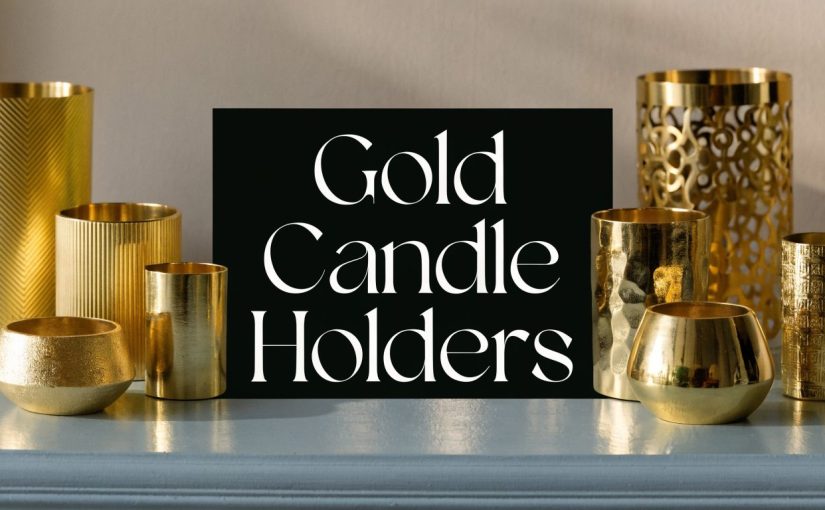
You’re usually at the same point when gold candle holders become part of the conversation. The linen is chosen. The florals are nearly right. The venue is beautiful, but the tables still feel flat once the sun drops or the first guests walk in. They need warmth, reflection, and a focal point that doesn’t fight the rest of the styling.
That’s where gold candle holders earn their place. In Cape Town events, they solve more than one problem at once. They add height without bulk, glow without clutter, and formality without making a room feel stiff. They also adapt well across weddings, gala dinners, matric dances, and milestone celebrations, which is why experienced planners keep returning to them.
Generic retail advice doesn’t help much when you’re designing for the Western Cape. A holder that looks lovely in a showroom can fail fast on a windy wine farm, look too yellow under venue uplighting, or create a transport headache if you’ve chosen the wrong scale. Good event styling comes from knowing what works on an actual setup day, not only what photographs well online.
The Timeless Allure of Gold in Event Design
By the time a Cape Town room shifts from late afternoon light to dinner service, gold starts doing work that plain décor cannot. It picks up candlelight, warms the table, and gives the whole setting a finished feel without asking for more flowers, more colour, or more volume.
That staying power is its main appeal. Gold has been used in ceremonial and formal interiors for centuries, and it still earns its place at modern events for a simple reason. It reads as occasion, not novelty. In our experience at ABC Hire, gold appears in the majority of high-end Western Cape events because clients want a look that photographs well, feels polished in person, and still makes sense five years from now.
Why gold works so well on a table
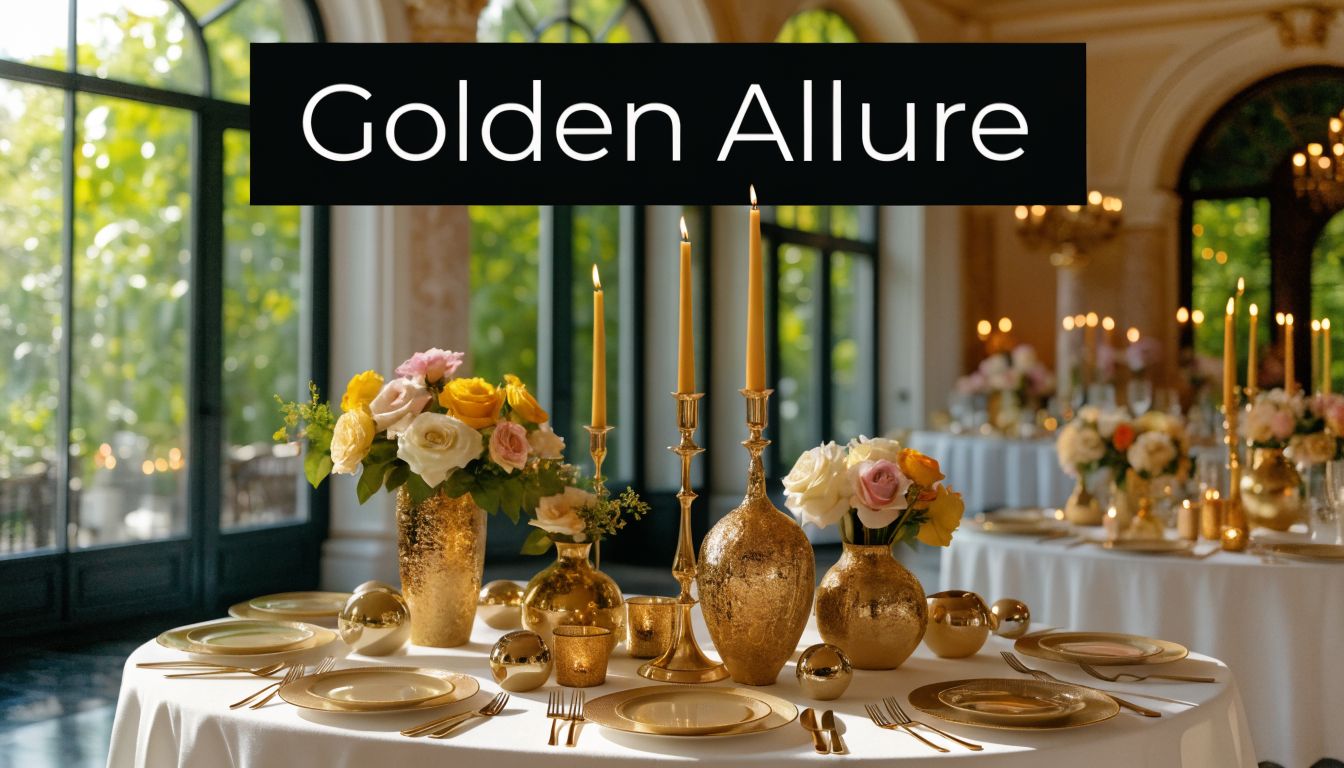
Gold reflects light with more warmth than silver and more presence than clear glass. On a dinner table, that difference is obvious. It softens hard finishes, helps candles register in a large room, and stops neutral palettes from falling flat after sunset.
It also gives planners flexibility. Gold sits comfortably with crisp white florals, earthy Winelands textures, black-tie place settings, and contemporary corporate styling. If the brief already includes metallic accents elsewhere, such as gold side tables for lounge areas, candle holders carry that finish across the venue in a controlled way. The room feels connected rather than over-decorated.
A good gold finish also handles mixed lighting better than many clients expect. Under warm festoon bulbs it feels rich. Under cooler LED venue lighting, the right tone still reads refined instead of brassy. That distinction matters on setup day, especially in venues where you only see the final lighting state a few hours before guests arrive.
Gold does not need to dominate the table. A restrained layer of gold usually looks stronger than trying to turn every detail metallic.
Why it suits Cape Town so naturally
Western Cape events ask décor to perform across changing conditions. A Stellenbosch wedding may start in hard sun, move into wind at cocktail hour, and finish in a dim barn or cellar. A city gala might need to look sharp for a daytime media arrival and still feel warm by dinner.
Gold adapts well across those shifts. It holds its own in daylight, then becomes more atmospheric once candles are lit. That makes it particularly useful for local planners balancing beauty with practicality. One finish can work across garden marquees, hotel ballrooms, wine estates, and corporate functions without looking out of place.
It also aligns with what many Cape Town clients want now. Luxury, but not excess. Warmth, but not clutter. Reusable pieces that hire well across multiple event formats, rather than disposable décor that adds cost and waste. Gold candle holders meet that brief better than many trend-led alternatives.
A Practical Typology for Event Planners
A planner standing in a Franschhoek venue at 4pm has a different problem from a client browsing décor online. The question is not which gold candle holder looks nice on its own. The question is which one will still read well after load-in, florals, place settings, shifting light, and a full room of guests.
That is why I group gold candle holders by job first. Some create height. Some build a pool of light close to the table. Some protect a flame from wind on an exposed terrace. Some carry enough visual weight to hold a large arrangement together.
The five core types worth knowing
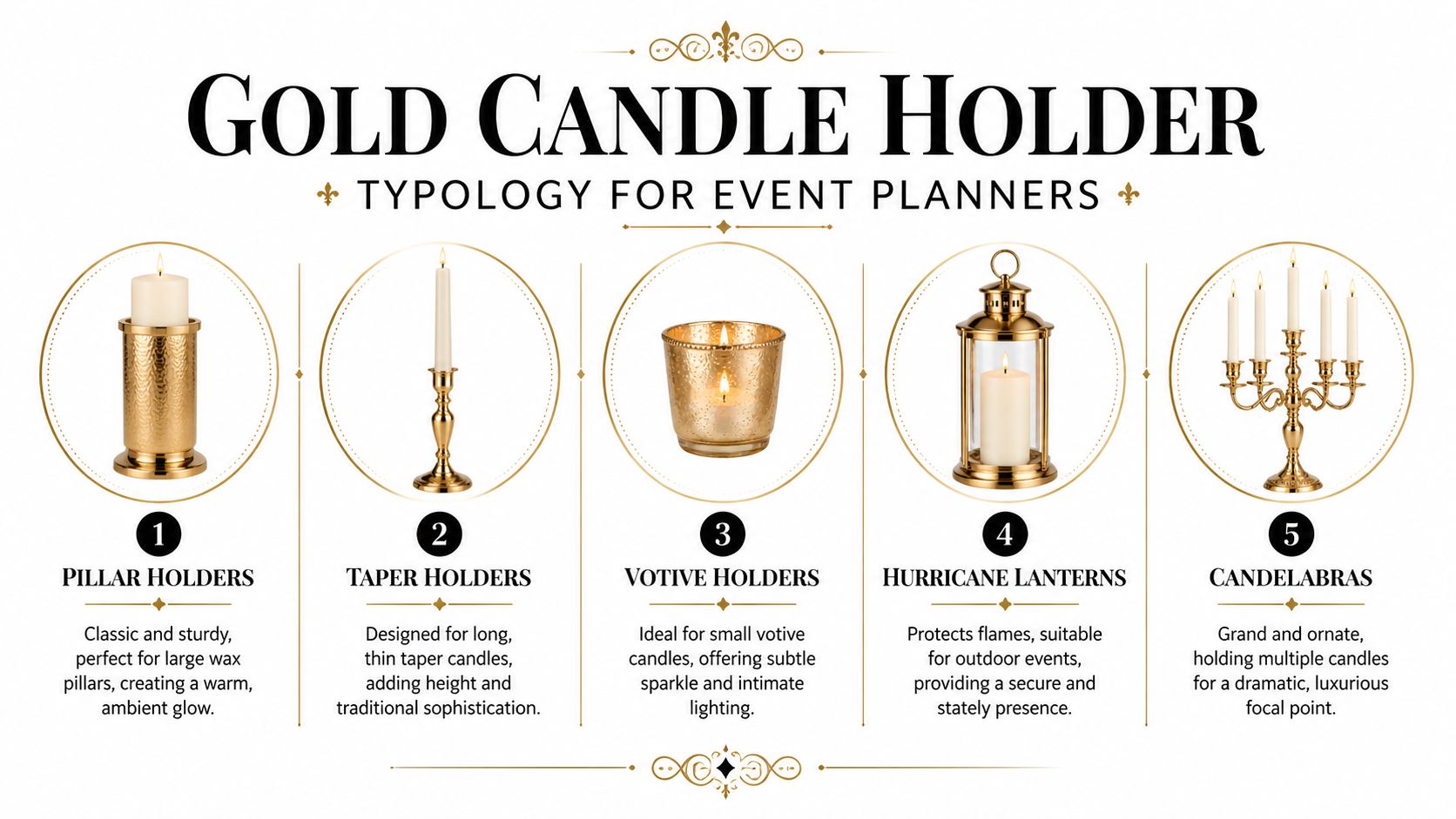
| Type | Best use | What it adds | Watch out for |
|---|---|---|---|
| Taper holders | Formal dining tables, long banquet runs | Height and vertical rhythm | Too many can block sightlines |
| Pillar holders | Statement tables, entrance features, larger rounds | Substance and a steady glow | Can look heavy on smaller tables |
| Votive holders | Layering across tables, bars, and cocktail areas | Sparkle and intimacy | They disappear if used too sparsely |
| Hurricane lanterns | Outdoor settings, pathways, exposed terraces | Flame protection and presence | Need enough scale to avoid looking incidental |
| Candelabras | Focal tables, dramatic receptions, stage-adjacent décor | Grandeur and structure | Can overpower low floral work |
In Western Cape work, the strongest layouts usually mix two of these roles rather than relying on one type everywhere. Tapers can give a banquet run structure, while votives stop the base of the table from feeling empty. On a wine estate lawn, hurricanes often do the hard work because they keep the lighting scheme alive once the evening wind picks up. Candelabras have their place, but they need room around them and a brief that can carry that level of formality.
Finish affects the result as much as shape
Clients often focus on the silhouette and miss the finish. On site, the finish is what decides whether gold reads refined, soft, or slightly harsh under venue lighting.
- Polished brass look: Strong for black-tie dinners, hotel ballrooms, and sharper corporate styling.
- Matte gold: Better with textured linen, modern florals, and tables that need warmth without too much shine.
- Antique gold: Useful in cellars, heritage venues, and spaces with timber or stone.
- Champagne-gold tone: Safer with blush, cream, sand, and muted neutral palettes.
I usually caution planners against mixing too many gold tones on one table unless the variation is clearly intentional. What looks layered in a showroom can look mismatched once the venue adds glassware, charger plates, and candlelight.
Matching type to event mood
Romantic tables rarely come from height alone. They come from light at several levels. Lower votives, a few medium holders, and selective height often feel more considered than a row of identical tapers.
Corporate work is different. Cleaner repetition tends to win. A single holder style repeated down a long run gives order, especially in Cape Town conference venues and gala spaces where branding, staging, and timing already create enough visual noise. If the scheme includes a lot of reflective detail, mixing gold with glass candle holders can keep the table from feeling visually heavy.
Practical rule: Pick one hero form and one supporting form. More than that on a guest table usually weakens the composition.
The sustainability question is now part of the brief
Corporate clients in the Western Cape ask far more questions about reuse, material origin, and transport than they did a few years ago. In practice, that changes what planners shortlist. Pieces that survive repeated hire cycles, travel well to outlying venues, and do not need constant refinishing are easier to justify than decorative items chosen only for a single look.
That does not mean every client wants a lecture on materials. It means planners need sensible answers. Is the holder durable enough for multiple setups? Can it be paired with LED candles when a venue restricts open flame? Will it still look good after a season of corporate dinners, weddings, and end-of-year functions?
Good gold candle holders earn their place by doing the job repeatedly, not by looking impressive for one night.
Matching Holders and Candles for Flawless Execution
The fastest way to make an expensive setup look amateur is a bad candle fit. A taper that leans, a pillar that sits too loosely, or a holder that dwarfs a short candle will pull attention for the wrong reason. Guests may not know why the table looks off, but they’ll feel it.
Start with compatibility before style. The candle must sit securely without wobbling, forcing, or excessive packing. If a taper is too slim for the cup, you get a visible lean. If it’s too thick, planners often try to shave it down on site, which wastes time and leaves the finish looking untidy.
A clean way to decide
Use this simple matching logic:
- Slim, elegant holder: best with tapers that suit the holder cup properly and won’t list once lit.
- Broad, stable holder: better for pillar candles where the candle’s footprint needs support.
- Glass-shielded holder or hurricane: useful where air movement is a concern.
- Small cup or votive vessel: ideal for tea lights, votives, or LED inserts rather than improvised wax choices.
Height matters too. A very tall holder paired with a short candle can feel top-heavy visually. A low holder with an overlong taper can look precarious. The best combinations feel proportionate before they’re ever lit.
Real flame or LED
This is rarely a style-only decision. It’s an execution decision.
| Option | Best for | Strengths | Limitations |
|---|---|---|---|
| Real wax candles | Indoor dinners, sheltered receptions, intimate tables | Authentic flame, scent-free warmth if chosen correctly, classic movement | Sensitive to wind, venue rules, drip risk, burn-time management |
| LED candles | Outdoor events, long functions, venues with restrictions, high-traffic installs | Consistent look, no open flame, reusable, stable through the evening | Lower-end versions can look artificial |
Real wax has a quality LEDs still imitate rather than replace. The flicker is irregular. The glow changes naturally across the evening. For certain dinner settings, that’s still unmatched.
But LED often wins in professional event conditions. It removes the need to relight candles, reduces risk near draping and florals, and performs far better outdoors. Good LED candles also make mixed-height installations much easier to manage because every point of light stays consistent from the first course to the final dance. If you’re styling smaller accent pieces such as votives with candles, LED inserts can be especially helpful where access for relighting is awkward.
If the setup is exposed, difficult to monitor, or subject to venue restrictions, LED is usually the more professional choice.
What usually doesn’t work
A few combinations fail repeatedly on live events:
- Underweight holders with long tapers: They look elegant until a guest bumps the table.
- Large florals with tiny candle points: The flowers dominate and the candlelight disappears.
- Mixed candle temperatures: Warm real flame beside cool-toned LED looks mismatched.
- Improvised wax fitting: Tissue, foil, and rushed packing tricks don’t hold up through service.
Execution is what guests remember, even if they don’t realise it. The holder and candle should look like they belong together from the first minute.
Styling Gold Candle Holders for Signature Cape Town Events
A gold candle holder that looks perfect in a studio mock-up can fail quickly on a real Cape Town event. Set the same piece on a long table in Franschhoek, a hotel ballroom in the CBD, or a school dance venue in the northern suburbs, and the result changes with the wind, the light, the service style, and the distance guests view it from.
That is why styling has to start with venue conditions, not only with reference images. Gold works because it reflects light, adds warmth, and reads well in photographs. But it only does that properly when the holder suits the job.
Winelands weddings
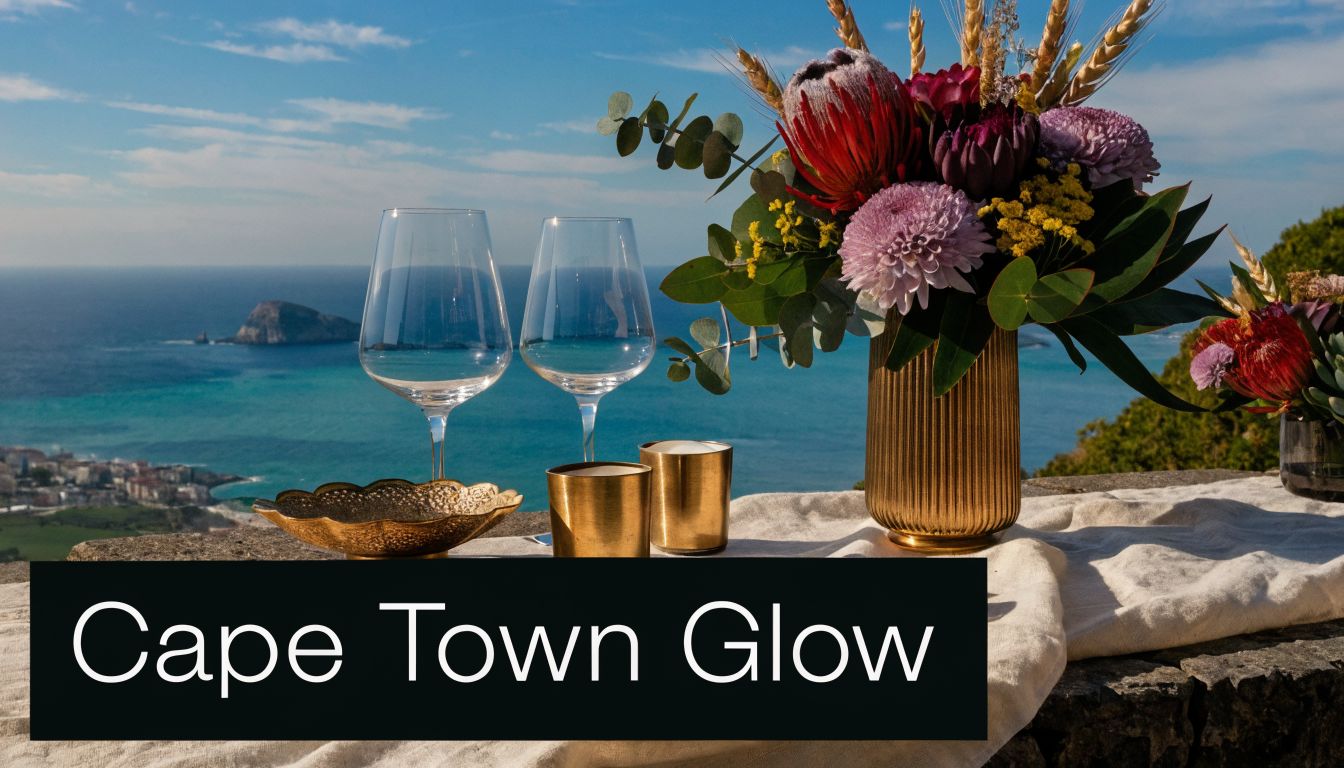
A common challenge we see at Stellenbosch and Franschhoek weddings is late-afternoon wind. Couples often want fine tapers and delicate styling, but exposed tables need more protection than the brief suggests. Flames flicker out, lightweight holders shift, and a table that looked balanced at setup can feel messy before starters are served.
In that setting, gold candle holders need to do practical work. Weighted bases matter. Glass-shielded designs matter. Finishes that still look clean after dust, handling, and temperature changes matter.
A setup that usually holds its shape includes:
- One low floral centrepiece: enough presence for the table, without blocking conversation
- Protected candlelight: hurricanes or shielded gold holders placed where they will stay lit
- Controlled height: a few taller elements for rhythm, not a full table of unstable tapers
- Spread of light: smaller holders around the main arrangement so the table glows evenly
The usual mistake is copying a still photograph from a calm indoor setting. On a wine farm, low and protected often performs better than tall and delicate.
Corporate gala dinners in the city
Corporate styling needs warmth, but it also needs restraint. In Cape Town city venues, guests are often looking at the room from multiple vantage points. Entrance, stage, table, and brand installation all need to feel connected.
Repetition usually does the heavy lifting here. Use one gold tone across guest tables and feature areas. Keep the candle format disciplined. If the event already has strong branding, screens, or coloured lighting, the candle holders should support the room rather than fight for attention.
A few choices make a visible difference:
- Keep finishes consistent. Mixing bright polished gold with brushed or antique tones often looks accidental.
- Use cleaner shapes for finance, tech, and awards events where the brief is formal and structured.
- Limit mirrored surfaces if the lighting design is already reflective. Too much bounce can make the tables feel hard rather than warm.
- Check sightlines from the stage. What feels subtle at table level can look cluttered in wide event photography.
The best corporate candle styling reads clearly in the room and still looks inviting in close-up.
Milestone birthdays and matric dances
These events allow more character, but they still need control. Gold can easily tip into looking overdone if every surface gets the same treatment.
For milestone birthdays, I usually group holders in small clusters on focal points such as cake tables, gift tables, bars, and lounge settings. The gold becomes the thread that ties the space together, while flowers and linens carry the personality.
For matric dances, impact belongs at the arrival and photo areas first. That is where taller gold pieces usually earn their keep. Dining tables often work better with simpler, lower holders that keep the room polished without making the setup feel too formal for the age group.
Three layout moves that usually work
The cluster
Best for round tables, lounge areas, and feature corners. Mixed heights create depth and keep the arrangement from looking flat. One stronger anchor piece, supported by smaller holders, usually looks more resolved than a group of equal-sized items.
The line
Best for banquet tables. A linear run gives the table rhythm and keeps the eye moving through the room. Alternate candlelight with florals or table details so the centre does not become one solid strip of metal and flame.
The frame
Useful for bars, stages, and signing tables. Place holders at the outer edges so the surface remains usable and the feature still has shape in photos.
Space matters. Gold candle holders improve a table most when light can travel between them, rather than getting trapped in an overcrowded arrangement.
The Essential Logistics Renting vs Buying in the Western Cape
Buying gold candle holders looks sensible until the practical work begins. A single event might need multiple styles, different heights, backups for breakage, and enough quantity for guest tables, feature areas, and transitions such as bars or entrances. Once you start adding all of that up, ownership becomes a storage and handling problem, not just a décor choice.
For one-off events or occasional use, renting is usually the cleaner decision.
What buying really involves
Purchased holders need somewhere safe to live between events. Metal finishes can mark, tarnish, scratch, or dull if they’re packed badly. Wax residue also takes time to remove properly, especially from textured or antique-style pieces.
Then there’s the style issue. If you own one look, you’ll be tempted to force it into every brief. That’s rarely good design. A polished gold taper holder that suits a formal dinner may be wrong for a rustic wedding or a branded activation.
Why renting usually wins
Renting gives planners flexibility. You choose what fits the brief, scale the quantity to the venue, and avoid holding stock that may not suit the next event. It also reduces the cleanup burden after a long setup and strike.
In the Western Cape, that convenience matters more than many people expect. Events often involve travel to Stellenbosch, Paarl, Franschhoek, or more remote venues where transport, packing, and return timing affect the whole production schedule.
Here’s the trade-off clearly:
| Consideration | Buying | Renting |
|---|---|---|
| Upfront spend | Higher for quality pieces and quantity | Spread across the event only |
| Style variety | Limited to what you own | Easier to match each brief |
| Storage | Your responsibility | Not your concern after collection |
| Wax cleanup | Ongoing task | Usually reduced or handled through rental process |
| Transport risk | You carry it every time | Shared with a rental workflow |
| Scalability | Harder for larger events | Easier to increase quantities as needed |
Best use cases for each
Buying can make sense for venues or stylists with constant repeat use, enough storage, and a very defined look. If the same holder appears in event after event, ownership may suit your workflow.
Renting suits most engaged couples, private hosts, schools, and many planners handling varied briefs. It keeps the focus on event design rather than maintenance, repair, and stock control.
If an item has to be cleaned, wrapped, stored, counted, transported, unpacked, repacked, and protected from damage, you’re not just buying décor. You’re taking on operations.
That’s the part people tend to underestimate. Gold candle holders are compact compared with furniture, but at event scale they still become inventory. Renting removes most of that load.
Safety Maintenance and Post-Event Care
Candles only feel effortless when the safety planning is solid. Whether you’re using real flame or LED, someone needs to decide where the holders sit, what surrounds them, and who checks them during service.
With real candles, distance matters. Keep flames away from low-hanging foliage, loose draping, menus, paper place cards, and anything guests may shift accidentally. Also confirm the venue’s open-flame rules before finalising the design. Some venues allow candles only in enclosed glass, while others prefer LED throughout.
On-event handling that prevents problems
- Check stability first: Every holder should sit flat before the candle goes in.
- Trim the area around the flame: Florals and ribbons can migrate during setup.
- Assign responsibility: Someone should know who lights, monitors, and extinguishes candles.
- Avoid last-minute substitutions: A candle that “sort of fits” usually becomes a safety issue later.
LED candles simplify most of this. They remove open-flame risk, perform better in exposed areas, and make strike easier at the end of the night. For many planners, that reliability is worth more than the romance of real flame.
Looking after the finish
Gold finishes need gentle handling. Wiping too aggressively, scraping wax carelessly, or stacking pieces without protection can mark them quickly. If you’re ever unsure how to care for gold surfaces without damaging them, jewellery care guides can be surprisingly useful. This guide on how to safely clean gold rings offers a good reminder that soft materials and non-abrasive methods protect the finish better than harsh shortcuts.
For rentals, the process is simpler. Items should arrive event-ready, and post-event handling usually means basic care, safe collection, and not forcing wax or residue off in a way that causes damage. If in doubt, ask the rental company what they want touched and what they’d rather handle themselves.
Your Event Planner's Gold Candle Holder Checklist
The easiest way to get gold candle holders right is to make the decisions in the right order. Venue rules first. Holder type next. Candle choice after that. Styling comes last.
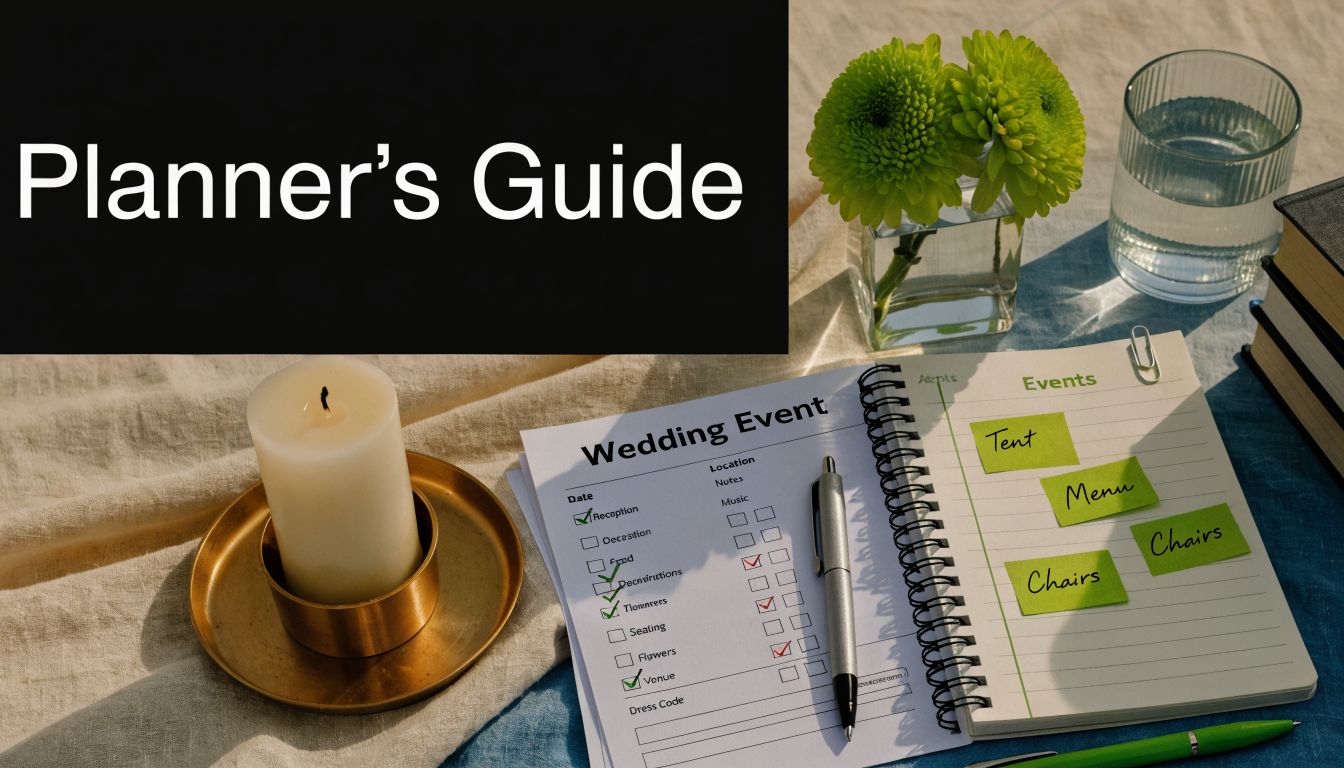
Questions for the venue
- Open flame policy: Are naked flames allowed, enclosed only, or not at all?
- Wind exposure: Which tables or zones are most exposed after sunset?
- Surface conditions: Are tables level and stable enough for taller holders?
- Pack-down timing: How quickly must décor be cleared after the event?
Questions for the rental company
- Finish and style consistency: Will all pieces in the order match in tone and condition?
- Candle compatibility: Which candles fit each holder properly?
- Transport and collection: How are fragile items packed, delivered, and collected?
- Outdoor suitability: Which holders are weighted, enclosed, or better for exposed venues?
Pre-event checks
- Confirm quantities: Count guest tables, feature areas, bars, and backup pieces.
- Review placement: Check sightlines, floral height, and guest comfort.
- Test the look: Place one full sample table before the team repeats the layout.
- Decide on lighting: Real wax or LED should be final before setup day.
Post-event checks
- Extinguish or switch off: Do a full sweep before strike begins.
- Handle with care: Don’t stack metal pieces loosely or scrape at residue.
- Separate damaged items: Flag issues clearly rather than hiding them in the return.
- Confirm collection plan: Make sure packed items are in the agreed handover point.
A beautiful candlelit table doesn’t happen because gold was chosen. It happens because the holder, candle, venue, and styling brief all agreed with each other.
If you need gold candle holders, LED candles, event furniture, or a full styling support rental partner in Cape Town and the Winelands, ABC Hire can help you build a setup that looks polished and performs properly on the day.