

You’re finalising a wedding on a Stellenbosch wine farm, or a family-friendly corporate function in Cape Town, and the brief sounds simple enough: make a kids’ area that feels special, doesn’t clash with the main décor, and won’t become a supervision headache halfway through the event. That’s where many planners lose time. A plastic play corner looks cheap. A soft play setup can feel too young for mixed-age groups. A generic table with crayons gets ignored after ten minutes.
Kids teepee tents solve a very specific event problem. They create a defined zone for younger guests, they photograph well, and they work across venue types that are common in the Cape, from garden parties and wine estates to school halls and marquee setups. Used properly, they add atmosphere without demanding a full themed production budget.
What matters is getting the details right. In Cape Town and the Winelands, weather can turn quickly, venues often have uneven ground, and access windows for setup are rarely generous. A teepee that looks lovely online but takes too long to install, traps heat, or shifts in the wind is not helping you on show day. The right one does the opposite. It gives you a practical, attractive kids’ zone that holds together under real event conditions.
Creating Magical Spaces Why Kids Teepees Are Essential
You are on site at a Stellenbosch wedding. The florist is finishing the entrance, catering is pushing to plate on time, and the couple wants the children entertained without a bright plastic corner pulling focus from the room. A well-styled teepee setup solves that brief fast. It gives children a space that feels special and gives adults a clear sense that the event has been planned properly.
That matters in Cape Town and the Winelands, where venues range from polished city spaces to lawns, barns and cellar rooms. A kids’ area has to look right in all of them. Teepees do that well because they read as soft, neat and intentional, whether you are working in Constantia, Franschhoek or Paarl.
Why planners keep choosing them
The value is practical before it is decorative.
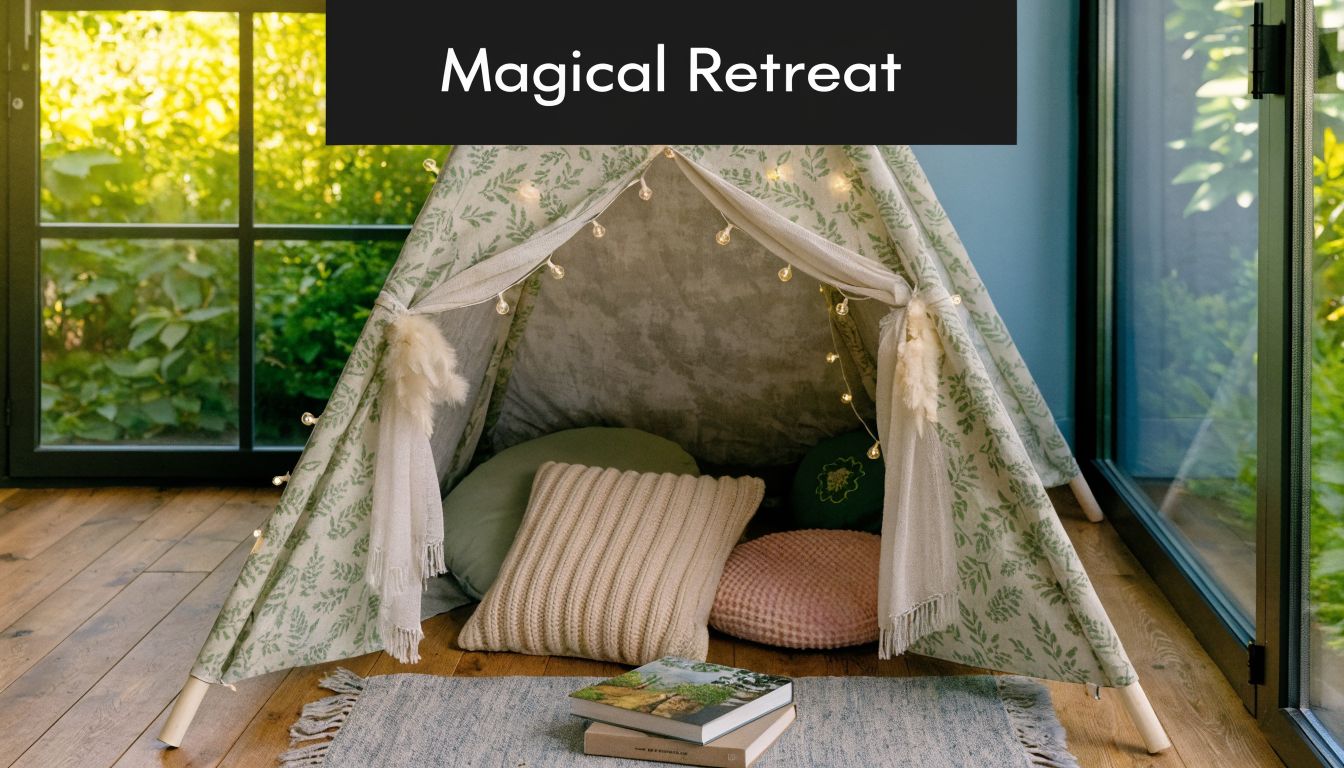
A teepee gives children a defined place to settle, read, draw, rest or step away from the noise. That reduces the usual drift of toys, shoes and snack plates into guest walkways. At weddings and corporate family days, that simple bit of structure makes the whole event feel calmer.
It also helps with styling. Canvas, timber and layered textiles sit more comfortably with wedding décor, harvest tables, vineyard furniture and neutral event palettes than bright moulded play equipment. If the client wants a children’s area that photographs well and does not fight the rest of the scheme, teepees are one of the safer choices.
They are flexible too.
One planner may need a reading nook beside a family seating area. Another may need a quiet retreat for younger guests at a long lunch where speeches run over time. At a birthday, the same format can carry the theme with bunting, cushions and activity baskets. For broader styling ideas, it helps to review kiddies party decor ideas for local events so the teepee zone feels connected to the rest of the setup.
What creates the strongest result
The tent alone is not the feature. The full setup is.
The best installations use scale, texture and function together. A teepee with proper floor cushions, a low play surface, books or quiet activities, and enough room for children to move comfortably looks finished. One dropped in a spare corner looks like a late addition. Clients spot the difference immediately.
I see the same pattern across Cape Town venues. Smaller spaces benefit from one or two well-dressed teepees with disciplined styling. Large wine estate lawns can handle a fuller mini-lounge with multiple tents, picnic rugs and activity stations. Budget should go into the pieces guests will notice first: clean fabric, coordinated soft furnishings and a layout that makes sense from the main room.
Parents planning private celebrations often borrow ideas from interiors because the visual logic is similar. If you want a useful reference for soft, layered child-friendly styling, designing a magical nursery sanctuary shows the kind of restraint that works well at events too.
Where teepees earn their keep
Some uses are consistently strong:
| Event type | Best use of kids teepee tents |
|---|---|
| Wedding | Quiet play lounge near family seating, away from the busiest traffic routes |
| Birthday | Main styled feature with cushions, bunting and simple activities |
| Corporate family day | Calm retreat for younger children between scheduled entertainment |
| Matric or school function | Soft seating corner for siblings or family breakaway areas |
Used well, kids teepee tents do more than fill space. They bring order to the children’s zone, improve the look of the event, and give Cape Town planners a format that works across changing venues, shifting weather and very different client expectations.
Choosing Your Teepees Dimensions Materials and Styles
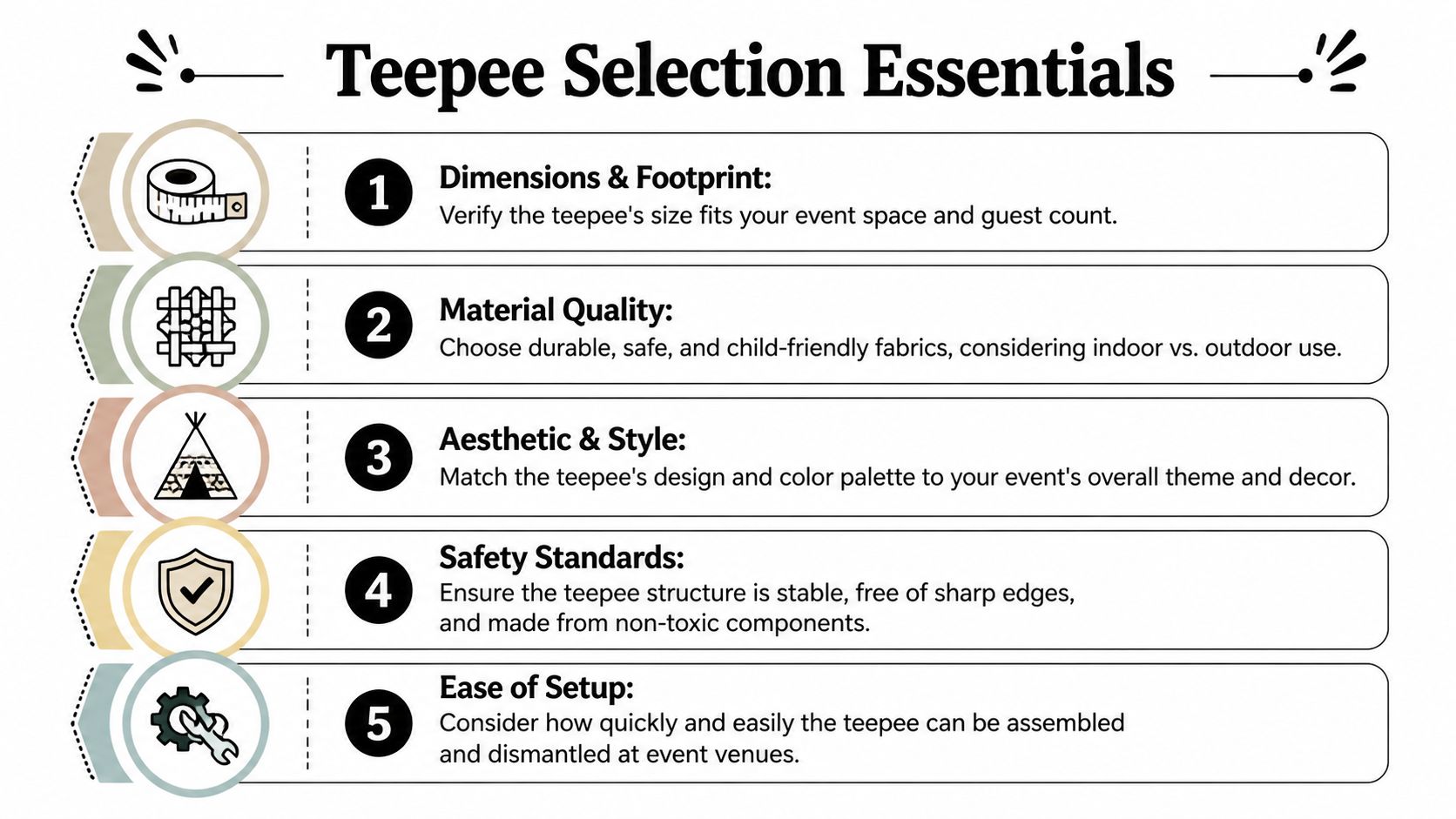
Not every teepee is event-grade. Many look decent in product photos and fail the first time they face a rushed load-in, coastal humidity or a hard venue floor. When you’re hiring for events, construction matters more than trend.
Professional-grade kids teepee tents use high-density cotton canvas, typically 0.98 inches thick, and solid wood supports such as Finnish pine, which helps with breathability and durability. Quality models can also be set up in under 10 minutes, which matters when your team is working across tight venue schedules, as noted in this guide on how to choose a teepee for kids.
Start with footprint, not colour
Planners often begin with style. Start with space. A teepee might suit the brief visually and still be wrong for the venue if guest flow, access routes or furniture spacing get compromised.
Check these first:
- Venue surface: Grass, decking, paving and indoor flooring all affect stability and layout.
- Walkway clearance: Keep clear routes for parents, catering staff and venue teams.
- Sight lines: Adults should be able to supervise without standing inside the kids’ area.
- Function of the tent: Reading corner, activity pod, chill-out nook and dining add-on all need different internal space.
If the event is in a marquee or hall, account for all the other temporary infrastructure before you confirm your teepee quantity. A useful starting point is reviewing the broader types of tents for events so your kids’ area doesn’t compete with the rest of the event build.
Materials that hold up in the Cape
Cape Town conditions punish cheap materials. Thin synthetic fabric can feel stuffy indoors and age badly when exposed to sun and sea air. Weak poles loosen over repeated rentals. Lightweight consumer connectors often wobble after a few builds.
What works better:
| Feature | Better choice | Why it matters locally |
|---|---|---|
| Fabric | Cotton canvas | Breathes better in warm halls and humid coastal conditions |
| Poles | Solid wood such as Finnish pine | More stable and more reliable over repeated setups |
| Connectors | Reinforced joints | Better for frequent transport and assembly |
| Rope support | Proper guy-ropes where needed | Helps outdoor stability |
A tent can look soft and child-friendly while still being properly built. Those two things shouldn’t be in conflict.
Cheap teepees usually fail in boring ways. Loose joints, sagging fabric, awkward assembly and visible wear. None of that helps a premium event look premium.
Shape, style and capacity
A lot of planners underestimate how much shape affects use. Traditional narrow triangular designs can work for a single styled nook, but if you need children to sit inside comfortably for a story session or quiet activity, a roomier structure makes life easier. Verified trade guidance notes that hexagonal designs offer 15-20% more internal floor space than traditional triangular canvas teepees in comparable applications.
That doesn’t mean every event needs the largest option. It means you should match style to function:
- A narrow boho teepee works for a photo-friendly reading corner.
- A broader layout suits activity-based setups better.
- A neutral canvas style gives you more freedom with cushions and bunting.
- Heavily themed prints can date quickly and clash with formal events.
What planners should inspect before confirming
Ask for current photos of the actual rental stock, not only supplier catalogue images. Then check the unglamorous details:
- Canvas condition. Look for staining, fading and stretched seams.
- Pole finish. Splinters, chips and rough cut ends are red flags.
- Setup method. If the supplier can’t explain setup cleanly, expect delays.
- Accessory quality. Mats, rugs and cushions need to match the same standard as the tent.
A well-selected teepee feels easy on event day because the hard decisions were made earlier.
The Rental Process A Cape Town Timeline
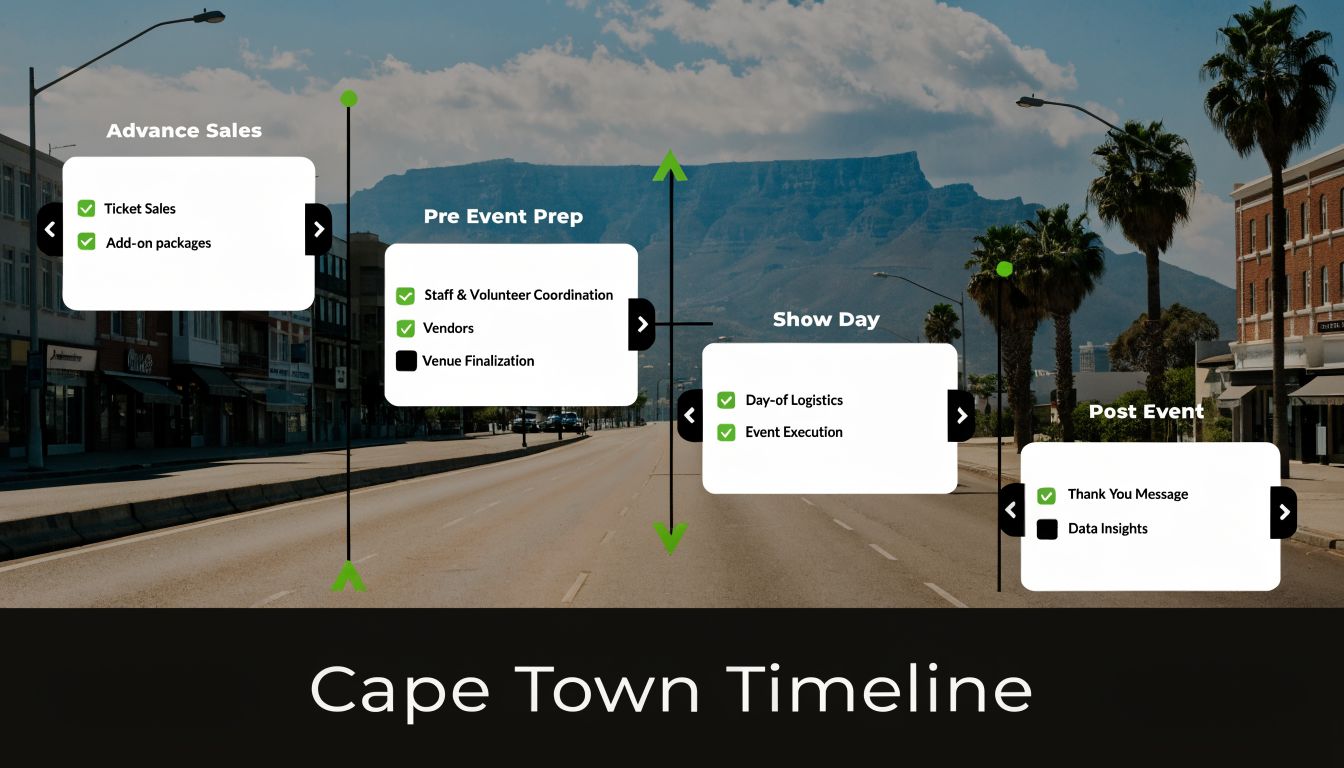
A Friday wedding in Franschhoek can look calm on the schedule and still go sideways by 10 a.m. if the kids’ corner was booked late, the venue only allows load-in through a side gate, and the weather turns between Paarl and Stellenbosch. Teepee hire works best when you treat it like core event infrastructure. Book it with the same discipline you use for furniture, power, and catering equipment.
A working timeline that keeps you out of trouble
In Cape Town and the Winelands, timing affects cost, stock choice, and whether setup stays under control on site. Summer weekends get congested fast, especially once you add farm roads, narrow access points, and shared supplier windows at popular venues.
4 to 8 weeks out
Define the job the teepees need to do. A quiet retreat for younger children needs a different layout from an activity corner at a birthday or a supervised kids’ zone at a wedding. Confirm the venue, guest count for children, likely age range, and whether the setup must work indoors if weather changes.
Get these details before requesting pricing:
- Venue access and strike times
- Surface type, such as lawn, decking, gravel, or indoor flooring
- Backup position in case of wind or rain
- Distance from parking to setup point
- Any venue restrictions on candles, heaters, or hanging décor
2 to 4 weeks out
Request an itemised quote. You need to see exactly what is included: teepees, mats or rugs, cushions, styling pieces, delivery, installation, collection, and cleaning terms. A vague quote usually becomes an expensive one once transport, stairs, or after-hours collection are added.
Pricing varies widely in this market. The final figure usually shifts based on styling level, travel to the venue, crew time, and whether the supplier is building a simple reading nook or a fully dressed kids’ area.
Questions worth asking before you pay a deposit
Deposits get paid too quickly on attractive photos. Ask operational questions first.
- Who sets up and who signs off on placement? That matters at large venues where access routes are long and setup teams are under time pressure.
- How much time is needed on site? A manor house in Constantia is different from a wine estate with a long haul from parking to lawn.
- What is the wet weather plan? "We’ll see on the day" is not a plan.
- What condition is the current stock in? Ask for recent photos if the event is premium.
- What is expected after the event? Clarify food, spills, damage, and late-night collection.
- Can the supplier work around the venue’s loading rules? Some Cape Town CBD venues and Winelands estates are strict.
For the wider planning flow, it helps to keep a detailed event planning checklist template so the teepee hire sits with your other rentals, supplier timings, and venue notes.
A strong rental brief includes the plain operational details. Gate width, staircase access, gravel paths, generator noise nearby, and where children will actually sit to eat all affect whether the setup works.
Package thinking versus per-unit thinking
Per-unit hire suits planners who already have styling stock and enough crew to finish the look properly. It gives you control, but it also pushes more coordination onto your team. If one supplier brings the tents and another brings soft furnishings late, the whole area reads unfinished.
Packages cost more upfront, but they can save money once you count labour, transport, and last-minute add-ons. In the Winelands, that matters. A venue might look close on a map and still require a long round trip, extra setup time, and careful timing around ceremony access.
A practical comparison helps:
| Approach | Works best when | Risk |
|---|---|---|
| Per-unit hire | You already have décor stock and styling crew | Extras and labour can stack up quickly |
| Styled package | You need a ready-built kids’ corner | Less room to customise if the package is fixed |
| Hybrid hire | You want supplier stock plus your own styling layer | More moving parts to coordinate |
Final confirmation before show day
Three checks prevent most event-day problems:
- Approve the final layout against the venue map or floorplan.
- Confirm delivery and collection times the day before, with a named contact on site.
- Set a weather decision deadline for any outdoor installation.
Cape Town weather changes quickly, and mountain wind can make one side of a property usable while another becomes a poor choice. The planners who stay calm are usually the ones who locked in a backup position early and confirmed it with both the venue and the hire team.
Setup and Styling for Winelands Events
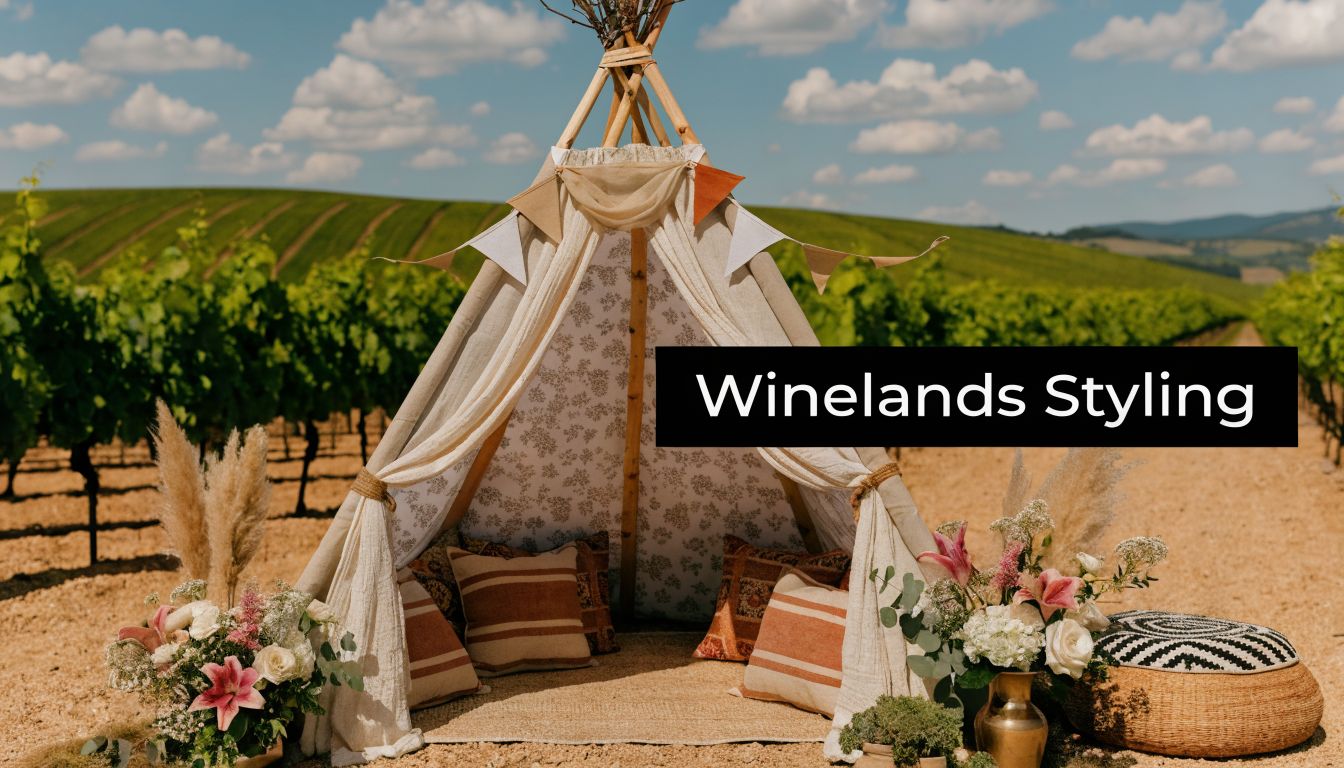
The best kids teepee tents don’t look rented. They look like they belong exactly where they’ve been placed. That takes restraint. Too many accessories, and the setup feels cluttered. Too little, and it looks unfinished.
A wine farm wedding in Stellenbosch
At a Stellenbosch wedding, the smartest placement is often just off the main reception zone rather than directly beside it. Children stay connected to the event, but the teepees don’t compete with speeches, service routes or the dance floor. On grass, a grounded palette works best: natural canvas, oat or stone-coloured cushions, simple rugs, and a few floral touches that echo the tables rather than copy them.
What doesn’t work is over-styling. Glitter-heavy props, bright plastic toys and character branding usually jar against the venue.
A wedding setup like this benefits from:
- Layered floor coverage so shoes can come off comfortably
- Low lighting choices that create glow without heat
- Quiet activity items such as books, soft toys or drawing boards
- Clear perimeter spacing so servers and parents can move easily
A Constantia garden birthday
Birthday parties give you more freedom. In a Constantia garden, the teepee cluster can become the hero feature rather than a side element. Here you can push colour more confidently, provided it still feels intentional.
Use the tents as a village rather than as isolated pieces. Grouping them creates stronger visual impact and keeps children together in one zone. Add mats between units so the setup feels connected. Keep food and craft tables close, but not so close that spills and paint end up on the canvas.
If children are meant to use the teepees, don’t fill every opening with décor. Leave enough empty space for sitting, crawling in and out, and supervision.
A beachside family event near Blouberg
Beach and wind-exposed venues need a stricter approach. The teepee area should sit in the most sheltered practical position available. This is not the place for delicate styling that topples over or lightweight décor that blows into neighbouring setups.
For coastal outdoor events:
| Styling choice | Good idea | Bad idea |
|---|---|---|
| Cushions | Heavier floor cushions | Very light scatter cushions |
| Décor accents | Weighted baskets and secure bunting | Loose paper signage |
| Flooring | Mats with grip and edge control | Rugs that curl at the corners |
| Placement | Sheltered edge with supervision | Open wind corridor |
The accessory checklist that actually helps
A good styling kit is usually short.
- Floor rugs or mats that define the footprint
- Supportive cushions in washable fabrics
- Bunting or simple garlands fixed securely
- One activity anchor such as books, colouring or soft toys
- Subtle lighting only where venue rules and safety allow
- A nearby adult chair for supervision without crowding the setup
Some planners try to force the teepee zone into every event theme. It’s better to let the tents soften the event and then use colour through textiles and a few accents. That keeps the look current and easier to adapt from one brief to the next.
Layout matters more than Pinterest
The prettiest arrangement on a mood board can still fail on site. At real events, children run, guests cut through spaces, and venue staff need access. Keep the entrance side of each teepee facing the most visible direction. Don’t push them into a dead corner where adults can’t see inside. Don’t block them behind lounge furniture because the area looked balanced on paper.
The setups that work best in the Winelands are usually the calmest ones. Good placement, strong textiles, enough breathing room, and styling that supports the venue rather than shouting over it.
Safety First Local Regulations and Best Practices
The fastest way to lose control of a children’s area is to treat safety as a styling detail. In Cape Town and the Winelands, conditions change quickly. A calm setup at 10am can be dealing with wind, heat, damp grass, or a venue manager’s access concern by lunchtime. Teepees need to be specified and installed with that reality in mind.
For planners, the standard is simple. If a supplier cannot explain the fabric specification, anchoring method, cleaning routine, and supervision requirements clearly, the stock is not ready for a live event.
What good planners check before booking
Start with the materials. Fabrics should be suitable for event use and kept in clean, sound condition with no frayed seams, weak ties, or damaged poles. If the teepees will sit indoors near lighting, extension leads, heaters, catering traffic, or other temporary structures, ask direct questions about fire safety and placement. Vague answers are a warning sign.
Then check how the setup will behave on the venue surface. A teepee that looks stable in a showroom or warehouse can shift on lawn, sink slightly after irrigation, or sit unevenly on old decking. I see this often at Winelands venues where one children’s corner moves across grass, stone, and timber within a few metres. That change in surface affects anchoring, rugs, edges, and how children enter and exit the tents.
Check these points on every job:
- Fabric condition and fire safety suitability
- Ventilation, especially indoors or under a larger tented structure
- Anchoring or weighting suited to the exact surface
- Clear walkways around ropes, mats, and décor
- Full adult sightlines into the children’s area
- Safe distance from heaters, candles, plugs, and trailing cables
Local conditions raise specific risks
Cape Town wind is the obvious factor, but it is not the only one. Summer heat can build up inside enclosed play areas, particularly in marquees, school halls, and estate function rooms with limited airflow. Winter brings damp ground, muddy access routes, and more last-minute layout changes when outdoor plans shift indoors.
Venue type matters too. Historic wine farms often have uneven paving, gravel courtyards, low walls, and decorative planting that look lovely in photos but create trip points around a kids’ setup. Private homes can be harder than formal venues because the safety boundaries are looser. Pets, pool access, braais, portable speakers, and family traffic all end up near the same zone unless someone plans it properly.
Safety also affects presentation. A neat, well-spaced teepee area looks more polished because nothing is forced into the wrong place.
A practical event-day checklist
Use this before guests arrive and again after final styling:
- Inspect poles, joints, and ties for wear, movement, or poor assembly.
- Check the ground contact points so each teepee sits evenly and does not rock.
- Secure mats and rugs with flat edges and no corner lift.
- Test visibility from the nearest adult seating or supervision point.
- Remove excess décor from entrances, crawl space, and escape paths.
- Confirm airflow if the area is indoors, under canvas, or in afternoon sun.
- Keep heat and ignition sources well away from fabric, cushions, and baskets.
- Review numbers per tent based on age, activity, and available space.
Common mistakes that create avoidable problems
| Avoid this | Why it causes trouble |
|---|---|
| Setting up in a breezy passage between buildings | Wind pressure and movement make the area less stable and less comfortable |
| Using decorative lights that produce heat | Enclosed fabric and soft furnishings raise the fire risk |
| Mixing too many small rugs and floor cushions | Edges shift, bunch up, and create trip hazards |
| Using worn stock with faded fabric and loose fittings | Presentation drops and failure points increase |
| Placing the kids’ area where adults cannot monitor it easily | Supervision becomes slower and less reliable |
Children use teepee spaces hard. They crawl, lean, pull, climb, and drag cushions around. Good safety practice accounts for that from the start, especially at Cape Town and Winelands events where weather, venue surfaces, and access constraints can change the plan on the day.
Partnering for Perfect Parties with ABC Hire
A well-run teepee setup comes down to five things. Good stock. Sensible sizing. Clean logistics. Strong styling choices. Proper safety discipline. Miss one of those, and the children’s area becomes harder to manage than it should be.
That’s why the supplier relationship matters so much. A reliable hire partner doesn’t just deliver tents. They help you avoid the common operational mistakes that cost time on event day. They understand Cape Town access issues, Winelands travel timing, changing weather, venue restrictions and the difference between a setup that looks good in a photo and one that still works three hours into service.
For planners, that kind of support changes the job. You spend less time chasing missing details, less time adjusting weak equipment on site, and less time patching around poor presentation with extra décor. Couples, hosts and event managers may only notice the finished result, but planners notice the process. The smoothest events usually come from the strongest rental partnerships.
The point isn’t to make the kids’ area extravagant. It’s to make it feel easy, polished and dependable. When the teepee zone is well chosen and properly installed, it gives younger guests a place of their own and lets the rest of the event breathe.
If you’re planning an event in Cape Town, Stellenbosch, Franschhoek or Paarl and want a children’s setup that’s stylish, practical and professionally handled, speak to ABC Hire. Their team can help you hire the right event pieces for your venue, timeline and budget so your kids’ zone feels considered from setup to collection.