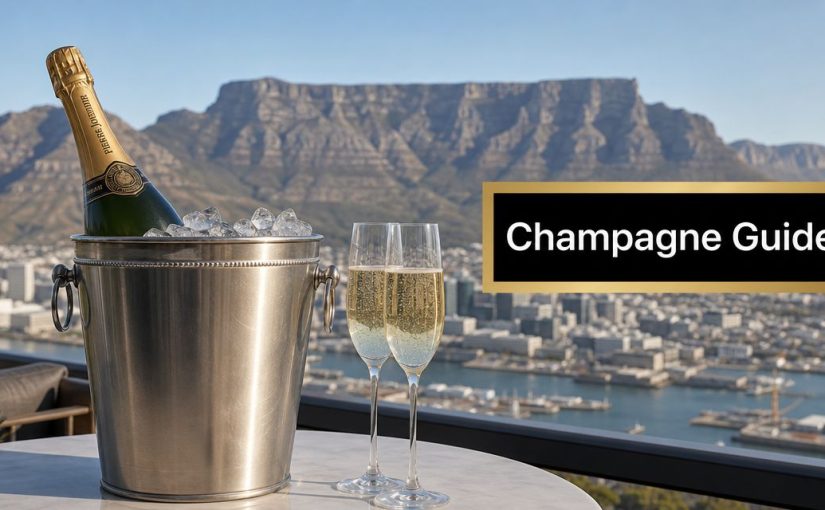
Guide to Champagne Ice Buckets for Cape Town Events

You're often down to the final version of the function sheet when this catches you. The menu is signed off. The floorplan works. Glassware counts are sorted. Then someone asks, “Are we putting champagne on tables, at the entrance, or both?” and suddenly champagne ice buckets stop being a small décor decision and become a service problem.

That's usually where events either look polished or start to feel improvised.

In Cape Town and the Winelands, that decision carries more weight than people expect. A bucket affects how quickly bottles come down to serving temperature, how much table space disappears, how many staff touch each bottle during service, and whether your reception reads as premium or patchy. At a summer wedding in Franschhoek, the wrong bucket setup can leave sparkling wine warming too fast between pours. At a corporate launch in the city, too many buckets on small cocktail tables can make the whole room feel cluttered before guests have even settled in.

The point isn't just to have buckets. It's to choose the right type, place them where service needs them, and order enough to support the way the event will run.

The Overlooked Detail That Defines Your Event

You see the pressure point early at a Cape Town summer reception. The sparkling wine is due on arrival, the terrace is already warm, and the venue team asks where the buckets are going. If that answer is vague, service starts slipping before the first proper pour.

Champagne ice buckets affect temperature control, staff movement, table spacing, and the overall read of the room. In the Winelands, where heat, sun and longer outdoor service windows are common, they need to be treated as working equipment with a styling role attached, not the other way around. I plan them the same way I plan glassware drops or back-of-house ice runs, because once guests arrive, there is very little time to correct a weak bucket setup.

A good bucket setup keeps bottles cold, reduces unnecessary handling, and stops staff from improvising with whatever spare vessel is nearest. It also protects the visual balance of the event. One oversized bucket on a small round can crowd candles, florals and bread plates faster than clients expect. If you are weighing options beyond champagne service, this guide to ice buckets and stands for event use is a useful reference point.

What goes wrong when this is treated as an afterthought

The failures are usually practical.

  • Service backs up when too few buckets are shared between too many tables or stations.
  • Tables lose usable space when the bucket footprint is larger than the layout allows.
  • Ice melts too quickly when the vessel is shallow, badly insulated, or placed in direct afternoon sun.
  • The hire bill creeps up when the fix happens late and the replacement stock does not match the original brief.

Guests may not identify the bucket as the problem, but they notice warm pours, wet tablecloths and staff reaching across them too often.

What good planning looks like

The bucket has to suit the event format first. At a seated wedding, that means leaving enough room for shared plates, décor and comfortable service access. At a product launch, the bucket may need to support the brand look while still being light enough for fast resets. At a matric dance or high-volume private function, durability often saves money because the equipment works harder during setup, service and strike than many clients realise.

When the choice is right, the room feels controlled. Bottles stay at serving temperature for longer, staff work cleanly, and the bucket adds to the table instead of fighting with it.

Choosing Your Buckets Material Style and Size

The wrong way to choose a bucket is by finish alone. The right way is to ask three questions first. Who will handle it, where will it sit, and how long does it need to perform before the next reset?

That narrows the field quickly.

Material decisions that affect the event

Stainless steel works well when service discipline matters. It suits formal dinners, black-tie receptions and premium corporate events because it reads clean and controlled. It also tends to feel more substantial in hand, which helps during tray or table service.

Acrylic is often the practical rental choice for busy events. It's lighter, easier to move in quantity, and less stressful in high-traffic venues where breakage is a real concern. Clear acrylic also disappears visually into many table designs, which can help when you want the bottle on show without adding visual heaviness.

Glass or crystal can look exceptional in the right room, especially under candlelight or in classic ballroom styling. But they demand calm service conditions. In outdoor Winelands settings, where staff may be moving between gravel, lawn, decking and uneven surfaces, the fragility can outweigh the elegance very quickly.

Copper and mixed-metal finishes work best when the styling brief is doing more of the talking. Rustic-luxe weddings, harvest-table aesthetics and branded experiences with warmer palettes can carry them well. The trade-off is maintenance. Fingerprints, water marks and finish wear show faster.
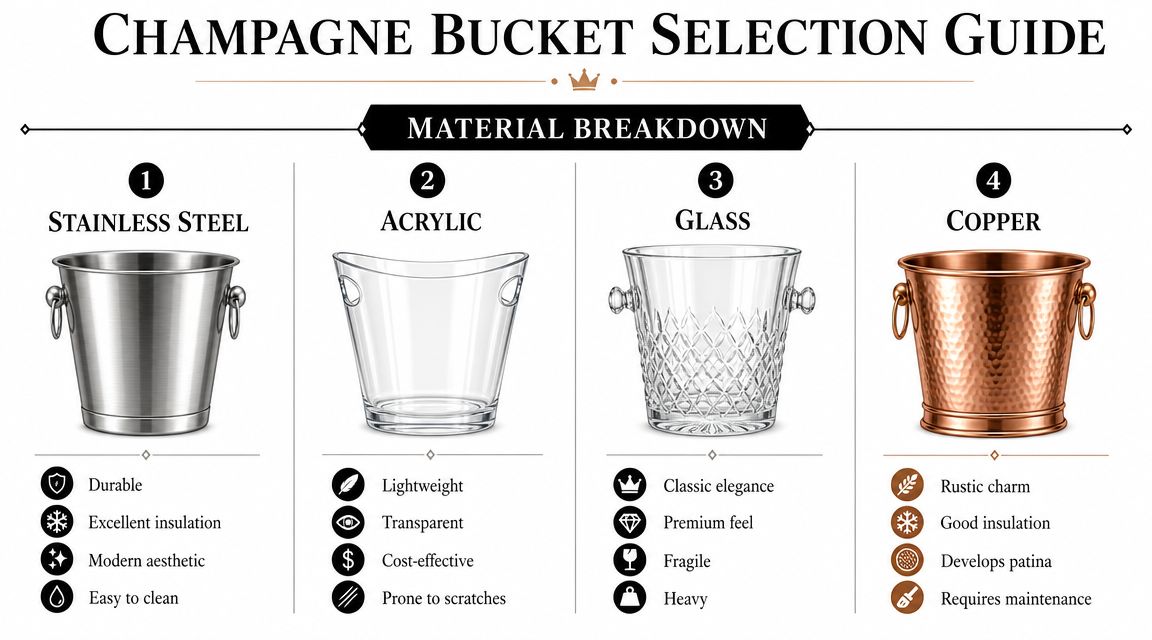
A comparison guide showcasing the features and benefits of stainless steel, acrylic, glass, and copper champagne buckets.

Why size and shape matter more than most people think

A bucket can be beautiful and still fail in service.

A commercially available clear plastic champagne bucket used for beverage service measures about 10.6 in (L) × 8 in (W) × 7.8 in (H) and holds 3.7 quarts, with built-in handles and a stable base designed to reduce spill risk during table service, according to this product specification for a plastic champagne bucket. In practical terms, that size works because it can take a standard 750 ml bottle plus ice without turning into a balancing act.

Practical rule: If the bucket can't comfortably take the bottle and enough ice-water around it, it's not a champagne bucket for event service. It's a prop.

Oval versus round

Oval buckets usually make more sense for table service. They sit neatly, present the bottle well, and often feel easier to carry because the handles fall into a more natural grip. Round buckets can work on bars and stations where symmetry matters more than footprint.

Deep buckets are better for chilling. Shallow buckets may look sleek in product photos, but they often force the bottle to sit too exposed above the ice line. In warm weather, that costs you consistency.

Matching bucket style to event type

A simple way to decide:

  • Formal wedding reception: stainless steel or refined clear acrylic
  • Outdoor vineyard wedding: acrylic or other durable break-resistant options
  • Corporate launch: modern acrylic, branded options, or minimal metal finishes
  • Matric dance or large private party: durable, easy-to-replace, easy-to-carry buckets
  • Styled table moment: use a bucket with a stand so the tabletop stays usable

If you're weighing table footprint against presentation, ice buckets and stands for event layouts are often the cleaner solution because they move the bucket off the eating surface without losing the visual cue of premium drinks service.

Calculating Capacity How Many Buckets You Need

A planner can get the glassware, linen and lighting right, then still lose the drinks service by under-ordering buckets. In Cape Town and the Winelands, that mistake shows up fast. Afternoon heat, dry air and long outdoor service windows warm bottles quickly, especially when the bar is under pressure.

Guest count helps, but bucket count comes from service flow.

Start with the bottle journey

Map where each bottle will be chilled, opened and held before you count a single unit. For most events, the pattern falls into three setups:

  1. Arrival service from a station or roaming team
  2. Table service where bottles remain with guests
  3. Self-serve or semi-self-serve points where guests return to a drinks station

Each setup creates a different demand on your stock. A welcome drinks station may show only a few buckets to guests, but staff still need chilled replacements ready behind the scenes. Table service uses more buckets in view because each active table needs its own cold-holding point.

Working ratios that planners can actually use

These ratios are planning tools, not fixed rules. They work well for keeping service tidy without spending money on units that add no value.

Service Style Recommended Ratio Notes
Welcome drinks station One bucket per active serving point Keep backup buckets off-floor so staff can swap quickly instead of rebuilding in front of guests.
Seated table service One bucket per table receiving sparkling wine service If only selected tables get bottles, count those tables only.
Self-serve bar or drinks point One bucket per bottle position guests can access at once Too many small buckets can make the area wet and messy. A larger cooling setup may be cleaner.
Bridal table or VIP zone Dedicated bucket for each featured bottle service point Presentation matters here, so do not rely on shared buckets.
Toast-only service Fewer visible buckets, with chilled reserve back-of-house Plan around timing rather than placing a bucket everywhere.

Local planning considerations

Warm-weather events need a rotation plan, not just a display plan. Bottles should be brought down to serving temperature before they reach the floor, and replacement bottles should already be in chilling buckets before the current round runs out. If you only count the buckets guests can see, service will stall.

I usually split the order into two groups. Visible buckets are placed on tables, bars or stations. Working buckets stay back-of-house for the next wave. That second group is what saves you at a Franschhoek wedding in summer, or at a Stellenbosch venue where the bar run from prep area to lawn is longer than it looked on the site visit.

If the venue has limited cold storage, add that into your numbers early. In many cases, mobile fridge hire for event drink service is cheaper than over-ordering buckets and burning through extra ice to compensate.

How I plan by event type

For a wedding, I separate ceremony, canapés and reception service. The same bucket rarely does all three jobs well unless the timeline is tight and the staff team is strong. Reception tables usually need their own allocation, while arrivals and photo-hour service can run from a smaller pool with quick resets.

For a corporate launch, fewer bucket points often look sharper. Central stations are easier to manage, easier to brand and less likely to clutter high-value guest areas. That also reduces the staff load, because one controlled drinks point is simpler than chasing half-finished bottles across the room.

For a matric dance or large private party, durability and speed matter more than finesse. Count for turnover, not styling. These events often have compressed setup times, and staff need buckets that can be filled, moved and reset without fuss.

Count buckets according to how many bottles must stay cold at the same time, not how many bottles you bought for the full event.

Common counting mistakes

A few planning errors come up again and again:

  • Counting by guest numbers alone instead of by service points and timing
  • Ignoring reset time between an empty bottle leaving and the next one arriving cold
  • Assigning a bucket to every table when only some tables are receiving bottle service
  • Forgetting back-of-house holding capacity during speeches, meal pacing and toasts
  • Underestimating weather exposure at outdoor venues where buckets lose chill faster than expected

A clean plan usually looks restrained. Enough buckets to keep bottles cold and service moving. Not so many that the room starts reading like a temporary bar.

The Art of the Chill Ice and Chilling Best Practices

A bucket full of dry ice cubes looks convincing, but it doesn't chill champagne as effectively as people think. The bottle only touches the ice at a few points. That slows the pull-down and creates uneven cooling.

The professional method is an ice-water slurry.

A common service approach is to fill the bucket about halfway with ice and add roughly 1 to 1.5 cups of water, because the water improves thermal contact around the bottle and cools it faster than dry ice alone, as explained in this demonstration of champagne chilling technique. The same reference notes that a well-managed slurry also helps maintain a more constant low temperature over service.

What staff should do before guests arrive

The best chilling plan starts before the first bottle is visible.

  1. Set buckets in place early so you're not styling around wet equipment later.
  2. Pre-chill the bucket briefly if possible, especially on hot days.
  3. Build the slurry close to service time so you don't waste ice before it starts working.
  4. Insert the bottle deep enough for the cold mix to do the job properly.
  5. Assign someone to top up during long service windows.
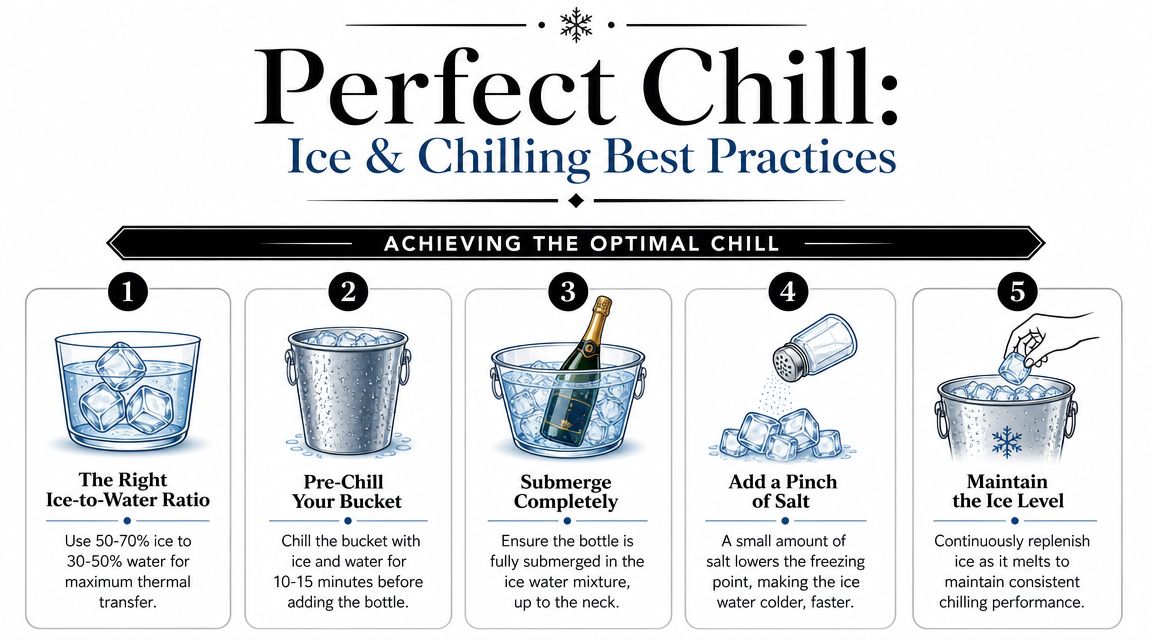
An infographic detailing five best practices for chilling champagne bottles in an ice bucket effectively.

What works in the Winelands and what doesn't

In Stellenbosch or Franschhoek summer conditions, sunlight and ambient heat punish lazy setup. Buckets placed in direct sun will burn through ice faster and leave staff chasing the problem all afternoon. Even in shaded spaces, warm airflow through marquees and open-sided venues can shorten your holding window.

What works is discipline:

  • Keep reserve bottles in proper cold storage
  • Use buckets for active service, not full stockholding
  • Top up little and often instead of waiting for total melt
  • Move buckets away from heat sources and sun patches as the light shifts

What doesn't work is filling every bucket too early, then hoping the ice holds.

Buckets versus cold storage

A bucket is not a substitute for refrigerated staging. It's a final-service tool. If the event has a long drinks period or staggered bottle release, pair your buckets with mobile fridge hire for event cold hold so replacement bottles arrive cold before they ever touch the floor.

A cold bottle in a good bucket stays guest-ready. A warm bottle dropped into a struggling bucket puts the whole service team on the back foot.

The small details that protect the guest experience

Wipe condensation from the exterior before service. Don't let labels disintegrate in dirty meltwater. Replace tired ice before speeches and toasts, not during them. And if you're working a premium room, train staff not to overfill the bucket so water sloshes onto linen when the bottle is lifted.

Guests don't talk about the slurry. They notice that their glass is cold, the pour is clean, and the bottle looks cared for.

Staging and Styling Buckets for Your Event

A champagne bucket earns its keep twice. First in temperature control. Then in how it contributes to the room. If you stage it well, it becomes part of the visual rhythm of the event rather than a necessary object someone forgot to hide.

That matters because the bucket carries a long hospitality history. Ice-bucket use goes back to the early 18th century, and champagne service became more standard through the 19th century, with global champagne production rising from 300,000 bottles a year in 1800 to 20 million by 1850, while Adolphe Jaquesson invented the muselet in 1844, according to this history of ice buckets and champagne service. In modern event terms, that's why a bucket still reads as ceremony, welcome and controlled service rather than just cold storage.
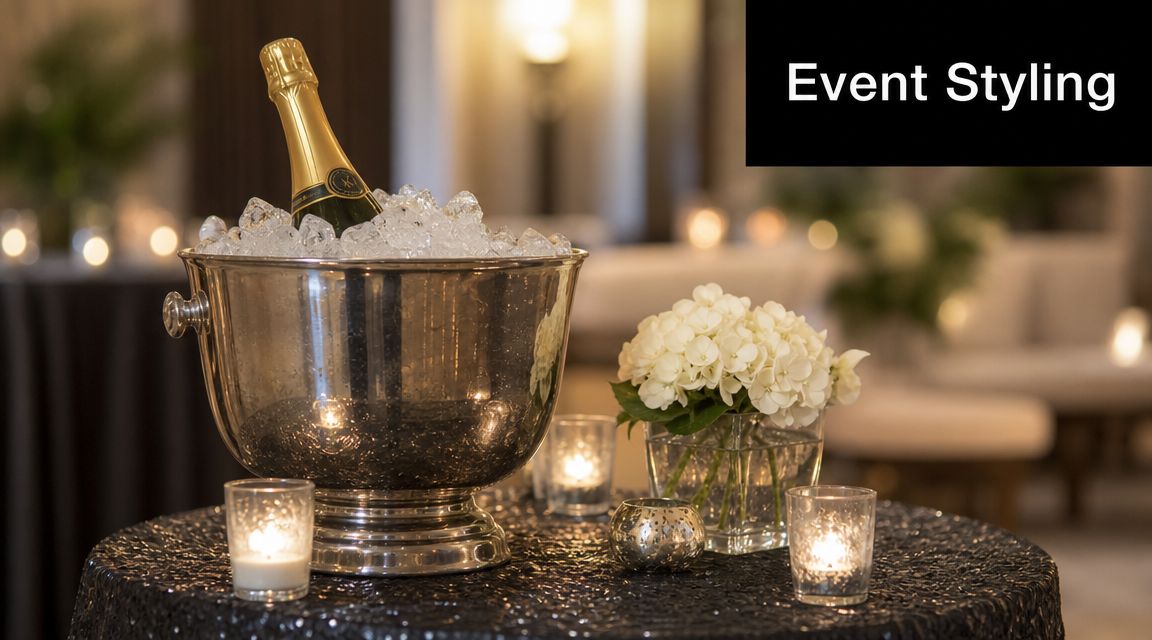
A champagne bottle cooling in a silver ice bucket on a table with flowers and votive candles.

Rustic Winelands wedding

At a vineyard wedding, the bucket should feel grounded in the setting. Polished silver can still work, but only if the rest of the table is formal enough to support it. Otherwise, simpler metal or clear buckets often sit more comfortably with textured linens, wooden tables and garden florals.

I prefer to group bucket styling with the table story. If the flowers are loose and seasonal, the bucket shouldn't look too sharp or futuristic. If the room is soft and natural, avoid finishes that reflect too aggressively in afternoon light.

Sleek corporate launch

Corporate events need more restraint. The bucket should support the brand environment, not compete with it.

That usually means cleaner lines, fewer visible units, and more intentional placement near bars, reception points or product reveal areas. Acrylic can work well here because it feels contemporary and keeps the bottle label visible. If the event includes formal pours, pair the setup with champagne coupe glasses for styled drinks service so the cold-holding equipment and the glassware speak the same design language.

Keep the bucket where the camera can justify it. If it lands in every background shot for no reason, it's in the wrong place.

Private parties and milestone celebrations

Birthdays and anniversary events can carry more personality. For such occasions, coloured acrylic, light-up options and bolder placement can work, especially for evening functions. The key is not to let novelty break service logic.

A bright bucket still needs stable placement, enough room for ice-water, and a clear path for guests or staff reaching in. If it glows beautifully but causes puddles on a narrow cocktail table, it hasn't done its job.

Placement choices that improve both look and function

Some setups consistently work better than others:

  • At the entrance bar: strong for welcome pours and first impressions
  • On stands beside feature tables: preserves dining space
  • At a dedicated bubbly station: useful when guests are expected to serve themselves
  • At the bridal or VIP table: creates a focal point without overloading the whole room

The best styling decisions don't separate beauty from practicality. They use the bucket to make service feel intentional.

Renting Champagne Buckets in Cape Town and the Winelands

A bucket that looked perfect on the styling board can become a nuisance by 4 pm in Franschhoek heat, or arrive at a farm venue with no plan for return packing after midnight. That is why rental usually suits event work in Cape Town and the Winelands better than buying.

The main advantage is operational, not sentimental. Planners need the right quantity, the right finish, and stock that arrives clean, matched, and ready for service. They also need a supplier setup that can cope with city hotels, estates with tight access windows, and venues where staff are striking while guests are still on the dance floor.

Why rental solves the real problems

A lot of advice about champagne buckets stays focused on appearance and basic chilling. However, the critical planning pressure sits elsewhere: quantity, replacement ice, loading space, breakage exposure, and whether the bucket choice still works once the wind picks up or the afternoon turns hot. As noted earlier in this localised look at bucket planning gaps, those are the questions that affect service quality more than the bucket itself.

In the Cape Town and Winelands market, transport matters. Collection timing matters. So does the admin around missing items, wet repacking, and next-day venue clearance. Rental reduces those headaches, especially for one-off weddings, launches, and school or corporate functions where nobody wants to store a stack of bulky buckets afterwards.

What to confirm before you book

Before approving the rental list, check the practical points that tend to cause problems on event day:

  • Is the bucket right for active service, or only for display
  • Will delivery and collection fit the venue's access times, especially outside central Cape Town
  • Are stands, glassware, tubs, or other chilled-service items needed as part of the same order
  • Who handles cleaning, drying, and repacking after the function
  • What is the process if guest numbers or the drinks plan changes late

One local option is ABC Hire, which offers event rental stock in Cape Town including ice buckets and related event equipment. That matters when the bucket is one line item inside a larger bar, staffing, and layout plan.

Buying still has a place

Ownership can make sense for venues with a repeat format and a fixed service standard. A permanent bar team with storage, cleaning capacity, and predictable stock counts may save money over time by buying.

For planners, private hosts, and teams running occasional events, rental keeps the decision flexible. You can choose stainless steel for a formal dinner, acrylic for poolside service, or larger formats for a cellar launch without being stuck with one style long after the brief has changed.

If you're planning a wedding, launch, matric dance or private celebration in Cape Town or the Winelands, ABC Hire can help you match champagne ice buckets to the actual service plan, not just the styling board. That means choosing the right quantity, material and supporting equipment so your sparkling wine service looks clean and runs smoothly on the day.
Your Guide to the Vintage Cocktail Table in Cape Town

You're probably looking at a floorplan right now and realising the same thing every Cape Town planner realises sooner or later. The room has enough volume, the brief calls for “mingling”, the bar will be busy, and yet the space still won't work unless guests have somewhere elegant to land a drink, a canapé, or a quick conversation.

That's where the vintage cocktail table earns its keep.

In the Cape and the Winelands, these tables do more than fill gaps. They shape movement between the bar, lounge pockets, harvest table, dance floor, and photo moments. Get them right, and the event feels considered. Get them wrong, and guests perch awkwardly on chairs, crowd service points, or abandon beautiful lounge areas because nothing there supports drinks service.

What Defines a Vintage Cocktail Table for Events

A vintage cocktail table earns its place on an event floor by doing two jobs at once. It gives guests a proper surface for a drink and a canapé, and it brings character into the room without demanding a full seating setup.

For events, function comes first. Guests need somewhere to rest a glass while they greet, chat, check a place card, or wait for the next round of service. In practice, that means a cocktail table must be stable, easy to approach from all sides, and sized for standing use or for a lounge grouping where people sit briefly rather than settle in for dinner.

The history matters less than the behaviour it supports. Earlier cocktail tables were tied to more relaxed social entertaining, rather than formal parlour furniture, and that logic still holds on a modern event floor. What planners hire as “vintage” is usually a table with older design cues, not necessarily an antique with collector value.

That distinction matters in Cape Town and the Winelands, where hire stock has to survive gravel drives, lawn installs, cellar doors, and fast turnarounds between venues.

Practical traits that matter on site

A good vintage cocktail table usually has four qualities:

  • Useful surface area: enough room for drinks, napkins, and a small styled element without forcing guests to shuffle everything around
  • Compact proportions: large enough to serve a group, small enough to keep walkways, bar queues, and service routes clear
  • Visual warmth: timber, cane, marble-look tops, brass accents, turned legs, or a softly worn finish that reads collected rather than new
  • Flexible placement: suitable beside a lounge cluster, near a bar satellite, on a veranda, or under a stretch tent

I treat durability as part of the brief too. A beautiful marble-top piece may look perfect in a studio photo, but on an uneven wine farm lawn it can be heavy to level, slower to place, and riskier in wind if the base is narrow. A timber or metal-framed option often gives better value for outdoor use.

What “vintage” usually means in the local hire market

In local styling terms, vintage usually describes a mood. It suggests age, patina, detail, and a little soul. It rarely means rare.

That is often the smarter choice. True antiques can be delicate, expensive to replace, and less consistent in height or finish across a larger order. For a 40-person private party, that can be charming. For a 180-guest wedding in Franschhoek with tight install windows, consistency usually wins.

The best rental pieces sit in the middle. They look layered and distinctive, but they are still practical for transport, setup, and repeated hire. That balance matters more than provenance on event day.

For drinks-led events, I also style the tabletop in line with the bar menu. If the brief includes botanicals, citrus garnishes, or refined G&Ts, it helps to review a few polished Craft gin drinks so the glassware, garnish vessels, and tabletop styling feel connected.

Where these tables work hardest

Vintage cocktail tables perform well in spaces built around movement and short stops, not long seated moments. In this region, that usually includes:

  • wedding pre-drinks on lawns and courtyards
  • corporate mixers in hotel foyers and function rooms
  • cellar tastings and brand launches
  • veranda spill-out areas at Winelands venues
  • reception zones for milestone birthdays and anniversaries

They are less useful in a fully seated dinner where every guest already has generous table space. Add too many, and the room starts to feel crowded, especially in heritage venues with narrow passages or uneven floor levels.

A simple test works every time. If guests need attractive, practical landing points between the bar, lounge areas, and main event spaces, a vintage cocktail table is part of the event infrastructure, not just décor.

Popular Vintage Styles and How to Match Your Theme

Not every vintage cocktail table says the same thing. Some sharpen a room. Some soften it. Some make a corporate event feel less corporate, and some make a wedding feel more grown-up in seconds.

The mistake I see most often is choosing “vintage” as a broad category and stopping there. Style only works when it supports the venue, the florals, the bar finish, the linen palette, and the tone of the guest list.

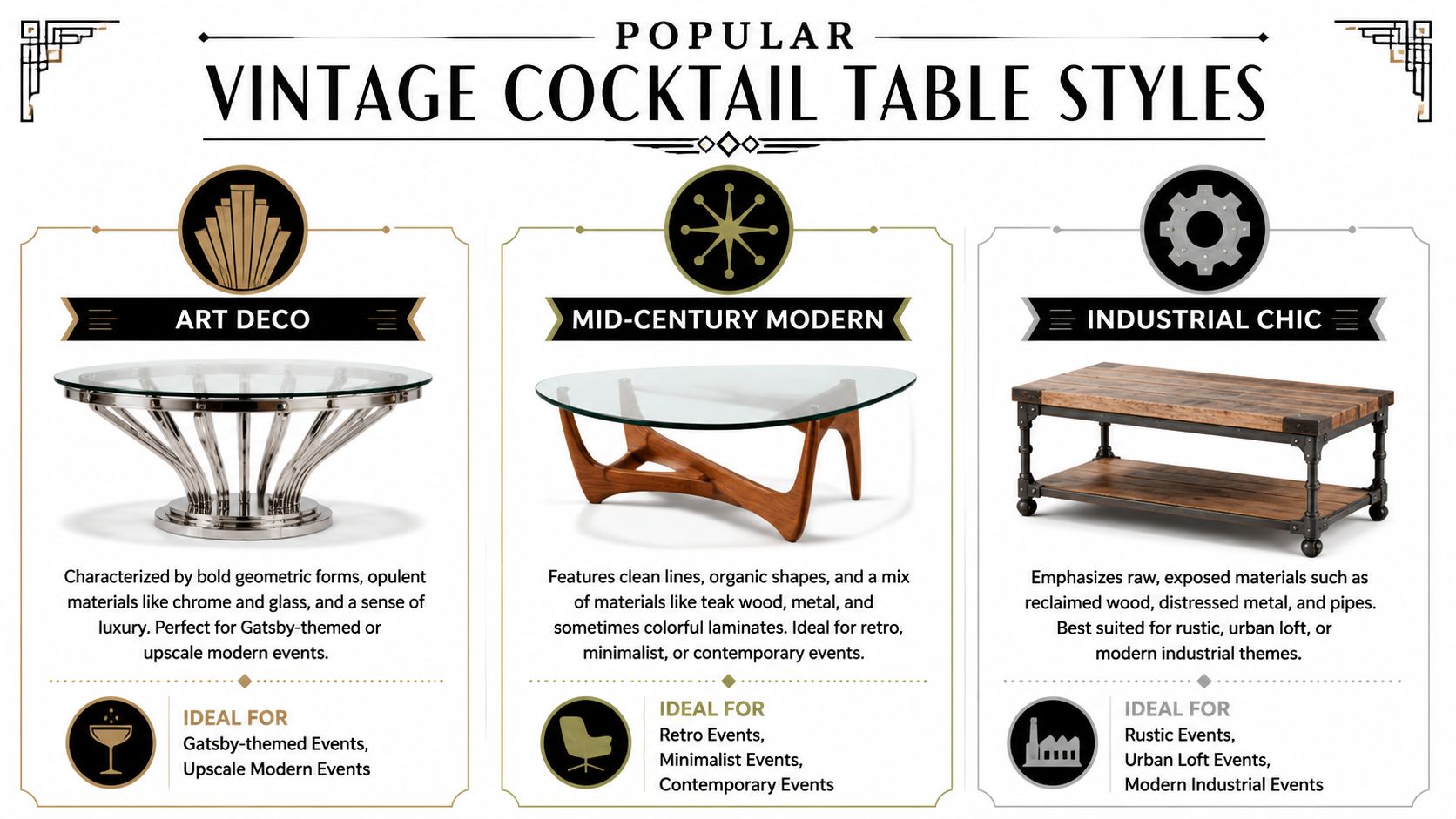
Here's the visual shorthand I use.

A visual guide illustrating three popular vintage cocktail table styles: Art Deco, Mid-Century Modern, and Industrial Chic.

Art Deco for glamour and evening polish

Art Deco works when the event wants drama without clutter. Look for geometric lines, mirrored or glass elements, metallic trim, black lacquer tones, smoked finishes, and confident symmetry.

This style suits:

  • black-tie weddings
  • gala dinners with a lounge extension
  • luxury launches
  • New Year's events
  • formal matric dance after-parties

Art Deco tables do best when the rest of the room is restrained. If the stage set, dance floor vinyl, floral work, and candle styling are all competing, the effect becomes theatrical in the wrong way.

Mid-Century Modern for tailored sophistication

This is often the safest and smartest option for Cape Town planners because it bridges old and new so well. Mid-Century tables usually bring clean lines, timber warmth, tapered legs, and a calm silhouette that doesn't dominate a room.

They're especially effective at:

Style cue Best fit
Teak or walnut tones Corporate dinners and media launches
Clean rectangular tops Lounge clusters and hotel foyers
Minimal ornament Modern weddings with soft florals
Warm wood finish Venues that need visual softness

Mid-Century is excellent when the venue architecture already has personality. Heritage buildings, cellar spaces, and white-walled reception rooms all benefit from furniture that adds character without visual noise.

A good Mid-Century table rarely shouts for attention. It makes everything around it look more resolved.

Rustic and industrial for wine farms and relaxed luxury

Cape planners often confuse rustic with rough. The better version is edited rustic or industrial chic. Think reclaimed wood, dark metal, slightly weathered finishes, and sturdy bases that can sit comfortably against stone, lawn, concrete, or timber decking.

This style works best for:

  • Winelands weddings
  • harvest-table receptions
  • cellar tastings
  • outdoor birthdays
  • urban warehouse-style launches

What doesn't work is pairing a heavy industrial table with overly delicate seating or a very formal, glossy bar build. The room starts speaking in two different accents.

Ornamental traditional for romantic events

There's also a softer vintage category that leans traditional. Curved legs, carved detail, aged brass tones, marble-look tops, and antique-inspired timber finishes fit beautifully into garden weddings, manor-house venues, or candlelit indoor receptions.

Use this route when you want:

  • romance over edge
  • softness over geometry
  • layered décor over minimalism

The trade-off is practical. Highly ornate pieces can disappear if the styling is too dense, or look fussy if they're dropped into a very sleek venue. They need the right company.

Matching style to event mood

If you're stuck between options, don't ask which table is prettiest. Ask which one helps the room tell the truth about the event.

  • For polished corporate: Mid-Century usually wins.
  • For glamorous evening events: Art Deco carries the mood.
  • For Winelands texture: Rustic or industrial sits naturally.
  • For romantic weddings: Traditional ornamental shapes feel effortless.

That decision alone solves half the styling puzzle.

Sizing and Layout Strategy for Cape Town Venues

At this stage, planning either becomes elegant or expensive. A vintage cocktail table might look like a small furniture decision, but layout errors ripple across catering, guest movement, and setup time.

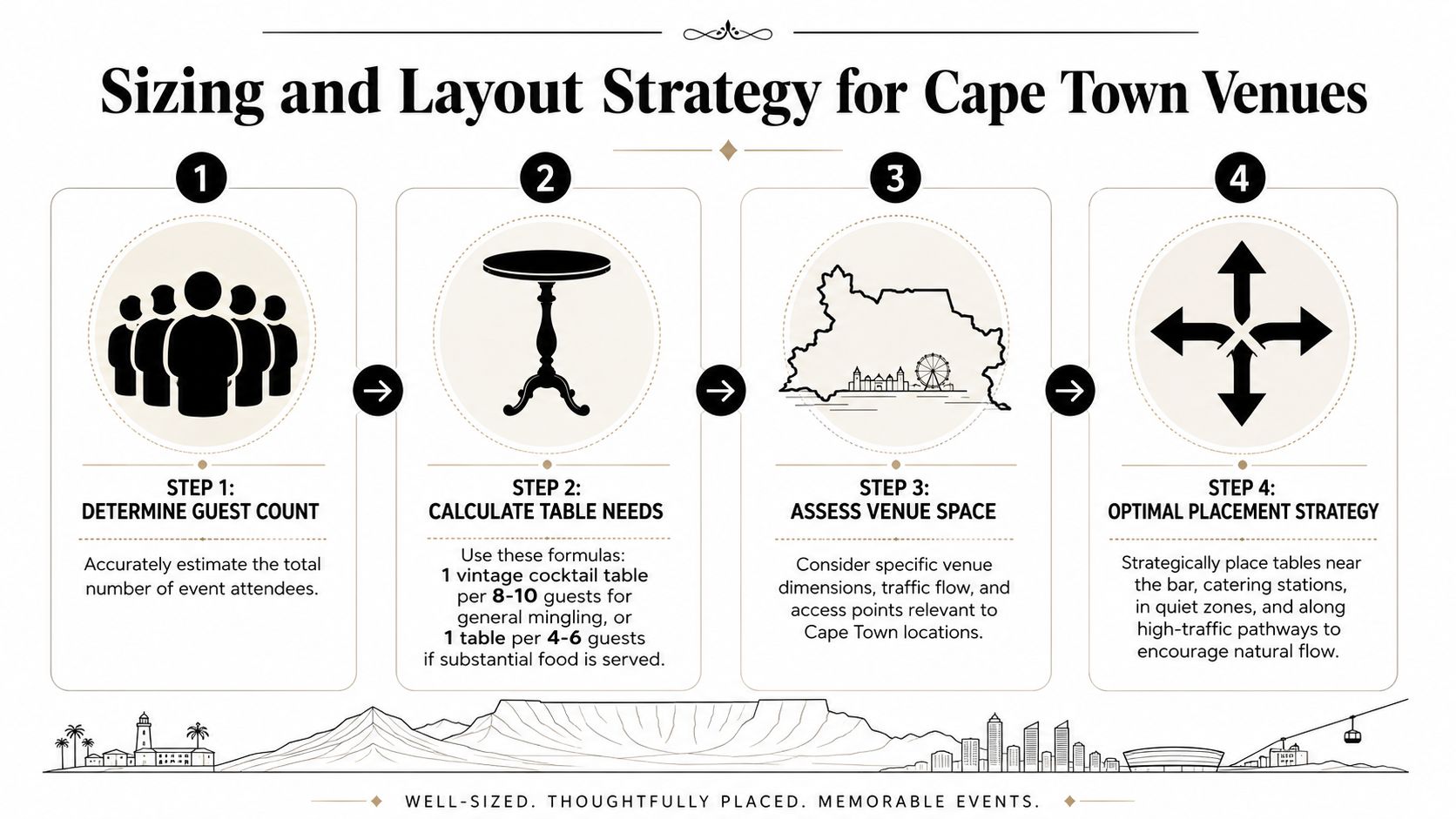
The planning benchmark many teams use is simple: 1 vintage cocktail table per 8 to 10 guests for general mingling, or 1 table per 4 to 6 guests if substantial food is served, as reflected in the event-planning framework shown below. Treat that as a starting point, not a law. Guest behaviour matters just as much as headcount.

A four-step infographic showing how to plan event sizing and cocktail table layout for Cape Town venues.

Start with guest behaviour, not just numbers

A wedding canapé hour needs a different layout from a conference drinks reception. So does a brand launch where guests are filming content, carrying gift bags, or moving between activation stations.

Use these questions first:

  1. Will guests stand for long periods?
  2. Are they balancing food as well as drinks?
  3. Is there a central bar, or multiple service points?
  4. Will older guests or family groups want nearby seating?
  5. Does the event move between indoors and outdoors?

If the answer to several of those is yes, you'll usually need more landing surfaces, not more decorative furniture.

Size affects logistics more than planners expect

These aren't little side tables. Representative vintage-style examples include 46" W × 26" D × 19" H at 71.9 lb and 50" W × 30.25" D × 19.75" H at 85 lb, according to Furniture Pick's product specifications. In metric terms, that means some vintage-style cocktail tables are over 1.2 metres wide and weigh up to 40 kg, which has direct consequences for transport, labour, and placement.

That matters in the Cape for obvious reasons. Historic buildings, upstairs venues, narrow service entries, gravel courtyards, and cellar routes aren't forgiving.

Before sign-off, check:

  • Access paths: Can staff move the table from truck to final position without tight turns or stair issues?
  • Surface conditions: Lawn, gravel, uneven brick, and timber decks all affect stability.
  • Floor sensitivity: Older venues may need more cautious placement and protection.
  • Reset practicality: If the room flips after speeches or dinner, heavy pieces slow that process down.

For a different event-floor perspective, this practical note on metal cocktail tables for event layouts is useful when you're comparing visual weight against operational ease.

Placement strategy for common Cape venues

Different local venue types call for different instincts.

Wine farms and lawn receptions

On open lawns, planners often spread tables too widely because there's space available. That creates islands with no atmosphere. Keep tables in intentional clusters near bar access, edge shade, and pathways between the ceremony exit and drinks service.

A better lawn plan usually includes:

  • grouped lounge pockets rather than isolated sets
  • a few clear sightlines to the view
  • breathing room around service staff routes
  • no table directly in the main photographer path

Hotel ballrooms and function rooms

Hotels usually reward symmetry, but too much of it can feel stiff. Use cocktail tables to soften the room's geometry. Place them at natural pause points such as near pre-function bars, outside the main seating grid, and along the perimeter where quieter networking happens.

Heritage buildings and city venues

These spaces often have pillars, level changes, and narrower circulation channels. Here the goal is restraint. Fewer, better-placed tables outperform a crowded floor.

If a guest has to twist sideways to pass a table with a drink in hand, the layout is already wrong.

A practical planning method

When I map a room, I work in this order:

Planning step What to decide
Guest pattern Standing, mixed seating, or transition event
Service style Drinks only, canapés, or substantial food
Traffic lines Bar queue, catering route, entrance, bathrooms
Anchor zones Lounge pods, dance floor edge, terrace spill-out
Final count Enough tables to support use without blocking flow

That's the definitive answer to “how many, where, and how”. Count matters. Placement matters more.

Styling Your Vintage Table to Perfection

Once the layout is right, styling becomes much easier because the table already has a job. You're not decorating an object. You're refining a guest experience.

The best-looking vintage cocktail tables at events are usually styled with restraint. Too much décor makes them unusable. Too little makes them feel forgotten.

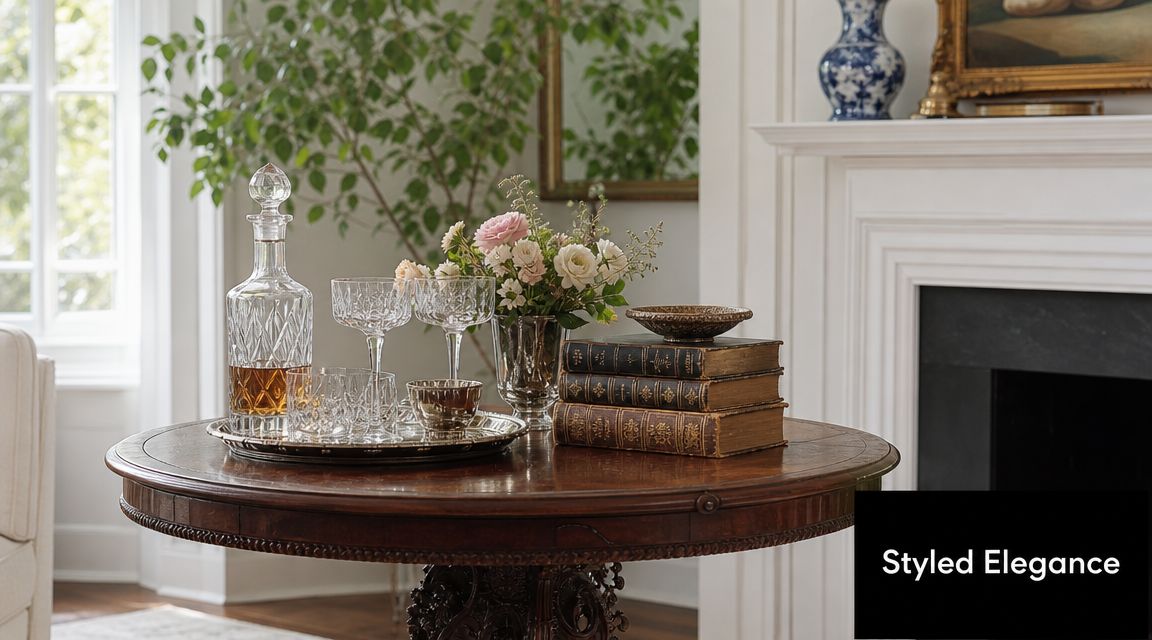
A crystal decanter, elegant glassware, and a floral arrangement displayed on a vintage round wooden side table.

Start with the tabletop

Your tabletop styling should leave enough room for actual hands, glasses, and plates. That sounds obvious, but it's where many beautiful mock-ups fail in real service.

Use a tight edit:

  • Low florals: Keep arrangements conversation-friendly and stable in wind-prone outdoor settings.
  • Purposeful glassware: If the drinks menu is premium, your table styling should support that tone.
  • One hero object: A small lamp, decanter, bud-vase cluster, or candle grouping is often enough.
  • Functional trays: They help organise garnish bowls, napkins, or votives without the top looking scattered.

Avoid tall arrangements on mingling tables. Guests don't stand around them. They stand around each other.

Pair the table with the right companions

A vintage cocktail table on its own can feel marooned. It becomes persuasive when paired with furniture that gives context.

Good combinations include:

Table setting Best pairing
Mid-Century timber table Leather-look occasional chairs or clean lounge seating
Ornamental vintage table Upholstered armchairs, soft rugs, candlelight
Industrial table Bentwood, tolix-style, or relaxed mixed seating
Deco-inspired table Velvet accents, mirrored details, polished bar styling

If you're looking at richer metallic finishes, this guide to a gold cocktail table in event styling is a useful comparison point when you want a warmer, more glamorous look than timber alone can provide.

Use décor to direct mood

A cocktail table can shift an event's tone in subtle ways.

For weddings

Lean romantic, but stay practical. Soft floral colour, candle clusters in protected holders, and elegant napkin treatment work well. Guests should still be able to place a clutch, champagne flute, or canapé plate down without hunting for space.

For corporate events

Keep the styling cleaner. Strong materials, minimal florals, a neat tray element, and consistent glassware usually outperform decorative abundance. The room should feel polished and confident, not busy.

For private celebrations

Personality can be introduced. Coloured glass, collected vessels, family photographs in miniature frames, or a thematic object can all work, as long as the table still reads as usable.

Less décor often photographs better because the furniture shape and material can actually be seen.

Don't forget the surrounding light

Vintage finishes respond beautifully to lighting, especially timber, brass-toned detail, and glass. Side lighting, candle glow, and warm ambient spill from a nearby bar can all make the piece feel more expensive than it is.

What doesn't work is harsh overhead white light with ornate table styling. It flattens everything.

For Cape Town outdoor events, remember the shift from late afternoon to evening. A table that looks complete at golden hour can feel visually empty after sunset unless there's some deliberate glow built around it.

The styling balance that usually wins

The most successful cocktail tables do three things at once:

  • they look intentional
  • they support service
  • they encourage people to gather

If one of those falls away, the table stops pulling its weight. Beauty matters, but at events, function is what makes beauty believable.

A Planner's Checklist for Renting in Cape Town

A table can look perfect on a mood board and still fail on site. I see it most often at Winelands venues with tight load-in windows, long gravel approaches, or lawns that turn soft after late-afternoon watering. Rental success comes down to matching the furniture to the venue, the timing, and the service plan.

Cape Town hires also need a realistic transport mindset. A truck heading to Franschhoek, Stellenbosch, or Paarl is not doing a casual last-minute detour because two extra tables were added after floral counts were signed off.

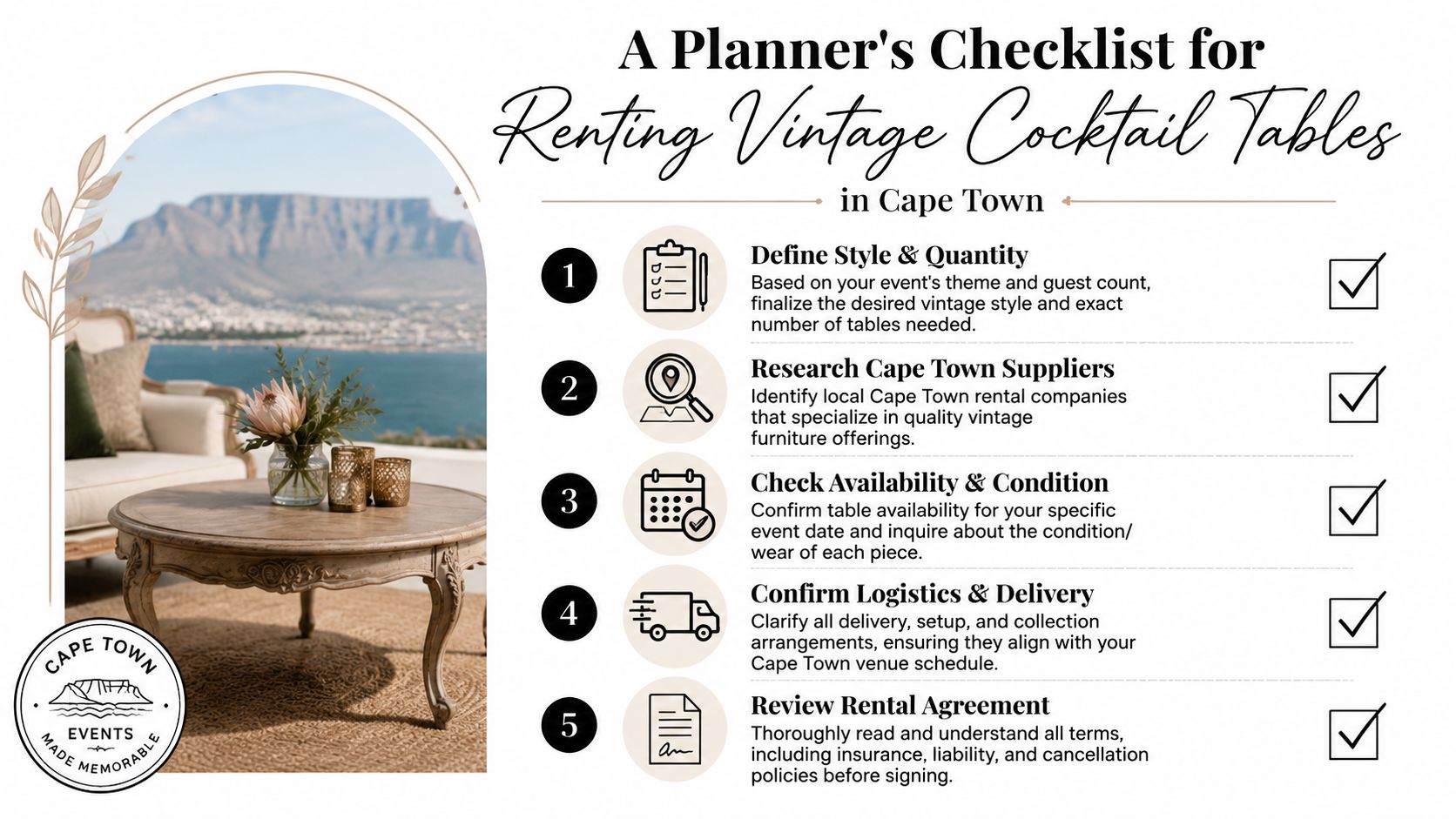
A five-step planning checklist for renting vintage cocktail tables for events in Cape Town, South Africa.

The checklist that saves time later

Start with a usable brief

Before asking for pricing, pin down the details that affect stock selection and delivery planning:

  • Style direction: Mid-century, Deco, rustic farmhouse, or traditional romance.
  • Event function: Welcome drinks, pre-dinner mingling, lounge support, or conference breakout use.
  • Table count: Based on guest flow and service points, not a loose sketch.
  • Venue access: Stairs, lifts, gravel, lawn, cellar doors, load-in distance, and setup hours.

A vague brief usually leads to two problems. The supplier reserves the wrong mix, or the planner spends the final week approving substitutions that should have been avoided earlier.

Ask logistics questions early

In Cape Town, logistics shape the hire more than people expect. Delivery radius, vehicle access, and placement responsibility need to be confirmed before anyone gets attached to a specific piece.

Ask the supplier:

  • Do you deliver to this exact venue and time slot?
  • Is placement included, or does the team only offload?
  • Can tables be positioned to a floor plan?
  • What is the collection procedure if the event finishes late?
  • Are outdoor placements approved for the table finish you selected?

Those answers affect staffing, setup timing, and whether you need extra hands on site.

Check consistency, condition, and quantity

Vintage stock should show character. It should not look tired, sticky, wobbly, or mismatched by accident. Ask whether the tables are a matched set, a close family of pieces, or a deliberately mixed collection.

Then ask for current images if the look matters to the design story. A supplier may carry six suitable tables, but only four may be in the same finish after a busy wedding weekend.

If you need a wider view of how local suppliers structure stock, transport, and style categories, this guide to vintage furniture hire in Cape Town is a useful starting point.

Know the commercial terms

The agreement matters as much as the table choice. Good planners read the paperwork with the venue schedule open beside them, because the primary risks sit in timing, liability, and access.

Check these points before paying a deposit:

Rental point Why it matters
Damage terms Staff need to know what counts as breakage, staining, or abnormal wear
Cancellation terms Weather shifts and venue changes can trigger costs
Hire period Multi-day setup and next-day strike often change the quote
Collection window Many Cape Town venues enforce strict breakdown times
Sign-off responsibility One person should confirm condition on delivery and collection

One last local rule. If the venue has restricted access, heritage flooring, narrow doorways, or a strict supplier induction process, send that information to the hire company in writing. It prevents day-of arguments and protects your schedule.

Good rental planning removes friction before the first crate is unloaded.

Frequently Asked Questions About Vintage Table Hire

How far in advance should I book vintage cocktail tables?

In Cape Town and the Winelands, book as soon as the venue and event date are locked in. Vintage stock is usually limited by finish, height, and condition, so the right set can disappear long before linen and florals are signed off.

For spring weddings, December functions, and harvest-season events, I prefer to place an enquiry early and confirm quantities once the floor plan settles. That gives you better odds of getting a consistent set instead of building the room around whatever is left.

Can vintage cocktail tables be used outdoors?

Yes, if the ground is stable and the weather plan is realistic.

Lawns at wine farms can look level in site photos and turn out soft or uneven on setup day. Gravel courtyards, old stone terraces, and sloped garden paths also affect balance. Ask the supplier whether the tables need floor protection, whether they can stand safely on grass, and whether the finish is suitable for uncovered use.

If the forecast looks uncertain, place the outdoor tables where they can be moved under cover fast, without rerouting staff through guest areas.

What happens if a table is damaged during the event?

The hire agreement decides that. Some suppliers treat a water ring as normal event wear. Others will charge for chipped edges, broken joints, deep scratches, or wax and red wine stains that need restoration work.

Assign one person from the planning team to check stock on arrival and again at strike. If something is damaged during service, photograph it and report it straight away. That small step saves arguments later, especially at venues with multiple suppliers loading out at once.

Can I hire vintage cocktail tables for more than one day?

Usually, yes. Multi-day hire is common for weddings with a day-before setup, conferences with branded installations, and private events at venues that only allow collection the next morning.

Confirm three points in writing: the full hire window, where the tables stay overnight, and who carries responsibility after guest departure. On estates outside central Cape Town, collection timing also affects transport fees, so ask for that cost upfront.

Should every cocktail table match exactly?

Matching tables suit formal rooms, corporate launches, and venues with strong architectural symmetry. A mixed set works better for layered lounge areas, garden receptions, and editorial wedding styling.

The key is control. Keep the heights close, repeat one or two finishes, and make sure the tops still make sense together once glassware, candles, and menus are on them. Variety looks intentional only when the scale and colour family are consistent.

Are round or rectangular shapes better?

Choose the shape by use, not by trend.

Rectangular tables usually sit more neatly into lounge groupings and against banquettes or built-in seating. Round tops soften tighter guest areas and reduce sharp corners in busy circulation routes. At Cape Town venues where space can pinch near bars, entrances, or verandas, round tables often make service easier.

Why are these tables still so relevant for events?

They solve a practical event problem. Guests need somewhere to place a drink, rest a small plate, or gather for a quick conversation without committing to a full seated setting.

That matters in local venues where one room often needs to do several jobs in a single service period. A vintage cocktail table can anchor a pre-drinks area, support a lounge cluster, or break up an empty terrace without adding visual bulk. Good pieces earn their floor space.

If you're planning a wedding, corporate function, matric dance, or private celebration and need furniture that looks refined and works hard on the floor, ABC Hire is a strong local partner in Cape Town and the surrounding Winelands. Their range covers stylish event essentials across tables, seating, lounge pieces, and accessories, with practical support for real venue conditions, delivery logistics, and polished event execution.

Smoke Machine Price: Rental, Purchase & Event Tips

A standard smoke machine for an event in Cape Town typically rents for between ZAR 500 and ZAR 1500, depending on the machine's power and features. If you're comparing that against buying, global purchase pricing starts around $100 to $200 for entry-level machines and goes up to $300 to $800 for professional models, with specialised units above that.

That's usually the point where people pause. You're planning a wedding in Stellenbosch, a launch in the city, or a birthday in Paarl, and the smoke effect sounds simple enough until you try to price it properly. Then you find global online prices, vague product listings, and very little that speaks to what matters in the Western Cape, like venue access, wind, setup time, and delivery out to the Winelands.

Smoke effects can make an event feel polished very quickly. They can also disappoint just as quickly when the wrong machine gets booked for the wrong space. The question isn't simply “what is the smoke machine price?” It's whether that price gets you the result you want on the day.

Setting the Scene Smoke Machines and Event Magic

A couple books a wine estate reception and wants that soft cloud effect for their first dance. A corporate team plans a product reveal and wants smoke timed with lighting and music. A matric dance organiser wants the dance floor to feel lively the moment the doors open.

All three are asking for “a smoke machine”, but they usually need different machines, different fluids, and different support.

That matters because smoke effects are one of those event details that look effortless when they're done properly. Guests notice the atmosphere, not the hardware. They remember the entrance, the lights cutting through haze, or the first dance floating over low fog. They don't think about warm-up time, power draw, venue rules, or whether the machine can cope with an outdoor breeze.

The cheapest machine is often the most expensive choice if it fails to create the effect you booked it for.

In Cape Town and the Winelands, clients also have a local problem that generic online guides don't solve. Most articles tell you what a machine costs somewhere in the global market, but not what affects event pricing in places like Franschhoek, Stellenbosch, or Paarl. Distance, outdoor conditions, setup windows, and venue logistics all shape the final figure.

What people usually mean by smoke machine price

Most enquiries fall into one of these categories:

  • Wedding effect: Usually low-lying fog for a first dance or entrance.
  • Corporate atmosphere: Often a hazer or controlled plume for reveals and stage moments.
  • Party energy: A standard fogger for dance floor impact.
  • Outdoor drama: A stronger professional machine because open air changes everything.

When clients understand that difference early, they make better decisions and avoid paying for an effect that won't work in their venue.

Should You Rent or Buy Your Smoke Machine

Buying sounds sensible at first. If a machine is available online, why not own it and use it whenever you need it?

For one-off events, that logic usually falls apart quite fast. Global pricing gives a useful baseline. According to global smoke machine market pricing and projections, entry-level smoke machines generally cost $100 to $200, professional models sit around $300 to $800, and specialised models can go above $1,000. The same source notes that the global market is projected to reach $511.99 million by 2026. That's useful context, but it doesn't tell a Cape Town client whether owning one makes sense for a wedding weekend or year-end function.

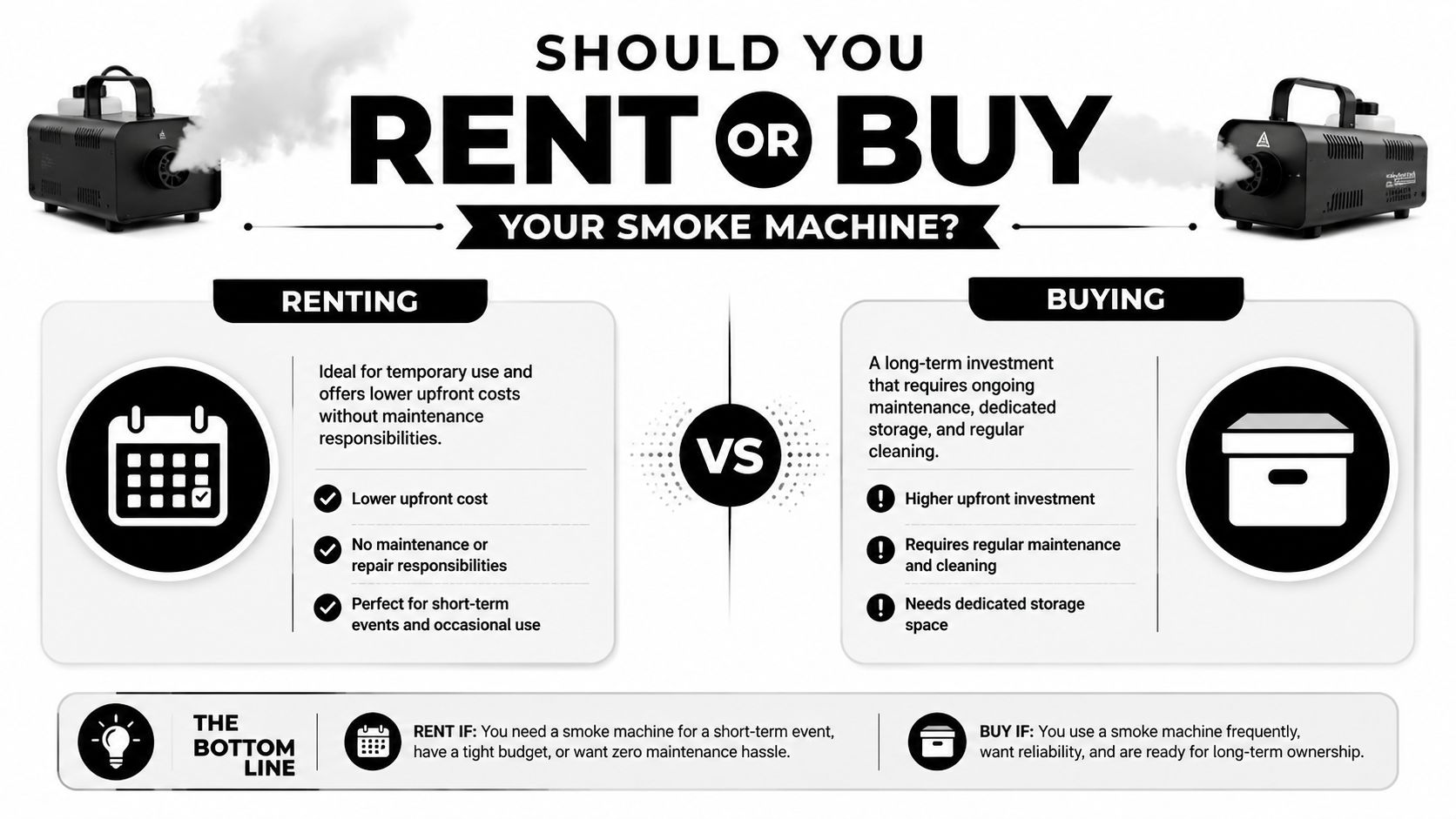
An infographic comparing the pros and cons of renting versus buying a smoke machine for events.

Renting vs buying in practical terms

A smoke machine isn't a decorative item you unpack and forget about. It needs the right fluid, regular cleaning, correct storage, and testing before the event. If it clogs, spits fluid, or underperforms, you've still got guests arriving on time.

For event planners, venues, and private hosts, renting usually makes more sense because it removes those responsibilities. You're not buying a machine, then trying to work out whether it's strong enough for a marquee, whether it needs a separate controller, or whether anyone on site knows how to run it.

Consideration Renting from ABC Hire Buying Your Own
Upfront cost Lower once-off event spend Higher initial outlay
Machine quality Access to event-grade equipment for the booking period Depends on what you can afford to buy
Maintenance Supplier handles cleaning and prep You handle cleaning, storage, and servicing
Reliability on the day Usually tested and event-ready Your responsibility to test and troubleshoot
Storage No storage after the event Needs safe storage between uses
Best fit Weddings, launches, parties, matric dances Repeated use by production teams or venues

When buying does make sense

Buying can work if you're a venue, production supplier, or organiser who uses smoke effects regularly and already has staff who understand event equipment. In that case, ownership gives you control and availability.

For most private clients, it doesn't.

Practical rule: If you need a smoke effect for one event, rent. If you need it often and know how to maintain it, then buying becomes worth discussing.

If you're comparing atmosphere effects more broadly, not just smoke, it's worth looking at how other event experiences are costed too. PSW Events' simulator solutions are a good example of how specialist event equipment is often rented because setup, transport, and support matter as much as the item itself.

For local planning, ABC Hire's guide to smoke machines hire is useful because it frames smoke effects as part of the event setup rather than as a stand-alone gadget purchase.

What Really Drives Smoke Machine Prices

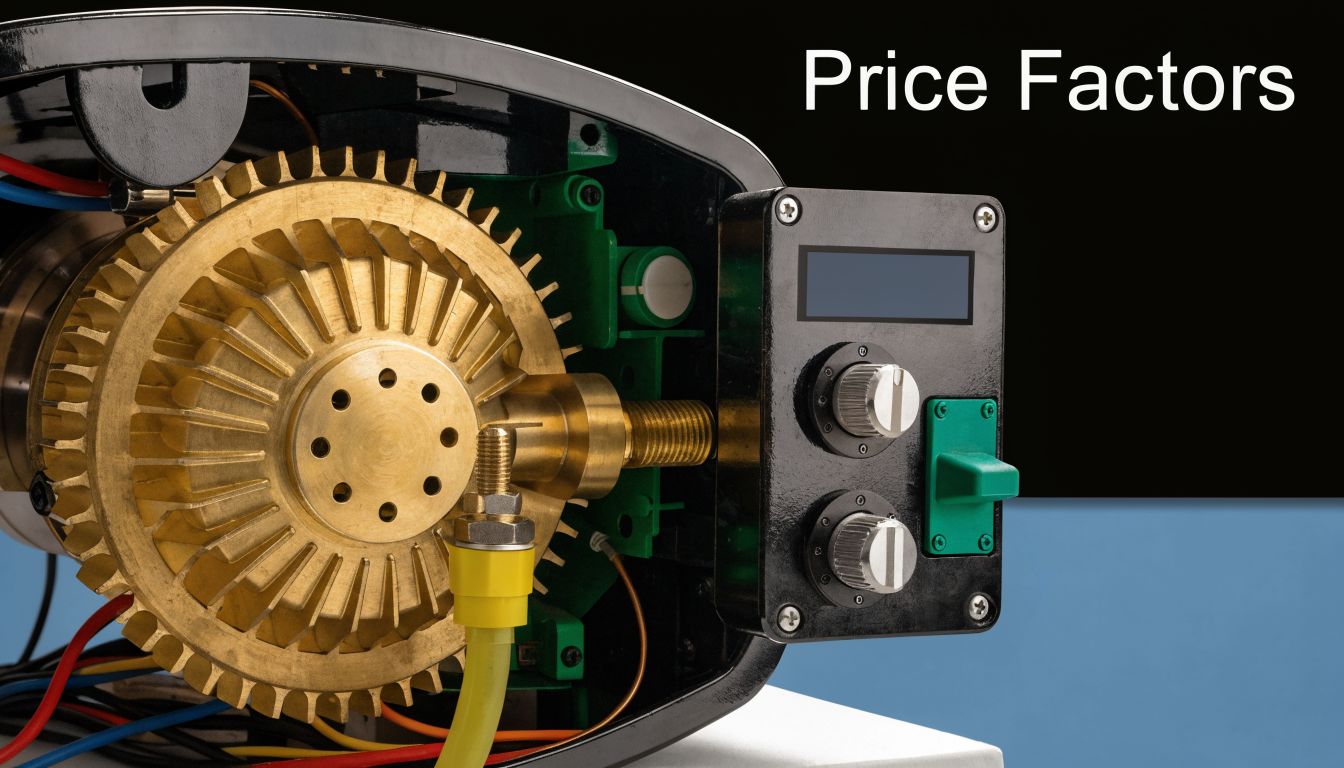
Price follows performance. That's the simplest way to understand the smoke machine price question.

A small house party machine and a professional event machine may both produce visible smoke, but they won't deliver the same result in a ballroom, under stage lighting, or in an open vineyard. Clients often compare them as if they're interchangeable. They aren't.

A close-up view of the internal mechanism of a professional smoke machine featuring brass gears and controls.

The machine itself is only part of the bill

For Cape Town and Winelands events, the final price isn't just about the hardware. This discussion of rental economics and event logistics highlights an issue many planners already run into locally: delivery to places like Stellenbosch or Paarl, seasonal demand, and on-site support all shape what you pay.

That matches what happens on real jobs. A venue in town with easy access and a simple setup window is one thing. A farm venue with load-in restrictions, uneven surfaces, limited power points, and a tight supplier schedule is another.

Five things that push the price up or down

Power and output

Large venues need more output. So do spaces with high ceilings, long entrances, or broad dance floors. A compact unit can be enough for a small indoor celebration, but it won't carry a dramatic effect across a larger room.

For outdoor events, low power is usually where disappointment starts.

Type of effect

Clients often use “smoke”, “fog”, and “haze” as if they mean the same thing.

They don't:

  • Standard foggers create bursts of visible smoke for parties and entrances.
  • Hazers produce a finer atmosphere that makes lighting beams stand out.
  • Low-lying fog machines create the cloud effect used for first dances and styled reveals.

If you book the wrong type, the effect won't match the brief no matter how affordable it seemed.

Reliability and controls

Professional machines usually justify their price through consistency. Better pumps, cleaner output, stronger heat systems, and more predictable controls matter when your cue has to happen at the exact right moment.

Wireless remotes, timer functions, and DMX compatibility also affect pricing because they make the effect easier to manage in a live event environment.

A machine that works perfectly in a garage test can still be the wrong machine for a wedding reception or brand launch.

Consumables and cleanup

Fluid is part of the overall operating cost. So is post-event cleaning. Some machines are fussier than others, and some effects require more careful handling to keep the machine running properly.

Clients comparing prices often skip this. Event suppliers can't.

Delivery and labour

Local pricing becomes more realistic. If a machine needs delivery, placement, testing, collection, and possibly standby support, that changes the quote. The machine may be one line item, but the service around it is often what determines whether the effect works at all.

For a useful comparison, event planners can look outside the smoke category too. This piece on photobooth hire cost in Australia 2026 shows the same pattern seen in rentals generally. The base item matters, but transport, staffing, timing, and extras often shape the final cost more than people expect.

For another local angle on event effect pricing, this fog machine price guide helps distinguish between machine categories and use cases.

Choosing the Right Machine for Your Cape Town Event

The right machine depends on what the moment is supposed to feel like.

If the goal is romance, you choose differently than if the goal is drama. If the goal is dance floor energy, you choose differently again. That sounds obvious, but many disappointing bookings come from picking a machine by price alone instead of by event purpose.

Weddings

For weddings, the most requested effect is low-lying fog for the first dance. That effect only works when the machine, fluid, floor area, and venue conditions all line up. In a still indoor space, it can look elegant and clean. In a breezy outdoor setting, it can disappear before the photographer gets the shot.

Couples often don't need a machine that runs all night. They need one machine that delivers one moment properly.

Corporate events and launches

Corporate work usually calls for control rather than excess. A hazer can add texture to stage lighting without dominating the room. A stronger fog effect can work for a reveal or entrance, but it has to be timed well and used carefully so it doesn't distract from the programme.

For this kind of event, clean output and predictable triggering matter more than novelty.

Parties, matric dances, and milestone celebrations

A standard fogger is often enough to lift a dance floor. It gives lighting more impact and makes the room feel active. For private parties, this is often the most cost-effective choice because it delivers atmosphere without needing the more specialised setup that low fog requires.

Outdoor Winelands venues change the brief

Many online guides fall short in these circumstances. Outdoor Winelands events deal with wind and humidity, and guidance on outdoor fogger limitations notes that budget foggers can be unpredictable in open-air settings, often making a more capable professional machine the better option for a reliable atmospheric effect.

That's exactly the issue at vineyard venues. Even when the weather feels calm at setup, air movement across open lawns and terraces can scatter the effect immediately. Humidity can also change how the smoke sits and disperses.

For open-air events in Stellenbosch or Franschhoek, “good enough” equipment usually isn't good enough.

A practical way to choose is this:

  • Indoor first dance: Low-lying fog
  • Stage lighting enhancement: Hazer
  • Party dance floor: Standard fogger
  • Open-air vineyard setup: Professional-grade machine selected for outdoor conditions

The machine should fit the venue first, then the budget.

Smart Tips for an Affordable Wow Factor

The easiest way to overspend on smoke effects is to book them as an isolated afterthought. The easiest way to keep the cost sensible is to plan them as part of the broader event setup.

That's especially true in Cape Town, where transport, timing, and venue access often matter more than people expect.

A large, dense cloud of yellow and white smoke billowing against a dark, dramatic background with bold text.

Where clients usually save money

  • Bundle related rentals: If you're already hiring lighting, furniture, sound, or climate equipment, adding a smoke machine to the same delivery is often more efficient than arranging it separately.
  • Book early for peak season: Summer dates, weddings, and year-end functions create pressure on equipment availability. Early booking gives you better choice and less scrambling.
  • Use smoke for one key moment: A single well-timed effect often has more impact than running the machine continuously.
  • Match the machine to the venue: Overbooking wastes money. Underbooking wastes the effect.
  • Check your power setup: Don't leave cabling to the last minute. If your machine placement is far from power, plan for safe extensions in advance. This guide to choosing a 20 m extension cord is useful for avoiding messy event-day workarounds.

What works best in practice

For weddings, pairing low fog with focused lighting usually gives a stronger result than trying to fill the whole room. For parties, one well-placed fogger near the dance area tends to work better than multiple weak units. For launches, subtle haze often looks more premium than heavy smoke.

The best value doesn't always come from the cheapest quote. It comes from a setup that is sized correctly, delivered on time, and simple enough to run without stress.

If your smoke effect needs a long explanation to justify itself, it's probably the wrong setup for the event.

Your Questions Answered by Event Experts

Clients usually ask the same practical questions once they move past the price.

Question Answer
Will my venue allow a smoke machine? Many do, but you should always confirm in advance. Some venues have restrictions because of alarms, airflow, or floor finish concerns.
Is a smoke machine safe for weddings and parties? Yes, when used correctly, with the right fluid, sensible placement, and proper supervision.
Can I use one outdoors? You can, but outdoor use is where machine choice matters most. Wind and open space can reduce the effect very quickly.
Do I need an operator? Not always. It depends on the event timing, the complexity of the effect, and whether cues need to be precise.
Will the smoke last all night? That depends on the effect type and venue conditions. Some events need a short burst. Others need a more sustained atmospheric effect.
What should I confirm before booking? Venue approval, power access, indoor or outdoor use, timing of the effect, and whether delivery and setup are included.

A smoke machine should make the event easier to stage, not harder to manage. Clear planning usually solves most problems before they start.


If you're planning a wedding, launch, matric dance, or private celebration and want a clear local quote without guesswork, ABC Hire can help you choose the right smoke effect for your venue, timing, and setup requirements.

Gold Candle Holders: A Cape Town Event Guide

You’re usually at the same point when gold candle holders become part of the conversation. The linen is chosen. The florals are nearly right. The venue is beautiful, but the tables still feel flat once the sun drops or the first guests walk in. They need warmth, reflection, and a focal point that doesn’t fight the rest of the styling.

That’s where gold candle holders earn their place. In Cape Town events, they solve more than one problem at once. They add height without bulk, glow without clutter, and formality without making a room feel stiff. They also adapt well across weddings, gala dinners, matric dances, and milestone celebrations, which is why experienced planners keep returning to them.

Generic retail advice doesn’t help much when you’re designing for the Western Cape. A holder that looks lovely in a showroom can fail fast on a windy wine farm, look too yellow under venue uplighting, or create a transport headache if you’ve chosen the wrong scale. Good event styling comes from knowing what works on an actual setup day, not only what photographs well online.

The Timeless Allure of Gold in Event Design

By the time a Cape Town room shifts from late afternoon light to dinner service, gold starts doing work that plain décor cannot. It picks up candlelight, warms the table, and gives the whole setting a finished feel without asking for more flowers, more colour, or more volume.

That staying power is its main appeal. Gold has been used in ceremonial and formal interiors for centuries, and it still earns its place at modern events for a simple reason. It reads as occasion, not novelty. In our experience at ABC Hire, gold appears in the majority of high-end Western Cape events because clients want a look that photographs well, feels polished in person, and still makes sense five years from now.

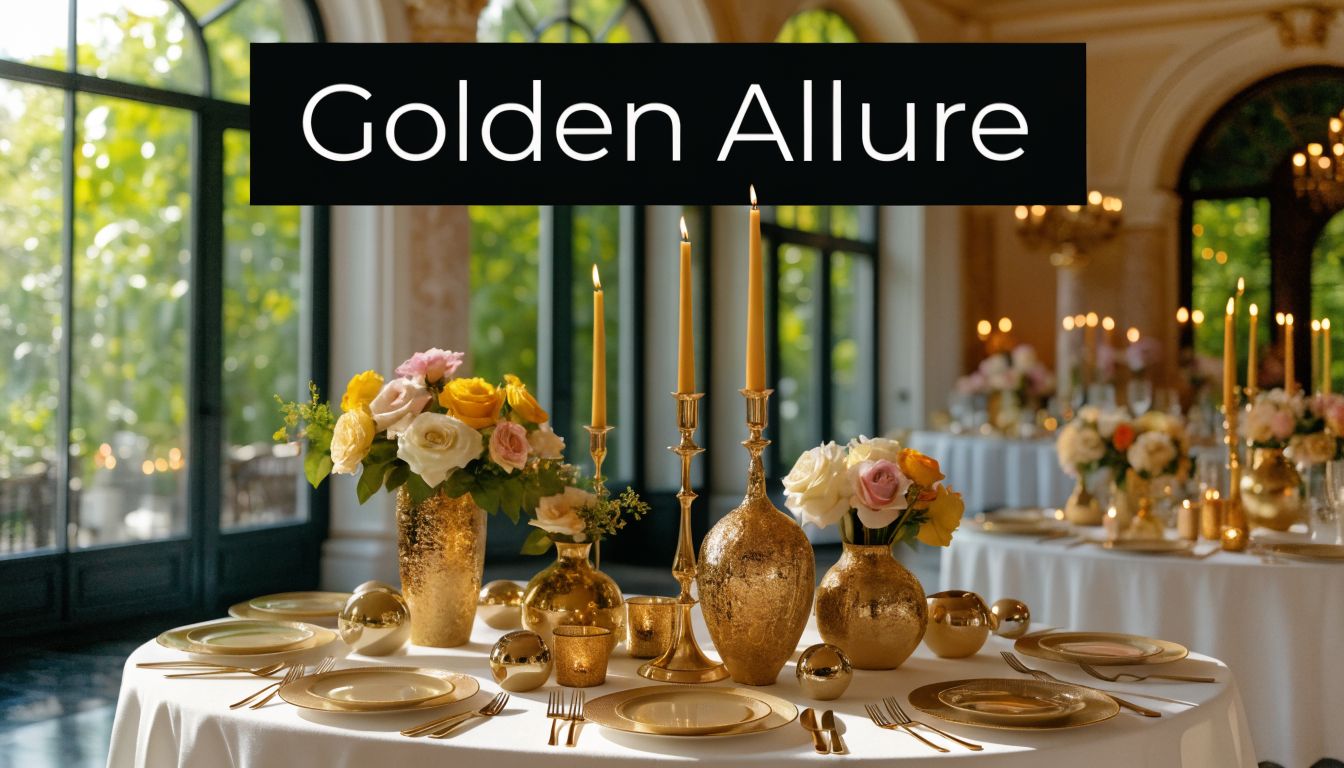
A luxurious wedding table setting featuring elegant gold vases, blooming roses, and tall glowing candles.

Why gold works so well on a table

Gold reflects light with more warmth than silver and more presence than clear glass. On a dinner table, that difference is obvious. It softens hard finishes, helps candles register in a large room, and stops neutral palettes from falling flat after sunset.

It also gives planners flexibility. Gold sits comfortably with crisp white florals, earthy Winelands textures, black-tie place settings, and contemporary corporate styling. If the brief already includes metallic accents elsewhere, such as gold side tables for lounge areas, candle holders carry that finish across the venue in a controlled way. The room feels connected rather than over-decorated.

A good gold finish also handles mixed lighting better than many clients expect. Under warm festoon bulbs it feels rich. Under cooler LED venue lighting, the right tone still reads refined instead of brassy. That distinction matters on setup day, especially in venues where you only see the final lighting state a few hours before guests arrive.

Gold does not need to dominate the table. A restrained layer of gold usually looks stronger than trying to turn every detail metallic.

Why it suits Cape Town so naturally

Western Cape events ask décor to perform across changing conditions. A Stellenbosch wedding may start in hard sun, move into wind at cocktail hour, and finish in a dim barn or cellar. A city gala might need to look sharp for a daytime media arrival and still feel warm by dinner.

Gold adapts well across those shifts. It holds its own in daylight, then becomes more atmospheric once candles are lit. That makes it particularly useful for local planners balancing beauty with practicality. One finish can work across garden marquees, hotel ballrooms, wine estates, and corporate functions without looking out of place.

It also aligns with what many Cape Town clients want now. Luxury, but not excess. Warmth, but not clutter. Reusable pieces that hire well across multiple event formats, rather than disposable décor that adds cost and waste. Gold candle holders meet that brief better than many trend-led alternatives.

A Practical Typology for Event Planners

A planner standing in a Franschhoek venue at 4pm has a different problem from a client browsing décor online. The question is not which gold candle holder looks nice on its own. The question is which one will still read well after load-in, florals, place settings, shifting light, and a full room of guests.

That is why I group gold candle holders by job first. Some create height. Some build a pool of light close to the table. Some protect a flame from wind on an exposed terrace. Some carry enough visual weight to hold a large arrangement together.

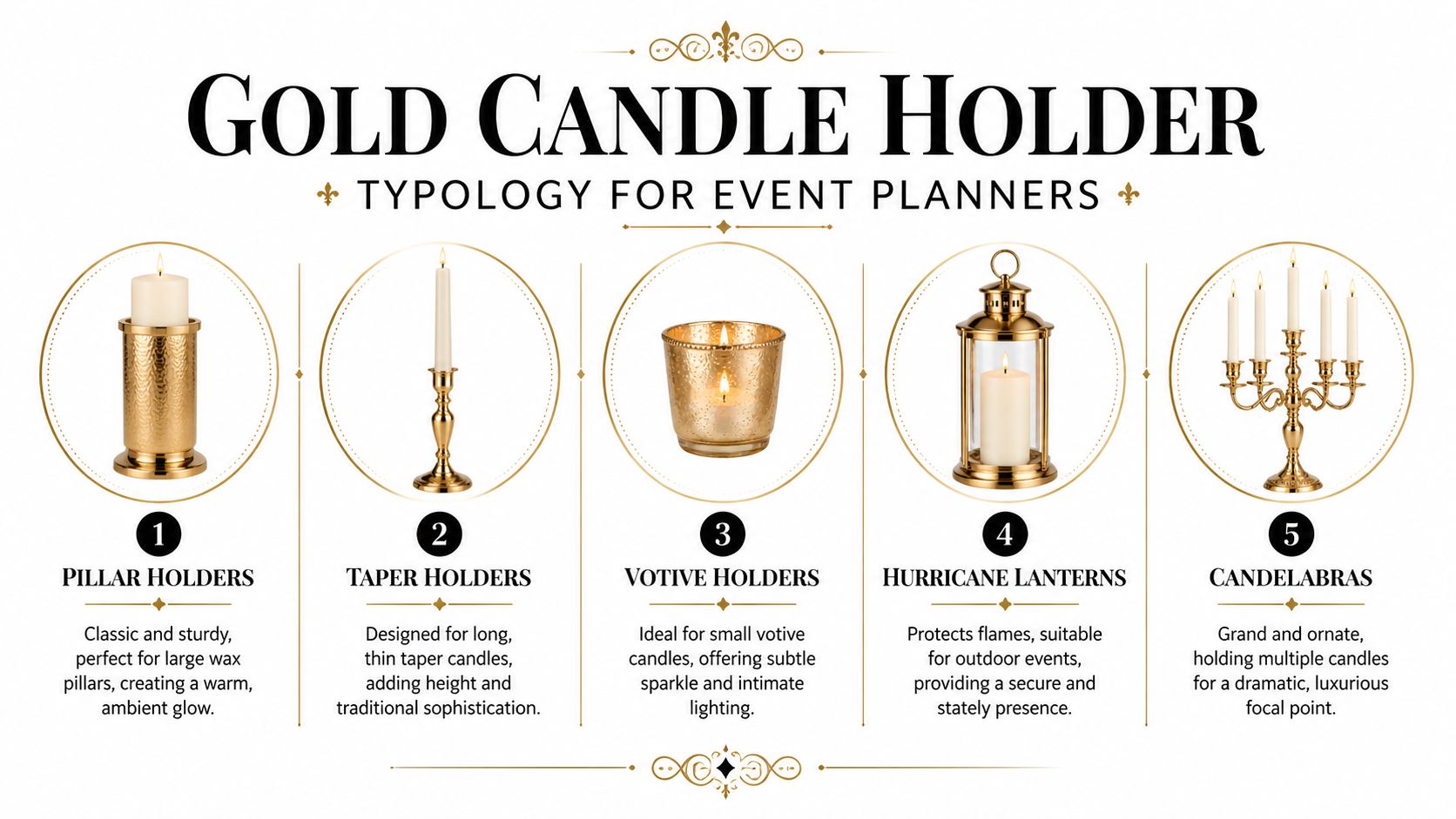
An infographic displays five types of gold candle holders: pillar, taper, votive, hurricane lantern, and candelabra.

The five core types worth knowing

Type Best use What it adds Watch out for
Taper holders Formal dining tables, long banquet runs Height and vertical rhythm Too many can block sightlines
Pillar holders Statement tables, entrance features, larger rounds Substance and a steady glow Can look heavy on smaller tables
Votive holders Layering across tables, bars, and cocktail areas Sparkle and intimacy They disappear if used too sparsely
Hurricane lanterns Outdoor settings, pathways, exposed terraces Flame protection and presence Need enough scale to avoid looking incidental
Candelabras Focal tables, dramatic receptions, stage-adjacent décor Grandeur and structure Can overpower low floral work

In Western Cape work, the strongest layouts usually mix two of these roles rather than relying on one type everywhere. Tapers can give a banquet run structure, while votives stop the base of the table from feeling empty. On a wine estate lawn, hurricanes often do the hard work because they keep the lighting scheme alive once the evening wind picks up. Candelabras have their place, but they need room around them and a brief that can carry that level of formality.

Finish affects the result as much as shape

Clients often focus on the silhouette and miss the finish. On site, the finish is what decides whether gold reads refined, soft, or slightly harsh under venue lighting.

  • Polished brass look: Strong for black-tie dinners, hotel ballrooms, and sharper corporate styling.
  • Matte gold: Better with textured linen, modern florals, and tables that need warmth without too much shine.
  • Antique gold: Useful in cellars, heritage venues, and spaces with timber or stone.
  • Champagne-gold tone: Safer with blush, cream, sand, and muted neutral palettes.

I usually caution planners against mixing too many gold tones on one table unless the variation is clearly intentional. What looks layered in a showroom can look mismatched once the venue adds glassware, charger plates, and candlelight.

Matching type to event mood

Romantic tables rarely come from height alone. They come from light at several levels. Lower votives, a few medium holders, and selective height often feel more considered than a row of identical tapers.

Corporate work is different. Cleaner repetition tends to win. A single holder style repeated down a long run gives order, especially in Cape Town conference venues and gala spaces where branding, staging, and timing already create enough visual noise. If the scheme includes a lot of reflective detail, mixing gold with glass candle holders can keep the table from feeling visually heavy.

Practical rule: Pick one hero form and one supporting form. More than that on a guest table usually weakens the composition.

The sustainability question is now part of the brief

Corporate clients in the Western Cape ask far more questions about reuse, material origin, and transport than they did a few years ago. In practice, that changes what planners shortlist. Pieces that survive repeated hire cycles, travel well to outlying venues, and do not need constant refinishing are easier to justify than decorative items chosen only for a single look.

That does not mean every client wants a lecture on materials. It means planners need sensible answers. Is the holder durable enough for multiple setups? Can it be paired with LED candles when a venue restricts open flame? Will it still look good after a season of corporate dinners, weddings, and end-of-year functions?

Good gold candle holders earn their place by doing the job repeatedly, not by looking impressive for one night.

Matching Holders and Candles for Flawless Execution

The fastest way to make an expensive setup look amateur is a bad candle fit. A taper that leans, a pillar that sits too loosely, or a holder that dwarfs a short candle will pull attention for the wrong reason. Guests may not know why the table looks off, but they’ll feel it.

Start with compatibility before style. The candle must sit securely without wobbling, forcing, or excessive packing. If a taper is too slim for the cup, you get a visible lean. If it’s too thick, planners often try to shave it down on site, which wastes time and leaves the finish looking untidy.

A clean way to decide

Use this simple matching logic:

  • Slim, elegant holder: best with tapers that suit the holder cup properly and won’t list once lit.
  • Broad, stable holder: better for pillar candles where the candle’s footprint needs support.
  • Glass-shielded holder or hurricane: useful where air movement is a concern.
  • Small cup or votive vessel: ideal for tea lights, votives, or LED inserts rather than improvised wax choices.

Height matters too. A very tall holder paired with a short candle can feel top-heavy visually. A low holder with an overlong taper can look precarious. The best combinations feel proportionate before they’re ever lit.

Real flame or LED

This is rarely a style-only decision. It’s an execution decision.

Option Best for Strengths Limitations
Real wax candles Indoor dinners, sheltered receptions, intimate tables Authentic flame, scent-free warmth if chosen correctly, classic movement Sensitive to wind, venue rules, drip risk, burn-time management
LED candles Outdoor events, long functions, venues with restrictions, high-traffic installs Consistent look, no open flame, reusable, stable through the evening Lower-end versions can look artificial

Real wax has a quality LEDs still imitate rather than replace. The flicker is irregular. The glow changes naturally across the evening. For certain dinner settings, that’s still unmatched.

But LED often wins in professional event conditions. It removes the need to relight candles, reduces risk near draping and florals, and performs far better outdoors. Good LED candles also make mixed-height installations much easier to manage because every point of light stays consistent from the first course to the final dance. If you’re styling smaller accent pieces such as votives with candles, LED inserts can be especially helpful where access for relighting is awkward.

If the setup is exposed, difficult to monitor, or subject to venue restrictions, LED is usually the more professional choice.

What usually doesn’t work

A few combinations fail repeatedly on live events:

  • Underweight holders with long tapers: They look elegant until a guest bumps the table.
  • Large florals with tiny candle points: The flowers dominate and the candlelight disappears.
  • Mixed candle temperatures: Warm real flame beside cool-toned LED looks mismatched.
  • Improvised wax fitting: Tissue, foil, and rushed packing tricks don’t hold up through service.

Execution is what guests remember, even if they don’t realise it. The holder and candle should look like they belong together from the first minute.

Styling Gold Candle Holders for Signature Cape Town Events

A gold candle holder that looks perfect in a studio mock-up can fail quickly on a real Cape Town event. Set the same piece on a long table in Franschhoek, a hotel ballroom in the CBD, or a school dance venue in the northern suburbs, and the result changes with the wind, the light, the service style, and the distance guests view it from.

That is why styling has to start with venue conditions, not only with reference images. Gold works because it reflects light, adds warmth, and reads well in photographs. But it only does that properly when the holder suits the job.

Two wine glasses and gold candle holders set beside a vibrant floral bouquet overlooking the ocean.

Winelands weddings

A common challenge we see at Stellenbosch and Franschhoek weddings is late-afternoon wind. Couples often want fine tapers and delicate styling, but exposed tables need more protection than the brief suggests. Flames flicker out, lightweight holders shift, and a table that looked balanced at setup can feel messy before starters are served.

In that setting, gold candle holders need to do practical work. Weighted bases matter. Glass-shielded designs matter. Finishes that still look clean after dust, handling, and temperature changes matter.

A setup that usually holds its shape includes:

  • One low floral centrepiece: enough presence for the table, without blocking conversation
  • Protected candlelight: hurricanes or shielded gold holders placed where they will stay lit
  • Controlled height: a few taller elements for rhythm, not a full table of unstable tapers
  • Spread of light: smaller holders around the main arrangement so the table glows evenly

The usual mistake is copying a still photograph from a calm indoor setting. On a wine farm, low and protected often performs better than tall and delicate.

Corporate gala dinners in the city

Corporate styling needs warmth, but it also needs restraint. In Cape Town city venues, guests are often looking at the room from multiple vantage points. Entrance, stage, table, and brand installation all need to feel connected.

Repetition usually does the heavy lifting here. Use one gold tone across guest tables and feature areas. Keep the candle format disciplined. If the event already has strong branding, screens, or coloured lighting, the candle holders should support the room rather than fight for attention.

A few choices make a visible difference:

  • Keep finishes consistent. Mixing bright polished gold with brushed or antique tones often looks accidental.
  • Use cleaner shapes for finance, tech, and awards events where the brief is formal and structured.
  • Limit mirrored surfaces if the lighting design is already reflective. Too much bounce can make the tables feel hard rather than warm.
  • Check sightlines from the stage. What feels subtle at table level can look cluttered in wide event photography.

The best corporate candle styling reads clearly in the room and still looks inviting in close-up.

Milestone birthdays and matric dances

These events allow more character, but they still need control. Gold can easily tip into looking overdone if every surface gets the same treatment.

For milestone birthdays, I usually group holders in small clusters on focal points such as cake tables, gift tables, bars, and lounge settings. The gold becomes the thread that ties the space together, while flowers and linens carry the personality.

For matric dances, impact belongs at the arrival and photo areas first. That is where taller gold pieces usually earn their keep. Dining tables often work better with simpler, lower holders that keep the room polished without making the setup feel too formal for the age group.

Three layout moves that usually work

The cluster

Best for round tables, lounge areas, and feature corners. Mixed heights create depth and keep the arrangement from looking flat. One stronger anchor piece, supported by smaller holders, usually looks more resolved than a group of equal-sized items.

The line

Best for banquet tables. A linear run gives the table rhythm and keeps the eye moving through the room. Alternate candlelight with florals or table details so the centre does not become one solid strip of metal and flame.

The frame

Useful for bars, stages, and signing tables. Place holders at the outer edges so the surface remains usable and the feature still has shape in photos.

Space matters. Gold candle holders improve a table most when light can travel between them, rather than getting trapped in an overcrowded arrangement.

The Essential Logistics Renting vs Buying in the Western Cape

Buying gold candle holders looks sensible until the practical work begins. A single event might need multiple styles, different heights, backups for breakage, and enough quantity for guest tables, feature areas, and transitions such as bars or entrances. Once you start adding all of that up, ownership becomes a storage and handling problem, not just a décor choice.

For one-off events or occasional use, renting is usually the cleaner decision.

What buying really involves

Purchased holders need somewhere safe to live between events. Metal finishes can mark, tarnish, scratch, or dull if they’re packed badly. Wax residue also takes time to remove properly, especially from textured or antique-style pieces.

Then there’s the style issue. If you own one look, you’ll be tempted to force it into every brief. That’s rarely good design. A polished gold taper holder that suits a formal dinner may be wrong for a rustic wedding or a branded activation.

Why renting usually wins

Renting gives planners flexibility. You choose what fits the brief, scale the quantity to the venue, and avoid holding stock that may not suit the next event. It also reduces the cleanup burden after a long setup and strike.

In the Western Cape, that convenience matters more than many people expect. Events often involve travel to Stellenbosch, Paarl, Franschhoek, or more remote venues where transport, packing, and return timing affect the whole production schedule.

Here’s the trade-off clearly:

Consideration Buying Renting
Upfront spend Higher for quality pieces and quantity Spread across the event only
Style variety Limited to what you own Easier to match each brief
Storage Your responsibility Not your concern after collection
Wax cleanup Ongoing task Usually reduced or handled through rental process
Transport risk You carry it every time Shared with a rental workflow
Scalability Harder for larger events Easier to increase quantities as needed

Best use cases for each

Buying can make sense for venues or stylists with constant repeat use, enough storage, and a very defined look. If the same holder appears in event after event, ownership may suit your workflow.

Renting suits most engaged couples, private hosts, schools, and many planners handling varied briefs. It keeps the focus on event design rather than maintenance, repair, and stock control.

If an item has to be cleaned, wrapped, stored, counted, transported, unpacked, repacked, and protected from damage, you’re not just buying décor. You’re taking on operations.

That’s the part people tend to underestimate. Gold candle holders are compact compared with furniture, but at event scale they still become inventory. Renting removes most of that load.

Safety Maintenance and Post-Event Care

Candles only feel effortless when the safety planning is solid. Whether you’re using real flame or LED, someone needs to decide where the holders sit, what surrounds them, and who checks them during service.

With real candles, distance matters. Keep flames away from low-hanging foliage, loose draping, menus, paper place cards, and anything guests may shift accidentally. Also confirm the venue’s open-flame rules before finalising the design. Some venues allow candles only in enclosed glass, while others prefer LED throughout.

On-event handling that prevents problems

  • Check stability first: Every holder should sit flat before the candle goes in.
  • Trim the area around the flame: Florals and ribbons can migrate during setup.
  • Assign responsibility: Someone should know who lights, monitors, and extinguishes candles.
  • Avoid last-minute substitutions: A candle that “sort of fits” usually becomes a safety issue later.

LED candles simplify most of this. They remove open-flame risk, perform better in exposed areas, and make strike easier at the end of the night. For many planners, that reliability is worth more than the romance of real flame.

Looking after the finish

Gold finishes need gentle handling. Wiping too aggressively, scraping wax carelessly, or stacking pieces without protection can mark them quickly. If you’re ever unsure how to care for gold surfaces without damaging them, jewellery care guides can be surprisingly useful. This guide on how to safely clean gold rings offers a good reminder that soft materials and non-abrasive methods protect the finish better than harsh shortcuts.

For rentals, the process is simpler. Items should arrive event-ready, and post-event handling usually means basic care, safe collection, and not forcing wax or residue off in a way that causes damage. If in doubt, ask the rental company what they want touched and what they’d rather handle themselves.

Your Event Planner's Gold Candle Holder Checklist

The easiest way to get gold candle holders right is to make the decisions in the right order. Venue rules first. Holder type next. Candle choice after that. Styling comes last.

A wedding planner journal with a gold candle holder on a table next to fresh flowers.

Questions for the venue

  • Open flame policy: Are naked flames allowed, enclosed only, or not at all?
  • Wind exposure: Which tables or zones are most exposed after sunset?
  • Surface conditions: Are tables level and stable enough for taller holders?
  • Pack-down timing: How quickly must décor be cleared after the event?

Questions for the rental company

  • Finish and style consistency: Will all pieces in the order match in tone and condition?
  • Candle compatibility: Which candles fit each holder properly?
  • Transport and collection: How are fragile items packed, delivered, and collected?
  • Outdoor suitability: Which holders are weighted, enclosed, or better for exposed venues?

Pre-event checks

  • Confirm quantities: Count guest tables, feature areas, bars, and backup pieces.
  • Review placement: Check sightlines, floral height, and guest comfort.
  • Test the look: Place one full sample table before the team repeats the layout.
  • Decide on lighting: Real wax or LED should be final before setup day.

Post-event checks

  • Extinguish or switch off: Do a full sweep before strike begins.
  • Handle with care: Don’t stack metal pieces loosely or scrape at residue.
  • Separate damaged items: Flag issues clearly rather than hiding them in the return.
  • Confirm collection plan: Make sure packed items are in the agreed handover point.

A beautiful candlelit table doesn’t happen because gold was chosen. It happens because the holder, candle, venue, and styling brief all agreed with each other.


If you need gold candle holders, LED candles, event furniture, or a full styling support rental partner in Cape Town and the Winelands, ABC Hire can help you build a setup that looks polished and performs properly on the day.

A Complete Guide to Table Cloth Hire in Cape Town

When you're planning an event in Cape Town or the Winelands, the last thing you want to worry about is the mountain of logistics that comes with sourcing linens. This is where table cloth hire becomes an absolute lifesaver. It’s hands-down the most practical and budget-friendly way to get that polished, high-end look without the headache of buying, cleaning, and storing everything yourself.

Why Table Cloth Hire Is the Smart Choice for Your Event

Outdoor event setting with a round table, beige tablecloth, white settings, and a flower arrangement.

Think about it for a second. Imagine having to find, buy, iron, and then clean dozens of tablecloths for a wedding or corporate function. The costs spiral quickly, and the sheer effort is enormous. Hiring tablecloths cuts through all that complexity, offering a far smarter solution for any event host.

Unlock Style Without the Investment

Let’s be honest, buying top-quality linens is a serious expense, especially if you’re only going to use them once. A single, beautiful floor-length tablecloth can easily run into hundreds of rands. Now, multiply that by 10, 20, or 50 tables, and you’re looking at a huge chunk of your budget gone.

Hiring gives you access to an incredible range of luxurious fabrics and trendy colours without that massive upfront cost. You achieve that 'wow' factor and professionally styled feel for a fraction of the price, which means more money for the fun stuff, like delicious food or great entertainment.

The Power of Choice and Flexibility

Your event is one-of-a-kind, and your décor should reflect that. Buying tablecloths usually means settling for safe, standard options that you can reuse. But with a professional hire service, your creative options are virtually limitless. You can pick the exact shade to match your company's branding or a specific texture to complement your flower arrangements.

This flexibility is what pulls a whole look together and creates a truly memorable atmosphere. A hire company like ABC Hire keeps a massive collection on hand, so you'll always find the perfect fit for any theme:

  • Weddings: From classic crisp whites and romantic satins to rustic, textured fabrics, we have something to bring your vision to life.
  • Corporate Events: Choose from sophisticated, on-brand colours that project pure professionalism and show you care about the details.
  • Milestone Birthdays: Go for bold, fun colours and patterns that get the party started and set a festive mood from the get-go.

The real magic of table cloth hire is its ability to turn a blank space into a bespoke experience. It’s not just about covering a table; it's about creating an environment that tells a story and makes your guests feel truly special.

The Ultimate Convenience Factor

Maybe the best reason of all to hire is just how easy it is. When the party’s over, the absolute last thing you feel like doing is dealing with a pile of dirty, stained linens. Spills from wine, food, or candle wax can be a nightmare to get out with a normal washing machine.

At ABC Hire, we've made our service completely seamless. We deliver immaculate, professionally pressed tablecloths straight to your venue. Afterwards, you just need to gather the used cloths, and we’ll handle the collection and the specialised cleaning. It's a full-circle service that saves you an incredible amount of time and stress, letting you focus on what really matters—enjoying your own event.

Choosing the Perfect Fabric and Colour for Your Theme

Let's be honest, tablecloths do more than just keep your tables clean. They’re the first thing your guests see, the backdrop for your entire setup, and they set the tone for the whole event. It's the difference between just another party and a truly memorable experience.

Think of it like this: the fabric you choose is your event's personality. Are you going for a relaxed garden party vibe? A glitzy, glamorous wedding? Or maybe a sharp, professional corporate event? Your choice of material is what starts building that atmosphere, long before the first guest even arrives.

Here in Cape Town and the Winelands, with our vibrant event scene, quality table linen hire has become essential. The South African market for table linen is actually set to grow by 7.3% annually through 2031, mostly thanks to our booming hospitality industry. What’s really interesting is that since the pandemic, hiring linen has become up to 30% cheaper than buying it for a single event, which has massively boosted demand.

Popular Fabric Choices and What They Say

Let’s get into the good stuff. Each material has its own feel, weight, and look, and picking the right one is all about the vibe you want to create.

  • Polyester and Polycotton: These are the reliable workhorses of the event world, and for good reason. They’re tough, don't wrinkle easily, and come in just about every colour you can imagine. If you need a clean, crisp foundation for a conference, big party, or any event where you want a sharp, uniform look, these are your best bet.

  • Satin and Taffeta: Looking for a bit of glam and romance? This is where you turn. Satin has that gorgeous, high-sheen finish that catches the light and just screams luxury. Taffeta is a little crisper and has a subtle shimmer, making it perfect for elegant weddings and swanky awards dinners.

  • Velvet: If you want drama, you want velvet. It's rich, plush, and has a deep texture that creates a really moody and opulent feel. It’s a fantastic choice for winter weddings, upscale evening parties, or any theme that needs a touch of warmth and drama.

Matching Colour to Your Event's Mood

Colour is a powerful tool. The shades you pick for your tables can completely change the feel of a room and tie your whole theme together. It's such a simple way to guide how your guests feel from the moment they walk in.

You can never go wrong with a classic white or ivory tablecloth. It’s timeless, elegant, and gives you a blank canvas to let your flowers or bold dinnerware really shine. It’s the go-to for traditional weddings and formal events where you’re aiming for pure sophistication.

But don’t be afraid to make a statement with colour! Deep, moody tones like navy or emerald green create an intimate, luxurious atmosphere perfect for an evening do. Want something more modern and edgy? Using dramatic black table cloths creates a stunning contrast that makes every other colour in the room pop. And for festive daytime events, birthdays, or brand launches, bright shades like coral or yellow bring an energy and playfulness that’s hard to beat.

Key Takeaway: The perfect linen is a mix of the right texture and the right colour. First, decide on the mood you're after—romantic, professional, festive, or dramatic. Then, pick the fabric and shade that brings that vision to life.

One last tip: always think about the lighting in your venue. A fabric’s colour and shine can look completely different in bright daylight compared to the soft, warm lighting of an evening event. If you can, ask us for a fabric swatch. That way, you can see it in the actual space, next to your other décor, and be 100% sure it all comes together perfectly.

How to Measure for the Perfect Table Cloth Drop

Getting the sizing right for your tablecloths can feel a little tricky, but it’s actually much simpler than you might think. The real secret to a professional-looking setup isn’t just about covering the table; it’s all about achieving the perfect ‘drop’. This is simply the event industry term for the length of fabric that hangs down from the edge of the tabletop.

Think of the drop like the hem on a good suit. Too short, and the whole look feels awkward and incomplete. Too long, and it’s a sloppy tripping hazard. But when you get it just right, it creates a polished, intentional style that instantly elevates the entire room. Your choice of drop length is a surprisingly powerful tool for setting the mood of your event.

Before you even pull out the tape measure, it helps to think about the overall vibe you're aiming for. This quick flowchart shows how the creative steps—mood, fabric, and colour—all connect to help you build a cohesive vision.

A flowchart illustrating the fabric selection process: Mood, Fabric, and Colour steps with icons.

Once you've got a feel for the style, you can confidently choose the measurements to match.

Understanding Drop Lengths and Their Effects

The two most common drop lengths each create a completely different feel. Knowing the difference will help you tell your rental company exactly what you need.

  • Lap-Length (or Half-Drop): This style drops about halfway to the floor, usually landing around your guests' laps as they're seated. It creates a more casual, relaxed atmosphere, perfect for a chic bistro vibe or a laid-back garden party. It’s practical, clean, and ensures guests won’t get tangled up in the fabric.

  • Floor-Length (or Full-Drop): For more formal occasions like weddings, milestone birthdays, or corporate galas, a full drop is the undisputed gold standard. The fabric cascades all the way to the floor, creating a seamless and elegant column of colour that completely hides the table legs. This dramatic look offers a clean, luxurious canvas and is also brilliant for hiding storage boxes or extra supplies underneath serving tables.

A floor-length drop is the secret to that high-end event aesthetic. It creates an unbroken line of colour from tabletop to floor, making the whole space feel more cohesive and deliberately styled.

A Simple Step-by-Step Measuring Guide

Ready to get the numbers sorted? You only need two key measurements from your table: its dimensions (diameter for round tables, or length and width for rectangular ones) and its height. The standard height for most dining tables here in South Africa is 75cm.

Let's walk through the simple calculation.

For Rectangular Tables:

  1. Measure the Table: Jot down the table's width and length. A standard trestle table, for example, is usually 180cm long by 75cm wide.
  2. Decide Your Drop: Choose your drop length. For a full drop, this will be the table's height (75cm). For a lap-length drop, aim for about 35-40cm.
  3. Calculate the Cloth Size:
    • Cloth Width = Table Width + (Drop Length x 2)
    • Cloth Length = Table Length + (Drop Length x 2)

So, for a full drop on our 180cm x 75cm trestle table:

  • Cloth Width = 75cm + (75cm x 2) = 225cm
  • Cloth Length = 180cm + (75cm x 2) = 330cm
    You would need to hire a tablecloth measuring approximately 225cm x 330cm.

For Round Tables:

The maths for round tables is even more straightforward.

  1. Measure the Diameter: Measure the distance straight across the centre of the tabletop. Let’s say you have a 180cm round table, a popular size that seats 10 guests.
  2. Decide Your Drop: Again, choose your desired drop (e.g., 75cm for a full, floor-length look).
  3. Calculate the Cloth Diameter:
    • Cloth Diameter = Table Diameter + (Drop Length x 2)

For our 180cm round table with a full drop:

  • Cloth Diameter = 180cm + (75cm x 2) = 330cm
    You’ll want to ask for a 330cm round tablecloth to get that perfect, elegant finish. For more detailed advice, check out our guide on choosing the right tablecloths for round tables.

Quick Reference Table Cloth Size Guide

To make things even easier, here’s a handy chart that matches common table sizes in Cape Town and the Winelands with the tablecloths you’ll need for both lap-length and floor-length drops.

Table Size & Shape Seats Lap-Length Drop Cloth (cm) Full-Length Drop Cloth (cm)
1.8m Round Table 8-10 230 Round 330 Round
1.5m Round Table 6-8 230 Round 300 Round
1.8m x 75cm Trestle Table 6-8 230 x 150 Rect. 330 x 225 Rect.
2.4m x 75cm Trestle Table 8-10 300 x 150 Rect. 390 x 225 Rect.
Cocktail Table (70cm Round) 2-4 180 Round 230 Round

Knowing these simple formulas and having this chart on hand empowers you to communicate your needs clearly, ensuring there are no sizing surprises on your event day. It’s that final detail that turns a good setup into a great one.

Understanding Table Cloth Hire Costs and Packages

Figuring out the budget for an event can feel like you're trying to solve a tricky puzzle, but getting a handle on your tablecloth hire costs shouldn't add to the headache. When you have a clear idea of the pricing, you can put your money where it matters most, making sure your décor has a real impact without any nasty surprises on the final bill.

Think of it like commissioning a custom piece of art. The materials the artist uses, the size of the canvas, and how many pieces you want all play a part in the final cost. It’s exactly the same with linen hire – your main cost drivers are the fabric you choose, the size of the tablecloths, and how many you actually need.

In the Western Cape, the events industry is a big deal, and services like linen hire are a massive part of that. After a bit of a dip post-pandemic, we saw a huge jump in demand for hygienic polyester linens. The data also shows that for special occasions, hiring can be up to 50% cheaper than buying everything yourself.

Key Factors That Influence Price

Not all tablecloths are created equal, and their price tag reflects this. Here’s a quick look at what really shapes the cost of your hire:

  • Fabric Type: This is the biggest factor. Standard, hard-wearing fabrics like polyester are your most budget-friendly bet. They give a clean, crisp look and come in a huge range of colours. If you want something a bit more special, fabrics like luxurious velvet, shimmering satin, or elegant damask will cost more because of their premium feel and look.
  • Size and Drop: It makes sense that larger tablecloths that drape all the way to the floor need more fabric, so they cost a bit more than smaller ones that just cover your lap. But for a formal event, that dramatic floor-length drop is often well worth the small extra investment.
  • Quantity: Of course, the more tablecloths you hire, the higher the total cost will be. But the good news is that most rental companies, including us here at ABC Hire, offer better value on bigger orders. It often works out cheaper to dress all your tables uniformly.

Sample Hire Packages for Cape Town Events

To give you a real-world idea of what to budget, let's walk through a few common event scenarios we see all the time here in Cape Town. These are just examples, of course – your final costs will depend on the exact fabric and sizes you go for.

1. Intimate Winelands Wedding (50 Guests)

  • What's needed: Linens for 5 large round guest tables, plus 2 rectangular trestle tables for gifts and the main table.
  • Linen Choice: Floor-length satin tablecloths to create a romantic, upscale atmosphere.
  • The goal: A luxurious and cohesive look where every single detail feels premium.

2. Large Corporate Conference (200 Guests)

  • What's needed: Linens for 20 round guest tables, 5 trestle tables for registration and catering, and 10 cocktail tables.
  • Linen Choice: Standard polyester in the company’s brand colours for a sharp, professional look.
  • The goal: Practicality, brand consistency, and keeping costs down for a large-scale event.

3. Stylish Matric Dance (150 Guests)

  • What's needed: Linens for 15 large round guest tables and a few trestles for a buffet and the DJ setup.
  • Linen Choice: A mix of dramatic black velvet and sparkly sequin runners to create a glamorous, festive vibe.
  • The goal: To make a bold visual statement that feels special and celebratory.

Pro Tip: Don't just think about tablecloths in isolation. Bundling your rentals is one of the smartest ways to make your budget work harder.

At ABC Hire, we do a lot more than just linens. When you package your tablecloth hire with other essentials like tables, chairs, or even our unique LED furniture, you can unlock some serious savings. This bundled approach doesn't just simplify your planning with a single delivery and one person to talk to; it almost always works out to a better price overall. For more on this, check out our complete guide to renting furniture for events. It’s a simple way to save time, money, and stress, leaving you free to focus on creating an amazing experience for your guests.

The ABC Hire Process: From Your First Call to Final Collection

Two men transfer large stacks of fresh white towels from a van to a building entrance.

We believe hiring beautiful tablecloths should be one of the easiest, most satisfying parts of planning your event. Our entire process is built to be simple and reliable, so you can tick ‘linens’ off your list and get back to focusing on your guests. Think of us as your behind-the-scenes partner, making sure every table looks absolutely perfect.

It all starts with your idea. Whether you come to us with a fully-formed plan or just a few questions, our team is here to guide you. We'll help you narrow down your choices, double-check your quantities, and make sure every little detail matches your vision.

Once you’re happy with the plan, we’ll put together a clear, detailed quote with no hidden surprises. We’re big on transparency, so you’ll see a full breakdown of costs, including the hire fee, delivery, and our damage waiver. This way, you know exactly what to expect from the start.

From Our Doors to Your Venue Floor

After you give us the green light, our work truly begins. Every single tablecloth is professionally laundered, pressed, and carefully inspected to make sure it arrives in pristine condition. We hang our linens to avoid creases during transport, meaning they're ready for the table the moment they arrive at your Cape Town or Winelands venue.

Our delivery service is all about reliability. We’ll coordinate with you or your venue manager to schedule a drop-off that fits seamlessly into your timeline, taking one more logistical headache off your plate.

Did you know that table cloth hire is a massive part of the Western Cape's economy? Recent data shows that personal service activities, which include linen hire, generate 44.6% of the event sector's income and have seen a 36.7% jump in employment. This post-pandemic boom is partly because hiring saves planners up to 40% compared to buying, giving them access to incredible quality for thousands of local events each year. You can dive deeper into these trends over at Stats SA.

After the Last Toast

When your event is over, our job isn't done. You don’t have to worry about a thing—especially not the cleaning. Just gather the used linens and pop them into the bags we provide. We’ll handle the collection and all the specialised laundering needed to tackle those stubborn food and wine stains.

Our damage waiver is there to give you complete peace of mind. It covers the small, accidental spills that are just a normal part of any good celebration, so you can relax and enjoy the party without stressing.

Our whole service is built on one simple idea: making professional table styling easy and stress-free for everyone. From the first phone call to the final collection, we manage the details so you can focus on creating brilliant memories.

To help us get your quote sorted quickly, it’s great if you have a few details ready when you get in touch:

  • Your event date and the venue’s location.
  • The number of tables you're using and their sizes.
  • A general idea of your preferred fabric and colour.
  • The drop length you’re after (e.g., lap-length or all the way to the floor).

Having this info handy helps us get your booking confirmed efficiently. It's all part of our commitment to a flawless table cloth hire experience from beginning to end.

Your Tablecloth Hire Questions Answered

Even after you've pinned down most of your event details, there are always a few lingering questions about the linens. It's completely normal! We get asked these all the time, so we've put together the most common queries we hear from clients planning events right here in Cape Town and the Winelands.

Think of this as your final checklist. We want to clear up any last-minute uncertainties so you can book your tablecloths with total confidence and tick one more big thing off your list.

How Far in Advance Should I Book My Tablecloths?

This is probably the most critical question we get, and the answer really comes down to your event date. Cape Town’s event season, especially for weddings between September and April, is incredibly busy. If you want to avoid any disappointment and get your first pick of fabric and colour, booking early is always the best move.

For weddings, we strongly suggest getting your tablecloth hire sorted four to six months in advance. This gives you plenty of breathing room, guarantees your favourite style is available (especially for popular choices like velvet or sequins), and locks in your inventory. It’s one less thing to worry about as the big day gets closer.

If you're planning a corporate function, matric dance, or a big birthday bash, you've got a little more wiggle room. Booking four to eight weeks ahead is usually a safe bet. That said, if your event falls over a public holiday or a popular long weekend, we'd recommend treating it like a wedding and booking closer to the two-month mark just to be safe.

The golden rule is simple: the sooner you book, the better the selection. We can sometimes work magic with last-minute requests, but booking ahead ensures we can bring your exact vision to life.

What Happens If a Tablecloth Gets Stained or Damaged?

Let’s be honest—events are meant to be enjoyed! Good food, great wine, and lively conversation often mean a few spills are part of the fun. A splash of red wine or a bit of sauce is a sign of a great party, and we’ve built our service to expect just that. You don't need to stress over minor accidents.

Our hire fee automatically includes professional, commercial-grade laundering. Our cleaning process is tough on the most common event stains, from food and drink to light scuffs. To give you complete peace of mind, our straightforward damage waiver covers these typical, accidental stains. You won't be held responsible for the normal wear and tear of a celebration.

Of course, some damage goes beyond a simple stain. In the rare case of something irreparable—like large tears, burn holes from candles, or extensive wax damage that just won't budge—a replacement fee would apply. This is all laid out clearly and fairly in your rental agreement, so there are no surprises. We want you to focus on your guests, not on every little drip.

Do I Need to Clean the Linens Before Returning Them?

Absolutely not! That’s one of the best parts of hiring from a professional service. The last thing you want to be thinking about after your event wraps up is a mountain of laundry. We handle all the cleaning for you, saving you a massive amount of time and effort.

Your only job after the party is a simple one. Before you pack the linens into the laundry bags we provide, just give them a quick shake to get rid of any loose food crumbs, confetti, or other bits and pieces. This quick step helps prevent mildew and makes our cleaning process run that much smoother.

Once they're shaken out, just pop them in the bags, and our team takes it from there. No soaking, no scrubbing, no emergency trips to the dry cleaner. It’s a core part of our service, designed to make your post-event cleanup as easy as possible.

Can I See Fabric Samples Before I Decide?

Yes, and we always encourage it! We know that colours and textures can look completely different on a screen versus in your hand. Getting the shade of your tablecloth to perfectly match your flowers, stationery, or decor is what pulls the whole look together. That’s why we make it easy to see and feel the fabrics before you commit.

You can request swatches of any materials you’re interested in. This lets you see the fabric in your venue's actual lighting and hold it up against your other decor elements to make sure everything just works. There’s really no substitute for seeing it in person to be sure the colour and feel are exactly what you're picturing.

Just get in touch with our team and tell us about your theme and colour palette. We can arrange for you to view samples at our showroom, or we can send them directly to you or your event planner. It’s a crucial step in making sure your final choice doesn't just fit your theme, but truly elevates it.


Ready to create a stunning tablescape for your Cape Town event? At ABC Hire, we provide a vast selection of high-quality tablecloths and event furniture to bring your vision to life. Explore our collection and get a quote today!

White Bar Chairs: The Essential Guide to Style, Sizing and white bar chairs

Picture this: a chic Winelands wedding as the sun sets, or a sophisticated corporate launch in the heart of Cape Town. What's the common thread? More often than not, it's the sleek, elegant seating that ties the whole look together. And for today’s top event planners, that almost always means white bar chairs. They're far more than just a place for guests to perch; they're a core design element that instantly elevates any setting.

Why White Bar Chairs Define Cape Town Event Style

Outdoor event with white bar tables and stools in a vineyard setting overlooking mountains, under clear skies.

When you're planning an event, every single detail adds up to create the final atmosphere. Seating, in particular, plays a huge role. White bar chairs have become a modern classic on the Cape Town and Winelands event circuit, and it’s easy to see why. They offer a perfect blend of style, versatility, and practicality that few other pieces can.

Think of them as the crisp white shirt of event furniture. They’re timeless, effortlessly stylish, and can be dressed up for a black-tie affair or kept casual for a relaxed get-together. Their clean lines and neutral colour make any venue feel bigger, brighter, and more open.

The Power of a Neutral Palette

The real genius of white is its ability to work with literally any colour scheme or theme you can dream up. Whether you're planning a rustic wedding with soft, earthy tones or a vibrant product launch with bold corporate colours, white chairs never clash. They act as a clean, fresh backdrop that makes your other design choices—like flowers, table linens, and lighting—really pop.

This versatility is a game-changer for event planners. It gives you total creative freedom, ensuring the seating enhances the mood you're going for, rather than dictating it. For instance, the exact same set of white bar chairs can be transformed with just a few tweaks:

  • For a Wedding: Pair them with flowing fabrics and fresh greenery, and they instantly feel romantic and elegant.
  • For a Corporate Launch: Style them with sharp metallic accents for a modern, professional edge.
  • For a Birthday Party: Throw on some colourful cushions, and they suddenly feel fun and celebratory.

The real magic of white bar chairs lies in their chameleon-like ability to adapt. They don't just fit into a theme; they elevate it by providing a foundation of clean, modern sophistication.

A quick look at the benefits makes it clear why they're such a popular choice.

Key Benefits of White Bar Chairs for Your Event

Feature Impact On Your Event
Versatile Aesthetic Complements any theme, from rustic Winelands weddings to sleek corporate functions.
Space Enhancing The light, neutral colour creates an illusion of more space, making venues feel open and airy.
Highlights Decor Provides a clean backdrop that makes your floral arrangements, lighting, and branding stand out.
Encourages Mingling Bar-height seating promotes a social, dynamic atmosphere perfect for cocktail hours and networking.
Modern & Timeless Offers a sophisticated, clean look that never goes out of style.

These chairs are not just furniture; they're a strategic tool for creating the perfect event experience.

Fostering a Social Atmosphere

Beyond just looking good, bar-height seating has a knack for creating a more dynamic and social vibe. Unlike traditional sit-down tables, cocktail tables paired with white bar stools encourage guests to stand, sit, and move around more freely. This setup is absolutely perfect for networking events, pre-reception drinks, and any party where you want people to mingle.

This more relaxed, interactive style has become incredibly popular in Cape Town's vibrant event scene. In fact, local industry reports show that demand for white bar chair rentals shot up by 45% between 2022 and 2025. You see this trend most clearly at evening events in Stellenbosch and Franschhoek, where creating a modern, stylish ambience is key. If you're curious about the different looks available, you can find a variety of bar chairs and stools to suit any style.

Choosing the Right Style and Material

Three modern white bar chairs with black legs in a stylish interior display setting.

Let's be honest, not all white bar chairs are created equal. The material and design you pick can completely transform the atmosphere of your event. Think of it like choosing the right glass for a good wine – the vessel is part of the experience. Your choice needs to walk the line between looks, practicality, and the unique vibe of your venue and theme.

Just picture it: a breezy cocktail hour on the Atlantic seaboard has totally different needs than an elegant corporate gala in the city centre. Getting to know the core materials is your first step to making a confident choice that just works for your event.

Exploring Core Materials

The material of your white bar chairs really sets the tone, dictating everything from their look to their durability. Each one brings its own personality to the party.

  • Polypropylene (High-Quality Plastic): This is the undisputed workhorse of the event world. Modern polypropylene is surprisingly sleek, seriously sturdy, and incredibly versatile. It's the perfect pick for outdoor events in places like Camps Bay or Hermanus because it can handle our unpredictable coastal weather without any fuss. The clean, minimalist lines are a great fit for contemporary and casual themes.

  • Metal: Chairs with metal frames, often powder-coated in white, bring a sharp, industrial-chic edge to a space. They look fantastic at product launches, modern corporate functions, or any urban-themed party. That combination of a slim metal frame with a crisp white seat creates a sophisticated silhouette that feels both strong and elegant.

  • Wood: For a touch of natural warmth, you just can't beat wood. White-washed or painted wooden bar chairs add a rustic charm that feels right at home at a Winelands wedding or an intimate garden party. It’s a style that introduces a softer, more traditional texture to your event design.

When you're weighing up options, a good commercial buyer's guide to plastic chairs can offer some great insights into durability and style, especially for high-traffic events. You’d be surprised how tough modern plastics really are.

Matching the Chair to Your Event Theme

Once you’ve got a handle on the materials, you can start matching them to your vision. The goal is simple: create a cohesive look where every single element, right down to the seating, tells the same story. A mismatched chair can feel jarring, but the right one elevates the entire design without you even noticing.

For instance, a sleek, backless polypropylene stool is perfect for a high-energy matric dance after-party where everyone is mingling. On the other hand, a chair with a supportive backrest and the warmth of wood is far better suited for a long, relaxed wedding reception dinner.

The most successful event designs are those where function and style meet. Your white bar chairs should not only look the part but also provide the right level of comfort and durability for the occasion.

Here’s a quick guide to help you choose:

Event Type Recommended Material Why It Works
Winelands Wedding White-Washed Wood Creates a rustic, romantic, and warm atmosphere that complements the natural scenery.
Corporate Launch Metal Frame Offers a sleek, modern, and professional look that aligns with a cutting-edge brand image.
Beachside Cocktail Party Polypropylene It's durable, weather-resistant, and easy to clean, making it practical for outdoor settings.
Milestone Birthday Mixed Materials Combining elements like a plastic seat with wooden legs can offer a trendy, contemporary vibe.

The key is to think beyond just seating and see the chair as a crucial piece of your decor. If you're curious about how different materials perform in various settings, you can learn more about styling white plastic chairs for events in our detailed guide. Ultimately, the right white bar chairs will offer a comfortable spot for your guests while perfectly reinforcing the unique style of your celebration.

Mastering Space and Layout Planning

An outdoor event space with white tables, chairs, and tents, featuring a 'SPACE & FLOW' stage banner.

Great event design is about creating a feeling, not just filling a room. The way you arrange your white bar chairs is like event choreography; it guides how your guests move, interact, and ultimately experience the day. A well-planned layout feels completely natural, encouraging conversation and easy movement, while a cramped or awkward setup can kill the vibe in an instant.

Before you place a single chair, think about the main goal. Is it a wedding cocktail hour designed for mingling? A corporate event where making connections is the whole point? Or a matric after-party all about high-energy socialising? Your layout needs to work for your event, not against it.

The right spacing turns a simple seating plan into an inviting social hub. It’s the invisible magic that makes sure your beautiful event is also a comfortable one for every single guest.

Calculating Guest Comfort and Flow

If there’s one golden rule in event planning, it’s this: never underestimate the need for personal space. When you're arranging white bar chairs, comfort and easy access are everything. A crowded space just feels chaotic, but a few simple measurements can make a world of difference in creating a welcoming atmosphere.

Think of it as creating invisible pathways for your guests to move around the room. These calculations ensure people can pull out their chairs, walk between tables, and chat without constantly bumping into each other. Here are the essential numbers to keep in your back pocket:

  • Between Chairs: Aim for at least 60 cm between the centre of each bar stool at a cocktail table. This gives guests enough elbow room to eat, drink, and chat comfortably without feeling squashed.

  • Behind Seated Guests: Make sure there's a minimum of 90 cm of clear space behind a row of occupied bar chairs. This creates a comfortable walkway for other guests and service staff to pass through.

  • For Main Walkways: Any major route, like the path to the bar or the restrooms, should be at least 120 cm to 150 cm wide. This prevents bottlenecks and keeps the party flowing smoothly, especially during busy moments.

A well-spaced layout is an unspoken gesture of hospitality. It tells your guests that their comfort was a key part of your design, allowing them to relax and fully engage with the event.

By following these simple guidelines, you can design a layout that feels spacious and organised, even if you’re working with a smaller venue.

Smart Layouts for Different Events

The true beauty of white bar chairs is how versatile they are when you tailor your layout to the specific occasion. There’s no one-size-fits-all solution here; the best arrangement is all about your event’s goals. A strategic layout can totally transform the mood and success of your gathering.

Think about how you can group seating to encourage the right kind of interaction. Smaller clusters of chairs and tables are perfect for intimate chats, while long, communal-style high tables can get larger groups mingling. Let's look at a few practical ideas.

  • Wedding Cocktail Hour (The Mingle Zone): Forget straight lines. Arrange cocktail tables and chairs in small, organic clusters of three or four. This breaks up the space and creates lots of little pockets for conversation, encouraging guests from different circles to mix before the main reception.

  • Corporate Networking (The Hub & Spoke): Create a central "hub" with a larger high-top table and several white bar chairs. Then, scatter smaller two-person tables around the perimeter. This setup is brilliant for sparking both larger group discussions and quieter one-on-one conversations.

  • Matric Dance (The VIP Lounge): Set up a dedicated lounge area using long, communal high tables. This creates a trendy, exclusive feel where groups of friends can gather for photos and chats away from the main dance floor.

Each of these layouts uses the exact same furniture to achieve a completely different social vibe. For more inspiration, our guide on choosing the right bar tables and chairs offers plenty of extra ideas. With a bit of thoughtful planning, your seating becomes more than just a necessity—it becomes a powerful tool for shaping the entire guest experience.

How to Style White on White Bar Chairs for Any Occasion

Think of white bar chairs as the perfect blank canvas for your event. Their real magic isn't just their clean, modern look, but how incredibly adaptable they are. With just a few creative touches, you can completely change their personality to match any theme, from a dreamy Winelands wedding to a pumping matric dance.

It's a bit like getting dressed up. The chairs are your classic white shirt, and the styling is the accessories you choose to bring it to life. You wouldn't wear the same jewellery to a beach braai as you would to a black-tie dinner, and the same idea applies here. It’s all about layering different textures, colours, and lighting to tell the right story.

Let's dive into some practical and creative ways to style these versatile chairs and turn them from simple seating into a key part of your event's atmosphere.

Styling for a Romantic Winelands Wedding

When you’re planning a wedding against the stunning backdrop of Stellenbosch or Franschhoek, your decor should enhance the natural beauty, not fight with it. For your white bar chairs, this means aiming for a look that's elegant, organic, and effortlessly romantic. In this setting, less is definitely more.

The secret is using soft textures and natural touches that blend with the rustic charm of a vineyard or country estate.

  • Delicate Fabric Swags: A simple drape of sheer fabric, like chiffon or organza, tied to the back of a chair adds a beautiful touch of softness and movement. Pick a colour that ties into your wedding palette—think blush, dusty blue, or even a classic ivory.

  • Minimalist Greenery: A single sprig of eucalyptus, an olive branch, or a delicate vine tied on with a bit of twine brings a fresh, organic feel. It’s a simple way to connect your furniture to the gorgeous landscape around you.

  • Ribbon Details: For a hint of colour and texture, you can't go wrong with long, flowing ribbons tied to the chair backs. Using a few different shades within the same colour family creates a lovely, layered effect that looks amazing when it catches the breeze.

This approach makes sure the seating feels special and part of the overall design, without being a distraction. Every little detail just whispers romance.

Creating a Sleek Corporate Event Vibe

For a corporate launch, conference, or networking event, the focus flips to professionalism, branding, and modern style. Here, your styling needs to be sharp, deliberate, and a clear reflection of the company's image. Clutter is your enemy; clean lines are everything.

The goal is to create a polished, exclusive environment that feels completely on-brand.

When it comes to corporate events, your white bar chair styling should shout precision and confidence. Every element needs a purpose, whether it's reinforcing the brand or creating a sophisticated space for people to connect.

Here are a few ideas for hitting that sleek, professional look:

  1. Branded Cushioning: Custom cushions with a subtle company logo or brand colours are a brilliant way to reinforce the brand. Just be sure to use high-quality fabric to keep things looking premium.

  2. Strategic Accent Lighting: Use uplighters to wash the white chairs in your brand’s main colour. This is such a powerful and simple trick for creating a dramatic, immersive brand experience, especially for an evening event.

  3. Metallic Accents: Pair the white chairs with high-top tables that have chrome or brushed gold bases. This contrast adds a touch of modern luxury and sophistication to the whole setup.

These techniques help turn your seating into a key part of a cohesive and impressive corporate identity.

Designing for Milestone Parties and Matric Dances

When you're planning for milestone birthdays, anniversaries, or a glam matric dance, you want the vibe to be fun, celebratory, and maybe a little bit extra. This is where you can really be playful and bold with your styling. The aim is to create a chic, high-energy space that feels like an exclusive VIP lounge.

Lighting and colour are your best friends here. Think about creating a space that looks amazing not just in person, but in all the photos that will inevitably be taken. A well-designed space becomes the perfect backdrop for social media moments, which is a big win for younger crowds.

Give these styling tips a try:

  • Colourful Seat Pads: Don't be shy about using bold, vibrant seat cushions to add some personality. A pop of hot pink, electric blue, or emerald green can instantly bring the white chairs to life.
  • Themed Accessories: Add small, themed accessories. For a 21st birthday, a custom tag with the person’s initials and the date is a great personal touch.
  • LED Integration: Place LED cube lights near the base of the chairs. You can set them to a slow colour-fade or a static colour that matches your theme for a cool, modern glow.

For even more inspiration to pull your whole look together, check out these creative event decor ideas to complement your chairs and complete your vision. By thinking a little outside the box, these chairs can become a really dynamic part of the celebration.

Renting Versus Buying: A Cost Analysis

If you're planning an event in Cape Town, one of the first big questions you'll face is whether to rent or buy furniture. It's easy to see a set of white bar chairs and think of buying them as a one-time investment. But trust me, the reality of owning event furniture goes way beyond that initial price tag. It's a world of hidden costs and logistical nightmares that can quickly pile up.

The choice isn't just about a single event; it's about your long-term plan. When you buy furniture, you're not just getting chairs—you're also signing up for the responsibility of storing, moving, cleaning, and repairing them. For most of us, that's a serious commitment of time, space, and money that could be much better spent elsewhere.

The Hidden Costs of Ownership

Once you've paid that invoice, the expenses are far from over. The real cost of ownership is an ongoing tally of things most people don't think about until it's too late. These are the practical headaches that make renting such a breath of fresh air.

Just think about these ongoing expenses:

  • Storage: Where are you going to keep 50 or 100 bar chairs when they aren't being used? You’ll need a secure, dry space, which comes with its own monthly rent.
  • Transport: Shifting bulky furniture from one venue to another needs the right vehicle and some muscle. That means adding fuel, labour, and vehicle maintenance to the cost of every single event.
  • Maintenance and Repairs: Chairs inevitably get scuffed, stained, and damaged. Keeping your stock looking pristine and event-ready means constant cleaning, touch-up paint, and repairs.
  • Depreciation: The trendy chair style you buy today could look dated in just a few years, making it less valuable and less appealing for your future events.

Renting wipes every single one of these problems off your plate. It turns a massive capital expense into a simple, predictable operational cost, freeing you from all those long-term burdens.

The Flexibility of Hiring

Putting the financial maths aside, renting gives you a level of flexibility that owning just can't touch. Event themes and client tastes are always changing. One month you might need sleek, modern white bar chairs for a corporate launch; the next, you could be sourcing rustic wooden stools for a wedding in the Winelands.

This flowchart shows how different events call for different styling, all of which you can achieve with a versatile rental inventory.

Flowchart showing white bar chairs suitable for various event types: wedding, corporate, and party.

The real magic of renting is that you can perfectly match your furniture to each event's unique vibe without being locked into one style.

Hiring furniture is an investment in efficiency and creative freedom. It frees up your time, capital, and energy to focus on what truly matters—designing an unforgettable guest experience.

For anyone planning one-off or infrequent events, the case for renting is a no-brainer. The cost of hiring is just a fraction of the purchase price, and it comes with none of the long-term headaches. You get instant access to a huge, professionally maintained inventory, delivered right to your venue and collected afterwards. It’s the smart, stress-free way to plan modern events.

Cost and Effort Comparison Renting vs Buying

Deciding between renting and buying often comes down to weighing the upfront costs against the long-term effort. Here's a quick breakdown to help you see the bigger picture.

Consideration Renting from ABC Hire Buying Your Own
Initial Cost Low, per-event fee High, significant capital outlay
Storage None – we handle it Requires dedicated, secure space
Transport Included delivery & collection Your responsibility (vehicle, fuel, labour)
Maintenance None – chairs arrive pristine Ongoing cleaning, repairs, repainting
Flexibility Huge variety for any theme Locked into one style
Depreciation Not your problem Asset loses value over time
Time & Effort Minimal – just book & relax High – managing logistics is a big job

Ultimately, renting with ABC Hire means you're not just getting chairs; you're getting convenience, variety, and peace of mind, letting you focus on creating a memorable event.

How Hiring with ABC Hire Works

Thinking of hiring some of our gorgeous white bar chairs? Fantastic. We've made our process as simple and straightforward as possible because planning an event in Cape Town or the Winelands should be exciting, not stressful.

We’re not just here to drop off furniture; we see ourselves as part of your event team. From that first phone call to the moment we collect the chairs after the party's over, we’re all about clear communication and being someone you can truly rely on.

Your Hiring Journey, Step by Step

We've been doing this a long time, and we've fine-tuned our process to be completely seamless. It all kicks off with a quick chat about what you're planning, where it's happening, and the vibe you want to create for your guests.

Here’s a look at what to expect when you work with us:

  1. The First Chat & Your Vision: Get in touch and tell us about your event. We’ll talk about your theme, how many people are coming, and the venue layout. This helps us nail down the perfect style and number of white bar chairs you'll need.

  2. A Clear, No-Nonsense Quote: After our chat, we’ll send over a detailed quote. There are no hidden costs or surprises here – just a simple breakdown of the costs for the chairs, delivery, and collection.

  3. Locking It In: Happy with the plan? Great! Confirming your booking is easy. We’ll reserve your furniture immediately, so you can tick that off your list and know it's sorted for your date.

This simple approach means your furniture hire is one less thing to worry about right from the start. For a deeper dive, check out our complete guide to the hire of chairs for more handy tips.

At ABC Hire, we make a simple promise: to deliver immaculate, top-quality furniture with service you can count on. We take care of the logistics so you can focus on making memories.

Seamless Service Across the Cape

Our job doesn't end with a great-looking chair. We provide a full-circle service designed to give you complete peace of mind, whether your event is in the heart of Cape Town or out in the beautiful Winelands of Stellenbosch, Franschhoek, or Paarl.

Our professional crew handles all the heavy lifting:

  • On-Time Delivery: We’ll coordinate directly with you or your venue manager to deliver the chairs when it suits you, ensuring they arrive sparkling clean and ready for your guests.
  • Professional Setup: Need a hand with placement? We can help set up the chairs according to your floor plan, helping bring your vision to life on the day.
  • Effortless Collection: Once the last guest has departed, our team will be back to collect everything quickly and quietly, letting you wrap up your event without any hassle.

It’s all built on a foundation of proactive communication and solid reliability. We’ll keep you in the loop every step of the way, making the whole experience feel professional and completely effortless.

Your Questions Answered: Hiring Bar Chairs

Planning an event means you've got questions, and we've got answers. Here are some of the most common things people ask us when hiring our crisp white bar chairs. We want to make this part of your planning completely straightforward.

How Far in Advance Should I Book?

Honestly, the sooner the better. To make sure you get the exact style and number of chairs you have your heart set on, booking early is always the best move.

During the busy season—think summer weddings and year-end functions here in Cape Town—locking in your booking 3-6 months ahead is a really smart idea. For smaller get-togethers or events in the quieter months, you can usually get away with booking 1-2 months out.

That said, we’re always ready to help with last-minute plans. If your event is just around the corner, give us a ring! You never know, we might have exactly what you need ready to go.

A Little Tip From Us: Even if your guest list isn't set in stone, it’s a good idea to book an estimated number of chairs to secure your date on our calendar. You can almost always fine-tune the final count closer to the time.

What’s Included in Your Delivery Service?

We’ve designed our delivery service to be completely hands-off and hassle-free for you. We cover the whole of Cape Town and happily head out to the Winelands, including Stellenbosch, Franschhoek, and Paarl.

Our standard service takes care of:

  • Kerbside Delivery: We'll bring your chairs to an easy-to-access, ground-floor spot at your venue.
  • On-Time Drop-off: We’ll work with you or your event coordinator to arrange a delivery window that suits your schedule.
  • Effortless Collection: Once the party's over, we'll swing by to pick up the chairs at a pre-arranged time.

Need a bit more help? For a small extra fee, our team can also handle the placement and setup of the chairs according to your floor plan. Just let us know what you need when you enquire, and we’ll build it into your quote.


Ready to bring that chic, social vibe to your next event? ABC Hire has a beautiful selection of white bar chairs perfect for any celebration.

Take a look at our collection and get a quote today at abchire.co.za