Kids Teepee Tents Cape Town Event & Party Rental Guide

You’re finalising a wedding on a Stellenbosch wine farm, or a family-friendly corporate function in Cape Town, and the brief sounds simple enough: make a kids’ area that feels special, doesn’t clash with the main décor, and won’t become a supervision headache halfway through the event. That’s where many planners lose time. A plastic play corner looks cheap. A soft play setup can feel too young for mixed-age groups. A generic table with crayons gets ignored after ten minutes.

Kids teepee tents solve a very specific event problem. They create a defined zone for younger guests, they photograph well, and they work across venue types that are common in the Cape, from garden parties and wine estates to school halls and marquee setups. Used properly, they add atmosphere without demanding a full themed production budget.

What matters is getting the details right. In Cape Town and the Winelands, weather can turn quickly, venues often have uneven ground, and access windows for setup are rarely generous. A teepee that looks lovely online but takes too long to install, traps heat, or shifts in the wind is not helping you on show day. The right one does the opposite. It gives you a practical, attractive kids’ zone that holds together under real event conditions.

Creating Magical Spaces Why Kids Teepees Are Essential

You are on site at a Stellenbosch wedding. The florist is finishing the entrance, catering is pushing to plate on time, and the couple wants the children entertained without a bright plastic corner pulling focus from the room. A well-styled teepee setup solves that brief fast. It gives children a space that feels special and gives adults a clear sense that the event has been planned properly.

That matters in Cape Town and the Winelands, where venues range from polished city spaces to lawns, barns and cellar rooms. A kids’ area has to look right in all of them. Teepees do that well because they read as soft, neat and intentional, whether you are working in Constantia, Franschhoek or Paarl.

A cozy, leaf-patterned children's play teepee with cushions and books, set up on a wooden floor.

Why planners keep choosing them

The value is practical before it is decorative.

A teepee gives children a defined place to settle, read, draw, rest or step away from the noise. That reduces the usual drift of toys, shoes and snack plates into guest walkways. At weddings and corporate family days, that simple bit of structure makes the whole event feel calmer.

It also helps with styling. Canvas, timber and layered textiles sit more comfortably with wedding décor, harvest tables, vineyard furniture and neutral event palettes than bright moulded play equipment. If the client wants a children’s area that photographs well and does not fight the rest of the scheme, teepees are one of the safer choices.

They are flexible too.

One planner may need a reading nook beside a family seating area. Another may need a quiet retreat for younger guests at a long lunch where speeches run over time. At a birthday, the same format can carry the theme with bunting, cushions and activity baskets. For broader styling ideas, it helps to review kiddies party decor ideas for local events so the teepee zone feels connected to the rest of the setup.

What creates the strongest result

The tent alone is not the feature. The full setup is.

The best installations use scale, texture and function together. A teepee with proper floor cushions, a low play surface, books or quiet activities, and enough room for children to move comfortably looks finished. One dropped in a spare corner looks like a late addition. Clients spot the difference immediately.

I see the same pattern across Cape Town venues. Smaller spaces benefit from one or two well-dressed teepees with disciplined styling. Large wine estate lawns can handle a fuller mini-lounge with multiple tents, picnic rugs and activity stations. Budget should go into the pieces guests will notice first: clean fabric, coordinated soft furnishings and a layout that makes sense from the main room.

Parents planning private celebrations often borrow ideas from interiors because the visual logic is similar. If you want a useful reference for soft, layered child-friendly styling, designing a magical nursery sanctuary shows the kind of restraint that works well at events too.

Where teepees earn their keep

Some uses are consistently strong:

Event type Best use of kids teepee tents
Wedding Quiet play lounge near family seating, away from the busiest traffic routes
Birthday Main styled feature with cushions, bunting and simple activities
Corporate family day Calm retreat for younger children between scheduled entertainment
Matric or school function Soft seating corner for siblings or family breakaway areas

Used well, kids teepee tents do more than fill space. They bring order to the children’s zone, improve the look of the event, and give Cape Town planners a format that works across changing venues, shifting weather and very different client expectations.

Choosing Your Teepees Dimensions Materials and Styles

Not every teepee is event-grade. Many look decent in product photos and fail the first time they face a rushed load-in, coastal humidity or a hard venue floor. When you’re hiring for events, construction matters more than trend.

Professional-grade kids teepee tents use high-density cotton canvas, typically 0.98 inches thick, and solid wood supports such as Finnish pine, which helps with breathability and durability. Quality models can also be set up in under 10 minutes, which matters when your team is working across tight venue schedules, as noted in this guide on how to choose a teepee for kids.

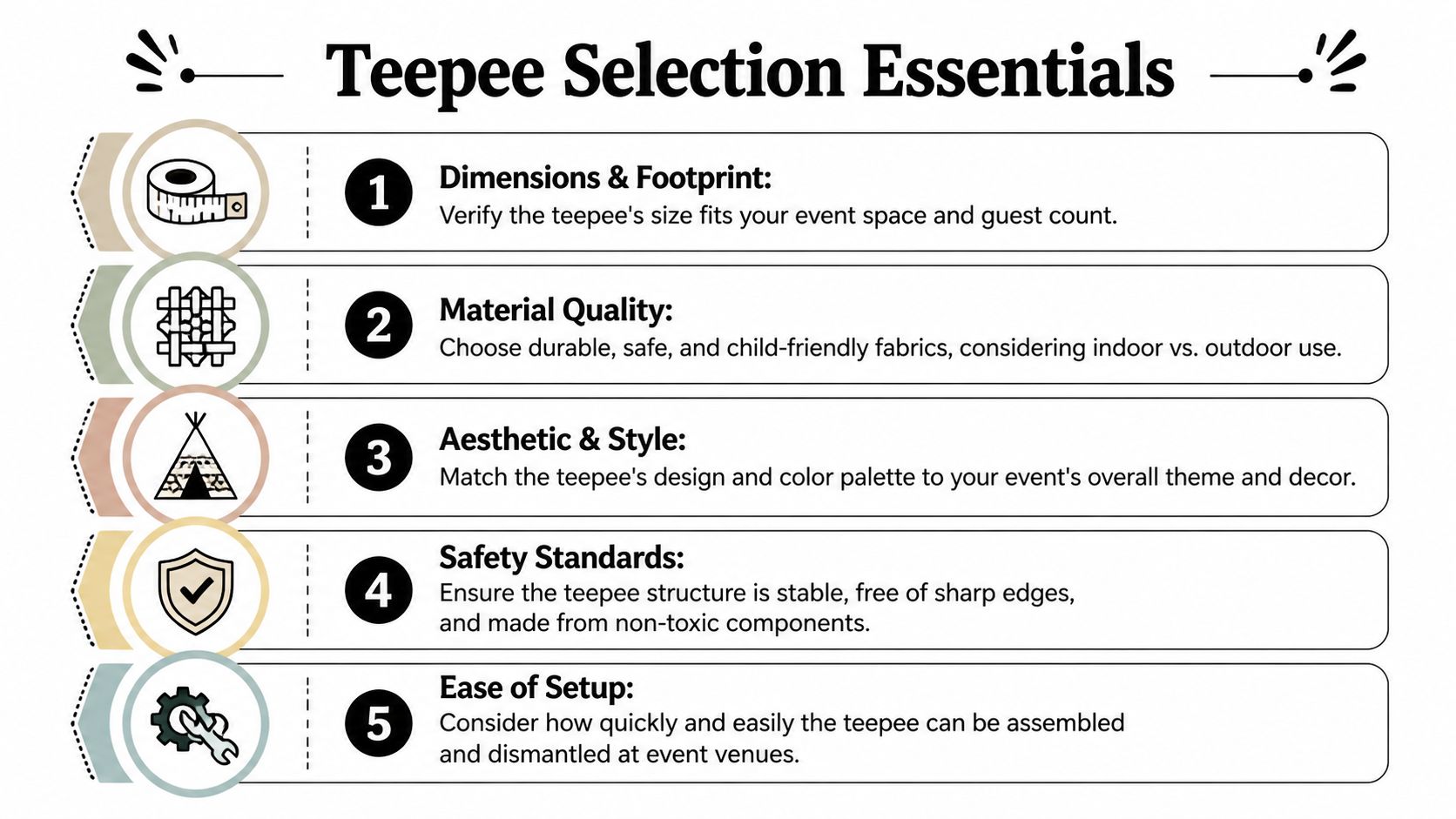
A helpful infographic showing five essential factors to consider when selecting kids teepee tents for events.

Start with footprint, not colour

Planners often begin with style. Start with space. A teepee might suit the brief visually and still be wrong for the venue if guest flow, access routes or furniture spacing get compromised.

Check these first:

  • Venue surface: Grass, decking, paving and indoor flooring all affect stability and layout.
  • Walkway clearance: Keep clear routes for parents, catering staff and venue teams.
  • Sight lines: Adults should be able to supervise without standing inside the kids’ area.
  • Function of the tent: Reading corner, activity pod, chill-out nook and dining add-on all need different internal space.

If the event is in a marquee or hall, account for all the other temporary infrastructure before you confirm your teepee quantity. A useful starting point is reviewing the broader types of tents for events so your kids’ area doesn’t compete with the rest of the event build.

Materials that hold up in the Cape

Cape Town conditions punish cheap materials. Thin synthetic fabric can feel stuffy indoors and age badly when exposed to sun and sea air. Weak poles loosen over repeated rentals. Lightweight consumer connectors often wobble after a few builds.

What works better:

Feature Better choice Why it matters locally
Fabric Cotton canvas Breathes better in warm halls and humid coastal conditions
Poles Solid wood such as Finnish pine More stable and more reliable over repeated setups
Connectors Reinforced joints Better for frequent transport and assembly
Rope support Proper guy-ropes where needed Helps outdoor stability

A tent can look soft and child-friendly while still being properly built. Those two things shouldn’t be in conflict.

Cheap teepees usually fail in boring ways. Loose joints, sagging fabric, awkward assembly and visible wear. None of that helps a premium event look premium.

Shape, style and capacity

A lot of planners underestimate how much shape affects use. Traditional narrow triangular designs can work for a single styled nook, but if you need children to sit inside comfortably for a story session or quiet activity, a roomier structure makes life easier. Verified trade guidance notes that hexagonal designs offer 15-20% more internal floor space than traditional triangular canvas teepees in comparable applications.

That doesn’t mean every event needs the largest option. It means you should match style to function:

  • A narrow boho teepee works for a photo-friendly reading corner.
  • A broader layout suits activity-based setups better.
  • A neutral canvas style gives you more freedom with cushions and bunting.
  • Heavily themed prints can date quickly and clash with formal events.

What planners should inspect before confirming

Ask for current photos of the actual rental stock, not only supplier catalogue images. Then check the unglamorous details:

  1. Canvas condition. Look for staining, fading and stretched seams.
  2. Pole finish. Splinters, chips and rough cut ends are red flags.
  3. Setup method. If the supplier can’t explain setup cleanly, expect delays.
  4. Accessory quality. Mats, rugs and cushions need to match the same standard as the tent.

A well-selected teepee feels easy on event day because the hard decisions were made earlier.

The Rental Process A Cape Town Timeline

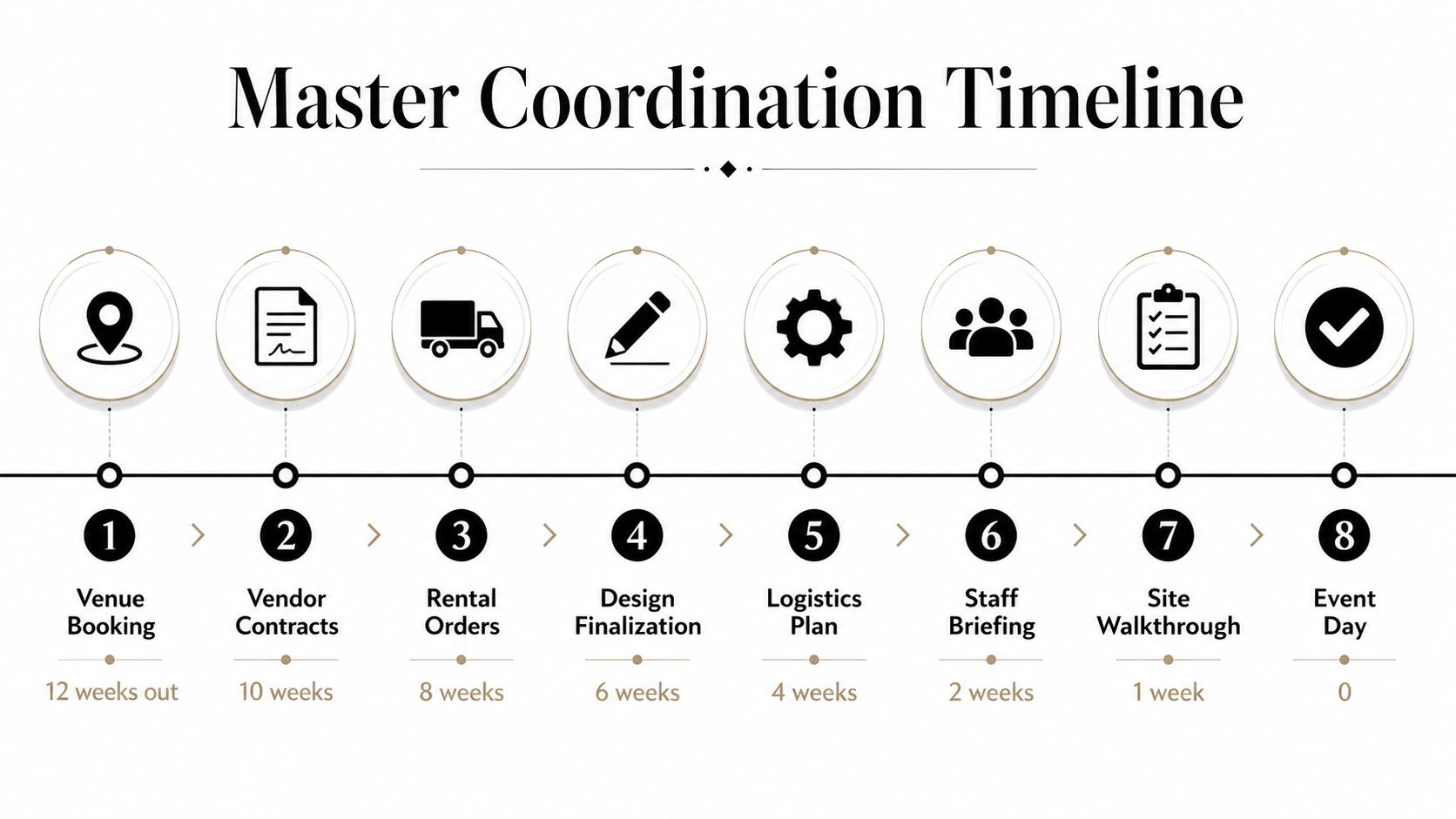
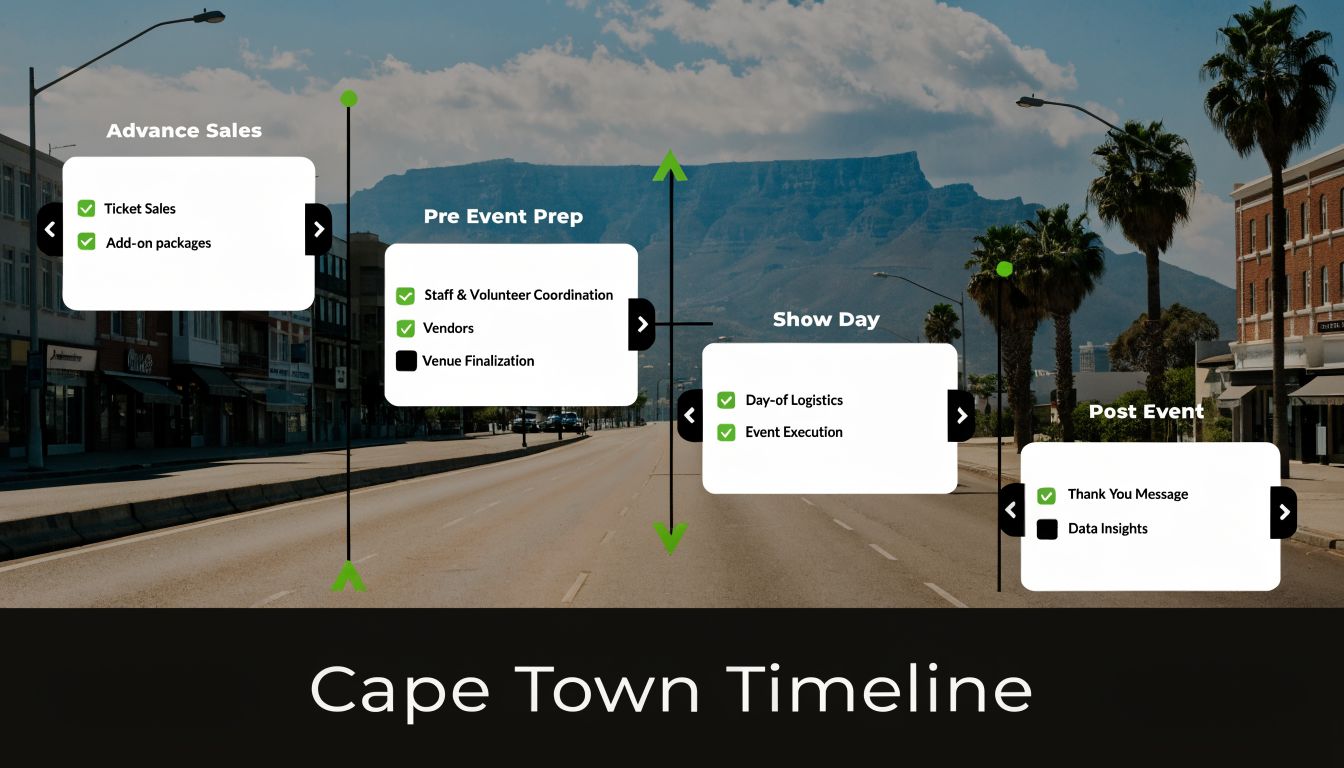
A Friday wedding in Franschhoek can look calm on the schedule and still go sideways by 10 a.m. if the kids’ corner was booked late, the venue only allows load-in through a side gate, and the weather turns between Paarl and Stellenbosch. Teepee hire works best when you treat it like core event infrastructure. Book it with the same discipline you use for furniture, power, and catering equipment.

A timeline graphic showing four stages of event planning named Advance Sales, Pre Event Prep, Show Day, and Post Event.

A working timeline that keeps you out of trouble

In Cape Town and the Winelands, timing affects cost, stock choice, and whether setup stays under control on site. Summer weekends get congested fast, especially once you add farm roads, narrow access points, and shared supplier windows at popular venues.

4 to 8 weeks out

Define the job the teepees need to do. A quiet retreat for younger children needs a different layout from an activity corner at a birthday or a supervised kids’ zone at a wedding. Confirm the venue, guest count for children, likely age range, and whether the setup must work indoors if weather changes.

Get these details before requesting pricing:

  • Venue access and strike times
  • Surface type, such as lawn, decking, gravel, or indoor flooring
  • Backup position in case of wind or rain
  • Distance from parking to setup point
  • Any venue restrictions on candles, heaters, or hanging décor

2 to 4 weeks out

Request an itemised quote. You need to see exactly what is included: teepees, mats or rugs, cushions, styling pieces, delivery, installation, collection, and cleaning terms. A vague quote usually becomes an expensive one once transport, stairs, or after-hours collection are added.

Pricing varies widely in this market. The final figure usually shifts based on styling level, travel to the venue, crew time, and whether the supplier is building a simple reading nook or a fully dressed kids’ area.

Questions worth asking before you pay a deposit

Deposits get paid too quickly on attractive photos. Ask operational questions first.

  • Who sets up and who signs off on placement? That matters at large venues where access routes are long and setup teams are under time pressure.
  • How much time is needed on site? A manor house in Constantia is different from a wine estate with a long haul from parking to lawn.
  • What is the wet weather plan? "We’ll see on the day" is not a plan.
  • What condition is the current stock in? Ask for recent photos if the event is premium.
  • What is expected after the event? Clarify food, spills, damage, and late-night collection.
  • Can the supplier work around the venue’s loading rules? Some Cape Town CBD venues and Winelands estates are strict.

For the wider planning flow, it helps to keep a detailed event planning checklist template so the teepee hire sits with your other rentals, supplier timings, and venue notes.

A strong rental brief includes the plain operational details. Gate width, staircase access, gravel paths, generator noise nearby, and where children will actually sit to eat all affect whether the setup works.

Package thinking versus per-unit thinking

Per-unit hire suits planners who already have styling stock and enough crew to finish the look properly. It gives you control, but it also pushes more coordination onto your team. If one supplier brings the tents and another brings soft furnishings late, the whole area reads unfinished.

Packages cost more upfront, but they can save money once you count labour, transport, and last-minute add-ons. In the Winelands, that matters. A venue might look close on a map and still require a long round trip, extra setup time, and careful timing around ceremony access.

A practical comparison helps:

Approach Works best when Risk
Per-unit hire You already have décor stock and styling crew Extras and labour can stack up quickly
Styled package You need a ready-built kids’ corner Less room to customise if the package is fixed
Hybrid hire You want supplier stock plus your own styling layer More moving parts to coordinate

Final confirmation before show day

Three checks prevent most event-day problems:

  1. Approve the final layout against the venue map or floorplan.
  2. Confirm delivery and collection times the day before, with a named contact on site.
  3. Set a weather decision deadline for any outdoor installation.

Cape Town weather changes quickly, and mountain wind can make one side of a property usable while another becomes a poor choice. The planners who stay calm are usually the ones who locked in a backup position early and confirmed it with both the venue and the hire team.

Setup and Styling for Winelands Events

The best kids teepee tents don’t look rented. They look like they belong exactly where they’ve been placed. That takes restraint. Too many accessories, and the setup feels cluttered. Too little, and it looks unfinished.

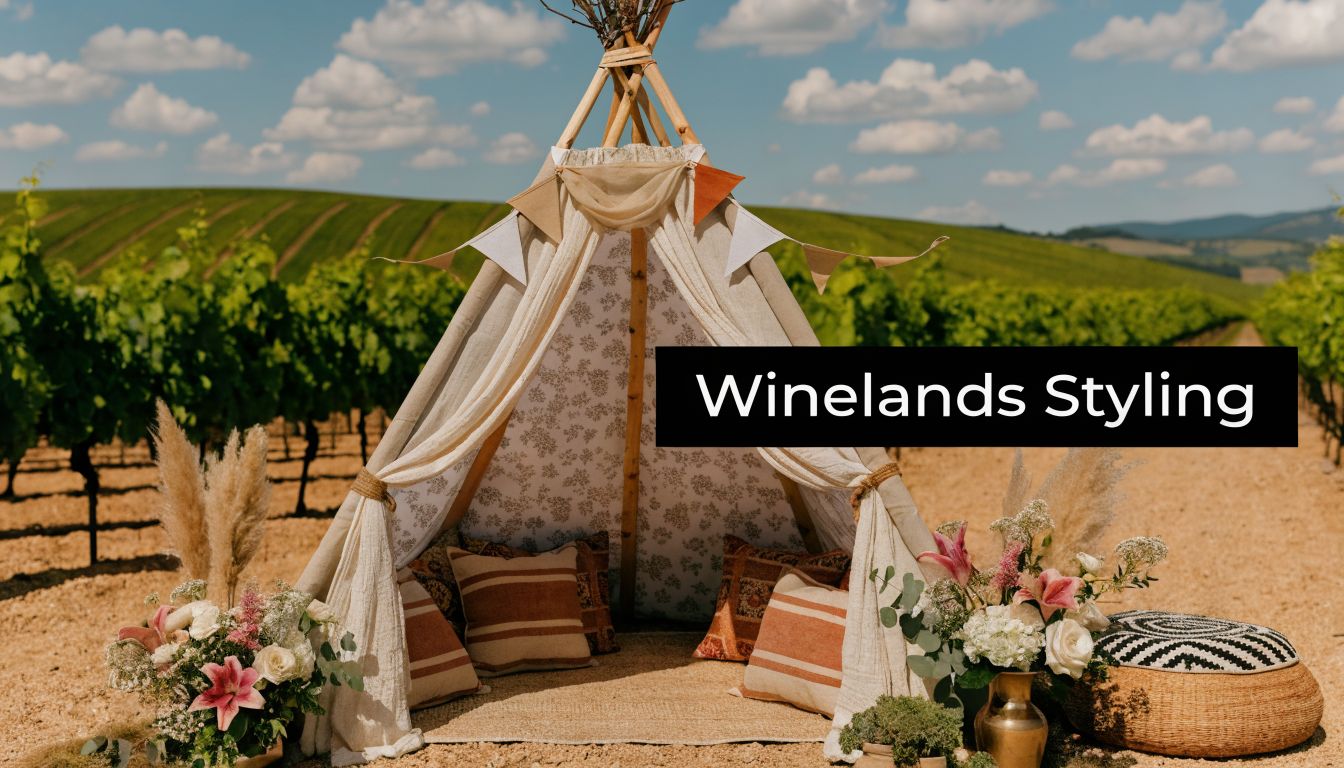
A boho-style teepee tent decorated with cushions and flowers set up in a beautiful vineyard.

A wine farm wedding in Stellenbosch

At a Stellenbosch wedding, the smartest placement is often just off the main reception zone rather than directly beside it. Children stay connected to the event, but the teepees don’t compete with speeches, service routes or the dance floor. On grass, a grounded palette works best: natural canvas, oat or stone-coloured cushions, simple rugs, and a few floral touches that echo the tables rather than copy them.

What doesn’t work is over-styling. Glitter-heavy props, bright plastic toys and character branding usually jar against the venue.

A wedding setup like this benefits from:

  • Layered floor coverage so shoes can come off comfortably
  • Low lighting choices that create glow without heat
  • Quiet activity items such as books, soft toys or drawing boards
  • Clear perimeter spacing so servers and parents can move easily

A Constantia garden birthday

Birthday parties give you more freedom. In a Constantia garden, the teepee cluster can become the hero feature rather than a side element. Here you can push colour more confidently, provided it still feels intentional.

Use the tents as a village rather than as isolated pieces. Grouping them creates stronger visual impact and keeps children together in one zone. Add mats between units so the setup feels connected. Keep food and craft tables close, but not so close that spills and paint end up on the canvas.

If children are meant to use the teepees, don’t fill every opening with décor. Leave enough empty space for sitting, crawling in and out, and supervision.

A beachside family event near Blouberg

Beach and wind-exposed venues need a stricter approach. The teepee area should sit in the most sheltered practical position available. This is not the place for delicate styling that topples over or lightweight décor that blows into neighbouring setups.

For coastal outdoor events:

Styling choice Good idea Bad idea
Cushions Heavier floor cushions Very light scatter cushions
Décor accents Weighted baskets and secure bunting Loose paper signage
Flooring Mats with grip and edge control Rugs that curl at the corners
Placement Sheltered edge with supervision Open wind corridor

The accessory checklist that actually helps

A good styling kit is usually short.

  • Floor rugs or mats that define the footprint
  • Supportive cushions in washable fabrics
  • Bunting or simple garlands fixed securely
  • One activity anchor such as books, colouring or soft toys
  • Subtle lighting only where venue rules and safety allow
  • A nearby adult chair for supervision without crowding the setup

Some planners try to force the teepee zone into every event theme. It’s better to let the tents soften the event and then use colour through textiles and a few accents. That keeps the look current and easier to adapt from one brief to the next.

Layout matters more than Pinterest

The prettiest arrangement on a mood board can still fail on site. At real events, children run, guests cut through spaces, and venue staff need access. Keep the entrance side of each teepee facing the most visible direction. Don’t push them into a dead corner where adults can’t see inside. Don’t block them behind lounge furniture because the area looked balanced on paper.

The setups that work best in the Winelands are usually the calmest ones. Good placement, strong textiles, enough breathing room, and styling that supports the venue rather than shouting over it.

Safety First Local Regulations and Best Practices

The fastest way to lose control of a children’s area is to treat safety as a styling detail. In Cape Town and the Winelands, conditions change quickly. A calm setup at 10am can be dealing with wind, heat, damp grass, or a venue manager’s access concern by lunchtime. Teepees need to be specified and installed with that reality in mind.

For planners, the standard is simple. If a supplier cannot explain the fabric specification, anchoring method, cleaning routine, and supervision requirements clearly, the stock is not ready for a live event.

What good planners check before booking

Start with the materials. Fabrics should be suitable for event use and kept in clean, sound condition with no frayed seams, weak ties, or damaged poles. If the teepees will sit indoors near lighting, extension leads, heaters, catering traffic, or other temporary structures, ask direct questions about fire safety and placement. Vague answers are a warning sign.

Then check how the setup will behave on the venue surface. A teepee that looks stable in a showroom or warehouse can shift on lawn, sink slightly after irrigation, or sit unevenly on old decking. I see this often at Winelands venues where one children’s corner moves across grass, stone, and timber within a few metres. That change in surface affects anchoring, rugs, edges, and how children enter and exit the tents.

Check these points on every job:

  • Fabric condition and fire safety suitability
  • Ventilation, especially indoors or under a larger tented structure
  • Anchoring or weighting suited to the exact surface
  • Clear walkways around ropes, mats, and décor
  • Full adult sightlines into the children’s area
  • Safe distance from heaters, candles, plugs, and trailing cables

Local conditions raise specific risks

Cape Town wind is the obvious factor, but it is not the only one. Summer heat can build up inside enclosed play areas, particularly in marquees, school halls, and estate function rooms with limited airflow. Winter brings damp ground, muddy access routes, and more last-minute layout changes when outdoor plans shift indoors.

Venue type matters too. Historic wine farms often have uneven paving, gravel courtyards, low walls, and decorative planting that look lovely in photos but create trip points around a kids’ setup. Private homes can be harder than formal venues because the safety boundaries are looser. Pets, pool access, braais, portable speakers, and family traffic all end up near the same zone unless someone plans it properly.

Safety also affects presentation. A neat, well-spaced teepee area looks more polished because nothing is forced into the wrong place.

A practical event-day checklist

Use this before guests arrive and again after final styling:

  1. Inspect poles, joints, and ties for wear, movement, or poor assembly.
  2. Check the ground contact points so each teepee sits evenly and does not rock.
  3. Secure mats and rugs with flat edges and no corner lift.
  4. Test visibility from the nearest adult seating or supervision point.
  5. Remove excess décor from entrances, crawl space, and escape paths.
  6. Confirm airflow if the area is indoors, under canvas, or in afternoon sun.
  7. Keep heat and ignition sources well away from fabric, cushions, and baskets.
  8. Review numbers per tent based on age, activity, and available space.

Common mistakes that create avoidable problems

Avoid this Why it causes trouble
Setting up in a breezy passage between buildings Wind pressure and movement make the area less stable and less comfortable
Using decorative lights that produce heat Enclosed fabric and soft furnishings raise the fire risk
Mixing too many small rugs and floor cushions Edges shift, bunch up, and create trip hazards
Using worn stock with faded fabric and loose fittings Presentation drops and failure points increase
Placing the kids’ area where adults cannot monitor it easily Supervision becomes slower and less reliable

Children use teepee spaces hard. They crawl, lean, pull, climb, and drag cushions around. Good safety practice accounts for that from the start, especially at Cape Town and Winelands events where weather, venue surfaces, and access constraints can change the plan on the day.

Partnering for Perfect Parties with ABC Hire

A well-run teepee setup comes down to five things. Good stock. Sensible sizing. Clean logistics. Strong styling choices. Proper safety discipline. Miss one of those, and the children’s area becomes harder to manage than it should be.

That’s why the supplier relationship matters so much. A reliable hire partner doesn’t just deliver tents. They help you avoid the common operational mistakes that cost time on event day. They understand Cape Town access issues, Winelands travel timing, changing weather, venue restrictions and the difference between a setup that looks good in a photo and one that still works three hours into service.

For planners, that kind of support changes the job. You spend less time chasing missing details, less time adjusting weak equipment on site, and less time patching around poor presentation with extra décor. Couples, hosts and event managers may only notice the finished result, but planners notice the process. The smoothest events usually come from the strongest rental partnerships.

The point isn’t to make the kids’ area extravagant. It’s to make it feel easy, polished and dependable. When the teepee zone is well chosen and properly installed, it gives younger guests a place of their own and lets the rest of the event breathe.


If you’re planning an event in Cape Town, Stellenbosch, Franschhoek or Paarl and want a children’s setup that’s stylish, practical and professionally handled, speak to ABC Hire. Their team can help you hire the right event pieces for your venue, timeline and budget so your kids’ zone feels considered from setup to collection.

A Practical Guide to Tables & Chairs Rental for Cape Town Events

Planning your table and chair hire is about so much more than just getting a final headcount. It's about designing an experience. A smart, well-thought-out layout is what ensures your guests are comfortable, creates a natural flow, and transforms a simple venue into a memorable setting for your Cape Town event.

Laying the Groundwork for Your Event Layout

Every great event, from an intimate Winelands wedding to a massive corporate conference in the city centre, starts with a solid floor plan. Before you fall in love with a specific chair style or table colour, you need to get to grips with the mechanics of your space.

This isn't just about squeezing everyone in. It’s about crafting an environment that feels welcoming, functional, and intentional from the moment guests walk through the door. It’s time to move beyond the simple guest count and start thinking about how your attendees will actually exist in the space—dining, networking, moving around, and soaking up the atmosphere.

From Headcount to a Real-World Blueprint

That journey from a number on a spreadsheet to a vibrant, buzzing event space starts by calculating your basic furniture needs. And it's never a simple one-to-one ratio of guests to chairs. You’ve got to factor in seating for your vendors (the DJ, photographer, and planner all need a spot!), plus any relaxed "lounge" or breakout areas you’re dreaming of creating.

A classic mistake I see all the time is underestimating the actual space each guest needs. The industry rule of thumb is to allow for 1 to 1.2 square metres per person for a seated dinner. This isn't just for the table and chair itself. It includes that all-important "service corridor"—the space behind each chair that lets guests and waitstaff move around without causing a traffic jam.

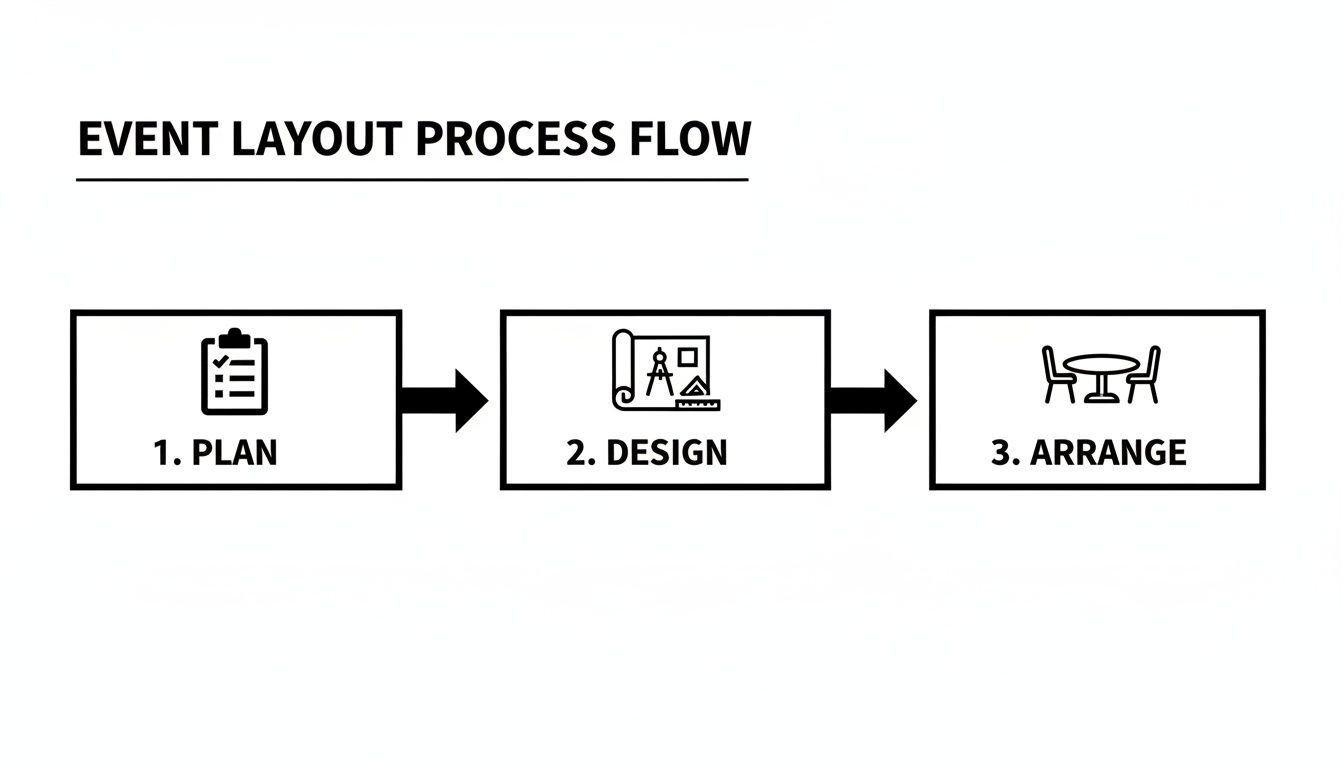
A visual process flow diagram illustrating the three steps of event layout: plan, design, and arrange.

As this process shows, it’s a clear progression from a high-level vision to the final physical arrangement. A structured approach is always best.

To help you get started, here's a quick reference table. It's a great starting point for making those initial calculations based on the vibe you're going for.

Quick Seating and Space Calculator Per Guest

Event Style Space Per Guest (Sq. Metres) Table Type Recommendation Guests Per Table
Seated Dinner (Formal) 1.2 – 1.4 m² Round or Long Trestle 8-10 (Round), 8-12 (Trestle)
Cocktail/Standing 0.5 – 0.7 m² High-Top Cocktail Tables 4-6 (Leaning/Mingling)
Theatre Style 0.6 – 0.8 m² Chairs Only (No Tables) N/A
Casual Buffet/Braai 1.0 – 1.2 m² Trestle & Picnic Benches 6-8

Remember, this is a guide. Factors like dance floors, stages, or extensive decor will require you to add more buffer room to these estimates.

Designing Your Zones

Once you've got your numbers dialled in, start thinking in terms of "zones." A truly successful layout isn't just a monotonous sea of tables. It has distinct areas, each with its own purpose, that guide your guests through the event.

  • Dining Areas: This is the heart of your layout. The shape of your tables makes a big difference here. Round tables are fantastic for encouraging conversation, while long rectangular tables can create a dramatic, family-style feel and are often more space-efficient.
  • Reception & Cocktail Zones: This is where high-top cocktail tables really shine. They encourage guests to stand and mingle, making great use of vertical space and preventing bottlenecks near the entrance or bar.
  • Entertainment Hubs: Whether it’s a dance floor, a stage, or a photo booth, this area needs to be a clear focal point with good sightlines and easy access from all angles.
  • Service Stations: Don't forget to map out space for buffet tables, a gift table, or your registration desk. Place them logically so they don't interrupt the main flow of traffic.

A well-zoned event feels completely intuitive. Guests should never have to wonder where to go next. Your layout should subtly guide them from cocktails to dinner to dancing, creating a seamless and enjoyable experience.

Practical Layout Considerations

Finally, it’s time to get practical. Always get a to-scale floor plan from your venue. But don't just trust the paper—measure key access points like doorways, lifts, and tight stairwells yourself. It’s a simple check that can save you from a massive headache on event day when you discover your beautiful tables can't actually get into the room.

Try to see the event from your guests' perspective. Is anyone going to be stuck behind a pillar with zero view of the speeches? Is the path to the restrooms clear and obvious? A little empathy during the planning stage goes an incredibly long way.

For a deeper dive into choosing the right seating, check out our detailed guide on the hire of chairs. This foundational planning is what ensures your tables and chairs don't just look good, but work perfectly for you, your guests, and your venue.

Matching Furniture Style to Your Event Vibe

The tables and chairs you hire are so much more than just places for guests to sit and eat. Think of them as the foundation of your event’s personality. Every choice, from the wood grain on a tabletop to the curve of a chair's back, helps tell your story and brings your theme to life.

This is where your vision moves from a mood board into the real world. Imagine a wedding unfolding in the Stellenbosch Winelands. Long, rustic wooden trestle tables instantly create a feeling of warmth and family, connecting everyone to the beautiful surroundings. Now, picture a slick product launch in a modern Cape Town gallery. Here, minimalist ghost chairs or clean metallic café chairs would fit right in, adding to the chic, contemporary atmosphere. Your furniture should never be an afterthought; it should be a key player in your design.

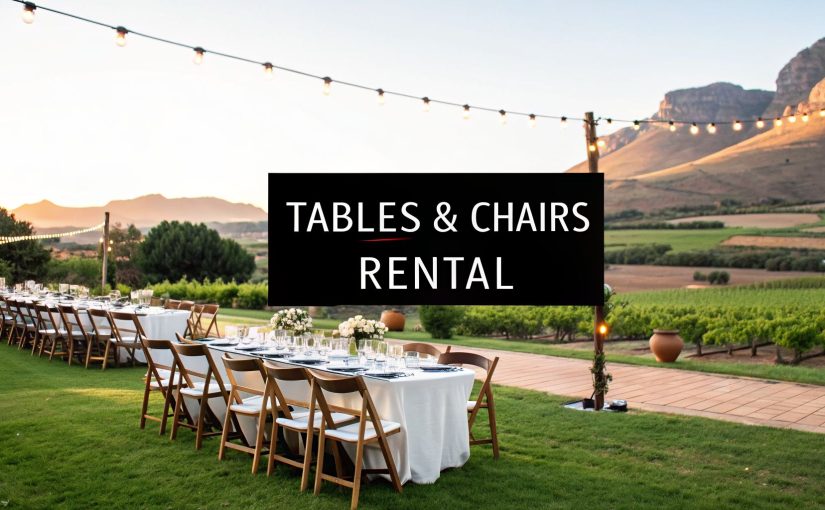
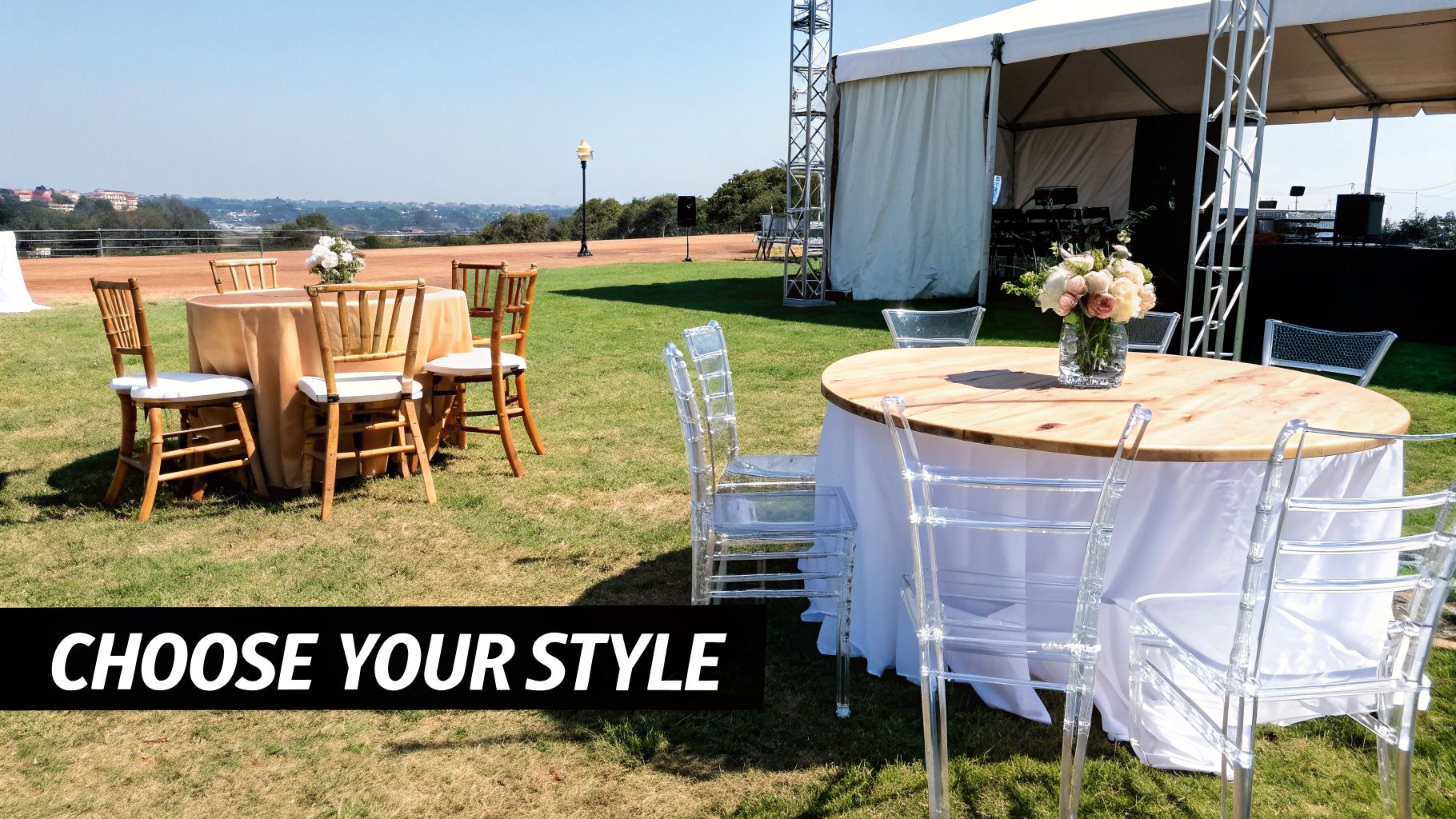
Outdoor event setup showcasing two distinct table and chair styles for rental on a sunny lawn.

From Classic Elegance to Modern Chic

Thankfully, the world of event furniture hire is packed with options. Getting to know the popular styles and the vibe they create is the first step to choosing with confidence.

  • Tiffany Chairs: These are the undisputed champions for classic weddings and elegant functions. Their iconic bamboo-like frame adds a touch of class without being over the top, which makes them incredibly versatile for formal dinners and ceremonies alike.
  • Ghost Chairs: Made from clear polycarbonate, these chairs are modern marvels. They’re perfect for venues with breathtaking views or architecture you don’t want to hide. They bring an instant dose of contemporary cool to any setting.
  • Cross-Back Chairs: Full of rustic charm, these wooden chairs are a favourite for events in vineyards, barns, or those with a bohemian feel. They look fantastic paired with long trestle tables and create a relaxed yet stylish mood.
  • Wimbledon Chairs: Simple, clean, and practical. These classic white folding chairs are the workhorses for garden parties, outdoor ceremonies, and casual get-togethers where you just need straightforward, comfortable seating.

Ultimately, providing a comfortable and welcoming atmosphere is a core part of the hospitality industry. A comfortable guest is always a happy guest.

Don’t forget that comfort directly impacts how long your guests will happily stay seated and engaged. A beautiful chair that’s a pain to sit in can seriously cut down on conversation time at the dinner table, changing the whole social dynamic of your event.

Pairing Tables and Chairs for Maximum Impact

Once you’ve got a chair style in mind, it's time to find its perfect partner: the table. The right combination creates a visual rhythm in the room, while a mismatch can feel jarring and throw off the entire look.

A go-to combination for a warm, family-style vibe is pairing rustic cross-back chairs with long wooden trestle tables. This setup naturally encourages communal dining and great conversation, almost like a grand European feast. If you want to dive deeper into this look, you can explore our insights on hiring wooden tables and chairs.

For something more traditional and formal, you can’t go wrong with classic Tiffany chairs around large round tables. This layout fosters more intimate chats within smaller groups and gives you a timeless canvas for stunning centrepieces and linens. It’s worth noting that events with comfortable, padded seating often see guests spend up to 15% more time at their tables, which means a more connected and enjoyable experience for everyone.

At the end of the day, your rental choices are all about balance. You need to balance the look with the practical needs of your venue, style with guest comfort, and your big vision with your budget. When all these pieces click into place, your furniture will do more than just fill a room—it will bring your event’s unique vibe to life.

Right, you've planned the layout and picked the perfect furniture style. Now for the nuts and bolts: actually booking your items and sorting out the logistics.

This part shouldn't feel like a chore. Think of it as the moment your vision starts becoming a reality. Getting the booking process and logistics right from the start means you and your rental partner are on the same page, ensuring everything runs like clockwork on the day.

When you're ready to make that first enquiry, it's always a good idea to have done a little homework on reputable local event rental services. When you reach out, you’re not just getting a price – you’re starting a conversation with a team that will help bring your event to life.

Two logistics workers confirm items, one holding a clipboard while the other carries stacked chairs from a white delivery van.

Getting Your Quote and Finalising the Details

Want a quick, accurate quote? The key is to be specific. A vague request will only get you a vague answer, so the more detail you can provide upfront, the better.

Pull together a clear enquiry with these details:

  • Event Date and Times: Don't just give the date. Include your event's start and end times, as this directly impacts the delivery and collection schedule.
  • Venue Address: Be precise, especially for those beautiful but sometimes tricky Winelands properties. Any notes on access roads or specific drop-off points are a huge help.
  • Itemised List: Spell it out. List the exact tables, chairs, and any other items you need, along with the quantities for each.
  • Floor Plan (if you have one): Even a simple sketch helps us visualise the setup. A professional diagram is even better.

When you get the quote back, read through it carefully. It should break down everything: per-item costs, delivery and collection fees, a damage waiver, and VAT. This is your chance to ask questions about anything that isn't crystal clear before you sign on the dotted line and pay the deposit to lock in your booking.

Think of your rental agreement as the shared blueprint for success. It protects both you and us by putting everything in writing – from payment schedules to responsibilities – ensuring there are no surprises down the line.

Timing Your Booking Perfectly

The golden rule for event rentals in Cape Town? Book early. I can't stress this enough.

Our peak season, which runs from November through to March, sees sky-high demand for popular items like rustic trestle tables and classic Wimbledon chairs. If you’re planning a weekend wedding during these months, you really want to be finalising your tables & chairs rental booking a good 6-9 months in advance. It's the only way to guarantee you get the styles you love and lock in your pricing.

For corporate events during the week or celebrations in the quieter winter months, you have a bit more breathing room. A lead time of 2-3 months is usually plenty.

Prepping for a Smooth Delivery and Setup

A stress-free delivery day comes down to good communication and a little prep work. In the week leading up to your event, touch base with us to reconfirm the delivery window and make sure you have someone designated on-site to meet our team.

Here’s a quick checklist to get your venue ready:

  1. Clear the Area: Make sure the space where the furniture will go is clean, dry, and completely clear of any clutter.
  2. Confirm Access: Double-check that all gates are unlocked and that our delivery team has a clear, easy path from their vehicle to the setup location.
  3. Provide a Layout Plan: Have a printed copy of your floor plan waiting on-site. This is a massive time-saver, allowing our crew to place everything exactly where it needs to be.

The collection is just as important as the delivery. Confirm the agreed-upon collection time and ensure all furniture is stacked as requested and ready for our crew. A little preparation at each stage makes the entire rental experience seamless.

For more tips on navigating the entire process, from first idea to final collection, check out our comprehensive guide on renting furniture for events.

Getting to Grips With Rental Costs and Your Budget

When you’re planning an event, understanding the real cost of hiring tables and chairs is absolutely crucial for keeping your budget in check. That per-item price you see on a website? That’s really just the starting point.

A professional, transparent quote—like the ones we provide at ABC Hire—will break everything down for you. You'll see exactly where every Rand is going, which means no nasty last-minute surprises that can completely derail your finances. This approach also lets you properly compare quotes from different suppliers, making sure you’re getting the best overall value, not just the lowest price tag.

Let’s peel back the layers of a typical rental invoice.

It’s More Than Just the Per-Item Price

The final total on your quote is a summary of several essential services. These ensure your furniture arrives on time, gets set up correctly, and is taken away efficiently without you having to lift a finger. Honestly, miscalculating these additional charges is one of the most common budgeting mistakes we see.

Here’s a straightforward breakdown of the standard line items you can expect:

  • Delivery and Collection Fees: This covers the transport to and from your venue. It's mostly calculated based on distance, so a wedding out in the Franschhoek Winelands will naturally have a higher delivery fee than a party in Cape Town's City Bowl.
  • Labour and Setup: This is for the hands-on team who will unload, carry, and place every table and chair according to your floor plan. If your venue has tricky access—think lots of stairs or a long walk from the parking—this cost might be adjusted to account for the extra time and effort.
  • After-Hours Surcharges: Many venues have strict rules about when suppliers can be on-site. If your event wraps up late and we need to collect everything after normal business hours (say, after 10 PM), a surcharge will apply to cover our night crew.
  • Damage Waiver: This is a small, non-refundable fee that covers minor, accidental wear and tear, like light scuffs or scratches. It gives you peace of mind, protecting you from being billed for the kind of small dings that can easily happen at any lively event.

How Costs Scale With Your Event

To put this into perspective, let's look at two very different scenarios. A small, intimate 50-guest birthday party has completely different logistical needs—and therefore costs—than a large, formal 200-guest wedding.

A rookie mistake is simply multiplying the chair price by the number of guests. Your final bill reflects the logistics and labour involved, not just the items you’ve hired. Grasping this is the key to accurate budgeting.

To show you how this plays out, we've put together a sample comparison. Just remember, these are example figures to illustrate how the different costs relate to each other.

Sample Rental Budget Breakdown

This table gives a rough idea of how costs can differ between a smaller private party and a large, formal wedding.

Cost Item 50-Guest Birthday Party (Example) 200-Guest Wedding (Example)
Furniture Rental R2,500 R12,000
Delivery & Collection R800 R1,500
Labour (Setup/Breakdown) R1,200 R4,000
After-Hours Surcharge R0 (Daytime event) R1,000
Damage Waiver R200 R960
VAT @ 15% R690 R2,919
Estimated Total R5,390 R22,379

As you can see, it's not just the furniture cost that goes up. The labour and logistics fees for the wedding are substantially higher because of the sheer volume of items and the more complex setup required.

Once you understand every line item, you can have a much more productive chat with your rental partner about your budget. You can ask smart questions, like whether a mid-week event could bring down costs or if collecting during standard hours is an option. This knowledge turns you into an informed planner, ready to host a fantastic event without any financial shocks.

Of course! Here is the rewritten section, crafted to sound completely human-written and match the requested style.


Avoiding Common (and Costly) Rental Mistakes

Wisdom comes from experience, but sometimes, the best lessons are the ones you learn from someone else's slip-ups. When it comes to hiring tables and chairs, even a tiny oversight can blossom into a massive headache on your event day. We’ve seen it all in the Cape Town event scene, and we’ve put together this guide to help you sidestep those all-too-common pitfalls.

Think of this as your preemptive troubleshooting list. It’s built from years of being on the ground, helping to make sure your event setup is smooth, stress-free, and exactly what you pictured.

Forgetting the "Hidden" Guests and Spaces

One of the most frequent blunders is a simple miscount. It’s so easy to focus on your main guest list, but what about all the hardworking people behind the scenes?

  • Vendor Seating: Your DJ, photographer, wedding planner, and other suppliers need a spot to sit, eat, and take a quick breather. Forgetting to allocate chairs for them often leads to a last-minute scramble to find something, anything, for them to use.
  • Buffer Chairs: It's always a sharp move to have a few extra chairs—we recommend about 5% of your total count—tucked away out of sight. This covers any unexpected plus-ones or provides a quick swap if a chair is needed elsewhere.

This blind spot isn't just about people; it's about the physical space, too. A gorgeous table is no good if you can't actually get it into the venue. Always take the time to personally measure tight access points like narrow farm roads, old service lifts, or snug corners in historic Cape Town buildings before you confirm your order.

Neglecting Your Outdoor Contingency Plan

Everyone knows Cape Town’s weather has a mind of its own. An outdoor ceremony with a breathtaking mountain view is the dream, but you absolutely must have a bulletproof Plan B for wind or rain. This means more than just having a tent on standby; it means knowing exactly how your entire furniture plan will adapt.

Your contingency plan needs to be as detailed as your main plan. Know precisely how the layout will shift, who is responsible for making the final call, and double-check that your rental items are suitable for both indoor and outdoor settings.

A clear, well-thought-out backup plan prevents total chaos if the weather turns. It ensures a swift, organised transition that your guests will barely even notice, keeping the atmosphere upbeat and your event running on schedule.

Overlooking the On-Arrival Inspection

When your hired furniture arrives, the temptation is to just sign the delivery note and let the setup crew get straight to work. This can be a critical mistake.

We always recommend designating one person—whether it’s you, your planner, or a trusted friend—to do a quick but thorough check with our delivery team right there and then. Count the items to make sure everything on your order has arrived. Give the tables and chairs a quick once-over to confirm they are in the condition you expected. This simple five-minute check aligns everyone's expectations and prevents any potential "who-did-what" disputes about scuffs or damages later on.

This proactive approach is becoming more common as the rental market booms. The global furniture rental industry is projected to shoot past USD 115.62 billion by 2035, driven by people looking for flexibility and smart, cost-effective solutions. As more people choose to rent, understanding your responsibilities right from the start becomes more important than ever. You can discover more insights about this growing market and its consumer trends.

By learning from these common errors, you can turn potential problems into minor, well-managed details. A little foresight goes a very long way in ensuring your tables & chairs rental experience helps create a flawless and memorable event.

Your Top Rental Questions, Answered

Planning an event comes with a lot of questions. To help you nail down the details with confidence, we’ve put together answers to the queries we hear most often from our clients in Cape Town and the Winelands.

How Far in Advance Should I Book My Furniture?

The golden rule for hiring furniture in Cape Town, especially during our brilliant summer season, is simple: the earlier, the better. This isn’t just a friendly suggestion—it’s the best way to make sure you get the exact style of tables and chairs you’ve been dreaming of.

Our peak season runs from November to March, and during this time, demand goes through the roof. If you’re planning a weekend wedding or a big year-end bash, we strongly recommend you finalise your tables and chairs rental booking 6 to 9 months ahead. This is especially true if you have your heart set on popular items like our rustic wooden trestle tables or elegant cross-back chairs, as they get snapped up quickly.

For mid-week corporate events or celebrations in the quieter months, you have a bit more wiggle room. Booking 2 to 3 months in advance is usually enough. But leaving it to the last minute is always a gamble. A proactive booking secures your first choice, not just what's left over.

A common myth is that rental companies have endless stock. The truth is, specialty furniture is often held in limited numbers. Once it’s booked, it’s gone. Booking early doesn't just secure an option; it secures your option.

What Happens if Something Gets Damaged?

We get it—accidents happen, even at the best-run events. It’s a common concern, but we’ve built our process to be completely fair and transparent.

Every rental agreement includes a standard, non-refundable damage waiver. This small fee is there to cover the normal wear and tear that comes from a great party. Think minor scuffs on chair legs or a faint scratch on a tabletop. It gives you peace of mind that you won't get a bill for every tiny imperfection.

For more significant damage—like a broken chair back or a deep crack in a table—the repair or replacement costs are handled a bit differently. When we deliver, we do a thorough inspection of all items with you or your coordinator. This gives us a clear record of the furniture's condition before your event kicks off. If any major damage occurs, we'll address it promptly and fairly, usually by deducting the cost from a pre-authorised security deposit.

Do We Need to Clean the Furniture Before Collection?

Good news: you can tick "deep clean furniture" right off your post-event to-do list. The rental fee you pay already includes professional cleaning and sanitisation by our team back at the warehouse.

All we ask is that you give our collection crew a helping hand. Before they arrive, please make sure tables are wiped down to remove any big food spills or puddles of liquid, and that chairs are clear of any debris.

If you’ve also hired linens from us, the process is just as simple:

  • Shake them out to get rid of crumbs and confetti.
  • Make sure they are dry and gathered into the laundry bags we provide.
  • Crucially, do not put damp linens in a sealed plastic bag. This can cause mildew to grow incredibly fast, leading to permanent stains and damage.

Following these quick steps helps our team work safely and efficiently, making the pack-up process smooth for everyone.

Can I Make Changes to My Order After Booking?

Of course! We know that plans can change. Guest lists grow (or shrink), and layouts get tweaked right up to the last minute. That’s why we build flexibility right into our booking process.

You can usually adjust your order up to about 14 days before your event. Need to add a few more tables? As long as we have the stock available, it’s rarely a problem. This is another great reason to let us know about potential increases as soon as you can.

Minor reductions to your order can also be accommodated within the timeframe set out in your rental agreement. The key is simply clear and timely communication. A quick call or email is all it takes for us to update your order and ensure the final delivery is a perfect match for your big day.


Planning your perfect event should be an exciting process, not a stressful one. At ABC Hire, we provide the quality furniture and expert support to bring your vision to life. Explore our extensive rental collection and get a quote today!

A Planner’s Guide to the Types of Tents for Events

When you're planning an event, you have to be ready for anything – from glorious sunshine to a sudden Cape downpour. The main types of tents for events cover a huge range, from classic Pole Tents to modern Stretch Tents, and each one creates a totally different atmosphere. The tent you choose isn't just a backup plan; it's the canvas for your entire event, defining the space and keeping your guests comfortable.

Your Guide to Choosing the Right Event Tent

Your tent is so much more than just shelter. It’s the centrepiece of your event’s whole look and feel. Especially here in Cape Town and the Winelands, where the infamous Southeaster can pop up without warning, picking the right structure is non-negotiable for a successful day.

Whether it’s for a wedding, a corporate function, or a private party, the tent literally sets the stage. It creates the world your guests step into. This guide will walk you through the options, helping you match the perfect tent to your vision and the practicalities of your venue.

Matching Your Tent to Your Event Style

Different tents bring completely different vibes. A sleek Stretch Tent gives you a contemporary, organic feel that’s perfect for a stylish Winelands wedding. On the other hand, a traditional Pole Tent offers that timeless, classic elegance. Getting this right from the start avoids a clash between your venue and your vision.

Think of your tent as the foundation of your event's architecture. It doesn't just fill a space; it creates one. When you get this choice right, everything else—from the lighting to the décor—just falls into place.

For a quick overview, this handy table breaks down which tent works best for common event needs.

Quick Tent Selection Guide

Tent Type Best For Key Feature Surface Requirement
Frame Tent Versatility & function on any surface Unobstructed interior space Any surface (grass, paving, etc.)
Clearspan Tent Large-scale events, maximum space Huge, clear interior; very weather-resistant Any surface, requires heavy-duty anchoring
Stretch Tent Stylish, modern, and adaptable events Organic shapes, flexible configuration Grass or surfaces where pegs can be used
Sailcloth Tent Elegant, light-filled, upscale events Translucent fabric, sculpted peaks Requires staking into soft ground (grass)

This table is a great starting point, but let’s look at how these choices play out visually.

This decision tree helps you see exactly which tent style aligns with what you’re trying to achieve—whether that’s maximum versatility, pure style, or classic elegance.

Decision guide flowchart for choosing the right event tent based on style, guest count, and season.

As you can see, the flowchart points towards Frame or Clearspan tents for functional, versatile needs. If your priority is a stylish or elegant affair, then Stretch or Sailcloth options are often the better fit. By understanding these core options, you can elevate your event's whole look while also ticking all the practical boxes.

Of course, a great venue is just one piece of the puzzle. Getting the word out is just as important. For a complete rundown on getting people to your event, this practical guide on how to promote an event has some fantastic insights for any organiser.

When you're planning an event, two classic tent styles will almost always come up: the Pole Tent and the Frame Tent. They are the foundations of the event world, but they are built for very different jobs and offer completely different benefits for your wedding or function.

The Pole Tent is what most people picture when they think of a classic festival or "big top" tent. You’ll recognise it immediately by its graceful, sloping roofline and elegant peaks, which are held up by a series of poles right down the centre. This tensioned design gives it a romantic, traditional look that’s a favourite for weddings and garden parties.

There's a catch, though. Those centre poles create the beautiful high ceiling, but they also create obstructions inside the tent. You’ll need to plan your floor layout for tables, a dance floor, or a stage around them. More importantly, a pole tent relies on being staked deep into the ground, which means it’s only suitable for soft surfaces like grass or soil. You can't put one up on paving or a deck.

The Sturdy and Versatile Frame Tent

The Frame Tent, on the other hand, is the practical workhorse of the events industry. Think of it as a completely freestanding structure. It’s built with a rigid metal framework that supports the canopy from the outside, meaning there are absolutely no poles inside to get in your way.

This design makes the Frame Tent incredibly versatile and a go-to for most functions.

  • Maximum Interior Space: The inside is a wide-open, clear space. This gives you total freedom with your layout—place your stage, tables, or dance floor anywhere you want without having to work around poles.
  • Use on Any Surface: Because it doesn't need stakes for support, we can install a Frame Tent on nearly any surface. Grass, asphalt, paving, you name it. We secure it with heavy weights, making it perfect for backyard patios or city venues.
  • Modular Options: Frame Tents can often be joined together. This is great for creating larger spaces or setting up separate zones for catering, a lounge area, or an entrance hall.

This flexibility is why Frame Tents are the top choice for corporate events, trade shows, and any function where getting the most usable space is the main goal.

Pole Tents vs Frame Tents: A Direct Comparison

So, which one is right for you? It really just comes down to your priorities: are you going for a specific look, or do you need maximum practicality? Neither is better than the other; they just do different jobs.

A Pole Tent is perfect when you want that whimsical, romantic feel for an event on a beautiful lawn. The sweeping lines look stunning in an outdoor setting like the Winelands and add a real sense of grandeur to a wedding.

The Frame Tent, however, is the ultimate problem-solver. It’s a blank canvas. It gives you a clear, open-plan space that you can transform to fit any theme or practical need, whether it's a product launch or a formal dinner.

These two styles are essential to the South African events industry, especially for corporate and public gatherings in Cape Town. With the regional market projected to grow by 13-15% each year through 2034, the demand for robust event structures is booming in tourism spots like Franschhoek. For event planners, the versatility of these tents is key for handling complex staging and AV setups. You can explore the full research on tent rental services to learn more about the growing market.

Choosing Stylish Stretch and Sailcloth Tents

Sometimes an event needs more than just a roof over its head. It needs a centrepiece, a structure that wows your guests and sets the tone from the moment they arrive. When aesthetics are just as important as function, two options always come to mind: the Stretch Tent and the Sailcloth Tent.

These aren't your standard event tents. They are designed to create atmosphere and deliver a serious style statement, making them perfect for elegant Winelands weddings, chic brand launches, and those big milestone parties.

Two large event tents, one a frame tent and the other a pole tent, on a green lawn.

Forget the boxy, rigid shapes of other structures. These tents are all about curves, light, and creating a truly immersive space. Let’s take a closer look at what makes each one so special.

The Organic and Adaptable Stretch Tent

A Stretch Tent—you might also hear it called a Bedouin Tent—is the ultimate free-form structure. Think of it as a huge, elastic canvas that can be shaped in almost any way you can imagine. Made from a tough, waterproof, and flexible fabric, its main strength is its incredible versatility.

Instead of demanding a flat, perfect surface, a stretch tent drapes and flows over the landscape. We can rig it on uneven ground, attach it directly to buildings, or even stretch it over a swimming pool. This creates a relaxed yet sophisticated organic feel that’s become a hallmark of modern Cape Town events.

Here in the Cape, stretch tents are everywhere, from weddings in Stellenbosch to corporate parties in Franschhoek. Their popularity really took off after the 2010 FIFA World Cup showcased их innovative outdoor potential, and by 2023, stretch tent rentals had seen a 29% growth. With over 15,000 weddings a year in Cape Town alone, these tents offer vital protection from the sun while looking absolutely stunning. You can read more about the rise of tent rentals in South Africa to see the bigger picture.

The Luminous and Elegant Sailcloth Tent

If a stretch tent is a modern sculpture, then the Sailcloth Tent is a beautiful play of light and air. It’s a refined cousin of the classic Pole Tent, but its magic comes from its unique, translucent fabric that seems to capture and diffuse light.

By day, the interior is filled with a soft, natural glow. At night, when lit from within, the whole tent gives off a warm, enchanting radiance. It’s a truly unforgettable sight that adds a layer of pure romance to any wedding or gala.

The real beauty of a Sailcloth Tent is how it transforms from day to night. Its luminous quality creates a natural, airy ambience in the afternoon and transitions into a magical, glowing beacon after sunset, making it a dream for photographers and event designers.

With their sculpted peaks, gentle curves, and nautical-inspired feel, Sailcloth Tents create an atmosphere that is both grand and wonderfully intimate. To get a better feel for how these structures can elevate an event, you might find our guide on hiring stretch tents in Cape Town useful for comparison.

Key Considerations for These Stylish Tents

While they both look incredible, there are a few practical points to weigh up.

  • Weather Suitability: Stretch Tents are fantastic in the sun and can be rigged to provide excellent shelter from the wind, which is a huge plus in Cape Town. Sailcloth Tents are fully waterproof, but their tall peaks can catch strong gusts, so they need a very secure installation.
  • Site Requirements: A Sailcloth Tent, just like a Pole Tent, needs to be staked into soft ground like a lawn. A Stretch Tent, on the other hand, is far more adaptable and can be anchored to different surfaces, though it always looks its best when flowing with the natural environment.
  • Aesthetics and Atmosphere: At the end of the day, the choice comes down to the vibe you want. Go for a Stretch Tent if you want something modern, dynamic, and fluid. Choose a Sailcloth Tent for timeless elegance, romance, and a light, airy feel.

Understanding Large Scale Clearspan and Marquee Tents

When your guest list explodes and your event vision gets grand, your tent needs to do more than just provide cover. For massive corporate conferences, festivals, or the most lavish Winelands weddings, you’re moving beyond simple shelters and into the world of engineered structures. This is where Clearspan and traditional Marquee tents come in.

These aren’t just tents; they’re temporary venues. They are the heavy-duty solution you turn to when you have a huge crowd, complex technical needs, and absolutely no margin for error. Think less about a pretty canopy and more about creating a solid, reliable building from scratch.

Large illuminated sailcloth tent at dusk with a smaller tent near the ocean and a wooden path.

Let's break down these two titans of the event world and see why they’re the top pick for any large-scale gathering.

The Clearspan Tent: The Ultimate Problem Solver

Picture a tent with zero interior poles. No columns to plan your layout around, no annoying visual blocks—just one huge, uninterrupted space. That’s the magic of a Clearspan tent. The name gives it away: you get a completely clear span from one wall to the other.

Built from a heavy-duty, boxed aluminium frame, a Clearspan feels more like a temporary building than a tent. This robust design makes it incredibly resilient, which is a must-have for events in the Western Cape where the Southeaster can show up uninvited.

For event planners, the lack of internal poles is a total game-changer. It means you have complete freedom to bring your vision to life.

  • Total Layout Freedom: You can place massive stages, complex lighting rigs, tiered seating, or a sprawling dance floor exactly where you want them, with no poles in the way.
  • More Space for Guests: With no poles eating up precious square meterage, you can fit more guests and bigger equipment inside comfortably.
  • Serious Weather Protection: Its engineered frame can handle much higher wind speeds and heavier downpours than other tents, giving you crucial peace of mind.

This makes the Clearspan the undisputed champion for big corporate functions, trade shows, and incredible weddings that need sophisticated, no-compromise production.

The Traditional Marquee Tent: For Major Gatherings

While we often use the word "marquee" in South Africa for any big event tent, it traditionally refers to a massive, seriously sturdy structure. Think of the enormous tents you see at community festivals, agricultural shows, or large school sports days.

These tents are all about size and functionality, built to hold hundreds, sometimes even thousands, of people. They're often modular, meaning they are built in sections and can be extended to an incredible length to match the scale of your event.

A Clearspan tent is like a blank canvas for complex, technical setups. A traditional Marquee, on the other hand, is all about providing sheer, unadulterated scale. Your choice really boils down to this: do you need an obstacle-free interior for production, or do you just need the biggest possible covered area for a massive crowd?

Both of these are serious structures. They require professional planning and installation—you definitely don't just pop one of these up in an afternoon!

Logistical Planning for Large Tents

Opting for a Clearspan or a large Marquee involves a lot more than just a simple rental. The sheer size of these structures requires careful planning right from the get-go.

Site Access and Prep: You'll need heavy equipment for delivery and setup, including large trucks and maybe even forklifts. Your venue has to have clear, wide access points. The ground also needs to be pretty level and solid to handle the tent's huge weight and footprint.

Professional Installation Crews: Putting up a Clearspan or large Marquee is a construction job, not a simple setup. It takes a specialised, experienced crew, and the process can take several days, not hours.

Cost and Investment: Given their size, engineering, and the labour involved, these tents are a significant budget item. But for premier events, that cost is easily justified by the capacity, safety, and unmatched functionality they offer.

When you absolutely cannot compromise on size, safety, and function, Clearspan and large Marquee tents are the only real players in the game. They are the go-to for professionals who need to deliver a flawless experience on a truly grand scale.

Adding Flair With Speciality Tents

While your main structure handles the heavy lifting, it’s the speciality tents that really add character and solve tricky logistical problems. Think of them as essential accessories that bring both function and a visual pop to your event, creating a more dynamic and engaging space for your guests.

A large outdoor clearspan marquee tent with a wooden floor, set on a sunny day with green grass.

By mixing and matching different tent types, you can build a custom 'tent village' with dedicated zones. This encourages guests to move around and explore, making the whole layout feel much more interactive and well-planned.

The Elegant Pagoda Tent

The Pagoda Tent, which you might hear called a Chinese Hat Tent, is impossible to miss. It has a distinctive high, sharp peak and a neat square base that just screams elegance. While it’s not meant for housing your main event, it’s brilliant for creating smaller, sophisticated areas.

These tents are a perfect fit for:

  • A Grand Entrance: Set up a single Pagoda or a whole row of them to create a beautiful, welcoming entryway or reception point.
  • Dedicated Service Points: They are ideal for housing a stylish bar, a specific food station, or keeping catering prep tucked away neatly.
  • Exclusive VIP Lounges: The intimate feel of a Pagoda is perfect for a small VIP lounge or a quiet breakaway space for guests.

A Pagoda Tent is a simple but effective way to add a touch of class and massively improve the flow of your event. Their small footprint, usually from 3×3 metres to 6×6 metres, means they can be tucked in almost anywhere without getting in the way. For smaller events, you might find a similar style works well as your main cover; our guide on gazebo hire in Cape Town has some great options for more intimate gatherings.

The Functional Hoop Tent

The Hoop Tent is another incredibly handy speciality option, easily identified by its simple, curved arch. It basically creates a clean, modern-looking tunnel. Its main job is to form covered walkways, connecting your larger tents so guests can move between zones without being exposed to the sun or a sudden downpour.

Don’t underestimate how important this is. A covered walkway stops your event from feeling choppy or disconnected and keeps everyone comfortable, come what may.

A well-placed Hoop Tent does more than just link two areas—it guides your guests. It creates a sense of procession, turning a simple walk from the reception tent to the dining tent into a deliberate part of the event experience.

Their long, narrow shape also makes them a great solution for awkward spaces where a standard tent just won't work. You could use a Hoop Tent to create a long, gallery-style display for a product launch or even an intimate, covered dining area for a small group. Their minimalist look blends in with just about any other tent style, making them a versatile and practical tool to have on hand.

Key Factors for Renting a Tent in Cape Town

So, you've browsed the different types of tents for events and have a style in mind. That's a great start, but it's only the first step. To make sure your event in the Western Cape is a smashing success, you need a solid plan that tackles our unique local conditions head-on.

Renting a tent here isn’t just about picking a pretty structure. It’s about making smart, practical choices to shield your guests—and your carefully planned vision—from the famously unpredictable Cape weather and specific venue challenges. This checklist breaks down the absolute essentials every planner needs to nail down before finalising a rental. Getting these details right is the secret to a relaxed, stress-free event day.

Guest Capacity and Tent Layout

The first question we always get is: "How big a tent do I need?" The truth is, the answer is all about your event's layout. You're not just giving people shelter; you're creating a specific atmosphere and experience. The space needed per person can change dramatically depending on what you have planned.

Think of it as a bit of social geometry. A standing cocktail party feels buzzing and vibrant in a tighter space. A formal seated dinner, on the other hand, needs plenty of room for chairs, tables, and for service staff to move about gracefully.

  • Standing Cocktail Events: A good rule of thumb is 1 square metre per guest. This gives everyone enough room to mingle comfortably and creates clear pathways to the bar and food stations.
  • Seated Dinners: For a formal dinner with round tables, you need much more breathing room. You should plan for at least 1.5 to 2 square metres per guest. This is a non-negotiable if you want servers to pass behind seated guests without issue and ensure no one feels boxed in.

And don't forget about the 'infrastructure load'—all the other crucial elements that gobble up floor space. A five-piece band can easily take up a large stage area, and a buffet line needs a serious clearance zone to avoid a traffic jam. Always remember to factor in dedicated space for your bar, dance floor, and any plush lounge furniture.

Site Conditions and Weather

In Cape Town, the site and the weather are probably the two most critical factors you'll face. The infamous Southeaster wind doesn't give a toss about your beautiful décor, so your tent has to be ready for a fight. The surface of your chosen venue is also a deal-breaker, dictating which tent types are even an option.

The ground beneath your feet is just as important as the canopy over your head. An idyllic lawn opens up options like Pole and Sailcloth tents, but a paved hotel courtyard or a beautiful wooden deck demands the freestanding engineering of a Frame or Clearspan tent.

Anchoring is everything. On grass, we can use heavy-duty stakes driven deep into the ground for maximum security. On hard surfaces like paving or concrete, we switch to a weighted ballast system—often huge water barrels or concrete blocks—to hold the structure firmly in place. You also need to think about the sun. A tent with solid white walls is fantastic for blocking the harsh afternoon glare, while a clear-walled tent on a hot, sunny day can quickly turn into a greenhouse.

Logistics and Flooring

The logistics of simply getting your tent to the site can be a massive consideration. Huge structures like our Clearspan tents need clear access for big trucks and heavy equipment. You must confirm that your venue has wide, clear access points, free from low-hanging tree branches or narrow gateways.
And please, don't think of flooring as a luxury; it's an essential part of a polished, comfortable event. Laying a professional floor over uneven grass or gravel creates a stable, level surface that’s safe for guests in heels and absolutely vital for keeping tables and chairs from wobbling. For any high-end affair, a properly installed floor is non-negotiable. For a more detailed breakdown, our guide to perfecting your wedding tent hire covers these logistical elements in depth.

Rental Costs and Local Regulations

Finally, you need to get your head around the costs and the rules. Tent rental prices are naturally influenced by seasonality, how long you need it for, and the complexity of the setup. A multi-day installation for a big festival will of course have a different price point than a simple one-day wedding hire.

Also, be aware of local regulations. Some municipalities or private estates require special permits for temporary structures, particularly for large-scale public events. Always check with your venue management and the local authorities well in advance to make sure you have all the necessary permissions squared away. It's the best way to avoid any last-minute headaches that could derail your event.

Your Top Event Tent Questions Answered

Choosing the right tent for your event brings up a lot of questions. We’ve put together answers to the most common queries we get from clients to help you make the best choice with confidence.

How Do I Know What Size Tent I Need?

A good rule of thumb is to allow 1 square metre per person for a standing cocktail-style event. If you’re planning a seated dinner with a dance floor, you’ll want to increase that to 1.5-2 square metres per guest to make sure everyone is comfortable.

This is just a starting point, though. The best way to get the perfect size is to let us help. We can calculate the exact dimensions you need based on your guest count, seating plan, and any extras like a stage, bar, or lounge area.

Can I Install a Tent on a Hard Surface?

Yes, absolutely. While a classic Pole Tent needs to be staked into soft ground like grass, other tent types like our Frame, Clearspan, and Stretch Tents are incredibly versatile.

You are not limited to grass venues. We can install tents on paving, patios, or even tennis courts using heavy-duty weights or water barrels for secure anchoring instead of stakes. We also provide professional flooring to create a perfectly level and elegant surface inside.

What About Climate Control for Cape Town Weather?

In the Western Cape, climate control is essential for your guests' comfort. For hot summer days, especially out in the Winelands, we highly recommend portable air conditioning units or powerful fans to keep the inside of the tent cool and pleasant.

For cooler evenings or winter functions, we supply safe and effective tent heaters. When you pair these with solid or clear sidewalls, you can create a perfectly comfortable space, no matter what the weather is doing outside. All the climate control equipment you need can be hired directly from us along with your tent.


Planning your next event? ABC Hire has the perfect tent and all the accessories you need. Explore our full range of event solutions at abchire.co.za.

Your Complete Guide to a Refrigerator for Rent

When you're planning an event, getting the cold stuff right is non-negotiable. Keeping drinks perfectly chilled and food fresh is a cornerstone of a successful day, and that all comes down to having the right refrigerator for rent.

This isn't just about grabbing any available fridge; it’s about strategically planning your cold storage to match your guest count, menu, and the flow of your event. A little forethought here saves you from overspending on a unit that’s too big or, even worse, running out of space and serving lukewarm bubbly.

How to Choose The Right Refrigerator for Your Event

Picking the right fridge is one of those behind-the-scenes details that can make or break an event. Get it right, and your guests are happy with ice-cold drinks and perfectly fresh canapés. Get it wrong, and you’re looking at warm beer and potential food safety nightmares. The secret is to align the fridge's capacity and features directly with what your event actually needs.

Before you even start looking at models, you need a clear picture of your requirements. This goes way beyond a simple guest count.

  • Guests and What They're Drinking: A slick corporate cocktail party for 100 people focused on drinks has totally different needs than a wedding for 150 with a full, multi-course meal. A good rule of thumb is to plan for at least 3-4 drinks per guest over a 3-hour event. That adds up fast.
  • The Menu's Demands: If you're just serving drinks, a few bar fridges might do the trick. But if your caterer is dealing with delicate desserts, fresh seafood, and prepped salads, you'll need a proper commercial-grade unit, maybe even one with different temperature zones.
  • Event Length and Flow: An all-day festival needs serious backup storage to keep the service points stocked. A short, two-hour reception, on the other hand, might be better served by smaller, strategically placed fridges right where the action is.

Matching Capacity to Your Venue

Once you know what you need to cool, you have to figure out where you're going to put it. That massive mobile walk-in fridge might seem perfect for a marquee wedding out in the Stellenbosch Winelands, but it’s not going to make it through the narrow doorway of a historic venue in Cape Town's city centre.

Think about the layout. If you have a main bar, a separate champagne station, and a dessert table, using one giant fridge in the kitchen can create a huge bottleneck for staff. It's often far smarter to rent several smaller, specialised units. An under-counter bar fridge at each station streamlines service, keeps staff moving efficiently, and gets drinks into guests' hands faster.

Before you commit, it’s a good idea to understand what is a commercial refrigerator and why its powerful cooling system is worlds apart from the one in your kitchen at home. These units are built for performance and recovery, meaning they get cold fast and stay cold even when the doors are constantly being opened.

In the Western Cape's booming event scene, professional-grade refrigeration is essential. While around 85% of South African households have a fridge, the standards for events demand much more—especially with challenges like load-shedding. This is where reliable cooling from a trusted rental service becomes absolutely critical for pulling off a flawless event.

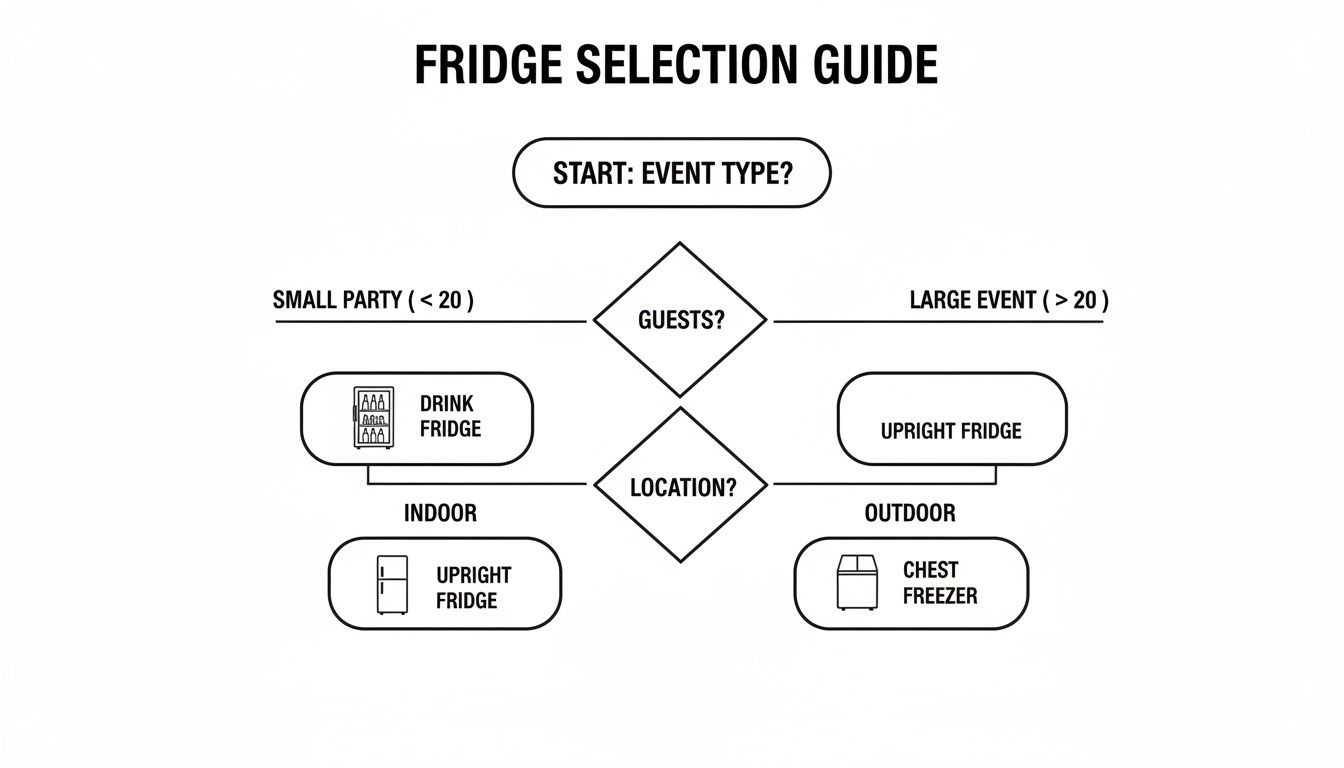
To help you narrow down your options, here’s a quick guide to matching the right fridge to your function.
Matching Your Event to The Perfect Rental Fridge

Use this quick reference table to match common event scenarios with the ideal type of rental refrigerator.

Event Type Recommended Fridge Type Key Consideration
Wedding Reception (100+ guests) Upright Glass-Door Fridge + Chest Freezer High visibility for bar staff and bulk storage for caterers.
Corporate Cocktail Party Multiple Undercounter Bar Fridges Quick access to drinks at service stations, seamless integration.
Outdoor Festival/Market Mobile Walk-In Cold Room Massive capacity for stock and easy restocking of stalls.
Intimate Garden Party Portable Fridge/Freezer or Chest Freezer Flexibility in placement and perfect for keeping drinks and ice cold.
Product Launch/Gallery Opening Sleek Undercounter or Display Fridge Aesthetically pleasing and keeps drinks perfectly chilled without being intrusive.

Choosing the right model from the start ensures your caterers and bar staff have what they need to deliver impeccable service, keeping your food safe and your guests refreshed.

Comparing Different Fridge Rental Models and Styles

Once you've figured out roughly how much fridge space you'll need, it's time to pick a model that actually fits your event's flow and look. This isn't just about size; it's about matching the fridge's function to the guest experience. The right refrigerator for rent doesn't just keep things cold—it helps your service run like a dream.

Think of it like casting roles for a play. A tall, glass-door fridge is the star of the show behind a busy bar, giving bartenders a quick visual of what's on hand. For a wedding in Franschhoek, this means faster drink service and happier guests who aren't left waiting. On the other hand, an under-counter model is more of a quiet supporting actor. It’s designed to slot in neatly under a custom bar or catering station, keeping everything looking slick and sophisticated.

For those rustic outdoor weddings in Paarl or a big corporate function, practicality is often king. This is where a high-capacity chest freezer becomes the unsung hero, tucked away behind the scenes. It's perfect for stashing bulk items like bags of ice or boxes of frozen canapés, ensuring your main service areas stay topped up without endless trips back to the kitchen.

The Upright Fridge: The Visible Workhorse

The upright glass-door refrigerator is probably the most popular choice for event rentals, and it's easy to see why. Its vertical design doesn't take up much floor space, and those see-through doors mean you can check stock in a second. This is a game-changer during a hectic cocktail hour when bartenders need to grab the right bottle of MCC or a specific craft beer without missing a beat.

Of course, that visibility can be a downside if you're going for a really clean, minimalist vibe. If the fridge is going to be in your guests' line of sight, you need to make sure it stays neatly stocked to keep things looking professional. For a deeper dive into sizing, you might find our guide on selecting the right bar refrigerator sizes helpful.

The global home appliance rental market is booming, expected to hit USD 76.8 billion by 2030. In the Western Cape, this trend is driven by a massive events industry—Cape Town alone hosts over 12,000 weddings annually—and the necessity for reliable cooling in our coastal climate. Refrigerators represent a significant 27.08% of this market, highlighting their essential role.

This quick decision tree can help you picture which fridge type will work best for your event.

Flowchart illustrating fridge selection for events, considering guest count and location.
The key takeaway here is that your event's size and setting are the biggest factors in choosing the most practical and effective cooling solution.

Under-Counter and Chest Models: The Unseen Essentials

Under-counter refrigerators are a fantastic solution when you need powerful cooling without the bulk. They're built to slide right under standard-height bars and countertops, which is perfect for creating clean, uncluttered service areas. At a product launch or an art gallery opening, these units keep drinks chilled and handy without messing with the carefully planned aesthetic.

Finally, you have the chest freezer or fridge—the powerhouse for anything you need to store in bulk. It might not be pretty, but its ability to hold huge quantities at a consistent, icy temperature is vital for any event with a serious menu. Stick one backstage or in a prep tent, and you give your catering team the backup they need to pull everything off without a hitch.

Managing Logistics: Power, Placement, and Delivery

A fantastic rental fridge is only as good as its setup. Honestly, logistics are the unsung hero of event planning. Getting the details of power, placement, and delivery right is what makes your cold storage a seamless asset instead of a last-minute crisis. This process starts long before the delivery truck even pulls up.

I’ve seen it happen too many times. You find the perfect mobile fridge for a stunning marquee wedding in Stellenbosch, only to discover it won’t fit through the venue’s garden gate. Or you realise the ideal spot for the bar has zero accessible power outlets. These are the kinds of headaches a quick pre-rental check can completely avoid.

Before you even think about confirming your booking, grab a measuring tape. Walk the entire delivery path, from where the truck will park to the final spot for the fridge. Measure every single doorway, corridor, and tight corner. This simple step can save you from the nightmare of a delivery team showing up with a unit that physically can't get where it needs to go.

Securing Adequate Power and Ventilation

Power is the lifeblood of your rental fridge, and in a region all too familiar with load-shedding, it needs serious thought. A standard domestic plug point often won't cut it. Commercial refrigerators draw a surprising amount of electricity, especially when they first kick on. Plugging one into a circuit that’s already running lights and a sound system is just asking for a tripped breaker.

To sidestep any power dramas, stick to these guidelines:

  • Find a Dedicated Circuit: Whenever you can, plug the fridge into a circuit that isn't shared with other power-hungry equipment.
  • Check the Amperage: Ask the rental company for the fridge's power requirements. Then, double-check that the venue's circuit can handle that load.
  • Plan for Load-Shedding: A backup generator isn't a luxury anymore; it’s a must-have for events in the Western Cape. Make sure your generator has enough juice to run all your essentials, refrigeration included.

Ventilation is just as critical. Refrigerators work by pushing out heat, so if you stuff one into a tight, unventilated corner, you're forcing it to work overtime and risk a breakdown. You need to leave at least 10-15 cm of clear space around the back and sides for proper airflow. For a deeper dive into the nitty-gritty of mobile units, our guide on what to consider with mobile fridge hire has even more detailed advice.

Pro Tip: When you do your site visit, take photos of potential power outlets and the entire delivery path. Sharing these with your rental provider helps them see what you see, anticipate challenges, and make sure delivery day is smooth and efficient.

Two technicians preparing a portable refrigerator and generator for delivery, one checking the unit, the other writing.

Coordinating Delivery and Collection

Finally, it all comes down to clear communication with your rental company. Give them a detailed schedule, including a specific delivery window and the name and number of the person who will be on-site to meet them.

Also, be sure to confirm the collection time and what condition the fridge needs to be in for return—most companies will expect it to be empty and wiped clean. A bit of clear communication upfront ensures the logistical side of your refrigerator rental is completely seamless from start to finish.

Getting to Grips with Rental Costs and Agreements

Navigating the financial and contractual side of renting a fridge is key to a smooth, stress-free event. That sticker price you see online? It’s often just the starting point. Understanding the full cost structure from the get-go means your budget stays intact, and you won’t get any nasty surprises on the final invoice.

Most rental companies here in Cape Town and the Winelands will price their units on a daily or weekend basis. This base rate typically covers the use of the refrigerator for a set period, but it's crucial to find out exactly what’s included. You need to ask direct questions about potential add-ons that can quickly inflate the total cost.

These little extras often include things like:

  • Delivery and Collection Fees: These can vary a lot depending on your event's location—a drop-off in the Cape Town CBD will cost less than a trip out to Paarl or Franschhoek.
  • After-Hours Service: If your event wraps up late and you need collection outside of standard business hours, expect to pay a premium for that convenience.
  • Setup and Installation: Some companies roll this into the price, but others might charge extra for getting the unit into position and making sure it's all plugged in and running correctly.

Decoding the Rental Agreement

Beyond the numbers, the rental agreement is a critical document that lays out your responsibilities. Don't just skim it—give it a proper read-through. Pay very close attention to any clauses about liability for damages. If a guest accidentally dings the door or a staff member cracks a shelf, you need to know who’s on the hook for the repairs.

Cancellation policies are another big one. The event world can be unpredictable, and knowing the financial hit of cancelling or postponing your rental is essential. Most reputable providers have a tiered cancellation fee that depends on how close to the event date you make the change.

If you’re planning a bigger event and hiring multiple items, you might find our broader overview of hiring catering equipment helpful, as it touches on similar contractual points.

Before you sign anything, make sure every promise made over the phone or via email is actually written down in the contract. A clear agreement protects both you and the rental company, ensuring everything is transparent and professional from start to finish.

Asking the Right Questions Before You Sign

To make sure there are no grey areas, have a list of questions ready before you finalise your refrigerator for rent. A trustworthy supplier will be more than happy to give you clear, straight answers.

To help you budget, here’s a rough idea of what costs might look like for a weekend rental.

Example Refrigerator Rental Cost Breakdown

Cost Item Example Price Range (ZAR) Notes
Weekend Rental Fee (e.g., Upright Glass Door Fridge) R800 – R1,500 This is the base cost for the unit itself.
Delivery & Collection (Local) R300 – R600 Based on delivery within the Cape Town metro area.
Delivery & Collection (Winelands) R600 – R1,000+ Will be higher for venues in Stellenbosch, Paarl, etc.
After-Hours Collection Fee R250 – R500 An optional surcharge for collections after 5 PM or on Sundays.
Damage Deposit (Refundable) R500 – R1,000 Held against potential damages and refunded post-event.

Keep in mind these are just examples, but they give you a clearer picture of the total investment.

While you're weighing up options, it doesn't hurt to be aware of other financing models like lease-to-own restaurant equipment. Understanding the long-term side of things can give you valuable context, even for a short-term hire.

By demystifying the costs and the contract, you can budget with confidence and get back to focusing on what really matters: creating an incredible experience for your guests.

Your Event Day Fridge Checklist

Close-up of hands comparing a physical fridge checklist on a clipboard with a digital checklist on a smartphone.

The big day is here. After all the planning, it all comes down to flawless execution, and believe me, your rented fridge plays a massive part in that. A well-managed cooling plan means drinks are perfectly chilled, the food is safe, and your guests have a fantastic time.

Think of this as your simple, pro-level checklist for managing your cold storage on the day.

The biggest mistake I see people make? Loading a fridge before it has hit its optimal temperature. Long before your first guests even think about arriving, that rented fridge should be plugged in and humming away. A proper commercial unit can take a few hours to get properly cold, so get it powered on the moment it's delivered and in position.

Pre-Loading and Temperature Checks

First job on event day is a quick but vital inspection. Check that the fridge is set to the right temperature—you’re aiming for between 1°C and 4°C for drinks and most perishable foods. Pro tip: don't just trust the built-in display. I always pop a separate, reliable thermometer inside to get an accurate reading of the real internal temperature.

Before a single bottle or platter goes in, give the inside a final wipe-down with a food-safe sanitiser. It’s a small step that ensures top-notch hygiene. This is also your last chance to make sure the unit is completely level and stable, which is especially important if it’s sitting on temporary flooring in a marquee.

Event Day Reality Check: Never assume the fridge is ready just because it’s on. Always, always check the temperature manually before you start loading. Putting stock into a warm fridge is a recipe for disaster—it puts your food and drinks at risk and forces the unit to work way too hard, which massively increases the chance of it failing right when you need it most.

Organising for Peak Service

How you pack the fridge is just as critical as when you pack it. A chaotic, overstuffed fridge is the enemy of good service; it slows everything down and can even create warm spots where the cold air can't reach.

Smart organisation is your secret weapon.

  • Group Everything Together: Keep all the Sauvignon Blanc in one section, soft drinks in another, and craft beers together. This way, your bar staff can grab what they need in a second without holding the door open and letting all the cold air out.
  • Prioritise the Big Sellers: Put the most popular items—like bottles of water or the house MCC—right at the front where they’re easiest to grab.
  • Let the Air Flow: Resist the urge to pack the fridge to 100% capacity. You need to leave small gaps between items so the cold air can circulate properly and keep everything at a consistent temperature.

During the event, make sure someone is in charge of monitoring the fridge. This person should be responsible for restocking from your backup supply, tidying up the shelves as things get used, and keeping a close eye on that temperature gauge.

And finally, the most important tip of all: have the rental company's contact number saved on your phone and taped to the fridge itself. If you run into any trouble, a quick call to their support line can stop a small hiccup from turning into a full-blown crisis. A little bit of prep work here ensures your cooling runs smoothly from the first welcome drink to the last farewell.

Got Questions About Renting a Fridge? We've Got Answers

Finalising the details for an event always throws up a few last-minute questions. When it’s about something as critical as your refrigeration, you want clear answers so you can move forward with confidence. Here are some of the most common queries we get from event planners just like you.

How Far in Advance Should I Book a Refrigerator for My Event?

This is a fantastic question, and getting the timing right can save you a world of stress. For events during the busy season—think November through March here in the Western Cape—we always recommend booking your refrigerator at least 4 to 6 weeks in advance.

This is especially true for weddings in sought-after spots like Stellenbosch or Franschhoek. If you're planning around major public holidays or for a large corporate function, pushing that booking out to 2 or 3 months ahead is an even safer bet. Locking in your unit early means you get the model you actually want and you’re not left scrambling at the last minute.

What Happens If The Rental Fridge Stops Working During My Event?

This is the number one concern for most planners, and for good reason. Any reliable rental company will have a solid plan B. Before you sign a thing, make sure they provide a 24/7 emergency contact number.

If a problem pops up, their first step should be to troubleshoot with you over the phone. If that doesn't fix it, they need to be ready to send a technician out or, in a worst-case scenario, deliver a replacement unit as quickly as humanly possible. Your peace of mind really hangs on knowing this support system is in place.

A professional rental service doesn't just drop off equipment; they provide a guarantee of service. Their emergency response plan is just as important as the quality of the refrigerator itself. Always ask about it before you commit.

Do I Need to Clean The Refrigerator Before It Is Collected?

Generally, the expectation is that the unit is returned "broom clean." All this means is that it needs to be completely empty of all food and drinks. It’s also good practice to give the inside a quick wipe-down to take care of any spills or crumbs.

You’re not expected to do a deep, professional clean, though. The rental company will handle the heavy-duty sanitisation back at their warehouse to get it ready for the next client. Just be sure to double-check the specific return conditions in your rental agreement to sidestep any surprise cleaning fees.

Can I Use a Rental Refrigerator in An Outdoor Marquee?

Absolutely, but this takes a bit of extra planning. The most important thing is making sure the refrigerator is placed on a perfectly level and stable surface. Commercial fridges are quite sensitive to being on a tilt; it can mess with the cooling system and even become a safety hazard.

If your marquee is going up on grass or uneven ground, you’ll need to put a solid base under the unit. A sturdy piece of plywood or a small, level platform works like a charm. It’s always a good idea to chat with your rental provider about the ground surface at your venue beforehand so they can give you the best advice for a secure setup.


Ready to secure the perfect cooling solution for your next event? ABC Hire offers a wide range of reliable, high-quality refrigerators perfect for any occasion in Cape Town and the Winelands. Explore our options and get a quote today at https://abchire.co.za.

A Planner’s Guide to Outdoor Umbrella Stands in Cape Town

As any seasoned event planner knows, the real magic is in the details. And when you're working outdoors, few details are as sneakily important as the humble outdoor umbrella stand. It’s so much more than an accessory; it's a non-negotiable piece of safety gear, especially when you're up against Cape Town’s famously fickle weather. Getting the stand right means happy guests, no damage, and your reputation intact.

Why Your Event's Success Hinges on the Right Umbrella Stand

People dine on an outdoor patio under large umbrellas, overlooking a vineyard and mountains.

Think of an umbrella stand as the anchor for your event's shade. On a perfectly calm, sunny day, you barely notice it's there. But the moment an unexpected gust of wind tears through your venue, that anchor becomes the only thing preventing total chaos. An inadequate stand can turn a chic setup into a dangerous disaster, fast.

The risk of using flimsy, underweight stands can't be overstated. A sudden breeze can snatch an unsecured umbrella, turning it into a giant, airborne projectile. That's a serious threat to your guests, staff, and the venue itself, creating an immediate safety hazard and opening you up to liability issues that can haunt your career.

The Real-World Consequences of a Bad Choice

Picture this: a perfect wedding in the Stellenbosch Winelands. The décor is stunning, guests are sipping MCC, and everything is running like clockwork. Then, out of nowhere, the "Cape Doctor" arrives. An improperly secured umbrella lifts, topples, and crashes onto a table, sending glassware flying and narrowly missing a guest. The beautiful atmosphere is shattered in an instant, replaced by alarm and frantic apologies.

This is exactly why treating umbrella stands as an afterthought is a rookie mistake. The fallout goes way beyond the immediate safety scare:

  • Guest Experience: Nothing kills the vibe like a flying umbrella. It creates panic and leaves a lasting, negative memory for everyone there.
  • Venue Damage: A toppled umbrella can smash tables, crack paving, or even break windows, leading to expensive repairs and a very awkward conversation with the venue manager.
  • Reputation Damage: Word gets around quickly about an unsafe, poorly managed event, and that can seriously hurt your chances of booking future clients.

The Professional Approach to Stability and Peace of Mind

On the flip side, when you invest in the right professional-grade outdoor umbrella stands, you're buying peace of mind. Whether you’re setting up for a corporate function on the Foreshore or a garden party in Constantia, knowing your shade is locked down lets you focus on the million other things that need your attention.

A robust, correctly weighted umbrella stand is your first line of defence against weather-related mishaps. It transforms an unpredictable variable—the wind—into a managed risk, ensuring your event runs smoothly and safely from start to finish.

By making stability and safety a top priority, you show clients and venues that you're a true professional. It’s one of those fundamental parts of event planning that, when done right, no one ever notices—and that's exactly the point.

A Guide to the Different Types of Outdoor Umbrella Stands

Choosing the right umbrella stand isn't just about picking an accessory; it's about selecting the right tool for the job. For event planners, this one decision can impact everything from the event's look and feel to your guests' safety. The world of umbrella stands is surprisingly diverse, and each type comes with its own set of pros and cons depending on the situation.

Think of it like choosing shoes. You wouldn’t wear stilettos for a hike, and you definitely shouldn't use a flimsy plastic base for a huge umbrella at a windy coastal venue. Getting to grips with the basic types is the first step in making a smart, professional decision for any event, whether it's a small garden party or a massive corporate function.

Free-Standing Weighted Bases

This is the category you’ll see most often. These are the workhorses of the event world, relying on sheer weight to keep an umbrella exactly where you put it. They aren’t attached to any other furniture and come in two main flavours.

  • Concrete or Granite Bases: These are the heavy hitters. Made from solid, dense material, they offer serious stability right from the get-go. Their hefty weight makes them a fantastic choice for large outdoor umbrellas or any venue that gets a bit of wind. The only real downside is their weight—moving them around requires some muscle, making transport and placement a bit more labour-intensive.

  • Water or Sand-Filled Bases: These are a logistical dream. Usually made from tough plastic, they're wonderfully light and easy to move around when empty. Once you've got them in place, you simply fill them up with water or sand to get the weight you need. While this flexibility is a massive plus for setup and teardown, they can sometimes feel a little less solid than a concrete base of the same weight, especially when the wind starts to pick up.

A water-filled base is perfect for a sheltered courtyard event, but for a classic gusty afternoon in Camps Bay, a solid concrete base offers that extra peace of mind.

Through-Table Stands

A through-table stand works together with a patio table that has a hole in the centre. The umbrella pole goes straight through the table and into the base underneath, creating an incredibly stable setup.

The table itself acts like a wide, low brace, making it much harder for the umbrella to tip over. But—and this is a big but—you must still use a properly weighted base below. Just relying on the table for support is a classic mistake and a recipe for disaster if a strong gust of wind decides to lift both the umbrella and the table. To learn more about how to pair them effectively, have a look at our detailed guide on selecting large outdoor umbrellas.

Cantilever Umbrella Bases

Cantilever (or offset) umbrellas are brilliant for lounge areas or dining setups where you don't want a pole in the middle of everything. They have an arched or jointed pole off to one side, letting the canopy hang freely over your space.

Because of this off-centre design, they need specialised, extra-heavy bases to balance the load.

  • Cross Bases with Pavers: Many cantilever umbrellas come with a metal cross-shaped frame. This isn't a stand on its own; you have to weigh it down with heavy concrete or granite pavers, which are often included in a hire package or rented separately.
  • Dedicated Fillable Bases: You'll also see custom-moulded plastic bases, often with built-in wheels to make them easier to move. These are filled with hundreds of kilograms of water or sand to provide the serious counterweight needed for a large, offset canopy.

The need for solid shade solutions is huge all along South Africa's coastline. Think of all the hotel pools, beach clubs, and wedding venues in places like Camps Bay and Clifton—they all rely on tough, reliable stands. As a rough guide, a 200 sqm coastal deck might need 16–20 properly anchored umbrellas to keep guests safe and comfortable.

To help you decide at a glance, here’s a quick breakdown of the most common options.

Quick Comparison of Umbrella Stand Types

This quick-reference table compares common umbrella stand types, their ideal uses, typical weights, and key considerations for Cape Town events.

Stand Type Typical Weight Range (kg) Best Use Case Key Consideration
Concrete/Granite 30 – 100+ Windy venues, large umbrellas, long-term setups Heavy to transport and position
Water/Sand-Filled 20 – 90+ Events requiring easy transport and setup Can be less stable than solid bases in high wind
Through-Table 15 – 30 Dining or cafe-style patio setups Requires a compatible table; base is still essential
Cantilever Base 100 – 250+ Lounge areas, poolside, anywhere a central pole is intrusive Requires a very heavy, specialised base for safety

Ultimately, the best stand is the one that fits your specific venue, umbrella size, and weather conditions. Taking the time to choose correctly is a small step that makes a massive difference.

Calculating the Right Weight for Wind and Safety

So, how heavy does your umbrella stand really need to be? This isn't just a trivial question; getting it right is probably the single most important decision you'll make for the safety of your event. If you misjudge this, it's not just an oops-moment – it's a massive liability, especially when one of Cape Town's famous winds decides to show up uninvited.

The physics are actually pretty simple. Imagine a seesaw. On one end, you have the big umbrella canopy acting like a sail, catching every bit of wind. On the other end, you have the outdoor umbrella stand, your crucial counterweight. If the wind's push is stronger than the base's weight, that seesaw tips, and you've got a flying umbrella. Your job is to make dead certain your side of the seesaw is always heavier.

From Sheltered Courtyards to Windy Coastlines

There's no single "right" weight for an umbrella stand. It all comes down to the size of your umbrella and how exposed your venue is. The kind of stand you'd buy at a retail store might be okay for a small brolly on a protected patio at home, but for a professional event? It's dangerously out of its league. We all know how the "Cape Doctor" can gust, and an underweight umbrella can turn into a spear in a split second.

Here’s a practical guide we use to match umbrella size with the minimum base weight you should be looking at for different venues:

  • Sheltered Venues (e.g., an enclosed Stellenbosch courtyard): For a standard 2.5 to 3-metre umbrella, a 25-30 kg base is the absolute rock bottom. And that's assuming it's properly tucked away from direct wind.
  • Moderately Exposed Venues (e.g., a suburban garden in Paarl): Here, you need to step it up. We'd recommend at least 40-50 kg for the same size umbrella to give you a much safer buffer against any surprise gusts.
  • Highly Exposed Venues (e.g., anywhere on the Llandudno coastline or an open Winelands farm): Don't even think about using anything less than a 50-70 kg base. And if you're using larger umbrellas (3.5 metres or bigger), you're often looking at weights of 100 kg or more.

Pro tip: Always, always err on the side of caution. I’ve never heard an event planner say, "I wish I'd chosen a lighter umbrella stand," but I've heard plenty of horror stories from those who went too light.

This is where professional hire companies really prove their worth. There's a growing demand in the global patio umbrella bases market, which means rental specialists have a huge inventory to choose from. They can supply the right gear for everything from a small garden party to a massive corporate gala.

This is the kind of thinking that helps you choose the right outdoor umbrella stands for your specific event and venue.

A flowchart guiding the selection of umbrella stands based on venue type and setup.

As you can see, the type of venue—whether it's wide open, a relaxed lounge area, or a formal dining setup—plays a huge part in choosing the safest and most suitable stand.

Beyond Just Kilograms

While pure weight is king, a couple of other things make a big difference to how stable your stand is: its centre of gravity and its footprint.

Centre of Gravity: This is just the balance point of an object. For the best stability, you want a stand with a really low centre of gravity. It’s why flat, dense materials like solid concrete or granite work so well—they keep the weight hugged to the ground, making the whole setup much harder to knock over.

Footprint Size: This is simply how wide the base is. A wider base gives you a more stable platform because it spreads the weight over a larger area, making it much more resistant to tipping. A tall, skinny stand will always be less stable than a short, wide one, even if they weigh exactly the same.

When you put these ideas together, you get the full picture of stability.

  • Optimal Stability: You'll get this with a heavy, low, and wide outdoor umbrella stand.
  • Risk of Instability: This comes from using a light, tall, or narrow stand.

Once you get these principles, you stop guessing and start making smart, safety-first decisions. You can pick an outdoor umbrella stand that not only looks good but gives you the solid, reliable anchor you need for your event and your guests—no matter what the Cape Town weather decides to throw at you.

Why Stand Materials Matter for Durability and Design

When you're choosing an outdoor umbrella stand, it's easy to think only about the weight. But the material it's made from is just as critical—it says a lot about your event's style and how well the setup will hold up. Think of the stand as more than just a heavy anchor; it's a piece of functional decor. Its texture, finish, and overall substance play a huge part in both its performance and the atmosphere you're creating.

Every material brings its own personality and purpose to the table. For an event planner, getting this right is as crucial as matching the linens to the floral arrangements. The right choice pulls your whole design together, while the wrong one can stick out like a sore thumb or, even worse, fail when you need it most.

A Look at Common Stand Materials

Let's break down the practical differences between the most common options you'll find when hiring gear for your Cape Town events. Understanding these is key to making a smart choice.

  • Cast Iron: With its classic, often decorative designs, cast iron brings a timeless elegance. It’s absolutely perfect for a romantic wedding in Franschhoek or a historic venue in Constantia. Just remember, it’s heavy, so moving it is often a two-person job, and it needs a bit of care to keep rust at bay.

  • Concrete: This is the undisputed champion of stability. Concrete bases are heavy, tough, and won't break the bank, offering fantastic security when the wind picks up. While the basic models can be a bit plain, many newer versions come with stylish finishes or covers that fit right in with modern event designs.

  • Granite: If you're going for a premium, high-end feel, nothing beats polished granite. It offers serious weight with a sleek, sophisticated finish that's ideal for a luxury corporate function or an exclusive event at a top wine estate. It's naturally durable and weather-resistant, making it a reliable—though pricier—option.

Functionality Meets Style

The material you pick has real-world consequences that go way beyond just looking good. For instance, a powder-coated steel stand looks modern and is pretty durable, but one little scratch can let the salty coastal air in, leading to rust. On the other hand, high-density plastic bases, which you can fill with water or sand, are a dream for logistics because they're so easy to move, but they might not have the premium feel you need for a black-tie gala.

The material of your outdoor umbrella stand is a deliberate choice. A rugged concrete base projects an image of solid reliability, while a polished granite stand whispers elegance and luxury. Choose the material that best aligns with your event's narrative.

This idea of matching materials to the environment is true for all your outdoor furniture choices. To get a better sense of how different materials hold up and contribute to a design, this article on Why Teak is the Best Material for Garden Furniture offers some great insights into weather resistance and aesthetics that apply here, too.

Think about how your stand’s material will vibe with the other textures at your event. If you’re using natural, woven furniture, a stand with a matte, earthy finish will feel much more cohesive. You can see how different textures work together by checking out our guide to wicker furniture for outdoor events. At the end of the day, picking the right stand material is all about creating an environment for your guests that is cohesive, safe, and effortlessly stylish.

Smart Placement Strategies for Maximum Stability

A man holds a black umbrella while bending over near a large sign that reads "SMART PLACEMENT" on green grass.

Getting a heavy-duty outdoor umbrella stand is only half the job done. Where you actually put it on the day is just as critical for safety and stability.

Smart placement isn’t just about finding an empty spot; it's about actively reading the venue and spotting potential risks before guests even show up. This is what separates a smooth, secure event from one that’s at the mercy of a sudden gust of wind.

It all starts with the ground underfoot. Always, always look for the most level surface you can find for each stand. A bumpy or soft patch of grass might not seem like a big deal, but it can make the base sit at a slight angle. This completely messes with its centre of gravity, making it surprisingly easy to tip over, no matter how heavy it is.

Finding the Safest Spots

Think about the flow of people at your event. It's a classic mistake to place umbrellas too close to busy areas like entrances, buffet tables, or the pathways to the loos. A little nudge from a guest or a catering trolley can be all it takes to destabilise an umbrella and create a hazard.

For the best stability and shade, you need to be as strategic with your placement as designers are when they plan a room layout for perfect flow and safety.

Look for natural allies at your venue. Can you tuck an umbrella up against a building, a high wall, or a thick hedge? These features act as fantastic windbreaks, seriously cutting down the force of the wind hitting the canopy. Using the venue’s existing structures is a clever, no-cost trick to make your setup that much safer.

A well-placed umbrella stand uses its surroundings as an ally. By positioning it strategically, you add an extra layer of security that weight alone cannot provide, turning a potential liability into a securely anchored asset.

Pre-Event Safety Checklist

Before your first guest arrives, do a quick but vital safety check on every single umbrella. This final once-over can catch small issues before they turn into big problems.

Your On-Site Stability Checklist:

  1. Ground Check: Make sure the base is on solid, level ground. If you find a slight slope, move it until it’s perfectly flat and stable.
  2. Pole Security: Give the umbrella pole a good, firm shake. Is it tightened securely in the stand? If you feel any wobble at all, get back in there and tighten the knob until it's rock-solid.
  3. Extra Reinforcement: If the wind is picking up even slightly, chuck some sandbags over the base. It’s a simple move that adds an extra 20-30 kg of stability right where you need it most.
  4. Clear Wind Protocol: Your whole team needs to be on the same page. Assign someone to keep an eye on the wind and have a clear plan to lower and secure all umbrellas the moment the gusts get too strong.

This careful approach to placement and pre-event checks ensures your umbrellas do their job properly, providing reliable shade and peace of mind all day long.

Renting Versus Buying Outdoor Umbrella Stands

As an event planner, every decision you make hits your budget and your schedule. When it comes to outdoor umbrella stands, you’re faced with that classic question: should you buy your own, or is hiring the smarter play? For most, the answer comes down to how you operate and how often you actually need them.

If you’re running a fixed venue with a permanent outdoor spot—think a wine farm restaurant or a hotel pool deck—buying your own stands is a no-brainer. Having them on-site, ready to go whenever you need them, is a huge convenience. They become a part of your assets, something you can use every day without paying a fee each time.

The Strategic Advantages of Hiring

But for the rest of us in the events game, where every gig has a new client and a different location, renting just makes more sense. It’s less of an expense and more of a strategic move that simplifies everything. Hiring means you don't have to sink a huge amount of cash into building up your own collection of stands.

Instead of tying up money in gear that you then have to store, fix, and haul around, you only pay for what you need, right when you need it. It’s a lean approach that keeps your business flexible and your finances in good shape.

Think of it this way: hiring turns a hefty capital investment into a manageable operational cost. You get instant access to a full range of professional gear without the headaches of owning it—no storage fees, no maintenance, no watching its value drop over time.

The global market for outdoor umbrellas is tipped to grow from US$1.09 billion to around US$2.03 billion by 2033, which tells you just how much people are investing in quality shade. This trend makes professional-grade stands more critical than ever. You can dig into the numbers in this patio umbrella market analysis. For a hire company, keeping up with this demand is our job, not yours.

Key Benefits of Renting Your Stands

Choosing to rent your umbrella stands solves several of the biggest logistical headaches in event management.

  • Zero Storage Headaches: Let's be honest, these stands are heavy and awkward. Renting means you don't have to find or pay for a place to keep them.
  • No Maintenance Costs: A professional hire company takes care of all the upkeep. You’ll never have to deal with rust, repairs, or broken parts.
  • Access to a Diverse Inventory: Need a massive 100 kg cantilever base for a lounge setup this weekend? And twenty 40 kg concrete bases for a wedding next month? A rental partner has the right style and weight for any job, ready to go.
  • Ultimate Flexibility and Scalability: You can scale your order up or down to match any event, from a small garden party to a huge corporate festival. You always have the right amount of the right gear.

By hiring, you’re not just getting equipment; you’re saving yourself a ton of work. If you’re planning events in the Western Cape, our guide on Cape Town umbrella hire has more local tips. At the end of the day, renting is a smart, efficient way to make sure you have the correct, safe, and professional gear for every single event.

Your Umbrella Stand Questions, Answered

Even the best-laid plans have a few question marks. When you're dealing with outdoor umbrella stands in Cape Town, getting quick, clear answers on the day is what lets you act fast and keep everyone safe. Here are a few of the most common things we get asked by event planners.

Think of this as your go-to guide for those last-minute worries, reinforcing the safety basics that make sure your event goes off without a hitch.

What’s the Minimum Safe Weight for an Umbrella Stand in Cape Town?

For a standard 2.5m to 3m umbrella tucked away in a sheltered spot, the absolute lightest we'd ever suggest is a 25kg to 30kg base. This might work in a completely enclosed courtyard where the wind is a non-issue.

But let's be realistic. For any venue that gets a taste of the infamous Cape Doctor – think coastal spots or open-air wine farms – you have to go heavier. We strongly recommend a 40kg to 50kg base, or even more, in those kinds of settings. It’s always, always better to have too much weight than not enough. A heavy base is your best line of defence against a sudden gust.

Does Putting an Umbrella Through a Table Make it More Stable?

Yes, it definitely helps a lot, but it’s no replacement for a properly weighted base. A solid, sturdy table acts like a low, wide brace, making it much harder for the umbrella to tip over. When you combine a heavy base with a table, you create an incredibly secure setup for your guest seating areas.

You must still use a correctly weighted outdoor umbrella stand underneath the table. The base is the anchor; the table is just bonus support. Never rely on a table alone to hold an umbrella – a strong gust can lift the whole lot.

How Do I Make Sure the Umbrella Pole Fits the Stand I Hire?

Getting the right fit between the pole and the stand is non-negotiable for safety. The good news is, when you hire both your umbrellas and stands from a professional supplier, we match them up for you. No guesswork needed.

If you're using your own umbrellas with hired stands, you'll need to measure your pole's diameter accurately beforehand. Most quality rental stands come with adjustable tightening systems or different inserts to fit various pole sizes. Just be sure to double-check compatibility with your rental company before they deliver to avoid any nasty surprises on setup day.

What’s the Plan if the Wind Picks Up During the Event?

Your one and only priority is the safety of your guests. If the wind gets strong enough to make the umbrellas strain or wobble, they need to be lowered and secured right away. There is no grey area here.

Make it one person's specific job to keep an eye on the weather throughout the day. It's far better for guests to be in the sun for a bit than to risk an accident with a flying umbrella. Professional event umbrellas are designed for quick and easy takedown, so your team can act fast the moment it's needed.


At ABC Hire, we have a full range of professional-grade outdoor umbrella stands to make sure your event is as safe as it is stylish. Whether you need heavy-duty concrete bases for a windy beach wedding or something more elegant for a garden party, we have the right gear for the job. Let us worry about the safety logistics so you can focus on creating a day to remember. Check out our full inventory and get a quote for your next Cape Town event at https://abchire.co.za.

Events Hiring Cape Town: Guide to Flawless Events

Putting on an event in the Mother City can feel like trying to get a hundred different things to happen at once, but getting the hiring right is what makes everything fall into place. This guide is your inside look at events hiring in Cape Town, designed to cut through the complexity and give you a clear, manageable plan. We'll show you how to take that vision in your head and make it real, one piece of hired furniture at a time.

Your Blueprint for Events Hiring in Cape Town

A stylish outdoor event setup in Cape Town with elegant furniture and decor.

Cape Town isn't just a stunning backdrop; it’s a world-class destination for events of every kind. From massive corporate summits at the Cape Town International Convention Centre (CTICC) to beautiful, intimate weddings out in the Winelands, the city is geared up for incredible occasions. It’s all thanks to a seriously dynamic and growing hospitality sector that makes planning an event here both exciting and surprisingly straightforward.

The local industry is absolutely pumping. In fact, Cape Town's events and hospitality scene has exploded, adding 86,000 jobs in the last year alone. The CTICC hosts over 1,000 events annually, which in turn creates thousands of jobs and keeps the city’s economy buzzing. You can dig into more of this data over on InvestCapeTown.com. For anyone planning an event, this vibrant ecosystem means you have an incredible pool of resources right at your fingertips.

Building Your Event From the Ground Up

Think of your event as something you build, piece by piece. Every single item—from the furniture and decor to the tech and even the staff—is a building block you can hire. The real magic happens when you get all those pieces to fit together perfectly.

This guide is your strategic roadmap. It's here to help you:

  • Figure out the core things you need to hire to make your event run smoothly.
  • Develop a smart approach to finding everything, whether it’s tables and chairs or sound systems and marquees.
  • Understand why teaming up with a professional hire company is such a game-changer.

Working with the right events hire company is so much more than just a transaction. It's a strategic move that saves you time, kills the logistical stress, and guarantees a level of quality that lifts your whole event.

Why Strategic Hiring Matters

Choosing to hire gear instead of buying it is one of the smartest moves in modern event planning. It gives you flexibility, access to amazing-quality inventory, and it’s much easier on the budget. Just imagine needing fifty matching chairs, a top-of-the-line sound system, and elegant lighting for a one-day conference. Buying all of that is simply impractical and incredibly expensive.

This is where the power of events hiring in Cape Town really shines. You get to tap into a huge catalogue of items without worrying about owning, storing, or maintaining any of it. A great hire partner doesn't just drop off boxes; they bring expertise, handle all the logistics, and give you the peace of mind that every little detail is sorted. You get to focus on your guests and the experience, while the foundations are expertly taken care of for you.

Assembling the Key Pieces for Your Event

Think of planning an event like an artist getting ready to paint. You wouldn't just grab any brush or colour, would you? The world of events hiring in Cape Town is your palette, filled with an incredible variety of elements you can choose from to bring your unique vision to life. Getting these foundational pieces right is what separates a pretty good gathering from a truly unforgettable experience.

Every choice you make, from the chairs your guests sit on to the lighting that sets the mood, adds to the overall atmosphere. The goal isn't just to fill a space; it's to curate an environment that tells a story and makes your guests feel welcome from the moment they walk in.

The Foundation: Furniture and Seating

Furniture is the functional skeleton of your event. It dictates the flow of the room, ensures comfort, and cements your style. It creates distinct zones for socialising, dining, or just kicking back and relaxing. The options for hire in Cape Town are massive, covering every theme you can dream up, from a sleek corporate launch to a rustic Winelands wedding. You can get some fantastic ideas by checking out this inspiration for furniture for hire in Cape town.

Think about the different roles your furniture will play:

  • Lounge Pods: These create stylish, intimate seating areas where guests can chat in a relaxed setting. They're perfect for cocktail hours or as breakout zones at conferences.
  • Banquet Tables and Chairs: The classic choice for a sit-down meal. These come in all sorts of shapes and styles, from elegant round tables to long, dramatic rectangular setups.
  • Cocktail Tables and Stools: Absolutely essential for standing receptions. They give guests a convenient spot to pop their drinks down while they network.
  • Rustic Benches and Tables: If you're going for an outdoor or bohemian vibe, these add a warm, natural, and communal feel to your event.

Creating Atmosphere: Decor, Lighting and Tableware

Once your furniture layout is sorted, it’s time for the next layer – the details that create a truly immersive atmosphere. This is where you get to inject personality and flair into your event. These smaller elements all work together to transform a plain venue into a bespoke experience that reflects your theme and delights your guests.

Lighting, especially, is one of the most powerful tools you have. It can completely change the mood of a space, highlight key features, and guide everyone's attention. A good hire company will offer everything from dramatic uplighting and string lights to sophisticated stage lighting, basically letting you paint the room with light.

The right combination of decor, lighting, and tableware elevates an event from a simple function to a memorable occasion. These details are not just accessories; they are crucial components that shape the guest experience and bring your creative vision to life.

The Technical Necessities: Sound and Staffing

Finally, no event is complete without the tech and the team to make sure it all runs smoothly. Forgetting these critical parts is a common mistake that can really disrupt the whole experience. High-quality audio-visual (AV) equipment is simply non-negotiable for any event with speakers, presentations, or entertainment.

Hiring professional staff is just as important. A skilled team makes sure your guests are looked after and that all the logistics are handled seamlessly behind the scenes.

Here are the key technical and staffing hires to consider:

  • Sound Systems: This covers microphones, speakers, and mixers, all tailored to your venue size and what's happening at your event.
  • Visual Equipment: Projectors, screens, and LED walls are essential for corporate presentations or creating stunning visual backdrops.
  • Skilled Bartenders and Waitstaff: Professional service staff seriously upgrade the guest experience and let you focus on being a host.
  • Technicians: Having an AV technician on-site can prevent and solve any technical glitches, ensuring your programme runs without a hitch.

A Step-by-Step Guide to Flawless Event Planning

Pulling off a memorable event is all about the groundwork. Think of it like building a house – you’d never start laying bricks without a solid blueprint. This guide is your blueprint for navigating events hiring in Cape Town, making sure every last detail is nailed down.

It all starts with the big idea. Before you even think about hiring a single chair or string of lights, you need a crystal-clear vision. What’s the vibe you're going for? A slick corporate gala? A relaxed, toes-in-the-sand beach wedding? Or maybe a high-energy product launch? This vision is your north star for every decision that follows.

Once you’ve got the vision, it’s time to turn that feeling into a practical shopping list. This is where your plan moves from a dream into something you can actually execute.

Defining Your Event Vision and Needs

First, ask yourself the big questions about the event's purpose and atmosphere. A formal awards ceremony is going to need a totally different set of gear compared to a chilled outdoor festival.

Get granular and create a detailed list of every single thing you'll need. To keep it all straight, break it down into categories:

  • Furniture: Think seating for guests (banquet chairs, comfy lounge pods), various tables (dining, cocktail, serving), and any special items like a stage or podium.
  • Decor and Atmosphere: This is where the magic happens. We're talking linens, centrepieces, lighting (uplighting, fairy lights), and any props that really sell your theme.
  • Technical Gear: Don't forget the sound systems, microphones, projectors, and screens for speeches, presentations, or the DJ.
  • Catering Support: You'll likely need serving stations, bar counters, and maybe even some extra kitchen equipment if the venue doesn't cover it all.

This first draft doesn't need to be set in stone, but it gives you a solid foundation to build on. To make things even easier, we've put together a comprehensive event planning checklist template to guide you.

Budgeting and Supplier Research

With your list in hand, you can put together a realistic budget. This isn’t just about plucking numbers out of the air; it’s about thinking through every possible cost. Factor in the item prices, but also delivery, setup, and potential after-hours collection fees. A proper budget saves you from those heart-stopping financial surprises later on.

Now the fun part begins: researching suppliers around Cape Town. Look for companies with a great reputation, glowing online reviews, and a portfolio that matches your style. Don't be shy about asking your top two or three choices for detailed quotes. This lets you compare not just the price tags, but also the quality of their gear and the services they offer.

A great supplier is more than just a vendor; they are a partner. They should be willing to offer advice, provide creative solutions, and work with you to ensure every element fits perfectly within your vision and budget.

This infographic gives you a good idea of a typical hiring timeline, from locking in the big-ticket items down to finalising the smaller details.

Infographic about events hiring cape town

As you can see, it’s smart to book foundational items like furniture well in advance, then follow up with decor, lighting, and tech closer to the date.

To give you a clearer picture, here's a sample timeline to help you stay on track.

Event Planning Checklist and Timeline

This timeline maps out the key hiring tasks for a medium-sized event in Cape Town, helping you manage your deadlines without the last-minute panic.

Timeframe Before Event Key Hiring Task Pro Tip
6-12 Months Book venue & secure key furniture (tables, chairs). High-demand items, especially for popular dates, get booked up fast. Lock these in as soon as you have your venue.
3-5 Months Finalise decor, linens, and speciality furniture. Now you can focus on the aesthetic. This is the time to hire lounge pods, unique bar counters, and choose your colour schemes.
1-2 Months Arrange technical equipment (sound, lighting, AV). Confirm speakers, projectors, and any special lighting effects with your tech supplier. Do a site visit if possible.
2-4 Weeks Confirm final guest numbers and adjust quantities. Touch base with your hire company to tweak your final counts for tables, chairs, and glassware.
1 Week Confirm delivery/collection times and logistics. Create a detailed schedule for load-in and load-out and share it with your venue and all suppliers to ensure a smooth flow.

Following a timeline like this helps break the process down into manageable chunks.

Finalising Logistics and Coordination

The final stretch is all about logistics. This is where you confirm delivery windows, map out a detailed setup schedule, and plan for the breakdown once the party’s over. Clear communication with your venue and your hire company is absolutely critical here to make sure everyone is on the same page. A well-communicated plan for load-in and load-out times prevents chaos on the day.

By following a structured approach—from vision to logistics—you build a rock-solid plan. It minimises stress and makes sure your event goes off without a hitch, so you can focus on what really matters: creating an unforgettable experience for your guests.

How to Budget for Your Cape Town Event Hire

Let's be honest, smart budgeting is what holds any great event together. It's the bridge between your brilliant idea and a real-life, stress-free celebration. When it comes to events hiring in Cape Town, thinking about the numbers isn't about restricting your creativity—it's about giving it a solid foundation to build on. Think of it as your event's roadmap; knowing the financial route helps you make the best decisions without any last-minute panic.

A solid budget means you can put your money where it matters most, creating those 'wow' moments for your guests. It’s the difference between cutting corners on quality and making clever choices that everyone will remember. From the bar to the beanbags, everything has a price tag, and getting a handle on these costs early is the secret to a smooth-running event.

Breaking Down Typical Hire Costs

First things first, you need to know what you're actually paying for. Hire costs in Cape Town generally fall into a few main buckets. I always suggest popping these into a simple spreadsheet to get a clear picture and make sure nothing gets missed.

Start with the big-ticket items and then drill down into the finer details:

  • Furniture: This is your foundation—tables, chairs, lounge sets, and bars. The style and quantity you choose will have the biggest impact on the price.
  • Decor and Linens: This is where you bring the personality in. Think centrepieces, tablecloths, and even things like draping to transform the space.
  • Technical Equipment: Don't forget the tech! You'll likely need a sound system, microphones, projectors, or special lighting rigs.
  • Staffing: Budget for the people who make it happen, like technicians to run the AV, a setup crew, or professional bartenders if your caterer doesn't cover it.

Uncovering Hidden Fees and Charges

One of the easiest traps to fall into is forgetting the costs beyond the per-item rental price. They aren’t usually “hidden” on purpose, but they live in the fine print of the quote. The trick is to be proactive and ask the right questions from the get-go.

Always ask for a fully itemised quote. It should clearly list the rental prices, but also delivery, setup, collection, and any potential charges for after-hours or weekend work. This kind of transparency is the sign of a hire company you can trust.

Double-check that your quote clearly spells out:

  • Delivery and Collection Fees: These often change based on how far the venue is, how easy it is to access, and the size of your order.
  • Labour Costs: Does the delivery fee just mean they'll drop everything at the door, or does it include placing furniture according to your floor plan? Setup and breakdown can be a significant extra cost.
  • Damage Waiver or Security Deposit: Get clear on the policy for any accidental spills or breakages.
  • VAT: Always, always confirm if the prices are inclusive or exclusive of VAT. You don't want a 15% surprise on your final bill!

Smart Strategies to Maximise Your Budget

Working with a tight budget doesn't mean you have to compromise on the look and feel of your event. With a few clever moves, you can make every rand work harder and still pull off a high-end experience.

One of the best ways to do this is by bundling services. When you hire multiple things—like your furniture, decor, and lighting—from one supplier like ABC Hire, you can often get a package deal or a single, reduced delivery fee. It’s a win-win: you save money and have fewer moving parts to manage.

Another great tip is to pick items that can do double duty. For example, a few stylish lounge pods can create a sophisticated welcome area for a cocktail reception and then become a chilled-out seating zone later in the night. This simple trick means you hire fewer items overall, which cuts costs without your guests ever noticing. It’s all about making smart financial choices so your event looks amazing without breaking the bank.

Finding The Right Event Hire Partner In Cape Town

A well-organised event warehouse in Cape Town with neatly stacked chairs and tables ready for hiring.

Choosing your supplier for events hiring in Cape Town is a make-or-break decision. This isn’t just about ticking chairs and tables off a list; it’s about finding a partner who can help turn your event from good to genuinely unforgettable. The right company becomes an extension of your own team, bringing reliability and experience right when you need it most.

Think of it this way: a basic supplier drops off the items you ordered. A true partner, on the other hand, gets your vision. They ask the smart questions, suggest creative ideas you hadn't even thought of, and work with you to make sure everything runs like clockwork. That's the difference between a stressful planning process and a smooth, enjoyable one.

Evaluating Inventory And Reputation

First things first, take a hard look at the quality and variety of their stock. A top-tier hire company will have a well-looked-after, diverse range of items that are in line with current trends. Browse their website gallery—does the equipment look clean, modern, and cared for? Or is it starting to look a bit tired and dated?

Just as important is what people are saying about them. What’s their reputation like among local planners, venues, and past clients? Online reviews are a decent start, but nothing beats a word-of-mouth recommendation in Cape Town’s tight-knit events community. A solid reputation is earned through consistent, excellent service.

Understanding Logistics And Service Policies

The most beautiful furniture in the world is useless if the logistics are a mess. A professional partner will be upfront and clear about their policies for delivery, setup, and collection. This is absolutely critical for venues with tight turnaround times or tricky access, like those in the busy CBD or down a winding road in the Winelands.

Don't be shy about asking detailed questions:

  • Delivery Windows: How flexible can they be with drop-off and pickup times? Can they handle an early morning setup or a late-night collection?
  • Setup Services: Does the delivery fee include placing the items, or is that an extra labour cost? You need to know if they’ll just leave everything at the door or arrange it all according to your floor plan.
  • Contingency Plans: What’s the plan if something gets damaged in transit or you realise you need an extra table at the last minute? A reliable company will have procedures ready to go.

A great event hire company operates like a silent partner on the day. Their team should be professional, efficient, and almost invisible, making sure everything is perfectly in place so you can focus on your guests.

Getting these details right is a massive part of successful event management. You can dive deeper into this with our guide to event management in Cape Town.

Finding A Partner, Not Just A Supplier

At the end of the day, you're looking for a company that's invested in your success. A true partner offers more than just equipment rental; they give you peace of mind. They’re the ones who think ahead, spot potential problems, and come to you with solutions—whether that’s suggesting the right marquee for Cape Town's unpredictable weather or finding a clever lighting fix for an awkward corner of the room.

By focusing on inventory quality, industry reputation, and clear logistics, you can find a company that doesn’t just meet your needs but exceeds them, ensuring your event is one for the books.

Common Event Hire Mistakes to Avoid

Pulling off a great event is a fantastic feeling, but even the pros can hit a few snags along the way. When it comes to events hiring in Cape Town, a few common tripwires can turn a smooth plan into a last-minute scramble. Knowing what they are is half the battle won.

Think of it like this: you've planned a perfect dinner party, but you forgot to buy enough plates. A small oversight, right? But it can cause a real headache. One of the most common mistakes is getting the numbers wrong. It's easy to underestimate, leaving you short on glassware when the bar gets busy or without enough chairs for every guest. Always build in a small safety net—about 5-10% extra—to cover surprise guests or the odd breakage.

Overlooking the Venue Inspection

Another classic blunder is not doing a proper site visit with your hire company. Pictures can be deceiving. That beautiful lawn might look perfect for a marquee, but is the ground level? Is there a clear path for the delivery truck?

Skipping this step is asking for trouble. Imagine hiring gorgeous lighting for your Winelands wedding, only to find out on the day that the nearest power point is 50 metres away. A quick walkthrough with your supplier lets you spot these issues ahead of time. It means you can plan for a generator or figure out the best delivery route together.

A site visit isn't just about taking measurements. It's about turning your supplier into a partner who understands the ground you're working on and can help you solve problems before they even happen.

Ignoring Cape Town’s Four Seasons in One Day

Ah, Cape Town weather. Sunny one minute, gale-force winds the next. For any outdoor event, ignoring the weather is a massive gamble. You absolutely must have a backup plan.

Here’s what your Plan B should include:

  • Marquees or Tents: Even if the forecast is perfect, have a stylish tent on standby. You’ll be glad you did if the weather turns.
  • Heating and Cooling: For those crisp winter evenings, outdoor heaters are a must. In the heat of summer, a few well-placed fans can make all the difference.
  • Secure Fastenings: That notorious Cape Doctor wind is no joke. Make sure any gazebos, backdrops, or outdoor structures are properly weighed down and secured.

And finally, a mistake that’s so easy to make: not reading the contract properly. That rental agreement is your friend. It spells out everything from delivery times and damage policies to after-hours collection fees. Skimming it could lead to surprise costs or misunderstandings. Take five minutes to read the fine print—it protects both you and your supplier and sets the stage for a great, stress-free event.

Got Questions About Event Hire? We've Got Answers

Stepping into the world of event hire in Cape Town often brings up a few questions once you start getting into the nitty-gritty. Getting simple, straight answers is the key to finalising your plans with confidence and avoiding any last-minute headaches. Here are some of the most common queries we get from our clients.

Think of this as the final checklist before your event kicks off. The big vision is there, but now it’s all about the practical details that make sure everything runs like clockwork on the day.

How Far in Advance Should I Book?

For popular pieces and during the peak season (that’s typically November to March), our best advice is to book as early as you possibly can. If you're planning a large-scale event like a wedding or corporate gala, you'll want to lock in your hires 6 to 12 months ahead of time. This doesn't just secure your favourite furniture; it gives you much more breathing room for planning the logistics.

For smaller functions or more casual get-togethers, a lead time of 2 to 3 months is usually fine. Just keep in mind that leaving it too late can really narrow down your options, especially for those trendy or unique items that always get booked up fast.

What Does the Standard Delivery Fee Actually Cover?

Your standard delivery fee typically covers one round trip: getting your hired items from our warehouse to your venue's ground-floor loading zone, and then picking them up again after the event. This is all handled during normal business hours.

It's really important to know that setup and placement are almost always a separate charge. If you need our team to arrange furniture according to a specific floor plan, or if collection needs to happen outside of working hours, there will be extra labour costs. Always ask about this upfront so you can budget properly.

What Happens if Something Gets Damaged?

Accidents happen, and every hire company has a policy for them. Most will ask for either a refundable security deposit or a non-refundable damage waiver fee when you sign the contract. You'll find this laid out clearly in your rental agreement.

Generally, you are responsible for the full replacement cost of anything that is lost, stolen, or damaged beyond repair. Before you sign anything, make sure you've had a good read of these terms. Understanding what you're liable for from the start helps protect you from any nasty surprises after your event is over.


Ready to create an unforgettable atmosphere for your next event? ABC Hire offers a premium selection of furniture, lighting, and accessories to bring your vision to life. Explore our extensive catalogue and get a quote today at https://abchire.co.za.

Chair Table Rental An Event Planning Guide

Before you even start dreaming about specific chair styles or elegant table linens, there are a few fundamentals you absolutely have to nail down. Getting this groundwork right is what separates a smooth, successful event from a last-minute scramble.

It all boils down to three things: finalising your guest count, properly evaluating your venue, and setting a realistic budget. Master these, and trust me, the rest of your planning will feel like a walk in the park.

Defining Your Event Rental Needs

A beautifully arranged outdoor event with elegant wooden tables and chairs set up on a lawn.

This is where your vision starts to become a concrete plan. It’s about more than just numbers; it’s about picturing the flow of your event, how your guests will interact with the space, and ensuring every piece of hired furniture has a clear purpose.

Spending a little extra time here is the single best way to sidestep those common event-planning headaches later on.

Finalise Your Guest Count

Your guest list is the anchor for all your furniture decisions. But it’s not just about a simple headcount of attendees. To get it right, you need to think a bit broader.

I always tell my clients to consider these often-missed details:

  • Vendor Needs: Don’t forget your crew! Will the DJ, photographer, or catering team need a small table and a few chairs? It’s a small courtesy that makes a big difference to their day.
  • The Plus-Ones: Life happens, and sometimes unexpected guests show up. Factoring in a small buffer is just smart planning. A 5% contingency is a solid rule of thumb.
  • Breathing Room: This is a big one. Don’t just meet the number; plan for comfort. Squeezing ten people onto a table designed for eight is a recipe for a bad experience. Give your guests space to relax and enjoy themselves.

A thoughtful guest count isn’t just about making sure everyone has a seat. It’s about creating an atmosphere where people feel welcomed and comfortable, not like they’re crammed into a tin of sardines.

Assess Your Venue and Budget

Once you have a realistic guest number, it’s time to get practical about your venue and your budget. The physical space you’re working with will ultimately dictate what’s possible. Get out the measuring tape and map out the usable area, taking note of any pesky obstructions like pillars, support beams, or permanent fixtures. You also need to think about logistics—are there narrow doorways or flights of stairs that could make delivery a nightmare?

At the same time, you need to set a firm budget. The rental price you see online is just the starting point. Your budget must account for potential delivery fees, setup and breakdown costs, and maybe even a damage waiver. Having a clear financial roadmap from the start helps you narrow down your options and avoids any nasty surprises down the line. To keep everything on track, a detailed guide like our event planning checklist template can be a lifesaver.

It’s a great time to be hiring, too. The furniture rental market in South Africa has grown massively, thanks to urbanisation and a growing demand for flexible event solutions. The market in the Middle East & Africa was valued at around USD 5 billion in 2025 and is set to keep growing. This trend means there are more professional, high-quality rental services available than ever before.

Matching Furniture Styles to Your Event Theme

Let’s be honest, your furniture choices do so much more than just give people a place to sit. They’re the unsung heroes of your event’s atmosphere. The right chairs and tables can take a simple space and turn it into a chic wedding reception, a polished corporate seminar, or a chilled-out garden party. It’s all about matching the style to your theme and the vibe you want to create.

Think of your furniture as the canvas for your decor. A rustic wooden table instantly creates a warm, inviting feel, while sleek, modern chairs signal a more formal, sophisticated affair. This is where you get to bring your event’s personality to life.

Choosing Chairs for Comfort and Style

Never underestimate the power of a good chair. It has a huge impact on how your guests feel and how the whole event looks. An uncomfortable guest is a distracted one, so this choice really does matter more than you might think.

Here are a few popular options you’ll come across when looking at chair and table hire:

  • Tiffany Chairs: You might know them as Chiavari chairs, and they are the absolute gold standard for weddings and elegant events. Their classic, refined design adds a touch of class to any setting.
  • Wimbledon Chairs: With their clean lines and slatted backs, these are a go-to for garden parties, outdoor ceremonies, and gatherings that are stylish but a bit more casual.
  • Ghost Chairs: Made from clear acrylic, these are a brilliant choice for modern or minimalist themes. They barely take up any visual space, which can make a room feel bigger and lets your other decor really pop.
  • Conference Chairs: For corporate events, comfort and professionalism are everything. Padded, stackable conference chairs are a practical solution that keeps attendees comfortable through long sessions.

Selecting the Right Table Shapes

The shape of your tables has a massive say in how your guests interact and how the room flows. Each shape has its own purpose, and getting this right is key to a great layout.

Round tables are fantastic for getting people talking, since everyone can easily see and chat with one another. They create that classic, intimate dining experience, which is why they’re such a favourite for weddings. On the flip side, rectangular tables are incredibly versatile and space-efficient. You can use them to create dramatic, long feasting tables or simply to fit as many people as possible into a tighter venue.

To help you visualise how these pieces come together, here’s a quick guide to pairing styles for different types of events.

Chair and Table Style Pairing Guide

Event Type Recommended Chair Style Best Table Shape Key Consideration
Elegant Wedding Tiffany Chairs Round Creates an intimate and classic dining atmosphere.
Outdoor Garden Party Wimbledon Chairs Rectangular or Square Casual yet chic, works well on grass or uneven surfaces.
Modern Corporate Gala Ghost Chairs Rectangular Sleek and minimalist, makes the space feel open and airy.
Professional Conference Padded Conference Chairs Rectangular (Classroom-style) Prioritises attendee comfort for long periods of focus.
Rustic/Boho Celebration Cross-Back or Wooden Benches Long Rectangular (Feasting) Enhances the natural, communal, and warm aesthetic.

Ultimately, the goal is to choose a combination that not only looks good but feels right for the occasion and your guests.

The right furniture combination does more than just fill a room; it guides conversation, supports your theme, and ensures every guest feels considered. It’s the subtle difference between an event that looks good and one that feels good.

The event and party furniture hire industry is a massive part of the South African events scene. It’s a slice of a global market that hit around USD 5.9 billion in 2024. For local hosts, renting just makes sense—the cost of buying and storing everything is huge, a fact that’s become even clearer as event sizes continue to change.

If you’re planning a rustic or natural-themed event, you absolutely have to explore the beauty of wooden furniture. You can learn more about how to incorporate stunning wooden tables and chairs into your decor to create a truly warm and memorable atmosphere. This style is a perfect match for many of Cape Town’s incredible outdoor and vineyard venues.

Designing a Functional Event Layout

You know you’ve nailed the event layout when nobody notices it. Guests glide around the room, conversations spark up effortlessly, and there are no awkward logjams. A bad layout, on the other hand, is impossible to miss. It’s the difference between a seamless experience and a frustrating shuffle, and it all comes down to smart spatial planning before your chair and table rentals arrive.

This is about more than just plonking down furniture; it’s about choreographing movement. The goal is to create an intuitive space where your guests feel comfortable, not cramped. That means thinking about clear pathways, easy-to-reach amenities, and designated zones for all the different parts of your event.

This infographic breaks down the basic flow of matching your event’s theme to the right furniture style.

Infographic about chair table rental

As you can see, picking the right furniture is a vital middle step that bridges the gap between defining your event’s style and finalising that all-important layout.

Creating Space for Movement

If there’s one golden rule for event layouts, it’s this: give people more space than you think they need. A crowded room can kill the vibe in a heartbeat, making guests feel agitated and ready to head for the door. To get it right, lean on professional event planning standards.

A few key measurements to keep in your back pocket:

  • Between Tables: Always aim for at least 1.2 metres between round tables. For rectangular tables, you’ll want 1.5 metres between the backs of chairs at adjacent tables. This gives guests room to push their chairs out without bumping into their neighbours and lets serving staff move through easily.
  • Main Walkways: Any major pathway, like the route to the restrooms or the exit, should be at least 1.5 to 1.8 metres wide. This is non-negotiable for preventing traffic jams, especially during peak moments.
  • Room Perimeter: Don’t push your tables right up against the walls. Leaving a buffer of at least 1 metre around the edge of the room creates a crucial service corridor for staff and makes the space feel more open.

Strategic Placement of Key Areas

Once you’ve got your spacing down, start thinking about the event’s focal points. Where you decide to place the dance floor, buffet, bar, and stage will dictate the entire flow of the evening. The trick is to position these high-traffic spots to encourage movement without accidentally creating chaos.

For example, a classic mistake is putting the bar right next to the main entrance. This creates an instant bottleneck as arriving guests stop for a drink, blocking the way for everyone else. Instead, tuck it further into the room to draw people in and help the crowd disperse naturally. The same logic applies to the buffet—make sure it has a clear entry and exit point to avoid a disorganised queue.

Your floor plan is more than just a diagram; it’s a strategic tool for managing your guests’ experience. By thinking ahead about how people will move, you can prevent logistical headaches and create an environment that feels both organised and welcoming.

Finally, accessibility should always be top of mind. Make sure all your main pathways are wide enough for wheelchair access and that there are clear, unobstructed routes to every key area and all emergency exits. A truly functional layout is one that considers the comfort and safety of every single guest.

How to Navigate the Rental Process

Booking your tables and chairs should be one of the easier parts of your event plan, not a source of stress. With a bit of prep work, you can sort through your options, find the right supplier, and lock in the perfect pieces for your day. It all comes down to asking the right questions and knowing what to look for before you sign anything.

First things first, start by researching and shortlisting local companies. A quick Google search is a great starting point, but don’t just stop at the homepage. Dig into their online reviews across different platforms, scroll through their gallery of past events, and get a feel for their style. A professional, updated website is usually a good sign that you’re dealing with a well-run business.

Vetting Your Rental Supplier

Once you’ve got a handful of potential suppliers, it’s time to look a little closer. A truly great rental company is more than just a place to get furniture; they become a partner in making your event a success. Before you make a decision, get in touch and ask some direct questions.

  • What are your delivery and collection fees? These can vary wildly between companies, so make sure you get a clear, all-inclusive quote.
  • Do you offer setup and breakdown services? Some suppliers include this in their standard fee, while others charge extra. It’s a classic case of ‘don’t assume’.
  • What’s your cancellation policy? Life happens. Knowing their policy on date changes or cancellations gives you crucial peace of mind.
  • Can I see the items in person? If you’re close by, popping into their showroom is the best way to see the quality and condition of the furniture for yourself.

This is also the perfect time to get clarity on the damage waiver. You need to understand exactly what it covers and what you’d be responsible for if something gets damaged during your event. For a deeper look into the nitty-gritty, our guide on renting furniture for events walks you through all the essential contract details.

Securing Your Booking and Logistics

Here’s a piece of advice I can’t stress enough: book well in advance. This is especially true during the busy event seasons (think spring and late summer). The most popular items get snapped up months, sometimes even a year, ahead of time. Waiting too long means you’ll be left with limited choices or, worse, none at all.

Your rental contract isn’t just another document to sign—it’s the blueprint for a huge part of your event. A thorough review protects you from surprise costs and makes sure you and your supplier are on the same page.

Finally, get your logistics ironed out with both your venue and your rental company. Confirm the earliest possible delivery time and the latest pickup time the venue will allow. Make sure you have a clear point of contact for the delivery team on the day to keep everything running like clockwork.

It’s no surprise that the demand for quality rentals is on the rise. In South Africa, even the residential furniture rental market is growing as more young professionals and students move between cities. Market surveys actually show that 35-40% of residential furniture rental enquiries are specifically for tables and chairs, showing just how essential they are. You can read more about this growing market on reportsandinsights.com. This trend just highlights the value of having a dependable, high-quality rental service you can count on for any need.

Managing Event Day Delivery and Setup

A team of event staff carefully setting up tables and chairs in a large venue.

This is the moment all that planning and those carefully drawn floor plans come to life. The day your chair and table hire items arrive is when the vision for your event finally starts to take shape. A smooth setup isn’t about luck; it’s the result of clear communication and solid prep work.

Your role now switches from planner to on-site manager. The aim? To get everything from the delivery truck to a fully set, event-ready space without any of that last-minute chaos we all dread.

Prepare Your Venue for Arrival

Before the delivery team even pulls up, a bit of prep work at the venue can save a massive amount of time and prevent some serious headaches. Don’t wait until you hear the truck reversing to start clearing a path.

Here are a few simple things you can do to get ready:

  • Clear All Access Routes: Make sure the path from where the truck will unload to your event space is completely clear of obstacles. This means checking hallways, doorways, and any outdoor paths.
  • Designate a Staging Area: Set aside a specific spot, out of the way, where the crew can temporarily stack chairs and tables as they unload. This keeps your main event area clear for organised placement.
  • Protect Venue Surfaces: If your venue has delicate flooring, like polished wood or old tiles, have protective coverings ready. It’s a small detail that venue managers will be incredibly grateful for.

Having the space prepped and ready shows professionalism and helps the delivery crew work much faster. In fact, a professional setup can save you 6-8 hours of manual labour compared to doing it all yourself.

A designated on-site contact is your single most important asset on delivery day. This person is the bridge between your plan and the rental company’s crew, ensuring every piece of furniture ends up exactly where it belongs.

Oversee the Setup and Handle Any Hiccups

Even with the best plan in the world, issues can pop up on the day. That’s why having a single, empowered person on-site to manage the process is non-negotiable. This individual needs to have the floor plan, the final order confirmation, and the authority to make small on-the-spot decisions.

Their first job is to count and inspect every single item as it comes off the truck. They must check that the numbers match your order and that everything is in good condition. If you realise you’re short five chairs or they’ve delivered the wrong table size, this is the time to raise it with the delivery team leader—immediately.

Most rental companies are prepared for minor issues and can often sort out a quick solution. The trick is to catch any problems early, not hours after the delivery team has driven off.

Finally, think about the breakdown. At the end of your event, make sure all the furniture is wiped down and stacked according to the rental company’s instructions. This simple bit of courtesy helps you avoid potential cleaning fees and ensures a smooth pickup, ending your event on a positive and professional note.

Got Questions About Your Chair and Table Hire? We’ve Got Answers

Stepping into the world of event rentals can feel a bit overwhelming, especially if it’s your first time. You’ve got the vision, but the logistics? That’s where the questions pop up. Don’t worry, we’ve heard them all before and we’re here to clear things up so you can plan with total confidence.

Think of this as your final sanity check before you lock in that order. We’ll cover the big three: timing, damages, and cleanup.

How Far in Advance Should I Book?

This is the big one, and the honest answer is: as soon as you possibly can. If you’re planning a wedding or a large function during peak season (which for us in South Africa is roughly September through April), you should be looking to book your chair and table hire a good six to nine months out.

Why so early? The most popular items—think elegant Tiffany chairs or those gorgeous rustic wooden tables—get snapped up fast. For smaller get-togethers or events in the quieter months, you can probably get away with a three to four-month lead time. But leaving it too late is a gamble that could mean settling for your second choice or, worse, finding everything booked out.

What Happens If a Chair Breaks or a Table Gets Scratched?

It’s an event, things happen! A guest gets a bit too enthusiastic, a glass gets knocked over—rental companies get it. This is where a damage waiver comes in. Most reputable suppliers will either require or offer one with your booking. It’s a small, non-refundable fee (usually a percentage of your total hire cost) that acts as a bit of insurance, covering you for minor accidental damage like dings, scratches, or small breakages.

Make sure you ask exactly what the waiver covers. For anything more serious, like a completely broken or lost item, you’ll likely be on the hook for the full replacement cost. It’s crucial to get this clarified before you sign on the dotted line.

Knowing the damage policy isn’t just about covering your back financially. It’s a sign you’re working with a professional outfit that has fair and transparent processes for whatever might happen on the day.

Do We Need to Clean Everything Before It’s Collected?

This is a great question, and the policy can vary between companies, so always ask. The general rule of thumb? No, you’re not expected to perform a deep clean. However, most companies will expect you to wipe down tables to get rid of any food spills or crumbs.

For chairs, just make sure they’re free of any obvious dirt. A quick once-over is all it takes. Ticking these little boxes ensures a smooth and speedy pickup and helps you dodge any unexpected cleaning fees after the party’s over. It’s a small courtesy that goes a long way.


Ready to create a stunning and seamless event? ABC Hire offers a premium selection of furniture to bring your vision to life in Cape Town and beyond. Explore our inventory and get a quote today at https://abchire.co.za.

A Guide to Renting Furniture for Events in South Africa

Renting furniture for an event is your secret weapon for crafting the perfect atmosphere and a smart, functional layout without blowing your budget on a massive capital investment. It’s all about hand-picking the right chairs, tables, and lounge pieces, then coordinating the delivery and setup to bring your vision to life. This process is key to making sure your venue is not just filled, but perfectly tailored to your guests' comfort and your event's unique goals.

Laying the Foundation for a Flawless Event

Image

Before you even think about flicking through catalogues and falling in love with a particular style, there's a crucial first step: building a detailed furniture inventory. This isn't just about counting heads. It's about mapping out the entire journey your attendees will take, from the moment they walk in to the moment they leave. You need to consider every single touchpoint.

Think about the flow. What’s the very first impression? A slick registration area might need some sleek counters or a few high-top tables for those first quick chats. For a corporate conference in Sandton, for example, this sets a sharp, professional tone right from the get-go.

Mapping Out Your Functional Zones

The best way to tackle this is to break your venue down into distinct functional zones. Each area has a specific job to do, which means it needs its own specific furniture. When you organise your plan this way, you make it almost impossible to forget those critical items that can make or break the guest experience.

Think about the common zones you might have:

  • Registration Area: This could mean high counters for a smooth check-in, maybe some small tables for welcome drinks, and even some soft seating for guests who arrive a bit early.
  • Main Session Space: Are you picturing theatre-style seating for a big presentation, or elegant round tables for a gala dinner? The choice you make here completely changes how people interact.
  • Networking or Breakout Zones: This is where you can encourage people to connect. Comfortable lounge furniture—think sofas and armchairs grouped around coffee tables—works wonders. For a wedding in the Cape Winelands, this kind of setup creates a wonderfully relaxed and intimate vibe.
  • Catering and Bar Areas: You'll need practical pieces here. Bar leaners, cocktail tables, and enough bar counters are non-negotiable for keeping service smooth and guests moving freely.

A well-planned furniture layout does more than just fill a room. It directs foot traffic, sparks conversation, and sets the entire mood of the event. Don't just plan for seating—plan for movement.

Creating Your Initial Inventory List

Once you’ve mapped out your zones, you can start building a preliminary inventory list. And I mean specific. Don't just write "chairs." Write "150 white folding chairs for the ceremony" and "15 comfy lounge chairs for the relaxation zone." Getting this level of detail down is absolutely vital when you start asking for quotes.

This whole process of planning for renting furniture for events ensures nothing slips through the cracks. It turns that big idea in your head into a solid, actionable plan that rental companies can give you an accurate quote for. Remember, you’re not just hiring furniture; you're strategically designing an entire experience. Putting in this foundational work makes every step that follows—from budgeting to styling—so much easier and more effective.

Defining Your Event Style and Atmosphere

Right, you’ve got your inventory list sorted. Now we can move from the purely practical to the fun, creative part. The furniture you choose is so much more than just a place for people to sit; it’s a storyteller, an atmosphere-creator. This is your chance to really dial up your event’s theme and brand identity, turning functional items into powerful mood-setters.

The whole point is to create a cohesive look that feels deliberate and well-thought-out. Planning a sleek, modern corporate gala in Sandton? You'll be looking at minimalist furniture with clean lines, maybe some metallic accents, and a cool, monochromatic colour scheme. On the other hand, a rustic wedding out in Stellenbosch calls for something completely different – think natural wood tables, classic cross-back chairs, and soft, earthy tones.

Curating a Cohesive Look

Pulling together the right colours, textures, and materials is what will give your event that polished, professional feel. Don't be shy about mixing and matching, but always do it with a clear vision in mind. A plush velvet sofa can add an unexpected touch of luxury to an industrial venue, while rattan chairs can bring a relaxed, bohemian vibe to a formal garden party.

I always recommend starting with a mood board. Pull together images that capture the exact feeling you’re trying to create. This visual guide is a lifesaver, keeping you and your rental company on the same page and ensuring every single piece contributes to the overall design.

  • Colour Palette: Stick to two or three main colours, then bring in accent shades to add a bit of depth.
  • Material Mix: Play around with different materials. Combining wood, metal, glass, and fabric creates a much more interesting space.
  • Texture: Think about how things feel. From smooth leather to plush velvet or rough-hewn wood, varied textures make a space feel more dynamic and engaging.

The market for renting furniture for events is shifting. We're seeing that roughly 40% of South African renters are now looking for brand-customised or stylistically unique furniture. It’s not just about a chair anymore; it's about the right chair. Sustainability is also huge, with nearly half of all our corporate clients requesting pieces made from eco-conscious materials. It's a clear reflection of a wider global trend.

The Power of Statement Pieces

While a cohesive design is your foundation, don't forget about the massive impact of a few standout items. A unique "statement piece" can act as a focal point for a room and, cleverly, an organic marketing opportunity. We're talking about an ornate vintage armchair, a custom-branded bar, or a set of those incredible glowing LED cocktail tables.

These aren't just pieces of furniture; they're 'Instagrammable' moments waiting to happen. A well-chosen statement piece encourages guests to take photos and share their experience, generating valuable buzz for your event long after it's over.

For example, a branded media wall with some stylish seating in front of it will instantly become the go-to spot for photos. In a networking area, distinctive bar tables and chairs can do more than just provide seating; they become conversation starters. You can see what I mean by exploring the stylish options in our guide to hiring bar tables and chairs.

Ultimately, your furniture choices should feel like a seamless extension of your event's identity. You're not just filling a space; you're creating an environment that’s not only beautiful but truly memorable for every single guest.

Smart Budgeting for Your Furniture Rental

A realistic budget is the backbone of any successful event. When it comes to renting furniture for events, knowing all the potential costs upfront is the difference between a smooth process and a stressful surprise. Trust me, you need to look beyond the simple per-item price tag to create a financial plan that actually works.

Your quote will include more than just the chairs and tables. You have to account for several line items that are essential for a seamless experience. These usually include delivery and collection fees, labour for setup and breakdown, and sometimes a damage waiver to protect against those little accidents.

Deconstructing Your Rental Quote

When a quote lands in your inbox, don't just skim to the total at the bottom. Break it down. You need to understand exactly what you're paying for. This transparency is key for comparing different suppliers fairly and making sure there are no nasty hidden fees waiting for you later on.

A clear, professional quote should always detail:

  • Per-Item Costs: The price for each individual piece you’ve chosen.
  • Delivery and Collection Fees: This often changes based on how far your venue is from their warehouse.
  • Labour Charges: The cost for the crew to set up and break down everything according to your floor plan.
  • Damage Waiver: An optional but highly recommended fee—usually a small percentage of the total—that covers accidental damage.
  • VAT: Always check if the prices are inclusive or exclusive of VAT.

The local market here is more professional than ever. Since the early 2010s, the South African event furniture rental sector has blossomed from a handful of small operators into a mature industry valued in the hundreds of millions of rands. If you're interested in the numbers, you can explore more data on the party and furniture rental industry's market growth.

Pro Tip: Always, always ask for an itemised quote. This gives you the power to make strategic cuts if you need to. For example, you might decide to swap out premium chairs for a more budget-friendly option to free up cash for a stunning statement lounge area.

Sample Budget Scenarios

To really see this in action, let's look at how costs can vary. The biggest factor that will influence your furniture rental budget is, without a doubt, the scale of your event.

This gives you a good idea of how to pick furniture that fits your event's style and your budget.

Image

It’s all about balancing those aesthetic dreams with practical financial decisions to bring your vision to life.

Let’s compare two common event types in South Africa to see how the numbers might look. Just remember, these are estimates and will change based on your specific choices and supplier.

Here's a sample breakdown to give you a clearer picture.

Sample Furniture Rental Budget Breakdown

Cost Item Corporate Workshop (50 Guests) Wedding Reception (150 Guests)
Seating (Chairs) R2,500 R9,000
Tables (Work & Dining) R3,000 R12,000
Lounge Pod (Sofas, Chairs) R4,500 R15,000
Cocktail & Bar Furniture R2,000 R7,500
Delivery & Collection R1,200 R2,500
Labour (Setup/Breakdown) R1,500 R4,000
Estimated Subtotal R14,700 R50,000
Damage Waiver (10%) R1,470 R5,000
Estimated Grand Total R16,170 R55,000

As you can see, the costs scale up significantly with guest count and complexity.

By planning your budget with this level of detail, you can allocate funds with confidence. You’ll be able to strike that perfect balance between your creative vision and financial reality, ensuring your event looks absolutely fantastic without any last-minute money worries.

Choosing the Right Rental Partner in South Africa

Okay, you’ve got your budget locked in. Now comes the big one: finding the right team to supply your event furniture. This isn't just about ticking items off a list. The company you pick can make or break your event, and a bad choice can quickly turn your big day into a logistical nightmare.

Think of it this way: your rental partner is an extension of your own team. Their job is to deliver, but the great ones do so much more. Your first step should be to look past the glossy website photos and dig a little deeper. Do they actually have the specific styles you want, and in the right quantities? A company with a deep and varied inventory is usually a good sign they know what they're doing.

Evaluating Potential Suppliers

Before you start firing off quote requests, take a moment to do some homework. The South African event scene is buzzing, which is great because you have options. But it also means you need to be smart about who you trust. You're looking for a partner who is professional, reliable, and has the track record to prove it.

A brilliant starting point is to check out recent client reviews. Don't just skim them—look for comments that go beyond the quality of the furniture itself. What are people saying about their communication? Their punctuality? The professionalism of the setup crew? These are the details that truly matter when the pressure is on.

  • Check their service area: Make sure they actually deliver to your venue, whether you’re in the heart of Johannesburg or a remote spot in the Winelands.
  • Assess their inventory quality: If you can, ask to see the items in person at their showroom or warehouse. This is the only way to get a true feel for the condition of their stock.
  • Read online reviews: Dive into Google, social media, and any local event forums to find honest, unfiltered feedback from past clients.

It's worth noting that the market is heavily concentrated in the major cities. In South Africa, around 70% of furniture rental companies are based in Johannesburg, Cape Town, and Durban, and large event firms drive about 60% of the demand. So, if your event is in a major hub, you’ll have your pick of top-tier suppliers. For a closer look, you can explore insights on the South African event furniture market.

Key Questions to Ask Potential Partners

Once you've shortlisted a few promising companies, it’s time to get in touch. The goal here is simple: to understand their process and see if it clicks with your needs. Don't hold back on asking detailed questions. A seasoned, confident company will have clear, straightforward answers ready to go.

You need to cover the nuts and bolts of logistics, on-the-day support, and what their backup plan is if things go sideways. Treat it like you're interviewing a crucial new team member, because that's exactly what you're doing.

A reliable rental partner is more than just a supplier; they are your logistical backbone on event day. Their ability to handle pressure, solve problems, and communicate clearly is just as important as the quality of their chairs.

Here are a few non-negotiable questions to get the conversation started:

  1. What’s your standard process for delivery and collection? How much wiggle room is there on timings?
  2. Will we have a dedicated contact person on-site during setup?
  3. What’s your Plan B for a crisis, like damaged furniture or a delayed truck?
  4. Can you walk me through your cancellation policy and payment terms?

Asking these upfront helps you gauge their professionalism and makes sure everyone is on the same page. It’s all about building confidence that your vision will be executed flawlessly. This is especially true if you’re trying to source specific items, like chairs for a big wedding. If that’s you, our guide on how to find the best chairs for hire near you offers some extra pointers.

Getting the On-the-Day Logistics Spot On

Image

Even the most stunning furniture is no good if it doesn't show up on time and in perfect nick. This is where getting your event day logistics right becomes your most important job. Nailing the coordination between your venue and your rental company is the secret to a smooth, stress-free setup.

Success on the day really just comes down to clear communication and planning every last detail. You absolutely cannot leave things to chance when you're renting furniture for events. It all starts way before the delivery truck even thinks about pulling up.

Your Delivery and Setup Game Plan

First things first, you need a detailed floor plan. I don't mean a quick sketch on a napkin; this needs to be a proper map showing exactly where every single table, chair, and lounge pod is meant to live. Get this plan to both your venue manager and your rental company well ahead of time.

Next, get a firm schedule locked in. Don't just agree on a delivery "day"—be specific. Pin down a precise delivery window and a collection time that works for everyone involved. This is how you avoid chaos with other suppliers and make sure the venue is actually ready for you.

A massive part of this is confirming access. You have to check:

  • Loading Bay Access: Where can the truck park? Are there any sneaky height or time restrictions?
  • The Route In: Will the crew be using a service lift or specific corridors? Is the path clear of any junk or obstacles?
  • Who's in Charge: Who is the on-site contact person the delivery team should find when they arrive?

Nailing the On-Site Setup

When the big day arrives, that clear communication becomes everything. Make sure you have one person designated to meet the delivery crew. This person will be in charge of directing the setup based on your floor plan and sorting out any questions on the spot.

Once all the furniture is in place, it’s time for a final walkthrough. This is your last chance to inspect everything before your guests start arriving. Look for any scuffs, wobbly legs, or items in the wrong spot. It's so much easier to fix a small problem an hour before the event than right in the middle of it.

If you're going for a more relaxed vibe, casual seating is brilliant, but even that needs a plan. For things like bean bags in a chill-out zone, our guide to Cape Town bean bag hire has some great tips on how to fit them into your layout perfectly.

The success of your event setup hinges on the details you confirm beforehand. A ten-minute call to coordinate access points and timings can save you hours of stress and confusion on the day.

Finally, don't forget to confirm the breakdown process. Your rental company needs to know exactly when they can come back to collect everything. A seamless pack-down is just as important as the setup; it ensures you leave the venue looking great and stay on good terms with the management. A solid logistical plan is truly the final, crucial piece of the puzzle for a perfectly run event.

Your Event Furniture Rental Questions, Answered

When you’re deep in planning mode, a few questions about furniture rental always seem to pop up. To make sure you feel completely in control, we've pulled together some of the most common queries we get from event planners across South Africa and laid out the answers, plain and simple.

How Far in Advance Should I Book My Furniture?

For the best possible selection, you’ll want to book your furniture 3-6 months in advance. This is especially true if your event is during a busy time, like the summer wedding season or the year-end function rush. The most sought-after pieces from top suppliers in hubs like Cape Town and Johannesburg get snapped up fast.

If you're planning a really big event or have your heart set on some custom-made items, giving yourself 6-12 months is an even better idea. This gives everyone enough breathing room to get the details perfect, avoiding that last-minute panic.

What Happens If Something Gets Damaged?

Let's be realistic—accidents happen. Your rental agreement will almost certainly state that you're responsible for the cost of repairing or replacing anything that gets broken. This is exactly why a damage waiver is so important.

Most rental companies offer one for a small fee, usually a percentage of your total hire cost. It's designed to cover accidental damage, but it won't cover damage from obvious carelessness.

Always take a few minutes to properly read the liability clause in your contract. Knowing what you're responsible for before you sign is the best way to protect your budget and avoid any nasty surprises later.

Can I Hire Furniture for an Outdoor Event?

Of course! Many of our favourite suppliers have incredible ranges built specifically for outdoor use. That said, you absolutely need a backup plan for South Africa’s notoriously unpredictable weather. Think a marquee, a stretch tent, or an indoor space you can quickly move to.

Your contract will always make it clear that it's your job to protect the furniture from the elements. Rain and strong wind can cause serious damage and lead to extra charges, so a solid plan B ensures your event goes off without a hitch, no matter what the weather does.

Do Rental Companies Also Help with Design and Layout?

Many of the best full-service rental companies do. Their teams often have a wealth of design experience and can be a huge help with creating floor plans, choosing pieces that nail your theme, and making sure your guests can move around the space comfortably.

Some might include this as part of a package if you have a large order, while others may offer it as an add-on service. When you're chatting with potential suppliers, it's always smart to ask what kind of creative support they can give. Their experience can be the difference between a good event and an unforgettable one, and it's a key part of the value you get when renting furniture for events.


Ready to create an unforgettable atmosphere for your next event? The team at ABC Hire has the expertise and inventory to bring your vision to life. Explore our extensive range of stylish furniture and accessories at https://abchire.co.za and let's start planning.

Your Event Planning Checklist Template

I've seen my fair share of events, from intimate workshops to massive corporate conferences, and I can tell you one thing for sure: the success of any event hinges on what happens long before the doors open. That's where an event planning checklist template comes in. It's not just a to-do list; it’s the strategic backbone of your entire project, a dynamic roadmap that guides you from that first spark of an idea to the final post-event debrief.

Why Your Checklist Is Your Most Valuable Tool

Image

Let's get past the obvious. Of course, a checklist helps you stay organised. But a truly professional event planning checklist is so much more. It's your best tool for managing risks, keeping stakeholders happy, and ensuring every single detail meets the high standard you've set. It becomes the central document that bridges the gap between your vision and the on-the-ground reality, especially when you're juggling multiple suppliers and last-minute changes.

Think of it as your single source of truth. The moment a client calls for a progress update or a supplier needs a deadline confirmed, your checklist has the answer. That immediate, confident response is what really separates the amateurs from the pros.

More Than Just Ticking Boxes

A great checklist isn’t about just ticking off tasks. It's about building a repeatable framework for success. Instead of starting from scratch every single time, you begin with a proven structure that already anticipates common problems and critical deadlines. This doesn’t just save you hours of work; it drastically cuts down on stress.

A professional checklist is your best defence against the inherent chaos of event management. It shifts your role from a reactive problem-solver to a proactive planner, freeing you up to focus on creating an unforgettable experience instead of constantly putting out fires.

This kind of framework is absolutely essential in a market that's always evolving. Take the event services sector in South Africa, for example. It has had to adapt rapidly, blending virtual and hybrid formats with traditional live events. A flexible event planning checklist allows organisers to pivot smoothly, whether they're planning a corporate indaba in Cape Town or a virtual trade show with a national reach. You can dig deeper into these shifts in the South African event services market on markwideresearch.com.

The Strategic Advantages of a Template

Using a template gives you a real strategic edge that goes way beyond simple organisation. It provides a clear, logical structure that helps you:

  • Mitigate Risks: When you've mapped out every dependency—from locking in the venue to finalising the AV checks—you can spot potential roadblocks long before they become full-blown emergencies.
  • Manage Expectations: A detailed checklist lets you share clear timelines and responsibilities with clients, suppliers, and your own team. No more confusion, everyone is on the same page from day one.
  • Improve Consistency: It ensures you deliver the same high standard of quality for every event you manage, which is how you build a rock-solid reputation for excellence and reliability.

Ultimately, this isn't about being a slave to a list. It’s about having a system that is both robust and flexible—a system that supports your creativity and ensures your events are memorable for all the right reasons.

Building Your Event's Foundation

Image

Every truly great event is built on a rock-solid plan. This first phase is all about making the big-picture decisions that will steer every other choice you make down the line. It's where you turn a vague idea into a clear, actionable strategy before the smaller details start clamouring for your attention.

The first thing you’ll tackle with your event planning checklist template is defining the core purpose of your event. Go deeper than just "sell tickets" or "have a party." What does success actually look like for you and your key stakeholders?

Defining Your Core Objectives

This is where you need to ask the big "why" questions. Is the main goal to generate new leads, boost brand awareness, lift employee morale, or celebrate a personal milestone? A corporate product launch in Sandton has completely different objectives than a wedding in the Cape Winelands, and your checklist needs to reflect that right from the start.

Getting crystal clear on your purpose allows you to set measurable Key Performance Indicators (KPIs). For instance:

  • A corporate conference? Your goal might be to secure 50 qualified sales leads.
  • A charity gala? You'll be aiming to raise R250,000 for the chosen cause.
  • A brand activation? Success could be measured by achieving 100,000 social media impressions with the event hashtag.

Once these goals are set in stone, every decision that follows—from the venue to the catering—can be weighed against them. This keeps your event laser-focused and ensures it delivers real, tangible results. For a detailed look at how these early decisions play out for a specific event type, you can learn more about the essentials of planning a wedding in our guide.

Setting a Realistic Budget and Timeline

With your goals established, it's time to tackle what is often the most challenging part of planning: the budget. A good budget isn't just a list of expenses; it's your financial roadmap for the entire project.

Your checklist should push you to think about everything, especially the costs that are easy to forget. Don't just budget for the obvious big-ticket items like the venue and food. Make sure you've got line items for things like:

  • Permits and licences
  • Insurance coverage
  • Marketing and promotion
  • Staffing and security
  • A contingency fund (always, always aim for 10-15% of your total budget)

A detailed budget is your best defence against scope creep and nasty financial surprises. Think of it as your primary tool for making smart, data-driven decisions every step of the way.

Hand-in-hand with budgeting is setting the date. You'll need to check for potential clashes with public holidays, school holidays, or other major industry events that could affect attendance. The perfect date is a sweet spot between maximising guest turnout and fitting with your top-choice venue and vendor availability.

Choosing the Perfect Venue

The venue sets the entire tone for your event. You could argue it's the single most important decision you'll make in this foundational stage. When you're out scouting potential locations, your checklist becomes an indispensable companion for the site visit.

As you walk through a space, look past the aesthetics and get practical. Is there enough parking? What are the accessibility options like for guests with mobility issues? Critically, does the venue have exclusive supplier contracts that could lock you into using their caterer or AV team?

Pay very close attention to what's included in the rental fee. Some venues provide tables, chairs, and basic linens, while others are a complete blank slate, leaving you to hire everything. Knowing this upfront is vital for your budget. Also, be sure to ask about their policies on setup and tear-down times to make sure your schedule is even feasible. Nailing down a contract that clearly outlines all these details is non-negotiable—it protects your investment and saves a world of last-minute stress.

Managing Vendors and Marketing Your Event

Alright, you’ve laid the groundwork. Now comes the exciting part: bringing all the pieces together to create a living, breathing event. This is where you'll focus on two critical fronts at once – lining up your expert vendors and getting the word out to your future attendees. Think of it as a two-pronged attack: one behind the scenes, getting your suppliers perfectly in sync, and the other facing the public, building a buzz that’s impossible to ignore.

Your checklist is your command centre for this phase. It helps you manage all the moving parts, from the caterers and florists to the sound and lighting crew, while also keeping your marketing efforts on a clear timeline.

This visual timeline gives you a great bird's-eye view of how these crucial stages fit together.

Image

As you can see, vendor management and marketing aren't sequential; they happen in tandem. Juggling both effectively is what separates a good event from a truly great one.

Finding and Managing Your Dream Team of Vendors

The people you hire to execute your vision can make or break your event. They’re more than just suppliers; they’re your partners in creating an experience. So, finding the right ones is non-negotiable.

Your checklist should be your guide here. Start by researching and creating a shortlist. I always recommend getting at least three quotes for any major service. It gives you a feel for the market and ensures you’re getting fair value.

When you make contact, go deeper than just the price. Ask to see their portfolio, but specifically for events similar in style and scale to yours. A fantastic wedding DJ might not have the right vibe for a corporate awards night. Always, always ask for references you can actually speak to.

Once you’ve narrowed it down, get them on the phone. This is your chance to see if you click. You’ll be working with these people under pressure, so a good rapport and clear communication are essential.

Here are a few hard-won tips I’ve learned over the years:

  • No Contract, No Deal: This is a golden rule. A signed contract protects everyone and should clearly detail every service, all costs, payment dates, and the cancellation policy. Don't proceed without one.
  • Keep Communication Central: Create a section in your checklist for each vendor with all their contact info, contract deadlines, and payment reminders. It saves a world of headaches later on.
  • Hold a Final Walk-Through: A week or two before the event, get all your key vendors on a call or, if possible, on-site. Run through the entire event timeline from start to finish so everyone knows their cues.

Don't be afraid to think outside the box to give your guests something special. For instance, have you ever considered learning more about hiring a mobile bar service? It can add a really memorable and sophisticated touch to almost any function.

To help you stay on track, here's a quick reference table for the vendor management process.

Vendor Selection and Management Checklist

This table guides you through the key steps of selecting and managing event vendors effectively.

Task Key Considerations Checklist Item
Initial Research Identify potential vendors through online searches, referrals, and industry networks. Shortlist at least 3 vendors per category.
Vetting Review portfolios, check references, and verify insurance and licenses. Request and review work from similar events.
Contracts Ensure all terms, services, and costs are clearly documented. Sign a detailed contract before any work begins.
Communication Establish a primary point of contact and a clear communication plan. Add all vendor details to your master checklist.
Final Briefing Coordinate a pre-event meeting to confirm final details and timelines. Schedule a final run-through 1-2 weeks out.

Following these steps will help ensure your team of vendors is professional, reliable, and perfectly aligned with your event's vision.

Crafting a Simple and Effective Marketing Plan

You could plan the most incredible event ever, but if no one shows up, it’s just a beautifully decorated empty room. This is why your marketing can’t be an afterthought. It’s what fills those seats.

You don't need a massive, complex strategy. You just need a thoughtful one.

Start with a simple, clean landing page or a dedicated section on your website. This is your information hub. It needs the agenda, speaker bios, venue details, and, most critically, a big, obvious button to register or buy tickets. A huge portion of your audience will see this on their phones, so make absolutely sure it’s mobile-friendly.

When you write your marketing copy, always frame it from the attendee's perspective. Don't just list what your event has; explain what your guests will get. Will they gain new skills, meet influential people, or just have an unforgettable night out? Focus on the benefit.

Now, use your checklist to sketch out a marketing timeline. A few key activities should be on there:

  • Early-Bird Special: Launch your tickets with a limited-time discount. It creates a sense of urgency and helps secure those crucial first registrations, which builds momentum.
  • Social Media Buzz: Figure out which platforms your target audience actually uses and be there. Plan out your content – things like speaker spotlights, behind-the-scenes peeks as you plan, and countdown posts work really well.
  • Email Campaign: If you have an email list, use it! Send regular updates to keep your event top-of-mind. Announce new speakers, share exciting programme details, and send friendly reminders before deadlines.

Consistency is everything. From your very first "save the date" post to the final "what you need to know" email, every communication should build excitement and make your guests feel like they're in good hands.

Bringing It All Together: Final Pre-Event Logistics

The final few weeks before an event are where the real magic happens. This is the home stretch, where all your careful planning comes to life. Your event planning checklist template stops being a "what-if" document and becomes your minute-by-minute playbook for success. Getting this final countdown right is what separates a good event from a truly unforgettable one.

First things first: nail down the final run-of-show. This is more than just a schedule; think of it as the complete script for the day. It needs to account for every single moment, from the first supplier pulling up to the venue, right through to the last guest heading home. It should also include precise cues for speakers, entertainers, and your catering team.

The Last (and Most Important) Venue Walkthrough

About one to two weeks out, you need to get back to the venue for one last walkthrough with all your key players. This isn't just a casual glance around. It’s a full-on logistical dress rehearsal. Bring your checklist and be ready to tick off every single detail you’ve planned.

Here’s what you need to focus on during this visit:

  • Confirm Layouts: Physically walk through the space. Does the seating arrangement feel right? Is the stage placed for the best visibility? Where, exactly, will the registration desk go?
  • Test All AV Equipment: Don't just look at it. Get your AV technician to fire up the microphones, projectors, and lighting. Glitches with tech are incredibly common on the day, so testing everything beforehand is an absolute must.
  • Check Power and Wi-Fi: Map out every power outlet you'll need and test the Wi-Fi signal strength. This is crucial if you’re planning on live-streaming or need reliable connectivity for your guests.

This walkthrough is also your golden opportunity to get face-to-face confirmation from every vendor. Make sure the caterer has the final headcount and is clear on service times. If they're serving hot food, double-check their setup needs. You can find some great advice on the best practices for catering food warmers to make sure that side of things is flawless. Lock in delivery times with your furniture hire company and do a final run-through of the timeline with your entertainment.

You should walk away from this final meeting with absolutely no unanswered questions. Every supplier needs to know exactly where to be, what to do, and when to do it.

Briefing Your On-Site Team

Your staff and volunteers are the hands and feet of your event—they're the ones interacting with your guests. A well-briefed team can troubleshoot on the fly and ensure everything feels smooth and effortless. An unprepared team, however, can quickly lead to confusion and chaos.

Schedule a proper pre-event briefing. Give every single person a copy of the run-of-show, a clear venue map (with key spots like bathrooms and first aid marked), and a contact list for all the event leads. Take the time to clearly explain their roles and what you expect from them. I find it really helps to run through a few "what-if" scenarios, like "What do you do if a guest feels unwell?" or "Who do you call if a speaker is running late?"

Always Have a Plan B

Let's be honest: even with the most detailed checklist in the world, things can go sideways. A keynote speaker gets stuck in traffic, a freak thunderstorm rolls in during your garden party, or the venue’s Wi-Fi decides to take a break. This is precisely why a solid contingency plan is your best friend.

Your checklist should have a whole section dedicated to this. For every critical part of your event, ask yourself, "What's my backup?"

  • Keynote Speaker: Have a co-presenter ready to step in or a backup presentation cued up.
  • Outdoor Venue: Know your rain plan inside and out. What's the final call time to move everything indoors?
  • Technology: Pack a bag with backup chargers, every conceivable adaptor, and have the mobile number for an on-call IT person handy.

Thinking through potential problems isn't pessimistic; it's professional. It's the final piece of the puzzle that allows you to handle any curveball with grace and keep your event running like a well-oiled machine, no matter what.

Flawless Execution and Post-Event Success

The doors are open, the music’s playing, and your vision is finally a reality. On the day of the event, your role shifts dramatically from planner to conductor. That event planning checklist template you've spent so much time on? It’s now your on-site command sheet, guiding the flow of the day and making sure every single detail lands perfectly.

This is exactly where all that meticulous preparation pays off. You'll lean on your checklist to manage the check-in process, keeping registration lines moving smoothly to create a fantastic first impression. It's also your go-to for troubleshooting in real-time. If the AV technician hits a snag or a caterer is running five minutes late, your checklist has their contact details and the agreed-upon timeline right at your fingertips.

Mastering On-Site Coordination

Being effective on-site is all about being present and proactive. My advice is to constantly walk the floor. Check in with your team, your vendors, and even your guests. This kind of visibility lets you spot potential hiccups long before they have a chance to turn into actual problems.

Here are a few practical tasks that should be on your day-of checklist:

  • Final Sound and Light Checks: Just before guests start arriving, do one last run-through to ensure the ambiance is exactly what you envisioned.
  • Catering Coordination: Touch base with the catering manager to confirm meal service times and make sure they're perfectly aligned with your run-of-show.
  • Speaker Management: Greet speakers the moment they arrive, show them to the green room, and do a final check of their presentation materials.

And don't forget the budget. A recent study found that 74% of event planners say staying on budget is their biggest challenge, and on-site is where unforeseen costs love to appear. I always keep a dedicated section in my checklist just for tracking any last-minute expenses. This creates a clear record for my final budget reconciliation and stops small, unapproved charges from derailing our financial success.

The Crucial Post-Event Wrap-Up

Just because the last guest has left doesn't mean your work is done. The post-event phase is arguably just as important as the planning itself. It’s where you truly measure success, strengthen relationships, and lay the groundwork for whatever comes next. Your checklist is your guide through this final, critical stage.

Start with the immediate logistics. Organise your breakdown and clean-up crew to ensure the venue is returned to its original condition. You'll also need to oversee the return of all hired equipment and settle any outstanding balances with your vendors as soon as possible. Paying suppliers quickly is one of the best ways I've found to build a strong, reliable network for future events.

The days immediately following an event are your golden window for feedback. Don't let it close. Capturing attendee thoughts while the experience is still fresh is the single best way to measure your impact and demonstrate a clear return on investment to stakeholders.

Get a simple feedback survey out the door within 24 hours. Ask pointed questions about what they loved, what could be improved, and whether the event met their expectations. This data is pure gold. It’s not just for a report; it’s your roadmap for making the next event even better.

Finally, never underestimate the power of a personal touch. Send customised thank-you notes to your speakers, sponsors, and key partners. It’s a simple gesture, but it goes an incredibly long way in nurturing those vital professional relationships.

Got Questions? Let's Talk Event Planning

Even the most comprehensive checklist can't cover every single scenario. Questions are bound to come up, and that's a good thing! Getting answers early helps you tweak your plan and avoid the common pitfalls that even seasoned pros run into.

Your checklist is your starting point, not a rigid rulebook. It's meant to be pulled apart, customised, and made your own.

How Far Out Should I Start Planning?

Honestly, this all comes down to the size and complexity of your event. For a big affair like a conference or a wedding, I always suggest a lead time of 9-12 months. That buffer is crucial for locking in the best venues and suppliers before they get booked up.

If you're organising a smaller corporate meeting, a product launch, or a workshop, you can usually get away with a 3-6 month planning window.

My go-to trick is to work backwards from the event date. Once you slot in the non-negotiable deadlines—like finalising the venue or signing off on catering—your entire timeline starts to take shape and feel much more manageable.

How Do I Make This Template Work for My Specific Event?

The very first thing I do is a quick "relevancy check." For instance, if I'm planning a virtual summit, I'll immediately axe anything related to physical venue logistics, on-site catering, or travel arrangements. It’s a simple way to clear the clutter.

Then, you can start adding the tasks that are unique to your event. This could be anything from "Book Virtual Platform Partner" for a webinar to "Test Speaker A/V Connections" before a hybrid conference. Don't be shy about adding, deleting, or shuffling tasks until the checklist feels like it was built just for you.

From my own experience, the one thing almost everyone forgets is proper contingency planning. It’s easy to get caught up in planning the perfect day, but we also have to prepare for what might go wrong.

This means having a backup for your keynote speaker, a solid rain plan for an outdoor function, or a simple troubleshooting guide for your tech. Another often-missed step is the post-event debrief. We're all so relieved when it's over that we forget to collect feedback, which is the only way to prove your event's value and make the next one even better.


Ready to bring your event vision to life with the perfect furniture and equipment? ABC Hire offers everything you need, from stylish seating to climate control, to make your event unforgettable. Explore our extensive rental collection at https://abchire.co.za.

📍 Cape Town + Winelands