Decide How to Rent Own Furniture: Cape Town Event Guide 2026

You're probably weighing this decision with an actual event on the calendar. A Winelands wedding needs cross-back chairs and a long harvest table look. A CBD product launch needs clean cocktail seating that won't look tired under branded lighting. A matric dance needs impact without blowing the décor budget in one night. In all three cases, the same question lands on the desk first. Do you buy the furniture, or do you use a rent own furniture approach that keeps cash free and logistics lighter?

In Cape Town, that decision is rarely just about price tags. It affects how much stock you must hold, how quickly you can pivot when a client changes theme, and whether your team spends event week styling a venue or chasing transport, cleaning, and storage problems. The planners who get this right usually don't chase the cheapest line item. They choose the model that matches how often they run events, how specialised their inventory needs are, and how much operational pressure they can absorb.

The Event Planner's Dilemma Renting vs Buying Furniture

A common Western Cape scenario goes like this. A couple wants an elegant Stellenbosch wedding with soft neutral tones, banquet seating, and a statement lounge corner for sunset drinks. The planner prices the look and realises the furniture list isn't made up of generic items. It includes pieces that need to look polished in photographs, survive transport over wine farm roads, and arrive on time with no fixing on site.

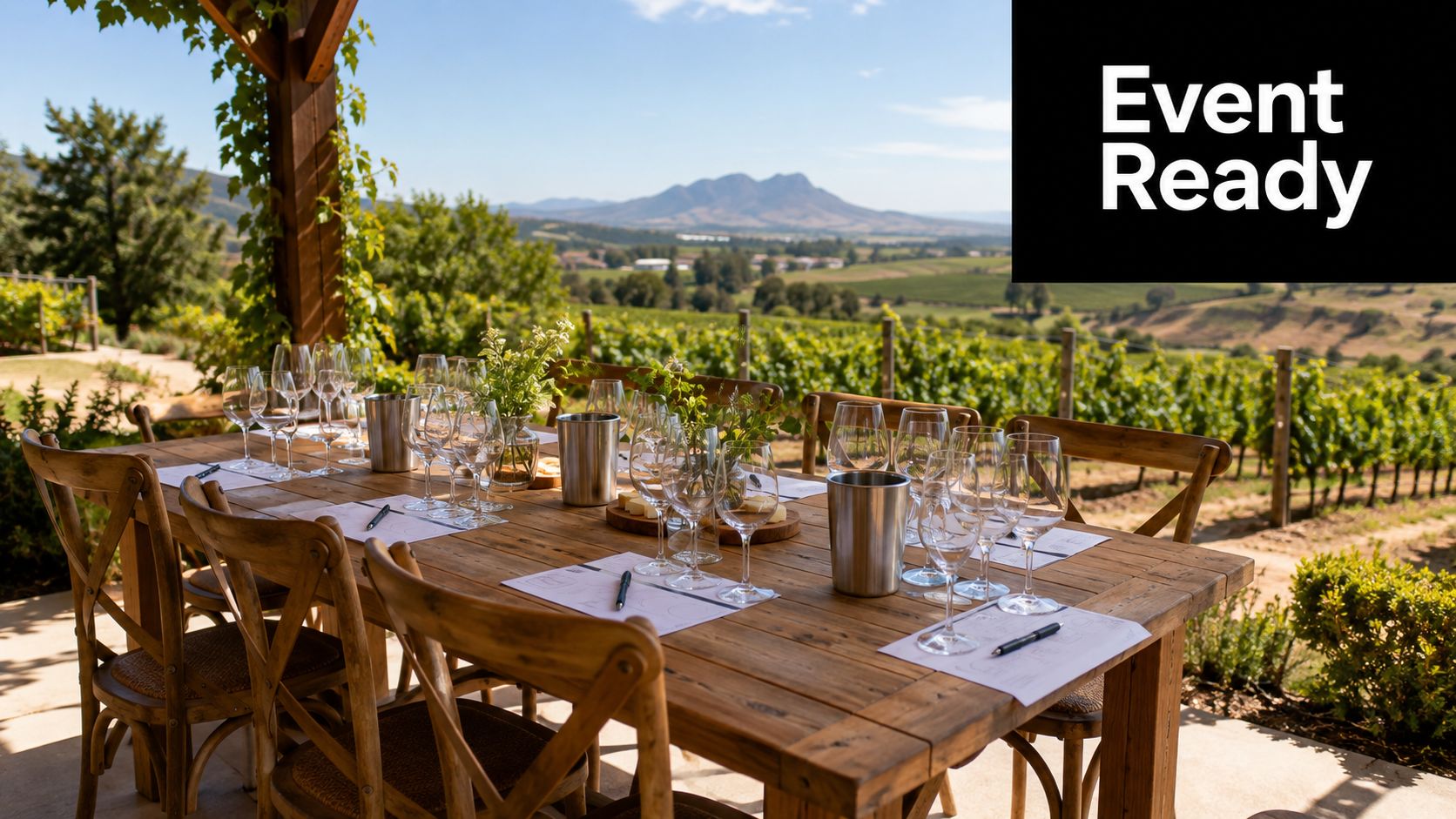
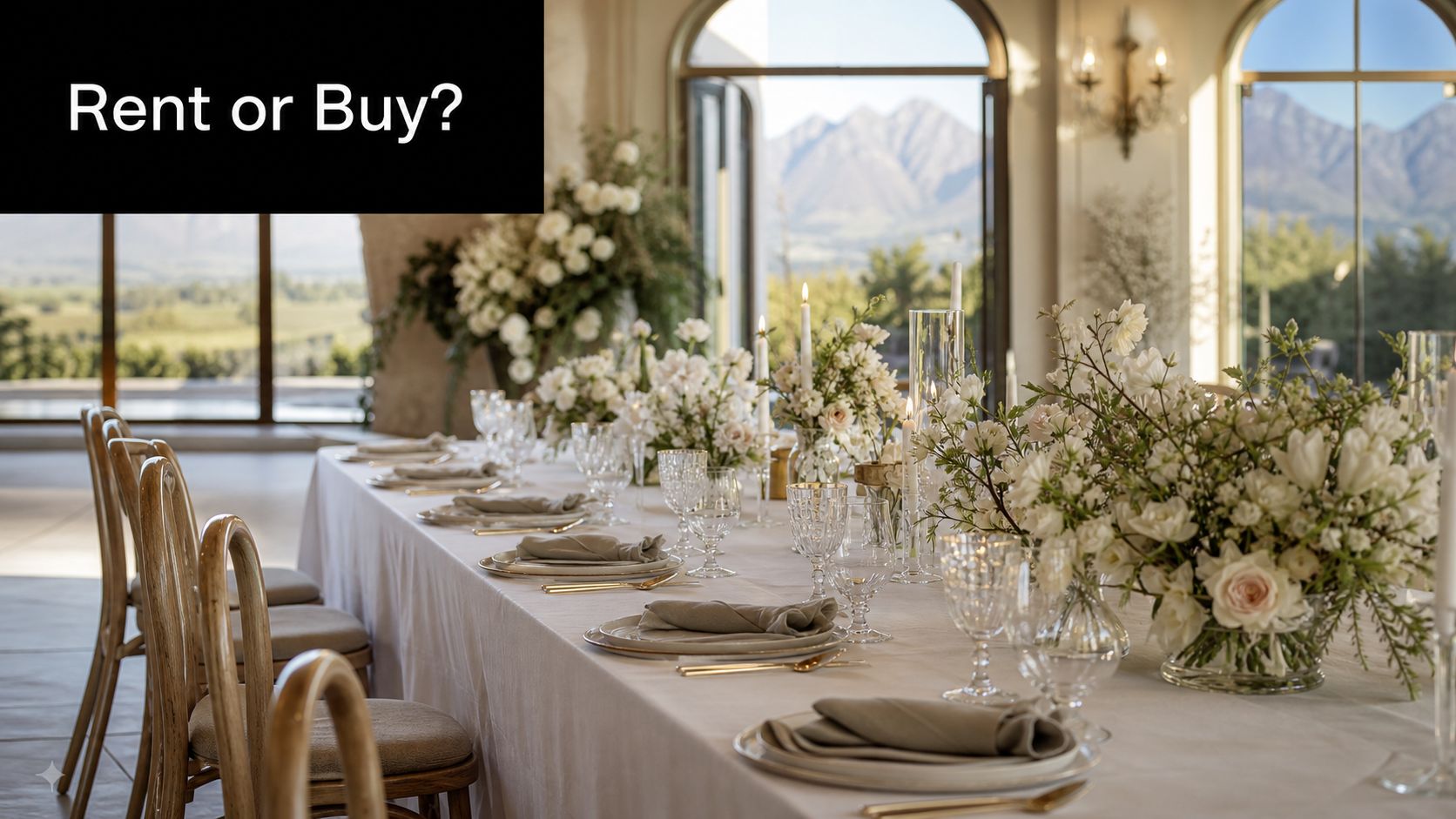
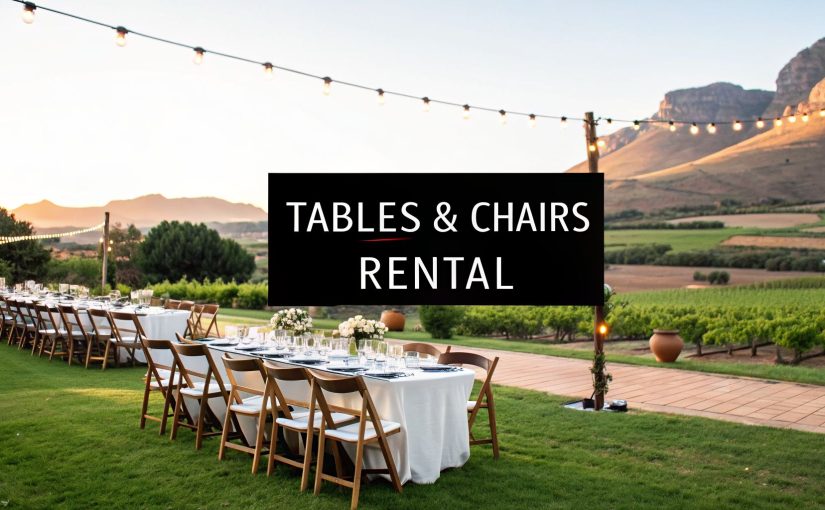
A luxurious dining table set for an elegant event with white floral arrangements and mountainous background.

That's where the dilemma starts. Buying seems sensible if you expect repeat use. Renting seems sensible if you want variety and less admin. Rent-to-own sits in the middle and can work when you need access to quality pieces now but don't want the full cash hit upfront.

Why this choice matters more in Cape Town

Cape Town events aren't uniform. A wedding in Franschhoek, a conference in the CBD, and a matric dance in the northern suburbs all demand different furniture, loading schedules, and presentation standards. If you buy for one format, you can get trapped with stock that doesn't suit the next brief.

That flexibility is part of why furniture rental keeps gaining ground. South Africa's furniture rental market is projected to reach USD 1,754.41 million by 2033, growing at a CAGR of 11.38% from 2025, driven by urbanisation and demand for more flexible living arrangements, according to Industry Research on South Africa's furniture rental market.

For event planners, that projection lines up with what's happening on the ground. Clients expect unique styles, shorter lead times, and cleaner execution. Permanent ownership helps when your event profile is repetitive. It hurts when your style brief changes every weekend.

Practical rule: Buy only what you'll use often, transport easily, and store properly. Rent everything that is trend-led, bulky, fragile, or difficult to clean between events.

The strategic lens

The rent own furniture decision works best when you stop treating it as a yes or no question. Most experienced planners use a mixed inventory model.

A practical split usually looks like this:

  • Own the basics: Plain folding tables, standard linen-friendly chairs, or back-of-house utility items can make sense if your team uses them constantly.
  • Rent the visual heroes: Lounge sets, LED furniture, feature chairs, bars, and themed pieces are usually better hired when needed.
  • Use rent-to-own selectively: If a certain furniture category appears in booking after booking, a staged ownership model can reduce strain on working capital.

If you want a broader events-focused view, this guide to renting furniture for events is useful for understanding where rental simplifies planning.

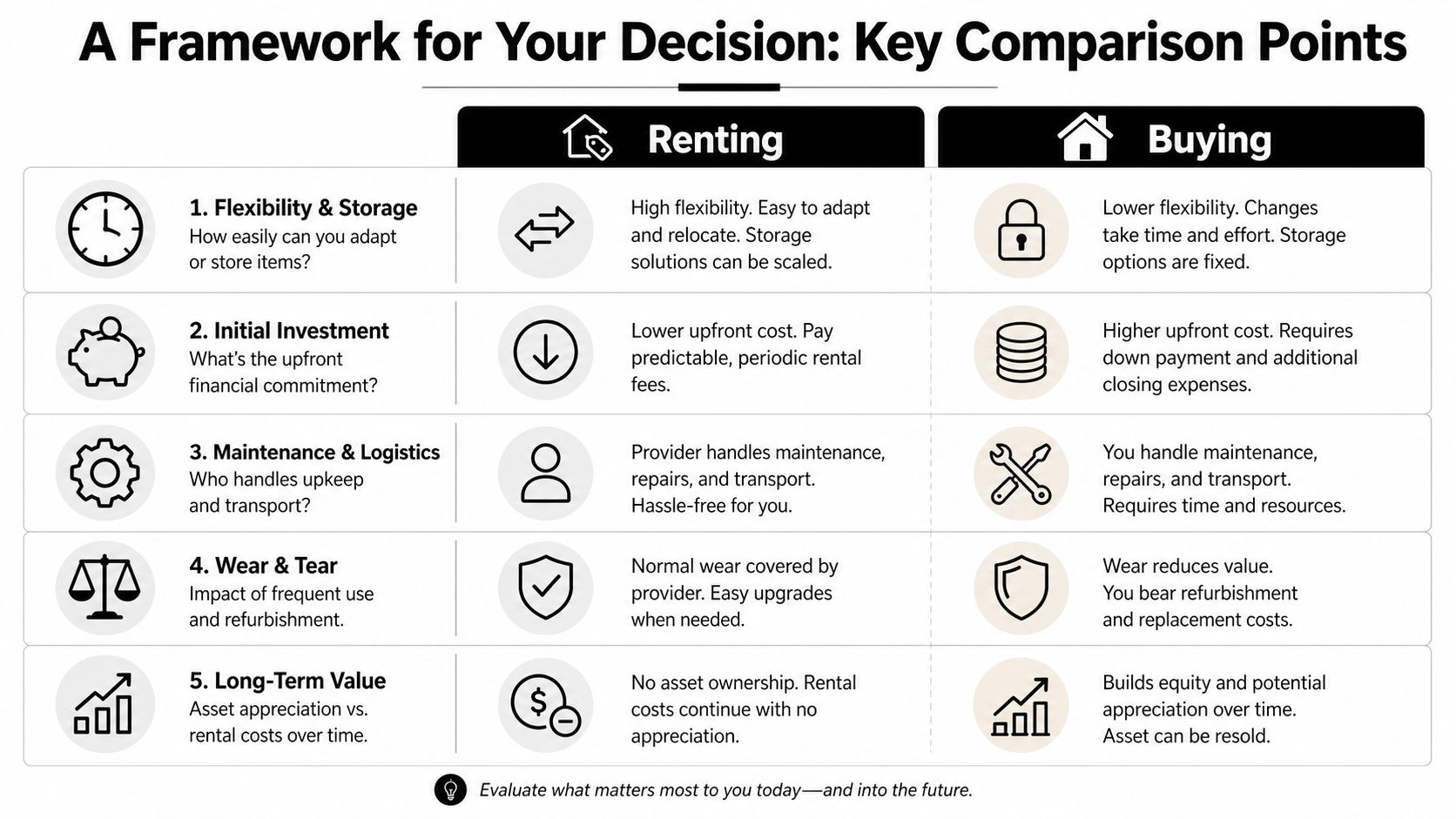
A Framework for Your Decision Key Comparison Points

Before you calculate any break-even point, compare the two options on the issues that shape event delivery. A planner can survive a higher line item more easily than a bad logistics week.

Decision point Renting Buying
Upfront capital outlay Lower immediate cash pressure Higher immediate cash commitment
Long-term return Better for irregular or varied event schedules Better if the same items are used repeatedly
Style flexibility Easy to switch looks for different clients Best if your design style stays consistent
Maintenance and storage Usually handled externally or reduced Fully your responsibility
Logistics and transport Often simpler to coordinate Requires systems, staff, and space

A comparison chart highlighting the key differences between renting and buying assets for decision making.

Upfront capital outlay

Renting protects cash. That matters when you're paying deposits to venues, florists, staffing teams, and transport suppliers at the same time. If you buy furniture outright, you lock money into stock before the event has even happened.

Buying has one real advantage here. Once the item is yours, future use doesn't trigger another hire fee. That's attractive for venues or planners with highly predictable event formats.

Long-term return

Ownership only wins when your event pattern is stable enough. If you run similar conferences every month with nearly identical layouts, bought stock can work hard. If your work swings between formal dining, cocktail networking, and themed school events, ownership often creates mismatched inventory.

This is similar to how property buyers think about use horizon, flexibility, and total carrying cost. If you want a simple non-event example of that mindset, Wispra's guide pour acheter un appartement is helpful because it shows how the wrong purchase can look good upfront and feel heavy later.

Style flexibility

Cape Town clients don't all want the same room. One week it's oak and rattan in Paarl. The next it's acrylic, chrome, and LED for a night launch near the Waterfront. Renting lets you respond to the brief instead of forcing the brief to fit your warehouse.

A stock room full of yesterday's fashion is not an asset. It's a reminder that event trends move faster than furniture depreciation.

Buying works when your visual language is consistent. A venue with a fixed house style can make ownership work beautifully. A freelance planner serving mixed clients usually needs more freedom.

Maintenance and storage

This category gets underestimated. Furniture has to be cleaned, checked, wrapped, loaded, unloaded, repaired, and stored in dry, secure space. Even sturdy pieces degrade if they're stacked badly or moved carelessly.

Renting shifts much of that burden away from the planner. Buying gives you control, but it also hands you every small problem that comes with wear, scratches, loose joints, and fabric marks.

Logistics and transport

A planner's week is already crowded. Add inventory management and things get messy quickly.

  • With renting: Delivery windows, returns, and replacements are usually easier to coordinate.
  • With buying: You need vehicle capacity, labour, loading plans, and contingency if something breaks in transit.
  • With rent-to-own: You still need to evaluate who carries servicing and condition control through the term.

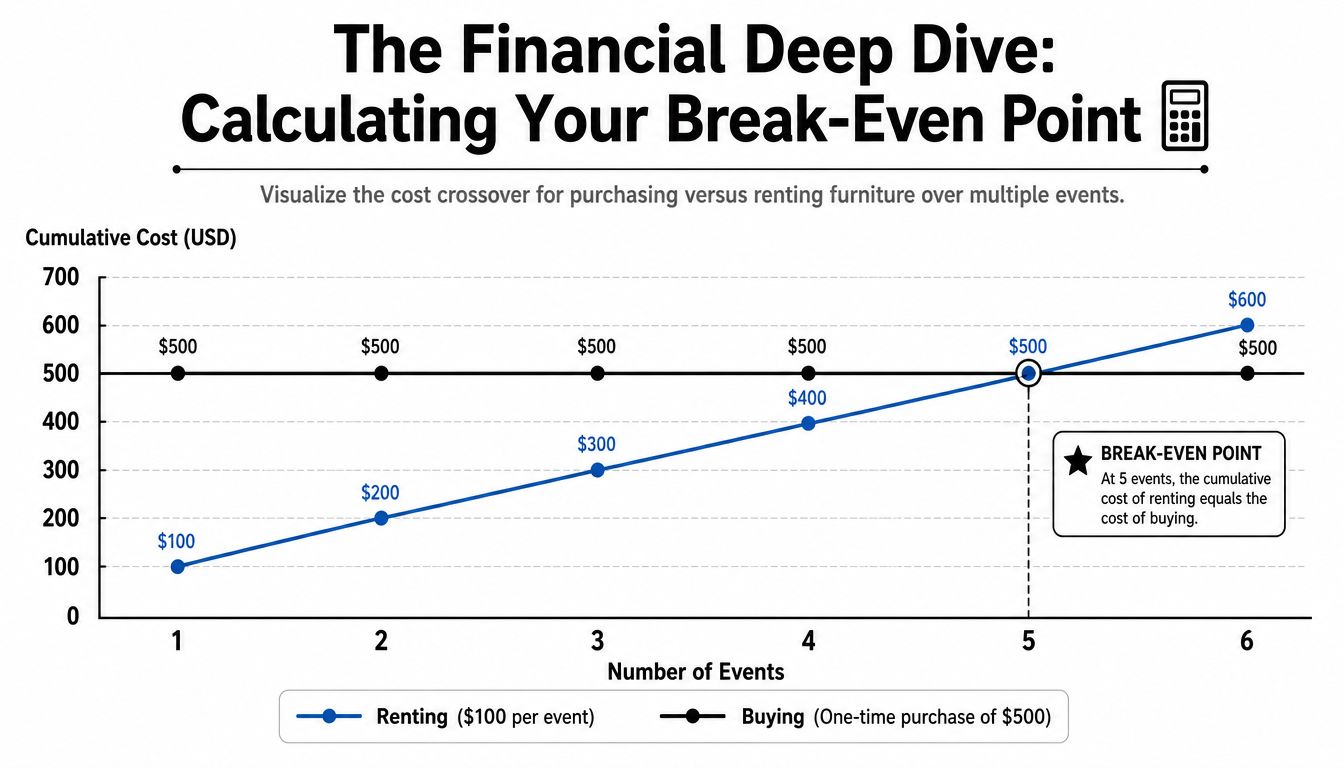
The Financial Deep Dive Calculating Your Break-Even Point

The break-even point is simple in theory. It's the moment when buying becomes cheaper than repeated renting. In practice, event planners miss it because they compare only the visible hire fee against the purchase price and ignore the rest.

Start with the basic formula:

Break-even event count = total ownership cost ÷ rental cost per event

That ownership cost isn't just what you paid to acquire the furniture. It also includes cleaning, minor repairs, transport handling, storage, admin time, and the realistic value left in the item after heavy event use.

A line chart comparing the cumulative costs of renting versus buying furniture over six events.

A practical way to run the numbers

Let's say you're considering lounge furniture for recurring corporate networking events. You don't need perfect precision to make a smart call. You need a framework.

Use this sequence:

  1. List the item category clearly: Don't lump cocktail tables, couches, and ottomans together.
  2. Set the acquisition cost: Use your actual buy price or rent-to-own commitment.
  3. Estimate event frequency: Monthly, seasonal, or occasional.
  4. Add ownership overhead: Cleaning, handling, wrapping, storage, and likely refurbishment.
  5. Compare against rental usage: Multiply your likely number of uses by the hire cost.

A useful benchmark from the wider market shows the basic shape of the decision. Renting a living room set costs approximately USD 80 to 120 monthly versus USD 2,000 to 3,500 for outright purchase, with the cost advantage projected to reach 35 to 40% savings by 2033 as supply chains optimise, according to Fortune Business Insights on the furniture rental service market.

That doesn't map perfectly to every event item in Cape Town, but it captures the financial logic. If your use period is short or uncertain, renting often protects margin. If your use is frequent and consistent, ownership starts to look better.

Where planners usually miscalculate

The most common mistake is assuming every use after purchase is “free”. It isn't. Every event adds wear, coordination time, and risk. White couches need more attention than black cocktail stools. Ghost chairs show scratches. Timber tops chip. LED units need careful handling.

Field note: If you can't describe how an item will be cleaned, stored, and moved after each event, you're not ready to count it as a good ownership candidate.

Another useful comparison comes from adjacent short-stay operations. Operators in furnished accommodation often evaluate every item by turnover rate, replacement cycle, and handling pressure rather than headline purchase cost alone. That's why these short-term rental arbitrage insights are surprisingly relevant to event planning. The same discipline applies. Furniture only “earns” well when usage, care, and downtime are managed tightly.

When rent-to-own makes sense

Rent own furniture can be the right middle ground in three cases:

  • You've identified repeat demand: The same inventory appears on bookings again and again.
  • You want to preserve cash: Buying outright would strain event operations.
  • You need quality immediately: Waiting to build inventory gradually would cost you bookings.

It works less well when your design requirements shift constantly. In that case, staged ownership still ties you to stock that may not fit next season's briefs.

Beyond the Price Tag Logistics Storage and Maintenance

Owning furniture changes your business model. You stop being only a planner and start becoming an inventory operator. Some teams are built for that. Many aren't.

Cape Town makes this sharper because storage isn't just a background issue. If your stock sits too far from your regular venues, turnaround gets harder. If it sits in the wrong space, condition slips. If it sits in a premium area, your overhead climbs before a single guest arrives.

The hidden work of ownership

A bought chair doesn't move itself to Constantia, Stellenbosch, or the CBD. Someone has to count it out, protect it in transit, unload it, place it, collect it, inspect it, and return it to storage. That's manageable with a few standard pieces. It becomes a burden when the inventory includes mixed materials, glass tops, upholstered seating, and statement items.

These are the costs planners often forget to price into ownership:

  • Storage discipline: Furniture needs dry, organised space with stacking systems that won't damage finishes.
  • Cleaning standards: Weddings and matric dances leave marks. Drinks spill. makeup transfers. Dust shows under venue lighting.
  • Repair cycles: Loose screws, chipped paint, torn fabric, and scuffed edges all need attention before the next booking.
  • Insurance and accountability: Once the item is yours, every scratch and loss is your problem to track.

Why renting often buys peace of mind

Rental isn't only about avoiding purchase cost. It buys operational relief. That matters most in peak season, when event teams are stretched and turnarounds are tight.

A practical example is same-day problem solving. If rain shifts a wine farm wedding indoors, or a corporate booking increases guest count late, rental support is often far easier to work with than trying to pull extra stock from your own scattered inventory. A service model, such as same-day furniture delivery for events, offers a solution to problems ownership can't fix quickly.

The hidden cost of buying is distraction. Your team spends time managing objects instead of managing the guest experience.

What works and what doesn't

Owning works when your stock list is narrow and your operations are disciplined. A venue with recurring layouts can justify that effort because the same items move in predictable patterns.

Owning struggles when:

  • Your event types vary widely
  • Your team is small
  • Storage is limited
  • Set-up crews change often
  • Clients expect fresh styling each season

In those cases, the rental premium is often cheaper than the operational drag of carrying stock yourself.

Curating the Perfect Event Inventory for Cape Town Occasions

Not all event furniture deserves the same decision. Some items are practical workhorses. Others are visual tools that should stay flexible. If you treat them all the same, you either overspend on hiring basics or overbuy pieces that age badly.

A useful local signal is that event furniture such as LED tables and bean bags is growing at a 15.8% CAGR in South Africa's rent-to-own market, linked to urban mobility and co-living trends in Cape Town, according to Dataintelo's benchmark analysis of event furniture growth. That matters because these are exactly the categories planners tend to regret buying too early.

Winelands weddings

Weddings in Stellenbosch, Franschhoek, and Paarl are detail-heavy. Clients notice chair style, timber tone, lounge texture, and how everything photographs against the venue.

Best rented items usually include:

  • Feature chairs: Cross-back, Tiffany, or any style chosen for a specific look rather than utility.
  • Lounge settings: Couches, ottomans, and coffee tables for pre-drinks or chill-out zones.
  • Statement bars and décor furniture: Pieces that carry the aesthetic but won't suit every future wedding.

Possible ownership candidates are plain service tables or versatile support pieces hidden under linen. Those don't date as quickly and don't need to impress in photographs.

Corporate events in the CBD

Corporate functions reward consistency, speed, and branding compatibility. Here, repetitive event formats can make ownership tempting. Sometimes that's sensible.

Consider buying only if you repeatedly use:

  • Neutral cocktail tables
  • Standard conference chairs
  • Back-of-house utility pieces

Rent the client-facing style layer. That includes lounge furniture for networking areas, illuminated furniture for evening activations, and anything that must align with a campaign look. If your team needs inspiration on what's commonly available locally, this overview of furniture for hire in Cape Town is a practical starting point.

Matric dances and school formals

These events are high impact and often theme-led. One year's trend can look stale very quickly. That makes renting the safer call for most of the visible inventory.

Schools usually get better value by renting the wow factor and keeping their own spend focused on décor, lighting, and event management.

Good rental choices here include LED cubes, glow tables, bean bags, and themed seating. Buying them only makes sense for schools or organisers running multiple formal events with the same look and enough secure storage to keep everything in good condition.

Private parties and milestone celebrations

Birthdays, anniversaries, engagement parties, and home events usually have the shortest useful life for purchased furniture because the brief changes every time. One client wants sleek white bar stools. Another wants rustic benches. Another wants a children's chill zone.

For these events, a rent own furniture strategy only makes sense if you host often and favour the same core stock. Otherwise, renting keeps the brief open and the home garage clear.

Your Final Decision Checklist and When to Partner with ABC Hire

By the time you reach the final quote stage, the right answer is usually visible. The trick is asking operational questions before emotion gets involved. A beautiful furniture set can still be the wrong business decision.

Use this checklist before you commit.

Ask these questions honestly

  • How often will this exact item be used? Not “something similar”. The exact chair, couch, bar, or table.
  • Do you have proper storage? Not spare space for now. Proper space that protects condition between events.
  • Can your team transport it safely? Delicate or bulky items create cost the minute they leave storage.
  • Will the style still work next season? Trend-led inventory dates faster than planners expect.
  • Do you want to manage maintenance? Someone must inspect, clean, repair, and track every piece.
  • Would that capital work harder elsewhere? Deposits, staff, lighting, and décor often generate more event value than stock ownership.

A simple verdict guide

Renting is usually the stronger choice if most of these statements sound true:

  • Your events vary in style
  • You need flexibility across weddings, corporate functions, and formals
  • You don't want storage and maintenance overhead
  • You need specialist pieces for one-off briefs
  • You'd rather protect cash flow than lock money into stock

Buying or rent-to-own deserves a closer look if these statements fit better:

  • You use the same furniture repeatedly
  • Your storage and transport systems are already organised
  • Your event format is predictable
  • You're building a standardised venue or recurring event operation

There's also a broader financing clue in the local market. In South Africa, rent-to-own furniture plans typically require monthly payments that are 25 to 30% lower than traditional financing, with quality furniture sets available for approximately R1,500 to R2,200 monthly versus R40,000 to R65,000 for outright purchase, according to Astra Furnishers' overview of rent-to-own furniture in South Africa. For event operators, that reinforces the value of staged access when outright buying would squeeze cash too hard.

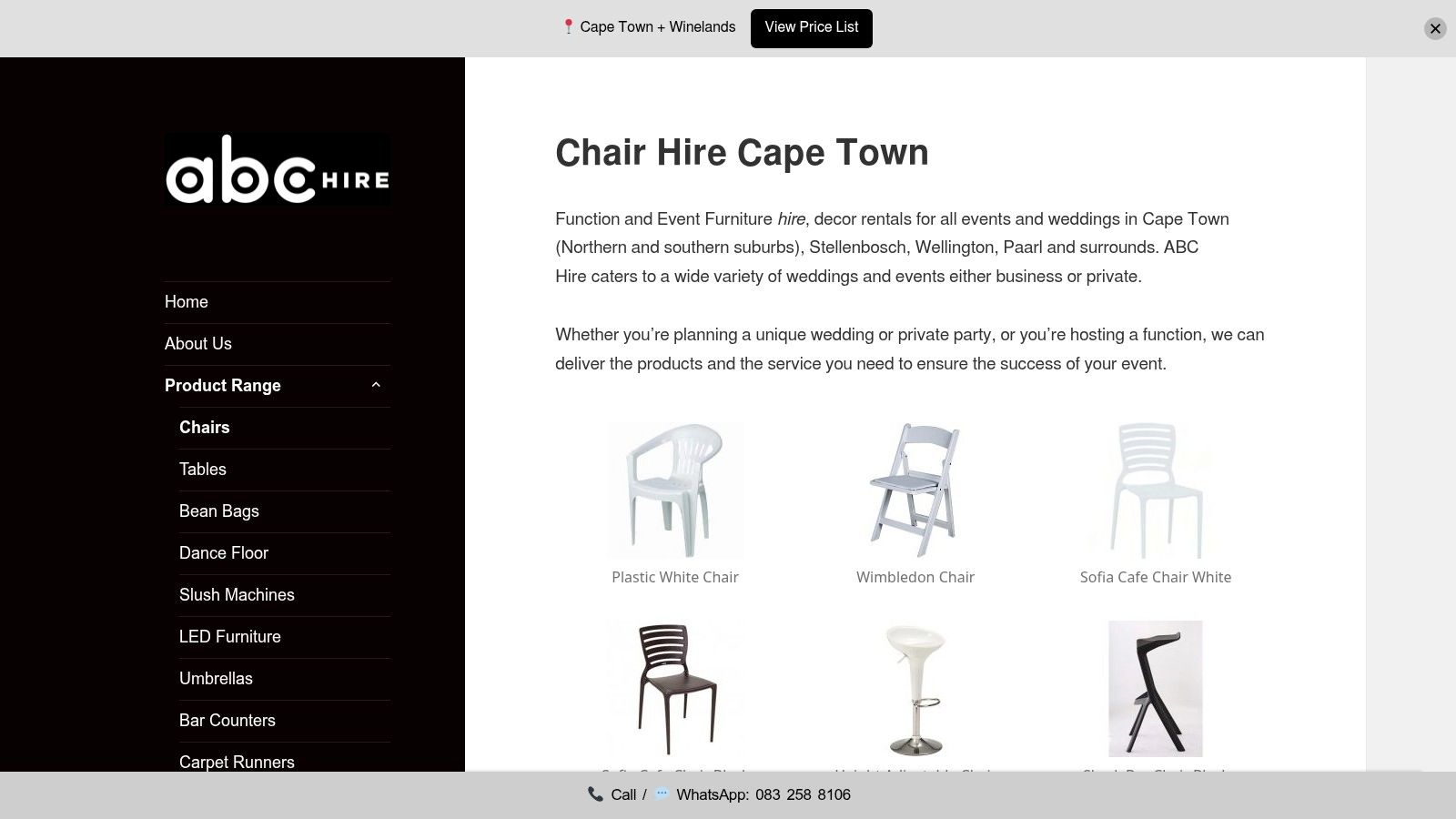
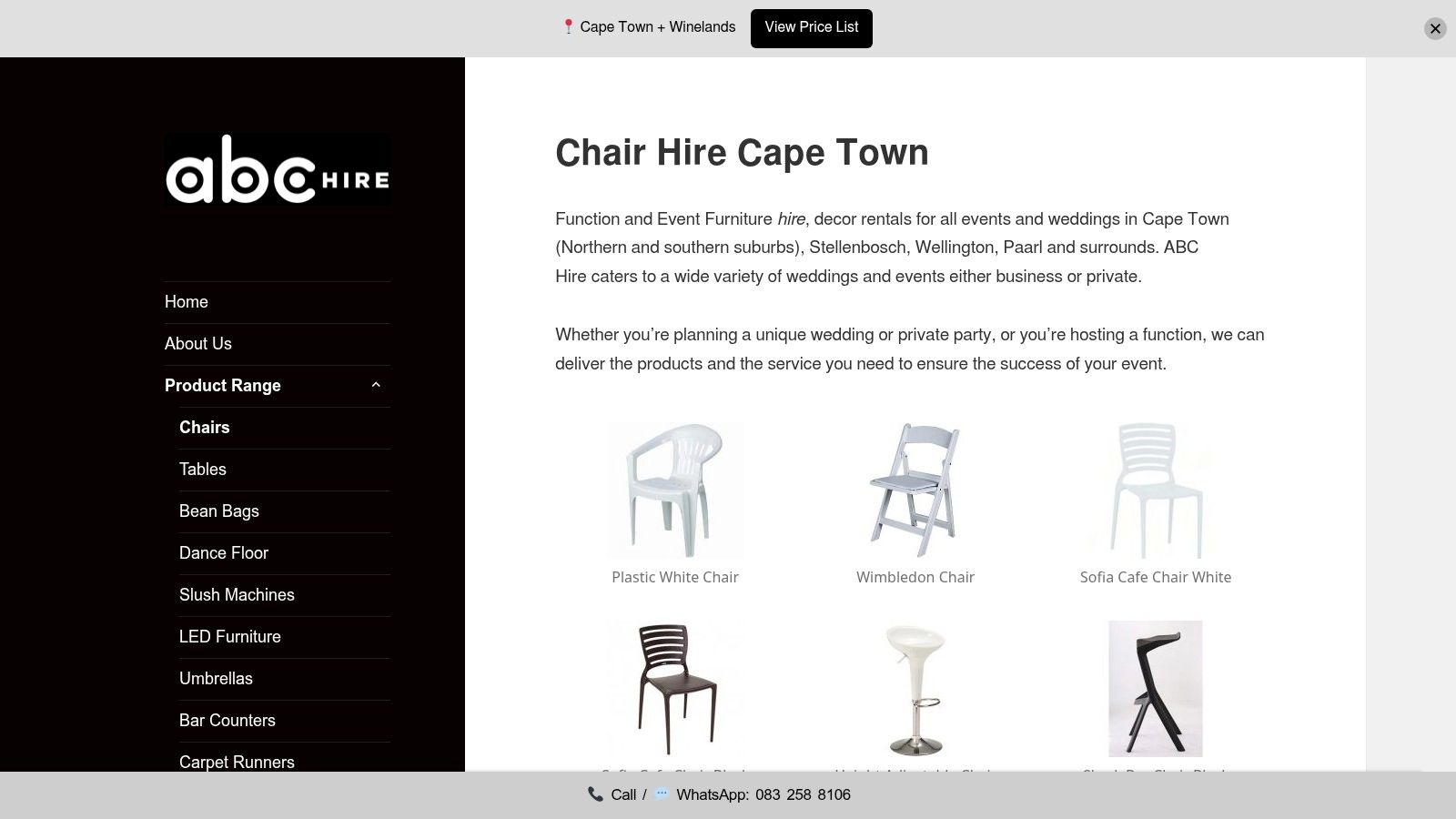
Screenshot from https://abchire.co.za/chairs/

When a rental partner is the better move

If your answers lean toward flexibility, specialist inventory, and lower operational burden, a dedicated event rental partner usually beats trying to build everything in-house. That's especially true in Cape Town and the Winelands, where venue access, delivery timing, and style expectations can shift fast.

A strong rental partner helps when you need:

  • A broad range of chairs, tables, and lounge items
  • LED furniture for night events
  • Inventory that suits weddings, corporate functions, and private parties
  • Reliable support across Cape Town, Stellenbosch, Franschhoek, and Paarl

The best rent own furniture decision isn't the one that looks bold on paper. It's the one that leaves your event better organised, your margins protected, and your team free to focus on guests rather than stock.


If renting looks like the smarter route for your next event, ABC Hire is a practical place to start. They offer event furniture and accessories across Cape Town and the Winelands, including chairs, tables, LED furniture, bean bags, climate control equipment, and more for weddings, corporate functions, matric dances, and private celebrations.

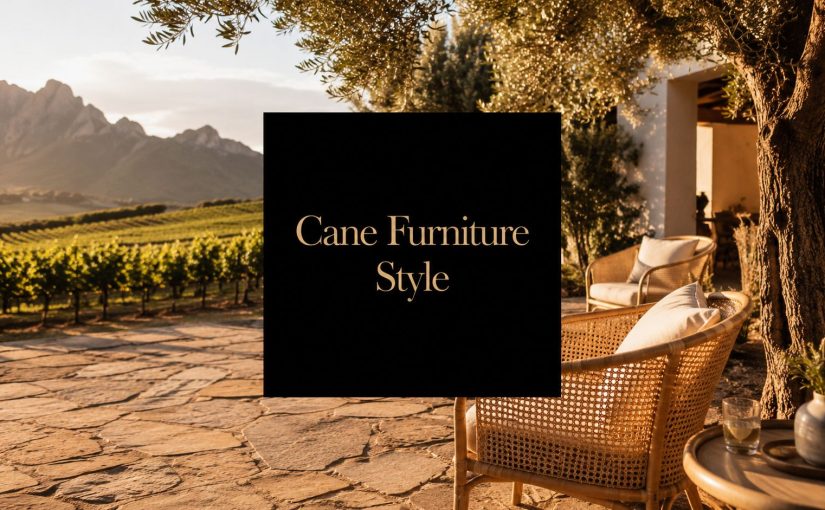
Cape Town Events: Malawian Cane Furniture Style

You're probably trying to land a very specific look. Not generic “event furniture”, but a room that feels polished, relaxed, layered, and worth photographing from every angle.

That's usually where Malawian cane furniture enters the conversation. In Cape Town and the Winelands, it solves a styling problem that planners run into all the time. Banquet seating can feel too formal. Contemporary lounge pieces can read cold. Rustic timber can tip too far into farm-style if it isn't handled carefully. Cane sits in the middle and does the hard job well.

It softens a marquee, gives structure to a vineyard terrace, and makes a corporate lounge feel less transactional. It also has to survive real event conditions. Deliveries on tight schedules, movement between ceremony and reception areas, dry inland heat, coastal air, and guests who don't treat furniture like museum pieces. That's where experience matters more than mood boards.

The Timeless Charm of Malawian Cane Furniture

A planner might start with a brief like this. The couple wants elegance, but they don't want the wedding to feel stiff. The venue has stone, oak, lawn, and mountain views. Standard conference chairs are out. Heavy upholstered lounge seating feels wrong. They need something that belongs in the surroundings rather than competing with it.

That's why Malawian cane furniture has become such a dependable choice for refined events in the Western Cape. It brings handwoven texture into a setting without making the space feel over-styled. A single pair of cane lounge chairs can warm up a ceremony signing table area. A full lounge cluster can give shape to a pre-dinner drinks space that would otherwise feel scattered.

Why it works so well in Cape settings

Cape Town and the Winelands reward furniture that looks settled in natural light. Cane does that beautifully. It catches sun without glaring, reads well against linen and timber, and doesn't flatten out in photographs the way some plastic or metal event furniture can.

For planners building layered spaces, it also bridges styles that don't always sit easily together:

  • Wedding styling: soft florals, natural rugs, candlelight, neutral upholstery
  • Brand launches: clean signage, structured seating zones, edited colour palettes
  • Private celebrations: relaxed conversation areas that still feel curated

For anyone shaping a venue with warmth and restraint, this wider conversation around designing authentic rustic interiors is useful because it shows how natural materials keep a room grounded without making it feel themed.

Cane works best when the rest of the room isn't fighting it. Let it be the texture that softens the hard edges.

More than a passing trend

The reason it keeps returning season after season is simple. It doesn't rely on novelty. It has heritage, visual lightness, and enough personality to carry a space without becoming the whole story.

That matters at events. Trend-led pieces date quickly. Good cane doesn't. It feels right at a vineyard wedding, a luxury garden lunch, a panel discussion, or a milestone birthday under a stretch tent. It's one of the few furniture categories that can look relaxed and still read premium.

What Defines Authentic Malawian Cane Furniture

At a site visit, authenticity shows up long before a guest sits down. It shows in how a chair lifts, how the frame holds its shape, and whether the weave still looks calm after loading, stacking, and a bumpy run out to the Winelands. For rental use, that distinction matters more than the label on a product listing.

Authentic Malawian cane furniture is usually identified by two things. The first is a solid timber frame, commonly made with blue gum. The second is handwoven cane that forms part of the chair's working structure, not just a decorative skin. That combination gives the piece its light visual profile and its practical strength.

Start with the frame

I check the frame before I check the pattern of the weave. If the frame is weak, the chair may still photograph well, but it will struggle in a real event cycle.

A good frame earns its keep in three places:

  1. Repeated handling
    Chairs are loaded, unloaded, carried across gravel, and reset more than once in a busy week. The frame needs to stay square and balanced.

  2. Uneven surfaces
    Lawns, historic venues, timber decks, and tent flooring all place different pressure on the legs and joints. A stable frame copes better with those shifts.

  3. Seasonal movement
    Cape Town and the Winelands are hard on natural materials. Dry heat inland and damp coastal air can expose weak construction quickly.

That is why I treat authentic cane and generic woven seating as separate categories. If you want a broader view of what works outdoors, this guide to wicker furniture for outdoor event use is a useful companion.

Then inspect the weave

The weave tells you whether the piece was made for use or made to imitate the look. Authentic Malawian cane rarely has the overly perfect, pressed-flat finish you see on factory copies. The tension feels consistent, but the surface still has the small variations that come with handwork.

Those details matter in rentals because the weave takes real pressure. Guests shift in their seats. Lounge setups run for hours. Furniture is moved by different crew teams, not handled like a showroom sample.

Use this quick check on site or in a warehouse:

  • Look for slight variation in the weave: hand-finished work has character without looking messy.
  • Check where cane meets timber: weak replicas often start separating at stress points.
  • Press the seat and back gently: the response should feel supportive, not brittle or hollow.
  • Turn the chair over: quality often shows underneath, where poor copies cut corners.

Practical rule: If the underside looks rushed, the chair will usually underperform in rentals.

Why the making process matters

Material preparation affects how the chair behaves after a season of use. Cane that has been handled and woven properly keeps a better balance between flexibility and support. Poorly prepared cane tends to dry out, loosen, or crack sooner, especially once it moves between storage, trucks, and outdoor venues.

That point gets missed in a lot of event buying decisions. Planners often focus on silhouette, colour, and price per unit. Rental teams deal with the after-effects. We see which chairs come back looking sound, and which ones start failing at the joins after a short run of events.

How to spot the difference in practice

A side-by-side comparison usually makes the choice clear.

Feature Authentic Malawian cane Lower-grade imitation
Frame feel Stable and well-balanced Light, but often less secure
Seat response Flexible with support Too rigid or already sagging
Finish Handmade character Repetitive, machine-flat appearance
Rental use Suited to frequent handling Better kept for light decorative use

For event planners, authenticity is a performance question as much as a design one. The right piece holds up in transport, sits well on mixed venue surfaces, and stays presentable through a Cape season that can shift from hot sun to damp air in the same week.

Built for Beauty and Durability in the Cape Climate

One of the most common questions I hear is simple. It looks good, but will it cope outdoors in the Cape?

That's the right question. A lot of imported furniture performs well in a studio or showroom and then struggles once it meets a real South African event calendar. Summer in Stellenbosch is dry and hot. Atlantic-facing venues can turn damp and windy. Garden events move between sun and shade all afternoon. Furniture has to absorb those shifts without becoming unreliable.

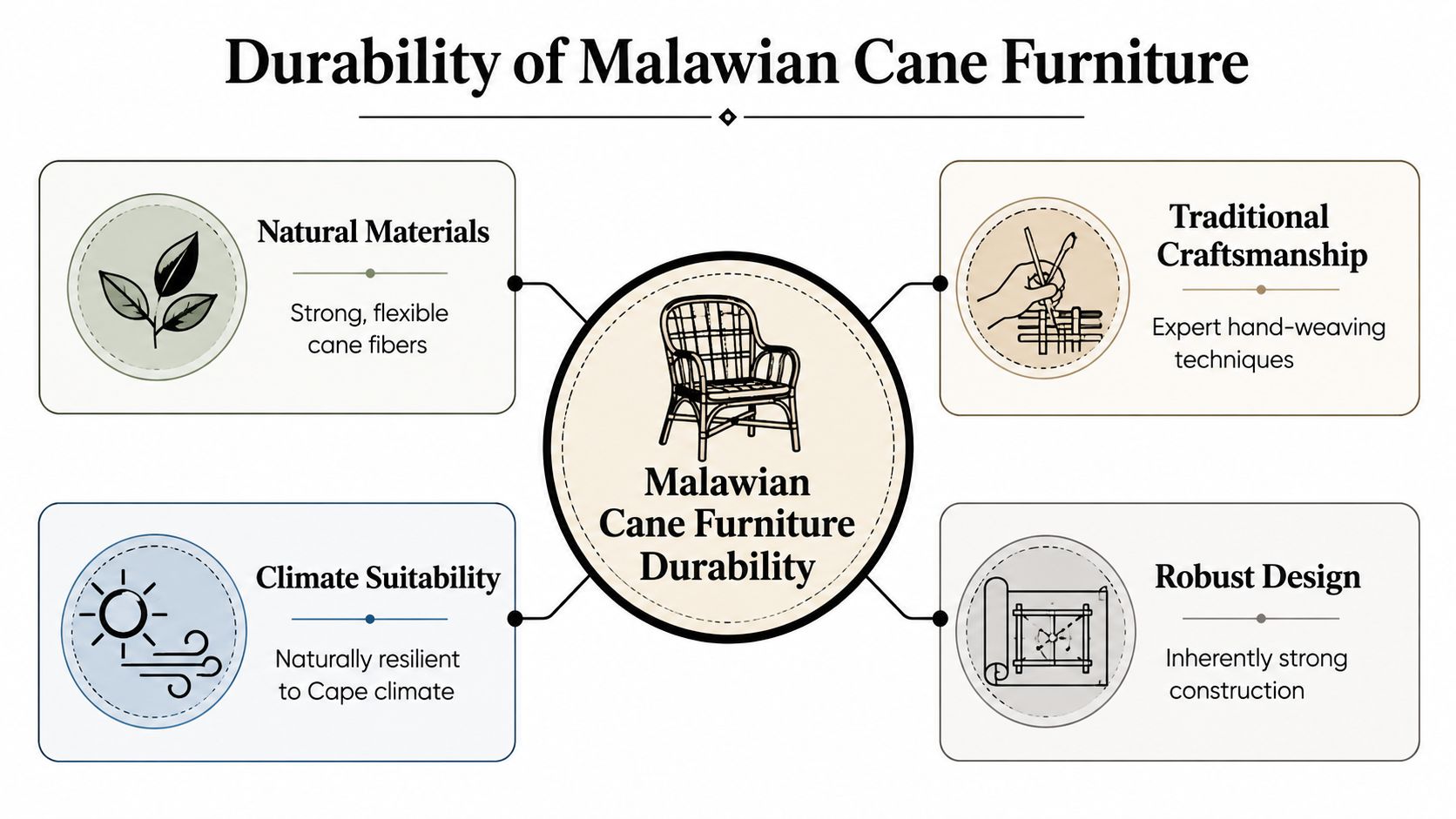
An infographic detailing the factors that contribute to the long-lasting durability of traditional Malawian cane furniture.

Why authentic cane performs better than lookalikes

The local concern isn't whether cane is stylish. It's whether it can stay presentable and functional through changing coastal and inland conditions. That concern is justified. Smith Honig's Malawi cane chair listing highlights that existing content often misses how furniture behaves in South Africa's hot and sometimes humid coastal climates, while noting that authentic Malawian cane is better equipped than other imported rattan because of its material composition.

In practical terms, that means planners should stop grouping all woven furniture into one category. “Rattan-look” is not a performance standard. Construction decides the result.

For a useful companion read on placement and weather considerations, this guide to outdoor wicker furniture use helps frame the broader decisions around exterior event styling.

What works on local venues

Authentic Malawian cane works well in these situations:

  • Ceremony lounges under partial shade: the furniture keeps visual softness without looking bulky.
  • Covered terraces near the coast: it suits the environment better than glossy or over-upholstered pieces.
  • Indoor-outdoor transitions: cane doesn't feel visually jarring when guests move between spaces.
  • Winelands reception breakaway areas: it complements stone, timber, grass, and vineyard backdrops.

What doesn't work is careless placement. Any natural-fibre furniture will suffer if it's left exposed for extended periods in punishing conditions without thought for timing, cover, or handling. Good planners don't ask furniture to do the impossible. They match the product to the site and the schedule.

Use cane as premium event seating, not as permanent outdoor furniture abandoned to the weather.

The local trade-off

Here's the honest version. Malawian cane furniture is durable, but it isn't indestructible. That's a strength. It performs because of a balanced construction that combines support with flexibility. Furniture that feels rock-hard can crack, split, or age badly. Furniture with some elasticity often handles event use more gracefully.

For Cape events, that balance is exactly what you want. It gives you furniture that looks refined in photographs and behaves sensibly on the ground, which is a better outcome than choosing something purely on trend value.

Styling Ideas for Weddings and Corporate Functions

The best results come when cane furniture is styled with intent. It shouldn't be dropped into a venue as a generic “lounge option”. It needs supporting pieces, spacing, and texture around it so the whole zone feels resolved.

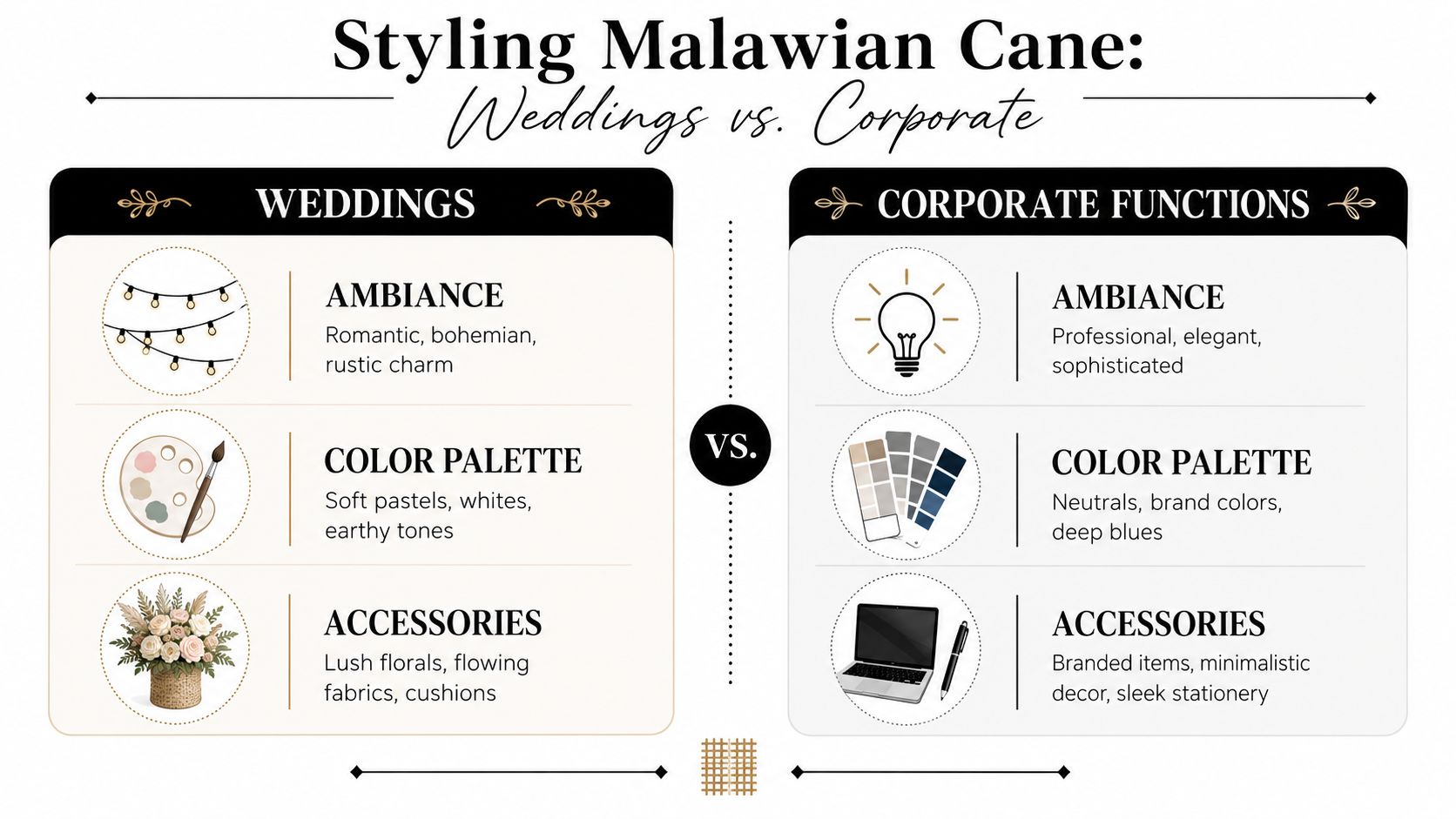
A comparison infographic showing how to style Malawian cane furniture for weddings versus corporate events.

A Winelands wedding lounge that feels soft, not sloppy

At a vineyard wedding, cane usually earns its place in one of three areas. The pre-ceremony arrival zone, the drinks lounge after the vows, or a quiet corner near the reception where guests can settle with a glass in hand.

The strongest layouts use a mix of single chairs and occasional tables rather than one oversized cluster. Cane already has visual texture. If you overfill the area, it starts to feel busy.

A wedding combination that works well:

  • Two or four cane chairs facing inward for conversation
  • A small side table for candles, menus, or welcome drinks
  • A natural-fibre rug to anchor the grouping
  • Loose cushions in ivory, clay, oat, sage, or muted blush
  • Layered florals that feel garden-grown rather than tightly formal

The key is restraint. Soft linen cushions and one or two throws are enough. Once every chair has a bow, tassel, and oversized floral tie-on, the furniture loses its sophistication.

Wedding styling should feel collected. If every element is shouting “rustic luxury”, the room starts to look staged instead of elegant.

For evening receptions, I like cane paired with warm lamps, candle clusters, and low arrangements rather than high centrepieces nearby. That keeps sightlines open and lets the woven detail show in the lighting.

A corporate setup that doesn't feel like a conference foyer

Corporate teams often want warmth but worry that cane may feel too informal. It doesn't, if the styling is disciplined.

At a product launch or media event, cane works best in deliberate zones. Think registration waiting area, speaker green room, panel seating with personality, or networking lounges that break up a large venue. The furniture softens the atmosphere and encourages guests to stay longer in conversation areas.

A cleaner corporate formula looks like this:

Element Wedding approach Corporate approach
Palette Soft neutrals and pastels Neutrals with one or two brand colours
Textiles Linen, soft layering Minimal cushions, tailored finishes
Tables Candles, florals, signage Branded collateral, sleek tabletop styling
Lighting Romantic and warm Focused, polished, architectural

One useful reference point for planners shaping guest movement, arrivals, and premium presentation is this broader piece on 2026 corporate event planning. It's not about furniture specifically, but it does reinforce how transport, staging, and comfort all affect the final experience.

If you're leaning into a heritage, editorial, or textured event look, this guide to vintage furniture styling in Cape Town also helps position cane within a fuller event design language.

Pairings that lift the furniture

Some combinations consistently work better than others.

  • Best with cane: travertine-look tables, timber side tables, linen upholstery, neutral ceramics, woven rugs
  • Use carefully: mirrored plinths, chrome cocktail tables, ultra-gloss finishes
  • Usually too much: heavy boho overload, dense macramé, excessive dried grass installations around every cluster

The furniture already brings pattern and depth. Your job is to edit around it so guests notice the room, not just the props.

Your Guide to Renting in Cape Town and the Winelands

A planner signs off a beautiful cane setup for a Franschhoek wedding, then the venue confirms a narrow cellar entrance, a short load-in window, and a lawn that turns soft after morning mist. That is usually where rental decisions get tested. In the Cape, the right cane furniture is not only about style. It has to arrive on time, fit the access route, and still look sharp after setup in wind, dust, or damp coastal air.

That is why I always advise clients to book by venue conditions first, then by look. Cane photographs well, but a successful hire depends on stock consistency, maintenance standards, and a supplier who knows the difference between loading into a CBD hotel and striking from a wine estate after midnight.

Screenshot from https://abchire.co.za/chairs/

What to ask before you book

Start with the questions that affect the event day, not only the quote.

Ask how the furniture is stored between hires, whether the pieces are closely matched, and how the team handles last-minute venue changes. In the Winelands, access can shift quickly because of weather, farm operations, or revised floorplans. A supplier who has worked those venues before will usually spot problems early.

A good rental partner should answer clearly on:

  • Inventory consistency: are the chairs and loungers close enough in tone and shape for a polished setup?
  • Condition control: how are frames, weaving, and finishes checked after each hire?
  • Delivery timing: can the team work within venue access windows and alongside florists, technical crew, and caterers?
  • Collection planning: what happens if speeches run late or the strike starts after guests have cleared slowly?
  • Venue familiarity: has the supplier delivered to beaches, estates, private homes, and central city venues with restricted access?

Choose by zone, not by single piece

Clients often begin with one standout chair, then discover the room still feels incomplete. Cane works best when it is planned as part of the guest flow.

That usually means choosing where people will sit, wait, gather, or take photos. A ceremony entrance needs a different quantity and layout from a pre-drinks terrace or a speaker lounge at a conference.

Typical hire approaches include:

  1. Accent seating only
    Best for a signing table area, entrance moment, or styled photo corner.

  2. Small lounge clusters
    Useful for cocktail hour, shaded verandas, and relaxed networking spaces.

  3. Repeated seating zones
    Best for larger weddings and corporate functions where guests spread across several areas.

If you need a wider view of quantities, layouts, and mixed furniture options, this guide to furniture hire in Cape Town is a practical place to start.

What a well-run delivery actually looks like

The strongest setups are planned backwards from the venue. That includes gate access, stairs, gravel drives, lift restrictions, cellar doors, weather cover, and the time other suppliers need on the floor.

Cape Town and the Winelands add their own pressures. South Easter wind can delay outdoor placement. Coastal damp can leave furniture needing a quick wipe before guests arrive. On farms and estates, long carry distances and uneven ground slow crews down if the plan was too optimistic.

The suppliers worth booking usually have the same habits:

  • A placement plan confirmed before dispatch
  • A realistic setup window based on the venue
  • One clear onsite contact
  • A count and placement check on arrival
  • A collection time that matches venue strike rules

If a supplier is vague about how delivery will run, expect problems later.

Booking instinct that usually proves right

Beautiful product shots are not enough. The better question is whether the supplier can protect the look once the furniture leaves the warehouse and hits a real Cape Town event site.

Malawian cane is a strong rental choice here because it brings warmth, texture, and a premium finish without feeling heavy or over-styled. But it performs best when the hire company understands local weather, transport routes, venue access, and turnaround pressure. That local knowledge is what keeps the furniture looking refined from first placement to final guest departure.

Event Day Care and Transport Guidance

A cane chair can leave the warehouse in excellent condition and still arrive on the floor looking tired if the crew handles it badly. On Cape Town event days, the pressure points are predictable: quick room turns, damp morning air, lawn setups, and return loading after dark. Good handling protects both the finish and the shape.

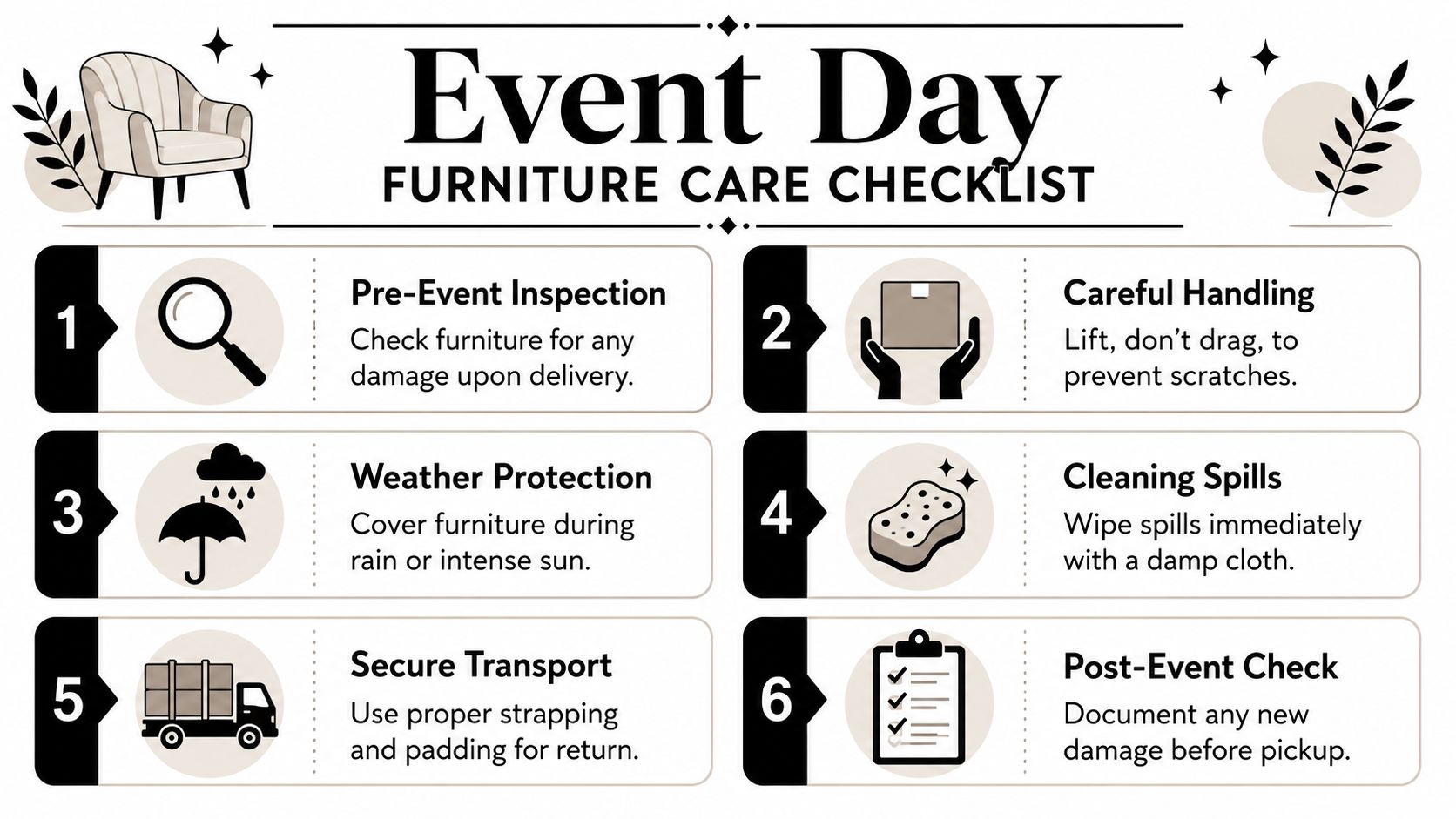
A professional furniture care checklist for events featuring six essential steps for protecting and maintaining rental furniture.

What crews should do on site

Authentic pieces are practical to work with because they are light enough to place efficiently and comfortable enough for guest areas, as noted in Malawi Furniture's care guidance. That advantage disappears if teams grab the woven seat, drag the base across stone, or leave pieces exposed while waiting for the rest of the install.

  • Lift from the frame: hands should be on the solid structure, not the woven seat or back.
  • Set each piece down on firm, level ground: this matters on lawns, gravel courtyards, and farm venues with uneven surfaces.
  • Wipe moisture and spills promptly: coastal damp, condensation from drinks, and light rain all need quick attention with a soft damp cloth.
  • Stage outdoor pieces as late as the schedule allows: less time in direct sun and wind means less cleaning and fewer last-minute touch-ups.
  • Use covers during holding periods: if furniture is waiting in a loading zone or under partial shelter, keep dust and moisture off it.

One habit saves a lot of damage. Carry cane furniture the way specialist antique movers handle older timber pieces: supported from the strongest points, never by the decorative or woven sections.

Common mistakes during setup and strike

The problems I see most often are not dramatic breakages. They are small handling errors that add up over a busy season.

  • Don't stack pieces unless that design is meant for stacking.
  • Don't use arms, woven edges, or backrests as tie-down points in the truck.
  • Don't place soaked florals, ice buckets, or dripping drink tubs directly on cane surfaces.
  • Don't leave furniture standing uncovered through a weather change if guests are still hours away.

Cape weather is the ultimate test. A dry, hot setup in the Winelands can leave pieces dusty by guest arrival. A coastal job can bring mist, salt air, and damp cushions before the first person sits down. Teams that work here regularly plan for both.

What proper rental maintenance looks like

Well-kept cane comes from routine conditioning, careful storage, and disciplined loading. It also needs periodic polishing to top and bottom cane surfaces with the right oil-based product, applied sparingly, as noted earlier in the same care guidance.

That is the difference between furniture that photographs well once and furniture that keeps its finish across repeated hires. Guests may never notice the maintenance standard directly. They notice the result immediately.

Your Malawian Cane Furniture Questions Answered

Can it be used outdoors for a Cape Town event?

Yes, if the setup is sensible. Cane works well for outdoor ceremonies, covered terraces, lawn lounges, and transition spaces between indoor and outdoor areas. The important part is placement, timing, and weather awareness. It's event furniture, not something to leave exposed without a plan.

Is it actually comfortable for guests?

Yes. Good cane chairs feel supportive rather than stiff, which is why they work for lounges, waiting areas, and conversation settings. They're also visually lighter than bulky upholstered options, so you don't sacrifice comfort to get the look. If the event runs long, adding cushions improves comfort and helps tie the furniture into the wider palette.

How far in advance should we book?

Book as early as you can once your venue and date are confirmed. Cane is one of those categories that gets requested for weddings, launches, private celebrations, and styled shoots, often by clients chasing a similar aesthetic. Early booking gives you a better chance of getting matching pieces and the exact quantities you need.
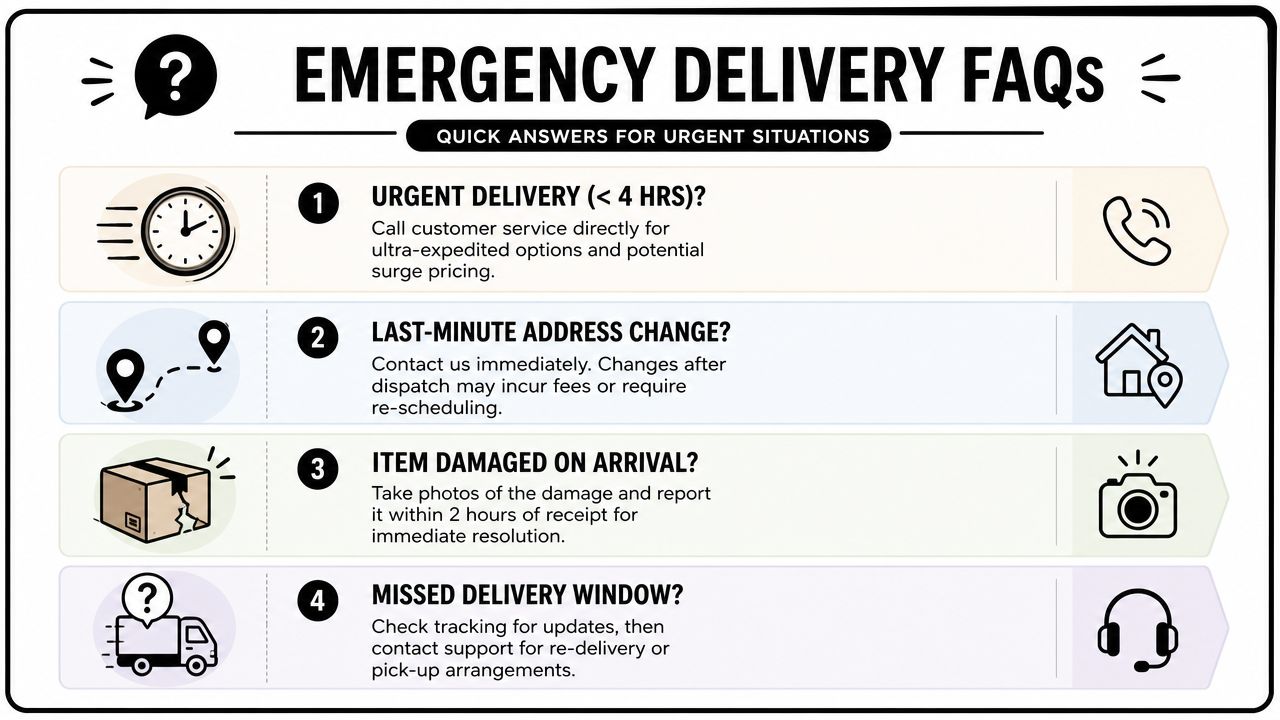
What should we ask a rental company before saying yes?

Ask about condition consistency, transport procedures, cleaning standards, and how they handle venue access restrictions. If your event includes premium or fragile décor, it's also worth understanding whether the supplier approaches loading and movement with the same care you'd expect from specialists who handle delicate pieces, similar to the standards described by professional antique movers.

The short version is this. Malawian cane furniture is a strong choice when you want warmth, elegance, and a more thoughtful event environment. The result depends on choosing authentic pieces and working with a team that understands how they should be handled in local conditions.


If you're planning a wedding, launch, private celebration, or formal event in Cape Town or the Winelands, ABC Hire can help you source event furniture that looks right and works hard on the day. Browse the range, confirm availability early, and build a setup that feels as polished in person as it does on your mood board.

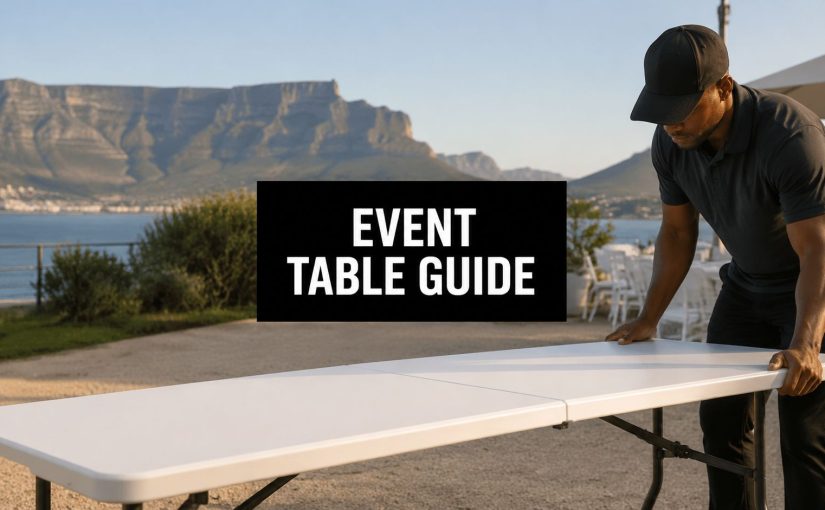
Plastic Folding Table Guide for Cape Town Events

You're standing in an empty venue. The doors are open, the floor is bare, the florist is asking where the main table will sit, and the caterer wants to know buffet lengths before they unload. In that moment, the event doesn't rest on candles, draping, or playlists. It rests on tables.

In Cape Town and the Winelands, that usually means some version of a plastic folding table. New planners often treat it like a background item. Experienced planners know better. The right table makes setup faster, styling easier, transport cleaner, and service safer. The wrong one wobbles on lawn, sags under décor, or arrives looking tired before the guests do.

That matters more here than many generic event guides admit. A wine estate in Franschhoek, a corporate function in the CBD, and a beachfront activation in Camps Bay all ask different things from the same humble table. You need to think about access roads, storage, weather, visual finish, and how the table has been used before it gets to your venue.

The Unsung Hero of Your Cape Town Event

At 7:30 on a Winelands setup morning, the room still looks forgiving. By first guest arrival, every weak decision shows. Tables that looked fine in storage start rocking on uneven floors, bowed tops show through the linen, and tired plastic makes an otherwise polished room feel hired-in.

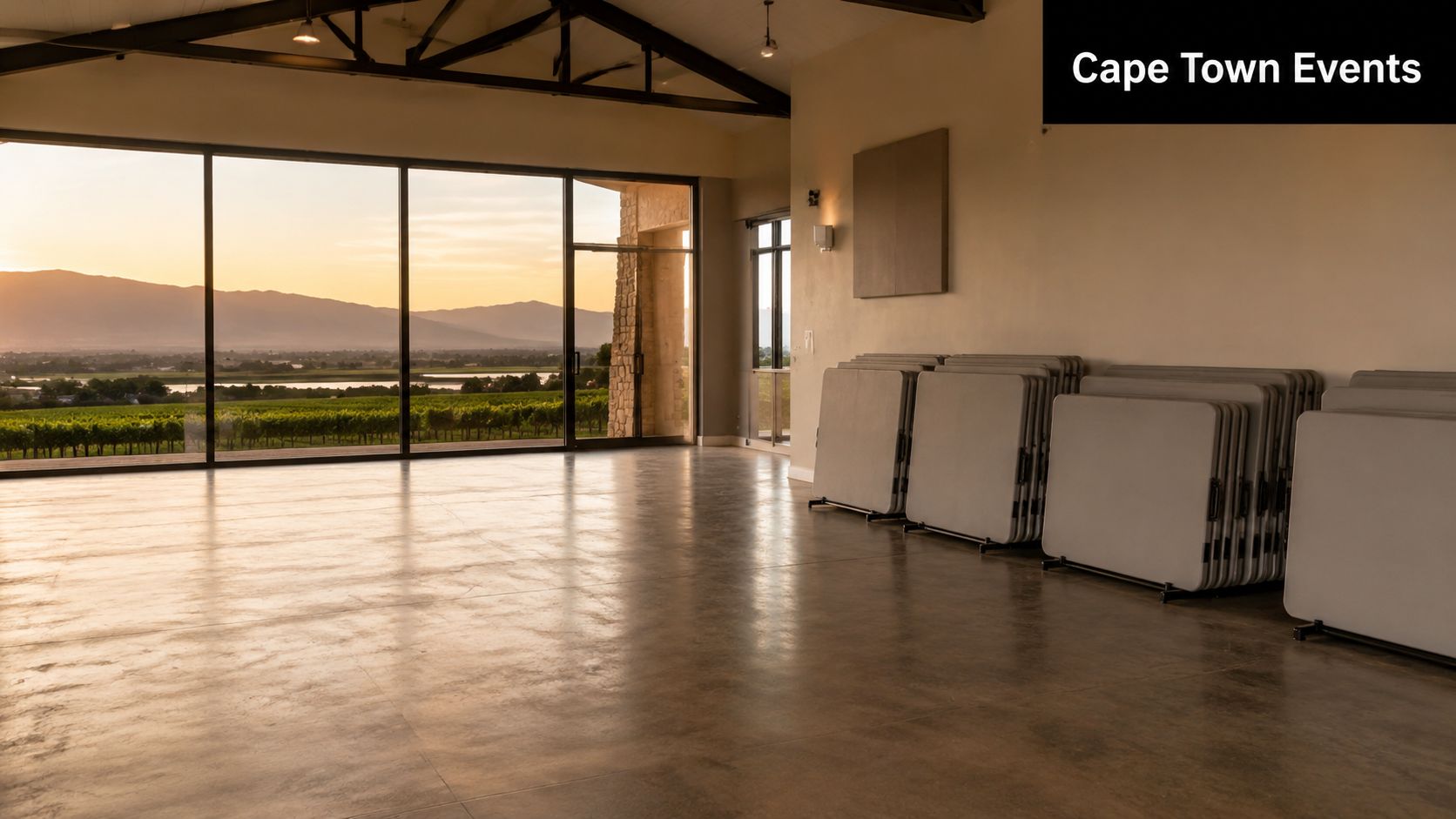
A modern event venue with a sunset view overlooking vineyards, featuring stacked plastic folding tables inside.

A plastic folding table usually gets judged as a commodity. In Cape Town event work, it is a piece of working equipment. It affects setup speed, service flow, linen finish, and guest comfort long before anyone notices the flowers or the menu cards.

What new planners often miss

Price matters, but it is not the first filter. Commercial-grade tables and light domestic tables may look similar in photos, yet they behave very differently once you add chafing dishes, glassware, floral installs, or a full coffee station.

The point many generic guides skip is long-term sun exposure. In coastal parts of the Western Cape, high UV levels harden and weaken plastic over time. A table can still fold, stack, and pass a quick visual check, but the top becomes more brittle, the surface loses its finish, and stress points around the legs and hinges become less trustworthy. That is where breakages happen. Not in the showroom. On the third load-in of a windy season.

I see this often with older stock used for outdoor functions near the Atlantic Seaboard or stored badly between summer jobs. The table is not "old" in a rental-catalogue sense. It is sun-cooked.

A table should disappear into the event. If guests notice it, something has already gone wrong.

Why this matters in the Western Cape

Cape Town stock takes punishment. Tables move from warehouse racks to trailers, then onto paving, lawn, cellar floors, and sometimes beach-adjacent sites where salt air and sun do their work. The practical question is not only whether a plastic folding table is convenient. It is whether that specific table has held up structurally after repeated UV exposure and transport.

That is one reason many planners still compare plastic stock against trestle table hire options for Cape Town events, especially for formal functions where top finish and rigidity matter. Plastic still earns its place. It is lighter to handle, quicker to stack, and often the easier choice for fast turnovers. But only if the stock is inspected properly and replaced before the surface and frame start showing fatigue.

If you want a general outdoor-use overview, Lounge Wagon's portable table guide covers the basics well. For Cape Town planners, the extra check is simple. Ask how the tables are stored, how old the stock is, and whether the tops show chalking, hairline cracks, or leg wobble after setup. Those signs matter more here than they do in inland climates.

Selecting the Right Table for Your Guests and Goals

Start with the room, not the catalogue. A planner who picks table type before looking at guest flow often ends up with awkward aisles, cramped service lanes, or a room that feels either crowded or thin.

Begin with the standard banquet workhorse

For weddings, matric dances, and corporate dining, the most common option is the rectangular banquet table. Standard plastic banquet tables typically measure 6 feet (72 inches) in length, 30 to 36 inches in width, and 30 inches in height, with seating for 8 to 10 people per table, based on KaTom's folding table size guide.

That size works because it's familiar to suppliers and easy to plan around. Caterers know the footprint. Linen suppliers know the drop. Venues can usually map it quickly.

Here's the quick reference I use when planning rectangular banquet layouts:

Plastic Folding Table Size and Seating Capacity Guide

Table Type Dimensions (Typical) Seats Best For
Rectangular banquet table 6 ft x 30 in x 30 in high 8 to 10 Weddings, matric dances, corporate dining
Narrow rectangular setup 6 ft x 30 in x 30 in high 8 Tight venues, buffet runs, training rooms
Wider rectangular setup 6 ft x 36 in x 30 in high 8 to 10 Heavier place settings, more generous table styling

Match the table to the event mood

A long rectangular run encourages linear service and efficient room planning. That's useful at formal dinners, conferences, and school functions where you need clarity and speed. It also helps when the venue has fixed architectural constraints such as pillars, cellar walls, or narrow access points.

A wider top gives your stylist more room for layered place settings, candle clusters, and centrepieces. A narrower top is easier for conversation and service reach. If guests have to lean around florals or décor to speak to each other, the styling has started working against the event.

Practical rule: Choose your table width based on what has to sit on it after the plates arrive, not what looks best in an empty venue.

Don't ignore load capacity

Load ratings matter once you move beyond crockery and cutlery. High-quality plastic folding tables from Lifetime are rated at at least 1000 lbs for Light Commercial grade, 1500 lbs for Commercial grade, and 2000 lbs for Professional grade according to Lifetime's guide to folding table weight capacity. The important phrase is distributed weight. That means weight spread across the surface, not all concentrated in one dramatic centrepiece or stacked equipment point.

For planners, that affects:

  • Buffet stations where multiple chafers, platters, and beverage dispensers sit on one run
  • Décor-heavy head tables with layered florals, candles, signage, and lighting
  • Registration desks carrying printers, branded packs, and tech items
  • Back-of-house prep surfaces where suppliers may place crates or service trays briefly

If you want a broader perspective on portable options for casual or outdoor use, Lounge Wagon's portable table guide is a useful comparison piece. And if you're deciding whether a plastic folding table is the right fit or if a more traditional trestle makes more sense for the look, this trestle tables hire guide helps frame that choice.

Renting vs Buying A Cape Town Cost Analysis

This decision is rarely about the ticket price alone. It's about how often you'll use the tables, how much control you need, and whether you want to own the headaches that come with storage and upkeep.

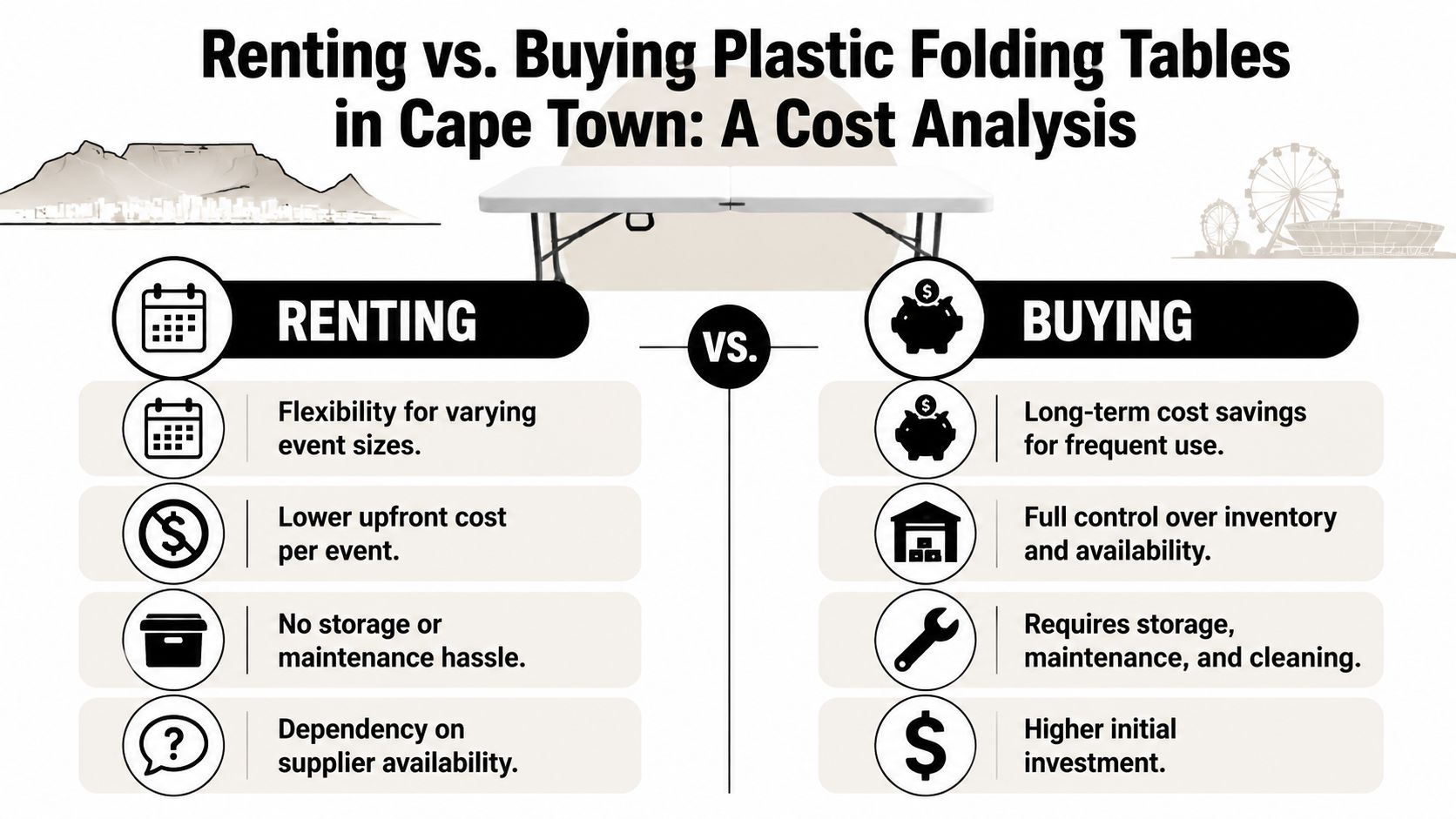
An infographic comparing the pros and cons of renting versus buying plastic folding tables in Cape Town.

Plastic folding tables are the most economical option in South Africa, with entry-level purchase prices from R350 to R700, while higher-end plastic tables can exceed R900, according to DataIntelo's market overview. The same source notes that plastic tables dominate because they're lightweight, budget-friendly, and weather-resistant.

When buying makes sense

Buying works for people who run repeated events and already have operational systems around gear. Venue owners, schools, churches, and companies with regular internal functions often benefit most. They know where the tables will live, who will clean them, and how they'll move them.

Buying also makes sense when consistency matters. If you're building your own stock, you can keep the same dimensions, finish, and condition across every event. That simplifies linen, room plans, and staffing.

But ownership adds real tasks:

  • Storage: Tables need a dry, organised place where they won't warp or get damaged in stacking.
  • Transport: You'll need the right vehicle access and handling staff every time.
  • Cleaning: Every spill, scuff, and tape mark becomes your problem.
  • Replacement planning: A table doesn't stop being a risk just because you already paid for it.

When renting is the smarter move

For once-off weddings, private milestone celebrations, and many corporate events, renting is usually the cleaner choice. You pay for use rather than stockholding, and you don't have to house equipment between events.

This is especially true in Cape Town, where event footprints vary wildly. One month you may need a handful of banquet tables for a board function. The next month you may need a much larger count for a school dinner or wedding. Renting lets the quantity change with the brief.

A rental option such as ABC Hire's tables and chair rentals guide is useful when you want the broader furniture picture rather than solving tables in isolation.

Renting suits planners who need flexibility. Buying suits operators who need constant availability and already have systems.

A practical way to decide

Use a simple filter:

  1. How often will the tables be used?
    Frequent repeat use points toward buying.

  2. Who handles transport and storage?
    If the answer is unclear, renting usually prevents trouble.

  3. How sensitive is the event to appearance?
    Premium weddings and formal functions need stock in strong condition.

  4. What happens after the event?
    Cleanup at midnight is one thing. Cleaning, drying, storing, and maintaining tables all year is another.

Mastering Event Logistics Transport and Setup

The event can still fail on the floor even if you chose the right table on paper. Logistics is where many new planners lose time. Not because the work is complicated, but because they don't sequence it properly.

Load in starts before the vehicle moves

Check the route before you load a single table. Cape Town venues can look easy online and turn awkward in real life. CBD sites may have restricted access windows. Heritage buildings often have tighter doorways and stairs. Wine estates can involve gravel, slopes, and long walks from the unloading point.

Plan these in advance:

  • Access path: Door width, lift access, surface type, and distance from vehicle to setup area
  • Holding space: A clean zone where tables can sit before placement
  • Setup order: Buffets and service tables first, guest seating after, then specialty tables
  • Weather exposure: Wind and sun can complicate outdoor setup even before guests arrive

Stack and move them properly

Dragging tables shortens their life. So does careless stacking. Keep them aligned, move them with enough hands, and avoid dropping corners onto hard surfaces. Most visible damage happens in transport and setup, not during the event itself.

If your event needs urgent turnaround or a same-day room reset, same-day furniture delivery guidance is worth reading because speed only helps if delivery and placement are organised.

If the venue has gravel, lawns, or an incline, assign one person to watch leg placement as tables open. That small role prevents most setup wobble.

On-site setup that actually works

I use a straightforward setup rhythm on outdoor and mixed-surface jobs:

  1. Place all tables closed first.
    This lets you confirm spacing before committing.

  2. Open from the focal points outward.

    Start with the head table, stage-facing rows, buffet line, or main guest block.
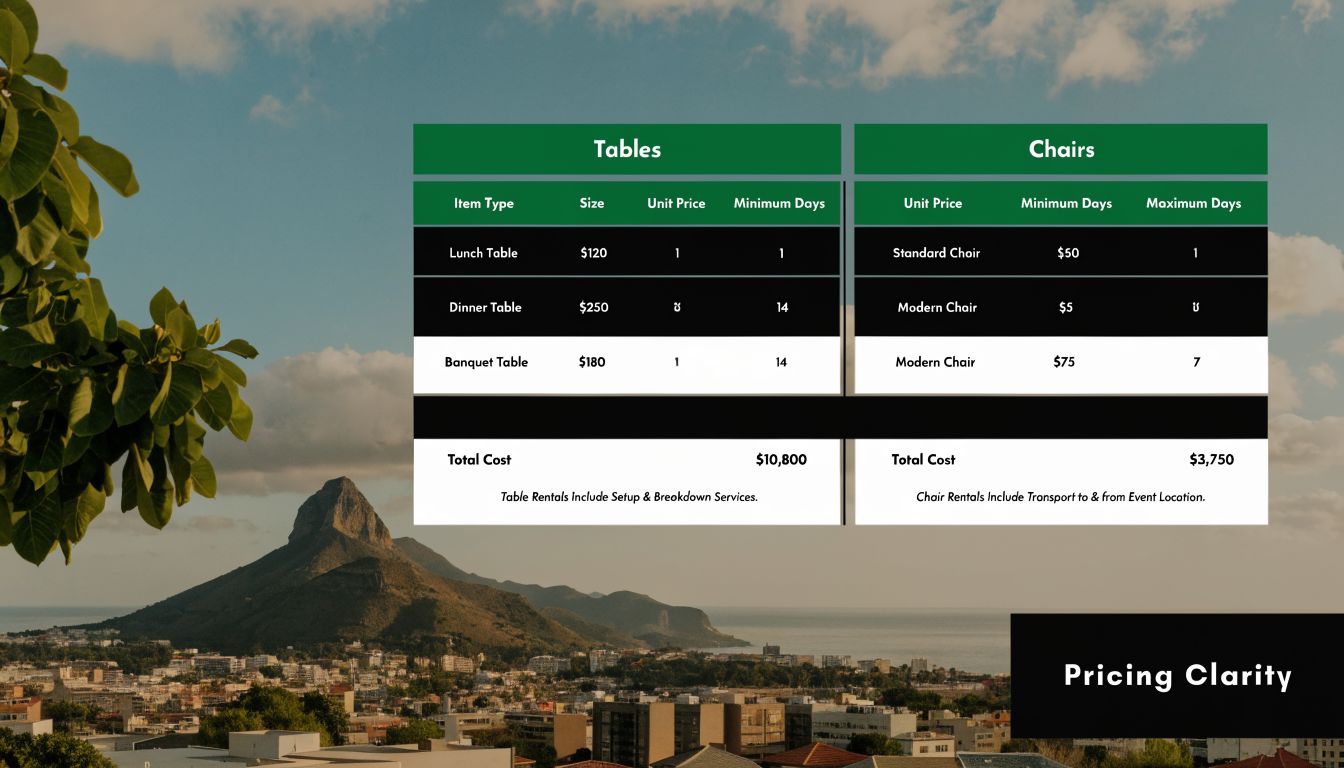
  3. Check leg locks immediately.
    Don't assume they've caught cleanly.

  4. Test the floor contact.
    Press opposite corners lightly. If the table rocks, solve it before linen goes on.

  5. Dress after the room is stable.
    Linens hide problems. They don't fix them.

Outdoor surfaces need extra attention

Lawns and marquee floors are the usual culprits. A table can look level until glassware hits it. On uneven ground, keep heavier service loads for the firmest positions and leave decorative tables for the softer patches. If one corner is unstable, reposition first. Don't build a whole setup on a bad footing.

That discipline saves time later when catering, styling, and service teams all start using the same room at once.

Styling Ideas to Elevate Your Tables

A plastic folding table doesn't need to look like a plastic folding table. That's the trick. Most guests only see the finished line, height, texture, and proportion. If those are right, the base table has done its job.

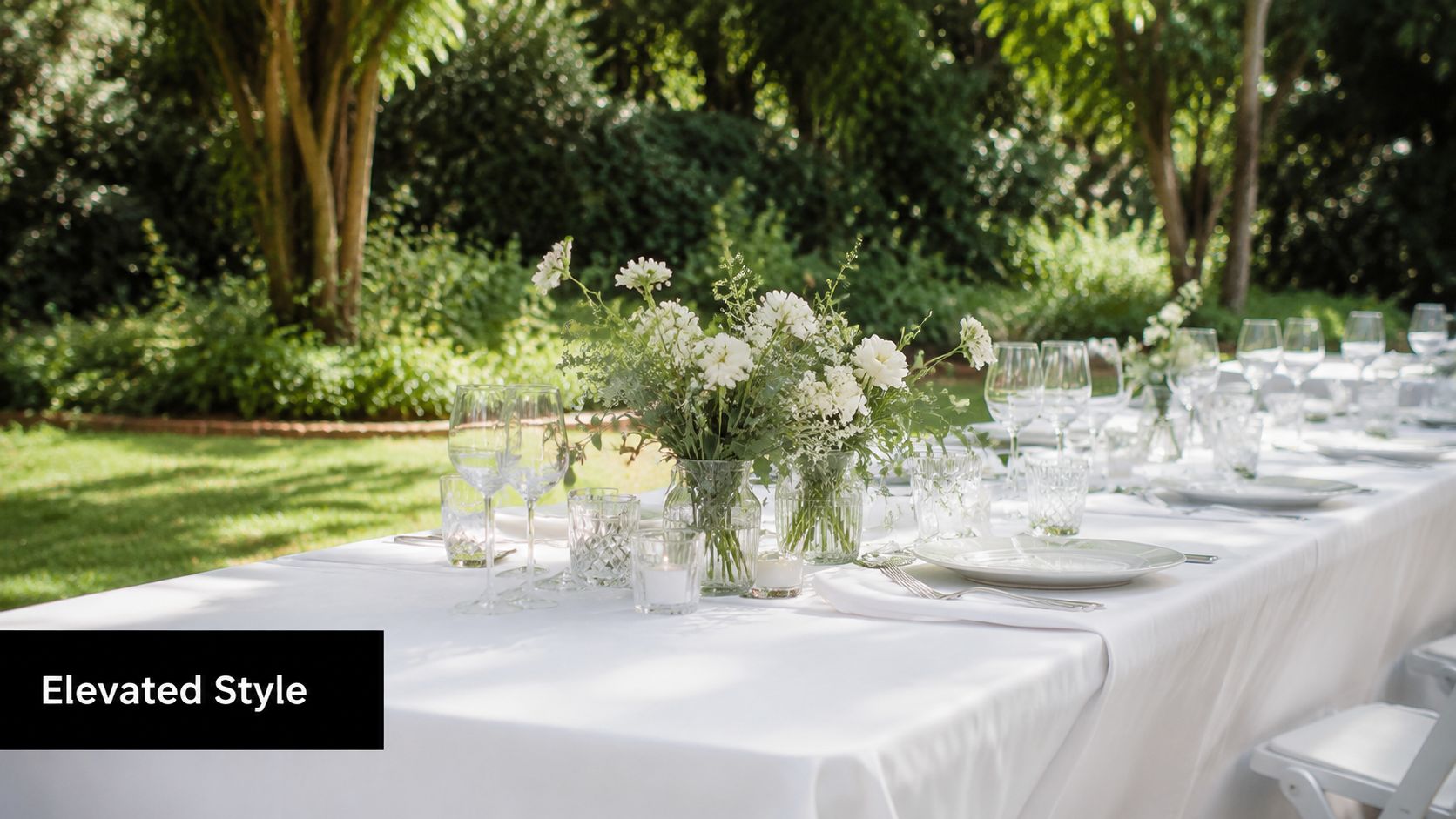
A long plastic folding table set up for an outdoor garden wedding reception with white flowers.

Start with the linen drop

The fastest way to cheapen a beautiful room is a poor linen choice. If the cloth is too short, guests clock the plastic legs and frame immediately. If it puddles badly, staff trip, and the room feels untidy.

For formal weddings, I prefer a fuller drop that hides the structure completely. For modern corporate work, a cleaner fitted fall often suits the brief better. Spandex can work for high-tempo activations and casual launches because it stays tight and neat, but it can look too utilitarian for softer Winelands styling.

Use linen to fix the silhouette, then add interest through texture:

  • Soft layered runners for vineyard receptions
  • Crisp neutral cloths for conferences and brand events
  • Textured overlays when the room needs warmth without visual clutter
  • Napkins and placemats to introduce colour without overloading the centre line

Build décor with stability in mind

Commercial-grade plastic tables can be structurally strong. Some feature a 2-inch tabletop thickness that helps prevent sagging, as noted in the TitanPRO specification sheet. That matters when you're carrying more than flowers and cutlery.

If you're planning heavy styling, think in layers, not in one concentrated mass. Spread decorative weight along the run. Use multiple lower arrangements instead of one oversized statement piece if the setup doesn't need vertical drama.

Tall centrepieces impress in photos, but low and well-spaced arrangements usually serve the room better. Guests can talk, staff can reach, and the table carries the load more evenly.

What works for different event types

For Winelands weddings, softer materials and a restrained centre line usually perform best. Let the view do some of the work. A clean runner, clustered candles, seasonal florals, and proper glassware often beat overbuilt décor.

For corporate functions, symmetry matters more. Use repetition, branded colour cues, and disciplined place settings. Registration and gift tables should feel as considered as dining tables, especially at launches and year-end functions.

For school formals and matric dances, durability is part of styling. Choose covers that won't slip easily and décor that can handle guest movement, photos, and last-minute room changes.

Maintenance and a Critical Cape Town Weather Warning

A table can survive one summer wedding in Franschhoek and still be the wrong table to trust at a windy beachfront corporate function six months later. In Cape Town, sun exposure ages plastic stock faster than many planners expect, and the warning signs are easy to miss until a top starts flexing under load.

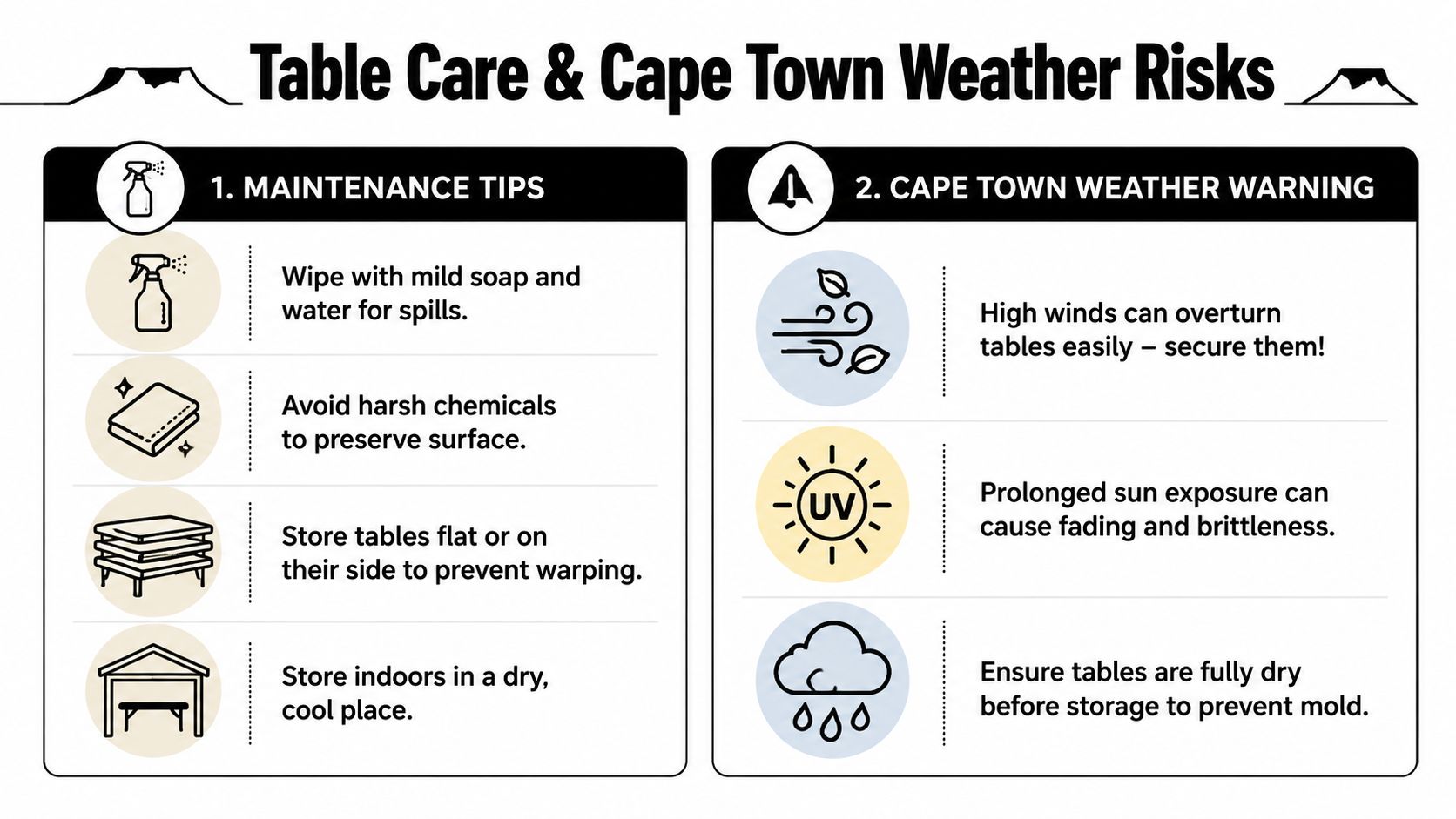
An infographic titled Table Care and Cape Town Weather Risks detailing maintenance tips and weather-related precautions.

Basic care that extends useful life

Good maintenance is simple. It just needs to happen every time.

Wipe spills off early, wash with mild soap and water, dry the table before folding, and store it indoors away from direct sun. Leaving stock stacked in a yard, on an open loading bay, or under a clear roof still exposes it to heat and UV. That shortens service life, even if the tables only come out for events on weekends.

A few checks make a real difference:

  • Avoid harsh chemicals: Strong cleaners can dry the surface and speed up wear.
  • Store without twisting the frame: Keep tables flat or upright in a way that does not load one corner or strain the legs.
  • Check hinges and locks regularly: Folding points loosen first because they carry repeated setup stress.
  • Inspect tops in daylight: Fine cracks and surface changes often disappear under venue lighting.

The Cape Town problem many buyers miss

High UV exposure is the issue generic table guides rarely explain properly. In coastal conditions, plastic does not just fade. Over time it can dry out, lose some flexibility, and develop fine surface cracking. Once that starts, the table may still look acceptable from a distance while carrying weight less confidently than it did when new.

That matters in the Western Cape. The same stock often rotates between wine farm lunches, school functions, market days, outdoor ceremonies, and sea-facing venues. Constant sun, heat, and salt-heavy air are harder on plastic than occasional indoor use.

Industry practice reflects this. Reputable hire companies inspect older plastic tables for brittleness, micro-cracking, surface chalking, frame looseness, and any change in stiffness before sending them back out. If a top feels dry and rigid, or flexes unevenly, it should not be trusted for buffet service, beverage stations, AV support, or heavy styling.

In Cape Town conditions, colour fade is a cosmetic issue. Fine cracks, a rough or chalky surface, and a top that feels more brittle than it used to are the warning signs that matter.

What to ask before hiring or using stock

If you are renting, ask how the tables are stored between jobs, how old the outdoor stock is, and what takes a unit out of circulation. Those answers tell you more than a quick glance during delivery.

If you own tables, inspect them before any job that puts real weight on the top. Buffet lines, gift stations, coffee service, equipment check-in, and layered décor all expose weakness quickly. I would also press down across different points of the tabletop, not just the centre. Uneven flex usually shows up before obvious failure.

Wind needs its own check. A sound plastic folding table can still shift, creep, or lift in exposed conditions if the setup is poor. Position it on level ground, keep weight low and balanced, and treat outdoor placement as part of the safety plan, not an afterthought.

Your Event Table Foundation Checklist

A planner arrives at a Franschhoek estate for setup and finds that one buffet table looks fine at first glance, then gives a little more flex on one corner than it should. That is how table problems usually show up in Cape Town. Not as dramatic breakages, but as small signs that the stock has spent too many summers in coastal sun and salt-heavy air.

Use this final check before you approve any plastic folding table order, especially for outdoor weddings, corporate functions, and mixed-use event layouts where tables carry real weight for hours.

Final checks before you lock the order

  • Start with the actual job: Dining, buffet, registration, gifting, display, production support, or back-of-house prep all place different demands on the table
  • Match size to movement: Confirm that guest circulation, service aisles, waitron access, and venue pinch points still work once chairs, linen, and service equipment are in place
  • Choose based on use frequency: Renting suits occasional events and variable layouts. Buying only makes sense if you can store, transport, inspect, and retire stock properly
  • Check the access route, not just the venue: Cape Town city venues, wine estates, and beachfront sites often have stairs, gravel, narrow doors, or long trolley runs that change what is practical
  • Keep styling load realistic: Heavy centrepieces, layered décor, urns, and beverage dispensers can push a light plastic table past what it should carry safely
  • Inspect more than the surface: Test leg locks, hinge points, wobble, uneven flex, and any chalky or brittle feel in the top
  • Treat UV wear as a safety issue: In Cape Town conditions, fading is cosmetic. Brittleness, fine cracking, and loss of stiffness are the warning signs that should stop a table from going onto the floor

Good table decisions rarely get noticed by guests. Poor ones show up fast during service, in wind, or when weight sits on one weak section for too long.

Plastic folding tables still earn their place because they are practical, easy to move, and cost-effective for many event formats. They just need to be chosen with more care than many new planners expect. In this market, sun exposure and age matter almost as much as size.

Reliable planners check what the table will carry, where it will be used, and whether the condition still matches the job. That habit prevents shaky coffee stations, unstable gift tables, and the kind of avoidable setup problems that make an event feel poorly run.

If you need event furniture for a Cape Town, Stellenbosch, Franschhoek, or Paarl function, ABC Hire can help you source practical table and event rental solutions for weddings, corporate functions, school events, and private celebrations.

Same Day Furniture Delivery: Your Event Rescue Guide

An hour ago, your event plan was stable. Then the guest count changed, a supplier went quiet, or the venue asked for a layout adjustment that suddenly needs more cocktail tables, lounge seating, LED cubes, or climate control on site today.

That's where same day furniture delivery stops being a convenience and becomes an event rescue tool.

In Cape Town and the Winelands, late changes are common. Wedding timelines shift. Brand activations expand. A matric dance committee realises the original setup won't carry the room. When that happens, the difference isn't just who has stock. It's who can pick, load, route, communicate, arrive, unload, and place the right items without turning your event day into a second crisis.

The Lifesaver Your Event Didn't Know It Needed

Many believe same day furniture delivery is only for panic moments. In practice, it's also how experienced planners protect an event when real life gets in the way of the perfect timeline.

A florist runs over schedule and your setup window shrinks. A venue opens a second area that now needs soft seating. A corporate client adds a VIP zone at lunchtime for that evening's function. These are normal event problems. They only feel catastrophic when the delivery process is slow, vague, or built for residential drop-offs instead of live events.

Event work has always rewarded fast decisions, but now delivery speed affects buying behaviour much more directly. The global same-day delivery market is projected to reach $56.6 billion by 2031, and 62% of customers make their final purchase decision based mainly on delivery speed, while 75% of younger buyers see same-day delivery as essential according to Capital One Shopping's same-day delivery statistics. For event furniture, that urgency is even sharper because the item isn't a nice-to-have. It may be the seating plan, the bar area, or the visual centre of the room.

Practical rule: If the furniture affects guest flow, service flow, or the event look in a visible way, treat delivery as part of event operations, not as a basic courier job.

That's why experienced coordinators usually care less about flashy promises and more about process. They want realistic cut-offs, access planning, setup coordination, and a team that understands pressure. If you work in events, this broader guide to understanding event professionals explains why logistics partners need to fit the pace and communication style of the industry.

If you're still deciding what to rent in the first place, it also helps to review practical advice on renting furniture for events before the day gets tight.

Your Same Day Delivery Booking Timeline

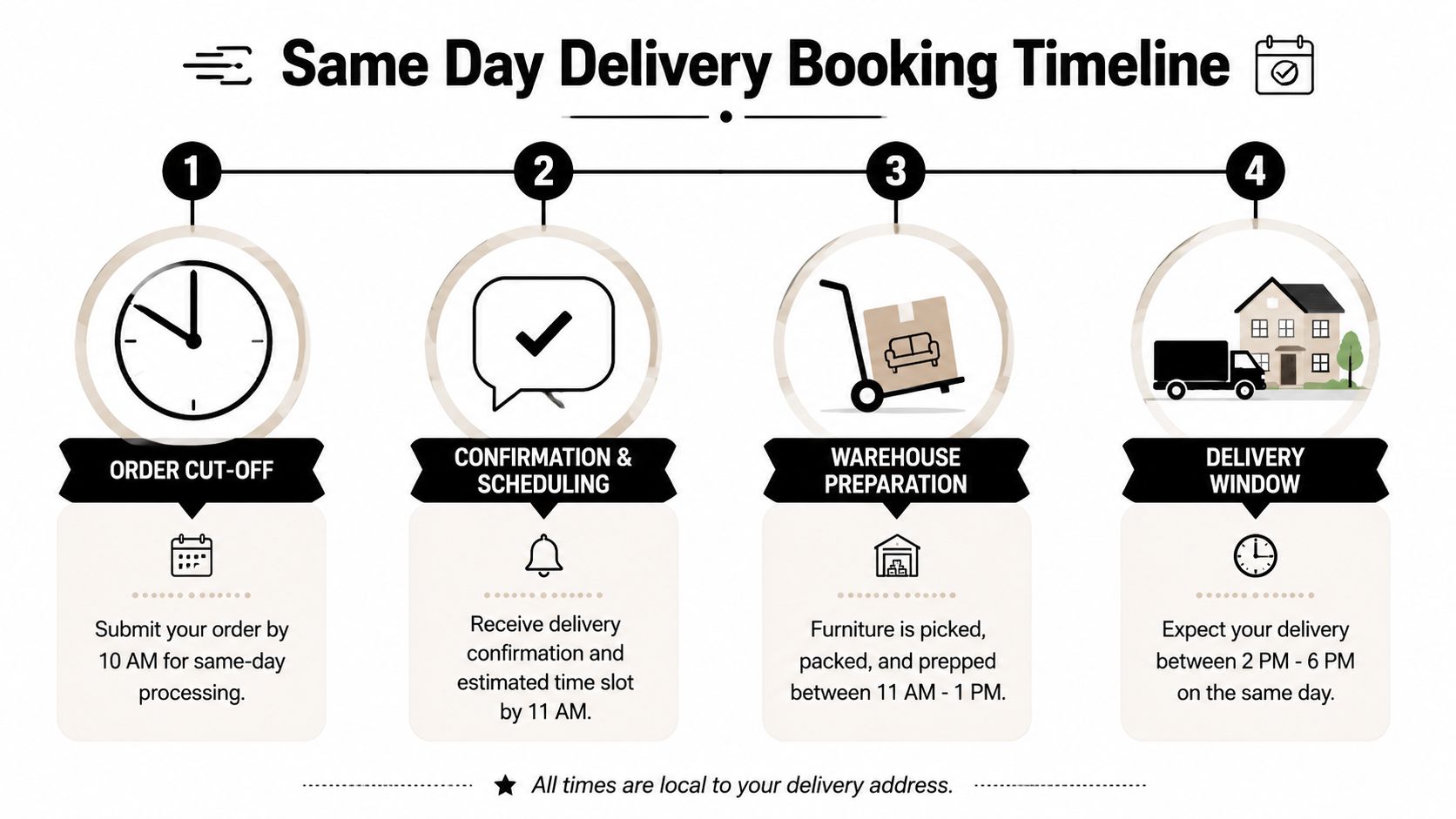
Same day furniture delivery works best when everyone is honest about time. The earlier you book, the more options you keep. The later you leave it, the more the job depends on stock location, crew availability, route congestion, venue access, and whether your order is a straightforward single-drop or a more complex event load.

Here's the ideal booking rhythm for an ordinary same-day request:

A flowchart infographic titled Same Day Delivery Booking Timeline showing four steps for furniture orders.

What a realistic timeline looks like

For central Cape Town venues, a morning booking gives the operations team the best chance to confirm stock, assign the correct vehicle, and brief the crew properly. The useful sequence is simple: confirm the order early, lock the venue details, pick and stage the furniture, then dispatch into a delivery window that still leaves margin for setup issues.

For Stellenbosch, Franschhoek, and Paarl, the booking window needs to be treated more carefully. Travel time is only one part of the equation. The primary risk sits in loading time, access at the venue, and the fact that event furniture often isn't one item. It's tables, chairs, bar units, LED pieces, decor support items, and sometimes powered equipment that must arrive together and in workable order.

City venues versus Winelands venues

A Cape Town city-bowl hotel function is usually easier to rescue on the same day than a multi-stop wedding spread across the Winelands. Dense urban work has its own challenges, but the route is shorter and the fallback options are often better.

By contrast, Winelands jobs punish loose planning. If the order is confirmed late, and the team still needs to clarify service gates, gravel access, stair carry, or timed venue entry, the “same day” part becomes much harder than clients expect.

A useful benchmark is demand itself. The market for rapid delivery keeps growing because clients increasingly buy based on speed, as noted earlier. For event rentals, that means the best providers build their day around disciplined booking windows, not around vague promises. That same urgency is why planners often secure foundational items first, then fill gaps later with practical pieces such as event tables and chairs for fast layout changes.

If you need speciality pieces and installation-sensitive items on the same day, book the non-negotiables first and leave decorative add-ons for a second decision. That preserves the delivery slot for what actually keeps the event functional.

When to be cautious

Treat afternoon requests carefully, especially if the venue sits outside Cape Town, needs multiple unloading points, or requires placement in several areas. Same day is still possible in some cases, but the conversation should shift from “Can you deliver today?” to “What can be delivered today reliably?”

That distinction matters. A smaller confirmed order that arrives correctly is always better than an oversized rushed order that creates confusion on site.

The Information You Must Have Ready to Book

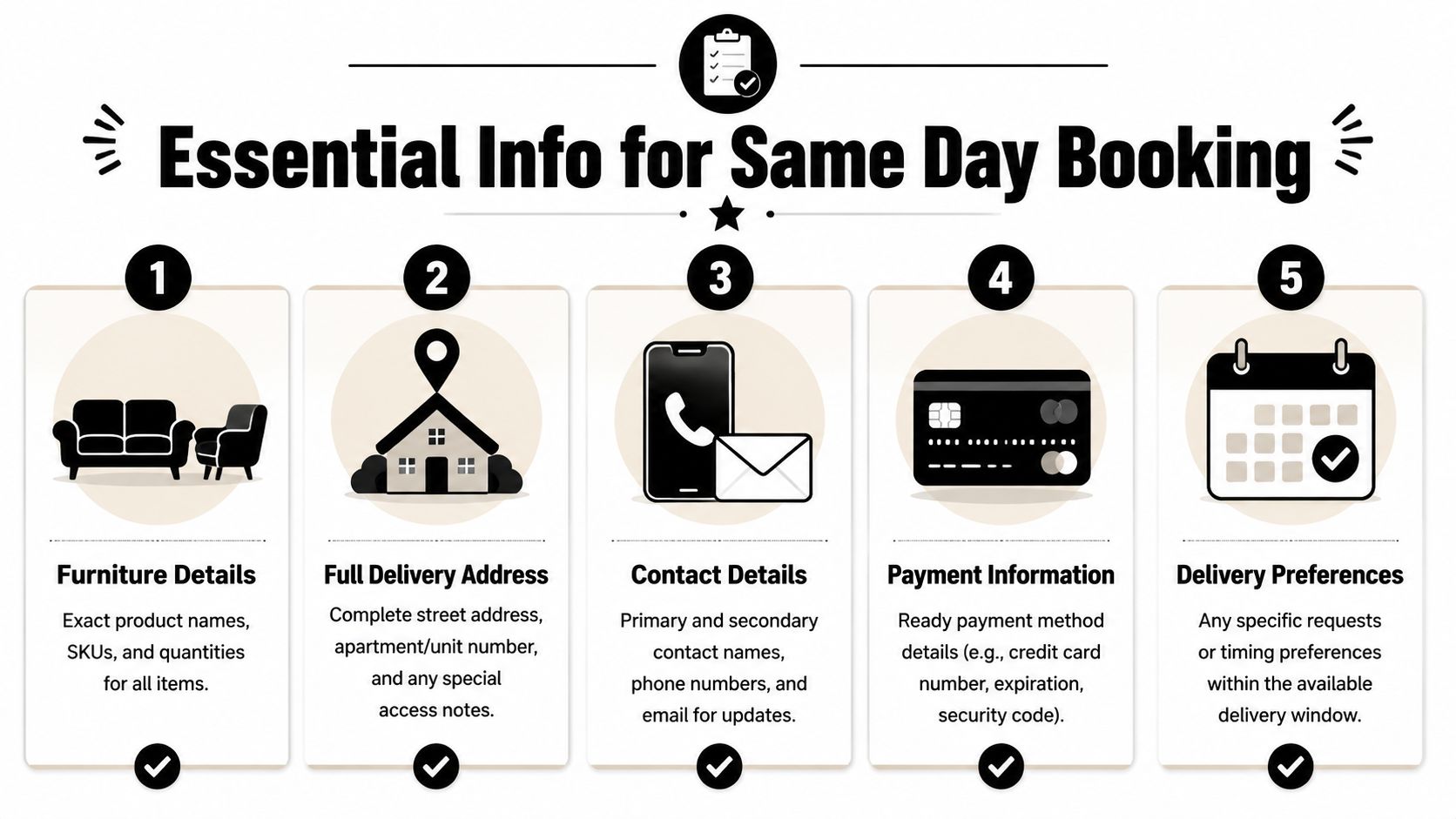
The fastest same day furniture delivery calls are never the shortest. They're the clearest.

When a planner has the right details ready, the operations team can move from enquiry to dispatch without wasting the valuable early part of the day on follow-up messages. The missing details are almost always the same: unclear quantities, vague addresses, no on-site contact, or no explanation of access restrictions.

A helpful checklist infographic titled Essential Info for Same Day Booking, outlining five key requirements for furniture delivery.

The booking details that save time

Have these ready before you call or send a WhatsApp:

  • Exact items and quantities. Don't say “some couches and a few tables”. Say “6 cocktail tables, 24 Tiffany chairs, 2 LED cubes, 1 slush machine”.
  • The full delivery address. Include venue name, road, suburb, and the exact entrance the driver must use.
  • Access notes. Service gate, loading bay rules, stairs, lift limits, narrow passages, gravel roads, cellar entrances, or security check-in.
  • Your on-site contact. One person with a working phone who can answer immediately during the delivery window.
  • Required placement. Reception area, dance floor edge, outdoor terrace, VIP lounge, stage left, courtyard bar, or upstairs holding room.
  • Power requirements. Especially important for LED furniture, slush machines, and climate control units.
  • Collection expectations. Same-night collection, next-day pickup, or holdover for a second event day.

Speciality items need better briefing

This matters even more for non-standard event stock. An industry survey found that 78% of Cape Town event planners say same-day options often exclude speciality rental items like LED tables and bean bags, and only 12% of rental companies confirm post-2 PM same-day feasibility for multi-location events in the Winelands. That tells you two things. First, standard delivery systems often struggle with event-specific gear. Second, vague late-afternoon requests for complex multi-venue setups are usually where plans break.

If your event depends on LED furniture or climate control, say so immediately. Those aren't “add-ons” from a logistics perspective. They affect loading, handling, power checks, and placement on arrival.

A same-day booking fails fastest when the client thinks in product names and the logistics team needs operational details. Give both.

The access details people forget

Some of the most expensive delays come from small omissions. A courtyard gate is locked. The service lift is booked by caterers. The venue only accepts supplier vehicles at one side entrance. The delivery team arrives with the right stock and loses time on a preventable site issue.

Use this quick pre-call check:

Booking detail What to confirm Why it matters
Furniture list Names and quantities Prevents stock confusion
Venue access Gate, lift, stairs, parking Avoids unloading delays
Site contact Name and phone Speeds up handover
Placement plan Exact room or zone Reduces double handling
Equipment needs Power and surfaces Protects specialty items

The more specialised the order, the less room there is for assumption.

Understanding Same Day Pricing and Fees

Same day furniture delivery costs more than a standard scheduled run because the team is paying for compression. The stock must be available now, the warehouse must prioritise the order, the vehicle must be assigned around existing jobs, and the route has to absorb less flexibility.

That doesn't make it overpriced. It makes it operationally expensive.

A close-up shot of a hand holding a blue Visa credit card over a payment terminal reader.

What usually shapes the quote

A proper same-day quote usually combines a few moving parts:

  • The rental itself. What you're hiring, in what quantity, and for how long.
  • The fast-turn service component. This covers the urgency and reprioritisation of labour and dispatch.
  • Distance and route complexity. Cape Town CBD, southern suburbs, Stellenbosch, Franschhoek, and Paarl don't place the same demands on the vehicle schedule.
  • Access and handling. White-glove placement, stairs, lift dependency, narrow access, or careful handling for upholstered or powered pieces.
  • Collection timing. Late-night strike, next-morning pickup, or staggered collections can affect the final amount.

Why clients still choose it

Consumer behaviour explains a lot here. 76% of consumers choose same-day delivery when it's free, and 75% choose it when they need the item urgently according to Market.us same-day delivery statistics. Event clients live in that second category. If the event opens in a few hours, the real comparison isn't between premium delivery and cheap delivery. It's between premium delivery and a room that looks unfinished, under-seated, or unworkable.

For planners building budgets, it helps to think in scenarios, not just line items. A useful way to frame distance and handling variables is to review how transport calculators separate labour, access, and route factors, such as the Emmanuel Transport cost calculator. The figures won't match an event rental quote, but the logic does.

What's worth paying for

Pay for certainty where the event is exposed.

If the furniture shapes guest arrival, speeches, catering flow, or branded presentation, the premium usually makes sense. If the item is optional decor and the venue can function without it, then a next-day or scheduled delivery may be the smarter choice.

The best quotes don't just tell you the price. They show you what level of risk and service the price is buying down.

Ask direct questions. Is placement included? Is there a waiting-time risk at the venue? What happens if access changes? Clear answers matter more than a low headline number.

Your On-Site Venue Access and Setup Checklist

The delivery can be perfectly planned and still go wrong in the last ten metres.

That's usually not a transport problem. It's a venue readiness problem. A team arrives on time, then loses minutes to locked gates, unclear room allocations, delayed sign-in, absent contacts, or furniture that has to be moved twice because no one confirmed final placement.

In the Cape Town region, manual routing starts to fail badly once delivery volume gets high, leading to a 30% rise in customer status enquiries and a 25% higher risk of delayed setup for critical event furniture. That's exactly why professional delivery teams rely on disciplined routing and communication. Your side of the job is simpler. Make the venue easy to receive.

The checks that prevent avoidable delays

Use this table before the truck leaves the warehouse, not after it arrives.

Check Point Verification Status Notes
Main contact on site confirmed Name and working mobile number
Access gate or loading bay cleared Include security instructions
Venue accepted delivery window Note any supplier restrictions
Path to setup area clear Remove obstacles and parked vehicles
Lift or stair route checked Flag narrow turns or low clearance
Power points identified Important for LED and climate units
Placement plan signed off Room-by-room or zone-by-zone
Receiving staff available Someone must guide placement

Where setups usually go sideways

These are the problems teams see again and again:

  • No one is waiting at the venue. The truck arrives, calls go unanswered, and unloading stalls.
  • The route inside the venue isn't ready. Decor stock, crates, or catering prep block the path.
  • Placement instructions change during unloading. Every change means more handling and more time.
  • Power hasn't been checked. LED furniture and climate control are delivered correctly, then sit idle while the venue scrambles for extension access.

If you're managing a larger function, pair this with a broader event planning checklist template so delivery, decor, catering, and technical teams aren't all solving the same problem separately.

Safety and handover matter too

A rushed setup can create damage, confusion, and liability. Basic venue-readiness discipline helps with that. For a practical outside perspective on crowd movement, access control, and supplier coordination, these best practices for event safety are useful reading.

Keep one person in charge of receiving furniture. Not three. Not a WhatsApp group. One person.

When that person can answer access questions, sign off placement, and escalate issues immediately, the delivery team can keep moving and your event stays on schedule.

Frequently Asked Questions for Event Emergencies

Late changes don't arrive one at a time. They stack. Traffic, weather, venue calls, supplier timing, and client revisions often hit in the same afternoon. These are the questions that usually come up when the pressure is highest.

An infographic titled Emergency Delivery FAQs detailing instructions for urgent, damaged, or missed furniture deliveries.

Can same day still work during peak wedding season?

Yes, but only if the plan acknowledges seasonal road pressure. A traffic analysis showed that 65% of same-day event furniture deliveries failed during November to January because of 45-minute average delays on the R300 between Cape Town and Stellenbosch. That doesn't mean same day is impossible. It means planners should avoid building their whole event around a best-case road assumption during peak season.

If your venue sits in Stellenbosch or beyond, ask for an earlier dispatch window, simplify the order, and have a fallback layout that can open the event if one non-critical item arrives later than planned.

What about two locations in one day?

It can work for brand activations, content shoots, and split-site corporate events, but only if the order is planned as a multi-drop job from the start. The mistake is adding the second venue after dispatch. That changes load order, route timing, and handover sequencing.

When you know two locations are involved, list which stock must land first and which stock can follow later. “Everything everywhere as soon as possible” isn't a workable instruction.

Can speciality items still be delivered quickly?

Sometimes yes, but they need stronger briefing than standard tables and chairs. LED furniture, bean bags, slush machines, and climate control units all create different handling and placement requirements. If those pieces are essential to the event concept, say so up front and make sure the site is ready to receive and power them.

What should I do if the venue changes access rules on the day?

Call immediately and give one clean update. New gate, changed check-in point, temporary road closure, revised contact person, or delayed supplier entry. Don't send fragments across multiple messages. One complete update helps dispatch make a proper decision fast.

The fastest rescue is usually the clearest message, not the loudest one.

Which areas need the most realistic planning?

Cape Town jobs usually move faster if the venue has proper loading access. Stellenbosch and Franschhoek need more buffer during wedding season. Paarl often needs careful heat and timing planning for powered equipment and outdoor setups. Across all areas, same day works best when the order is tight, the site contact is reliable, and the placement plan is already decided before the truck leaves.


If your event can't wait, ABC Hire is built for exactly these high-pressure moments. From LED furniture and lounge pieces to tables, chairs, slush machines, and climate control equipment, the team supports fast-turn event rentals across Cape Town, Stellenbosch, Franschhoek, and Paarl. Reach out early, send complete venue details, and give your same day furniture delivery the best chance to arrive smoothly and set up right.

Your Guide to the Vintage Cocktail Table in Cape Town

You're probably looking at a floorplan right now and realising the same thing every Cape Town planner realises sooner or later. The room has enough volume, the brief calls for “mingling”, the bar will be busy, and yet the space still won't work unless guests have somewhere elegant to land a drink, a canapé, or a quick conversation.

That's where the vintage cocktail table earns its keep.

In the Cape and the Winelands, these tables do more than fill gaps. They shape movement between the bar, lounge pockets, harvest table, dance floor, and photo moments. Get them right, and the event feels considered. Get them wrong, and guests perch awkwardly on chairs, crowd service points, or abandon beautiful lounge areas because nothing there supports drinks service.

What Defines a Vintage Cocktail Table for Events

A vintage cocktail table earns its place on an event floor by doing two jobs at once. It gives guests a proper surface for a drink and a canapé, and it brings character into the room without demanding a full seating setup.

For events, function comes first. Guests need somewhere to rest a glass while they greet, chat, check a place card, or wait for the next round of service. In practice, that means a cocktail table must be stable, easy to approach from all sides, and sized for standing use or for a lounge grouping where people sit briefly rather than settle in for dinner.

The history matters less than the behaviour it supports. Earlier cocktail tables were tied to more relaxed social entertaining, rather than formal parlour furniture, and that logic still holds on a modern event floor. What planners hire as “vintage” is usually a table with older design cues, not necessarily an antique with collector value.

That distinction matters in Cape Town and the Winelands, where hire stock has to survive gravel drives, lawn installs, cellar doors, and fast turnarounds between venues.

Practical traits that matter on site

A good vintage cocktail table usually has four qualities:

  • Useful surface area: enough room for drinks, napkins, and a small styled element without forcing guests to shuffle everything around
  • Compact proportions: large enough to serve a group, small enough to keep walkways, bar queues, and service routes clear
  • Visual warmth: timber, cane, marble-look tops, brass accents, turned legs, or a softly worn finish that reads collected rather than new
  • Flexible placement: suitable beside a lounge cluster, near a bar satellite, on a veranda, or under a stretch tent

I treat durability as part of the brief too. A beautiful marble-top piece may look perfect in a studio photo, but on an uneven wine farm lawn it can be heavy to level, slower to place, and riskier in wind if the base is narrow. A timber or metal-framed option often gives better value for outdoor use.

What “vintage” usually means in the local hire market

In local styling terms, vintage usually describes a mood. It suggests age, patina, detail, and a little soul. It rarely means rare.

That is often the smarter choice. True antiques can be delicate, expensive to replace, and less consistent in height or finish across a larger order. For a 40-person private party, that can be charming. For a 180-guest wedding in Franschhoek with tight install windows, consistency usually wins.

The best rental pieces sit in the middle. They look layered and distinctive, but they are still practical for transport, setup, and repeated hire. That balance matters more than provenance on event day.

For drinks-led events, I also style the tabletop in line with the bar menu. If the brief includes botanicals, citrus garnishes, or refined G&Ts, it helps to review a few polished Craft gin drinks so the glassware, garnish vessels, and tabletop styling feel connected.

Where these tables work hardest

Vintage cocktail tables perform well in spaces built around movement and short stops, not long seated moments. In this region, that usually includes:

  • wedding pre-drinks on lawns and courtyards
  • corporate mixers in hotel foyers and function rooms
  • cellar tastings and brand launches
  • veranda spill-out areas at Winelands venues
  • reception zones for milestone birthdays and anniversaries

They are less useful in a fully seated dinner where every guest already has generous table space. Add too many, and the room starts to feel crowded, especially in heritage venues with narrow passages or uneven floor levels.

A simple test works every time. If guests need attractive, practical landing points between the bar, lounge areas, and main event spaces, a vintage cocktail table is part of the event infrastructure, not just décor.

Popular Vintage Styles and How to Match Your Theme

Not every vintage cocktail table says the same thing. Some sharpen a room. Some soften it. Some make a corporate event feel less corporate, and some make a wedding feel more grown-up in seconds.

The mistake I see most often is choosing “vintage” as a broad category and stopping there. Style only works when it supports the venue, the florals, the bar finish, the linen palette, and the tone of the guest list.

Here's the visual shorthand I use.

A visual guide illustrating three popular vintage cocktail table styles: Art Deco, Mid-Century Modern, and Industrial Chic.

Art Deco for glamour and evening polish

Art Deco works when the event wants drama without clutter. Look for geometric lines, mirrored or glass elements, metallic trim, black lacquer tones, smoked finishes, and confident symmetry.

This style suits:

  • black-tie weddings
  • gala dinners with a lounge extension
  • luxury launches
  • New Year's events
  • formal matric dance after-parties

Art Deco tables do best when the rest of the room is restrained. If the stage set, dance floor vinyl, floral work, and candle styling are all competing, the effect becomes theatrical in the wrong way.

Mid-Century Modern for tailored sophistication

This is often the safest and smartest option for Cape Town planners because it bridges old and new so well. Mid-Century tables usually bring clean lines, timber warmth, tapered legs, and a calm silhouette that doesn't dominate a room.

They're especially effective at:

Style cue Best fit
Teak or walnut tones Corporate dinners and media launches
Clean rectangular tops Lounge clusters and hotel foyers
Minimal ornament Modern weddings with soft florals
Warm wood finish Venues that need visual softness

Mid-Century is excellent when the venue architecture already has personality. Heritage buildings, cellar spaces, and white-walled reception rooms all benefit from furniture that adds character without visual noise.

A good Mid-Century table rarely shouts for attention. It makes everything around it look more resolved.

Rustic and industrial for wine farms and relaxed luxury

Cape planners often confuse rustic with rough. The better version is edited rustic or industrial chic. Think reclaimed wood, dark metal, slightly weathered finishes, and sturdy bases that can sit comfortably against stone, lawn, concrete, or timber decking.

This style works best for:

  • Winelands weddings
  • harvest-table receptions
  • cellar tastings
  • outdoor birthdays
  • urban warehouse-style launches

What doesn't work is pairing a heavy industrial table with overly delicate seating or a very formal, glossy bar build. The room starts speaking in two different accents.

Ornamental traditional for romantic events

There's also a softer vintage category that leans traditional. Curved legs, carved detail, aged brass tones, marble-look tops, and antique-inspired timber finishes fit beautifully into garden weddings, manor-house venues, or candlelit indoor receptions.

Use this route when you want:

  • romance over edge
  • softness over geometry
  • layered décor over minimalism

The trade-off is practical. Highly ornate pieces can disappear if the styling is too dense, or look fussy if they're dropped into a very sleek venue. They need the right company.

Matching style to event mood

If you're stuck between options, don't ask which table is prettiest. Ask which one helps the room tell the truth about the event.

  • For polished corporate: Mid-Century usually wins.
  • For glamorous evening events: Art Deco carries the mood.
  • For Winelands texture: Rustic or industrial sits naturally.
  • For romantic weddings: Traditional ornamental shapes feel effortless.

That decision alone solves half the styling puzzle.

Sizing and Layout Strategy for Cape Town Venues

At this stage, planning either becomes elegant or expensive. A vintage cocktail table might look like a small furniture decision, but layout errors ripple across catering, guest movement, and setup time.

The planning benchmark many teams use is simple: 1 vintage cocktail table per 8 to 10 guests for general mingling, or 1 table per 4 to 6 guests if substantial food is served, as reflected in the event-planning framework shown below. Treat that as a starting point, not a law. Guest behaviour matters just as much as headcount.

A four-step infographic showing how to plan event sizing and cocktail table layout for Cape Town venues.

Start with guest behaviour, not just numbers

A wedding canapé hour needs a different layout from a conference drinks reception. So does a brand launch where guests are filming content, carrying gift bags, or moving between activation stations.

Use these questions first:

  1. Will guests stand for long periods?
  2. Are they balancing food as well as drinks?
  3. Is there a central bar, or multiple service points?
  4. Will older guests or family groups want nearby seating?
  5. Does the event move between indoors and outdoors?

If the answer to several of those is yes, you'll usually need more landing surfaces, not more decorative furniture.

Size affects logistics more than planners expect

These aren't little side tables. Representative vintage-style examples include 46" W × 26" D × 19" H at 71.9 lb and 50" W × 30.25" D × 19.75" H at 85 lb, according to Furniture Pick's product specifications. In metric terms, that means some vintage-style cocktail tables are over 1.2 metres wide and weigh up to 40 kg, which has direct consequences for transport, labour, and placement.

That matters in the Cape for obvious reasons. Historic buildings, upstairs venues, narrow service entries, gravel courtyards, and cellar routes aren't forgiving.

Before sign-off, check:

  • Access paths: Can staff move the table from truck to final position without tight turns or stair issues?
  • Surface conditions: Lawn, gravel, uneven brick, and timber decks all affect stability.
  • Floor sensitivity: Older venues may need more cautious placement and protection.
  • Reset practicality: If the room flips after speeches or dinner, heavy pieces slow that process down.

For a different event-floor perspective, this practical note on metal cocktail tables for event layouts is useful when you're comparing visual weight against operational ease.

Placement strategy for common Cape venues

Different local venue types call for different instincts.

Wine farms and lawn receptions

On open lawns, planners often spread tables too widely because there's space available. That creates islands with no atmosphere. Keep tables in intentional clusters near bar access, edge shade, and pathways between the ceremony exit and drinks service.

A better lawn plan usually includes:

  • grouped lounge pockets rather than isolated sets
  • a few clear sightlines to the view
  • breathing room around service staff routes
  • no table directly in the main photographer path

Hotel ballrooms and function rooms

Hotels usually reward symmetry, but too much of it can feel stiff. Use cocktail tables to soften the room's geometry. Place them at natural pause points such as near pre-function bars, outside the main seating grid, and along the perimeter where quieter networking happens.

Heritage buildings and city venues

These spaces often have pillars, level changes, and narrower circulation channels. Here the goal is restraint. Fewer, better-placed tables outperform a crowded floor.

If a guest has to twist sideways to pass a table with a drink in hand, the layout is already wrong.

A practical planning method

When I map a room, I work in this order:

Planning step What to decide
Guest pattern Standing, mixed seating, or transition event
Service style Drinks only, canapés, or substantial food
Traffic lines Bar queue, catering route, entrance, bathrooms
Anchor zones Lounge pods, dance floor edge, terrace spill-out
Final count Enough tables to support use without blocking flow

That's the definitive answer to “how many, where, and how”. Count matters. Placement matters more.

Styling Your Vintage Table to Perfection

Once the layout is right, styling becomes much easier because the table already has a job. You're not decorating an object. You're refining a guest experience.

The best-looking vintage cocktail tables at events are usually styled with restraint. Too much décor makes them unusable. Too little makes them feel forgotten.

A crystal decanter, elegant glassware, and a floral arrangement displayed on a vintage round wooden side table.

Start with the tabletop

Your tabletop styling should leave enough room for actual hands, glasses, and plates. That sounds obvious, but it's where many beautiful mock-ups fail in real service.

Use a tight edit:

  • Low florals: Keep arrangements conversation-friendly and stable in wind-prone outdoor settings.
  • Purposeful glassware: If the drinks menu is premium, your table styling should support that tone.
  • One hero object: A small lamp, decanter, bud-vase cluster, or candle grouping is often enough.
  • Functional trays: They help organise garnish bowls, napkins, or votives without the top looking scattered.

Avoid tall arrangements on mingling tables. Guests don't stand around them. They stand around each other.

Pair the table with the right companions

A vintage cocktail table on its own can feel marooned. It becomes persuasive when paired with furniture that gives context.

Good combinations include:

Table setting Best pairing
Mid-Century timber table Leather-look occasional chairs or clean lounge seating
Ornamental vintage table Upholstered armchairs, soft rugs, candlelight
Industrial table Bentwood, tolix-style, or relaxed mixed seating
Deco-inspired table Velvet accents, mirrored details, polished bar styling

If you're looking at richer metallic finishes, this guide to a gold cocktail table in event styling is a useful comparison point when you want a warmer, more glamorous look than timber alone can provide.

Use décor to direct mood

A cocktail table can shift an event's tone in subtle ways.

For weddings

Lean romantic, but stay practical. Soft floral colour, candle clusters in protected holders, and elegant napkin treatment work well. Guests should still be able to place a clutch, champagne flute, or canapé plate down without hunting for space.

For corporate events

Keep the styling cleaner. Strong materials, minimal florals, a neat tray element, and consistent glassware usually outperform decorative abundance. The room should feel polished and confident, not busy.

For private celebrations

Personality can be introduced. Coloured glass, collected vessels, family photographs in miniature frames, or a thematic object can all work, as long as the table still reads as usable.

Less décor often photographs better because the furniture shape and material can actually be seen.

Don't forget the surrounding light

Vintage finishes respond beautifully to lighting, especially timber, brass-toned detail, and glass. Side lighting, candle glow, and warm ambient spill from a nearby bar can all make the piece feel more expensive than it is.

What doesn't work is harsh overhead white light with ornate table styling. It flattens everything.

For Cape Town outdoor events, remember the shift from late afternoon to evening. A table that looks complete at golden hour can feel visually empty after sunset unless there's some deliberate glow built around it.

The styling balance that usually wins

The most successful cocktail tables do three things at once:

  • they look intentional
  • they support service
  • they encourage people to gather

If one of those falls away, the table stops pulling its weight. Beauty matters, but at events, function is what makes beauty believable.

A Planner's Checklist for Renting in Cape Town

A table can look perfect on a mood board and still fail on site. I see it most often at Winelands venues with tight load-in windows, long gravel approaches, or lawns that turn soft after late-afternoon watering. Rental success comes down to matching the furniture to the venue, the timing, and the service plan.

Cape Town hires also need a realistic transport mindset. A truck heading to Franschhoek, Stellenbosch, or Paarl is not doing a casual last-minute detour because two extra tables were added after floral counts were signed off.

A five-step planning checklist for renting vintage cocktail tables for events in Cape Town, South Africa.

The checklist that saves time later

Start with a usable brief

Before asking for pricing, pin down the details that affect stock selection and delivery planning:

  • Style direction: Mid-century, Deco, rustic farmhouse, or traditional romance.
  • Event function: Welcome drinks, pre-dinner mingling, lounge support, or conference breakout use.
  • Table count: Based on guest flow and service points, not a loose sketch.
  • Venue access: Stairs, lifts, gravel, lawn, cellar doors, load-in distance, and setup hours.

A vague brief usually leads to two problems. The supplier reserves the wrong mix, or the planner spends the final week approving substitutions that should have been avoided earlier.

Ask logistics questions early

In Cape Town, logistics shape the hire more than people expect. Delivery radius, vehicle access, and placement responsibility need to be confirmed before anyone gets attached to a specific piece.

Ask the supplier:

  • Do you deliver to this exact venue and time slot?
  • Is placement included, or does the team only offload?
  • Can tables be positioned to a floor plan?
  • What is the collection procedure if the event finishes late?
  • Are outdoor placements approved for the table finish you selected?

Those answers affect staffing, setup timing, and whether you need extra hands on site.

Check consistency, condition, and quantity

Vintage stock should show character. It should not look tired, sticky, wobbly, or mismatched by accident. Ask whether the tables are a matched set, a close family of pieces, or a deliberately mixed collection.

Then ask for current images if the look matters to the design story. A supplier may carry six suitable tables, but only four may be in the same finish after a busy wedding weekend.

If you need a wider view of how local suppliers structure stock, transport, and style categories, this guide to vintage furniture hire in Cape Town is a useful starting point.

Know the commercial terms

The agreement matters as much as the table choice. Good planners read the paperwork with the venue schedule open beside them, because the primary risks sit in timing, liability, and access.

Check these points before paying a deposit:

Rental point Why it matters
Damage terms Staff need to know what counts as breakage, staining, or abnormal wear
Cancellation terms Weather shifts and venue changes can trigger costs
Hire period Multi-day setup and next-day strike often change the quote
Collection window Many Cape Town venues enforce strict breakdown times
Sign-off responsibility One person should confirm condition on delivery and collection

One last local rule. If the venue has restricted access, heritage flooring, narrow doorways, or a strict supplier induction process, send that information to the hire company in writing. It prevents day-of arguments and protects your schedule.

Good rental planning removes friction before the first crate is unloaded.

Frequently Asked Questions About Vintage Table Hire

How far in advance should I book vintage cocktail tables?

In Cape Town and the Winelands, book as soon as the venue and event date are locked in. Vintage stock is usually limited by finish, height, and condition, so the right set can disappear long before linen and florals are signed off.

For spring weddings, December functions, and harvest-season events, I prefer to place an enquiry early and confirm quantities once the floor plan settles. That gives you better odds of getting a consistent set instead of building the room around whatever is left.

Can vintage cocktail tables be used outdoors?

Yes, if the ground is stable and the weather plan is realistic.

Lawns at wine farms can look level in site photos and turn out soft or uneven on setup day. Gravel courtyards, old stone terraces, and sloped garden paths also affect balance. Ask the supplier whether the tables need floor protection, whether they can stand safely on grass, and whether the finish is suitable for uncovered use.

If the forecast looks uncertain, place the outdoor tables where they can be moved under cover fast, without rerouting staff through guest areas.

What happens if a table is damaged during the event?

The hire agreement decides that. Some suppliers treat a water ring as normal event wear. Others will charge for chipped edges, broken joints, deep scratches, or wax and red wine stains that need restoration work.

Assign one person from the planning team to check stock on arrival and again at strike. If something is damaged during service, photograph it and report it straight away. That small step saves arguments later, especially at venues with multiple suppliers loading out at once.

Can I hire vintage cocktail tables for more than one day?

Usually, yes. Multi-day hire is common for weddings with a day-before setup, conferences with branded installations, and private events at venues that only allow collection the next morning.

Confirm three points in writing: the full hire window, where the tables stay overnight, and who carries responsibility after guest departure. On estates outside central Cape Town, collection timing also affects transport fees, so ask for that cost upfront.

Should every cocktail table match exactly?

Matching tables suit formal rooms, corporate launches, and venues with strong architectural symmetry. A mixed set works better for layered lounge areas, garden receptions, and editorial wedding styling.

The key is control. Keep the heights close, repeat one or two finishes, and make sure the tops still make sense together once glassware, candles, and menus are on them. Variety looks intentional only when the scale and colour family are consistent.

Are round or rectangular shapes better?

Choose the shape by use, not by trend.

Rectangular tables usually sit more neatly into lounge groupings and against banquettes or built-in seating. Round tops soften tighter guest areas and reduce sharp corners in busy circulation routes. At Cape Town venues where space can pinch near bars, entrances, or verandas, round tables often make service easier.

Why are these tables still so relevant for events?

They solve a practical event problem. Guests need somewhere to place a drink, rest a small plate, or gather for a quick conversation without committing to a full seated setting.

That matters in local venues where one room often needs to do several jobs in a single service period. A vintage cocktail table can anchor a pre-drinks area, support a lounge cluster, or break up an empty terrace without adding visual bulk. Good pieces earn their floor space.

If you're planning a wedding, corporate function, matric dance, or private celebration and need furniture that looks refined and works hard on the floor, ABC Hire is a strong local partner in Cape Town and the surrounding Winelands. Their range covers stylish event essentials across tables, seating, lounge pieces, and accessories, with practical support for real venue conditions, delivery logistics, and polished event execution.

Rent Tables and Chairs: A Cape Town Event Planning Guide

You’ve found the venue. The mountain view is perfect, the wine farm says sunset photos will be spectacular, and the guest list keeps changing by the day. Then the practical questions land all at once. How many tables fit without cramping the room? Which chairs look right in a cellar, on a lawn, or under a clear marquee? Can the delivery truck get to the site without drama?

That’s where generic advice falls apart. Renting furniture for an event in Cape Town isn’t the same as planning in a flat city with predictable weather and easy loading bays. Here, one event might be on a Clifton rooftop with limited lift access, the next on a Stellenbosch estate with gravel roads, and the next on an exposed lawn where the Cape Doctor can undo a weak setup in minutes.

Tables and chairs are not a minor line item. They’re the base layer of the whole event experience, and in the South African party supply rental market they accounted for about 29.65% of total rental revenue in 2023, driven by wedding and corporate demand in places like Cape Town and the Winelands, according to Grand View Research’s party supply rental market report. That tracks with what planners deal with on the ground. If the furniture choice is wrong, the room feels wrong, service slows down, and guests notice.

This guide is built for Cape Town conditions. It deals with wine estates, city venues, wind, access, style choices, and the budgeting logic behind the quote you receive. If you need to rent tables and chairs for a wedding, brand launch, matric dance, birthday, or corporate dinner, this is the practical version.

Planning Your Cape Town Event The Smart Way

A Cape Town event usually starts with a beautiful idea and runs straight into a logistics problem.

A couple wants long harvest tables under oak trees in Constantia. A corporate team wants a polished dinner setup inside a Stellenbosch cellar. A school wants a formal look for a matric dance, but the hall has awkward pillars, a narrow side entrance, and no proper storage space for early delivery. None of those events fail because the vision was poor. They fail when someone treats furniture as an afterthought.

Start with the venue, not the Pinterest board

The first decision isn’t chair colour or table shape. It’s whether the furniture will suit the actual site.

Cape Town venues vary wildly. A CBD venue may have stairs, strict loading times, and almost no room for back-of-house stacking. A Winelands venue may have enough open space, but the surface could be lawn, gravel, brick, or uneven ground near a vineyard edge. A beachside venue may look relaxed and simple, but salt air and wind make “simple” setups harder than they appear.

That’s why the smartest planners ask these questions first:

  • Access reality: Can a truck reach the drop-off point easily, or is there a long hand-carry section?
  • Surface condition: Will standard chair legs sink into grass or sit unevenly on gravel?
  • Weather exposure: Is the dining area protected, partially exposed, or fully outdoors?
  • Venue rules: Are there fixed setup windows, noise restrictions, or staff requirements?

A beautiful venue doesn’t make furniture planning easier. In Cape Town, it often makes it harder.

Comfort drives the event more than people expect

Guests forgive many things. They don’t forgive discomfort.

If tables are too large for the room, service becomes clumsy. If chairs feel flimsy, the event looks cheaper than it should. If the setup ignores sun, wind, or awkward circulation paths, people spend the evening adjusting themselves instead of enjoying the event.

The practical move is to work from the guest experience backwards. Ask how long people will be seated, whether they’ll dine formally or mingle, and how much movement the event needs. A wedding reception, a conference lunch, and a milestone birthday all need different furniture logic, even if the headcount is similar.

Local planning beats imported advice

A lot of online content about how to rent tables and chairs comes from overseas markets. It doesn’t help much when your real issue is a steep Franschhoek driveway, a lawn ceremony that shifts to dinner service, or a windy cocktail hour at a wine estate.

Cape Town events reward planners who think locally. Choose furniture that fits the venue style, survives the conditions, and arrives in a way the site can handle. That’s the difference between a setup that photographs well for ten minutes and one that works for the entire event.

Matching Furniture Styles to Your Event and Venue

Style matters, but not in isolation. The best furniture choice is the one that looks right and behaves properly in the venue you’ve booked.

In South Africa’s party rental market, chairs and tables hold a 58% market share as of 2024, with 27% growth in demand for high-end furniture, especially premium resin and Chiavari styles in Cape Town’s event scene, according to Market Reports World’s party and event rental market report. That demand makes sense. Clients don’t want functional furniture only. They want furniture that helps define the room.

An infographic showing four event furniture styles: Classic Elegance, Modern Minimalist, Rustic Charm, and Boho Chic.

Formal weddings and polished receptions

For vineyard weddings, cellar dinners, and black-tie functions, refined chair styles usually carry the room. Chiavari chairs work well when the brief is elegant and structured. They suit formal florals, layered place settings, and venues with classic architecture.

Resin chairs are useful when you want a clean look without pushing too far into ornate territory. They’re especially practical for venues that blend indoor and outdoor elements, because they sit visually between formal and functional.

Use this style family when the event includes:

  • A plated dinner: Guests stay seated for longer, so visual consistency matters.
  • A ceremony-to-reception flow: The same chair may need to work in more than one setup.
  • A high-detail décor scheme: Fine furniture lines support candles, linens, and floral work rather than fighting with them.

One mistake shows up often. People choose a luxury chair, then pair it with a table that doesn’t match the tone. Elegant seating and purely utilitarian trestle tables can work, but only if the styling plan is intentional.

Corporate events and clean layouts

Corporate furniture should look sharp without becoming fussy.

Rectangular banquet tables usually make more sense for conferences, training days, staff functions, and gala dinners where room efficiency matters. They’re straightforward to lay out, easier for AV teams and caterers to work around, and better suited to spaces where every square metre counts. In venues around the city and Paarl, they often solve more problems than round tables.

For launches or networking functions, cocktail tables can create movement. They give people somewhere to rest a drink and still keep the room social rather than static.

A good corporate setup usually prioritises:

  1. Fast guest flow through registration, refreshments, and seating
  2. Visual neatness for presentations, branding, and photography
  3. Flexible reconfiguration if the room shifts from talk to networking

If the event has a more natural brief, wooden tables and chairs for events in Cape Town can soften a corporate setup and stop it from feeling too generic.

Lifestyle parties, birthdays, and matric dances

Private events give you more freedom, but they still need discipline. A birthday in Camps Bay and a matric dance in the Southern Suburbs don’t call for the same furniture, even if both need impact.

Cocktail tables help when people will mingle, dance, and move between zones. Lounge-style pieces can work for relaxed celebrations, but they need enough supporting surfaces nearby. Too many soft seating pieces without practical table space creates clutter fast.

LED furniture is where evening events can become far more memorable. It works best when used as a deliberate design feature, not as random novelty. LED cubes, benches, or glowing poseur tables can define an entrance, bar area, dance-floor edge, or after-dark lounge section. For school formals and brand activations, that lighting effect can do a lot of visual work with relatively few pieces.

Practical rule: Choose one dominant furniture style, then add one feature element. Don’t mix three or four statement styles in the same room unless a stylist is controlling the entire design.

Quick Guide to Table Types and Seating Capacity

Table Type Shape Common Sizes (Cape Town) Seats Best For
Banquet table Rectangular 6ft and 8ft Varies by layout Corporate functions, buffet lines, formal halls
Round banquet table Round Standard event sizes 6 to 10 guests Weddings, social dinners, conversation-focused seating
Cocktail table Round standing table High table format Standing use Launches, birthdays, networking
Harvest-style table Rectangular Long communal format Depends on table length Vineyard weddings, rustic events
Café-style table Small round or square Compact footprint Small groups Breakaway spaces, lounge corners

The strongest event rooms don’t “have enough seating”. They use furniture to support the tone of the venue. A Cape Town wedding on a wine farm should feel rooted in the setting. A Waterfront product launch should feel crisp and deliberate. The right furniture makes that happen.

Calculating How Many Tables and Chairs You Really Need

Most furniture mistakes aren’t style mistakes. They’re maths mistakes.

A room can have beautiful tables, excellent chairs, and expensive décor, yet still feel cramped or oddly empty because the layout was guessed. In local event planning surveys, 70% of layout failures stem from unassessed spatial constraints, according to this guide to renting party tables and chairs. That’s exactly why a venue walkthrough matters so much in Cape Town, where pillars, uneven courtyards, cellar walls, garden edges, and awkward service routes are common.

A professional woman examining event floor plan layouts on a tablet while miniature furniture models are arranged nearby.

Start with guest count, then add breathing room

For seated dinners, which are common in Winelands weddings, the clean rule is one chair per guest plus 10% spares, and that same source notes that seated dinners are common in 65% of Winelands weddings. The spare chairs matter more than people think. Last-minute guest changes, supplier meals, ceremony repurposing, and family seating adjustments all happen.

For round table planning, the same source notes that round tables seating 6 to 10 guests are used in 55% of Stellenbosch receptions. Round tables work well when conversation is part of the experience. Long rectangular layouts tend to suit formal programmes, narrower rooms, and family-style dining.

Use this sequence when you calculate numbers:

  1. Lock the working guest count
    Don’t work off the first invite list. Use the latest realistic attendance number.

  2. Choose the event format
    Full seated meal, mixed seating, or mostly standing. The format changes everything.

  3. Select the table shape
    Round tables favour conversation. Rectangular tables often use space more efficiently.

  4. Add spare capacity
    Extra chairs solve more event-day issues than extra tables.

The spacing rules that stop a room feeling tight

Guests don’t experience your floor plan as a drawing. They experience it as leg room, aisle clearance, and whether they have to scrape past someone every time they stand up.

The practical measurements from the same guide are essential. Allow 5 to 6 ft aisles for movement, especially where waiters, photographers, guests, and venue staff will cross paths. If you’re planning a busy reception, that aisle width protects the evening from constant bottlenecks.

A useful working checklist:

  • Chair spacing: Give each guest enough width at the table to sit comfortably.
  • Back-of-chair clearance: Make sure people can get in and out without knocking adjacent tables.
  • Main circulation route: Keep one obvious route open from entrance to seating area.
  • Service access: Don’t force catering staff to squeeze through decorative gaps.

If the room only works on paper when every chair is pushed in perfectly, it doesn’t work.

A practical Cape Town example

Take a Constantia venue with indoor dining and an outdoor pre-drinks area. The instinct might be to maximise the dining room because the guest list feels fixed. That’s usually the wrong approach.

A better approach is to plan the dining room for comfort first. If round tables fit well without pinching the aisle widths, use them. If one extra table destroys the flow between the kitchen door and the guest area, remove it and revise the seating mix. It’s better to have one slightly larger table than a room that staff can’t move through smoothly.

For mixed-format events, map the zones before counting furniture:

  • Arrival zone: welcome drinks, check-in, or guest waiting area
  • Main seating zone: dining or formal programme
  • Service zone: buffet, bar access, clearing route
  • Overflow zone: a small area for last-minute changes or moved furniture

That’s also why it helps to review chair hire options for different event formats before finalising numbers. The physical footprint of the chair affects the room more than many planners expect.

What works and what doesn’t

What works is a floor plan tested against the actual venue. That includes columns, doors, DJ position, dance floor, gift table, cake table, and any weather backup plan.

What doesn’t work is copying an online seating chart from another country and hoping it translates to a Cape Town site. A wine estate lawn, an urban loft, and a school hall need completely different furniture density. The right quantity is never just about guest count. It’s about guest count plus movement, service, and the actual shape of the venue.

Decoding Rental Prices and Crafting Your Budget

Furniture pricing feels confusing when you only look at the per-item rate. The smarter way is to understand how rental companies build the quote in the first place.

A common pricing method starts with a base rate of 10% of the item’s purchase cost, then adjusts for transport and timing. In the local methodology cited by RentMy’s guide on starting a table and chair rental business, that often means a 15% premium for Winelands transport and a 20% premium during the November to March peak period. If you’re planning in Cape Town, especially for Stellenbosch, Franschhoek, or Paarl, that structure makes practical sense.

A table detailing rental pricing for lunch, dinner, and banquet tables alongside various chair options for events.

What the quote is really covering

You’re not only paying for a chair or a table. You’re paying for inventory ownership, cleaning, transport, handling, risk, and timing.

In Cape Town, delivery can be straightforward or difficult. A city hotel with a loading bay is one thing. A wine farm with distance between parking and setup area is another. The furniture may need to be carried further, handled more slowly, or delivered in a tighter time window because the venue limits supplier access.

That’s why two similar-looking quotes can differ. One supplier may be pricing for clean access and standard timing. Another may be pricing for stairs, gravel, long walking distances, or an event date in the busiest months.

Build your budget in layers

The easiest way to avoid surprises is to budget the furniture in categories rather than as one total.

Use this structure:

  • Core hire items: tables, chairs, and any feature furniture such as cocktail or LED pieces
  • Transport: delivery and collection, especially for outlying areas
  • Setup and breakdown: if the venue or event schedule needs labour at specific times
  • Risk items: deposits, damage terms, or replacement charges if something goes missing
  • Change margin: a small cushion for late guest-count shifts or layout adjustments

A lot of event budgets break because planners compare line one only. They focus on the cheapest chair rate and ignore the operational cost around it.

Budget note: The cheapest furniture quote often becomes the most expensive one once access issues, timing, and service gaps appear.

For broader budgeting discipline, these essential financial tips for event planners are worth reviewing before you approve suppliers and lock the final event scope.

Where people overspend and where they shouldn’t cut

The most common overspend is hiring premium furniture for every zone when only one zone needs it. If the hero space is the reception area, put the visual weight there. A service corridor, supplier meal area, or hidden prep zone doesn’t need the same treatment.

The most damaging cost-cutting usually happens in transport and setup assumptions. Clients assume furniture will “just arrive” and somehow be in place. In Cape Town, that assumption causes friction quickly. If access is tricky, if the venue has fixed delivery slots, or if weather may force a fast layout change, service matters as much as style.

Good budgeting is less about chasing the lowest number and more about matching spend to importance. Put money where guests see, use, and feel it.

Mastering Logistics From Delivery to Collection

Good event furniture doesn’t rescue bad logistics. In Cape Town, logistics decides whether the setup looks effortless or frantic.

Local knowledge matters most. A supplier can have attractive inventory and still struggle badly if they don’t understand the region’s venues. The Western Cape has narrow estate roads, steep driveways, old buildings with limited access, lawns that turn soft after irrigation, and weather that shifts fast. Anyone can promise delivery. Not everyone can deliver cleanly under local conditions.

Two delivery workers in casual clothing and safety gear unloading stacked chairs from a black delivery van.

Cape Town problems that generic guides ignore

A few examples come up again and again.

Franschhoek estates often involve long private roads, tight turns, and unloading points that aren’t close to the event area. Stellenbosch farm venues can look easy on a map but involve gravel stretches, uneven surfaces, and strict timing because multiple suppliers are sharing access. In the city, the challenge changes. There it may be basement loading, passenger lifts, security check-ins, or no parking near the entrance.

Outdoor sites add another layer. Wind changes table placement, lightweight décor choices, and the time required to secure a setup. On lawns, chair stability matters. On exposed patios, the layout has to account for guest comfort, not just symmetry.

What a strong rental process looks like

The reliable process is unglamorous, but it works.

Before event day, confirm the actual delivery route, not just the venue address. Ask where the truck parks, where items are offloaded, how far staff must carry them, and whether any gate, staircase, lift, or path changes the plan. A proper logistics conversation also includes collection. Late-night collections, next-morning pickups, and venue lock-up times all affect how the event closes.

Check these points before approving the order:

  • Vehicle access: exact route, gate width, and unloading area
  • On-site path: stairs, slopes, gravel, grass, or long carrying distances
  • Setup window: when the venue allows furniture in
  • Weather backup: indoor fallback or revised plan for exposed spaces
  • Collection timing: same night or next day, and who signs off

Local experience shows up in the questions a supplier asks before they arrive.

Why venue familiarity matters

A supplier who has worked repeatedly in Cape Town and the Winelands usually spots trouble early. They know that one venue’s lawn drains poorly, another venue’s side gate saves time, and another site’s cellar access means furniture must be loaded in a specific order. That knowledge reduces stress because fewer decisions are left to event day improvisation.

What doesn’t work is treating logistics as admin. It isn’t. It’s operational design. If the furniture arrives late, arrives in the wrong loading sequence, or can’t be positioned efficiently, the florist, planner, caterer, and venue team all feel the knock-on effect.

Choose the rental partner that understands local roads, local weather, and local venue behaviour. In Cape Town, that’s not a nice extra. It’s part of the product.

Your Ultimate Rental Checklist and Top Questions Answered

By the time you’re ready to place the order, most problems are avoidable. The key is to confirm the details that people usually rush.

A proper rental process isn’t only about choosing attractive furniture. It’s about making sure the style, quantity, access, timing, and terms all line up. If you want one planning document that helps you keep those moving parts under control, this event planning checklist template for Cape Town functions is a useful companion.

The rental checklist that prevents last-minute issues

Use this list before you confirm your hire:

  • Finalise the actual guest count: Work from your most current RSVP picture, not your original invite estimate.
  • Confirm the event format: Ceremony only, seated dinner, cocktail event, or a mix. Furniture numbers depend on this.
  • Measure the venue properly: Include awkward corners, pillars, service doors, bars, stages, and dance floor requirements.
  • Choose furniture for the site: Match chair and table style to terrain, weather exposure, and venue tone.
  • Review access with the venue: Don’t assume trucks can get close to the setup point.
  • Check setup and collection timing: Make sure the venue, planner, and supplier all have the same schedule.
  • Ask about cleaning and condition standards: You want to know how furniture arrives and what happens if weather affects it.
  • Understand the damage terms: Clarify breakage, loss, stains, and who signs off after the event.
  • Plan a backup layout: Especially for outdoor Cape Town events where wind or weather can force changes.
  • Keep a small flexibility margin: Guest counts and floor plans often move slightly in the final days.

Questions clients ask right before booking

How far in advance should I book?

As early as possible if your event falls in the busy season or uses premium furniture styles. Peak dates in the Winelands and city event calendar go quickly, especially when weddings, brand events, and school functions overlap. If your venue is popular and your furniture style is specific, don’t leave booking until the final stretch.

Can I change the order later?

Usually yes, but changes become harder as the date gets closer, especially once delivery routes and loading plans are scheduled. Small adjustments are often manageable. Large style changes or major quantity shifts are more disruptive because inventory may already be allocated elsewhere.

Should I rent extra chairs even if my guest list looks stable?

Yes. A modest spare allocation helps with family reshuffles, supplier seating, ceremony transfers, and late confirmations. Running short on chairs causes immediate stress. Having a few extra rarely does.

Order for the event you’ll actually run, not the perfectly controlled version you hope for.

Are round tables or long tables better for Cape Town weddings?

It depends on the room and the mood. Round tables usually help conversation and suit classic receptions. Long tables can look striking in wine estates, courtyards, and rustic venues, but they demand more discipline in room planning. Neither is automatically better. The venue should decide with you.

What should I tell the rental company upfront?

Give the full picture early. Share the venue name, whether the setup is indoors or outdoors, the likely guest count, access limitations, event timing, and any styling direction already decided. If the site has stairs, gravel, lawn, or wind exposure, say so from the start. That’s the information that shapes the right quote and the right operational plan.

Final decision filter

Before you sign off, ask three simple questions.

Does the furniture suit the venue?
Does the quantity suit the room?
Does the delivery plan suit the site?

If the answer to all three is yes, you’re in a strong position. If even one is fuzzy, fix that before you pay the deposit. Furniture hire looks simple from the outside. In Cape Town, the details decide everything.


If you need a rental partner that understands Cape Town venues, Winelands logistics, and the practical side of stylish event setups, ABC Hire is well placed to help. From weddings and corporate functions to matric dances and private celebrations, the team can guide you on the right tables, chairs, LED furniture, and delivery plan for your specific venue and event format.

A Practical Guide to Tables & Chairs Rental for Cape Town Events

Planning your table and chair hire is about so much more than just getting a final headcount. It's about designing an experience. A smart, well-thought-out layout is what ensures your guests are comfortable, creates a natural flow, and transforms a simple venue into a memorable setting for your Cape Town event.

Laying the Groundwork for Your Event Layout

Every great event, from an intimate Winelands wedding to a massive corporate conference in the city centre, starts with a solid floor plan. Before you fall in love with a specific chair style or table colour, you need to get to grips with the mechanics of your space.

This isn't just about squeezing everyone in. It’s about crafting an environment that feels welcoming, functional, and intentional from the moment guests walk through the door. It’s time to move beyond the simple guest count and start thinking about how your attendees will actually exist in the space—dining, networking, moving around, and soaking up the atmosphere.

From Headcount to a Real-World Blueprint

That journey from a number on a spreadsheet to a vibrant, buzzing event space starts by calculating your basic furniture needs. And it's never a simple one-to-one ratio of guests to chairs. You’ve got to factor in seating for your vendors (the DJ, photographer, and planner all need a spot!), plus any relaxed "lounge" or breakout areas you’re dreaming of creating.

A classic mistake I see all the time is underestimating the actual space each guest needs. The industry rule of thumb is to allow for 1 to 1.2 square metres per person for a seated dinner. This isn't just for the table and chair itself. It includes that all-important "service corridor"—the space behind each chair that lets guests and waitstaff move around without causing a traffic jam.

A visual process flow diagram illustrating the three steps of event layout: plan, design, and arrange.

As this process shows, it’s a clear progression from a high-level vision to the final physical arrangement. A structured approach is always best.

To help you get started, here's a quick reference table. It's a great starting point for making those initial calculations based on the vibe you're going for.

Quick Seating and Space Calculator Per Guest

Event Style Space Per Guest (Sq. Metres) Table Type Recommendation Guests Per Table
Seated Dinner (Formal) 1.2 – 1.4 m² Round or Long Trestle 8-10 (Round), 8-12 (Trestle)
Cocktail/Standing 0.5 – 0.7 m² High-Top Cocktail Tables 4-6 (Leaning/Mingling)
Theatre Style 0.6 – 0.8 m² Chairs Only (No Tables) N/A
Casual Buffet/Braai 1.0 – 1.2 m² Trestle & Picnic Benches 6-8

Remember, this is a guide. Factors like dance floors, stages, or extensive decor will require you to add more buffer room to these estimates.

Designing Your Zones

Once you've got your numbers dialled in, start thinking in terms of "zones." A truly successful layout isn't just a monotonous sea of tables. It has distinct areas, each with its own purpose, that guide your guests through the event.

  • Dining Areas: This is the heart of your layout. The shape of your tables makes a big difference here. Round tables are fantastic for encouraging conversation, while long rectangular tables can create a dramatic, family-style feel and are often more space-efficient.
  • Reception & Cocktail Zones: This is where high-top cocktail tables really shine. They encourage guests to stand and mingle, making great use of vertical space and preventing bottlenecks near the entrance or bar.
  • Entertainment Hubs: Whether it’s a dance floor, a stage, or a photo booth, this area needs to be a clear focal point with good sightlines and easy access from all angles.
  • Service Stations: Don't forget to map out space for buffet tables, a gift table, or your registration desk. Place them logically so they don't interrupt the main flow of traffic.

A well-zoned event feels completely intuitive. Guests should never have to wonder where to go next. Your layout should subtly guide them from cocktails to dinner to dancing, creating a seamless and enjoyable experience.

Practical Layout Considerations

Finally, it’s time to get practical. Always get a to-scale floor plan from your venue. But don't just trust the paper—measure key access points like doorways, lifts, and tight stairwells yourself. It’s a simple check that can save you from a massive headache on event day when you discover your beautiful tables can't actually get into the room.

Try to see the event from your guests' perspective. Is anyone going to be stuck behind a pillar with zero view of the speeches? Is the path to the restrooms clear and obvious? A little empathy during the planning stage goes an incredibly long way.

For a deeper dive into choosing the right seating, check out our detailed guide on the hire of chairs. This foundational planning is what ensures your tables and chairs don't just look good, but work perfectly for you, your guests, and your venue.

Matching Furniture Style to Your Event Vibe

The tables and chairs you hire are so much more than just places for guests to sit and eat. Think of them as the foundation of your event’s personality. Every choice, from the wood grain on a tabletop to the curve of a chair's back, helps tell your story and brings your theme to life.

This is where your vision moves from a mood board into the real world. Imagine a wedding unfolding in the Stellenbosch Winelands. Long, rustic wooden trestle tables instantly create a feeling of warmth and family, connecting everyone to the beautiful surroundings. Now, picture a slick product launch in a modern Cape Town gallery. Here, minimalist ghost chairs or clean metallic café chairs would fit right in, adding to the chic, contemporary atmosphere. Your furniture should never be an afterthought; it should be a key player in your design.

Outdoor event setup showcasing two distinct table and chair styles for rental on a sunny lawn.

From Classic Elegance to Modern Chic

Thankfully, the world of event furniture hire is packed with options. Getting to know the popular styles and the vibe they create is the first step to choosing with confidence.

  • Tiffany Chairs: These are the undisputed champions for classic weddings and elegant functions. Their iconic bamboo-like frame adds a touch of class without being over the top, which makes them incredibly versatile for formal dinners and ceremonies alike.
  • Ghost Chairs: Made from clear polycarbonate, these chairs are modern marvels. They’re perfect for venues with breathtaking views or architecture you don’t want to hide. They bring an instant dose of contemporary cool to any setting.
  • Cross-Back Chairs: Full of rustic charm, these wooden chairs are a favourite for events in vineyards, barns, or those with a bohemian feel. They look fantastic paired with long trestle tables and create a relaxed yet stylish mood.
  • Wimbledon Chairs: Simple, clean, and practical. These classic white folding chairs are the workhorses for garden parties, outdoor ceremonies, and casual get-togethers where you just need straightforward, comfortable seating.

Ultimately, providing a comfortable and welcoming atmosphere is a core part of the hospitality industry. A comfortable guest is always a happy guest.

Don’t forget that comfort directly impacts how long your guests will happily stay seated and engaged. A beautiful chair that’s a pain to sit in can seriously cut down on conversation time at the dinner table, changing the whole social dynamic of your event.

Pairing Tables and Chairs for Maximum Impact

Once you’ve got a chair style in mind, it's time to find its perfect partner: the table. The right combination creates a visual rhythm in the room, while a mismatch can feel jarring and throw off the entire look.

A go-to combination for a warm, family-style vibe is pairing rustic cross-back chairs with long wooden trestle tables. This setup naturally encourages communal dining and great conversation, almost like a grand European feast. If you want to dive deeper into this look, you can explore our insights on hiring wooden tables and chairs.

For something more traditional and formal, you can’t go wrong with classic Tiffany chairs around large round tables. This layout fosters more intimate chats within smaller groups and gives you a timeless canvas for stunning centrepieces and linens. It’s worth noting that events with comfortable, padded seating often see guests spend up to 15% more time at their tables, which means a more connected and enjoyable experience for everyone.

At the end of the day, your rental choices are all about balance. You need to balance the look with the practical needs of your venue, style with guest comfort, and your big vision with your budget. When all these pieces click into place, your furniture will do more than just fill a room—it will bring your event’s unique vibe to life.

Right, you've planned the layout and picked the perfect furniture style. Now for the nuts and bolts: actually booking your items and sorting out the logistics.

This part shouldn't feel like a chore. Think of it as the moment your vision starts becoming a reality. Getting the booking process and logistics right from the start means you and your rental partner are on the same page, ensuring everything runs like clockwork on the day.

When you're ready to make that first enquiry, it's always a good idea to have done a little homework on reputable local event rental services. When you reach out, you’re not just getting a price – you’re starting a conversation with a team that will help bring your event to life.

Two logistics workers confirm items, one holding a clipboard while the other carries stacked chairs from a white delivery van.

Getting Your Quote and Finalising the Details

Want a quick, accurate quote? The key is to be specific. A vague request will only get you a vague answer, so the more detail you can provide upfront, the better.

Pull together a clear enquiry with these details:

  • Event Date and Times: Don't just give the date. Include your event's start and end times, as this directly impacts the delivery and collection schedule.
  • Venue Address: Be precise, especially for those beautiful but sometimes tricky Winelands properties. Any notes on access roads or specific drop-off points are a huge help.
  • Itemised List: Spell it out. List the exact tables, chairs, and any other items you need, along with the quantities for each.
  • Floor Plan (if you have one): Even a simple sketch helps us visualise the setup. A professional diagram is even better.

When you get the quote back, read through it carefully. It should break down everything: per-item costs, delivery and collection fees, a damage waiver, and VAT. This is your chance to ask questions about anything that isn't crystal clear before you sign on the dotted line and pay the deposit to lock in your booking.

Think of your rental agreement as the shared blueprint for success. It protects both you and us by putting everything in writing – from payment schedules to responsibilities – ensuring there are no surprises down the line.

Timing Your Booking Perfectly

The golden rule for event rentals in Cape Town? Book early. I can't stress this enough.

Our peak season, which runs from November through to March, sees sky-high demand for popular items like rustic trestle tables and classic Wimbledon chairs. If you’re planning a weekend wedding during these months, you really want to be finalising your tables & chairs rental booking a good 6-9 months in advance. It's the only way to guarantee you get the styles you love and lock in your pricing.

For corporate events during the week or celebrations in the quieter winter months, you have a bit more breathing room. A lead time of 2-3 months is usually plenty.

Prepping for a Smooth Delivery and Setup

A stress-free delivery day comes down to good communication and a little prep work. In the week leading up to your event, touch base with us to reconfirm the delivery window and make sure you have someone designated on-site to meet our team.

Here’s a quick checklist to get your venue ready:

  1. Clear the Area: Make sure the space where the furniture will go is clean, dry, and completely clear of any clutter.
  2. Confirm Access: Double-check that all gates are unlocked and that our delivery team has a clear, easy path from their vehicle to the setup location.
  3. Provide a Layout Plan: Have a printed copy of your floor plan waiting on-site. This is a massive time-saver, allowing our crew to place everything exactly where it needs to be.

The collection is just as important as the delivery. Confirm the agreed-upon collection time and ensure all furniture is stacked as requested and ready for our crew. A little preparation at each stage makes the entire rental experience seamless.

For more tips on navigating the entire process, from first idea to final collection, check out our comprehensive guide on renting furniture for events.

Getting to Grips With Rental Costs and Your Budget

When you’re planning an event, understanding the real cost of hiring tables and chairs is absolutely crucial for keeping your budget in check. That per-item price you see on a website? That’s really just the starting point.

A professional, transparent quote—like the ones we provide at ABC Hire—will break everything down for you. You'll see exactly where every Rand is going, which means no nasty last-minute surprises that can completely derail your finances. This approach also lets you properly compare quotes from different suppliers, making sure you’re getting the best overall value, not just the lowest price tag.

Let’s peel back the layers of a typical rental invoice.

It’s More Than Just the Per-Item Price

The final total on your quote is a summary of several essential services. These ensure your furniture arrives on time, gets set up correctly, and is taken away efficiently without you having to lift a finger. Honestly, miscalculating these additional charges is one of the most common budgeting mistakes we see.

Here’s a straightforward breakdown of the standard line items you can expect:

  • Delivery and Collection Fees: This covers the transport to and from your venue. It's mostly calculated based on distance, so a wedding out in the Franschhoek Winelands will naturally have a higher delivery fee than a party in Cape Town's City Bowl.
  • Labour and Setup: This is for the hands-on team who will unload, carry, and place every table and chair according to your floor plan. If your venue has tricky access—think lots of stairs or a long walk from the parking—this cost might be adjusted to account for the extra time and effort.
  • After-Hours Surcharges: Many venues have strict rules about when suppliers can be on-site. If your event wraps up late and we need to collect everything after normal business hours (say, after 10 PM), a surcharge will apply to cover our night crew.
  • Damage Waiver: This is a small, non-refundable fee that covers minor, accidental wear and tear, like light scuffs or scratches. It gives you peace of mind, protecting you from being billed for the kind of small dings that can easily happen at any lively event.

How Costs Scale With Your Event

To put this into perspective, let's look at two very different scenarios. A small, intimate 50-guest birthday party has completely different logistical needs—and therefore costs—than a large, formal 200-guest wedding.

A rookie mistake is simply multiplying the chair price by the number of guests. Your final bill reflects the logistics and labour involved, not just the items you’ve hired. Grasping this is the key to accurate budgeting.

To show you how this plays out, we've put together a sample comparison. Just remember, these are example figures to illustrate how the different costs relate to each other.

Sample Rental Budget Breakdown

This table gives a rough idea of how costs can differ between a smaller private party and a large, formal wedding.

Cost Item 50-Guest Birthday Party (Example) 200-Guest Wedding (Example)
Furniture Rental R2,500 R12,000
Delivery & Collection R800 R1,500
Labour (Setup/Breakdown) R1,200 R4,000
After-Hours Surcharge R0 (Daytime event) R1,000
Damage Waiver R200 R960
VAT @ 15% R690 R2,919
Estimated Total R5,390 R22,379

As you can see, it's not just the furniture cost that goes up. The labour and logistics fees for the wedding are substantially higher because of the sheer volume of items and the more complex setup required.

Once you understand every line item, you can have a much more productive chat with your rental partner about your budget. You can ask smart questions, like whether a mid-week event could bring down costs or if collecting during standard hours is an option. This knowledge turns you into an informed planner, ready to host a fantastic event without any financial shocks.

Of course! Here is the rewritten section, crafted to sound completely human-written and match the requested style.


Avoiding Common (and Costly) Rental Mistakes

Wisdom comes from experience, but sometimes, the best lessons are the ones you learn from someone else's slip-ups. When it comes to hiring tables and chairs, even a tiny oversight can blossom into a massive headache on your event day. We’ve seen it all in the Cape Town event scene, and we’ve put together this guide to help you sidestep those all-too-common pitfalls.

Think of this as your preemptive troubleshooting list. It’s built from years of being on the ground, helping to make sure your event setup is smooth, stress-free, and exactly what you pictured.

Forgetting the "Hidden" Guests and Spaces

One of the most frequent blunders is a simple miscount. It’s so easy to focus on your main guest list, but what about all the hardworking people behind the scenes?

  • Vendor Seating: Your DJ, photographer, wedding planner, and other suppliers need a spot to sit, eat, and take a quick breather. Forgetting to allocate chairs for them often leads to a last-minute scramble to find something, anything, for them to use.
  • Buffer Chairs: It's always a sharp move to have a few extra chairs—we recommend about 5% of your total count—tucked away out of sight. This covers any unexpected plus-ones or provides a quick swap if a chair is needed elsewhere.

This blind spot isn't just about people; it's about the physical space, too. A gorgeous table is no good if you can't actually get it into the venue. Always take the time to personally measure tight access points like narrow farm roads, old service lifts, or snug corners in historic Cape Town buildings before you confirm your order.

Neglecting Your Outdoor Contingency Plan

Everyone knows Cape Town’s weather has a mind of its own. An outdoor ceremony with a breathtaking mountain view is the dream, but you absolutely must have a bulletproof Plan B for wind or rain. This means more than just having a tent on standby; it means knowing exactly how your entire furniture plan will adapt.

Your contingency plan needs to be as detailed as your main plan. Know precisely how the layout will shift, who is responsible for making the final call, and double-check that your rental items are suitable for both indoor and outdoor settings.

A clear, well-thought-out backup plan prevents total chaos if the weather turns. It ensures a swift, organised transition that your guests will barely even notice, keeping the atmosphere upbeat and your event running on schedule.

Overlooking the On-Arrival Inspection

When your hired furniture arrives, the temptation is to just sign the delivery note and let the setup crew get straight to work. This can be a critical mistake.

We always recommend designating one person—whether it’s you, your planner, or a trusted friend—to do a quick but thorough check with our delivery team right there and then. Count the items to make sure everything on your order has arrived. Give the tables and chairs a quick once-over to confirm they are in the condition you expected. This simple five-minute check aligns everyone's expectations and prevents any potential "who-did-what" disputes about scuffs or damages later on.

This proactive approach is becoming more common as the rental market booms. The global furniture rental industry is projected to shoot past USD 115.62 billion by 2035, driven by people looking for flexibility and smart, cost-effective solutions. As more people choose to rent, understanding your responsibilities right from the start becomes more important than ever. You can discover more insights about this growing market and its consumer trends.

By learning from these common errors, you can turn potential problems into minor, well-managed details. A little foresight goes a very long way in ensuring your tables & chairs rental experience helps create a flawless and memorable event.

Your Top Rental Questions, Answered

Planning an event comes with a lot of questions. To help you nail down the details with confidence, we’ve put together answers to the queries we hear most often from our clients in Cape Town and the Winelands.

How Far in Advance Should I Book My Furniture?

The golden rule for hiring furniture in Cape Town, especially during our brilliant summer season, is simple: the earlier, the better. This isn’t just a friendly suggestion—it’s the best way to make sure you get the exact style of tables and chairs you’ve been dreaming of.

Our peak season runs from November to March, and during this time, demand goes through the roof. If you’re planning a weekend wedding or a big year-end bash, we strongly recommend you finalise your tables and chairs rental booking 6 to 9 months ahead. This is especially true if you have your heart set on popular items like our rustic wooden trestle tables or elegant cross-back chairs, as they get snapped up quickly.

For mid-week corporate events or celebrations in the quieter months, you have a bit more wiggle room. Booking 2 to 3 months in advance is usually enough. But leaving it to the last minute is always a gamble. A proactive booking secures your first choice, not just what's left over.

A common myth is that rental companies have endless stock. The truth is, specialty furniture is often held in limited numbers. Once it’s booked, it’s gone. Booking early doesn't just secure an option; it secures your option.

What Happens if Something Gets Damaged?

We get it—accidents happen, even at the best-run events. It’s a common concern, but we’ve built our process to be completely fair and transparent.

Every rental agreement includes a standard, non-refundable damage waiver. This small fee is there to cover the normal wear and tear that comes from a great party. Think minor scuffs on chair legs or a faint scratch on a tabletop. It gives you peace of mind that you won't get a bill for every tiny imperfection.

For more significant damage—like a broken chair back or a deep crack in a table—the repair or replacement costs are handled a bit differently. When we deliver, we do a thorough inspection of all items with you or your coordinator. This gives us a clear record of the furniture's condition before your event kicks off. If any major damage occurs, we'll address it promptly and fairly, usually by deducting the cost from a pre-authorised security deposit.

Do We Need to Clean the Furniture Before Collection?

Good news: you can tick "deep clean furniture" right off your post-event to-do list. The rental fee you pay already includes professional cleaning and sanitisation by our team back at the warehouse.

All we ask is that you give our collection crew a helping hand. Before they arrive, please make sure tables are wiped down to remove any big food spills or puddles of liquid, and that chairs are clear of any debris.

If you’ve also hired linens from us, the process is just as simple:

  • Shake them out to get rid of crumbs and confetti.
  • Make sure they are dry and gathered into the laundry bags we provide.
  • Crucially, do not put damp linens in a sealed plastic bag. This can cause mildew to grow incredibly fast, leading to permanent stains and damage.

Following these quick steps helps our team work safely and efficiently, making the pack-up process smooth for everyone.

Can I Make Changes to My Order After Booking?

Of course! We know that plans can change. Guest lists grow (or shrink), and layouts get tweaked right up to the last minute. That’s why we build flexibility right into our booking process.

You can usually adjust your order up to about 14 days before your event. Need to add a few more tables? As long as we have the stock available, it’s rarely a problem. This is another great reason to let us know about potential increases as soon as you can.

Minor reductions to your order can also be accommodated within the timeframe set out in your rental agreement. The key is simply clear and timely communication. A quick call or email is all it takes for us to update your order and ensure the final delivery is a perfect match for your big day.


Planning your perfect event should be an exciting process, not a stressful one. At ABC Hire, we provide the quality furniture and expert support to bring your vision to life. Explore our extensive rental collection and get a quote today!

Cape Town Events: Choose Your Perfect Wooden Bench Table

A wooden bench and table set is so much more than just a place to sit. It’s a way to bring people together. These sets, with their long tables and matching benches, are designed to create a wonderfully relaxed and communal atmosphere. Their rustic charm is why they’ve become a favourite for outdoor weddings, corporate functions, and private parties all across Cape Town and the Winelands.

Create a Communal Vibe for Your Cape Town Event

Picture it: your guests are sharing stories and laughing, all seated together at a beautiful wooden bench table. Behind them, you have the iconic silhouette of Table Mountain or the gentle rolling hills of a vineyard. This is exactly the kind of atmosphere these tables help create. They do more than just provide seating; they actively encourage a sense of togetherness that fits perfectly with Cape Town's vibrant event scene.

People enjoy a communal gathering at a long wooden table with benches outdoors, overlooking a vineyard and mountains.

Enhance Your Event’s Atmosphere

Whether you’re planning a romantic wedding in Franschhoek or a chic corporate launch in the city, the right furniture sets the tone for the entire day. A wooden bench table setup naturally brings people closer, breaking down the formal barriers of individual chairs and sparking shared experiences.

This rustic-chic style doesn't just look incredible in photos; it also taps into the growing desire for authentic, sustainable event design. Guests really appreciate a setting that feels genuine and connected to the natural beauty we have here in the Western Cape.

A Rising Trend in Sustainable Style

The demand for wooden furniture at events is definitely on the rise. We're seeing it on the ground, and the numbers back it up. The South African Outdoor Furniture Market is expected to see strong growth, starting at 2.54% in 2025 and climbing to 5.58% by 2027. A huge part of this is driven by people wanting more eco-friendly options.

We’ve seen that over 60% of event planners in the Western Cape now actively prioritise 'green' furniture rentals. This makes reclaimed and sustainably sourced wood a top choice because it looks fantastic while minimising environmental impact.

Our high-quality wooden bench table sets are designed to meet this exact need, offering both style and a nod to sustainability. They provide a beautiful and practical foundation for a truly memorable gathering.

Of course, choosing the right style is key to creating that inviting space. You can get more tips on finding the perfect fit in our guide to outdoor wooden benches. By selecting this look, you’re not just hiring furniture—you’re crafting an unforgettable experience for your guests.

Choosing the Right Bench Style for Your Event Theme

Finding the perfect wooden bench table is all about nailing the look and feel of your event. The style you pick can make or break your theme, so it’s a decision we always tell our clients to think about carefully.

A wooden bench table isn’t just a table. The type of wood, the finish, and the design all come together to create a specific atmosphere. What works for a high-end corporate dinner in the CBD is completely different from what you'd want for a relaxed birthday party in the suburbs.

Matching Styles to Your Celebration

Think about a bohemian beach wedding. You're probably picturing low-slung benches made from a light, sun-bleached wood. It’s an effortless, grounded style that just works with the sand and sea breeze. Now, swap that with a sleek, dark-stained wooden bench table. Instantly, the mood shifts to something more polished and professional—perfect for that corporate dinner.

What’s the vibe you're after? Is it rustic and wholesome, or modern and chic?

  • Farmhouse Style: This is our go-to for any Winelands celebration. With its solid, often reclaimed wood and simple design, it feels right at home. We’ve seen these tables look incredible in Stellenbosch and Franschhoek venues, set right against the vineyards.

  • Modern Sleek: For a more contemporary event, look for benches with clean lines, dark stains, and maybe even a touch of metal. These are a fantastic choice for city venues or brand activations that need a sophisticated edge.

When you're looking at different materials, understanding your options, like Sustainable Teak Garden Furniture, can be really helpful. Some woods, like teak, offer a premium feel and are great in all weather, which is always a bonus for an outdoor Cape Town event.

A Practical Comparison for Planners

Being able to picture how different tables will look and work in your space is key. To make it a bit easier, think about aesthetics, how many people you need to seat, and which style fits your venue best. It’s about more than just giving guests a place to sit; it’s about elevating the entire design of your event.

The bench is your main piece and sets the tone for the rest of your house—or in this case, your event. Choosing the right bench will not only give you a great place to sit but also an awesome opportunity to show off your style.

To help you find the perfect match for your wedding, corporate function, or private party, we've put together a simple guide comparing the different wooden bench table styles we have for hire.

Wooden Bench Table Styles for Your Cape Town Event

Style Type Best For Common Venues Styling Tip
Rustic Farmhouse Weddings, private parties, relaxed corporate events Wine farms, rustic barns, garden settings Pair with linen runners, fynbos arrangements, and soft candlelight to enhance the natural beauty.
Modern Dark Wood Corporate dinners, brand launches, milestone birthdays City venues, art galleries, modern marquees Use minimalist placemats, sleek cutlery, and bold, simple centrepieces for a polished look.
Light Pine Beach weddings, daytime parties, family-friendly events Beachfront venues, parks, backyards Keep styling light and airy with pops of colour, simple glassware, and casual floral arrangements.

Each style brings something unique to the table. By matching the bench to your theme and venue, you create a cohesive look that guests will remember long after the event is over.

Navigating the Rental Process from Start to Finish

Renting the right furniture for your event shouldn't be a headache. Let's walk through how to hire a wooden bench table, making it a straightforward part of your planning instead of just another item on your to-do list. With the right approach, booking your perfect setup is stress-free.

First things first, you need your numbers sorted before you even think about picking up the phone. A solid guest count is crucial for your budget and your floor plan. A good rule of thumb is to plan for 4-5 guests per bench, which gives you 8-10 guests per full table set. For a more formal dining experience, we always suggest sticking to 8 guests per table to make sure everyone has enough elbow room.

Getting a Quote and Understanding Logistics

Once you know how many people you’re seating, it’s time to get a quote. Make sure you have your event date, the venue’s address, and your estimated number of tables ready to go. This information helps rental companies give you an accurate starting price, which should always include delivery and collection fees for places across Cape Town and the Winelands.

Don't be afraid to ask for a detailed breakdown. A transparent quote means no surprise costs pop up later. Clear communication from the start is absolutely essential, especially if you're working with popular venues in Stellenbosch or Franschhoek that often have tight delivery windows or tricky access.

From your theme to your venue choice, this early planning lays the groundwork for a smooth rental from start to finish.

A three-step guide for choosing a perfect bench: theme, style, and venue.

This simple flow—theme, style, venue—is at the heart of your decision-making. It ensures every choice you make fits perfectly with your overall vision.

A Real-World Rental Scenario

Let’s put this into practice. Say you're planning a wedding for 150 guests at a beautiful Paarl wine estate.

  • Work Out Your Numbers: For comfortable dining at 8 guests per table, you'll need about 19 wooden bench table sets (150 guests / 8 per table = 18.75). It’s always best to round up to 19.

  • Request Your Quote: You’d get in touch with us with your date, the venue details, and your request for 19 rustic farmhouse tables. We’d then send over a detailed quote covering the hire, delivery, and collection.

  • Confirm and Coordinate: As soon as you give the quote the green light, we get to work. We coordinate directly with your venue to lock in drop-off and setup times, making sure everything is perfectly in place long before your first guest walks in.

Insider Tip: If your event is during the peak season (October to April) in the Winelands, you need to book your furniture 3-6 months in advance. Wooden bench tables are incredibly popular, and if you wait too long, you might miss out.

Being proactive is the best way to avoid any last-minute stress. The demand for this look is real—South Africa’s furniture market hit USD 2.47 billion in 2024, with wooden styles showing up in 55% of picnic-style weddings in the Cape. The good news is that renting can save planners up to 50% compared to buying. You can find more details in this report on the South African furniture market from Fortune Business Insights.

Styling Your Bench Tables to Create a Wow Factor

A wooden bench table is a fantastic starting point. It’s got a natural, warm feel that works for almost any event. But it’s the styling—the runners, the flowers, the lights—that really makes it unforgettable. This is how you transform a simple setup into a feature that gets guests talking the moment they walk in.

We’ve seen it all, and a few clever touches are all it takes to bring your tablescape to life.

A beautifully styled outdoor wooden picnic table with a fringed runner, greenery, candles, and place settings.

The trick is layering textures and playing with different heights to add visual interest. It’s about choosing details that tie back to your event's overall theme.

Creating Signature Looks

There’s no need to reinvent the wheel. Take inspiration from proven styles and adapt them to your own vision. Here in Cape Town, we see two popular looks that perfectly match our stunning local backdrops.

  • The Winelands Rustic: This is all about that relaxed, natural elegance. Start with a soft runner down the middle—think neutral linen or even hessian. For greenery, you can’t go wrong with local fynbos or eucalyptus, kept low enough for guests to chat over. As the sun goes down, nothing beats the glow of dozens of candles in mismatched glass holders. It’s romantic, warm, and utterly timeless.

  • The Urban Corporate: For a city function, the look is often more sleek and modern. Forget the runner and opt for high-quality placemats in a dark charcoal or navy. Centrepieces should be clean and structural, like a single stunning orchid or some geometric candle holders. This is also a great place for subtle branding, like custom menu cards or small gifts at each place setting.

Key Styling Considerations

Beyond the big picture, a few practical details can make or break the look.

Lighting is a game-changer. Stringing festoon or fairy lights above the tables creates an instant magical feeling. You can also use targeted uplighting to make your floral arrangements pop.

Think about your head table, too. A great option we often recommend is to mix things up. Use the long wooden bench tables for your guests, but seat the main party (like the bridal couple or key speakers) at a separate head table with elegant, individual chairs. It creates a natural focal point and adds a touch of class.

A common mistake we see is centrepieces that are just too tall. Always sit down at a set table to check the sightlines. If your guests have to peek around a massive floral arrangement to talk to each other, you lose that communal, friendly vibe you were going for.

And for any outdoor event in the Cape, you have to plan for the wind! Secure your runners with a bit of hidden double-sided tape and choose heavier decor items.

For more ideas on creating a cohesive and impactful design, have a look at our guide on choosing the right centerpiece for your table. With a bit of creative planning, your tables will be a true highlight of the day.

Logistics and Setup for a Flawless Event Day

All the best planning happens long before your first guest arrives. This is where we get into the nitty-gritty of getting your wooden bench tables on-site, set up, and looking incredible. A smooth event day is all about mastering your layout and guest flow, and thinking about things like creating a seating chart is a huge part of that puzzle.

Team preparing a flawless setup, moving wooden planks with a cart in a sunny vineyard.

This isn’t just about dropping off furniture. It’s about being a true partner in your event, helping you spot potential issues and solve them before they ever become a problem on the day.

Your Venue and Site Access Checklist

Before we even think about loading the truck, there are a few non-negotiables to sort out with your venue. Never assume access will be easy, especially with some of the stunning but tricky-to-reach estates in the Cape Winelands.

Here’s a practical checklist to run through with your venue coordinator:

  • Vehicle Access: Can our delivery truck actually get there? We need to know about narrow farm lanes, low-hanging branches, or any sharp turns that could cause a headache.
  • Ground Stability: For an outdoor setup, is the ground firm and reasonably level? A waterlogged lawn can mean wobbly tables, which is the last thing you want.
  • Strategic Placement: Where exactly will the tables go? Thinking about the distance to the kitchen, restrooms, and dance floor helps everything run smoothly for your guests.

Having these conversations early on makes for a completely stress-free installation. And for outdoor events, you can't forget about the Cape breeze. You might want to explore our guide on hiring an umbrella and base for some extra shade and shelter.

The Wooden Bench Table Advantage

We've seen wooden bench tables absolutely transform corporate events in and around Cape Town. They bring a warm, inviting atmosphere that you just don't get with standard setups. More than that, they're incredibly efficient.

These tables can slash setup time by up to 15 minutes for every 10-seater unit when compared to traditional metal-frame tables. When you're working on a tight schedule, that time-saving is a game-changer. It’s all part of a larger trend toward creating more comfortable, home-like event spaces, a market now valued at over US$514 million in the living room furniture segment alone.

Real-World Example: A Big Brand Activation
We recently supplied 30 dark wood bench tables for a large corporate launch inside a marquee. We did a site visit a week beforehand and spotted a tricky access point. Our solution? We arranged a smaller shuttle vehicle to ferry the furniture the last 100 metres. This simple bit of foresight prevented a major delay and kept the setup running perfectly on time.

This is the kind of detailed thinking that really separates a good event from a great one. By considering every step of the journey—from the main road right to the final placement—you guarantee a polished, professional experience for everyone. We’re here to handle the heavy lifting, both literally and figuratively.

Here are the answers to the most frequent questions we get about hiring our wooden bench tables. We want to give you all the details you need to plan your event with total confidence.

How Many Guests Fit at a Wooden Bench Table?

Our standard 2.4-metre wooden bench tables comfortably seat 8 to 10 guests. This works out to 4 or 5 people on each side.

The best number really comes down to the feel of your event. For a more formal, plated dinner where you want plenty of elbow room for glassware and cutlery, we recommend seating 8 guests. If you're planning a relaxed, family-style meal or a casual braai, you can easily fit 10.

Not sure about your layout? Just chat with our team. We can help you map out a floor plan that makes the most of your venue while keeping everyone comfortable.

Are They a Good Choice for Outdoor Events in Cape Town?

Absolutely. Our wooden bench tables are built tough, specifically for the unpredictable Cape Town climate. They’re crafted from high-quality, treated timber that can handle everything from the strong Winelands sun to the damp coastal air.

A huge plus is their weight. The solid wood construction means they won’t be bothered by the infamous Cape Doctor wind, giving you peace of mind on the day.

If you're planning for the cooler months or just want to be prepared, we also offer outdoor heaters and marquee rentals. This combination ensures your guests stay warm and dry, no matter what the weather has in store.

What Is the Rental Cost Compared to Other Tables?

Hiring a wooden bench table set is often more budget-friendly than renting individual tables and chairs for the same number of people. It makes your planning and your budget much simpler.

A complete set, which includes one table and two matching benches, typically costs between R350 and R550 to rent. The final price will depend on the style you select and how long you need it for. Our quotes are always fully transparent, breaking down all costs like delivery and setup, so you never have to worry about hidden fees.

Can I Mix Bench Tables with Other Chairs?

Yes, and we actually encourage it! Mixing up your seating is a brilliant way to add visual interest and create a layout that’s completely unique to your event.

It's a popular choice for weddings to use our long wooden tables for guests, then set up a distinct head table with elegant, individual chairs for the bridal party. For corporate functions, you can create different zones—use bench tables for dining and add our stylish LED cocktail tables or comfy bean bags to a separate lounge area.

Our team loves helping clients put together a furniture plan that perfectly matches their space and vision.


Ready to create a memorable and stylish atmosphere for your next event? The team at ABC Hire is here to help you select the perfect wooden bench table and other essentials. Explore our full range of event furniture at https://abchire.co.za.

A Guide to Renting Furniture for Events in South Africa

Renting furniture for an event is your secret weapon for crafting the perfect atmosphere and a smart, functional layout without blowing your budget on a massive capital investment. It’s all about hand-picking the right chairs, tables, and lounge pieces, then coordinating the delivery and setup to bring your vision to life. This process is key to making sure your venue is not just filled, but perfectly tailored to your guests' comfort and your event's unique goals.

Laying the Foundation for a Flawless Event

Image

Before you even think about flicking through catalogues and falling in love with a particular style, there's a crucial first step: building a detailed furniture inventory. This isn't just about counting heads. It's about mapping out the entire journey your attendees will take, from the moment they walk in to the moment they leave. You need to consider every single touchpoint.

Think about the flow. What’s the very first impression? A slick registration area might need some sleek counters or a few high-top tables for those first quick chats. For a corporate conference in Sandton, for example, this sets a sharp, professional tone right from the get-go.

Mapping Out Your Functional Zones

The best way to tackle this is to break your venue down into distinct functional zones. Each area has a specific job to do, which means it needs its own specific furniture. When you organise your plan this way, you make it almost impossible to forget those critical items that can make or break the guest experience.

Think about the common zones you might have:

  • Registration Area: This could mean high counters for a smooth check-in, maybe some small tables for welcome drinks, and even some soft seating for guests who arrive a bit early.
  • Main Session Space: Are you picturing theatre-style seating for a big presentation, or elegant round tables for a gala dinner? The choice you make here completely changes how people interact.
  • Networking or Breakout Zones: This is where you can encourage people to connect. Comfortable lounge furniture—think sofas and armchairs grouped around coffee tables—works wonders. For a wedding in the Cape Winelands, this kind of setup creates a wonderfully relaxed and intimate vibe.
  • Catering and Bar Areas: You'll need practical pieces here. Bar leaners, cocktail tables, and enough bar counters are non-negotiable for keeping service smooth and guests moving freely.

A well-planned furniture layout does more than just fill a room. It directs foot traffic, sparks conversation, and sets the entire mood of the event. Don't just plan for seating—plan for movement.

Creating Your Initial Inventory List

Once you’ve mapped out your zones, you can start building a preliminary inventory list. And I mean specific. Don't just write "chairs." Write "150 white folding chairs for the ceremony" and "15 comfy lounge chairs for the relaxation zone." Getting this level of detail down is absolutely vital when you start asking for quotes.

This whole process of planning for renting furniture for events ensures nothing slips through the cracks. It turns that big idea in your head into a solid, actionable plan that rental companies can give you an accurate quote for. Remember, you’re not just hiring furniture; you're strategically designing an entire experience. Putting in this foundational work makes every step that follows—from budgeting to styling—so much easier and more effective.

Defining Your Event Style and Atmosphere

Right, you’ve got your inventory list sorted. Now we can move from the purely practical to the fun, creative part. The furniture you choose is so much more than just a place for people to sit; it’s a storyteller, an atmosphere-creator. This is your chance to really dial up your event’s theme and brand identity, turning functional items into powerful mood-setters.

The whole point is to create a cohesive look that feels deliberate and well-thought-out. Planning a sleek, modern corporate gala in Sandton? You'll be looking at minimalist furniture with clean lines, maybe some metallic accents, and a cool, monochromatic colour scheme. On the other hand, a rustic wedding out in Stellenbosch calls for something completely different – think natural wood tables, classic cross-back chairs, and soft, earthy tones.

Curating a Cohesive Look

Pulling together the right colours, textures, and materials is what will give your event that polished, professional feel. Don't be shy about mixing and matching, but always do it with a clear vision in mind. A plush velvet sofa can add an unexpected touch of luxury to an industrial venue, while rattan chairs can bring a relaxed, bohemian vibe to a formal garden party.

I always recommend starting with a mood board. Pull together images that capture the exact feeling you’re trying to create. This visual guide is a lifesaver, keeping you and your rental company on the same page and ensuring every single piece contributes to the overall design.

  • Colour Palette: Stick to two or three main colours, then bring in accent shades to add a bit of depth.
  • Material Mix: Play around with different materials. Combining wood, metal, glass, and fabric creates a much more interesting space.
  • Texture: Think about how things feel. From smooth leather to plush velvet or rough-hewn wood, varied textures make a space feel more dynamic and engaging.

The market for renting furniture for events is shifting. We're seeing that roughly 40% of South African renters are now looking for brand-customised or stylistically unique furniture. It’s not just about a chair anymore; it's about the right chair. Sustainability is also huge, with nearly half of all our corporate clients requesting pieces made from eco-conscious materials. It's a clear reflection of a wider global trend.

The Power of Statement Pieces

While a cohesive design is your foundation, don't forget about the massive impact of a few standout items. A unique "statement piece" can act as a focal point for a room and, cleverly, an organic marketing opportunity. We're talking about an ornate vintage armchair, a custom-branded bar, or a set of those incredible glowing LED cocktail tables.

These aren't just pieces of furniture; they're 'Instagrammable' moments waiting to happen. A well-chosen statement piece encourages guests to take photos and share their experience, generating valuable buzz for your event long after it's over.

For example, a branded media wall with some stylish seating in front of it will instantly become the go-to spot for photos. In a networking area, distinctive bar tables and chairs can do more than just provide seating; they become conversation starters. You can see what I mean by exploring the stylish options in our guide to hiring bar tables and chairs.

Ultimately, your furniture choices should feel like a seamless extension of your event's identity. You're not just filling a space; you're creating an environment that’s not only beautiful but truly memorable for every single guest.

Smart Budgeting for Your Furniture Rental

A realistic budget is the backbone of any successful event. When it comes to renting furniture for events, knowing all the potential costs upfront is the difference between a smooth process and a stressful surprise. Trust me, you need to look beyond the simple per-item price tag to create a financial plan that actually works.

Your quote will include more than just the chairs and tables. You have to account for several line items that are essential for a seamless experience. These usually include delivery and collection fees, labour for setup and breakdown, and sometimes a damage waiver to protect against those little accidents.

Deconstructing Your Rental Quote

When a quote lands in your inbox, don't just skim to the total at the bottom. Break it down. You need to understand exactly what you're paying for. This transparency is key for comparing different suppliers fairly and making sure there are no nasty hidden fees waiting for you later on.

A clear, professional quote should always detail:

  • Per-Item Costs: The price for each individual piece you’ve chosen.
  • Delivery and Collection Fees: This often changes based on how far your venue is from their warehouse.
  • Labour Charges: The cost for the crew to set up and break down everything according to your floor plan.
  • Damage Waiver: An optional but highly recommended fee—usually a small percentage of the total—that covers accidental damage.
  • VAT: Always check if the prices are inclusive or exclusive of VAT.

The local market here is more professional than ever. Since the early 2010s, the South African event furniture rental sector has blossomed from a handful of small operators into a mature industry valued in the hundreds of millions of rands. If you're interested in the numbers, you can explore more data on the party and furniture rental industry's market growth.

Pro Tip: Always, always ask for an itemised quote. This gives you the power to make strategic cuts if you need to. For example, you might decide to swap out premium chairs for a more budget-friendly option to free up cash for a stunning statement lounge area.

Sample Budget Scenarios

To really see this in action, let's look at how costs can vary. The biggest factor that will influence your furniture rental budget is, without a doubt, the scale of your event.

This gives you a good idea of how to pick furniture that fits your event's style and your budget.

Image

It’s all about balancing those aesthetic dreams with practical financial decisions to bring your vision to life.

Let’s compare two common event types in South Africa to see how the numbers might look. Just remember, these are estimates and will change based on your specific choices and supplier.

Here's a sample breakdown to give you a clearer picture.

Sample Furniture Rental Budget Breakdown

Cost Item Corporate Workshop (50 Guests) Wedding Reception (150 Guests)
Seating (Chairs) R2,500 R9,000
Tables (Work & Dining) R3,000 R12,000
Lounge Pod (Sofas, Chairs) R4,500 R15,000
Cocktail & Bar Furniture R2,000 R7,500
Delivery & Collection R1,200 R2,500
Labour (Setup/Breakdown) R1,500 R4,000
Estimated Subtotal R14,700 R50,000
Damage Waiver (10%) R1,470 R5,000
Estimated Grand Total R16,170 R55,000

As you can see, the costs scale up significantly with guest count and complexity.

By planning your budget with this level of detail, you can allocate funds with confidence. You’ll be able to strike that perfect balance between your creative vision and financial reality, ensuring your event looks absolutely fantastic without any last-minute money worries.

Choosing the Right Rental Partner in South Africa

Okay, you’ve got your budget locked in. Now comes the big one: finding the right team to supply your event furniture. This isn't just about ticking items off a list. The company you pick can make or break your event, and a bad choice can quickly turn your big day into a logistical nightmare.

Think of it this way: your rental partner is an extension of your own team. Their job is to deliver, but the great ones do so much more. Your first step should be to look past the glossy website photos and dig a little deeper. Do they actually have the specific styles you want, and in the right quantities? A company with a deep and varied inventory is usually a good sign they know what they're doing.

Evaluating Potential Suppliers

Before you start firing off quote requests, take a moment to do some homework. The South African event scene is buzzing, which is great because you have options. But it also means you need to be smart about who you trust. You're looking for a partner who is professional, reliable, and has the track record to prove it.

A brilliant starting point is to check out recent client reviews. Don't just skim them—look for comments that go beyond the quality of the furniture itself. What are people saying about their communication? Their punctuality? The professionalism of the setup crew? These are the details that truly matter when the pressure is on.

  • Check their service area: Make sure they actually deliver to your venue, whether you’re in the heart of Johannesburg or a remote spot in the Winelands.
  • Assess their inventory quality: If you can, ask to see the items in person at their showroom or warehouse. This is the only way to get a true feel for the condition of their stock.
  • Read online reviews: Dive into Google, social media, and any local event forums to find honest, unfiltered feedback from past clients.

It's worth noting that the market is heavily concentrated in the major cities. In South Africa, around 70% of furniture rental companies are based in Johannesburg, Cape Town, and Durban, and large event firms drive about 60% of the demand. So, if your event is in a major hub, you’ll have your pick of top-tier suppliers. For a closer look, you can explore insights on the South African event furniture market.

Key Questions to Ask Potential Partners

Once you've shortlisted a few promising companies, it’s time to get in touch. The goal here is simple: to understand their process and see if it clicks with your needs. Don't hold back on asking detailed questions. A seasoned, confident company will have clear, straightforward answers ready to go.

You need to cover the nuts and bolts of logistics, on-the-day support, and what their backup plan is if things go sideways. Treat it like you're interviewing a crucial new team member, because that's exactly what you're doing.

A reliable rental partner is more than just a supplier; they are your logistical backbone on event day. Their ability to handle pressure, solve problems, and communicate clearly is just as important as the quality of their chairs.

Here are a few non-negotiable questions to get the conversation started:

  1. What’s your standard process for delivery and collection? How much wiggle room is there on timings?
  2. Will we have a dedicated contact person on-site during setup?
  3. What’s your Plan B for a crisis, like damaged furniture or a delayed truck?
  4. Can you walk me through your cancellation policy and payment terms?

Asking these upfront helps you gauge their professionalism and makes sure everyone is on the same page. It’s all about building confidence that your vision will be executed flawlessly. This is especially true if you’re trying to source specific items, like chairs for a big wedding. If that’s you, our guide on how to find the best chairs for hire near you offers some extra pointers.

Getting the On-the-Day Logistics Spot On

Image

Even the most stunning furniture is no good if it doesn't show up on time and in perfect nick. This is where getting your event day logistics right becomes your most important job. Nailing the coordination between your venue and your rental company is the secret to a smooth, stress-free setup.

Success on the day really just comes down to clear communication and planning every last detail. You absolutely cannot leave things to chance when you're renting furniture for events. It all starts way before the delivery truck even thinks about pulling up.

Your Delivery and Setup Game Plan

First things first, you need a detailed floor plan. I don't mean a quick sketch on a napkin; this needs to be a proper map showing exactly where every single table, chair, and lounge pod is meant to live. Get this plan to both your venue manager and your rental company well ahead of time.

Next, get a firm schedule locked in. Don't just agree on a delivery "day"—be specific. Pin down a precise delivery window and a collection time that works for everyone involved. This is how you avoid chaos with other suppliers and make sure the venue is actually ready for you.

A massive part of this is confirming access. You have to check:

  • Loading Bay Access: Where can the truck park? Are there any sneaky height or time restrictions?
  • The Route In: Will the crew be using a service lift or specific corridors? Is the path clear of any junk or obstacles?
  • Who's in Charge: Who is the on-site contact person the delivery team should find when they arrive?

Nailing the On-Site Setup

When the big day arrives, that clear communication becomes everything. Make sure you have one person designated to meet the delivery crew. This person will be in charge of directing the setup based on your floor plan and sorting out any questions on the spot.

Once all the furniture is in place, it’s time for a final walkthrough. This is your last chance to inspect everything before your guests start arriving. Look for any scuffs, wobbly legs, or items in the wrong spot. It's so much easier to fix a small problem an hour before the event than right in the middle of it.

If you're going for a more relaxed vibe, casual seating is brilliant, but even that needs a plan. For things like bean bags in a chill-out zone, our guide to Cape Town bean bag hire has some great tips on how to fit them into your layout perfectly.

The success of your event setup hinges on the details you confirm beforehand. A ten-minute call to coordinate access points and timings can save you hours of stress and confusion on the day.

Finally, don't forget to confirm the breakdown process. Your rental company needs to know exactly when they can come back to collect everything. A seamless pack-down is just as important as the setup; it ensures you leave the venue looking great and stay on good terms with the management. A solid logistical plan is truly the final, crucial piece of the puzzle for a perfectly run event.

Your Event Furniture Rental Questions, Answered

When you’re deep in planning mode, a few questions about furniture rental always seem to pop up. To make sure you feel completely in control, we've pulled together some of the most common queries we get from event planners across South Africa and laid out the answers, plain and simple.

How Far in Advance Should I Book My Furniture?

For the best possible selection, you’ll want to book your furniture 3-6 months in advance. This is especially true if your event is during a busy time, like the summer wedding season or the year-end function rush. The most sought-after pieces from top suppliers in hubs like Cape Town and Johannesburg get snapped up fast.

If you're planning a really big event or have your heart set on some custom-made items, giving yourself 6-12 months is an even better idea. This gives everyone enough breathing room to get the details perfect, avoiding that last-minute panic.

What Happens If Something Gets Damaged?

Let's be realistic—accidents happen. Your rental agreement will almost certainly state that you're responsible for the cost of repairing or replacing anything that gets broken. This is exactly why a damage waiver is so important.

Most rental companies offer one for a small fee, usually a percentage of your total hire cost. It's designed to cover accidental damage, but it won't cover damage from obvious carelessness.

Always take a few minutes to properly read the liability clause in your contract. Knowing what you're responsible for before you sign is the best way to protect your budget and avoid any nasty surprises later.

Can I Hire Furniture for an Outdoor Event?

Of course! Many of our favourite suppliers have incredible ranges built specifically for outdoor use. That said, you absolutely need a backup plan for South Africa’s notoriously unpredictable weather. Think a marquee, a stretch tent, or an indoor space you can quickly move to.

Your contract will always make it clear that it's your job to protect the furniture from the elements. Rain and strong wind can cause serious damage and lead to extra charges, so a solid plan B ensures your event goes off without a hitch, no matter what the weather does.

Do Rental Companies Also Help with Design and Layout?

Many of the best full-service rental companies do. Their teams often have a wealth of design experience and can be a huge help with creating floor plans, choosing pieces that nail your theme, and making sure your guests can move around the space comfortably.

Some might include this as part of a package if you have a large order, while others may offer it as an add-on service. When you're chatting with potential suppliers, it's always smart to ask what kind of creative support they can give. Their experience can be the difference between a good event and an unforgettable one, and it's a key part of the value you get when renting furniture for events.


Ready to create an unforgettable atmosphere for your next event? The team at ABC Hire has the expertise and inventory to bring your vision to life. Explore our extensive range of stylish furniture and accessories at https://abchire.co.za and let's start planning.