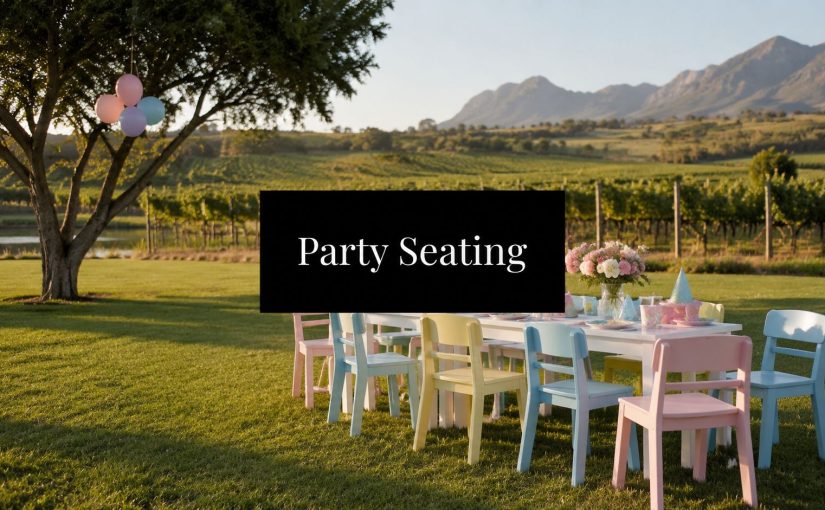
You've got the guest list, the cake is booked, and the Winelands venue has finally confirmed the rain plan. Then someone asks the practical question that can derail the whole setup: where are the children going to sit?
At a Cape Town birthday party, childrens party table and chairs affect far more than photographs. The wrong furniture can crowd a lounge, leave toddlers perched awkwardly at adult tables, and force children to eat beside the play equipment. The right setup creates clear zones for meals, crafts, cake and movement, while giving parents one less problem to solve on the day.
Why Childrens Party Table and Chairs Deserve Real Planning
A parent planning a party at home often starts with décor. The balloon garland goes on the shopping list, the entertainer needs a performance area, and the caterer wants access to a serving table. Seating gets added later, usually after somebody realises that the dining chairs are too tall for the younger guests.
That order causes trouble. Children who can't reach the table comfortably stand up, swap seats, lean across one another or carry food into the play area. Adults then spend the party moving cups, wiping spills and separating children from furniture that was never designed for them.
A well-planned children's seating area works as a calm base inside a busy party. Children can sit down for snacks, return to a craft activity, and regroup before the next game. It also gives the venue a visible structure, which matters in a compact home lounge just as much as it does in a large school hall.

The four decisions that prevent most problems
Start with the guest ages, not the colour scheme. A table that suits a group of pre-teens may be unusable for toddlers, while a low plastic setup can feel cramped for older children.
Then look at the room as a working environment:
- Sizing: Choose chairs and tables that match the children's age and reach.
- Safety: Check stability, edges, fasteners and finishes before the furniture enters the venue.
- Space: Leave room for adults to circulate, food to be served and children to move safely.
- Total cost: Compare delivery, setup, collection and breakage terms, not only the per-chair rate.
South Africa's school furniture shortage also shows why child-sized seating should be treated as basic infrastructure rather than decorative styling. By 23 April 2025, 10,669 schools had reported furniture shortages and 2,324,695 learner furniture units were required nationwide, according to reporting on the national school furniture crisis. A party is temporary, but the same principle applies: children need furniture that fits, stays stable and survives repeated use.
For planning ideas that combine activities with seating, see these kiddie party ideas. The best children's party layout is the one that supports the event instead of competing with it.
Matching Table and Chair Sizes to Age Groups
Adult trestle tables are convenient, but convenience isn't the same as suitability. Young children often need to kneel, stretch or lean heavily to reach an adult-height tabletop. That creates unstable sitting positions and makes ordinary activities, such as eating or colouring, unnecessarily difficult.
Use age as the starting point, then confirm the supplier's actual dimensions. The following guide gives a practical brief for a hire company rather than pretending that every child in an age bracket has identical proportions.
Toddlers need low and stable furniture
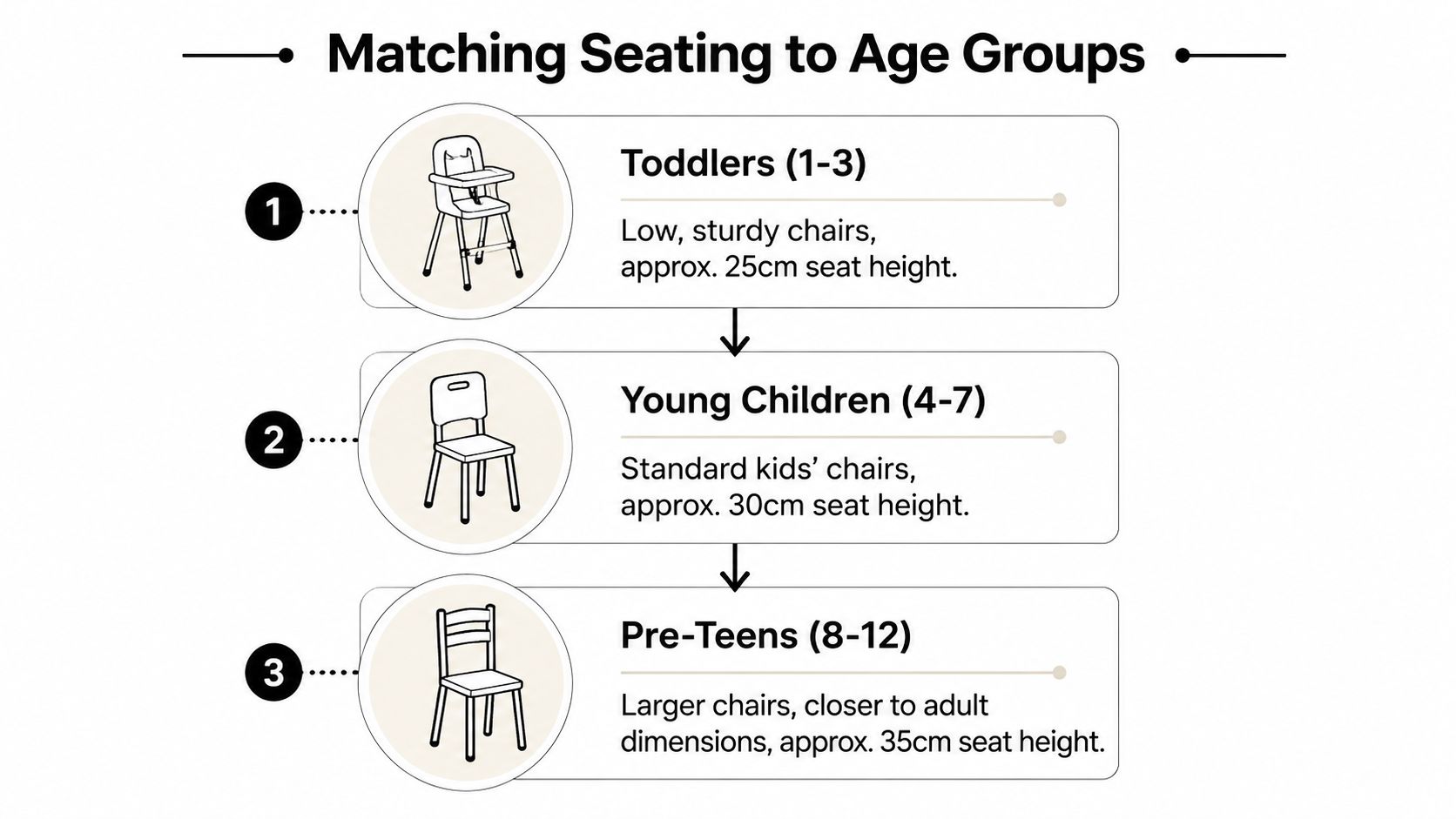
For children from roughly one to three years, prioritise a low, sturdy chair with a seat height of approximately 25 centimetres, as shown in the seating guide above. The chair should let the child place their feet securely and sit without sliding forward.
Avoid loose detachable parts around toddlers. South Africa's gazetted toy-safety rules state that products for children under three must not jeopardise the user's safety or health, and they specifically address detachable pieces that could create a swallowing or inhalation hazard. The South African standards product guidance also references SANS ISO 8124 for toy safety.
For a toddler party, use a separate low table zone rather than mixing very young children with bigger children who move quickly and handle chairs roughly.
Young children need a usable activity height
For four to seven-year-olds, a standard kiddies chair with a seat height of approximately 30 centimetres is a sensible starting point. Pair it with a table that allows elbows to rest naturally without shoulders hunching or children standing to reach their plates.
This is usually the most versatile age group for birthday parties. The same seating can support cake, colouring, puzzles and simple craft stations, provided you protect the tabletop from glue, paint and icing.
If you're planning a compact activity corner at home, an activity desk for small playrooms can help you think through storage and workspace together. For hire events, apply the same principle by keeping craft supplies contained and leaving enough clearance for children to pull chairs out safely.
Older children need more room
Children from eight to twelve years generally need larger chairs, closer to adult dimensions, with an approximate seat height of 35 centimetres. They're also more likely to use the table for longer periods, especially at school functions, craft parties or family events where meals are more structured.
A mixed-age party needs a decision rather than a compromise. You can either create two seating zones, one low area for toddlers and one larger setup for older children, or choose furniture that suits the middle of the group and reserve the lowest chairs for the youngest guests.
Practical rule: If children have to climb onto the chair or tuck their knees sharply under the tabletop, the furniture is wrong for that group.
Ask for these details in writing when requesting a quote:
- Chair seat height.
- Table height and tabletop dimensions.
- Recommended age range.
- Whether the set is suitable for indoor, outdoor or both environments.
- Whether the supplier can split the order into more than one size.
That brief saves time and prevents a generic “kids' set” from arriving when your guest list spans toddlers, primary school children and pre-teens.
Safety Standards and Material Choices for Kiddies Furniture
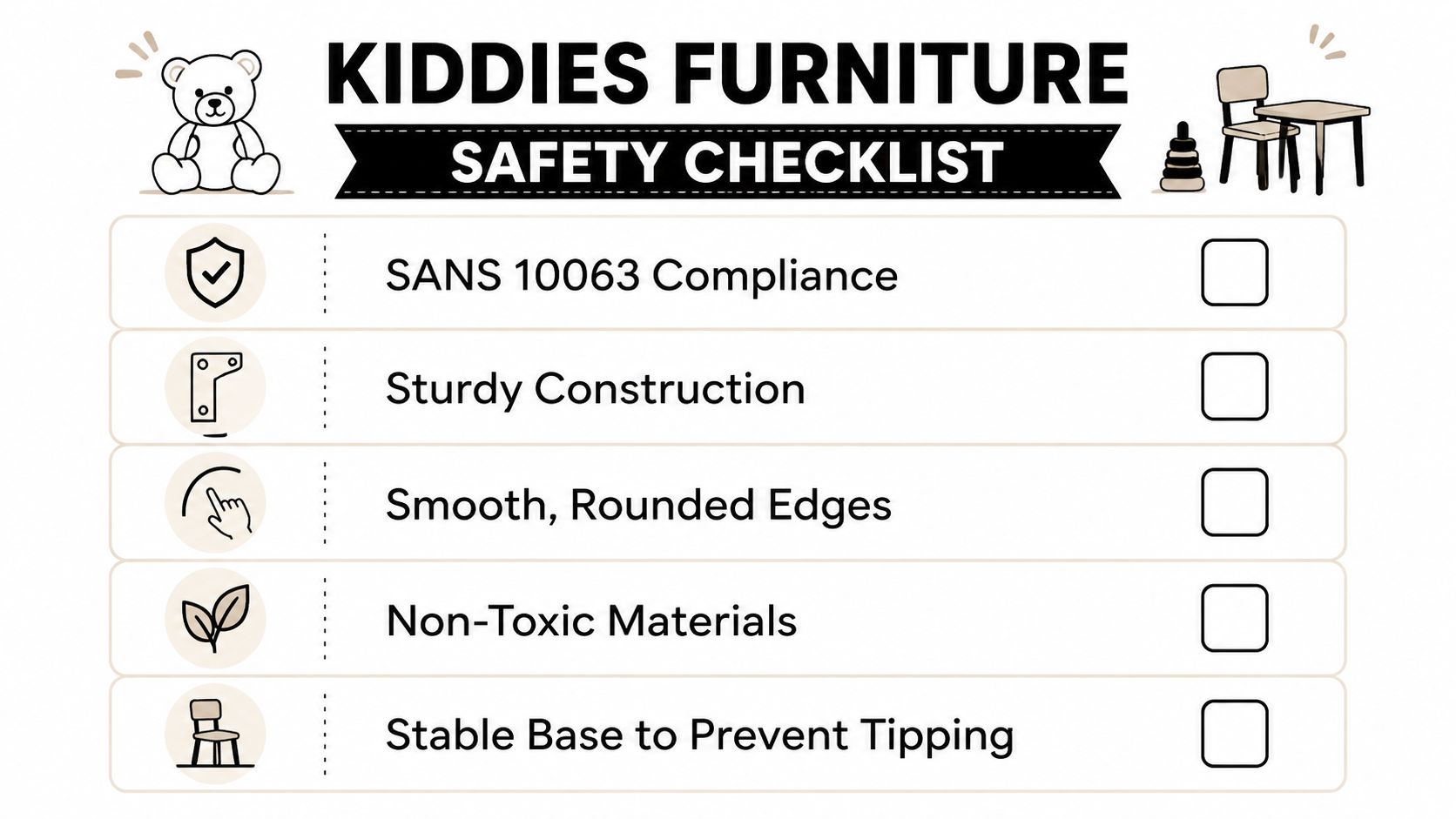
Safety checks should happen before delivery, not while guests are arriving. A rental supplier may have cleaned and stacked the furniture, but the person responsible for the event still needs to confirm that each piece is suitable for the actual venue and age group.
South African classroom furniture guidance provides a useful benchmark. SANS 660 covers the materials, construction, finish and performance of classroom tables, desks, chairs and stools, according to SABS standards information. It isn't a substitute for a supplier's child-specific safety assessment, but it gives planners a practical quality-control reference.
Inspect the furniture in a fixed order
Use a quick inspection routine before children arrive:
- Check the dimensions: Confirm that the furniture matches the intended age group.
- Test the base: Put each table and chair on a level surface and look for rocking or wobbling.
- Examine joinery: Inspect legs, brackets, hinges and load-bearing points for looseness.
- Run a hand over edges: Reject pieces with sharp corners, splinters, burrs or exposed fasteners.
- Look at the finish: The surface should be intact, non-flaking and easy to wipe clean.
- Check the surroundings: Keep furniture away from steps, pools, hot catering equipment and congested doorways.
Don't assume that converting an adult trestle table to a lower height makes it child-safe. Height-adjustable conversions may exist, but the adjustment alone doesn't establish stability or performance for children.
Choose materials for the venue
Plastic is usually the practical choice for garden parties, messy food and quick cleaning. It handles spills well and is easy to move, but lightweight pieces must still sit firmly on uneven paving or grass.
Wood gives a warmer, more styled finish for a farmhouse venue, home party or carefully designed Winelands celebration. Inspect the surface for splinters, chipped paint and unstable joints, especially when the furniture has been transported frequently.
Coated metal can work for sturdy event furniture, but check exposed edges, hot surfaces in direct sun and the way the legs lock. Metal can look polished in a formal setup, yet it isn't automatically more suitable for young children.
The same rule applies to extras. If you add play equipment, keep it separate from the seating zone and inspect it with the same attention. A children's plastic slide should never force children to cross behind occupied chairs or pass through the food service path.
Space Planning and Layouts for Different Venues
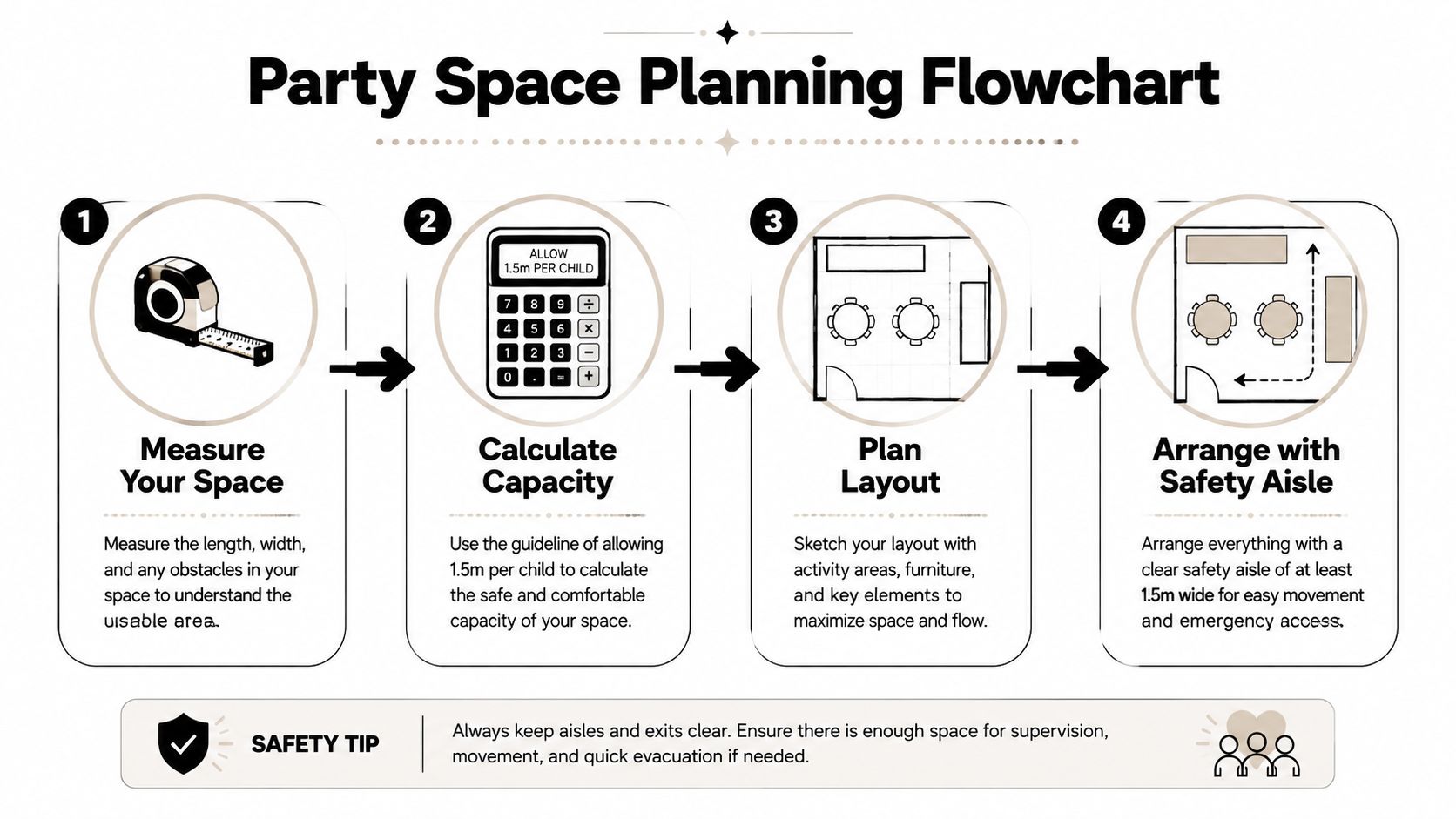
Most party hire listings tell you what they stock. They rarely tell you how that stock behaves in a real lounge, lawn or school hall. You need to plan the room before you choose quantities.
Start by marking the fixed features. Draw doors, steps, kitchen access, pool edges, power points and catering areas. Then mark the spaces that must stay open, including an adult circulation route and the path children will use to reach activities.
Use the venue type to shape the layout
In a home lounge, keep the furniture compact and place the children's table near the food handover point, but not directly in front of the kitchen or patio door. A single activity table can work better than several scattered pieces because it leaves adults a clear route around the room.
In a garden, use the seating as a regrouping point rather than filling the entire lawn. Put chairs on level ground, avoid placing tables where irrigation or muddy patches will affect stability, and keep active play away from the eating area.
A school hall gives you more flexibility, but it also encourages over-ordering. Separate eating, craft and active-play areas with obvious boundaries. Children should be able to leave the table without cutting across the food service line.
A Winelands function venue often combines indoor and outdoor areas. Confirm which surface receives the delivery, where the supplier can unload, and whether the furniture must travel over gravel, lawns or stairs. A beautiful layout can still fail if the setup team has to carry heavy pieces through a narrow passage at the last minute.
Adapt fixed packages instead of accepting them blindly
Local listings show fixed configurations such as 30 kiddies plastic chairs, 9 square kiddies tables and 2 kiddies trestle tables for venue parties, as seen in Busy Bodies Soft Play Hire's available setups. Treat that kind of package as an inventory example, not an automatic layout recommendation.
Ask three questions:
- Which pieces are for seating, and which are for food, gifts or activities?
- Can the package be reduced or split between age groups?
- What space does the supplier need for safe access and setup?
Don't pack every chair around every table. Leave room for a child to pull a chair out, for an adult to assist, and for a server carrying a tray to pass without twisting sideways.
Children need a place to sit, but they also need a clear reason to leave the table. Keep active play visible without allowing it to spill through the seating zone.
Sketch the layout with furniture footprints, then add the people who will use it. Include parents, entertainers, caterers and children carrying plates. If the drawing only works when nobody moves, the order is too large.
Comparing Hire Options and Total Event Costs
The lowest advertised chair price can produce the highest workload. A quote for furniture is only useful when it shows what happens before and after the party.
South African listings demonstrate the spread in buying options. One provider advertises R10 per plastic chair per day and R40 per plastic table per day, while other examples list kids' chairs at R20 each and kids' wooden tables at R250 each, as recorded in local party and venue listings such as Ambiance Venue's kiddies party information. Those figures are examples of market pricing, not a complete quote for your event.
Compare the full arrangement
| Hire Option | Best For | Key Cost Drivers | Typical Trade-Offs |
|---|---|---|---|
| Individual item hire | Small private parties with a clear furniture list | Per-item rate, delivery, setup, collection and minimum order | Flexible quantities, but you manage more decisions |
| Bundled kiddies package | Parents who want a coordinated basic setup | Package contents, distance, setup access and extras | Convenient, but the fixed mix may not suit every age group |
| Venue-included option | Events using a venue with furniture already in the fee | Venue package, food terms, décor rules and overtime conditions | Simple logistics, but less control over furniture style and layout |
| Larger school or corporate hire | High-volume family days and school functions | Transport route, unloading, labour, damage terms and schedule | Efficient at scale, but timing and access become critical |
Delivery distance matters around Cape Town and the Winelands. Stellenbosch, Franschhoek and Paarl events may involve longer routes, narrow venue entrances or timed access windows. Setup and collection can also change the effective cost, particularly when the venue doesn't allow early drop-off or next-day collection.
Breakage terms deserve direct questions. Ask whether damage is charged per item, whether ordinary wear is excluded, when the supplier expects collection, and who is responsible if another vendor moves the furniture.
For a wider view of available configurations, review tables and chairs rental before requesting a quote. If one supplier can also coordinate décor, bean bags or a slush machine, consolidation may reduce the number of deliveries and handovers, but only if the combined quote remains clear.
Budget test: Compare the delivered, set-up and collected price for the complete event, not the cheapest line item on the first page of the quote.
A Practical Hiring Checklist for Cape Town and Winelands Events
Book the furniture from the guest list outward. Count children by age group, identify whether parents are staying, and decide whether the table is for meals, crafts, cake or several activities.
Then work through this sequence:
- Confirm the venue: Measure the usable area, record door widths and check the surface where chairs and tables will stand.
- Separate age zones: Tell the supplier if toddlers and older children need different seating heights.
- Define the layout: Mark food, gifts, entertainment, active play and adult seating before ordering furniture.
- Request an itemised quote: Ask for furniture, delivery, setup, collection, cleaning requirements and damage terms as separate details.
- Confirm the access plan: Give the supplier the correct address, contact person, parking information, stairs, gates and venue access window.
- Prepare for weather: For outdoor parties in Stellenbosch, Franschhoek or Paarl, decide where the children's seating moves if wind or rain changes the plan.
- Recheck before delivery: Confirm quantities, colours, sizes and the final layout with the venue and hire company.
On delivery day, test a sample table and chair on the actual surface. Check that the youngest guests can sit comfortably, that older children have enough knee room, and that the setup leaves a clear route for adults and caterers.
ABC Hire provides tables and chairs alongside other event hire categories, including bean bags, LED furniture, slush machines and climate-control equipment, and serves Cape Town and surrounding areas such as Stellenbosch, Franschhoek and Paarl. For a party where furniture, décor and guest comfort must work together, ask for a quote based on your venue plan rather than a generic package.
Tell ABC Hire the children's ages, venue, access conditions and event date, and ask for a complete furniture quote that includes delivery, setup and collection. Visit ABC Hire to explore table and chair hire for your next Cape Town or Winelands children's party.