Outside Patio Heaters: Your Cape Town Event Guide 2026

The problem usually starts at the best moment of the event.

The sun drops behind the Stellenbosch mountains, the speeches are done, the band starts to sound better, and guests drift outside with a glass in hand. Then the temperature turns. Not dramatically. Just enough that shoulders tighten, older guests head indoors, and the outdoor area you paid to style so carefully suddenly empties.

That’s why outside patio heaters matter so much in Cape Town and the Winelands. Our weather doesn’t usually ruin an event in one obvious blow. It chips away at guest comfort through evening chill, moving air, exposed courtyards, and venues that feel sheltered in daylight but very different after dark.

Generic heating advice misses that local reality. A planner in Franschhoek doesn’t need broad lifestyle content about “creating cosy ambience”. They need to know which heaters still perform when the breeze picks up, how to place them around lounge pockets, what to do when power reliability is a concern, and when renting is smarter than owning.

Keeping Guests Warm The Ultimate Guide to Outside Patio Heaters

A polished outdoor event can still fall short. The food is right, the lighting is right, the florals are right, but guests still migrate away from the space you wanted them to use. In practice, temperature is often the reason.

Cape Town planners know this pattern well. Rooftops in the city bowl, wine estate courtyards, garden ceremonies that turn into evening receptions, and school functions on open lawns all have one thing in common. They look better outdoors than indoors, but they need active heating if you want guests to stay comfortable.

A group of friends enjoys drinks on a scenic outdoor patio while standing near a space heater.

The wider market tells the same story. The global outdoor heating market reached USD 4.44 billion in 2026 and is projected to grow to USD 5.59 billion by 2030, which shows how outdoor heaters have shifted from a luxury item to a practical requirement for hospitality and events, according to outdoor heating market projections from Research and Markets.

What actually changes when heating is planned properly

Well-heated outdoor spaces behave differently during an event. Guests settle instead of circulate nervously. People stay through dessert, speeches, and the dance floor transition. Venue flow improves because you’re not forcing everyone into one indoor fallback space.

That matters for more than comfort alone:

  • Wedding timing works better: Sunset photos and first dance moments don’t compete with guests looking for blankets or indoor corners.
  • Corporate networking lasts longer: People keep using the terrace instead of abandoning it after the formal programme.
  • Venue styling pays off: Lounge furniture, bars, and outdoor dining layouts stay occupied as intended.

Practical rule: If your event relies on an outdoor area after sunset, heating shouldn’t be an add-on. It should be part of the floor plan.

Why local conditions change the decision

In the Cape, warmth on paper and warmth on site aren’t the same thing. A heater that looks powerful in a catalogue can underperform badly if it’s fighting moving air, poor placement, or the wrong layout.

A useful heating plan has to answer real event questions:

  • Where will guests stand, sit, queue, and talk?
  • Which areas are exposed to wind?
  • Is the heat meant to cover dining, a ceremony transition, or a cocktail lounge?
  • Are you better served by portable gas units or directional electric infrared models?

Outside patio heaters work best when they’re treated as event infrastructure, not decorative extras. Once you approach them that way, the decisions become far easier and the event feels controlled from the moment the temperature drops.

Choosing Your Heat Source Gas vs Electric Patio Heaters

The first decision isn’t style. It’s how the heat behaves.

Gas and electric patio heaters warm people in different ways, and that difference becomes obvious at an outdoor event. Gas feels more like a bonfire. It creates a surrounding pocket of warmth. Electric infrared feels more like sunshine. It sends heat toward people and surfaces directly.
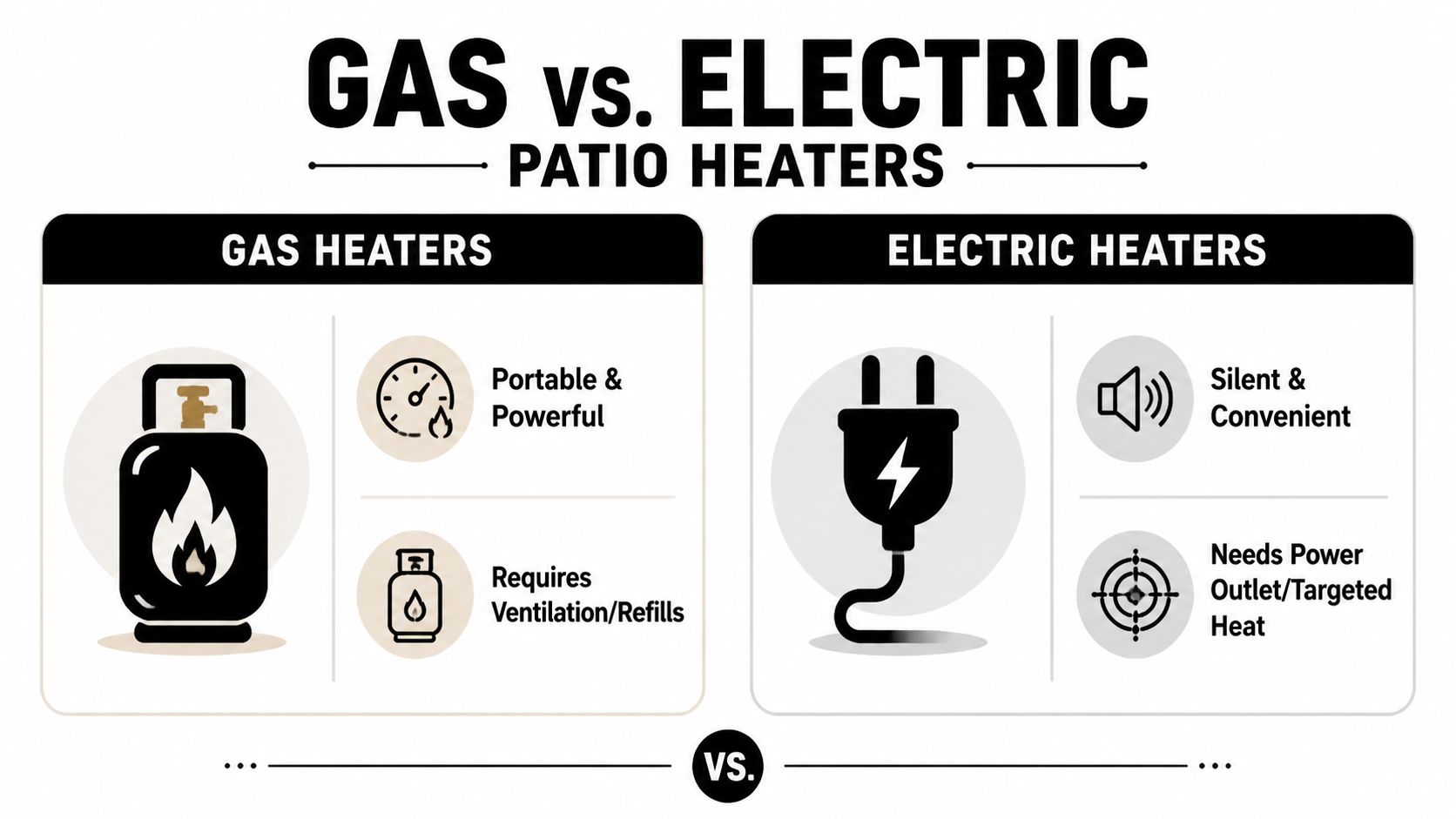
A comparison infographic between gas and electric patio heaters showing their specific pros and cons.

When gas heaters make sense

Gas units are the classic event choice for a reason. They’re portable, visually familiar, and easy to place where no power point is available. For open lawns, courtyard edges, and temporary layouts, that flexibility matters.

They also suit events where the heater needs to move with the plan. If the venue team is building a bar extension on one side and a cigar or lounge area on the other, gas gives you more freedom to adapt on site.

Gas is often the practical option when you need:

  • Portability: No dependence on nearby electrical supply.
  • Fast layout changes: Easier to reposition during setup.
  • Traditional event styling: Many clients still like the tall, visible heater format at entrances, patios, and standing areas.

That said, gas isn’t the automatic winner for Cape Town conditions. In exposed spaces, some of that warmth can feel less effective because the air movement strips away comfort faster than expected.

Where electric infrared pulls ahead

Electric infrared is the smarter option in more scenarios than many planners realise. According to electric patio heater performance guidance from Woodland Direct, electric patio heaters convert up to 98% of their energy into radiant heat, warming people and objects directly rather than trying to warm the surrounding air.

That matters in the Western Cape. When the air is moving, radiant heat usually feels more dependable because it’s directed where guests are. It’s also quieter, cleaner in presentation, and often easier to integrate into a polished venue design.

A few practical strengths stand out:

Heater type Best use case Main trade-off
Gas Open layouts with limited power access Needs fuel management and more ventilation awareness
Electric infrared Seated zones, covered areas, windy sites Needs suitable power access and deliberate placement

A heater that warms the air can feel impressive beside the unit. A heater that warms the guest usually performs better at the table.

The trade-offs planners should look at first

Don’t choose by product category alone. Choose by event behaviour.

If the event is mostly seated, electric infrared often wins because it can target dining rows, lounge clusters, or specific conversation zones. If guests are moving constantly across a broad area, gas can be useful because it creates more general warmth around circulation spaces.

Also look at operations:

  • Setup complexity: Gas needs bottle handling and replacement planning.
  • Venue restrictions: Some venues are more comfortable with one heat source than the other.
  • Visual impact: Tall gas heaters are visible design elements. Electric bars and mounted units are usually more discreet.
  • Power planning: Electric depends on a stable supply, so event managers need to think ahead when power reliability is a concern.

If you’re comparing fuel systems more broadly for outdoor entertaining, this outdoor living fire table fuel comparison is a useful read because it frames fuel choices in plain operational terms.

For planners who want a closer look at portable gas options used for events, ABC Hire’s guide to gas patio heaters is relevant for understanding where that format fits.

What works in real event conditions

For exposed rooftops, breezy terraces, and long seated dinners, electric infrared usually gives more reliable guest comfort. For entrance points, roaming cocktail spaces, and venues without convenient electrical access, gas still has a strong place.

The mistake is expecting one heater type to solve every problem. The better approach is matching the heater to the way the space will be used. That’s what separates a warm venue from a venue that merely contains heaters.

How to Calculate Your Event’s Heating Needs

Most heating problems aren’t caused by buying the wrong unit. They’re caused by underestimating coverage.

Planners often start with the guest count and stop there. That’s understandable, but heaters warm spaces, seating zones, and activity areas. The cleaner starting point is the physical footprint you need to cover.
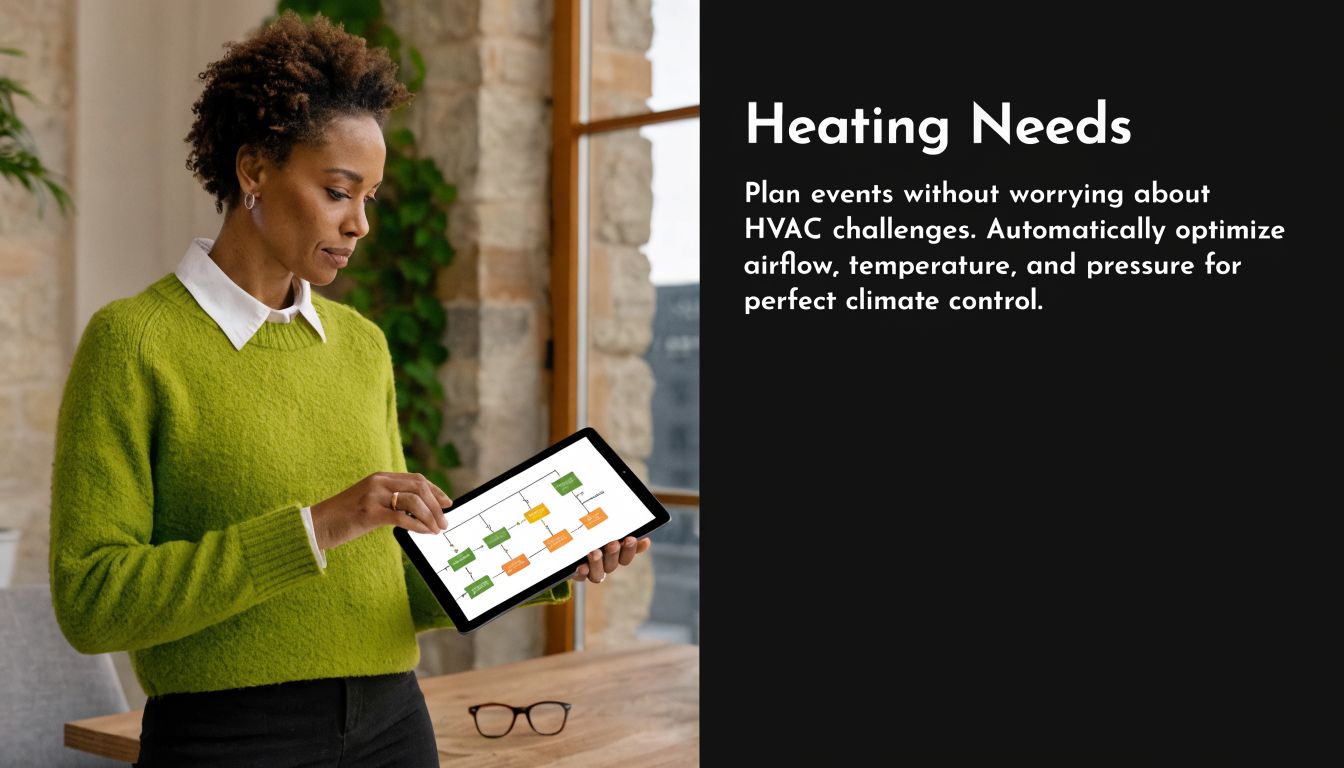
A professional woman using a digital tablet to manage HVAC climate control for event planning.

Start with the BTU rule

A reliable rule of thumb is to multiply the square footage by 20 BTUs. Based on patio heater sizing guidance from BBQGuys, a 1,000 square-foot garden venue would require 20,000 BTUs of heating power.

That gives you a planning baseline. It doesn’t mean one heater is always enough. It means your combined heating output should be built around that requirement.

A simple way to size an event

Use this sequence before you request a quote or sign off on a layout:

  1. Measure the usable event area
    Don’t count the whole property. Count the spaces guests will occupy after dark, such as the dining section, bar terrace, lounge area, and walkway between marquee and main building.

  2. Apply the BTU formula
    Multiply the square footage by 20 BTUs to get your total heating target.

  3. Break the space into heat zones
    A dinner table section needs different coverage from a standing cocktail cluster. Heating works better when divided into zones than when treated as one big outdoor void.

  4. Match output to guest behaviour
    If people will sit for long periods, use more deliberate, targeted coverage. If they’ll move around, spread heat across circulation points.

A practical event example

Take a Winelands reception with a dining tent opening onto an outdoor lounge and bar. On paper, the outside footprint may seem manageable. In reality, guests don’t distribute evenly. They gather where the music is lower, where the drinks are, where smokers step out, or where family groups can sit and talk.

That’s why planners should think in layers:

  • Dining edge: Keep heat near seated guests, not only at perimeter corners.
  • Lounge pocket: Create a self-contained warm zone that invites people to stay.
  • Transition routes: Short paths between spaces can feel colder than the main area if left untreated.

Guests remember cold gaps more than warm corners. One neglected transition area can make the whole venue feel underheated.

Range and radius are not the same

This catches people often. A heater’s range is the broader area it can contribute to. Its radius is the distance from the unit where warmth is meaningfully felt.

That distinction changes your layout decisions. A heater may technically cover an area, but if the warm radius doesn’t reach the outer seats or the queue line at the bar, those guests still feel cold.

A useful planning check is to map heaters against these questions:

  • Where are people seated longest?
  • Where do people stand still instead of moving through?
  • Which side of the layout is most exposed?
  • Will one unit leave obvious cold pockets between tables or couches?

What works better than one oversized heater

For many events, several properly placed heaters outperform one high-output focal unit. Multiple units let you overlap coverage, protect vulnerable seating groups, and respond to the shape of the venue rather than forcing the venue to respond to the heater.

That’s especially true in L-shaped patios, split-level gardens, and venues with partial walls or planting that interrupts heat flow. Outside patio heaters should follow the event layout, not the other way around.

If you’re unsure, map the venue the same way you’d plan lighting. Start with where guests need to feel comfortable, then build the heat around those exact moments and positions.

Strategic Heater Placement for Safety and Warmth

A good heater in the wrong place is still the wrong heater setup.

At events in Cape Town, placement decides whether heat reaches guests or disappears into open air. It also decides whether the setup feels polished or becomes an obstacle around service routes, decor installations, and tightly packed furniture.
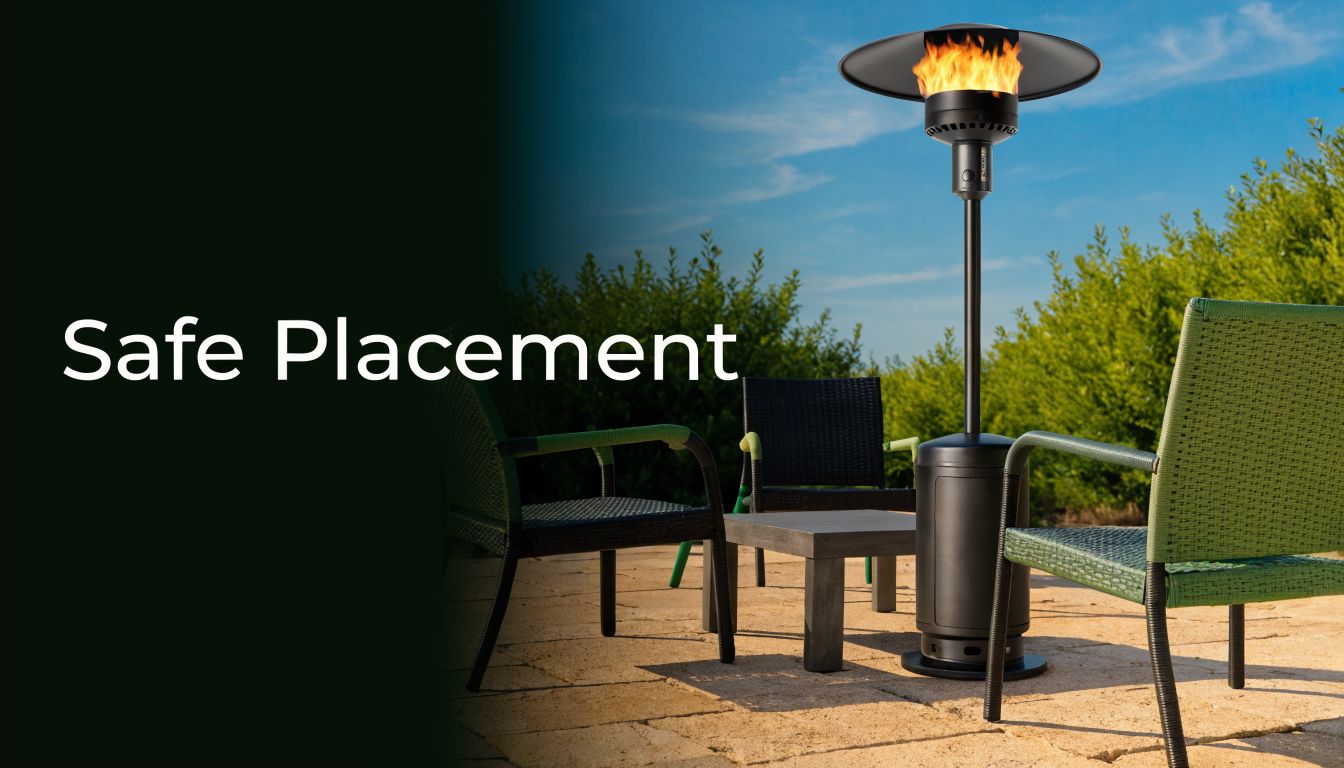
A tall outdoor patio heater placed on a stone terrace with chairs and a small table.

Start with the non-negotiables

Before you think about warmth, think about clearance and movement. Heaters should never compete with draping, florals, tent lines, low branches, signage, or busy service lanes. A beautiful layout can become awkward fast if waiters are weaving around heater bases or guests are brushing past hot equipment on the way to the bar.

In practical event terms, avoid placing heaters:

  • In pinch points: Entrances, buffet approaches, and tight walkway turns
  • Near soft styling elements: Drapes, linen-heavy lounges, and hanging decor
  • Where guests back into them: Especially around cocktail clusters with no defined seating
  • Beside children’s activity zones: Even at family-friendly events, heaters need controlled space around them

Cape Town wind changes everything

Placement in the Western Cape is not just about distance. It’s about direction. According to guidance discussing Cape Town winter wind impact on patio heater performance, average winter wind speeds of 15-25 km/h can reduce the effective heating radius of standard mushroom-style propane heaters by up to 40%.

That’s why a textbook layout often disappoints on site. A heater placed symmetrically for visual balance can still underperform if it’s exposed to the prevailing breeze.

What works better is deliberate positioning:

  • Use structures as shields: Walls, planters, pergola edges, and tent sides can help protect heat zones.
  • Angle for exposure: Don’t line up every heater in a perfect visual grid if one side of the venue takes the wind.
  • Reserve the most protected positions for seated guests: Standing guests can tolerate cooler conditions for shorter periods than diners or older family members.

For planners weighing portable options for patios and entertaining spaces, this guide to gas porch heaters is a useful reference point.

Wind doesn’t remove heat evenly. It finds the weakest edge of the layout first.

Build warm microclimates

The most effective event layouts create small warm zones rather than trying to heat every open square metre equally. Think in terms of lounge pods, dining banks, and sheltered pause points.

Three placements tend to work well:

Event area Better placement approach Common mistake
Outdoor lounge Heat the seating cluster directly Putting one heater too far behind the furniture
Dining terrace Spread units to overlap along seated rows Heating only the perimeter
Walkway or entrance Warm the arrival or waiting point, not the full path Trying to heat long open routes end to end

What doesn’t work

Some setups look logical during daylight and fail completely once the air cools.

Avoid these habits:

  • One heater for visual effect only: If it’s acting as decor, it probably isn’t doing enough heating.
  • Perimeter-only planning: Guests usually feel the cold in the middle gaps and exposed corners.
  • Ignoring the late-night shift: After dinner, people move. Your warm dining area may become a cold dance-adjacent lounge unless the layout anticipates that flow.

The best heater placement always follows guest behaviour, wind exposure, and safety discipline at the same time. If one of those three is ignored, comfort drops quickly.

The Smart Choice Renting Patio Heaters from ABC Hire

Buying heaters makes sense for a fixed, repeat-use environment with stable storage, in-house maintenance, and a predictable event format. That’s not how most event work in the Cape runs.

A wedding planner may handle an exposed wine estate this month, a private home in Constantia next month, and a corporate courtyard after that. Those aren’t the same heating jobs. The equipment, quantity, transport plan, and setup logic change every time.

Why rental suits event operations better

Commercial demand is the strongest part of this category. According to Technavio’s patio heater market analysis, commercial users account for the largest revenue share, which fits what event planners already know. Professional operators need flexibility more than ownership.

Renting usually solves significant problems:

  • No storage burden: Heaters are bulky, and off-season storage is rarely free space.
  • No maintenance admin: You don’t need to test, clean, repair, or manage wear between events.
  • No locked-in inventory mistake: If your next venue needs a different format, you’re not stuck with the wrong units.
  • Simpler budgeting: You cost the equipment into the event instead of carrying ownership overhead across the year.

Ownership sounds cheaper until operations get involved

On paper, buying can feel like control. In practice, it often means transport, bottle coordination, condition checks, storage scuffs, and last-minute failures becoming your responsibility. Event teams already manage too many moving parts to add equipment lifecycle management unless necessary.

Rental keeps the decision focused on suitability. You choose what fits the venue and the guest experience, rather than trying to force the same owned stock into every event.

The more varied your event calendar is, the less useful a one-size-fits-all heater inventory becomes.

Where a rental partner adds value

The practical gain isn’t just access to equipment. It’s reducing the number of heating decisions you need to carry alone. For event work around Cape Town, Stellenbosch, Franschhoek, and Paarl, ABC Hire offers climate control equipment within a broader event rental operation, which helps when heating needs must align with furniture layouts, lounges, and evening flow.

That matters because heating isn’t isolated from the rest of the setup. A good plan considers where guests will sit, where the bar goes, where LED furniture draws attention, and how people move after speeches or dinner.

Rental is usually the smarter route when your priority is execution, not ownership. For most planners and venues, that’s the primary job.

Budgeting for Warmth Costs and Local Cape Town Rules

Heating decisions are rarely only about comfort. They’re usually tied to power access, venue rules, and what the client is willing to spend for the hours that matter most.

In Cape Town, budget planning gets more complicated because the most obvious heater choice is not always the most practical one once you factor in energy costs and power reliability.

What the running cost conversation really looks like

The cleanest comparison is this. According to South Africa-focused outdoor heater cost and carbon guidance, propane heaters run at R15-25 per hour for a 46,000 BTU equivalent, while electric infrared runs at R8-12 per hour on off-peak tariffs. The same source states that South Africa’s 2026 carbon tax is R159 per tonne CO2e, and that gas heaters become 20-30% more expensive to operate post-tax compared to electric models.

For planners, that doesn’t mean gas is wrong. It means gas needs a stronger reason to be the chosen format.

A practical budgeting view looks like this:

Budget factor Gas heaters Electric infrared
Hourly operating view Higher running cost band Lower running cost band on off-peak tariffs
Power independence Strong advantage Depends on available supply
Carbon-sensitive planning Less favourable post-tax Usually the easier fit

Load shedding changes the answer

Electric often looks better until the power plan is weak. If the venue has unreliable supply, no backup, or a heavily loaded event setup already drawing from the same system, electric needs scrutiny.

The same South Africa-focused outdoor heater cost and carbon guidance notes Stage 2 load shedding averaging 4 hours per day in Cape Town winters, which is exactly why planners can’t assess heater type in isolation.

A sensible local approach is to ask:

  • What power supply is confirmed for the event window?
  • What else is drawing from the same source?
  • Does the venue have a tested backup plan?
  • Would a mixed heater strategy reduce risk?

For planners comparing purchase versus hire options while weighing those trade-offs, this overview of patio heaters on sale helps frame the broader decision.

Local rules matter more than many hosts expect

Venue and municipal compliance usually comes down to practical controls rather than one universal checklist for every site. Gas appliances may trigger stricter venue oversight around placement, handling, and operating conditions. Covered structures may also impose tighter rules than open patios.

The safest approach is to confirm these points early with the venue or event manager:

  • Whether gas appliances are allowed in the intended area
  • Whether covered or semi-enclosed spaces have special restrictions
  • Who is responsible for setup approval on site
  • What access routes are required for emergency movement and staff circulation

Don’t leave heater compliance to event day. By then, your layout is built, the furniture is in, and the alternatives are worse.

Budget for the right kind of certainty

The cheapest heater on paper can become the expensive choice if it underheats the event, conflicts with the venue rules, or depends on a power plan nobody verified. Good budgeting includes operating cost, but it also includes reliability, compliance, and the cost of solving mistakes late.

For Cape Town events, warmth is a logistics decision as much as a design decision. The best planners price it that way from the start.

The Ultimate Event Heating Checklist

A strong heating plan is easier to execute when it’s reduced to a simple working checklist. Save this for your next site visit.

Planning phase

  • Map the live event footprint: Mark the areas guests will use after sunset, not the full property.
  • Note wind exposure: Identify open corners, rooftop edges, courtyard funnels, and doorways that pull cold air through the layout.
  • Choose the right heat style: Match the heater type to the venue conditions, guest flow, and power access.
  • Calculate heating output: Use the venue size to work out the required coverage before you decide on quantities.

Booking and pre-event phase

  • Confirm the final floor plan: Heating only works when it matches where guests will sit, stand, queue, and circulate.
  • Check venue permissions: Verify any restrictions around gas use, covered areas, and placement zones.
  • Confirm power readiness: For electric units, make sure the intended supply is available and suitable.
  • Plan for changes: If the weather turns or the wind shifts, know which areas can be prioritised.

Event day phase

  • Walk the layout again: Check clearances around draping, florals, furniture, and service paths.
  • Switch on before guests need it: Outdoor areas should feel warm on arrival, not warm half an hour later.
  • Brief the crew: Staff should know who is responsible for monitoring heaters during the event.
  • Watch guest behaviour: If a lounge area empties while another stays full, the heating pattern may need adjustment.

The best time to fix a cold area is before the first guest decides to leave it.

Patio Heater Rental FAQs

Can outside patio heaters be used under a marquee or covered area

Sometimes, yes. It depends on the heater type, the structure, airflow, and the venue’s operating rules. Covered spaces need extra care with placement and clearance, and gas units generally need more caution than open-air setups. Always confirm the venue’s requirements before finalising the plan.

How many heaters do most events need

There isn’t one standard answer because it depends on the size of the area, the layout, and how exposed the venue is. A seated dinner, for example, needs a different approach from a cocktail event spread across a terrace and garden edge. Start with the event footprint, then build the heater count around that rather than around guest numbers alone.

Are gas or electric heaters better for Cape Town events

Neither is universally better. Gas is useful when portability matters or power access is limited. Electric infrared is often the stronger performer for targeted comfort, especially in spaces where air movement makes ambient warmth less reliable.

Do heaters work well with styled lounge setups

Yes, if they’re integrated properly. A heater can anchor a lounge pod, support outdoor bar seating, or keep a transition space active after dark. The strongest results usually come when heating is planned alongside furniture and guest flow rather than added after the styling is done.


If you’re planning an outdoor wedding, corporate function, private party, or venue setup in Cape Town or the Winelands, ABC Hire can help you match the right heating equipment to the space, layout, and practical constraints of the event.

The Ultimate 2026 Checklist for a Wedding in Cape Town

Planning a wedding in the breathtaking landscapes of Cape Town or the Winelands is an exciting journey. However, turning that dream into reality requires meticulous organisation, from the 12-month countdown to the final moments of your special day. A well-structured checklist is not just a list of tasks; it’s your roadmap to a seamless, stress-free celebration. This guide provides a detailed checklist for a wedding, tailored specifically for the unique opportunities and challenges of a Western Cape event.

We’ll cover everything from the initial stages of setting your budget and choosing a venue to the final details of coordinating vendors and creating a day-of timeline. Our focus is on providing actionable steps that simplify the process, whether you are an engaged couple, a professional planner, or hosting a large-scale formal event. You will find practical advice on managing your guest list, defining your décor, and finalising critical service providers.

Furthermore, we will explore how strategic equipment and furniture rentals can elevate your venue and guarantee guest comfort. This includes insights into selecting everything from elegant chairs and tables to statement LED furniture and essential climate control units. We’ll also touch on practical needs like generators and even fun additions like slush machines, highlighting how a reliable supplier like ABC Hire can be a key partner.

Let's dive into the essential steps that will make your wedding planning journey as beautiful as the day itself, ensuring every element is perfectly in place. This list is designed to give you clarity and confidence as you bring your vision to life.

1. Set Your Budget and Financial Plan

Establishing your budget is the first and most critical step in your wedding planning checklist. This financial framework will dictate every decision you make, from your venue choice to the number of guests you can invite. It's about more than just a total figure; it involves allocating funds to different categories and ensuring you have a clear picture of your spending capacity before you start booking vendors.

To establish a realistic financial framework for your celebration, it's essential to understand how much a wedding costs in the current market. This initial research will prevent surprises and help you create a budget that aligns with your vision. Once you have a total, you can break it down. For example, many Cape Town couples allocate around 12-15% of their total budget specifically to furniture, décor, and ambience rentals, as these elements are key to creating a memorable guest experience.

Actionable Tips for Budgeting

  • Secure Early Quotes: Contact suppliers like ABC Hire at the beginning of your planning process. Getting accurate quotes for essential rentals, such as tables, chairs, and marquees, allows you to build a budget based on real numbers, not guesswork.
  • Account for Climate Control: If you’re planning a summer wedding in the Winelands (Stellenbosch, Franschhoek, or Paarl), proactively budget for climate control solutions. Include costs for fans or air conditioning units to ensure guest comfort during the hottest months.
  • Look for Package Deals: Ask your rental company about package deals. Bundling items like tables, chairs, and perhaps some LED lounge furniture can often result in better value than hiring each item separately.
  • Build a Contingency Fund: A non-negotiable part of your budget is a contingency fund. Set aside 10-15% of your total budget for unexpected costs, last-minute additions, or necessary upgrades. This buffer provides peace of mind and financial flexibility.

2. Choose Your Venue and Confirm Availability

Selecting the right venue is a cornerstone of your wedding planning checklist, as it sets the tone, dictates guest capacity, and shapes the logistical framework for your entire celebration. This decision influences everything from the overall atmosphere to your décor choices, making it a critical step to complete early. The venue is the canvas for your big day, and its features will determine what you need to bring in to complete the picture.

An elegant outdoor event space with a beautifully set table overlooking a lush vineyard at sunset.

The choice of location directly impacts your furniture and equipment needs. For example, a romantic Franschhoek wine estate wedding in summer will likely require elegant tables and chairs complemented by effective climate control. In contrast, a chic Cape Town beachfront venue might call for weather-resistant furniture and vibrant LED elements to create a magical evening ambience. Understanding your venue’s offerings from the start is key to planning a seamless event.

Actionable Tips for Venue Selection

  • Visit at the Right Time: Schedule your venue visits for the same time of day your wedding will take place. This gives you a true sense of the lighting, ambience, and potential temperature, helping you plan for elements like shade or heating.
  • Confirm In-House Inventory: Ask for a detailed list of what the venue provides. Knowing precisely which tables, chairs, and décor items are included versus what you need to hire allows you to get an accurate quote from a rental company like ABC Hire.
  • Assess Logistical Access: Enquire about practical details such as power outlet locations, loading dock or access point availability, and specific time windows for supplier setup and breakdown. This information is crucial for your rental team.
  • Plan for the Weather: For any outdoor space, especially given Cape Town’s unpredictable climate, confirm the venue’s weather contingency plan. Knowing the backup option helps you plan décor and furniture that works for both scenarios.
  • Request a Detailed Site Plan: Obtain a floor plan or site map from the venue. You can then share this with your rental company to strategically plan the placement of marquees, tables, a dance floor, and even fun additions like slush machines.

3. Create a Guest List and Manage RSVPs

Developing your guest list is a foundational part of your wedding checklist, directly influencing your budget, venue capacity, and overall atmosphere. This is more than just a list of names; it is the blueprint for your celebration’s scale and complexity. An accurate guest count dictates everything from catering numbers to how many tables, chairs, and lounge pockets you will need to rent.

The size of your guest list has a direct impact on your furniture and décor requirements. For instance, a typical Cape Town wedding with 100-150 guests requires careful planning for dining tables and coordinated seating. Similarly, for events in the Winelands, a larger guest count might necessitate expanding your lounge furniture arrangements with extra LED seating to ensure ample comfortable space for everyone. A well-managed list prevents overcrowding and ensures your venue feels intimate yet spacious.

Actionable Tips for Guest List Management

  • Use Online RSVP Systems: Make tracking simple by using a wedding website or an online platform to collect RSVPs. This provides a real-time, organised overview of your confirmed guest numbers, making it easier to share updates with your vendors.
  • Set Clear Deadlines: Your RSVP deadline should be set for 4-6 weeks before the wedding day. This timeframe gives you enough buffer to follow up with non-responders and provide final numbers to your caterer and rental company without stress.
  • Plan for Accessibility: When sending invitations, include a small question about mobility or accessibility needs. This forethought allows you to work with ABC Hire to arrange for accessible seating and ensure all your guests are comfortable.
  • Confirm with Your Rental Supplier: Provide your final, confirmed headcount to your furniture rental company 10-14 days before your event. This ensures they deliver the exact number of chairs, tables, and other items you need.
  • Build in a Small Buffer: It’s wise to build a small buffer of 5-10% into your furniture rental order. This extra capacity can accommodate last-minute guest additions or unexpected changes, providing valuable peace of mind.

4. Plan Your Décor Theme and Design Aesthetic

Once your guest list is taking shape, it's time to define the visual soul of your celebration. Developing a cohesive design aesthetic involves selecting your colour scheme, style theme, and overall visual direction. This creative vision is a core part of any checklist for a wedding, as it informs everything from your invitations to your choice of flowers and, crucially, your furniture and décor rentals. The theme sets the mood, whether you’re aiming for formal elegance, bohemian chic, or modern minimalism.

A flat lay of decor items including a gift, color palette, frame, and flowers, suggesting wedding theme inspiration.

Your décor theme directly influences furniture choices. A romantic Franschhoek vineyard wedding might call for warm ambient lighting, elegant upholstered seating, and vintage-inspired tables. In contrast, a modern minimalist Cape Town event could feature sleek black tables, ghost chairs, and subtle LED furniture accents to create a clean, contemporary feel. The right rentals bring your theme to life, transforming a space from a blank canvas into a personalised experience.

Actionable Tips for Décor Planning

  • Create a Mood Board: Use platforms like Pinterest and Instagram to gather inspiration. Create a digital or physical board with images, colour swatches, and textures that capture your desired look and feel. This becomes an invaluable tool when communicating with vendors.
  • Complement Your Venue: Choose a theme that works with your venue’s existing aesthetic, not against it. A rustic theme in a grand ballroom may feel out of place, while a glamorous style might clash with a relaxed beach setting.
  • Discuss with Your Rental Partner: Share your mood board and ideas with your rental company. A supplier like ABC Hire can recommend specific furniture pieces, such as LED cocktail tables or lounge pods, that will perfectly enhance your chosen aesthetic.
  • Consider Lighting’s Impact: Lighting is a powerful tool. Discuss how different lighting options will interact with your colour scheme. For example, coloured LED furniture can be programmed to match your palette or create a dynamic party atmosphere later in the evening.

5. Book Vendors and Service Providers

With your guest list drafted and your venue secured, the next critical phase in your checklist for a wedding is to book your core team of vendors. These professionals-caterers, photographers, florists, entertainment, and furniture rental companies-are the architects of your wedding day experience. Systematically researching, vetting, and contracting with them is essential to turning your vision into a reality, and it requires early action, especially for in-demand dates.

The process involves more than just finding available suppliers; it’s about finding the right partners who understand your style and can work together seamlessly. For instance, in the Cape Winelands, securing your furniture and décor rental from a company like ABC Hire should be done 8-12 months out, particularly for a summer wedding in Franschhoek where items like LED lounge furniture and climate control units are booked quickly. This early booking ensures that your chosen suppliers have your date locked in, preventing last-minute scrambles and disappointments.

Actionable Tips for Booking Vendors

  • Book Key Vendors Early: Prioritise booking your non-negotiable vendors 6-12 months in advance. This "big three" typically includes your venue, photographer, and furniture rental company, as their availability is often the most limited, especially during peak season in Stellenbosch or Paarl.
  • Get Everything in Writing: A verbal agreement is not enough. Ensure every detail is documented in a formal contract, including services provided, quantities, delivery and setup times, total costs, payment schedules, and cancellation policies. This protects both you and the vendor.
  • Synchronise Your Suppliers: When booking your caterer and furniture rental company, ensure they communicate. The caterer can confirm exact guest counts, which your rental company then uses to provide the correct number of tables, chairs, and place settings, preventing costly over-ordering or shortages.
  • Ask for References: Don't just rely on a slick portfolio. Ask for references from recent clients and check reviews on trusted wedding platforms and local business directories. A vendor's reputation for reliability and service quality is just as important as their creative output.

6. Plan Seating Arrangements and Furniture Layout

Strategic seating planning is a critical component of your wedding checklist for a wedding, moving beyond simply telling guests where to sit. It involves designing a floor plan that balances guest comfort, encourages social interaction, and ensures the entire space is visually cohesive and functional. Your seating arrangement directly influences the atmosphere and flow of your reception, making it a key task that impacts both your guests' experience and your final furniture rental order.

Hands point at a digital seating plan on a tablet, surrounded by architectural tools and blueprints on a wooden desk.

The right layout depends on your event's style. For a formal Cape Town wedding, assigned seating at classic round tables of eight creates an intimate dining experience, often complemented by separate lounge areas for cocktails. In contrast, many Winelands weddings favour long, communal tables to create a relaxed, family-style atmosphere that encourages mingling. Adding high-top cocktail tables and stylish LED-lit lounge pods provides alternative spaces for guests to gather throughout the celebration.

Actionable Tips for Seating and Layout

  • Create a Digital Floor Plan: Use online tools like Floorplanner or your venue’s provided software to create a digital layout. This allows you to visualise the space, experiment with different table configurations, and ensure there is adequate room for movement.
  • Prioritise Sight Lines: When arranging tables, ensure all guests have a clear view of key areas like the head table, dance floor, and podium. No one wants to feel like they’ve been placed in a forgotten corner.
  • Mix Table Groups: Thoughtfully group guests to spark conversation. Mix friends from different circles or family members who might enjoy getting to know one another better, creating a more dynamic social environment.
  • Discuss with Your Rental Partner: Share your floor plan with your furniture rental company, like ABC Hire. Their team can provide expert advice on optimising the layout, confirming furniture quantities, and suggesting pieces like different sized tables or lounge furniture that will best fit your Franschhoek or Stellenbosch venue.

7. Select and Finalize Catering Menu

Choosing your menu is a delicious and critical part of your wedding planning checklist, as the food and drink will define a large portion of your guests' experience. This step involves more than just picking dishes; you'll be deciding on service style (plated, buffet, family-style), beverage pairings, and presentation, all of which must align with your overall vision and venue. The catering choices you make are also directly linked to your furniture and layout needs.

For instance, a formal, multi-course plated dinner common in Cape Town requires precise seating and adequate space for servers, while a farm-to-table Winelands event with family-style platters needs larger tables to accommodate the shared dishes. Similarly, a cocktail-style reception demands a mix of high-top cocktail tables and comfortable lounge areas. Coordinating with your caterer and furniture rental supplier simultaneously is key to creating a seamless and functional dining experience that feels both effortless and elegant.

Actionable Tips for Catering

  • Schedule Tastings Early: Arrange tastings with your shortlisted caterers 6-9 months before your wedding. This gives you ample time to refine your menu and make a final decision without feeling rushed.
  • Coordinate Service Style and Furniture: Discuss your desired service style with your rental company. For a buffet, you'll need dedicated buffet tables from a supplier like ABC Hire, whereas a plated meal requires every guest to have a designated seat.
  • Plan Beverage Quantities: A standard guideline is to budget for 1.5 drinks per person per hour for the evening. Discuss your bar setup, including whether you'll need a main bar counter, back bar shelving, and perhaps a mobile slushie machine for a fun, relaxed vibe.
  • Consider Staff Movement: When finalising your floor plan, ensure there are clear, wide pathways for catering staff to move between the kitchen, bar, and guest tables. This is crucial for efficient service and is something your furniture rental coordinator can help you plan.
  • Account for Dietary Needs: Discuss how to best serve guests with dietary restrictions. Sometimes, a separate, clearly marked station or specific table is the most effective way to prevent cross-contamination and ensure those guests are well cared for.

8. Arrange Photography and Videography Coverage

Selecting your photography and videography team is about more than just documenting your day; it’s about immortalising the atmosphere you’ve so carefully created. These professionals capture the memories, emotions, and intricate details, from the big moments to the thoughtfully chosen décor. Your investment in beautiful furniture and lighting deserves to be captured professionally, turning your event’s ambience into lasting art. This is a crucial part of any checklist for a wedding.

Your choice of photographer and videographer should align with the style and environment of your celebration. For instance, many Cape Town wedding photographers excel at capturing the dramatic mood of evening events, where the glow from LED furniture creates a vibrant, modern feel. In the Winelands, photographers often focus on documenting elegant table arrangements and vineyard backdrops with soft, natural light, highlighting the romantic setting. Their work ensures every detail, including your rental choices, is preserved perfectly.

Actionable Tips for Photography and Videography

  • Review Full Portfolios: Look beyond highlight reels and ask to see complete wedding or event galleries. This helps you assess their consistency in different lighting conditions and their ability to capture both candid moments and staged portraits.
  • Book Well in Advance: The best photographers and videographers in Cape Town are often booked 8-12 months ahead, especially for peak season weddings. Secure your preferred team as soon as you have your date and venue.
  • Create a Detailed Shot List: Prepare a list of must-have shots, including specific décor elements. If you’ve hired statement pieces like illuminated bars or LED lounge furniture from ABC Hire, make sure to include them so your photographer knows they are a priority.
  • Discuss Your Creative Vision: Schedule a pre-wedding consultation to align on style, key moments, and the overall feel you want to achieve. Brief your photographer on the furniture layout and any special lighting installations so they can plan the best angles for capturing the complete scene.

9. Plan for Guest Comfort and Experience Elements

Creating a memorable wedding experience goes beyond aesthetics and a good meal. It involves anticipating your guests' needs and designing an environment where they feel completely at ease. This part of your checklist for a wedding focuses on the practical details that ensure comfort, from climate control to designated relaxation areas, transforming a beautiful event into an enjoyable one.

Thinking about the guest journey from arrival to departure is key. For example, a summer wedding in an outdoor Franschhoek venue requires more than just stunning scenery; it needs effective climate control like fans or air-conditioning in the marquee, multiple water stations to keep everyone hydrated, and shaded lounge areas. Conversely, an evening rooftop event in Cape Town during the cooler months would benefit from strategically placed patio heaters and cosy, upholstered furniture to create a warm and inviting atmosphere. These thoughtful touches show your guests you've considered their well-being.

Actionable Tips for Guest Comfort

  • Assess and Address the Climate: For any outdoor or marquee event in the Winelands (Stellenbosch, Paarl, Franschhoek), plan for the season. Book fans or air-conditioning units for summer heat and reliable heaters for winter chills well in advance.
  • Create Varied Seating Zones: Offer more than just dining tables. Create distinct zones using different furniture styles. ABC Hire offers LED lounge furniture and cocktail tables that encourage mingling and provide comfortable, informal spaces for guests to chat away from the main dining area.
  • Strategically Place Amenities: Position bars, restroom facilities, and refreshment stations in easily accessible locations. This prevents congestion and ensures guests can find what they need without hassle. Clear signage is essential to guide them.
  • Plan for Downtime: Not every guest wants to be on the dance floor all night. Designate a quieter space, perhaps with soft lighting and comfortable bean bags or lounge pods, where guests can take a break from the music and have a peaceful conversation.

10. Confirm Logistics, Delivery, Setup, Breakdown and Create Run-of-Show

Coordinating logistics and creating a detailed run-of-show are the backstage heroics that ensure your wedding day unfolds flawlessly. This stage moves beyond general plans to the minute-by-minute execution, covering every vendor’s arrival, setup, and departure. It’s about creating a master timeline that dictates the flow of the entire day, from the first delivery truck to the final clean-up.

A clear and communicated schedule prevents chaos and ensures that every element, from your hired furniture to the catering, is in place exactly when needed. For instance, a summer Franschhoek wedding might require furniture delivery from a supplier like ABC Hire at 8 am, with climate control units set up and running well before guests arrive at 11 am. For a winter wedding in the city, scheduling delivery six hours before an evening event provides a buffer to manage potential weather-related delays. When confirming all logistics, delivery, setup, and breakdown for your special day, utilising a comprehensive guide can be invaluable. For instance, consider a detailed Wedding Transportation Planning Guide Template to ensure every detail, including guest travel, is accounted for in your master plan.

Actionable Tips for Logistics and Timelines

  • Work Backwards: Create your detailed logistics timeline by starting with your guest arrival time and working backward. This helps you allocate sufficient time for vendor setup, décor placement, and final checks.
  • Communicate in Writing: Send all vendors a finalised run-of-show at least two weeks before the wedding. Include specific arrival times, contact people, and parking instructions for large delivery vehicles.
  • Assign a Point Person: Designate a wedding coordinator or a reliable individual (not you or your partner) to be the on-site point of contact for all vendors on the day. This person will manage arrivals and troubleshoot any issues.
  • Schedule a Final Walk-through: Plan a final walk-through of the venue two hours before guests are due to arrive. This is your last chance to check that every detail, from the lounge furniture placement to the table settings, is perfect.
  • Build in Buffers: Add 15-minute buffers between major transitions, such as the end of the ceremony and the start of the cocktail hour. This flexibility allows for small delays without disrupting the entire day's flow.

10-Point Wedding Checklist Comparison

Task 🔄 Implementation Complexity ⚡ Resource Requirements ⭐ Expected Outcomes 📊 Ideal Use Cases 💡 Key Advantages / Tips
Set Your Budget and Financial Plan Medium — requires upfront research and detailed allocation Time for quotes, spreadsheet tools, vendor pricing, contingency funds Clear financial control; prevents overspending Early-stage planning for all weddings and events Get multiple quotes; build 10–15% contingency; include rental-specific buffer
Choose Your Venue and Confirm Availability Medium–High — site visits, schedule checks, venue rules Venue visits, deposits, power/loading info, logistics coordination Defines event atmosphere, capacity and furniture needs When locking date and guest capacity; outdoor vs indoor choices Visit at event time; confirm furniture provisions and power access
Create a Guest List and Manage RSVPs Medium — administratively intensive over time RSVP platform, contact lists, tracking system, time for follow-ups Accurate headcount for catering and rentals; reduces over/under-ordering Events where seating and catering depend on final numbers Use online RSVP tools; confirm final headcount 10–14 days prior; add 5–10% extra for last-minute
Plan Your Décor Theme and Design Aesthetic Medium — creative coordination across vendors Mood boards, samples, lighting plans, furniture styling Cohesive visual experience and improved photography Venues needing strong visual identity (vineyards, ballrooms) Make mood board; choose furniture that complements theme; test lighting effects
Book Vendors and Service Providers High — negotiation, contracts, scheduling Time for research, deposits, legal review, vendor coordination Secures trusted partners and locks pricing; reduces last-minute risk Peak-season weddings and multi-vendor events Book key vendors 6–12 months out; get details in writing; confirm contingencies
Plan Seating Arrangements and Furniture Layout Medium — requires guest intel and space planning Floorplan tools, seating charts, measuring time, furniture inventory Optimizes guest flow, comfort, and rental accuracy Large receptions, assigned seating, mixed lounge/dining formats Use digital floorplans; share layout with rental company; allow circulation space
Select and Finalize Catering Menu Medium — tastings and coordination needed Tastings, caterer consultations, dietary tracking, serviceware needs Memorable culinary experience; affects service flow and table setup Formal dinners, family-style or buffet events Schedule tastings early; align service style with furniture needs
Arrange Photography and Videography Coverage Medium — booking and shot planning required Portfolio reviews, consultations, timeline coordination Professional visual record; highlights décor and furniture Evening events and styled venues where aesthetics matter Review full portfolios; brief crew on furniture/LED lighting
Plan for Guest Comfort and Experience Elements Medium–High — additional rentals and logistics Climate control, lounge furniture, shelter, entertainment, staffing Higher guest satisfaction and longer engagement Outdoor Winelands events; rooftop or variable-weather venues Assess climate needs; offer varied seating; test equipment pre-event
Confirm Logistics, Delivery, Setup, Breakdown and Create Run-of-Show High — detailed scheduling and vendor synchronization Detailed timeline, vendor contacts, transport/loading plans, crew Smooth execution with minimal delays and clear responsibilities All events; critical for multi-vendor or tight schedules Create run-of-show; assign on-site point person; allow buffer times

Bringing It All Together for Your Unforgettable Day

Your journey from engaged couple to newlyweds is marked by countless decisions, each one a brushstroke in the masterpiece that will be your wedding day. This extensive checklist for a wedding was designed to be your trusted guide, breaking down a monumental task into a sequence of manageable, timed actions specifically for the unique environment of Cape Town and the Winelands. By methodically working through each stage, from setting your foundational budget to finalising the day-of run-of-show, you build a solid structure for your celebration, minimising stress and maximising joy.

The process of planning a wedding is about more than just ticking boxes; it's an exercise in translating your shared vision into a tangible reality. It's about how the lighting will feel, how guests will interact with the space, and how every element, from the cutlery to the climate, contributes to the overall atmosphere. Remember, the goal is not perfection, but a genuine and personal expression of your love story.

Key Pillars for a Seamless Celebration

As you look back on the detailed steps, several core principles stand out as critical for success. These are the takeaways that will truly make a difference between a wedding that is simply attended and one that is deeply felt and remembered.

  • Strategic Planning Over Hasty Decisions: The 12-month timeline isn't arbitrary. It provides the breathing room needed to secure sought-after venues and vendors in a competitive market like the Winelands without feeling rushed. Early decisions on budget, guest count, and venue set the entire project on a stable course.
  • Guest Experience is Paramount: True hospitality lies in anticipating the needs of your guests. This goes beyond a good meal. It involves considering their comfort from the moment they arrive to their last dance, incorporating elements like comfortable seating, adequate shade or heating, and clear logistical communication. These thoughtful details are what guests will notice and appreciate.
  • Vendor Partnership is Your Superpower: Your suppliers are not just service providers; they are your expert allies. Building strong, communicative relationships with your photographer, caterer, and rental company transforms the dynamic from a simple transaction to a collaborative partnership. A reliable team, well-versed in your vision and plan, is your best insurance policy against day-of hiccups.

A Final Thought on Flexibility: No matter how perfect your plan is, real life happens. A sudden cold front in Franschhoek or an unexpected change in your guest list requires adaptability. The most successful wedding plans are those that have contingency built in. Your detailed checklist is your roadmap, but your ability to calmly navigate a detour is what ensures a smooth journey.

By embracing this structured approach, you're not just organising an event; you are curating an experience. You are freeing your future self to be fully present on the day, confident that the framework you’ve so carefully constructed will support every beautiful, spontaneous moment. Trust in your preparation, lean on your chosen team of experts, and then, let go. Your only job on the day is to celebrate the love that started it all.


Ready to start building the practical foundation for your dream wedding? For everything from elegant Tiffany chairs and essential tables to atmosphere-defining LED furniture and critical climate control, ABC Hire is your trusted partner. Explore our extensive rental catalogue and let us help you bring your detailed checklist for a wedding to life, ensuring your Cape Town or Winelands celebration is as seamless as it is stunning.

Stunning Weddings on a Budget in Cape Town and the Winelands

Planning your wedding should be an exhilarating experience, not one clouded by financial anxiety. A truly stunning Cape Town or Winelands wedding is absolutely within reach, even when you're planning on a budget. This isn't about cutting back on style; it’s about making smart, savvy choices.

Your Cape Wedding Dream, Without the Financial Nightmare

The word "budget" can feel limiting, but I've found it’s actually the secret to unlocking your creativity. It pushes you to decide what really matters, making sure every rand is spent with purpose. So, let go of the pressure to stage a cookie-cutter event that just ticks all the traditional boxes.

This guide is all about spending wisely—putting your money towards your absolute non-negotiables and finding clever ways to save on the rest.

I've seen it time and time again: the most memorable weddings are never the most expensive. They’re the ones that feel completely authentic to the couple, telling their story no matter the budget.

A successful budget-friendly wedding really boils down to a few key strategies. Getting these right from the beginning will set you up for a much calmer planning journey. It's not about cutting corners, but choosing a smarter path from the get-go.

The Foundations of a Budget-Savvy Wedding

  • Be Strategic with Your Timing: The season and even the day of the week can have a massive impact on your costs. A cosy winter wedding in the Winelands, for instance, often comes with much lower venue fees compared to a sought-after Saturday in summer.

  • Curate Your Guest List: Honestly, this is the most powerful tool you have for controlling your budget. Every single guest adds to the cost of catering, seating, and drinks. Keeping your celebration intimate with just your closest circle is naturally more affordable.

  • Think Outside the Venue Box: Look beyond the traditional wedding venues. You'd be amazed at the potential of community halls, restaurants with private rooms, or even a friend’s gorgeous garden to act as a stunning, low-cost backdrop.

  • Spend with Intention: Sit down with your partner and get real about your top three priorities. Is it mind-blowing food? A brilliant photographer who can capture the vibe perfectly? Or a live band that will keep everyone on the dance floor? Splurge on what you’ll cherish forever and be ruthless with the details you couldn't care less about.

The Power of Smart Rentals

Here’s one of the biggest insider secrets to getting that high-end look on a limited budget: master the art of rentals. Instead of being stuck with a venue's pricey (and often dated) in-house furniture, hiring gives you the freedom to pick exactly what you need. This is how you can transform a simple, affordable space into something spectacular.

Imagine setting up a chic lounge area with stylish LED furniture or serving welcome drinks from a fun slush machine. These are high-impact features that cost a fraction of what you might spend on over-the-top floral installations. By hiring directly from a company like ABC Hire, you take back control over your wedding's look and your expenses. It’s proof that a beautiful wedding on a budget is more than just a dream—it's completely achievable.

Creating Your Personal Budget and Planning Timeline

Right, this is where the wedding magic really begins—not with fairy lights, but with a spreadsheet. Getting your budget and timeline sorted are the two most important first steps. Think of them as your personal roadmap, guiding every single decision you’ll make and keeping you in control of your money and your sanity.

It all starts with an honest chat. Before you even think about falling in love with a venue or booking a supplier, you and your partner (plus any family members chipping in) need to agree on one, final, all-in number. This is your foundation. It sets the tone for your whole celebration and saves you from a world of financial stress later on.

A spreadsheet is your best friend. It might not sound glamorous, but having a master document to track your budget, deposits, remaining balances, and payment due dates is the single most effective way to stay organised and on track.

How To Break Down Your Wedding Costs

Once you have your total figure, it's time to carve it up. While every wedding is different, a typical cost breakdown can be a massive help. Here in the Cape, it’s no secret that the venue and catering will eat up the biggest slice of your budget.

Here’s a general guide to get you started:

  • Venue, Food & Drinks: 45-55%
  • Photography & Videography: 10-15%
  • Attire & Beauty: 5-10%
  • Decor, Flowers & Rentals: 10-15%
  • Entertainment (DJ/Band): 5-10%
  • Stationery & Miscellaneous: 5%

Remember, these are just guidelines. If incredible photos are your absolute non-negotiable, you might bump that up to 20% and find ways to save on decor. The beauty of a budget is that it forces you to decide what truly matters to you.

Sample Cape Town Wedding Budgets

To give you a clearer picture, let's look at a few examples. Use these three budget scenarios for an 80-guest wedding in the Cape Town area as a starting point for your own financial planning, showcasing different spending levels for a beautiful wedding.

Sample Cape Town Wedding Budgets for 80 Guests

Expense Category Chic on a Shoestring (R150k) Smart & Stylish (R250k) Comfortably Curated (R400k)
Venue, Catering & Bar R75,000 R125,000 R200,000
Photography R18,000 R30,000 R50,000
Decor, Rentals & Flowers R15,000 R30,000 R50,000
Entertainment (DJ) R8,000 R15,000 R25,000
Attire & Rings R20,000 R30,000 R50,000
Stationery & Other R7,000 R12,000 R15,000
Contingency (10%) R7,000 R8,000 R10,000

These numbers give you a realistic idea of where your money could go, but don't forget that costs start long before the wedding day itself. Knowing how to plan budget for an engagement ring is a crucial piece of your overall financial puzzle.

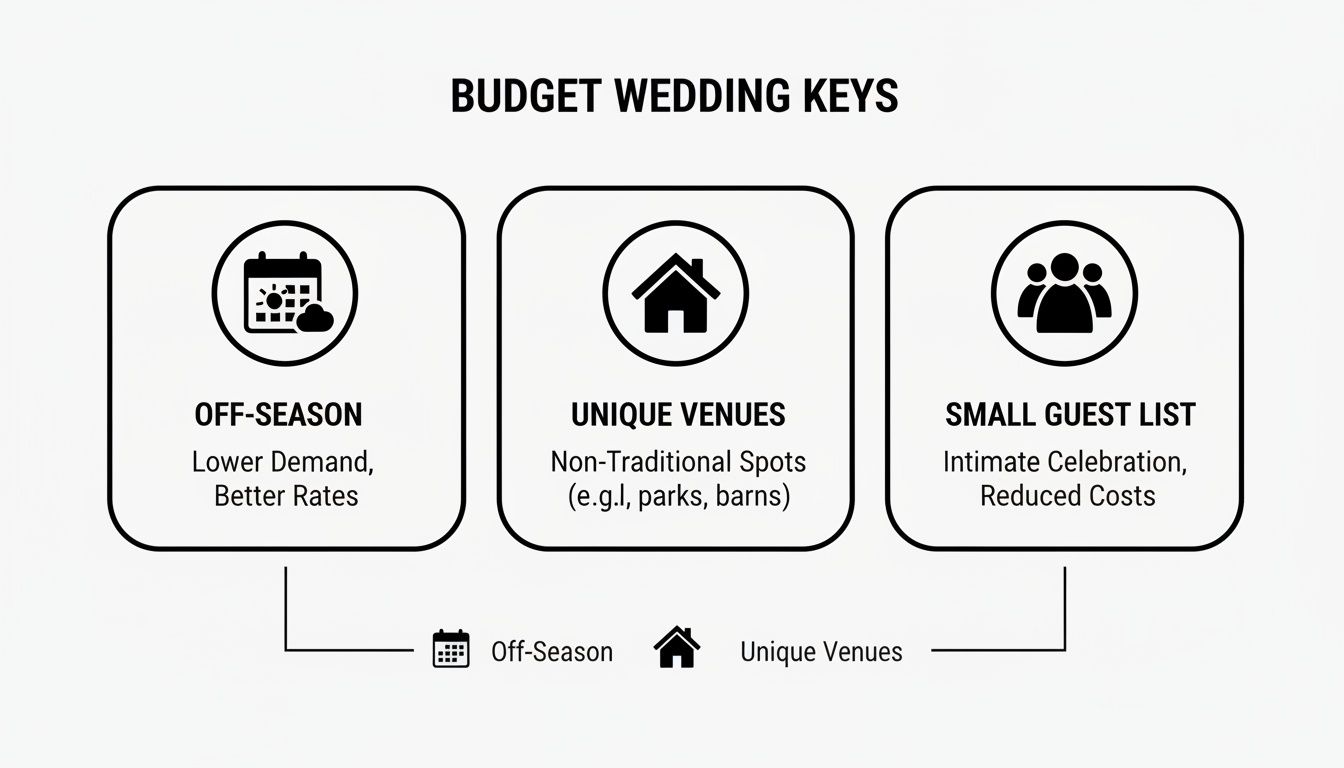
The image below perfectly captures the three golden rules for planning a wedding on a budget.

Visual guide outlining three key factors for budget weddings: off-season, unique venues, and a small guest list.

Honestly, if you focus on these three things—picking an off-season date, finding a unique venue, and keeping your guest list trim—you’ll get the absolute biggest bang for your buck.

A 12-Month Wedding Planning Timeline

A timeline isn't just a to-do list; it’s a sanity-saver. It stops you from feeling overwhelmed and helps spread out payments, which is much kinder to your bank account.

12+ Months Out

  • Set that budget and fire up your master spreadsheet.
  • Draft your guest list (be ruthless!).
  • Figure out your wedding style and priorities.
  • Start the big hunt: research and book your venue.

8-10 Months Out

  • Lock in your high-priority suppliers. Photographer, caterer, and your band or DJ are the ones who get booked up ridiculously far in advance.
  • Start the dress or suit shopping. It can take longer than you think!

6-8 Months Out

  • Get those Save the Dates in the post.
  • Book your florist and rental company for things like furniture, decor, and lighting. You can find more detail in our complete guide on how to plan a wedding.

4-6 Months Out

  • Finalise the guest list and send out your invitations.
  • Book transport and any accommodation blocks for guests.
  • Schedule those delicious menu tastings with your caterer.

2-3 Months Out

  • Time for the legal bits: apply for your marriage licence.
  • Have your final dress or suit fitting.
  • Finalise your order of service and music choices for the ceremony and reception.

1 Month Out

  • Confirm your final guest count with the venue and caterer.
  • Tackle the seating plan (good luck!).
  • Run through final details and payment schedules with all your suppliers.
  • Create a detailed timeline for the wedding day itself and share it with your bridal party and key suppliers.

Right, let's talk about the wedding budget. This is where things get real, but it's also where you take control and decide what truly matters for your big day. The secret isn't about having an endless pot of money; it's about making every rand work hard for the things you'll cherish most.

You and your partner need to sit down and get honest about your top three priorities. What are the non-negotiables? When you look back at your wedding album in ten years, what will make you smile the widest? Will it be the incredible photos that captured every little moment? The delicious food your guests are still raving about? Or maybe it was that live band that had everyone, even your great-aunt, on the dance floor all night.

A great way to do this is to create a 'must-have' list. Together, pick the top three things you absolutely can't imagine your day without. These are your splurges – where you'll happily invest a bigger slice of the budget. Everything else then becomes a candidate for some smart, savvy savings.

Once you know what you’re splurging on, the "saving" part feels less like a sacrifice and more like a strategic game plan.

Deciding What’s Worth the Splurge

Your list will be unique to you, but from my experience, some things consistently deliver the most bang for your buck and long-term value. Photography is almost always near the top of the list. After all, when the confetti has been swept away and the cake has been eaten, your photos are what you have left. To get a feel for what to expect, it’s helpful to research typical wedding photography prices and costs as a general benchmark for budgeting.

Other popular splurges often include:

  • The Guest Experience: This is all about creating a vibe. Think amazing food, a well-stocked open bar, or entertainment that gets the party started and keeps it going. If your main goal is to throw an unforgettable celebration for your friends and family, this is where to focus your funds.
  • The Venue: Sometimes, the right venue does all the heavy lifting. A space with tons of character, a breathtaking view, or beautiful gardens might cost more upfront but can save you a fortune on décor and flowers. You can get a clearer picture by exploring the real cost of venues for weddings here in the Cape.
  • Your Outfits: For some couples, feeling absolutely incredible in what they’re wearing is a top priority. This could mean a custom-tailored suit or that designer dress you’ve been dreaming about. Don't underestimate the power of feeling your best!

Smart Ways to Save (That No One Will Notice)

With your big-ticket items locked in, you can now get clever with cutting costs elsewhere. The trick is to trim the things that have the least impact on the overall experience for you and your guests.

Go Digital with Your Invites
You can save hundreds, sometimes thousands, of rands on printing and postage by sending beautiful digital invitations. Sites like Paperless Post or Greenvelope have stunning, customisable designs and make tracking RSVPs a breeze. For the day-of items like menus or place cards, use a free tool like Canva to design them yourself and get them printed at a local shop for next to nothing.

Rethink Wedding Favours
If we're being honest, most wedding favours get left behind on the table. Instead of spending R40-R80 per person on a small trinket, why not put that money towards something more meaningful? A donation to a charity close to your hearts is a wonderful gesture. Or, make the dessert the "favour" – a doughnut wall, an ice-cream cart, or a late-night food truck is far more memorable than a bag of sugared almonds.

Get Creative with Florals
Flowers are gorgeous, but the costs can spiral quickly. A good florist can work wonders on a budget. Ask for seasonal, locally-grown flowers, which are always more affordable and just as beautiful. A brilliant trick is to repurpose your ceremony flowers at the reception – that beautiful archway can become a backdrop for your main table! Focusing on one or two high-impact arrangements is also much more effective than dotting tiny, sad-looking posies everywhere. And never forget the power of greenery; eucalyptus and other foliage are stylish, fragrant, and budget-friendly fillers.

Assembling Your Dream Vendor Team Without Draining Your Bank Account

Your vendors are the artists who will bring your wedding day to life. For couples planning a wedding on a budget, the idea of hiring a professional team can feel overwhelming, but it really doesn't have to be. Finding incredible, affordable local suppliers in the Cape is all about knowing where to look and what to ask.

Three professionals discuss photography and design, reviewing a camera, laptop, and color palette. A 'DREAM VENDORS' sign is visible.

It’s about finding genuine value—that sweet spot where top-tier quality meets a price that works for you. Let's skip the pricey wedding directories and find the hidden gems that will make your day perfect without breaking the bank.

Finding Your Cape Town Wedding Pros

Forget the big, advertised names. The most creative and budget-savvy vendors are often discovered through social media and good old-fashioned word-of-mouth.

  • Dive into Instagram: Think of it as your personal wedding search engine. Use specific hashtags like #CapeTownWeddingFlorist, #WinelandsWeddingPhotographer, or #StellenboschWeddingCaterer. This is where you’ll find amazing new talent and small businesses whose work speaks for itself.

  • Join Local Community Groups: Facebook groups for Cape Town brides are goldmines for honest reviews and recommendations. You can ask for vendor suggestions within your budget and get real, unfiltered feedback from recent couples.

  • Ask Your Booked Vendors: Your photographer knows a fantastic makeup artist. Your venue coordinator can probably point you to a great local DJ. These professionals work together constantly and are usually happy to share their network of trusted colleagues.

The Art of the First Email

That first email to a potential vendor is key. You need to get an idea of their pricing, availability, and flexibility without sounding like you're just hunting for a bargain. The trick is to be clear, polite, and specific.

A good first email shows you've done your homework and respect their craft. Always include your wedding date, venue, estimated guest count, and a quick line about your vision.

Your goal isn't just to get a price list; it's to start a conversation. You're looking for partners who are excited by your vision and willing to collaborate to make it happen within your budget.

Once you’ve covered the basics, you can ask direct but friendly questions to see if they're a potential fit.

Smart Questions to Ask Potential Vendors

  • "We are working with a photography budget of around R25,000. Do you have any packages that might align with this, or could a package be customised?"
  • "We absolutely love your work! Are your rates different for a Friday or a winter wedding?"
  • "Could you please send through your package options? We're particularly interested in your entry-level offerings."

Asking questions like this opens the door for a discussion and shows you're an organised, serious client.

Negotiating with Confidence and Kindness

Negotiating isn't about trying to get something for nothing; it’s about finding a win-win. Most vendors are passionate small business owners who want to work with you and are often open to creating custom packages.

For instance, if a photographer's full-day package is a bit of a stretch, ask if they offer a shorter-day rate to cover just the ceremony and portraits. If a catering quote is high, see if you can swap a formal plated meal for stylish food stations or a family-style service, which often cuts down on staffing costs.

Another huge area for savings is rentals. Venue packages often include a big markup on things like furniture, linens, and decor. It is nearly always more cost-effective to hire these items directly from a rental specialist. This approach not only saves money but gives you much more control over the final look. By sourcing your own tables, chairs, or even fun extras like LED furniture or a slush machine, you can create a completely personalised atmosphere that perfectly fits your style and your budget.

Your Guide to Smart Rentals and DIY Decor

If you're planning a wedding on a budget, think of rentals and DIY decor as your secret weapons. This is how you take a blank canvas venue and transform it into a high-end, personalised space without that heart-stopping price tag. Here's our playbook for making smart, stylish choices that will truly elevate your day.

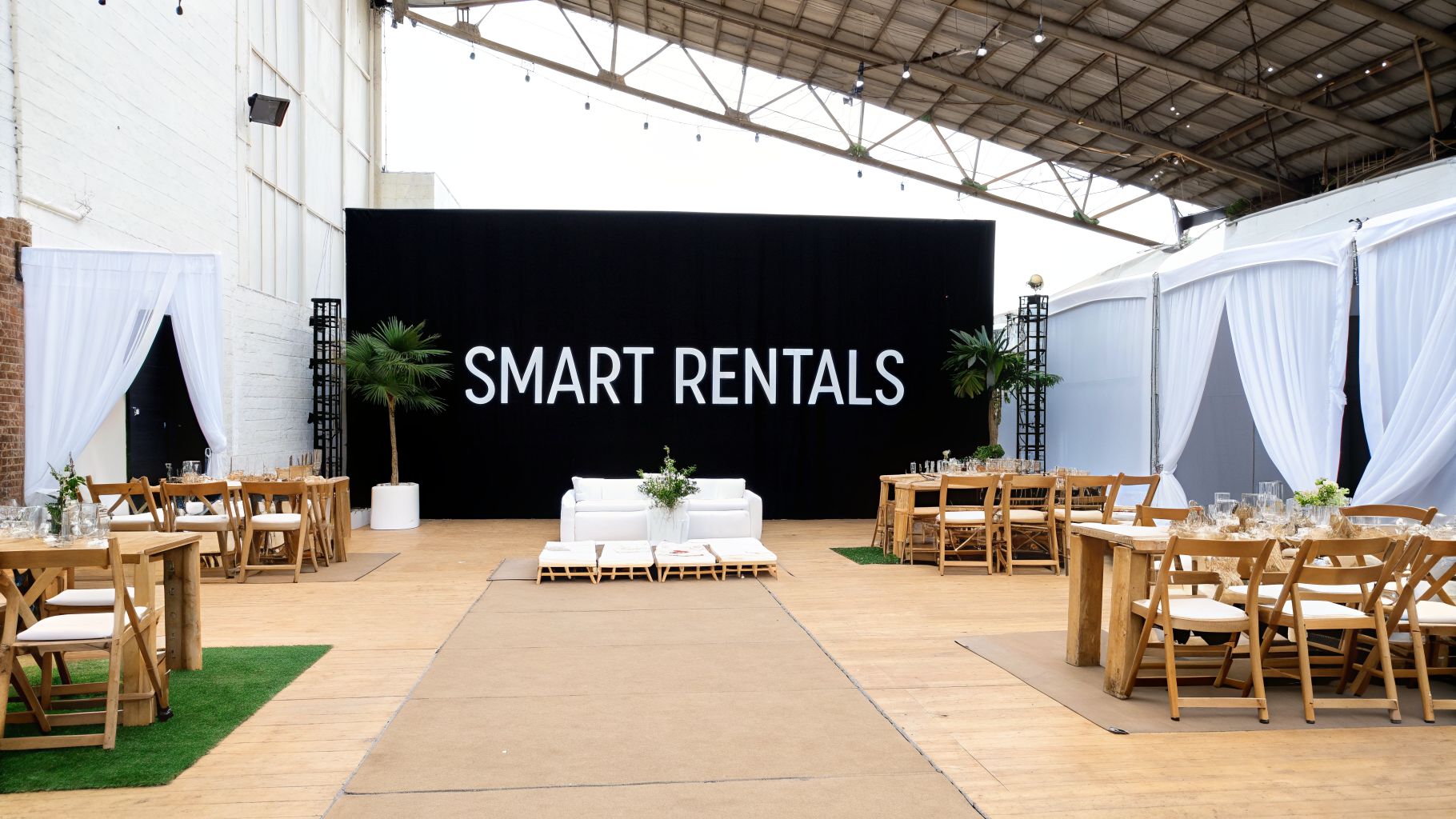
Modern event venue with wooden tables, white chairs, lounge seating, and a large SMART RENTALS sign.

We'll walk you through the essential rentals that make the biggest impact and the DIY projects that add tons of personality without adding stress.

The Smart Rental Checklist for Budget Weddings

Renting gives you incredible freedom and, more importantly, financial control. Instead of being stuck with a venue's often limited (and marked-up) options, you can hand-pick pieces that perfectly match your vision and budget. In our experience, hiring directly from a rental company is almost always more cost-effective.

You can break down your rental list into the absolute necessities and the brilliant "wow" factors.

The Foundational Rentals

These are the non-negotiables that form the backbone of your reception.

  • Tables and Chairs: Don't underestimate the power of good seating. Simply swapping out standard conference chairs for elegant Wimbledon or classic Tiffany chairs can instantly upgrade the entire look of your reception.
  • Linens: Crisp tablecloths and napkins in your chosen colour palette are what tie the whole look together.
  • Crockery, Cutlery, and Glassware: You'll need a full place setting for every guest. Rental companies offer beautiful, cohesive sets so you don’t have to worry about a mismatched look.
  • Climate Control: Absolutely essential for the famously unpredictable Cape Town weather. Renting heaters for a winter Winelands wedding or fans and air-conditioners for a summer celebration is a small cost that ensures your guests stay comfortable.

The High-Impact "Wow" Factors

These are the clever rentals that create those memorable moments and make for incredible photos.

  • LED Furniture: This is a total game-changer for creating atmosphere after the sun goes down. A few LED cocktail tables and cubes can establish a chic lounge area for a fraction of the cost of elaborate floral installations. It’s modern, fun, and unbelievably effective.
  • Slush Machines: A guaranteed crowd-pleaser! A slush machine can work as a welcome drink station, a fun cocktail bar (just add the spirits), or even a unique dessert option. It’s interactive and far more affordable than a fully staffed bar.
  • Statement Decor: Think about a beautiful wedding arch for your ceremony or a unique backdrop for the photo booth or main table. Renting these large-scale pieces is so much cheaper than buying them or attempting to build them from scratch.

When you hire items, you're not just renting a product; you're renting convenience. The price almost always includes delivery, setup, and collection, saving you a massive amount of logistical stress before and after your wedding day.

Cost Comparison: Rental Package vs. Sourcing Individually

Bundling your rentals into a package often unlocks significant savings compared to sourcing each item from a different supplier. It also saves you the headache of coordinating multiple deliveries and collections.

Item or Service Example Rental Package Estimated Individual Sourcing Cost
Tables & Chairs (100 guests) R7,500 R9,000
Linens, Crockery, Glassware R6,000 R7,500
LED Lounge Pocket (4 cubes, 2 tables) R2,500 R3,500
Slush Machine R1,200 R1,800
Delivery & Collection (consolidated) R800 R2,400 (e.g., 3 x R800)
Total R18,000 R24,200

As you can see, the savings from a consolidated package are substantial, not to mention the time and stress you'll save.

High-Impact DIY That Won’t Cause a Meltdown

DIY is a fantastic way to inject your personality into the day, but it’s so important to be realistic. The goal is to tackle projects you'll actually enjoy and that add real value—not to give yourself a second full-time job.

Before you even think about heading to the craft store, ask yourself three quick questions:

  1. Do I honestly have the time to do this without feeling completely rushed?
  2. Do I have the skills (and the tools) required to make it look good?
  3. Will the cost of materials actually be a lot less than just hiring or buying it?

If you can answer "yes" to all three, then go for it!

Low-Stress DIY Projects to Try

  • Seating Chart: Forget trying to master complex calligraphy. Use a free tool like Canva to design a simple, elegant chart. Get it printed on a large board at a local print shop and display it on a rented easel. Easy and effective.
  • Table Numbers: This is a perfect small-scale project. You can find plain wooden or acrylic numbers online and simply paint them to match your decor. Or, design and print simple cards that complement your seating chart.
  • Photo Booth Backdrop: You don’t need an elaborate, built-from-scratch structure. A simple frame draped with ribbons, streamers, or strings of fairy lights can look amazing in photos. The focus will be on your happy guests, not the backdrop's construction.

DIY Projects to Avoid

Some projects look incredibly easy on Pinterest but are logistical nightmares in reality. Unless you have specific experience (or a very talented friend who owes you a favour), it's often wise to avoid these.

  • Complex Floral Arrangements: Creating dozens of centrepieces and bouquets is incredibly time-consuming and requires a cool space for storage. Rather leave this to the pros and save money by asking them to use seasonal, local blooms.
  • Catering or The Wedding Cake: Food safety and large-scale cooking are best left to professionals. The stress and risk are simply not worth the potential savings.
  • Full Wedding Stationery Suite: Designing, printing, cutting, and assembling hundreds of invitations, menus, and place cards is a massive undertaking. Focus your energy on one or two simple elements instead.

By combining smart rentals with a few carefully chosen DIY touches, you can achieve that bespoke, high-end feel that truly honours your style and your budget. Explore all the possibilities for event decoration hire to see how you can bring your vision to life affordably.

Alright, let's tackle some of those burning questions that keep you up at night. When you're in the thick of wedding planning, it's easy to get bogged down by the details. Here are the clear, straightforward answers you need.

What Does an Average Wedding in Cape Town Cost in 2026?

This is the million-Rand question, isn't it? While every wedding is different, a mid-range celebration for 80-100 guests in the Cape Town area often falls somewhere between R250,000 and R450,000.

But don't let that number scare you. That's just an average. By using the strategies we've talked about—like picking an off-season date or a less traditional venue—you can absolutely pull off a stunning wedding for under R150,000. It all boils down to your priorities and some savvy planning.

Is It Cheaper to Hire Items Than to Use the Venue's?

More often than not, yes! It’s always a smart move to get a separate quote from a rental company before you sign on the dotted line with a venue. Venues can add a hefty markup to their in-house items, and honestly, their selection is often quite limited.

Hiring directly from a supplier doesn't just open up a world of stylistic choice (hello, unique pieces!); it can be significantly lighter on your wallet. This is especially true when you can bundle items into a package, which saves you on the cost per item and on delivery fees.

What Is the Single Biggest Way to Save Money on a Wedding?

Without a doubt, the most effective way to slash your wedding costs is to trim your guest list. Think about it: every guest adds to the bill across multiple categories—catering, drinks, table settings, chair hire, stationery, and more.

Cutting just 10 people from your list can genuinely save you thousands of Rands. That’s money you can then put towards something you really care about, whether it's your dream photographer, that perfect outfit, or an amazing honeymoon.

Remember, your wedding day is a celebration of your union, not a social obligation to host everyone you've ever met. An intimate wedding with your inner circle often feels far more personal and meaningful, with the wonderful bonus of being much kinder to your budget.

Are All-Inclusive Wedding Packages Good Value?

They can be brilliant for predictable costs and convenience, which is a massive relief for many couples planning on a budget. Knowing the final number upfront takes a lot of financial stress out of the equation.

However, they aren't always the best value for money. These packages can lock you into specific vendors and styles, and you might end up paying for services you don’t actually want or need. Always ask for an itemised breakdown of what’s included and compare it to the cost of sourcing things yourself. Often, a hybrid approach—using some of the venue's services but hiring your own specialists for others—strikes the perfect balance.


Planning a gorgeous and affordable wedding in the Cape is all about making smart choices, and ABC Hire is here to help you make them. From chic LED furniture that brings an instant party vibe to the essentials like tables, chairs, and climate control, we offer high-quality rentals that deliver a high-end look without the price tag. Explore our full range of event furniture and accessories and let us help you bring your vision to life.

A Guide To Wedding Tent Hire In Cape Town

Picture this: You’re saying “I do” with the iconic silhouette of Table Mountain watching over you, or maybe you're nestled among the lush, rolling hills of the Winelands. The secret to bringing these incredible visions to life is finding the perfect wedding tent hire. A tent gives you the ultimate freedom, letting you build your dream venue from scratch almost anywhere you can imagine.

Crafting Your Perfect Cape Town Outdoor Wedding

An outdoor wedding here in the Western Cape is a blank canvas like no other. Forget being stuck within four walls; you get to design your entire space from the ground up. It’s a chance to let your personality shine, whether you’re dreaming of a glamorous, high-end affair on a private Franschhoek wine estate or a chilled, barefoot celebration on a secluded West Coast beach.

The beauty of a tented wedding is that you’re in complete control of every single detail. From the floor plan and the lighting to the overall vibe, you get to create a space that tells your unique story as a couple. Of course, all this creative freedom means that getting the initial planning right is absolutely essential for a smooth, stress-free day.

Starting Your Planning Journey

The first few decisions you make are easily the most important. Before you even start looking at tent styles or sizes, you need to lock down the fundamentals of your wedding day.

  • Guest Count: This is the big one. Your number of guests will have the single biggest impact on the size of your tent and, of course, your budget.
  • Wedding Style: Are you thinking of a formal, sit-down dinner? Or is a more casual, cocktail-style reception more your vibe? The answer will completely change your layout and how much space you’ll need.
  • Location, Location, Location: The venue itself is a huge piece of the puzzle. A critical part of crafting your perfect day is choosing the right spot. For some great tips on this, check out this comprehensive guide on how to choose a wedding venue.

A well-chosen tent does so much more than just provide shelter. It becomes the architectural heart of your celebration, framing the incredible landscape and creating a wonderfully intimate atmosphere for you and your guests.

By thinking through these core details first, you're building a solid foundation for everything that follows. For a much deeper dive into getting these elements organised, take a look at our complete guide on how to plan a wedding. A little prep work now makes the search for your ideal wedding tent hire focused and successful, setting the stage for a day you’ll never forget.

How To Choose The Right Tent Size And Layout

Choosing the right tent for your wedding isn’t just a numbers game. Yes, your guest count is the starting point, but the real magic happens when you start thinking about the experience you want to create. It’s about designing a space that flows beautifully and works perfectly for your celebration. Let's get beyond simple square metres and start crafting an intentional layout.

Every single element, from the bar to the band, needs its own dedicated space. You have to think about the dance floor, the DJ booth, buffet tables, and maybe even a cosy lounge area for guests to relax. A formal seated dinner for 150 guests, for example, needs a completely different footprint than a cocktail-style reception for the same number of people. One needs room for big round tables and service aisles, while the other is all about creating space for people to mingle and move around.

Mapping Out Your Space

A classic mistake I see all the time is underestimating how much room the 'other stuff' takes up. That amazing dance floor you’re picturing? It can easily gobble up the same amount of space as three or four guest tables. And if you're dreaming of a live band, they'll need a much bigger stage area than a solo DJ.

My biggest piece of advice: Always go slightly bigger than you think you need. A tent with a little extra room feels grand and luxurious. A tent that's even a fraction too small feels cramped and stuffy for everyone. You're aiming for intimacy, not a squeeze.

Try to imagine your guests' journey through the night. Where do they walk in? How far is the bar from the dance floor? Is there a clear path to the loos? A well-planned layout guides everyone effortlessly through the event, creating distinct zones for dining, dancing, and chatting. This is how you turn a simple tent hire into a custom-designed venue.

This flowchart can help you visualise those first big decisions based on your guest list.

Flowchart illustrating wedding tent selection recommendations based on the number of guests.

As you can see, it all starts with your guest count and wedding style. From there, you can really start to drill down into the specifics of size and layout.

Finding The Right Fit In Cape Town

Once you've got a rough idea of what you need, you can start looking at actual sizes. Here in South Africa, local companies have a fantastic range of marquee tents perfect for weddings. You'll find everything from modular structures starting at 5x10m right up to huge 15x20m setups that can host a massive party. For a deeper dive into the regional market, this Grand View Research report has some interesting insights.

To make things a bit easier, I've put together a quick guide to help you estimate what you might need.

Wedding Tent Size and Capacity Guide

This table is a great starting point for figuring out what size tent you'll need. Just remember, these are estimates—things like the shape of your tables or adding a large lounge area will change the final numbers.

Guest Count Seated Dinner (Round Tables) Cocktail Style (Standing) Seated Dinner + Dance Floor
50-70 ~ 9m x 15m (135m²) ~ 9m x 9m (81m²) ~ 9m x 21m (189m²)
80-100 ~ 10m x 20m (200m²) ~ 10m x 15m (150m²) ~ 10m x 25m (250m²)
120-150 ~ 12m x 25m (300m²) ~ 12m x 20m (240m²) ~ 12m x 30m (360m²)
180-200 ~ 15m x 30m (450m²) ~ 15m x 25m (375m²) ~ 15m x 35m (525m²)

Use this table when you start chatting with your chosen wedding tent hire company. They’re the experts and can help refine these numbers based on your unique plans, whether that includes a grand entrance, a dedicated dessert station, or anything else you've dreamt up. They’ll make sure your final choice is the absolute perfect fit.

Finding Your Perfect Wedding Tent Style

Let's be honest, the tent you choose does so much more than just provide cover. It’s the architectural heart of your wedding day, the first thing guests see, and it sets the entire mood. Think of it as the main character in your venue's story. Nailing the style is absolutely crucial because it shapes everything from the overall vibe to how your guests take in those incredible Cape Town views.

A great place to start is your wedding theme. A glamorous, formal affair at a Constantia wine estate just calls for a different structure than a chilled-out, bohemian party on a windswept Kommetjie beach. Each tent brings its own personality and practical perks to the table.

Two different tent styles, a large white marquee and a cream teepee, on a green lawn with a historic building.

Classic Frame Marquees and Clear-Span Tents

For that timeless, elegant look, you really can’t beat a classic frame marquee. These are the versatile workhorses of the wedding world, known for their clean lines and completely open interiors. With zero central poles getting in the way, you have total freedom to design your layout and put the dance floor, tables, and decor exactly where you envision them.

The modern twist on this is the clear-span tent, which often comes with transparent PVC walls or even a clear roof. This style is a massive hit in the Winelands for an obvious reason: it lets you bring the breathtaking vineyard and mountain scenery right into your reception, no matter what the weather decides to do. Popular models can comfortably seat up to 190 guests, making them perfect for those lavish celebrations we see on Stellenbosch estates.

A clear-span marquee gives you the best of both worlds—full protection from the elements without sacrificing the incredible views that make a Cape Town wedding so special. It’s like having an indoor wedding with an outdoor feel.

Romantic Sailcloth and Stretch Tents

If you're dreaming of something more romantic and whimsical, a sailcloth tent is just beautiful. They’re known for their soaring peaks and a translucent fabric that creates a soft, ethereal glow during the day. Come nightfall, they look absolutely magical all lit up. That sculpted silhouette adds a real touch of fairytale charm to any setting.

For a more modern and relaxed vibe, the stretch tent (often called a Bedouin tent) is a fantastic choice. Its organic, flowing shape means it can be set up in countless ways, which is ideal for unconventional spaces or for creating a less formal atmosphere. They are a brilliant option for beach weddings or garden parties where you want things to feel a bit less structured. If you're planning a smaller, more intimate get-together, you might find our guide on gazebo hire in Cape Town helpful for comparing options.

Unique and Unforgettable Tipis

For couples who want to make a real statement, tipis (or teepees) are an enchanting and unforgettable alternative. They are often linked together to create one large, interconnected space, bringing an incredible sense of warmth and intimacy to the celebration.

  • Atmosphere: Tipis create a magical, almost mystical vibe, especially in the evening with fairy lights and open fires (where the venue permits, of course).
  • Best For: Rustic, bohemian, or festival-themed weddings.
  • Considerations: They do have internal poles, which means you need to be a bit more creative with your floor plan. But this can also be a plus, helping to create cosier, more defined zones within the larger space.

Ultimately, the wedding tent you hire should be a true reflection of your personal style. When you match the tent's character to your wedding's theme, you create a seamless and immersive experience that you and your guests will never forget.

Beyond The Tent: Essential Add-Ons And Finishes

A bare tent is just a shelter; the right details transform it into a breathtaking venue. Think of these elements as the finishing touches that infuse the space with comfort, ambience, and personality, turning a simple structure into an unforgettable experience.

The foundation of your tented venue starts from the ground up—literally. Flooring is one of the most critical, yet often overlooked, parts of a successful wedding tent hire. It gives your guests a stable, clean surface to walk on and completely elevates the look and feel of the space.

Interior of a large white wedding tent with a polished wooden dance floor, elegant string lights, a chandelier, and speakers.

Creating Ambiance With Lighting And Comfort

Lighting is where the real magic happens. It dictates the mood of your entire reception, shifting the atmosphere from bright and celebratory during dinner to romantic and intimate for the first dance. The options are wonderfully diverse and can be layered for maximum impact.

  • Fairy Light Canopies: Draped across the ceiling, these create a dreamy, starry-night effect that is pure romance. For more inspiration, you can learn all about creating stunning backdrops with curtain fairy lights in our detailed guide.
  • Chandeliers: For a touch of classic elegance or rustic charm, a central chandelier acts as a stunning focal point.
  • Uplighting: Placed around the tent's perimeter, these lights can wash the walls in your wedding colours, adding drama and dimension.

Next, you have to plan for Cape Town’s famously unpredictable weather. Even on a warm summer day, the evening can bring a chill, especially in the Winelands.

Professional wedding tents are designed to handle the elements, but ensuring guest comfort is your responsibility. Climate control isn't a luxury; it’s an essential part of creating a welcoming environment.

Discreetly placed heaters can keep the tent cosy after sunset, while powerful air-coolers or fans are non-negotiable for a summer afternoon wedding. A comfortable guest is a happy guest who will stay on the dance floor longer.

Essential Finishes And Unique Touches

Beyond the major elements, smaller details complete the picture. A dedicated dance floor, for instance, isn't just practical—it’s an invitation to celebrate. A beautiful wooden dance floor defines the party space and feels much better underfoot than interlocking plastic or, worse, damp grass.

Modern weddings are also about creating unique experiences. For those looking to integrate modern technology and capture unique memories, you might consider exploring the concept of a digital wedding guest book using a virtual photo booth. It's a fun, interactive alternative to the traditional book that gets everyone involved.

To ensure nothing gets missed, use a checklist when discussing options with your wedding tent hire company. This includes everything from the flooring and lighting right down to the power source (like a generator) and luxury portable toilets if the venue doesn't provide them. These well-planned additions guarantee a seamless, comfortable, and beautiful celebration for everyone.

Navigating The Booking Process And Key Timelines

Securing the perfect tent for your big day, especially in a sought-after spot like Cape Town, really comes down to timing. The wedding season here is in full swing from October through to April, which means demand for high-quality wedding tent hire goes through the roof. If you want to avoid that sinking feeling of discovering your dream tent is already booked, you need to get ahead of the game.

My advice? Start doing your research and sending out initial enquiries 9 to 12 months before your wedding date. This gives you plenty of breathing room to browse different suppliers, compare quotes without feeling rushed, and find a company whose style just clicks with your vision. It also puts you at the front of the line for those super popular dates, like long weekends and festive season holidays.

Making It Official And Locking It In

Once you’ve found a supplier you love and you’re set on the style and size of your tent, it's time to make it official. You should be aiming to sign the contract and pay the deposit no later than 6 to 8 months out. This is what locks in your booking and stops another couple from snapping up the tent you've got your heart set on.

Before you put pen to paper, please, please read the rental agreement properly. Don't just skim it – make sure you understand every single clause.

  • Payment Schedule: Know exactly when the deposit and the final balance are due.
  • Cancellation Policy: Life happens. Understand the financial side of things if your plans have to change.
  • Liability Insurance: Get clarity on who is responsible for what. The hire company will have their own insurance, but it’s worth checking if you need any extra cover from your side.
  • Damage Waiver: This clause explains how any potential damages to the tent or equipment are handled.

A detailed, thorough contract isn't just paperwork; it's the sign of a professional and organised company. It’s there to protect both of you and ensures there are no nasty surprises or hidden costs later on.

The Site Inspection: A Step You Cannot Skip

This is probably one of the most critical steps in the whole process: the site inspection. Your tent hire company absolutely must visit the venue with you, usually a few months before the wedding. Trust me, this isn't just an optional extra; it's a non-negotiable part of making sure everything runs smoothly.

During this visit, the team assesses a few key things. They’ll check the ground conditions to figure out the best way to anchor the tent – are we working with soft grass or hard paving? They'll also map out the delivery route to make sure their trucks can actually get to the site without any drama. Finally, they’ll look for power sources and chat through the logistics for generators if they're needed.

This simple meeting can sidestep so many last-minute headaches. For instance, the supplier might spot potential issues that need special permits, especially if you're on public land or in a nature reserve. They can also make sure their setup plan works with any specific rules your wine estate venue might have. Taking this step guarantees that when setup day arrives, everything runs like a well-oiled machine.

Understanding Wedding Tent Hire Costs In Cape Town

Let's talk money. Budgeting for your wedding can feel like you're trying to hit a moving target, but figuring out the cost of your tent hire doesn't have to be a shot in the dark. I'm going to break down the typical expenses so you can plan with a clear head, making sure there are no nasty surprises down the line.

The final price tag isn't just one number; it’s a combination of the tent itself, all the beautiful extras, and the hands-on labour needed to bring your dream venue to life.

The base hire fee for the tent is your starting point, and this can swing wildly depending on the style and size you need. A simple stretch tent for a chilled cocktail party will obviously be lighter on the wallet than a massive clear-span marquee built to host 200 guests for a formal sit-down dinner.

To give you a rough idea, a standard 10x10m marquee might rent for somewhere between ZAR 15,000 and ZAR 25,000 for the event. On the other hand, a premium wedding setup, complete with elegant chandeliers and solid wood flooring, can easily push past the ZAR 200,000 mark. If you're a numbers person, you can dive deeper into the tent rental service market here.

Key Factors Influencing Your Quote

Beyond the tent itself, a few other things can nudge your quote up or down. Getting a handle on these variables is the key to understanding your quote and knowing exactly where every rand is going.

  • Location and Access: Getting a tent out to a remote farm in the Winelands will naturally cost more than setting one up in the Cape Town suburbs. Think about access, too. If the site has steep slopes, is miles away from where the truck can park, or has any other tricky terrain, it’s going to take more crew and more time, and that will be reflected in the final cost.
  • Installation Complexity: A straightforward setup on a perfectly flat lawn is the dream scenario. But life isn't always that simple. If you need a tent installed on a slope, over a swimming pool, or on a hard surface like paving, it requires specialised gear and anchoring systems, which bumps up the labour costs.
  • Duration of Hire: Most quotes cover a standard 2-3 day period. This gives the team enough time to set everything up before the big day and take it all down afterwards. If you’re planning a multi-day celebration and need the tent for longer, the price will adjust accordingly.

A quick piece of advice: a quote is more than just a number. It's a reflection of the service, quality, and expertise you're investing in. The cheapest option isn't always the best value, especially when you’re talking about the roof over your guests' heads.

Budgeting For The All-Important Add-Ons

The initial tent hire fee is just part one. All those beautiful finishing touches and practical must-haves are priced separately, which is great because it means you can completely customise your space.

These extras are usually quoted per square metre or as individual items. Flooring is a big one, but it's an expense that’s totally worth it for the stability and elegance it adds. Lighting can be anything from simple, charming string lights to dramatic, high-end installations. And please, don't forget climate control! Heaters for a chilly evening or fans for a hot day are non-negotiable for keeping your guests comfortable.

When you get a quote, check that it breaks all these costs down clearly. This way, you can see exactly how the total is calculated and make smart decisions based on what’s most important to you.

Your Wedding Tent Questions, Answered

Planning a tented wedding in Cape Town brings up a few common questions. We get it. You want everything to be perfect. Let's tackle the big ones so you can plan with complete confidence.

What if it rains or gets windy?

This is probably the number one concern for any Cape Town wedding! The good news is that professional wedding tents are built to handle our notoriously unpredictable weather.

Any reputable company will use a frame or clear-span marquee, both of which are fully waterproof and have wind-resistance ratings. Don't be shy to ask for the specs! Side walls are also a standard inclusion, ready to be rolled down if the wind picks up or the heavens open.

Do we need power and toilets?

For most "blank canvas" venues like a wine farm field or a private estate garden, the answer is a definite yes. You'll need to arrange for your own power source and guest facilities.

This usually means hiring a generator (make sure it's a quiet "inverter" type so it doesn't drone over your speeches!) and a set of luxury portable toilets. Your tent hire company has seen it all before and can almost always recommend trusted suppliers for these or even bundle them into your package, which simplifies things immensely.

📍 Cape Town + Winelands