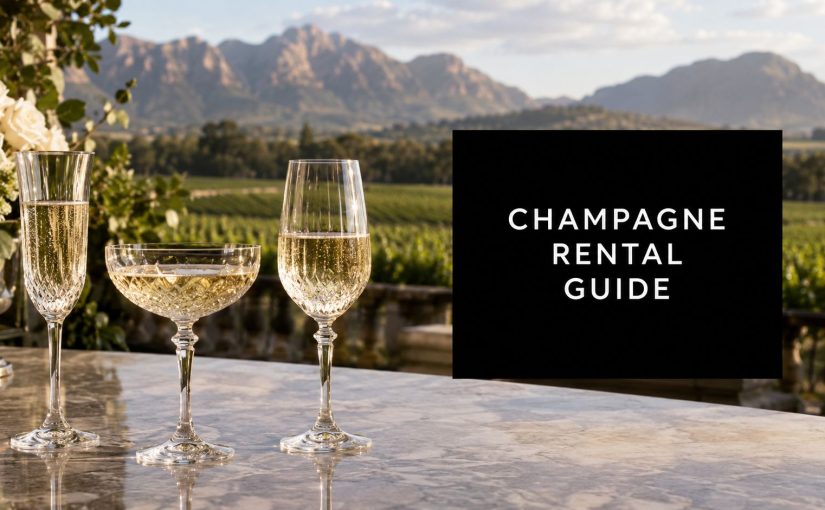
A lot of hosts arrive at the same point. The venue is booked, the menu is sorted, the Cap Classique is chosen, and then someone asks a deceptively simple question: what glasses are we using for the toast?
That choice seems small until the event is real. In Cape Town and the Winelands, glassware has to do more than look elegant on a styled table. It has to survive transport up a gravel drive, suit the service style, work in warm afternoon conditions, and fit the budget once breakage and collection are factored in. Crystal champagne glasses can enhance a celebration beautifully, but they aren't always the smartest option for every guest, every pour, or every venue.
The right answer depends on what matters most at your event. Sometimes that's visual impact for the main toast. Sometimes it's aroma and tasting quality during a food-led service. Sometimes it's reducing risk at a high-volume function where staff are moving fast and guests are standing. The best rental decisions usually come from balancing those priorities early, before the tablescape is locked in.
Setting the Scene for the Perfect Toast
A Stellenbosch wedding often looks effortless from the guest side. The light drops behind the mountains, speeches wrap up, servers move into position, and every place setting suddenly catches the last bit of gold from the sun. Then the toast starts, and all eyes go to the glasses.

That moment is why many couples and planners ask for crystal champagne glasses rather than basic event stemware. Crystal catches light differently, photographs cleanly, and gives the table a sharper, more finished look. On a long harvest table in Franschhoek or a formal ballroom setting in town, it changes the mood immediately.
But the toast is only one part of the job. The glass has to suit the drink being poured, the way staff are serving, and how the event will move. A refined seated dinner with Cap Classique pairings needs a different approach from a rooftop launch where guests are circulating with canapés.
The best glassware choice is the one that still feels like the right choice once delivery, handling, service pace, and collection are added to the conversation.
Hosts usually start with style. Experienced planners start with use. If you're hiring for a Cape Town wedding, a corporate activation, a matric dance, or a milestone birthday, crystal can absolutely be worth it. You just want to know where it adds value, where it creates avoidable risk, and when standard glass is the more sensible call.
Why Choose Crystal Over Standard Glass
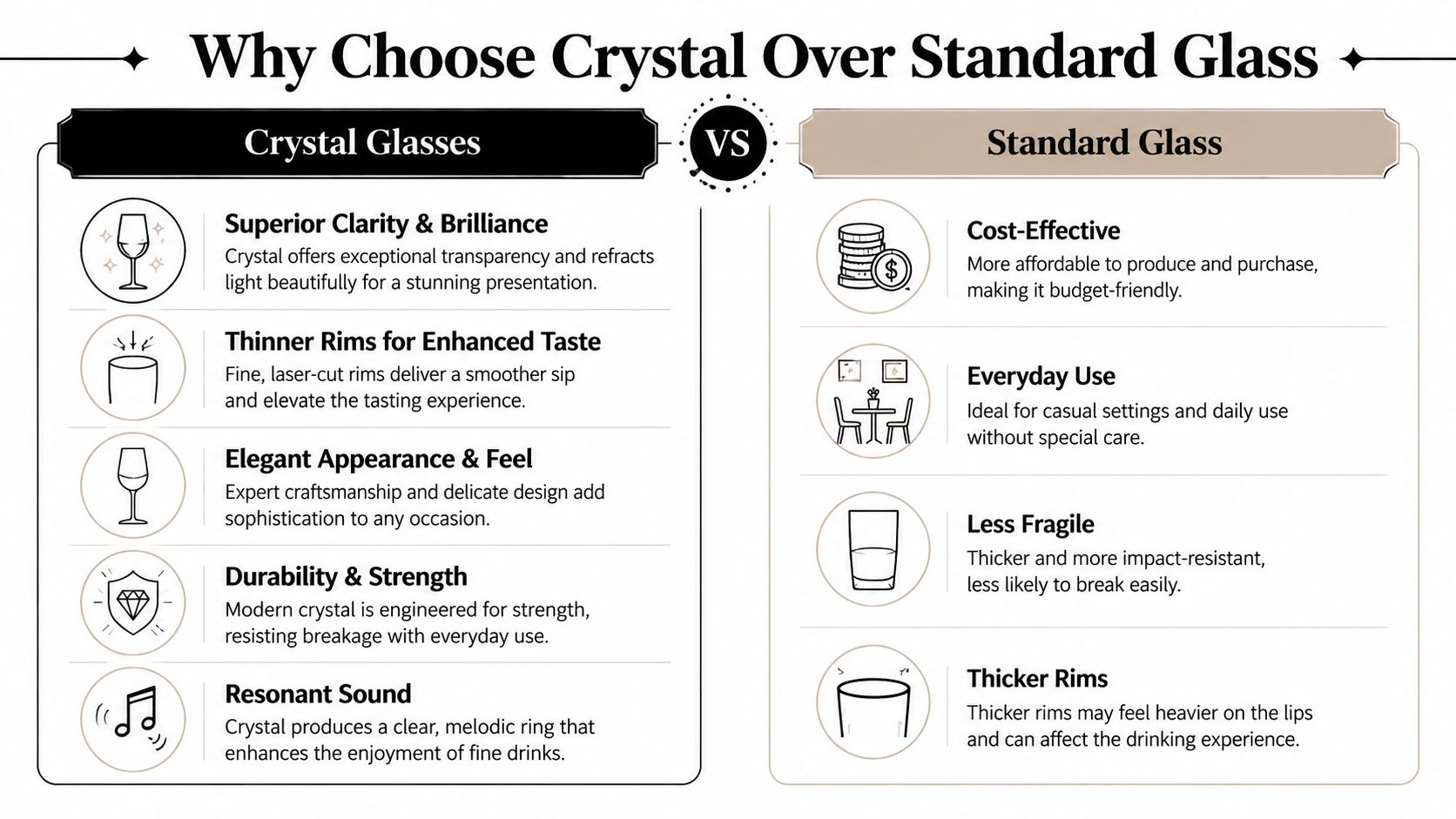
The difference between crystal and standard glass isn't only visual. In service, guests notice it through touch, temperature, aroma, and the overall sense that the drink has been presented with care.
What crystal changes in the drinking experience
For sparkling wine service, crystal can be drawn thinner than standard glass while retaining strength, which reduces rim thickness and improves sensory delivery. It lowers lip contact and helps concentrate aroma, while a narrow bowl profile slows CO₂ loss and preserves effervescence longer, according to this guide to different champagne glass types. That same source notes that the classic flute typically holds about 6 to 10 ounces.
A thinner rim matters more than many hosts expect. A heavy rim makes a drink feel blunt. A fine rim lets the pour feel cleaner and more deliberate. At a wedding toast, guests may not describe that difference out loud, but they register it.
Crystal also tends to look crisper on the table. In event photography, that means less visual heaviness around each place setting and a brighter sparkle when candles or sunset light hit the stems.
Why this matters in Cape Town conditions
At local events, heat is part of the planning brief. Stemmed champagne glass designs are intended to prevent hand heat from warming the wine, while shaped bowls funnel aromas toward the nose rather than letting them disperse, as outlined in this champagne glass overview. That's especially relevant at summer garden weddings, lawn ceremonies, and outdoor receptions where glasses are often in guests' hands for longer than planned.
Crystal champagne glasses earn their place. They aren't just prettier. They support the actual serving conditions.
A useful way to think about it is this:
- For appearance: Crystal gives you more brilliance, finer lines, and a more premium table finish.
- For feel: The finer rim makes the first sip more elegant.
- For service quality: Stem and bowl design help preserve temperature and direct aroma.
- For event positioning: Crystal signals intention. It tells guests this isn't a casual pour.
If you're comparing options for a broader wine service setup, this practical look at wine glasses and crystal is useful because it frames the decision as a service choice, not only a décor one.
Practical rule: Choose crystal when the glass is part of the guest experience. Choose standard glass when the glass is mainly there to get the drink from tray to hand with the least risk.
The Three Main Styles of Champagne Glass
Not every crystal champagne glass serves the same purpose. For event work, three styles come up repeatedly. Flute, coupe, and tulip. Each one solves a different problem.
Flute
The flute is the familiar tall, narrow option. It suits formal toasts, neat tray service, and events where you want guests to see a clean stream of bubbles rising through the pour.
Its shape is engineered around bubble retention. The tall, slender form reduces the liquid surface area exposed to air, which helps slow dissipation and keeps carbonation visible for longer. For speeches, arrival drinks, and classic wedding moments, that visual effect still matters.
Flutes work especially well when:
- The toast is central: A coordinated raise of matching flutes always reads clearly in photographs.
- Staff are tray-serving: The straight profile is easy to line up and present.
- The pour is brief: Guests receive, toast, sip, and move on.
The drawback is aroma. If the bowl is too narrow, the wine doesn't open up much.
Coupe
The coupe is theatrical. It brings vintage glamour immediately, which is why themed events, black-tie birthdays, and champagne towers often lean in this direction.
The style has real history behind it. The crystal coupe debuted in Europe in the early 1830s and remained the dominant style for nearly 110 years, according to this history of champagne glasses. By the mid-19th century, Benjamin Disraeli described it as "a saucer of ground glass mounted on a pedestal of cut glass", which captures both the silhouette and the craftsmanship that made it distinctive.
What the coupe gives you:
- Strong visual identity
- Excellent fit for Art Deco, Gatsby, or old-Hollywood styling
- A broad surface that shows cocktails beautifully
What it doesn't give you is control. The wide bowl lets carbonation go more quickly, and it's less practical for moving guests through a standing crowd.
If the event brief is “make it feel cinematic”, the coupe is often the right answer. If the brief is “protect the drink and keep service tidy”, it usually isn't.
Tulip
The tulip sits between the two. It has a fuller bowl than a flute and a narrower opening at the top, so it gives the wine more room to open while still guiding aroma upward.
For better sparkling wine service, that shape often makes the most sense when the drink itself matters. If you're pouring a quality Cap Classique with canapés or alongside a plated menu, the tulip tends to feel more considered than a narrow flute.
This is the glass I'd usually point to for guests who are expected to taste rather than toast.
Champagne Glass Styles at a Glance
| Style | Best For | Ideal Event Theme | Notes |
|---|---|---|---|
| Flute | Formal toasts and tray service | Classic weddings, awards evenings, polished corporate functions | Prioritises bubble presentation and a clean, elegant silhouette |
| Coupe | Visual impact and themed styling | Gatsby parties, vintage receptions, statement cocktail service | Looks striking but sacrifices practical control during busy service |
| Tulip | Sparkling wine with food and slower appreciation | Premium brand events, Winelands lunches, chef-led celebrations | Better suited to aroma expression while still feeling refined |
Matching the Glass to Your Cape Town Event
The right style becomes clearer once you stop asking which glass is best and start asking what the event needs the glass to do.
Wedding toast first, tasting second
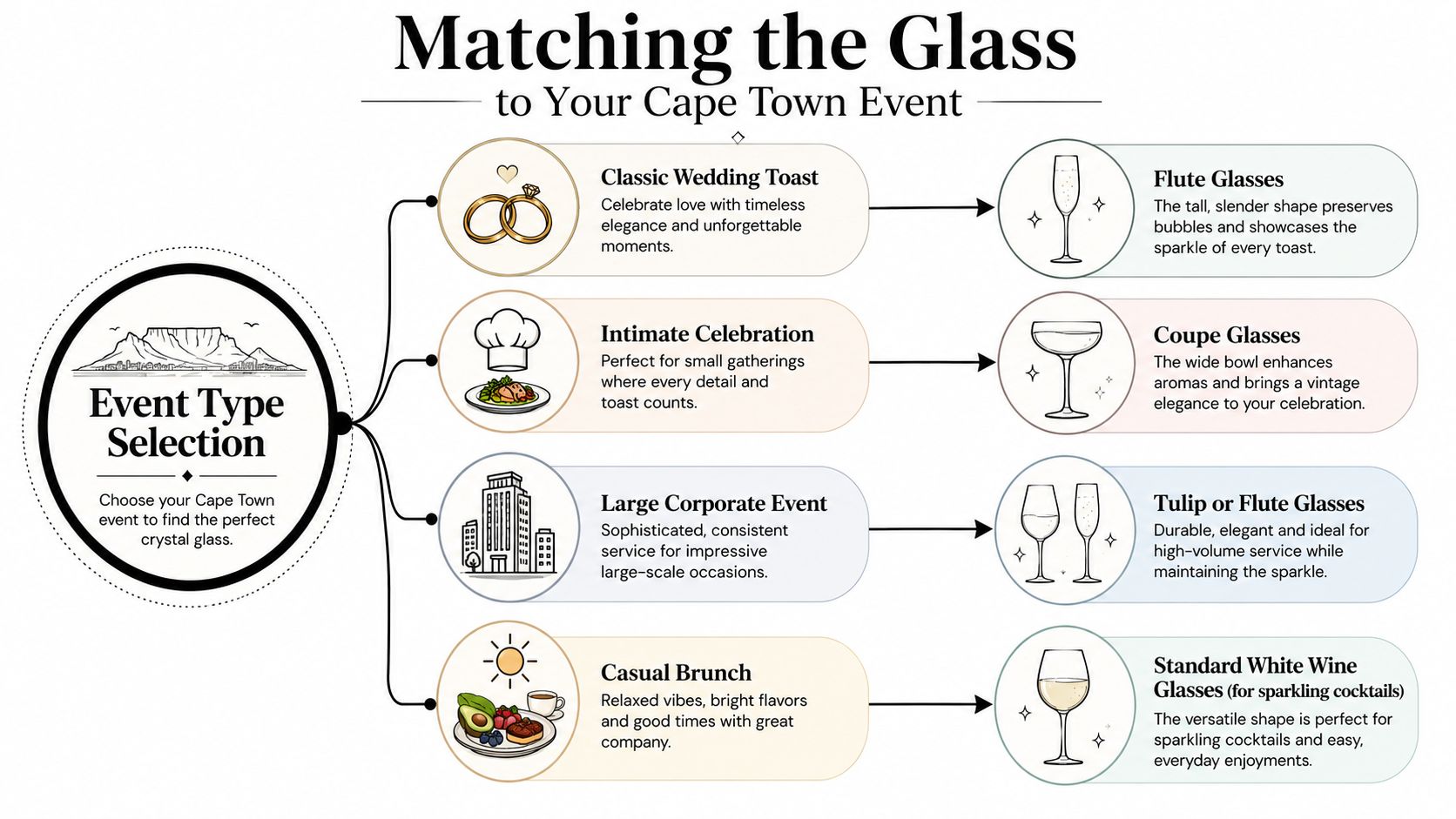
For a classic wedding in Stellenbosch, Paarl, or Franschhoek, the flute is still the safest fit when the key moment is the toast itself. It looks formal, reads well in photos, and keeps the presentation neat when glasses are preset or passed on trays before speeches.
That works particularly well when:
- The sparkling pour is brief: welcome drink, speech, toast, done.
- The room is highly styled: the vertical line of the flute complements structured table settings.
- The planner wants consistency: one glass shape across all guest tables simplifies setup.
If, however, the couple has chosen a serious Cap Classique and built food pairings around it, the decision can shift. A narrower flute keeps bubbles, but it can also limit aroma release.
Food-led Winelands events need a different lens
For Cape Winelands lunches and dinners, aroma often matters more than spectacle. Independent guidance notes that flutes retain bubbles but can be too narrow to release aromas well, and for food-led events where Cap Classique is paired with cuisine, a glass that enhances aroma, like a tulip, can be more important to the guest experience than one that solely preserves carbonation, as explained in this practical discussion of whether champagne glasses make a difference.
That's why I'd match glasses like this:
Ceremony toast at a formal wedding
Use flutes. The event needs crisp presentation and smooth service.Chef-led estate lunch with paired sparkling wine
Use tulips. Guests are smelling and tasting, not just clinking.Art Deco birthday or branded soirée with a theatrical bar
Use coupes. The visual identity does more work than technical retention.Large mixed-format corporate event
Split the service. Keep crystal flutes or tulips for VIP tables and standard stemware for high-traffic bar areas.
Matching the glass to the event usually saves money because you stop over-specifying every guest touchpoint.
When standard glass is the smarter move
Not every event benefits from all-crystal service. For a relaxed brunch, a daytime garden party with sparkling cocktails, or a campus formal where movement is constant, standard white wine glasses or standard flutes can be the better operational choice.
That doesn't mean the event looks cheap. It means the hire plan is aligned with reality. High-volume standing service, uneven outdoor surfaces, and quick reset pressure all increase the chance that delicate crystal becomes a liability instead of a feature.
The Rental Logistics Everyone Forgets
Crystal champagne glasses only work well when the logistics are as considered as the styling. This is the part hosts often leave until the final week, and it's where unnecessary costs usually appear.
Fragility changes the whole rental equation
The same thin walls that make crystal attractive also make it more fragile. Independent glassware guidance highlights that this delicate construction increases risk compared with heavier glassware, which is why planners need to think about breakage, replacement exposure, and staffing before confirming quantities, as outlined in this champagne glass guide from Waterford.
That matters most at:
- Outdoor receptions: uneven ground and mobile service trays create handling risk.
- High-turnover functions: school formals, launches, and networking events move fast.
- Remote venues: longer transport routes raise the stakes if packing is poor.
When you hire crystal, you're not only hiring the glasses. You're hiring a transport and handling system.
Questions worth asking before you sign
Rental contracts can look straightforward until there's damage after collection. Ask specific questions early, not by email at midnight the week of the event.
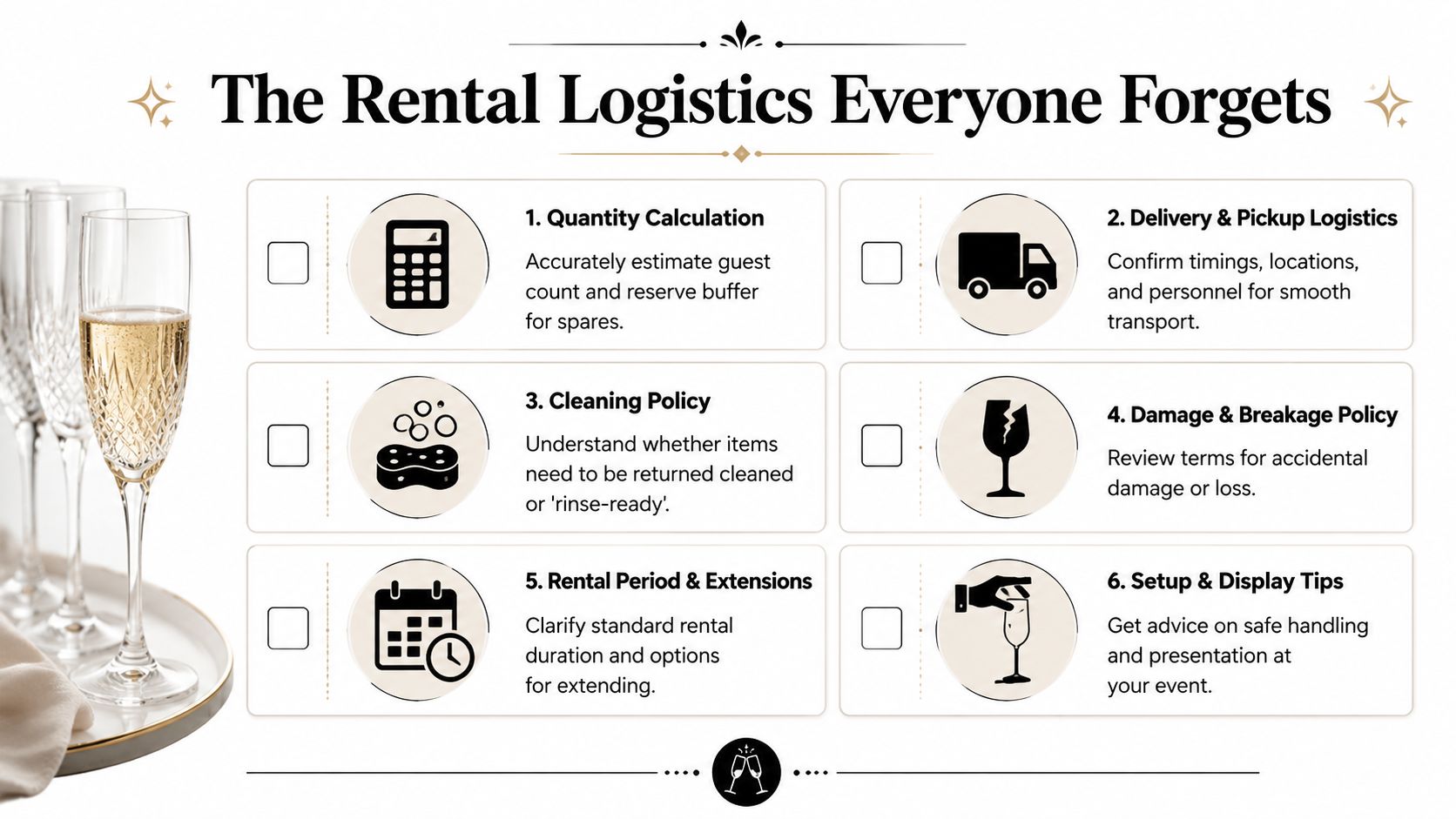
A good checklist includes:
- What condition do the glasses arrive in: polished and rack-packed, or bulk packed?
- How are they transported: specialised crates, glass racks, or general event tubs?
- What is the breakage policy: replacement per item, waiver option, or assessed after count-back?
- What is the cleaning policy: return dirty, rinse-ready, or fully washed?
- Who is handling them on site: your caterer, venue staff, or hired bar team?
If the event includes ice-heavy drinks, welcome stations, or bottle service points, your cooling plan affects glass logistics too. This guide to choosing a large ice bucket is useful because poor beverage station planning often leads to rushed, messy glass handling later in service.
Rental problems rarely start with the glass itself. They start with unclear handoff points between supplier, venue, caterer, and collection crew.
Mixed-service setups often make the most sense
One of the most practical solutions is not all crystal or all standard. It's a combination.
Use crystal champagne glasses where guests will notice them most:
- Head table settings
- VIP lounges
- The formal toast
- Styled feature bars or tower displays
Use sturdier alternatives where the pressure is highest:
- General standing reception zones
- Outdoor lawn bars
- Dance-floor adjacent service stations
- Large guest-count activations
That approach protects the premium feel without pretending every service point has the same risk profile. It's often the difference between a polished event and an expensive clean-up exercise.
Styling Your Tablescape with Crystal Glasses
Glassware changes the table before a single drink is poured. The shape of the bowl, the length of the stem, and the amount of visual space around each setting all affect how formal, relaxed, modern, or romantic the room feels.
Three looks that work
A minimalist city wedding usually suits the flute best. Set alongside a crisp charger, clean folded napkin, and restrained florals, the flute adds height without cluttering the table. Its slim silhouette keeps the place setting sharp and architectural.
A vintage reception tells a different story. Coupes soften the line of the table and bring a little theatre even before service begins. Add candlelight, brass accents, and layered textures, and the glasses become part of the décor rather than an accessory to it.
For a Winelands lunch under trees or on a verandah, tulip glasses pair beautifully with natural linens, seasonal florals, and less rigid place settings. That shape feels polished but not stiff, which suits events that lean into food, conversation, and a slower pace.
Placement matters as much as the glass
Stemmed champagne glasses are designed to reduce hand heat on the bowl and guide aroma toward the nose, which means they need enough space to be lifted easily and used as intended. Crowding them into an over-styled place setting undermines both presentation and function.
A simple working rule is to keep sparkling glassware from fighting with centrepieces, charger edges, and clustered cutlery. If the guest has to reach past décor to pick up a glass, the table is too tight.
For planners shaping the broader look of a reception, this expert guide to event furniture hire is useful because glassware styling only lands well when the chairs, tables, and layout support the same design language. And if candlelight is part of the look, these glass candle holder ideas help tie reflective surfaces together without overloading the table.
Your Cape Town Crystal Rental Checklist
A good crystal hire decision is usually a sequence, not a guess. Start with the event goal, then narrow the glass style, then pressure-test the logistics.
Use this shortlist when speaking to a rental company:
- Define the role of the glass: Is it mainly for a formal toast, a premium tasting experience, or visual styling?
- Choose the style accordingly: flute for presentation, tulip for aroma-led service, coupe for theme and atmosphere.
- Decide where crystal is necessary: every guest place setting, selected tables, or only key service moments.
- Ask how the stock is packed and transported: crystal quality means very little if delivery handling is careless.
- Clarify damage terms in writing: don't rely on assumptions about breakage, shortages, or post-event counts.
- Check the cleaning return standard: this affects staffing, pack-down speed, and venue close-out.
- Match the glass to the service team: delicate stemware needs competent bar and floor staff.
- Plan around venue realities: stairs, gravel, wind, lawn service, and long collection windows all matter.
One supplier option in Cape Town is ABC Hire, which offers event rental stock across the region and is relevant if you're coordinating furniture and accessories alongside glassware. The key point is to choose any supplier the same way. Ask precise questions, request clear handling terms, and make sure the glassware plan suits the event you're running, not the one in the mood board.
The smartest hosts don't rent crystal because it sounds premium. They rent it where it adds something visible, tactile, and useful. Everywhere else, they stay practical.
If you're planning a wedding, launch, private celebration, or formal function in Cape Town or the Winelands, ABC Hire can help you coordinate the rental details around your event setup. Use the checklist above when you enquire so you can compare styles, quantities, handling terms, and service needs with confidence.