Kids Teepee Tents Cape Town Event & Party Rental Guide

You’re finalising a wedding on a Stellenbosch wine farm, or a family-friendly corporate function in Cape Town, and the brief sounds simple enough: make a kids’ area that feels special, doesn’t clash with the main décor, and won’t become a supervision headache halfway through the event. That’s where many planners lose time. A plastic play corner looks cheap. A soft play setup can feel too young for mixed-age groups. A generic table with crayons gets ignored after ten minutes.

Kids teepee tents solve a very specific event problem. They create a defined zone for younger guests, they photograph well, and they work across venue types that are common in the Cape, from garden parties and wine estates to school halls and marquee setups. Used properly, they add atmosphere without demanding a full themed production budget.

What matters is getting the details right. In Cape Town and the Winelands, weather can turn quickly, venues often have uneven ground, and access windows for setup are rarely generous. A teepee that looks lovely online but takes too long to install, traps heat, or shifts in the wind is not helping you on show day. The right one does the opposite. It gives you a practical, attractive kids’ zone that holds together under real event conditions.

Creating Magical Spaces Why Kids Teepees Are Essential

You are on site at a Stellenbosch wedding. The florist is finishing the entrance, catering is pushing to plate on time, and the couple wants the children entertained without a bright plastic corner pulling focus from the room. A well-styled teepee setup solves that brief fast. It gives children a space that feels special and gives adults a clear sense that the event has been planned properly.

That matters in Cape Town and the Winelands, where venues range from polished city spaces to lawns, barns and cellar rooms. A kids’ area has to look right in all of them. Teepees do that well because they read as soft, neat and intentional, whether you are working in Constantia, Franschhoek or Paarl.

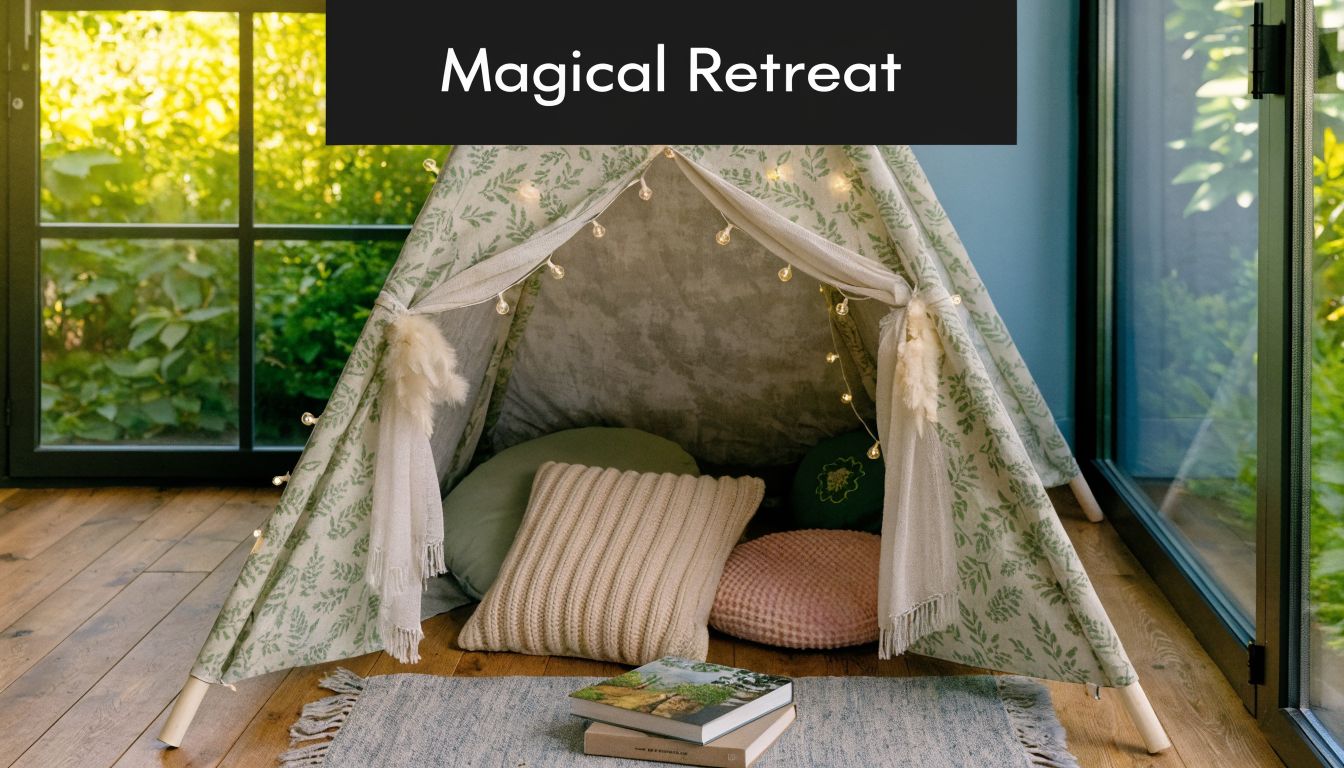
A cozy, leaf-patterned children's play teepee with cushions and books, set up on a wooden floor.

Why planners keep choosing them

The value is practical before it is decorative.

A teepee gives children a defined place to settle, read, draw, rest or step away from the noise. That reduces the usual drift of toys, shoes and snack plates into guest walkways. At weddings and corporate family days, that simple bit of structure makes the whole event feel calmer.

It also helps with styling. Canvas, timber and layered textiles sit more comfortably with wedding décor, harvest tables, vineyard furniture and neutral event palettes than bright moulded play equipment. If the client wants a children’s area that photographs well and does not fight the rest of the scheme, teepees are one of the safer choices.

They are flexible too.

One planner may need a reading nook beside a family seating area. Another may need a quiet retreat for younger guests at a long lunch where speeches run over time. At a birthday, the same format can carry the theme with bunting, cushions and activity baskets. For broader styling ideas, it helps to review kiddies party decor ideas for local events so the teepee zone feels connected to the rest of the setup.

What creates the strongest result

The tent alone is not the feature. The full setup is.

The best installations use scale, texture and function together. A teepee with proper floor cushions, a low play surface, books or quiet activities, and enough room for children to move comfortably looks finished. One dropped in a spare corner looks like a late addition. Clients spot the difference immediately.

I see the same pattern across Cape Town venues. Smaller spaces benefit from one or two well-dressed teepees with disciplined styling. Large wine estate lawns can handle a fuller mini-lounge with multiple tents, picnic rugs and activity stations. Budget should go into the pieces guests will notice first: clean fabric, coordinated soft furnishings and a layout that makes sense from the main room.

Parents planning private celebrations often borrow ideas from interiors because the visual logic is similar. If you want a useful reference for soft, layered child-friendly styling, designing a magical nursery sanctuary shows the kind of restraint that works well at events too.

Where teepees earn their keep

Some uses are consistently strong:

Event type Best use of kids teepee tents
Wedding Quiet play lounge near family seating, away from the busiest traffic routes
Birthday Main styled feature with cushions, bunting and simple activities
Corporate family day Calm retreat for younger children between scheduled entertainment
Matric or school function Soft seating corner for siblings or family breakaway areas

Used well, kids teepee tents do more than fill space. They bring order to the children’s zone, improve the look of the event, and give Cape Town planners a format that works across changing venues, shifting weather and very different client expectations.

Choosing Your Teepees Dimensions Materials and Styles

Not every teepee is event-grade. Many look decent in product photos and fail the first time they face a rushed load-in, coastal humidity or a hard venue floor. When you’re hiring for events, construction matters more than trend.

Professional-grade kids teepee tents use high-density cotton canvas, typically 0.98 inches thick, and solid wood supports such as Finnish pine, which helps with breathability and durability. Quality models can also be set up in under 10 minutes, which matters when your team is working across tight venue schedules, as noted in this guide on how to choose a teepee for kids.

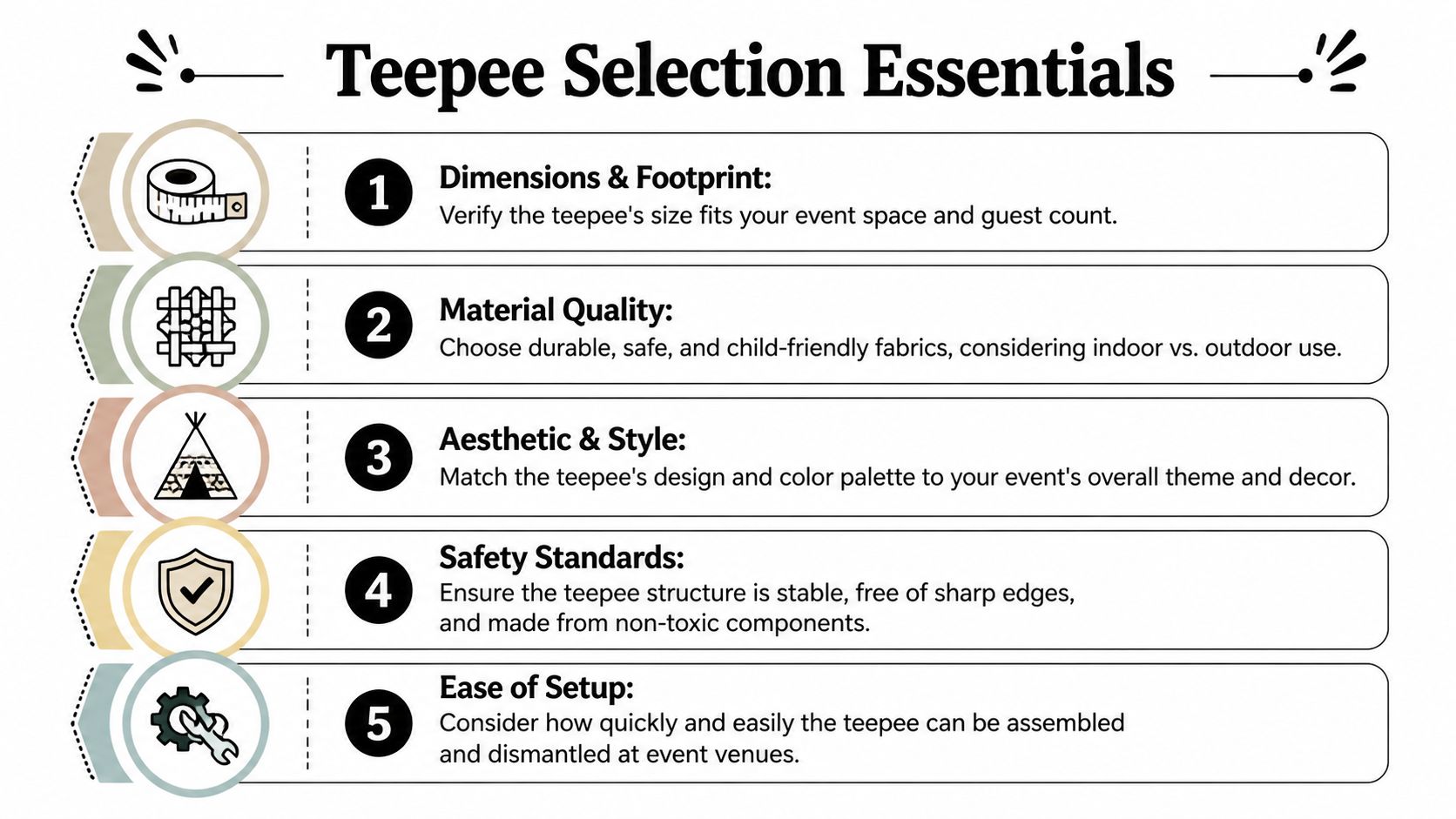
A helpful infographic showing five essential factors to consider when selecting kids teepee tents for events.

Start with footprint, not colour

Planners often begin with style. Start with space. A teepee might suit the brief visually and still be wrong for the venue if guest flow, access routes or furniture spacing get compromised.

Check these first:

  • Venue surface: Grass, decking, paving and indoor flooring all affect stability and layout.
  • Walkway clearance: Keep clear routes for parents, catering staff and venue teams.
  • Sight lines: Adults should be able to supervise without standing inside the kids’ area.
  • Function of the tent: Reading corner, activity pod, chill-out nook and dining add-on all need different internal space.

If the event is in a marquee or hall, account for all the other temporary infrastructure before you confirm your teepee quantity. A useful starting point is reviewing the broader types of tents for events so your kids’ area doesn’t compete with the rest of the event build.

Materials that hold up in the Cape

Cape Town conditions punish cheap materials. Thin synthetic fabric can feel stuffy indoors and age badly when exposed to sun and sea air. Weak poles loosen over repeated rentals. Lightweight consumer connectors often wobble after a few builds.

What works better:

Feature Better choice Why it matters locally
Fabric Cotton canvas Breathes better in warm halls and humid coastal conditions
Poles Solid wood such as Finnish pine More stable and more reliable over repeated setups
Connectors Reinforced joints Better for frequent transport and assembly
Rope support Proper guy-ropes where needed Helps outdoor stability

A tent can look soft and child-friendly while still being properly built. Those two things shouldn’t be in conflict.

Cheap teepees usually fail in boring ways. Loose joints, sagging fabric, awkward assembly and visible wear. None of that helps a premium event look premium.

Shape, style and capacity

A lot of planners underestimate how much shape affects use. Traditional narrow triangular designs can work for a single styled nook, but if you need children to sit inside comfortably for a story session or quiet activity, a roomier structure makes life easier. Verified trade guidance notes that hexagonal designs offer 15-20% more internal floor space than traditional triangular canvas teepees in comparable applications.

That doesn’t mean every event needs the largest option. It means you should match style to function:

  • A narrow boho teepee works for a photo-friendly reading corner.
  • A broader layout suits activity-based setups better.
  • A neutral canvas style gives you more freedom with cushions and bunting.
  • Heavily themed prints can date quickly and clash with formal events.

What planners should inspect before confirming

Ask for current photos of the actual rental stock, not only supplier catalogue images. Then check the unglamorous details:

  1. Canvas condition. Look for staining, fading and stretched seams.
  2. Pole finish. Splinters, chips and rough cut ends are red flags.
  3. Setup method. If the supplier can’t explain setup cleanly, expect delays.
  4. Accessory quality. Mats, rugs and cushions need to match the same standard as the tent.

A well-selected teepee feels easy on event day because the hard decisions were made earlier.

The Rental Process A Cape Town Timeline

A Friday wedding in Franschhoek can look calm on the schedule and still go sideways by 10 a.m. if the kids’ corner was booked late, the venue only allows load-in through a side gate, and the weather turns between Paarl and Stellenbosch. Teepee hire works best when you treat it like core event infrastructure. Book it with the same discipline you use for furniture, power, and catering equipment.

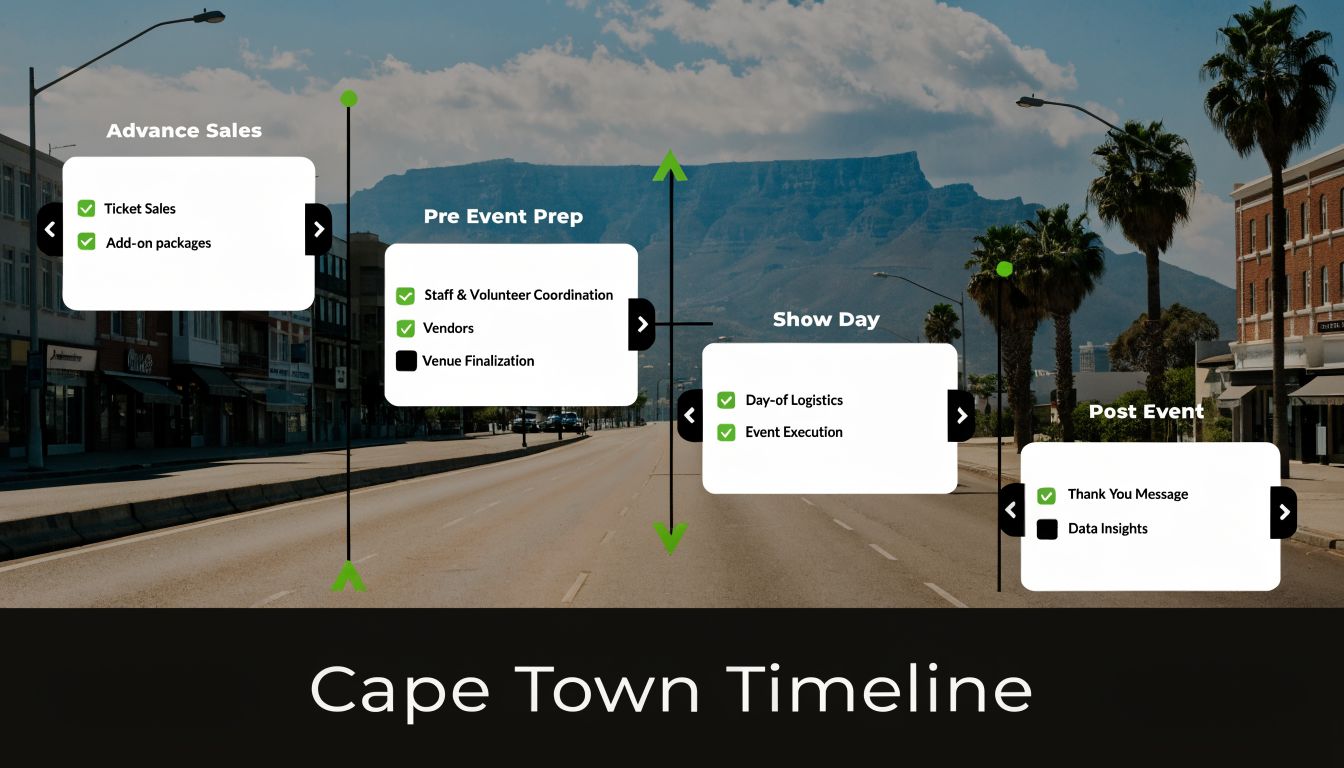
A timeline graphic showing four stages of event planning named Advance Sales, Pre Event Prep, Show Day, and Post Event.

A working timeline that keeps you out of trouble

In Cape Town and the Winelands, timing affects cost, stock choice, and whether setup stays under control on site. Summer weekends get congested fast, especially once you add farm roads, narrow access points, and shared supplier windows at popular venues.

4 to 8 weeks out

Define the job the teepees need to do. A quiet retreat for younger children needs a different layout from an activity corner at a birthday or a supervised kids’ zone at a wedding. Confirm the venue, guest count for children, likely age range, and whether the setup must work indoors if weather changes.

Get these details before requesting pricing:

  • Venue access and strike times
  • Surface type, such as lawn, decking, gravel, or indoor flooring
  • Backup position in case of wind or rain
  • Distance from parking to setup point
  • Any venue restrictions on candles, heaters, or hanging décor

2 to 4 weeks out

Request an itemised quote. You need to see exactly what is included: teepees, mats or rugs, cushions, styling pieces, delivery, installation, collection, and cleaning terms. A vague quote usually becomes an expensive one once transport, stairs, or after-hours collection are added.

Pricing varies widely in this market. The final figure usually shifts based on styling level, travel to the venue, crew time, and whether the supplier is building a simple reading nook or a fully dressed kids’ area.

Questions worth asking before you pay a deposit

Deposits get paid too quickly on attractive photos. Ask operational questions first.

  • Who sets up and who signs off on placement? That matters at large venues where access routes are long and setup teams are under time pressure.
  • How much time is needed on site? A manor house in Constantia is different from a wine estate with a long haul from parking to lawn.
  • What is the wet weather plan? "We’ll see on the day" is not a plan.
  • What condition is the current stock in? Ask for recent photos if the event is premium.
  • What is expected after the event? Clarify food, spills, damage, and late-night collection.
  • Can the supplier work around the venue’s loading rules? Some Cape Town CBD venues and Winelands estates are strict.

For the wider planning flow, it helps to keep a detailed event planning checklist template so the teepee hire sits with your other rentals, supplier timings, and venue notes.

A strong rental brief includes the plain operational details. Gate width, staircase access, gravel paths, generator noise nearby, and where children will actually sit to eat all affect whether the setup works.

Package thinking versus per-unit thinking

Per-unit hire suits planners who already have styling stock and enough crew to finish the look properly. It gives you control, but it also pushes more coordination onto your team. If one supplier brings the tents and another brings soft furnishings late, the whole area reads unfinished.
Packages cost more upfront, but they can save money once you count labour, transport, and last-minute add-ons. In the Winelands, that matters. A venue might look close on a map and still require a long round trip, extra setup time, and careful timing around ceremony access.

A practical comparison helps:

Approach Works best when Risk
Per-unit hire You already have décor stock and styling crew Extras and labour can stack up quickly
Styled package You need a ready-built kids’ corner Less room to customise if the package is fixed
Hybrid hire You want supplier stock plus your own styling layer More moving parts to coordinate

Final confirmation before show day

Three checks prevent most event-day problems:

  1. Approve the final layout against the venue map or floorplan.
  2. Confirm delivery and collection times the day before, with a named contact on site.
  3. Set a weather decision deadline for any outdoor installation.

Cape Town weather changes quickly, and mountain wind can make one side of a property usable while another becomes a poor choice. The planners who stay calm are usually the ones who locked in a backup position early and confirmed it with both the venue and the hire team.

Setup and Styling for Winelands Events

The best kids teepee tents don’t look rented. They look like they belong exactly where they’ve been placed. That takes restraint. Too many accessories, and the setup feels cluttered. Too little, and it looks unfinished.
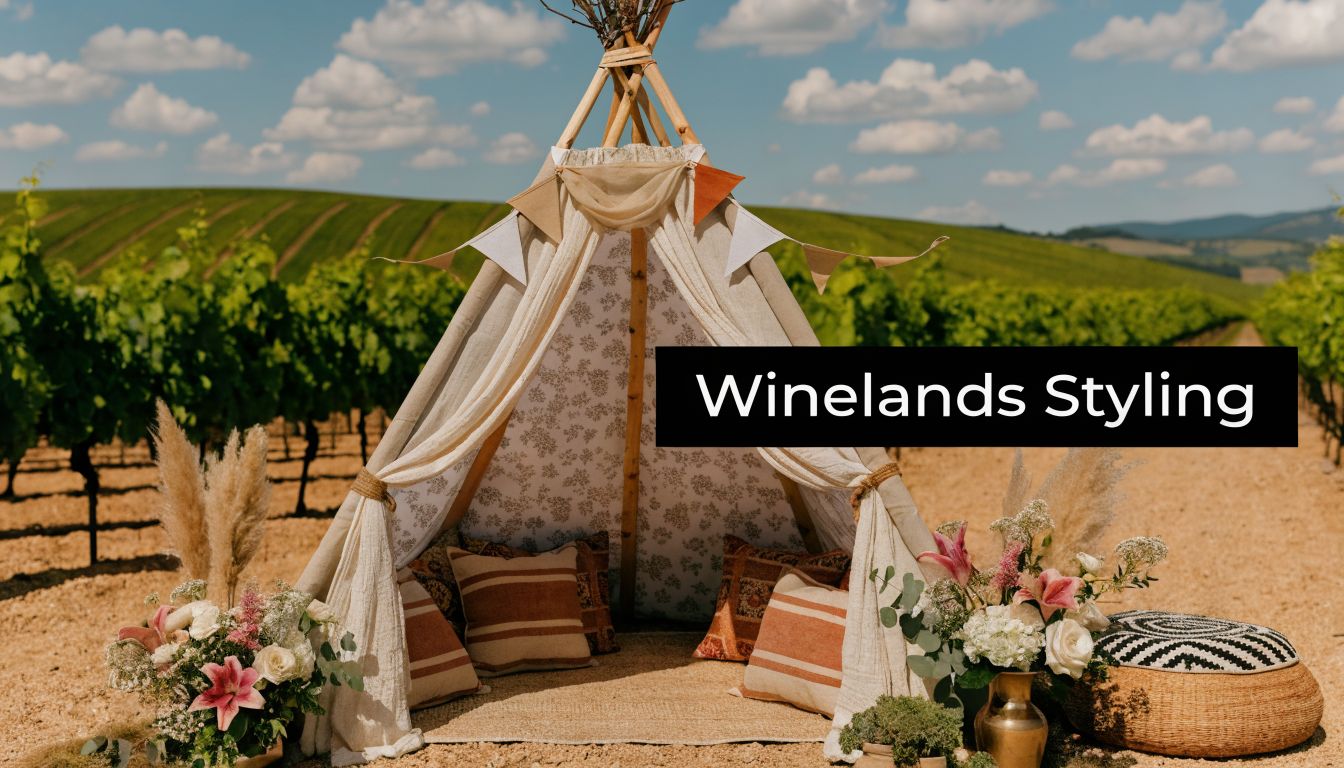
A boho-style teepee tent decorated with cushions and flowers set up in a beautiful vineyard.

A wine farm wedding in Stellenbosch

At a Stellenbosch wedding, the smartest placement is often just off the main reception zone rather than directly beside it. Children stay connected to the event, but the teepees don’t compete with speeches, service routes or the dance floor. On grass, a grounded palette works best: natural canvas, oat or stone-coloured cushions, simple rugs, and a few floral touches that echo the tables rather than copy them.

What doesn’t work is over-styling. Glitter-heavy props, bright plastic toys and character branding usually jar against the venue.

A wedding setup like this benefits from:

  • Layered floor coverage so shoes can come off comfortably
  • Low lighting choices that create glow without heat
  • Quiet activity items such as books, soft toys or drawing boards
  • Clear perimeter spacing so servers and parents can move easily

A Constantia garden birthday

Birthday parties give you more freedom. In a Constantia garden, the teepee cluster can become the hero feature rather than a side element. Here you can push colour more confidently, provided it still feels intentional.

Use the tents as a village rather than as isolated pieces. Grouping them creates stronger visual impact and keeps children together in one zone. Add mats between units so the setup feels connected. Keep food and craft tables close, but not so close that spills and paint end up on the canvas.
If children are meant to use the teepees, don’t fill every opening with décor. Leave enough empty space for sitting, crawling in and out, and supervision.

A beachside family event near Blouberg

Beach and wind-exposed venues need a stricter approach. The teepee area should sit in the most sheltered practical position available. This is not the place for delicate styling that topples over or lightweight décor that blows into neighbouring setups.

For coastal outdoor events:

Styling choice Good idea Bad idea
Cushions Heavier floor cushions Very light scatter cushions
Décor accents Weighted baskets and secure bunting Loose paper signage
Flooring Mats with grip and edge control Rugs that curl at the corners
Placement Sheltered edge with supervision Open wind corridor

The accessory checklist that actually helps

A good styling kit is usually short.

  • Floor rugs or mats that define the footprint
  • Supportive cushions in washable fabrics
  • Bunting or simple garlands fixed securely
  • One activity anchor such as books, colouring or soft toys
  • Subtle lighting only where venue rules and safety allow
  • A nearby adult chair for supervision without crowding the setup

Some planners try to force the teepee zone into every event theme. It’s better to let the tents soften the event and then use colour through textiles and a few accents. That keeps the look current and easier to adapt from one brief to the next.

Layout matters more than Pinterest

The prettiest arrangement on a mood board can still fail on site. At real events, children run, guests cut through spaces, and venue staff need access. Keep the entrance side of each teepee facing the most visible direction. Don’t push them into a dead corner where adults can’t see inside. Don’t block them behind lounge furniture because the area looked balanced on paper.

The setups that work best in the Winelands are usually the calmest ones. Good placement, strong textiles, enough breathing room, and styling that supports the venue rather than shouting over it.

Safety First Local Regulations and Best Practices

The fastest way to lose control of a children’s area is to treat safety as a styling detail. In Cape Town and the Winelands, conditions change quickly. A calm setup at 10am can be dealing with wind, heat, damp grass, or a venue manager’s access concern by lunchtime. Teepees need to be specified and installed with that reality in mind.
For planners, the standard is simple. If a supplier cannot explain the fabric specification, anchoring method, cleaning routine, and supervision requirements clearly, the stock is not ready for a live event.

What good planners check before booking

Start with the materials. Fabrics should be suitable for event use and kept in clean, sound condition with no frayed seams, weak ties, or damaged poles. If the teepees will sit indoors near lighting, extension leads, heaters, catering traffic, or other temporary structures, ask direct questions about fire safety and placement. Vague answers are a warning sign.

Then check how the setup will behave on the venue surface. A teepee that looks stable in a showroom or warehouse can shift on lawn, sink slightly after irrigation, or sit unevenly on old decking. I see this often at Winelands venues where one children’s corner moves across grass, stone, and timber within a few metres. That change in surface affects anchoring, rugs, edges, and how children enter and exit the tents.

Check these points on every job:

  • Fabric condition and fire safety suitability
  • Ventilation, especially indoors or under a larger tented structure
  • Anchoring or weighting suited to the exact surface
  • Clear walkways around ropes, mats, and décor
  • Full adult sightlines into the children’s area
  • Safe distance from heaters, candles, plugs, and trailing cables

Local conditions raise specific risks

Cape Town wind is the obvious factor, but it is not the only one. Summer heat can build up inside enclosed play areas, particularly in marquees, school halls, and estate function rooms with limited airflow. Winter brings damp ground, muddy access routes, and more last-minute layout changes when outdoor plans shift indoors.

Venue type matters too. Historic wine farms often have uneven paving, gravel courtyards, low walls, and decorative planting that look lovely in photos but create trip points around a kids’ setup. Private homes can be harder than formal venues because the safety boundaries are looser. Pets, pool access, braais, portable speakers, and family traffic all end up near the same zone unless someone plans it properly.

Safety also affects presentation. A neat, well-spaced teepee area looks more polished because nothing is forced into the wrong place.

A practical event-day checklist

Use this before guests arrive and again after final styling:

  1. Inspect poles, joints, and ties for wear, movement, or poor assembly.
  2. Check the ground contact points so each teepee sits evenly and does not rock.
  3. Secure mats and rugs with flat edges and no corner lift.
  4. Test visibility from the nearest adult seating or supervision point.
  5. Remove excess décor from entrances, crawl space, and escape paths.
  6. Confirm airflow if the area is indoors, under canvas, or in afternoon sun.
  7. Keep heat and ignition sources well away from fabric, cushions, and baskets.
  8. Review numbers per tent based on age, activity, and available space.

Common mistakes that create avoidable problems

Avoid this Why it causes trouble
Setting up in a breezy passage between buildings Wind pressure and movement make the area less stable and less comfortable
Using decorative lights that produce heat Enclosed fabric and soft furnishings raise the fire risk
Mixing too many small rugs and floor cushions Edges shift, bunch up, and create trip hazards
Using worn stock with faded fabric and loose fittings Presentation drops and failure points increase
Placing the kids’ area where adults cannot monitor it easily Supervision becomes slower and less reliable

Children use teepee spaces hard. They crawl, lean, pull, climb, and drag cushions around. Good safety practice accounts for that from the start, especially at Cape Town and Winelands events where weather, venue surfaces, and access constraints can change the plan on the day.

Partnering for Perfect Parties with ABC Hire

A well-run teepee setup comes down to five things. Good stock. Sensible sizing. Clean logistics. Strong styling choices. Proper safety discipline. Miss one of those, and the children’s area becomes harder to manage than it should be.

That’s why the supplier relationship matters so much. A reliable hire partner doesn’t just deliver tents. They help you avoid the common operational mistakes that cost time on event day. They understand Cape Town access issues, Winelands travel timing, changing weather, venue restrictions and the difference between a setup that looks good in a photo and one that still works three hours into service.

For planners, that kind of support changes the job. You spend less time chasing missing details, less time adjusting weak equipment on site, and less time patching around poor presentation with extra décor. Couples, hosts and event managers may only notice the finished result, but planners notice the process. The smoothest events usually come from the strongest rental partnerships.

The point isn’t to make the kids’ area extravagant. It’s to make it feel easy, polished and dependable. When the teepee zone is well chosen and properly installed, it gives younger guests a place of their own and lets the rest of the event breathe.


If you’re planning an event in Cape Town, Stellenbosch, Franschhoek or Paarl and want a children’s setup that’s stylish, practical and professionally handled, speak to ABC Hire. Their team can help you hire the right event pieces for your venue, timeline and budget so your kids’ zone feels considered from setup to collection.

Gold Candle Holders: A Cape Town Event Guide

You’re usually at the same point when gold candle holders become part of the conversation. The linen is chosen. The florals are nearly right. The venue is beautiful, but the tables still feel flat once the sun drops or the first guests walk in. They need warmth, reflection, and a focal point that doesn’t fight the rest of the styling.

That’s where gold candle holders earn their place. In Cape Town events, they solve more than one problem at once. They add height without bulk, glow without clutter, and formality without making a room feel stiff. They also adapt well across weddings, gala dinners, matric dances, and milestone celebrations, which is why experienced planners keep returning to them.

Generic retail advice doesn’t help much when you’re designing for the Western Cape. A holder that looks lovely in a showroom can fail fast on a windy wine farm, look too yellow under venue uplighting, or create a transport headache if you’ve chosen the wrong scale. Good event styling comes from knowing what works on an actual setup day, not only what photographs well online.

The Timeless Allure of Gold in Event Design

By the time a Cape Town room shifts from late afternoon light to dinner service, gold starts doing work that plain décor cannot. It picks up candlelight, warms the table, and gives the whole setting a finished feel without asking for more flowers, more colour, or more volume.

That staying power is its main appeal. Gold has been used in ceremonial and formal interiors for centuries, and it still earns its place at modern events for a simple reason. It reads as occasion, not novelty. In our experience at ABC Hire, gold appears in the majority of high-end Western Cape events because clients want a look that photographs well, feels polished in person, and still makes sense five years from now.

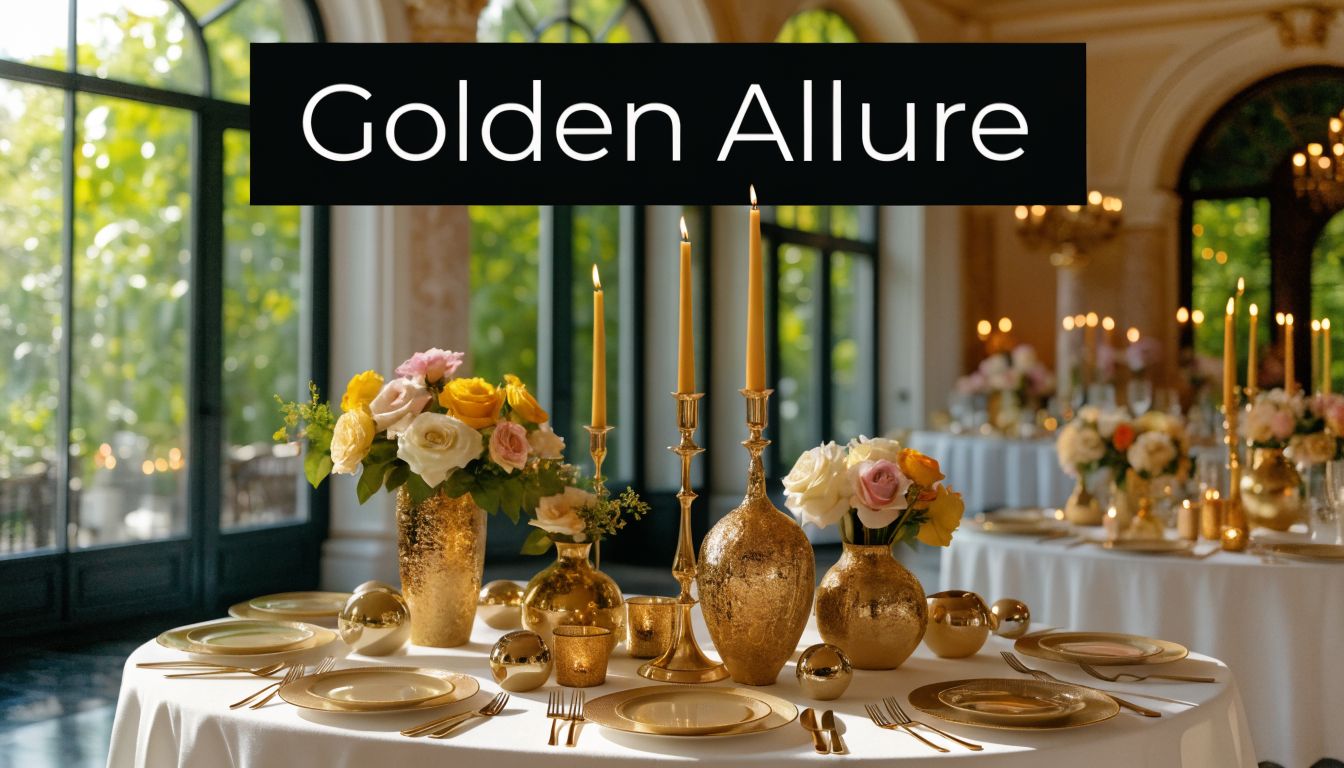
A luxurious wedding table setting featuring elegant gold vases, blooming roses, and tall glowing candles.

Why gold works so well on a table

Gold reflects light with more warmth than silver and more presence than clear glass. On a dinner table, that difference is obvious. It softens hard finishes, helps candles register in a large room, and stops neutral palettes from falling flat after sunset.

It also gives planners flexibility. Gold sits comfortably with crisp white florals, earthy Winelands textures, black-tie place settings, and contemporary corporate styling. If the brief already includes metallic accents elsewhere, such as gold side tables for lounge areas, candle holders carry that finish across the venue in a controlled way. The room feels connected rather than over-decorated.

A good gold finish also handles mixed lighting better than many clients expect. Under warm festoon bulbs it feels rich. Under cooler LED venue lighting, the right tone still reads refined instead of brassy. That distinction matters on setup day, especially in venues where you only see the final lighting state a few hours before guests arrive.

Gold does not need to dominate the table. A restrained layer of gold usually looks stronger than trying to turn every detail metallic.

Why it suits Cape Town so naturally

Western Cape events ask décor to perform across changing conditions. A Stellenbosch wedding may start in hard sun, move into wind at cocktail hour, and finish in a dim barn or cellar. A city gala might need to look sharp for a daytime media arrival and still feel warm by dinner.

Gold adapts well across those shifts. It holds its own in daylight, then becomes more atmospheric once candles are lit. That makes it particularly useful for local planners balancing beauty with practicality. One finish can work across garden marquees, hotel ballrooms, wine estates, and corporate functions without looking out of place.

It also aligns with what many Cape Town clients want now. Luxury, but not excess. Warmth, but not clutter. Reusable pieces that hire well across multiple event formats, rather than disposable décor that adds cost and waste. Gold candle holders meet that brief better than many trend-led alternatives.

A Practical Typology for Event Planners

A planner standing in a Franschhoek venue at 4pm has a different problem from a client browsing décor online. The question is not which gold candle holder looks nice on its own. The question is which one will still read well after load-in, florals, place settings, shifting light, and a full room of guests.

That is why I group gold candle holders by job first. Some create height. Some build a pool of light close to the table. Some protect a flame from wind on an exposed terrace. Some carry enough visual weight to hold a large arrangement together.

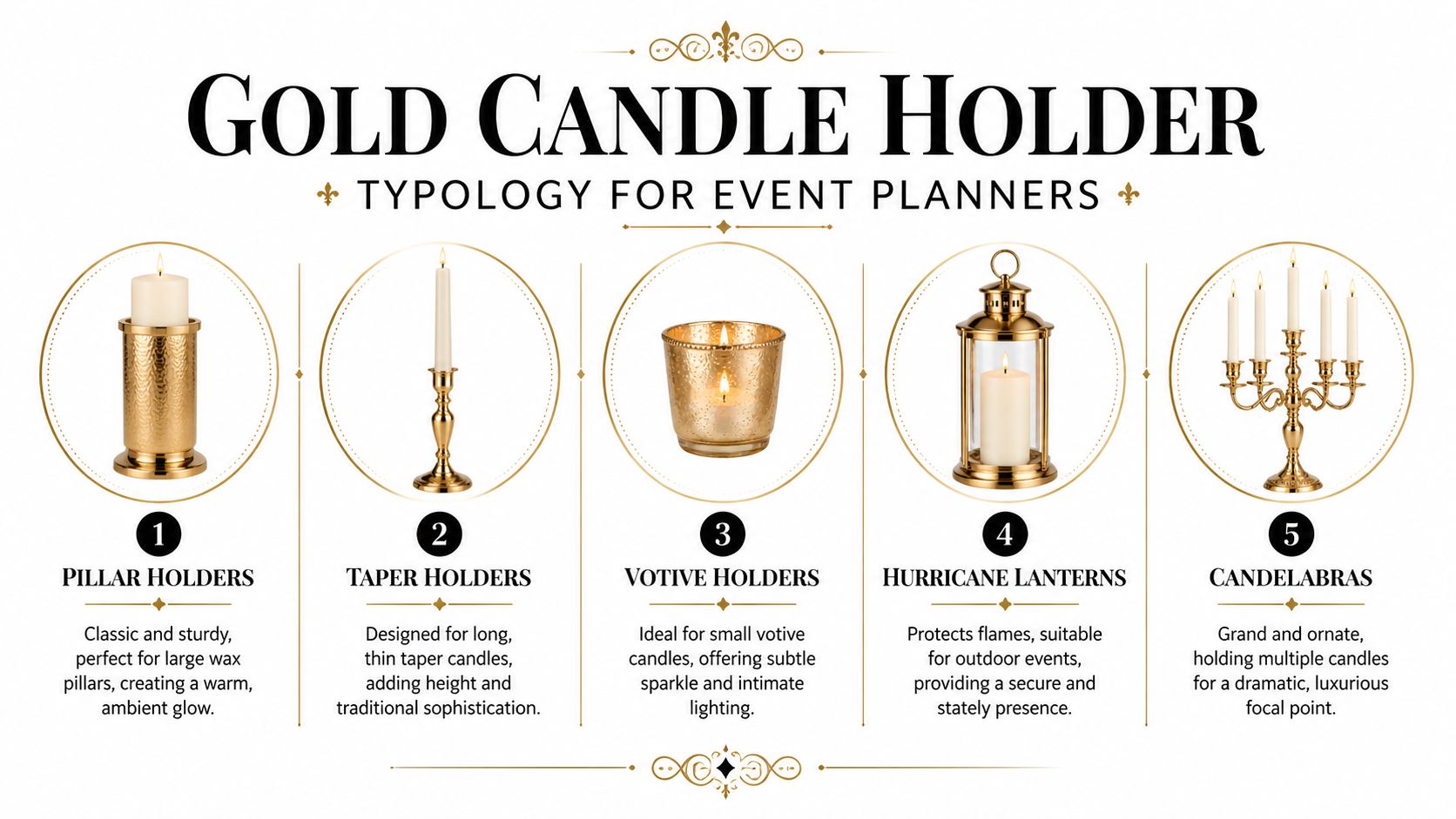
An infographic displays five types of gold candle holders: pillar, taper, votive, hurricane lantern, and candelabra.

The five core types worth knowing

Type Best use What it adds Watch out for
Taper holders Formal dining tables, long banquet runs Height and vertical rhythm Too many can block sightlines
Pillar holders Statement tables, entrance features, larger rounds Substance and a steady glow Can look heavy on smaller tables
Votive holders Layering across tables, bars, and cocktail areas Sparkle and intimacy They disappear if used too sparsely
Hurricane lanterns Outdoor settings, pathways, exposed terraces Flame protection and presence Need enough scale to avoid looking incidental
Candelabras Focal tables, dramatic receptions, stage-adjacent décor Grandeur and structure Can overpower low floral work

In Western Cape work, the strongest layouts usually mix two of these roles rather than relying on one type everywhere. Tapers can give a banquet run structure, while votives stop the base of the table from feeling empty. On a wine estate lawn, hurricanes often do the hard work because they keep the lighting scheme alive once the evening wind picks up. Candelabras have their place, but they need room around them and a brief that can carry that level of formality.

Finish affects the result as much as shape

Clients often focus on the silhouette and miss the finish. On site, the finish is what decides whether gold reads refined, soft, or slightly harsh under venue lighting.

  • Polished brass look: Strong for black-tie dinners, hotel ballrooms, and sharper corporate styling.
  • Matte gold: Better with textured linen, modern florals, and tables that need warmth without too much shine.
  • Antique gold: Useful in cellars, heritage venues, and spaces with timber or stone.
  • Champagne-gold tone: Safer with blush, cream, sand, and muted neutral palettes.

I usually caution planners against mixing too many gold tones on one table unless the variation is clearly intentional. What looks layered in a showroom can look mismatched once the venue adds glassware, charger plates, and candlelight.

Matching type to event mood

Romantic tables rarely come from height alone. They come from light at several levels. Lower votives, a few medium holders, and selective height often feel more considered than a row of identical tapers.

Corporate work is different. Cleaner repetition tends to win. A single holder style repeated down a long run gives order, especially in Cape Town conference venues and gala spaces where branding, staging, and timing already create enough visual noise. If the scheme includes a lot of reflective detail, mixing gold with glass candle holders can keep the table from feeling visually heavy.

Practical rule: Pick one hero form and one supporting form. More than that on a guest table usually weakens the composition.

The sustainability question is now part of the brief

Corporate clients in the Western Cape ask far more questions about reuse, material origin, and transport than they did a few years ago. In practice, that changes what planners shortlist. Pieces that survive repeated hire cycles, travel well to outlying venues, and do not need constant refinishing are easier to justify than decorative items chosen only for a single look.

That does not mean every client wants a lecture on materials. It means planners need sensible answers. Is the holder durable enough for multiple setups? Can it be paired with LED candles when a venue restricts open flame? Will it still look good after a season of corporate dinners, weddings, and end-of-year functions?

Good gold candle holders earn their place by doing the job repeatedly, not by looking impressive for one night.

Matching Holders and Candles for Flawless Execution

The fastest way to make an expensive setup look amateur is a bad candle fit. A taper that leans, a pillar that sits too loosely, or a holder that dwarfs a short candle will pull attention for the wrong reason. Guests may not know why the table looks off, but they’ll feel it.

Start with compatibility before style. The candle must sit securely without wobbling, forcing, or excessive packing. If a taper is too slim for the cup, you get a visible lean. If it’s too thick, planners often try to shave it down on site, which wastes time and leaves the finish looking untidy.

A clean way to decide

Use this simple matching logic:

  • Slim, elegant holder: best with tapers that suit the holder cup properly and won’t list once lit.
  • Broad, stable holder: better for pillar candles where the candle’s footprint needs support.
  • Glass-shielded holder or hurricane: useful where air movement is a concern.
  • Small cup or votive vessel: ideal for tea lights, votives, or LED inserts rather than improvised wax choices.

Height matters too. A very tall holder paired with a short candle can feel top-heavy visually. A low holder with an overlong taper can look precarious. The best combinations feel proportionate before they’re ever lit.

Real flame or LED

This is rarely a style-only decision. It’s an execution decision.

Option Best for Strengths Limitations
Real wax candles Indoor dinners, sheltered receptions, intimate tables Authentic flame, scent-free warmth if chosen correctly, classic movement Sensitive to wind, venue rules, drip risk, burn-time management
LED candles Outdoor events, long functions, venues with restrictions, high-traffic installs Consistent look, no open flame, reusable, stable through the evening Lower-end versions can look artificial

Real wax has a quality LEDs still imitate rather than replace. The flicker is irregular. The glow changes naturally across the evening. For certain dinner settings, that’s still unmatched.

But LED often wins in professional event conditions. It removes the need to relight candles, reduces risk near draping and florals, and performs far better outdoors. Good LED candles also make mixed-height installations much easier to manage because every point of light stays consistent from the first course to the final dance. If you’re styling smaller accent pieces such as votives with candles, LED inserts can be especially helpful where access for relighting is awkward.

If the setup is exposed, difficult to monitor, or subject to venue restrictions, LED is usually the more professional choice.

What usually doesn’t work

A few combinations fail repeatedly on live events:

  • Underweight holders with long tapers: They look elegant until a guest bumps the table.
  • Large florals with tiny candle points: The flowers dominate and the candlelight disappears.
  • Mixed candle temperatures: Warm real flame beside cool-toned LED looks mismatched.
  • Improvised wax fitting: Tissue, foil, and rushed packing tricks don’t hold up through service.

Execution is what guests remember, even if they don’t realise it. The holder and candle should look like they belong together from the first minute.

Styling Gold Candle Holders for Signature Cape Town Events

A gold candle holder that looks perfect in a studio mock-up can fail quickly on a real Cape Town event. Set the same piece on a long table in Franschhoek, a hotel ballroom in the CBD, or a school dance venue in the northern suburbs, and the result changes with the wind, the light, the service style, and the distance guests view it from.

That is why styling has to start with venue conditions, not only with reference images. Gold works because it reflects light, adds warmth, and reads well in photographs. But it only does that properly when the holder suits the job.

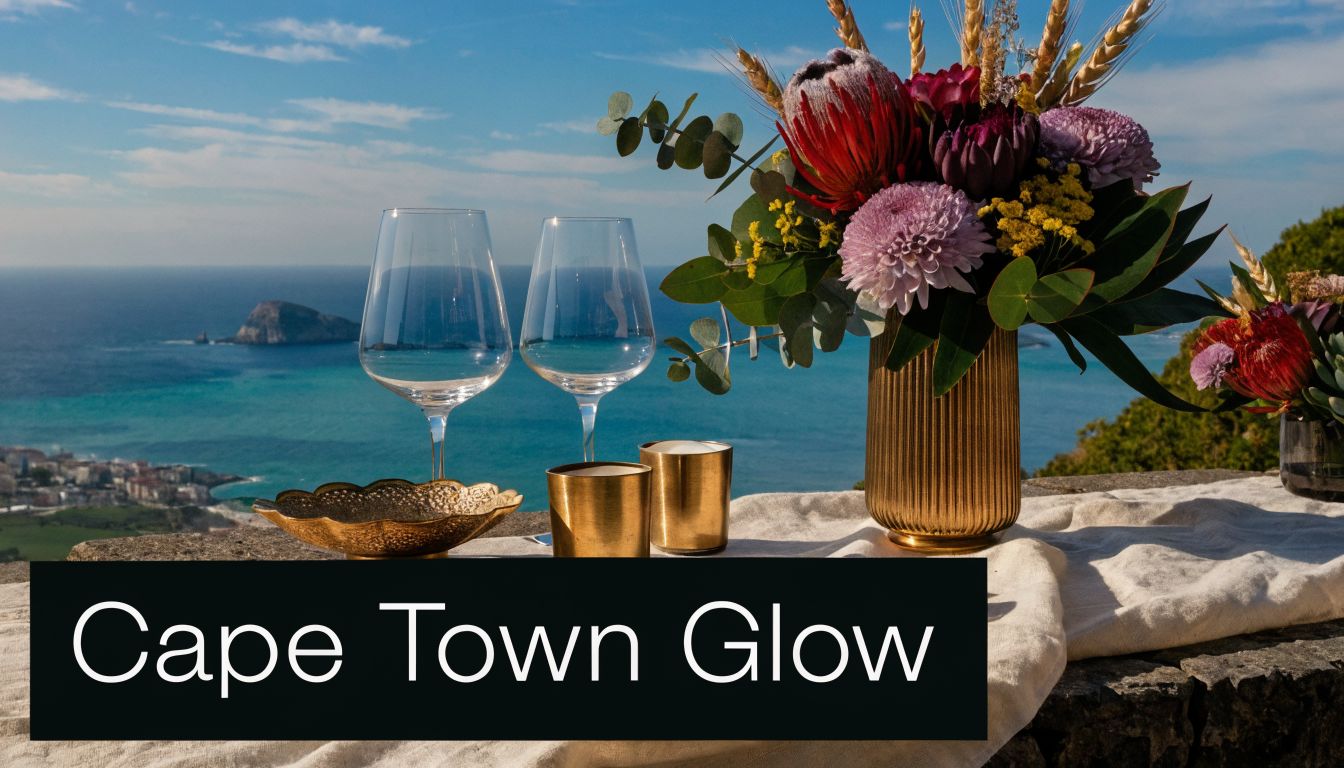
Two wine glasses and gold candle holders set beside a vibrant floral bouquet overlooking the ocean.

Winelands weddings

A common challenge we see at Stellenbosch and Franschhoek weddings is late-afternoon wind. Couples often want fine tapers and delicate styling, but exposed tables need more protection than the brief suggests. Flames flicker out, lightweight holders shift, and a table that looked balanced at setup can feel messy before starters are served.

In that setting, gold candle holders need to do practical work. Weighted bases matter. Glass-shielded designs matter. Finishes that still look clean after dust, handling, and temperature changes matter.

A setup that usually holds its shape includes:

  • One low floral centrepiece: enough presence for the table, without blocking conversation
  • Protected candlelight: hurricanes or shielded gold holders placed where they will stay lit
  • Controlled height: a few taller elements for rhythm, not a full table of unstable tapers
  • Spread of light: smaller holders around the main arrangement so the table glows evenly

The usual mistake is copying a still photograph from a calm indoor setting. On a wine farm, low and protected often performs better than tall and delicate.

Corporate gala dinners in the city

Corporate styling needs warmth, but it also needs restraint. In Cape Town city venues, guests are often looking at the room from multiple vantage points. Entrance, stage, table, and brand installation all need to feel connected.

Repetition usually does the heavy lifting here. Use one gold tone across guest tables and feature areas. Keep the candle format disciplined. If the event already has strong branding, screens, or coloured lighting, the candle holders should support the room rather than fight for attention.

A few choices make a visible difference:

  • Keep finishes consistent. Mixing bright polished gold with brushed or antique tones often looks accidental.
  • Use cleaner shapes for finance, tech, and awards events where the brief is formal and structured.
  • Limit mirrored surfaces if the lighting design is already reflective. Too much bounce can make the tables feel hard rather than warm.
  • Check sightlines from the stage. What feels subtle at table level can look cluttered in wide event photography.

The best corporate candle styling reads clearly in the room and still looks inviting in close-up.

Milestone birthdays and matric dances

These events allow more character, but they still need control. Gold can easily tip into looking overdone if every surface gets the same treatment.

For milestone birthdays, I usually group holders in small clusters on focal points such as cake tables, gift tables, bars, and lounge settings. The gold becomes the thread that ties the space together, while flowers and linens carry the personality.

For matric dances, impact belongs at the arrival and photo areas first. That is where taller gold pieces usually earn their keep. Dining tables often work better with simpler, lower holders that keep the room polished without making the setup feel too formal for the age group.

Three layout moves that usually work

The cluster

Best for round tables, lounge areas, and feature corners. Mixed heights create depth and keep the arrangement from looking flat. One stronger anchor piece, supported by smaller holders, usually looks more resolved than a group of equal-sized items.

The line

Best for banquet tables. A linear run gives the table rhythm and keeps the eye moving through the room. Alternate candlelight with florals or table details so the centre does not become one solid strip of metal and flame.

The frame

Useful for bars, stages, and signing tables. Place holders at the outer edges so the surface remains usable and the feature still has shape in photos.

Space matters. Gold candle holders improve a table most when light can travel between them, rather than getting trapped in an overcrowded arrangement.

The Essential Logistics Renting vs Buying in the Western Cape

Buying gold candle holders looks sensible until the practical work begins. A single event might need multiple styles, different heights, backups for breakage, and enough quantity for guest tables, feature areas, and transitions such as bars or entrances. Once you start adding all of that up, ownership becomes a storage and handling problem, not just a décor choice.

For one-off events or occasional use, renting is usually the cleaner decision.

What buying really involves

Purchased holders need somewhere safe to live between events. Metal finishes can mark, tarnish, scratch, or dull if they’re packed badly. Wax residue also takes time to remove properly, especially from textured or antique-style pieces.

Then there’s the style issue. If you own one look, you’ll be tempted to force it into every brief. That’s rarely good design. A polished gold taper holder that suits a formal dinner may be wrong for a rustic wedding or a branded activation.

Why renting usually wins

Renting gives planners flexibility. You choose what fits the brief, scale the quantity to the venue, and avoid holding stock that may not suit the next event. It also reduces the cleanup burden after a long setup and strike.

In the Western Cape, that convenience matters more than many people expect. Events often involve travel to Stellenbosch, Paarl, Franschhoek, or more remote venues where transport, packing, and return timing affect the whole production schedule.

Here’s the trade-off clearly:

Consideration Buying Renting
Upfront spend Higher for quality pieces and quantity Spread across the event only
Style variety Limited to what you own Easier to match each brief
Storage Your responsibility Not your concern after collection
Wax cleanup Ongoing task Usually reduced or handled through rental process
Transport risk You carry it every time Shared with a rental workflow
Scalability Harder for larger events Easier to increase quantities as needed

Best use cases for each

Buying can make sense for venues or stylists with constant repeat use, enough storage, and a very defined look. If the same holder appears in event after event, ownership may suit your workflow.

Renting suits most engaged couples, private hosts, schools, and many planners handling varied briefs. It keeps the focus on event design rather than maintenance, repair, and stock control.

If an item has to be cleaned, wrapped, stored, counted, transported, unpacked, repacked, and protected from damage, you’re not just buying décor. You’re taking on operations.

That’s the part people tend to underestimate. Gold candle holders are compact compared with furniture, but at event scale they still become inventory. Renting removes most of that load.

Safety Maintenance and Post-Event Care

Candles only feel effortless when the safety planning is solid. Whether you’re using real flame or LED, someone needs to decide where the holders sit, what surrounds them, and who checks them during service.

With real candles, distance matters. Keep flames away from low-hanging foliage, loose draping, menus, paper place cards, and anything guests may shift accidentally. Also confirm the venue’s open-flame rules before finalising the design. Some venues allow candles only in enclosed glass, while others prefer LED throughout.

On-event handling that prevents problems

  • Check stability first: Every holder should sit flat before the candle goes in.
  • Trim the area around the flame: Florals and ribbons can migrate during setup.
  • Assign responsibility: Someone should know who lights, monitors, and extinguishes candles.
  • Avoid last-minute substitutions: A candle that “sort of fits” usually becomes a safety issue later.

LED candles simplify most of this. They remove open-flame risk, perform better in exposed areas, and make strike easier at the end of the night. For many planners, that reliability is worth more than the romance of real flame.

Looking after the finish

Gold finishes need gentle handling. Wiping too aggressively, scraping wax carelessly, or stacking pieces without protection can mark them quickly. If you’re ever unsure how to care for gold surfaces without damaging them, jewellery care guides can be surprisingly useful. This guide on how to safely clean gold rings offers a good reminder that soft materials and non-abrasive methods protect the finish better than harsh shortcuts.

For rentals, the process is simpler. Items should arrive event-ready, and post-event handling usually means basic care, safe collection, and not forcing wax or residue off in a way that causes damage. If in doubt, ask the rental company what they want touched and what they’d rather handle themselves.

Your Event Planner's Gold Candle Holder Checklist

The easiest way to get gold candle holders right is to make the decisions in the right order. Venue rules first. Holder type next. Candle choice after that. Styling comes last.

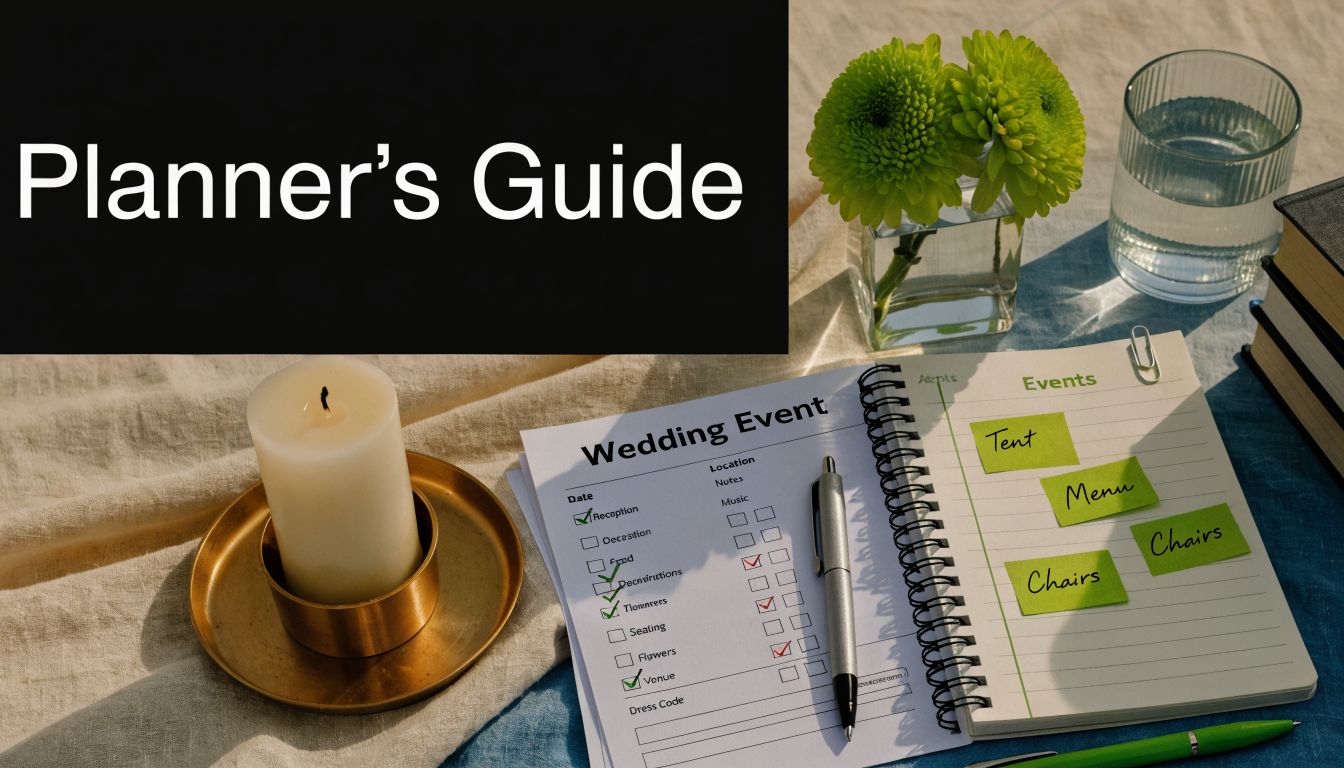
A wedding planner journal with a gold candle holder on a table next to fresh flowers.

Questions for the venue

  • Open flame policy: Are naked flames allowed, enclosed only, or not at all?
  • Wind exposure: Which tables or zones are most exposed after sunset?
  • Surface conditions: Are tables level and stable enough for taller holders?
  • Pack-down timing: How quickly must décor be cleared after the event?

Questions for the rental company

  • Finish and style consistency: Will all pieces in the order match in tone and condition?
  • Candle compatibility: Which candles fit each holder properly?
  • Transport and collection: How are fragile items packed, delivered, and collected?
  • Outdoor suitability: Which holders are weighted, enclosed, or better for exposed venues?

Pre-event checks

  • Confirm quantities: Count guest tables, feature areas, bars, and backup pieces.
  • Review placement: Check sightlines, floral height, and guest comfort.
  • Test the look: Place one full sample table before the team repeats the layout.
  • Decide on lighting: Real wax or LED should be final before setup day.

Post-event checks

  • Extinguish or switch off: Do a full sweep before strike begins.
  • Handle with care: Don’t stack metal pieces loosely or scrape at residue.
  • Separate damaged items: Flag issues clearly rather than hiding them in the return.
  • Confirm collection plan: Make sure packed items are in the agreed handover point.

A beautiful candlelit table doesn’t happen because gold was chosen. It happens because the holder, candle, venue, and styling brief all agreed with each other.


If you need gold candle holders, LED candles, event furniture, or a full styling support rental partner in Cape Town and the Winelands, ABC Hire can help you build a setup that looks polished and performs properly on the day.

Wine Glasses Crystal: Your Cape Town Event Guide 2026

You’re probably deep in the detail phase right now. The venue is booked, the menu is close, the wine list looks strong, and then one deceptively small decision lands on the table. What should guests drink from?

At a Cape Town wedding or Winelands event, that choice matters more than people expect. In a region built around wine culture, guests notice the glass in their hand almost as quickly as they notice the label on the bottle. The right stemware makes a table feel finished. The wrong stemware can make an otherwise polished event feel hired in a rush.

Crystal has become the default premium choice for good reason. It isn’t just about sparkle or status. It’s about weight, rim feel, clarity, service practicality, and how well the glass performs during a long lunch in Stellenbosch, a sunset reception in Franschhoek, or a corporate dinner in Paarl.

Setting the Scene for an Unforgettable Event

A couple plans a wedding on a Stellenbosch estate. The florals are soft and restrained. The linen is textured but not fussy. The wine selection has been chosen with care because the venue sits in the middle of the Winelands and serving wine well isn’t optional. Then the table setup arrives, and suddenly the finish of the whole room depends on details most guests won’t name but will absolutely feel.

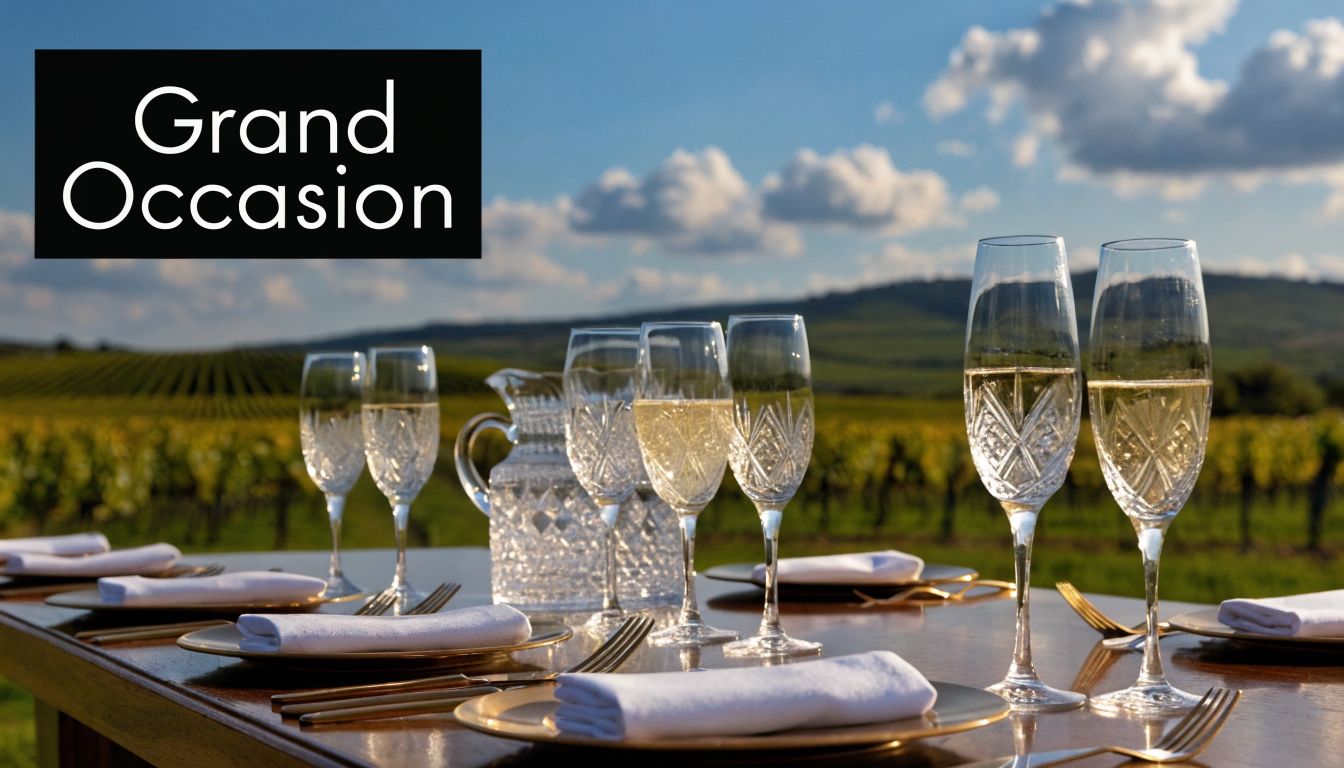
A sophisticated table setting with crystal wine glasses and white napkins at a vineyard during a sunny day.

That’s where wine glasses crystal choices start to separate a premium event from a merely decent one. The glass catches late afternoon light differently. It sits better on the place setting. It makes the first pour feel intentional.

There’s also a strong local reason this has become standard practice. In the Western Cape, crystal wine glasses account for 65% of premium glassware hires for weddings, and ABC Hire has seen a 25% year-on-year increase in crystal rentals from 2020-2025, servicing over 1,200 events annually within the Winelands' R14 billion wine tourism economy, according to this report reference.

Why this matters in the Winelands

The Cape Winelands carry their own expectations. If you’re pouring estate red under oak trees in Franschhoek or serving Cap Classique at a mountain-view reception, the vessel becomes part of the experience. Guests may not talk about “rim quality” at the table, but they do register whether the service feels refined.

Historically, wine glasses were much smaller than they are today. Modern event service has shifted with wine culture, presentation standards, and guest expectations. That’s why crystal now feels less like a luxury extra and more like the correct choice for a serious event.

Practical rule: If the wine itself is part of the event story, crystal shouldn’t be an afterthought in the hire list.

What planners usually realise too late

Glassware often gets left until the end because it seems straightforward. It rarely is. Shape affects service. Stock levels affect flow. Cleaning standards affect whether the glasses arrive brilliant or cloudy. And in the Cape, weather, dust, hard water, and transport all influence what works on the day.

For that reason, crystal needs to be chosen as both a design element and an operational one. When it’s handled properly, it lifts the room. When it’s chosen badly, it creates unnecessary stress.

What Makes Crystal Wine Glasses Different

Crystal is often discernible, even without its technical explanation. Its greater brilliance, noticeable weight, and finer rim are readily apparent. The simplest comparison is this. Standard glass is like a clear, serviceable screen. Crystal is the higher-definition version. Both do the job, but one shows more depth and refinement.

The difference starts with composition. Crystal uses mineral additives that change how the material behaves during production. That allows makers to create thinner, more elegant forms than you’d usually get from standard soda-lime glass.

The structural difference you can actually feel

A major point of distinction is the rim. Crystal wine glasses can have rims as thin as 1mm, compared to 2-3mm for standard glass. This is possible because mineral additives lower the working temperature, allowing thinner walls that can enhance flavour delivery by 15-20% and are up to 30% more resistant to impact after annealing, as noted in this material comparison.

That sounds technical, but in practice it means three useful things for events:

  • The rim feels finer: Guests don’t get that thick, blunt edge you often notice on basic hire stock.
  • The bowl looks cleaner: Crystal usually appears sharper and more polished on the table.
  • The glass can still cope with service: Thin doesn’t automatically mean fragile when the glass has been made properly.

Crystal vs Standard Glass At a Glance

Attribute Crystal Glass Standard Glass
Rim thickness Can be as thin as 1mm Typically 2-3mm
Visual effect Brighter, more brilliant appearance Simpler clarity
Feel in hand Heavier, more refined Lighter, more utilitarian
Bowl design Allows thinner walls and elegant shaping Usually thicker and less delicate
Service impression Premium and occasion-led Functional and straightforward

Lead crystal and lead-free crystal

For event work, the conversation usually lands on two categories. Traditional lead crystal is the historic reference point. Lead-free crystal, often called crystalline, aims for a similar look and feel with a formula better suited to modern hospitality use.

From a planner’s point of view, the key issue isn’t the chemistry lesson. It’s whether the glass delivers the finish, durability, and consistency the event needs. For rentals, lead-free crystal often makes practical sense because it balances elegance with repeated handling.

Good crystal should look sharp under daylight, hold its own under evening lighting, and feel deliberate in the hand. If it only looks good in a showroom, it isn’t the right rental choice.

Why “premium” should mean something specific

A lot of people use “crystal” loosely. For event planning, that’s not enough. You want to know whether the stem is stable, whether the base sits flat, whether the bowl shape matches the wine list, and whether the stock is maintained properly between hires.

That’s the key distinction. Crystal is not just a prettier version of a wine glass. It’s a material and service standard that affects how the event looks and how the glass performs once guests start using it.

The Sensory Benefits of Using Crystal Glassware

The appeal of crystal isn’t only visual. It changes how wine is experienced from first pour to last sip. At a premium event, those small differences add up quickly because guests are handling the glass for hours, not minutes.

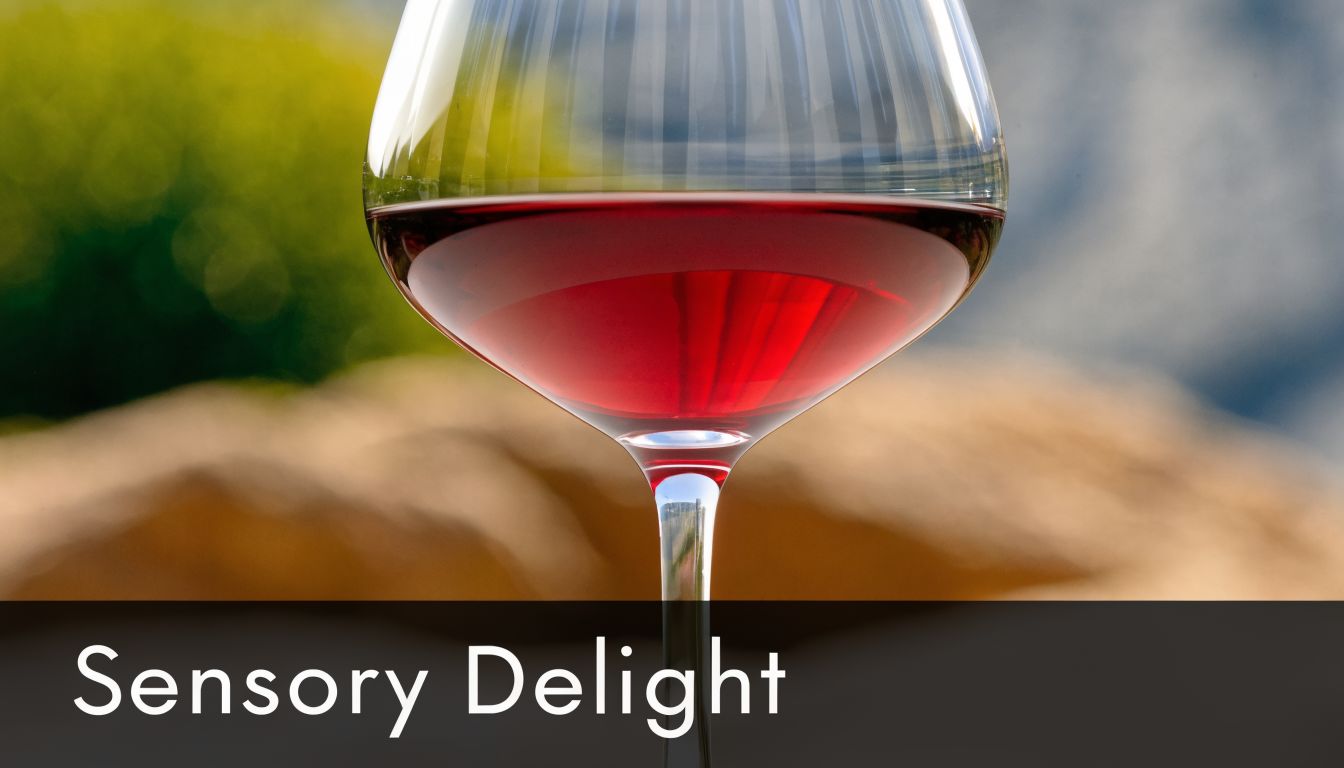
A close-up view of a crystal wine glass filled with deep red wine against a blurred background.

A fine rim gives the wine a smoother path onto the palate. A clearer bowl shows colour more cleanly. A better-balanced stem feels more secure when guests are standing, circulating, or moving between ceremony and reception. None of this is abstract. It affects comfort, aroma, temperature, and overall perception.

Temperature, sparkle and stability

Some physical advantages translate directly into event service. Crystal's superior thermal conductivity keeps chilled wine cool for up to 15 minutes longer than standard glass. Its higher refractive index (1.52+) creates a prismatic sparkle under event lighting, enhancing perceived luxury, while its density enables a heavier base that reduces tip-over risk by 22% at crowded events, according to this crystal versus glass analysis.

For Cape Town events, that matters more than it might elsewhere. Outdoor receptions warm up quickly. Guests carry glasses across lawns, decks, gravel courtyards, and marquees. A glass that holds temperature better and stands more securely helps service teams avoid unnecessary spills and replacements.

Why the wine seems better served

Crystal doesn’t make a mediocre wine great, but it does help a good wine show itself properly. The thinner rim keeps the glass from feeling intrusive. The clarity lets guests appreciate the hue of a rosé or the depth of a red. The overall build encourages slower, more attentive drinking.

That’s useful if your wine list has range. If you’re serving local rosé alongside more classic European styles, it helps to understand what guests may respond to in the glass as much as in the bottle. For readers comparing styles, this guide to the best English rosé wine is a good reference point because it highlights how subtle aromatic wines benefit from proper presentation.

The sound and feel of occasion

There’s also an auditory cue people associate with quality. Crystal has that crisp, clean ring when raised for a toast. It’s a small detail, but events are built from small details.

  • For weddings: the toast feels more ceremonial.
  • For brand events: the table reads as premium in person and on camera.
  • For private dinners: guests instinctively slow down and treat the setup with more care.

A premium glass changes behaviour. People hold it differently, pour more carefully, and pay more attention to what they’re drinking.

That behavioural shift is one of the less discussed reasons crystal works so well at polished events. The guest experience becomes more considered because the object itself signals that the moment matters.

Choosing the Right Crystal Glass Shapes for Your Wine List

Once you’ve decided on crystal, the next question isn’t “Do we need wine glasses?” It’s “Which shapes do we need, and where can we simplify?” That’s where many event plans either become elegant or overcomplicated.

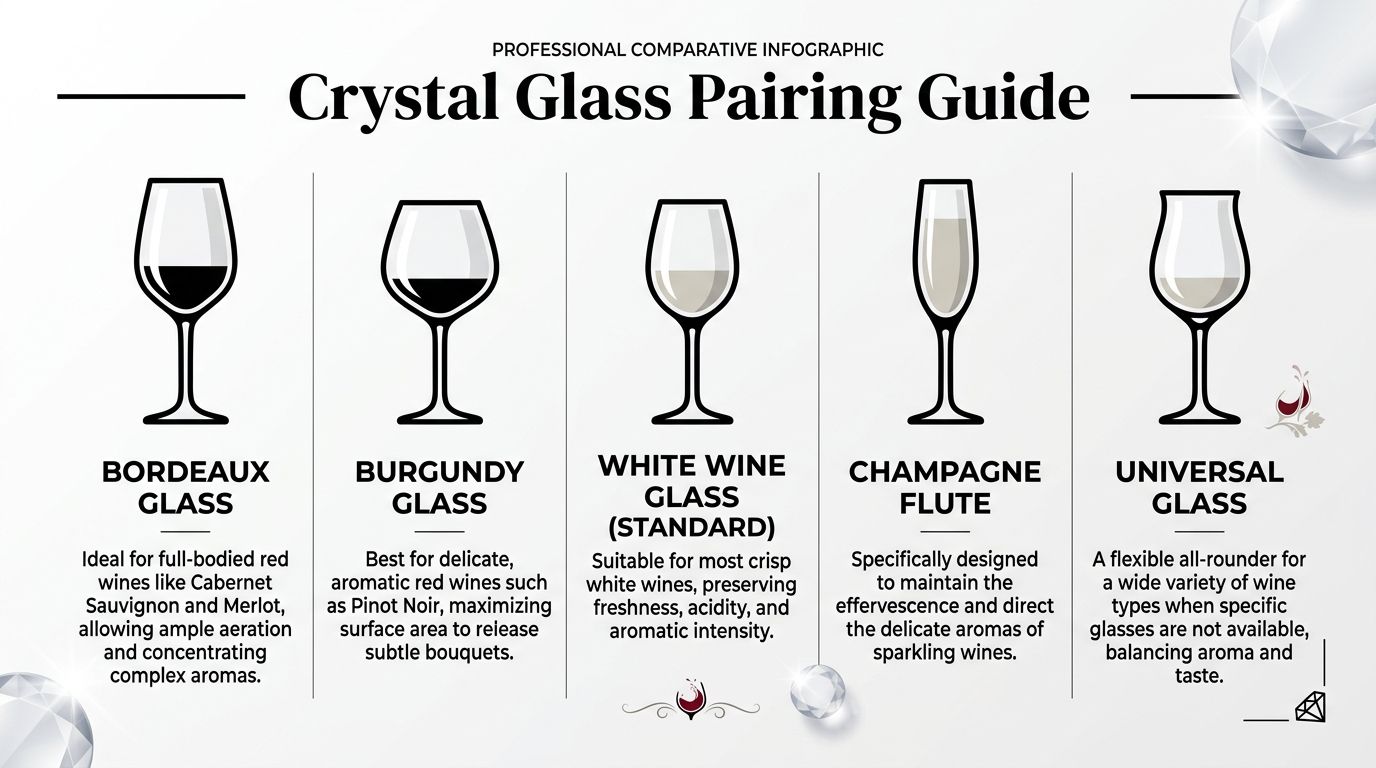
An infographic titled Crystal Glass Pairing Guide, showing five different wine glass types with descriptions for each.

Start with the actual wine list

A wine estate lunch and a city corporate launch need different thinking. If the event has a focused wine menu, shape matters more. If service needs to move quickly and stock must stay manageable, a smaller range of versatile shapes is usually smarter.

Here’s the practical way to choose.

Common shapes and when they work

Bordeaux glass

Use this for fuller-bodied reds. The taller bowl gives the wine space, and the narrower opening helps direct aroma upward without making the glass feel too wide in service. It suits structured reds often poured at formal dinners.

Burgundy glass

This is the broader-bowled option. It works well for more delicate, aromatic reds because the wider bowl encourages a softer opening of the wine in the glass. It looks dramatic on the table, but it also takes up more room, which matters if your place settings are tight.

Standard white wine glass

A narrower bowl helps preserve freshness and directs aroma in a more focused way. This shape is often the most efficient choice for Chenin Blanc, Sauvignon Blanc, Chardonnay, and general white wine service at weddings.

Champagne flute

This remains useful when the brief is visual formality and bubble retention. It’s especially effective for arrivals, welcome drinks, and toast moments where guests will be standing.

Universal glass

For many events, this is the workhorse. A good universal crystal glass handles red, white, and even some sparkling service reasonably well without making the table look mismatched. If the event prioritises flow over strict varietal service, this is often the best answer.

Matching shapes to South African favourites

For local event planning, these are sensible pairings:

  • Pinotage: often sits well in a Bordeaux-style or a modern universal glass, depending on how bold the producer’s style is.
  • Chenin Blanc: benefits from a standard white wine glass that keeps the wine feeling fresh and focused.
  • Methode Cap Classique: works in a flute when you want a formal presentation, especially for receptions and speeches.
  • Cabernet Sauvignon and Merlot: usually reward the added bowl size of a Bordeaux shape.

The angled-rim trend

A newer talking point in the Winelands is the rise of angled-rim crystal glasses. They’re visually distinct, which matters for couples and planners who want a fresher table look, but there’s also a functional argument. Local tests by the SA Glass Testing Lab indicate these modern designs can improve red wine oxygenation by 15% compared to standard rims, a key factor for millennial couples who make up 75% of Cape Town weddings and seek unique, sensory-focused details, according to this trend reference.

That doesn’t mean every event should rush to use them. They work best when the event design is contemporary, the wine programme is part of the guest experience, and the planner wants a visible point of difference.

Selection shortcut: If you’re serving one red, one white, and a sparkling wine, a universal crystal glass plus a flute is often enough. Add specialised red glasses only when the wine service is a centrepiece, not just a drinks function.

What usually doesn’t work

Trying to hire too many shapes can create service friction. Staff sort incorrectly. Tables feel crowded. Clearing becomes messy. Replacement risk climbs because more fragile stock is moving through more hands.

The strongest events usually choose one of two routes. Either they do a tightly edited premium setup with universal glasses and disciplined service, or they commit fully to a curated wine programme with distinct glass shapes and the staffing to support it. The awkward middle tends to cause the most problems.

Styling and Planning with Crystal for Events

Crystal does more than hold wine. It changes how a table reads from a distance. On a long harvest table, it adds rhythm and height. On a sleek black-tie layout, it sharpens the geometry of the setting. On a rustic-luxe farm wedding, it provides contrast against timber, linen, stone, and candlelight.

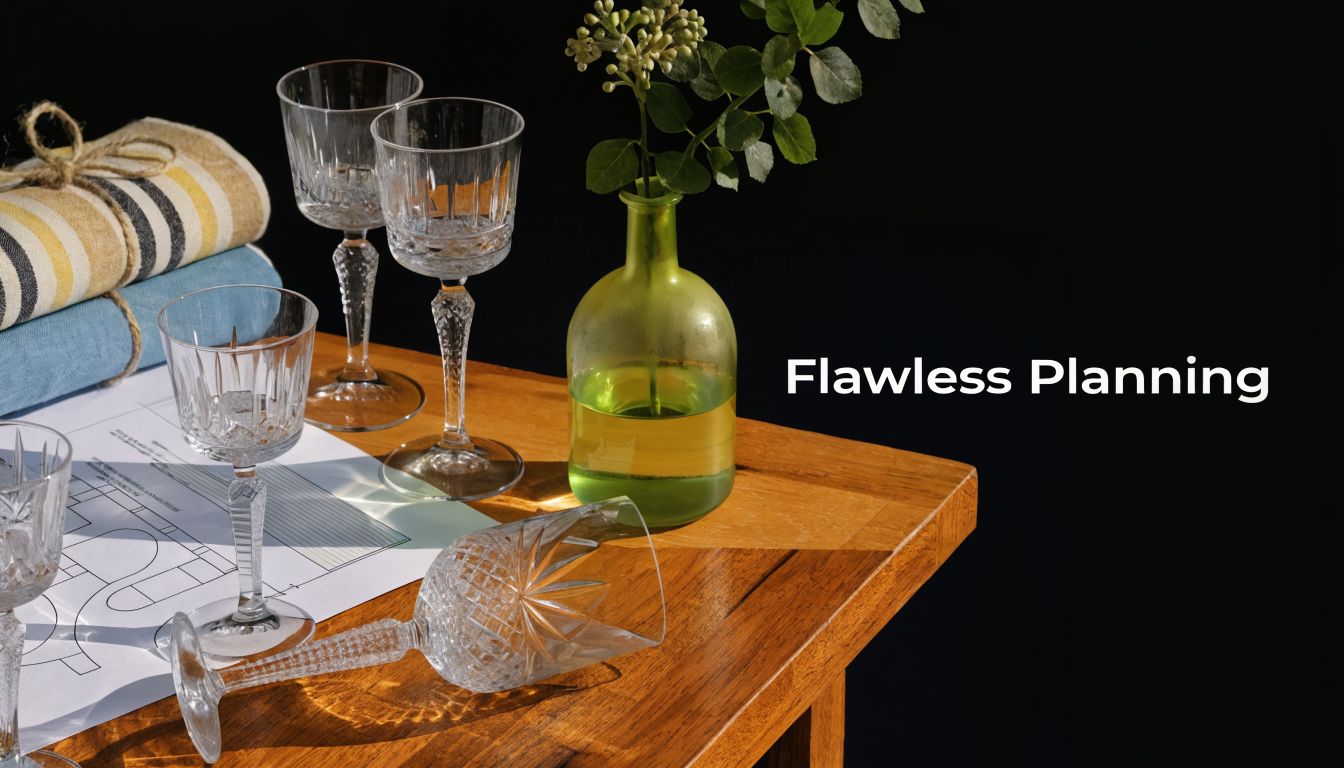
Several crystal wine glasses are arranged on a wooden table alongside a green vase and architectural plans.

Fit the glassware to the event style

For Paarl farm venues, crystal stops natural textures from looking too plain. For city launches and corporate dinners, it prevents minimalist tables from feeling cold. The glassware acts like jewellery for the table. It doesn’t need to dominate, but it should finish the look.

If you’re refining the full tablescape, centrepiece scale matters just as much as stemware selection. A practical reference for balancing height, florals, and table function is this guide on a centrepiece for table.

Quantities that make service smoother

There isn’t one perfect formula for every event. The right quantity depends on whether guests are seated throughout, whether there’s a pre-drinks phase, and whether wines change during the meal. Still, some planning habits consistently work better than others:

  • Ceremony to reception flow: If guests move with drinks in hand, allow for transition glasses rather than counting only seated covers.
  • Multiple wine styles: If red and white are served side by side, separate glasses keep service cleaner and reduce constant clearing.
  • Formal toast timing: Keep sparkling glasses tied to the actual run sheet. Setting them too early can clutter already busy place settings.
  • Outdoor events: Build in breathing room. Wind, uneven ground, and guest movement increase handling pressure.

Aesthetic choices that pay off

The best crystal layouts usually follow a few simple rules:

  1. Keep the stems aligned rather than scattered.
  2. Don’t overcrowd small tables with too many bowl sizes.
  3. Match the scale of the glass to the plate and cutlery, not just the wine.
  4. Use crystal where guests will notice it most, such as the main dining setup and welcome drink station.

For hosts who care about the broader drink presentation, it helps to look beyond wine too. Good glass selection across the bar can elevate your tasting experience, especially when the event includes spirits service after dinner.

Styling works best when every item has enough space to be seen. If the glassware is squeezed between oversized florals and crowded place settings, even beautiful crystal loses impact.

A well-planned setup makes crystal look effortless. That only happens when the styling and service plan are worked out together.

Your Complete Rental Guide for Crystal Glassware in Cape Town

Beyond glossy inspiration, the practical work begins. Hiring crystal for an event in Cape Town or the Winelands is less about choosing the prettiest glass and more about choosing a rental setup that can survive transport, setup, service, clearing, and post-event handling without becoming a headache.

Ask the rental questions early

Most problems come from assumptions. A planner assumes cleaning is included. A venue assumes the hire company will handle collection the next morning. A client assumes “crystal” means the same quality across every supplier. Those assumptions cost money and time.

Before confirming any hire, get clarity on:

  • Breakage terms: Know what counts as acceptable wear versus billable damage.
  • Cleaning responsibility: Confirm whether glasses return dirty, rinsed, or fully washed.
  • Packing method: Ask how the stock is crated and labelled for dispatch and return.
  • Glass consistency: Check that all units in the order match in height, bowl shape, and finish.
  • Replacement flexibility: Ask what happens if final guest numbers change close to the event.

Cleaning is the hidden issue

In the Winelands, cleaning is where many otherwise strong plans go wrong. A key challenge in the Winelands is cleaning, as 68% of local planners report glassware damage from improper methods. The region's hard water (180-250 mg/L CaCO3) can cause clouding on crystal, making professional rental services with bespoke, non-abrasive cleaning protocols essential to avoid damage, according to this cleaning and maintenance reference.

That’s a serious local consideration. Hard water marks can make crystal look tired very quickly. If a venue relies on rushed rinsing, hot water, rough cloths, or stacked drying in a back-of-house area, the glasses won’t look premium for long.

What works and what doesn’t

The following patterns show up repeatedly in real event conditions.

What works

  • Hand-wash protocols with non-abrasive products: These help preserve clarity and avoid scratching.
  • Controlled sorting after service: Staff should separate stems carefully instead of piling mixed glassware into tubs.
  • Shade and stable handling areas: Outdoor events need a proper staging area away from direct heat and foot traffic.
  • One clear return process: When caterers, venues, and planners all know the pack-down method, breakage usually drops.

What doesn’t

  • Last-minute glass swaps: Mixed ranges can wreck the look of the table.
  • Venue sink clean-ups with harsh scrubbing: Clouding and chipping often originate here.
  • Over-ordering exotic shapes without a handling plan: More variety usually means more sorting errors.
  • Loose transport in generic crates: Crystal needs proper compartmentalised packing.

Rental success has less to do with choosing “the best glass” and more to do with choosing a system that protects the glass from warehouse to wash-up.

Think beyond the unit count

A good rental decision includes the operational chain. Who unloads? Who places the glasses? Who clears during service? Who is responsible if a venue helper tries to speed-clean crystal with the wrong cloth or detergent? If nobody owns those moments, the breakage risk moves straight back to the client.

For planners coordinating multiple tabletop elements, it also helps to review the broader service mix alongside your glassware plan. This guide to cutlery crockery hire is useful because it frames tabletop rentals as one integrated decision rather than separate checklists.

Practical checks before you sign off

A clean rental process usually includes these steps:

  1. Request actual product photos
    Catalogue images can be generic. Confirm the exact glass line being supplied.

  2. Check stem height against your tablescape
    Tall bowls can clash with low-hanging florals or compact place settings.

  3. Confirm venue conditions
    Outdoor gravel, narrow passages, and remote loading access all affect how safely crystal can be handled.

  4. Align the hire order with the run sheet
    Welcome drink, main meal, speeches, and after-party service each create different glass needs.

  5. Clarify return condition in writing
    Don’t leave cleaning expectations to verbal assumptions.

When crystal is worth the extra effort

For a casual backyard braai, standard glass may be enough. For a Winelands wedding, a formal matric dance, a premium launch, or a milestone dinner where presentation matters, crystal usually justifies itself. It performs better visually, supports the wine service more convincingly, and tells guests the host paid attention.

The key is to treat crystal as equipment that needs a proper plan. When planners do that, the result looks polished and the rental process stays manageable.

Making a Brilliant Impression with Every Sip

Crystal wine glasses do more than decorate a table. They sharpen presentation, improve the feel of service, and support the quality of the wine being poured. For Cape Town and Winelands events, they make particular sense because the setting, the wines, and the guest expectations all run higher than average.

If you’re planning a premium event, the strongest results come from pairing beautiful glassware with practical logistics. That includes styling, quantities, transport, handling, and the wider drinks setup. If you’re also refining beverage service overall, a mobile bar service can help tie the full experience together.


If you want crystal glassware that looks right on the table and works in real event conditions, speak to ABC Hire. Their Cape Town team supports weddings, corporate functions, matric dances, and private events across the city and the Winelands, with the practical rental experience needed to help you get the details right.

Gold Side Tables: Your Ultimate Event Styling Guide

You’ve finalised the florals, the candles are on brief, the linen works, and the room still feels a little unfinished. That usually happens in the last layer of styling. The large items are doing their job, but the guest experience between those hero elements still needs shape, shine, and somewhere practical to rest a drink, a clutch, or a small arrangement.

That’s where gold side tables earn their place. In a Cape Town wedding lounge, they can lift a soft neutral palette without making it feel heavy. In a Stellenbosch corporate launch, they give a seating cluster a polished edge and make the room feel considered rather than merely furnished. They’re small pieces, but they read like jewellery in a venue.

The Midas Touch That Elevates Every Event

A planner will often walk into a venue and know immediately that the layout is correct but the mood isn’t landing yet. The sofas are in place. The bar is built. The lighting is working. What’s missing is a reflective accent that catches candlelight, LED glow, or late afternoon sun and ties the styling together without adding clutter.

Gold side tables offer unobtrusive support. They don’t fight with a statement floral install or a dramatic dancefloor. They support it. Place one beside a velvet occasional chair, or between two lounge seats with a low arrangement and glassware, and the whole area feels more intentional. That’s why they work so well as event pieces rather than just furniture.

South Africa’s connection to gold gives that finish extra resonance. The Witwatersrand Gold Rush of 1886 helped shape a long cultural familiarity with gold as a marker of celebration, craft, and status, and the country historically produced over 50% of the world’s gold supply according to this background on gold history. In the Western Cape event world, that affinity still shows up in how clients respond to gold-accented décor.

Gold works best when it’s used as punctuation, not as noise.

For planners building out a coordinated look, it helps to think of these tables as companions to other warm metallic seating details. If your event already includes gold Tiffany chairs, a side table in a matching or complementary finish can stop the room from feeling visually disconnected.

The effect is strongest when the table is doing two jobs at once. It needs to look elegant from across the room and still be useful at arm’s reach.

A Spectrum of Gold Exploring Styles and Finishes

Not every gold side table says the same thing. Some read clean and architectural. Others feel romantic, decorative, or overtly glamorous. Choosing well starts with understanding both style and finish, because clients often ask for “gold” when what they really mean is a specific mood.

A collection of various gold side tables with unique designs arranged against a dark wall background.

Modern gold side tables

Modern gold side tables suit venues where the architecture is already doing some of the work. Think clean-lined wine estate interiors, glass-heavy reception spaces, or corporate lounges where branding needs to remain the focal point. These tables usually rely on slim frames, geometric bases, and restrained tops.

They’re useful when you want metal detail without visual heaviness. A round top with a simple gold frame can sit next to a boucle chair, hold a drink and a candle, and still leave the setup feeling airy.

A modern shape also plays well with black, stone, white, taupe, and smoked glass. If the event palette includes contemporary materials, browsing pieces similar in spirit to marble top end tables can help clarify whether you want the gold to feel warm and decorative or structured and architectural.

Vintage and decorative styles

Vintage-inspired gold side tables bring more personality. You’ll see curved legs, patterned metalwork, Art Deco references, mirrored shelves, or detailing that feels softer and more ornamental. These are often the right choice for weddings, milestone birthdays, or any event where romance matters more than restraint.

They work especially well with:

  • Textured seating: Velvet, tufted ottomans, and upholstered benches.
  • Layered tabletops: Bud vases, votives, champagne coupes, and folded napkins.
  • Warm lighting: Candles, festoon lighting, and amber-toned LEDs.

Use them carefully, though. If the venue already has highly decorative chandeliers, patterned carpeting, and ornate tableware, an overworked side table can push the room into visual clutter.

Practical rule: The more detailed the venue and floral styling are, the simpler the side table should be.

Mirrored and high-glam options

Mirrored gold side tables are the statement-makers. They bounce light, photograph beautifully, and can make a smaller lounge area feel brighter at night. They’re ideal near dancefloors, champagne stations, or entrance moments where reflection adds energy.

The trade-off is maintenance during service. Fingerprints, condensation rings, and cake crumbs show quickly on mirrored surfaces. For formal events with attentive staff, that’s manageable. For high-traffic parties, a less fussy surface is usually easier.

Understanding finishes properly

Clients often use “gold”, “brass”, and “metallic” interchangeably, but the finish changes the feel of the room. The easiest way to think about it is to compare tables to jewellery.

Finish How it reads in a venue Where it works best
Brushed brass Softer, muted, less reflective Romantic weddings, earthy palettes, textured lounges
Polished brass High-shine, formal, more noticeable Black-tie events, glamorous receptions, evening bars
Gold lacquer Smooth and even in colour Modern styling where consistency matters
Gold-plated metal look Richer and more jewellery-like Feature pieces, premium lounge moments

A matte gold finish behaves like brushed jewellery. It adds warmth without shouting. A polished finish behaves like a dress piece. It catches every light source in the room.

That matters when pairing side tables with larger rentals. If your lounge also includes metallic statement surfaces, it’s worth reviewing related styling examples such as gold coffee tables so the metallic elements feel related rather than mismatched.

What usually works and what doesn’t

A few patterns come up repeatedly on real event floors:

  • Works well: One clear metal story across the lounge cluster. Warm gold with warm glassware and cream florals feels coherent.
  • Often fails: Mixing yellow gold, rose gold, chrome, and copper in the same small area without a deliberate reason.
  • Works well: Letting one finish dominate and using other materials to soften it.
  • Often fails: Choosing the table from a product photo without considering what the venue lighting will do to the finish.

The best choice isn’t the most ornate table. It’s the one that keeps the room balanced.

Function Meets Form Selecting the Right Table for Your Occasion

A beautiful table that’s too low, too narrow, or too unstable becomes a nuisance within the first hour of service. Selection should start with use, not with colour. Ask what guests will place on the table, how long they’ll occupy the area, and whether staff need to move around it carrying trays, coffee service, or branded materials.

In Cape Town’s event market, gold-finished side tables account for 12% of premium furniture rentals for night-time events, and a 2024 industry report noted more than 2,500 units rented annually across over 1,200 weddings, which tells you two things at once: they’re popular, and planners need to choose them deliberately rather than treat them as filler pieces. That market context was noted in the earlier gold heritage discussion and is part of the same source base already referenced there.

Start with height and reach

A side table should be easy to use without guests leaning awkwardly forward or twisting in their seat. In lounge clusters, the top should sit comfortably near the arm height of the seating around it. If it’s noticeably lower, glasses end up on chair arms. If it’s too tall, the setup feels stiff and slightly commercial.

For practical selection, use this decision lens:

  • Beside a single chair: Choose a compact top for one drink, one phone, and one small accent item.
  • Between two seats: Allow enough surface area for shared use. Two glasses and a candle arrangement fill space faster than people expect.
  • At a welcome drink point: Prioritise top stability and easy access over decorative base detail.

Event type changes the brief

The right table for a wedding is not always the right table for a product launch or matric dance. The styling may overlap, but the pressure on the furniture doesn’t.

Weddings

Wedding lounges usually ask the table to do three jobs at once. It has to photograph well, support drinks, and leave room for a small floral or candle element. Round tops often work best because guests move around them easily and they soften the look of a seating cluster.

Corporate events

Corporate events need cleaner functionality. If attendees are networking with a drink in one hand and a phone or notebook in the other, the table needs a clear usable surface. Intricate decorative edges can look good in photos but reduce practical space.

Parties and formal dances

High-energy events are where stability matters most. If the floor is busy and guests are circulating constantly, a delicate-looking table with a narrow base can become a headache. In these settings, a sturdier build and simpler top are usually the smarter call.

If guests have to think about using the table, the table is wrong for the event.

Don’t ignore traffic and flooring

Venue flooring changes how a table performs. A polished indoor floor is forgiving. Lawn, gravel, paving joints, and slightly uneven heritage venue surfaces are not. For Winelands events, this becomes a genuine styling decision because the prettiest placement spot isn’t always the most stable one.

Check these before confirming your quantity:

  1. Surface condition: Flat indoor floor, decking, lawn, gravel, or mixed terrain.
  2. Guest density: Quiet lounge corner or high-traffic circulation zone.
  3. Service style: Passed canapés, plated dining, self-pour stations, or coffee service.

A side table succeeds when nobody comments on it. Guests use it, and the room feels finished.

The Art of Arrangement Styling and Grouping Gold Side Tables

One gold side table can be elegant. A well-grouped set can define a whole area of the event. Placement is what turns these tables from isolated accents into layout tools that shape movement, conversation, and photo opportunities.

An infographic titled The Art of Arrangement showing six tips for styling gold side tables.

When planning visual zones, product stylists often talk about background control, reflection, and visual hierarchy. Those same principles apply to events, and the thinking behind crafting the right background for your product is surprisingly useful when deciding how metallic furniture will sit against draping, walls, branding panels, or floral installs.

The Conversation Pod

This is the most reliable arrangement for lounge areas. Use three small tables with slight variation in height or visual weight around a sofa-and-chair grouping. The cluster shouldn’t feel perfectly symmetrical. A little irregularity makes the setup feel lived-in and softer.

Use this when the seating area is meant to keep guests there for a while. One table can take florals, another drinks, and the third can remain open for practical use.

  • Best for: Cocktail lounges, bridal lounges, VIP seating.
  • Avoid if: The footprint is tight and service staff need a direct through-route.
  • Styling note: Keep at least one tabletop mostly clear.

The Elegant Welcome

A single gold side table near an entry point can do far more than fill space. It gives arriving guests a visual cue that they’ve entered a curated event environment. Add a candle, a welcome sign detail, a single arrangement, or pre-poured drinks if staffing and timing allow.

This setup works because it’s restrained. Don’t overcrowd the tabletop. A side table at an entrance should read instantly.

A good arrival moment tells guests what kind of evening they’re walking into.

The Cake Annex

Cake displays often look beautiful in isolation but become awkward in use. Guests need somewhere for flutes, forks, napkins, or small dessert accompaniments, and those practical items can ruin the central display if they’re placed on the main cake table itself.

Two flanking gold side tables solve that neatly. They frame the hero piece and absorb the useful items without diluting the photograph.

The Lounge Bridge

This arrangement is useful in larger venues where separate seating pockets can start to feel disconnected. Place gold side tables between adjacent lounge zones to visually “stitch” them together. The tables don’t need heavy styling. Their repeated finish creates continuity.

This approach works particularly well when the room has multiple conversational clusters and you want a coherent metallic thread running through the floor.

The Photographic Corner

Create a small feature area with one statement chair, one gold side table, and a controlled décor item such as a vase, lamp, or champagne bucket. This gives guests a natural spot for portraits and candids without needing a full photo booth structure.

A few simple rules make these arrangements stronger:

  • Vary heights: Flat lines look static in photos.
  • Use odd numbers: Groupings of three usually feel easier on the eye than pairs.
  • Mind clearance: Guests still need to move naturally around the space.
  • Edit accessories: If the table itself is striking, reduce tabletop clutter.

The strongest styling plans don’t use more pieces. They place the right pieces with intent.

The Smart Choice Renting vs Buying for Cape Town Events

For one-off events, buying gold side tables is usually the expensive answer to a short-term problem. Purchase can make sense for a permanent venue with consistent styling needs and available storage. For planners, private hosts, schools, and most corporate teams, it usually creates extra cost and extra admin.

The local market gap makes that even clearer. For one-off events, renting gold side tables can deliver over 40% cost savings compared with buying, and the same source context notes that no major ZA rental platforms list these items for local hire, while 62% of Cape Town schools report challenges with furniture reuse after events like matric dances according to the source set tied to gold side table purchase listings. That combination matters. If reuse is difficult and storage is inconsistent, ownership becomes wasteful very quickly.

What buying really adds to the job

Buying sounds simple when you’re looking at a product page. The hidden work starts afterwards. Someone has to receive the tables, inspect them, store them, transport them, protect them during loading, wipe them down, and deal with wear across multiple events.

That’s manageable if furniture management is part of your operation. It isn’t manageable if your team is already occupied with guest lists, technical suppliers, catering deadlines, and venue access windows.

Where renting makes more sense

Renting is usually the better route when the event brief changes from one job to the next. A romantic Winelands wedding might need brushed gold with soft edges. A city launch might need something cleaner and more structured. Hiring lets the furniture follow the brief instead of forcing the brief to fit what you already own.

For planners who need broader event inventory as well, a local option such as furniture for hire in Cape Town is one way to keep lounge pieces, seating, and support items aligned within the same logistics plan.

Rental vs purchase comparison for gold side tables

Consideration Renting (with ABC Hire) Buying
Upfront spend Lower commitment for the event period Higher initial outlay
Storage after the event Not your problem once collected You need secure, clean storage
Style flexibility Choose a look that suits each brief You’re tied to what you own
Transport Usually coordinated as part of rental logistics You arrange vehicles, loading, and returns
Maintenance Event-level care during use Ongoing cleaning, repairs, and wear management
Quantity changes Easier to scale up or down per event Difficult if demand changes suddenly
Use case Best for weddings, launches, formal dances, private functions Better suited to permanent venues with repeated use

Buying works for stock rooms. Renting works for events.

The less obvious trade-off

Ownership can also narrow your creative options. Once a venue or planner has spent money on one style, there’s pressure to use it repeatedly whether or not it’s the best fit. That’s how rooms start to look recycled instead of perfectly suited.

With rented gold side tables, the decision can stay where it belongs. On the event concept, the venue conditions, and what guests will do in the space.

Logistics and Care for Hired Tables in the Cape

A gold side table can leave the warehouse spotless and still arrive at a venue facing three local realities: narrow access times, mixed terrain, and weather that changes faster than the running order. Good logistics matter as much as good styling, especially across Cape Town, Stellenbosch, Franschhoek, and Paarl.

A person crouching down while carefully positioning a polished gold side table on a paved outdoor surface.

The outdoor side of the market has become harder to ignore. Source data notes a 22% increase in outdoor corporate events in the Winelands and an 18% rise in rainfall, with 35% of event cancellations avoided by using appropriate rental furniture over owned pieces that are more vulnerable to coastal humidity or UV exposure, as summarised in the source context linked to gold side table category listings. That tells planners something practical. Outdoor furniture selection isn’t decorative fussiness. It’s risk control.

Getting placement right on site

The first step is always surface assessment. A polished table on a flat indoor floor behaves very differently from the same table on paving joints, timber decking, or compacted lawn. Before styling starts, test each placement point for wobble and adjust the plan if the ground isn’t fully true.

A few habits prevent most problems:

  • Check before dressing: Confirm stability before adding glassware, candles, or florals.
  • Keep weight centred: Don’t place heavy objects on one edge of a narrow top.
  • Allow breathing room: Avoid squeezing tables into pathways where guests or staff will clip them.

Caring for the finish during service

Gold finishes look refined when they stay clean and dry. During the event, the biggest threats are condensation, abrasive cloths, sticky spills, and improvised cleaning. If a table gets marked, gentle handling matters more than aggressive wiping.

Use soft cloths only. Avoid harsh cleaners, rough scrubbers, or anything that can dull the finish. If drinks service is heavy, ask staff to keep an eye on condensation rings and wipe them promptly with appropriate materials.

Outdoor use in Cape weather

Outdoor setups need a stricter eye. Even when a table is suitable for event use outside, that doesn’t mean it should sit fully exposed for hours if rain threatens or sea air is particularly sharp. Positioning under a stretch tent, marquee edge, verandah, or covered lounge zone is usually the safer call.

For Winelands events, keep these in mind:

  1. Morning setup is not the whole forecast: Conditions can shift by late afternoon.
  2. Metal reflects heat and light differently outdoors: What looked subtle in a showroom may read brighter in direct sun.
  3. Collection condition matters: Clearing standing water and obvious residue before pickup helps avoid unnecessary issues.

The planners who have the smoothest event days usually treat hired furniture as part of operations, not just décor. That’s what keeps the room looking sharp from guest arrival to final pack-down.

Your Questions Answered

Do gold side tables only suit formal events?

No. They suit styled events. That includes formal weddings and black-tie dinners, but it also includes contemporary brand launches, birthdays, engagement parties, and polished matric farewells. The key is choosing the right shape and finish. A sleek, restrained gold table can feel modern rather than traditional.

How many gold side tables do I need?

Start with function, not symmetry. A lounge area usually needs enough tables so guests don’t have to balance drinks on chair arms or window ledges. If there’s a cake zone, welcome point, or portrait corner, count those separately. It’s better to place fewer tables well than scatter too many without purpose.

Can gold side tables work with silver cutlery or black décor?

Yes, if one finish clearly leads and the others support it. Gold side tables pair well with black, white, stone, glass, and many neutral linen colours. Mixed metals can work too, but only when the contrast feels intentional. If every metallic tone is competing for attention, the room starts to look unresolved.

The safest way to mix finishes is to choose one hero metal and let the rest stay quieter.

Are they practical for drinks and canapés?

They are, provided the top size suits the setting. In cocktail lounges, guests need enough room for glassware and a small styling element. For packed standing events, they should be placed where people can approach them comfortably rather than in circulation bottlenecks.

What if my event is outdoors?

Outdoor use is possible, but placement matters. Covered positions are usually preferable, especially in the Cape where weather can shift during the course of an event. Stability, moisture exposure, and guest traffic all need to be considered before final placement.

Do I need matching gold pieces everywhere?

Not at all. Matching everything can flatten the room. A better result usually comes from repeating gold with restraint. You might use gold side tables in the lounge, a separate metallic detail at the bar, and keep dining tables more neutral.

What causes the most styling mistakes with gold side tables?

Usually one of three things:

  • Choosing by photo alone: The venue lighting changes how the gold reads.
  • Over-accessorising: Too many candles, flowers, menus, and props can hide the table itself.
  • Ignoring scale: A tiny table beside a large sofa looks decorative but not useful.

When the finish suits the room and the proportions suit the guest experience, gold side tables rarely feel like a risky choice.

Add a Touch of Gold to Your Next Event

Gold side tables do more than fill corners. They sharpen lounge layouts, support service, catch light beautifully, and help an event feel finished. In Cape Town and the Winelands, they’re especially effective because the venues often ask furniture to do double duty. It must look refined in photographs and still perform well through setup, guest flow, and pack-down.

The strongest results come from making a few grounded decisions. Choose the right finish for the room. Match the size to how guests will use it. Place each table with purpose. And for one-off events, avoid turning a styling need into a storage problem.

If you’re planning a wedding, activation, formal dance, or private function, hiring is usually the cleaner route. It gives you flexibility, removes the burden of long-term ownership, and lets the furniture fit the event rather than the other way around.


If you’re planning an event and want to use ABC Hire for gold side tables and related event furniture, the simplest next step is to review the available style direction, request a quote, and confirm delivery details for your venue in Cape Town or the Winelands. That gives you clarity on quantities, finishes, and logistics before the styling plan is locked.

Perfect Wooden Cake Stand for Your 2026 Event

The venue is booked. The florist has your brief. The cake order is sorted. Then one practical question lands right at the end of the planning list. What is the cake going to stand on?

That detail changes more than one might anticipate. A beautiful cake on an awkward, flimsy or badly sized base can make the whole dessert table feel unfinished. A well-chosen wooden cake stand does the opposite. It gives the cake presence, lifts it into the room, and ties the styling together without competing for attention.

In Cape Town and the Winelands, that choice also comes with local realities. Outdoor venues, gravel courtyards, farm tables, humid air, long delivery routes, and quick turnaround between events all affect what works in practice. The stand needs to look right, but it also needs to travel well, sit level, clean properly and hold steady when guests gather around for photos.

The Finishing Touch Your Event Deserves

A cake table often comes together last. That is exactly why the stand matters.

Many planners have seen the same moment. The linens are smooth, candles are placed, the cake arrives looking excellent, and then someone sets it down on a stand that is too small, too shiny, too cold, or wrong for the room. The cake is still lovely, but it loses impact.

A wooden cake stand solves that in a very particular way. It brings warmth. It softens modern tablescapes. It gives rustic venues structure and gives formal venues texture. On Cape farm venues, heritage estates, garden weddings and even neat corporate launches, wood tends to sit comfortably with the surroundings.

That instinct has deep roots locally. Wooden cake stands were not a recent styling trend in Cape Town. They were part of the social language of entertaining much earlier. Historical records from the late 19th century show that they appeared in over 65% of documented tea parties in Cape Town high society, often crafted from local woods such as yellowwood to signal opulence and stability, as noted in this historical account of tiered cake stands.

Why the stand matters as much as the cake

The stand does three jobs at once:

  • Presentation: It frames the cake and gives it visual importance.
  • Practical support: It keeps the cake elevated and easier to serve.
  • Theme control: It can pull a look towards rustic, modern, heritage-inspired or minimal.

A cake should never look like an afterthought on the table. The stand is what turns it into a focal point.

For Western Cape events, that is especially useful. A single piece can bridge different design elements, such as timber tables, white crockery, dried florals, brass candle holders, vineyard stonework or black corporate branding.

Why a Wooden Stand is Your Most Reliable Choice

A cake table gets handled by several people in a short window. The florist is adjusting candles, the venue team is straightening linen, the baker is checking the finish, and someone is usually asking for one last photo before guests arrive. In that kind of setup, reliability matters more than a stand that only looks good in a product shot.

Wood earns its place because it balances appearance with practical use. Metal can suit a very clean, modern brief, but it often feels harder and less forgiving in vineyard venues, garden weddings, and heritage spaces around Cape Town. Glass photographs well in controlled conditions, yet it is the option I watch most carefully during loading, setup, and collection.

Stability on real event floors

A good wooden stand usually has enough weight and surface area to sit confidently on the kinds of tables we see at events. That includes trestles with a slight bow, uneven decking, old farmhouse tables, and outdoor setups where the ground is not perfectly level underneath the flooring.

That matters in the Winelands. Venues in Stellenbosch, Paarl, and Franschhoek often combine beautiful settings with practical quirks such as gravel paths, cellar doors, lawn ceremonies, and quick room resets between functions. A wooden pedestal generally handles that movement better than lighter decorative stands that can shift too easily once the cake is in place.

Wood works across more event types

Wood also solves a styling problem without drawing too much attention to itself. It can support a soft, romantic wedding cake at a Constantia estate, a neat single-tier celebration cake at a baby shower in Durbanville, or a branded dessert display at a corporate function in the CBD.

It also connects well with other furniture already in the room. If the event uses timber pieces, the cake stand looks intentional rather than added at the last minute. That is especially useful when you are matching the display to wooden tables and chairs for event styling.

Practical trade-offs

Wood is reliable, but it is not maintenance-free. It can pick up marks if it is stacked badly in transport. Some finishes need careful wiping between hires. Coastal humidity can affect certain woods over time if they are stored poorly.

Those trade-offs are manageable, and for most events the upside is stronger.

Feature Wooden stand Metal stand Glass stand
Visual warmth High Lower Moderate
Stability on uneven setups Usually strong Varies by base Varies by thickness and base
Transport resilience Good Good Fragile
Range across event styles Wide More limited More limited

The main mistake I see is choosing a stand by colour and shape alone. Ask how heavy it is, whether the top plate is wide enough for the cake board, whether it sits flat, and how it will travel to a farm venue or private home. A wooden stand is often the safest answer because it handles both the styling brief and the logistics behind it.

A Guide to Wooden Cake Stand Styles and Materials

A wooden cake stand does more than hold the cake. It sets the tone of the table before guests even notice the flavour or the flowers. In Cape Town and the Winelands, where one weekend can include a polished city launch and a relaxed vineyard wedding, the style and finish of the stand need to suit both the brief and the venue.

A collection of various artistic wooden cake stands arranged on a white surface against a black background.

Pedestal styles that suit different events

A round pedestal is still the most flexible choice. It works across weddings, kitchen teas, milestone birthdays and corporate dessert tables because it gives the cake a clear centre point without competing with the decor. If the client is undecided, this is usually the shape I recommend first.

A raw-edge or rustic slab style suits farm venues, cellar doors and outdoor celebrations where the rest of the setup already has texture. It looks best when the styling is slightly relaxed. Semi-naked cakes, pressed flowers and fruit-led finishes tend to sit naturally on this type of stand.

A painted or smooth-finish pedestal fits cleaner event styling. It works well for modern reception spaces, showroom launches, formal school functions and black-tie evenings where a rough timber edge would feel out of place.

A low riser often solves practical styling problems. It keeps the display grounded when the cake is tall, and it helps when guests need clear sightlines across long banquet tables.

Material choices and what they mean in practice

The timber itself changes how the stand reads in the room.

  • Oak has weight and a more refined look. It suits elegant setups, but it needs proper storage and careful handling in coastal humidity.
  • Acacia usually shows stronger grain and warmer variation. It works well when the brief calls for a natural finish that still feels considered.
  • Pine is lighter in both weight and visual presence. It can work well for casual events if the finish is clean and the construction feels solid.
  • Locally styled timber finishes often sit comfortably in Cape venues because they echo the natural materials already used in many estates, barns and garden spaces.

Finish matters as much as species. A glossy top can bounce too much light into photos, especially under marquee lighting or flash. A very rough surface may suit the look of the event, but it can trap crumbs and icing and takes longer to clean properly between hires.

The best rental pieces usually sit in the middle. They look natural on the table and still wipe down fast during pack-up.

Styles that work better for hire stock

Buying for a home kitchen and choosing for event hire are not the same job. For weddings in Franschhoek, private homes in Constantia, or functions that need delivery up staircases in the city, the stand has to travel well, pack efficiently and come back in usable condition.

For that reason, simpler pedestal shapes often outperform ornate ones in the rental market. Clean profiles stack better, store better and are easier for staff to wrap without damaging the edges. Stands with detachable parts can also make warehouse packing and vehicle loading easier, especially when several setups are going out on the same run.

If you want the cake display to feel connected to the rest of the venue, it helps to look at the wider timber palette too. The same styling principles show up in pallet wood furniture used for event setups, particularly when the goal is a consistent wood-led look rather than one standalone feature on the dessert table.

A practical filter before you choose

Use these questions to narrow the options quickly:

  1. Does the venue feel polished, rustic, or in between?
  2. Will the cake be photographed close-up from several angles?
  3. Is the finish smooth enough for quick cleaning after service?
  4. Can the stand handle transport to a farm venue, hotel, or private home without fuss?
  5. Does the stand shape support the cake style instead of distracting from it?

That shortlist usually gets better results than choosing from photos alone. In practice, the right stand is the one that suits the room, carries the cake cleanly, and still makes sense for delivery and collection around Cape Town and the Winelands.

Sizing Your Stand for a Flawless Cake Display

The cake arrives at a Franschhoek venue looking perfect, then the stand turns out to be too narrow for the board. That is how a polished setup starts feeling makeshift. Sizing the stand properly avoids that problem and makes service, transport, and photography easier on the day.

Infographic

Start with the cake board, not the cake

Bakers often quote the cake diameter first, but the stand has to suit the full base. That includes the board, any icing overhang, and decorative details that sit low around the edge.

A reliable rule is to choose a stand that is 2 to 4 inches wider than the cake base. That border helps the cake sit comfortably, gives staff room when lifting or serving, and looks balanced in photos. For rented stands, that extra margin also reduces the risk of chips or pressure on the stand edge during setup.

Diameter matters first. Height comes second

Clients often ask for a taller stand because they want the cake table to feel more important. Height does help, but only after the top plate is wide enough.

Use this guide before you confirm the hire:

Cake size Better stand choice Why it works
Small cake Slightly larger stand Keeps a neat border around the base
Medium cake Moderately wider stand Balances the display without wasted surface area
Large single-tier cake Broad, stable top plate Improves support and leaves room for clean serving
Tall multi-tier cake Wide top plus firm base Gives the cake a safer footprint and better proportion

In practice, single-tier cakes need less drama and more support than clients expect. Tall cakes are different. Even if the diameter looks manageable, the overall weight and centre of gravity can change the stand you need.

Height changes the mood of the table

A low stand suits private dinners, smaller birthday tables, and venues where the cake sits close to guests.

A medium pedestal is usually the safest choice for weddings and corporate functions. It gives presence without making the cake difficult to cut or awkward to photograph across the table.

A taller stand earns its place when the cake is on a separate display table, the room has high ceilings, or the cake itself is narrow and needs visual lift. At Cape Town hotel venues and many Winelands estates, that works well if the florist keeps surrounding décor low.

If the cake already has several tiers, extra pedestal height can push the display too far upward. Width and stability usually solve the problem better than added elevation.

Check these details before you book or buy

Sizing errors usually come from missing one practical detail:

  • The cake board is wider than expected.
  • Fresh flowers, fruit, or piped details increase the footprint.
  • Product photos hide scale.
  • The stand looks solid but is not rated for a heavy cake.
  • The venue access involves gravel paths, stairs, or a long carry from parking to setup.

That last point matters more in the Winelands than many people realise. A stand that works in a studio photo may be a poor rental choice for a farm venue where staff have to carry it across uneven ground and set it level on site.

If you are adding finishing details, keep scale in mind there too. A delicate topper can disappear on a very broad stand, while an oversized topper can make a smaller cake feel crowded. This is one reason I like reviewing topper proportions at the same time as stand size. A vintage wood wedding cake topper can work beautifully on a timber display, but only if the stand, cake width, and topper size feel resolved together.

Good sizing protects the cake, improves the table layout, and saves stress during setup. For rentals in Cape Town and the Winelands, it also cuts down on last-minute stand swaps and delivery-day surprises.

Styling and Photography Tips for Your Cake Stand

A wooden stand does more than hold the cake. It shapes how the whole table reads in person and in photos.

A creamy cake topped with dried fruit on a stylish wooden cake stand against a dark background.

At weddings in the Winelands, the strongest setups are usually the simplest. A textured cake on a timber stand, one or two supporting décor elements, and enough negative space around it will almost always photograph better than an overcrowded dessert table.

Keep the styling close to the stand’s character

A dark-stained stand usually suits richer styling. Think figs, black grapes, deep greenery, brass accents or moody candlelight.

A pale or natural wood stand works well with:

  • white florals
  • soft linen napery
  • stoneware
  • fresh fruit
  • matte ceramics

If you are adding a topper, keep the material language consistent. A timber stand with an acrylic topper can work, but a wood-based topper often looks more resolved. For couples wanting that layered natural look, a vintage wood wedding cake topper is a useful reference point for how wood details can sit softly on a cake without overpowering it.

What photographers usually need from the setup

Photographers do not need a complicated cake table. They need separation, clean angles and good light.

A few practical choices make a big difference:

  • Leave space behind the table: Busy backgrounds fight with the cake.
  • Avoid reflective clutter: Metallic trays and mirrored décor can create harsh highlights.
  • Turn the best face of the cake outward: Especially if there is hand-painted detail or sugar work.
  • Keep florals low around the base: High arrangements often hide the stand itself.
  • Check the linen drop: A crumpled cloth under a beautifully styled cake table shows up immediately in close-up images.

Useful photo angles

Side-on shots often show the stand shape best. That matters if the pedestal has profile, carving or a notable finish.

Three-quarter angles tend to work best for:

  • wedding reveal photos
  • cake-cutting moments
  • detail shots for planners and venues

Overhead shots are less about the stand and more about overall table styling, so use them when the surrounding décor is part of the story.

If the stand has strong grain or a handcrafted finish, ask for at least one close shot that includes the pedestal edge and the lower part of the cake. That is where the texture shows.

The strongest cake tables feel edited, not overloaded. The stand should support the story, not fight for attention.

Renting a Wooden Cake Stand in Cape Town and the Winelands

You lock in the cake, the florist, and the venue. Then setup starts in Franschhoek or Constantia, and someone asks where the cake stand is, who is collecting it, and whether it will sit level on the table provided by the venue. That is usually the point where renting starts to look smarter than buying.

For one-off weddings, brand launches, birthdays, and matric functions, a hired wooden stand solves a practical problem. It gives you the right piece for the day without adding storage, transport, cleaning, and maintenance to your own checklist. In Cape Town and the Winelands, that matters because logistics are rarely simple. Venues have access times, farms have gravel and uneven ground, and city sites often have loading bays, stairs, or lift limits.

A gourmet fruit-topped cake sits on a rustic wooden cake stand outdoors on a sunny day.

Why renting is often the practical choice

A wooden cake stand is a small hire item, but it affects the full event flow. If the stand is too small, the cake board overhangs. If it is too delicate, it can wobble on an old harvest table. If pickup is unclear, it gets left behind during strike and turns into a chargeable problem later.

Renting works well when the stand needs to match the rest of the room, arrive with other furniture, and leave with the same supplier after the event. It also lets planners choose a finish that suits the brief without committing to one style for every future event.

The trade-off is simple. Buying gives you control and long-term access. Renting reduces admin and usually makes more sense when the stand is one piece inside a much larger setup.

What to check before confirming a rental

Ask these questions before you approve the hire:

  1. What is the exact usable top diameter?
    Get the cake board measurement from the baker, not just the tier size.

  2. What surface will it stand on?
    A flat banquet table at a hotel is different from a wine barrel, trestle table, or outdoor farm table.

  3. Who handles delivery, setup, and collection?
    In the Winelands, collection timing can be tight if the venue has a same-night strike requirement.

  4. What finish does the stand have?
    Sealed wood is easier to clean and usually better for repeated event use.

  5. Does it travel in one piece or in parts?
    Modular stands can help with transport, but somebody still needs to assemble them correctly on site.

Local logistics can change the right rental choice

Cape Town and the Winelands are close on a map, but event logistics differ sharply by venue.

A CBD hotel may need a timed delivery slot and quick lift access. A Stellenbosch or Paarl farm venue may allow more space but less margin for delays, especially if suppliers are all arriving through one service entrance. In summer, I also pay attention to heat and wind. A lightweight stand that looks fine indoors can become a poor choice for an outdoor cake table under a marquee.

That is why it helps to hire from a supplier who already works across the region and understands how cake display items fit into the wider furniture plan. ABC Hire is part of that local setup context, and their guide to round wooden event tables in Cape Town is a useful reference if the cake table needs to sit comfortably with the rest of the venue furniture.

Best uses for hired wooden stands

Different events call for different priorities.

Event type Main priority Best stand qualities
Wedding Finish and stability Refined surface, balanced proportions, steady base
Corporate activation Fast handling and clean presentation Easy-clean finish, simple transport, consistent look
Matric dance Straightforward logistics Durable build, quick setup, dependable footing
Private birthday Visual impact without fuss Correct size, attractive grain, uncomplicated styling

A good rental does not draw attention to itself for the wrong reasons. It arrives on time, suits the cake, works with the venue conditions, and leaves the site without creating extra work for the planner, venue coordinator, or family hosting the event.

Proper Care and Maintenance for Longevity

The stand often takes its hardest knock after the cake has been cut.

At a wedding in Stellenbosch or a birthday in Camps Bay, cleanup usually happens fast. Someone wipes the stand, another person stacks décor around it, and the item goes back into transport while there is still moisture on the surface. That is how good wooden stands pick up water marks, fine scratches, and wobble over time.

Wooden cake stands last well if they are cleaned and stored with a bit of discipline. That applies whether you bought one for regular use or hired one for a single event and want to avoid damage charges.

What works

  • Wash by hand: Use a soft cloth, mild detergent, and warm water only.
  • Dry straight away: Pay attention to the underside, join points, and rim where moisture tends to sit.
  • Condition unsealed timber when needed: A light coat of food-safe mineral oil can help maintain unfinished or lightly finished wood. Follow the maker or rental supplier's care instructions first.
  • Store on a flat surface: Keep the stand in a dry area away from direct sun, damp floors, or hot storerooms.
  • Protect it in transit: Wrap the top and base separately if the stand comes apart, and avoid letting metal items rub against the finish.

What shortens the life of a wooden stand

  • Dishwashers: Heat and prolonged water exposure can stress joints and damage finishes.
  • Soaking in a sink or tub: Wood absorbs water fast at exposed edges and joins.
  • Abrasive scourers: These leave visible scratches that show up badly in photos.
  • Carrying it by the top plate only: The join between the plate and pedestal is often the first place to loosen.
  • Stacking decor on top during pack-down: Candle holders, cutlery crates, and glassware can dent or chip the surface.

One practical check helps before every event. Set the stand on a level table, press lightly on opposite sides, and look across the top at eye level. If it rocks, leans, or shows a raised edge, pull it from use until it is repaired or refinished. Small faults become obvious once a tall cake is centred on top.

For Cape Town and Winelands events, storage conditions matter as much as cleaning. Sea air, damp winters, and hot delivery vans all affect timber differently. I have found that stands kept in dry indoor storage and packed properly between jobs stay presentable far longer than stands cleaned well but stored carelessly.

A well-kept wooden cake stand sits level, photographs cleanly, and does not distract from the cake. If you are hiring as part of a wider furniture order, ABC Hire is one local option to consider while planning the stand, table, and transport together.

Deep Freezer with Refrigerator Hire Guide 2026


It is usually not the flowers, the lighting, or the seating plan that causes the panic call on event day. It is the cold chain.

A planner in Cape Town can have every moving part locked down, then hit one hot afternoon in Stellenbosch and watch the whole catering plan wobble. Ice softens. Dessert service slips. A prep team starts opening and closing a domestic fridge that was never meant to hold event volumes. If the site also has patchy power or a long walk from the loading area, small refrigeration mistakes become expensive ones.

That is where a deep freezer with refrigerator earns its keep. Not as a nice extra, but as working infrastructure for events that need frozen stock and chilled stock in the same footprint. In the Western Cape, that matters more than many generic event guides admit. Wine farms, courtyards, marquees, school venues, heritage buildings, and off-grid sites all create their own refrigeration problems.

The Event Planner’s Secret Weapon for Flawless Catering

A summer function in the Winelands can look calm from the guest side and chaotic from the service side. The bar team needs hard ice. The caterer needs fresh garnish, dairy, sauces, and plated components held at proper chill. The dessert station needs reliable cold holding before service. One wrong appliance choice, and staff start improvising with cooler boxes and bags of melting ice.

That is why experienced planners stop treating refrigeration as an afterthought. In the Western Cape, reliable cold storage has become more important as event activity has grown. The region’s food services industry expanded by 12.5% annually from 2019 to 2023, and refrigeration equipment rentals surged 18% during the post-COVID event boom, according to Grand View Research.

Why one unit often beats two separate ones

A combined unit solves a practical event problem. You usually need two different temperature environments at once.

A chest freezer on its own keeps ice and frozen goods safe, but it does nothing for beverages, dairy, salads, garnish trays, or ready-to-serve platters. A standard bar fridge helps with drinks, but it will struggle with bulk frozen stock. A deep freezer with refrigerator brings both functions into one workable setup.

For planners who are still weighing smaller beverage units against larger mixed-use cooling, this guide to a bar fridge and freezer helps frame the difference in event terms.

Where planners get caught out

The failures are usually predictable:

  • Underestimating heat load. A unit placed in a hot tent or loading area works harder all day.
  • Using household appliances for commercial volume. Home units are fine until they are opened constantly by staff.
  • Splitting stock badly. Frozen and chilled goods get mixed, and service slows down.
  • Ignoring venue access. Historic properties and farm venues often make placement harder than expected.

If your menu includes both bulk ice and temperature-sensitive prep, assume you need separate freezer and fridge zones from the start.

In practice, the best refrigeration decisions are made at planning stage, not the morning of setup. That means matching the unit to the menu, the site, the weather, and the power reality on the ground.

Understanding the Combined Deep Freezer and Refrigerator

A deep freezer with refrigerator is best understood as a two-in-one climate control unit. It gives you a freezing zone for stock that must stay frozen, and a refrigeration zone for goods that need to stay chilled and service-ready.

That sounds simple, but it changes the way an event kitchen runs.

Infographic

What makes it different from a normal fridge-freezer

A domestic fridge-freezer usually gives priority to the fridge section. The freezer compartment is smaller and not ideal for serious event stock such as bags of ice, frozen desserts, backup proteins, or pre-frozen cocktail ingredients.

A standard chest freezer does the opposite. It gives you strong frozen storage, but no dedicated chilled zone for produce, dairy, drinks, or plated elements.

A combined unit sits in the middle. It is built for mixed demand.

Typical event use looks like this:

  • Freezer zone at -18°C for ice, frozen meats, sorbets, desserts, or backup catering stock
  • Refrigerator zone at +4°C for beverages, garnishes, dairy, sauces, and prepared dishes

That split matters because staff can retrieve what they need faster, without sacrificing the rest of the stock.

Why this setup works so well at events

At events, the biggest gain is not theory. It is workflow.

With a combo unit, the team does not need one appliance for drinks and another for frozen stock if space is tight. That helps at venues where the catering tent is small, the access is awkward, or the power layout is limited. One footprint, one placement decision, one operational hub.

Some planners also look at commercial enclosure details and insulation standards when they are comparing long-term venue fit-outs or back-of-house upgrades. If that is part of your brief, Cooler Freezer Doors shows the sort of door and cold-room hardware principles that affect temperature retention and traffic flow in heavier-duty setups.

Convertible models and practical flexibility

Some units are fixed as a freezer-and-fridge combination. Others are convertible, meaning the operator can switch a zone from freezer mode to refrigerator mode when the event profile changes.

That flexibility helps in situations:

  • A wedding with a large gin bar may need more freezer space for ice.
  • A brand activation may need more chilled space for beverages and garnish.
  • A birthday at a private home may need mixed storage without bringing in multiple appliances.

A combo unit is not just about storage volume. It is about putting the right temperature next to the right task.

When planners understand that difference, they stop asking only, “How big is the unit?” and start asking the better question: “What does the kitchen need this unit to do?”

Choosing the Right Size Unit for Your Cape Town Event

At a Stellenbosch wedding, the refrigeration plan can look fine on paper and still fall apart by 6 pm. The caterer has dessert components that must stay cold, the bar is burning through ice faster than expected, and the venue kitchen is smaller than the site visit suggested. Size mistakes usually start there. The unit is either too small for the menu or too awkward for the venue access and service flow.

For Cape Town events, the right size sits in the middle of three pressures. Storage volume, transport practicality, and recovery during service all matter. A bigger cabinet gives more breathing room for stock, but it also takes longer to load in, needs more space around it, and can become a problem at wine farms with gravel paths, cellar steps, or narrow back-of-house doors.

A stainless steel Deepfreeze appliance with glass-door compartments displaying food items in a modern, well-lit kitchen setting.

Start with the menu and service plan

Guest count helps, but it does not answer the fundamental operational question. What needs to be held cold, for how long, and how often will staff open the doors?

A plated dinner usually needs disciplined fridge space for sauces, dairy, garnish, plated starters, and dessert mise en place. A buffet often needs broader chilled holding for trays and replenishment stock. A drinks-led event needs a different split again. More freezer space for ice, more fridge space for mixers, beer, soft drinks, and MCC.

Adjust your estimate for these event realities:

  • Bar demand. Ice-heavy service can swallow freezer capacity quickly.
  • Catering style. On-site prep increases fridge pressure.
  • Event duration. Longer service windows need backup stock.
  • Venue access. Remote wine farms and private estates often justify extra reserve stock because quick restocking is not realistic.
  • Load-shedding planning. Extra headroom helps maintain safe temperatures when generator changeover or power interruptions slow recovery.

If the drinks service is driving the refrigeration brief, this guide on choosing the right bar fridge size for an event gives a more focused way to estimate beverage volume.

Event Refrigeration Capacity Guide

Event Type Guest Count Recommended Total Capacity (Litres) Best For
Birthday party Up to 50 150 to 300 Drinks, cake storage, light catering, ice backup
Matric dance 80 to 150 300 to 450 Beverages, desserts, prep overflow, ice
Wedding 120 to 200 450 to 650 Mixed catering, frozen dessert stock, bar service
Corporate event 150 to 300 450 to 850 Drinks service, canapés, branded catering, ice
Large wedding or activation 300+ 650 to 850 Bulk storage, multiple service points, long-duration events

Use the table as a working range, not a fixed rule.

I usually tell planners to size for the hardest hour of service, not the average hour. If the venue is thirty minutes from town, the bar is high-volume, and the caterer has no cold room on site, the lower end of the range is often too optimistic.

A practical way to estimate

Use this simple field method before you book:

  1. List frozen stock
    Ice, frozen desserts, pre-batched cocktails, sorbet, backup proteins.

  2. List chilled stock
    Dairy, fresh garnish, salads, platters, bottled drinks, sauces, desserts.

  3. Separate live service stock from reserve stock
    Staff should reach service items fast without digging through backup inventory.

  4. Allow operating space inside the unit
    Overpacked cabinets recover temperature slowly, especially during summer service and repeated door openings.

That last point matters more in Cape Town than many generic buying guides admit. Warm loading, frequent access, and delayed generator switchover can turn a tightly packed fridge into a weak point very quickly.

What works in practice

Works well

  • Medium to large combo units for events running both catering and bar service
  • Clear shelf or basket zoning by course, prep station, or bar stock
  • Separate access planning for caterers and bar staff so one unit does not become a traffic jam
  • Slightly upsizing for remote Winelands venues where replenishment is slow

Usually causes problems

  • Small domestic fridge-freezers at summer outdoor events
  • One chest freezer forced to handle both chilled and frozen stock
  • Oversized units booked without checking cellar doors, service passages, or trailer access
  • Units filled to the top with no allowance for airflow or emergency stock rotation

For events with a serious bar and a full catering team, treat refrigeration as two workloads sharing one appliance, not one generic storage box. The right size gives staff fast access, holds temperature properly, and leaves enough margin to handle Cape Town heat, venue constraints, and the occasional power interruption without putting food safety at risk.

Power and Placement Logistics for Local Venues

Refrigeration can be the right size and still perform badly if it is placed badly. This is common at farm venues, temporary structures, and older city properties where the prettiest event spaces are not the easiest service spaces.

Modern garage-ready chest freezer models are built to operate in ambient temperatures from -17°C to 43°C, which is useful in South African conditions and during Cape Town heatwaves, according to Danby.

That temperature tolerance helps, but it does not excuse poor setup.

A worker in a green shirt moves a large stainless steel commercial freezer at a mountain event venue.

Placement rules that save trouble

A unit should sit on level ground, away from direct afternoon sun, with enough breathing room around it for airflow. If you wedge it into a hot corner behind draping or stack décor against the vents, the compressor works harder and the recovery time after door openings gets worse.

Historic venues in Cape Town often have narrow passages, steps, and limited service entrances. Wine farms add gravel, slopes, and long hauls from parking to prep area. That means placement needs to be checked before delivery day, not assumed.

Key checks on site:

  • Surface. Stable and level, not soft lawn or uneven cobbles
  • Shade. Under cover is better than direct sun
  • Access route. Measure gates, doorways, and passage turns
  • Staff flow. Keep the unit close enough for service, but out of the traffic crush
  • Drain path. Manual-defrost units need sensible cleaning access

Load-shedding changes the brief

Cape Town planners do not need a lecture on load-shedding. What matters is operational response.

Well-insulated units hold temperature better than flimsy consumer units. Convertible and garage-ready models are useful because they are designed for harsher environments, but they still need a power plan. For event sites, that usually means confirming one of three things in advance:

  • Reliable venue supply
  • Generator support
  • Inverter or hybrid backup

If a venue uses temporary power runs, do not leave extension planning to the last minute. Cable routes need to be safe, weather-aware, and positioned so staff are not tripping over them in the dark. This practical guide on a 20 m extension cord is worth reviewing when refrigeration and catering equipment are sharing the same event footprint.

Venue-specific judgement calls

A marquee in Paarl behaves differently from a stone-walled hall in the city.

A tented kitchen area gets hotter through the day. A heritage building may stay cooler but offer awkward access and older electrical layouts. Outdoor prep near a lawn ceremony can look convenient and still be the worst possible place for refrigeration if the unit takes direct late-afternoon sun.

Put the unit where service teams need it, but never where heat and congestion are highest.

A simple pre-event site walk

Do this before confirming the refrigeration plan:

  1. Trace the delivery route from vehicle to placement point.
  2. Check whether the floor is level and firm.
  3. Identify the nearest reliable power source.
  4. Confirm airflow space around the cabinet.
  5. Test how the service team will open, load, and access it during peak periods.

The best event refrigeration setups are rarely glamorous. They are well placed, properly powered, and protected from predictable site problems.

Mastering Food Safety and Hygiene Protocols

Cold storage is not only about keeping items pleasant to serve. It is about keeping them safe.

For high-volume catering, hygiene compliance matters under South African food safety regulations R638, and combo units need proper management in both the +4°C fridge zone and the -18°C freezer zone to reduce bacterial risk and manage defrost correctly, as noted by WebstaurantStore’s undercounter freezer guidance.

The biggest mistake is treating cold as one category

It is not enough to say “everything is in the fridge” or “everything is in the freezer”. Different products need different handling, and event teams often create risk when they pack a unit for convenience rather than hygiene.

Raw proteins, dairy, plated elements, garnish, desserts, and open beverages should not all live in one muddled stack. A combo unit gives you a better system, but only if someone uses it properly.

A practical approach looks like this:

  • Use the fridge zone for chilled ready-to-use items
  • Use the freezer zone for stock that must stay fully frozen
  • Keep raw ingredients separate from ready-to-eat foods
  • Avoid overpacking, which blocks airflow and slows cooling recovery

Stock layout matters

Inside the refrigerator section, put ready-to-eat foods where staff can access them fast. Keep raw items contained and positioned so drips cannot contaminate other stock. Label trays clearly. If multiple teams are using the same unit, assign shelves or baskets by function.

That sounds basic, but it stops the most common event-day problems. People make bad decisions when service pressure rises. Good layout removes temptation.

Temperature checks are not optional

A unit display is helpful, but service teams should still verify temperatures as part of their routine. Especially on outdoor sites, after transport, during long setup windows, and after repeated door openings.

Use a simple written log:

Checkpoint What to confirm
On delivery Unit is clean and cold before loading
After loading Stock is settling at correct zone temperatures
Pre-service High-risk food is still properly chilled
Mid-service Frequent door use has not pushed temps up
Pack-down Spoilage risks are identified before leftovers are retained

A temperature log is not admin for its own sake. It gives the caterer proof that the cold chain was controlled.

Cleaning and defrost discipline

Before loading, wipe and sanitise all food-contact surfaces, handles, shelves, and baskets. After the event, remove spills quickly, especially sugary liquids, dairy, or raw product residue.

Manual-defrost models often suit event use well, but only if the team plans for cleanup. Frost buildup reduces efficiency and can make stock handling messier over a busy event cycle.

Good hygiene habits include:

  • Sanitise before loading
  • Keep packaging intact and sealed
  • Do not use the floor of the unit as a catch-all
  • Remove damaged packaging immediately
  • Clean again before collection or return

Food safety is one area where “almost right” is not good enough. The cold chain needs a responsible person, clear zones, and a habit of checking, not guessing.

Renting vs Buying and Budgeting for Cold Storage

For most event clients, buying a refrigeration unit makes less sense than they think.

Top-freezer deep freezer combos are typically priced between ZAR 8,000 and 15,000, which is one reason they are popular. It also explains why short-term rental is often the more economical option for event-specific needs than outright purchase, according to Coherent Market Insights.

When buying sounds smart but is not

Purchase can look attractive if you have repeated events, but ownership brings extra jobs that planners and hosts often underestimate.

You are not only buying a machine. You are taking on storage, cleaning, transport, maintenance, repair risk, and the awkward question of where the unit sits between events. That matters a lot in Cape Town where many planners work from offices, homes, or shared warehouse space rather than dedicated equipment depots.

This is similar to the broader event-storage problem. If you already juggle décor, stock, and temporary assets between dates, guidance on short-term storage solutions is useful because the same planning logic applies to refrigeration ownership. Idle equipment still takes up room and still needs management.

A side-by-side decision view

Option Best suited to Main upside Main drawback
Renting One-off events, seasonal peaks, variable venues No capital outlay, no long-term storage burden Must book in advance and coordinate logistics
Buying Frequent use in one fixed location Control over availability Purchase cost, maintenance, storage, transport responsibility

What to budget for when renting

The rental line item should not be judged in isolation. It supports catering quality, bar performance, food safety, and service timing.

When planning a cold-storage budget, ask about:

  • Delivery and collection
  • Access complications at the venue
  • Setup timing
  • Collection timing after late-night events
  • Whether the unit suits the exact menu and bar brief

The cheapest unit is not always the cheapest outcome. A lower-cost appliance that cannot keep up with service pressure can force emergency ice runs, waste stock, or delay catering.

What works in practice

Renting is usually the stronger choice for:

  • weddings on wine farms
  • matric dances at schools or hired venues
  • corporate activations with temporary infrastructure
  • milestone birthdays at private homes
  • caterers handling occasional high-volume functions

If the unit is only essential on event days, renting usually aligns better with how event operations work.

Buying makes more sense when one site uses the same unit repeatedly and has secure, suitable storage between dates. Everyone else should look hard at the convenience cost of ownership before calling it an investment.

Your Ultimate Event Refrigeration Checklist

Good event refrigeration is quiet work. If the checks are done early, the unit disappears into the operation and service runs without last-minute stock moves, soft drinks, or unsafe holding temperatures.

Use this checklist before confirming any deep freezer with refrigerator booking for a Cape Town or Winelands event.

A person holding a clipboard with an event refrigeration checklist while standing near a stainless steel refrigerator.

Planning stage

  • Confirm the menu and drinks list
    Split stock into frozen, chilled, and service-ready items. A wedding dessert station, oyster bar, and frozen canapé component do not place the same demand on one unit.

  • Match the unit to the service pattern
    A fridge-freezer that works well for back-of-house prep can struggle if bar staff and caterers open it constantly during peak service.

  • Check the venue against the unit size
    Historic wine farms, cellar venues, and private estates often have tight passages, uneven yards, and limited prep space. Confirm dimensions before the unit is dispatched.

  • Plan around the hottest part of the day
    Summer afternoon setup in the Winelands puts more strain on refrigeration than an evening indoor function in town.

Site and logistics checks

  • Measure the full delivery route
    Gates, stairs, gravel, farm roads, and narrow kitchen doors matter more than the parking area.

  • Choose a sensible operating position
    Place the unit on level ground with airflow around it and cover from direct sun.

  • Confirm the precise power point to be used
    Do not rely on a venue manager saying there is "power nearby". Check the precise socket location, extension requirements, and whether that circuit is already feeding other catering equipment.

  • Have a load-shedding plan
    Ask whether the venue has generator backup, what that backup carries, and how long the unit may sit unopened if supply drops. In Cape Town events, that check is routine, not optional.

I have seen beautiful venues fail on refrigeration because access was poor, the power point was too far from prep, or the generator did not cover the catering area.

Packing and service controls

  • Load in service order
    Put high-turnover stock where staff can reach it fast. Every extra second with the door open costs temperature recovery.

  • Separate raw products from ready-to-serve items
    Use sealed containers, trays, and clearly assigned shelves or baskets.

  • Keep a simple temperature record
    Check on arrival, before guests are served, during the busiest service window, and before any leftovers are retained.

  • Nominate one person to manage the unit
    At busy functions, shared ownership usually means no one notices a door left open or stock packed back incorrectly.

Pack-down and return readiness

  • Remove food and beverage stock promptly after service
  • Clear spills before collection
  • Check for leaks, broken packaging, or cracked containers
  • Leave the inside clean and sorted
  • Confirm after-hours collection access with the venue or farm manager

A good checklist prevents small refrigeration mistakes from becoming catering problems. That matters even more at remote venues, summer events, and sites where power stability cannot be assumed.

If you need dependable event refrigeration for a wedding, corporate function, matric dance, or private party in Cape Town, Stellenbosch, Franschhoek, or Paarl, ABC Hire can help you match the right cold-storage setup to your venue, menu, and power conditions. The right unit keeps service steady, supports food safety, and removes one avoidable risk from the day.

Decor on Table: A Cape Town & Winelands Event Guide

You’ve booked the venue. The menu is sorted. The guest list is finally stable. Then you look at the floorplan and realise the tables are still just tables.

That is the moment decor on table stops being a minor detail and becomes the thing that makes the room feel finished.

In Cape Town and the Winelands, table decor has to do more than look good in photos. It must suit the light, survive the weather, fit the service style, and still feel like your event rather than a copied Pinterest board. A long harvest table in Franschhoek needs a different treatment from a rooftop dinner in the city or a matric formal in Paarl.

The best tables always do three jobs at once. They set mood, guide the eye, and support the practical flow of the event. Guests notice the centrepiece first, then the place setting, then the glow after sunset. If one of those elements is off, the whole table feels unsettled.

I style Cape events with that reality in mind. Local flowers matter. Wind matters. Hire stock matters. Height matters. The difference between elegant and irritating is often something small, like a runner that won’t stay flat or a light source that dies before speeches.

Crafting Your Unforgettable Cape Town Event Vibe

A table in the Western Cape is never floating in isolation. It sits inside a setting that already has a personality. That matters more here than in many other places.

A Stellenbosch wine estate gives you oak trees, mountains, old stone, soft late-afternoon light. A Sea Point venue gives you sharper lines, stronger daylight, and often a more modern brief. If your decor on table ignores that backdrop, the room feels disjointed.

The strongest event tables usually start with one visual sentence. Not a long concept document. One sentence. Something like: Cape garden lunch with textured greens and soft cream. Or black-tie city dinner with smoked glass and low candlelight. Or fynbos-forward vineyard wedding with warm amber glow after sunset.

That sentence keeps you from making random styling decisions.

Match the room before you style the table

A rustic farm venue does not need heavy glamour on every surface. It usually needs restraint. Let the venue do some of the visual work.

A polished corporate room often needs the opposite. It may need softness, rhythm, and one bold material choice to stop the setup feeling cold.

Think in layers, not objects

Many hosts make the mistake of shopping item by item. They pick napkins, then vases, then candles, then plates. The result is often a table made of nice things that do not speak to each other.

A better approach is to think in layers:

  • Base layer: linen, tabletop surface, placemats or chargers
  • Middle layer: plates, glassware, cutlery, folded napkins
  • Hero layer: centrepiece or table feature
  • Atmosphere layer: candlelight, table lamps, LED glow, reflected light

A table feels expensive when the layers relate to each other, not when every item tries to be the star.

The Cape gives you strong natural material cues to work with. Stone, vine wood, linen, glass, fynbos, brass, smoked acrylic, and soft ceramics all sit comfortably in local venues. If you want a table people remember, build with the setting instead of fighting it.

Laying the Groundwork Theme and Budget

The fastest way to waste money on table decor is to start hiring or buying before the theme is settled. Once the visual direction is clear, budget decisions become much easier.

A black pen resting on an open planner with colored fabric napkins stacked on a wooden table.

In the Western Cape, table decor accounts for approximately 25 to 30% of total event budgets. For an average Cape Town wedding costing R250,000 to R500,000, table setups including linens, centrepieces, and accents can represent R62,500 to R150,000, according to this table-setting history resource that includes the regional budget figures.

That is why table planning should happen early, not after venue, catering, and entertainment have already swallowed the budget.

Start with a theme that belongs in the venue

The venue should shape your styling brief.

A few examples:

  • Franschhoek farm or vineyard: soft linen, low fynbos arrangements, ceramic vessels, warm neutrals
  • Cape Town rooftop or gallery venue: cleaner lines, fewer materials, stronger contrast, lighting that carries the mood after dark
  • Beachside or coastal celebration: relaxed layering, washed colour palettes, movement-friendly decor that does not rely on delicate vertical pieces
  • Corporate dinner or launch: disciplined colour story, strong brand cues, uncluttered place settings, practical centrepieces that allow conversation

If the room is already decorative, simplify the table. If the room is plain, let the table carry more visual weight.

Build a mood board with limits

A good mood board is not a dumping ground. It is a filter.

Keep it tight. Include:

  1. One venue image
  2. One colour palette
  3. Two or three table references
  4. One floral direction
  5. One lighting reference

Then remove anything that does not belong. If you have polished gold cutlery, rustic woven chargers, mirrored vases, tropical orchids, and Cape fynbos all on one board, you do not have a concept. You have indecision.

Budget by impact, not by habit

Some elements shape the room more than others. Prioritise the items guests see immediately and interact with directly.

A simple budget split often works well:

Element Priority Why it matters
Linen and tabletop base High It covers the largest visual area
Centrepieces High They define the table identity
Place settings Medium to high Guests experience them up close
Lighting High for evening events It changes the mood more than most decor items
Personal extras Medium Lovely, but easy to overspend on

Keep a live decision list

Use a running document with three labels only:

  • Must have: core items that define the look
  • Nice to have: upgrades if budget allows
  • Cut first: details you can remove without harming the overall result

If a detail is expensive, hard to install, and barely visible in the room, it usually belongs on the cut-first list. Experienced planners save money here, not by making the table look cheap, but by knowing what the room will notice.

Designing a Wind-Resistant Winelands Centrepiece

Tall centrepieces photograph well in still air. That is why so many people choose them. Then the Stellenbosch breeze arrives and the arrangement starts leaning before guests have finished their welcome drinks.

In the Winelands, generic centrepiece advice often fails because it assumes a controlled indoor room. Local outdoor events are different. Afternoon winds can average 15 to 25 km/h from October to March, and 62% of local event planners in a 2025 EventSA survey reported decor failures due to weather, as noted in this source discussing the wider decor context.

Infographic

The answer is not to give up on beauty. It is to stop designing as if Paarl, Franschhoek, and Cape Town all behave like sealed hotel ballrooms.

What fails first outdoors

The most vulnerable centrepieces usually have one or more of these problems:

  • Too much height: wind catches the upper shape first
  • Too little weight: narrow vessels tip easily
  • Too much loose material: pampas, untethered ribbons, and airy stems become unstable fast
  • No anchor plan: runners, candles, menus, and florals are styled separately instead of as one secure composition

A centrepiece does not fail only when it falls over. It also fails when guests keep fixing it, servers cannot clear around it, or the runner bunches under the vase.

What works in the Winelands

For local conditions, I favour lower, denser designs with visible weight. They feel intentional, not compromised.

Use materials that belong here:

  • Fynbos and proteas: naturally suited to the region and visually strong without needing excessive height
  • Stone, ceramic, or acrylic bases: enough presence to hold the arrangement visually and physically
  • Clustered vessels: three lower pieces often outperform one tall arrangement
  • Compact candle groupings: safer and steadier than long exposed tapers in wind

A grounded centrepiece also helps guests talk across the table. That matters at weddings and matters even more at corporate dinners where conversation is part of the event outcome.

Anchor the whole table, not just the flowers

If the venue is exposed, treat the centrepiece and the tabletop as a single build.

A practical checklist:

  1. Start with a stable base that does not wobble on farm tables or uneven outdoor flooring.
  2. Choose a low profile that keeps the visual weight under control.
  3. Secure soft goods so the runner does not become the weak point.
  4. Test one complete table outside before event day if possible.
  5. Add shelter where needed, including practical support elements such as outdoor umbrella stands for exposed event areas.

In the Winelands, the prettiest centrepiece is often the one that still looks composed after the first gust, not the one that looked tallest during setup.

There is also room for modern styling here. Heavy illuminated furniture pieces can act as part of the table story rather than separate lounge decor. Used sparingly, they give you a clean anchor point and an evening glow without relying on fragile overhead effects.

One sensible option is ABC Hire’s LED furniture rentals, which can be worked into night events as stable, contemporary support elements around dining areas and feature table zones. That works especially well when you want the decor to shift naturally from sunny vineyard lunch to after-dark celebration.

Perfecting Each Guest's Place and Lighting

Guests judge a table at eye level. They notice the centrepiece from afar, but they experience the event through the place setting in front of them.

That means decor on table should never stop at the middle of the table. The edge matters just as much.

A place setting with a blue plate, striped napkin, gold silverware, and green spoons on linen.

Professionals using a step-by-step assembly methodology for table decor, including LED integration, achieve a 78% task success rate, and a common pitfall is battery mismatch, which leads to 30% of LED decor dimming during a standard four-hour event, according to this product-design statistics page used for the benchmark data.

Build the place setting from the plate outwards

The easiest way to make a table feel messy is to style from random points. Start with the main plate position and work outward.

A reliable sequence is:

  1. Charger or base plate
  2. Dinner plate or menu plate
  3. Napkin
  4. Cutlery
  5. Glassware
  6. Name card or small guest detail

This gives you visual order. It also keeps every seat consistent, which is where many DIY tables lose polish.

Formal settings need more discipline. Informal settings can be looser, but they still need repetition. If one guest has a knotted napkin, another has a folded napkin, and another has none because setup ran late, the table immediately looks under-managed.

Use layering for texture, not clutter

A good place setting usually has one statement and several supporting parts.

For example:

  • A coloured plate with plain linen
  • A textured napkin with simple crockery
  • Brass cutlery against crisp white ceramics
  • A name card paired with one small botanical element

What does not work is every item competing. Patterned plate, metallic charger, elaborate menu, ribboned napkin, beaded glassware, and oversized favour all at once usually feels heavy.

Light the table in zones

Lighting should not come from one source only. Relying only on overhead venue lighting flattens everything. Relying only on candles can leave faces lost in shadow.

Use three zones of light:

  • Ambient light: whatever the venue already provides
  • Table glow: candles or rechargeable lamps
  • Accent light: nearby furniture glow, bar lighting, or architectural wash

Rechargeable lamps are especially useful where wind makes open flame difficult or where venues restrict candles. For practical ideas, see these rechargeable table lamp considerations for event use.

Before guests arrive, switch every light source on and leave it running through the same duration as the event. Styling under dead batteries is avoidable. Fix it in prep, not during speeches.

A quick pre-service lighting check

Item What to verify
Lamps or LED pieces Correct charging and matching battery type
Candles Stable holders and safe placement
Reflections No glare into guest sightlines
Colour temperature Warm tones for dining, cleaner tones for branding-heavy events

The best-lit tables feel soft, legible, and intentional. Guests should be able to read the menu, see the food, and still feel atmosphere once the sun drops behind the vines.

Maximising Your Budget with Smart Rentals

Buying every table detail outright rarely makes sense for events. You pay for transport, storage, cleaning, replacements, and the risk that half the items do not suit the next brief.

Rentals solve that problem, but only if you rent strategically.

A sophisticated dining setting featuring two tables with green and light blue tablecloths, decorative vases, and chairs.

In Cape Town, event inflation reached 18.2% and furniture rentals were up 22% in 2025. The same local council reporting notes that 55% of Winelands corporates prefer “invisible tech” decor over ornate florals to manage cost and cleanup, according to this cited reference page.

That tells you something important. Planners are not only trying to spend less. They are trying to spend more cleanly.

What to rent and what to own

A simple rule works well.

Rent the structural pieces.
These are the items that define scale and style but are annoying to store and transport. Think tables, chairs, statement lighting, larger vases, serving furniture, and specialty items for themed events.

Buy or DIY the personal layer.
Menus, place cards, small favours, and sentimental details often make more sense to source separately.

This split keeps your spend focused. It also helps you avoid paying ownership costs for items you may only use once.

Why modular stock helps corporate events

Corporate dinners, launches, and activation tables often need flexibility more than romance.

One week the brief is black and white with subtle branding. The next week it is a school awards dinner. The week after that it is a product launch with illuminated elements and quick reset requirements.

That is where modular furniture and reusable decor systems are useful. You can change inserts, linens, colour accents, and tabletop accessories without rebuilding the entire concept each time.

A practical starting point for local planners is to browse decor hire options in Cape Town and build a shortlist around function first, then finish.

Spend where guests notice, save where they do not

Use this filter before signing off any hire list:

  • Keep: items that shape the room immediately on entry
  • Question: items visible only in close-up photos
  • Cut: duplicates that do the same visual job

For example, if the room already has strong chairs and attractive tables, your money may work harder in linen, lighting, and one disciplined centrepiece style rather than extra tabletop accessories.

If cleanup time is a concern, reduce loose elements. Fewer moving parts often gives a more refined result anyway.

The Final Assembly Layout and Last-Minute Checks

A well-styled table can still fail if the room layout is awkward. Guests need enough space to sit, stand, and be served without dragging chairs into each other or knocking the decor.

Round tables encourage shared conversation. Long rectangular tables create a more dramatic line and suit vineyard dinners well. Square setups can work for smaller private events, but they need careful spacing or the room starts feeling blocked.

Read the room before you place the decor

Do one walk-through from a guest perspective, not a planner perspective.

Check:

  • Entrance view: what people see first
  • Seated view: whether centrepieces block faces
  • Service view: whether staff can clear and pour comfortably
  • Night view: how the tables look once daylight drops

Use a final tabletop checklist

A clean last check saves frantic fixes later.

  • Place cards: spelling, placement, and table allocation
  • Napkins: same fold at every seat
  • Glassware: polished and evenly spaced
  • Centrepieces: level, stable, and aligned with table shape
  • Lighting: switched on, charged, and visually balanced
  • Runners and linen: straight, smooth, and secure

The last ten minutes before doors open should be for refinement, not rescue. If you are still solving structural styling problems then, setup started too late.

The room should feel calm before guests ever enter it. That calm is usually the result of careful layout, not extra decor.

Frequently Asked Questions About Table Decor Rentals

How early should I book table decor rentals for a Cape Town event

Book as soon as your venue and guest format are confirmed. Popular styles and practical stock go quickly during peak wedding and year-end event periods. If your event is outdoors, lock in weather-related support items at the same time rather than treating them as an afterthought.

What works better for Winelands weddings, tall or low centrepieces

Low centrepieces are usually the safer and more useful choice outdoors. They hold up better in wind, make conversation easier, and often look more refined in vineyard settings. Tall arrangements can work indoors or in sheltered spaces, but they need a proper stability plan.

Can I mix candles with modern lighting

Yes, if the lighting roles are clear. Let candles provide softness and let rechargeable or LED elements provide reliability. If both are competing at the same brightness or colour tone, the table can feel visually confused.

How do I make corporate tables feel branded without looking tacky

Keep branding embedded rather than loud. Use brand colours in runners, napkins, florals, menus, or subtle light accents. Avoid turning the dining table into a merchandise display. Guests should feel the identity without being hit over the head with it.

Is fynbos a good choice for decor on table

Yes. Fynbos works well in Western Cape styling because it is native to the region. It also gives structure, texture, and a more grounded local look than imported florals that feel disconnected from the venue.

What is the most common mistake people make

They style for a photo instead of for the actual event. A table has to survive setup, weather, service, dining, speeches, and cleanup. If it only looks good for ten minutes, it was not styled properly.


If you’re planning an event in Cape Town, Stellenbosch, Franschhoek, Paarl, or the surrounding areas, ABC Hire can help you build a table setup that is practical, polished, and suited to the venue. Start with your layout, guest count, and event style, then match the right rental pieces to the atmosphere you want to create.

Cape Town Events: Choose Your Perfect Wooden Bench Table

A wooden bench and table set is so much more than just a place to sit. It’s a way to bring people together. These sets, with their long tables and matching benches, are designed to create a wonderfully relaxed and communal atmosphere. Their rustic charm is why they’ve become a favourite for outdoor weddings, corporate functions, and private parties all across Cape Town and the Winelands.

Create a Communal Vibe for Your Cape Town Event

Picture it: your guests are sharing stories and laughing, all seated together at a beautiful wooden bench table. Behind them, you have the iconic silhouette of Table Mountain or the gentle rolling hills of a vineyard. This is exactly the kind of atmosphere these tables help create. They do more than just provide seating; they actively encourage a sense of togetherness that fits perfectly with Cape Town's vibrant event scene.

People enjoy a communal gathering at a long wooden table with benches outdoors, overlooking a vineyard and mountains.

Enhance Your Event’s Atmosphere

Whether you’re planning a romantic wedding in Franschhoek or a chic corporate launch in the city, the right furniture sets the tone for the entire day. A wooden bench table setup naturally brings people closer, breaking down the formal barriers of individual chairs and sparking shared experiences.

This rustic-chic style doesn't just look incredible in photos; it also taps into the growing desire for authentic, sustainable event design. Guests really appreciate a setting that feels genuine and connected to the natural beauty we have here in the Western Cape.

A Rising Trend in Sustainable Style

The demand for wooden furniture at events is definitely on the rise. We're seeing it on the ground, and the numbers back it up. The South African Outdoor Furniture Market is expected to see strong growth, starting at 2.54% in 2025 and climbing to 5.58% by 2027. A huge part of this is driven by people wanting more eco-friendly options.

We’ve seen that over 60% of event planners in the Western Cape now actively prioritise 'green' furniture rentals. This makes reclaimed and sustainably sourced wood a top choice because it looks fantastic while minimising environmental impact.

Our high-quality wooden bench table sets are designed to meet this exact need, offering both style and a nod to sustainability. They provide a beautiful and practical foundation for a truly memorable gathering.

Of course, choosing the right style is key to creating that inviting space. You can get more tips on finding the perfect fit in our guide to outdoor wooden benches. By selecting this look, you’re not just hiring furniture—you’re crafting an unforgettable experience for your guests.

Choosing the Right Bench Style for Your Event Theme

Finding the perfect wooden bench table is all about nailing the look and feel of your event. The style you pick can make or break your theme, so it’s a decision we always tell our clients to think about carefully.

A wooden bench table isn’t just a table. The type of wood, the finish, and the design all come together to create a specific atmosphere. What works for a high-end corporate dinner in the CBD is completely different from what you'd want for a relaxed birthday party in the suburbs.

Matching Styles to Your Celebration

Think about a bohemian beach wedding. You're probably picturing low-slung benches made from a light, sun-bleached wood. It’s an effortless, grounded style that just works with the sand and sea breeze. Now, swap that with a sleek, dark-stained wooden bench table. Instantly, the mood shifts to something more polished and professional—perfect for that corporate dinner.

What’s the vibe you're after? Is it rustic and wholesome, or modern and chic?

  • Farmhouse Style: This is our go-to for any Winelands celebration. With its solid, often reclaimed wood and simple design, it feels right at home. We’ve seen these tables look incredible in Stellenbosch and Franschhoek venues, set right against the vineyards.

  • Modern Sleek: For a more contemporary event, look for benches with clean lines, dark stains, and maybe even a touch of metal. These are a fantastic choice for city venues or brand activations that need a sophisticated edge.

When you're looking at different materials, understanding your options, like Sustainable Teak Garden Furniture, can be really helpful. Some woods, like teak, offer a premium feel and are great in all weather, which is always a bonus for an outdoor Cape Town event.

A Practical Comparison for Planners

Being able to picture how different tables will look and work in your space is key. To make it a bit easier, think about aesthetics, how many people you need to seat, and which style fits your venue best. It’s about more than just giving guests a place to sit; it’s about elevating the entire design of your event.

The bench is your main piece and sets the tone for the rest of your house—or in this case, your event. Choosing the right bench will not only give you a great place to sit but also an awesome opportunity to show off your style.

To help you find the perfect match for your wedding, corporate function, or private party, we've put together a simple guide comparing the different wooden bench table styles we have for hire.

Wooden Bench Table Styles for Your Cape Town Event

Style Type Best For Common Venues Styling Tip
Rustic Farmhouse Weddings, private parties, relaxed corporate events Wine farms, rustic barns, garden settings Pair with linen runners, fynbos arrangements, and soft candlelight to enhance the natural beauty.
Modern Dark Wood Corporate dinners, brand launches, milestone birthdays City venues, art galleries, modern marquees Use minimalist placemats, sleek cutlery, and bold, simple centrepieces for a polished look.
Light Pine Beach weddings, daytime parties, family-friendly events Beachfront venues, parks, backyards Keep styling light and airy with pops of colour, simple glassware, and casual floral arrangements.

Each style brings something unique to the table. By matching the bench to your theme and venue, you create a cohesive look that guests will remember long after the event is over.

Navigating the Rental Process from Start to Finish

Renting the right furniture for your event shouldn't be a headache. Let's walk through how to hire a wooden bench table, making it a straightforward part of your planning instead of just another item on your to-do list. With the right approach, booking your perfect setup is stress-free.

First things first, you need your numbers sorted before you even think about picking up the phone. A solid guest count is crucial for your budget and your floor plan. A good rule of thumb is to plan for 4-5 guests per bench, which gives you 8-10 guests per full table set. For a more formal dining experience, we always suggest sticking to 8 guests per table to make sure everyone has enough elbow room.

Getting a Quote and Understanding Logistics

Once you know how many people you’re seating, it’s time to get a quote. Make sure you have your event date, the venue’s address, and your estimated number of tables ready to go. This information helps rental companies give you an accurate starting price, which should always include delivery and collection fees for places across Cape Town and the Winelands.

Don't be afraid to ask for a detailed breakdown. A transparent quote means no surprise costs pop up later. Clear communication from the start is absolutely essential, especially if you're working with popular venues in Stellenbosch or Franschhoek that often have tight delivery windows or tricky access.

From your theme to your venue choice, this early planning lays the groundwork for a smooth rental from start to finish.

A three-step guide for choosing a perfect bench: theme, style, and venue.

This simple flow—theme, style, venue—is at the heart of your decision-making. It ensures every choice you make fits perfectly with your overall vision.

A Real-World Rental Scenario

Let’s put this into practice. Say you're planning a wedding for 150 guests at a beautiful Paarl wine estate.

  • Work Out Your Numbers: For comfortable dining at 8 guests per table, you'll need about 19 wooden bench table sets (150 guests / 8 per table = 18.75). It’s always best to round up to 19.

  • Request Your Quote: You’d get in touch with us with your date, the venue details, and your request for 19 rustic farmhouse tables. We’d then send over a detailed quote covering the hire, delivery, and collection.

  • Confirm and Coordinate: As soon as you give the quote the green light, we get to work. We coordinate directly with your venue to lock in drop-off and setup times, making sure everything is perfectly in place long before your first guest walks in.

Insider Tip: If your event is during the peak season (October to April) in the Winelands, you need to book your furniture 3-6 months in advance. Wooden bench tables are incredibly popular, and if you wait too long, you might miss out.

Being proactive is the best way to avoid any last-minute stress. The demand for this look is real—South Africa’s furniture market hit USD 2.47 billion in 2024, with wooden styles showing up in 55% of picnic-style weddings in the Cape. The good news is that renting can save planners up to 50% compared to buying. You can find more details in this report on the South African furniture market from Fortune Business Insights.

Styling Your Bench Tables to Create a Wow Factor

A wooden bench table is a fantastic starting point. It’s got a natural, warm feel that works for almost any event. But it’s the styling—the runners, the flowers, the lights—that really makes it unforgettable. This is how you transform a simple setup into a feature that gets guests talking the moment they walk in.

We’ve seen it all, and a few clever touches are all it takes to bring your tablescape to life.

A beautifully styled outdoor wooden picnic table with a fringed runner, greenery, candles, and place settings.

The trick is layering textures and playing with different heights to add visual interest. It’s about choosing details that tie back to your event's overall theme.

Creating Signature Looks

There’s no need to reinvent the wheel. Take inspiration from proven styles and adapt them to your own vision. Here in Cape Town, we see two popular looks that perfectly match our stunning local backdrops.

  • The Winelands Rustic: This is all about that relaxed, natural elegance. Start with a soft runner down the middle—think neutral linen or even hessian. For greenery, you can’t go wrong with local fynbos or eucalyptus, kept low enough for guests to chat over. As the sun goes down, nothing beats the glow of dozens of candles in mismatched glass holders. It’s romantic, warm, and utterly timeless.

  • The Urban Corporate: For a city function, the look is often more sleek and modern. Forget the runner and opt for high-quality placemats in a dark charcoal or navy. Centrepieces should be clean and structural, like a single stunning orchid or some geometric candle holders. This is also a great place for subtle branding, like custom menu cards or small gifts at each place setting.

Key Styling Considerations

Beyond the big picture, a few practical details can make or break the look.

Lighting is a game-changer. Stringing festoon or fairy lights above the tables creates an instant magical feeling. You can also use targeted uplighting to make your floral arrangements pop.

Think about your head table, too. A great option we often recommend is to mix things up. Use the long wooden bench tables for your guests, but seat the main party (like the bridal couple or key speakers) at a separate head table with elegant, individual chairs. It creates a natural focal point and adds a touch of class.

A common mistake we see is centrepieces that are just too tall. Always sit down at a set table to check the sightlines. If your guests have to peek around a massive floral arrangement to talk to each other, you lose that communal, friendly vibe you were going for.

And for any outdoor event in the Cape, you have to plan for the wind! Secure your runners with a bit of hidden double-sided tape and choose heavier decor items.

For more ideas on creating a cohesive and impactful design, have a look at our guide on choosing the right centerpiece for your table. With a bit of creative planning, your tables will be a true highlight of the day.

Logistics and Setup for a Flawless Event Day

All the best planning happens long before your first guest arrives. This is where we get into the nitty-gritty of getting your wooden bench tables on-site, set up, and looking incredible. A smooth event day is all about mastering your layout and guest flow, and thinking about things like creating a seating chart is a huge part of that puzzle.

Team preparing a flawless setup, moving wooden planks with a cart in a sunny vineyard.

This isn’t just about dropping off furniture. It’s about being a true partner in your event, helping you spot potential issues and solve them before they ever become a problem on the day.

Your Venue and Site Access Checklist

Before we even think about loading the truck, there are a few non-negotiables to sort out with your venue. Never assume access will be easy, especially with some of the stunning but tricky-to-reach estates in the Cape Winelands.

Here’s a practical checklist to run through with your venue coordinator:

  • Vehicle Access: Can our delivery truck actually get there? We need to know about narrow farm lanes, low-hanging branches, or any sharp turns that could cause a headache.
  • Ground Stability: For an outdoor setup, is the ground firm and reasonably level? A waterlogged lawn can mean wobbly tables, which is the last thing you want.
  • Strategic Placement: Where exactly will the tables go? Thinking about the distance to the kitchen, restrooms, and dance floor helps everything run smoothly for your guests.

Having these conversations early on makes for a completely stress-free installation. And for outdoor events, you can't forget about the Cape breeze. You might want to explore our guide on hiring an umbrella and base for some extra shade and shelter.

The Wooden Bench Table Advantage

We've seen wooden bench tables absolutely transform corporate events in and around Cape Town. They bring a warm, inviting atmosphere that you just don't get with standard setups. More than that, they're incredibly efficient.

These tables can slash setup time by up to 15 minutes for every 10-seater unit when compared to traditional metal-frame tables. When you're working on a tight schedule, that time-saving is a game-changer. It’s all part of a larger trend toward creating more comfortable, home-like event spaces, a market now valued at over US$514 million in the living room furniture segment alone.

Real-World Example: A Big Brand Activation
We recently supplied 30 dark wood bench tables for a large corporate launch inside a marquee. We did a site visit a week beforehand and spotted a tricky access point. Our solution? We arranged a smaller shuttle vehicle to ferry the furniture the last 100 metres. This simple bit of foresight prevented a major delay and kept the setup running perfectly on time.

This is the kind of detailed thinking that really separates a good event from a great one. By considering every step of the journey—from the main road right to the final placement—you guarantee a polished, professional experience for everyone. We’re here to handle the heavy lifting, both literally and figuratively.

Here are the answers to the most frequent questions we get about hiring our wooden bench tables. We want to give you all the details you need to plan your event with total confidence.

How Many Guests Fit at a Wooden Bench Table?

Our standard 2.4-metre wooden bench tables comfortably seat 8 to 10 guests. This works out to 4 or 5 people on each side.

The best number really comes down to the feel of your event. For a more formal, plated dinner where you want plenty of elbow room for glassware and cutlery, we recommend seating 8 guests. If you're planning a relaxed, family-style meal or a casual braai, you can easily fit 10.

Not sure about your layout? Just chat with our team. We can help you map out a floor plan that makes the most of your venue while keeping everyone comfortable.

Are They a Good Choice for Outdoor Events in Cape Town?

Absolutely. Our wooden bench tables are built tough, specifically for the unpredictable Cape Town climate. They’re crafted from high-quality, treated timber that can handle everything from the strong Winelands sun to the damp coastal air.

A huge plus is their weight. The solid wood construction means they won’t be bothered by the infamous Cape Doctor wind, giving you peace of mind on the day.

If you're planning for the cooler months or just want to be prepared, we also offer outdoor heaters and marquee rentals. This combination ensures your guests stay warm and dry, no matter what the weather has in store.

What Is the Rental Cost Compared to Other Tables?

Hiring a wooden bench table set is often more budget-friendly than renting individual tables and chairs for the same number of people. It makes your planning and your budget much simpler.

A complete set, which includes one table and two matching benches, typically costs between R350 and R550 to rent. The final price will depend on the style you select and how long you need it for. Our quotes are always fully transparent, breaking down all costs like delivery and setup, so you never have to worry about hidden fees.

Can I Mix Bench Tables with Other Chairs?

Yes, and we actually encourage it! Mixing up your seating is a brilliant way to add visual interest and create a layout that’s completely unique to your event.

It's a popular choice for weddings to use our long wooden tables for guests, then set up a distinct head table with elegant, individual chairs for the bridal party. For corporate functions, you can create different zones—use bench tables for dining and add our stylish LED cocktail tables or comfy bean bags to a separate lounge area.

Our team loves helping clients put together a furniture plan that perfectly matches their space and vision.


Ready to create a memorable and stylish atmosphere for your next event? The team at ABC Hire is here to help you select the perfect wooden bench table and other essentials. Explore our full range of event furniture at https://abchire.co.za.

A Complete Guide to Glass Cake Dome Rentals in Cape Town

A glass cake dome is so much more than a simple cover. Think of it as a frame for your masterpiece, a touch of elegance that protects your beautiful creation while putting it on full display. It’s the final detail that turns a simple dessert table into a memorable highlight for any wedding or corporate event here in the Cape.

Why a Glass Cake Dome Is Your Event's Secret Weapon

Let’s be honest, a glass cake dome is the final, perfecting touch for your event's dessert table. It’s not just a practical piece of equipment; it’s a statement. It communicates care, quality, and a touch of sophistication that guests instantly notice.

Especially here in the Western Cape, where we're blessed with the most incredible outdoor venues—from sprawling Winelands estates to stunning coastal settings—a dome becomes absolutely essential.

A glass cake dome with a berry tart sits on a table in a vineyard at sunset, with wine glasses nearby.

It’s the simple thing that protects that delicate sugar work or buttercream icing from a sudden gust of wind, the humidity, or those ever-present curious insects. This ensures your cake looks just as perfect when you serve it as it did when it first arrived, keeping it fresh and hygienic throughout your event.

But it’s not all about practicality. A glass cake dome also turns the cake into a real showstopper. It builds a sense of anticipation, drawing everyone’s eyes and creating a buzz before the big reveal. It’s a simple addition that elevates the whole experience, making it feel less like just serving a cake and more like unveiling a work of art.

The Power of Presentation

In the vibrant wedding scene across Cape Town and the Winelands, a glass cake dome is non-negotiable for anyone serious about presentation. This is especially true when you're showing off those incredible dessert cakes, which are a massive deal in South Africa. In fact, they held a 54.81% revenue share of the cake market back in 2022. That’s huge.

The dome’s crystal-clear glass lets the beauty of the cake shine through while adding that polished, professional finish. And that visual appeal is everything—after all, the cake-cutting is one of the most photographed moments of any celebration. A dome makes sure your dessert is always camera-ready. To create truly memorable occasions, especially with top-tier food services, a glass dome is an indispensable part of your toolkit.

A glass cake dome is your silent partner in event excellence. It works quietly in the background to protect, preserve, and present your dessert, ensuring the final impression is one of effortless elegance and impeccable taste.

Whether you’re planning a sunset wedding in Stellenbosch or a sleek corporate launch in the city centre, the right presentation tools really do make all the difference. The good news? Getting your hands on one is easy. Rental solutions mean you can add this touch of class to your event without having to buy one yourself.

At-a-Glance Benefits of Using a Glass Cake Dome

To put it simply, a glass cake dome is one of the easiest ways to level up your event. Here's a quick look at the main advantages it brings to the table.

Benefit Impact on Your Event Ideal For
Protection & Freshness Keeps cakes safe from dust, wind, and insects while preserving moisture. Outdoor weddings, garden parties, and long events.
Enhanced Aesthetics Creates a sophisticated, gallery-like display, making the cake a true focal point. Luxury weddings, corporate galas, and brand activations.
Increased Hygiene Provides a sanitary barrier, reassuring guests about food safety. Buffets, dessert stations, and public-facing events.
Builds Anticipation Adds a touch of drama and elegance, making the cake reveal more special. Milestone birthdays, anniversaries, and product launches.

From protecting the goods to making them look incredible, it’s a small detail that delivers a big impact.

Choosing the Right Glass Cake Dome for Your Cake

Picking the perfect glass cake dome is a bit like choosing a frame for a beautiful painting. You want something that enhances the masterpiece—your cake—without stealing the show. It’s all about creating a sense of harmony between the cake, its stand, and the entire feel of your event.

Whether you're planning a rustic wedding out in the Stellenbosch Winelands or a sleek corporate function in the city centre, the right dome will pull your whole vision together. This guide will walk you through the sizes, shapes, and styles so you can choose with confidence.

Three small cakes on decorative cake stands, each perfectly covered by a clear glass dome on a wooden surface.

Matching Dome Size to Your Dessert

First things first: size is everything. A dome that’s too snug can easily smudge your delicate icing, but one that’s too large will make the cake look lost and underwhelming. You’re looking for that Goldilocks "just right" fit.

Start by measuring your cake stand’s diameter and the total height of your cake, including any toppers. A good rule of thumb is to choose a glass dome with an internal diameter at least 2-3 cm wider than your cake stand. For height, you’ll want to leave at least 2-3 cm of clearance above the highest point of your cake. This little bit of extra space is crucial—it prevents condensation from dripping onto your creation and keeps the final look clean and elegant.

You’ll typically find these common rental sizes:

  • Small Domes (15-20 cm): Perfect for showing off a single, magnificent cupcake, a delicate tartlet, or even a small wheel of cheese.
  • Medium Domes (22-28 cm): This is your workhorse. It’s the most versatile option and is ideal for standard 8-inch to 10-inch single-tier cakes you see at birthdays and smaller gatherings.
  • Large Domes (30-35 cm): When you need to make a statement. These are designed for grand, multi-tiered wedding cakes or generous cupcake displays that are meant to be the centrepiece of your dessert table.

Aligning Style with Your Event Theme

Once you’ve nailed the size, it’s time to think about style. The design of the dome itself can dramatically influence the mood of your display.

Think about the aesthetic you’re going for. Is it a modern, minimalist vibe, or something more ornate and traditional? The shape of the glass and the design of the handle play a huge role in setting that tone.

Here are a few popular styles to get you started:

  • Minimalist Cloche: This is a simple, handle-free bell shape. Its clean lines are perfect for modern, contemporary, or Scandi-themed events where the cake is the sole hero.
  • Classic Knob Handle: The most common design you’ll find, featuring a simple glass knob on top. It’s a true classic that suits almost any occasion, from elegant weddings to casual parties, making it a staple in rental inventories.
  • Ornate Vintage Domes: These beauties might have etched glass, pedestal bases, or elaborate handles. They add a touch of romance and nostalgia, which is ideal for vintage, bohemian, or opulent wedding themes.

The local event scene has definitely embraced high-quality presentation. Since the early 2000s, there's been a 40% rise in demand for premium display tools in Cape Town. This is largely driven by social media—where over 70% of weddings now feature share-worthy cake displays. As a result, rental companies like ABC Hire, which serves areas from Franschhoek to Paarl, make sure their inventory includes matching domes for popular 9-12 inch cake stands to meet this very demand. You can get more insights on the South African cake market from Grand View Research.

Pro Tip: Always consider the cake stand when choosing your dome. A sleek, modern dome might look odd on an antique, detailed stand. You want a cohesive pairing where both pieces work together to elevate the final look.

By carefully considering both size and style, you can find a glass cake dome that not only protects your cake but becomes a seamless part of your event’s décor, ensuring a flawless and impressive presentation every time.

Creative Ways to Style Your Cake Dome Display

A glass cake dome is so much more than a protective cover; it's a blank canvas for your event's creative vision. When you move beyond its basic function, you unlock a world of styling possibilities that can turn your dessert table from simply beautiful to truly unforgettable.

The secret is to think of the dome not as an afterthought, but as a central part of your decor story. With a little imagination, this simple piece of glass can amplify your event's theme, create magical moments, and leave a lasting impression on your guests.

White cake with fairy lights under a clear glass dome on a rustic wooden table.

Elevating Your Theme with Creative Elements

The real magic happens when you start weaving decorative elements directly into the display. Think about how you can use lighting, florals, and textures to tell a story. This approach turns the cake from a simple dessert into a dynamic centrepiece.

For a wedding reception that stretches into the evening, try intertwining delicate, battery-operated fairy lights around the base or even inside a larger dome. The soft glow creates an enchanting, romantic atmosphere that makes the cake look absolutely incredible in photos.

Florals work wonders, too. A simple wreath of fresh eucalyptus and baby's breath placed around the base of the dome immediately connects it to the natural beauty of a Winelands venue. For a more dramatic look, a skilled florist can create a small, asymmetrical arrangement to cascade partially over the top of the glass.

Don't be afraid to think beyond the cake itself. The space around and within the dome offers a unique opportunity to reinforce your event's theme and create a cohesive, immersive experience for your guests.

By layering these simple elements, you can elevate a standard display into a curated design feature that captures the very essence of your celebration.

Playing with Height and Groupings

A single glass cake dome is elegant, but a collection of them? That's where you create real visual impact. Using domes of varying sizes and arranging them at different heights adds dimension and interest to any dessert station, drawing guests in for a closer look.

This technique is particularly effective for showcasing smaller treats like macarons, gourmet cupcakes, or individual petit fours. Picture a long table with a series of domes, each protecting a different confection. It not only looks fantastic but also adds a welcome layer of hygiene.

You can achieve varied heights by using different cake stands or incorporating decorative risers. For a cohesive yet dynamic setup, plinths are an excellent choice. You can learn more about how to effectively use a plinth for hire in our detailed guide, as they're perfect for creating clean, modern, and staggered displays.

  • For Weddings: Group three domes of different sizes to display the main cake, a groom's cake, and perhaps some bridal-themed macarons.
  • For Corporate Events: Arrange a row of identical domes, each covering a branded dessert, to create a sleek, uniform look that reinforces your brand identity.

This approach is incredibly versatile. For corporate event managers, these domes add a polished touch to brand activations, where dessert cakes are served at an estimated 60% of functions. Schools organising large matric dances can rent them to display cupcakes—the fastest-growing dessert segment—boosting the visual appeal for 500+ attendees. Meanwhile, private hosts planning milestone birthdays love how a beautifully styled glass dome keeps treats fresh for hours. You can dig into more South African cake market trends to see what’s popular.

Contextual Styling for Different Venues

Finally, always consider your surroundings. The materials and textures you pair with your glass cake dome should complement the venue's existing decor and vibe.

For an event at a rustic farm or vineyard in Franschhoek, place your dome on a natural wood slab or a vintage-inspired metal stand. This pairing creates a warm, organic feel that just fits. In contrast, for a modern art gallery or a chic city venue in Cape Town, a crisp white or clear acrylic stand will produce a clean, contemporary aesthetic. The reflective nature of the glass will beautifully mirror the sleek surroundings, tying the entire look together.

The Practical Side of Using a Glass Cake Dome

Let's be honest, a stunning glass cake dome display is only a true success if it's completely stress-free for you. Behind all the beautiful styling, there are a few practical logistics that make all the difference. It's really about mastering the simple but crucial steps of handling, transporting, and placing the dome at your venue.

Getting these details right ensures your cake stays perfect and the dome remains a sparkling, crystal-clear cover. With a few insider tips, you can confidently manage this elegant centrepiece and sidestep any common headaches.

Flawless Handling and Care

The biggest enemy of a beautiful glass display? Fingerprints. Smudges and marks catch the light and really detract from the cake's beauty, especially in photos. Proper handling is your first line of defence.

Always handle the glass cake dome with clean, dry hands. Even better, do what the pros do and wear soft cotton or microfibre gloves. It might seem a bit extra, but it stops the oils from your skin from transferring to the glass, keeping it absolutely pristine.

Top Tip: If you do spot a smudge, don't panic. Just grab a clean, dry microfibre cloth and gently buff it out. Steer clear of paper towels, which love to leave lint behind, and avoid harsh chemical cleaners that can cause streaks or even damage the glass over time.

For a thorough clean before the event, a simple solution of warm water with a single drop of dish soap does the trick. Rinse it well, polish with a microfibre cloth, and you're guaranteed maximum clarity under any lighting.

Safe Transport Across the Cape

Getting a large, fragile glass dome from A to B requires a bit of planning, especially when you're navigating venues from the Cape Town city centre out to the winding roads of the Winelands. These domes are delicate and can easily chip or crack if they aren't handled with care.

This is exactly where relying on a professional hire company is worth its weight in gold. Reputable rental services have this down to a fine art:

  • Specialised Packaging: Your dome will arrive in a custom-fit, padded box or crate designed to absorb any bumps and prevent it from shifting around during the drive.
  • Professional Handling: The delivery teams are experienced. They know precisely how to load, secure, and unload fragile items safely, which massively minimises the risk of something going wrong.
  • Logistical Expertise: They’re familiar with the layouts and access points of most popular venues, ensuring a smooth delivery and collection without any last-minute surprises.

Trying to transport a dome yourself in a regular car is a huge risk. Trusting the experts not only eliminates the stress but also protects you from being liable for any potential damages.

Strategic Placement at Your Venue

Where you place the cake dome is just as important as how you style what's inside it. The right spot enhances its beauty and, most importantly, keeps the cake safe.

Think about the flow of your guests. You'll want to position the dessert table somewhere visible, but not in a high-traffic bottleneck where it could get accidentally bumped. Temperature is another key factor. To keep your cake looking its absolute best, avoid placing it in direct sunlight or near heat sources like kitchen doors or heaters.

For cakes that are particularly sensitive to heat, it's always wise to coordinate with your caterer. In fact, you might want to look into renting a fridge for your event to guarantee perfect storage right up until it's time for the big reveal. Proper placement ensures your beautiful creation stays safe, fresh, and ready for its close-up.

Hiring vs Buying: Which Is Right for Your Event?

It’s the classic debate every event planner faces: do you hire that stunning glass cake dome or buy it outright? The heart wants to own a beautiful piece you can use again and again, but the head knows it's rarely that simple. For most events here in the Cape, from a once-in-a-lifetime wedding to an annual corporate do, a quick look at the logistics makes the answer surprisingly clear.

That initial urge to buy is completely understandable. You spot the perfect dome and immediately picture it at all your future events. But the reality of owning delicate glassware comes with hidden strings attached, turning a beautiful object into a bit of a headache. This is where hiring really shines.

The True Cost of Ownership

When you purchase a glass dome, you’re not just buying the item itself; you're signing up for its lifetime care. That means finding safe, dust-free storage space (a real luxury in most homes and offices!), plus committing to the meticulous cleaning needed to keep it sparkling. And let's be honest, glass is fragile. The ever-present risk of a chip or crack during transport or even just moving it around the storeroom is real, and replacements are costly.

Of course, if you’re a busy venue or a caterer using domes every single weekend, buying your own might eventually pay for itself. For everyone else, though, that break-even point is much further off than you'd think. The sheer relief of having a pristine, event-ready dome delivered and collected can’t be overstated.

Hiring takes all of that stress off your plate. No storage, no transport worries, and no risk of accidental damage. You just choose the perfect dome for your theme, and we make sure it arrives looking flawless. This frees you up to focus on what really matters—creating a brilliant experience for your guests. We explore this very benefit in our guide to wedding decor hire.

A Clear Comparison for Your Cape Town Event

To make the decision a bit easier, let's break it down. For one-off events, the numbers speak for themselves. In the local market, hiring can save you up to 70% compared to buying a new dome and base. That’s a significant saving you can funnel into another part of your event budget, like flowers or guest favours.

This quick guide lays out the best way to handle these delicate items, covering everything from placement to transport.

Flowchart detailing the decision-making process for optimal cake dome care, covering handling, transport, and placement.

As you can see, professional hire services cover the riskiest steps, like transport and storage, so you don’t have to.

When you choose to hire, you’re essentially outsourcing the risk and the upkeep. It guarantees you get a perfect, high-quality glass dome for every single event without the long-term baggage or hidden costs of owning one.

Hiring vs. Buying a Glass Cake Dome: What Makes Sense for Your Event?

Still weighing it up? This side-by-side comparison should help clarify things for your next event in Cape Town or the Winelands.

Consideration Hiring from ABC Hire Buying Your Own
Upfront Cost Low, one-time rental fee. High initial purchase price.
Variety & Style Access a wide range of sizes and styles for any theme. Limited to the one or two styles you own.
Storage No storage required; we handle it all. Requires safe, dedicated space to prevent damage.
Maintenance Professionally cleaned and maintained for you. You are responsible for cleaning and upkeep.
Transportation Safe, professional delivery and collection included. High risk of damage during personal transport.
Convenience Ultimate convenience; delivered ready to use. Involves planning, transport, and post-event cleaning.

For the vast majority of hosts and event planners, the flexibility, cost savings, and sheer convenience of hiring make it the hands-down winner. It gives you access to a premium range of styles without any of the burdens that come with ownership.

Right, let's get those common questions sorted. When you're planning an event, the little details matter, and knowing exactly what to expect with your hire items makes everything run that much smoother. Here are the questions we hear most often about our glass cake domes, with straightforward answers to help you plan your Cape Town or Winelands event with confidence.

What Size Glass Cake Dome Do I Need?

This is the big one! Choosing the right size is what gives you that polished, professional look. The golden rule is to measure your cake after it's on its final stand, and don't forget to include any toppers. You need a dome that's comfortably wider and taller than the whole setup.

As a good rule of thumb, aim for at least 2-3 cm of breathing room on all sides and above the cake. This stops any delicate icing from getting smudged and just looks more elegant and balanced. If you're ever in doubt, it’s always better to go slightly bigger.

We stock a whole range of sizes, from domes perfect for a single-tier birthday cake to ones that can cover a towering display of cupcakes. Just give us your cake's final dimensions, and our team will point you to the perfect match.

How Is the Glass Dome Delivered?

You can relax on this one – we've got it covered. We know these domes are fragile, and the last thing you need to worry about is transporting one yourself. We handle all deliveries with extreme care to make sure your dome arrives at the venue looking absolutely flawless.

Our delivery service means you get:

  • Secure Packaging: Every dome travels in its own custom-fit, padded box. This stops it from shifting around and absorbs any bumps along the road.
  • An Experienced Team: Our crew knows how to handle delicate event gear. They’ll get your dome safely to its designated spot without a fuss.
  • Punctual Drop-off and Collection: We’ll coordinate directly with you or your planner to schedule delivery and pick-up times that fit perfectly into your event timeline.

This way, there’s zero risk of damage, and you can focus on the hundred other things on your to-do list.

Can I Use the Dome for More Than Just Cake?

Absolutely! Don't let the name limit your creativity. While they’re perfect for cakes, these domes are a fantastic tool for elevating any food display, adding a touch of class while keeping everything hygienic.

We've seen our clients in and around Cape Town get really inventive. Some of the most popular ideas include:

  • Cheese Displays: A large glass dome instantly turns an artisanal cheese board into a stunning centrepiece, keeping the cheese fresh and beautifully presented.
  • Macaron or Cupcake Towers: Why not use a few smaller domes to highlight different flavours? It creates a really engaging and organised dessert station.
  • Pastry or Savoury Bite Stations: Cover platters of croissants, gourmet pies, or delicate canapés to protect them during a brunch or cocktail hour.

By thinking beyond the cake, a glass dome becomes a multipurpose styling element. It works to protect, present, and perfect any edible feature at your event, from sweet to savoury.

This versatility makes hiring a glass dome a really smart choice for all kinds of celebrations.

What Happens if the Dome Gets Damaged?

We get it, accidents can happen. We have a clear and fair process for this. Your rental agreement will lay out all the terms, but typically, we hold a refundable security deposit to cover any minor issues like a small chip or crack.

When we deliver, we’ll ask you to inspect the dome with our team just to confirm it’s in perfect condition. If any damage happens during your event, please let us know as soon as you can. The cost to repair or replace the dome would then be deducted from your deposit. Thankfully, because we handle transport and our products are high-quality, this is a very rare occurrence.

Covered displays are becoming the new standard. In fact, 75% of Winelands private celebrations now feature covered cakes—that's a 25% jump since 2020, largely driven by a greater focus on hygiene. We've seen them used to elevate cupcake towers for 400 students at matric dances, and wedding planners love pairing them with LED tables to create a glow that wows an estimated 80% of guests. You can discover more about the appeal of glass domes at Mr Price Home.

How Should I Clean the Dome During My Event?

You don’t have to! We deliver every single dome professionally cleaned and sparkling, ready to go straight onto your display table.

If you happen to get a fingerprint or a small smudge on it during the event, a quick buff with a clean, dry microfibre cloth is all you need. Just use gentle, circular motions. It's best to avoid paper towels, which can leave lint, and definitely stay away from chemical sprays, as they can cause streaks under event lighting. A simple wipe-down will keep it looking crystal-clear.


Ready to add that touch of timeless elegance to your next event? At ABC Hire, we have a stunning selection of high-quality glass cake domes to make your dessert display truly unforgettable.

Explore our collection and book your perfect glass cake dome today!

10 Unforgettable Kiddie Party Ideas for Cape Town & Winelands in 2026

Organising a children's party in Cape Town or the beautiful Winelands can feel like a monumental task. The pressure is on to create a memorable, fun, and safe experience that stands out from the rest. Gone are the days of simple pass-the-parcel; today’s celebrations are all about immersive themes and unique activities. When planning the perfect celebration for children, exploring fresh kiddie party ideas for every style often involves looking into various themes suitable for these Birthday Parties.

This guide is designed to inspire your next event with 10 detailed concepts, tailored specifically for our unique local settings. We'll move beyond the basics, offering practical advice on everything from venue selection and decor to activity planning and budget management.

Whether you're planning a sun-drenched garden party in Stellenbosch or a vibrant glow-in-the-dark bash in the city, we have actionable insights to help you execute it flawlessly. We'll also highlight how strategic rentals from ABC Hire can elevate your theme, ensuring a professional and stress-free setup. This approach lets you focus on what truly matters: celebrating your child’s special day with creativity and confidence.

1. LED-Themed Glow Party

An LED-themed glow party is a vibrant and modern concept that transforms any space into an illuminated wonderland, making it one of the most memorable kiddie party ideas for older children and teens. This theme centres on using LED furniture, neon colours, and glow-in-the-dark accessories to create an immersive, high-energy atmosphere that comes alive after sunset. It’s particularly effective for evening celebrations, offering a unique visual experience that encourages interaction and fun.

Beautiful outdoor garden lounge area with a white tent, wooden pallet tables, and comfortable bean bags.

Popular for teen birthdays in Cape Town or pre-matric dance gatherings in the Winelands, this idea swaps traditional party decor for something more dynamic. The key is creating focal points with illuminated pieces rather than overwhelming the entire venue.

How to Make It Work

  • Optimal Timing: Schedule the party from 6 PM to 9 PM. This allows the sun to set, ensuring the LED and glow effects are at their most brilliant.
  • Strategic Furniture Placement: Use ABC Hire's LED cubes, cocktail tables, and benches as statement pieces. Mix them with conventional seating to create comfortable lounge pockets where guests can relax.
  • Colour Coordination: Set the LED furniture to a specific colour scheme, like electric blue or neon pink, to match your party's theme. A consistent colour palette makes the setup look polished and intentional.
  • Interactive Elements: Provide guests with glow sticks, LED balloons, and neon face paint. These small additions make everyone part of the glowing spectacle.

Pro Tip: Before the party, test all lighting elements to confirm they are fully charged and functional. Check them again 24 hours before the event to avoid any last-minute technical issues. This simple check guarantees a seamless visual experience for your guests.

2. Outdoor Garden Party with Lounge Seating

An outdoor garden party with lounge seating offers a relaxed yet stylish approach to children's celebrations, blending the beauty of nature with supreme comfort. This concept moves beyond traditional picnic blankets, creating sophisticated, child-friendly lounge areas where guests can unwind. It's one of the most versatile kiddie party ideas, perfectly suited for the scenic venues of the Cape Winelands or spacious suburban gardens in Cape Town.

A vibrant outdoor slush bar setup with stacks of cups, various flavored slushies, and straws.

This idea is popular for milestone birthdays and family gatherings where both children and adults are present, as it provides comfortable, elegant seating for everyone. The layout encourages socialising in a beautiful, natural setting while allowing ample space for games and activities on the lawn.

How to Make It Work

  • Create Distinct Zones: Use furniture to create separate areas for different activities. Arrange ABC Hire’s bean bags in a circle for a story-telling corner, set up pallet furniture for a designated picnic spot, and leave open lawn space for games.
  • Prioritise Shade: In the warm Cape climate, shade is essential. Position your lounge pockets under trees or use parasols and small marquees to protect guests from the sun, especially if the party is between 11 AM and 3 PM.
  • Weather-Proof Your Setup: Choose durable, weather-resistant furniture like vinyl bean bags or treated wooden pallets that can withstand outdoor conditions. Always have a contingency plan, such as a covered patio or marquee, in case of unexpected rain.
  • Keep Food Simple: A picnic-style menu works best. Think finger foods, pre-packed lunch boxes, and self-serve stations like a slush bar or popcorn machine. This minimises mess and allows children to eat whenever they feel hungry.

Pro Tip: Select a venue with an established garden, such as a wine estate or botanical garden. This reduces your decorating workload as the natural landscape provides a stunning backdrop, letting you focus on creating comfortable and functional lounge spaces.

3. Slush Machine Ice Cream Party

A slush machine and ice cream party offers a refreshing and interactive experience, making it one of the most popular kiddie party ideas for Cape Town's sunny climate. This theme centres on creating a vibrant self-service station where children can mix their own colourful slushies and top their own ice cream, turning a simple refreshment break into a hands-on activity. It’s a guaranteed hit for summer birthdays, school break celebrations, or any event where a cool treat is welcome.

Outdoor movie night setup with a projection screen, string lights, and bean bag chairs on grass.

Perfect for lively celebrations at Winelands estates or casual gatherings at home, this idea combines entertainment with delicious treats. The key is to offer a variety of flavours and toppings, allowing kids to get creative with their sweet concoctions.

How to Make It Work

  • Create a DIY Treat Station: Set up a long table as a dedicated "Frozen Fun Zone." Place the slush machine at one end and an ice cream bar at the other, with a central area for toppings like sprinkles, sauces, and fresh fruit.
  • Offer Flavour Variety: Rent a double-barrel slush machine from ABC Hire to offer at least two flavour choices simultaneously. Consider classic flavours like strawberry and blue raspberry, or offer healthier fruit-based options.
  • Timing Is Everything: Schedule the slush and ice cream service for the afternoon, ideally after lunch and other high-energy activities. This provides a perfect cool-down moment for the children.
  • Prepare for Mess: Position the station on an easy-to-clean surface, preferably outdoors on a lawn or patio. Keep plenty of napkins, wet wipes, and a bin nearby to manage spills effectively.

Pro Tip: Rent your slush machine a few days in advance to familiarise yourself with its operation. Test it with your chosen syrups to ensure the consistency is perfect, preventing any last-minute hiccups on party day.

4. Movie Night Under the Stars

A movie night under the stars is an enchanting and relaxed concept that brings the magic of cinema to an outdoor setting. This idea transforms a garden or open space into a cosy theatre, perfect for children who enjoy a more laid-back celebration. It combines comfortable seating with big-screen entertainment, creating a memorable experience ideal for birthday parties on Winelands estates or end-of-year school functions in Cape Town.

This option is particularly popular with school event coordinators and party planners looking for unique kiddie party ideas that feel special without being overly stimulating. The focus is on comfort, good company, and a shared cinematic adventure.

How to Make It Work

  • Create a Cosy Viewing Area: Arrange ABC Hire’s bean bags, pallet furniture, and ottomans in front of the projection screen. This creates a relaxed and comfortable lounge setup where children can snuggle in.
  • Add Warmth and Comfort: Provide plenty of blankets and cushions. As the sun sets in the Cape, temperatures can drop, and these additions ensure everyone stays warm throughout the film.
  • Set Up a Snack Station: Position a dedicated snack bar with popcorn, candy, and drinks near the entrance. This allows guests to easily grab their favourite movie treats without disrupting the viewing.
  • Choose an Appropriate Film: Select an age-appropriate movie with a runtime between 45 and 90 minutes to hold the attention span of younger guests.

Pro Tip: Always test your projection screen and sound system the day before the event. This pre-emptive check ensures there are no technical glitches, allowing the movie to run smoothly and keeping the little movie-goers captivated.

5. Indoor Trampoline Park Party

An indoor trampoline park party offers a high-energy, active celebration where children can burn off steam in a safe and supervised environment. This concept centres on booking a session at a dedicated facility, allowing kids to jump, flip, and play across interconnected trampolines and foam pits. It's an excellent choice for energetic children and streamlines the planning process since the main entertainment is built-in.

While the venue provides the action, thoughtful additions can elevate the experience for everyone, especially the supervising adults. This idea is popular for school group outings and birthdays at centres like Jump Club in Cape Town, combining physical activity with social fun. The key is to create comfortable zones for rest and celebration within the designated party areas.

How to Make It Work

  • Book Off-Peak Hours: Schedule the party during a weekday afternoon or early on a weekend morning. This often means fewer crowds, giving the children more space to play and creating a more relaxed atmosphere for parents.
  • Create a Comfortable Adult Zone: Use ABC Hire's lounge furniture, like plush armchairs or small sofas, to set up a comfortable waiting area for parents in the facility’s party room. This gives them a relaxing space to supervise from a distance.
  • Organise Food Service: Designate a specific area for cake, snacks, and drinks away from the trampoline floors. Use sturdy trestle tables with fitted tablecloths to create a neat and attractive food station.
  • Prioritise Safety Briefings: Before the jumping begins, ensure all children attend the park’s mandatory safety briefing. Reinforcing the rules helps prevent accidents and makes sure everyone enjoys the activities safely.

Pro Tip: Have a camera ready to capture action shots of the kids mid-air. These dynamic photos are often a huge hit with parents and serve as a memorable keepsake from a fun-filled day.

6. Themed Costume & Dress-Up Party

A themed costume and dress-up party is a classic for a reason; it ignites children's imaginations and encourages creative expression. This concept centres on a specific theme, such as superheroes, fairytale princesses, or dinosaurs, and immerses guests in that world through decorations, activities, and, of course, costumes. It's a fantastic way to build excitement and make the birthday child feel truly special.

From superhero training academies in Cape Town's northern suburbs to magical fairy parties in the Winelands' gardens, this idea is endlessly adaptable. The success lies in creating a cohesive environment where every element, from the seating to the snacks, supports the chosen narrative.

How to Make It Work

  • Choose an Age-Appropriate Theme: Select a theme that genuinely excites the birthday child and their friends. Popular choices include pirates, movie characters, or even a fun Halloween-in-spring theme.
  • Set the Scene with Decor: Use colour schemes, banners, and props to transform your space. Arrange ABC Hire’s tables and chairs to create distinct zones, like a "potion-making station" for a wizard party or a "dino-dig site."
  • Encourage Participation: Mention the dress code clearly on invitations but also offer a non-costume option (like wearing a specific colour) so no one feels left out. A small box of extra props like hats or masks is also a great idea.
  • Themed Activities: Plan games that fit the theme. A treasure hunt for a pirate party or an obstacle course for a superhero party keeps the energy high and the children engaged.

Pro Tip: Create a dedicated photo booth with a themed backdrop and fun props. It not only provides a fantastic activity but also gives guests a memorable keepsake to take home, capturing the magic of the day.

7. Sports Tournament or Olympic Games Party

A sports tournament or Olympic Games party is a fantastic, high-energy concept that channels children's competitive spirit into a day of fun and physical activity. This theme centres on organising a series of age-appropriate athletic competitions, team games, and Olympic-style events where kids can compete individually or as part of a team. It’s an excellent way to promote teamwork, healthy competition, and an active lifestyle.

This idea is incredibly versatile, working well for school sports days, birthday parties at local parks in Cape Town, or even larger community festivals. The goal is to create a structured yet exciting environment where every child feels included and celebrated for their participation, not just for winning.

How to Make It Work

  • Create Balanced Teams: Before the event, create mixed-ability teams to ensure no single group dominates every activity. This keeps the games fair and fun for everyone involved.
  • Set Up Diverse Stations: Plan four to six different sports stations to maintain engagement. Include a mix of athletic challenges, like a sack race or mini-hurdles, and non-athletic games like a bean bag toss to cater to all skill levels.
  • Organise the Venue: Use ABC Hire's trestle tables to create a designated station for score tracking, a medal display, and a hydration point. Arrange chairs to form a clear viewing area for parents and resting participants.
  • Celebrate Participation: Plan an opening ceremony where teams can make an entrance and a closing ceremony to award medals or certificates. Make sure every child receives recognition for their effort to foster a positive and inclusive atmosphere.

Pro Tip: Set up a clearly marked first-aid station with a basic kit and have a designated adult ready to assist. Also, ensure multiple water stations are available throughout the venue to keep the young athletes hydrated, especially on a warm day.

8. Arts & Crafts Workshop Party

An arts and crafts workshop party is a wonderfully creative and engaging theme that centres on hands-on artistic projects. This concept channels children's energy into productive fun, allowing them to create their own take-home masterpieces. It’s an educational and entertaining idea that keeps kids occupied from start to finish, making it a popular choice for parents looking for structured yet enjoyable kiddie party ideas.

This theme works beautifully in various settings, from pottery workshops in the Winelands to DIY jewellery-making sessions at home. The key is to provide a guided yet flexible environment where children can explore their creativity without feeling pressured.

How to Make It Work

  • Designated Workstations: Set up sturdy, waterproof tables from ABC Hire as dedicated crafting stations. Arrange chairs with enough space for each child to work comfortably without bumping elbows.
  • Organised Materials: Pre-prepare all craft materials and organise them at each station before guests arrive. This ensures a smooth start and prevents delays during the creative process.
  • Age-Appropriate Projects: Choose a craft that can be completed within one to two hours. For younger children, simple painting or collage activities are ideal. For a creative twist, consider offering a variety of engaging Arts and Crafts Kits for Kids to inspire their artistic talents.
  • Protective Gear: Provide aprons or old t-shirts to protect clothing from paint, glue, and other materials. Covering tables and floors also makes cleanup significantly easier.

Pro Tip: Have examples of the finished craft on display to inspire the children and give them a clear goal. Also, prepare simple packaging like bags or boxes so they can safely transport their precious creations home.

9. Pool Party with Lounge Entertainment

A pool party with lounge entertainment is a classic summer celebration that combines active water fun for children with relaxed, comfortable supervision for adults. This idea transforms a simple swim into a resort-style experience by creating dedicated lounge zones where parents can socialise and watch over the kids. It’s an ideal choice for warm-weather birthdays, offering a refreshing and engaging environment that appeals to the whole family.

This concept is popular for summer birthday parties at Cape Town country clubs or school end-of-year gatherings. The key is to balance high-energy water activities with safe, comfortable spaces for relaxation, ensuring everyone has an enjoyable time.

How to Make It Work

  • Prioritise Safety and Comfort: Choose a venue with certified lifeguards. Set up shaded lounge areas using ABC Hire’s parasols and comfortable seating, like ottomans and couches, giving adults a clear view of the pool.
  • Create Supervision Zones: Assign adults to specific zones around the pool to ensure all areas are monitored. A "buddy system" for the children also adds another layer of safety.
  • Plan for All Guests: Include non-swimming activities like lawn games or a craft station away from the immediate pool area for children who prefer to stay dry.
  • Streamline Amenities: Ensure guests know where changing rooms and bathrooms are located. Provide towels, sunscreen, and plenty of drinking water to keep everyone hydrated and protected from the sun.

Pro Tip: Before the event, confirm the pool facility's rules regarding decorations, food, and the number of guests allowed. Arriving early to set up furniture and conduct a quick safety briefing with all supervising adults will ensure the party runs smoothly and safely.

10. Interactive Food & Cooking Party

An interactive food and cooking party is a hands-on culinary adventure that combines entertainment with valuable life skills. This theme centres on getting children actively involved in preparing their own meals, from rolling pizza dough to decorating cupcakes. It’s an engaging and educational concept that teaches basic nutrition, food safety, and the simple joy of creating something delicious from scratch, making it one of the most rewarding kiddie party ideas.

Popularised by culinary schools and bakeries in Cape Town, this idea turns party food into the main event. The satisfaction children get from eating their own creations makes the experience especially memorable, fostering confidence and a positive relationship with food.

How to Make It Work

  • Create Dedicated Workstations: Use ABC Hire's trestle tables to set up clean, individual workstations for each child. Ensure there is enough space for them to work without bumping into one another.
  • Prepare Ingredients in Advance: Pre-measure and portion all ingredients into small bowls for each station. This keeps the process organised, minimises mess, and allows kids to focus on the fun parts, like mixing and decorating.
  • Age-Appropriate Recipes: Choose simple recipes with minimal cooking. Pizza making, cupcake decorating, or smoothie bowl creation are excellent choices. For older children, you could try simple sushi or pasta making.
  • Prioritise Safety: Set up hand-washing and sanitising stations and ensure they are used before cooking begins. Keep a first-aid kit nearby for any minor cuts or scrapes and be sure to document all food allergies beforehand.

Pro Tip: Give each child a personalised apron and chef's hat upon arrival. Not only does it protect their clothing, but it also makes them feel like professional chefs and serves as a wonderful party favour to take home.

10-Point Comparison of Kiddie Party Ideas

Party Theme Implementation 🔄 Resources ⚡ Expected outcomes ⭐📊 Ideal use cases Key advantages & tips 💡
LED-Themed Glow Party High — lighting design, sync effects, testing High — LED furniture, power, tech staff Very memorable visual impact; high energy engagement Evening teen/tween birthdays, night garden events Instagrammable; combine with regular seating; test lighting 24h prior
Outdoor Garden Party with Lounge Seating Medium — zone layout, weather contingency Medium — weather-resistant furniture, marquees, games Relaxed social vibe; encourages outdoor play Daytime family/children's birthdays, Winelands estates Flexible timing; book established gardens; provide shade
Slush Machine Ice Cream Party Medium — machine setup, operator training, hygiene Medium — slush machines, refrigeration, syrups, power High refreshment appeal; very popular in warm months Summer/beach parties, school break events Offer 3–4 flavors; provide wipes/napkins; test machines in advance
Movie Night Under the Stars Medium-High — projection/sound setup, site testing Medium — projector, screen, seating, power, ambient lighting Cozy, memorable experience; suitable for mixed ages Evening family/school events, estate gatherings Use comfy seating and blankets; test audio; include snack station
Indoor Trampoline Park Party Low‑Medium — coordinate facility & rentals, safety briefing Low — lounge furniture for parents, party room setup Very high-energy engagement; natural fatigue afterward Active kids' birthdays, holiday camps Book off-peak; confirm safety protocols; provide parent seating
Themed Costume & Dress-Up Party Low‑Medium — themed decor, photo booth, activity planning Low — props, backdrops, themed decor, ABC Hire furniture Boosts creativity; strong photo opportunities Wide age-range birthdays, character-themed events Offer non-costume option; create photo booth; ensure costume safety
Sports Tournament / Olympic Games Party Medium — station setup, scoring & scheduling Medium — sports equipment, medals, space, seating Promotes teamwork and activity; high engagement for groups School sports days, large group/team events Mix abilities on teams; award all participants; have first aid
Arts & Crafts Workshop Party Medium — station prep, instructor coordination, cleanup Medium — tables, materials, protective coverings, instructors Creative take-home outcomes; calmer, focused atmosphere Small-group creative birthdays, studio workshops Pre-prepare materials; use waterproof tables and aprons; organize cleanup
Pool Party with Lounge Entertainment Medium — pool coordination, lifeguard arrangement High — pool access, lifeguards, lounge furniture, shade Strong summer appeal; active water play Summer birthdays, club or resort events Ensure lifeguards; provide shaded adult lounge; plan non-swimmer options
Interactive Food & Cooking Party High — kitchen facilities, food-safety compliance, instructors High — ingredients, prep space, utensils, hygiene stations Educational and satisfying; hands-on skill building Cooking studios, older children's parties, culinary workshops Pre-measure ingredients; document allergies; set up hand-wash stations

Bringing Your Vision to Life with the Right Partner

The journey through these diverse kiddie party ideas, from a glowing LED wonderland to a creative arts and crafts workshop, reveals a central truth: a brilliant theme is only the beginning. The real magic happens when that creative spark is supported by thoughtful planning and flawless execution. The difference between a good party and an unforgettable one often lies in the details that create atmosphere, ensure comfort, and facilitate fun. This is where the physical elements of your celebration play their most important part.

The success of a Movie Night Under the Stars hinges on comfortable seating and a professional setup. A Pool Party transforms from a simple swim into a chic event with the addition of stylish lounge furniture. Even a high-energy Sports Tournament is elevated by having a designated, comfortable area for spectators and participants to rest and refuel. Each of the party concepts we've explored relies on a foundation of practical, high-quality equipment to bring the theme to life and manage the flow of the day seamlessly.

Core Takeaways for a Flawless Celebration

To ensure your planning process is as enjoyable as the party itself, keep these key principles at the forefront:

  • Theme and Functionality Must Align: Your chosen rentals should not only match your theme aesthetically but also serve a practical purpose. For an Interactive Cooking Party, this means having sturdy tables at the right height for children. For a Garden Party, it means providing adequate shade and comfortable seating for guests of all ages.
  • Prioritise Guest Experience: Think through the party from a child’s perspective and a parent's. Is the seating comfortable? Is there an easy flow between activities? Are food and drink stations accessible? Elements like slush machines and correctly sized furniture show a level of care that guests will notice and appreciate.
  • Logistics are the Unseen Hero: The most memorable events are often the ones where everything just works. Partnering with a reliable rental provider removes the stress of sourcing, delivering, and setting up essential equipment. This frees you up to focus on your child and their guests, allowing you to be present and enjoy the celebration you've worked so hard to create.

Ultimately, mastering the art of party planning is about building an experience. It’s about creating a space where children can play freely, imaginations can soar, and memories are made without a hitch. The best kiddie party ideas are those that are well-supported from the ground up, allowing creativity and fun to take centre stage. By investing in the right structural elements, you are not just hiring furniture; you are building the framework for a perfect day.


Ready to turn your chosen theme into a stunning reality? ABC Hire provides the high-quality furniture, professional equipment, and logistical support needed to execute any of these kiddie party ideas flawlessly. Visit ABC Hire to explore our extensive catalogue and let our team help you build an unforgettable celebration from the ground up.