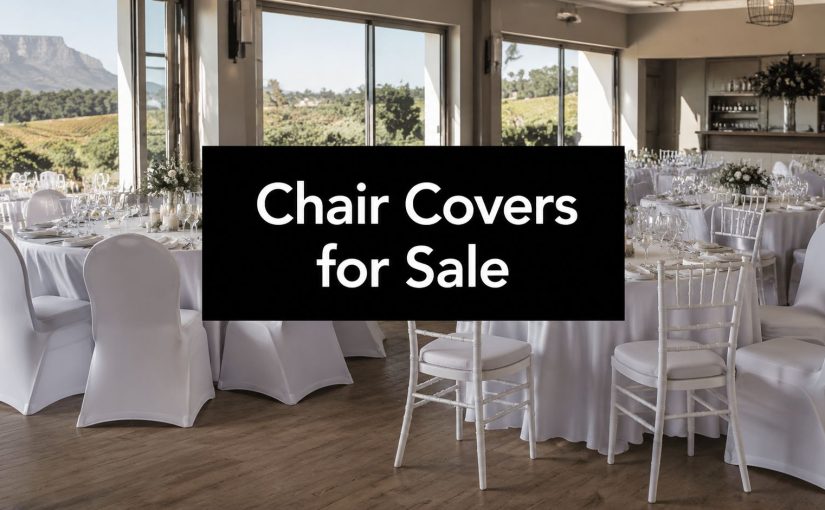
Chair Covers for Sale: Cape Town Event Guide 2026

You've found the venue. The date is locked in. The flowers, menu and floorplan are all taking shape. Then the venue manager sends a photo of the actual chairs, and suddenly the whole look falls apart.

That happens more often than is acknowledged. A polished wine estate can still have practical conference chairs in storage. A beachside venue can offer sturdy seating that photographs flat. A corporate function in the city can have mixed chair stock from different rooms. Good chair covers fix that problem fast, but only if you choose them with Cape Town conditions in mind.

In the Western Cape, chair covers aren't just about hiding ugly chairs. They're part of how an event feels when guests walk in. They soften a hard room, unify mixed furniture, and help a budget setup look intentional rather than patched together. That matters in a market where design expectations keep rising. The South African furniture market was valued at USD 2.47 billion in 2024 and is projected to reach USD 3.65 billion by 2032, reflecting stronger demand for stylish furnishings and event accessories, including chair covers in hubs such as Cape Town, according to Fortune Business Insights on the South African furniture market.

The local detail most online guides miss is climate. Coastal air, venue humidity, cellar cool rooms, outdoor wind, and transport between Cape Town and the Winelands all affect what works and what doesn't. A chair cover that looks fine in a product photo can sag, cling awkwardly, or show wear far too quickly once it's used in a real venue.

The Secret to Transforming Any Cape Town Venue

A venue rarely starts out looking finished. It starts out functional.

One week it's a wedding in Constantia with a soft neutral palette and long harvest tables. The next, it's a product launch in the CBD with black branding and dramatic lighting. In both cases, the chairs can easily be the one detail that drags the whole room back to “venue hire” instead of “designed event”.

Why chairs change the whole room

Chairs sit at eye level in photos. Guests touch them, move them, and see them from every angle during the event. If the chair shape clashes with the table styling, linen choice, or floral design, people may not be able to name the problem, but they will feel it.

Chair covers solve that in a way few other decor items can. They create consistency across a room, especially when:

  • The venue has mixed chair stock that needs to look unified
  • The chair frame is practical but unattractive under formal styling
  • You want a stronger colour story without replacing all the furniture
  • You need speed because the room must move from ceremony to reception or from conference to dinner service

The quickest way to make a room feel curated is to remove visual noise. Unmatched chairs create visual noise immediately.

In Cape Town, that transformation is often less about extravagance and more about control. Clean white covers can sharpen a vineyard reception. Fitted black covers can make a corporate setup feel premium. Ivory or soft neutrals can help a historic venue feel elegant without fighting the architecture.

Where local planners get caught out

The mistake isn't using chair covers. It's treating all chair covers as interchangeable.

A hall in Paarl, a hotel ballroom in town, and a sea-facing venue in Camps Bay don't place the same demands on fabric. Light behaves differently. Moisture behaves differently. Setup windows are different too. That's why the best results come from choosing covers as part of the event design plan, not as a last-minute add-on.

Those seeking chair covers for sale are often looking for a fast visual fix. The better approach is to think about fit, finish, fabric behaviour, and the venue environment together. That's where the room stops looking “covered” and starts looking styled.

Rent or Buy Making the Smart Choice for Your Event

A common initial assumption exists. Buying must be cheaper.

On paper, that sounds reasonable. If you need chair covers for a wedding, matric dance, activation, or private function, buying online can look straightforward. But in Cape Town and the Winelands, the actual cost shows up after the delivery arrives.

The hidden problem with buying

Purchased chair covers often disappoint in three places. The fit is inconsistent, the fabric quality is lighter than expected, and storage after the event becomes your problem. Add coastal conditions to that, and the decision gets even riskier.

Event planners in coastal areas like Cape Town report 30 to 40% higher replacement costs for purchased covers due to humidity damage, while professional-grade rental stock solves much of that durability problem, as noted by eFavormart's chair cover collection page and related market observations.

That matters because buying doesn't end at checkout. You still need to handle cleaning, folding, stain assessment, transport, and a dry storage environment that won't leave the covers smelling musty or looking tired by the next booking.

Chair Cover Sourcing Renting vs. Buying

Factor Renting from ABC Hire Buying Online
Fit consistency Covers are typically selected for common event chair types and event use Product sizing can vary, especially across suppliers
Fabric quality Professional event stock is usually chosen for repeated setup and removal Online listings can look similar but perform very differently in use
Cleaning Managed as part of the rental process, depending on supplier terms You handle laundering, stain treatment, and pressing
Storage No long-term storage burden after the event You need dry, clean storage that protects the fabric
Climate suitability Better suited to local event conditions when sourced from experienced rental providers Cheap stock can struggle in coastal humidity
Best for Weddings, corporate functions, once-off celebrations, rotating styles Repeated in-house use where storage and maintenance are already managed

For most events, renting is the more sensible option. If you're comparing options, this guide on hiring chair covers for events is useful because it frames the decision around event practicality rather than just unit price.

Practical rule: If you're not going to use the same covers repeatedly, on the same chair type, with proper storage in between, buying usually creates more work than value.

When buying does make sense

There are exceptions. Venues with fixed chair stock sometimes buy covers because they control the chair size, the laundry routine, and the storage area. Schools and corporates may also buy if they host formal events regularly and want one consistent look.

Even then, quality matters more than bargain pricing. The covers need to survive handling by different teams, quick turnarounds, and less-than-perfect folding after teardown. If that discipline isn't already in place, rental remains the cleaner option.

Choosing the Right Chair Cover Material and Style

Material choice decides whether your chairs look sharp or slightly apologetic. This is where many buyers get misled by online photos. A cover can look smooth in a studio image and still crease badly, sit loosely, or pull awkwardly across the wrong chair shape.
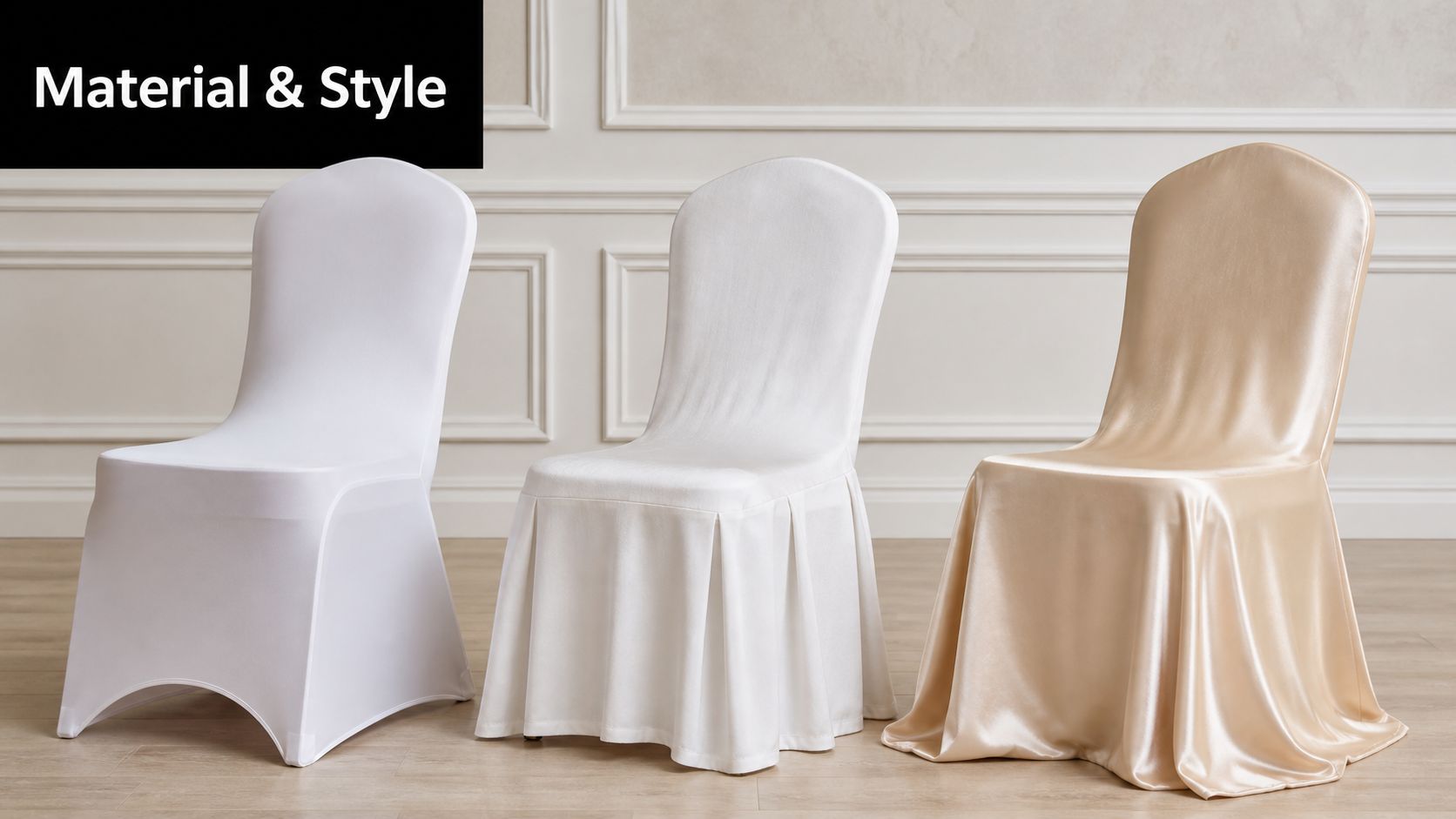
Three chairs with different fabric covers displayed against a paneled wall in a studio setting.

What works best in real event conditions

In the South African event market, high-quality chair covers are typically made from a 220–240 g/m² polyester spandex blend, and that elasticity helps them fit standard chairs snugly while reducing setup time by an estimated 40% compared with covers that need ties or zips, according to Cater QJHB's black chair cover product specification.

That spec matters because it explains why fitted covers dominate professional event work. They stretch cleanly over banquet and Chiavari-style shapes, stay neat under venue lighting, and don't need fiddly closures that slow a setup team down.

If you're dealing with plastic seating for school functions, church halls or temporary outdoor setups, this practical piece on chair covers for plastic chairs is worth reading because those chairs often need a different fit strategy from formal dining chairs.

Material choices that suit different events

Polyester spandex is the workhorse. It's fitted, wrinkle-resistant, and dependable when a team needs to dress a room quickly. It suits modern weddings, black-tie functions, brand launches, and venues where the chairs themselves aren't part of the design story.

Classic polyester gives a more traditional drape. It can work beautifully in banquet halls, hotel venues, and formal receptions where you want softness rather than a sculpted fitted line. The trade-off is that it usually needs more attention during setup to keep it neat.

Satin-style finishes can look elegant in the right room, but they're less forgiving. They show light, texture and creasing more clearly. In a controlled ballroom they can be effective. In windy outdoor conditions or busy turnaround venues, they can become high-maintenance very quickly.

Match the cover to the chair shape

A good result starts with the actual chair underneath. Different covers suit different profiles:

  • Banquet chairs suit fitted stretch covers very well
  • Chiavari chairs often look better left exposed if the chair itself is attractive, or dressed lightly with accessories rather than a full cover
  • Folding chairs need careful measuring because the frame shape can catch or distort fabric
  • Plastic event chairs benefit from covers that soften the utilitarian shape without looking bulky

A cover should look deliberate, not strained. If the fabric pulls too hard at the corners or puddles around the legs, guests notice. The best styling always starts with the right material for the right frame.

How to Measure Your Chairs for a Perfect Fit

A chair cover without proper measurements is like hiring a suit by guessing your size. It might go on, but it won't look right.

Too short, and the legs show awkwardly. Too loose, and the back panel collapses in photos. Too tight, and seams strain during setup. Measurement is the difference between a polished room and one that looks rushed.

The five measurements that matter

Use a tape measure and record each dimension from an actual venue chair, not from memory and not from a similar chair at another location.
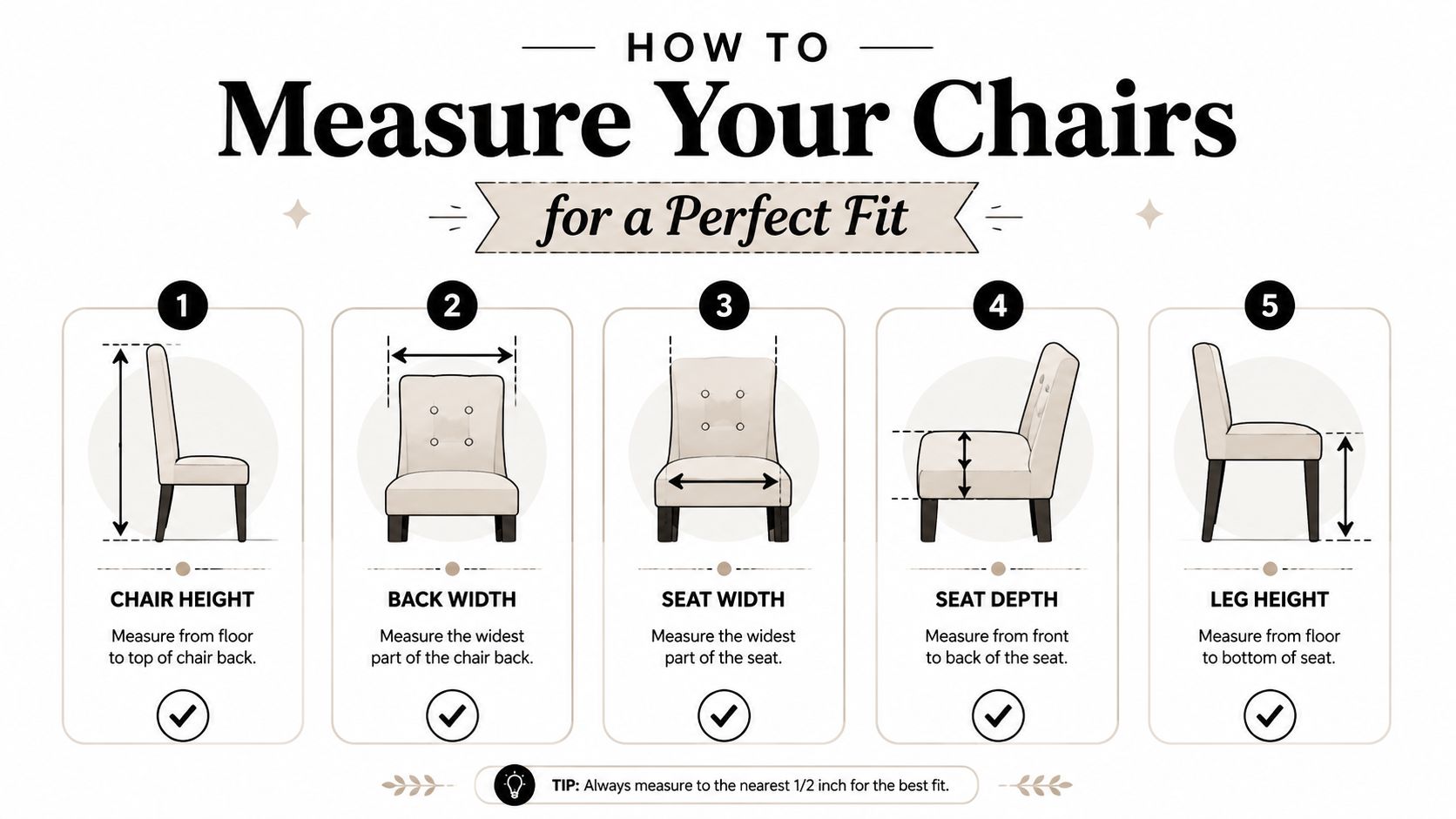
An instructional infographic demonstrating the five steps to measure a chair for purchasing covers.

  1. Chair height
    Measure from the floor to the top of the chair back.

  2. Back width
    Measure the widest point across the chair back, not the narrowest point near the centre.

  3. Seat width
    Take the width across the broadest part of the seat.

  4. Seat depth
    Measure from the front edge of the seat to the back.

  5. Leg height
    Measure from the floor to the underside of the seat.

Common measuring mistakes

The biggest mistake is measuring only the back and ignoring the seat profile. Some chairs taper. Others flare slightly. That small shape difference changes how a fitted cover sits once tension is applied.

Another problem is measuring a sample chair in a showroom instead of the actual venue stock. Venues often have more than one chair type in circulation. If you're planning a formal dinner, insist on seeing or confirming the exact chairs allocated to your function.

For a useful visual reference on chair proportions and how shape affects comfort and style, the Simply Hospitality dining chair guide gives a helpful design perspective even though it isn't written specifically for event rentals.

Measure one chair, then measure a second from the same venue batch. If the numbers differ, ask why before you order anything.

A better way to avoid fit problems

Ask the supplier what chair shapes their covers are designed for. A strong rental company will know immediately whether your venue chairs are standard banquet, conference, folding or something more unusual. They'll also tell you when a full cover is the wrong solution and a band, sash or different styling treatment would look cleaner.

That kind of advice prevents the classic problem of forcing a generic online purchase onto a chair it was never designed to fit.

Styling Chair Covers for Winelands and City Venues

Cape Town events rarely happen in blank-box venues. They happen in places with character. Sea views, mountain light, cellar doors, heritage buildings, modern rooftops. Chair styling has to work with that character, not flatten it.

The best chair covers don't steal attention. They support the room so that flowers, glassware, stationery and lighting all read as one composition.
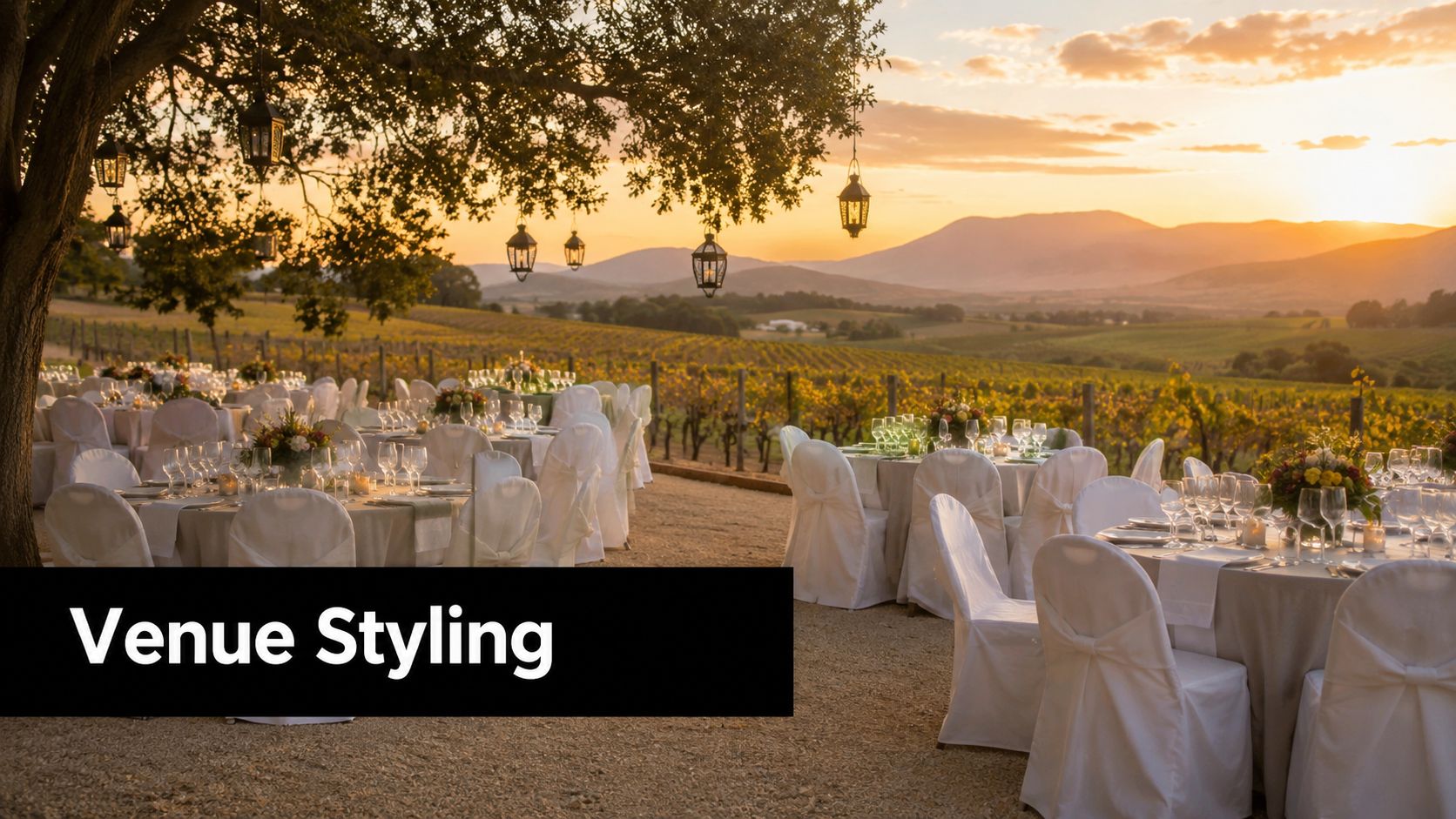
Outdoor wedding tables with white chair covers set for a reception in a scenic vineyard at sunset.

What suits the Winelands

On wine estates in Stellenbosch, Franschhoek and Paarl, the setting already brings warmth through stone, timber, vines and soft natural colour. Full chair covers can work beautifully there, but only when the palette stays restrained.

Ivory, white and muted neutrals usually sit well in these venues. They clean up the seating line without competing with the venue's existing aesthetic. If the room has historic architecture, a soft drape often feels more natural than a highly stretched modern silhouette.

A few styling combinations tend to work especially well:

  • Ivory covers with textured napery for cellar receptions and estate dining rooms
  • White fitted covers with greenery accents for summer vineyard weddings
  • Neutral covers with a narrow satin band when you want formality without looking heavy

What suits the city and coast

City venues can handle stronger contrast. Black covers under dramatic lighting work well for launches, gala dinners and awards evenings. Crisp white fitted covers also suit modern rooftop venues where the furniture needs to look clean and architectural.

At coastal venues, simplicity wins. Sea-facing rooms already have movement, brightness and visual energy. Over-decorated chairs can look busy very quickly. Keep the line neat, use colour sparingly, and let the setting do some of the work.

For hosts planning the full room scheme rather than just the chairs, this broader guide to decor hire in Cape Town helps when you need the covers, tablescape and styling pieces to feel consistent.

A chair cover should answer a design problem. If the chair is already beautiful, don't cover it just because chair covers are available.

Accessories that improve the look

Sashes, bands and florals can enhance a simple cover, but restraint matters.

Use accessories well when:

  • You need to bring in brand colour for a corporate event
  • You want to echo bridal party tones without overloading the table decor
  • You're working with plain venue walls and need a subtle layer of softness

Skip them when the room already has strong pattern, floral abundance or busy lighting. In those cases, a plain cover usually looks more expensive than an embellished one.

Understanding Logistics and Pricing for Chair Cover Hire

Most problems with chair cover hire don't start with the fabric. They start with assumptions.

Someone assumes setup is included. Someone assumes collection can happen the next day without a charge. Someone assumes any cover will survive transport to a damp coastal venue and still look crisp by guest arrival. Good planning prevents those mistakes long before event day.

What affects pricing

Chair cover hire is usually shaped by practical variables rather than a single flat rule. The main ones are:

  • Material type because fitted stretch covers and formal draped options don't handle the same way
  • Quantity required since large orders affect packing, transport and labour
  • Rental period especially if the event spans setup, event day and delayed collection
  • Delivery location because a city-centre drop, a wine farm and a remote private residence create different logistics
  • Setup expectations if the team must install and remove the covers on site
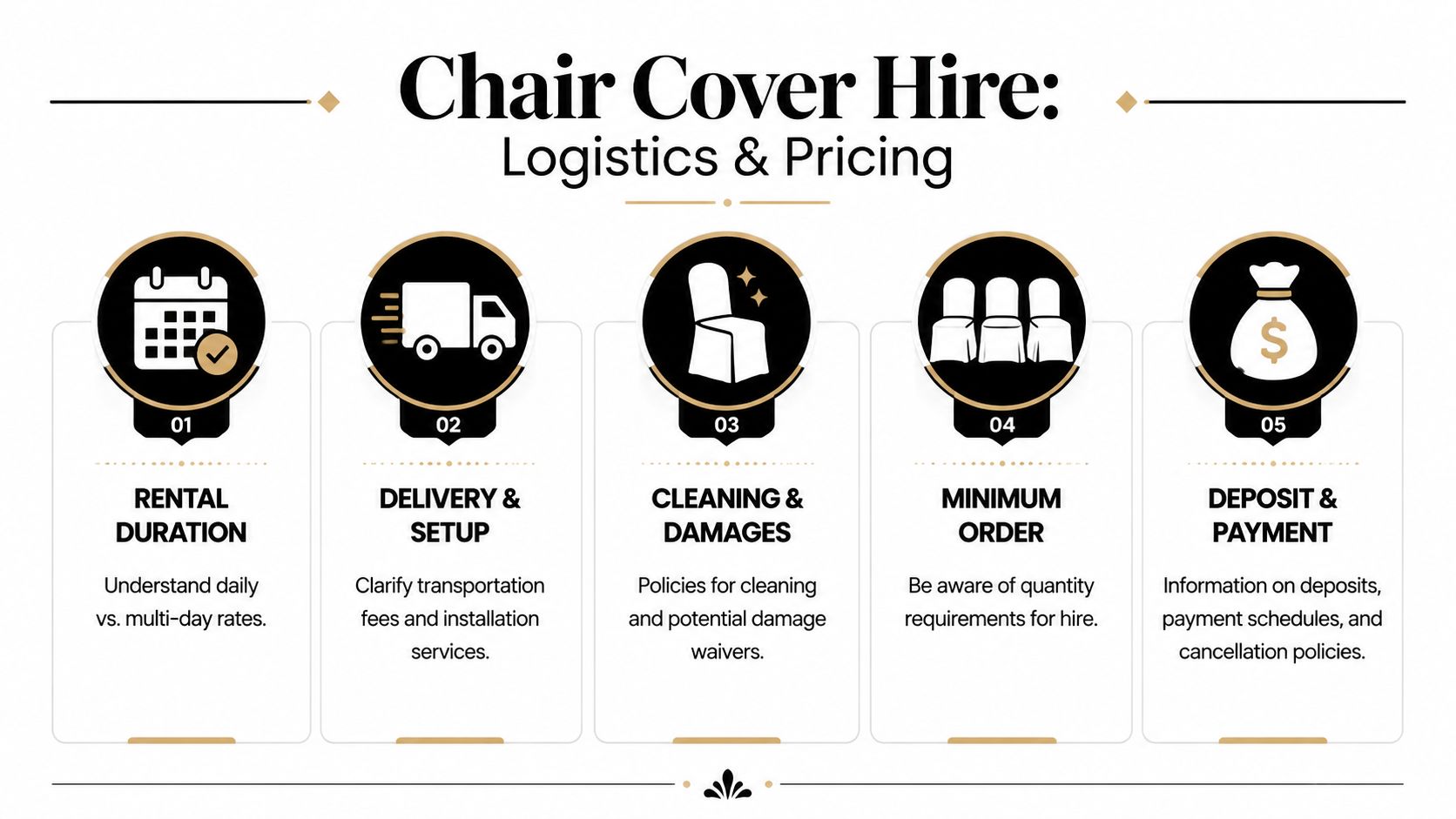
A professional infographic outlining the five key logistics and pricing considerations for hiring chair covers for events.

The cheapest quote isn't always the best value. If the supplier doesn't ask about chair type, venue access, timing, or weather exposure, they may be pricing the job too casually.

Why quality stock matters in Cape Town

For coastal areas like Cape Town, professional-grade chair covers must meet ASTM D5034 tensile strength standards to resist humidity-related degradation. Covers meeting that benchmark have a 60% lower rate of tearing after multiple rental cycles, according to Blue Chip Branding's guidance on custom event chair covers.

That matters operationally. Tearing, seam stress and worn fabric don't just look bad. They create last-minute substitution issues, uneven room presentation, and preventable setup delays. In local conditions, reliable stock is part of logistics, not just aesthetics.

Questions worth asking before you book

Before confirming any order, ask these clearly:

  • What chair type is this cover intended for and have you supplied it to this venue style before?
  • Is setup included, and if not, how long should the venue allow for installation?
  • How are stains and minor damage handled after the event?
  • What happens if guest numbers change close to the event date?
  • When are delivery and collection scheduled, and who signs off on quantities on site?

A strong supplier answers those questions without hedging. That confidence usually reflects experience with real event pressure, not just online sales.

Conclusion Elevating Your Event with the Perfect Finish

Chair covers are often treated like a late decor fix. In practice, they're one of the clearest ways to make an event feel cohesive, intentional and well finished.

The right choice depends on more than colour. You need to think about venue style, chair shape, fabric behaviour, setup speed and local conditions. That's especially true in Cape Town and the Winelands, where coastal air, historic venues and outdoor settings quickly expose poor-quality stock and lazy styling decisions.

For most events, renting makes more sense than buying. It removes storage, cleaning and maintenance problems, and it gives you access to covers that are meant for professional use rather than one-off online convenience. Material matters too. A good fit and the right fabric finish will always look better than a bargain option that creases, sags or tears under pressure.

The strongest results come from restraint. Use chair covers to unify the room, complement the venue and support the wider decor story. Don't force them where beautiful chairs should stay visible. Do use them where they solve a clear visual problem and lift the guest experience immediately.

If you're searching for chair covers for sale, the smarter question is often whether sale stock is the best route for your event. In many Western Cape venues, expert hire is the more reliable answer.


If you're planning a wedding, corporate function, matric dance or private celebration in Cape Town, Stellenbosch, Franschhoek or Paarl, ABC Hire can help you choose chair covers and event furniture that suit the venue, the climate and the look you want. Reach out to discuss your event requirements and find the right finish for your setup.
Hiring Chair Covers: Your Ultimate 2026 Cape Town Guide

You've found the venue. The lighting works. The menu is sorted. Then you look at the chairs and realise they're the one thing pulling the whole room backwards. Maybe they're scuffed banquet chairs from the venue store room. Maybe they're a mix of styles from previous functions. Maybe they're perfectly serviceable, but they don't belong at your wedding, awards evening, matric dance, or birthday dinner.

That's usually the moment people start taking chair covers seriously.

In Cape Town and the Winelands, hiring chair covers isn't just about hiding an ugly chair. It's about getting a room to feel finished. At the right venue, with the right fabric, fit, and setup plan, chair covers can pull together a formal hall, soften a winery function room, or make a plain conference setup look deliberate and polished. At the wrong venue, with the wrong material, they can crease, shift, stain, or look like an afterthought.

The difference comes down to matching the cover to the chair, the venue, and the conditions on the day.

Why Chair Covers Are a Game-Changer for Your Event

A lot of clients start with florals, table linen, and lighting. Then they visit the venue again and notice the chairs. That's when the problem becomes obvious. You can have beautiful glassware and carefully chosen centrepieces, but if the guest seating looks mismatched or tired, the room won't read as cohesive.

Chair covers solve that quickly. They create visual consistency across the room, even when the underlying chairs are ordinary. That matters at weddings where every photo angle counts, and it matters just as much at corporate functions where the room needs to look organised and brand-conscious rather than improvised.

They change the feel of the whole room

A chair is repeated dozens of times, sometimes hundreds. That repetition gives it more visual weight than people expect. If every chair looks clean, uniform, and intentional, the room feels more premium. If the chairs are random, the room feels less considered, even if everything else is well chosen.

That's one reason event rentals stay busy across the Western Cape. South Africa welcomed 2,793,981 international tourist arrivals in 2023, which supports destination weddings, conferences, and functions that rely on polished event presentation in places like Cape Town and the Winelands, according to South Africa tourism context noted here.

They do more than hide the chair

Good chair covers can:

  • Unify mixed stock by making different venue chairs look consistent
  • Support your colour palette through covers, sashes, or bands
  • Lift plain venues that need more softness and formality
  • Improve photography by reducing visual clutter in wide shots
  • Help styling read clearly from the entrance right through to the head table

For weddings especially, chair covers often work best when they support the room rather than compete with it. In a vineyard venue, that might mean soft neutrals and textured linen elsewhere. In a ballroom-style setting, it may mean crisp white covers with a more formal sash treatment.

If you're planning a broader styling scheme, it helps to view chair covers alongside other elegant party rentals for Cape Town events rather than as a last-minute add-on.

The fastest way to make a venue look organised is to remove visual inconsistency. Chairs are usually the biggest repeated element in the room.

Choosing Your Perfect Style and Fabric

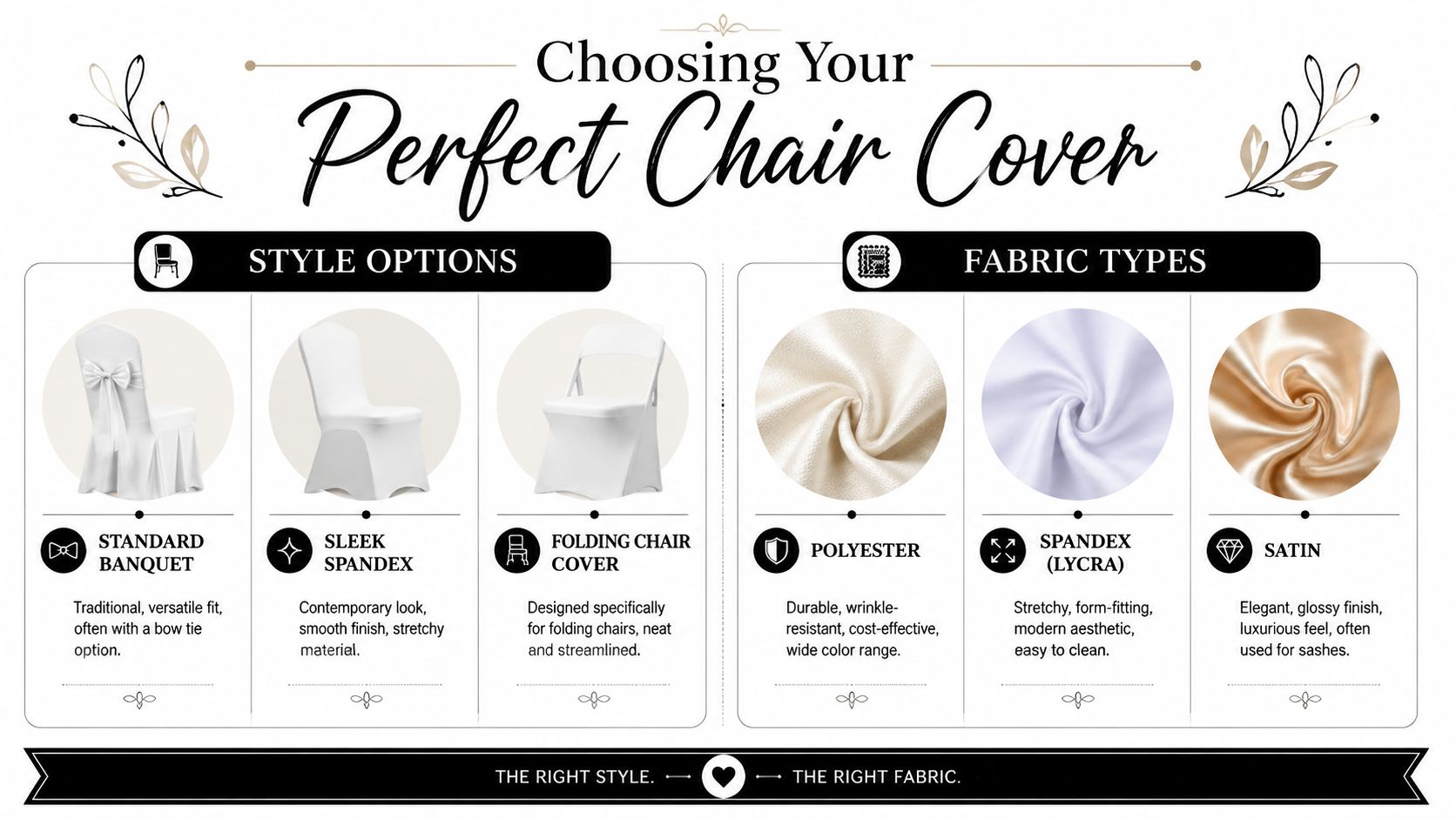
Style matters, but fit and fabric matter more. A beautiful cover on the wrong chair looks sloppy. The right cover in the wrong fabric can crease by setup time or struggle with coastal conditions. In Cape Town, that choice is never purely aesthetic.

A guide illustrating different styles and fabric types for event chair covers to help you choose.

The main style options

Most enquiries fall into three broad categories.

Style Best for What works well What to watch
Standard banquet cover Traditional banquet chairs Formal weddings, gala dinners, classic reception rooms Needs the correct chair dimensions and back shape
Spandex cover Banquet and folding chairs with a compatible frame Modern, clean lines, quick setup, contemporary events Less forgiving in sandy settings if the venue is exposed
Folding chair cover Specifically shaped folding chairs Outdoor ceremonies, practical venue stock, neat narrow profile Must match folding-chair proportions properly

Standard banquet covers give the most classic look. They soften a room and work well where you want the chair to disappear into the overall styling.

Spandex covers are sharper and more fitted. They suit product launches, conferences, modern weddings, and venues where you want the setup to feel structured rather than romantic.

Fabric is where Cape Town conditions come in

In the Western Cape, climate changes the recommendation. Coastal air, morning damp, sea breeze, and dust from farm roads all affect how a cover performs after delivery.

For Cape Town and similar coastal conditions, polyester is technically superior for 92% of outdoor events because it resists wrinkles and handles humidity well, according to the event-fabric guidance referenced in this material comparison. The same guidance notes that spandex offers a near-universal fit but can be more prone to staining in sandy environments.

A practical way to choose

Use the venue first, not the Pinterest board, as your decision point.

For humid halls and coastal venues

Choose polyester if the venue sits close to the ocean, gets damp air through open doors, or has a long setup window where creasing becomes obvious. Polyester keeps its shape better and usually arrives looking more event-ready with less fuss.

That makes it a dependable option for:

  • Beachfront function spaces
  • City venues near the Atlantic Seaboard
  • Hotel ballrooms with heavy guest traffic
  • Winter events where conditions change during setup

For dry estates and fitted modern styling

Choose spandex when the look needs to be sleek and the chair type suits stretch covers properly. In the Winelands, especially at drier outdoor settings, that fitted finish can look excellent for ceremonies, long-table dinners, and clean corporate styling.

Spandex usually works best when:

  • The chair stock is consistent
  • The event style is modern rather than draped
  • Setup time is tight and easy fitting matters
  • You want a tidy silhouette from every angle

Where satin belongs

Satin can still have a place, but usually as an accent rather than the main cover. It's often more effective in a sash, band, or detail piece where you want sheen without making the full chair difficult to manage.

If the venue is exposed to humidity, don't choose your fabric on appearance alone. Choose the fabric that still looks good an hour after setup.

Matching style to the venue mood

Cape Town venues vary wildly. A wine estate, a hotel ballroom, a school hall, and a private home all ask for different treatment. The best results come from restraint.

A plain white or neutral cover can be enough if the table decor carries the statement. If the venue already has strong architecture, chair covers should support the space, not fight it. In more practical venues, they often do the opposite. They become the element that brings elegance into an otherwise plain room.

The Practicalities of Measuring Counting and Budgeting

Most problems with hiring chair covers start before delivery. They start with a rushed count, a guessed chair type, or a venue that says “standard chairs” when the chairs are anything but standard.

South Africa's formal sector employed 10.3 million people in Q4 2023, which helps explain why corporate events, awards evenings, staff functions, and activations create steady demand for tidy, uniform furniture presentation, as noted in this overview of event-rental demand.

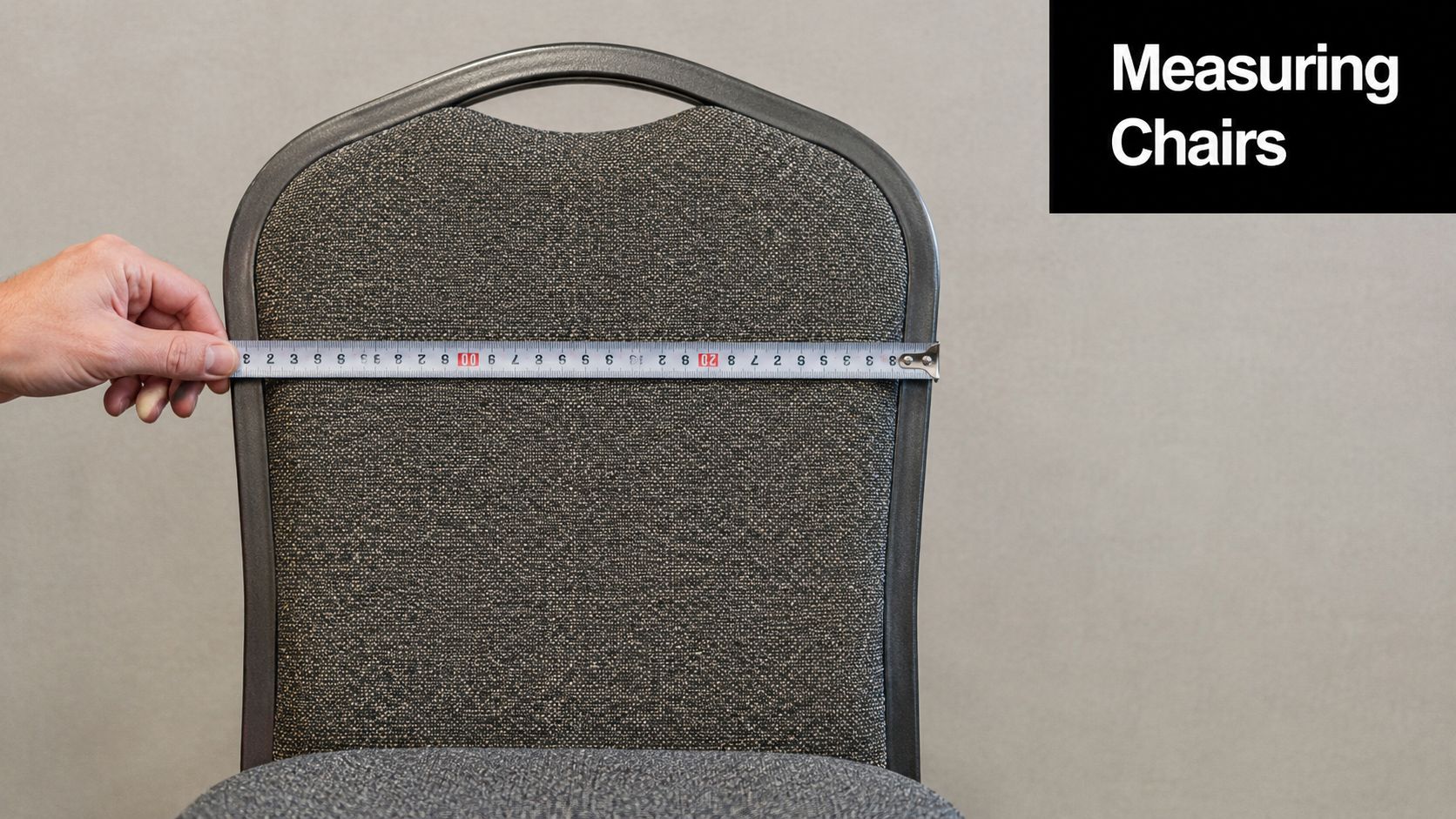
A person using a tape measure to check the width of a grey upholstered banquet chair back.

What to measure before you book

Don't rely on the venue's wording alone. Ask for photos and measure at least one actual chair if possible.

Take these measurements:

  1. Back height
    Measure from the top of the chair back to where the seat begins.

  2. Back width
    The widest point matters, especially with rounded or flared backs.

  3. Seat width and depth
    This tells you whether the cover will sit smoothly or pull awkwardly.

  4. Leg shape and spacing
    Important for fitted or stretch covers.

  5. Chair style
    Banquet, folding, stacking, conference, Tiffany-style, or upholstered. That category changes everything.

Measure twice, order once. The most expensive chair cover is the one that fits badly and has to be replaced in a rush.

Counting properly

Chair numbers change more often than people expect. Ceremony seating, reception seating, vendor meals, DJ placement, sweetheart tables, and extra seats for late confirmations all affect the count.

A clean counting method looks like this:

  • Start with the final guest list and separate adults, children, and service seats
  • Add venue-use chairs such as registration, gift table, stage, and signing table positions
  • Confirm ceremony and reception overlap if the same chairs are reused
  • Check backup stock if the venue swaps chairs at the last minute
  • Ask whether odd chairs need covering for side tables or family tables

If you're hiring the seating as well, it helps to look at the chair stock early rather than treat covers as a separate job. This guide to chair hire options for events is useful for lining up those decisions together.

Budgeting without guesswork

Pricing varies by chair type, fabric, condition expectations, transport distance, and whether setup is included. Because rates differ from one supplier and venue route to the next, the safest approach is to budget by components rather than assume a flat all-in number.

Focus on these line items:

Cost area Why it changes
Cover style Banquet, fitted, or chair-specific cuts carry different handling needs
Fabric choice Some materials are easier to prep, transport, and clean than others
Sashes or bands Decorative extras add labour and styling time
Delivery route Remote estates and limited-access venues affect logistics
Installation Setup and strike can be charged separately
Cleaning and damage terms Important when food, dust, red wine, or candle wax are involved

For a typical event, build your budget from the chair count upward, then add transport and labour after the venue has been confirmed. That's more reliable than asking for a generic estimate before anyone knows whether the venue has stairs, gravel, long carrying distances, or strict access times.

The mistakes that cause overruns

Three issues cause most headaches:

  • Wrong chair identification. A stacking chair is not the same as a banquet chair.
  • Late count changes. Small changes become difficult when linen has already been allocated.
  • Forgetting setup labour. Covers still need to be fitted neatly, especially if sashes are included.

If you want the room to look crisp, budgeting for proper fitting is often money better spent than adding another decorative extra.

Your Booking Timeline and Supplier Checklist

The smoothest chair-cover jobs are the ones booked before the rest of the timeline becomes crowded. Once florists, caterers, transport, staff access, and venue turnaround all start competing for the same day, small omissions become expensive.

For weddings in the Cape Town and Winelands peak period, earlier is better. For corporate functions, school formals, and private events, lead times can be shorter, but leaving it too late narrows your colour, fabric, and setup options.

A practical booking rhythm

Here's the timeline I'd recommend in real-world terms.

Early planning stage

As soon as the venue is confirmed, ask for chair photos. Don't wait until the decor meeting. Chair covers depend on chair shape, and the supplier can't advise properly from a vague venue description.

This is also the moment to confirm:

  • Indoor or outdoor use
  • Ceremony and reception layout
  • Access times for setup
  • Whether venue chairs stay in one place or get moved

Mid-planning stage

Once your colour palette is more settled, request swatches or reference photos where needed. If you're adding sashes or bands, test whether they suit the overall room. Not every chair cover needs a bow. In some venues, the cleaner look is the better one.

This is also when clients should confirm whether they need plain covers, fitted covers, or a mix for different spaces.

What to ask a supplier before you commit

The right questions save more stress than any last-minute rescue.

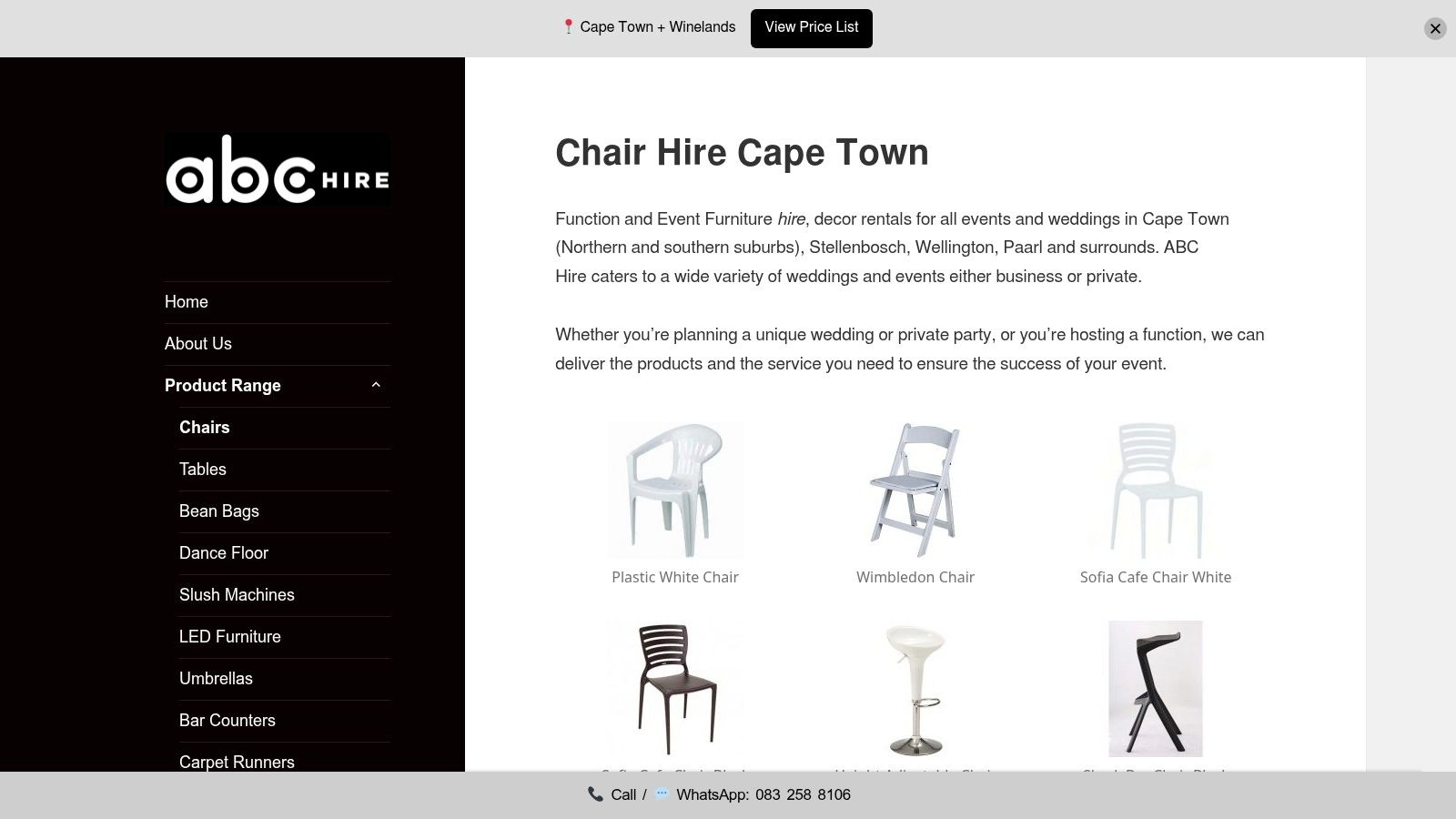
Screenshot from https://abchire.co.za/chairs/

Ask these directly:

  • Can you confirm fit for my exact chair type
    Send venue photos. Better still, send measurements.

  • What fabric do you recommend for this venue
    A good supplier should ask where the event is taking place before recommending style.

  • Is setup included or optional
    This affects timing, labour, and final finish.

  • How are stained or heavily soiled items handled
    You want this in plain language before the event.

  • What are your delivery and collection windows
    Critical for venues with strict loading times.

  • Can you handle remote estates or limited-access venues
    Stellenbosch, Franschhoek, and farm venues often need more detailed planning.

  • What happens if the chair count changes close to the event
    Small flexibility matters.

The best supplier response is specific. If the answer sounds generic, the planning probably is too.

Red flags to notice early

A few warning signs usually point to trouble later:

Red flag Why it matters
No interest in chair measurements Fit problems are likely
No clear collection policy You may face confusion after the event
No questions about venue access Delivery delays become more likely
No distinction between fabric options The recommendation may be stock-led, not venue-led

The right supplier doesn't just take an order. They check whether the order makes sense.

Navigating Day-Of Logistics and Post-Event Policies

By event week, the chair covers should already be the easy part. The only way that happens is if setup, handling, and return expectations were agreed in advance.

The practical questions are simple. Who fits the covers. When do they arrive. Where are they staged. Who checks them after the event. Most of the avoidable stress sits inside those details.

A stack of folded white tablecloths sitting on a plastic folding table next to a covered chair.

DIY setup versus professional installation

Some hosts assume chair covers are quick to put on. Sometimes they are. Sometimes they absolutely aren't.

DIY setup can work if:

  • The event is small
  • The chair type is simple and already tested
  • You've got enough hands on site
  • The room can be set long before guests arrive

Professional setup makes more sense when:

  • The event is formal or high-visibility
  • The venue has a tight turnaround
  • You're using fitted covers or detailed sash styling
  • The client doesn't want volunteers adjusting crooked bows at the last minute

The expert event guidance provided in the source material notes that 50% of rental providers in the region offer installation services, reducing setup time by 45%, and it also points out that 30% of cover failures are due to incorrect sash installation. The same guidance stresses proper sash alignment with the back seam for a balanced finish.

Pro tip
For weddings, gala dinners, and brand events, professional fitting usually pays for itself in appearance alone. Chair covers only look premium when every row is consistent.

What a smooth setup looks like

Good setup runs in a sequence:

  1. Covers are staged in the correct area
  2. Chairs are laid out in final formation first
  3. Covers go on after major dust-making setup is done
  4. Sashes and bands are tied consistently
  5. A final visual check happens before guests enter

Putting covers on too early is a common mistake, especially at venues where other suppliers are still moving gear through the space.

Understanding return condition and damage terms

Most rental policies distinguish between ordinary event use and preventable damage. That difference matters.

Normal wear usually means the item was used as intended and came back with standard signs of handling. Damage usually means something happened that cleaning or normal laundry processes won't easily solve. Think wax, burns, tears, heavy mildew from being packed wet, or stains left untreated for too long.

Ask these questions before signing:

Policy point What to clarify
Soiled items Should they be shaken out, bagged separately, or left dry on collection
Wet returns What happens if rain or dew affects the covers
Breakdown duties Must the client remove covers or will the supplier handle strike
Missing items How missing pieces are counted and reconciled

The post-event handover

After the event, don't pack damp covers into sealed bags and leave them overnight. If weather or spillage affected them, notify the supplier quickly. That gives everyone a better chance of dealing with the issue fairly and practically.

The easiest events to close out are the ones where one person is assigned to linen and decor returns. Not five people. Not the cousin with the car keys. One responsible handover point.

Insider Tips for Cape Town and Winelands Venues

Cape Town venues reward planning and punish assumptions. What looks simple on a mood board can become awkward on-site if you haven't accounted for wind, access, dust, and the way local light changes fabric colour through the day.

Work with the venue, not against it

At outdoor venues, the Cape Doctor can make anything lightweight feel less controlled. If the ceremony is exposed, fitted covers often behave better than looser styles. If the dinner is indoors but doors stay open to the garden, choose a fabric that still looks tidy after airflow and guest movement.

Historic estates around Stellenbosch and Franschhoek bring a different issue. Access can be narrow, parking can be limited, and setup teams may need to carry stock further than expected. If your timeline is tight, keep chair-cover styling clean rather than overly complicated.

Colour reads differently in the Winelands

The Winelands' late-afternoon light is warm and flattering, but it also changes how whites, ivories, and neutrals appear. Bright white can look crisp and formal. Softer tones can feel more relaxed and romantic. The best choice depends on the venue walls, table linen, and floral palette, not just the sample swatch.

For broader styling ideas, it helps to look at event decoration hire for Western Cape functions as one coordinated picture instead of choosing chair covers in isolation.

Don't overlook cleanliness planning

Outdoor and high-traffic venues need a practical hygiene plan, especially where food service, dust, children, or multiple function transitions are involved. If you're dealing with a festival-style space, busy venue turnover, or large outdoor guest movement, this guide to managing event space hygiene is worth a read because clean setup conditions make linen and chair covers perform better from the start.

The local rule is simple. In Cape Town, the prettier the venue, the more the logistics still matter.

Frequently Asked Questions About Hiring Chair Covers

Do I need sashes or bands with chair covers

Not always. If the room already has strong styling through florals, table settings, or lighting, plain covers often look smarter. Sashes work best when they repeat a colour already used elsewhere rather than introducing a new one.

What if my venue has unusual chairs

Ask for a fit check before booking. Send clear side and front photos, plus basic measurements. Oddly shaped chairs can still be covered well, but only if the supplier matches the style properly.

Can I mix chair-cover colours

Yes, but do it with intention. Mixed colours usually work best when they identify a zone, such as VIP seating, a bridal table, or a ceremony section. Random mixing tends to look accidental.

Are chair covers worth it for corporate events

Often, yes. They can make a standard conference or awards setup feel more polished, especially in venues with practical stock chairs that don't suit the brand presentation.

Who should handle setup on the day

If the event is formal, time-sensitive, or design-led, professional setup is usually the safer option. For smaller private events, self-fitting can work if the chair type is straightforward and you've confirmed the fit beforehand.


If you're planning an event in Cape Town, Stellenbosch, Franschhoek, Paarl, or the surrounding areas, ABC Hire can help with event furniture, seating, and the practical rental details that make a room come together properly. Whether you're organising a wedding, corporate function, school formal, or private celebration, the right hire partner makes the setup smoother and the final look far more polished.