
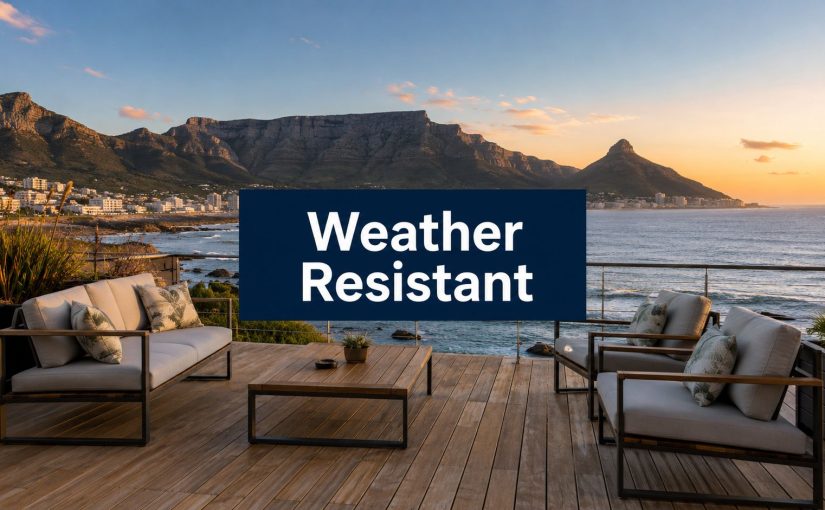
A Stellenbosch reception can look perfect right up to the moment the weather turns. The candles are lit, the mountain light goes soft, guests settle into lounge seating, and then the wind starts pushing through the vines. Ten minutes later, a few lightweight chairs are skidding, one damp cushion has gone blotchy, and the furniture that looked good at delivery suddenly looks like the weak link in the whole event.
That's the true test of weather resistant outdoor furniture in the Cape. It isn't whether a chair survives a nice afternoon on a patio. It's whether it still looks presentable and stays usable after sun, gusts, salt in the air, quick setup, fast breakdown, and another booking the next day. For weddings, brand activations, school functions, and private celebrations, furniture choice is part design decision and part risk control.
Planning the Perfect Outdoor Event in the Cape
A lot of clients start with colour palette, layout, and photographs. Fair enough. That's what people see first. But on outdoor jobs in the Cape Town and Winelands region, the furniture spec often decides whether the event stays polished once conditions shift.
A vineyard wedding is a good example. Afternoon heat bakes dark surfaces. Evening moisture settles into soft furnishings. If the venue is exposed, wind catches umbrellas, cocktail tables, and loose seating long before guests notice the clouds. That's why shade planning and weighted accessories matter just as much as style, especially when you're already thinking about practical items like umbrella bases for outdoor event setups.
What usually goes wrong first
The biggest failures are rarely dramatic. A frame doesn't always collapse. More often, the finish starts showing stress before the structure does.
Common event-day failures include:
- Rust bleed on pale flooring or linen: Hardware or lower-grade steel starts showing after coastal exposure.
- Peeling or chalky finishes: Strong sun and repeated handling expose weak coatings fast.
- Waterlogged cushions: Light rain or overnight damp gets trapped, and the seating looks tired by guest arrival.
- Furniture that moves too easily: Wind finds anything underweighted or top-heavy.
Practical rule: Outdoor furniture must be chosen for the venue's worst likely condition, not its best-looking hour.
South Africa's outdoor-furniture demand is shaped by climate and housing mix, and the country spans roughly 1.22 million km² with coastal and inland areas facing very different sun, rain, humidity, and corrosion conditions. That's one reason material choice sits at the centre of weather planning. Broader market research also projects the global outdoor-furniture market at USD 58.91 billion in 2026 and USD 92.08 billion by 2034, with a 5.74% CAGR across that forecast period, according to Fortune Business Insights on the outdoor furniture market.
Why Cape events need a stricter standard
A private garden lunch in Newlands, a beachfront activation in Camps Bay, and a wedding in Franschhoek don't ask the same thing from furniture. One might need UV stability. Another needs corrosion resistance. Another needs pieces that can handle transport scars and still present well.
That's why generic “outdoor furniture” is often not enough. For event use, the question is simpler. Will it still perform after being moved, used, exposed, wiped down, stacked, and sent out again?
What Weather Resistant Really Means for Event Furniture
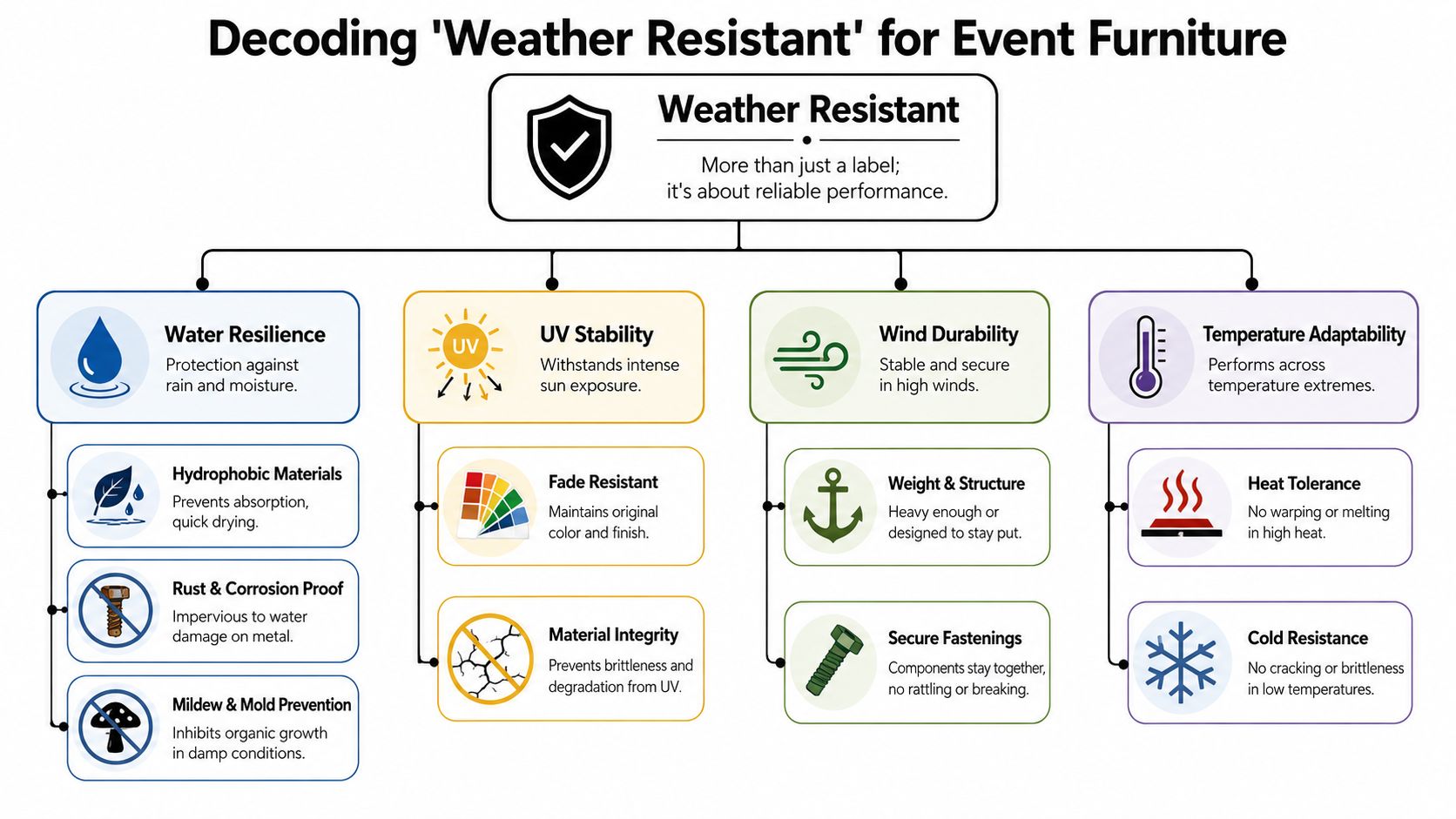
“Weather resistant” gets used too loosely. For event work, it should mean the furniture can handle exposure without becoming unsafe, ugly, or maintenance-heavy. That comes down to four parts working together: material, construction, finish, and drainage.
A good rain jacket is a useful comparison. Waterproof fabric alone won't save you if the seams fail. Outdoor furniture works the same way. A strong frame means very little if the coating blisters, the screws corrode, or the cushion core stays wet.
Material is only the starting point
Good base materials buy you time and lower maintenance. Poor ones create problems immediately. But material alone doesn't determine performance.
A chair can be made from a suitable outdoor material and still fail in service if the welds are weak, if dissimilar metals were used in fasteners, or if the weave loosens after repeated loading and transport. Rental furniture takes punishment from stacking, loading, and rushed crews. That stress exposes weak construction quickly.
Construction decides how long it keeps looking good
The best outdoor pieces tend to share a few traits:
- Sturdy joints: Less wobble, less rattle, fewer frame shifts after transport.
- Strong frames: Better stability on grass, paving, timber decking, and uneven surfaces.
- Replaceable elements: Cushion covers, glides, and hardware should be serviceable.
- Tight tolerances: Loose-fitting parts wear faster in wind and repeated handling.
A weather-resistant outdoor-furniture system is only as strong as its joinery, textiles, and drainage behaviour, not just the headline material. Guidance on durable pieces stresses sturdy joints, strong frames, quick-drying foam, and weather-resistant fabrics because trapped water in cushions and seepage into seams accelerate mildew, extra weight, and upholstery failure. That's especially relevant after long event days when furniture gets packed damp, as noted in Skylar's guidance on durable and weather-resistant outdoor furniture.
A frame can survive the season while the seams, foam, feet, and fasteners quietly fail around it.
Finish and drainage are where cheap furniture gets exposed
The finish protects the material and keeps the piece event-presentable. On metal, that means coatings that resist chipping and surface breakdown. On timber, it means accepting that appearance changes if maintenance is skipped. On woven pieces, it means UV stability so the outer layer doesn't become brittle.
Drainage is just as important. If water has nowhere to go, cushions stay heavy, fabrics stain more easily, and mildew risk rises. A smart event spec includes sloped surfaces, breathable fabrics, mesh or vented bases, and cushion designs that shed moisture fast instead of holding it.
A Guide to Common Outdoor Furniture Materials
Cape Town's outdoor conditions don't reward guesswork. Sun, salt, and wind punish the wrong furniture in different ways, so each material has to be judged on more than showroom appearance.
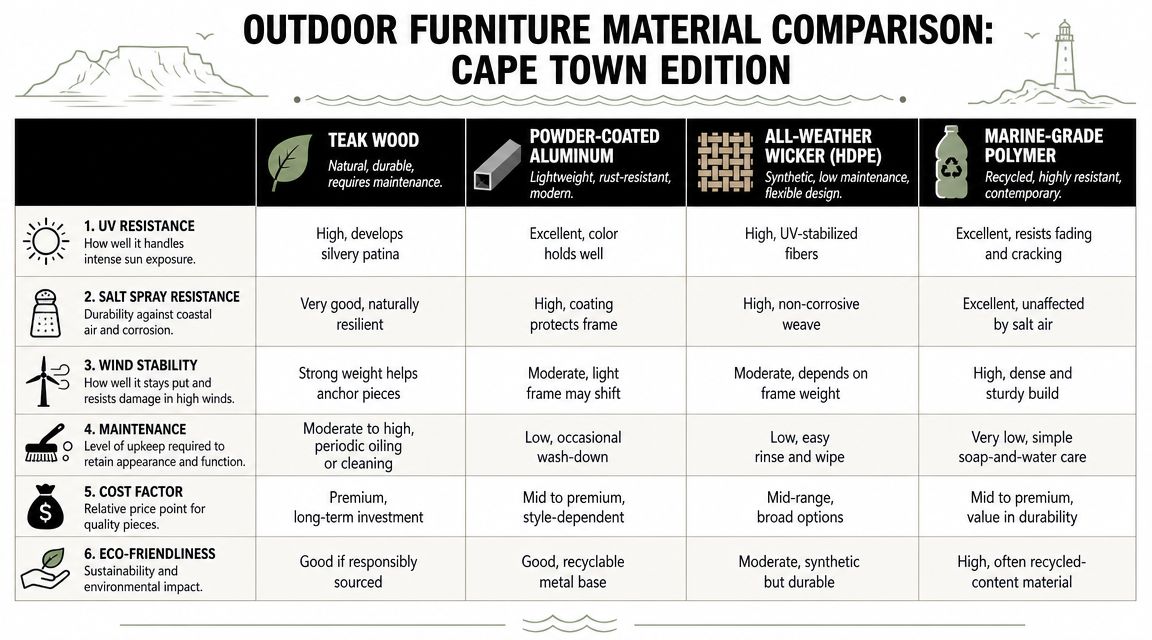
For South Africa's coastal and inland high-UV conditions, the most technically relevant specification is material plus finish selection. Marine-grade stainless steel, powder-coated aluminium, and HDPE are repeatedly recommended because corrosion and UV degradation are the dominant failure modes in exposed furniture. For event rental fleets in Cape Town and the Winelands, corrosion-resistant hardware and UV-stable coatings help reduce rust bleed, peeling powder coat, and discolouration, according to Pangaea Patio's review of durable outdoor furniture materials.
How the main materials behave on real jobs
| Material | Where it works well | Main strength | Main weakness |
|---|---|---|---|
| Teak | Premium weddings, sheltered terraces, elegant lounge setups | Strong visual warmth, naturally suited to outdoor use | Heavier cost, needs appearance maintenance |
| Powder-coated aluminium | Coastal events, modern corporate work, mobile setups | Rust-resistant, lighter to handle, clean lines | Can feel too light in wind if the design is underweighted |
| Resin wicker or synthetic rattan | Garden parties, lounges, softer styled events | Comfortable look, flexible design language | Quality varies sharply, cheaper versions age badly |
| HDPE | Hard-working rental stock, exposed venues, family and school events | Low maintenance, strong UV and moisture resistance | Less “luxury natural” in look than timber |
| Powder-coated steel | Short-term use in sheltered locations | Strong and often budget-friendly | More vulnerable in salty air if the coating gets damaged |
| Performance fabrics | Cushions, ottomans, upholstered seating | Better fading and moisture handling than indoor textiles | Still need proper storage and fast drying design |
Teak versus aluminium versus HDPE
Teak earns its reputation because it looks refined and handles outdoor use well. It suits high-end wedding aesthetics and older Cape properties beautifully. The trade-off is upkeep. If you want teak to keep a particular colour and finish, someone has to care for it. If you're happy with weathering and patina, it becomes easier to live with.
If you're weighing the sustainability side of timber choices, the Chairs and Tables sustainable guide is a useful read because it looks at teak beyond just appearance.
Powder-coated aluminium is one of the safest all-round choices for event use. It handles coastal conditions better than ordinary steel, stays visually tidy with the right coating, and makes setup crews' lives easier. The downside is stability. Lightweight aluminium is excellent until the wind gets involved. On exposed sites, shape and weight matter as much as the metal itself.
HDPE is the workhorse option many people underestimate. It doesn't rely on a decorative surface in the same way painted or coated pieces do, and it generally asks less of the maintenance team. For rental fleets, that's valuable. It may not always give the romance of timber, but it often wins on service life and cleanability.
Wicker and steel need more careful buying
Synthetic wicker can work very well if the weave quality and frame spec are strong. Poor versions crack, fade, or loosen. Better versions hold shape and suit Cape outdoor styling nicely. If you're comparing woven options for event use, this guide to outdoor wicker furniture for hire and styling helps frame the practical questions.
Buy or hire wicker based on frame quality first, weave second. If the frame is weak, the weave won't save it.
Powder-coated steel still has a place. It can be sturdy, affordable, and attractive. But once the coating chips in a coastal setting, the maintenance burden rises. For inland use or shorter exposure windows, it can make sense. For repeated Atlantic-facing jobs, aluminium or HDPE is usually the more forgiving option.
Selecting the Right Furniture for Your Event
The best furniture choice depends less on the catalogue and more on the event brief. A polished answer for a beachfront launch can be the wrong answer for a vineyard ceremony. The selection process should filter by venue exposure, event duration, guest use, turnaround pressure, and style requirements.
In the South African market, weather-resistant design usually means UV-stable plastics or synthetics, rust-resistant metal frames, and materials that resist fading, warping, and moisture absorption. Those traits align with guidance that synthetic rattan, aluminium, teak, stainless steel, and UV-resistant fabrics are among the best-performing options for exposed environments, as outlined by Erba Outdoor's material guidance.
Start with the venue, not the mood board
Ask these questions first:
- How exposed is the site? Open lawns, raised decks, and beachfront venues punish light furniture.
- What surface is underfoot? Gravel, lawn, timber decking, and paving all affect stability differently.
- How long will pieces stay outside? A short ceremony and a full-day event put different pressure on cushions and finishes.
- What happens after sunset? Cold, dew, and moisture can be harder on furniture than the afternoon heat.
A lot of general outdoor selection advice translates well even across different regions. This piece with advice for North Georgia homeowners is useful for the way it frames matching furniture to exposure, comfort, and upkeep rather than buying on looks alone.
Match the furniture to the event type
A wedding usually asks for softer styling and better photographic value. A corporate activation cares more about neat branding, durable turnover, and consistency. A school or university function needs resilient pieces that can take heavy use and fast resets.
A simple decision matrix helps:
| Event type | Best priority | Watch out for |
|---|---|---|
| Wedding | Finish quality, comfort, visual warmth | Cushions that absorb moisture or stain easily |
| Corporate event | Clean lines, branding compatibility, quick cleaning | Furniture that marks or rattles after transport |
| Private party | Flexibility, mixed seating styles, ease of rearranging | Lightweight items in gusty gardens |
| School or formal | Durability, stackability, easy inspection | Delicate finishes that show every scrape |
The practical checklist that saves headaches
Before confirming any piece, check the following:
- Weight and footing: A good chair shouldn't feel nervous on an exposed site.
- Heat response: Dark tops and metal armrests can become uncomfortable in direct sun.
- Drying speed: Cushions should recover quickly after mist, dew, or a short shower.
- Cleaning tolerance: Red wine, makeup, dust, and muddy shoes are part of event life.
- Stacking and loading: If logistics are rough, fragile finishes won't stay pretty for long.
Choose the furniture that still looks acceptable at the end of the night, not the one that looks best in the first photo.
Essential Maintenance and Quick Repair Tips
Even strong furniture needs on-site discipline. The difference between a neat event and a tired-looking one often comes down to what the team notices in the first ten minutes after setup.
What to keep in the event kit
A small maintenance kit solves most visible problems before guests care about them:
- Microfibre cloths: For dust, light moisture, and quick wipe-downs before opening.
- Mild cleaner in labelled spray bottles: Safe for tabletops, arms, and synthetic surfaces.
- Neutral cloth towels: Better than coloured rags that can transfer dye when wet.
- Furniture pads or glides: Useful for stabilising slight wobbles on hard surfaces.
- Touch-up supplies for minor marks: Only where appropriate and tested in advance.
- Tie-downs or discreet securing gear: For lightweight accessories when wind rises.
If you're refurbishing older stock or touching up non-rental pieces at a venue, this guide on the best paint for outdoor furniture is worth reading before applying any coating. The wrong paint choice can fail faster outdoors than the scuff you were trying to hide.
Day-of habits that prevent visible damage
The simplest wins are procedural. Don't drag furniture across stone or concrete. Don't stack damp cushions in a closed trailer. Don't leave woven seating pressed hard against rough walls during load-in.
For spills, act immediately. Blot fabric. Don't grind the stain deeper. On hard surfaces, wipe first with a dry cloth, then use a light cleaner if needed. On metal, make sure the piece dries properly after cleaning so water doesn't sit around fixings and seams.
Quick responses for common event issues
- Wind starts picking up: Consolidate lightweight side tables, remove loose cushions from exposed positions, and shift tall or top-heavy items closer to sheltered edges.
- A chair takes a knock: Inspect feet, welds, and alignment. Cosmetic scuffs are one thing. A twist in the frame is another.
- Cushions get damp: Stand them on edge in airflow where possible. Flat stacking slows drying.
- Rust mark appears: Clean it fast before it transfers to linens or paving.
Good outdoor event maintenance is mostly speed and observation. The longer a small problem sits, the more visible it becomes.
The Smart Way to Rent Outdoor Furniture
Hiring outdoor furniture isn't just procurement. It's risk transfer, logistics planning, and presentation control. The right rental partner helps you avoid preventable failures before the truck even leaves the yard.

Questions worth asking before you book
Don't stop at availability and price. Ask how the furniture is maintained between events, whether hardware is checked, and how pieces are cleaned and dried before being stored. Ask what they recommend for your specific venue conditions, not just what photographs well.
These questions usually reveal a lot:
- How do you inspect outdoor stock after each return?
- Which pieces do you recommend for wind-exposed venues?
- What do you use for cushions in damp or high-traffic conditions?
- How do you handle weather-related damage or last-minute changes?
- Can you advise on storage or staging on-site if weather turns?
If you're comparing options, it helps to review a broader guide to garden furniture hire for events so you know what should already be part of a professional rental conversation.
Why fleet quality matters more than showroom quality
A single new chair in a product photo tells you very little. Event furniture has to survive repeated transport, setup speed, stacking pressure, and mixed venue surfaces. Good rental stock looks consistent across the batch, not just in one hero image.
Look for signs of disciplined fleet management:
| What to inspect | What it tells you |
|---|---|
| Consistent finish across multiple units | Whether stock is maintained evenly |
| Clean undersides and feet | Whether pieces are inspected, not just surface-wiped |
| Tight cushions and straight seams | Upholstery quality and storage standards |
| Stable placement on the floor | Real-world usability on event surfaces |
Think beyond chairs and tables
Outdoor comfort depends on the full environment. Evening events may need lighting that complements the furniture rather than fighting it. Hot afternoons may need fans. Cold nights in the Winelands may need heaters. The smartest rental plan treats furniture as one part of the guest-experience system.
That matters because weather doesn't just damage furniture. It changes how guests use the space. If seating becomes too hot, too damp, or too exposed, people migrate. Once that happens, even a well-designed floor plan starts falling apart.
Cape Town and Winelands Weather A Local Guide
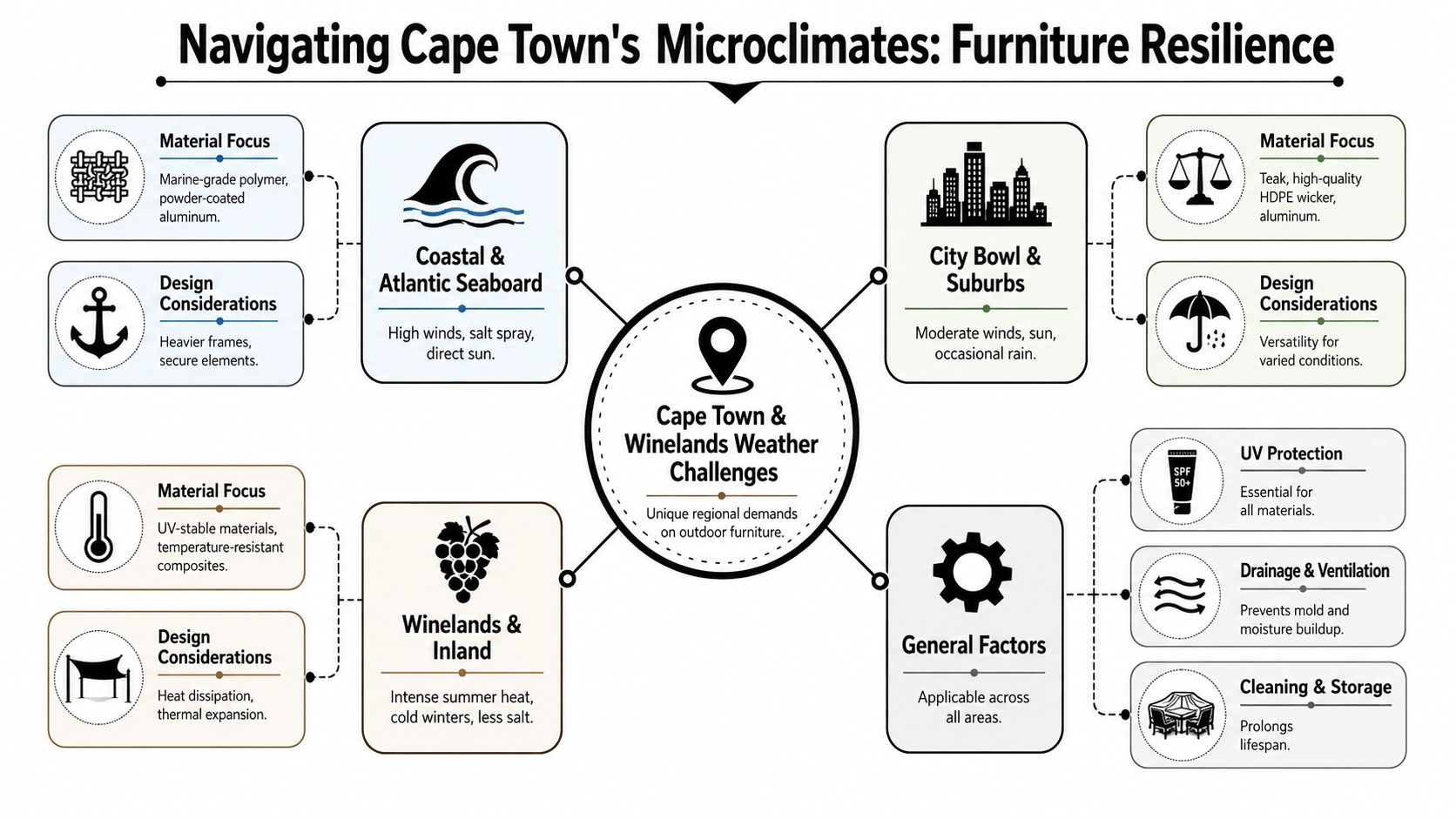
Generic weather advice overlooks the core Western Cape problem. The issue isn't just outdoor exposure. It's that exposure changes sharply from one part of the region to another. Furniture that works in a sheltered Constantia garden can struggle badly on the Atlantic Seaboard.
A frequently missed angle in weather resistant outdoor furniture is whether the material still performs in South Africa's high-UV and coastal-salt conditions after repeated exposure. That matters for event rentals in Cape Town and the Winelands, where furniture often has to survive transport, short-term outdoor use, and fast turnaround between bookings, as highlighted by Beaverdam Woodworks on weather-resistant outdoor furniture.
Atlantic Seaboard and exposed coastal venues
Salt air is relentless. It finds fasteners, chips in coatings, and any weak point in a metal finish. Wind adds a second problem by shifting lighter pieces and stressing umbrellas, loose cushions, and tall cocktail setups.
For these sites, the safer choices are usually:
- Powder-coated aluminium with quality hardware
- HDPE pieces that don't mind sun and moisture
- Heavier, lower-profile designs that stay settled
- Minimal soft furnishings unless they dry fast and store fast
City Bowl, Southern Suburbs, and mixed-condition venues
These venues are often more forgiving, but they still demand versatility. You may get sun for most of the day, then damp air and cool conditions after dark. Furniture here needs to handle quick shifts without looking tired.
Teak can suit these spaces well if the venue values a more natural finish and can accept maintenance. High-quality synthetic wicker also works when the setting calls for a softer lounge look. The trick is to avoid pieces that only work in one condition. In Cape Town, a “nice day” setup can become a moisture test by evening.
Winelands sites need a different kind of resilience
Stellenbosch, Franschhoek, and Paarl often bring harder sun, warmer daytime surfaces, and cool nights. There's less coastal salt than the Atlantic edge, but UV exposure and temperature swings still matter. Furniture here should resist fading, hold shape, and stay comfortable when guests move from ceremony to dinner over several hours.
A practical local rule looks like this:
| Microclimate | Better fit | Higher risk choice |
|---|---|---|
| Beachfront or salt-heavy coastal | Aluminium, HDPE, corrosion-resistant hardware | Standard steel with vulnerable coatings |
| Sheltered suburban garden | Teak, quality wicker, aluminium | Poor-quality synthetic weave |
| Open Winelands lawn | UV-stable synthetics, aluminium, fast-drying fabrics | Dark, heat-holding surfaces and slow-dry cushions |
The Cape rewards furniture that's forgiving. Not precious. Not overdesigned. Just well built, stable, easy to maintain, and honest about the site it's going into.
If you're planning an outdoor event and want furniture that can handle Cape Town and Winelands conditions without compromising the look of the day, ABC Hire is a strong place to start. Their range covers event furniture, accessories, LED pieces, and climate-control options for weddings, corporate functions, and private celebrations across the region, which makes it easier to build a setup that's both stylish and practical.