You've got the venue booked. The flowers, tables, bar service, timing, transport and weather backup are all on your mind. Then one practical question pops up: what will guests do during the in-between moments?
That's where a Corn Hole game earns its place. At a Cape Town wedding, it keeps cocktail hour lively while the couple slips away for photos. At a Winelands function, it gives guests something relaxed to do between speeches and the dance floor opening. At a corporate event, it breaks the awkward “everyone standing with a drink” phase faster than almost anything else.
I've seen hosts worry that lawn games might feel childish, too casual or hard to manage. Cornhole usually proves the opposite. It's simple to grasp, easy to join halfway through, and social without demanding too much from guests. People can play properly, watch from the side, or just cheer on colleagues and cousins. That flexibility is exactly why it works so well at South African events, especially those with outdoor space and a laid-back braai-day atmosphere.
Why a Corn Hole Game Is a Must-Have for Your Next Event
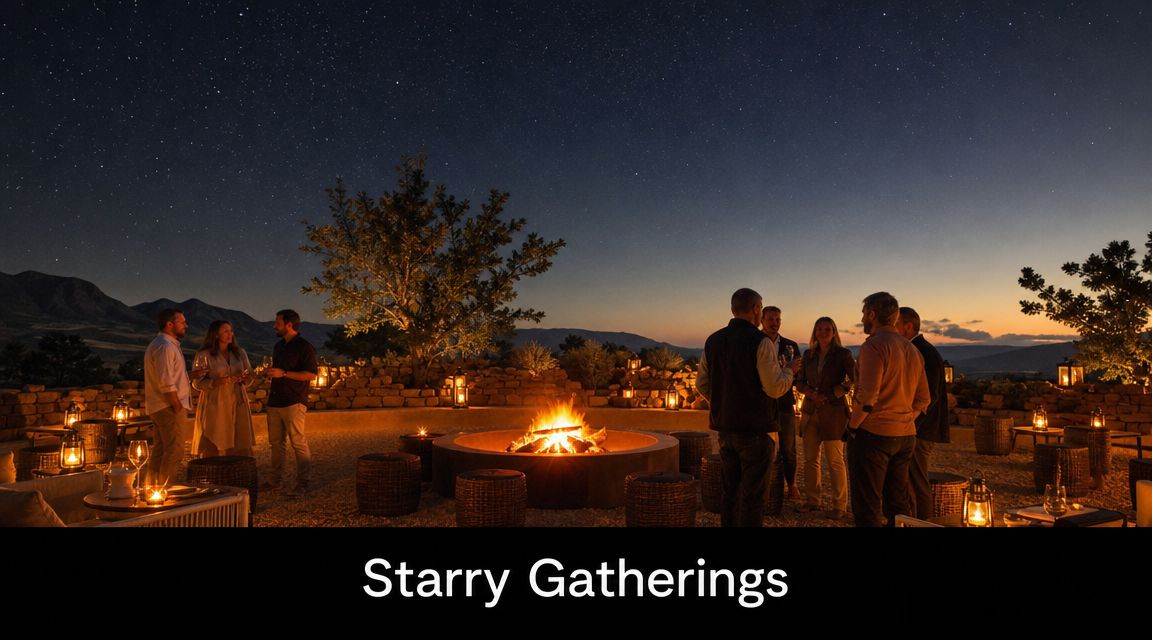
A wedding on a Stellenbosch wine farm often has one beautiful problem. Guests arrive early, the setting is gorgeous, and there's a stretch of time before the next formal part of the day begins. Some head for the bar. Some hover near the canapé trays. Others check their phones because they're not sure where to settle.
A Corn Hole game fixes that.
It doesn't need a master of ceremonies, a strict schedule or any special athletic ability. Two boards, a few bags and a flat patch of lawn are enough to get a crowd interacting. Grandparents can join in. Children can try a throw. Your bridal party can turn it into a mini rivalry. Your corporate guests can loosen up without feeling forced into “team-building”.
It fills the dead space naturally
Some event entertainment asks guests to commit. Cornhole doesn't. People can walk over, throw a bag or two, then drift back into conversation. That's why it works so well during:
- Cocktail hour: It gives waiting guests a focal point.
- Pre-dinner mingling: It keeps energy up while photos or room changes happen.
- Corporate networking: It gives strangers an easy reason to speak to each other.
- Family celebrations: It creates a shared activity without splitting guests by age.
Cornhole works best when guests discover it naturally, not when they're pushed towards it.
It suits the Cape Town event style
Cape Town and the Winelands lean beautifully towards outdoor entertaining. Lawns, courtyards, vineyard views and shaded garden spaces all support games that feel polished but relaxed. Cornhole fits that style better than many novelty activities because it looks tidy, sounds familiar once explained, and doesn't dominate the event.
It also matches local social habits. At a braai, birthday or wedding, people like entertainment that sits alongside conversation. They don't want something complicated that needs scorecards, long explanations and strict supervision. Cornhole gives you light competition without turning the whole event into a sports day.
It reduces pressure on the host
Hosts often think they need more programme to keep people happy. Usually, they need better flow. A Corn Hole game helps guests settle themselves, which means fewer awkward lulls and fewer moments where the couple, planner or organiser feels responsible for everyone's mood.
That's why it's become such a reliable choice for weddings, private parties and polished corporate functions across the Cape.
Understanding the Basics of Cornhole
If you've never played before, think of cornhole as a safer, more relaxed cousin of horseshoes or boules. Instead of throwing heavy metal or rolling balls, players toss soft bean bags towards a raised board with a hole near the top.
That's the whole idea.
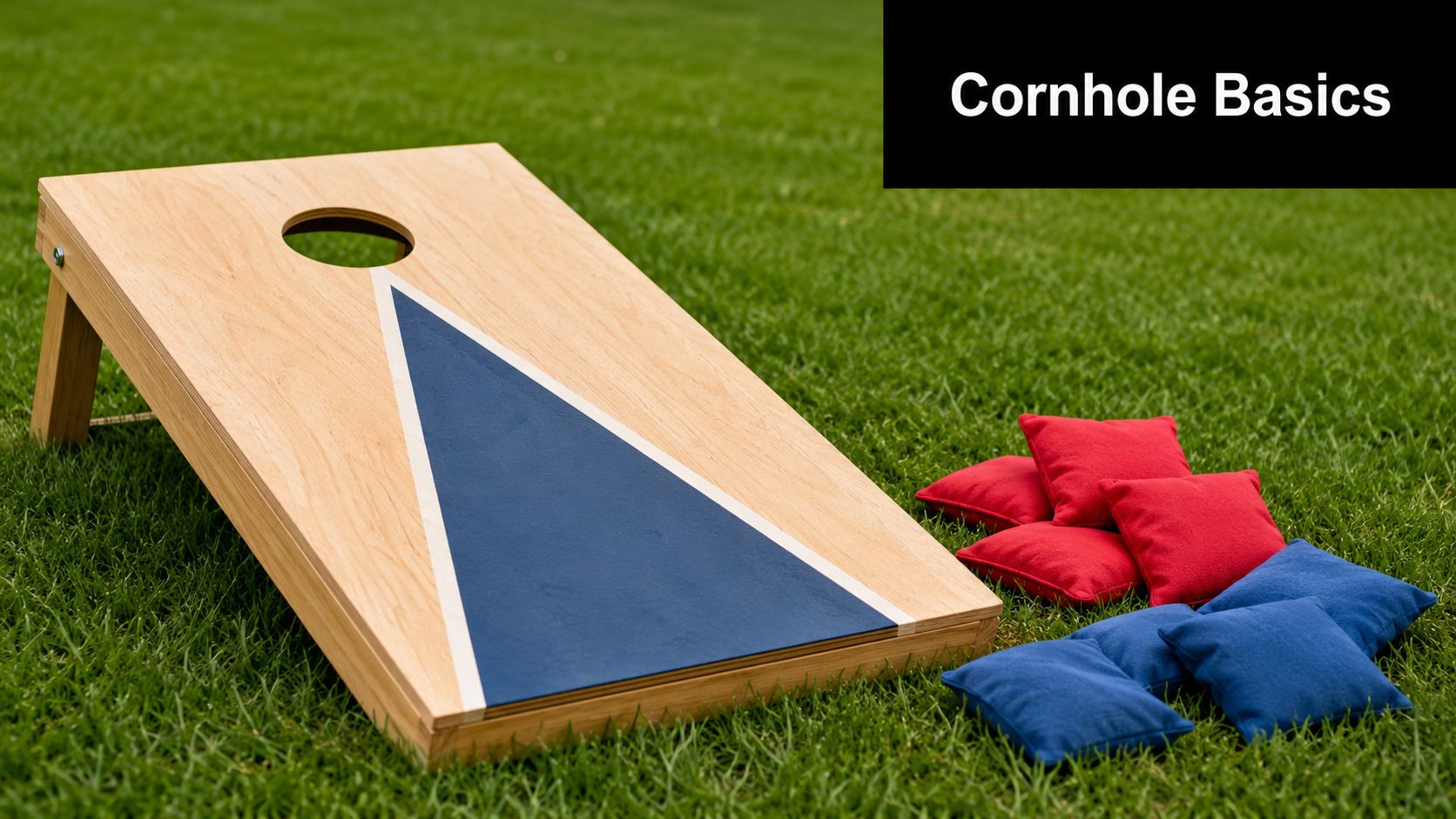
One board faces another across a short court. Each side takes turns throwing bags. Some land on the board. Some slide off. The best throws drop through the hole. Even complete beginners understand the goal within a minute, which is one of the game's biggest strengths at an event.
What players are trying to do
The objective is simple:
- Stand by one board
- Toss the bag underhand
- Aim for the opposite board
- Score better than the other side in that round
That simplicity matters. Guests don't need a practice session or rule briefing before joining in. They can watch one round and immediately know what's happening.
Why people take to it so quickly
A Corn Hole game feels approachable because the equipment is familiar. Bags are soft. The throwing action is gentle. The target is clear. That combination makes it less intimidating than games that require speed, strength or coordination.
For events, that gives you three practical advantages:
- It's easy for mixed-age groups: Not everyone at a wedding wants to dance or play something fast-paced.
- It looks inviting: Guests can see the setup and understand the point immediately.
- It encourages repeat play: People often want “just one more round” because the learning curve is kind.
The best lawn games don't need selling. Guests should be able to walk up and start.
What usually confuses first-time players
Players don't typically struggle with the throwing. They struggle with the scoring language and what counts as “good enough”. For example, they'll ask whether a bag has to go in the hole to matter, or whether bags on the board still count.
The short answer is yes, bags on the board do matter in standard play. The finer detail sits in the scoring rules, and that's where a clear event setup makes all the difference. Once those basics are handled properly, the game runs itself and guests relax into it.
Official Cornhole Game Rules and Scoring
At a wedding on a Stellenbosch wine farm, the first disagreement around cornhole usually starts the same way. One guest says, “Mine landed on the board, so that's one point.” Another says, “Yes, but ours went in the hole, so do we add everything together?” A clear set of rules solves that in seconds and keeps the mood light.
Start with the official format, then soften the delivery for a social crowd. That approach works well at Cape Town corporate functions and Winelands celebrations because guests get a fair game without feeling like they have joined a tournament.
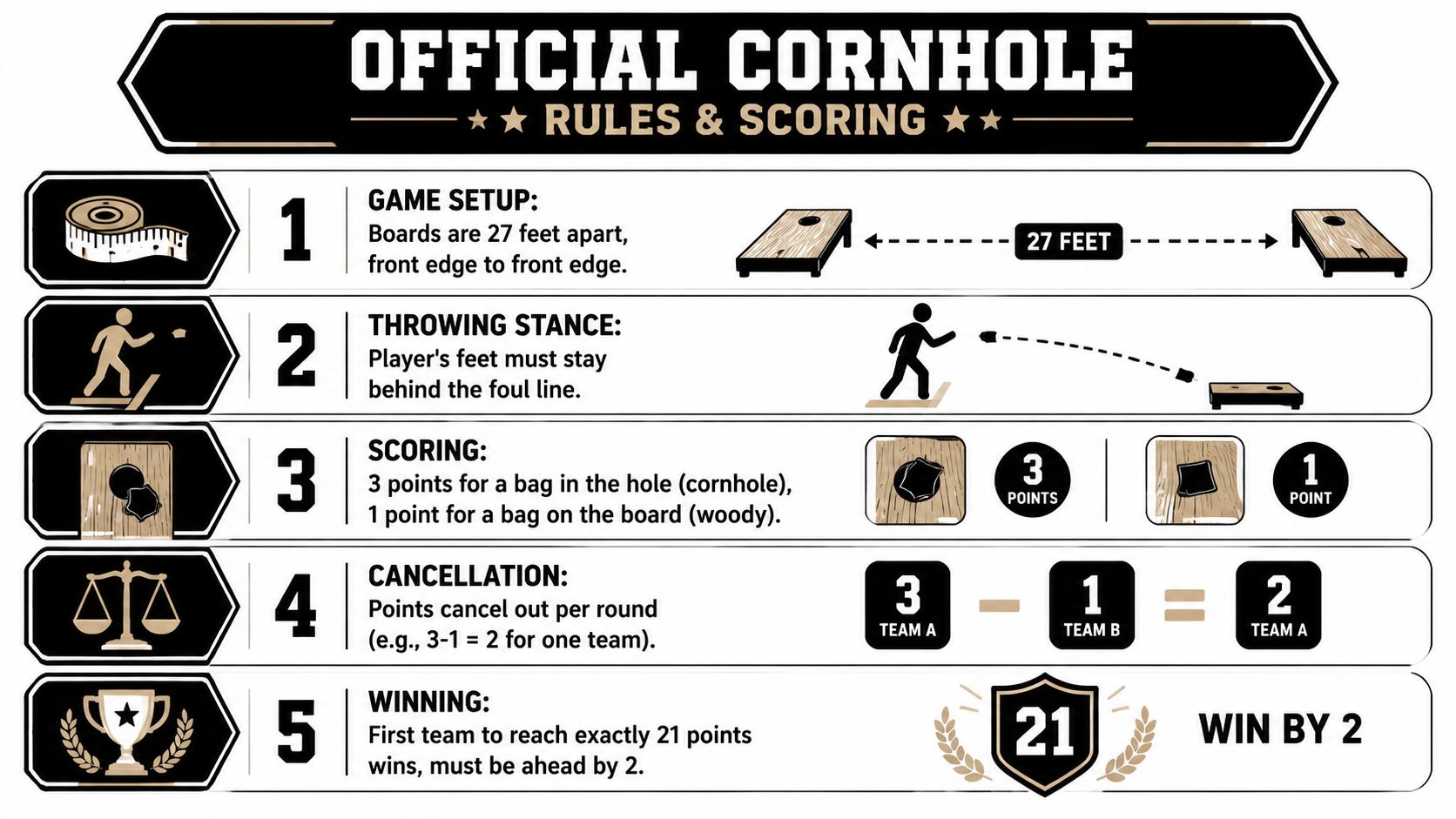
According to the American Cornhole Organization rules, regulation play uses two boards placed 27-foot (8.23 m) front edge to front edge, with boards measuring 2 ft × 4 ft. Each board has a 6-inch (15.24 cm) diameter hole positioned 9 inches from the top edge and 12 inches from each side. A standard game uses 8 total bags, with 4 per team.
If you want a quick explainer to share with guests before play starts, this plain-English guide to a bag toss game is a useful primer.
How a round works
A round is often called an inning. Both sides throw all four of their bags, taking turns until all 8 bags have been played. Players throw underhand and must stay behind the front edge of the board, which acts as the foul line.
For event use, the easiest way to explain it is this: one team throws, the other answers, and nobody counts anything until every bag has stopped moving. That last part matters on lawns, especially after a Cape Town breeze or on slightly uneven ground near a braai area, where a bag can still slide or tip off the board.
A simple round follows this order:
- Team A throws one bag
- Team B throws one bag
- They continue alternating
- After all 8 bags have landed, you score the inning
How scoring actually works
Guests usually understand throwing quickly. Scoring is where they hesitate.
The points are simple:
- Bag in the hole: 3 points
- Bag on the board at the end of the round: 1 point
- Bag on the ground or hanging off without resting on top: 0 points
The part that needs a clear explanation is cancellation scoring. It works like balancing two receipts against each other. You do not add both teams' totals to the scoreboard. You compare the two inning scores, cancel the matching points, and only the difference gets added.
So if one team scores 8 and the other scores 6, the higher-scoring team gets 2 points for that inning. That is the official approach, as noted earlier in the ACA rules.
Practical event tip: Put “3 in the hole, 1 on the board, subtract the lower score” on a small sign. It saves a surprising number of debates.
A plain example of cancellation scoring
Here is the version I use when explaining it to wedding guests who want the rules in ten seconds.
| Team | Round total |
|---|---|
| Team Green | 8 |
| Team Gold | 6 |
Green scores 2 points, not 8. Gold scores 0 for that inning because their 6 is cancelled out by 6 of Green's 8.
Once guests see one example, they usually get it straight away.
Fouls and what happens to the bag
For social events, you do not need a stern referee. You do need one agreed standard.
These are the fouls that matter most:
- Stepping over the foul line while throwing
- Throwing overhand instead of underhand
- Playing on a surface so uneven that bags roll or bounce in a way that affects fair scoring
If a bag is thrown illegally, it can be removed under ACA rules. At a corporate year-end function or relaxed family wedding, I usually recommend explaining that rule before the first game and then applying it consistently, without making the game feel stiff.
That balance matters in the Winelands. On a formal lawn at a wine estate, guests often appreciate a tidier rule set. At a casual Sunday gathering with braai-day etiquette in full swing, people are happy with one friendly host saying, “Behind the line, underhand only, and we count properly at the end.”
The easiest way to keep the game friendly
Choose one person to act as the rule-setter for the day. They do not need to watch every throw. They only need to settle questions the same way every time.
A short house script works well:
- Throw underhand
- Stay behind the line
- Wait until all bags stop
- Score 3 for the hole and 1 for the board
- Subtract the lower total from the higher one
- If a round gets messy, replay it with good humour
That final point is often the difference between a game guests try once and a game they keep returning to all afternoon. A corn hole game at an event should feel fair, easy to join, and relaxed enough that people want another round.
Cornhole Boards Beanbags and Ideal Setup
The equipment looks simple, but good setup makes the difference between “nice idea” and “everyone's playing”. A Corn Hole game needs the right boards, the right bags and enough surrounding space for people to throw comfortably without colliding with serving staff, décor or other guests.
The official board shape matters because it affects the way bags land and slide. Regulation boards measure 2 ft × 4 ft, and the hole size and position are fixed for standard play. That consistency is one reason experienced players prefer proper boards over improvised DIY versions for formal events.
What to look for in the equipment
You don't need guests to know the technical details, but you do need equipment that feels dependable.
- Boards that sit firmly: Wobbling boards lead to complaints, especially on grass.
- Bags in matching sets: Distinct colours make scorekeeping easier at a glance.
- A surface with some grip: Overly slick finishes can make casual players feel they have no control.
- Clean presentation: At weddings and corporate functions, the game should look neat enough to blend into the venue styling.
If you're exploring soft-seating and lawn-game combinations, this guide to Cape Town bean bag hire is useful for creating a relaxed outdoor area around the game.
Where to place the game at a venue
Placement is where many hosts go wrong. They either hide the game too far away, where nobody finds it, or put it in a busy walkway, where it becomes a traffic problem.
A better approach is to place it near activity, but not inside activity.
| Good placement | Why it works |
|---|---|
| Edge of a lawn near the bar | Guests notice it while collecting drinks |
| Side of a courtyard | Easy to reach without blocking circulation |
| Open grass near cocktail seating | Players and spectators can gather comfortably |
Venue-specific advice for Cape Town and the Winelands
Wine farms often have beautiful lawns, but not every attractive spot is practical. Check the ground first. If it slopes, bags may roll in ways that frustrate players and start scoring debates. The ACA standard specifically expects a flat and level grass surface for accurate play, which is especially relevant for outdoor events.
Also think about the setting around the game:
- Keep it clear of fragile décor: Florals, signage and candles don't belong in the throwing zone.
- Allow viewing space: People enjoy watching almost as much as playing.
- Avoid direct service lanes: Catering staff need clean movement paths.
- Consider sun and wind: Late afternoon glare can make one end harder to play from.
On a lawn, test a few bags before guests arrive. If they keep drifting or rolling, move the boards rather than hoping nobody notices.
Cornhole should feel effortless. That only happens when the setup has been thought through in advance.
Perfecting Cornhole for Cape Town Weddings and Functions
The ceremony has ended, the drinks are flowing, and your guests split into familiar groups. A few head straight for the bar. A few know each other well. Others are still finding their feet. In that in-between hour, a corn hole game gives people an easy reason to gather, chat, and join in without putting anyone on the spot.
In Cape Town and the Winelands, that matters more than many hosts expect. A game that suits the setting can help a formal wedding feel warm, a corporate function feel relaxed, and a braai feel organised without losing its easygoing mood.
At a Franschhoek wedding, cornhole often works best as a polished lawn activity during pre-reception drinks. At a Paarl company event, it can run as a light team challenge that people join between conversations. At a suburban birthday or family braai, it usually becomes the background favourite. Guests drift in, play a round, then return later for another go.
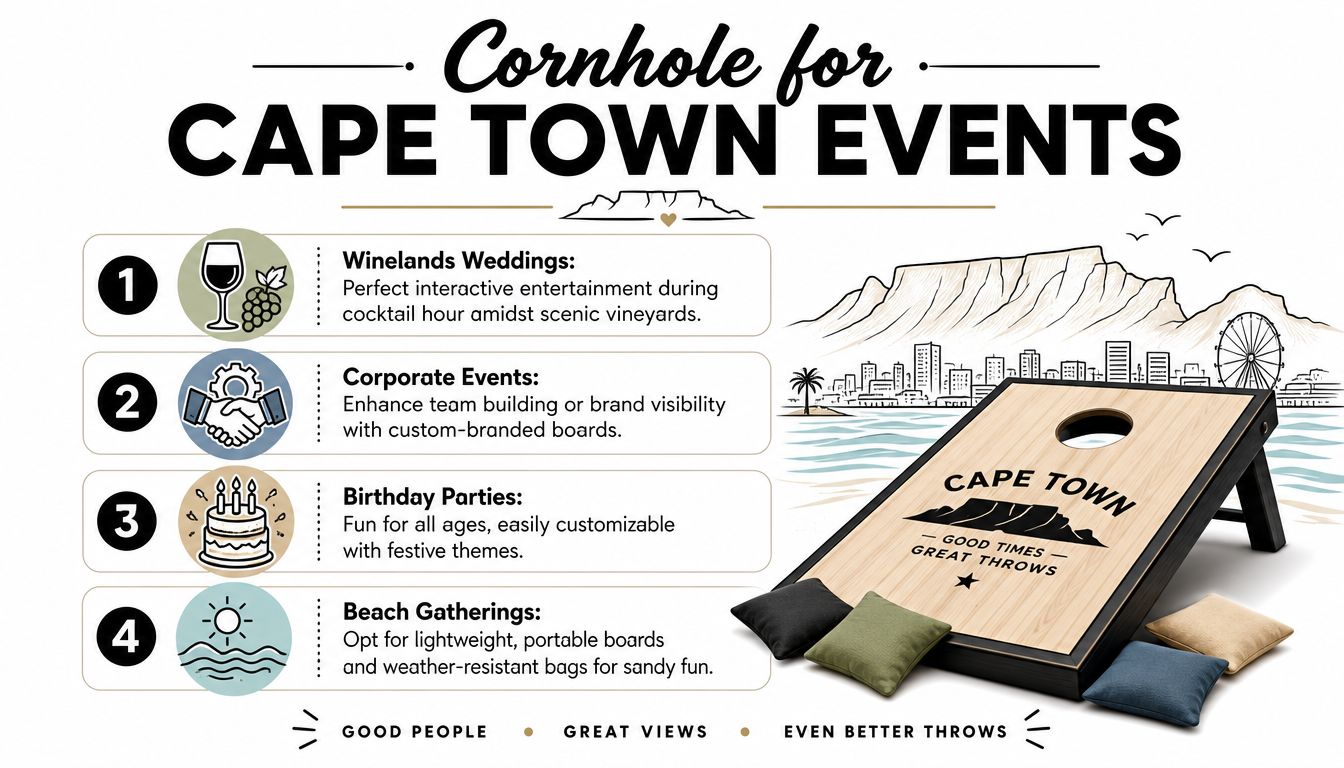
One local challenge comes up again and again. Guests often arrive with slightly different ideas about how scoring works. That is normal at weddings, braais, and office functions where people have picked up rules from friends rather than from a formal league. Clear house rules solve this quickly and keep the game social.
Winelands weddings and cocktail hour flow
Cocktail hour can feel long for guests who do not know many people. Cornhole helps because it gives them something simple to do with their hands while conversation starts naturally. It works like a social bridge. Two people can play, four can gather around, and a larger group can watch without needing chairs, microphones, or a formal announcement.
On wine farms, the best results usually come from treating the game as part of the guest experience, not as a side extra. Place it where people naturally pass between drinks, shaded seating, and the reception entrance. That keeps the lawn active without turning one corner of the venue into a bottleneck.
A wedding-friendly setup usually includes:
- A small printed rules sign: Short enough to read in a few seconds
- One agreed scoring method: Decide it before guests start playing
- A gentle invitation from the MC, coordinator, or bar staff: Enough to signal that the game is there to be enjoyed
- A clear finish point for each round: Helpful if guests need to move through to dinner
If you are planning several interactive elements, this guide on how to rent party entertainment for different event types can help you map out the flow.
Corporate functions and polished competition
Corporate crowds usually respond well to activities that are easy to join and easy to leave. That is where cornhole earns its place. A guest can play one round while waiting for a colleague, chat during play, and step away without disrupting anything.
That flexibility suits product launches, year-end functions, staff socials, and client events. You can leave the game open for casual use, or set up a short knockout round for teams if the crowd enjoys a little competition. The trick is to keep the tone friendly. A corporate event should feel lively, not tense.
Branded boards can also work well in this setting, especially for activations or internal team events. On a wedding lawn, though, a clean neutral set usually looks better than heavy branding.
Braai-day etiquette and house rules that save the day
Braais have their own rhythm. People snack, talk over each other, disappear to check the fire, and return mid-conversation. Cornhole fits that rhythm beautifully, but only if the rules are settled early.
A good comparison is a shared playlist. If nobody agrees on what is being played, everyone starts making their own choices. Scoring works the same way. One guest counts a bag on the edge as special. Another says only bags through the hole count. A third starts explaining a version they played on holiday. None of this is a problem until the score matters.
Keep it simple:
- Put the scoring rules on one visible sign
- State how edge bags, doubtful throws, and foot faults will be handled
- Choose one person to make the final call if there is disagreement
- Favour the decision that keeps the game moving and the mood light
That is good braai-day etiquette. Be clear, be relaxed, and do not let a lawn game become the loudest debate of the afternoon.
What works for private parties and schools
Private parties often need activities that guests can understand without a host giving constant instructions. Cornhole does that well. The target is obvious, rounds are short, and different ages can join without feeling out of place.
Schools, universities, and community events also benefit from that simplicity. Guests do not need sportswear, a warm-up, or a full team. They just need a few beanbags, enough space to throw safely, and a clear idea of the rules.
Across all these events, the principle stays the same. Match the game to the setting, explain the rules before the first throw, and keep the experience easy for guests to join. That is how cornhole feels at home at a Cape Town wedding, a Winelands function, or a laid-back braai.
Should You Rent or Buy a Cornhole Game Set
This decision is usually simpler than people expect. The question isn't whether cornhole is worth having. It's how often you'll use it, how much admin you want, and whether you've got the space to store proper boards afterwards.
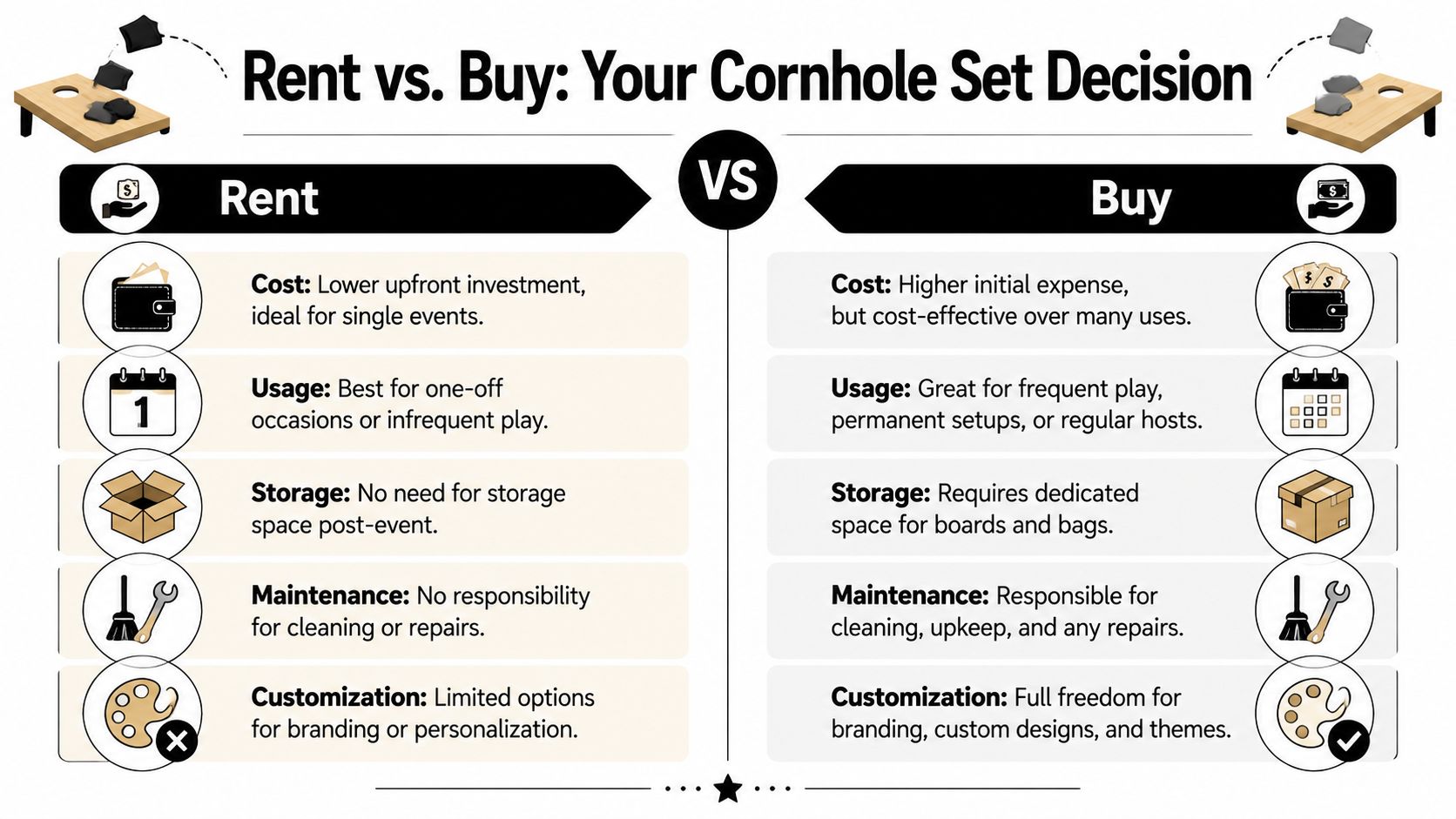
For most weddings, one-off celebrations and occasional business functions, renting is the more practical option. Buying starts to make more sense if you're a venue, a frequent host, or someone who plans to use the set regularly.
If you're weighing entertainment rentals more broadly, this article on how to rent a party is a helpful starting point.
When renting makes sense
Renting suits hosts who want the fun without the aftercare. You don't need to source boards, compare finishes, store bags in a dry place, or worry whether your DIY set looks polished enough for a wedding lawn.
Renting is usually best when:
- The event is once-off: Weddings, milestone birthdays and annual functions fall into this camp.
- You want a clean, ready-to-use look: Presentation matters more at formal events.
- Storage is limited: Boards aren't tiny, especially once you factor in transport.
- You don't want maintenance: After the event, you're done.
When buying may suit you better
Buying can be sensible for venues, estates or households that will use the game often. If the set is going out every weekend, ownership gives you flexibility and immediate access.
Here's a simple comparison:
| Option | Better for | Main trade-off |
|---|---|---|
| Rent | Single events and occasional use | Less personalisation |
| Buy | Frequent hosting and regular setups | Storage and upkeep |
A practical Cape Town view
For the average engaged couple or event manager, buying often sounds easier than it proves to be. You still need transport, a decent place to keep the boards, and confidence that the set will arrive at the venue looking event-ready.
That's why many local hosts prefer to rent. It keeps the decision focused on guest experience, not equipment ownership. If you're running a venue or planning repeat lawn-game use, buying can absolutely work. If you're planning one excellent day, renting is often the cleaner solution.
Buy if the set will become part of your regular hosting toolkit. Rent if you simply want the event to run smoothly and look good.
Get the Good Times Tossing with ABC Hire
A Corn Hole game solves a very specific event problem. It gives guests something easy, social and low-pressure to do when they aren't eating, dancing or seated for the formal programme. That's why it fits so naturally into Cape Town weddings, Winelands receptions, staff functions and relaxed private celebrations.
The game itself is simple. The success of it isn't accidental. Good placement, clear rules, tidy equipment and a bit of local common sense make all the difference. If you set it up well, guests will treat it as part of the atmosphere rather than a separate entertainment item.
That same thinking applies to other parts of event planning too. Clear systems reduce stress. For small businesses, planners and venue operators who also sell or package services online, this Shopstar guide to selling online is a useful resource for getting your offering presented clearly and professionally.
If you're planning an event in Cape Town, Stellenbosch, Franschhoek, Paarl or nearby areas, adding cornhole doesn't need to become another complicated task on your list. With the right setup, it's one of the easiest ways to add movement, laughter and connection to the day.
Ready to add a Corn Hole game to your wedding, corporate event or private function? ABC Hire can help you create a polished, guest-friendly setup for events across Cape Town and the Winelands. Reach out to book your hire and make sure your guests have something memorable to enjoy between the big moments.