
You're often down to the final version of the function sheet when this catches you. The menu is signed off. The floorplan works. Glassware counts are sorted. Then someone asks, “Are we putting champagne on tables, at the entrance, or both?” and suddenly champagne ice buckets stop being a small décor decision and become a service problem.
That's usually where events either look polished or start to feel improvised.
In Cape Town and the Winelands, that decision carries more weight than people expect. A bucket affects how quickly bottles come down to serving temperature, how much table space disappears, how many staff touch each bottle during service, and whether your reception reads as premium or patchy. At a summer wedding in Franschhoek, the wrong bucket setup can leave sparkling wine warming too fast between pours. At a corporate launch in the city, too many buckets on small cocktail tables can make the whole room feel cluttered before guests have even settled in.
The point isn't just to have buckets. It's to choose the right type, place them where service needs them, and order enough to support the way the event will run.
The Overlooked Detail That Defines Your Event
You see the pressure point early at a Cape Town summer reception. The sparkling wine is due on arrival, the terrace is already warm, and the venue team asks where the buckets are going. If that answer is vague, service starts slipping before the first proper pour.
Champagne ice buckets affect temperature control, staff movement, table spacing, and the overall read of the room. In the Winelands, where heat, sun and longer outdoor service windows are common, they need to be treated as working equipment with a styling role attached, not the other way around. I plan them the same way I plan glassware drops or back-of-house ice runs, because once guests arrive, there is very little time to correct a weak bucket setup.
A good bucket setup keeps bottles cold, reduces unnecessary handling, and stops staff from improvising with whatever spare vessel is nearest. It also protects the visual balance of the event. One oversized bucket on a small round can crowd candles, florals and bread plates faster than clients expect. If you are weighing options beyond champagne service, this guide to ice buckets and stands for event use is a useful reference point.
What goes wrong when this is treated as an afterthought
The failures are usually practical.
- Service backs up when too few buckets are shared between too many tables or stations.
- Tables lose usable space when the bucket footprint is larger than the layout allows.
- Ice melts too quickly when the vessel is shallow, badly insulated, or placed in direct afternoon sun.
- The hire bill creeps up when the fix happens late and the replacement stock does not match the original brief.
Guests may not identify the bucket as the problem, but they notice warm pours, wet tablecloths and staff reaching across them too often.
What good planning looks like
The bucket has to suit the event format first. At a seated wedding, that means leaving enough room for shared plates, décor and comfortable service access. At a product launch, the bucket may need to support the brand look while still being light enough for fast resets. At a matric dance or high-volume private function, durability often saves money because the equipment works harder during setup, service and strike than many clients realise.
When the choice is right, the room feels controlled. Bottles stay at serving temperature for longer, staff work cleanly, and the bucket adds to the table instead of fighting with it.
Choosing Your Buckets Material Style and Size
The wrong way to choose a bucket is by finish alone. The right way is to ask three questions first. Who will handle it, where will it sit, and how long does it need to perform before the next reset?
That narrows the field quickly.
Material decisions that affect the event
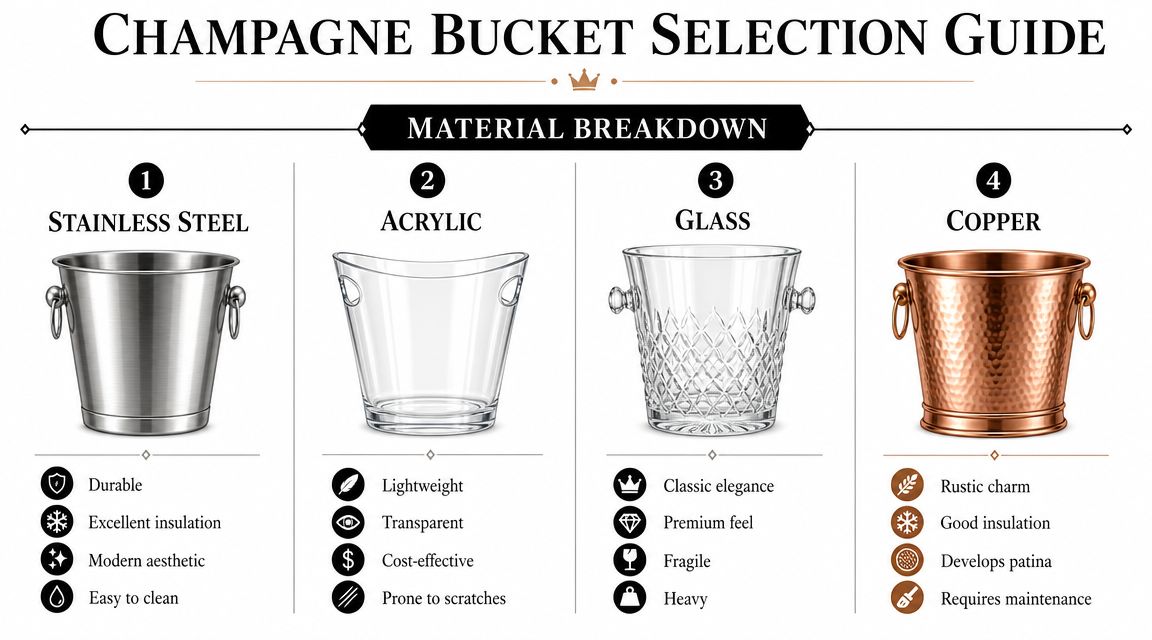
Stainless steel works well when service discipline matters. It suits formal dinners, black-tie receptions and premium corporate events because it reads clean and controlled. It also tends to feel more substantial in hand, which helps during tray or table service.
Acrylic is often the practical rental choice for busy events. It's lighter, easier to move in quantity, and less stressful in high-traffic venues where breakage is a real concern. Clear acrylic also disappears visually into many table designs, which can help when you want the bottle on show without adding visual heaviness.
Glass or crystal can look exceptional in the right room, especially under candlelight or in classic ballroom styling. But they demand calm service conditions. In outdoor Winelands settings, where staff may be moving between gravel, lawn, decking and uneven surfaces, the fragility can outweigh the elegance very quickly.
Copper and mixed-metal finishes work best when the styling brief is doing more of the talking. Rustic-luxe weddings, harvest-table aesthetics and branded experiences with warmer palettes can carry them well. The trade-off is maintenance. Fingerprints, water marks and finish wear show faster.
Why size and shape matter more than most people think
A bucket can be beautiful and still fail in service.
A commercially available clear plastic champagne bucket used for beverage service measures about 10.6 in (L) × 8 in (W) × 7.8 in (H) and holds 3.7 quarts, with built-in handles and a stable base designed to reduce spill risk during table service, according to this product specification for a plastic champagne bucket. In practical terms, that size works because it can take a standard 750 ml bottle plus ice without turning into a balancing act.
Practical rule: If the bucket can't comfortably take the bottle and enough ice-water around it, it's not a champagne bucket for event service. It's a prop.
Oval versus round
Oval buckets usually make more sense for table service. They sit neatly, present the bottle well, and often feel easier to carry because the handles fall into a more natural grip. Round buckets can work on bars and stations where symmetry matters more than footprint.
Deep buckets are better for chilling. Shallow buckets may look sleek in product photos, but they often force the bottle to sit too exposed above the ice line. In warm weather, that costs you consistency.
Matching bucket style to event type
A simple way to decide:
- Formal wedding reception: stainless steel or refined clear acrylic
- Outdoor vineyard wedding: acrylic or other durable break-resistant options
- Corporate launch: modern acrylic, branded options, or minimal metal finishes
- Matric dance or large private party: durable, easy-to-replace, easy-to-carry buckets
- Styled table moment: use a bucket with a stand so the tabletop stays usable
If you're weighing table footprint against presentation, ice buckets and stands for event layouts are often the cleaner solution because they move the bucket off the eating surface without losing the visual cue of premium drinks service.
Calculating Capacity How Many Buckets You Need
A planner can get the glassware, linen and lighting right, then still lose the drinks service by under-ordering buckets. In Cape Town and the Winelands, that mistake shows up fast. Afternoon heat, dry air and long outdoor service windows warm bottles quickly, especially when the bar is under pressure.
Guest count helps, but bucket count comes from service flow.
Start with the bottle journey
Map where each bottle will be chilled, opened and held before you count a single unit. For most events, the pattern falls into three setups:
- Arrival service from a station or roaming team
- Table service where bottles remain with guests
- Self-serve or semi-self-serve points where guests return to a drinks station
Each setup creates a different demand on your stock. A welcome drinks station may show only a few buckets to guests, but staff still need chilled replacements ready behind the scenes. Table service uses more buckets in view because each active table needs its own cold-holding point.
Working ratios that planners can actually use
These ratios are planning tools, not fixed rules. They work well for keeping service tidy without spending money on units that add no value.
| Service Style | Recommended Ratio | Notes |
|---|---|---|
| Welcome drinks station | One bucket per active serving point | Keep backup buckets off-floor so staff can swap quickly instead of rebuilding in front of guests. |
| Seated table service | One bucket per table receiving sparkling wine service | If only selected tables get bottles, count those tables only. |
| Self-serve bar or drinks point | One bucket per bottle position guests can access at once | Too many small buckets can make the area wet and messy. A larger cooling setup may be cleaner. |
| Bridal table or VIP zone | Dedicated bucket for each featured bottle service point | Presentation matters here, so do not rely on shared buckets. |
| Toast-only service | Fewer visible buckets, with chilled reserve back-of-house | Plan around timing rather than placing a bucket everywhere. |
Local planning considerations
Warm-weather events need a rotation plan, not just a display plan. Bottles should be brought down to serving temperature before they reach the floor, and replacement bottles should already be in chilling buckets before the current round runs out. If you only count the buckets guests can see, service will stall.
I usually split the order into two groups. Visible buckets are placed on tables, bars or stations. Working buckets stay back-of-house for the next wave. That second group is what saves you at a Franschhoek wedding in summer, or at a Stellenbosch venue where the bar run from prep area to lawn is longer than it looked on the site visit.
If the venue has limited cold storage, add that into your numbers early. In many cases, mobile fridge hire for event drink service is cheaper than over-ordering buckets and burning through extra ice to compensate.
How I plan by event type
For a wedding, I separate ceremony, canapés and reception service. The same bucket rarely does all three jobs well unless the timeline is tight and the staff team is strong. Reception tables usually need their own allocation, while arrivals and photo-hour service can run from a smaller pool with quick resets.
For a corporate launch, fewer bucket points often look sharper. Central stations are easier to manage, easier to brand and less likely to clutter high-value guest areas. That also reduces the staff load, because one controlled drinks point is simpler than chasing half-finished bottles across the room.
For a matric dance or large private party, durability and speed matter more than finesse. Count for turnover, not styling. These events often have compressed setup times, and staff need buckets that can be filled, moved and reset without fuss.
Count buckets according to how many bottles must stay cold at the same time, not how many bottles you bought for the full event.
Common counting mistakes
A few planning errors come up again and again:
- Counting by guest numbers alone instead of by service points and timing
- Ignoring reset time between an empty bottle leaving and the next one arriving cold
- Assigning a bucket to every table when only some tables are receiving bottle service
- Forgetting back-of-house holding capacity during speeches, meal pacing and toasts
- Underestimating weather exposure at outdoor venues where buckets lose chill faster than expected
A clean plan usually looks restrained. Enough buckets to keep bottles cold and service moving. Not so many that the room starts reading like a temporary bar.
The Art of the Chill Ice and Chilling Best Practices
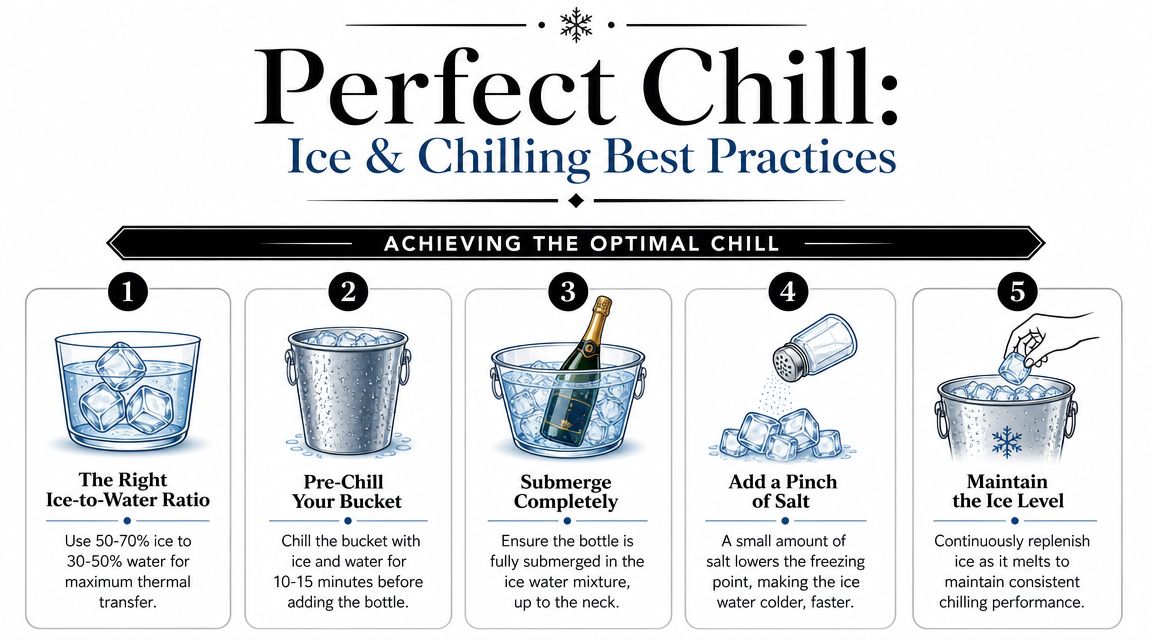
A bucket full of dry ice cubes looks convincing, but it doesn't chill champagne as effectively as people think. The bottle only touches the ice at a few points. That slows the pull-down and creates uneven cooling.
The professional method is an ice-water slurry.
A common service approach is to fill the bucket about halfway with ice and add roughly 1 to 1.5 cups of water, because the water improves thermal contact around the bottle and cools it faster than dry ice alone, as explained in this demonstration of champagne chilling technique. The same reference notes that a well-managed slurry also helps maintain a more constant low temperature over service.
What staff should do before guests arrive
The best chilling plan starts before the first bottle is visible.
- Set buckets in place early so you're not styling around wet equipment later.
- Pre-chill the bucket briefly if possible, especially on hot days.
- Build the slurry close to service time so you don't waste ice before it starts working.
- Insert the bottle deep enough for the cold mix to do the job properly.
- Assign someone to top up during long service windows.
What works in the Winelands and what doesn't
In Stellenbosch or Franschhoek summer conditions, sunlight and ambient heat punish lazy setup. Buckets placed in direct sun will burn through ice faster and leave staff chasing the problem all afternoon. Even in shaded spaces, warm airflow through marquees and open-sided venues can shorten your holding window.
What works is discipline:
- Keep reserve bottles in proper cold storage
- Use buckets for active service, not full stockholding
- Top up little and often instead of waiting for total melt
- Move buckets away from heat sources and sun patches as the light shifts
What doesn't work is filling every bucket too early, then hoping the ice holds.
Buckets versus cold storage
A bucket is not a substitute for refrigerated staging. It's a final-service tool. If the event has a long drinks period or staggered bottle release, pair your buckets with mobile fridge hire for event cold hold so replacement bottles arrive cold before they ever touch the floor.
A cold bottle in a good bucket stays guest-ready. A warm bottle dropped into a struggling bucket puts the whole service team on the back foot.
The small details that protect the guest experience
Wipe condensation from the exterior before service. Don't let labels disintegrate in dirty meltwater. Replace tired ice before speeches and toasts, not during them. And if you're working a premium room, train staff not to overfill the bucket so water sloshes onto linen when the bottle is lifted.
Guests don't talk about the slurry. They notice that their glass is cold, the pour is clean, and the bottle looks cared for.
Staging and Styling Buckets for Your Event
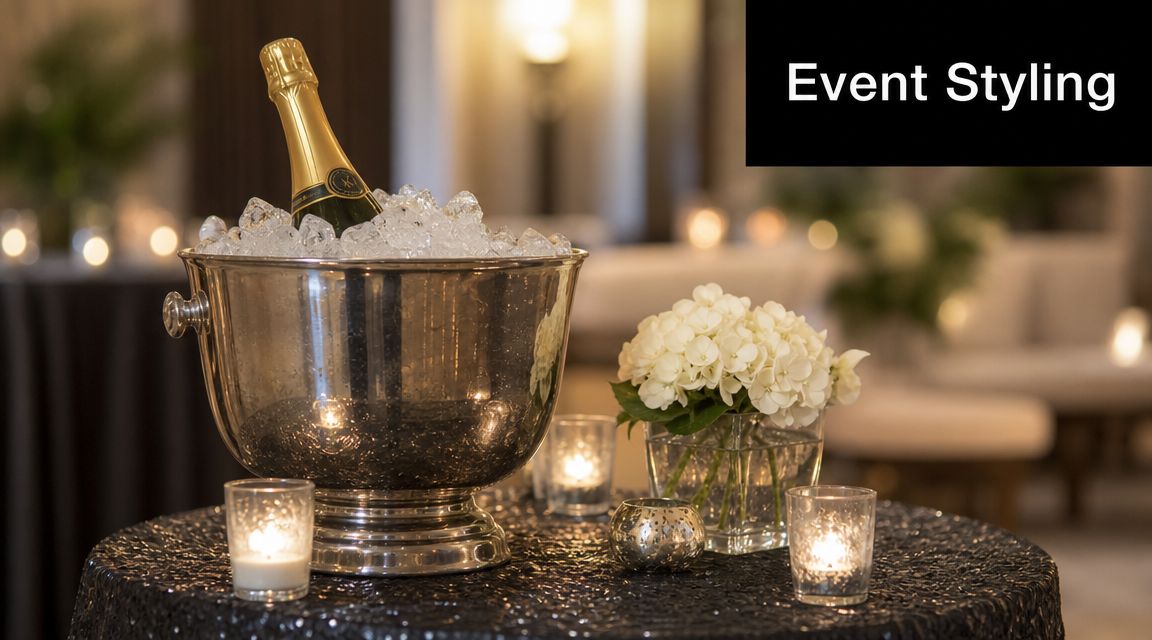
A champagne bucket earns its keep twice. First in temperature control. Then in how it contributes to the room. If you stage it well, it becomes part of the visual rhythm of the event rather than a necessary object someone forgot to hide.
That matters because the bucket carries a long hospitality history. Ice-bucket use goes back to the early 18th century, and champagne service became more standard through the 19th century, with global champagne production rising from 300,000 bottles a year in 1800 to 20 million by 1850, while Adolphe Jaquesson invented the muselet in 1844, according to this history of ice buckets and champagne service. In modern event terms, that's why a bucket still reads as ceremony, welcome and controlled service rather than just cold storage.
Rustic Winelands wedding
At a vineyard wedding, the bucket should feel grounded in the setting. Polished silver can still work, but only if the rest of the table is formal enough to support it. Otherwise, simpler metal or clear buckets often sit more comfortably with textured linens, wooden tables and garden florals.
I prefer to group bucket styling with the table story. If the flowers are loose and seasonal, the bucket shouldn't look too sharp or futuristic. If the room is soft and natural, avoid finishes that reflect too aggressively in afternoon light.
Sleek corporate launch
Corporate events need more restraint. The bucket should support the brand environment, not compete with it.
That usually means cleaner lines, fewer visible units, and more intentional placement near bars, reception points or product reveal areas. Acrylic can work well here because it feels contemporary and keeps the bottle label visible. If the event includes formal pours, pair the setup with champagne coupe glasses for styled drinks service so the cold-holding equipment and the glassware speak the same design language.
Keep the bucket where the camera can justify it. If it lands in every background shot for no reason, it's in the wrong place.
Private parties and milestone celebrations
Birthdays and anniversary events can carry more personality. For such occasions, coloured acrylic, light-up options and bolder placement can work, especially for evening functions. The key is not to let novelty break service logic.
A bright bucket still needs stable placement, enough room for ice-water, and a clear path for guests or staff reaching in. If it glows beautifully but causes puddles on a narrow cocktail table, it hasn't done its job.
Placement choices that improve both look and function
Some setups consistently work better than others:
- At the entrance bar: strong for welcome pours and first impressions
- On stands beside feature tables: preserves dining space
- At a dedicated bubbly station: useful when guests are expected to serve themselves
- At the bridal or VIP table: creates a focal point without overloading the whole room
The best styling decisions don't separate beauty from practicality. They use the bucket to make service feel intentional.
Renting Champagne Buckets in Cape Town and the Winelands
A bucket that looked perfect on the styling board can become a nuisance by 4 pm in Franschhoek heat, or arrive at a farm venue with no plan for return packing after midnight. That is why rental usually suits event work in Cape Town and the Winelands better than buying.
The main advantage is operational, not sentimental. Planners need the right quantity, the right finish, and stock that arrives clean, matched, and ready for service. They also need a supplier setup that can cope with city hotels, estates with tight access windows, and venues where staff are striking while guests are still on the dance floor.
Why rental solves the real problems
A lot of advice about champagne buckets stays focused on appearance and basic chilling. However, the critical planning pressure sits elsewhere: quantity, replacement ice, loading space, breakage exposure, and whether the bucket choice still works once the wind picks up or the afternoon turns hot. As noted earlier in this localised look at bucket planning gaps, those are the questions that affect service quality more than the bucket itself.
In the Cape Town and Winelands market, transport matters. Collection timing matters. So does the admin around missing items, wet repacking, and next-day venue clearance. Rental reduces those headaches, especially for one-off weddings, launches, and school or corporate functions where nobody wants to store a stack of bulky buckets afterwards.
What to confirm before you book
Before approving the rental list, check the practical points that tend to cause problems on event day:
- Is the bucket right for active service, or only for display
- Will delivery and collection fit the venue's access times, especially outside central Cape Town
- Are stands, glassware, tubs, or other chilled-service items needed as part of the same order
- Who handles cleaning, drying, and repacking after the function
- What is the process if guest numbers or the drinks plan changes late
One local option is ABC Hire, which offers event rental stock in Cape Town including ice buckets and related event equipment. That matters when the bucket is one line item inside a larger bar, staffing, and layout plan.
Buying still has a place
Ownership can make sense for venues with a repeat format and a fixed service standard. A permanent bar team with storage, cleaning capacity, and predictable stock counts may save money over time by buying.
For planners, private hosts, and teams running occasional events, rental keeps the decision flexible. You can choose stainless steel for a formal dinner, acrylic for poolside service, or larger formats for a cellar launch without being stuck with one style long after the brief has changed.
If you're planning a wedding, launch, matric dance or private celebration in Cape Town or the Winelands, ABC Hire can help you match champagne ice buckets to the actual service plan, not just the styling board. That means choosing the right quantity, material and supporting equipment so your sparkling wine service looks clean and runs smoothly on the day.