Guide to Champagne Ice Buckets for Cape Town Events

You're often down to the final version of the function sheet when this catches you. The menu is signed off. The floorplan works. Glassware counts are sorted. Then someone asks, “Are we putting champagne on tables, at the entrance, or both?” and suddenly champagne ice buckets stop being a small décor decision and become a service problem.

That's usually where events either look polished or start to feel improvised.

In Cape Town and the Winelands, that decision carries more weight than people expect. A bucket affects how quickly bottles come down to serving temperature, how much table space disappears, how many staff touch each bottle during service, and whether your reception reads as premium or patchy. At a summer wedding in Franschhoek, the wrong bucket setup can leave sparkling wine warming too fast between pours. At a corporate launch in the city, too many buckets on small cocktail tables can make the whole room feel cluttered before guests have even settled in.

The point isn't just to have buckets. It's to choose the right type, place them where service needs them, and order enough to support the way the event will run.

The Overlooked Detail That Defines Your Event

You see the pressure point early at a Cape Town summer reception. The sparkling wine is due on arrival, the terrace is already warm, and the venue team asks where the buckets are going. If that answer is vague, service starts slipping before the first proper pour.

Champagne ice buckets affect temperature control, staff movement, table spacing, and the overall read of the room. In the Winelands, where heat, sun and longer outdoor service windows are common, they need to be treated as working equipment with a styling role attached, not the other way around. I plan them the same way I plan glassware drops or back-of-house ice runs, because once guests arrive, there is very little time to correct a weak bucket setup.

A good bucket setup keeps bottles cold, reduces unnecessary handling, and stops staff from improvising with whatever spare vessel is nearest. It also protects the visual balance of the event. One oversized bucket on a small round can crowd candles, florals and bread plates faster than clients expect. If you are weighing options beyond champagne service, this guide to ice buckets and stands for event use is a useful reference point.

What goes wrong when this is treated as an afterthought

The failures are usually practical.

  • Service backs up when too few buckets are shared between too many tables or stations.
  • Tables lose usable space when the bucket footprint is larger than the layout allows.
  • Ice melts too quickly when the vessel is shallow, badly insulated, or placed in direct afternoon sun.
  • The hire bill creeps up when the fix happens late and the replacement stock does not match the original brief.

Guests may not identify the bucket as the problem, but they notice warm pours, wet tablecloths and staff reaching across them too often.

What good planning looks like

The bucket has to suit the event format first. At a seated wedding, that means leaving enough room for shared plates, décor and comfortable service access. At a product launch, the bucket may need to support the brand look while still being light enough for fast resets. At a matric dance or high-volume private function, durability often saves money because the equipment works harder during setup, service and strike than many clients realise.

When the choice is right, the room feels controlled. Bottles stay at serving temperature for longer, staff work cleanly, and the bucket adds to the table instead of fighting with it.

Choosing Your Buckets Material Style and Size

The wrong way to choose a bucket is by finish alone. The right way is to ask three questions first. Who will handle it, where will it sit, and how long does it need to perform before the next reset?

That narrows the field quickly.

Material decisions that affect the event

Stainless steel works well when service discipline matters. It suits formal dinners, black-tie receptions and premium corporate events because it reads clean and controlled. It also tends to feel more substantial in hand, which helps during tray or table service.

Acrylic is often the practical rental choice for busy events. It's lighter, easier to move in quantity, and less stressful in high-traffic venues where breakage is a real concern. Clear acrylic also disappears visually into many table designs, which can help when you want the bottle on show without adding visual heaviness.

Glass or crystal can look exceptional in the right room, especially under candlelight or in classic ballroom styling. But they demand calm service conditions. In outdoor Winelands settings, where staff may be moving between gravel, lawn, decking and uneven surfaces, the fragility can outweigh the elegance very quickly.

Copper and mixed-metal finishes work best when the styling brief is doing more of the talking. Rustic-luxe weddings, harvest-table aesthetics and branded experiences with warmer palettes can carry them well. The trade-off is maintenance. Fingerprints, water marks and finish wear show faster.
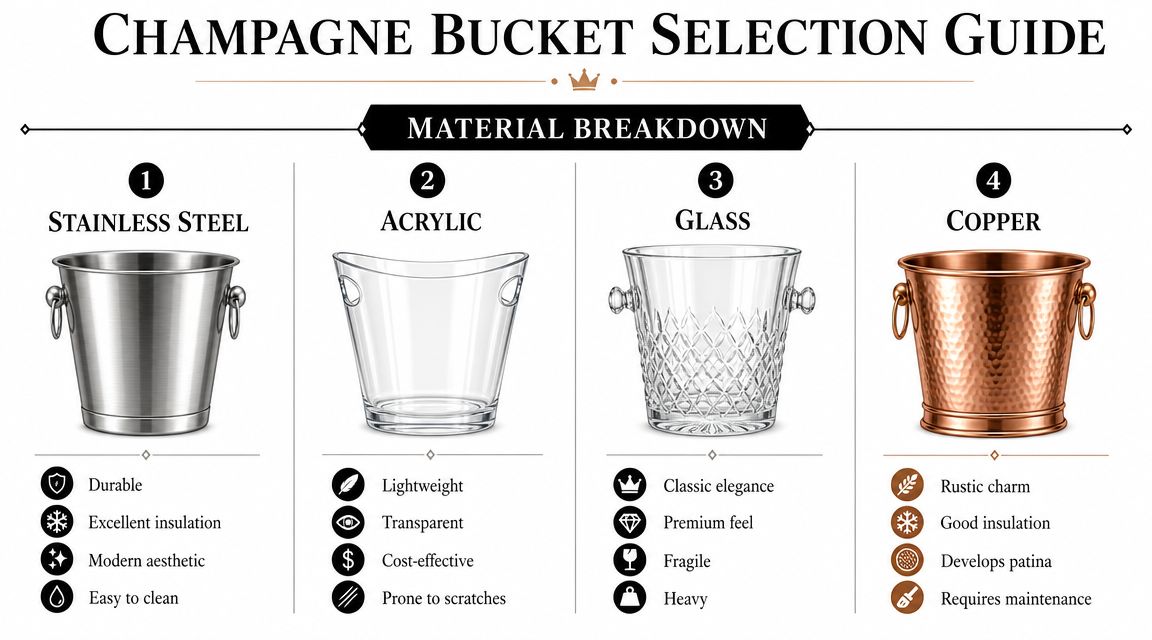
A comparison guide showcasing the features and benefits of stainless steel, acrylic, glass, and copper champagne buckets.

Why size and shape matter more than most people think

A bucket can be beautiful and still fail in service.

A commercially available clear plastic champagne bucket used for beverage service measures about 10.6 in (L) × 8 in (W) × 7.8 in (H) and holds 3.7 quarts, with built-in handles and a stable base designed to reduce spill risk during table service, according to this product specification for a plastic champagne bucket. In practical terms, that size works because it can take a standard 750 ml bottle plus ice without turning into a balancing act.

Practical rule: If the bucket can't comfortably take the bottle and enough ice-water around it, it's not a champagne bucket for event service. It's a prop.

Oval versus round

Oval buckets usually make more sense for table service. They sit neatly, present the bottle well, and often feel easier to carry because the handles fall into a more natural grip. Round buckets can work on bars and stations where symmetry matters more than footprint.

Deep buckets are better for chilling. Shallow buckets may look sleek in product photos, but they often force the bottle to sit too exposed above the ice line. In warm weather, that costs you consistency.

Matching bucket style to event type

A simple way to decide:

  • Formal wedding reception: stainless steel or refined clear acrylic
  • Outdoor vineyard wedding: acrylic or other durable break-resistant options
  • Corporate launch: modern acrylic, branded options, or minimal metal finishes
  • Matric dance or large private party: durable, easy-to-replace, easy-to-carry buckets
  • Styled table moment: use a bucket with a stand so the tabletop stays usable

If you're weighing table footprint against presentation, ice buckets and stands for event layouts are often the cleaner solution because they move the bucket off the eating surface without losing the visual cue of premium drinks service.

Calculating Capacity How Many Buckets You Need

A planner can get the glassware, linen and lighting right, then still lose the drinks service by under-ordering buckets. In Cape Town and the Winelands, that mistake shows up fast. Afternoon heat, dry air and long outdoor service windows warm bottles quickly, especially when the bar is under pressure.

Guest count helps, but bucket count comes from service flow.

Start with the bottle journey

Map where each bottle will be chilled, opened and held before you count a single unit. For most events, the pattern falls into three setups:

  1. Arrival service from a station or roaming team
  2. Table service where bottles remain with guests
  3. Self-serve or semi-self-serve points where guests return to a drinks station

Each setup creates a different demand on your stock. A welcome drinks station may show only a few buckets to guests, but staff still need chilled replacements ready behind the scenes. Table service uses more buckets in view because each active table needs its own cold-holding point.

Working ratios that planners can actually use

These ratios are planning tools, not fixed rules. They work well for keeping service tidy without spending money on units that add no value.

Service Style Recommended Ratio Notes
Welcome drinks station One bucket per active serving point Keep backup buckets off-floor so staff can swap quickly instead of rebuilding in front of guests.
Seated table service One bucket per table receiving sparkling wine service If only selected tables get bottles, count those tables only.
Self-serve bar or drinks point One bucket per bottle position guests can access at once Too many small buckets can make the area wet and messy. A larger cooling setup may be cleaner.
Bridal table or VIP zone Dedicated bucket for each featured bottle service point Presentation matters here, so do not rely on shared buckets.
Toast-only service Fewer visible buckets, with chilled reserve back-of-house Plan around timing rather than placing a bucket everywhere.

Local planning considerations

Warm-weather events need a rotation plan, not just a display plan. Bottles should be brought down to serving temperature before they reach the floor, and replacement bottles should already be in chilling buckets before the current round runs out. If you only count the buckets guests can see, service will stall.

I usually split the order into two groups. Visible buckets are placed on tables, bars or stations. Working buckets stay back-of-house for the next wave. That second group is what saves you at a Franschhoek wedding in summer, or at a Stellenbosch venue where the bar run from prep area to lawn is longer than it looked on the site visit.

If the venue has limited cold storage, add that into your numbers early. In many cases, mobile fridge hire for event drink service is cheaper than over-ordering buckets and burning through extra ice to compensate.

How I plan by event type

For a wedding, I separate ceremony, canapés and reception service. The same bucket rarely does all three jobs well unless the timeline is tight and the staff team is strong. Reception tables usually need their own allocation, while arrivals and photo-hour service can run from a smaller pool with quick resets.

For a corporate launch, fewer bucket points often look sharper. Central stations are easier to manage, easier to brand and less likely to clutter high-value guest areas. That also reduces the staff load, because one controlled drinks point is simpler than chasing half-finished bottles across the room.

For a matric dance or large private party, durability and speed matter more than finesse. Count for turnover, not styling. These events often have compressed setup times, and staff need buckets that can be filled, moved and reset without fuss.

Count buckets according to how many bottles must stay cold at the same time, not how many bottles you bought for the full event.

Common counting mistakes

A few planning errors come up again and again:

  • Counting by guest numbers alone instead of by service points and timing
  • Ignoring reset time between an empty bottle leaving and the next one arriving cold
  • Assigning a bucket to every table when only some tables are receiving bottle service
  • Forgetting back-of-house holding capacity during speeches, meal pacing and toasts
  • Underestimating weather exposure at outdoor venues where buckets lose chill faster than expected

A clean plan usually looks restrained. Enough buckets to keep bottles cold and service moving. Not so many that the room starts reading like a temporary bar.

The Art of the Chill Ice and Chilling Best Practices

A bucket full of dry ice cubes looks convincing, but it doesn't chill champagne as effectively as people think. The bottle only touches the ice at a few points. That slows the pull-down and creates uneven cooling.

The professional method is an ice-water slurry.

A common service approach is to fill the bucket about halfway with ice and add roughly 1 to 1.5 cups of water, because the water improves thermal contact around the bottle and cools it faster than dry ice alone, as explained in this demonstration of champagne chilling technique. The same reference notes that a well-managed slurry also helps maintain a more constant low temperature over service.

What staff should do before guests arrive

The best chilling plan starts before the first bottle is visible.

  1. Set buckets in place early so you're not styling around wet equipment later.
  2. Pre-chill the bucket briefly if possible, especially on hot days.
  3. Build the slurry close to service time so you don't waste ice before it starts working.
  4. Insert the bottle deep enough for the cold mix to do the job properly.
  5. Assign someone to top up during long service windows.
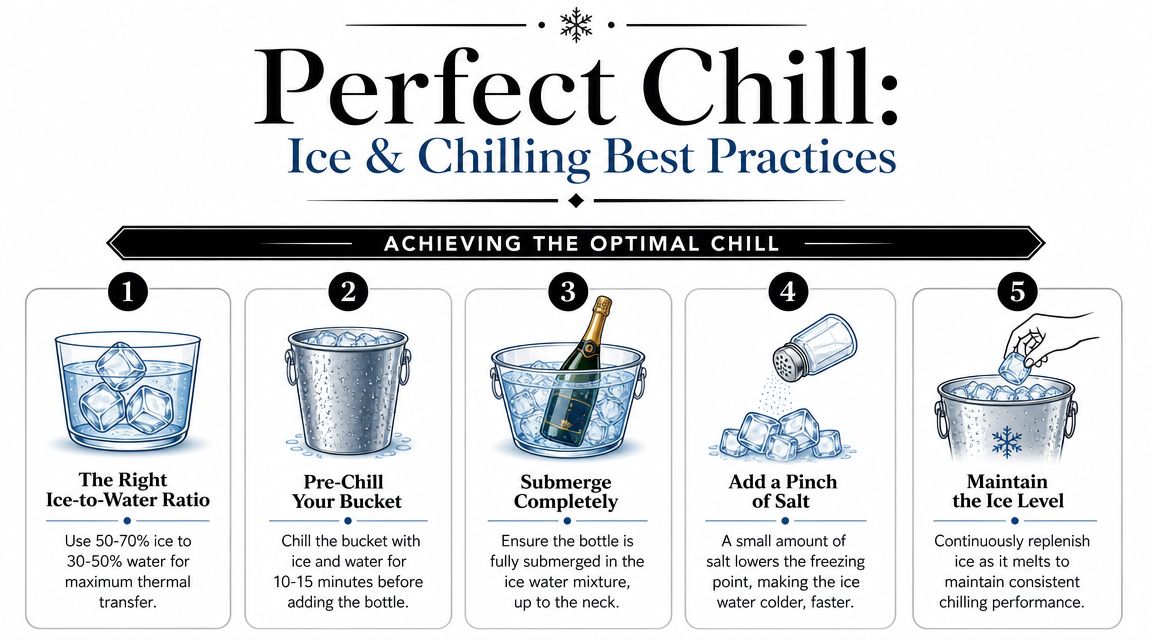
An infographic detailing five best practices for chilling champagne bottles in an ice bucket effectively.

What works in the Winelands and what doesn't

In Stellenbosch or Franschhoek summer conditions, sunlight and ambient heat punish lazy setup. Buckets placed in direct sun will burn through ice faster and leave staff chasing the problem all afternoon. Even in shaded spaces, warm airflow through marquees and open-sided venues can shorten your holding window.

What works is discipline:

  • Keep reserve bottles in proper cold storage
  • Use buckets for active service, not full stockholding
  • Top up little and often instead of waiting for total melt
  • Move buckets away from heat sources and sun patches as the light shifts

What doesn't work is filling every bucket too early, then hoping the ice holds.

Buckets versus cold storage

A bucket is not a substitute for refrigerated staging. It's a final-service tool. If the event has a long drinks period or staggered bottle release, pair your buckets with mobile fridge hire for event cold hold so replacement bottles arrive cold before they ever touch the floor.

A cold bottle in a good bucket stays guest-ready. A warm bottle dropped into a struggling bucket puts the whole service team on the back foot.

The small details that protect the guest experience

Wipe condensation from the exterior before service. Don't let labels disintegrate in dirty meltwater. Replace tired ice before speeches and toasts, not during them. And if you're working a premium room, train staff not to overfill the bucket so water sloshes onto linen when the bottle is lifted.

Guests don't talk about the slurry. They notice that their glass is cold, the pour is clean, and the bottle looks cared for.

Staging and Styling Buckets for Your Event

A champagne bucket earns its keep twice. First in temperature control. Then in how it contributes to the room. If you stage it well, it becomes part of the visual rhythm of the event rather than a necessary object someone forgot to hide.

That matters because the bucket carries a long hospitality history. Ice-bucket use goes back to the early 18th century, and champagne service became more standard through the 19th century, with global champagne production rising from 300,000 bottles a year in 1800 to 20 million by 1850, while Adolphe Jaquesson invented the muselet in 1844, according to this history of ice buckets and champagne service. In modern event terms, that's why a bucket still reads as ceremony, welcome and controlled service rather than just cold storage.
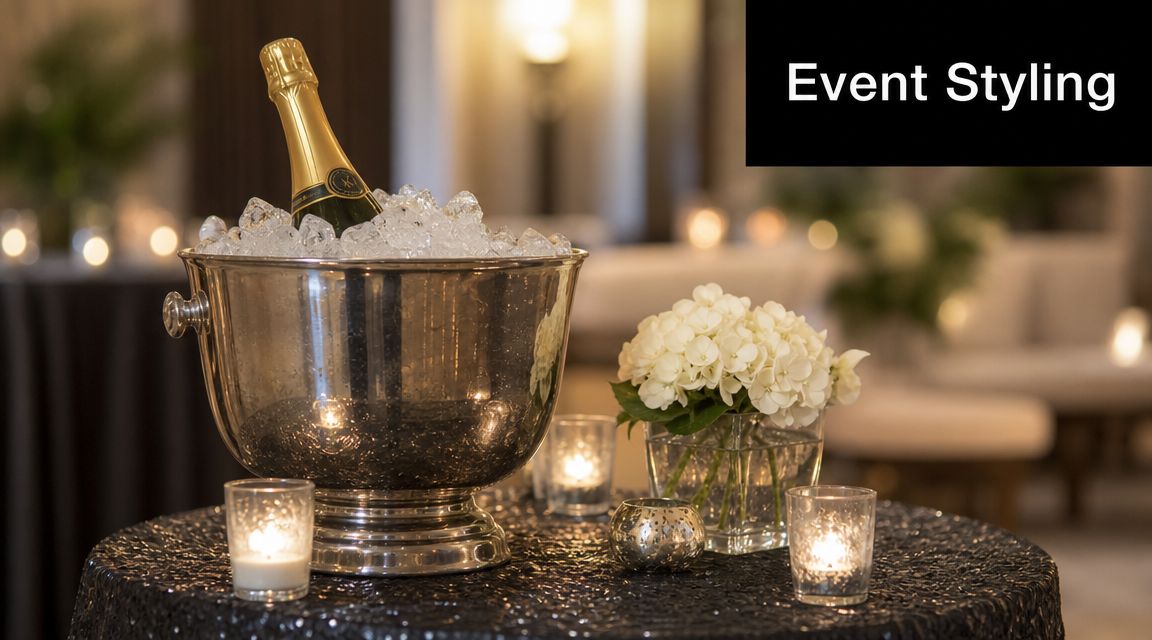
A champagne bottle cooling in a silver ice bucket on a table with flowers and votive candles.

Rustic Winelands wedding

At a vineyard wedding, the bucket should feel grounded in the setting. Polished silver can still work, but only if the rest of the table is formal enough to support it. Otherwise, simpler metal or clear buckets often sit more comfortably with textured linens, wooden tables and garden florals.

I prefer to group bucket styling with the table story. If the flowers are loose and seasonal, the bucket shouldn't look too sharp or futuristic. If the room is soft and natural, avoid finishes that reflect too aggressively in afternoon light.

Sleek corporate launch

Corporate events need more restraint. The bucket should support the brand environment, not compete with it.

That usually means cleaner lines, fewer visible units, and more intentional placement near bars, reception points or product reveal areas. Acrylic can work well here because it feels contemporary and keeps the bottle label visible. If the event includes formal pours, pair the setup with champagne coupe glasses for styled drinks service so the cold-holding equipment and the glassware speak the same design language.

Keep the bucket where the camera can justify it. If it lands in every background shot for no reason, it's in the wrong place.

Private parties and milestone celebrations

Birthdays and anniversary events can carry more personality. For such occasions, coloured acrylic, light-up options and bolder placement can work, especially for evening functions. The key is not to let novelty break service logic.

A bright bucket still needs stable placement, enough room for ice-water, and a clear path for guests or staff reaching in. If it glows beautifully but causes puddles on a narrow cocktail table, it hasn't done its job.

Placement choices that improve both look and function

Some setups consistently work better than others:

  • At the entrance bar: strong for welcome pours and first impressions
  • On stands beside feature tables: preserves dining space
  • At a dedicated bubbly station: useful when guests are expected to serve themselves
  • At the bridal or VIP table: creates a focal point without overloading the whole room

The best styling decisions don't separate beauty from practicality. They use the bucket to make service feel intentional.

Renting Champagne Buckets in Cape Town and the Winelands

A bucket that looked perfect on the styling board can become a nuisance by 4 pm in Franschhoek heat, or arrive at a farm venue with no plan for return packing after midnight. That is why rental usually suits event work in Cape Town and the Winelands better than buying.

The main advantage is operational, not sentimental. Planners need the right quantity, the right finish, and stock that arrives clean, matched, and ready for service. They also need a supplier setup that can cope with city hotels, estates with tight access windows, and venues where staff are striking while guests are still on the dance floor.

Why rental solves the real problems

A lot of advice about champagne buckets stays focused on appearance and basic chilling. However, the critical planning pressure sits elsewhere: quantity, replacement ice, loading space, breakage exposure, and whether the bucket choice still works once the wind picks up or the afternoon turns hot. As noted earlier in this localised look at bucket planning gaps, those are the questions that affect service quality more than the bucket itself.

In the Cape Town and Winelands market, transport matters. Collection timing matters. So does the admin around missing items, wet repacking, and next-day venue clearance. Rental reduces those headaches, especially for one-off weddings, launches, and school or corporate functions where nobody wants to store a stack of bulky buckets afterwards.

What to confirm before you book

Before approving the rental list, check the practical points that tend to cause problems on event day:

  • Is the bucket right for active service, or only for display
  • Will delivery and collection fit the venue's access times, especially outside central Cape Town
  • Are stands, glassware, tubs, or other chilled-service items needed as part of the same order
  • Who handles cleaning, drying, and repacking after the function
  • What is the process if guest numbers or the drinks plan changes late

One local option is ABC Hire, which offers event rental stock in Cape Town including ice buckets and related event equipment. That matters when the bucket is one line item inside a larger bar, staffing, and layout plan.

Buying still has a place

Ownership can make sense for venues with a repeat format and a fixed service standard. A permanent bar team with storage, cleaning capacity, and predictable stock counts may save money over time by buying.

For planners, private hosts, and teams running occasional events, rental keeps the decision flexible. You can choose stainless steel for a formal dinner, acrylic for poolside service, or larger formats for a cellar launch without being stuck with one style long after the brief has changed.

If you're planning a wedding, launch, matric dance or private celebration in Cape Town or the Winelands, ABC Hire can help you match champagne ice buckets to the actual service plan, not just the styling board. That means choosing the right quantity, material and supporting equipment so your sparkling wine service looks clean and runs smoothly on the day.
Stunning Weddings on a Budget in Cape Town and the Winelands

Planning your wedding should be an exhilarating experience, not one clouded by financial anxiety. A truly stunning Cape Town or Winelands wedding is absolutely within reach, even when you're planning on a budget. This isn't about cutting back on style; it’s about making smart, savvy choices.

Your Cape Wedding Dream, Without the Financial Nightmare

The word "budget" can feel limiting, but I've found it’s actually the secret to unlocking your creativity. It pushes you to decide what really matters, making sure every rand is spent with purpose. So, let go of the pressure to stage a cookie-cutter event that just ticks all the traditional boxes.

This guide is all about spending wisely—putting your money towards your absolute non-negotiables and finding clever ways to save on the rest.

I've seen it time and time again: the most memorable weddings are never the most expensive. They’re the ones that feel completely authentic to the couple, telling their story no matter the budget.

A successful budget-friendly wedding really boils down to a few key strategies. Getting these right from the beginning will set you up for a much calmer planning journey. It's not about cutting corners, but choosing a smarter path from the get-go.

The Foundations of a Budget-Savvy Wedding

  • Be Strategic with Your Timing: The season and even the day of the week can have a massive impact on your costs. A cosy winter wedding in the Winelands, for instance, often comes with much lower venue fees compared to a sought-after Saturday in summer.

  • Curate Your Guest List: Honestly, this is the most powerful tool you have for controlling your budget. Every single guest adds to the cost of catering, seating, and drinks. Keeping your celebration intimate with just your closest circle is naturally more affordable.

  • Think Outside the Venue Box: Look beyond the traditional wedding venues. You'd be amazed at the potential of community halls, restaurants with private rooms, or even a friend’s gorgeous garden to act as a stunning, low-cost backdrop.

  • Spend with Intention: Sit down with your partner and get real about your top three priorities. Is it mind-blowing food? A brilliant photographer who can capture the vibe perfectly? Or a live band that will keep everyone on the dance floor? Splurge on what you’ll cherish forever and be ruthless with the details you couldn't care less about.

The Power of Smart Rentals

Here’s one of the biggest insider secrets to getting that high-end look on a limited budget: master the art of rentals. Instead of being stuck with a venue's pricey (and often dated) in-house furniture, hiring gives you the freedom to pick exactly what you need. This is how you can transform a simple, affordable space into something spectacular.

Imagine setting up a chic lounge area with stylish LED furniture or serving welcome drinks from a fun slush machine. These are high-impact features that cost a fraction of what you might spend on over-the-top floral installations. By hiring directly from a company like ABC Hire, you take back control over your wedding's look and your expenses. It’s proof that a beautiful wedding on a budget is more than just a dream—it's completely achievable.

Creating Your Personal Budget and Planning Timeline

Right, this is where the wedding magic really begins—not with fairy lights, but with a spreadsheet. Getting your budget and timeline sorted are the two most important first steps. Think of them as your personal roadmap, guiding every single decision you’ll make and keeping you in control of your money and your sanity.

It all starts with an honest chat. Before you even think about falling in love with a venue or booking a supplier, you and your partner (plus any family members chipping in) need to agree on one, final, all-in number. This is your foundation. It sets the tone for your whole celebration and saves you from a world of financial stress later on.

A spreadsheet is your best friend. It might not sound glamorous, but having a master document to track your budget, deposits, remaining balances, and payment due dates is the single most effective way to stay organised and on track.

How To Break Down Your Wedding Costs

Once you have your total figure, it's time to carve it up. While every wedding is different, a typical cost breakdown can be a massive help. Here in the Cape, it’s no secret that the venue and catering will eat up the biggest slice of your budget.

Here’s a general guide to get you started:

  • Venue, Food & Drinks: 45-55%
  • Photography & Videography: 10-15%
  • Attire & Beauty: 5-10%
  • Decor, Flowers & Rentals: 10-15%
  • Entertainment (DJ/Band): 5-10%
  • Stationery & Miscellaneous: 5%

Remember, these are just guidelines. If incredible photos are your absolute non-negotiable, you might bump that up to 20% and find ways to save on decor. The beauty of a budget is that it forces you to decide what truly matters to you.

Sample Cape Town Wedding Budgets

To give you a clearer picture, let's look at a few examples. Use these three budget scenarios for an 80-guest wedding in the Cape Town area as a starting point for your own financial planning, showcasing different spending levels for a beautiful wedding.

Sample Cape Town Wedding Budgets for 80 Guests

Expense Category Chic on a Shoestring (R150k) Smart & Stylish (R250k) Comfortably Curated (R400k)
Venue, Catering & Bar R75,000 R125,000 R200,000
Photography R18,000 R30,000 R50,000
Decor, Rentals & Flowers R15,000 R30,000 R50,000
Entertainment (DJ) R8,000 R15,000 R25,000
Attire & Rings R20,000 R30,000 R50,000
Stationery & Other R7,000 R12,000 R15,000
Contingency (10%) R7,000 R8,000 R10,000

These numbers give you a realistic idea of where your money could go, but don't forget that costs start long before the wedding day itself. Knowing how to plan budget for an engagement ring is a crucial piece of your overall financial puzzle.

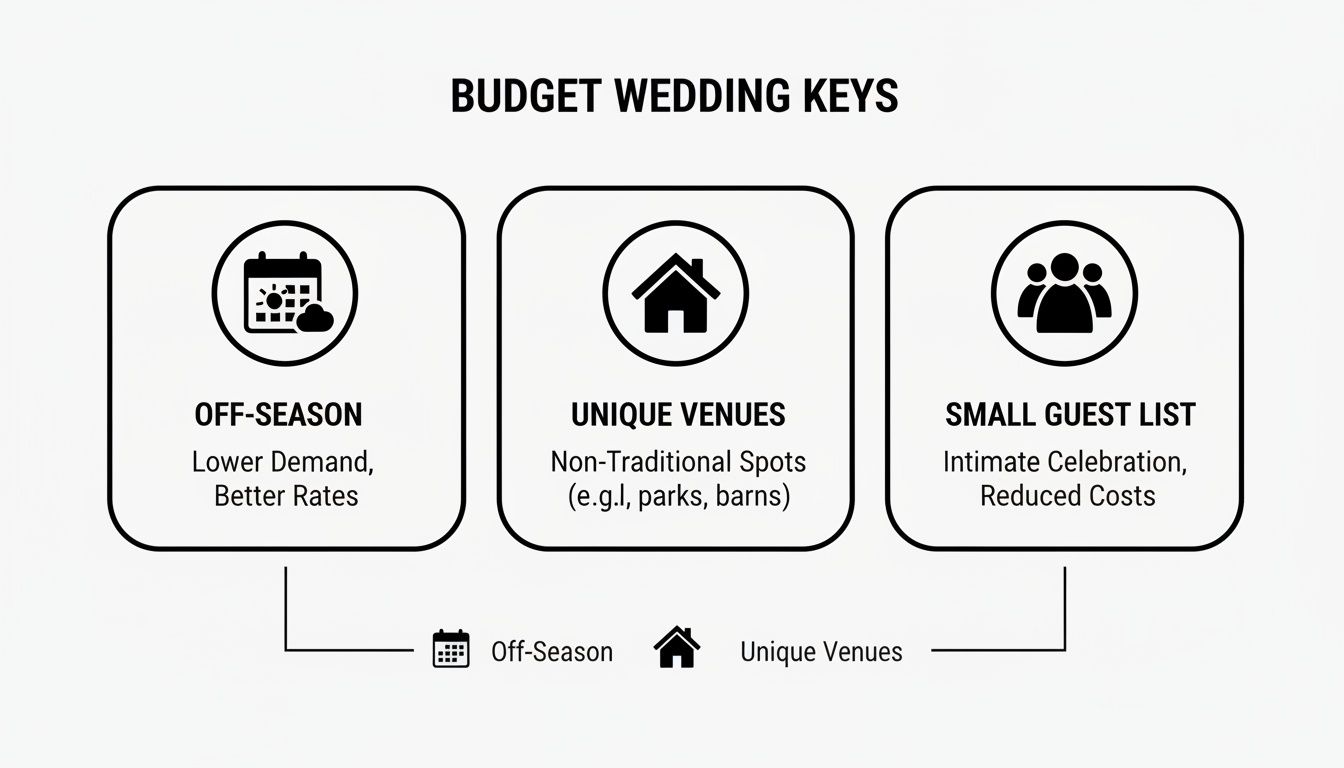
The image below perfectly captures the three golden rules for planning a wedding on a budget.

Visual guide outlining three key factors for budget weddings: off-season, unique venues, and a small guest list.

Honestly, if you focus on these three things—picking an off-season date, finding a unique venue, and keeping your guest list trim—you’ll get the absolute biggest bang for your buck.

A 12-Month Wedding Planning Timeline

A timeline isn't just a to-do list; it’s a sanity-saver. It stops you from feeling overwhelmed and helps spread out payments, which is much kinder to your bank account.

12+ Months Out

  • Set that budget and fire up your master spreadsheet.
  • Draft your guest list (be ruthless!).
  • Figure out your wedding style and priorities.
  • Start the big hunt: research and book your venue.

8-10 Months Out

  • Lock in your high-priority suppliers. Photographer, caterer, and your band or DJ are the ones who get booked up ridiculously far in advance.
  • Start the dress or suit shopping. It can take longer than you think!

6-8 Months Out

  • Get those Save the Dates in the post.
  • Book your florist and rental company for things like furniture, decor, and lighting. You can find more detail in our complete guide on how to plan a wedding.

4-6 Months Out

  • Finalise the guest list and send out your invitations.
  • Book transport and any accommodation blocks for guests.
  • Schedule those delicious menu tastings with your caterer.

2-3 Months Out

  • Time for the legal bits: apply for your marriage licence.
  • Have your final dress or suit fitting.
  • Finalise your order of service and music choices for the ceremony and reception.

1 Month Out

  • Confirm your final guest count with the venue and caterer.
  • Tackle the seating plan (good luck!).
  • Run through final details and payment schedules with all your suppliers.
  • Create a detailed timeline for the wedding day itself and share it with your bridal party and key suppliers.

Right, let's talk about the wedding budget. This is where things get real, but it's also where you take control and decide what truly matters for your big day. The secret isn't about having an endless pot of money; it's about making every rand work hard for the things you'll cherish most.

You and your partner need to sit down and get honest about your top three priorities. What are the non-negotiables? When you look back at your wedding album in ten years, what will make you smile the widest? Will it be the incredible photos that captured every little moment? The delicious food your guests are still raving about? Or maybe it was that live band that had everyone, even your great-aunt, on the dance floor all night.

A great way to do this is to create a 'must-have' list. Together, pick the top three things you absolutely can't imagine your day without. These are your splurges – where you'll happily invest a bigger slice of the budget. Everything else then becomes a candidate for some smart, savvy savings.

Once you know what you’re splurging on, the "saving" part feels less like a sacrifice and more like a strategic game plan.

Deciding What’s Worth the Splurge

Your list will be unique to you, but from my experience, some things consistently deliver the most bang for your buck and long-term value. Photography is almost always near the top of the list. After all, when the confetti has been swept away and the cake has been eaten, your photos are what you have left. To get a feel for what to expect, it’s helpful to research typical wedding photography prices and costs as a general benchmark for budgeting.

Other popular splurges often include:

  • The Guest Experience: This is all about creating a vibe. Think amazing food, a well-stocked open bar, or entertainment that gets the party started and keeps it going. If your main goal is to throw an unforgettable celebration for your friends and family, this is where to focus your funds.
  • The Venue: Sometimes, the right venue does all the heavy lifting. A space with tons of character, a breathtaking view, or beautiful gardens might cost more upfront but can save you a fortune on décor and flowers. You can get a clearer picture by exploring the real cost of venues for weddings here in the Cape.
  • Your Outfits: For some couples, feeling absolutely incredible in what they’re wearing is a top priority. This could mean a custom-tailored suit or that designer dress you’ve been dreaming about. Don't underestimate the power of feeling your best!

Smart Ways to Save (That No One Will Notice)

With your big-ticket items locked in, you can now get clever with cutting costs elsewhere. The trick is to trim the things that have the least impact on the overall experience for you and your guests.

Go Digital with Your Invites
You can save hundreds, sometimes thousands, of rands on printing and postage by sending beautiful digital invitations. Sites like Paperless Post or Greenvelope have stunning, customisable designs and make tracking RSVPs a breeze. For the day-of items like menus or place cards, use a free tool like Canva to design them yourself and get them printed at a local shop for next to nothing.

Rethink Wedding Favours
If we're being honest, most wedding favours get left behind on the table. Instead of spending R40-R80 per person on a small trinket, why not put that money towards something more meaningful? A donation to a charity close to your hearts is a wonderful gesture. Or, make the dessert the "favour" – a doughnut wall, an ice-cream cart, or a late-night food truck is far more memorable than a bag of sugared almonds.

Get Creative with Florals
Flowers are gorgeous, but the costs can spiral quickly. A good florist can work wonders on a budget. Ask for seasonal, locally-grown flowers, which are always more affordable and just as beautiful. A brilliant trick is to repurpose your ceremony flowers at the reception – that beautiful archway can become a backdrop for your main table! Focusing on one or two high-impact arrangements is also much more effective than dotting tiny, sad-looking posies everywhere. And never forget the power of greenery; eucalyptus and other foliage are stylish, fragrant, and budget-friendly fillers.

Assembling Your Dream Vendor Team Without Draining Your Bank Account

Your vendors are the artists who will bring your wedding day to life. For couples planning a wedding on a budget, the idea of hiring a professional team can feel overwhelming, but it really doesn't have to be. Finding incredible, affordable local suppliers in the Cape is all about knowing where to look and what to ask.

Three professionals discuss photography and design, reviewing a camera, laptop, and color palette. A 'DREAM VENDORS' sign is visible.

It’s about finding genuine value—that sweet spot where top-tier quality meets a price that works for you. Let's skip the pricey wedding directories and find the hidden gems that will make your day perfect without breaking the bank.

Finding Your Cape Town Wedding Pros

Forget the big, advertised names. The most creative and budget-savvy vendors are often discovered through social media and good old-fashioned word-of-mouth.

  • Dive into Instagram: Think of it as your personal wedding search engine. Use specific hashtags like #CapeTownWeddingFlorist, #WinelandsWeddingPhotographer, or #StellenboschWeddingCaterer. This is where you’ll find amazing new talent and small businesses whose work speaks for itself.

  • Join Local Community Groups: Facebook groups for Cape Town brides are goldmines for honest reviews and recommendations. You can ask for vendor suggestions within your budget and get real, unfiltered feedback from recent couples.

  • Ask Your Booked Vendors: Your photographer knows a fantastic makeup artist. Your venue coordinator can probably point you to a great local DJ. These professionals work together constantly and are usually happy to share their network of trusted colleagues.

The Art of the First Email

That first email to a potential vendor is key. You need to get an idea of their pricing, availability, and flexibility without sounding like you're just hunting for a bargain. The trick is to be clear, polite, and specific.

A good first email shows you've done your homework and respect their craft. Always include your wedding date, venue, estimated guest count, and a quick line about your vision.

Your goal isn't just to get a price list; it's to start a conversation. You're looking for partners who are excited by your vision and willing to collaborate to make it happen within your budget.

Once you’ve covered the basics, you can ask direct but friendly questions to see if they're a potential fit.

Smart Questions to Ask Potential Vendors

  • "We are working with a photography budget of around R25,000. Do you have any packages that might align with this, or could a package be customised?"
  • "We absolutely love your work! Are your rates different for a Friday or a winter wedding?"
  • "Could you please send through your package options? We're particularly interested in your entry-level offerings."

Asking questions like this opens the door for a discussion and shows you're an organised, serious client.

Negotiating with Confidence and Kindness

Negotiating isn't about trying to get something for nothing; it’s about finding a win-win. Most vendors are passionate small business owners who want to work with you and are often open to creating custom packages.

For instance, if a photographer's full-day package is a bit of a stretch, ask if they offer a shorter-day rate to cover just the ceremony and portraits. If a catering quote is high, see if you can swap a formal plated meal for stylish food stations or a family-style service, which often cuts down on staffing costs.

Another huge area for savings is rentals. Venue packages often include a big markup on things like furniture, linens, and decor. It is nearly always more cost-effective to hire these items directly from a rental specialist. This approach not only saves money but gives you much more control over the final look. By sourcing your own tables, chairs, or even fun extras like LED furniture or a slush machine, you can create a completely personalised atmosphere that perfectly fits your style and your budget.

Your Guide to Smart Rentals and DIY Decor

If you're planning a wedding on a budget, think of rentals and DIY decor as your secret weapons. This is how you take a blank canvas venue and transform it into a high-end, personalised space without that heart-stopping price tag. Here's our playbook for making smart, stylish choices that will truly elevate your day.

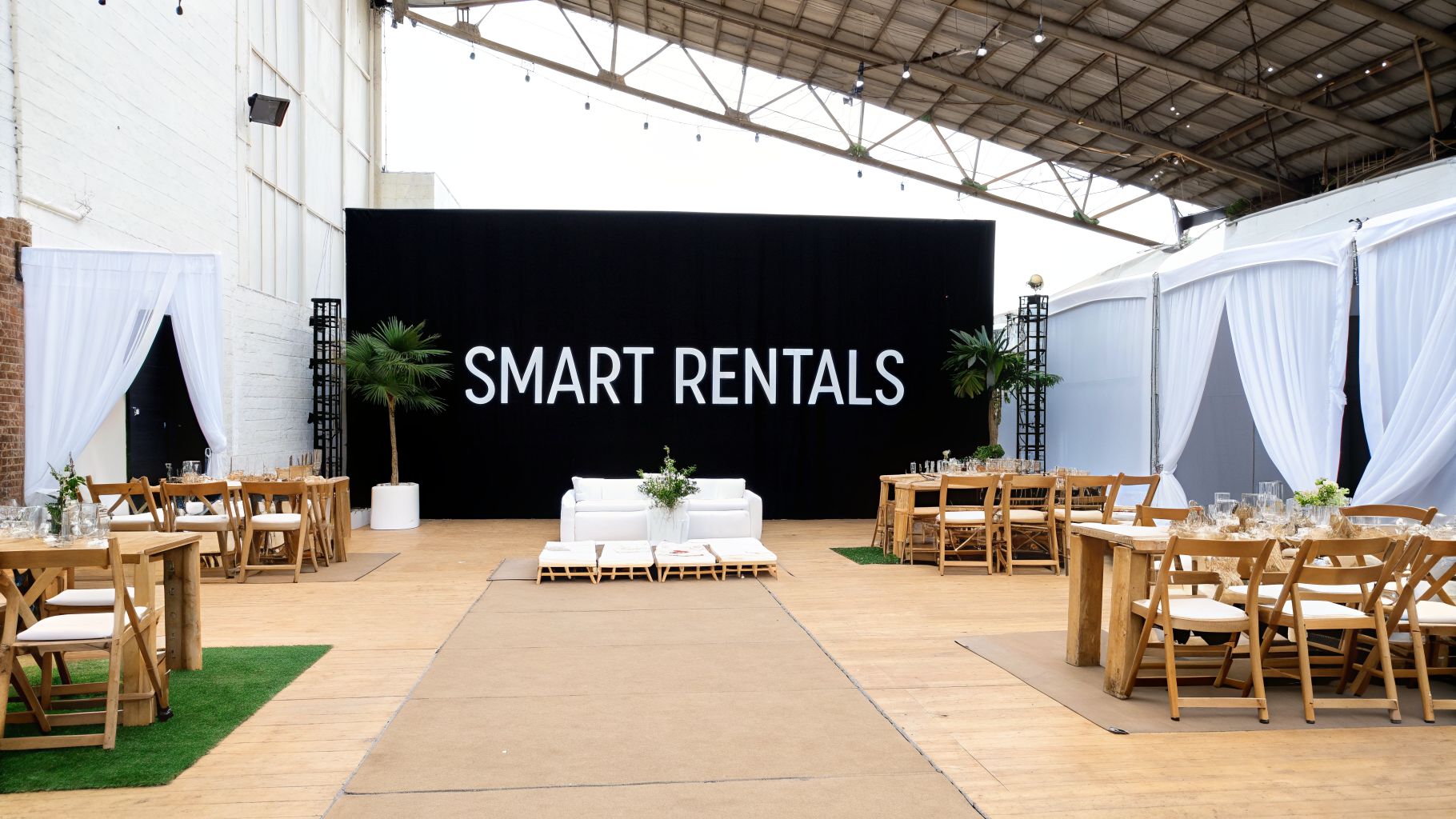
Modern event venue with wooden tables, white chairs, lounge seating, and a large SMART RENTALS sign.

We'll walk you through the essential rentals that make the biggest impact and the DIY projects that add tons of personality without adding stress.

The Smart Rental Checklist for Budget Weddings

Renting gives you incredible freedom and, more importantly, financial control. Instead of being stuck with a venue's often limited (and marked-up) options, you can hand-pick pieces that perfectly match your vision and budget. In our experience, hiring directly from a rental company is almost always more cost-effective.

You can break down your rental list into the absolute necessities and the brilliant "wow" factors.

The Foundational Rentals

These are the non-negotiables that form the backbone of your reception.

  • Tables and Chairs: Don't underestimate the power of good seating. Simply swapping out standard conference chairs for elegant Wimbledon or classic Tiffany chairs can instantly upgrade the entire look of your reception.
  • Linens: Crisp tablecloths and napkins in your chosen colour palette are what tie the whole look together.
  • Crockery, Cutlery, and Glassware: You'll need a full place setting for every guest. Rental companies offer beautiful, cohesive sets so you don’t have to worry about a mismatched look.
  • Climate Control: Absolutely essential for the famously unpredictable Cape Town weather. Renting heaters for a winter Winelands wedding or fans and air-conditioners for a summer celebration is a small cost that ensures your guests stay comfortable.

The High-Impact "Wow" Factors

These are the clever rentals that create those memorable moments and make for incredible photos.

  • LED Furniture: This is a total game-changer for creating atmosphere after the sun goes down. A few LED cocktail tables and cubes can establish a chic lounge area for a fraction of the cost of elaborate floral installations. It’s modern, fun, and unbelievably effective.
  • Slush Machines: A guaranteed crowd-pleaser! A slush machine can work as a welcome drink station, a fun cocktail bar (just add the spirits), or even a unique dessert option. It’s interactive and far more affordable than a fully staffed bar.
  • Statement Decor: Think about a beautiful wedding arch for your ceremony or a unique backdrop for the photo booth or main table. Renting these large-scale pieces is so much cheaper than buying them or attempting to build them from scratch.

When you hire items, you're not just renting a product; you're renting convenience. The price almost always includes delivery, setup, and collection, saving you a massive amount of logistical stress before and after your wedding day.

Cost Comparison: Rental Package vs. Sourcing Individually

Bundling your rentals into a package often unlocks significant savings compared to sourcing each item from a different supplier. It also saves you the headache of coordinating multiple deliveries and collections.

Item or Service Example Rental Package Estimated Individual Sourcing Cost
Tables & Chairs (100 guests) R7,500 R9,000
Linens, Crockery, Glassware R6,000 R7,500
LED Lounge Pocket (4 cubes, 2 tables) R2,500 R3,500
Slush Machine R1,200 R1,800
Delivery & Collection (consolidated) R800 R2,400 (e.g., 3 x R800)
Total R18,000 R24,200

As you can see, the savings from a consolidated package are substantial, not to mention the time and stress you'll save.

High-Impact DIY That Won’t Cause a Meltdown

DIY is a fantastic way to inject your personality into the day, but it’s so important to be realistic. The goal is to tackle projects you'll actually enjoy and that add real value—not to give yourself a second full-time job.

Before you even think about heading to the craft store, ask yourself three quick questions:

  1. Do I honestly have the time to do this without feeling completely rushed?
  2. Do I have the skills (and the tools) required to make it look good?
  3. Will the cost of materials actually be a lot less than just hiring or buying it?

If you can answer "yes" to all three, then go for it!

Low-Stress DIY Projects to Try

  • Seating Chart: Forget trying to master complex calligraphy. Use a free tool like Canva to design a simple, elegant chart. Get it printed on a large board at a local print shop and display it on a rented easel. Easy and effective.
  • Table Numbers: This is a perfect small-scale project. You can find plain wooden or acrylic numbers online and simply paint them to match your decor. Or, design and print simple cards that complement your seating chart.
  • Photo Booth Backdrop: You don’t need an elaborate, built-from-scratch structure. A simple frame draped with ribbons, streamers, or strings of fairy lights can look amazing in photos. The focus will be on your happy guests, not the backdrop's construction.

DIY Projects to Avoid

Some projects look incredibly easy on Pinterest but are logistical nightmares in reality. Unless you have specific experience (or a very talented friend who owes you a favour), it's often wise to avoid these.

  • Complex Floral Arrangements: Creating dozens of centrepieces and bouquets is incredibly time-consuming and requires a cool space for storage. Rather leave this to the pros and save money by asking them to use seasonal, local blooms.
  • Catering or The Wedding Cake: Food safety and large-scale cooking are best left to professionals. The stress and risk are simply not worth the potential savings.
  • Full Wedding Stationery Suite: Designing, printing, cutting, and assembling hundreds of invitations, menus, and place cards is a massive undertaking. Focus your energy on one or two simple elements instead.

By combining smart rentals with a few carefully chosen DIY touches, you can achieve that bespoke, high-end feel that truly honours your style and your budget. Explore all the possibilities for event decoration hire to see how you can bring your vision to life affordably.

Alright, let's tackle some of those burning questions that keep you up at night. When you're in the thick of wedding planning, it's easy to get bogged down by the details. Here are the clear, straightforward answers you need.

What Does an Average Wedding in Cape Town Cost in 2026?

This is the million-Rand question, isn't it? While every wedding is different, a mid-range celebration for 80-100 guests in the Cape Town area often falls somewhere between R250,000 and R450,000.

But don't let that number scare you. That's just an average. By using the strategies we've talked about—like picking an off-season date or a less traditional venue—you can absolutely pull off a stunning wedding for under R150,000. It all boils down to your priorities and some savvy planning.

Is It Cheaper to Hire Items Than to Use the Venue's?

More often than not, yes! It’s always a smart move to get a separate quote from a rental company before you sign on the dotted line with a venue. Venues can add a hefty markup to their in-house items, and honestly, their selection is often quite limited.

Hiring directly from a supplier doesn't just open up a world of stylistic choice (hello, unique pieces!); it can be significantly lighter on your wallet. This is especially true when you can bundle items into a package, which saves you on the cost per item and on delivery fees.

What Is the Single Biggest Way to Save Money on a Wedding?

Without a doubt, the most effective way to slash your wedding costs is to trim your guest list. Think about it: every guest adds to the bill across multiple categories—catering, drinks, table settings, chair hire, stationery, and more.

Cutting just 10 people from your list can genuinely save you thousands of Rands. That’s money you can then put towards something you really care about, whether it's your dream photographer, that perfect outfit, or an amazing honeymoon.

Remember, your wedding day is a celebration of your union, not a social obligation to host everyone you've ever met. An intimate wedding with your inner circle often feels far more personal and meaningful, with the wonderful bonus of being much kinder to your budget.

Are All-Inclusive Wedding Packages Good Value?

They can be brilliant for predictable costs and convenience, which is a massive relief for many couples planning on a budget. Knowing the final number upfront takes a lot of financial stress out of the equation.

However, they aren't always the best value for money. These packages can lock you into specific vendors and styles, and you might end up paying for services you don’t actually want or need. Always ask for an itemised breakdown of what’s included and compare it to the cost of sourcing things yourself. Often, a hybrid approach—using some of the venue's services but hiring your own specialists for others—strikes the perfect balance.


Planning a gorgeous and affordable wedding in the Cape is all about making smart choices, and ABC Hire is here to help you make them. From chic LED furniture that brings an instant party vibe to the essentials like tables, chairs, and climate control, we offer high-quality rentals that deliver a high-end look without the price tag. Explore our full range of event furniture and accessories and let us help you bring your vision to life.

A Guide to Decorative Chairs for Wedding Ceremonies

Let’s be honest, wedding chairs used to be an afterthought. A place for guests to sit, and that was about it. But those days are long gone. Today, the chairs you choose are a massive part of your wedding's look and feel, instantly setting the tone for the whole celebration. They’re a powerful way to tell your story visually.

Why Decorative Chairs Are a Wedding Must-Have

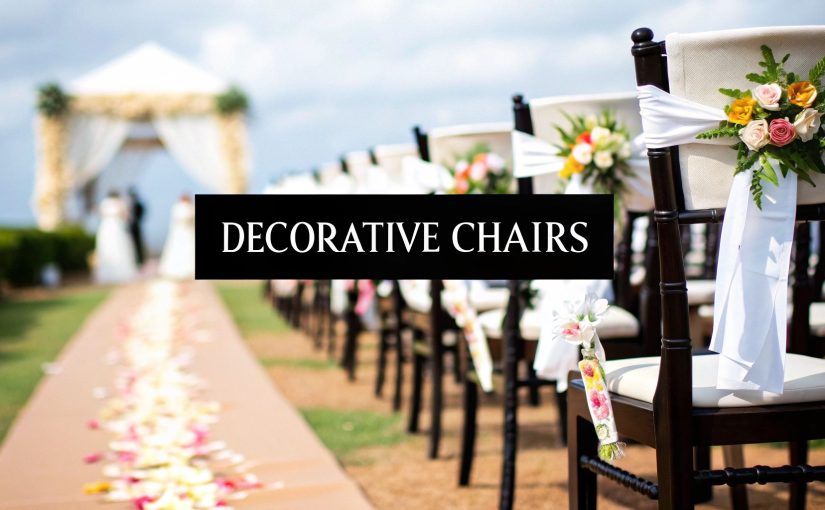
White decorative chairs arranged for a wedding ceremony in a garden setting

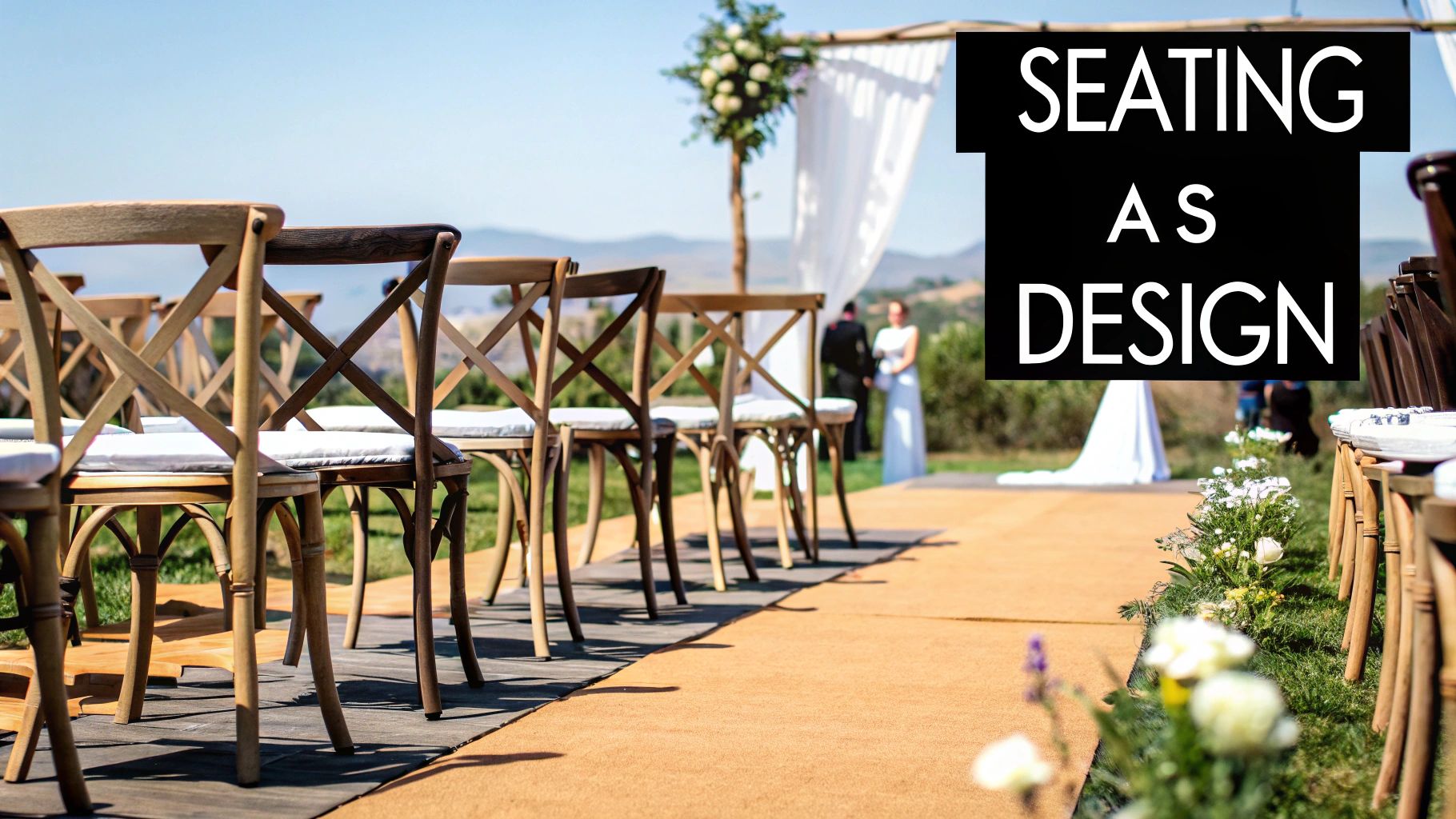
Think of your chairs as the foundation of your wedding's aesthetic. They take up a huge amount of visual real estate at both the ceremony and the reception, making them one of the most impactful design choices you can make. It’s the difference between a rustic Karoo farm wedding with classic wooden cross-back chairs and a sleek Johannesburg event featuring clear ghost chairs. The seating really does set the scene.

This shift from purely functional to beautifully fashionable is a pretty recent trend in South Africa. Back in the early 2000s, chairs were just… chairs. But with the explosion of social media and everyone wanting a more personalised wedding, they've become real statement pieces. In fact, one industry analysis showed that chairs and tables made up nearly 30% of all party supply rental revenue. That tells you just how important they've become in modern event design. You can read the full research on party supply rental trends to see the numbers for yourself.

Ultimately, putting a little extra thought into your chairs pays off in big ways:

  • It brings your theme to life. Chairs are one of the simplest ways to tie your whole wedding style together for a cohesive, polished look.
  • Your photos will thank you. Gorgeous seating creates a stunning backdrop for your photographer, adding texture and elegance to every single shot.
  • It elevates the whole experience. When you pay attention to details like seating, your guests notice. It makes them feel special and truly immersed in the beautiful world you’ve created for your big day.

How to Match Chair Styles to Your Wedding Theme

Decorative wedding chairs set up in an elegant outdoor ceremony space

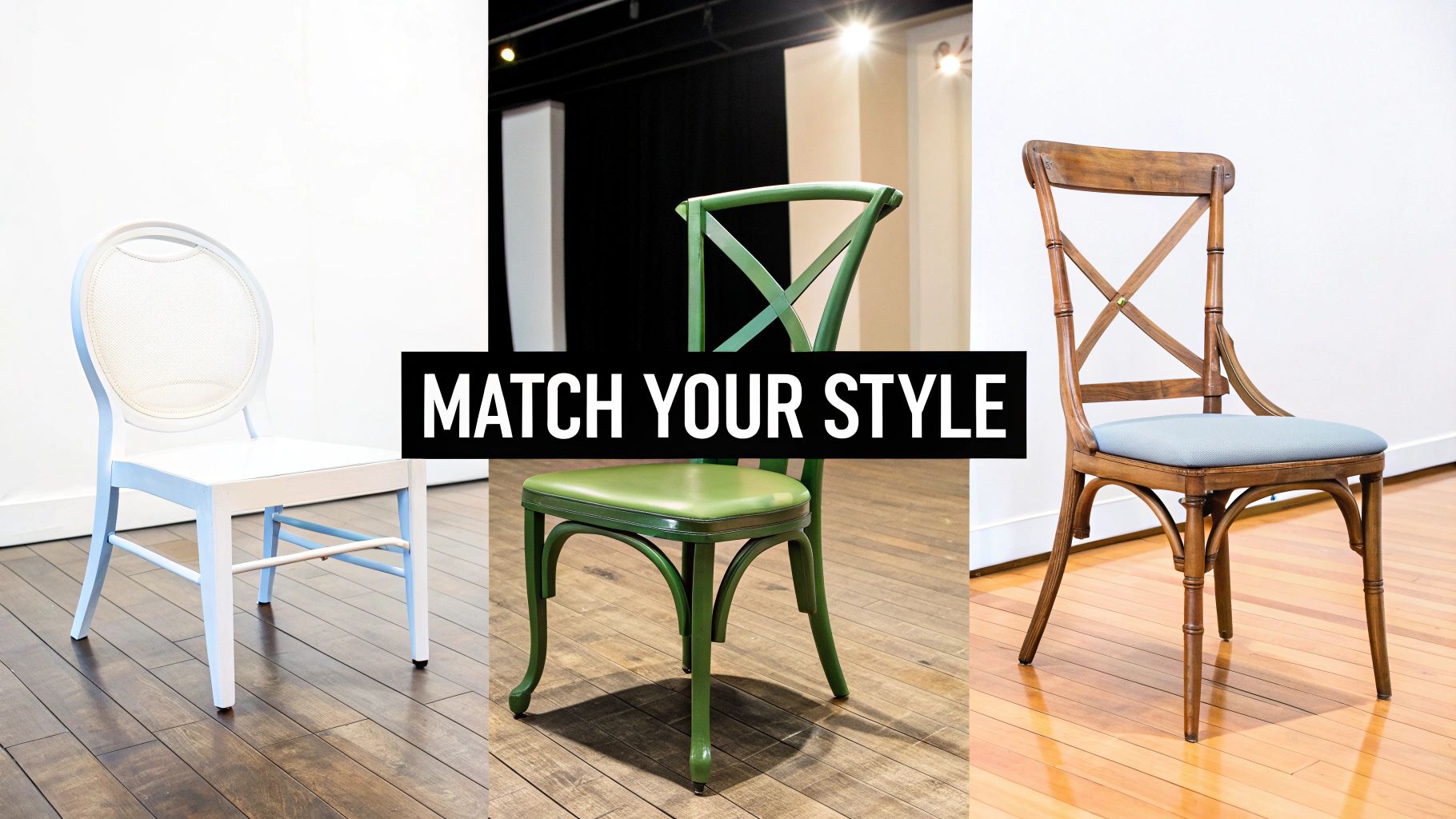
Choosing your decorative chairs can feel like a huge task, but I've always found the secret is to let your wedding theme lead the way. The right chair does so much more than just give guests a place to sit; it pulls your entire design together and really sets the mood for the whole celebration. Think of your chairs as key supporting actors in your wedding day story.

Let's say you're planning a rustic-chic wedding at a gorgeous Stellenbosch wine farm. You'll want something that feels warm, organic, and natural. This is where wooden cross-back chairs are an absolute dream. Their simple elegance perfectly complements the vineyard views without stealing the show.

Now, imagine a completely different scene: a modern, minimalist wedding in a sleek Cape Town art gallery. You need a chair that matches that sophisticated, clean vibe. Translucent Ghost chairs are a fantastic choice here. Their barely-there look creates a sense of light and space, letting the venue's architecture and your decor be the heroes.

Aligning Chairs with Formal and Glamorous Themes

When you're planning a more opulent and formal affair, your seating needs to reflect that elevated style. A glamorous reception in a grand Sandton ballroom, for instance, is the perfect backdrop for classic, elegant chairs that whisper sophistication.

Some of my go-to choices for these kinds of themes include:

  • Tiffany Chairs: Often called Chiavari chairs, their timeless, delicate frame adds a touch of fairytale romance. We've actually put together a whole guide on how Tiffany chairs add a classic touch to any event if you want to dive deeper.
  • Wimbledon Chairs: These offer a crisp, white, and classic look but with a slightly more relaxed feel than their Tiffany cousins. They're perfect for upmarket garden-formal themes.
  • Phoenix Chairs: With that distinctive circular back, these chairs bring a modern twist to classic elegance. They really make a stylish statement.

Key Takeaway: Try not to see your venue and your chairs as two separate decisions. The most stunning results happen when you think of them together. Your chair choice should feel like it was always meant to be there, whether it's in a historic manor house or at a breezy coastal resort.

Ultimately, your chairs are a powerful design tool. By thoughtfully matching the material, colour, and style to your overall wedding theme, you create a seamless and beautiful experience for your guests from the moment they walk in. It's one of those details that truly makes all the difference.

Finding the Right Wedding Chair Rentals in South Africa

So, you’ve picked a chair style that perfectly matches your wedding theme. Brilliant! Now for the practical side of things – actually getting them to your venue. Renting decorative chairs in South Africa isn't complicated, but it does need a bit of forward planning, especially if your big day is in the middle of peak season.

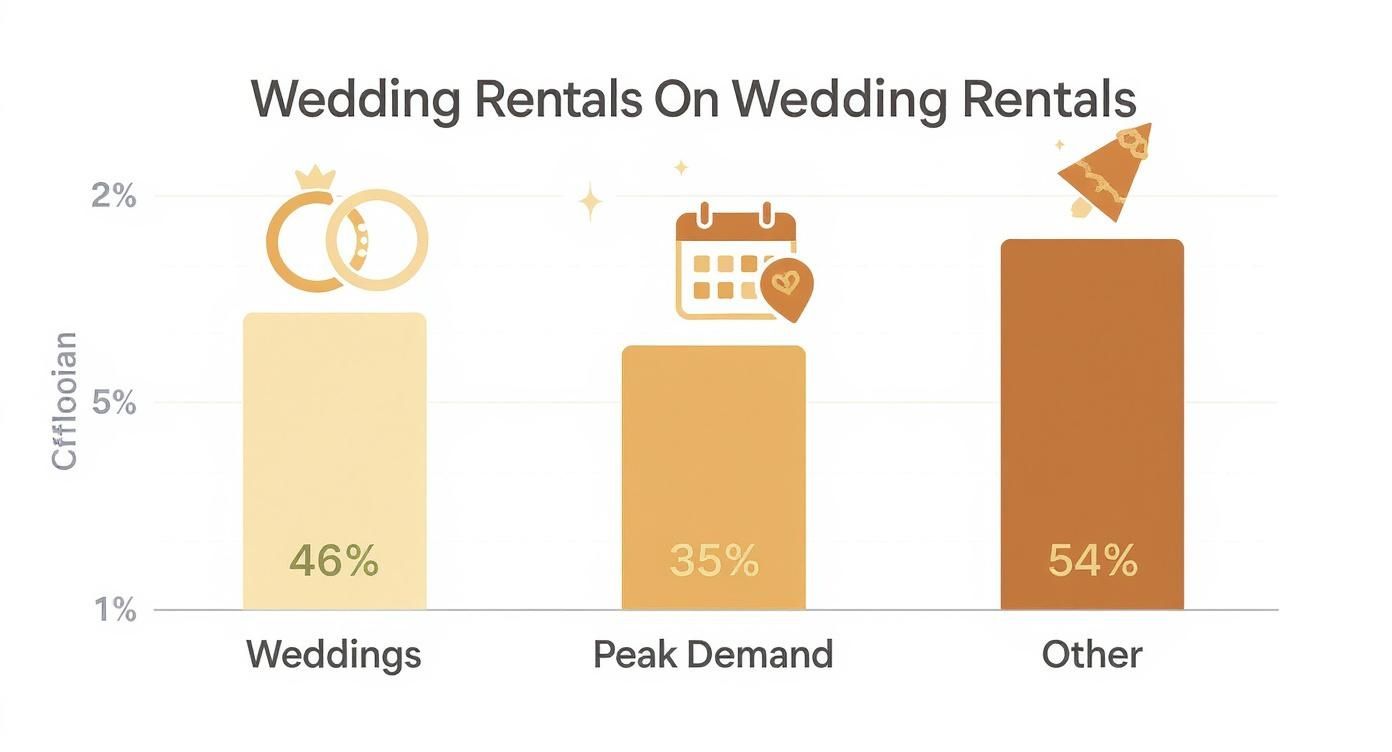
You’re not alone in needing event rentals; weddings are a massive driver for the industry. In fact, weddings make up nearly 46% of all party equipment rental demand. That means popular items like decorative chairs can be seriously hot property. This demand can shoot up by as much as 35% during the spring and summer wedding season, which for us is typically October through to March. You can explore the full market analysis on globalgrowthinsights.com if you're curious about the numbers.

A word of advice from experience: If you’re getting married during these busy months, start looking for a rental company at least six to eight months out. I can't tell you how many times I've seen popular styles like Cross-back and Tiffany chairs get booked solid, incredibly quickly.

Key Questions for Your Rental Company

Before you put pen to paper on any contract, you need to get the logistics ironed out. Coming prepared with a few key questions will save you a world of stress down the line. Don't feel shy about asking – any reputable company will be happy to give you clear, straight answers.

Here’s what you absolutely need to cover:

  • Delivery and Collection: What are the fees? And crucially, do they change based on your venue's location? A drop-off in central Durban is very different from a remote farm out in the Midlands, and the price will reflect that.
  • Setup and Teardown: Is setting up and placing the chairs included in the hire fee, or is that an extra cost? This can catch people out.
  • Damage Policy: What happens if a chair gets damaged? You need to understand their policy on normal wear and tear versus something more significant.
  • Backup Plan: Do they keep extra stock on hand just in case of any last-minute surprises or issues? It’s always good to know there’s a plan B.

Getting these details sorted upfront means no nasty surprises later. For some more localised advice, our guide on hiring chairs near you has a few more useful tips. Once you've covered all your bases, you can confidently book the perfect chairs for your wedding day.

Creating a Smart Budget for Your Wedding Chairs

Let's talk money. Budgeting for your wedding chairs isn't as daunting as it sounds. It’s really about knowing the going rates and figuring out where you can be a bit clever with your selections to get the most impact for your spend. The final quote you receive isn’t just about the per-chair price; a few different factors all play a part.

In South Africa, renting decorative chairs is a massive part of the wedding and event industry. It just makes sense – you get access to absolutely stunning furniture without having to buy it all yourself. For popular choices like the classic Chiavari or Tiffany chairs, you can expect to pay anywhere from ZAR 80 to ZAR 150 per chair. Naturally, the more unique or designer options will nudge that price up. If you're curious about the bigger picture, you can discover more insights about the party supply rental market on grandviewresearch.com to see just how big this industry is.

The data below gives a great snapshot of how important weddings are to rental companies and when they're at their busiest.

Infographic about decorative chairs for wedding

What does this tell us? With weddings making up almost half of all rental demand, it's a reminder to book your chairs well in advance. This helps lock in the style you really want and often secures you better pricing before the peak season rush.

What Influences the Final Rental Price

So, what actually makes up that final number on your quotation? Understanding these moving parts is key to managing your budget and making sure there are no surprises later on.

Here’s a quick breakdown of the main cost factors:

  • Material and Style: This is the big one. A simple plastic chair will always be more budget-friendly than an ornate, cushioned Phoenix chair. The more detailed the design and the more premium the material (think wood vs. resin), the higher the rental price will be.
  • Quantity Needed: It's simple maths – the more guests, the more chairs, the higher the total. Most suppliers have a straight per-chair rate. It never hurts to ask if they offer a small discount for very large orders, though!
  • Delivery Distance: Don't forget about transport! A venue in the heart of Cape Town will likely have a much lower delivery fee than a farm out in the Franschhoek Winelands. Always ask for a delivery quote based on your specific venue's address.
  • Labour for Setup: Some rental companies roll the setup fee into their price, while others will charge it as a separate line item. This covers their team placing every chair exactly where it needs to go according to your floor plan.

Pro Tip: One of my favourite ways to get a high-end look without the huge price tag is to be strategic. Use your dream decorative chairs for the ceremony and perhaps just for the main bridal table at the reception. For the rest of the guest tables, you can use a more standard, affordable option. You still get those incredible photos and that 'wow' factor where it counts most!

To give you a clearer idea of what to expect, here's a look at the estimated costs for some of the most sought-after chair styles here in SA.

Estimated Rental Costs for Popular Wedding Chair Styles in SA

Chair Style Average Price Range (ZAR per chair) Best Suited For (Theme)
Tiffany/Chiavari R80 – R150 Classic, Elegant, Romantic
Ghost Chair R100 – R180 Modern, Minimalist, Glam
Cross-Back R90 – R160 Rustic, Vineyard, Farmhouse
Wimbledon (Folding) R40 – R80 Casual, Garden, Outdoor
Phoenix Chair R120 – R200 Whimsical, Luxe, Fairytale

These prices are a general guide, but they show how much the style can influence your budget. Always get a detailed quote that includes delivery and any other fees before you sign on the dotted line.

Creative Ways to Personalise Your Wedding Chairs

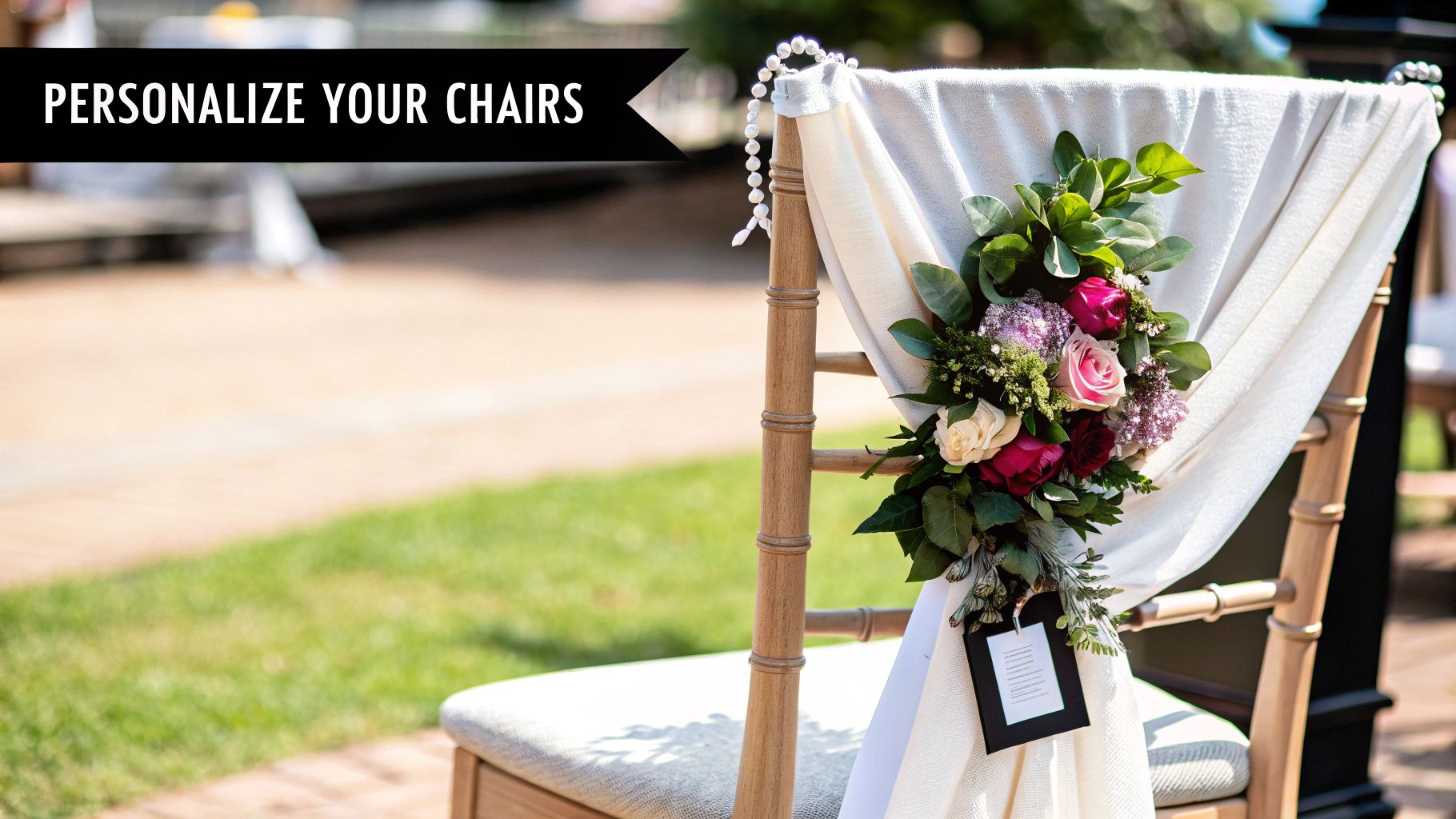
A decorated wedding chair with a floral arrangement and a 'bride' sign

Once you've picked the perfect decorative chairs for your wedding, the real fun begins! This is your chance to inject your own personality into the day, turning a simple rental into a beautiful piece of your décor story. It’s amazing how even the smallest touches can make a massive impact.

Thinking beyond just the chair itself is the secret. You can create an incredible atmosphere with something as simple as elegant fabric draping, a lush floral arrangement tied to the back, or a charming, personalised sign. These details don't just look stunning on the day; they also add a wonderful texture and depth to your wedding photos.

Simple Yet Stunning Personalisation Ideas

You really don’t need a massive budget to make your seating feel special. In my experience, some of the most effective ideas are the simplest, adding a heartfelt, customised touch without breaking the bank.

Here are a few popular options I’ve seen work beautifully:

  • Ribbons and Sashes: Tying ribbons in your wedding colours to the back of each chair is classic and effective. You can also use elegant sashes just on the ceremony aisle chairs to create a truly grand entrance.
  • Lush Greenery: A single sprig of eucalyptus or a delicate fern tied with a bit of twine adds a touch of organic, rustic elegance. This looks especially good on wooden cross-back chairs.
  • Custom Signage: Small, laser-cut wooden signs with "Bride" and "Groom" or "Mr" and "Mrs" are popular for a reason—they designate your special seats in a lovely, understated way.

Want to add a touch of romantic ambience? Consider weaving some subtle lighting into your chair décor. Our guide on how to use a fairy light curtain creatively has plenty of inspiration that you can easily adapt for your seating, adding a magical glow to your reception.

Whether you go all out with elaborate floral masterpieces or stick with simple, chic ribbons, personalising your chairs is the final step to ensuring your wedding aesthetic feels cohesive and uniquely yours.

Your Wedding Chair Questions, Answered

Planning a wedding means you're suddenly juggling a million tiny details, and chairs are a surprisingly big one! It's totally normal to have a few questions swirling around. Let's clear up some of the most common ones I hear from couples, so you can feel confident in your choices.

Can We Use Fancy Chairs Outdoors?

This is a big one, especially with so many beautiful garden and beach venues around. You've got your heart set on elegant Tiffany chairs or rustic wooden Cross-backs, but will they work on grass or sand?

Yes, they absolutely can! Most professional hire companies know exactly how to handle outdoor setups. The key is to chat with them first. They might suggest using a temporary floor or recommend specific chairs with a sturdier base to keep everything stable and safe for your guests. It’s a quick conversation that prevents any wobbles on the day.

Do We Really Need Cushions for Every Chair?

Honestly, this depends on two things: comfort and style. If you've chosen a beautiful wood or resin chair, a cushion is a very good idea, especially if your ceremony or reception will last a while. Nobody wants fidgety guests! Plus, cushions are a fantastic, subtle way to tie in your wedding colours.

Think about it like this:

  • How long will people be sitting? Anything over an hour, and I'd say cushions are a must-have for guest comfort.
  • What's the chair style? Some designs, like the classic Wimbledon chair, often come with a neat little padded seat already built-in.
  • What's the budget looking like? Cushions are an extra hire cost per chair, so you'll need to work that into your numbers.

How Many Chairs Should We Actually Order?

This one's simpler than you think. The golden rule is one chair per confirmed guest. Once your RSVPs are in, that's your magic number. It can be tempting to add "just a few extras," but sticking to your final headcount is the most accurate way to go.

A Little Tip from Experience: Don't forget to count yourselves! And if you're having key suppliers like your photographer or planner join you for the meal, make sure they have a seat too. It's such a small thing, but it's so often missed in the final count.


Ready to find the perfect seating to complete your wedding vision? ABC Hire has a stunning collection of decorative wedding chairs ready for your special day.

Take a look at our range and get a quote at https://abchire.co.za.