
A new conference brief usually lands with a mix of ambition and vagueness. The client wants polished, productive, memorable, and “not the same as last year”, but the venue still needs to carry registration, plenaries, breakaways, catering, branding, and all the quiet practicalities people only notice when they go wrong.
That's why venue selection is never just about finding a nice room. In Cape Town, the stronger approach is to find a venue with the right bones, then shape it around the event you're running. The floorplan, light, access, acoustics, and technical base matter more than glossy photos. The finishing layer comes from how you configure the space, what you bring in, and how well the room supports the programme from first coffee to final close.
Starting Your Search for the Ideal Conference Venue
Most planners begin with a shortlist built from reputation. That helps, but it doesn't solve the key question: can the venue support the way your event needs to work?
Cape Town gives you genuine range. South Africa has more than 1,700 meeting venues nationwide, with major convention centres in Johannesburg, Cape Town, Durban, and Pretoria, and the CTICC remains one of the country's anchor assets for large events and conferences according to South African business events venue listings. That scale matters because it means you're not searching in a thin market. You're searching in a market with options, which lets you choose for fit rather than settling for availability alone.
Start with the brief, not the brochure
A practical brief has to answer a few things before you tour anything:
- Event purpose: Is this a sales conference, a leadership off-site, an academic gathering, or a client-facing summit?
- Delegate behaviour: Will people sit and listen, move between sessions, network heavily, or need table space for laptops and note-taking?
- Brand tone: Formal, premium, relaxed, technical, celebratory, or hybrid?
- Operational pressure points: Parking, loading access, Wi-Fi reliability, catering flow, or multiple breakaway rooms?
That first filter removes a lot of unsuitable venues very quickly.
Practical rule: The perfect venue usually isn't found fully formed. It's assembled from a good shell, a realistic floorplan, and the right support around it.
A client asking for a conference that also feels collaborative may think they need a purpose-built conference centre. Sometimes they do. Sometimes they need a venue with stronger atmosphere and a better post-session networking environment. Teams comparing plenary spaces with more informal options often benefit from seeing related formats too, including ROI-driven team building venues that show how space design influences participation and energy.
What to assess before you enquire
Before sending requests, I'd narrow the list using a simple screening pass:
- Can the venue hold the programme comfortably?
- Does the venue's built-in style support the audience?
- Will the venue need a light enhancement or a full fit-out?
- Can suppliers load in efficiently without disrupting the site?
If your planning process is still taking shape, a good grounding in event management in Cape Town helps frame venue choice as one decision inside a larger operational chain, not a standalone booking.
Exploring Conference Venue Types in the Cape
Cape Town has enough variety that “venues for conferences” can mean completely different experiences. That's useful, but only if you're honest about the trade-offs.
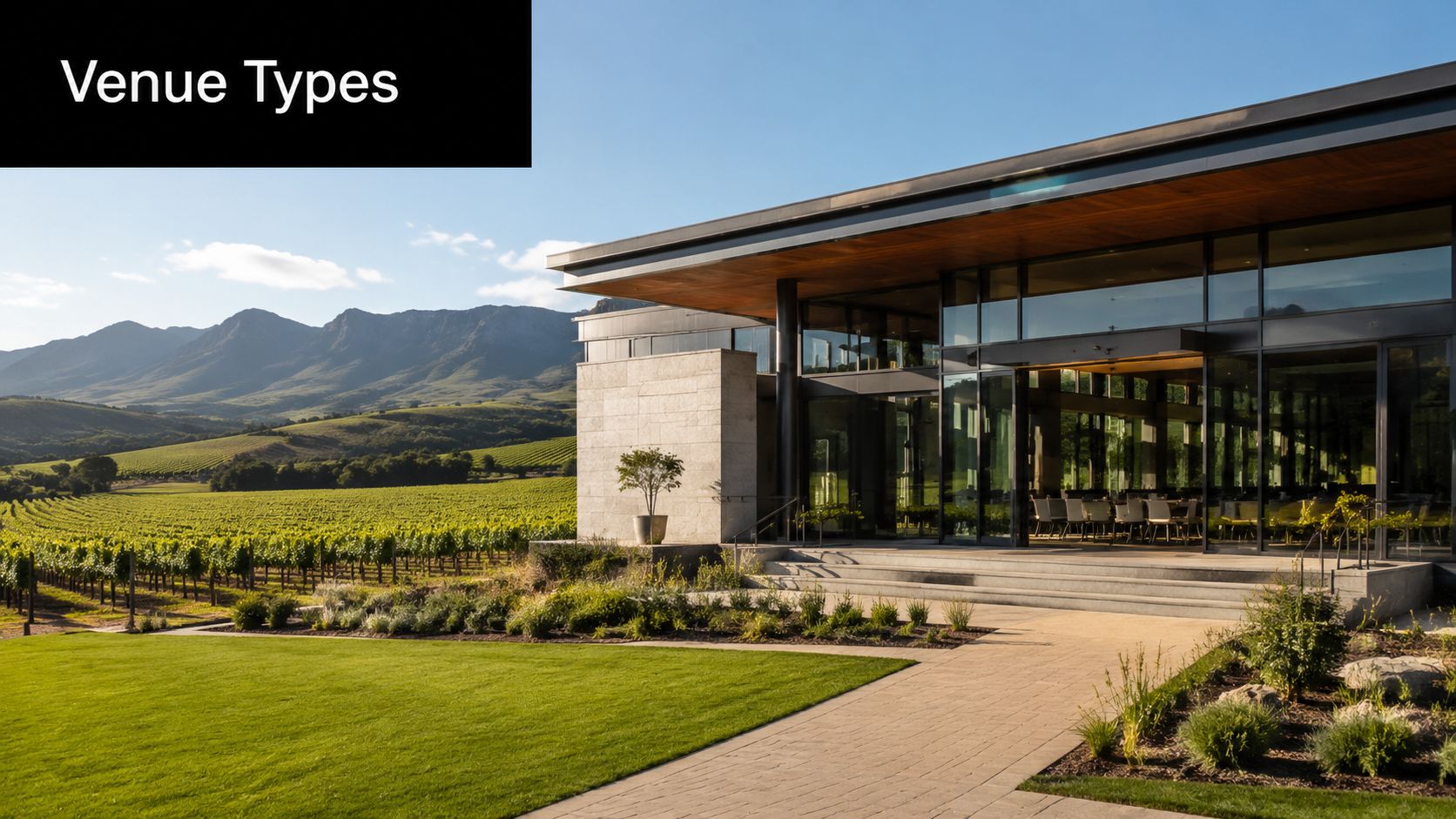
The city is a strong events base. Cape Town accounts for approximately 350 dedicated meeting and conference spaces, and most are equipped with projectors, wireless internet, and climate control, according to Stats SA venue infrastructure information. That gives planners three broad categories to work with.
Hotel and conference centres
These are the safe hands option. They usually offer experienced operations teams, structured loading procedures, predictable catering systems, and rooms designed for presentation-heavy programmes.
What works well
- Multi-room conferences with breakaways
- Corporate audiences expecting polished service
- Tight schedules where reliability matters more than novelty
- Events with out-of-town delegates who need accommodation nearby
What doesn't always work
- Networking can feel sterile if foyers are purely functional
- Standard furniture packages often look generic
- Brand personality can get lost in neutral interiors
A conference centre is often strongest at the formal programme and weakest at warmth. If the client wants stronger interaction between sessions, the fix usually isn't changing the venue. It's adding better social zones, varied seating, and more deliberate registration and refreshment layouts.
Wine estates and Winelands venues
These are strong when the conference needs a sense of place. Cape Town, Stellenbosch, Franschhoek, and Paarl offer settings that instantly improve arrival experience, dining atmosphere, and sponsor photography.
Best for
- Executive meetings
- Client conferences
- Leadership retreats
- Programmes where the setting is part of the value
The challenge is that many scenic venues aren't built around conference movement. The boardroom or hall may be lovely, but the registration zone is too tight, the breakaway options are limited, or the networking setup feels improvised.
Scenic venues often win the first impression and lose the middle of the day. The planner's job is to protect the delegate experience after the welcome coffee.
That usually means supplementing the venue's fixed setup with lounge groupings, extra cocktail tables, practical registration furniture, and weather-conscious additions for outdoor transition spaces.
Galleries, warehouses, and blank-canvas spaces
These venues can produce the most distinctive result. They're useful for launches, thought-leadership events, design-focused brands, and conferences that need a less corporate edge.
They also require the most discipline.
| Venue type | Main strength | Common weak point | Best response |
|---|---|---|---|
| Hotel or conference centre | Reliability and built-in systems | Can feel standardised | Improve atmosphere and networking zones |
| Wine estate | Strong setting and guest experience | Operational flow may be uneven | Add functional furniture and clear zoning |
| Blank canvas space | Maximum creative control | Needs substantial planning | Build the event environment from the ground up |
A blank-canvas venue can look exceptional, but only if every practical layer is handled. Seating, staging, power access, climate comfort, registration flow, and catering support can't be assumed. If one of those is weak, the room feels unfinished no matter how attractive the architecture is.
Planning Capacity Layout and Attendee Flow
A venue can fit your delegate count and still be the wrong room. Capacity is only the starting point. Layout determines whether the event feels focused, crowded, flat, or easy to move through.
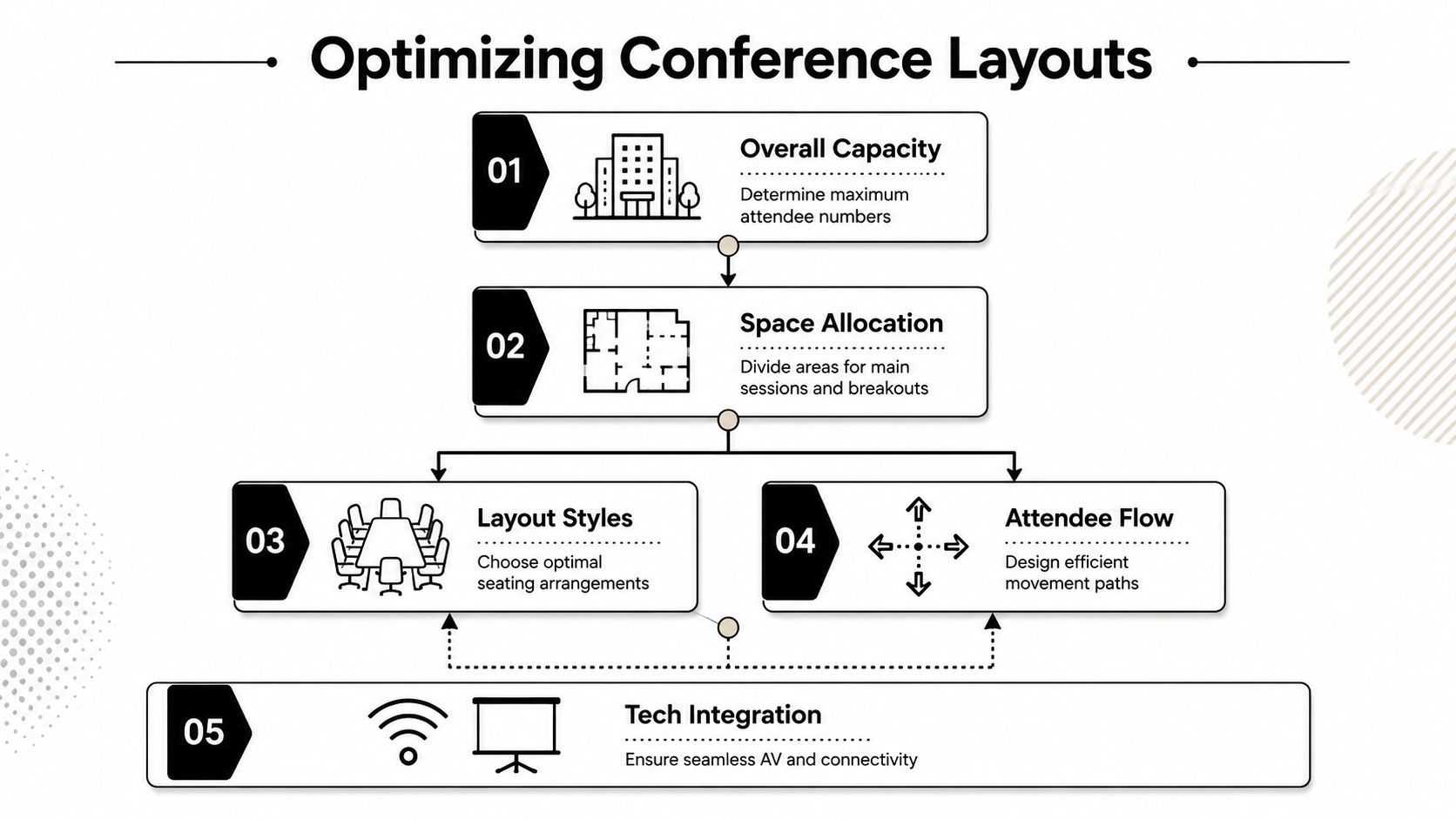
Some South African venues are designed for flexible use, with setups that can scale to 160 delegates in cinema style, as outlined in conference venue technical requirement examples. That flexibility only helps if you choose the right layout for the programme.
Match the room style to the behaviour you want
A theatre setup suits keynote-heavy sessions where attention needs to stay on stage. It uses space efficiently, but it discourages note-taking and conversation.
A classroom layout gives delegates table surface and works better for training, workshops, and strategy sessions. It needs more room and careful sightline planning.
Cabaret style is useful when discussion matters. It softens the room and supports interaction, but it reduces overall capacity and can make the plenary feel less direct if the stage design is weak.
Banquet-style seating belongs to sessions that blend conferencing with dining or awards. It can work well, but only if the agenda allows for the slower movement that round tables create.
Plan in zones, not one room
Strong conference spaces are rarely experienced as a single hall. Delegates move through a sequence.
Think in zones:
- Arrival zone: registration, badge collection, welcome coffee
- Main session zone: stage, screen, presenter sightlines, audience seating
- Transition zone: circulation space between plenary and refreshments
- Networking zone: standing tables, lounge areas, sponsor moments
- Breakaway zone: smaller rooms or partitioned areas for parallel sessions
When planners skip zoning, congestion shows up immediately. Registration backs up. Coffee service blocks doors. Delegates stand with plates because there's nowhere obvious to gather.
The easiest way to spot a weak floorplan is to ask where people will stand when they are not seated. If there's no clear answer, the room needs work.
Use movement as a design tool
Attendee flow isn't just about avoiding queues. It shapes mood. People network more naturally when there are small standing clusters, informal seating pockets, and enough room to peel away from the main crowd without leaving the event.
A helpful reference for wayfinding and movement design is this venue manager's mapping guide, which shows why route planning matters long before guests arrive.
A practical layout review should check:
- Door positions: Can people enter and exit without crossing in front of the stage?
- Service points: Are coffee stations and catering tables off the main circulation path?
- Sightlines: Will every delegate see the screen without turning awkwardly?
- Furniture density: Is there enough breathing space between rows and tables?
- Informal use: Where do spontaneous conversations happen?
The best layouts feel obvious when guests use them. That doesn't happen by accident.
Evaluating Essential AV and Technical Needs
A venue brochure will often say “AV included”. That phrase is too vague to be useful. For conferences, the key question is whether the in-house setup is basic convenience or professional event infrastructure.
Top-tier South African venues typically include dedicated AV features such as wall-mounted presentation speakers and large motorised screens synchronised with audio systems, as described in this overview of venue AV standards. That's a strong sign, but it still doesn't replace a proper technical check.
Base-level AV versus professional-grade AV
A base-level venue package usually covers the essentials for a simple meeting. That may be enough for a board session or a short internal briefing. It's rarely enough for a conference with multiple speakers, branded content, video playback, panel discussions, and audience questions.
| Requirement | Base-level venue offer | Professional conference standard |
|---|---|---|
| Screen | One fixed display option | Screen sized and positioned for room depth |
| Audio | Basic room speakers | Balanced coverage across the audience |
| Microphones | Limited handheld option | Lapel, handheld, lectern, and roving support |
| Wi-Fi | General guest network | Capacity tested for delegates, presenters, and staff |
| Support | Venue contact on call | On-site technician through live sessions |
If your event includes panel sessions, pre-recorded video, sponsor stings, or remote contributors, don't assume the venue package will carry it cleanly.
Questions worth asking on the first technical call
Use direct questions. They save time.
- What microphone options are available on site?
- Is the screen fixed, portable, or configurable for room layout?
- How are presenters monitored for timing and playback cues?
- Who handles transitions between speakers and media?
- What happens if the primary presentation device fails?
- Will a technician be physically present during the event?
Sound is usually the first weak point. A room can look excellent and still fail because the back third of the audience can't hear clearly, or a panel discussion has uneven mic levels.
If you're working through the sound side in more detail, this guide on speakers for rent is useful for understanding where venue sound ends and event-grade audio begins.
If delegates strain to hear for even ten minutes, they stop engaging. Once attention drops, the rest of the production has to work twice as hard.
Don't skip rehearsal
The rehearsal is where you catch awkward lectern placement, weak clicker range, bad confidence monitor positioning, and presentation files that don't scale correctly. It's also where speakers learn the room.
A technical run should include opening media, at least one speaker transition, panel handover, audience Q&A, and closing cues. If the venue can't support that process smoothly, it's telling you something important before event day.
Managing Budgets Contracts and Hidden Costs
Venue hire fees can look tidy on the first proposal. The actual cost usually sits in the conditions around the hire, not the headline figure.
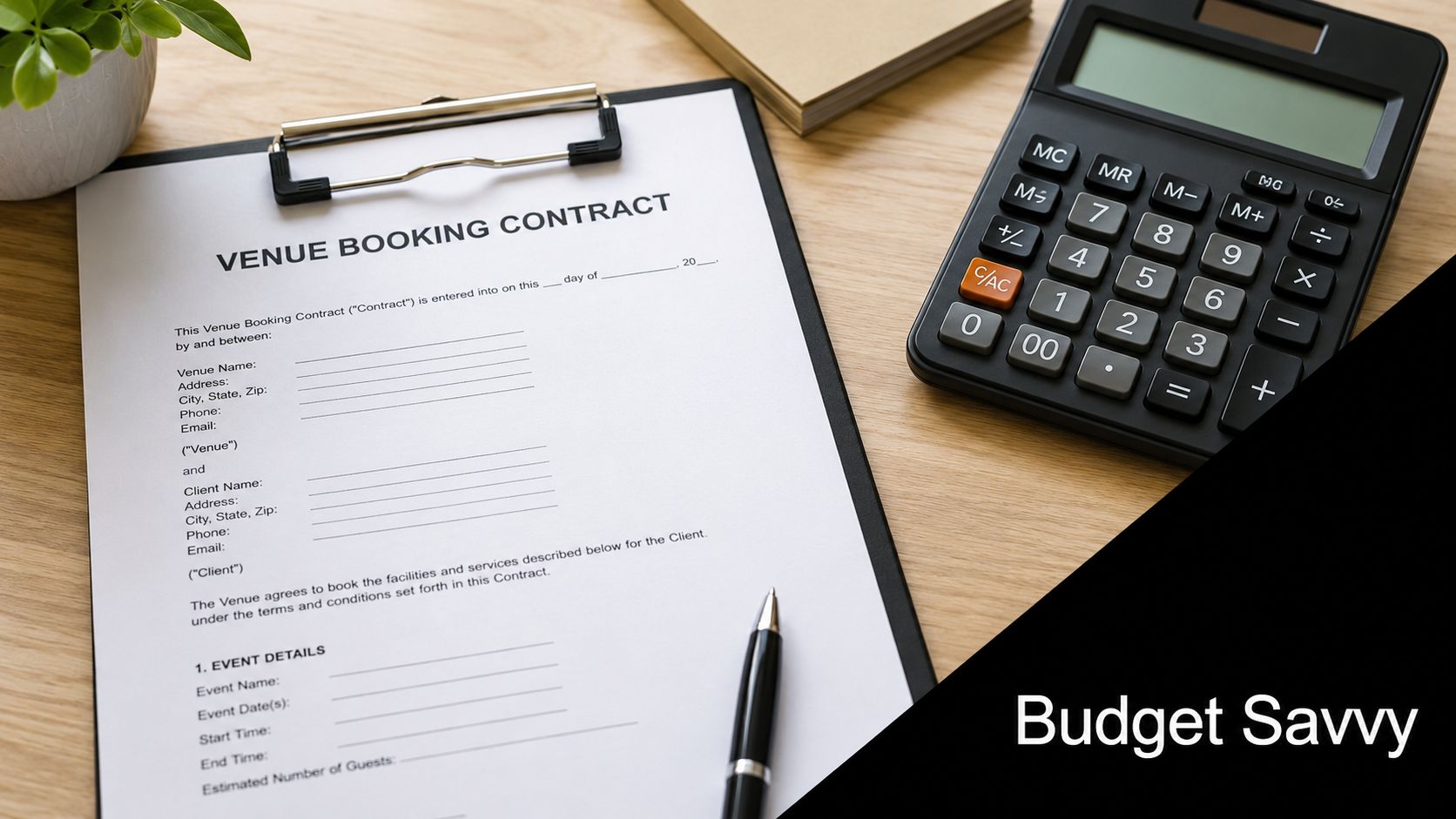
A cheap room can become expensive once you add mandatory staffing, restricted supplier access, overtime, corkage, cleaning, security, furniture upgrades, and power-related extras. That's why budget control depends on transparency more than discounting.
What to read carefully in the contract
The most common budgeting mistakes happen when planners focus on room hire and catering, then treat everything else as minor. It isn't minor.
Check the contract for:
- Setup and breakdown windows: Short access times increase labour pressure fast.
- Exclusive supplier clauses: These can limit flexibility and remove pricing control.
- Furniture inclusions: “Standard furniture” may not suit the event format or brand.
- Cleaning and damage terms: Important for high-traffic conferences and evening functions.
- Power and technical limitations: Especially relevant in older or non-purpose-built venues.
A strong contract gives you room to make decisions. A weak one forces you into expensive defaults.
The value question, not just the cost question
The smartest venue choice is often the one that lets you spend deliberately. If the venue has a strong shell but leaves furniture, styling, and room configuration open, you can shape the budget around what delegates will notice.
That matters for conferences because attendees remember comfort, flow, visibility, and atmosphere. They don't care whether a package was “included” if the chair is wrong for a full-day session or the networking area feels like an afterthought.
Here's where many planners get caught. A bundled venue package sounds efficient, but bundled doesn't always mean suitable. If the package includes furniture that's mismatched to the programme, you'll either live with the compromise or pay twice.
Budget pressure is easier to manage when each line item is visible. Hidden costs are harder to defend than intentional upgrades.
Sustainability needs more scrutiny
Unique venues are attractive, but they raise another practical issue. Planners increasingly need to balance atmosphere with sustainability requirements. That's harder than it should be because few venues publish verified metrics on carbon-offset partnerships or waste-reduction audits, which has become a noted challenge under South Africa's projected 2025 Green Event Act, according to venue listings discussing sustainability transparency gaps.
That means you need to ask direct questions rather than relying on broad green claims.
Try these during negotiation:
- Do you document waste handling after events?
- Can you verify sustainability partnerships or only describe them?
- Do you allow reusable or externally sourced service solutions?
- How do you manage power usage and climate control during long conference days?
If a venue can't answer clearly, treat sustainability as an unresolved risk rather than a confirmed strength.
Your Ultimate Site Visit Checklist
A site visit tells you whether the venue can deliver the experience the proposal promises. Walk the venue as a delegate, then again as an event manager. Those are two different routes, and both matter.
The first pass should check comfort, access, light, sound, and atmosphere. The second should check loading, service circulation, storage, staff responsiveness, and all the hidden practicalities that determine whether the day runs smoothly.
If you want a broader planning companion to use alongside your venue notes, this event planning checklist template is a useful working document.
What to inspect in person
Don't let the venue team guide you so tightly that you miss the edges of the experience. Pause in corridors. Check bathrooms. Stand at the back of the room. Look for plugs. Listen for road noise and kitchen spill.
Also inspect the existing furniture. Wobbly cocktail tables, worn conference chairs, and tired registration desks don't always appear in presentation decks, but they shape how professional the event feels.
Walk the route your delegates will take from parking to registration to seating. Friction always shows up in transitions first.
Conference Venue Site Visit Checklist
| Category | Item to Check | Notes / Rating (1-5) |
|---|---|---|
| Access | Parking convenience and drop-off flow | |
| Access | Step-free access, ramps, lifts, accessible toilets | |
| Arrival | Registration area size and queue space | |
| Arrival | Shelter for bad weather at entrance | |
| Main room | Sightlines to screen and stage from all sections | |
| Main room | Ceiling height and room proportions | |
| Main room | Condition of existing chairs and tables | |
| Acoustics | Echo, outside noise, and sound spill from adjacent spaces | |
| Lighting | Natural light control and blackout options | |
| Power | Plug point locations for AV, registration, and charging | |
| Connectivity | Wi-Fi signal consistency across key areas | |
| Breakaways | Number, privacy, and ease of movement between rooms | |
| Catering | Space for coffee breaks without blocking circulation | |
| Restrooms | Cleanliness, access, and adequacy for event size | |
| Branding | Walls, foyers, entrances, and screens available for signage | |
| Operations | Loading access, storage space, and supplier route | |
| Staff | Responsiveness and practical knowledge of the venue team | |
| Safety | Emergency exits and clarity of evacuation routes |
Questions to ask before you leave
A site visit should end with answers, not just impressions.
Ask these before you go:
- What changes in the room are allowed on event day?
- Where can suppliers stage equipment before setup?
- Which areas are shared with other bookings?
- What's the contingency if weather affects outdoor use?
- Who is the operational contact on the day itself?
Take photos from delegate eye level, not only wide architectural angles. Those are the images that help later when you're planning registration furniture, signage points, lounge areas, and traffic routes.
Creating Your Booking Timeline and Final Steps
The cleanest conference bookings happen when venue selection runs on a timeline, not on urgency. Once dates tighten, the conversation changes from “what fits the event best?” to “what's left?” That's when compromises creep in.
A sensible planning rhythm helps. Industry guidance often points planners to start venue research well ahead of the event, and this broader resource on how to organize a conference is a useful companion if you're mapping venue choice against speakers, registration, and programme build.
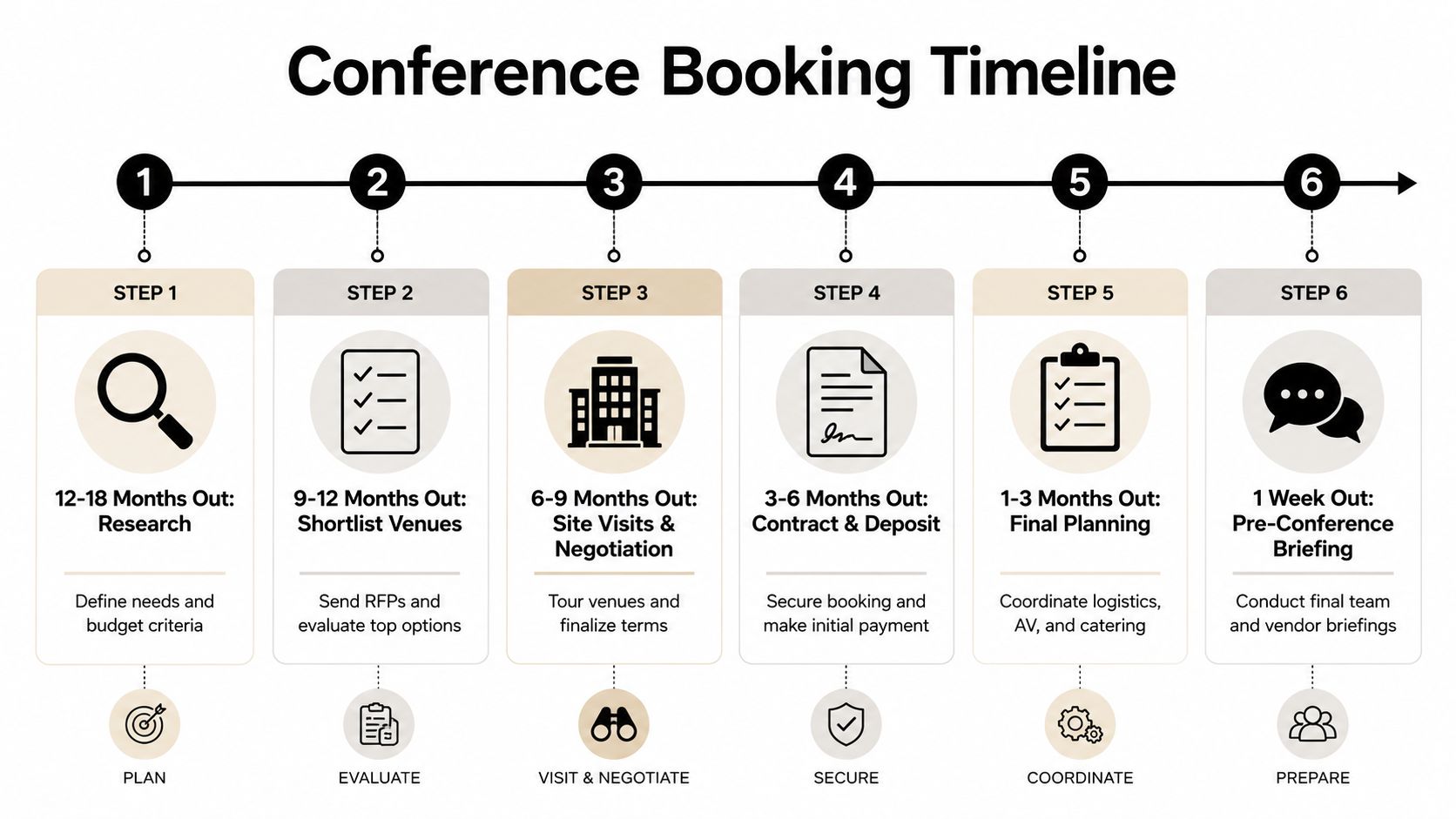
A workable planning sequence
Use the venue process as a chain of decisions:
Research phase
Clarify audience, format, technical needs, and essential requirements.Shortlisting phase
Compare venues by fit, not just appearance. Eliminate anything that can't support the core programme.Site visit and negotiation phase
Test the room in person. Review access, service flow, AV base, and contract flexibility.Contract phase
Confirm hire terms, timings, inclusions, restrictions, and decision deadlines.Production planning phase
Lock layouts, registration flow, staging, furniture, catering positions, and branding points.Final briefing phase
Bring venue, suppliers, and internal teams into one operating plan.
The final filter before you sign
Before confirming the booking, ask one last question: does this venue work only if everything goes perfectly, or does it still work when the day gets busy?
That test usually exposes the difference between a photogenic option and a practical one. The best venues for conferences aren't always the most dramatic. They're the ones that let delegates move easily, hear clearly, connect comfortably, and stay focused on the content.
Once the contract is signed, the next decision is straightforward. Now the room needs to become your event.
With the venue secured, it's the right time to plan the layer guests experience minute by minute: seating, lounge areas, registration furniture, climate control, and event atmosphere. ABC Hire helps Cape Town planners turn a good venue into a well-equipped conference environment with furniture and event rental options that suit corporate events, formal functions, and premium gatherings across the city and Winelands.