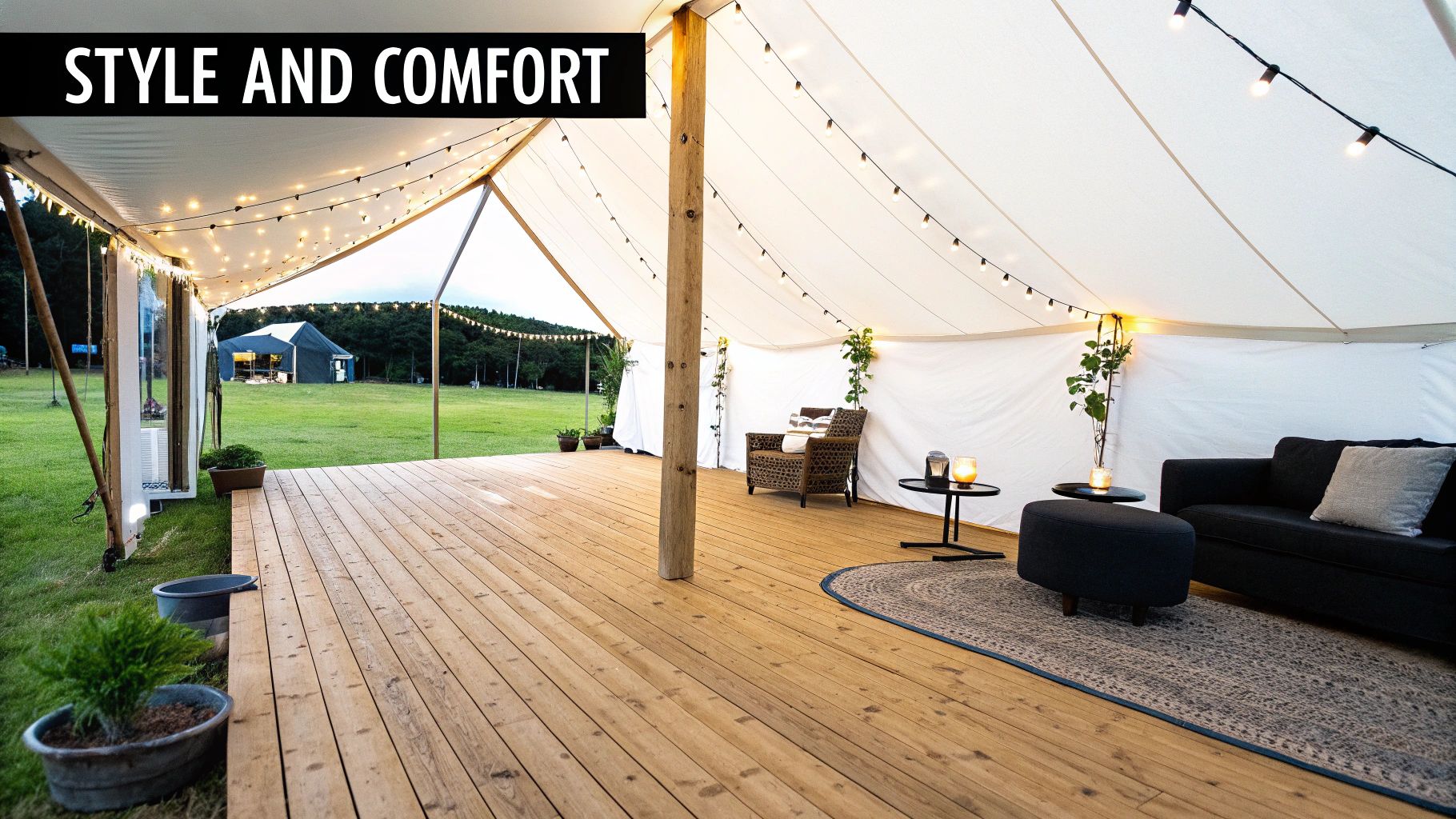
A Planner’s Guide to the Types of Tents for Events

When you're planning an event, you have to be ready for anything – from glorious sunshine to a sudden Cape downpour. The main types of tents for events cover a huge range, from classic Pole Tents to modern Stretch Tents, and each one creates a totally different atmosphere. The tent you choose isn't just a backup plan; it's the canvas for your entire event, defining the space and keeping your guests comfortable.

Your Guide to Choosing the Right Event Tent

Your tent is so much more than just shelter. It’s the centrepiece of your event’s whole look and feel. Especially here in Cape Town and the Winelands, where the infamous Southeaster can pop up without warning, picking the right structure is non-negotiable for a successful day.

Whether it’s for a wedding, a corporate function, or a private party, the tent literally sets the stage. It creates the world your guests step into. This guide will walk you through the options, helping you match the perfect tent to your vision and the practicalities of your venue.

Matching Your Tent to Your Event Style

Different tents bring completely different vibes. A sleek Stretch Tent gives you a contemporary, organic feel that’s perfect for a stylish Winelands wedding. On the other hand, a traditional Pole Tent offers that timeless, classic elegance. Getting this right from the start avoids a clash between your venue and your vision.

Think of your tent as the foundation of your event's architecture. It doesn't just fill a space; it creates one. When you get this choice right, everything else—from the lighting to the décor—just falls into place.

For a quick overview, this handy table breaks down which tent works best for common event needs.

Quick Tent Selection Guide

Tent Type Best For Key Feature Surface Requirement
Frame Tent Versatility & function on any surface Unobstructed interior space Any surface (grass, paving, etc.)
Clearspan Tent Large-scale events, maximum space Huge, clear interior; very weather-resistant Any surface, requires heavy-duty anchoring
Stretch Tent Stylish, modern, and adaptable events Organic shapes, flexible configuration Grass or surfaces where pegs can be used
Sailcloth Tent Elegant, light-filled, upscale events Translucent fabric, sculpted peaks Requires staking into soft ground (grass)

This table is a great starting point, but let’s look at how these choices play out visually.

This decision tree helps you see exactly which tent style aligns with what you’re trying to achieve—whether that’s maximum versatility, pure style, or classic elegance.

Decision guide flowchart for choosing the right event tent based on style, guest count, and season.

As you can see, the flowchart points towards Frame or Clearspan tents for functional, versatile needs. If your priority is a stylish or elegant affair, then Stretch or Sailcloth options are often the better fit. By understanding these core options, you can elevate your event's whole look while also ticking all the practical boxes.

Of course, a great venue is just one piece of the puzzle. Getting the word out is just as important. For a complete rundown on getting people to your event, this practical guide on how to promote an event has some fantastic insights for any organiser.

When you're planning an event, two classic tent styles will almost always come up: the Pole Tent and the Frame Tent. They are the foundations of the event world, but they are built for very different jobs and offer completely different benefits for your wedding or function.

The Pole Tent is what most people picture when they think of a classic festival or "big top" tent. You’ll recognise it immediately by its graceful, sloping roofline and elegant peaks, which are held up by a series of poles right down the centre. This tensioned design gives it a romantic, traditional look that’s a favourite for weddings and garden parties.

There's a catch, though. Those centre poles create the beautiful high ceiling, but they also create obstructions inside the tent. You’ll need to plan your floor layout for tables, a dance floor, or a stage around them. More importantly, a pole tent relies on being staked deep into the ground, which means it’s only suitable for soft surfaces like grass or soil. You can't put one up on paving or a deck.

The Sturdy and Versatile Frame Tent

The Frame Tent, on the other hand, is the practical workhorse of the events industry. Think of it as a completely freestanding structure. It’s built with a rigid metal framework that supports the canopy from the outside, meaning there are absolutely no poles inside to get in your way.

This design makes the Frame Tent incredibly versatile and a go-to for most functions.

  • Maximum Interior Space: The inside is a wide-open, clear space. This gives you total freedom with your layout—place your stage, tables, or dance floor anywhere you want without having to work around poles.
  • Use on Any Surface: Because it doesn't need stakes for support, we can install a Frame Tent on nearly any surface. Grass, asphalt, paving, you name it. We secure it with heavy weights, making it perfect for backyard patios or city venues.
  • Modular Options: Frame Tents can often be joined together. This is great for creating larger spaces or setting up separate zones for catering, a lounge area, or an entrance hall.

This flexibility is why Frame Tents are the top choice for corporate events, trade shows, and any function where getting the most usable space is the main goal.

Pole Tents vs Frame Tents: A Direct Comparison

So, which one is right for you? It really just comes down to your priorities: are you going for a specific look, or do you need maximum practicality? Neither is better than the other; they just do different jobs.

A Pole Tent is perfect when you want that whimsical, romantic feel for an event on a beautiful lawn. The sweeping lines look stunning in an outdoor setting like the Winelands and add a real sense of grandeur to a wedding.

The Frame Tent, however, is the ultimate problem-solver. It’s a blank canvas. It gives you a clear, open-plan space that you can transform to fit any theme or practical need, whether it's a product launch or a formal dinner.

These two styles are essential to the South African events industry, especially for corporate and public gatherings in Cape Town. With the regional market projected to grow by 13-15% each year through 2034, the demand for robust event structures is booming in tourism spots like Franschhoek. For event planners, the versatility of these tents is key for handling complex staging and AV setups. You can explore the full research on tent rental services to learn more about the growing market.

Choosing Stylish Stretch and Sailcloth Tents

Sometimes an event needs more than just a roof over its head. It needs a centrepiece, a structure that wows your guests and sets the tone from the moment they arrive. When aesthetics are just as important as function, two options always come to mind: the Stretch Tent and the Sailcloth Tent.

These aren't your standard event tents. They are designed to create atmosphere and deliver a serious style statement, making them perfect for elegant Winelands weddings, chic brand launches, and those big milestone parties.

Two large event tents, one a frame tent and the other a pole tent, on a green lawn.

Forget the boxy, rigid shapes of other structures. These tents are all about curves, light, and creating a truly immersive space. Let’s take a closer look at what makes each one so special.

The Organic and Adaptable Stretch Tent

A Stretch Tent—you might also hear it called a Bedouin Tent—is the ultimate free-form structure. Think of it as a huge, elastic canvas that can be shaped in almost any way you can imagine. Made from a tough, waterproof, and flexible fabric, its main strength is its incredible versatility.

Instead of demanding a flat, perfect surface, a stretch tent drapes and flows over the landscape. We can rig it on uneven ground, attach it directly to buildings, or even stretch it over a swimming pool. This creates a relaxed yet sophisticated organic feel that’s become a hallmark of modern Cape Town events.

Here in the Cape, stretch tents are everywhere, from weddings in Stellenbosch to corporate parties in Franschhoek. Their popularity really took off after the 2010 FIFA World Cup showcased их innovative outdoor potential, and by 2023, stretch tent rentals had seen a 29% growth. With over 15,000 weddings a year in Cape Town alone, these tents offer vital protection from the sun while looking absolutely stunning. You can read more about the rise of tent rentals in South Africa to see the bigger picture.

The Luminous and Elegant Sailcloth Tent

If a stretch tent is a modern sculpture, then the Sailcloth Tent is a beautiful play of light and air. It’s a refined cousin of the classic Pole Tent, but its magic comes from its unique, translucent fabric that seems to capture and diffuse light.

By day, the interior is filled with a soft, natural glow. At night, when lit from within, the whole tent gives off a warm, enchanting radiance. It’s a truly unforgettable sight that adds a layer of pure romance to any wedding or gala.

The real beauty of a Sailcloth Tent is how it transforms from day to night. Its luminous quality creates a natural, airy ambience in the afternoon and transitions into a magical, glowing beacon after sunset, making it a dream for photographers and event designers.

With their sculpted peaks, gentle curves, and nautical-inspired feel, Sailcloth Tents create an atmosphere that is both grand and wonderfully intimate. To get a better feel for how these structures can elevate an event, you might find our guide on hiring stretch tents in Cape Town useful for comparison.

Key Considerations for These Stylish Tents

While they both look incredible, there are a few practical points to weigh up.

  • Weather Suitability: Stretch Tents are fantastic in the sun and can be rigged to provide excellent shelter from the wind, which is a huge plus in Cape Town. Sailcloth Tents are fully waterproof, but their tall peaks can catch strong gusts, so they need a very secure installation.
  • Site Requirements: A Sailcloth Tent, just like a Pole Tent, needs to be staked into soft ground like a lawn. A Stretch Tent, on the other hand, is far more adaptable and can be anchored to different surfaces, though it always looks its best when flowing with the natural environment.
  • Aesthetics and Atmosphere: At the end of the day, the choice comes down to the vibe you want. Go for a Stretch Tent if you want something modern, dynamic, and fluid. Choose a Sailcloth Tent for timeless elegance, romance, and a light, airy feel.

Understanding Large Scale Clearspan and Marquee Tents

When your guest list explodes and your event vision gets grand, your tent needs to do more than just provide cover. For massive corporate conferences, festivals, or the most lavish Winelands weddings, you’re moving beyond simple shelters and into the world of engineered structures. This is where Clearspan and traditional Marquee tents come in.

These aren’t just tents; they’re temporary venues. They are the heavy-duty solution you turn to when you have a huge crowd, complex technical needs, and absolutely no margin for error. Think less about a pretty canopy and more about creating a solid, reliable building from scratch.

Large illuminated sailcloth tent at dusk with a smaller tent near the ocean and a wooden path.

Let's break down these two titans of the event world and see why they’re the top pick for any large-scale gathering.

The Clearspan Tent: The Ultimate Problem Solver

Picture a tent with zero interior poles. No columns to plan your layout around, no annoying visual blocks—just one huge, uninterrupted space. That’s the magic of a Clearspan tent. The name gives it away: you get a completely clear span from one wall to the other.

Built from a heavy-duty, boxed aluminium frame, a Clearspan feels more like a temporary building than a tent. This robust design makes it incredibly resilient, which is a must-have for events in the Western Cape where the Southeaster can show up uninvited.

For event planners, the lack of internal poles is a total game-changer. It means you have complete freedom to bring your vision to life.

  • Total Layout Freedom: You can place massive stages, complex lighting rigs, tiered seating, or a sprawling dance floor exactly where you want them, with no poles in the way.
  • More Space for Guests: With no poles eating up precious square meterage, you can fit more guests and bigger equipment inside comfortably.
  • Serious Weather Protection: Its engineered frame can handle much higher wind speeds and heavier downpours than other tents, giving you crucial peace of mind.

This makes the Clearspan the undisputed champion for big corporate functions, trade shows, and incredible weddings that need sophisticated, no-compromise production.

The Traditional Marquee Tent: For Major Gatherings

While we often use the word "marquee" in South Africa for any big event tent, it traditionally refers to a massive, seriously sturdy structure. Think of the enormous tents you see at community festivals, agricultural shows, or large school sports days.

These tents are all about size and functionality, built to hold hundreds, sometimes even thousands, of people. They're often modular, meaning they are built in sections and can be extended to an incredible length to match the scale of your event.

A Clearspan tent is like a blank canvas for complex, technical setups. A traditional Marquee, on the other hand, is all about providing sheer, unadulterated scale. Your choice really boils down to this: do you need an obstacle-free interior for production, or do you just need the biggest possible covered area for a massive crowd?

Both of these are serious structures. They require professional planning and installation—you definitely don't just pop one of these up in an afternoon!

Logistical Planning for Large Tents

Opting for a Clearspan or a large Marquee involves a lot more than just a simple rental. The sheer size of these structures requires careful planning right from the get-go.

Site Access and Prep: You'll need heavy equipment for delivery and setup, including large trucks and maybe even forklifts. Your venue has to have clear, wide access points. The ground also needs to be pretty level and solid to handle the tent's huge weight and footprint.

Professional Installation Crews: Putting up a Clearspan or large Marquee is a construction job, not a simple setup. It takes a specialised, experienced crew, and the process can take several days, not hours.

Cost and Investment: Given their size, engineering, and the labour involved, these tents are a significant budget item. But for premier events, that cost is easily justified by the capacity, safety, and unmatched functionality they offer.

When you absolutely cannot compromise on size, safety, and function, Clearspan and large Marquee tents are the only real players in the game. They are the go-to for professionals who need to deliver a flawless experience on a truly grand scale.

Adding Flair With Speciality Tents

While your main structure handles the heavy lifting, it’s the speciality tents that really add character and solve tricky logistical problems. Think of them as essential accessories that bring both function and a visual pop to your event, creating a more dynamic and engaging space for your guests.

A large outdoor clearspan marquee tent with a wooden floor, set on a sunny day with green grass.

By mixing and matching different tent types, you can build a custom 'tent village' with dedicated zones. This encourages guests to move around and explore, making the whole layout feel much more interactive and well-planned.

The Elegant Pagoda Tent

The Pagoda Tent, which you might hear called a Chinese Hat Tent, is impossible to miss. It has a distinctive high, sharp peak and a neat square base that just screams elegance. While it’s not meant for housing your main event, it’s brilliant for creating smaller, sophisticated areas.

These tents are a perfect fit for:

  • A Grand Entrance: Set up a single Pagoda or a whole row of them to create a beautiful, welcoming entryway or reception point.
  • Dedicated Service Points: They are ideal for housing a stylish bar, a specific food station, or keeping catering prep tucked away neatly.
  • Exclusive VIP Lounges: The intimate feel of a Pagoda is perfect for a small VIP lounge or a quiet breakaway space for guests.

A Pagoda Tent is a simple but effective way to add a touch of class and massively improve the flow of your event. Their small footprint, usually from 3×3 metres to 6×6 metres, means they can be tucked in almost anywhere without getting in the way. For smaller events, you might find a similar style works well as your main cover; our guide on gazebo hire in Cape Town has some great options for more intimate gatherings.

The Functional Hoop Tent

The Hoop Tent is another incredibly handy speciality option, easily identified by its simple, curved arch. It basically creates a clean, modern-looking tunnel. Its main job is to form covered walkways, connecting your larger tents so guests can move between zones without being exposed to the sun or a sudden downpour.

Don’t underestimate how important this is. A covered walkway stops your event from feeling choppy or disconnected and keeps everyone comfortable, come what may.

A well-placed Hoop Tent does more than just link two areas—it guides your guests. It creates a sense of procession, turning a simple walk from the reception tent to the dining tent into a deliberate part of the event experience.

Their long, narrow shape also makes them a great solution for awkward spaces where a standard tent just won't work. You could use a Hoop Tent to create a long, gallery-style display for a product launch or even an intimate, covered dining area for a small group. Their minimalist look blends in with just about any other tent style, making them a versatile and practical tool to have on hand.

Key Factors for Renting a Tent in Cape Town

So, you've browsed the different types of tents for events and have a style in mind. That's a great start, but it's only the first step. To make sure your event in the Western Cape is a smashing success, you need a solid plan that tackles our unique local conditions head-on.

Renting a tent here isn’t just about picking a pretty structure. It’s about making smart, practical choices to shield your guests—and your carefully planned vision—from the famously unpredictable Cape weather and specific venue challenges. This checklist breaks down the absolute essentials every planner needs to nail down before finalising a rental. Getting these details right is the secret to a relaxed, stress-free event day.

Guest Capacity and Tent Layout

The first question we always get is: "How big a tent do I need?" The truth is, the answer is all about your event's layout. You're not just giving people shelter; you're creating a specific atmosphere and experience. The space needed per person can change dramatically depending on what you have planned.

Think of it as a bit of social geometry. A standing cocktail party feels buzzing and vibrant in a tighter space. A formal seated dinner, on the other hand, needs plenty of room for chairs, tables, and for service staff to move about gracefully.

  • Standing Cocktail Events: A good rule of thumb is 1 square metre per guest. This gives everyone enough room to mingle comfortably and creates clear pathways to the bar and food stations.
  • Seated Dinners: For a formal dinner with round tables, you need much more breathing room. You should plan for at least 1.5 to 2 square metres per guest. This is a non-negotiable if you want servers to pass behind seated guests without issue and ensure no one feels boxed in.

And don't forget about the 'infrastructure load'—all the other crucial elements that gobble up floor space. A five-piece band can easily take up a large stage area, and a buffet line needs a serious clearance zone to avoid a traffic jam. Always remember to factor in dedicated space for your bar, dance floor, and any plush lounge furniture.

Site Conditions and Weather

In Cape Town, the site and the weather are probably the two most critical factors you'll face. The infamous Southeaster wind doesn't give a toss about your beautiful décor, so your tent has to be ready for a fight. The surface of your chosen venue is also a deal-breaker, dictating which tent types are even an option.

The ground beneath your feet is just as important as the canopy over your head. An idyllic lawn opens up options like Pole and Sailcloth tents, but a paved hotel courtyard or a beautiful wooden deck demands the freestanding engineering of a Frame or Clearspan tent.

Anchoring is everything. On grass, we can use heavy-duty stakes driven deep into the ground for maximum security. On hard surfaces like paving or concrete, we switch to a weighted ballast system—often huge water barrels or concrete blocks—to hold the structure firmly in place. You also need to think about the sun. A tent with solid white walls is fantastic for blocking the harsh afternoon glare, while a clear-walled tent on a hot, sunny day can quickly turn into a greenhouse.

Logistics and Flooring

The logistics of simply getting your tent to the site can be a massive consideration. Huge structures like our Clearspan tents need clear access for big trucks and heavy equipment. You must confirm that your venue has wide, clear access points, free from low-hanging tree branches or narrow gateways.

And please, don't think of flooring as a luxury; it's an essential part of a polished, comfortable event. Laying a professional floor over uneven grass or gravel creates a stable, level surface that’s safe for guests in heels and absolutely vital for keeping tables and chairs from wobbling. For any high-end affair, a properly installed floor is non-negotiable. For a more detailed breakdown, our guide to perfecting your wedding tent hire covers these logistical elements in depth.

Rental Costs and Local Regulations

Finally, you need to get your head around the costs and the rules. Tent rental prices are naturally influenced by seasonality, how long you need it for, and the complexity of the setup. A multi-day installation for a big festival will of course have a different price point than a simple one-day wedding hire.

Also, be aware of local regulations. Some municipalities or private estates require special permits for temporary structures, particularly for large-scale public events. Always check with your venue management and the local authorities well in advance to make sure you have all the necessary permissions squared away. It's the best way to avoid any last-minute headaches that could derail your event.

Your Top Event Tent Questions Answered

Choosing the right tent for your event brings up a lot of questions. We’ve put together answers to the most common queries we get from clients to help you make the best choice with confidence.

How Do I Know What Size Tent I Need?

A good rule of thumb is to allow 1 square metre per person for a standing cocktail-style event. If you’re planning a seated dinner with a dance floor, you’ll want to increase that to 1.5-2 square metres per guest to make sure everyone is comfortable.

This is just a starting point, though. The best way to get the perfect size is to let us help. We can calculate the exact dimensions you need based on your guest count, seating plan, and any extras like a stage, bar, or lounge area.

Can I Install a Tent on a Hard Surface?

Yes, absolutely. While a classic Pole Tent needs to be staked into soft ground like grass, other tent types like our Frame, Clearspan, and Stretch Tents are incredibly versatile.

You are not limited to grass venues. We can install tents on paving, patios, or even tennis courts using heavy-duty weights or water barrels for secure anchoring instead of stakes. We also provide professional flooring to create a perfectly level and elegant surface inside.

What About Climate Control for Cape Town Weather?

In the Western Cape, climate control is essential for your guests' comfort. For hot summer days, especially out in the Winelands, we highly recommend portable air conditioning units or powerful fans to keep the inside of the tent cool and pleasant.

For cooler evenings or winter functions, we supply safe and effective tent heaters. When you pair these with solid or clear sidewalls, you can create a perfectly comfortable space, no matter what the weather is doing outside. All the climate control equipment you need can be hired directly from us along with your tent.


Planning your next event? ABC Hire has the perfect tent and all the accessories you need. Explore our full range of event solutions at abchire.co.za.

A Guide to Prices for Stretch Tents in Cape Town

When it comes to stretch tent prices in Cape Town, you can expect to see costs starting from around R1,500 for a small, simple setup. For larger, more elaborate structures perfect for a wedding, prices can easily climb to R7,000 or more.

But that's just a ballpark figure. Your final quote will always depend on the tent's size, where your event is, and any extras you need to bring your vision to life.

Your Quick Guide to Stretch Tent Prices in Cape Town

Planning an event in the Western Cape is all about embracing the breathtaking scenery. But with our famously unpredictable weather, a solid shelter isn't just nice to have—it's essential. A stretch tent is the perfect solution, blending into any landscape while keeping your guests comfortable.

Before you get too far into planning, you need to understand the costs involved. It’s not a single, flat fee. Think of it like customising a car: the base model has a price, but the final cost is shaped by the size, the "trim" (like flooring and lighting), and even the delivery destination. This guide will give you a clear starting point for your budget.

At-a-Glance Rental Costs

Let's break it down into some typical price brackets to make things simple.

For a small, intimate garden party in Stellenbosch or Franschhoek with 20-30 guests, a 4m x 6m tent is a great fit. Prices for this usually start at around R1,500, making it a very accessible option.

Moving up, a medium-sized 12m x 15m tent, ideal for a wedding with about 100 guests, will typically range from R5,500 to R7,000. The per-square-metre rate often sits between R30 and R50. Interestingly, for bigger tents, you'll often see that rate drop to around R25 per m² to make larger bookings more attractive. You can learn more about how tent hire pricing is structured and what to expect for your specific event.

To give you a clearer picture, here’s a quick overview of what you can generally expect to pay based on tent size and guest numbers.

Estimated Stretch Tent Rental Prices in Cape Town

This table offers a snapshot of typical rental costs, helping you align your budget with your guest list.

Tent Size (Approx.) Guest Capacity (Seated) Typical Price Range (Rental)
5m x 10m 30 – 40 guests R2,000 – R3,500
10m x 15m 80 – 100 guests R4,500 – R6,500
15m x 20m 150 – 200 guests R8,000 – R12,000+

Keep in mind that these figures are a solid baseline for the tent rental alone. Your final quote will also include things like delivery fees, labour for more complex setups, and any accessories you choose to add to create the perfect atmosphere for your event.

What Really Influences Your Stretch Tent Quote

Getting a quote for a stretch tent is a bit like ordering a custom-built piece of furniture. The price isn't just a single number; it's a sum of all the parts that come together to create the perfect setup for your event. The base rental price is your starting point, but every choice you make from there—from the fabric to the location—adds another layer to the final cost.

Understanding these moving parts is the key to setting a realistic budget. It helps you see exactly where your money is going and make smart decisions that match your vision without breaking the bank. Let's pull back the curtain on the main factors that shape your stretch tent quote.

The Tent Itself: Quality and Material

Let's be clear: not all stretch tent fabrics are the same. The quality of the material is one of the biggest cost drivers, and for good reason. It directly affects the tent's safety, how it holds up, and how good it looks. A premium, fully waterproof, and fire-retardant fabric will always cost more than a standard, less durable option.

This is non-negotiable for events in the Western Cape, where you can get sunshine and a downpour on the same afternoon. Investing in a high-quality tent means your guests stay dry and comfortable, no matter what the weather throws at you. It’s the foundation of any great outdoor event.

Installation Complexity: Where You Pitch Matters

Where and how the tent goes up has a massive impact on your quote. A simple setup on a flat, grassy lawn where the team can easily hammer in pegs is the quickest and cheapest scenario. But let's face it, many of Cape Town’s most beautiful venues come with their own unique challenges.

Here are a few common complexities that will add to labour costs:

  • Hard Surfaces: Pitching on concrete, paving, or a rooftop? You can't use pegs. This means bringing in heavy weights or concrete blocks, which adds to the equipment, transport, and muscle needed.
  • Uneven Ground: Those gorgeous sloping gardens or sandy beaches require special rigging skills and extra time to get the tent perfectly level and secure.
  • Restricted Access: Venues with tight entrances, flights of stairs, or a long walk from the delivery van to the setup spot all increase the time and effort required from the crew.

Each of these situations demands more planning, more hands on deck, and often specialised gear, all of which will be reflected in the final price.

Hire Duration: How Long You Need It

The length of your rental is another key factor. A standard hire usually covers a single event over one to three days, which gives the team enough time for setup and takedown. If you need the tent for longer—say, for a multi-day festival or a week-long corporate event—the price will naturally go up.

The good news is that longer hire periods often come with a better daily rate. It’s always worth chatting to your rental company about your full event timeline to see if they can work out a more favourable price for an extended hire.

Key Takeaway: Your stretch tent quote is a dynamic figure built from multiple cost layers. Beyond size, factors like fabric quality, installation surface, delivery distance, and hire duration all contribute significantly to the final amount you pay.

Breaking down a quote can feel complicated, a bit like looking into how service providers determine their bill rates for other event needs. Every piece, from labour to logistics, is carefully calculated.

Delivery and Logistics: Location, Location, Location

Finally, where your event is happening directly affects the cost through delivery fees. A venue in the Cape Town city bowl will have a lower delivery charge than one out in Paarl, Stellenbosch, or deeper into the Cape Winelands.

This flowchart gives you a quick visual of how guest numbers, tent size, and price are all connected.

Flowchart illustrating tent price determination based on number of guests, size, and features.

As you can see, the more guests you have, the bigger the tent you'll need, and the higher the price will climb.

Delivery fees don't just cover petrol; they cover the time and labour for the transport team. If your event needs multiple trips for a huge tent or a lot of extras, these costs can start to add up. Always make sure your quote provides a clear, itemised delivery fee so there are no nasty surprises. This transparency is crucial for helping you accurately compare prices for stretch tents from different suppliers.

How Tent Size Actually Shapes Your Budget

When you’re looking at prices for stretch tents, size is easily the biggest line item on your quote. But just thinking in square metres doesn't give you the full picture. The real trick is to understand how the tent's footprint, your guest list, and the cost per head all work together.

It’s a classic case of economies of scale. You might think a smaller tent is automatically the cheaper choice, but that’s not always true when you break it down per guest. A massive tent for a corporate festival often works out cheaper per person than a small, intimate tent for a garden party. That’s because the fixed costs—like transport and the basic crew needed for setup—get spread over a much larger area.

Large white event tents and seating areas on a sunny green lawn with a 'SIZE AND COST' banner.

From Intimate Gatherings to Grand Festivals

The price gap between different sizes is pretty huge. For example, a little 4x6m tent might start from around R1,500—perfect for a private party with 20 guests, some bean bags, and a few tables. On the other end of the scale, a massive 30x20m structure for a corporate bash hosting over 300 people can easily push past R15,000 to R30,000, once you factor in delivery.

You can see this even more clearly in the per-square-metre rates. Smaller tents (under 100m²) often come in between R40 and R50 per square metre. But once you scale up to the big tents over 600m², that rate can drop right down to between R25 and R35. It all comes down to the efficiency gained when rigging larger canvases.

Calculating Your Required Space: A Real-World Example

Let's get practical. Say you're planning a wedding in the Cape Winelands for 100 guests. You can't just ask for a "100-person tent"; you have to think about what those 100 people will actually be doing inside it.

Here’s a simple way to figure out what you need:

  1. Seated Guests: If your guests will be sitting at round tables, a good rule of thumb is 1.2 square metres per person. This leaves enough space for everyone to sit comfortably and for waiters to get around.

    • Calculation: 100 guests x 1.2 m² = 120 m²
  2. The Essential Extras: Now, you need to add space for everything else that makes an event run smoothly. These aren't optional!

    • Dance Floor: You’ll want about 30 m² for a decent dance floor.
    • Buffet Station: Set aside at least 20 m² for the food service area.
    • DJ Booth or Small Stage: This usually needs another 10 m².

Add it all up, and you’re looking at a total of 180 square metres (120 + 30 + 20 + 10). This tells you that a 10m x 15m tent (150 m²) would feel tight, but a 12m x 15m tent (180 m²) would be just right. Getting the size correct from the start makes the difference between a great atmosphere and a crowded one. If you're weighing up your options, have a look at our complete guide on different tents for hire to see what might fit your layout best.

Pro Tip: Always chat through your event layout with your rental company. An experienced team can give you brilliant advice on space planning, helping you pick a tent that isn’t just big enough, but is perfectly laid out for how your event will flow.

Avoiding Common Sizing Pitfalls

Getting the size right is a bit of a balancing act. If you book a tent that’s too big, you’re paying for empty space that can make your event feel a bit dead and disconnected.

But underestimating your space is a much bigger problem. Squeezing guests into a tent that’s too small is the fastest way to create a chaotic, uncomfortable vibe. By thinking through every part of your event—from the dining tables to the dance floor—you can be sure that every rand of your budget is working hard to create a fantastic experience for everyone.

The Hidden Costs of Season and Location

It’s easy to focus on the tent itself, but two of the biggest factors that can swing your final quote have nothing to do with fabric or poles: when and where your event is.

Think of it like booking a holiday flight. The same seat to Durban costs a fortune in December but is a bargain in May. It's the exact same principle of supply and demand here in the Western Cape’s event industry. Your event date and its location can add significant costs, so understanding them is key to building a realistic budget and maybe even saving a bundle.

A large white stretch tent and van set up in a lush, misty vineyard.

Why Summer Weddings Command a Premium

The Western Cape has a very clear peak season. From the December holidays right through the summer wedding rush until about March, demand for stretch tents goes through the roof. The gorgeous weather brings a flood of weddings, corporate functions, and festivals, all competing for the same pool of quality tents.

Simple economics means prices go up. We often see demand surge by as much as 50% during these popular months. A standard 15m x 10m tent that might cost you R4,500 in the middle of winter could easily jump to R7,000 or more for a prime Saturday in February. On top of that, many suppliers add a 15-20% premium for weekend work and an extra 25% for public holidays to cover their staff costs.

To put this into perspective, here’s a quick look at how pricing can change for the same tent throughout the year.

Seasonal Price Variation for a Standard 100-Guest Tent

Season Time of Year Estimated Price Potential Saving
Peak Season November – March R6,500 – R7,500+
Off-Peak Season May – August R4,500 – R5,500 Up to R2,000+

As you can see, the savings are significant. If your dates are flexible, planning your event in the quieter months from May to August is one of the smartest ways to cut down your tent hire costs. You get a better price and often find suppliers have more availability and flexibility.

The Impact of Your Venue's Location

The second big "hidden" cost is geography. Where your venue is located has a direct impact on your quote, factoring in delivery, labour, and travel time.

A straightforward setup in the Cape Town city bowl will almost always be cheaper than rigging the same tent at a remote wine farm out in the Overberg. It just takes more time and resources.

Rental companies typically calculate these logistical fees based on a few things:

  • Distance and Travel Time: This is the big one. It covers fuel and the hours the crew spends on the road. A venue in Stellenbosch will naturally have a higher travel fee than one just down the road in Constantia.
  • Venue Accessibility: Is the setup area easy for a truck to get to? Or will the crew have to haul heavy equipment across fields or up stairs? Tricky access means more hands and more time, which adds to the cost.
  • Remote Labour Needs: For venues far from a supplier’s home base, especially for multi-day events, costs for the crew's overnight accommodation or higher travel stipends might be added to the bill.

These geographical costs can really add up, so it's crucial to be aware of them. When you get quotes, make sure the delivery and travel fees are clearly itemised. This is the only way to do a true apples-to-apples comparison, especially when weighing up the total cost of venues for weddings, as a venue with a cheaper hire fee might end up costing you more once tent logistics are factored in.

Essential Add-Ons That Complete Your Event

A stretch tent is a fantastic blank canvas, but it's the accessories that really turn an empty space into a proper, atmospheric venue. The base rental gets you the shelter, but to create a truly memorable experience, you’ll need to budget for a few key add-ons. It's a common mistake to overlook these details, which can lead to a lot of last-minute stress and unexpected costs.

Thinking about these extras from the get-go means a smoother setup and a much more accurate quote. Plus, bundling items like flooring and lighting with your tent hire can often get you better overall prices for stretch tents. It also ensures a cohesive look, as your supplier can make sure everything works together perfectly.

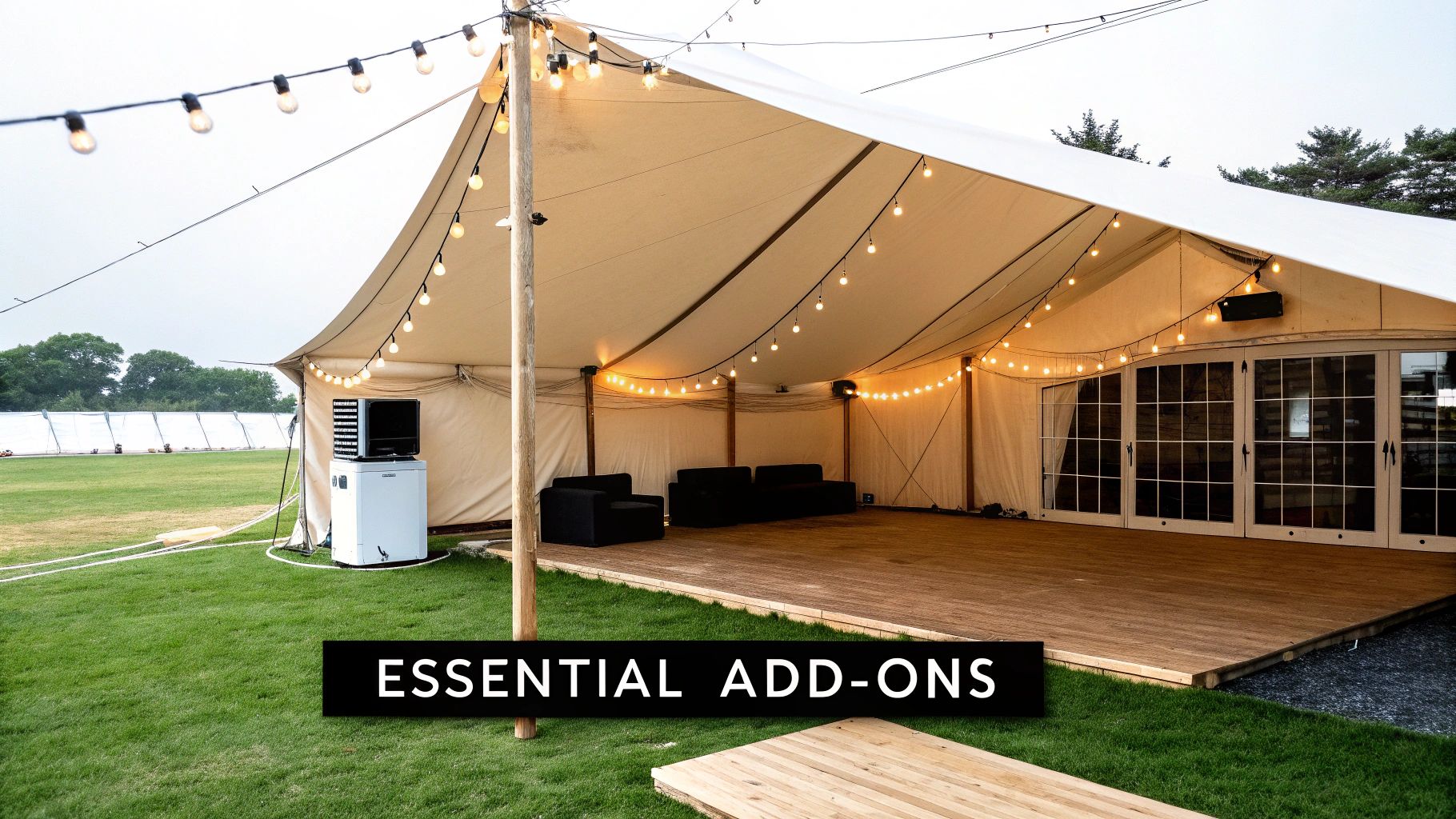
A stylish event tent interior with lounge seating, wooden flooring, and warm string lights.

Creating a Foundation with Flooring

Flooring is probably the most important add-on you'll consider. It’s not just about looks; it's about pure practicality and keeping your guests comfortable. Laying a temporary floor saves your guests' shoes from mud or damp grass, gives you a stable surface for tables and chairs, and instantly makes the space feel more like a proper indoor venue.

You've got a few options, each with a different price point:

  • Pro-Floor: This is a durable, interlocking plastic flooring. It's brilliant for high-traffic areas and for creating a solid, level base on slightly uneven ground.
  • Wooden Flooring: For a more rustic and elegant feel, wood is a fantastic choice, especially for weddings or upmarket corporate events. It’s also perfect for setting up a defined dance floor.
  • Artificial Grass or Astroturf: A great, cost-effective way to cover patchy ground while still keeping that outdoor vibe.

The cost will come down to the square metres you need and the material you pick, but it’s an absolute must for any event that isn’t on a perfectly manicured lawn.

Setting the Mood with Lighting and Climate Control

Lighting does so much more than just help people see – it creates the entire mood of your event. From warm, festive fairy lights to sophisticated uplighters that show off the tent’s graceful curves, your lighting choices are what bring the space to life after sunset.

Likewise, you can’t ignore Cape Town’s unpredictable weather. Even on a warm day, evenings in the Winelands can get seriously chilly. Having heaters on standby is non-negotiable for keeping your guests happy. For a bit more detail on what to look for, you can check out our guide on selecting a gas outdoor heater for your event space.

Crucial Consideration: Never underestimate the impact of climate control. Being too cold is one of the fastest ways to send guests home early. Budgeting for heaters is a small investment that pays off big time in guest comfort.

Final Touches for Weather and Atmosphere

To really complete your setup, think about adding sidewalls. They are invaluable for blocking wind or driving rain, effectively weatherproofing your venue and giving you total peace of mind. You can get solid walls for full protection or clear ones to make sure you don't lose that beautiful vineyard view.

Finally, there’s the furniture. From elegant dining tables and chairs to relaxed lounge pods with bean bags, the right furniture organises the space and defines how your guests will experience the event. Working with a single supplier for both your tent and furniture just makes the logistics so much simpler and guarantees a stylish, coordinated look for your big day.

Renting vs Buying a Tent: Which Makes More Financial Sense?

When you start looking at prices for stretch tents, you'll quickly hit a crossroads: should you hire or buy? At first glance, buying a tent might seem like a smart move for the long haul, especially if you're a venue owner or you host events often. But when you really dig into the numbers, the picture gets a lot more complicated.

For most people, especially if you're planning a once-off celebration or an annual festival, renting is almost always the smarter, more practical choice. The ticket price of a new tent is just the beginning—the real costs are lurking just below the surface, ready to sink your budget.

The Upfront Investment of Buying

Let's be clear: purchasing a professional-grade stretch tent is a serious capital expense. A top-quality tent, the kind built to handle the Western Cape’s wild and unpredictable weather, comes with a hefty price tag that just doesn't add up for infrequent use.

To put it in perspective, we've seen how the numbers stack up for our clients. For anyone at ABC Hire weighing their options, choosing to rent over buying—where upfront costs can easily hit R30,000 to R100,000—ends up being 70% more economical for single events. That’s after you factor in all the hidden extras like maintenance and storage. You can discover more insights about tent pricing structures to see the full breakdown for yourself, but that immediate saving is usually what seals the deal.

Uncovering the Hidden Costs of Ownership

Beyond that initial purchase, owning a stretch tent saddles you with a long list of ongoing headaches and expenses. When you hire from a company like ours, we take care of all of it. These are the costs that catch people out, adding up quietly but dramatically over time.

Think about these recurring costs:

  • Specialised Storage: These tents aren't small. They're bulky, heavy, and need a large, dry, and secure spot to live. Without it, you’re risking mould, mildew, and damage—a huge overhead to carry.
  • Regular Maintenance and Cleaning: After every single use, the tent needs a professional clean, a thorough drying, and a detailed inspection for any wear and tear. Even tiny holes or seam issues have to be fixed immediately to keep it waterproof.
  • Insurance and Liability: Putting up a massive structure like this comes with public liability risks. You’ll need comprehensive insurance, which is another significant cost you'll be paying every year.
  • Skilled Labour: Rigging a stretch tent properly and safely is not a DIY job. It takes a trained crew that knows exactly what they’re doing with tension, rigging, and safety protocols. That means either hiring and training your own team or outsourcing the job—both add to your operational costs.

When you hire a tent, you’re essentially paying for the temporary use of the asset without any of the long-term financial baggage. You get a perfect, professionally installed tent for your event, and then it simply disappears, taking all the costs and stress of ownership with it. For most, this makes renting the clear financial winner, hands down.

Your Stretch Tent Questions, Answered

Planning an event comes with a lot of questions. Here are the answers to the ones we hear most often about hiring a stretch tent in and around Cape Town. Think of this as your cheat sheet for planning with confidence.

How Far in Advance Should I Book a Stretch Tent for a Wedding?

For a wedding during Cape Town’s peak season (that's November through to March), you really need to be booking your stretch tent 6 to 9 months ahead. Believe me, the popular weekend dates get snapped up incredibly fast.

Getting in early doesn't just guarantee you get a tent; it also locks in the current price before any seasonal increases kick in. If you're planning for the off-peak season, 3 to 4 months is often fine, but booking sooner is always the smartest move.

Does the Rental Price Include Setup and Takedown?

Absolutely. Any professional quote you get should always include the cost of setup and takedown. This isn't just a nice-to-have; it's a critical safety standard. Proper installation by a trained crew is the only way to make sure the tent is stable and secure, especially with Cape Town's famously unpredictable wind.

Always double-check that this is part of your quote. If a company offers you a "tent-only" price without installation, consider it a major red flag. That's just not how the industry works safely.

Expert Advice: A good quote from a reputable supplier will be clearly itemised. The total price you see should cover the complete service—from delivery and professional rigging right through to the final collection after your event is over.

Are There Hidden Costs I Should Watch Out For?

A transparent quote should lay everything out, but it's always wise to ask about potential extras that might pop up. Common costs that aren't always in the initial tent price include:

  • Delivery Fees: These are usually calculated based on how far your venue is from the supplier's warehouse.
  • After-Hours Collection Charges: If your event runs late into the night, there might be a fee for a late takedown.
  • A Refundable Damage Deposit: This is standard practice for most hire companies and you'll get it back if everything is in order.
  • Fees for Complex Setups: Rigging a tent on a tricky surface like a rooftop or a weighted balcony often requires more work and gear.

And don't forget, add-ons like flooring, lighting, and sidewalls are typically billed separately. To keep your budget on track, always ask for a detailed quote so you can fully understand the prices for stretch tents and all the related services without any nasty surprises.

Can a Stretch Tent Be Set Up on Any Surface?

One of the best things about stretch tents is their versatility. They can be rigged on grass, sand, and even hard surfaces like concrete or paving. The type of surface just changes the installation method and, sometimes, the cost.

For soft ground like a lawn, we use long pegs to anchor the tent securely. On hard surfaces where we can't peg, we bring in heavy weights or concrete blocks to do the job. This might add a small charge to cover the extra transport and labour for the weights. It's always a good idea to chat with your supplier about your venue's surface right from the start.


Ready to create a stunning, weather-proof venue for your next event? The team at ABC Hire offers a wide range of high-quality stretch tents and event furniture to bring your vision to life. Explore our event hire solutions today and get a transparent quote for your Cape Town celebration.

Your Ultimate Guide to Tent Hire for Parties

Hiring a tent for your party is one of the most flexible and creative ways to host an outdoor event. It literally transforms any space you choose into the perfect venue, giving you total control over the location, size, and atmosphere of your celebration. Rain or shine, you can create a truly unique and memorable experience.

Why Tent Hire Elevates Your Party Planning

A beautifully decorated tent set up for an elegant evening party

When you start planning a party, the first big question is always: where? Finding the right venue can feel impossible. The location is perfect but the room is too small, or the space is right but the décor just doesn’t fit your theme. This is where tent hire for parties completely changes the game.

Think of a hired tent as more than just a temporary shelter—it’s your very own blank canvas. You get a solid, architectural-grade structure that you can set up almost anywhere, giving you ultimate control. Suddenly, your beautiful back garden, a scenic piece of land, or even a chic urban courtyard can become the backdrop for the event you’ve been dreaming of.

Complete Creative Freedom

A traditional venue has its own fixed walls, carpets, and lighting that you have to work around. A tent, on the other hand, is a completely neutral and adaptable space. This freedom means you can build your party’s atmosphere from the ground up, making sure every single detail reflects your personal style or corporate brand.

The key benefits of this flexibility are huge:

  • Location Independence: You can host your event somewhere meaningful or stunning that would otherwise be off-limits.
  • Customisable Layouts: Want a big dance floor, a cosy lounge area, and a separate space for the buffet? No problem. You design the floor plan that works for you.
  • Thematic Control: Go wild with decorations! Match the lighting, flooring, and draping to your exact vision without any restrictions.

The demand for these kinds of personalised experiences is skyrocketing. The Middle East and Africa region has actually become the most dominant zone in the global tent rental service market, and South Africa is a massive part of that growth. Our thriving events industry—from weddings to huge corporate functions—has created a serious need for these impressive temporary structures. You see it everywhere, especially with the rise of outdoor weddings where couples use tent rentals to turn picturesque settings into truly elegant venues. If you’re interested, you can read the full research on the tent rental market to see just how much it’s booming.

A hired tent is more than just cover; it’s a strategic choice that hands you the creative reins. It allows you to design an experience, not just book a room, making your celebration truly one-of-a-kind.

Ultimately, choosing a tent for your next party is about embracing possibility. It’s a practical and stylish solution that adapts to your needs, protects your event from our unpredictable weather, and gives your guests a stunning setting to enjoy themselves in.

Finding the Perfect Tent for Your Event Style

Choosing the right tent is about so much more than just shelter—it’s about setting the entire tone for your party. Think of the tent as the canvas for your event. The style you pick can transform a simple get-together into an elegant gala or a relaxed festival.

Not all tents are created equal, and knowing the key differences will help you make a choice you’re happy with. Let’s break down the big three in the world of tent hire for parties: Frame Tents, Peg and Pole Tents, and Stretch Tents. Each one has its own personality and purpose.

The Self-Supporting Hall: Frame Tents

A Frame Tent, often called a marquee, is the ultimate problem-solver. Its biggest advantage is its clever design—a rigid aluminium frame holds up the roof, which means there are absolutely no interior poles to get in your way.

This wide-open interior gives you total freedom. You can set up your tables, create a dance floor, or position a stage anywhere you want without having to plan around annoying poles. Because they support themselves, frame tents are incredibly versatile and can be set up on almost any surface, including:

  • Grass and soft ground
  • Pavement and tar
  • Patios and decks
  • Even tennis courts!

On hard surfaces, they’re secured with heavy weights, making them a super reliable choice whether you’re in a city centre or a backyard where you can’t use pegs.

The Classic Peak: Peg and Pole Tents

If you’re picturing a classic, romantic wedding or a fancy garden party, the Peg and Pole Tent is probably what you have in mind. These tents are all about those gorgeous, high peaks, created by centre poles pushing up the sweeping canopy. The silhouette is just beautiful and looks amazing in photos.

But that classic elegance comes with two things to remember. First, those centre poles are part of the structure, so you’ll need to work them into your floor plan. Second, to get that lovely tensioned look, the tent has to be staked securely into soft ground like grass or soil. That means they won’t work on hard surfaces like concrete, but for a traditional outdoor celebration, their timeless look is hard to beat.

The Modern and Flexible: Stretch Tents

The Stretch Tent (sometimes called a Bedouin tent) is the cool, creative option. It’s made from a special waterproof fabric that’s incredibly flexible, allowing it to be rigged in all sorts of interesting shapes. You can set it up as a traditional canopy, attach it to a building, or even shape it around trees and garden features.

Stretch tents have a unique way of blending in with their surroundings. Their fluid shape feels more organic and integrated, making the tent seem like a natural part of the space rather than just a structure you’ve put up.

This makes them perfect for modern parties, cocktail events, or any celebration where you want a stylish, less formal vibe. While they look incredible, they offer a bit less protection from heavy wind and rain compared to a fully walled frame tent. If you’re planning something smaller and more casual, it’s also worth checking out other options; our guide on finding a gazebo for hire has some great tips for more intimate events.

Party Tent Styles at a Glance

Still weighing your options? This quick comparison should help you pinpoint the best fit for your party’s needs, location, and overall style.

Tent Type Best For Surface Requirement Key Advantage
Frame Tent (Marquee) Corporate events, weddings, parties needing an open floor plan. Any surface (grass, pavement, decks). Maximum layout flexibility with no interior poles.
Peg and Pole Tent Traditional weddings, classic garden parties, elegant galas. Soft ground only (grass, soil). Stunning aesthetic with high, swooping peaks.
Stretch Tent Modern cocktail parties, stylish brand activations, unique spaces. Versatile, can anchor to ground or buildings. Unmatched adaptability and contemporary style.

Ultimately, the best tent is the one that not only fits your guest list but also complements the atmosphere you want to create for your special day.

Calculating How Much Space You Really Need

Nailing the right tent size is easily one of the most important parts of hiring a tent for a party. If you go too small, your guests will be squashed and uncomfortable. But go too big, and the space can feel cold and empty, not to mention you’ll be paying for area you don’t even use. The secret is to think beyond a simple headcount and start visualising the entire event layout, mapping out every single thing that needs to fit inside.

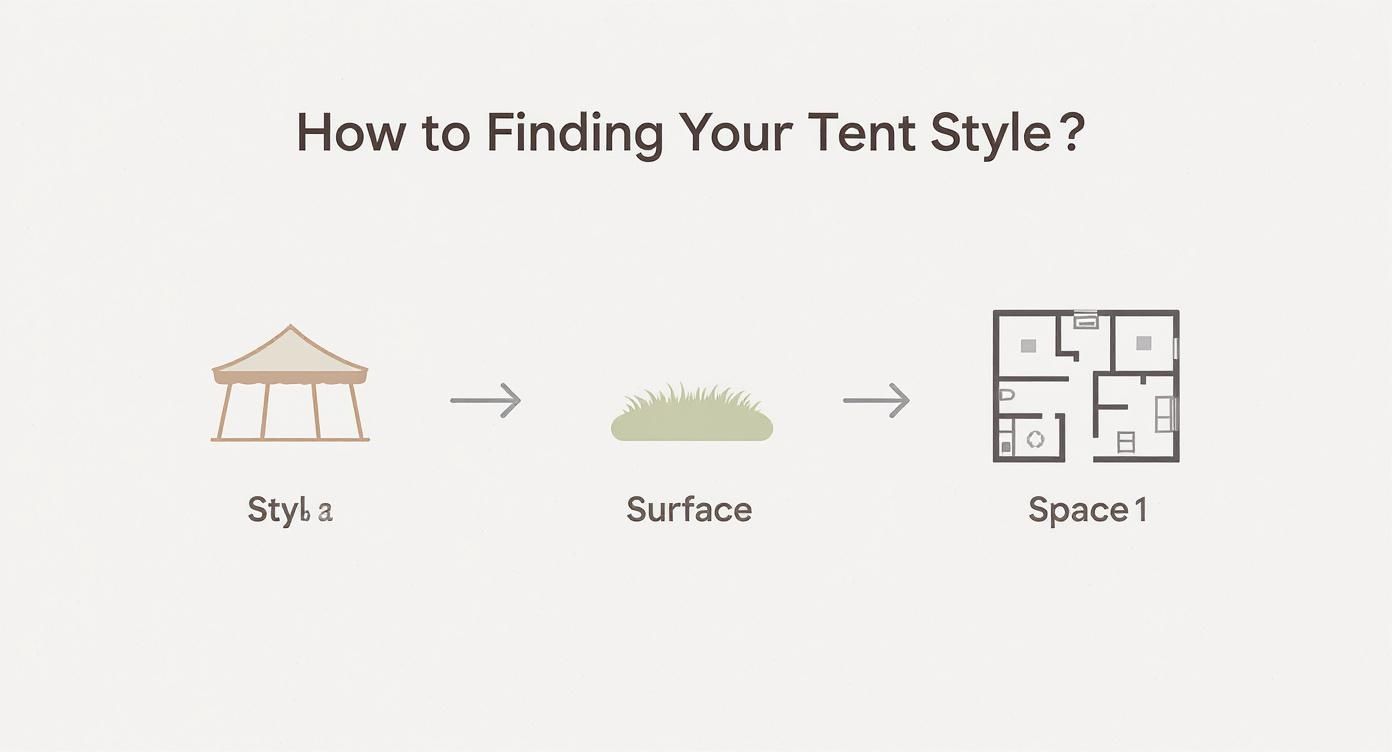
The journey to finding your perfect tent starts with the style, the surface you’re setting it up on, and, of course, the total space you’ll need. This visual guide is a great starting point to walk you through those initial decisions.

Infographic about tent hire for parties

As you can see, once you’ve picked a tent style that fits your party’s vibe, you have to make sure it works on your surface (like grass or paving) before you can get down to the final space calculations.

Start With Your Guest Count

First things first, let’s get a rough estimate based on how your guests will be socialising. This gives you a baseline number to build on before you start adding all the other fun stuff into the mix.

A good rule of thumb is to use these simple guidelines:

  • Standing Cocktail Party: Set aside about 0.5 to 0.75 square metres per guest. This gives everyone enough room to mingle and move around without constantly bumping into each other.
  • Seated Dinner (Round Tables): You’ll need to plan for roughly 1.2 to 1.4 square metres per guest. This bigger space allows for the chairs and the room people need to pull them out without a fuss.

Let’s put that into perspective. For a standing cocktail party with 80 guests, you’re starting with a baseline of 40-60 square metres. But if you’re planning a seated dinner for those same 80 guests, you’re already looking at 96-112 square metres. That quick calculation shows you just how much the format of your event changes your space requirements.

Build Out Your Complete Floor Plan

Now for the really important bit: making room for everything else. Your guests aren’t just going to be standing or sitting. They’ll want a dance floor, a bar, and probably a spot for the DJ. Forgetting to account for these is the number one mistake people make.

The biggest oversight in party tent planning is calculating space for people but not for activities. A successful event layout accounts for the flow of movement, entertainment, and service areas—not just seating.

To make sure you don’t miss anything, use a checklist. Every single one of these elements needs its own dedicated footprint inside the tent. This is where you really see the scale of the party supply rental market. Globally, this market was valued at USD 15,225.4 million in 2023, with tables and chairs alone making up nearly 30% of that revenue. It just goes to show how much space furniture and other functional areas take up. You can learn more about the party rental market growth to get the full picture.

To help you out, here’s a quick cheat sheet with estimates for how much space you’ll need for various party elements.

Party Element Required Space (Approx. Square Metres)
Guest Seating (Round Tables) 1.2 to 1.4 sq. m per person
Guest Standing (Cocktail Style) 0.5 to 0.75 sq. m per person
Dance Floor 0.3 sq. m per guest (assuming half are dancing)
DJ Booth or Small Stage 5-10 sq. m
Bar Area 10-15 sq. m (for the bar and queuing space)
Buffet Tables (2.5m long) 3 sq. m per table (plus room for the queue)

Remember to add these figures to your baseline guest calculation to get a true picture of the total square metres you’ll need.

Let’s walk through a real-world example to see how it all comes together.

Example: An 80-Guest Party with Dinner and Dancing

  1. Guest Seating: 80 guests at 1.2 sq. metres each = 96 sq. metres
  2. Dance Floor: 80 guests x 0.3 sq. metres = 24 sq. metres
  3. DJ Booth: A decent-sized setup = 10 sq. metres
  4. Bar Area: A standard bar with space for guests = 10 sq. metres
  5. Buffet Tables: Two tables with plenty of access room = 10 sq. metres

Total Estimated Space: 96 + 24 + 10 + 10 + 10 = 150 square metres.

Following this simple process takes you from a wild guess to a realistic and functional floor plan. It’s the best way to make sure your event feels perfectly spacious and well-organised.

Accessorising Your Tent for a Flawless Event

A party tent decorated with elegant flooring, lighting, and comfortable seating

A great tent gives you the structure for your party, but it’s the accessories that really bring it to life and make it your space. Think of the tent as a blank canvas; the flooring, lighting, and climate control are the brushstrokes that turn it into a masterpiece. These aren’t just decorative extras—they’re essential for your guests’ comfort and for transforming a simple shelter into a properly luxurious venue.

The right add-ons are at the heart of modern tent hire for parties. We’re seeing a clear shift in the South African market towards more polished, personalised events. In fact, around 45% of high-end event planners are now asking for luxury tents with custom options, and 40% are demanding unique lighting and décor. It just goes to show that accessories are now seen as a must-have for creating an event that stands out. You can even discover more insights about these market trends to see how the pros are doing it.

Setting the Stage with Flooring

Don’t underestimate the power of good flooring. It does so much more than just cover up the grass; it creates a stable, clean, and safe surface for everyone. More than that, it completely elevates the feel of the interior, making it feel less like a tent and more like a real event hall.

You’ve got a few popular options to choose from:

  • Wooden Flooring: This is your top-tier choice for a solid, level base, especially if the ground underneath is a bit uneven. It gives off a seriously elegant and sophisticated vibe.
  • Dance Floors: If you expect people to be dancing, a dedicated dance floor is non-negotiable. They’re made of interlocking panels that create the perfect, smooth surface for a good party.
  • Matting or Coir: For a more rustic or casual feel, natural fibre matting is a great, cost-effective way to cover the ground and stop shoes from getting muddy.

Choosing the right floor turns your tent from an outdoor structure into a defined and comfortable indoor space—a critical step for any well-designed event.

Creating the Perfect Atmosphere with Lighting

Lighting is probably your most powerful tool for setting the mood. The right setup can make a space feel warm and intimate, vibrant and energetic, or totally dramatic. Just sticking a single light overhead will leave your tent feeling stark and unwelcoming.

Great lighting design doesn’t just illuminate a space; it directs attention, creates warmth, and crafts an emotional experience for your guests from the moment they walk in.

For a truly professional effect, think about layering different types of light:

  1. Ambient Lighting: This is your foundation. Think fairy lights or string lights draped across the ceiling to create that magical, warm glow that makes the whole space feel inviting. Our guide on using a fairy light curtain has some brilliant ideas for a stunning look.
  2. Task Lighting: This is the practical stuff. You need decent lighting over the bar, buffet tables, and at the entrance to make sure people can see what they’re doing and move around safely.
  3. Accent Lighting: Use uplighters to highlight key features like floral arrangements, decor, or the architectural peaks of the tent. It adds real depth and a touch of drama.

Ensuring Guest Comfort with Climate Control

Finally, never, ever forget the South African climate. A beautiful sunny day can quickly turn into a chilly evening, and a summer afternoon can get uncomfortably hot inside a marquee.

Climate control isn’t a luxury; it’s essential for keeping your guests happy.

  • Heaters: For evening parties or winter events, a few strategically placed patio heaters or proper tent heaters are an absolute must.
  • Fans or Air Conditioners: In the warmer months, fans keep the air circulating and provide a welcome breeze, making sure the tent stays comfortable for everyone.
  • Sidewalls: These are your best friend when it comes to weather protection. You can choose solid walls for privacy and blocking wind, or go for clear panoramic walls to keep those beautiful views while shielding guests from the elements.

Your Essential Tent Hire Process Checklist

Hiring a party tent can feel a bit daunting, but honestly, it’s not so bad when you break it down into simple, manageable steps. Think of it as a roadmap for your event setup. Following a clear process helps you sidestep common pitfalls, like getting hit with unexpected fees or not having your site ready on installation day.

This checklist will walk you through everything, from your very first phone call to the final pack-down, making sure you feel confident and in control the whole way through.

Before You Sign Anything

First things first: you need to ask the right questions before you put your name on any dotted line. A good hire company expects this and will be happy to give you clear answers. This is your chance to get a complete picture of the agreement, so don’t hold back.

Here’s what you absolutely need to cover:

  • A Detailed Quote: Insist on an itemised quote. You want to see the cost for the tent, delivery, setup, takedown, and any extras listed separately. No one likes vague numbers.
  • Insurance Coverage: Get clarity on what their insurance covers. What happens if the tent gets damaged while it’s on your property? Are you covered for wild weather?
  • Cancellation Policy: Life is unpredictable. Make sure you understand their policy on postponing or cancelling. Ask about any fees and the deadlines for making changes.
  • Payment Schedule: Confirm how much the deposit is to lock in your booking and find out when the final payment is due.

Getting all this in writing is non-negotiable. It protects you and the hire company and means no nasty surprises down the line. To get a handle on all your other event tasks, our event planning checklist template is a lifesaver.

Preparing Your Event Site

Once the booking is sorted, it’s time to get your location ready. Proper site prep is the secret to a fast, safe, and stress-free installation. The delivery crew will thank you for giving them a clear and accessible space to work their magic.

A well-prepared site is the foundation of a successful tent installation. Taking the time to measure, clear, and check the area beforehand saves significant time and prevents costly delays on event day.

Follow these simple steps to get your site ready:

  1. Measure and Mark: Use a few stakes or flags to mark out exactly where the tent will go. Crucially, remember to add at least 1.5 metres of extra space on all sides for the pegs and for the crew to move around.
  2. Check for Utilities: This is a big one. Before a single peg goes into the ground, you must know what’s underneath. Check for underground water pipes, electrical lines, or irrigation systems. If you’re not sure, it’s best to contact your local authority.
  3. Ensure Clear Access: The delivery truck needs a clear path to the setup spot. That means trimming back any low-hanging tree branches and moving any obstacles that could get in their way.
  4. Communicate with the Crew: Give the installation team a heads-up about any quirks of your site, like a sloping lawn or a tricky access point. The more they know in advance, the better.

What to Expect on Installation and Takedown Day

Knowing the schedule for setup and removal helps you plan the rest of your day. For a medium-sized tent, say a 6m x 12m marquee, a team of 3-4 people will typically need about 2-3 hours for the full installation.

The crew will show up, double-check the placement with you, and then get straight to it. Your main job is just to make sure the area is ready and they can get in and out easily. After the party’s over, the takedown is usually a quicker affair. The team will dismantle everything efficiently, leaving your garden just as they found it.

Breaking Down the Costs of Hiring a Party Tent

Figuring out the budget for your party tent can feel a bit like putting a puzzle together. You see one price, but the final quote often has a few other crucial pieces. Getting your head around this from the start will save you headaches later and help you see the real value you’re getting from a professional hire service.

It’s a bit like ordering a fantastic meal at a restaurant. The main course has its price, but you’ll also have side dishes, drinks, and a service fee. In the same way, the total cost for your tent is a mix of the tent itself, plus all the services and extras needed to make your event a roaring success.

What’s in Your Rental Quote?

Your final bill will usually be split into three main parts. Knowing what these are helps you see exactly where your money is going, and it gives you the power to tweak things to fit your budget.

  • The Base Rental Fee: This is the straightforward cost for the tent’s canopy and frame. The price tag here depends on the size and style you pick—a big, elegant frame tent is naturally going to cost more than a smaller, simpler one.
  • Labour and Delivery Charges: This covers the skilled crew who bring the tent to you, put it up, and take it down again. Things like how far they have to travel to your venue and how tricky the site is can nudge this cost up or down.
  • Essential Add-Ons: This is everything else you need to turn the tent into a proper venue. Think flooring, lighting, sidewalls for weather protection, and even climate control like heaters or fans.

This way of pricing is pretty standard across the events industry. The tent rental market has boomed in South Africa because it’s such a smart, cost-effective alternative to a permanent venue. Hiring almost always works out cheaper than building something from scratch, making it perfect for one-off events and seasonal parties. You can read more about these market trends to see the full economic picture.

What Else Can Affect the Final Price?

Beyond the big three, a few other things can shift your quote. Being aware of them means you can manage your budget better and avoid any last-minute surprises.

The most common budget surprise I see is underestimating the complexity of the site. A perfectly flat, easy-to-reach lawn will always be cheaper to work with than a sloped garden with a narrow entrance.

Here are a few things that can add to the labour costs:

  • Difficult Site Access: If the team has to lug heavy equipment a long way from their truck to where the tent needs to go, it’s going to take more time and people power.
  • Site Complexity: Putting a tent up on an uneven surface, a raised deck, or anywhere that needs special anchoring will bump up the installation fee.
  • After-Hours Service: If you need the tent set up or taken down outside of normal business hours, like late at night, you can expect to pay a bit extra for that convenience.

The best thing you can do is chat about all these details with your rental company right from the start. That way, you’ll get a clear, accurate quote that lines up perfectly with your event plans.

Common Questions About Party Tent Hire

Even after all the planning, a few nagging questions can pop up when you’re hiring a tent. We get it. To put your mind at ease, we’ve put together some quick, straightforward answers to the queries we hear most often from our clients.

How Far in Advance Should I Book a Party Tent?

Timing is absolutely crucial, especially if you want the best pick of the bunch. To be safe and avoid any last-minute panic, we always recommend booking your tent 3 to 6 months in advance. This is doubly important during South Africa’s peak seasons, like the sunny summer months and over the December holidays when demand just goes through the roof.

Got a bigger, more detailed event on the cards, like a wedding? Give yourself even more breathing room and aim for 9 to 12 months ahead. Booking early is the best way to guarantee you get the exact style and size you’ve got your heart set on.

Can a Tent Be Set Up on Pavement or Concrete?

Yes, it can! But this is where your choice of tent really matters. A Frame Tent (or marquee) is your go-to for hard surfaces. Because these structures are freestanding, they don’t need to be staked into the ground. Instead, we anchor them securely on pavement, patios, or decking using heavy-duty weights or water barrels.

Your traditional Peg and Pole Tent, however, needs soft ground like a lawn to work. It gets its stability from the tension of stakes driven deep into the earth. So, always let your hire company know what surface you’re working with – it’s one of the first things they’ll need to know.

The surface of your event site is one of the first and most critical details to share with your rental provider. It directly influences the type of tent you can safely and effectively use, making it a foundational piece of your event plan.

What’s the Plan for Bad Weather?

This is one of the best things about hiring a professional tent – you get instant peace of mind, no matter what the weather report says. These aren’t your average camping tents; they are tough, commercial-grade structures built to handle rain and moderate wind, keeping your party and your guests perfectly dry.

If the forecast looks a bit wild, adding sidewalls is a brilliant move. They offer extra protection against driving rain or a gusty breeze. You can go for solid walls for a complete shield or choose clear panoramic walls so you don’t lose that beautiful view. Just make sure to chat with your provider about the tent’s specific wind rating and their contingency plan for severe weather before you book.

Will I Need a Permit for a Tent in My Garden?

For most private parties on your own property here in South Africa, you generally won’t need a permit for a temporary tent. The rules are pretty relaxed for personal events held at home.

That said, local municipal rules can differ, especially for a really large structure or a massive guest list. If you’re unsure, it’s always smart to have a quick chat with your local council just to be 100% certain. A good, experienced hire company will usually know the local requirements and can give you solid advice.


Ready to create the perfect setting for your next celebration? The team at ABC Hire is here to help you choose the ideal tent and accessories for a flawless event. Explore our range and get a quote today at abchire.co.za

📍 Cape Town + Winelands