Double Electric Fryer: Your Cape Town Event Guide

You're usually not thinking about a double electric fryer until the menu is already set and the service plan starts to wobble.

The chips need to go out hot. The chicken strips can't wait behind calamari. Half the guest list wants vegetarian options kept separate. Then someone at the venue says the catering team will be sharing power with the bar, coffee station, and DJ. That's when fryer choice stops being a kitchen detail and becomes an event-planning problem.

In Cape Town, that problem shows up fast at weddings, corporate functions, school events, and private parties. A fryer can help you serve a crowd smoothly, or it can become the bottleneck that holds up the whole line. The difference usually comes down to two things: power planning and menu strategy. Get both right, and a double electric fryer is a very useful tool. Get either wrong, and you'll feel it during peak service.

Why Your Event Needs Smarter Frying

A single fryer works until the rush starts.

The trouble begins when every guest seems to want hot food at once. One basket is tied up with chips, the next batch is waiting, and the queue grows while oil temperature drops between loads. Staff start rushing. Quality slips. Service slows down at the exact moment you need it to feel organised.

That's where a double electric fryer changes the flow. Its value comes from a dual-basket design with two independent cooking zones, each with separate temperature and timer settings, which helps solve the single-basket limitation for large groups and improves service speed at weddings, matric dances, and corporate functions where demand peaks all at once, as noted in this overview of dual-zone fryer development.

Two vats change the pace of service

Think of it as moving from a single-lane road to a dual carriageway. You're not just doubling space. You're reducing the stop-start delays that happen when different foods all need the same fryer at different moments.

One side can run chips continuously while the other handles snack items in smaller batches. Or one vat can stay dedicated to a high-volume menu item while the second gives you flexibility for late additions, dietary requests, or a second serving line.

Practical rule: If your event menu includes more than one fried item, a single fryer often creates a queue inside the kitchen before guests ever see a queue at the counter.

That matters because frying isn't only about cooking. It's about recovery, timing, and holding a rhythm. When staff can drop two batches independently, they make fewer compromises. They don't have to choose between delaying one item or overcrowding one basket.

Better output, not just more equipment

A lot of people hear “double fryer” and assume it's a larger version of a countertop appliance. In practice, it's a workflow tool.

Here's where it helps most:

  • Large guest arrivals: Wedding canapés after the ceremony, school function intervals, and brand activation lunch rushes often hit in one wave.
  • Mixed menus: Chips, chicken, fish bites, samoosas, spring rolls, or doughnut service all compete for fryer time.
  • Service consistency: Two independent vats let staff keep food moving without constantly interrupting one product for another.

If you're still refining your fried menu ideas, seasonings matter too. For teams testing flavour profiles before event day, these Smokey Rebel air fryer rub ideas are a useful reference for thinking through coating and seasoning combinations that can translate into fryer-friendly menu planning.

A double electric fryer doesn't remove pressure from service. It gives your team a better structure for handling it.

Key Fryer Features and Catering Capacity

Spec sheets can look impressive without telling you what matters on event day. For caterers, venues, and planners, three things matter most: temperature range, oil volume, and recovery behaviour.

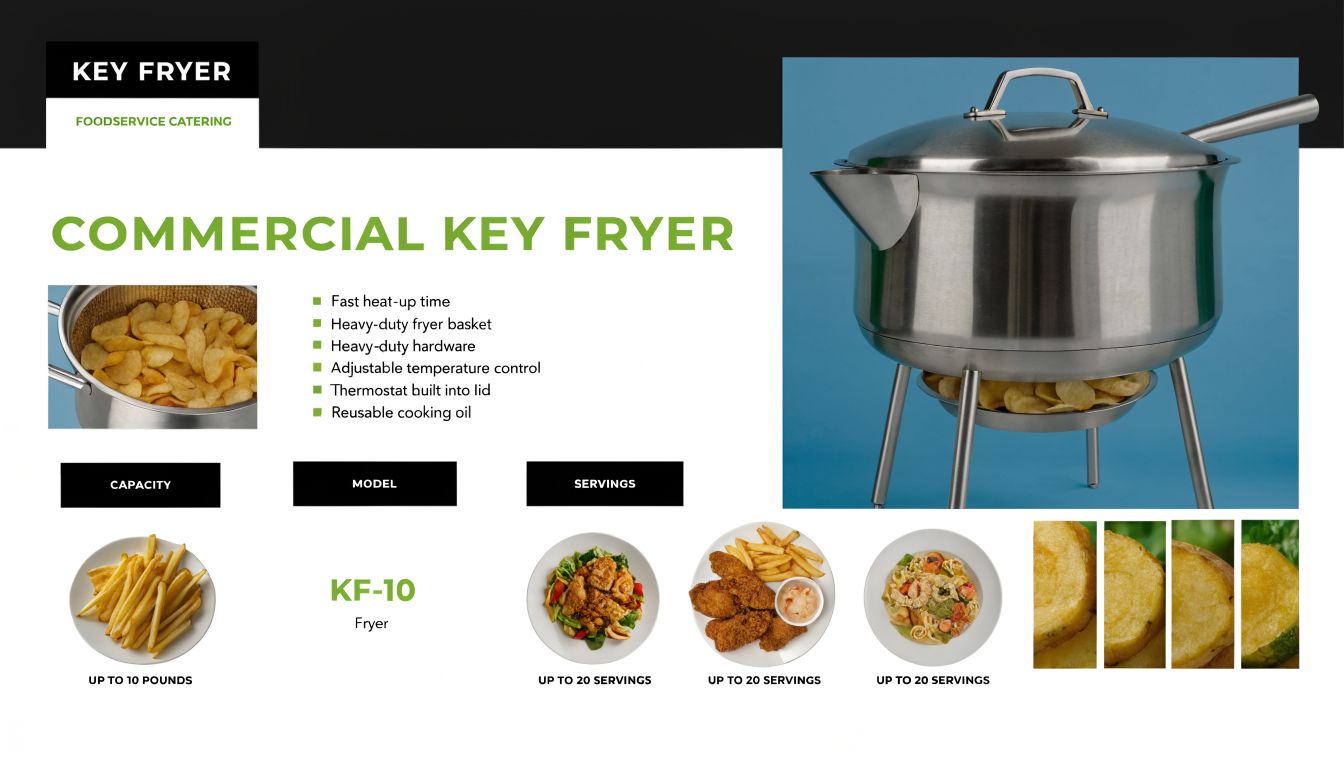
A commercial stainless steel Key Fryer for foodservice catering displayed with images of fried foods.

Commercial double fryers commonly offer adjustable thermostats from 60°C to 200°C, with tank sizes ranging from 3 L per vat for smaller functions to 8 L or more per vat for heavier service. Larger oil volume gives more thermal inertia, which helps the fryer recover faster after each batch and keeps food quality more consistent during busy periods, as shown in this commercial fryer specification overview.

Why oil capacity matters more than most people expect

Small tanks can work well for lighter jobs. They're easier to place, easier to transport, and often fine for short runs of snack service. The problem starts when cold product keeps hitting the oil.

Every fresh load pulls heat out of the vat. If the oil mass is small, the temperature drop is sharper and recovery takes longer. That affects colour, texture, and timing. Chips can turn pale and greasy. Battered items can lose crispness. Staff then compensate by holding food too long or overloading the next batch.

A larger vat gives you more room to absorb that shock.

Fryer feature What it means in service
3 L per vat Better suited to lighter, lower-frequency batches
Mid-size vats More forgiving for mixed-event service
8 L or more per vat Better for repeated batches during peak demand

Temperature range affects menu control

The thermostat range also matters. A fryer that can hold lower and higher setpoints gives the chef or caterer more options across one event.

That helps with:

  • Chips and high-moisture foods: These need stable high heat for clean frying.
  • Delicate snack items: Lower settings can reduce over-browning on lighter products.
  • Split menus: One vat can run one product profile while the second runs another.

A fryer that looks “big enough” on paper can still underperform if the tanks are small and the event menu calls for repeated cold loads.

When comparing models, don't stop at basket count. Look at the tank size and thermostat range first. Those are the two figures that tell you how the unit is likely to behave once the first wave of orders lands.

If you want a visual reference for the kind of unit caterers often compare in this category, this electric countertop twin tank fryer shows the basic layout and format that many event teams are assessing when choosing between compact and higher-capacity options.

Powering Your Fryer in Cape Town A Practical Guide

This is the part many planners leave too late.

A double electric fryer can be completely practical for a Cape Town event, but only if the venue supply, extension run, and backup plan are sorted before the equipment arrives. In South Africa, the limiting factor often isn't basket size. It's the electrical load and the reliability of the supply available on site.

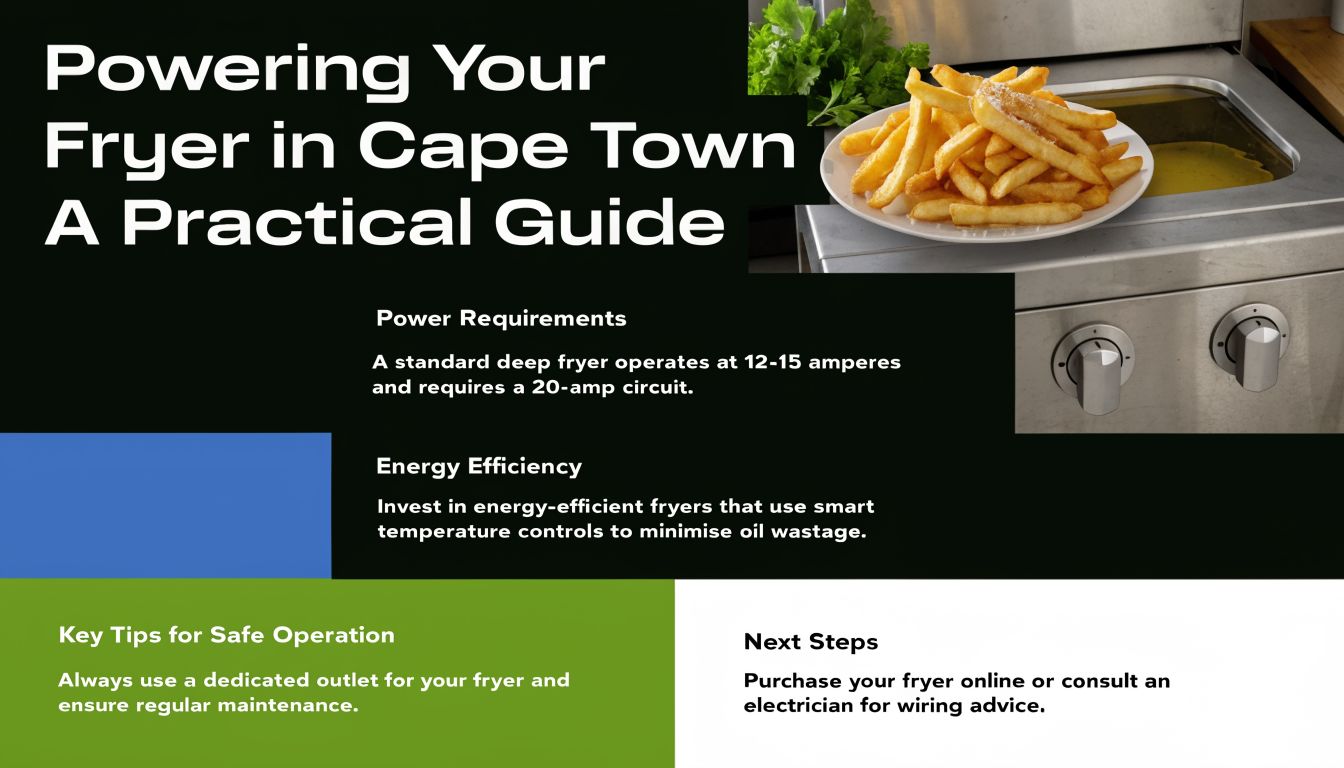
An infographic guide for operating electric deep fryers in Cape Town including power and safety tips.

Commercial double electric fryers can draw from 3.5 kW up to 7.2 kW on a 220 V system, and because each vat has its own heating element, one side can recover after a cold batch while the other continues frying. That benefit only holds if the venue circuit or generator can support the load consistently, as outlined in this double fryer power specification example.

Start with the venue, not the fryer

Before you confirm the menu, ask the venue or site manager very direct questions.

  • What supply is available at the catering point? You need to know whether the fryer is running on a suitable circuit, not just whether “there's a plug nearby”.
  • Is the catering supply shared? Shared circuits with coffee machines, urns, hot trays, or bar fridges can create trouble under load.
  • What happens during an interruption? Outdoor setups, marquees, and temporary kitchens need a realistic backup plan.

In Cape Town and the Winelands, this matters more than generic product pages admit. A fryer may perform perfectly in a test kitchen and badly at a venue if the supply is unstable or undersized.

What works and what usually doesn't

What works is simple. Short cable runs, known circuit capacity, and a dedicated power plan.

What often doesn't work is treating the fryer like a casual countertop appliance. It isn't one. If the unit pulls serious power, then plugging it into a random socket through a long extension shared with other heating equipment is asking for poor recovery, nuisance trips, or inconsistent service.

A proper extension setup matters too. If you're dealing with distance between the kitchen position and the supply point, this guide on choosing a 20 m extension cord for event equipment is worth reviewing before the event layout is finalised.

Don't ask only whether the fryer can switch on. Ask whether it can hold temperature properly for the full service window.

Questions to settle before event day

Use this checklist with your venue, caterer, or hire company:

  1. Confirm the fryer's exact power draw. “Double fryer” is not specific enough.
  2. Ask what plug type the unit uses. Don't assume standard convenience sockets are appropriate.
  3. Check whether the circuit is dedicated. Shared event power causes most surprises.
  4. If using a generator, confirm headroom. The fryer won't be the only load.
  5. Plan around load shedding risk. If service must continue, backup power needs to be part of the kitchen plan, not a last-minute add-on.

For some events, gas equipment may be easier. For others, an electric setup is cleaner and more practical. The right answer depends on the venue infrastructure, not on brochure language.

If you're hiring through a provider such as ABC Hire, this is the conversation to have before confirming the booking. Ask for the actual electrical requirement of the fryer, the operating assumptions, and whether the intended venue setup supports it.

Strategic Menus for Your Double Fryer

The best use of a double electric fryer isn't cooking more of the same thing. It's separating jobs that shouldn't compete with each other.

That's where the equipment starts earning its keep. One vat can handle a high-volume savoury item, while the other protects dietary separation or supports a different service rhythm. For professional catering, that menu flexibility is often a key advantage.

The key benefit isn't only capacity. A double fryer allows physical separation of foods for allergen management and dietary needs, such as vegetarian items apart from meat, which improves food safety and workflow for events serving mixed guest requirements, as discussed in this commercial fryer buying guide.

Use each vat with a purpose

A smart fryer plan usually looks like one of these setups:

  • Vegetarian and meat split: Spring rolls or vegetable samoosas on one side, chicken strips or fish bites on the other.
  • Core item and rotating special: Chips in one vat all service long, with calamari, nuggets, or snack platters in the second.
  • Low-risk separation: Keeping products apart helps reduce flavour transfer and supports cleaner service for guests with specific preferences.

This matters more now because event menus are rarely one-track. A wedding may need a vegetarian late-night snack alongside standard fried options. A school function may need simple crowd-pleasers with clearer separation. A corporate event may want branded snack boxes with different fried components delivered quickly.

Build the menu around service peaks

The strongest menus are the ones that match the fryer's workflow.

Good examples include:

  • Chips and calamari combo: One vat stays dedicated to chips. The second handles seafood to avoid flavour crossover.
  • Samoosas and mini doughnuts: Savoury on one side, sweet on the other, which keeps flavours cleaner.
  • Chicken strips and vegan spring rolls: A practical split for mixed dietary service.

For support equipment, coordinated holding matters just as much as frying. If part of your menu needs to stay hot while later batches finish, these catering food warmers for events are useful to consider alongside the fryer rather than as an afterthought.

Separate vats don't just protect food. They protect your service plan.

Hygiene discipline still matters

Two tanks help with separation, but they don't replace kitchen discipline. Staff still need clear utensil control, basket control, and product handling rules.

A practical kitchen team should define:

  • Which basket belongs to which menu group
  • Which prep trays feed each vat
  • How used oil and crumbs are managed during service
  • Who is responsible for wipe-downs and contamination checks

If your team needs a refresher on cleaning routines around active service, this checklist of essential commercial kitchen hygiene tasks is a helpful starting point.

A double electric fryer gives you flexibility. The kitchen still has to use that flexibility properly.

Renting vs Buying A Fryer for Your Business

For most event businesses, the question isn't whether a double fryer is useful. It's whether ownership makes sense.

That answer depends on frequency of use, storage space, maintenance tolerance, and how predictable your event calendar is. If you're frying at high volume every week in a permanent kitchen, buying can make sense. If your use comes in bursts around weddings, activations, school functions, and seasonal bookings, renting is often the cleaner decision.

In the wider market, deep fryers sat in a category valued at USD 549.8 million in 2023, with projected growth ahead, which signals durable foodservice demand. For local operators, that also means commercial-grade equipment remains a serious purchase with ongoing upkeep, while renting gives access to maintained equipment without the upfront capital commitment, as noted in this commercial fryer market and history overview.

The practical comparison

Factor Renting from ABC Hire Buying Your Own
Upfront cost Lower event-by-event spend Higher initial outlay
Maintenance Usually handled by the hire provider Your responsibility
Storage No long-term storage burden Needs secure storage between jobs
Flexibility Match equipment to event type You use what you own
Idle periods No issue if not used for weeks Asset may sit unused
Cleaning and wear Shared as part of hire workflow and terms Full long-term wear sits with you

When renting usually makes more sense

Renting is a strong fit if your pattern looks like this:

You run occasional larger events rather than daily fryer service. You need the fryer for peak periods, not every week. You don't want to carry storage, transport, and maintenance on equipment that spends long stretches off the floor.

That's common in the event world. A planner may need fryer capacity for one wedding this month, two school functions next month, and nothing the month after. Ownership in that case ties up money in a machine that isn't producing value most days.

For broader event kit planning, this range of catering equipment for hire is a useful reminder that fryers usually work best when hired as part of a coordinated kitchen setup rather than as a standalone item.

When buying can make sense

Buying becomes easier to justify when the fryer is part of your normal operating base. A fixed-site caterer or takeaway kitchen with regular fried output may prefer to own, maintain, and standardise around one unit.

But ownership comes with hidden work:

  • Cleaning after every use
  • Servicing and replacement parts
  • Storage and transport protection
  • Downtime if the unit fails before an event

If you're not set up for those realities, rental is often the more sensible business decision.

Your Double Fryer Hiring Checklist

A fryer booking should never end with “Please reserve one for Saturday.” You need details. The more specific the conversation, the fewer surprises you'll face during setup and service.

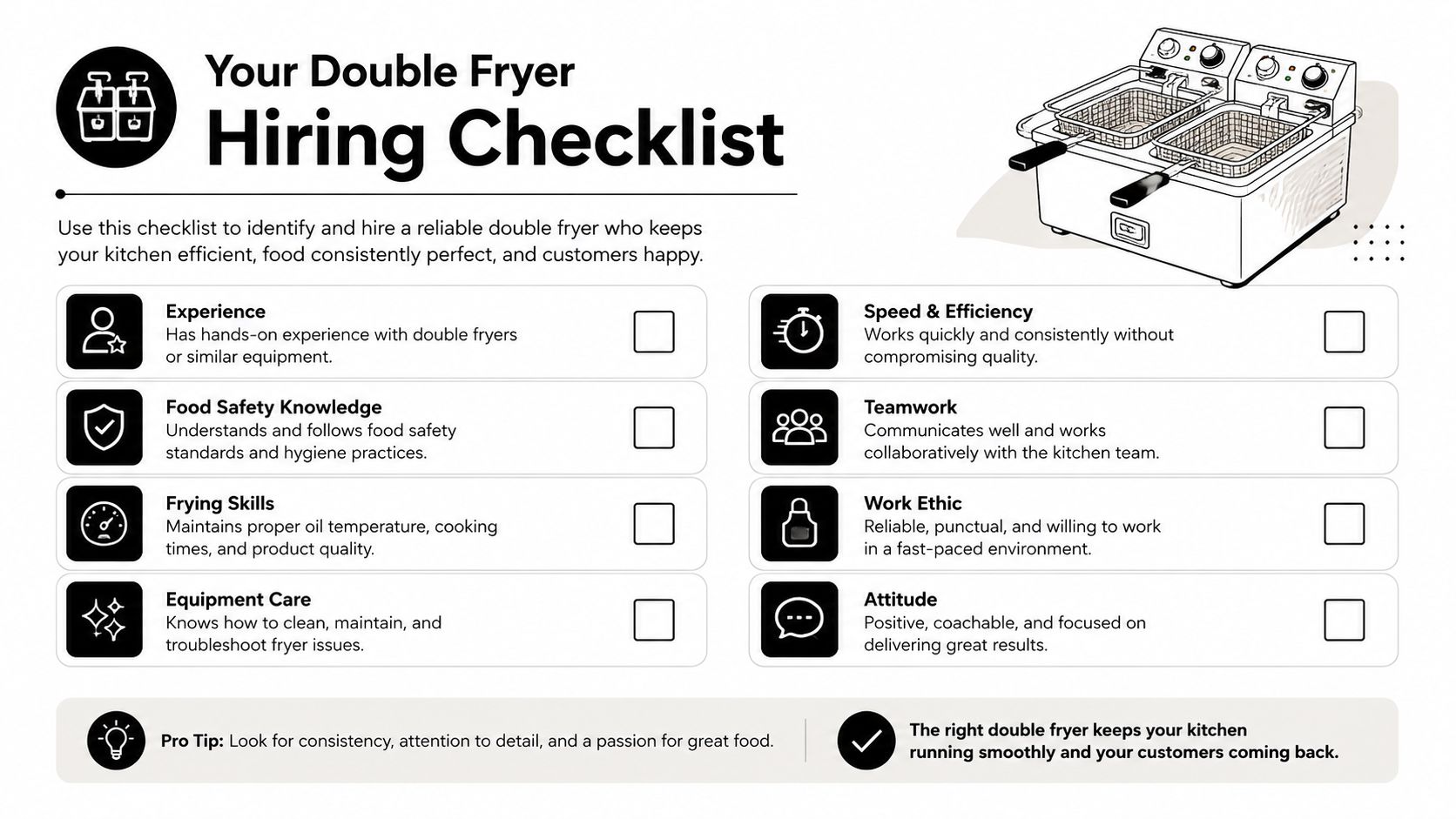
A professional checklist guide for hiring a skilled kitchen staff member to operate a double fryer machine.

Use this checklist before you confirm the hire.

Ask these questions first

  • What are the exact power requirements? Ask for the unit's load, voltage requirement, and plug format.
  • Is the fryer suitable for my venue setup? Mention indoor kitchen, outdoor marquee, mobile catering station, or shared prep area.
  • What comes with the unit? Confirm baskets, lids if applicable, and any handling instructions.
  • Who is responsible for cleaning and oil handling? Set expectations before collection day.
  • What are the delivery and collection arrangements? Timing matters when kitchens are being built on site.

Clarify the service plan

Some events need more than equipment. They need an operator who understands frying rhythm, safe loading, and menu separation.

Ask:

  1. Who will run the fryer during peak service?
  2. Has the menu been matched to the fryer setup?
  3. Do we need warming equipment alongside it?
  4. What is the backup if venue power becomes unreliable?

The best fryer hire is the one that fits the venue, the menu, and the power supply before the first basket goes in.

Final check before sign-off

Run through these last points on the week of the event:

  • Venue power re-confirmed
  • Extension route planned
  • Menu split between vats decided
  • Operator briefed
  • Delivery access cleared
  • Collection timing agreed

A double electric fryer is a very practical piece of event equipment when it's chosen for the right reason. Not because it looks professional on a spec list, but because it solves a real service problem. In Cape Town, that usually means better queue control, cleaner menu separation, and a power plan that won't let you down halfway through the rush.


If you're planning an event and need to check whether a double electric fryer suits your venue, menu, and power setup, ABC Hire can help you work through the practical requirements before you book.

A Guide to Catering Equipment for Hire

When you’re in the thick of event planning, the list of decisions feels endless. But let’s be honest, few things make or break an event like the catering setup. Going the route of catering equipment for hire is one of the smartest moves you can make. It gives you access to professional-grade gear without the eye-watering cost of buying it all outright. Forget about storage, maintenance, and watching your investment lose value—hiring just makes more sense.

Why Hiring Catering Equipment Is a Smarter Choice

Professional catering equipment setup for an outdoor event

Whether you’re pulling together a sleek corporate launch in Sandton or a dreamy wedding in the Cape Winelands, your budget and logistics are always front and centre. The “hire vs. buy” debate for catering equipment comes up every time, and honestly, the case for hiring is incredibly strong.

Keep Your Finances Flexible and Your Risk Low

The most obvious win is financial. Buying commercial-grade ovens, chafing dishes, and mobile refrigeration units costs a small fortune. That’s cash tied up in equipment that could be making a real difference elsewhere, like in your marketing or elevating the guest experience.

By choosing catering equipment for hire, you turn a massive capital expense into a simple, manageable operational cost. This way, you can get your hands on top-tier, specialised gear for a fraction of the purchase price, fitting it neatly into your event budget. There’s no scary long-term commitment and zero risk of being stuck with equipment that’s old news in a year.

“Hiring allows you to scale your ambition without scaling your liabilities. You can execute a high-end gala one weekend and a rustic outdoor festival the next, all with the perfect equipment and without owning a single piece of it.”

Ditch the Headaches of Ownership

Owning gear isn’t just about the initial price tag; it comes with a whole set of hidden chores. You need a secure place to store everything, and space costs money. On top of that, commercial equipment needs regular, professional servicing to keep it safe and working correctly—another cost that just keeps coming.

Hiring lets you sidestep all of that. A professional hire company takes care of the storage, cleaning, and maintenance. You get gear that’s been professionally looked after, PAT tested for electrical safety, and is ready to go the moment it arrives. It’s a hands-off approach that frees you up to focus on what you do best: running a flawless event.

In South Africa, the catering equipment rental market is buzzing, right alongside our vibrant events and hospitality industry. More and more, caterers are choosing to hire so they can use the latest tech without the massive price tag. It’s this kind of flexibility that helps them stay competitive as event styles and guest expectations constantly change. You can dive deeper into these catering equipment rental trends and their financial benefits.

Defining Your Event Needs Before You Hire

A chef preparing food in a well-organised temporary kitchen setup

Before you even start browsing a rental catalogue, the most important thing you can do is map out the reality of your event. A little bit of planning upfront saves a world of last-minute panic and makes sure you only spend money on equipment you’ll actually use. It’s this strategic thinking that separates a smooth operation from a chaotic one.

Start with the heart of your event: the menu. Are you planning a relaxed, buffet-style harvest table, a formal plated dinner, or maybe some interactive food stations? Your answer changes everything. A buffet needs chafing dishes and plenty of serving utensils, whereas a plated meal requires plate warmers and a slick, organised plating area.

Then, think about how much cooking will happen on-site. If you’re just finishing and plating pre-cooked meals, your needs will be pretty simple. But if you’re cooking an entire meal from scratch in a marquee, you’re going to need a full field kitchen. This is a critical distinction to make when you start looking at catering equipment for hire.

Assessing Your Venue’s Capabilities

Every venue is different. A Stellenbosch wine farm has a completely different set of challenges to a modern Cape Town loft. Never assume anything! Get a checklist together and investigate the specifics before you commit to any rentals.

  • Power Supply: Find out exactly how many power outlets are available and where they are. The crucial question is about the available amperage—you need to know you won’t overload the circuits with high-draw equipment like convection ovens or deep fryers.
  • Water Access: Where are the taps? Is there a proper scullery or wash-up area, or will you need to bring in portable sinks and water bowsers?
  • Space and Layout: Get out the tape measure and figure out the exact dimensions of your kitchen or prep space. You need to know if that large combination oven will actually fit through the door and if there’s a logical flow for staff to move between cooking, plating, and serving.
  • Ventilation: This is an absolute non-negotiable, especially for any gas-powered cooking gear. Make sure the area has proper airflow or extraction so your team can work safely.

A classic mistake is hiring powerful equipment that a venue simply can’t handle. Always match your rental list to the venue’s infrastructure, not just your culinary dreams.

Thinking through these practical details first helps you build a precise list. It ensures that every piece of catering equipment for hire is a necessary tool that helps you pull off your vision flawlessly.

Right, you’ve got the big picture sorted for your event. Now it’s time to get into the nitty-gritty: matching the right equipment to your menu and venue. This is where the magic really happens, turning your plan into a smooth, functioning operation on the day.

Think of it like this: you wouldn’t bring a spit braai to a fancy plated dinner, would you? Each piece of gear has a job. A casual outdoor event needs that braai, some carving stations, and maybe rustic serving platters. A formal affair, on the other hand, is all about high-performance convection ovens, plate warmers, and elegant chinaware. Getting this right is the difference between a seamless service and a logistical headache.

Aligning Gear with Your Culinary Vision

Your menu is the roadmap, and the equipment is the vehicle that gets you there. Before you even start browsing catering equipment for hire, you need to walk through your entire food service process, from the first chop to the final plate.

  • Prep Work: Are you doing a lot of prep on-site? If so, you’ll need the basics covered: stainless steel tables, chopping boards, and a good set of professional knives.
  • The Cooking Method: How are you actually cooking the food? This is the big one. Your needs will change drastically depending on whether you’re frying, baking, grilling, or boiling. This will point you towards deep fryers, combination ovens, gas grills, or large stockpots.
  • Holding and Serving: This is absolutely critical. Food has to be served at the right temperature, no exceptions. Our guide on choosing the right catering food warmers is a great resource, breaking down everything from chafing dishes for a buffet to insulated food carriers for getting meals from A to B piping hot.

Don’t Forget the Venue Check

This is a classic rookie mistake we see all the time: hiring powerful equipment that the venue’s infrastructure simply can’t handle. Before you finalise anything, you must check what the venue can support.

Find out the available amperage for high-draw items like big ovens and fryers. The last thing you want is to trip the power in the middle of service. If you’re using gas cookers, confirm the ventilation is up to scratch to keep your team safe. It’s a non-negotiable step.

The initial cost of buying is massive. Unless you’re running events back-to-back, hiring is easily the most budget-friendly option.

Pro Tip: Get out a measuring tape. Seriously. Measure the doorways, lifts, and corridors at your venue. That amazing mobile walk-in fridge is completely useless if you can’t physically get it into the kitchen. This one simple check can save you from an absolute disaster on the day.

Getting the Hire Process Right

Okay, you’ve done the hard work and figured out exactly what you need. Now comes the part where planning meets reality: the rental process itself. This stage is all about logistics, and while it’s not complicated, a bit of attention to detail goes a long way in avoiding any last-minute panics or unexpected costs.

Your first move is to get a detailed quote. Don’t be shy here; be specific about every single item and the quantities you need. When that quote lands in your inbox, think of it as your event’s blueprint. A good hire company will itemise everything, but it’s on you to double-check what’s actually covered in the price. It’s often the things beyond the equipment that catch people out.

Don’t Skip the Fine Print

That rental agreement is your best friend. It’s the document that lays out all the rules of the game for both you and the hire company. It’s tempting to just give it a quick scan, but trust me, you need to understand every clause before you put your name on it.

Here are a few things I always tell clients to look for:

  • Delivery and Collection Fees: Are these baked into the price, or will they be an extra line item? Also, confirm the delivery window and make sure it works with your venue’s access times. There’s nothing worse than having a truck arrive when the gates are locked.
  • Setup and Takedown: If you’re hiring something complex like a full field kitchen, some companies will offer to set it up. Is this part of the service, or is it an add-on you need to budget for?
  • Cleaning Policy: This one is huge. Most places will expect you to return items scraped and rinsed. If you don’t, you could be hit with some pretty steep cleaning fees. Know the policy upfront.

A classic rookie mistake is assuming delivery includes setup. Always ask the question: “Will your team just be dropping the equipment off, or will they help place it?” Clarifying this can save you an incredible amount of heavy lifting on the day.

Final Checks and Getting in Sync

The moment the equipment arrives is go-time. Before you sign that delivery note, do a thorough check. Make sure everything on your order is actually there and, more importantly, that it’s all in good working order. Plug in anything with a cord and test any moving parts while the delivery team is still on-site.

Juggling these logistics is a real skill, especially when you’re also coordinating furniture, decor, and everything else. For more on that, our guide on renting furniture for events has some great tips that are just as useful for equipment hire.

Finally, get clear on the insurance and damage waiver policies. Accidents can and do happen, and knowing who’s responsible for what gives you massive peace of mind. There’s a reason the global rental market is booming. This trend is a massive boost for South Africa’s hospitality sector, giving event planners like us the agility we need. You can dive deeper into the growth of the catering equipment rental market to see just how big this shift is.

Getting It Done On The Day

The truck has rolled out, and all your hired gear is on site. This is the moment where all that planning turns into real-time action. A smooth, seamless service from here on out really boils down to how you manage the equipment.

First things first: do one last function test. Yes, you checked everything on delivery, but now is the time to be absolutely certain before the first guest walks in. Fire up the ovens, check the temperature controls on the Bain Marie, and make sure the gas connections for the fryers are tight. This is your final chance to spot a problem and use that emergency number your supplier gave you.

Next, get your team briefed. You can’t just assume everyone knows their way around a high-tech combination oven or a massive coffee percolator. A quick five-minute rundown on the key pieces of equipment can prevent misuse, accidental damage, and, most importantly, delays in service. It keeps your team working confidently and efficiently.

The Post-Event Wind-Down

After the last guest has said their goodbyes, the final bit of work with your catering equipment for hire begins. How you manage the cleanup and return process is super important—it can directly affect your final invoice and your relationship with the hire company.

Start by following the cleaning guidelines in your rental agreement. Usually, this means:

  • Scraping off all the food scraps from plates and platters.
  • Emptying any liquids left in glasses or urns.
  • Giving cooking surfaces a quick wipe-down.

Putting in this little bit of effort can genuinely save you from being hit with extra cleaning fees, and those can add up fast.

Before you pack a single thing away, grab your delivery note and do a final inventory check. Trust me, it’s a whole lot easier to find a missing pair of serving tongs on-site than to get a call saying they’re gone after the collection team has already left.

Finally, get everything back into its proper crates and containers. Packing things away correctly doesn’t just make the collection process a breeze; it also massively cuts down the risk of anything getting broken on the way back.

For a complete guide to keeping every detail in check, our event planning checklist template can be an absolute lifesaver. This organised approach helps you close out the event like a pro, avoiding surprise charges and paving the way for a great partnership with your hire company for your next event.

Your Catering Equipment Hire Questions, Answered

When you’re deep in the weeds of event planning, a few questions about catering equipment are bound to pop up. Getting them sorted early on saves you from any nasty surprises down the line. We get it, and we’ve heard it all before, so let’s tackle the most common queries we get from planners.

How Far in Advance Should I Book?

Honestly, as soon as you have your date and venue confirmed, get your booking in. Here in South Africa, peak season—think summer weddings and big holidays—gets crazy. To be safe, lock in your gear 3-6 months in advance.

If you’re planning a smaller get-together or an off-season event, you can usually get away with 4-6 weeks’ notice. But booking early always means you get your first choice of equipment before someone else snaps it up.

What if Something Breaks Down During the Event?

This is a totally valid concern, and any professional hire company will have a plan. You should always be given an emergency contact for exactly this reason. Before you sign anything, ask what their process is for on-site malfunctions.

Most companies will try to troubleshoot with you over the phone first. If that doesn’t work, they should be ready to send out a technician or a replacement item. It’s also smart to be crystal clear on who is liable for what—a genuine equipment failure versus damage from misuse.

Always ask about the cleaning policy before you commit. It’s a simple question that can save you a surprising amount of money and a major headache after the event.

Do I Have to Clean Everything Before it Goes Back?

This really comes down to the fine print in your rental agreement. The standard expectation is that you’ll scrape leftover food off plates, empty all the glasses, and give surfaces a quick wipe-down.

Some companies will offer a full cleaning service for an extra fee, which can be a lifesaver. Others might even include it in the price. Just make sure you know what’s expected of you.

What are the Most Common Things People Forget to Hire?

It happens to the best of us! You’re so focused on the big-ticket items like ovens and fridges that the little things slip through the cracks. This is where a good old-fashioned checklist becomes your best friend.

We see the same items missed time and time again:

  • The small stuff: Can openers, extra cutting boards, serving tongs, and even salt and pepper shakers for the tables.
  • Power supplies: You can never have enough extension cords and multi-plugs, especially if your event is in a marquee.
  • Waste management: Don’t forget to hire enough bins and buy plenty of bin liners for both the kitchen and your guests.

Thinking through these details beforehand is what separates a good event from a great one. It’s all about a smooth, stress-free execution on the day.


Ready to make sure your next event is perfectly equipped? The team at ABC Hire has the quality catering equipment and hands-on experience to help. Explore our extensive range of hire options and get a quote today!

Catering Equipment for Hire | Perfect for Flawless Events

Getting your catering equipment hire right starts long before you even glance at a rental catalogue. It all begins with a crystal-clear vision of what your event needs. When you match your culinary experience to the right gear from the get-go, you sidestep those nasty budget blowouts and day-of logistical nightmares.

Matching Your Event Vision to Equipment Needs

Before you hire a single chafing dish, you have to align your event’s vision with your equipment list. This isn’t just about counting heads; it’s about mapping out the entire culinary journey you want to create for your guests. Every single decision, from the menu you design to the service style you choose, has a direct impact on the hardware you’ll need on the day.

Think about it this way: a rustic, outdoor spit-braai for 200 guests has a completely different set of needs than an intimate, plated dinner for 50 in a formal venue. The spit-braai demands robust, portable cooking gear, a reliable power source, and cold storage that can handle the outdoors. The fancy dinner? That calls for elegant plate warmers, sophisticated serving platters, and maybe a mobile convection oven for those perfect finishing touches.

Assess Your Venue First

Your venue is the canvas for your event, and its existing infrastructure can either be a massive help or a major hurdle. A thorough walk-through will show you potential bottlenecks and hidden needs you might not have considered.

Before you finalise that rental list, get answers to these questions:

  • Power Supply: Are there enough accessible plugs? Will you need to bring in a heap of extension cords, or even a generator for an outdoor setup?
  • Kitchen Access: Is there a proper prep area, or are you basically building a temporary kitchen from scratch? Don’t forget to measure doorways and service lifts to make sure big items like fridges can actually get inside.
  • Water Source: Find the taps and check for drainage. This is non-negotiable for both cooking and clean-up.
  • Layout and Flow: Walk the path from the kitchen to the service area. This little exercise will tell you if you need extra service trolleys or mobile warming stations to keep things running smoothly.

A classic mistake is just assuming a venue has enough power for commercial-grade equipment. Always, always confirm the amperage of the circuits you plan to use so you don’t end up tripping the breakers right in the middle of service.

Thinking through these nitty-gritty details helps you build a solid checklist that anticipates problems before they happen. For a more structured approach, our comprehensive event planning checklist template can guide you through every stage, ensuring nothing gets missed. This kind of systematic planning is what turns your creative vision into a concrete, actionable equipment plan—and that’s the secret to a flawless event.

Choosing the Right Gear for Your Menu

An elegant catering setup featuring chafing dishes and serving utensils.

Think of your menu as the script for your event’s culinary story. The equipment? That’s your cast of actors. Getting this pairing right is absolutely crucial for a flawless performance. It’s about moving past a generic checklist and really connecting each dish to the specific hardware it needs to shine.

So, how do you do it? Simple. Walk through every dish’s journey—from the initial prep and cooking to how it’s held at temperature and finally served.

Are crispy, golden samosas the star of your canapés? A commercial deep fryer isn’t just a nice-to-have; it’s a non-negotiable. Or what about that decadent, warm chocolate sauce for dessert? A Bain Marie will be your best friend, keeping it perfectly smooth and ready to drizzle without a hint of burning.

This detailed approach saves you from the headache of over-hiring (and overspending) and ensures your team has exactly what they need. The right catering equipment for hire is like a silent partner, working hard behind the scenes so your food gets all the credit.

Matching Equipment to Culinary Style

Different menus demand completely different setups. It’s just that simple.

A lively, roaming tapas-style event needs a fleet of small induction burners for those interactive cooking stations, not to mention a mountain of elegant platters and maybe even a few mini-fryers. But if you’re hosting a hearty potjiekos competition, you’re looking at heavy-duty cast-iron pots, powerful gas burners, and rustic serving bowls.

Let’s look at a few common scenarios:

  • Buffet Service: You’ll need the obvious things like chafing dishes and serving spoons. But don’t forget reliable food warmers to keep everything delicious for hours.
  • Plated Dinner: This is a different ball game. Plate warmers are key, as are convection ovens that can finish multiple dishes at once. Service trolleys also make a huge difference in getting plates out efficiently.
  • Live Food Station: This is all about the specialty gear. Think crepe makers, portable pizza ovens, or gas grills, depending on what you’re serving up.

South Africa’s incredible culinary scene, with its blend of traditional and modern flavours, means we need equipment that can keep up. The local equipment rental market is a massive support system for our industry and set to grow.

Here’s a pro tip: Never forget the “holding” phase. Your chefs can cook the most amazing food, but it’s worthless if it’s cold by the time it gets to a guest. Quality hot-holding cabinets or insulated food transport boxes are an absolute game-changer.

At the end of the day, the best strategy is to break down your menu item by item. It might feel tedious, but this granular approach guarantees you won’t be scrambling for a whisk or wishing you’d hired one more oven on the day of the event.

For a deeper look into keeping every dish at its ideal temperature, check out our guide on choosing the right catering food warmers.

Budgeting and Vetting Rental Companies

A person reviewing a rental agreement on a clipboard while standing in a warehouse filled with event equipment.

Finding the right catering equipment for hire always comes down to a careful balance between quality and cost. A smart budget isn’t just about the itemised fees on a quote; you’ve got to look at the total cost of bringing that supplier on board.

Think about all the potential extras. Many companies will charge for delivery and collection, and you can bet those costs will creep up for weekends or after-hours service. It’s also a good move to factor in a damage waiver or a deposit. It’s a small price to pay for peace of mind when things get hectic.

These seemingly little charges can stack up fast, turning what looked like a great deal into a budget-busting surprise. Always, always ask for a fully itemised breakdown so you can see exactly where every rand is going.

Questions to Ask Before You Sign

Once you’ve got a few quotes lined up, it’s time to dig a little deeper. Price is a big deal, of course, but reliability? That’s everything. A supplier with dodgy equipment or zero support can bring your whole event grinding to a halt.

Before you sign on the dotted line, you need clear answers to a few non-negotiable questions:

  • Maintenance and Hygiene: How often do you service and deep-clean your gear? You’ll want to know their exact sanitisation process, especially for anything that touches food.
  • Emergency Support: What’s the plan if an oven gives up mid-service? A solid company will have an emergency number and a strategy for getting a replacement to you—fast.
  • Delivery and Collection: What are the standard delivery windows? Crucially, will their team place the equipment where you need it, or just leave it at the door for you to lug around?

A supplier’s willingness to talk openly about their maintenance and emergency plans says a lot about their professionalism. If you get vague answers, see it as a major red flag. It could be a sign of trouble waiting to happen.

For many up-and-coming caterers, rental finance options are a fantastic way to get your hands on top-tier equipment without a massive upfront cost. This approach lowers the barrier to entry and really helps small businesses grow and compete on quality. You can learn more about how rental finance can support your catering business and take things to the next level.

Getting Your Rental Contracts and Bookings Sorted

So, you’ve found a few promising suppliers. Now it’s time to move from chats to contracts and lock in your catering equipment for hire. A handshake or verbal agreement just won’t cut it in the events world; a solid, detailed rental contract is your best friend. It’s the only way to protect yourself (and the hire company) from crossed wires and last-minute panics.

First things first, get a comprehensive, itemised quote. Don’t just accept a single figure at the bottom of an email. You need a full breakdown of every single cost – delivery fees, after-hours collection charges, damage waivers, the lot. Going through this with a fine-tooth comb is your best defence against nasty surprises that can blow your budget. It’s also your first real chance to make sure everything you’ve discussed is down in black and white.

Don’t Skip the Fine Print

Before you sign anything, read every single clause of that rental agreement. I mean it. Pay extra attention to the sections on liability, cancellations, and logistics. For example, what’s the plan if a fridge gives up the ghost mid-service? The contract needs to spell out exactly what the company’s responsibility is and how quickly they can get a replacement to you.

Pro Tip: Always get the delivery and collection times confirmed in writing. A vague promise of “sometime on Friday morning” is a classic recipe for stress. A truly professional outfit will give you a specific, narrow window and stick to it.

Understanding the cancellation policy is just as crucial. Things happen, events get postponed. Knowing exactly what the financial penalties are upfront means you can make a clear-headed decision if your plans have to change.

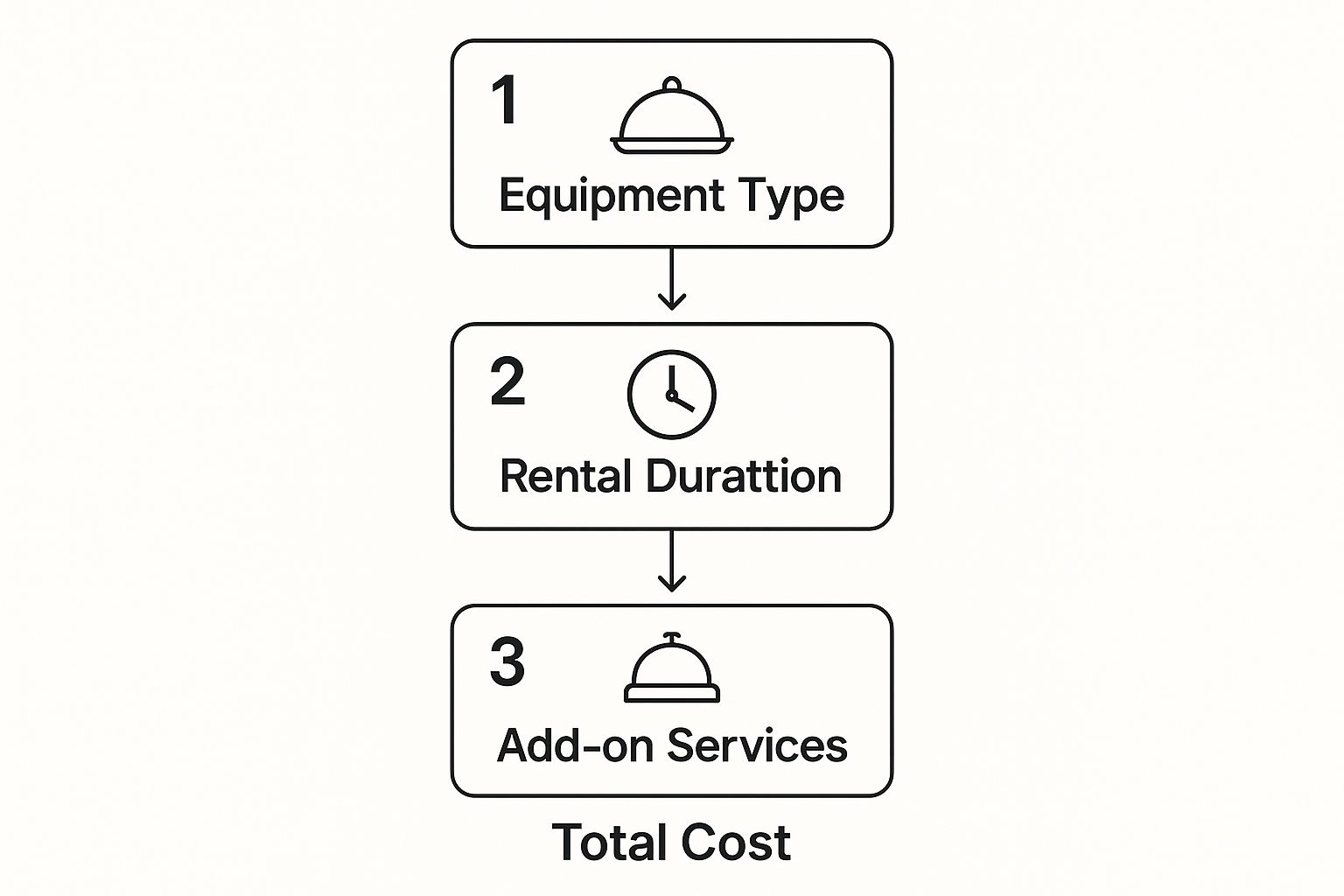
This infographic gives you a quick visual on how all the moving parts come together to form your final rental cost.

Infographic about catering equipment for hire

As you can see, it’s a mix of the equipment you choose, how long you need it for, and any extra services you add on. No hidden mysteries, just clear, transparent pricing.

Managing On-Site Logistics and Post-Event Returns

Catering staff efficiently organising and cleaning equipment after a large event.

The success of your event now boils down to what happens on the ground. This is where you manage the day-of delivery and post-event returns with professional precision, ensuring everything runs without a hitch. A smooth process here not only keeps your service seamless but also keeps your supplier relationships strong for the future.

When your catering equipment for hire arrives, don’t just scribble a signature on the delivery note. Treat it like a proper check-in. Get your inventory list out and physically count and inspect every single item.

Plug in appliances to make sure they’re working, check that everything is clean, and make a note of any pre-existing scuffs or dings. Trust me, this small step can save you from massive headaches and potential deposit disputes down the line.

Setting Up for Success

Once everything is checked in and accounted for, it’s time to create an efficient workflow in your temporary kitchen. Think like a chef and set up distinct zones for different tasks—it’s the best way to prevent chaos when the pressure is on.

  • Prep Zone: This is where the chopping, mixing, and initial assembly happens. Keep it clean and organised.
  • Cooking Line: Arrange ovens, fryers, and grills in a logical flow that matches your menu.
  • Plating and Service Area: Designate a clear space for that final touch before the dishes head out to your guests.
  • Dirty Returns: Have a dedicated spot for used plates and cutlery, keeping it well away from your clean zones.

The party equipment rental market is part of a massive global industry. It thrives by offering comprehensive services like delivery and setup. By organising your on-site space effectively, you’re getting the absolute most out of that convenience. You can discover more insights about the party equipment rental market on DataHorizzon Research.

A professional wrap-up is just as important as the event itself. Don’t let a messy breakdown tarnish a perfectly executed function. It shows respect for both the equipment and the supplier.

The Post-Event Teardown

After the last guest has said their goodbyes, the job isn’t quite over. The first thing to do is follow the rental company’s cleaning guidelines—this usually just means scraping plates and rinsing items. Then, repack everything carefully into its original containers.

If any accidental damage happened during the event, document it immediately with a few photos and let the supplier know. Honesty is always the best policy and builds trust.

A smooth collection process solidifies your reputation as a professional, paving the way for easy future hires. This same level of logistical care is essential when you’re renting furniture for events, ensuring every element of your setup is managed perfectly from start to finish.

Common Questions About Catering Equipment Hire

When you’re deep in the logistics of planning an event, questions about hiring catering equipment are bound to pop up. Getting clear, straightforward advice helps you hire with confidence and sidestep the usual pitfalls. Here are the answers to some of the most frequent questions we hear from planners and caterers on the ground.

How Far in Advance Should I Book?

The golden rule? Lock it in as soon as your event date and menu are confirmed. This is especially true for those high-demand dates, like the December holidays, or if you’ve got your eye on specialty items.

For most events, booking 4-6 weeks in advance is a safe bet. But if you’re planning a massive function during peak season, it’s smart to get your equipment sorted 2-3 months out. This doesn’t just guarantee you get what you need; it often helps you lock in better pricing before the last-minute rush hits.

What Happens If Equipment Fails?

This is exactly why you need to vet your supplier properly. Any hire company worth its salt will give you an emergency contact number for on-the-day support.

Before you sign on the dotted line, get crystal clear on their policy for equipment failure.

  • Do they offer immediate replacements for faulty gear?
  • Is there a technician on call who can actually help?
  • What’s their promised response time for an emergency?

Knowing their support plan gives you crucial peace of mind and acts as a safety net for your event.

A supplier’s emergency plan tells you everything you need to know about their professionalism. Vague promises are a red flag—you need a concrete plan you can count on when a critical service moment goes sideways.

Who Is Responsible for Cleaning?

This is one of those details that can vary quite a bit between companies, so always check the specifics in your rental agreement. Generally, the standard expectation is that you’ll scrape off any food and give the items a decent rinse after use.

The hire company then handles the heavy-duty, final sanitisation back at their warehouse. Some suppliers will also offer a full cleaning service for an extra fee, which can be a real time-saver during a frantic event breakdown.

Do I Need Insurance for Hired Equipment?

Most hire companies include a standard damage waiver in their contracts. This usually covers normal wear and tear from use. However, you will almost always be held liable for any significant damage, loss, or theft of the equipment while it’s in your care.

Make sure you review the liability clause in your contract with a fine-tooth comb. It’s also a good idea to check if your own business or event insurance policy offers any extra coverage. Being fully informed upfront means you won’t be hit with an unexpected—and expensive—bill after your event is over.


Ready to equip your next event for success? The team at ABC Hire offers a premium selection of reliable, high-quality catering and event equipment to bring your vision to life. Explore our extensive inventory and get a quote today at https://abchire.co.za.

📍 Cape Town + Winelands