Double Electric Fryer: Your Cape Town Event Guide

You're usually not thinking about a double electric fryer until the menu is already set and the service plan starts to wobble.

The chips need to go out hot. The chicken strips can't wait behind calamari. Half the guest list wants vegetarian options kept separate. Then someone at the venue says the catering team will be sharing power with the bar, coffee station, and DJ. That's when fryer choice stops being a kitchen detail and becomes an event-planning problem.

In Cape Town, that problem shows up fast at weddings, corporate functions, school events, and private parties. A fryer can help you serve a crowd smoothly, or it can become the bottleneck that holds up the whole line. The difference usually comes down to two things: power planning and menu strategy. Get both right, and a double electric fryer is a very useful tool. Get either wrong, and you'll feel it during peak service.

Why Your Event Needs Smarter Frying

A single fryer works until the rush starts.

The trouble begins when every guest seems to want hot food at once. One basket is tied up with chips, the next batch is waiting, and the queue grows while oil temperature drops between loads. Staff start rushing. Quality slips. Service slows down at the exact moment you need it to feel organised.

That's where a double electric fryer changes the flow. Its value comes from a dual-basket design with two independent cooking zones, each with separate temperature and timer settings, which helps solve the single-basket limitation for large groups and improves service speed at weddings, matric dances, and corporate functions where demand peaks all at once, as noted in this overview of dual-zone fryer development.

Two vats change the pace of service

Think of it as moving from a single-lane road to a dual carriageway. You're not just doubling space. You're reducing the stop-start delays that happen when different foods all need the same fryer at different moments.

One side can run chips continuously while the other handles snack items in smaller batches. Or one vat can stay dedicated to a high-volume menu item while the second gives you flexibility for late additions, dietary requests, or a second serving line.

Practical rule: If your event menu includes more than one fried item, a single fryer often creates a queue inside the kitchen before guests ever see a queue at the counter.

That matters because frying isn't only about cooking. It's about recovery, timing, and holding a rhythm. When staff can drop two batches independently, they make fewer compromises. They don't have to choose between delaying one item or overcrowding one basket.

Better output, not just more equipment

A lot of people hear “double fryer” and assume it's a larger version of a countertop appliance. In practice, it's a workflow tool.

Here's where it helps most:

  • Large guest arrivals: Wedding canapés after the ceremony, school function intervals, and brand activation lunch rushes often hit in one wave.
  • Mixed menus: Chips, chicken, fish bites, samoosas, spring rolls, or doughnut service all compete for fryer time.
  • Service consistency: Two independent vats let staff keep food moving without constantly interrupting one product for another.

If you're still refining your fried menu ideas, seasonings matter too. For teams testing flavour profiles before event day, these Smokey Rebel air fryer rub ideas are a useful reference for thinking through coating and seasoning combinations that can translate into fryer-friendly menu planning.

A double electric fryer doesn't remove pressure from service. It gives your team a better structure for handling it.

Key Fryer Features and Catering Capacity

Spec sheets can look impressive without telling you what matters on event day. For caterers, venues, and planners, three things matter most: temperature range, oil volume, and recovery behaviour.

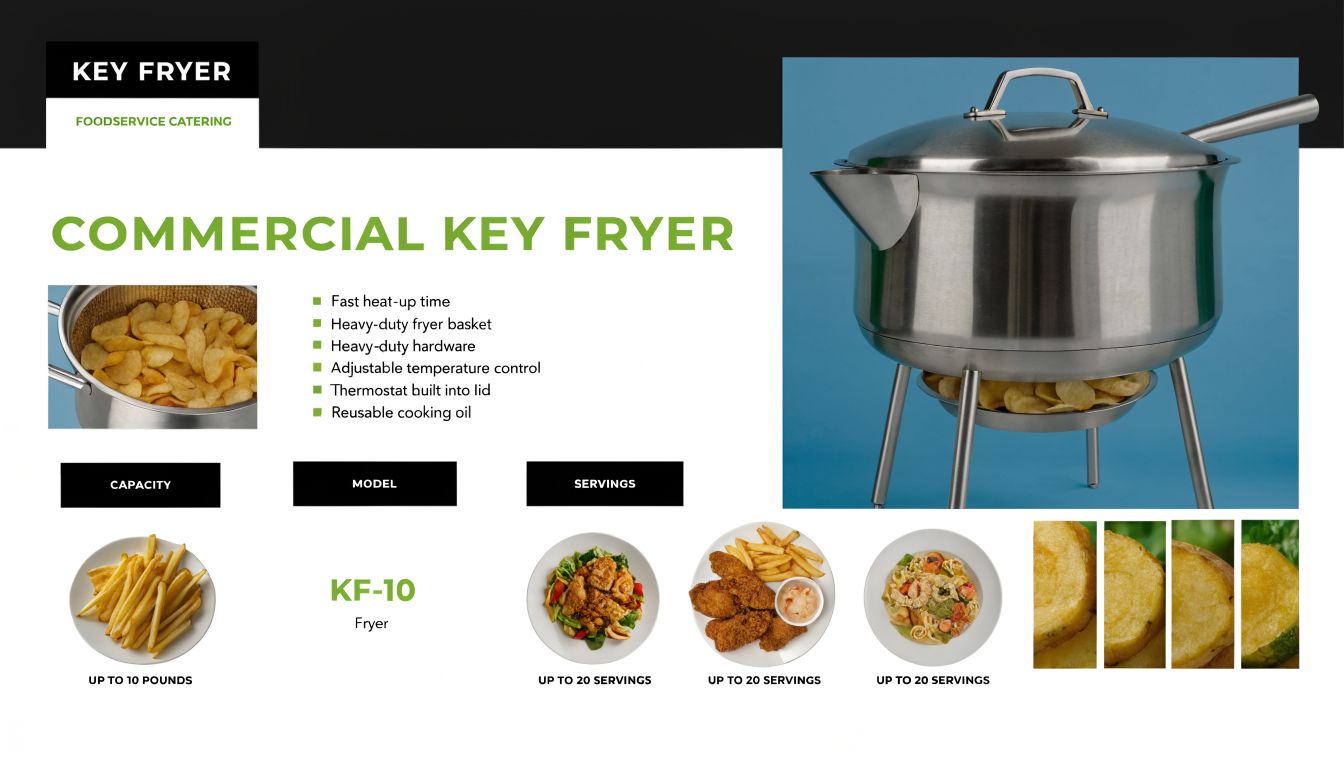
A commercial stainless steel Key Fryer for foodservice catering displayed with images of fried foods.

Commercial double fryers commonly offer adjustable thermostats from 60°C to 200°C, with tank sizes ranging from 3 L per vat for smaller functions to 8 L or more per vat for heavier service. Larger oil volume gives more thermal inertia, which helps the fryer recover faster after each batch and keeps food quality more consistent during busy periods, as shown in this commercial fryer specification overview.

Why oil capacity matters more than most people expect

Small tanks can work well for lighter jobs. They're easier to place, easier to transport, and often fine for short runs of snack service. The problem starts when cold product keeps hitting the oil.

Every fresh load pulls heat out of the vat. If the oil mass is small, the temperature drop is sharper and recovery takes longer. That affects colour, texture, and timing. Chips can turn pale and greasy. Battered items can lose crispness. Staff then compensate by holding food too long or overloading the next batch.

A larger vat gives you more room to absorb that shock.

Fryer feature What it means in service
3 L per vat Better suited to lighter, lower-frequency batches
Mid-size vats More forgiving for mixed-event service
8 L or more per vat Better for repeated batches during peak demand

Temperature range affects menu control

The thermostat range also matters. A fryer that can hold lower and higher setpoints gives the chef or caterer more options across one event.

That helps with:

  • Chips and high-moisture foods: These need stable high heat for clean frying.
  • Delicate snack items: Lower settings can reduce over-browning on lighter products.
  • Split menus: One vat can run one product profile while the second runs another.

A fryer that looks “big enough” on paper can still underperform if the tanks are small and the event menu calls for repeated cold loads.

When comparing models, don't stop at basket count. Look at the tank size and thermostat range first. Those are the two figures that tell you how the unit is likely to behave once the first wave of orders lands.

If you want a visual reference for the kind of unit caterers often compare in this category, this electric countertop twin tank fryer shows the basic layout and format that many event teams are assessing when choosing between compact and higher-capacity options.

Powering Your Fryer in Cape Town A Practical Guide

This is the part many planners leave too late.

A double electric fryer can be completely practical for a Cape Town event, but only if the venue supply, extension run, and backup plan are sorted before the equipment arrives. In South Africa, the limiting factor often isn't basket size. It's the electrical load and the reliability of the supply available on site.

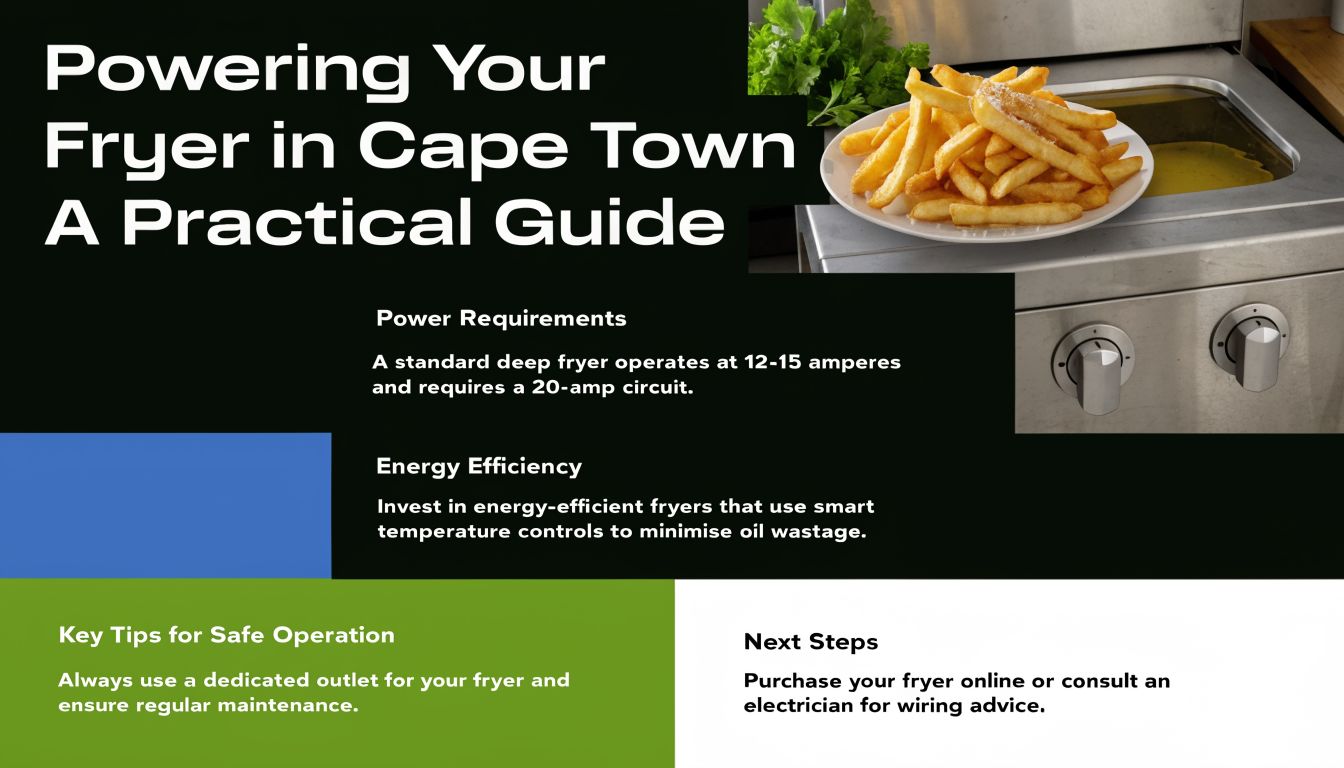
An infographic guide for operating electric deep fryers in Cape Town including power and safety tips.

Commercial double electric fryers can draw from 3.5 kW up to 7.2 kW on a 220 V system, and because each vat has its own heating element, one side can recover after a cold batch while the other continues frying. That benefit only holds if the venue circuit or generator can support the load consistently, as outlined in this double fryer power specification example.

Start with the venue, not the fryer

Before you confirm the menu, ask the venue or site manager very direct questions.

  • What supply is available at the catering point? You need to know whether the fryer is running on a suitable circuit, not just whether “there's a plug nearby”.
  • Is the catering supply shared? Shared circuits with coffee machines, urns, hot trays, or bar fridges can create trouble under load.
  • What happens during an interruption? Outdoor setups, marquees, and temporary kitchens need a realistic backup plan.

In Cape Town and the Winelands, this matters more than generic product pages admit. A fryer may perform perfectly in a test kitchen and badly at a venue if the supply is unstable or undersized.

What works and what usually doesn't

What works is simple. Short cable runs, known circuit capacity, and a dedicated power plan.

What often doesn't work is treating the fryer like a casual countertop appliance. It isn't one. If the unit pulls serious power, then plugging it into a random socket through a long extension shared with other heating equipment is asking for poor recovery, nuisance trips, or inconsistent service.

A proper extension setup matters too. If you're dealing with distance between the kitchen position and the supply point, this guide on choosing a 20 m extension cord for event equipment is worth reviewing before the event layout is finalised.

Don't ask only whether the fryer can switch on. Ask whether it can hold temperature properly for the full service window.

Questions to settle before event day

Use this checklist with your venue, caterer, or hire company:

  1. Confirm the fryer's exact power draw. “Double fryer” is not specific enough.
  2. Ask what plug type the unit uses. Don't assume standard convenience sockets are appropriate.
  3. Check whether the circuit is dedicated. Shared event power causes most surprises.
  4. If using a generator, confirm headroom. The fryer won't be the only load.
  5. Plan around load shedding risk. If service must continue, backup power needs to be part of the kitchen plan, not a last-minute add-on.

For some events, gas equipment may be easier. For others, an electric setup is cleaner and more practical. The right answer depends on the venue infrastructure, not on brochure language.

If you're hiring through a provider such as ABC Hire, this is the conversation to have before confirming the booking. Ask for the actual electrical requirement of the fryer, the operating assumptions, and whether the intended venue setup supports it.

Strategic Menus for Your Double Fryer

The best use of a double electric fryer isn't cooking more of the same thing. It's separating jobs that shouldn't compete with each other.

That's where the equipment starts earning its keep. One vat can handle a high-volume savoury item, while the other protects dietary separation or supports a different service rhythm. For professional catering, that menu flexibility is often a key advantage.

The key benefit isn't only capacity. A double fryer allows physical separation of foods for allergen management and dietary needs, such as vegetarian items apart from meat, which improves food safety and workflow for events serving mixed guest requirements, as discussed in this commercial fryer buying guide.

Use each vat with a purpose

A smart fryer plan usually looks like one of these setups:

  • Vegetarian and meat split: Spring rolls or vegetable samoosas on one side, chicken strips or fish bites on the other.
  • Core item and rotating special: Chips in one vat all service long, with calamari, nuggets, or snack platters in the second.
  • Low-risk separation: Keeping products apart helps reduce flavour transfer and supports cleaner service for guests with specific preferences.

This matters more now because event menus are rarely one-track. A wedding may need a vegetarian late-night snack alongside standard fried options. A school function may need simple crowd-pleasers with clearer separation. A corporate event may want branded snack boxes with different fried components delivered quickly.

Build the menu around service peaks

The strongest menus are the ones that match the fryer's workflow.

Good examples include:

  • Chips and calamari combo: One vat stays dedicated to chips. The second handles seafood to avoid flavour crossover.
  • Samoosas and mini doughnuts: Savoury on one side, sweet on the other, which keeps flavours cleaner.
  • Chicken strips and vegan spring rolls: A practical split for mixed dietary service.

For support equipment, coordinated holding matters just as much as frying. If part of your menu needs to stay hot while later batches finish, these catering food warmers for events are useful to consider alongside the fryer rather than as an afterthought.

Separate vats don't just protect food. They protect your service plan.

Hygiene discipline still matters

Two tanks help with separation, but they don't replace kitchen discipline. Staff still need clear utensil control, basket control, and product handling rules.

A practical kitchen team should define:

  • Which basket belongs to which menu group
  • Which prep trays feed each vat
  • How used oil and crumbs are managed during service
  • Who is responsible for wipe-downs and contamination checks

If your team needs a refresher on cleaning routines around active service, this checklist of essential commercial kitchen hygiene tasks is a helpful starting point.

A double electric fryer gives you flexibility. The kitchen still has to use that flexibility properly.

Renting vs Buying A Fryer for Your Business

For most event businesses, the question isn't whether a double fryer is useful. It's whether ownership makes sense.

That answer depends on frequency of use, storage space, maintenance tolerance, and how predictable your event calendar is. If you're frying at high volume every week in a permanent kitchen, buying can make sense. If your use comes in bursts around weddings, activations, school functions, and seasonal bookings, renting is often the cleaner decision.

In the wider market, deep fryers sat in a category valued at USD 549.8 million in 2023, with projected growth ahead, which signals durable foodservice demand. For local operators, that also means commercial-grade equipment remains a serious purchase with ongoing upkeep, while renting gives access to maintained equipment without the upfront capital commitment, as noted in this commercial fryer market and history overview.

The practical comparison

Factor Renting from ABC Hire Buying Your Own
Upfront cost Lower event-by-event spend Higher initial outlay
Maintenance Usually handled by the hire provider Your responsibility
Storage No long-term storage burden Needs secure storage between jobs
Flexibility Match equipment to event type You use what you own
Idle periods No issue if not used for weeks Asset may sit unused
Cleaning and wear Shared as part of hire workflow and terms Full long-term wear sits with you

When renting usually makes more sense

Renting is a strong fit if your pattern looks like this:

You run occasional larger events rather than daily fryer service. You need the fryer for peak periods, not every week. You don't want to carry storage, transport, and maintenance on equipment that spends long stretches off the floor.

That's common in the event world. A planner may need fryer capacity for one wedding this month, two school functions next month, and nothing the month after. Ownership in that case ties up money in a machine that isn't producing value most days.

For broader event kit planning, this range of catering equipment for hire is a useful reminder that fryers usually work best when hired as part of a coordinated kitchen setup rather than as a standalone item.

When buying can make sense

Buying becomes easier to justify when the fryer is part of your normal operating base. A fixed-site caterer or takeaway kitchen with regular fried output may prefer to own, maintain, and standardise around one unit.

But ownership comes with hidden work:

  • Cleaning after every use
  • Servicing and replacement parts
  • Storage and transport protection
  • Downtime if the unit fails before an event

If you're not set up for those realities, rental is often the more sensible business decision.

Your Double Fryer Hiring Checklist

A fryer booking should never end with “Please reserve one for Saturday.” You need details. The more specific the conversation, the fewer surprises you'll face during setup and service.

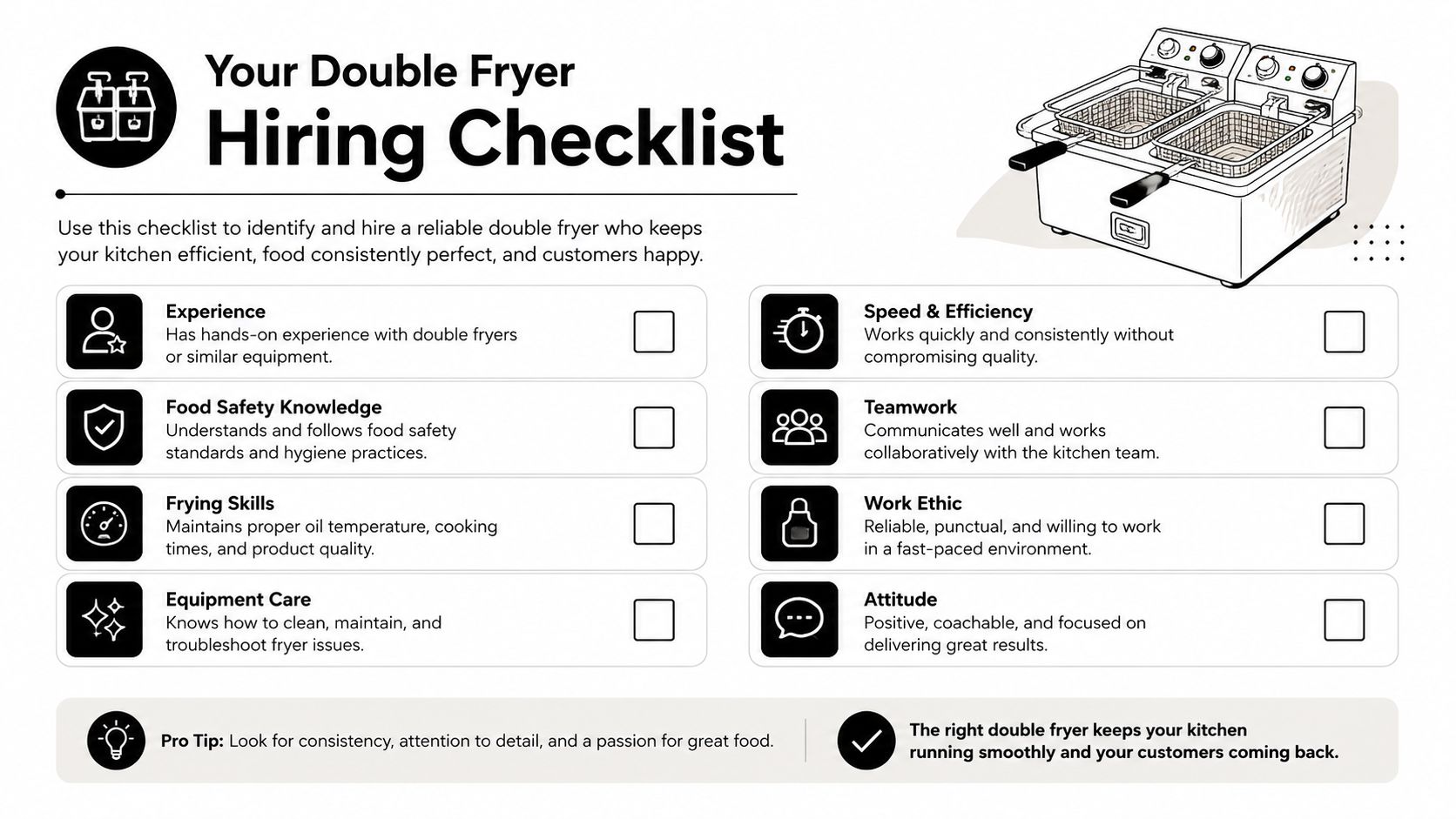
A professional checklist guide for hiring a skilled kitchen staff member to operate a double fryer machine.

Use this checklist before you confirm the hire.

Ask these questions first

  • What are the exact power requirements? Ask for the unit's load, voltage requirement, and plug format.
  • Is the fryer suitable for my venue setup? Mention indoor kitchen, outdoor marquee, mobile catering station, or shared prep area.
  • What comes with the unit? Confirm baskets, lids if applicable, and any handling instructions.
  • Who is responsible for cleaning and oil handling? Set expectations before collection day.
  • What are the delivery and collection arrangements? Timing matters when kitchens are being built on site.

Clarify the service plan

Some events need more than equipment. They need an operator who understands frying rhythm, safe loading, and menu separation.

Ask:

  1. Who will run the fryer during peak service?
  2. Has the menu been matched to the fryer setup?
  3. Do we need warming equipment alongside it?
  4. What is the backup if venue power becomes unreliable?

The best fryer hire is the one that fits the venue, the menu, and the power supply before the first basket goes in.

Final check before sign-off

Run through these last points on the week of the event:

  • Venue power re-confirmed
  • Extension route planned
  • Menu split between vats decided
  • Operator briefed
  • Delivery access cleared
  • Collection timing agreed

A double electric fryer is a very practical piece of event equipment when it's chosen for the right reason. Not because it looks professional on a spec list, but because it solves a real service problem. In Cape Town, that usually means better queue control, cleaner menu separation, and a power plan that won't let you down halfway through the rush.


If you're planning an event and need to check whether a double electric fryer suits your venue, menu, and power setup, ABC Hire can help you work through the practical requirements before you book.

A Guide to Fog Machine Hire in Cape Town

Finding the right fog machine hire is all about matching the gear to the vibe you’re trying to create. It’s not just about pumping out smoke; it’s about crafting an experience, whether that’s a dreamy first dance at a wedding or a high-energy product launch. The right machine can completely transform a room, make your lighting rig look incredible, and create visual moments that people won’t forget.

Choosing the Right Fog Machine for Your Event

When you’re looking at hiring a fog machine, the first question isn’t about the technical specs—it’s about the effect you’re after. The machine that creates a spooky graveyard for a Halloween party is definitely not the one you want for an elegant wedding reception. The trick is to match the fog’s behaviour—how dense it is, how high it floats, and how long it sticks around—to what your event actually needs.

Think about a wedding. For the first dance, everyone wants that magical “dancing on clouds” moment. This is a job for a low-lying fog machine. It works by chilling the fog, making it heavier than the surrounding air so it hugs the floor. You get a beautiful, thick blanket of fog around the couple’s feet without their faces being lost in a cloud of smoke.

Now, flip the script to a high-energy concert or a corporate launch party. The goal there is totally different. You want to make the light beams and lasers slice through the air, creating a dynamic, immersive atmosphere. That’s where a haze machine comes in. It produces a very fine, almost invisible mist that lingers in the air for a long time, perfectly catching every beam of light to add texture and depth to the room.

Bride and groom dancing in dramatic fog effect at elegant wedding reception venue

Fog Fluids and Their Impact

The liquid you put in the machine is just as important as the machine itself. Any professional hire company in Cape Town, including us, will use high-quality, water-based fluids. Why? Because they’re non-toxic, don’t leave a sticky residue on everything, and are perfectly safe for indoor use (as long as there’s decent ventilation). They create a clean, odourless fog that disappears naturally.

You might hear about oil-based fluids, but they’re less common for event hire. They create a much thicker, longer-lasting haze, but they can leave an oily film and are really only suitable for massive theatrical shows or outdoor events where residue isn’t a problem. Always double-check with your supplier that you’re getting a top-notch, water-based fluid for your guests’ safety and comfort.

This isn’t just a niche effect anymore. The South African fogging machine market is set to grow by over 10.37% a year between 2024 and 2029, thanks to the booming event and entertainment industries. This growth means professional-grade fog machine hire is easier to find and more affordable than ever. You can read more about the South African fogging machine market trends for the full picture.

Fog Machine Type Comparison for Events

Knowing your options helps you ask the right questions and pick the perfect machine. Here’s a quick comparison to help you choose the right fog or haze machine based on what you need.

Machine Type Best For Effect Description Typical Fluid Type
Low-Lying Fogger Weddings, Theatre Dense fog that hugs the floor Water-based (Chilled)
Haze Machine Concerts, Clubs, Launches Fine, even mist to enhance lighting Water- or Mineral Oil-based
Standard Fogger Parties, Outdoor Events Bursts of thick, billowing clouds Water-based
CO₂ Jet High-Energy Events Quick, dramatic plumes of cold fog CO₂ Gas (No fluid)

By thinking about the effect you want, the size of your venue, and the type of event you’re planning, you can confidently choose a fog machine hire that will take the atmosphere to the next level and leave a lasting impression.

Getting the Green Light: Venue Rules and Safety Protocols

Two staff members using fog machine at venue entrance with safety check sign displayed

Before you even think about finalising your fog machine hire, the most critical call you need to make is to your venue manager. An atmospheric effect can completely transform a space, but it can also create a massive headache if you haven’t done your homework. Trust me, a surprise fog machine is the quickest way to land on a venue’s bad side.

Your first question is simple: “What’s your policy on atmospheric effects like fog or haze?” You’ll find that many historic venues, especially in places like Stellenbosch or Franschhoek, have very strict rules to protect their interiors and highly sensitive fire systems. Don’t be shocked if they have a blanket ban—it’s far better to know this upfront before you get your heart set on a specific look.

Clearing the Air on Smoke Alarms

If the venue gives you a tentative yes, your very next conversation has to be about their fire alarm system. The particles from a standard water-based fogger are often dense enough to trigger modern smoke detectors, leading to a very unwanted and embarrassing evacuation.

Get on the phone and ask the venue manager these specific questions:

  • What kind of smoke detectors do you have in the event space? Optical or ionisation alarms are almost guaranteed to be triggered by fog. Heat-based detectors, on the other hand, are usually fine.
  • Can the smoke alarms in our specific area be isolated? This is a job strictly for the venue’s fire safety provider. Never, under any circumstances, try to cover or disable a detector yourself.
  • Have other events used fog machines here successfully? Learning from their past experiences can give you a valuable roadmap for your own setup.

A false alarm doesn’t just kill the vibe; it can also land you with a hefty call-out fee from the fire brigade. A ten-minute chat with the venue is a small price to pay to avoid a major disaster.

Proper planning is the cornerstone of any successful event, and it goes way beyond just the special effects. For a deeper dive into coordinating all the moving parts of your big day, our guide on event management in Cape Town offers tons of practical advice for a seamless experience.

Guest Safety and Smart Placement

Beyond the fire alarms, your guests’ safety has to be your top priority. While high-quality fog fluid is non-toxic, good ventilation is still absolutely essential. You don’t want the air to become so thick that it becomes uncomfortable, especially for anyone with respiratory sensitivities.

Chat with both your venue manager and your hire company about where to place the machine. The unit itself can get quite hot, so it needs to be positioned well away from high-traffic areas to prevent any accidental burns or trips over cables. A discreet corner, tucked behind the staging, or near the DJ booth is usually a safe bet. This kind of strategic placement ensures the fog disperses beautifully across the room without becoming a hazard, letting you create that magical atmosphere safely and professionally.

What to Ask Before You Hire a Fog Machine

Getting your fog machine hire sorted should be a simple, transparent part of your event planning. To make sure you’re getting exactly what you need and avoid any nasty surprises on the day, you’ve got to ask the right questions upfront. It’s about more than just the price; it’s about partnering with a reliable Cape Town supplier who actually gets what your event is all about.

First Things First: The Hire Package Itself

A great price doesn’t mean much if it leaves out the essentials. Getting clarity on the little details helps you properly compare quotes and see the real cost.

Before you even think about signing anything, get clear answers on these basics:

  • How much fog fluid is included? Most hires come with a full tank, which sounds great. But is that really enough for a four-hour event with a continuous haze? Always ask what extra fluid costs.
  • How long are the power cables? This is a classic rookie mistake. You need to know if the cables will comfortably reach your power source without becoming a dangerous tripping hazard snaking across the floor.
  • Is delivery, setup, and collection part of the deal? Some companies add these on as extra charges, which can be a real budget-killer. It’s always best to confirm.

Don’t Skip the Fine Print

Once you’ve got the equipment details down, it’s time to look at the hire agreement. This is the stuff that protects both you and the hire company, and glossing over it can lead to unexpected costs if something goes wrong.

A professional company will have no problem walking you through their policies on deposits and potential damages. Having that conversation shows they’re legit and builds trust.

Pro Tip: Always, always ask about their support policy. What’s the plan if the machine packs up mid-event? Knowing their emergency contact number and how quickly they can respond is crucial for your peace of mind.

Thinking About Newer, Modern Options?

It’s also a good idea to ask what kinds of machines they stock, especially if you’re after something a bit more modern. Cordless fog machines, for example, have become incredibly popular for outdoor events or in massive venues where power points are few and far between.

This is a global trend reflected right here in South Africa, as planners look for more flexible and portable solutions. You can actually read more about the expanding fogging machine market and see what’s new.

Finally, just before you book, lock in all the agreement details. Ask about the deposit needed, the damage waiver or policy, and what happens if you need to cancel. Armed with this checklist, you can confidently choose a fog machine hire partner in Cape Town who gives you more than just a machine—they give you a complete, reliable service for your event.

How to Set Up and Operate Your Hired Machine

Alright, the fog machine has arrived, and this is where the fun starts. Getting the setup right is absolutely crucial for creating that amazing atmosphere you’ve pictured for your event. Doing it properly means you’ll get the exact effect you want – whether that’s a moody haze or a big, dramatic cloud of smoke – all while keeping everyone safe.

First up, let’s talk placement. This isn’t just about finding a spot to plug it in; it’s a strategic move that affects both safety and how the fog spreads. These machines, especially the nozzle, can get seriously hot, so you need to put it well out of the way of foot traffic. No one wants an accidental burn. Tucking it into a corner or near the DJ booth usually works a treat, as long as it’s on a solid, flat surface.

You’re aiming for the fog to billow out and fill the space naturally. If your event is in a marquee, placement is even more critical to get right. We’ve actually got some great tips on laying out equipment in our guide on tent hire for parties that you might find useful.

The Initial Setup Process

Before you even think about plugging it in, the first job is to fill the fluid tank. And a word of warning from experience: only use the fog fluid your hire company gave you. Pouring in the wrong stuff can kill the machine for good. You’ll see a fill line on the tank – don’t go past it. Overfilling is a surefire way to make it spit and leak hot liquid everywhere.

With the fluid in, you can connect the power cord and the remote. Most remotes are simple, but take a second to get familiar with the buttons. You’ll likely have options for manual blasts, continuous fog, and maybe even a timer. Once that’s sorted, go ahead and switch the machine on.

Critical Step: The Warm-Up Period
Every single fog machine needs to heat up. It’s non-negotiable. This warm-up time can be anything from 5 to 15 minutes, depending on the model. Be patient. Trying to fire it up too early will just give you a weak puff of smoke or, worse, a sputter of unheated liquid.

You’ll know it’s ready to go when an indicator light (either on the machine or the remote) clicks on. That’s your green light – the heater is at the right temperature, and it’s showtime.

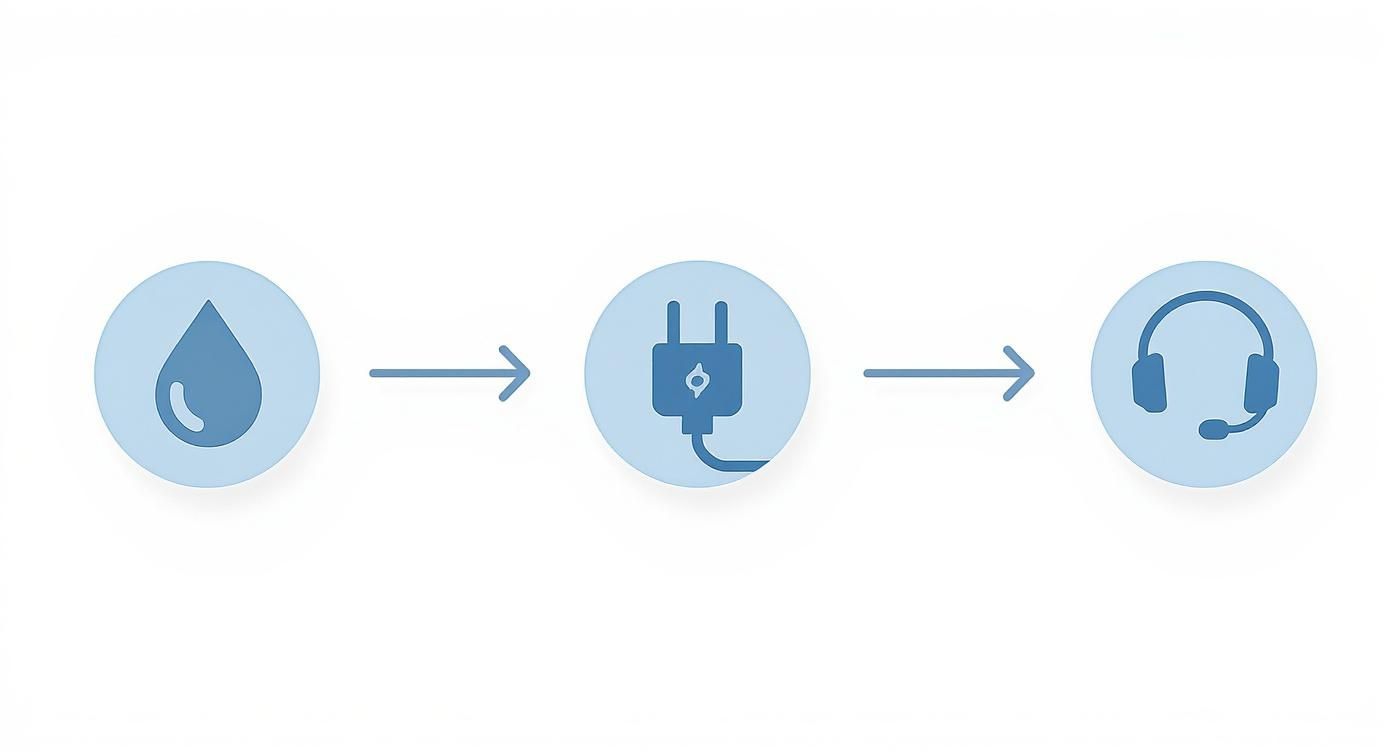
Three step process diagram showing water droplet, electrical plug, and headset icons connected by arrows

This little diagram sums it up nicely: it’s all about managing the fluid, the power, and having the support from us if you need it.

Mastering the Fog Output

Now you get to play the artist. Start with a few short, controlled bursts. This is your test run to see how the fog behaves in the room. You’ll get a feel for how fast it clears and how it plays with your lighting setup. For a big moment like a grand entrance or a drop in a song, a short, powerful blast is perfect.

If you’re aiming for a constant, atmospheric haze (something a dedicated haze machine is built for), you can still get a great effect from a standard fogger by using timed bursts. Many remotes let you set how long the bursts are and how often they happen.

  • For a subtle haze: Try setting it for a quick 2-3 second burst every couple of minutes.
  • For high drama: Hit the manual button for a solid 10-15 second blast to match a key moment in your event.

Just keep an eye on the room’s visibility. Your goal is to add to the vibe, not to blind your guests in a thick whiteout. The difference between a professional-looking effect and an amateur mess is all in the control.

Troubleshooting Common Fog Machine Problems

Even with the best planning in the world, hired equipment can sometimes hit a snag. The key is not to panic. Honestly, most fog machine issues are surprisingly simple to fix right there on the spot, ensuring your event’s atmosphere doesn’t miss a beat.

One of the most common calls we get is for a machine that just won’t produce any fog. Before you do anything else, check the absolute basics. Is the machine plugged into a working power socket and is it actually switched on? It sounds ridiculously obvious, but you’d be surprised how often that’s the culprit. Also, double-check that the remote control is securely connected to the unit.

Next up, have a look at the fog fluid level. If the tank is empty or running on fumes, the machine’s pump can’t draw any liquid, which means zero output. You should always make sure you have more than enough fluid for your event’s duration.

Weak or Sputtering Fog Output

What if your machine is producing a weak, thin mist or seems to be sputtering and coughing? This issue is often related to heat or a blockage. Just give the machine a moment; it might not have fully reached its optimal operating temperature yet. The little indicator light on the remote or the unit itself should be on, which is your signal that it’s ready to go.

A sputtering effect can also point to a partially clogged nozzle. Now, you should never poke anything into the nozzle yourself, but you can try running the machine in a few short, powerful bursts to see if it clears the blockage. If the problem hangs around, it’s best to call your hire company.

A well-maintained fog machine is a reliable one. When you book a fog machine hire, you’re not just renting the equipment; you’re also getting the assurance that it has been professionally cleaned and tested, which drastically reduces the chances of on-site failures.

When to Call for Backup

So, you’ve checked the power, the fluid, and given it plenty of time to warm up, but it’s still playing dead. Now is the time to get your supplier on the phone.

Here are a few scenarios where you need immediate professional support:

  • The machine refuses to heat up at all after 15-20 minutes.
  • It’s continuously leaking fluid from the base, not just the occasional drip from the nozzle.
  • You notice any unusual smells or smoke coming from the unit itself (and not the fog it’s supposed to make).

Being prepared for minor glitches is just part of smart event planning. Knowing these quick checks can save the day, much like having the right tools for other parts of your event. For more insights on event essentials, check out our guide on hiring catering equipment for hire.

Your Fog Machine Hire Questions Answered

When you’re deep in event planning mode, questions always come up, especially when you’re dealing with something cool like a fog machine. Getting straight answers helps you get on with things and plan with confidence. Let’s tackle some of the most common queries we get about fog machine hire right here in Cape Town.

How Much Does a Fog Machine Hire Cost in Cape Town?

You can expect the cost of a fog machine hire in Cape Town to be anywhere from R350 to R800 per day. What you end up paying really comes down to the kind of machine you need and how powerful it is.

A simple, compact fogger, which is perfect for a house party or a small get-together, will sit comfortably at the lower end of that price range. On the other hand, if you’re after a professional-grade haze machine or a low-lying fogger for that dreamy “dancing on clouds” effect at a wedding, you’ll be looking at the higher end.

A Pro Tip: Always double-check what’s actually included in the hire price. A full tank of fog fluid should be standard, but it’s always smart to confirm. Don’t forget to ask about delivery and collection fees – you don’t want any last-minute surprises on your invoice!

Will a Fog Machine Set Off the Smoke Alarms?

This is a big one, and the short answer is yes, it’s a very real possibility. The particles pumped out by a standard fog machine are often dense enough to trigger the optical or ionisation smoke detectors you find in most modern venues.

This is exactly why you must have a chat with your venue manager before you even think about booking a machine. You need their green light. They’ll know if the fire alarm system in your specific event space can be professionally and safely isolated for the time you need it. Whatever you do, never try to cover or mess with a smoke alarm yourself.

If switching off the system isn’t an option, a haze machine might be the way to go since it creates a much finer mist. But even then, you’ll still need the venue’s explicit permission.

How Much Fog Fluid Am I Going to Need?

Working out how much fluid you’ll get through boils down to three things: the machine’s power, how thick you want the fog, and how long the party’s going. As a rule of thumb, a standard one-litre tank of fluid can last between two and four hours if you’re just using it in short bursts for key moments.

But, if you want a constant, thick blanket of fog for the whole night, you could burn through that same tank in just an hour. The best thing to do is give your supplier all the details. Tell them about your venue size, how long the event is, and the kind of vibe you’re aiming for. An experienced hire company will be able to give you a solid estimate and make sure you have extra fluid on hand, just in case.

Is the Fog from a Hired Machine Safe?

Absolutely, as long as you’re hiring from a reputable company. Professional event suppliers only use high-quality, water-based fog fluids that are non-toxic and perfectly safe to breathe for most people.

Having said that, good ventilation is still important. You want to create an amazing atmosphere, not make the air so thick that it’s uncomfortable. While the fog is safe, people with asthma or other respiratory conditions can sometimes be more sensitive. Just stick to the supplier’s safety guidelines, and you’ll ensure a great, comfortable experience for all your guests.


Ready to create an unforgettable atmosphere at your next event? ABC Hire offers a wide range of professional fog machines and special effects equipment to bring your vision to life. Explore our options and get a quote today at https://abchire.co.za.