
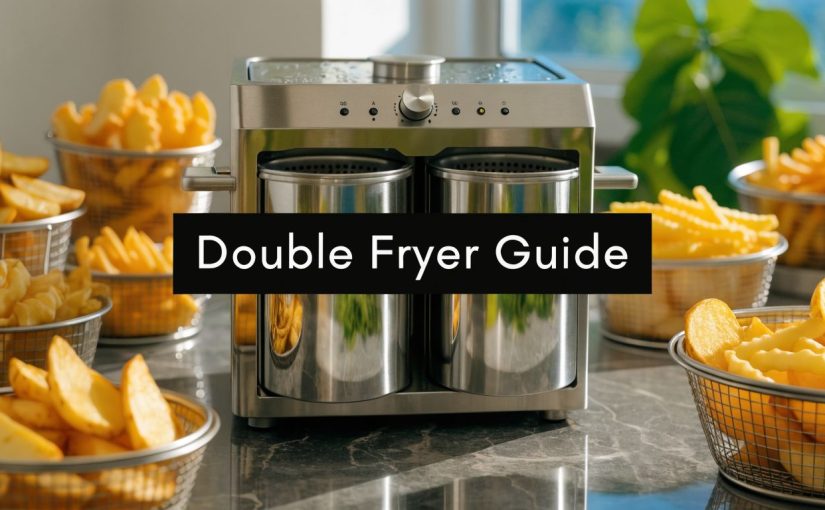
You're usually not thinking about a double electric fryer until the menu is already set and the service plan starts to wobble.
The chips need to go out hot. The chicken strips can't wait behind calamari. Half the guest list wants vegetarian options kept separate. Then someone at the venue says the catering team will be sharing power with the bar, coffee station, and DJ. That's when fryer choice stops being a kitchen detail and becomes an event-planning problem.
In Cape Town, that problem shows up fast at weddings, corporate functions, school events, and private parties. A fryer can help you serve a crowd smoothly, or it can become the bottleneck that holds up the whole line. The difference usually comes down to two things: power planning and menu strategy. Get both right, and a double electric fryer is a very useful tool. Get either wrong, and you'll feel it during peak service.
Why Your Event Needs Smarter Frying
A single fryer works until the rush starts.
The trouble begins when every guest seems to want hot food at once. One basket is tied up with chips, the next batch is waiting, and the queue grows while oil temperature drops between loads. Staff start rushing. Quality slips. Service slows down at the exact moment you need it to feel organised.
That's where a double electric fryer changes the flow. Its value comes from a dual-basket design with two independent cooking zones, each with separate temperature and timer settings, which helps solve the single-basket limitation for large groups and improves service speed at weddings, matric dances, and corporate functions where demand peaks all at once, as noted in this overview of dual-zone fryer development.
Two vats change the pace of service
Think of it as moving from a single-lane road to a dual carriageway. You're not just doubling space. You're reducing the stop-start delays that happen when different foods all need the same fryer at different moments.
One side can run chips continuously while the other handles snack items in smaller batches. Or one vat can stay dedicated to a high-volume menu item while the second gives you flexibility for late additions, dietary requests, or a second serving line.
Practical rule: If your event menu includes more than one fried item, a single fryer often creates a queue inside the kitchen before guests ever see a queue at the counter.
That matters because frying isn't only about cooking. It's about recovery, timing, and holding a rhythm. When staff can drop two batches independently, they make fewer compromises. They don't have to choose between delaying one item or overcrowding one basket.
Better output, not just more equipment
A lot of people hear “double fryer” and assume it's a larger version of a countertop appliance. In practice, it's a workflow tool.
Here's where it helps most:
- Large guest arrivals: Wedding canapés after the ceremony, school function intervals, and brand activation lunch rushes often hit in one wave.
- Mixed menus: Chips, chicken, fish bites, samoosas, spring rolls, or doughnut service all compete for fryer time.
- Service consistency: Two independent vats let staff keep food moving without constantly interrupting one product for another.
If you're still refining your fried menu ideas, seasonings matter too. For teams testing flavour profiles before event day, these Smokey Rebel air fryer rub ideas are a useful reference for thinking through coating and seasoning combinations that can translate into fryer-friendly menu planning.
A double electric fryer doesn't remove pressure from service. It gives your team a better structure for handling it.
Key Fryer Features and Catering Capacity
Spec sheets can look impressive without telling you what matters on event day. For caterers, venues, and planners, three things matter most: temperature range, oil volume, and recovery behaviour.
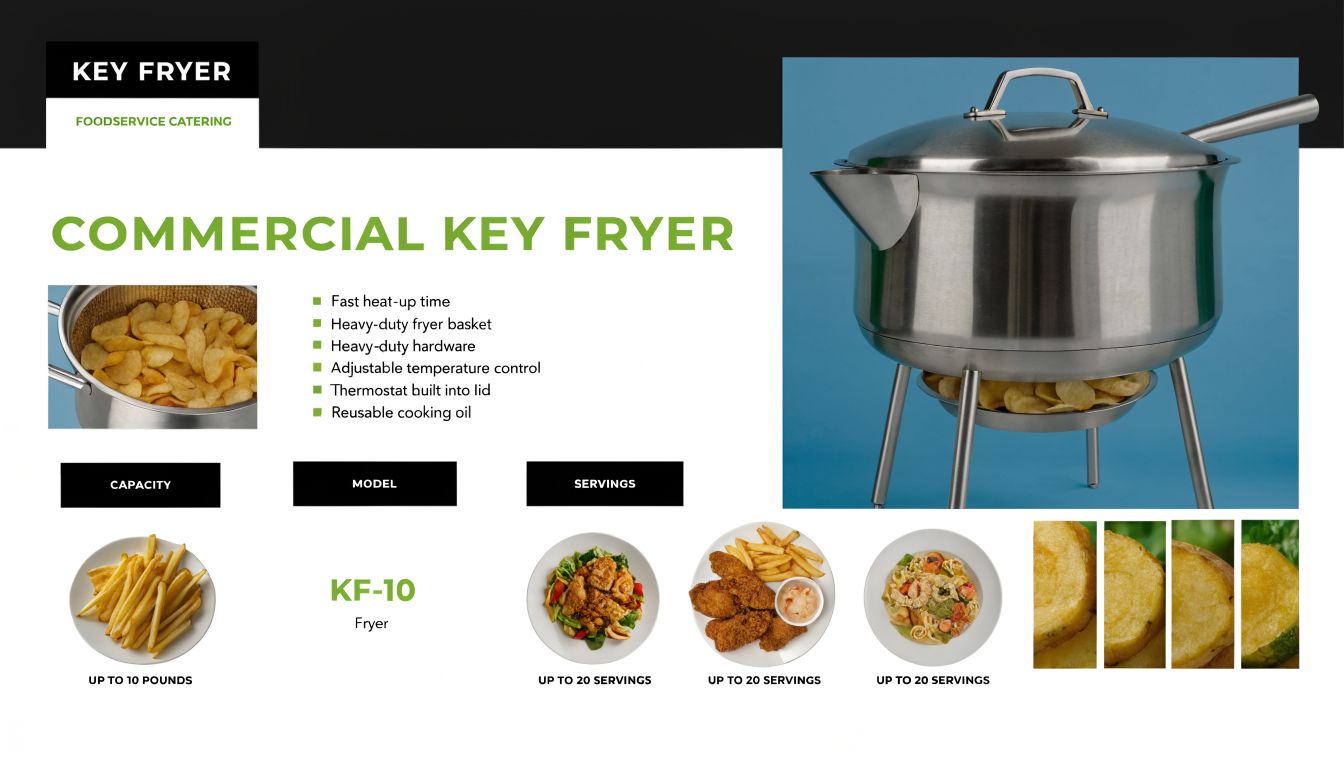
Commercial double fryers commonly offer adjustable thermostats from 60°C to 200°C, with tank sizes ranging from 3 L per vat for smaller functions to 8 L or more per vat for heavier service. Larger oil volume gives more thermal inertia, which helps the fryer recover faster after each batch and keeps food quality more consistent during busy periods, as shown in this commercial fryer specification overview.
Why oil capacity matters more than most people expect
Small tanks can work well for lighter jobs. They're easier to place, easier to transport, and often fine for short runs of snack service. The problem starts when cold product keeps hitting the oil.
Every fresh load pulls heat out of the vat. If the oil mass is small, the temperature drop is sharper and recovery takes longer. That affects colour, texture, and timing. Chips can turn pale and greasy. Battered items can lose crispness. Staff then compensate by holding food too long or overloading the next batch.
A larger vat gives you more room to absorb that shock.
| Fryer feature | What it means in service |
|---|---|
| 3 L per vat | Better suited to lighter, lower-frequency batches |
| Mid-size vats | More forgiving for mixed-event service |
| 8 L or more per vat | Better for repeated batches during peak demand |
Temperature range affects menu control
The thermostat range also matters. A fryer that can hold lower and higher setpoints gives the chef or caterer more options across one event.
That helps with:
- Chips and high-moisture foods: These need stable high heat for clean frying.
- Delicate snack items: Lower settings can reduce over-browning on lighter products.
- Split menus: One vat can run one product profile while the second runs another.
A fryer that looks “big enough” on paper can still underperform if the tanks are small and the event menu calls for repeated cold loads.
When comparing models, don't stop at basket count. Look at the tank size and thermostat range first. Those are the two figures that tell you how the unit is likely to behave once the first wave of orders lands.
If you want a visual reference for the kind of unit caterers often compare in this category, this electric countertop twin tank fryer shows the basic layout and format that many event teams are assessing when choosing between compact and higher-capacity options.
Powering Your Fryer in Cape Town A Practical Guide
This is the part many planners leave too late.
A double electric fryer can be completely practical for a Cape Town event, but only if the venue supply, extension run, and backup plan are sorted before the equipment arrives. In South Africa, the limiting factor often isn't basket size. It's the electrical load and the reliability of the supply available on site.
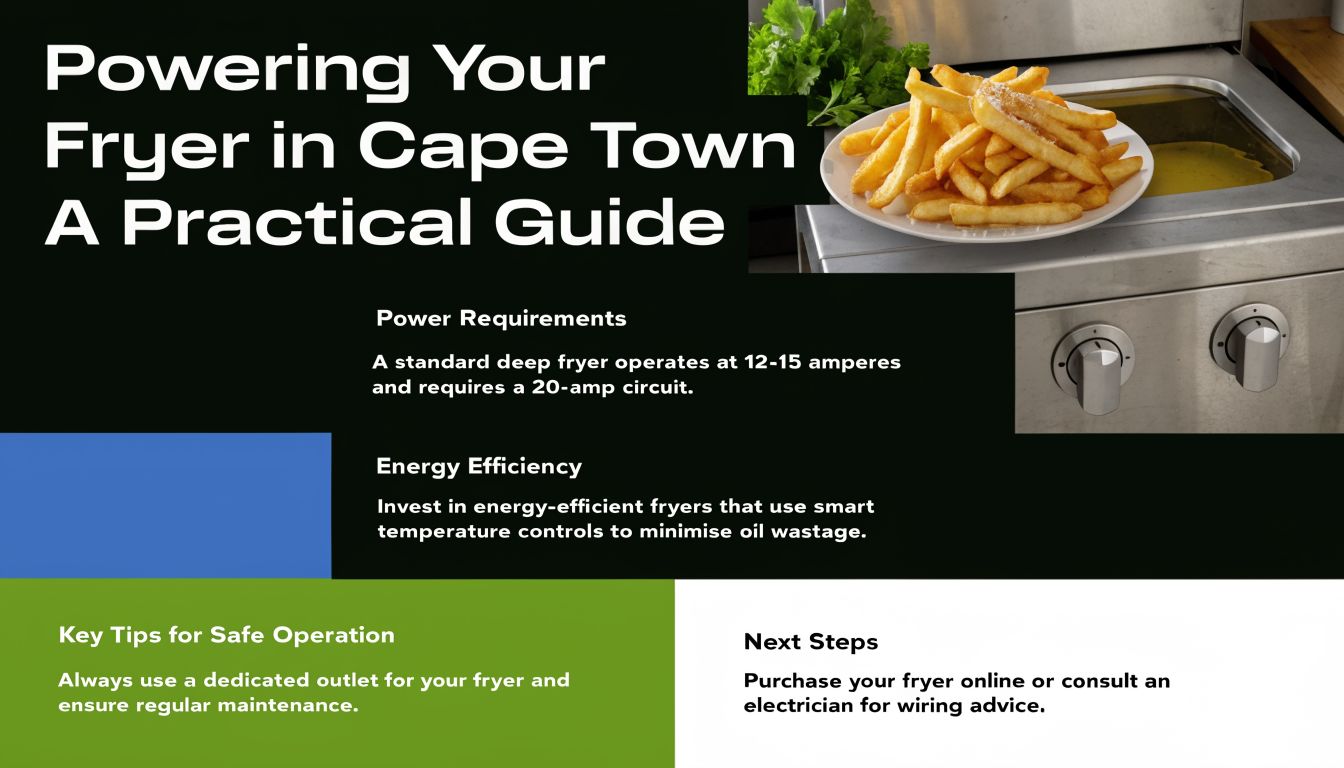
Commercial double electric fryers can draw from 3.5 kW up to 7.2 kW on a 220 V system, and because each vat has its own heating element, one side can recover after a cold batch while the other continues frying. That benefit only holds if the venue circuit or generator can support the load consistently, as outlined in this double fryer power specification example.
Start with the venue, not the fryer
Before you confirm the menu, ask the venue or site manager very direct questions.
- What supply is available at the catering point? You need to know whether the fryer is running on a suitable circuit, not just whether “there's a plug nearby”.
- Is the catering supply shared? Shared circuits with coffee machines, urns, hot trays, or bar fridges can create trouble under load.
- What happens during an interruption? Outdoor setups, marquees, and temporary kitchens need a realistic backup plan.
In Cape Town and the Winelands, this matters more than generic product pages admit. A fryer may perform perfectly in a test kitchen and badly at a venue if the supply is unstable or undersized.
What works and what usually doesn't
What works is simple. Short cable runs, known circuit capacity, and a dedicated power plan.
What often doesn't work is treating the fryer like a casual countertop appliance. It isn't one. If the unit pulls serious power, then plugging it into a random socket through a long extension shared with other heating equipment is asking for poor recovery, nuisance trips, or inconsistent service.
A proper extension setup matters too. If you're dealing with distance between the kitchen position and the supply point, this guide on choosing a 20 m extension cord for event equipment is worth reviewing before the event layout is finalised.
Don't ask only whether the fryer can switch on. Ask whether it can hold temperature properly for the full service window.
Questions to settle before event day
Use this checklist with your venue, caterer, or hire company:
- Confirm the fryer's exact power draw. “Double fryer” is not specific enough.
- Ask what plug type the unit uses. Don't assume standard convenience sockets are appropriate.
- Check whether the circuit is dedicated. Shared event power causes most surprises.
- If using a generator, confirm headroom. The fryer won't be the only load.
- Plan around load shedding risk. If service must continue, backup power needs to be part of the kitchen plan, not a last-minute add-on.
For some events, gas equipment may be easier. For others, an electric setup is cleaner and more practical. The right answer depends on the venue infrastructure, not on brochure language.
If you're hiring through a provider such as ABC Hire, this is the conversation to have before confirming the booking. Ask for the actual electrical requirement of the fryer, the operating assumptions, and whether the intended venue setup supports it.
Strategic Menus for Your Double Fryer
The best use of a double electric fryer isn't cooking more of the same thing. It's separating jobs that shouldn't compete with each other.
That's where the equipment starts earning its keep. One vat can handle a high-volume savoury item, while the other protects dietary separation or supports a different service rhythm. For professional catering, that menu flexibility is often a key advantage.
The key benefit isn't only capacity. A double fryer allows physical separation of foods for allergen management and dietary needs, such as vegetarian items apart from meat, which improves food safety and workflow for events serving mixed guest requirements, as discussed in this commercial fryer buying guide.
Use each vat with a purpose
A smart fryer plan usually looks like one of these setups:
- Vegetarian and meat split: Spring rolls or vegetable samoosas on one side, chicken strips or fish bites on the other.
- Core item and rotating special: Chips in one vat all service long, with calamari, nuggets, or snack platters in the second.
- Low-risk separation: Keeping products apart helps reduce flavour transfer and supports cleaner service for guests with specific preferences.
This matters more now because event menus are rarely one-track. A wedding may need a vegetarian late-night snack alongside standard fried options. A school function may need simple crowd-pleasers with clearer separation. A corporate event may want branded snack boxes with different fried components delivered quickly.
Build the menu around service peaks
The strongest menus are the ones that match the fryer's workflow.
Good examples include:
- Chips and calamari combo: One vat stays dedicated to chips. The second handles seafood to avoid flavour crossover.
- Samoosas and mini doughnuts: Savoury on one side, sweet on the other, which keeps flavours cleaner.
- Chicken strips and vegan spring rolls: A practical split for mixed dietary service.
For support equipment, coordinated holding matters just as much as frying. If part of your menu needs to stay hot while later batches finish, these catering food warmers for events are useful to consider alongside the fryer rather than as an afterthought.
Separate vats don't just protect food. They protect your service plan.
Hygiene discipline still matters
Two tanks help with separation, but they don't replace kitchen discipline. Staff still need clear utensil control, basket control, and product handling rules.
A practical kitchen team should define:
- Which basket belongs to which menu group
- Which prep trays feed each vat
- How used oil and crumbs are managed during service
- Who is responsible for wipe-downs and contamination checks
If your team needs a refresher on cleaning routines around active service, this checklist of essential commercial kitchen hygiene tasks is a helpful starting point.
A double electric fryer gives you flexibility. The kitchen still has to use that flexibility properly.
Renting vs Buying A Fryer for Your Business
For most event businesses, the question isn't whether a double fryer is useful. It's whether ownership makes sense.
That answer depends on frequency of use, storage space, maintenance tolerance, and how predictable your event calendar is. If you're frying at high volume every week in a permanent kitchen, buying can make sense. If your use comes in bursts around weddings, activations, school functions, and seasonal bookings, renting is often the cleaner decision.
In the wider market, deep fryers sat in a category valued at USD 549.8 million in 2023, with projected growth ahead, which signals durable foodservice demand. For local operators, that also means commercial-grade equipment remains a serious purchase with ongoing upkeep, while renting gives access to maintained equipment without the upfront capital commitment, as noted in this commercial fryer market and history overview.
The practical comparison
| Factor | Renting from ABC Hire | Buying Your Own |
|---|---|---|
| Upfront cost | Lower event-by-event spend | Higher initial outlay |
| Maintenance | Usually handled by the hire provider | Your responsibility |
| Storage | No long-term storage burden | Needs secure storage between jobs |
| Flexibility | Match equipment to event type | You use what you own |
| Idle periods | No issue if not used for weeks | Asset may sit unused |
| Cleaning and wear | Shared as part of hire workflow and terms | Full long-term wear sits with you |
When renting usually makes more sense
Renting is a strong fit if your pattern looks like this:
You run occasional larger events rather than daily fryer service. You need the fryer for peak periods, not every week. You don't want to carry storage, transport, and maintenance on equipment that spends long stretches off the floor.
That's common in the event world. A planner may need fryer capacity for one wedding this month, two school functions next month, and nothing the month after. Ownership in that case ties up money in a machine that isn't producing value most days.
For broader event kit planning, this range of catering equipment for hire is a useful reminder that fryers usually work best when hired as part of a coordinated kitchen setup rather than as a standalone item.
When buying can make sense
Buying becomes easier to justify when the fryer is part of your normal operating base. A fixed-site caterer or takeaway kitchen with regular fried output may prefer to own, maintain, and standardise around one unit.
But ownership comes with hidden work:
- Cleaning after every use
- Servicing and replacement parts
- Storage and transport protection
- Downtime if the unit fails before an event
If you're not set up for those realities, rental is often the more sensible business decision.
Your Double Fryer Hiring Checklist
A fryer booking should never end with “Please reserve one for Saturday.” You need details. The more specific the conversation, the fewer surprises you'll face during setup and service.
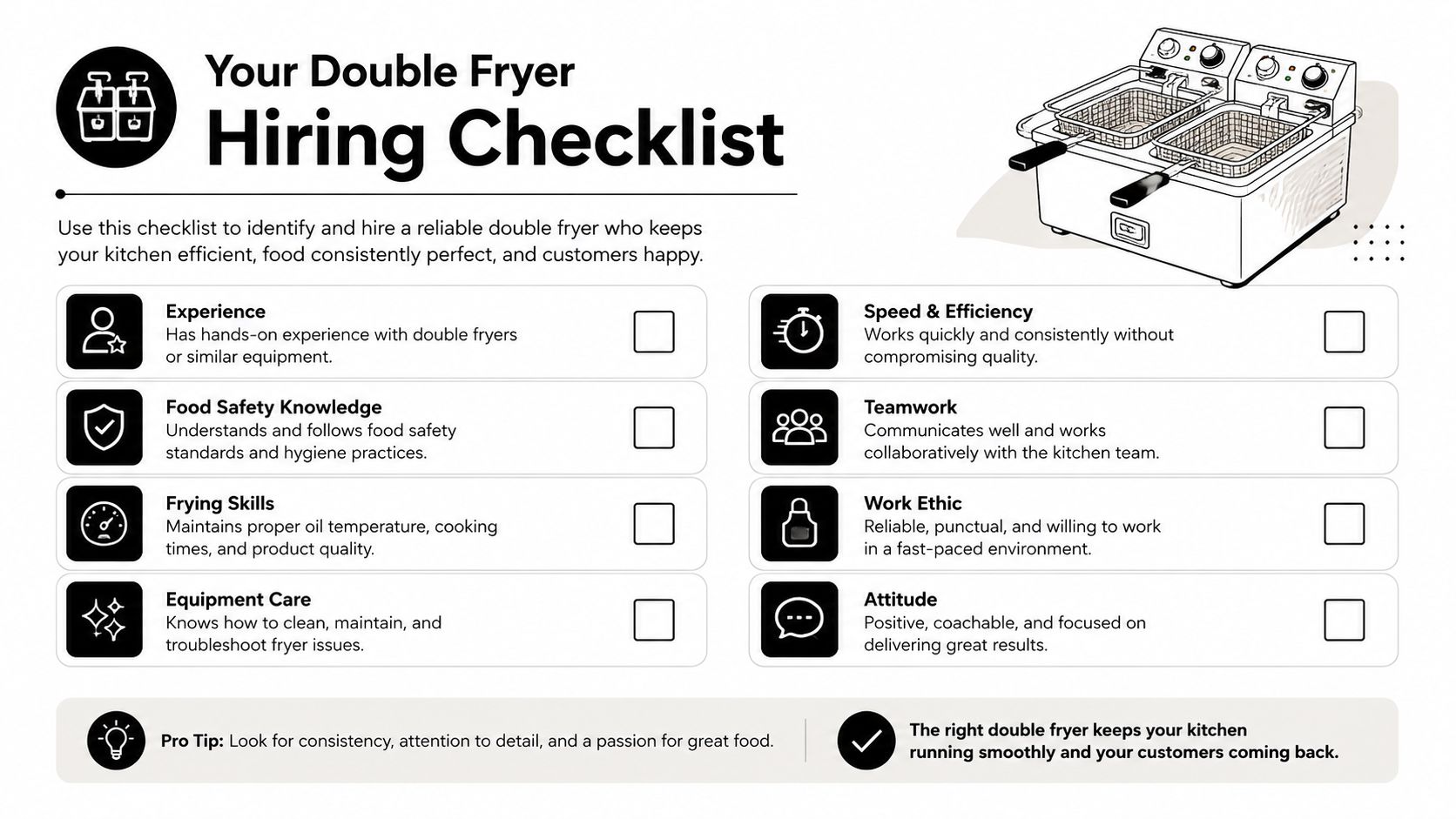
Use this checklist before you confirm the hire.
Ask these questions first
- What are the exact power requirements? Ask for the unit's load, voltage requirement, and plug format.
- Is the fryer suitable for my venue setup? Mention indoor kitchen, outdoor marquee, mobile catering station, or shared prep area.
- What comes with the unit? Confirm baskets, lids if applicable, and any handling instructions.
- Who is responsible for cleaning and oil handling? Set expectations before collection day.
- What are the delivery and collection arrangements? Timing matters when kitchens are being built on site.
Clarify the service plan
Some events need more than equipment. They need an operator who understands frying rhythm, safe loading, and menu separation.
Ask:
- Who will run the fryer during peak service?
- Has the menu been matched to the fryer setup?
- Do we need warming equipment alongside it?
- What is the backup if venue power becomes unreliable?
The best fryer hire is the one that fits the venue, the menu, and the power supply before the first basket goes in.
Final check before sign-off
Run through these last points on the week of the event:
- Venue power re-confirmed
- Extension route planned
- Menu split between vats decided
- Operator briefed
- Delivery access cleared
- Collection timing agreed
A double electric fryer is a very practical piece of event equipment when it's chosen for the right reason. Not because it looks professional on a spec list, but because it solves a real service problem. In Cape Town, that usually means better queue control, cleaner menu separation, and a power plan that won't let you down halfway through the rush.
If you're planning an event and need to check whether a double electric fryer suits your venue, menu, and power setup, ABC Hire can help you work through the practical requirements before you book.