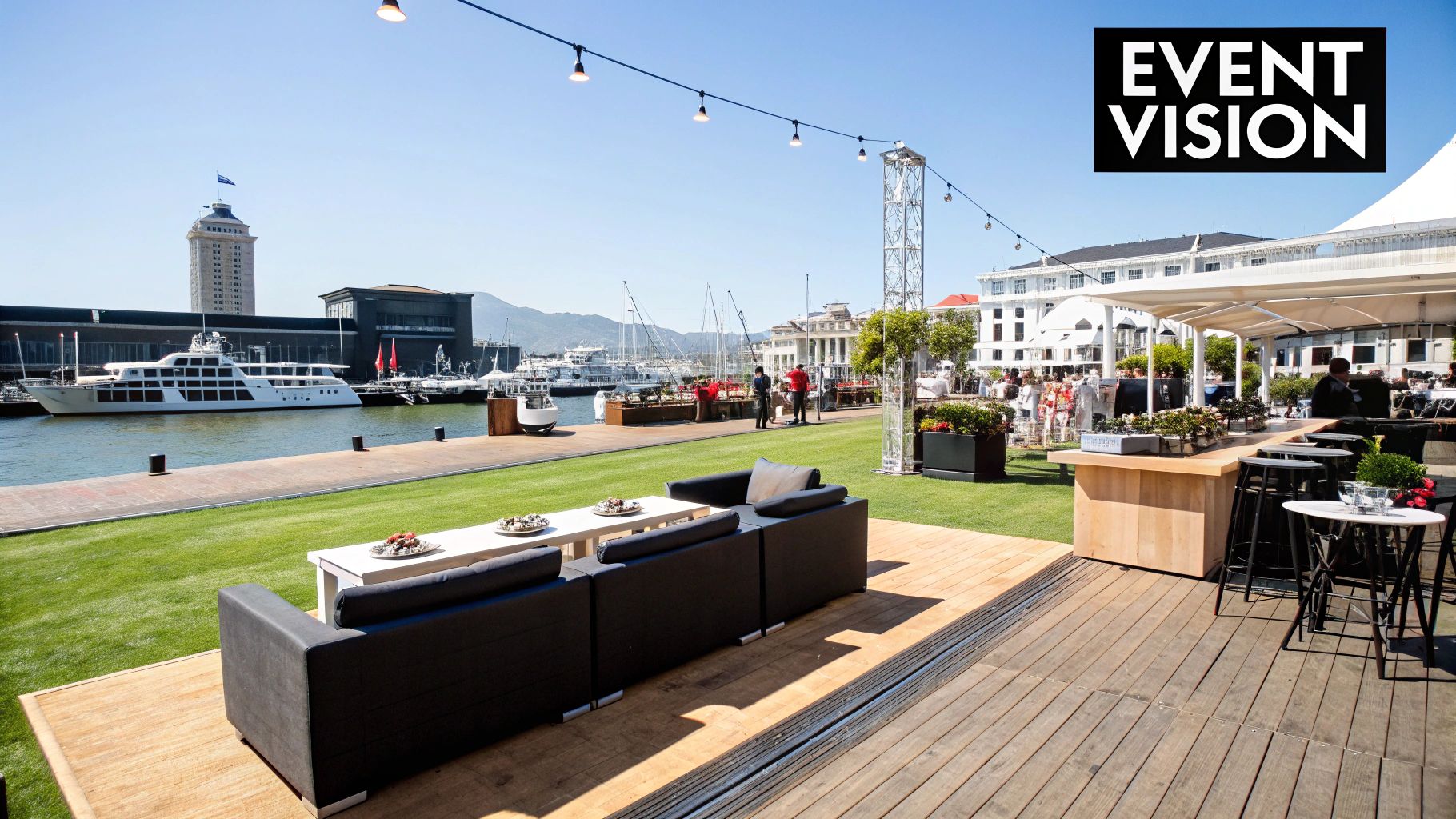
You're probably making decisions in the least forgiving phase of event planning. The venue is booked. The brief is approved. The guest experience needs to feel luxurious, not rented. And suddenly the furniture matters far more than many expect.
That's because guests don't remember a floor plan. They remember how the room felt. They remember whether the lounge area invited people to stay, whether the cocktail setup encouraged movement, and whether the furniture matched the standard promised by the invitation, the venue, and the brand.
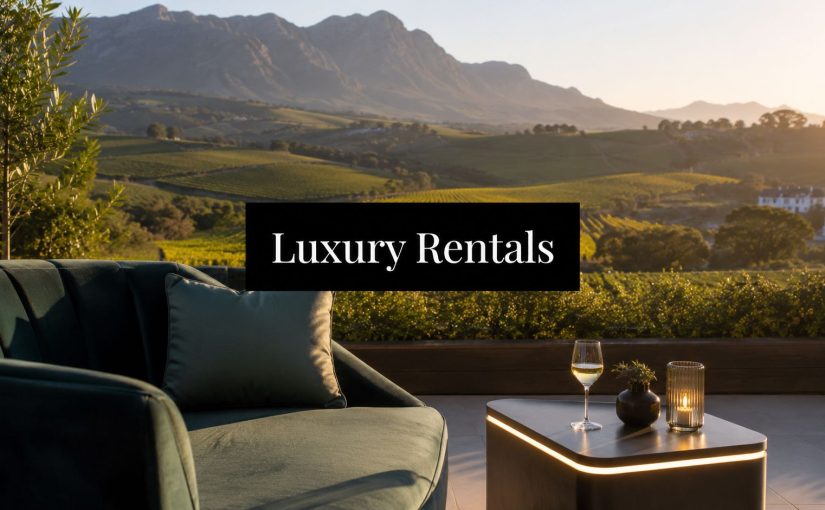
In Cape Town and the Winelands, that standard is high. A vineyard reception, a Clifton celebration, a Woodstock launch, and a matric dance in the southern suburbs all ask for different visual language. Luxury furniture rental works when it shapes that language with intent, and when the practical side, delivery, setup, weather-readiness, and collection, runs quietly in the background.
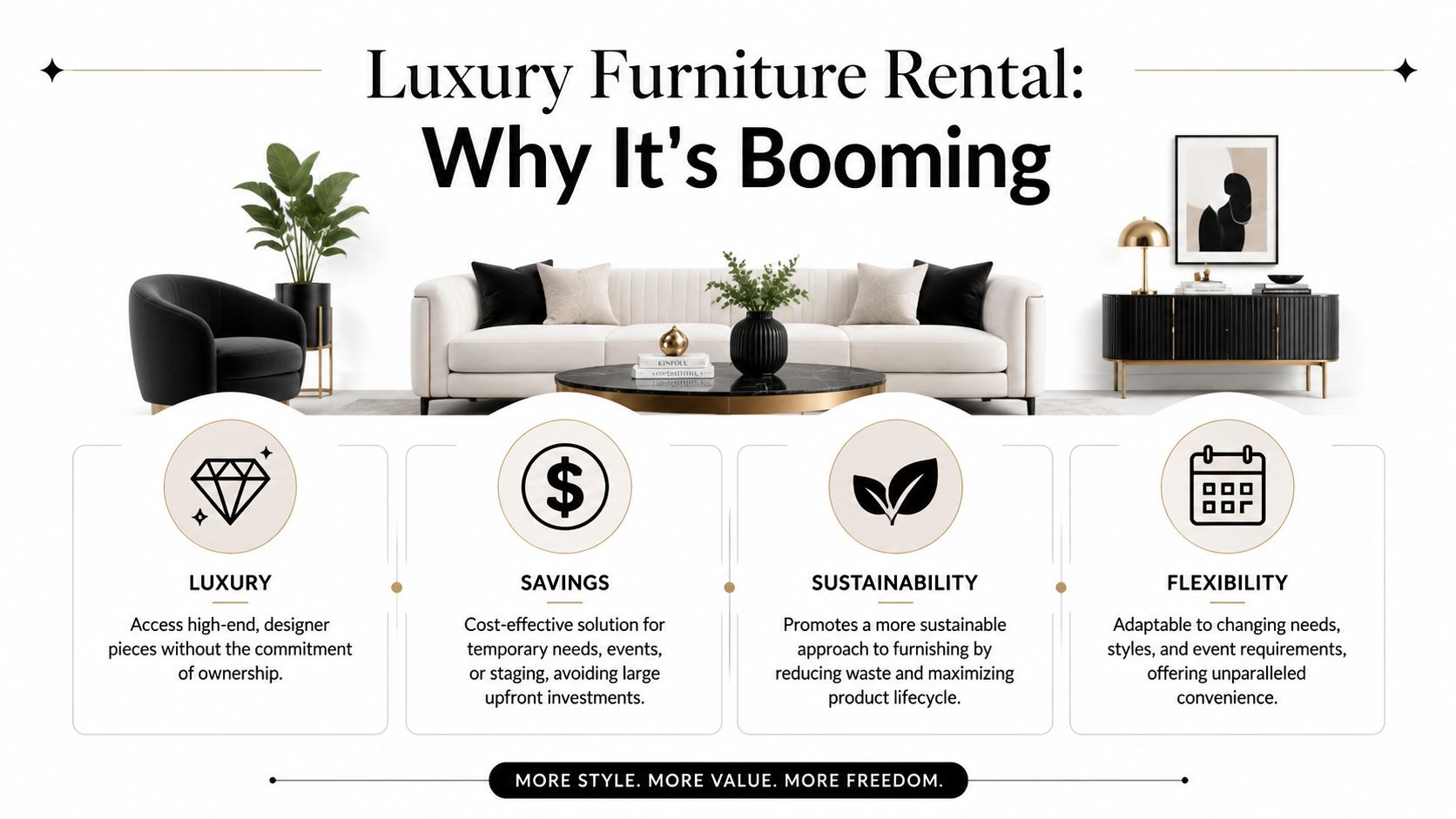
What Is Luxury Furniture Rental and Why It's Booming
Luxury furniture rental isn't just hiring expensive chairs. It's the short-term use of design-led event furniture that changes the tone of a space. That can mean sculptural lounge seating for a wedding, illuminated counters for a late-night activation, bar furniture that sharpens a rooftop cocktail event, or refined dining chairs that lift a formal dinner from serviceable to memorable.
The difference sits in three things. First, finish. Premium upholstery, clean lines, consistent condition, and pieces that photograph well under daylight and event lighting. Second, cohesion. Good rental ranges are built as collections, not random stock. Third, function. The right piece doesn't only look good. It helps guests settle, circulate, gather, or celebrate the way the event needs them to.
It's about experience, not stock
A high-end event almost always asks for furniture with a job to do.
- Lounge pieces: These soften formal venues and create places where guests spend time.
- Statement bars and counters: These often become visual anchors, especially at receptions and brand events.
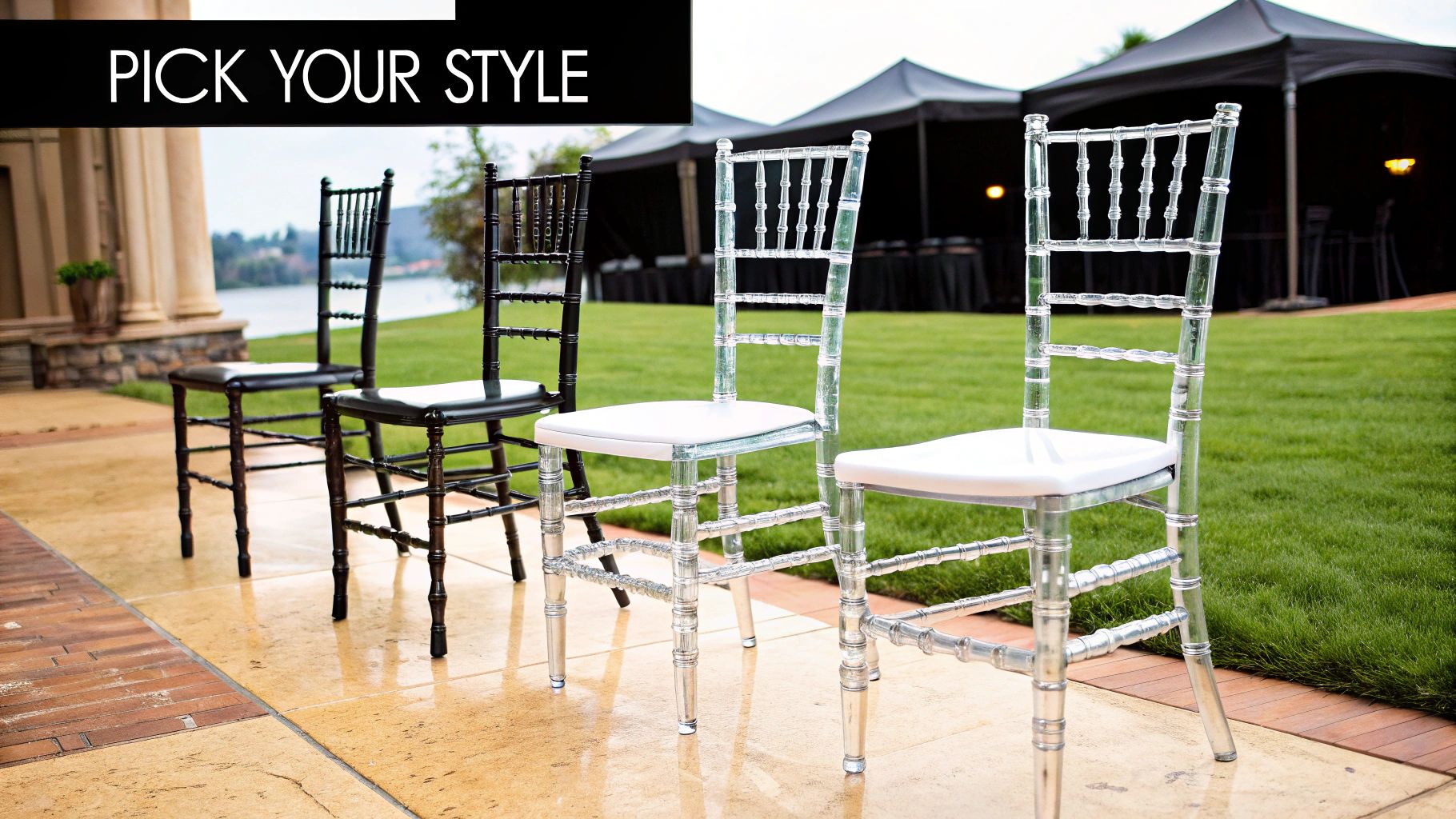
- Designer seating: This shapes the level of formality immediately.
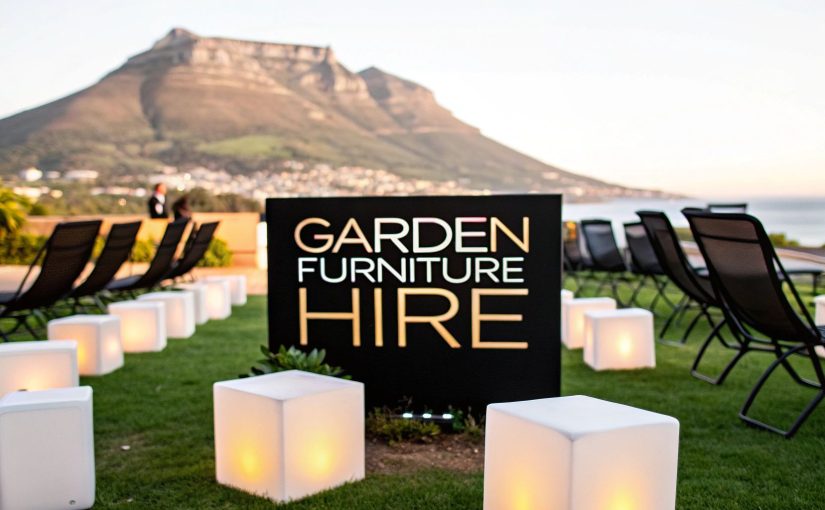
- LED furniture: This works best when the event needs atmosphere after dark, especially for matric dances, launches, and private parties.
A host buying these pieces outright would take on sourcing, transport, storage, cleaning, maintenance, and style risk. Rental removes that burden. It also keeps your options open when the brief changes, the venue surprises you, or you realise the original layout won't work on site.
Practical rule: If furniture has to be stored, repaired, transported, and styled for only one occasion, rental is usually the cleaner decision.
That flexibility is one reason the category is accelerating. South Africa's furniture rental market is projected to reach USD 1,754.41 million by 2033, growing at a CAGR of 11.38% from 2025 to 2033 according to industry projections for the furniture rental market. For event planners, that matters because it signals a broader shift toward temporary-use, high-impact solutions rather than ownership.
Why hosts choose rental for premium events
Cape Town clients usually arrive at the same conclusion from different directions. Couples want a reception that feels layered and polished. Corporate teams want brand alignment and a smooth install. Schools need something modern enough for photos but durable enough for a busy evening. Private hosts want a celebration that looks considered without turning their home or venue into a logistics exercise.
Luxury furniture rental solves several trade-offs at once:
| Priority | What rental helps you avoid | What it helps you achieve |
|---|---|---|
| Visual standard | Mismatched bought items | A coherent event look |
| Budget control | Paying for long-term ownership | Paying for short-term use |
| Logistics | Storage and transport headaches | Managed delivery and collection |
| Creative freedom | Being locked into one style | Adapting to theme and venue |
For planners working through layout options, renting furniture for events becomes less of a convenience and more of a design tool. It lets you build around the guest journey rather than around what's already in storage.
Curating Your Event with Signature Luxury Pieces
The fastest way to lose the luxury feel is to choose furniture item by item without considering the room as a whole. Good event styling starts with atmosphere. The pieces follow from that.
A Winelands wedding might need softness and warmth. A product launch in the city usually needs line, edge, and visual confidence. A matric dance often needs energy after sunset, which is where illuminated furniture can shift a hall from ordinary to memorable.
Wedding lounges that feel relaxed but refined
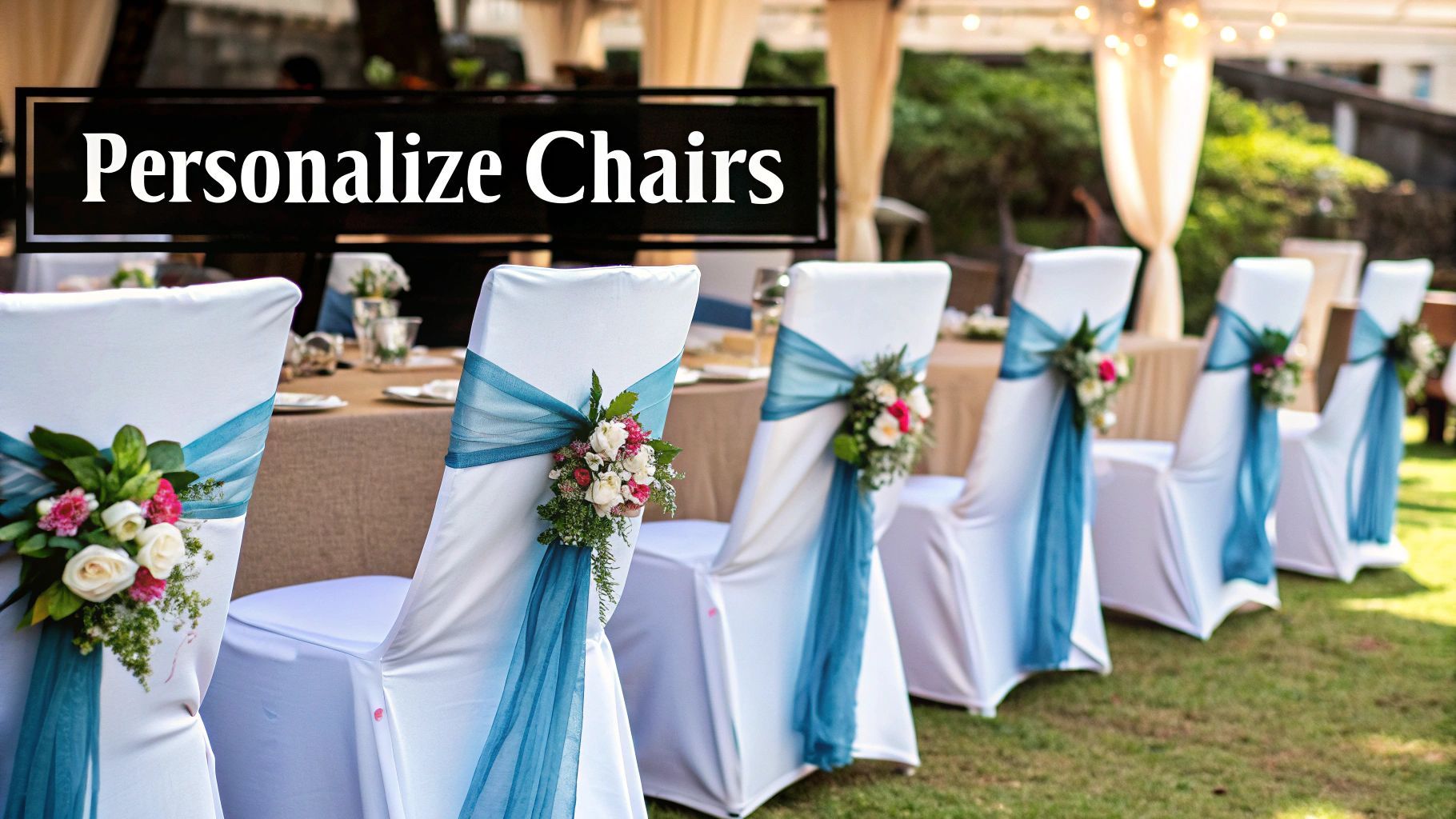
For wedding receptions, the best luxury furniture rental choices usually create contrast with the formal dining area. Long banquet tables and ceremony seating handle structure. The lounge zone handles mood.
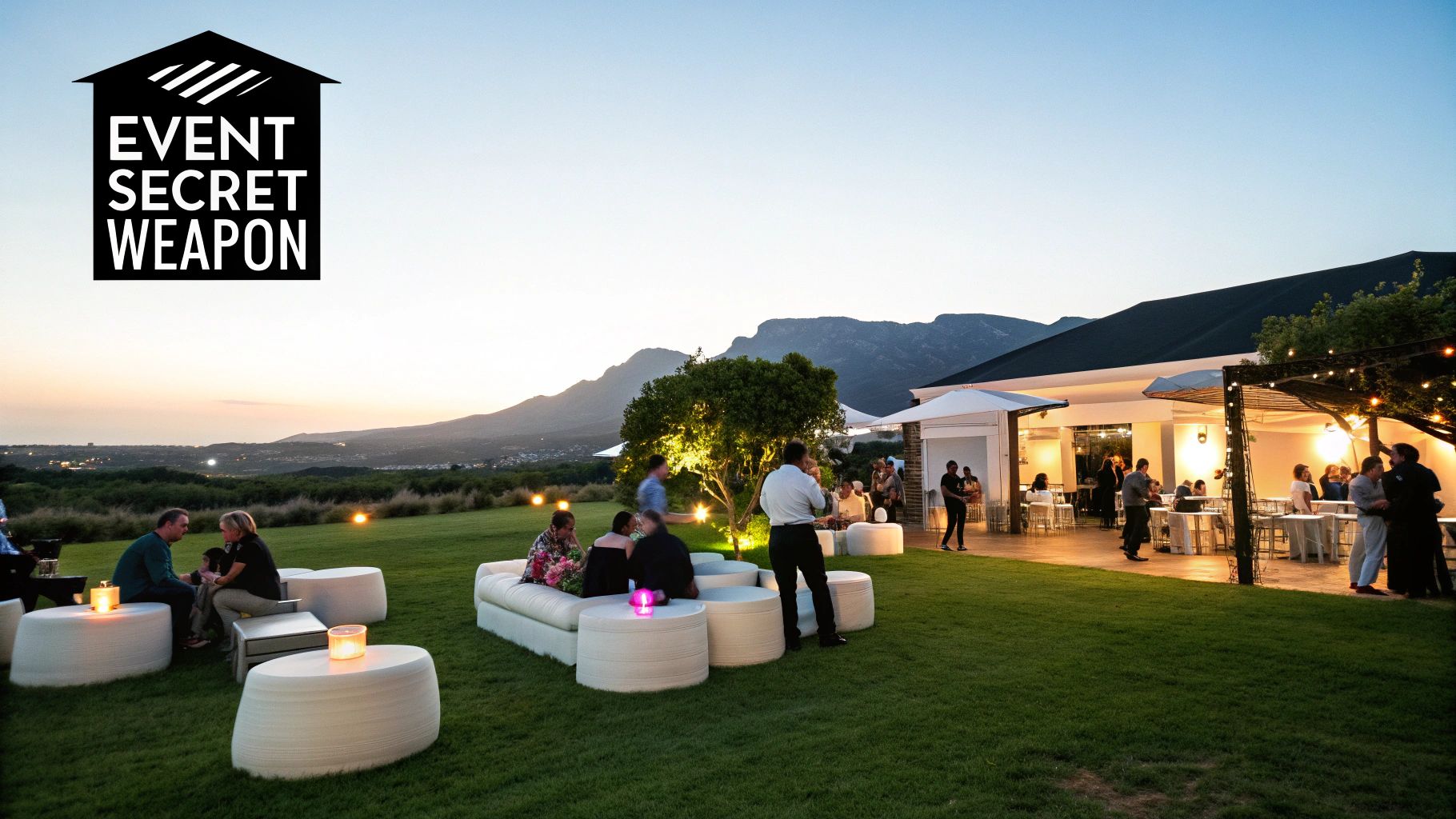
Think velvet couches, occasional chairs, ottomans, and coffee tables arranged in small conversational islands. This works especially well on lawns, under tensile cover, or in transitional spaces between the bar and dining room. Guests who don't want to stay seated at their table all evening need somewhere equally polished to move to.
The most common mistake is under-furnishing the lounge. One couch and two chairs in a large venue doesn't read as curated. It reads as an afterthought.
The lounge should feel intentional from every angle, not like leftover furniture placed near a dance floor.
Corporate events need shape and clarity
Corporate launches, networking evenings, and media functions usually reward cleaner silhouettes. Low-profile couches, cube seating, bar tables, and minimalist stools give the room structure without cluttering sightlines. If the event includes speakers or branded content, furniture should support the room's rhythm rather than compete with it.
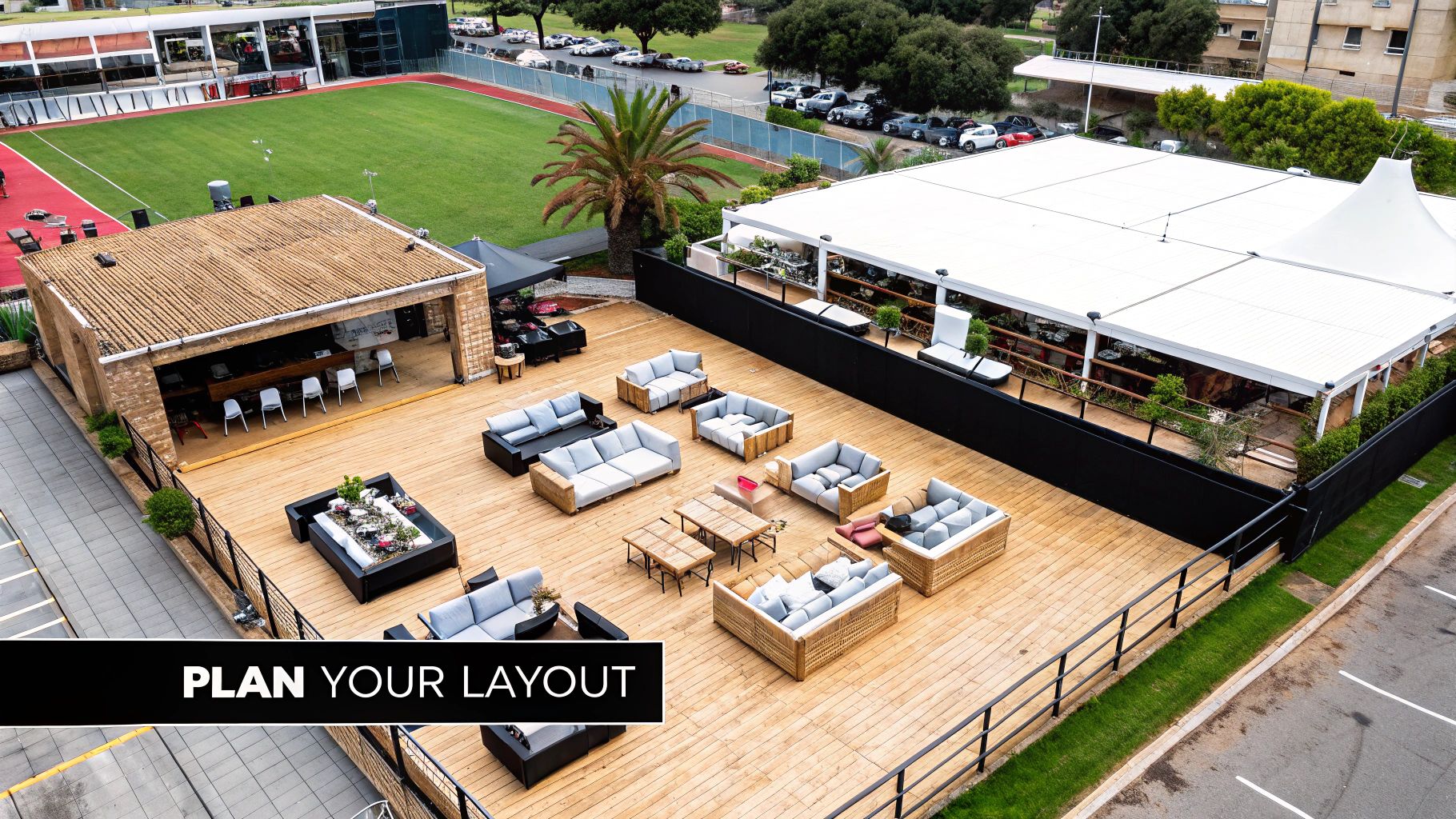
This is where zoning matters. Keep registration, cocktail, activation, and lounge moments visually distinct. Use furniture styles to mark those shifts.
A practical layout often includes:
- Reception furniture: A clean welcome counter or registration point.
- Networking furniture: Tall cocktail setups that keep guests mobile.
- VIP or speaker lounges: Softer seating with more breathing room.
- After-dark transition pieces: LED bars or glowing cubes if the event moves into an evening social phase.
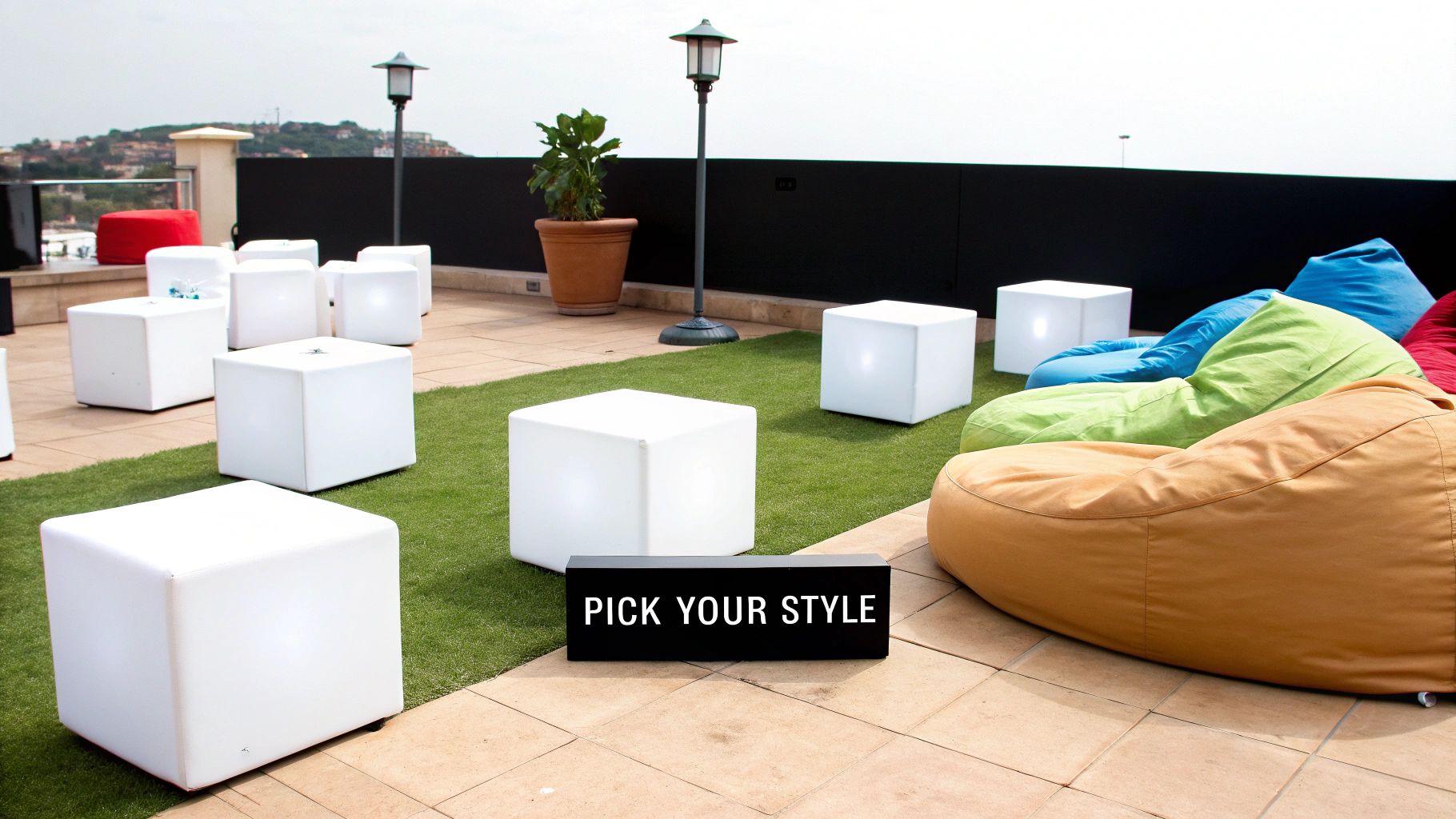
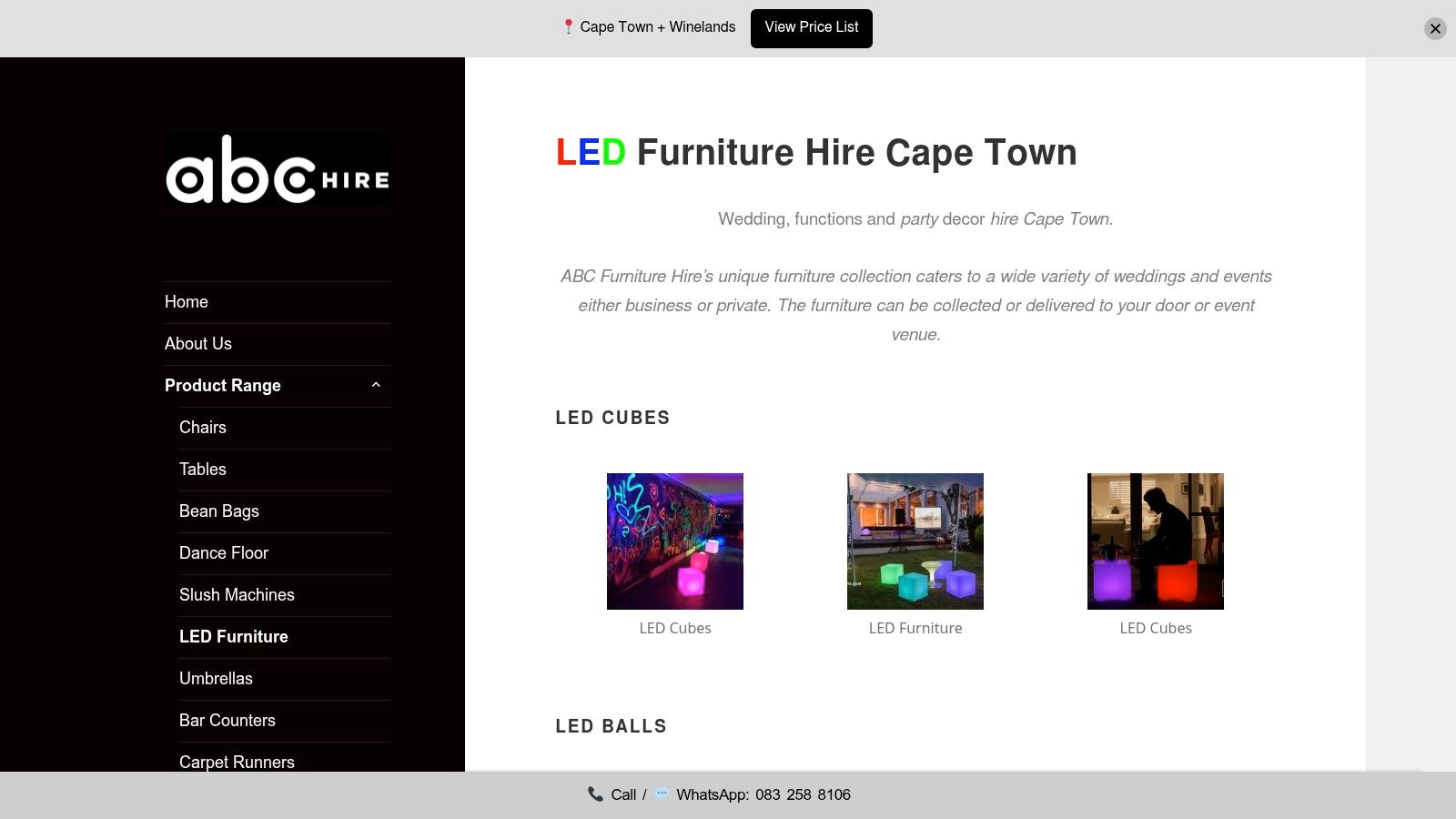
The following style reference shows the kind of illuminated inventory that often works well for launches and formal dances.
LED furniture works when the event earns it
LED furniture is often handled badly. Too much of it and the room feels like a novelty setup. Used selectively, it creates a clean, contemporary edge.
For matric dances, birthday celebrations, and branded parties, LED bars, cubes, curved benches, and illuminated poseur tables can add movement and colour after dark. They work best in three situations:
- As a focal point near the bar or entrance.
- As a transition tool when the event starts formal and becomes more festive later.
- As a lighting solution in venues where ambience needs help.
If the venue already has heavy chandeliers, strong uplighting, and a very classic interior, LED furniture can clash. In that setting, it's better to use one illuminated feature than an entire glowing lounge.
Matching pieces to the event type
Some combinations consistently work well.
| Event type | Furniture direction | Effect |
|---|---|---|
| Vineyard wedding | Velvet seating, ottomans, elegant coffee tables | Romantic and layered |
| Rooftop cocktail event | Bar stools, poseur tables, modular lounges | Sleek and social |
| Matric dance | LED bars, illuminated cubes, curved benches | Energetic and photo-friendly |
| Brand launch | Minimalist seating, branded counters, clean-lined lounges | Controlled and modern |
The best rooms don't feel furnished. They feel composed. That usually comes from choosing fewer categories well, then repeating materials, colours, and forms with discipline.
Decoding the Costs of Luxury Furniture Rental
The wrong first question is often posed: “What does a couch cost?” The better question is, “What will this event setup require from quote to collection?”
Luxury furniture rental pricing is shaped by more than the item list. The furniture itself matters, of course, but so do access, timing, labour, travel distance, floor surfaces, installation complexity, and whether the team needs to return late at night or the next day. A quote that looks cheap at first glance can become expensive once the practical work is added.
South Africa's luxury furniture market was valued at USD 178.22 million in 2024 and is projected to reach USD 306.45 million by 2033, at a CAGR of 5.57%, driven largely by hospitality and high-end event demand, according to South Africa luxury furniture market projections. In practical terms, that means more supply, more styling ambition, and a wider spread in pricing depending on quality and service level.
What usually appears on the quote
A serious quote tends to include several layers.
- Furniture hire charge: The base rental for each item or collection.
- Delivery and collection: This is influenced by where the venue is and how easy it is to access.
- Setup and breakdown labour: Necessary when items must be placed to plan, assembled, or restyled.
- Timing variables: Early-morning access, after-hours collections, or tight turnaround windows can affect cost.
- Risk cover: Some suppliers use a deposit, a damage clause, or a waiver structure.
The easiest way to protect your budget is to ask for a fully itemised quote from the start. That makes it easier to compare like for like.
What changes the final number
The same furniture list can price differently depending on the venue.
A CBD venue with goods-lift access is simpler than a wine estate with gravel paths and a remote loading zone. A private home in Camps Bay may look easy on paper but become labour-heavy if access involves stairs, narrow passages, or careful manoeuvring around finishes. Outdoor installs also tend to need more planning because furniture has to be protected during setup and strike.
Ask one question early: “What assumptions have you made about access, setup time, and collection time?” That's where quote gaps often hide.
A good comparison point is the rent-versus-own decision itself. If you're weighing one event against a purchase, rent or own furniture is the right lens. Ownership only wins when repeated use, storage capacity, and maintenance discipline are already in place.
Sample budget for a 100-Guest Winelands Wedding
The table below gives a qualitative planning framework, not a universal rate card. Final pricing varies by inventory choice, delivery location, event timing, and service scope.
| Item Category | Description | Estimated Cost Range (ZAR) |
|---|---|---|
| Lounge seating | Sofas, armchairs, ottomans for guest chill areas | On request |
| Coffee and side tables | Accent tables for lounge styling | On request |
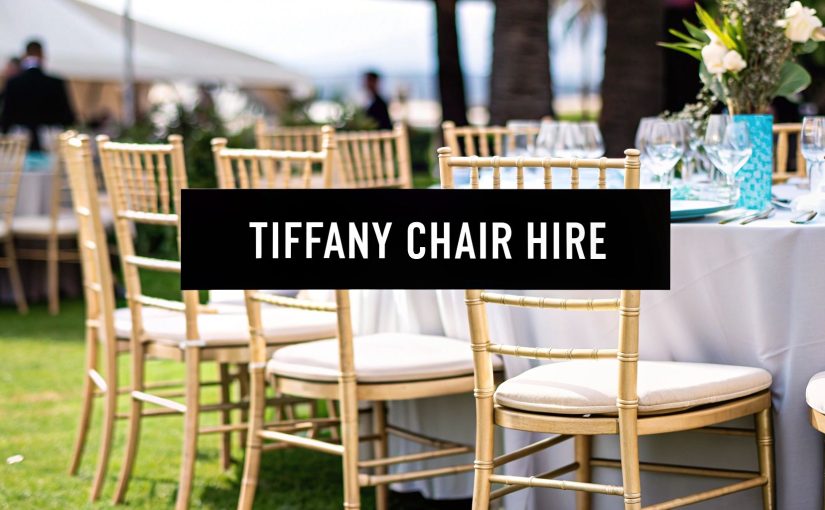
| Ceremony or reception chairs | Premium seating selected to suit the wedding style | On request |
| Cocktail furniture | Bar stools, poseur tables, bar units for pre-drinks | On request |
| Climate support | Heaters or cooling equipment if required by the venue and season | On request |
| Delivery and collection | Transport to and from a Winelands venue | On request |
| Setup and breakdown | Placement, styling support, post-event strike | On request |
That “on request” language isn't evasive. It's realistic. In high-end rentals, service conditions can matter as much as the inventory itself. The smartest planners budget for the room, not just for the pieces.
Styling Memorable Events in Cape Town and the Winelands
Cape Town gives you beautiful venues. It also gives you strong light, coastal wind, quick temperature shifts, and spaces that can overpower generic furniture. Styling well here means working with the venue's character instead of fighting it.
The most successful rooms usually begin with one decision. Do you want the furniture to blend with the architecture and the overall setting, or do you want it to create contrast? Both can work. Problems start when the look sits uncertainly in the middle.
Wine farms need softness and weather sense
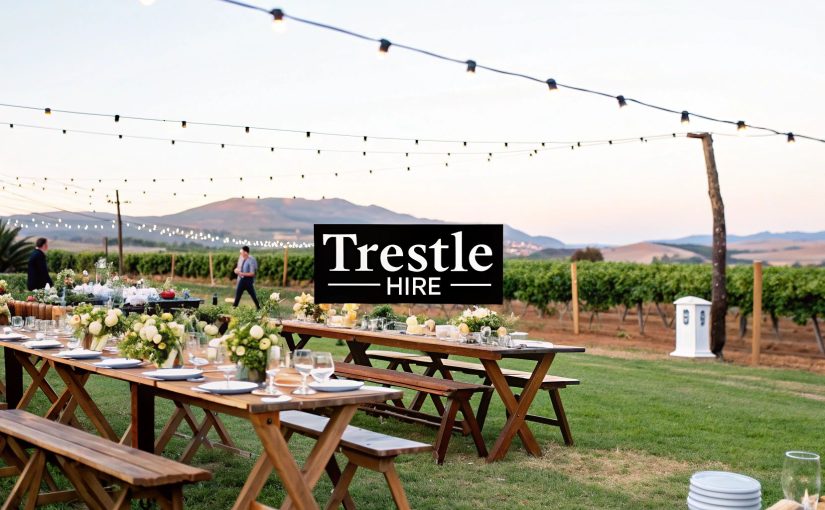
In Franschhoek, Stellenbosch, and Paarl, many venues already carry texture through stone, timber, lawns, vines, and mountain views. The furniture doesn't need to compete. It needs to frame the setting.
That usually means lower lounge profiles, warm neutrals, textured upholstery, and groupings that encourage guests to pause. A lounge on a terrace or lawn should feel anchored. Use rugs if the event format allows it, and cluster pieces tightly enough that the arrangement holds its shape in a large open area.
The practical issue is the weather. Even in beautiful conditions, evening temperatures can dip quickly. Wind can also change how an outdoor area functions. The demand for modular, multi-functional furniture is rising at a 5.17% CAGR from 2025 to 2032, and in the Winelands that trend is paired with a technical need for climate control to protect premium materials and keep guests comfortable, according to South Africa furniture market analysis.
That affects styling choices directly.
- Use modular seating when guest numbers or layout flow may shift.
- Pair luxury pieces with discreet heating or cooling rather than treating climate equipment as an afterthought.
- Choose materials carefully for dew, sun exposure, and long outdoor setup windows.
Beachfront and coastal venues need restraint
At Clifton, Camps Bay, or any sea-facing private venue, the backdrop is already doing heavy lifting. Furniture should sharpen the space, not clutter it.
Keep silhouettes cleaner. Avoid overstuffed arrangements unless the brief is very lounge-led and sheltered. Pale neutrals, white, charcoal, and soft natural textures tend to sit well against ocean light. Glass, mirror, or highly reflective surfaces can be striking, but they need careful placement because glare and salt air can work against them.
A good coastal setup usually includes:
- A defined lounge area with enough weight to hold its own visually.
- A bar zone that feels crisp and serviceable.
- Enough spacing between pieces that guests can move easily in windier conditions.
City venues reward bolder contrast
Woodstock warehouses, rooftop venues, and contemporary city spaces often benefit from more assertive furniture choices. Industrial interiors can take black-framed pieces, sharper lines, and stronger accent colours without losing balance. Illuminated furniture, sculptural counters, and minimal seating profiles often perform well in such environments.
If the venue has hard edges, break them with one softer layer. That could be upholstered lounges, rounded ottomans, or warmer textiles. If the venue is architecturally clean already, don't overcrowd it. Leave negative space.
Local insight: In Cape Town, luxury often comes from editing. One strong lounge composition usually lands better than five small, disconnected ones.
Styling choices that hold up on site
A useful way to test your scheme is to ask whether each zone has a clear purpose.
| Zone | What it needs to do | Furniture approach |
|---|---|---|
| Arrival | Signal tone immediately | Statement welcome or bar element |
| Social | Keep guests circulating comfortably | Modular lounge clusters and cocktail furniture |
| Dining | Support the event's formality | Consistent premium seating |
| Late-night | Shift energy without redoing the room | LED accents, bar focus, flexible seating |
That's what separates decorative planning from event-ready styling. The room must still function once the wind picks up, the sun drops, and guests start moving the way real guests always do.
Navigating the Logistics of Your Furniture Rental
Beautiful furniture won't rescue a poor install. Logistics decides whether the event feels smooth or stressful.
In a market that's becoming more professional, that operational side matters more than ever. The South African luxury furniture market is projected to reach USD 309.4 million by 2034, according to South Africa luxury furniture growth projections. As standards rise, hosts and planners need partners who can execute with precision, not only supply attractive stock.
The rental timeline that keeps things calm
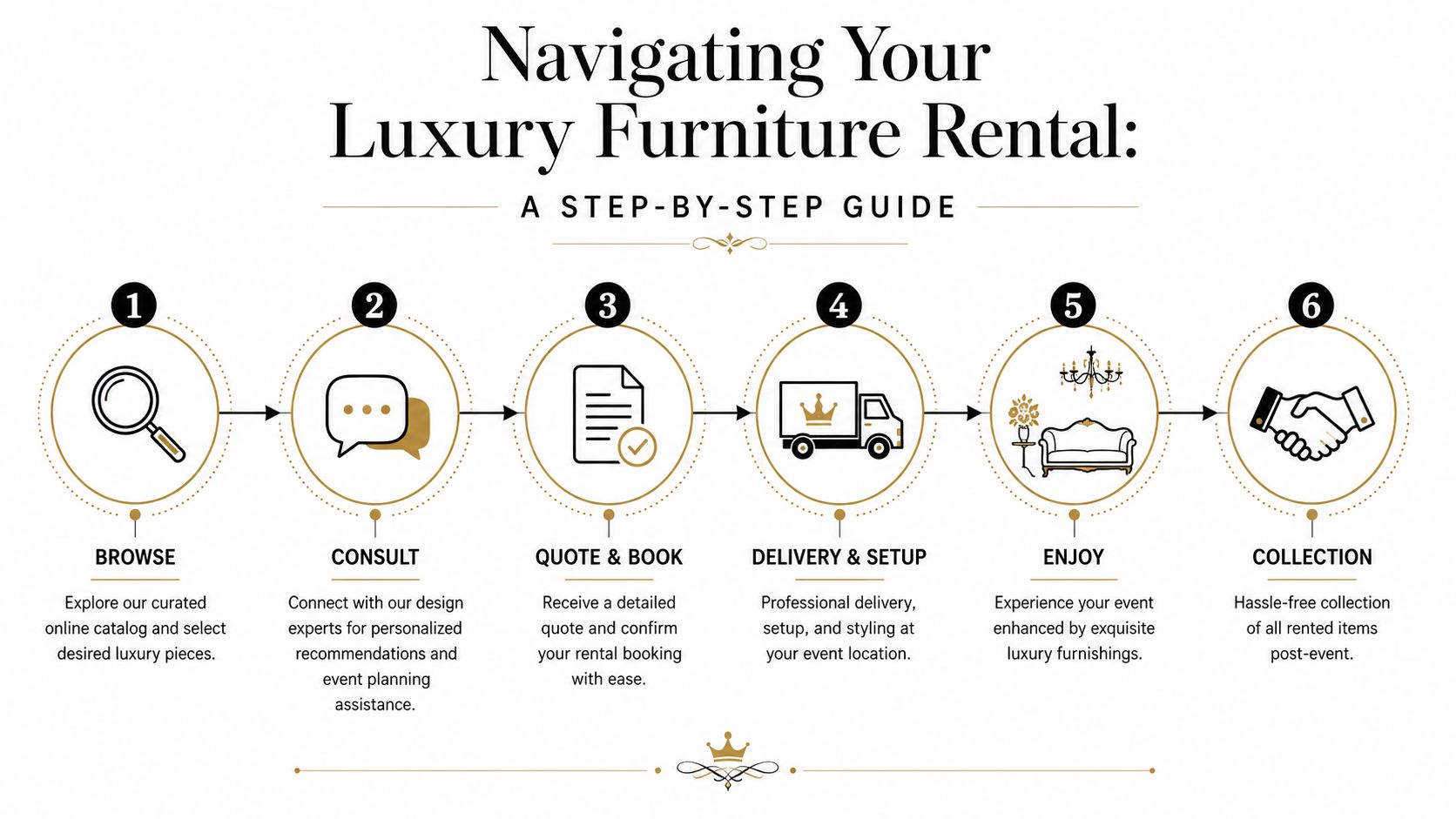
Most smooth projects follow the same rhythm.
Initial enquiry
Send the event date, venue, guest count, event type, and mood reference. If you already have a floor plan, include it.Selection and quote
The inventory list and service assumptions should be checked carefully. Clarify what's included.Site and access review
Some venues are straightforward. Others look simple online but become difficult on delivery day.Booking confirmation
Lock the stock once the layout is approved. Premium inventory can't be assumed available until it's reserved.Delivery and setup
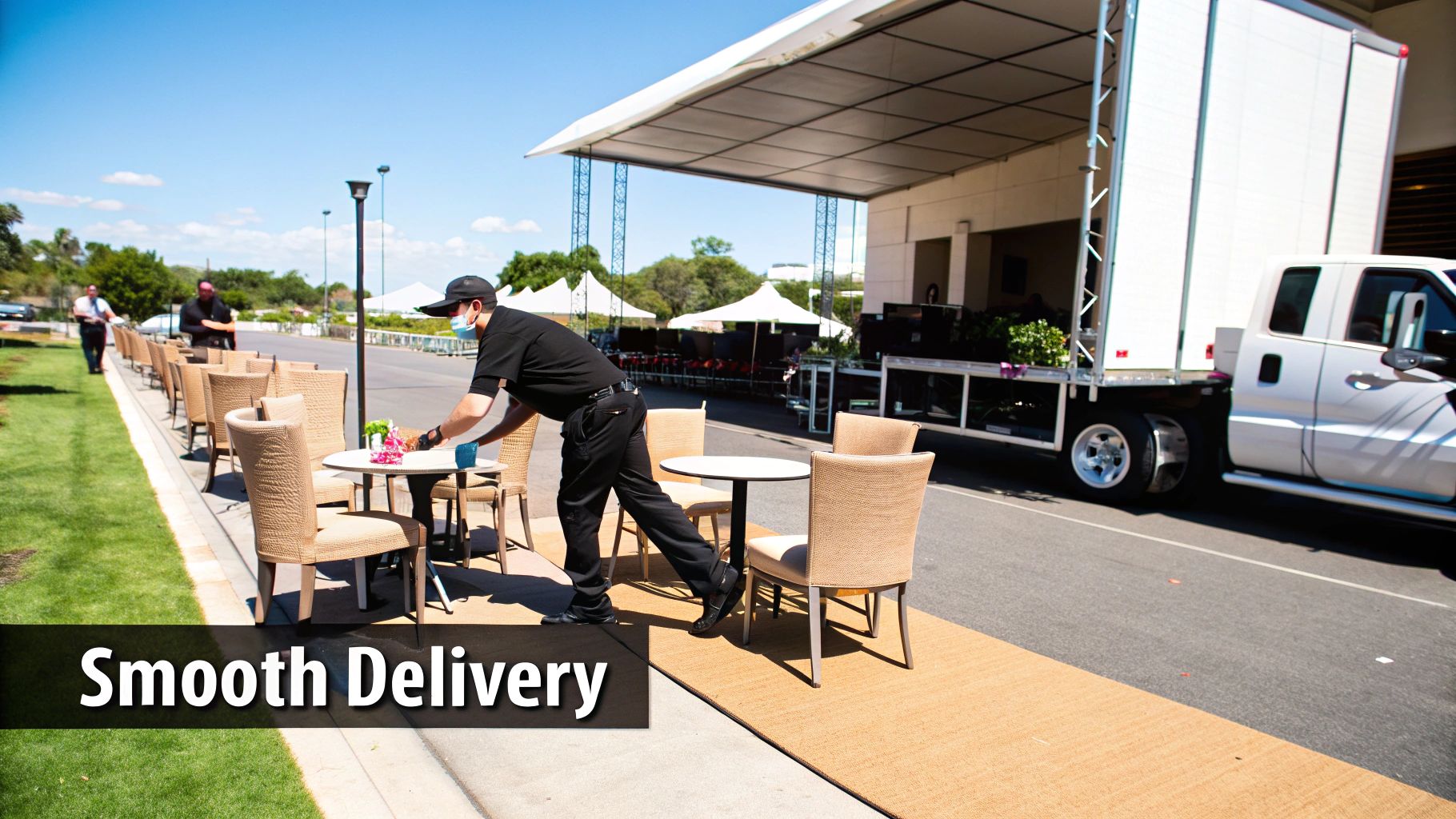
A good crew places to plan, protects surfaces, and resolves small issues before they reach the client.Strike and collection
Collection timing should be coordinated with the venue's access rules and the event finish.
Questions that prevent expensive confusion
Good planners ask operational questions early, not the day before install.
- What are the access requirements for loading, stairs, lifts, or long carries?
- Who signs off placement on site if the planner is busy elsewhere?
- What happens if weather changes and part of the setup must move?
- How are damages handled if guests spill, sit on wet lawns, or move furniture themselves?
- What counts as late collection and who approves overtime?
If your timeline is tight, same-day furniture delivery can be useful context for understanding where speed helps and where it introduces risk. Urgent delivery can solve a problem, but it doesn't remove the need for clear access and placement instructions.
Read the agreement like an operator
The rental agreement deserves more attention than most clients give it. Focus on liability, care obligations, collection windows, and what the supplier expects from the venue or host. If the event is outdoors, confirm responsibility for protecting furniture from rain, damp ground, and overnight exposure.
Don't leave logistics to “the team on the day”. The team can only execute the information they receive.
A well-run event often looks effortless because someone dealt with the boring details early. That's the standard luxury events rely on.
Finding the Right Luxury Rental Partner in Cape Town
The furniture might be beautiful, but the supplier still decides the outcome. In Cape Town, where venues range from polished hotels to remote wine estates and private residences, the right rental partner needs more than nice stock photos.
They need judgement. They need operational discipline. They need to know when a requested setup won't survive the site conditions, and they need to tell you before trucks are loaded.
What separates a serious partner from a catalogue
Start with inventory quality, but don't stop there. A polished website can hide tired upholstery, inconsistent finishes, or pieces that only work in a studio photo. Ask how the furniture is maintained, how often ranges are refreshed, and whether matching quantities are genuinely available.
Then look at service depth. The best partners can discuss layout, venue access, sequencing with florists and catering teams, and practical site constraints without hand-holding. They understand that an event install isn't a simple drop-off.
A useful buyer's checklist
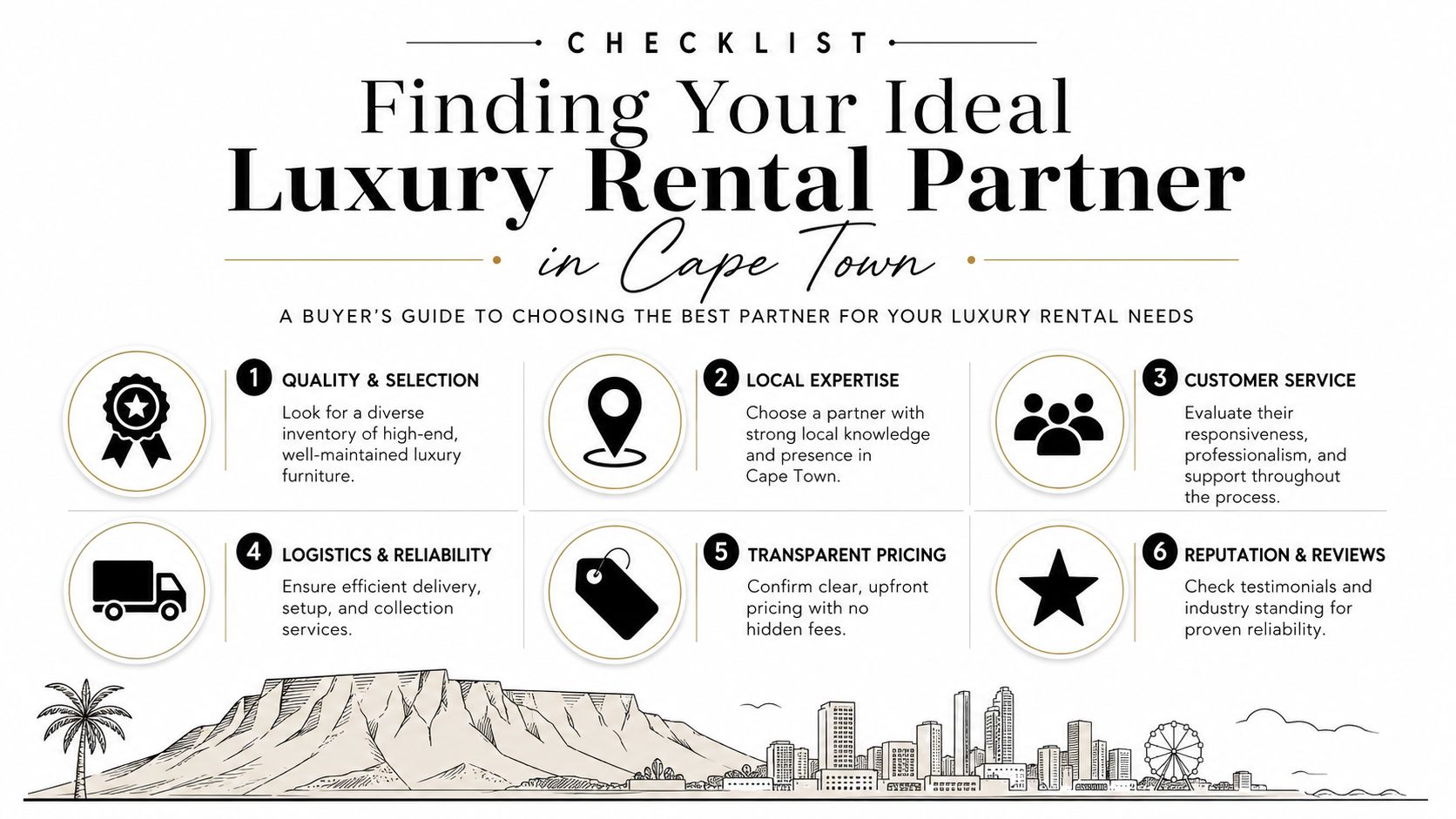
Use this when comparing providers.
- Inventory condition matters more than variety: Ten excellent ranges are more useful than a huge list of worn, mismatched pieces.
- Local venue knowledge saves time: A partner who knows Cape Town routes, Winelands access realities, and common venue restrictions will spot problems sooner.
- Communication style is a signal: Slow replies, vague answers, and changing assumptions usually get worse under pressure.
- Operational ownership is essential: Delivery windows, setup responsibility, and collection planning should be clear in writing.
- Pricing should be transparent: You want itemised costs, service terms, and obvious treatment of deposits or damage liability.
- Reputation should match the brief: Look for evidence they've handled weddings, corporate events, formal dances, or private luxury functions similar to yours.
Ask better questions before you commit
Some questions reveal competence very quickly.
Ask what they'd change about your draft layout. Ask what usually goes wrong at your type of venue. Ask how they handle a weather shift after delivery has begun. Ask which inventory holds up best at a lawn event, under marquee conditions, or in a hard-edged industrial space.
If you're running a broader creative or venue operation and need to streamline the business side as well, it can help to compare studio management solutions. That's especially useful for teams coordinating bookings, client communication, and production workflows across multiple event suppliers.
A rental partner should reduce uncertainty. If every answer creates a new ambiguity, keep looking.
The best supplier relationships feel collaborative, not transactional. They protect the look of the event, but they also protect the process behind it.
For planners, couples, venues, and hosts who want furniture that looks sharp and arrives with the right operational support, ABC Hire is worth speaking to. Their Cape Town-based range covers luxury event furniture, LED furniture, climate control equipment, and the practical pieces that help weddings, corporate functions, matric dances, and private celebrations come together cleanly across Cape Town, Stellenbosch, Franschhoek, Paarl, and surrounding areas.