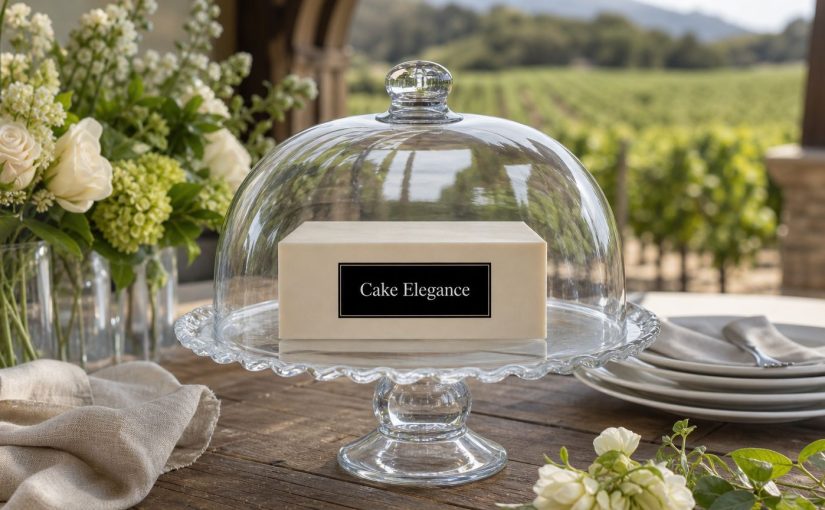
Elegant Glass Cake Stand Rentals for Cape Town Events

You’re often down to the last handful of decisions when the cake stand suddenly becomes important. The florist is confirmed, the seating plan is nearly closed off, the cake is booked, and then someone asks a simple question: what is it going to sit on?

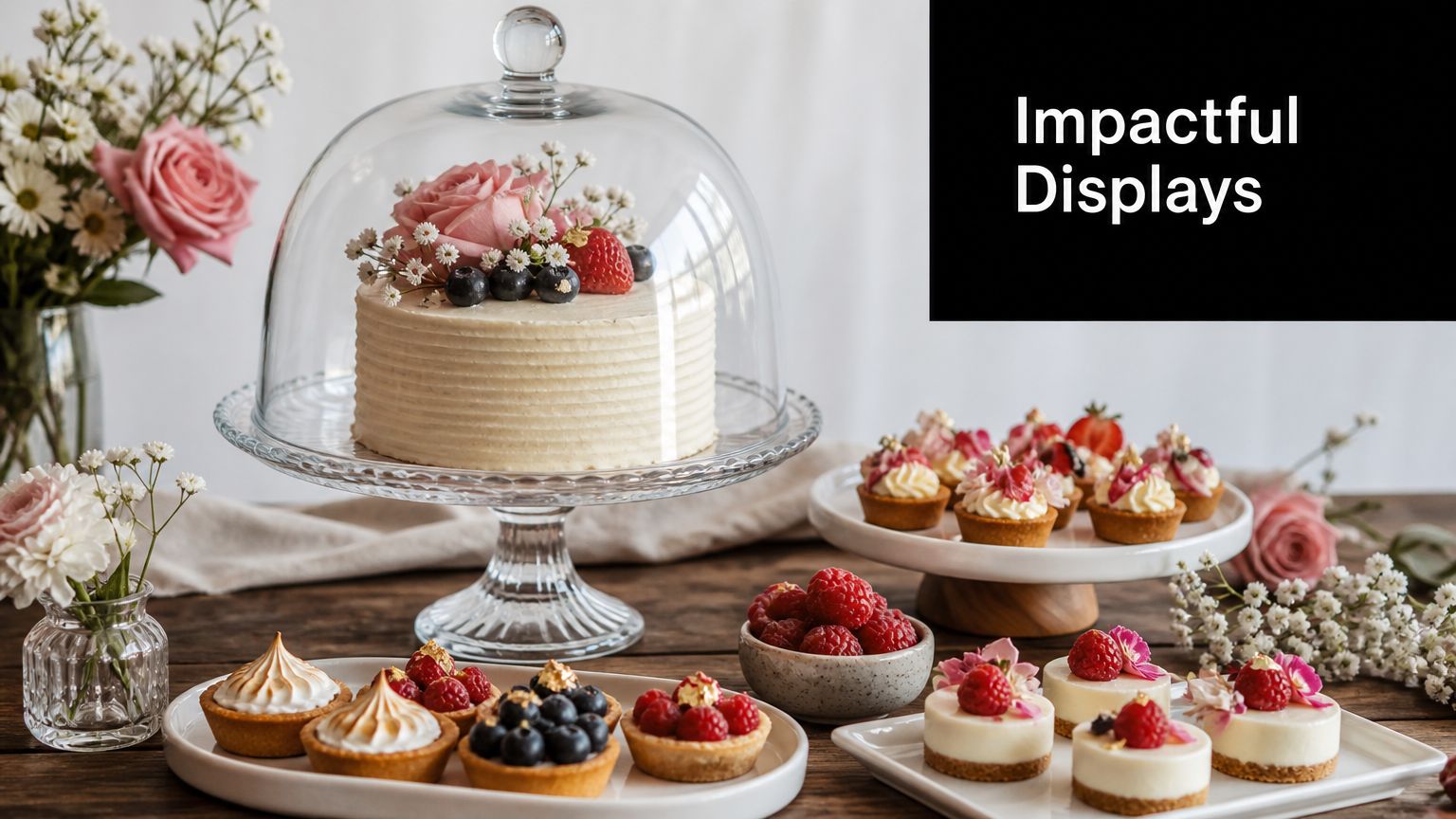
That choice matters more than most clients expect. A glass cake stand doesn’t just hold dessert. It changes how the cake reads in the room, how the dessert table photographs, and how polished the whole setup feels from the first guest arrival to the final toast.

In Cape Town, that decision also comes with local realities. Venue access can be awkward, transport routes can be long, and many celebrations are once-off events where buying a delicate display piece makes far less sense than people assume. The right stand needs to suit the cake, the table, the setting, and the practical side of the day.

The Centrepiece of Your Celebration

A cake can be beautifully made and still look underwhelming if it’s placed on the wrong base. I’ve seen this happen at elegant Winelands weddings and slick city launches alike. The cake itself was excellent, but the stand was too flat, too small, too heavy-looking, or disconnected from the rest of the styling.

A glass cake stand fixes that when it’s chosen well. It lifts the cake physically, but it also lifts the visual importance of the whole display. Clear glass works because it doesn’t compete with the cake. Instead, it gives height, catches light, and keeps the focus where it should be.

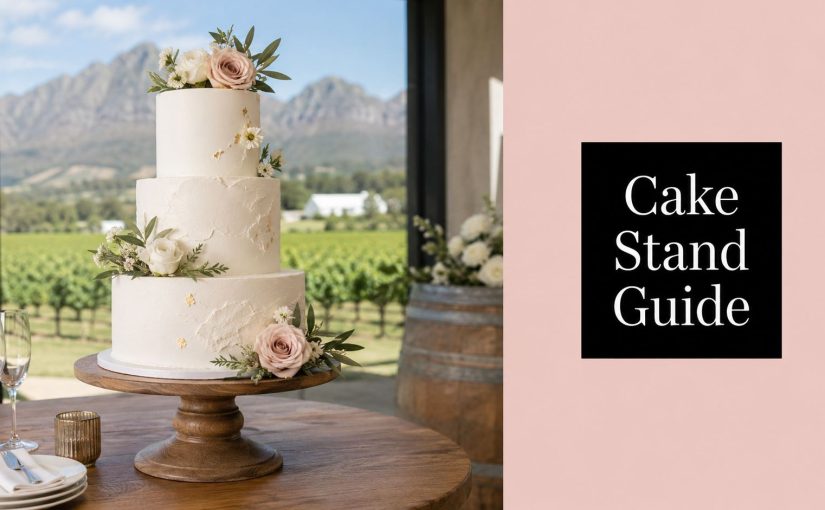
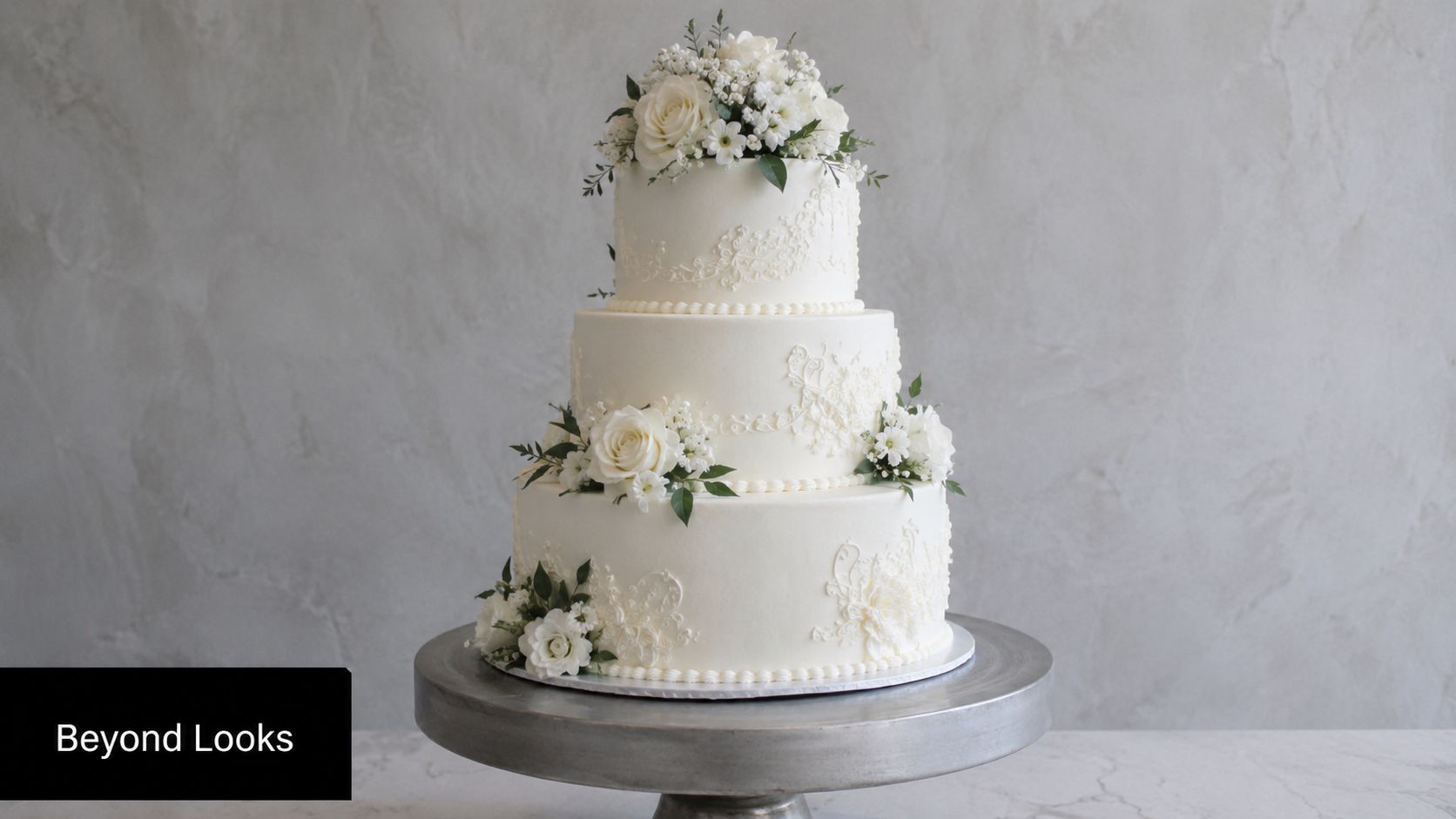
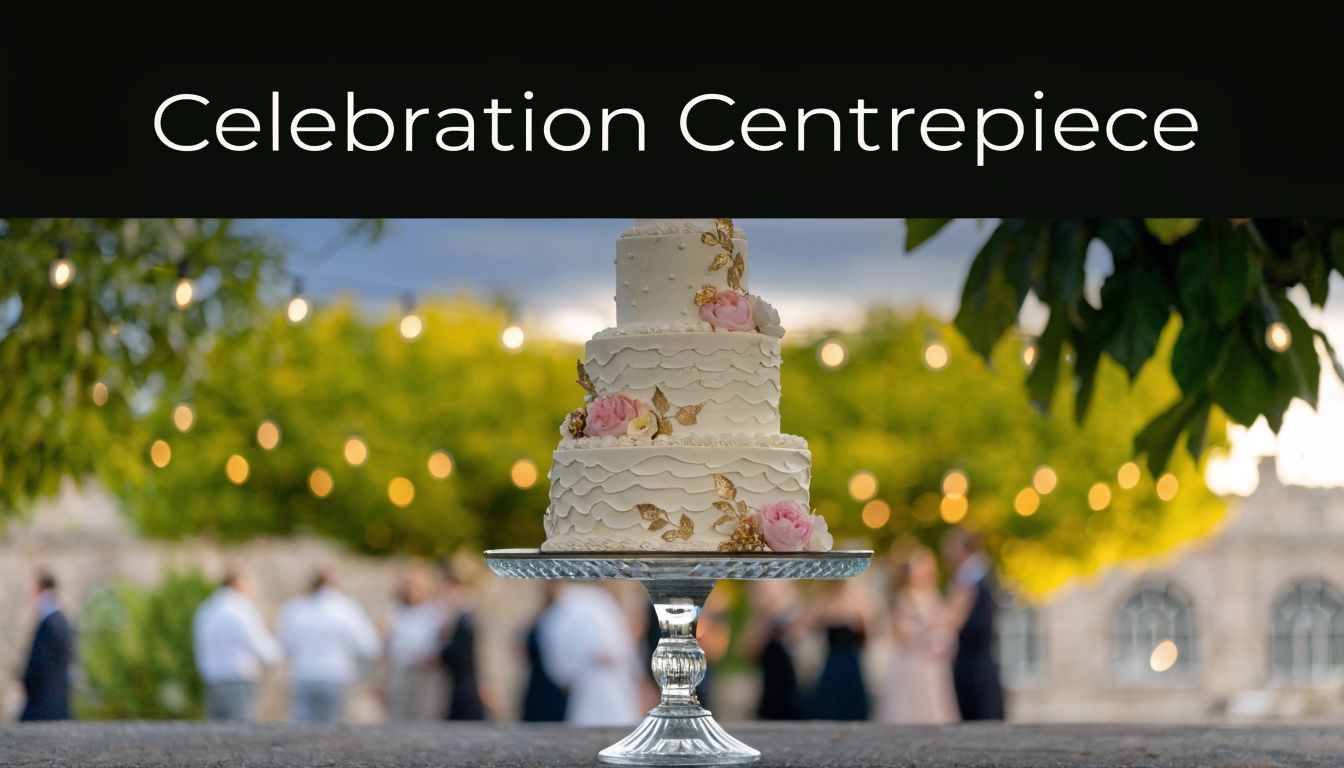
A three-tiered white wedding cake decorated with gold leaves and pink flowers on a crystal stand.

What the stand changes in the room

At a Franschhoek reception, for example, soft candlelight and low floral arrangements can make a cake table feel intimate. In that setting, a clear pedestal stand helps the cake sit above the surrounding décor without making the table look crowded. At a corporate launch near the Waterfront, the same principle applies differently. Clean lines and a simple glass profile make the display feel organised and deliberate.

That’s why I treat the stand as part of the event design, not an afterthought.

A good stand can do several jobs at once:

  • Create height: It helps the cake hold its own among flowers, candles, signage, and glassware.
  • Add polish: Even a simple iced cake looks more refined on a proper raised stand.
  • Support the theme: Modern, romantic, formal, or playful styling all read differently depending on the stand.
  • Improve photographs: Clear glass reflects light neatly and keeps the cake from looking visually heavy.

Practical rule: If the cake is one of the visual anchors of the room, its stand should be chosen with the same care as the linen, flowers, and candles.

If you’re still refining the wider dessert display, it helps to look at broader stunning dessert table ideas so the cake stand isn’t selected in isolation. The best results come when the cake, stand, plinth or table, and supporting sweets all feel like they belong together.

Understanding Glass Cake Stand Varieties

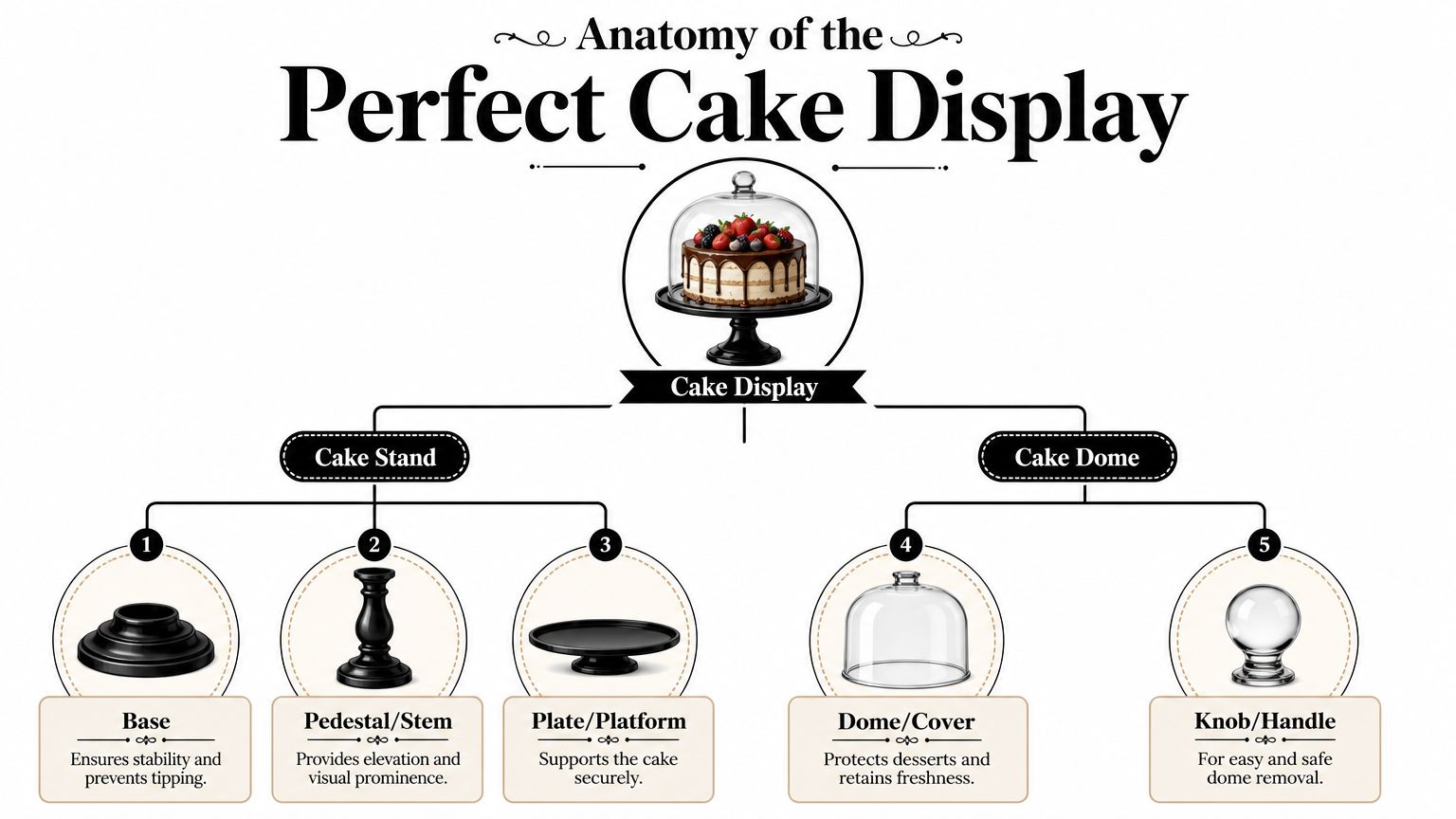
Not every glass cake stand does the same job. Clients often use the term for anything that lifts cake, but in practice there are a few very different formats. Choosing the right one gets easier when you think of each type as a different kind of stage.

A solo performance needs one platform. A full cast needs levels. An outdoor setup may need a cover as much as a base.

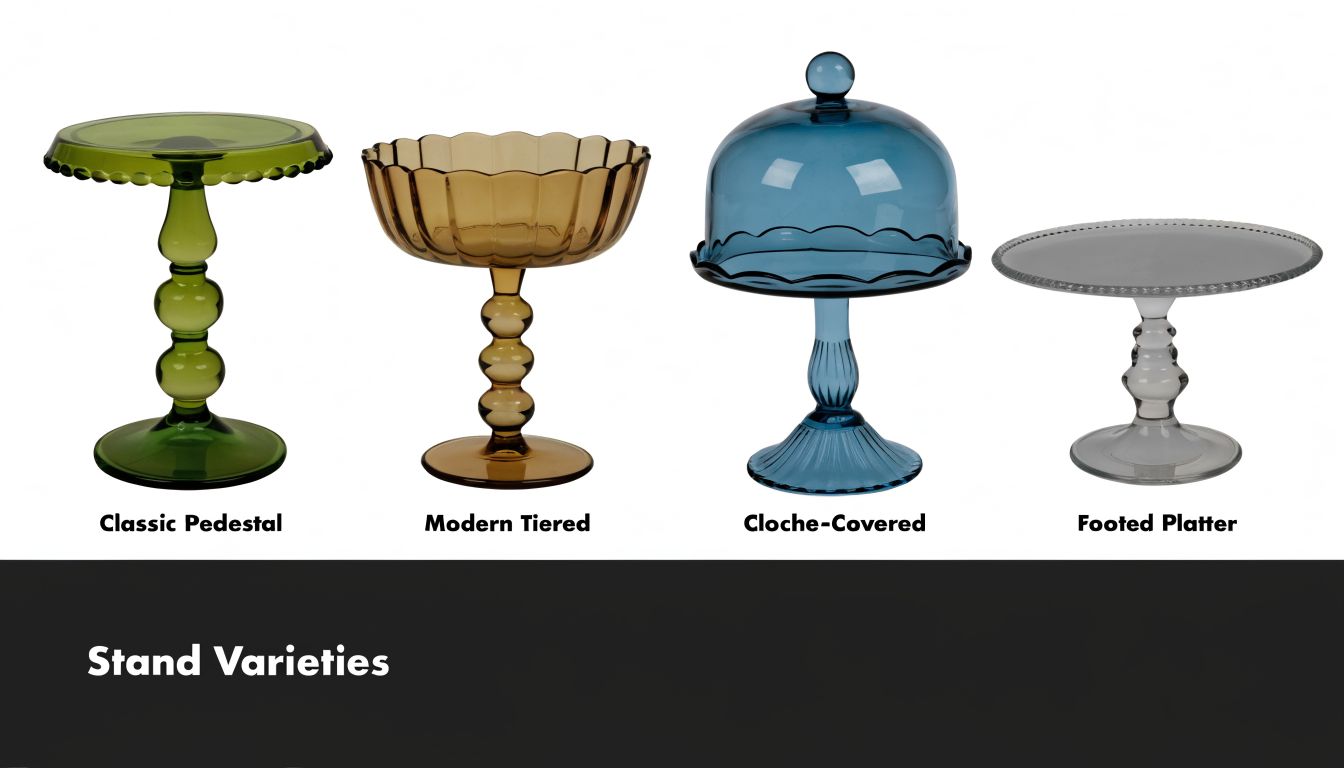
A display of four different colored glass cake stands titled Classic Pedestal, Modern Tiered, Cloche-Covered, and Footed Platter.

Pedestal stands for one clear focal point

The classic pedestal glass cake stand is the workhorse. It has a raised base and one top plate, and it’s usually the safest choice when the cake itself is the hero. This is the stand I’d favour for a wedding cake, a milestone birthday cake, or a polished corporate centrepiece cake with branding details.

Its strength is simplicity. It gives separation between cake and table, which improves presence without cluttering the setup.

Use it when:

  • The cake is detailed: Sugar flowers, textured buttercream, gold leaf, and clean fondant work well on a plain glass pedestal.
  • The table is already busy: If florals and candles are doing a lot of visual work, the stand should stay quiet.
  • You want versatility: Pedestal stands fit most formal and semi-formal events.

Tiered stands for variety and volume

Tiered glass stands are useful when one cake isn’t carrying the whole dessert table. They suit cupcakes, mini tartlets, macarons, petit fours, or mixed sweet tables. They also help when you need vertical interest without taking up too much table width.

This is less about showcasing a single object and more about organising many smaller items so they don’t disappear into the tablecloth.

A few practical notes:

  • They work best for bite-sized items, not heavy celebration cakes.
  • They suit high-tea styling, showers, and branded dessert displays where variety matters.
  • They need disciplined arrangement, otherwise they can look fussy very quickly.

If you’re planning smaller confections alongside your main cake, a guide to the perfect cake pops stand can be useful for thinking through how upright sweets should be displayed without overcrowding the main stand.

Domed stands for protection and presentation

A glass stand with a dome, also called a cloche-covered stand, adds two things: protection and ceremony. It’s especially useful when the cake or pastries will be displayed for a while before serving, or where airflow, insects, or dust are realistic concerns.

That’s one reason domed stands show up so often at outdoor receptions, garden venues, and Winelands events. They keep the display cleaner and give the dessert a slightly more curated, boutique feel. For a closer look at where a covered stand works best, this guide on a glass cake dome is worth reading.

A dome doesn’t suit every cake. Very tall or highly sculpted cakes can feel cramped under glass, and opening and closing the cover during service needs a steady hand.

Pressed glass versus crystal look

Clients also ask whether the stand should sparkle or stay understated. In real event terms, that usually means choosing between a more everyday pressed-glass look and a more decorative crystal-style finish.

The trade-off is simple:

Style Best for Watch out for
Pressed glass Minimalist weddings, birthdays, corporate functions Can look plain if the cake is also very simple
Crystal-style cut glass Romantic weddings, formal dinners, vintage styling Can feel too ornate for sleek modern setups
Smooth contemporary glass Product launches, gallery-style events, monochrome décor Shows fingerprints more easily

The right answer isn’t “fancier is better”. It’s whether the stand supports the event language already in the room.

Sizing Your Stand for a Perfect Fit

The fastest way to make a good cake look awkward is to put it on the wrong-sized stand. Too small, and the cake looks precarious. Too large, and it can seem lost in the middle of the plate.

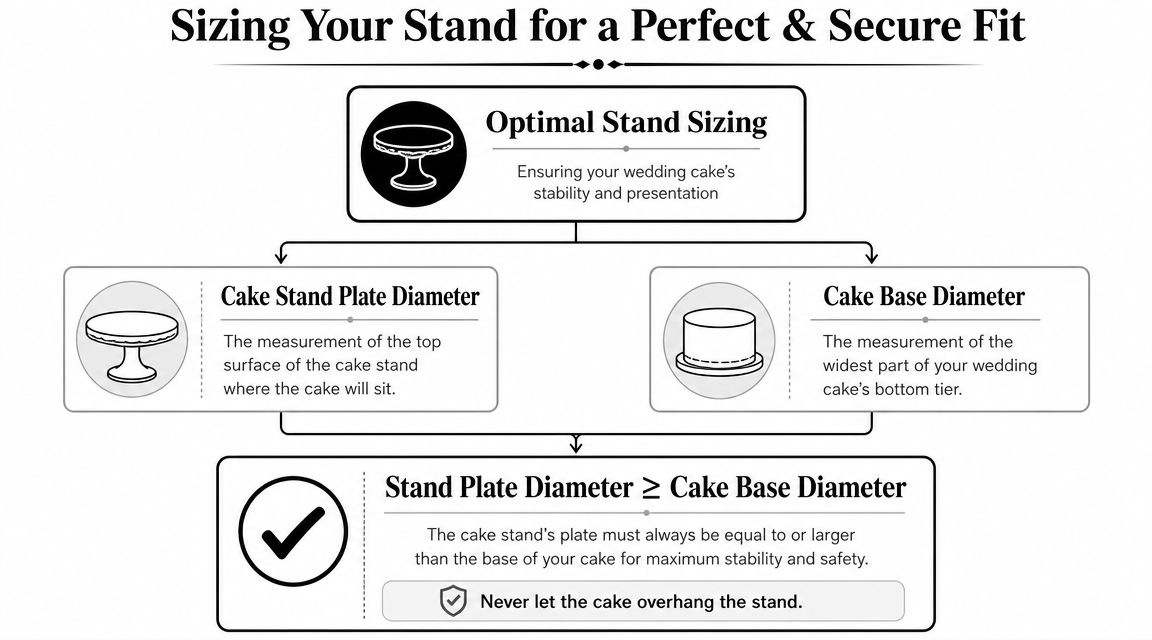
The simplest rule is this: the stand should be at least slightly wider than the base of the cake. A visible border around the cake helps with both stability and presentation. It gives the eye a clean edge and gives the baker or venue team room to place the cake properly.

A practical sizing rule

Use a stand that leaves a modest glass edge visible around the cake base. That margin doesn’t need to be dramatic. It just needs to look intentional.

When choosing, confirm three things with your baker or caterer:

  1. The final base diameter of the cake
  2. Whether the cake has overhanging décor
  3. Whether the cake board sits hidden or visible beneath the cake

That last point matters. Some cakes are delivered on boards that are wider than the sponge itself, and if you size for the sponge only, the stand can end up looking too tight.

If you’re between sizes, go up rather than down. A slightly larger stand looks deliberate. A too-small stand looks risky.

Cake-to-Stand Sizing Guide

Cake Diameter Recommended Stand Diameter Common For
Small single-tier cake Slightly larger than the cake base Engagement dinners, baby showers, intimate birthdays
Medium single-tier cake Slightly larger than the cake base Standard celebration cakes, office functions
Large single-tier cake Slightly larger than the cake base Big birthdays, school formals, shared dessert tables
Two-tier cake Sized to comfortably support the bottom tier and board Weddings, anniversaries, formal family events
Three-tier cake Wide, stable stand with a substantial base Weddings and large statement events

Height matters too

Diameter gets most of the attention, but height changes how the cake reads across the room. A taller pedestal works well in larger venues where guests will see the dessert table from a distance. It also helps when surrounding décor is low and spread out.

Lower stands suit more intimate settings. They’re often better for long dessert tables where multiple items need to sit together without one piece overpowering everything else.

This offers a useful perspective:

  • Tall stand: better for drama, visibility, and a single showpiece cake
  • Mid-height stand: the most versatile option for mixed event styles
  • Low stand: better for layered dessert styling and relaxed setups

Table surface and stand footprint

Don’t size the stand in isolation. Check the table width and the amount of décor sharing that surface. A well-sized stand can still fail if the table itself is too narrow, uneven, or crowded with candles and signage.

That’s why the best cake displays are measured from the table upward, not from the cake downward. The stand has to fit the physical environment as much as it fits the cake.

Aligning Your Stand with Your Event Theme

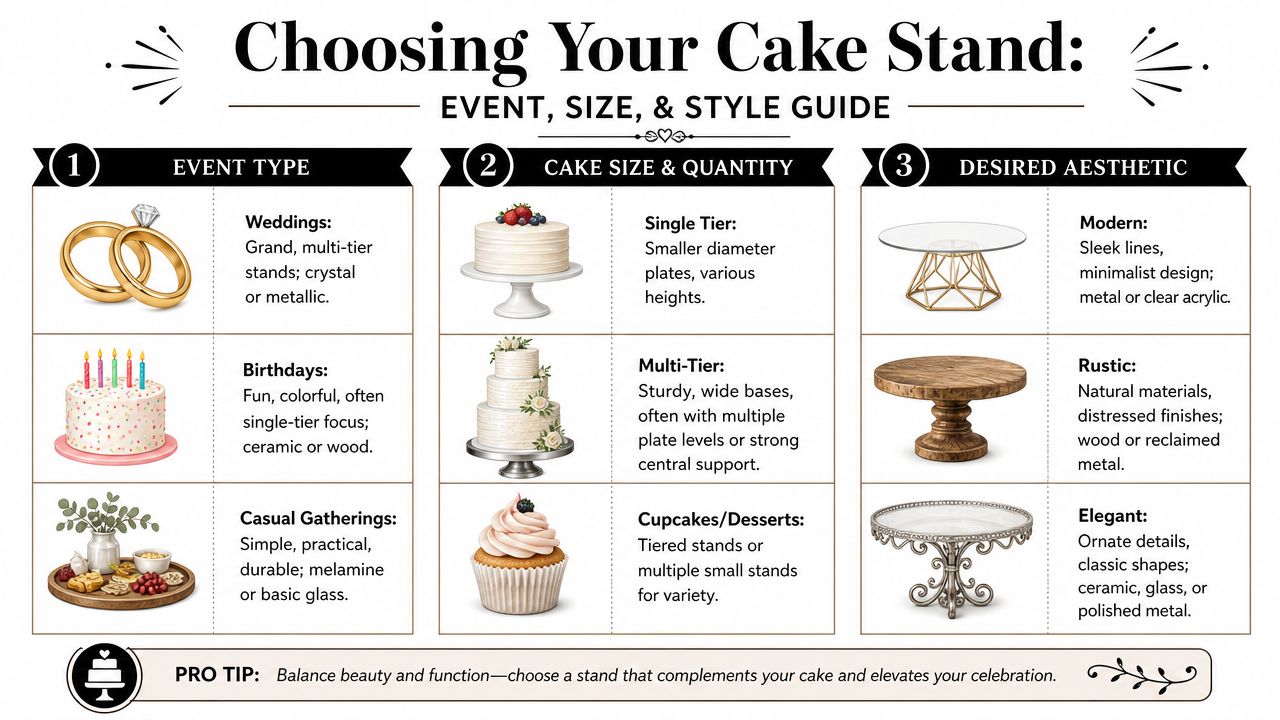
A glass cake stand should match the tone of the event, not just the cake design. This is where many setups go off track. Someone chooses “beautiful” in isolation, but the stand needs to be beautiful in the same visual language as the venue, florals, furniture, and service style.

In Cape Town, event styling changes dramatically from one setting to the next. A Winelands wedding doesn’t ask for the same display language as a product launch in the city, and neither of those should be styled like a twenty-first birthday at home.

A Franschhoek wedding needs softness and texture

At a romantic wedding in Franschhoek, the setting usually does part of the work. You already have mountains, vines, soft natural light, and often a venue with layered textures such as stone, wood, or heritage interiors. In that environment, a plain ultra-modern stand can feel too sharp.

What tends to work is glass with some detail. Not excessive ornament, but enough visual texture to catch candlelight and echo the rest of the styling. A cut-glass or vintage-inspired pedestal often feels settled in that setting.

For this style of event, I’d usually steer away from:

  • Overly thick modern glass forms that read heavy
  • Very stark cylindrical bases that feel corporate
  • Tiered stands for the main cake unless the entire dessert concept is multi-level

A Cape Town corporate event wants clarity

Corporate clients usually need a cleaner result. At a launch or brand activation, the cake often supports the wider brand environment. The stand shouldn’t pull attention away from signage, product placement, or a carefully controlled palette.

That’s where a sleek pedestal stand earns its place. Smooth glass, restrained profile, and no visual fuss. The stand acts almost like gallery display equipment. It frames the cake, but it doesn’t decorate it.

A useful comparison is the difference between glass and timber styling. If you’re weighing up whether a warmer material would suit the room better, a look at this wooden cake stand discussion helps clarify when wood brings character and when glass keeps things more refined.

The more structured and brand-led the event, the less decorative the stand should be.

A birthday setup needs flexibility more than formality

Private birthday events are where people often overcomplicate things. For most birthday cakes, especially at home or at relaxed venues, the stand doesn’t need to prove anything. It needs to be stable, easy to position, and visually neat.

For a colourful birthday table in the Southern Suburbs, a simple glass stand usually does the job better than an ornate one. Balloons, candles, sweets, toppers, and bright icing already bring enough energy. The stand should support that, not compete with it.

In practical terms, the best match often comes down to these questions:

  • Is the venue formal or relaxed
  • Is the cake detailed or simple
  • Will the stand be one of many styled elements or the main display piece
  • Does the room need softness, sparkle, or restraint

The strongest event styling always looks like one person made all the decisions, even when several suppliers were involved. The cake stand plays a small role, but it has to speak the same design language as everything around it.

The Smart Choice Renting a Glass Cake Stand

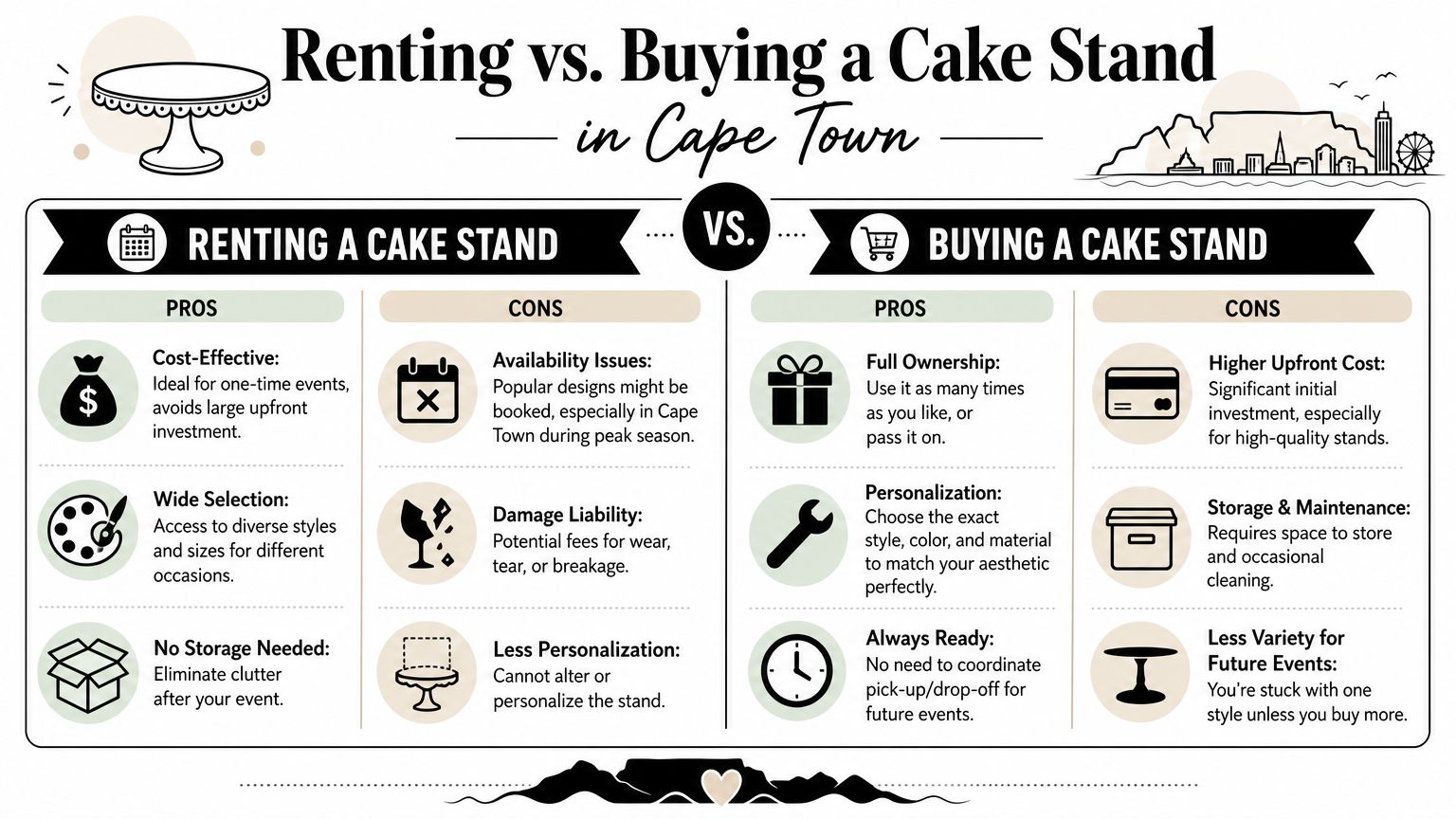
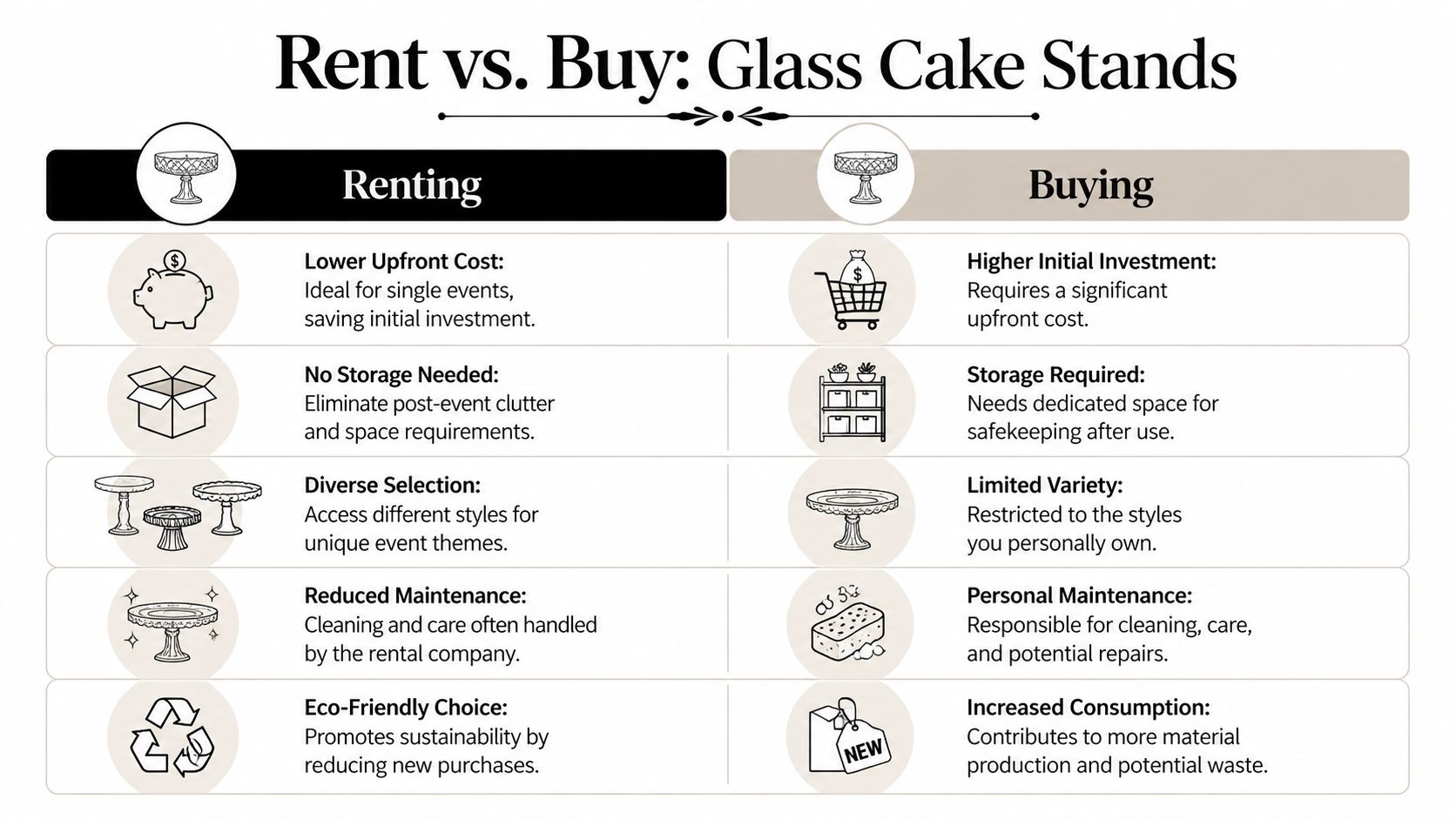
Buying a glass cake stand sounds sensible until you look at the local event realities. If you host regularly, ownership can make sense. But for most Cape Town weddings, launches, and once-off celebrations, renting is the cleaner decision financially and operationally.

The main reason is straightforward. A quality glass cake stand for Cape Town events typically costs between R400 and R800 to purchase, while local rental rates are often around R100 to R150, which works out to a 70 to 80 percent saving per event according to the South African customs tariff context and local rental pricing referenced here: South Africa customs tariff 2023.

A comparison chart outlining the pros and cons of renting versus buying glass cake stands for events.

Why buying often looks cheaper than it is

People tend to compare the purchase price with the rental fee and stop there. That misses the actual cost of ownership.

When you buy, you also take on:

  • Storage responsibility: Glass stands need safe, dedicated space where they won’t be chipped or scratched.
  • Transport risk: Delicate glassware doesn’t travel well when packed casually with other event items.
  • Cleaning and upkeep: Fingerprints, wax marks, packaging dust, and minor damage all become your problem.
  • Style lock-in: You own one look, even though your next event may need something completely different.

For many Cape Town clients, the biggest hidden issue is that the stand won’t be used again. Wedding couples rarely need one after the wedding. Corporate teams may need a different style for the next activation. Private hosts often discover that a fragile glass piece is awkward to store long term.

Local conditions make rental more sensible

South African import costs change the equation further. High import duties on glassware in the 25 to 40 percent range are part of why purchased glass stands can feel expensive for what is, in many cases, a single-use event item. The same customs reference linked above supports that local pricing pressure.

Then there’s breakage. Delicate items at Winelands events carry a 15 percent claim rate for breakage, which matters when your celebration involves loading, unloading, venue setup, clearing, and travel on regional roads. That same verified data point is included in the customs-linked source context above.

Renting shifts the risk away from ownership thinking. For one event, that’s usually the smarter mindset.

What rental does better

Rental suits the way events work. You choose the stand for the one event in front of you, not for a hypothetical future event that may never happen.

That gives you practical advantages:

Renting Buying
You choose for the specific venue and cake You adapt the event to the stand you already own
No long-term storage issue You need safe storage after the event
Better for once-off celebrations Better only if repeated use is realistic
Less commitment to one style One purchase can limit future styling choices

There’s also a softer benefit that planners understand immediately. Rental encourages better decision-making. People feel free to choose the stand that actually fits the brief because they aren’t trying to justify a permanent purchase.

When buying still makes sense

Buying isn’t wrong. It’s just more limited in who benefits from it.

It can make sense if:

  • You run a venue or styling business and will reuse the same piece often
  • You host frequently enough that repeated use is realistic
  • You have proper storage and transport systems
  • You want one signature display item and are prepared to maintain it

For everyone else, especially couples planning a single wedding or companies organising a one-day activation, renting keeps the budget cleaner and the logistics lighter.

Handling Your Glass Cake Stand Like a Pro

A glass cake stand can arrive in perfect condition and still look poor on the day if it’s handled casually. Smudges, wobble, bad placement, and rushed setup are the usual problems. None of them are difficult to avoid, but they do need attention before the cake goes on.

The goal is simple. By the time the baker, caterer, or coordinator places the cake, the stand should already be clean, level, and in its final position.

Clean it at the right time

Don’t polish the stand too early and assume it will stay pristine. Event setup creates dust, fingerprints, and stray marks from handling. Glass should usually get its final wipe once the table styling is largely done and just before the cake is placed.

Use a lint-free cloth and work gently. Hold the stand by its base or underside as much as possible so you don’t keep re-marking the display surface.

A few mistakes to avoid:

  • Don’t use heavily perfumed cleaners near food presentation items.
  • Don’t polish in direct harsh light only and assume it’s clean. Check from guest eye level too.
  • Don’t leave the final wipe to the baker unless that has been agreed in advance.

Check the surface before the stand goes down

Many “unstable stand” problems are really table problems. Uneven trestles, linen bunching, soft runners, and decorative chargers under the stand all create movement.

Before the cake arrives:

  1. Place the stand in its intended final spot.
  2. Press lightly around the top edge.
  3. Confirm there is no rocking.
  4. Adjust the linen or reposition if needed.

A beautiful stand on an uneven table is a risk, not a feature.

This matters even more at venues where floors or furniture may be older and less uniform. In those settings, a quick stability check saves stress later.

Transport needs more care than most people expect

If you’re collecting the stand yourself, transport it upright, cushioned, and separate from heavier décor items. Don’t wedge it between boxes and hope for the best. Glass edges chip easily, and small damage that seems minor in daylight becomes obvious under venue lighting.

If the stand has multiple parts, pack them so they can’t knock together during the drive. On arrival, unpack it before the room gets crowded and store it somewhere safe until the cake table is ready.

The safest option is always to have delivery and collection handled professionally where possible. That removes one more fragile job from a day that already has enough moving parts.

Placement affects service too

The stand should look good, but it also has to allow clean cake cutting and easy guest access if the cake is on display before serving. Avoid pushing it so deep into a decorated table that nobody can work around it later.

Good placement usually means:

  • Enough space behind or beside the cake for cutting access
  • No dangling florals or candles too close to the glass edge
  • A line of sight from the room entrance or key photo angle
  • Distance from direct wind if outdoors

That combination gives you the polished look clients want without making the service team fight the setup.

Your Glass Cake Stand Event Checklist

By the final week before an event, nobody wants another vague decision. You want a short list that confirms the important details are locked in. For a glass cake stand, that means checking fit, style, logistics, and table readiness in one pass.

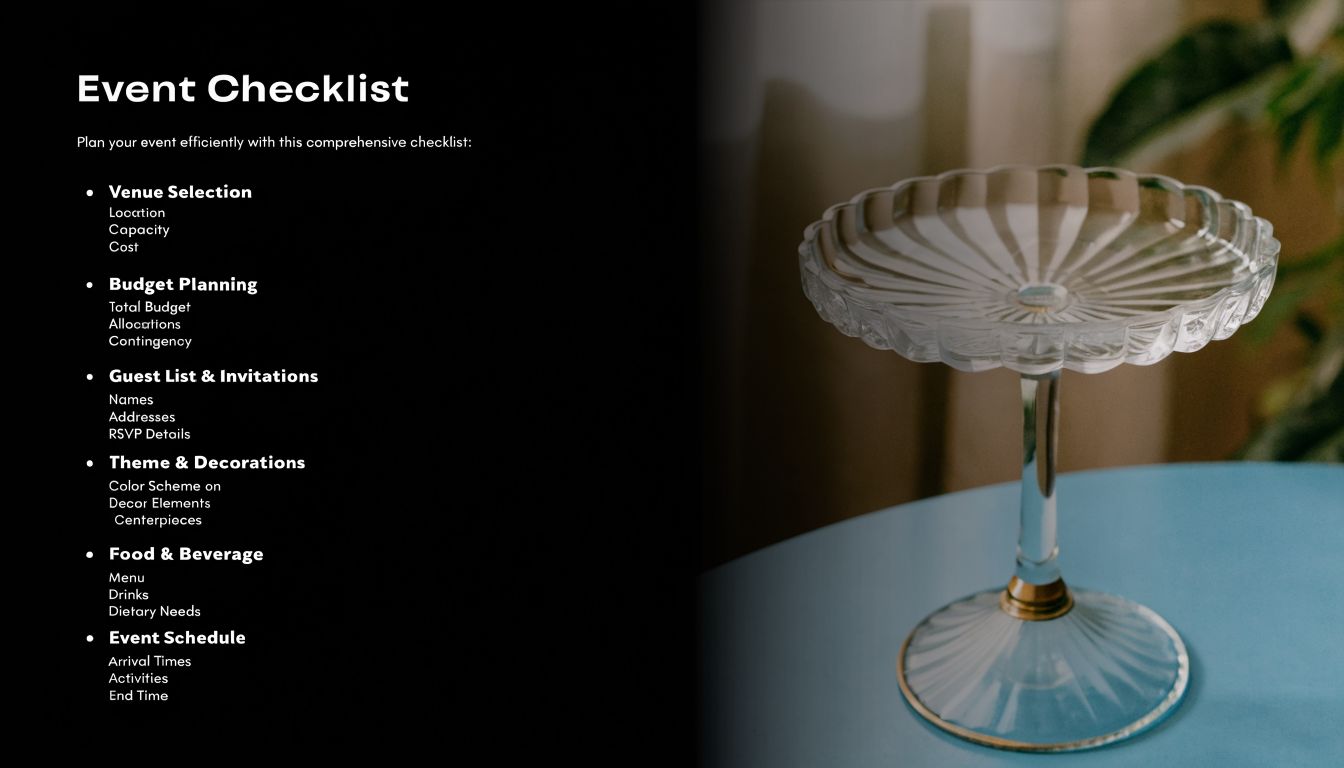
A sophisticated glass cake stand sits on a blue table, beside an event planning checklist.

Final planning checklist

Use this before the event week gets busy:

  • Confirm the cake dimensions: Get the final base size from the baker, including any board beneath the cake.
  • Match the stand to the venue style: Keep the stand in the same visual language as the room, flowers, and table setup.
  • Check the table size: Make sure the stand will sit comfortably with all other décor items.
  • Decide on height: Higher for more presence, lower for a relaxed or layered dessert table.
  • Clarify transport: Know who is collecting, delivering, unpacking, and returning the stand.
  • Plan the placement: Choose the exact table position before the cake arrives.
  • Schedule the final clean: Leave the last polish until close to cake placement.
  • Confirm responsibility on the day: Someone specific should oversee stand setup, not “whoever is free”.

One final coordination step

The stand choice often gets delayed because it sits between suppliers. The baker cares about size, the florist cares about surrounding styling, the venue cares about placement, and the host assumes someone else has covered it.

That’s why a simple planning document helps. If you’re pulling the whole event together, a broader event planning checklist template makes it easier to assign who confirms what and by when.

The stand is a small item. The coordination around it isn’t. Clear ownership prevents last-minute scrambling.

When this checklist is done properly, the cake table feels calm on the day. That matters more than people realise.

Frequently Asked Questions

Question Answer
Is a glass cake stand only suitable for weddings? No. It works for weddings, corporate launches, birthdays, school formals, baby showers, and any event where the cake or dessert display needs a cleaner finish. The key is choosing the right style for the setting.
Does clear glass disappear too much on a decorated table? Usually the opposite. Clear glass lets the cake stand out while still catching light. If the table is very busy, glass often performs better than a coloured or heavily textured base.
Can a glass cake stand work outdoors? Yes, but the setup needs more care. Wind, dust, insects, and uneven surfaces all matter more outdoors. A domed option is often the better choice when the cake will stand for a while before serving.
What if my cake is very simple? A simple cake can look excellent on glass. In fact, glass often helps a minimalist cake feel more refined because it adds elevation and light reflection without adding visual noise.
Should the cake stand match other serving pieces exactly? Not necessarily. It should coordinate, but it doesn’t need to be identical to every platter and tray on the dessert table. Exact matching can sometimes make the setup feel flat.
Is a tiered glass stand suitable for a main celebration cake? Usually no. Tiered stands are better for smaller sweets, pastries, cupcakes, and mixed dessert displays. A main celebration cake generally needs a stable single platform.
Who should place the cake on the stand? Ideally the baker, caterer, or a coordinator who is used to handling display items. The stand should already be clean and in place before they arrive with the cake.
Does a glass cake stand suit modern events, or is it too traditional? It suits both. The shape matters more than the material. Smooth, minimal glass works well for modern styling, while cut-glass or more ornate profiles suit romantic or classic events.
What causes most stand-related problems on event day? The usual issues are wrong sizing, unstable tables, rushed setup, fingerprints, and poor transport. None of these are design problems. They’re handling and planning problems.
Is renting better for a once-off event? In most local cases, yes. For one celebration, renting is often the more practical option because it avoids storage, transport pressure, and the commitment of buying a delicate item you may never use again.

If you’re planning a wedding, launch, birthday, or formal event in Cape Town and want the practical option without compromising on presentation, ABC Hire is a strong local partner to speak to. Their event rental range serves Cape Town, Stellenbosch, Franschhoek, Paarl, and surrounding areas, which makes it easier to source the right display pieces with logistics in mind, not just looks on a product page.

Perfect Wooden Cake Stand for Your 2026 Event

The venue is booked. The florist has your brief. The cake order is sorted. Then one practical question lands right at the end of the planning list. What is the cake going to stand on?

That detail changes more than one might anticipate. A beautiful cake on an awkward, flimsy or badly sized base can make the whole dessert table feel unfinished. A well-chosen wooden cake stand does the opposite. It gives the cake presence, lifts it into the room, and ties the styling together without competing for attention.

In Cape Town and the Winelands, that choice also comes with local realities. Outdoor venues, gravel courtyards, farm tables, humid air, long delivery routes, and quick turnaround between events all affect what works in practice. The stand needs to look right, but it also needs to travel well, sit level, clean properly and hold steady when guests gather around for photos.

The Finishing Touch Your Event Deserves

A cake table often comes together last. That is exactly why the stand matters.

Many planners have seen the same moment. The linens are smooth, candles are placed, the cake arrives looking excellent, and then someone sets it down on a stand that is too small, too shiny, too cold, or wrong for the room. The cake is still lovely, but it loses impact.

A wooden cake stand solves that in a very particular way. It brings warmth. It softens modern tablescapes. It gives rustic venues structure and gives formal venues texture. On Cape farm venues, heritage estates, garden weddings and even neat corporate launches, wood tends to sit comfortably with the surroundings.

That instinct has deep roots locally. Wooden cake stands were not a recent styling trend in Cape Town. They were part of the social language of entertaining much earlier. Historical records from the late 19th century show that they appeared in over 65% of documented tea parties in Cape Town high society, often crafted from local woods such as yellowwood to signal opulence and stability, as noted in this historical account of tiered cake stands.

Why the stand matters as much as the cake

The stand does three jobs at once:

  • Presentation: It frames the cake and gives it visual importance.
  • Practical support: It keeps the cake elevated and easier to serve.
  • Theme control: It can pull a look towards rustic, modern, heritage-inspired or minimal.

A cake should never look like an afterthought on the table. The stand is what turns it into a focal point.

For Western Cape events, that is especially useful. A single piece can bridge different design elements, such as timber tables, white crockery, dried florals, brass candle holders, vineyard stonework or black corporate branding.

Why a Wooden Stand is Your Most Reliable Choice

A cake table gets handled by several people in a short window. The florist is adjusting candles, the venue team is straightening linen, the baker is checking the finish, and someone is usually asking for one last photo before guests arrive. In that kind of setup, reliability matters more than a stand that only looks good in a product shot.

Wood earns its place because it balances appearance with practical use. Metal can suit a very clean, modern brief, but it often feels harder and less forgiving in vineyard venues, garden weddings, and heritage spaces around Cape Town. Glass photographs well in controlled conditions, yet it is the option I watch most carefully during loading, setup, and collection.

Stability on real event floors

A good wooden stand usually has enough weight and surface area to sit confidently on the kinds of tables we see at events. That includes trestles with a slight bow, uneven decking, old farmhouse tables, and outdoor setups where the ground is not perfectly level underneath the flooring.

That matters in the Winelands. Venues in Stellenbosch, Paarl, and Franschhoek often combine beautiful settings with practical quirks such as gravel paths, cellar doors, lawn ceremonies, and quick room resets between functions. A wooden pedestal generally handles that movement better than lighter decorative stands that can shift too easily once the cake is in place.

Wood works across more event types

Wood also solves a styling problem without drawing too much attention to itself. It can support a soft, romantic wedding cake at a Constantia estate, a neat single-tier celebration cake at a baby shower in Durbanville, or a branded dessert display at a corporate function in the CBD.

It also connects well with other furniture already in the room. If the event uses timber pieces, the cake stand looks intentional rather than added at the last minute. That is especially useful when you are matching the display to wooden tables and chairs for event styling.

Practical trade-offs

Wood is reliable, but it is not maintenance-free. It can pick up marks if it is stacked badly in transport. Some finishes need careful wiping between hires. Coastal humidity can affect certain woods over time if they are stored poorly.

Those trade-offs are manageable, and for most events the upside is stronger.

Feature Wooden stand Metal stand Glass stand
Visual warmth High Lower Moderate
Stability on uneven setups Usually strong Varies by base Varies by thickness and base
Transport resilience Good Good Fragile
Range across event styles Wide More limited More limited

The main mistake I see is choosing a stand by colour and shape alone. Ask how heavy it is, whether the top plate is wide enough for the cake board, whether it sits flat, and how it will travel to a farm venue or private home. A wooden stand is often the safest answer because it handles both the styling brief and the logistics behind it.

A Guide to Wooden Cake Stand Styles and Materials

A wooden cake stand does more than hold the cake. It sets the tone of the table before guests even notice the flavour or the flowers. In Cape Town and the Winelands, where one weekend can include a polished city launch and a relaxed vineyard wedding, the style and finish of the stand need to suit both the brief and the venue.

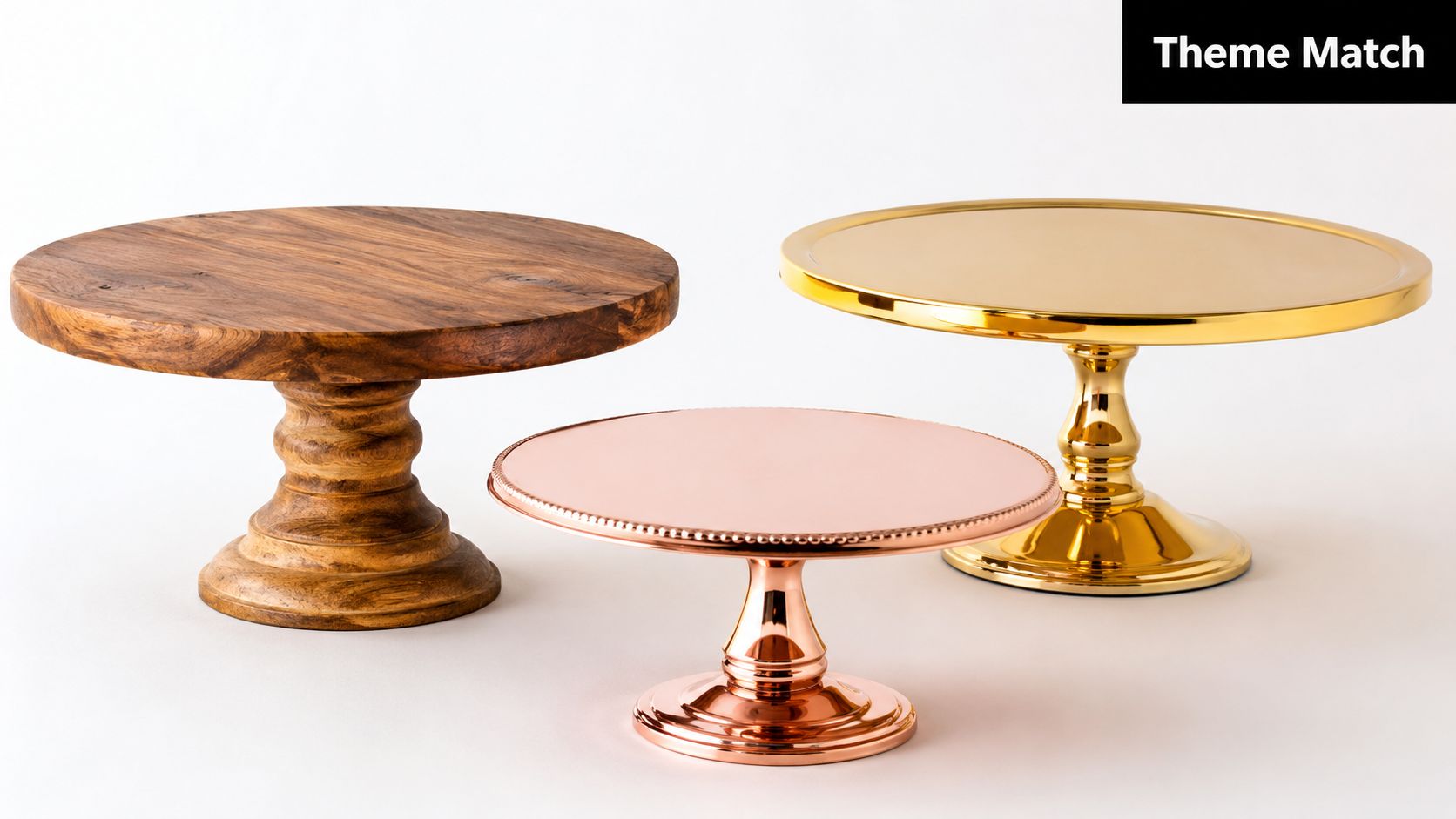
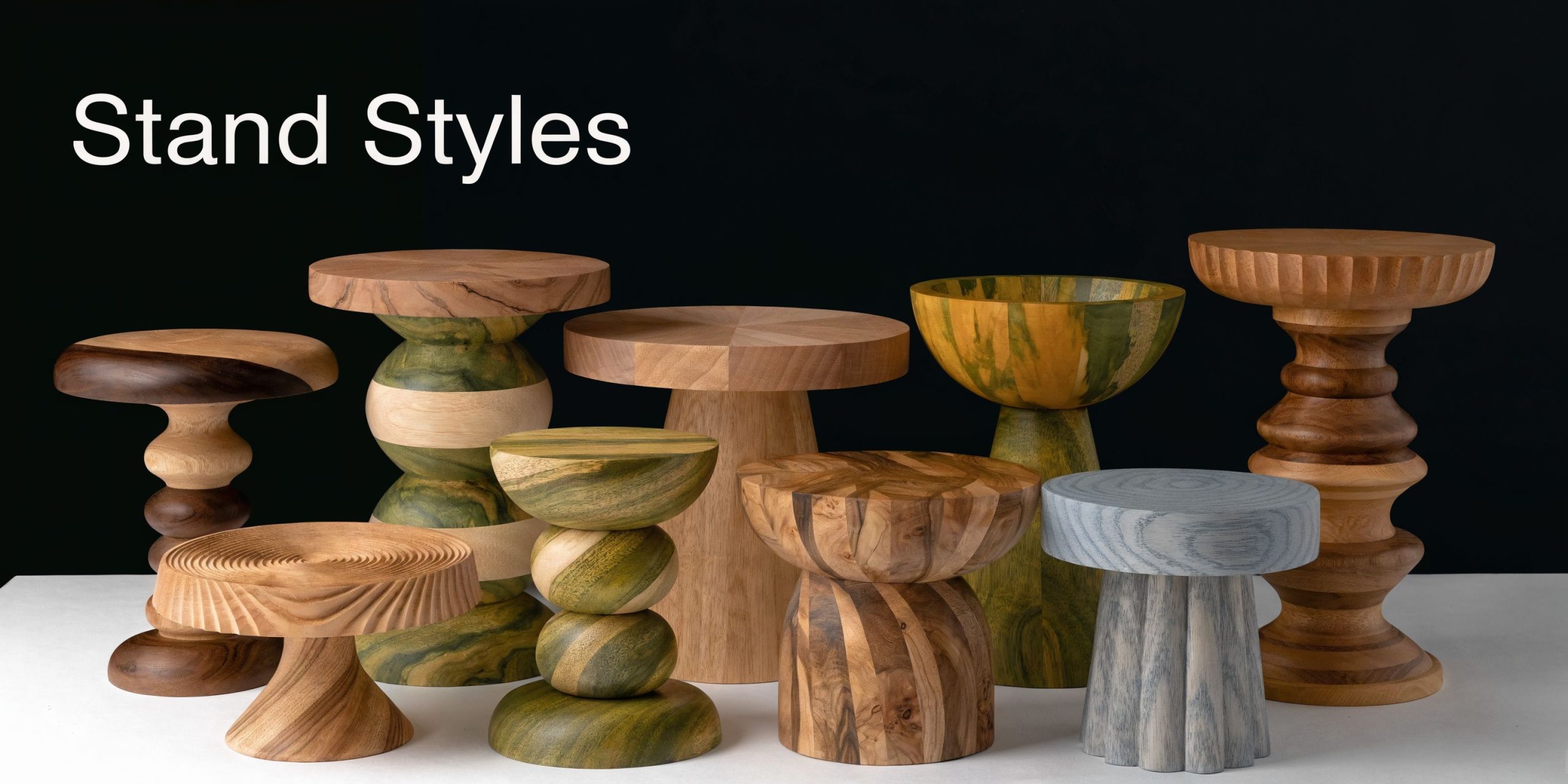
A collection of various artistic wooden cake stands arranged on a white surface against a black background.

Pedestal styles that suit different events

A round pedestal is still the most flexible choice. It works across weddings, kitchen teas, milestone birthdays and corporate dessert tables because it gives the cake a clear centre point without competing with the decor. If the client is undecided, this is usually the shape I recommend first.

A raw-edge or rustic slab style suits farm venues, cellar doors and outdoor celebrations where the rest of the setup already has texture. It looks best when the styling is slightly relaxed. Semi-naked cakes, pressed flowers and fruit-led finishes tend to sit naturally on this type of stand.

A painted or smooth-finish pedestal fits cleaner event styling. It works well for modern reception spaces, showroom launches, formal school functions and black-tie evenings where a rough timber edge would feel out of place.

A low riser often solves practical styling problems. It keeps the display grounded when the cake is tall, and it helps when guests need clear sightlines across long banquet tables.

Material choices and what they mean in practice

The timber itself changes how the stand reads in the room.

  • Oak has weight and a more refined look. It suits elegant setups, but it needs proper storage and careful handling in coastal humidity.
  • Acacia usually shows stronger grain and warmer variation. It works well when the brief calls for a natural finish that still feels considered.
  • Pine is lighter in both weight and visual presence. It can work well for casual events if the finish is clean and the construction feels solid.
  • Locally styled timber finishes often sit comfortably in Cape venues because they echo the natural materials already used in many estates, barns and garden spaces.

Finish matters as much as species. A glossy top can bounce too much light into photos, especially under marquee lighting or flash. A very rough surface may suit the look of the event, but it can trap crumbs and icing and takes longer to clean properly between hires.

The best rental pieces usually sit in the middle. They look natural on the table and still wipe down fast during pack-up.

Styles that work better for hire stock

Buying for a home kitchen and choosing for event hire are not the same job. For weddings in Franschhoek, private homes in Constantia, or functions that need delivery up staircases in the city, the stand has to travel well, pack efficiently and come back in usable condition.

For that reason, simpler pedestal shapes often outperform ornate ones in the rental market. Clean profiles stack better, store better and are easier for staff to wrap without damaging the edges. Stands with detachable parts can also make warehouse packing and vehicle loading easier, especially when several setups are going out on the same run.

If you want the cake display to feel connected to the rest of the venue, it helps to look at the wider timber palette too. The same styling principles show up in pallet wood furniture used for event setups, particularly when the goal is a consistent wood-led look rather than one standalone feature on the dessert table.

A practical filter before you choose

Use these questions to narrow the options quickly:

  1. Does the venue feel polished, rustic, or in between?
  2. Will the cake be photographed close-up from several angles?
  3. Is the finish smooth enough for quick cleaning after service?
  4. Can the stand handle transport to a farm venue, hotel, or private home without fuss?
  5. Does the stand shape support the cake style instead of distracting from it?

That shortlist usually gets better results than choosing from photos alone. In practice, the right stand is the one that suits the room, carries the cake cleanly, and still makes sense for delivery and collection around Cape Town and the Winelands.

Sizing Your Stand for a Flawless Cake Display

The cake arrives at a Franschhoek venue looking perfect, then the stand turns out to be too narrow for the board. That is how a polished setup starts feeling makeshift. Sizing the stand properly avoids that problem and makes service, transport, and photography easier on the day.

Infographic

Start with the cake board, not the cake

Bakers often quote the cake diameter first, but the stand has to suit the full base. That includes the board, any icing overhang, and decorative details that sit low around the edge.

A reliable rule is to choose a stand that is 2 to 4 inches wider than the cake base. That border helps the cake sit comfortably, gives staff room when lifting or serving, and looks balanced in photos. For rented stands, that extra margin also reduces the risk of chips or pressure on the stand edge during setup.

Diameter matters first. Height comes second

Clients often ask for a taller stand because they want the cake table to feel more important. Height does help, but only after the top plate is wide enough.

Use this guide before you confirm the hire:

Cake size Better stand choice Why it works
Small cake Slightly larger stand Keeps a neat border around the base
Medium cake Moderately wider stand Balances the display without wasted surface area
Large single-tier cake Broad, stable top plate Improves support and leaves room for clean serving
Tall multi-tier cake Wide top plus firm base Gives the cake a safer footprint and better proportion

In practice, single-tier cakes need less drama and more support than clients expect. Tall cakes are different. Even if the diameter looks manageable, the overall weight and centre of gravity can change the stand you need.

Height changes the mood of the table

A low stand suits private dinners, smaller birthday tables, and venues where the cake sits close to guests.

A medium pedestal is usually the safest choice for weddings and corporate functions. It gives presence without making the cake difficult to cut or awkward to photograph across the table.

A taller stand earns its place when the cake is on a separate display table, the room has high ceilings, or the cake itself is narrow and needs visual lift. At Cape Town hotel venues and many Winelands estates, that works well if the florist keeps surrounding décor low.

If the cake already has several tiers, extra pedestal height can push the display too far upward. Width and stability usually solve the problem better than added elevation.

Check these details before you book or buy

Sizing errors usually come from missing one practical detail:

  • The cake board is wider than expected.
  • Fresh flowers, fruit, or piped details increase the footprint.
  • Product photos hide scale.
  • The stand looks solid but is not rated for a heavy cake.
  • The venue access involves gravel paths, stairs, or a long carry from parking to setup.

That last point matters more in the Winelands than many people realise. A stand that works in a studio photo may be a poor rental choice for a farm venue where staff have to carry it across uneven ground and set it level on site.

If you are adding finishing details, keep scale in mind there too. A delicate topper can disappear on a very broad stand, while an oversized topper can make a smaller cake feel crowded. This is one reason I like reviewing topper proportions at the same time as stand size. A vintage wood wedding cake topper can work beautifully on a timber display, but only if the stand, cake width, and topper size feel resolved together.

Good sizing protects the cake, improves the table layout, and saves stress during setup. For rentals in Cape Town and the Winelands, it also cuts down on last-minute stand swaps and delivery-day surprises.

Styling and Photography Tips for Your Cake Stand

A wooden stand does more than hold the cake. It shapes how the whole table reads in person and in photos.

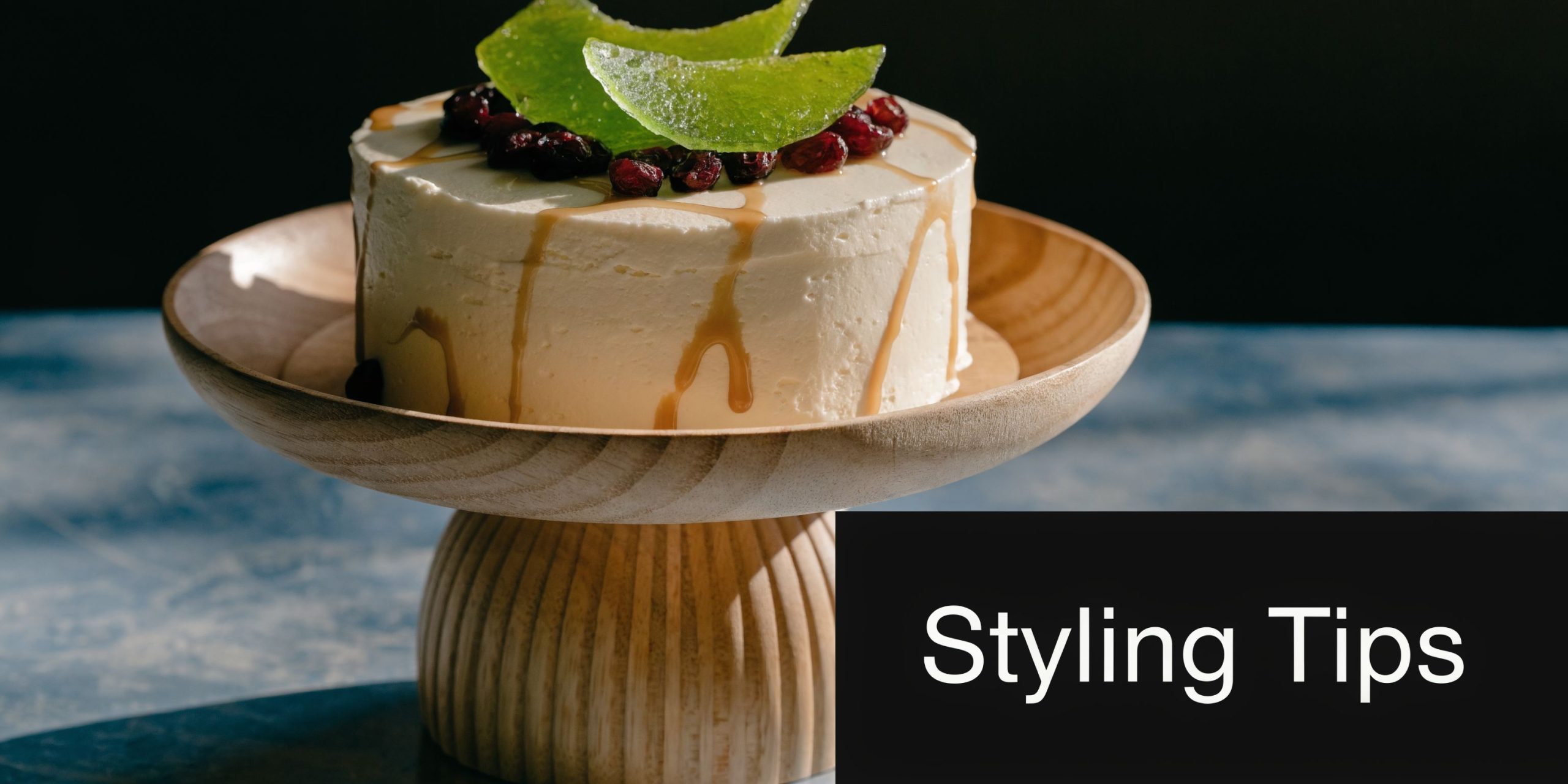
A creamy cake topped with dried fruit on a stylish wooden cake stand against a dark background.

At weddings in the Winelands, the strongest setups are usually the simplest. A textured cake on a timber stand, one or two supporting décor elements, and enough negative space around it will almost always photograph better than an overcrowded dessert table.

Keep the styling close to the stand’s character

A dark-stained stand usually suits richer styling. Think figs, black grapes, deep greenery, brass accents or moody candlelight.

A pale or natural wood stand works well with:

  • white florals
  • soft linen napery
  • stoneware
  • fresh fruit
  • matte ceramics

If you are adding a topper, keep the material language consistent. A timber stand with an acrylic topper can work, but a wood-based topper often looks more resolved. For couples wanting that layered natural look, a vintage wood wedding cake topper is a useful reference point for how wood details can sit softly on a cake without overpowering it.

What photographers usually need from the setup

Photographers do not need a complicated cake table. They need separation, clean angles and good light.

A few practical choices make a big difference:

  • Leave space behind the table: Busy backgrounds fight with the cake.
  • Avoid reflective clutter: Metallic trays and mirrored décor can create harsh highlights.
  • Turn the best face of the cake outward: Especially if there is hand-painted detail or sugar work.
  • Keep florals low around the base: High arrangements often hide the stand itself.
  • Check the linen drop: A crumpled cloth under a beautifully styled cake table shows up immediately in close-up images.

Useful photo angles

Side-on shots often show the stand shape best. That matters if the pedestal has profile, carving or a notable finish.

Three-quarter angles tend to work best for:

  • wedding reveal photos
  • cake-cutting moments
  • detail shots for planners and venues

Overhead shots are less about the stand and more about overall table styling, so use them when the surrounding décor is part of the story.

If the stand has strong grain or a handcrafted finish, ask for at least one close shot that includes the pedestal edge and the lower part of the cake. That is where the texture shows.

The strongest cake tables feel edited, not overloaded. The stand should support the story, not fight for attention.

Renting a Wooden Cake Stand in Cape Town and the Winelands

You lock in the cake, the florist, and the venue. Then setup starts in Franschhoek or Constantia, and someone asks where the cake stand is, who is collecting it, and whether it will sit level on the table provided by the venue. That is usually the point where renting starts to look smarter than buying.

For one-off weddings, brand launches, birthdays, and matric functions, a hired wooden stand solves a practical problem. It gives you the right piece for the day without adding storage, transport, cleaning, and maintenance to your own checklist. In Cape Town and the Winelands, that matters because logistics are rarely simple. Venues have access times, farms have gravel and uneven ground, and city sites often have loading bays, stairs, or lift limits.

A gourmet fruit-topped cake sits on a rustic wooden cake stand outdoors on a sunny day.

Why renting is often the practical choice

A wooden cake stand is a small hire item, but it affects the full event flow. If the stand is too small, the cake board overhangs. If it is too delicate, it can wobble on an old harvest table. If pickup is unclear, it gets left behind during strike and turns into a chargeable problem later.

Renting works well when the stand needs to match the rest of the room, arrive with other furniture, and leave with the same supplier after the event. It also lets planners choose a finish that suits the brief without committing to one style for every future event.

The trade-off is simple. Buying gives you control and long-term access. Renting reduces admin and usually makes more sense when the stand is one piece inside a much larger setup.

What to check before confirming a rental

Ask these questions before you approve the hire:

  1. What is the exact usable top diameter?
    Get the cake board measurement from the baker, not just the tier size.

  2. What surface will it stand on?
    A flat banquet table at a hotel is different from a wine barrel, trestle table, or outdoor farm table.

  3. Who handles delivery, setup, and collection?
    In the Winelands, collection timing can be tight if the venue has a same-night strike requirement.

  4. What finish does the stand have?
    Sealed wood is easier to clean and usually better for repeated event use.

  5. Does it travel in one piece or in parts?
    Modular stands can help with transport, but somebody still needs to assemble them correctly on site.

Local logistics can change the right rental choice

Cape Town and the Winelands are close on a map, but event logistics differ sharply by venue.

A CBD hotel may need a timed delivery slot and quick lift access. A Stellenbosch or Paarl farm venue may allow more space but less margin for delays, especially if suppliers are all arriving through one service entrance. In summer, I also pay attention to heat and wind. A lightweight stand that looks fine indoors can become a poor choice for an outdoor cake table under a marquee.

That is why it helps to hire from a supplier who already works across the region and understands how cake display items fit into the wider furniture plan. ABC Hire is part of that local setup context, and their guide to round wooden event tables in Cape Town is a useful reference if the cake table needs to sit comfortably with the rest of the venue furniture.

Best uses for hired wooden stands

Different events call for different priorities.

Event type Main priority Best stand qualities
Wedding Finish and stability Refined surface, balanced proportions, steady base
Corporate activation Fast handling and clean presentation Easy-clean finish, simple transport, consistent look
Matric dance Straightforward logistics Durable build, quick setup, dependable footing
Private birthday Visual impact without fuss Correct size, attractive grain, uncomplicated styling

A good rental does not draw attention to itself for the wrong reasons. It arrives on time, suits the cake, works with the venue conditions, and leaves the site without creating extra work for the planner, venue coordinator, or family hosting the event.

Proper Care and Maintenance for Longevity

The stand often takes its hardest knock after the cake has been cut.

At a wedding in Stellenbosch or a birthday in Camps Bay, cleanup usually happens fast. Someone wipes the stand, another person stacks décor around it, and the item goes back into transport while there is still moisture on the surface. That is how good wooden stands pick up water marks, fine scratches, and wobble over time.

Wooden cake stands last well if they are cleaned and stored with a bit of discipline. That applies whether you bought one for regular use or hired one for a single event and want to avoid damage charges.

What works

  • Wash by hand: Use a soft cloth, mild detergent, and warm water only.
  • Dry straight away: Pay attention to the underside, join points, and rim where moisture tends to sit.
  • Condition unsealed timber when needed: A light coat of food-safe mineral oil can help maintain unfinished or lightly finished wood. Follow the maker or rental supplier's care instructions first.
  • Store on a flat surface: Keep the stand in a dry area away from direct sun, damp floors, or hot storerooms.
  • Protect it in transit: Wrap the top and base separately if the stand comes apart, and avoid letting metal items rub against the finish.

What shortens the life of a wooden stand

  • Dishwashers: Heat and prolonged water exposure can stress joints and damage finishes.
  • Soaking in a sink or tub: Wood absorbs water fast at exposed edges and joins.
  • Abrasive scourers: These leave visible scratches that show up badly in photos.
  • Carrying it by the top plate only: The join between the plate and pedestal is often the first place to loosen.
  • Stacking decor on top during pack-down: Candle holders, cutlery crates, and glassware can dent or chip the surface.

One practical check helps before every event. Set the stand on a level table, press lightly on opposite sides, and look across the top at eye level. If it rocks, leans, or shows a raised edge, pull it from use until it is repaired or refinished. Small faults become obvious once a tall cake is centred on top.

For Cape Town and Winelands events, storage conditions matter as much as cleaning. Sea air, damp winters, and hot delivery vans all affect timber differently. I have found that stands kept in dry indoor storage and packed properly between jobs stay presentable far longer than stands cleaned well but stored carelessly.

A well-kept wooden cake stand sits level, photographs cleanly, and does not distract from the cake. If you are hiring as part of a wider furniture order, ABC Hire is one local option to consider while planning the stand, table, and transport together.

📍 Cape Town + Winelands