
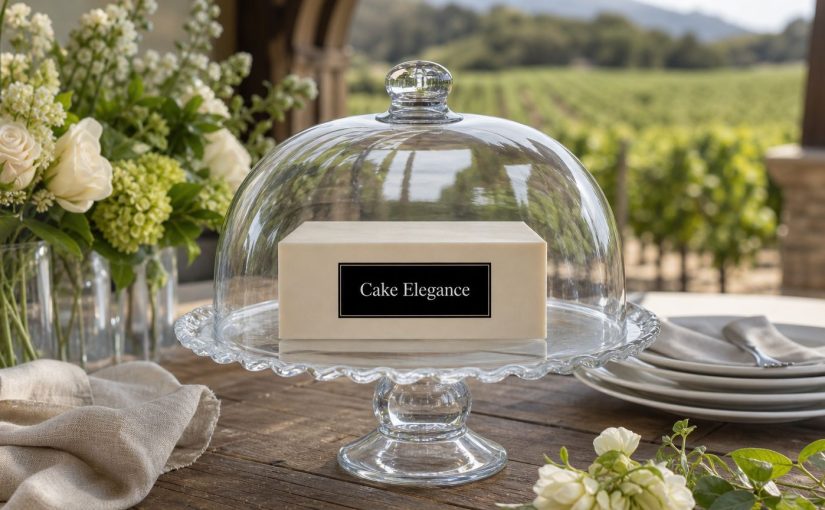
You're probably looking at a cake order, a venue layout, and a table plan all at once, and the dessert display is starting to feel less like a detail and more like a risk. The cake has to look polished in photos, survive transport, and still be presentable by the time guests see it. In Cape Town and the Winelands, that gets harder fast when the venue is outdoors, the setup window is tight, or the cake table ends up in a breezy tasting room doorway.
That's where a cake stand with dome earns its place. It isn't just decorative serveware. It's a display tool that gives the cake height, protects it during service, and helps the whole dessert station feel finished rather than improvised.
The Essential Role of a Cake Stand with Dome
By the time a cake reaches the venue, several things have already worked against it. It has travelled in traffic, sat through setup delays, and landed on a table that may be indoors, half outdoors, or right in a busy guest path. In Cape Town and the Winelands, that combination is common. The display has to do more than look good for five minutes.
A cake stand with dome gives the cake presence and cover at the same time. The stand raises it above the visual clutter of linen, menus, candles, and florals. The dome keeps the finish cleaner for longer while guests arrive, staff pass by, and the room warms up.
Why height changes the whole table
A cake placed flat on a crowded table disappears fast. I see this often at wine farm weddings where the décor is generous, the tables are long, and the cake itself is fairly modest in size. Once you add bottles, glassware, signage, and flowers, the cake needs some lift or it starts looking like an afterthought.
That extra height also helps in photographs. The cake reads as a focal point instead of another object on the table. For event planners, that matters because the cake table is rarely viewed in isolation. Guests see it from across the room, and photographers shoot it against whatever is happening behind it.
Height is not about formality. It is about visibility.
In local event work, that matters most at:
- Wine farm weddings where textured décor and long tables can swallow a smaller cake
- Corporate functions where desserts, branded elements, and gifting displays compete for attention
- Private celebrations where the cake table needs to carry the styling without looking overdone
Practical rule: If guests are meant to notice the cake before it is cut, give it enough height to stand clear of the table dressing around it.
Why the dome earns its keep
The dome solves a different problem. It buys you time.
At many Winelands venues, the cake is styled well before service starts. The room might still be open to suppliers. Doors open and close. A breeze moves through a courtyard or tasting room. Insects find sugar quickly, especially in warmer months. A dome will not keep a cake cold, but it does protect the surface from dust, curious fingers, and the general traffic that comes with event setup.
That matters even more at venues with transport quirks. If a cake arrives after a drive over gravel roads or up a hill to a reception space, the last thing anyone wants is more handling than necessary. Put it in place, cover it, and leave it alone until service. That reduces fuss and lowers the chance of avoidable damage.
Used properly, a cake stand with dome does two jobs well. It improves how the cake reads in the room, and it protects the finish during the long stretch between delivery and cake cutting. For real event conditions around Cape Town, that is usually the difference between a display that still looks composed at showtime and one that already looks tired.
Anatomy of the Perfect Cake Display
Not every cake stand with dome performs the same way. Some are purely decorative. Others are stable enough for real event work, repeated handling, and transport over farm roads or up venue staircases. The difference usually comes down to fit, proportion, and materials.
The stand does more than lift the cake
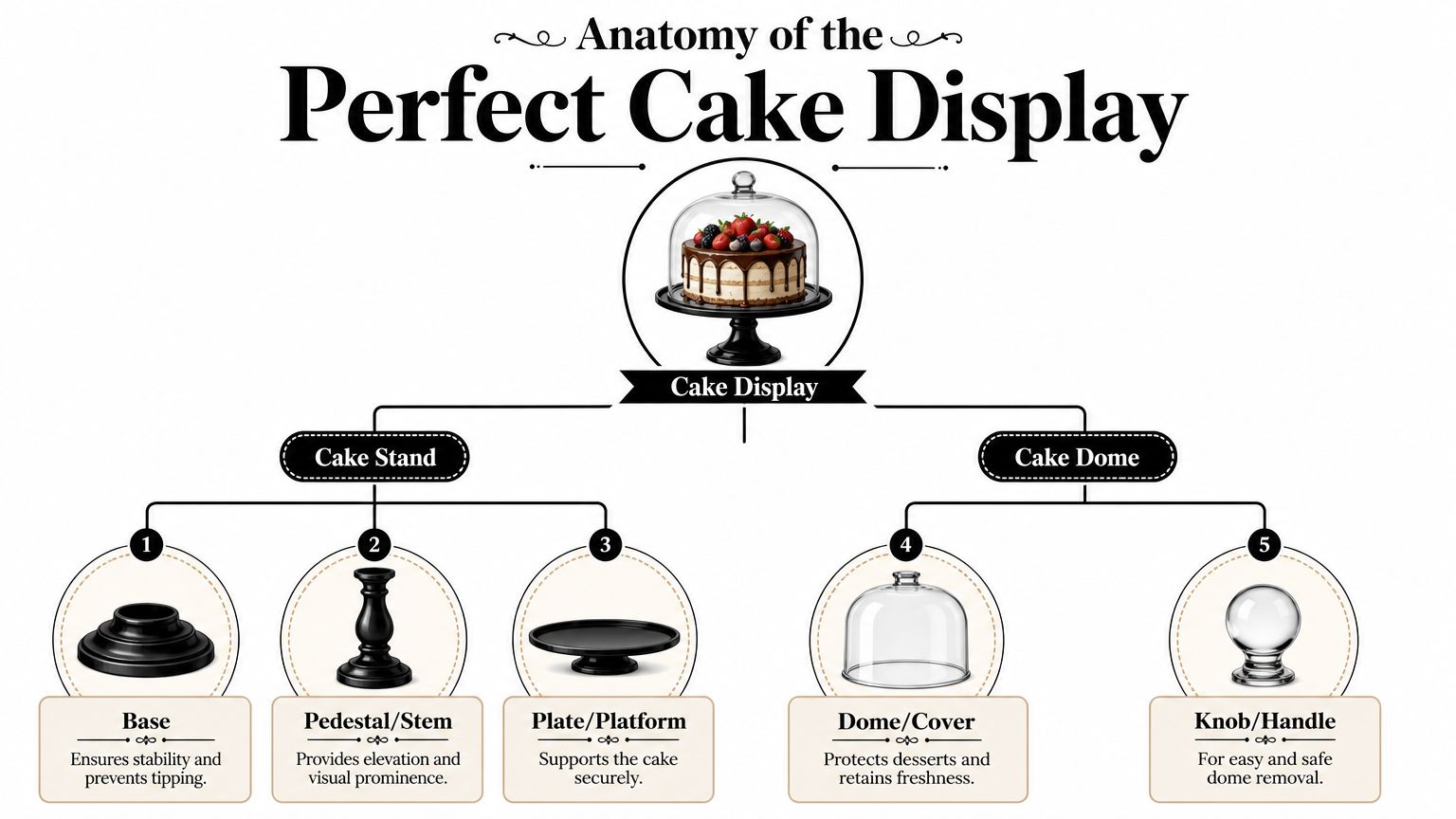
The stand has three working parts. The base carries the weight and resists tipping. The pedestal or stem creates height and changes the visual style. The plate or platform supports the cake board itself.
If any one of those is wrong, the whole setup feels off. A narrow base under a tall dome can look elegant in a product photo and become awkward on an uneven venue table. A platform that's barely larger than the cake board can also make slicing messier because there's no working room for service staff.
Here's how the parts behave in practice:
| Part | What it needs to do | What goes wrong when it fails |
|---|---|---|
| Base | Hold weight and keep the display planted | Tipping, wobble, nervous handling |
| Stem | Add height without making the piece top-heavy | Visual imbalance and unstable lifting |
| Plate | Support the cake board cleanly | Overhang, awkward cutting, icing damage |
The dome is a technical piece, not just a cover
The dome should seat properly on the stand. That sounds obvious, but many mixed sets often fail in this regard. Independent product specifications show that domes are normally designed for paired stand sizes such as 6-inch, 9-inch, or 11-inch formats, which is why near-fit combinations are a bad idea in service settings, as shown in these dome sizing examples.
If the rim fit is loose, the dome can shift sideways when guests lift and replace it. If it's too tight, staff end up forcing it into place. Neither works well at a formal event.
A matched set is easier to pack, safer to handle, and far less likely to look improvised on the table.
Material changes both look and handling
Glass remains the classic choice because it shows the cake clearly and suits formal tables. Metal-and-glass combinations can feel more architectural. Wood works when the setting is rustic, but only if the finish is refined enough for the rest of the tableware. Acrylic is practical for some functions because it's lighter, though it doesn't always give the same premium feel in close-up photography.
Proportion matters just as much as material. Example retail specifications show one typical glass dome stand at about 12.4 inches high by 12.9 inches wide, while another larger unit is listed at about 12.2 inches high by 17.7 inches high in the product record, illustrating how dome clearance changes with design and intended cake profile, according to these product dimensions.
For event work, the lesson is straightforward:
- Higher dome: more room for florals, piping, toppers, and taller decoration
- Wider heavier base: better stability when the dome is lifted repeatedly
- Smaller footprint: easier on compact tables, but less forgiving on uneven surfaces
The best displays don't just look elegant. They stay calm under handling.
How to Choose Your Stand by Cake Event and Style
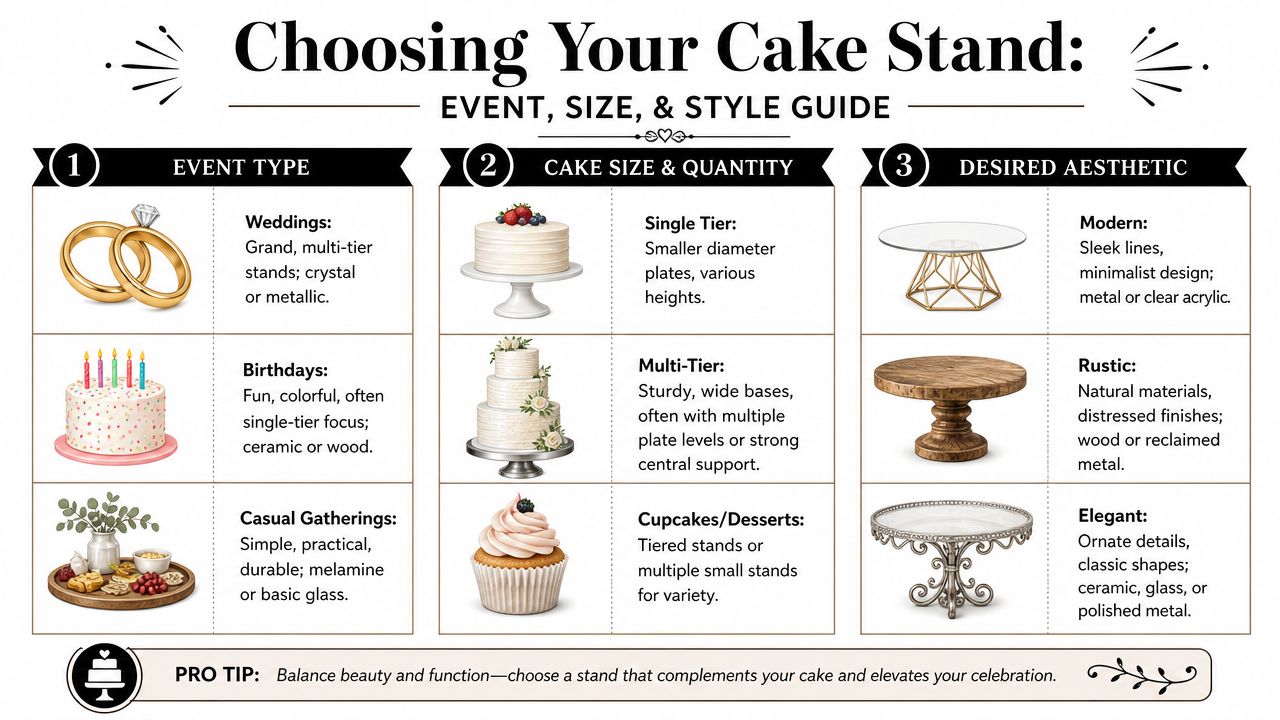
Selection starts with the cake itself. Not the theme board, not the linen sample, not the florist's brief. The cake's width, height, finish, and fragility decide the stand first. Everything else follows.
Start with the cake, not the décor
A heavy buttercream cake needs a stable platform. A tall cake with fresh flowers or sculpted work needs vertical clearance. A neat single-tier cake can sit beautifully on a finer profile stand, but only if the stand still gives enough room around the base for neat service.
Three practical checks help:
Board clearance
The cake board should sit comfortably inside the display area without crowding the rim.Decoration height
Toppers, florals, and piped edges need breathing room under the dome. Tight clearance almost always leads to last-minute decoration damage.Service access
If staff need to remove the dome and cut quickly, they need hand space and plate space. A stand that looks delicate but leaves no room to work becomes a problem fast.
For cake makers who also decorate on a turntable, Monopack ltd's professional guide gives useful context on how stand type affects handling and finishing. It's aimed at cake work rather than event styling, but the handling principles carry over.
Match the stand to the event mood
Material and finish should support the room, not fight it. In the Winelands, rustic doesn't mean rough. Modern doesn't mean cold. The best pairings usually feel deliberate but restrained.
A simple guide works well:
- Wine farm wedding: timber, soft neutral finishes, clear glass, and shapes that suit florals and candlelight
- City corporate event: cleaner lines, polished metal, glass, or minimalist clear styling
- Milestone celebration at home or a venue: something more personal, often warmer in tone and less formal than a wedding setup
If you're comparing natural finishes with refined table styling, this closer look at a wooden cake stand for event styling is useful for understanding where timber works best and where it can feel too heavy.
Think about climate and timing
A dome helps most when the cake needs to stand on display before cutting. Its main job in warm conditions is reducing airflow, which slows drying for cakes like sponge or buttercream. It doesn't refrigerate, but that airflow reduction helps preserve presentation quality during long events and can help reduce waste, as explained in this review of cake stand function and freshness.
That matters in Cape Town because many functions run through warm afternoons into evening service. A cake can look perfect at setup and tired by cutting time if it's left open to moving air.
Choose the stand for structure first, the dome for protection second, and the style third. That order prevents most hiring mistakes.
Styling Your Dessert Station for Maximum Impact
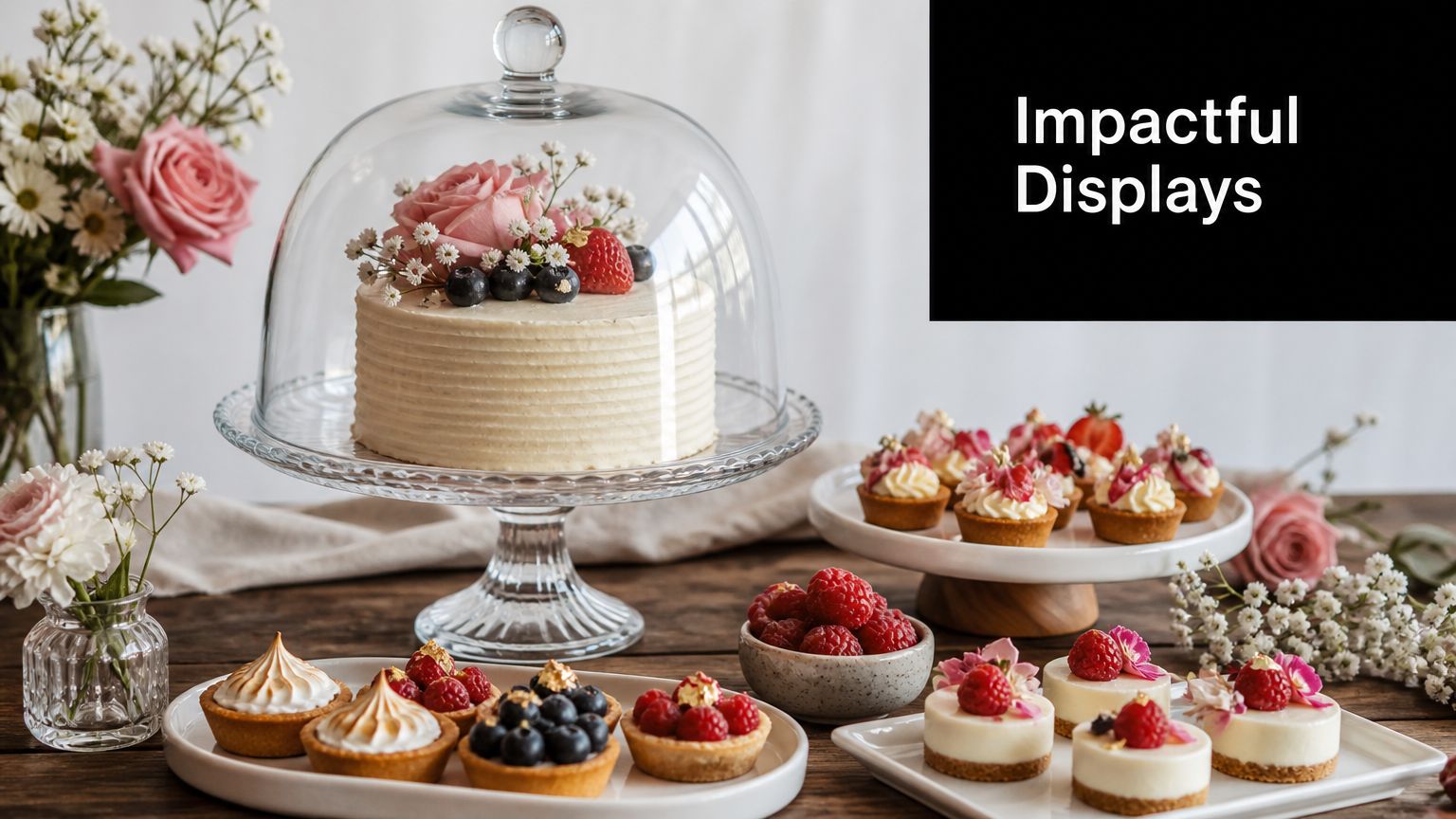
Guests notice the dessert table long before they walk up to it. At a wine farm venue, they often see it from across a lawn, through a tasting room, or under shifting afternoon light. If the cake stand with dome is going to carry the table, the rest of the station needs to support it without fighting for attention.
Wedding tables need layers, not clutter
The strongest wedding setups in the Winelands use height with restraint. The cake should read as the centrepiece first, then the eye should move outward to smaller elements in a clear order. That usually means one dominant stand, two or three lower supporting pieces, and enough open table surface that the display still feels polished in photos.
Outdoor venues make this more practical than decorative. Wind catches loose signage, napkins, and lightweight florals. Uneven timber tables can also make a crowded dessert station feel messy fast. A dome helps the cake hold its presence, but styling needs to stay controlled around it.
A layout that works well is simple:
Romantic wedding look
Clear glass dome, low florals, candles kept beneath cake height, and soft spacing between each itemRustic refined setup
Natural timber tones, neutral linen, restrained greenery, and pastries plated on low servers so the main stand stays dominantClassic formal table
Balanced placement, cleaner symmetry, polished finishes, and clear negative space around the cake
Natural textures can work beautifully here, but only if they do not make the table feel heavy. This guide to a wood display stand for event tables is useful if you want that warmer look without losing definition.
Corporate events need cleaner lines
Corporate dessert stations get judged hard in photographs. The cake often sits near branding walls, name cards, product displays, or registration points, so the stand has to fit the brief instead of looking like it came from a wedding store room.
In practice, cleaner styling works better. Fewer items. Tighter spacing. More discipline with finishes.
| Event type | Styling move that works | What to avoid |
|---|---|---|
| Product launch | One strong central cake with neatly grouped branded treats on lower platters | Florals or props that pull attention away from the brand |
| Awards evening | Glass or metallic stand with deliberate lighting and a tidy backdrop | Too many finishes on one table |
| Office celebration | Clear central display with easy access for guests and staff | Positioning the dome where traffic will knock it |
I also recommend checking sightlines before service starts. At Cape Town venues, dessert tables often get placed wherever there is spare room late in setup. That can leave the cake half-hidden behind an ice bucket, coffee station, or floral arrangement. A good-looking stand cannot fix bad placement.
Keep the tallest item central. Step the rest down in a clear visual order. If guests can understand the table in one glance and reach it without bumping the dome, the styling is doing its job.
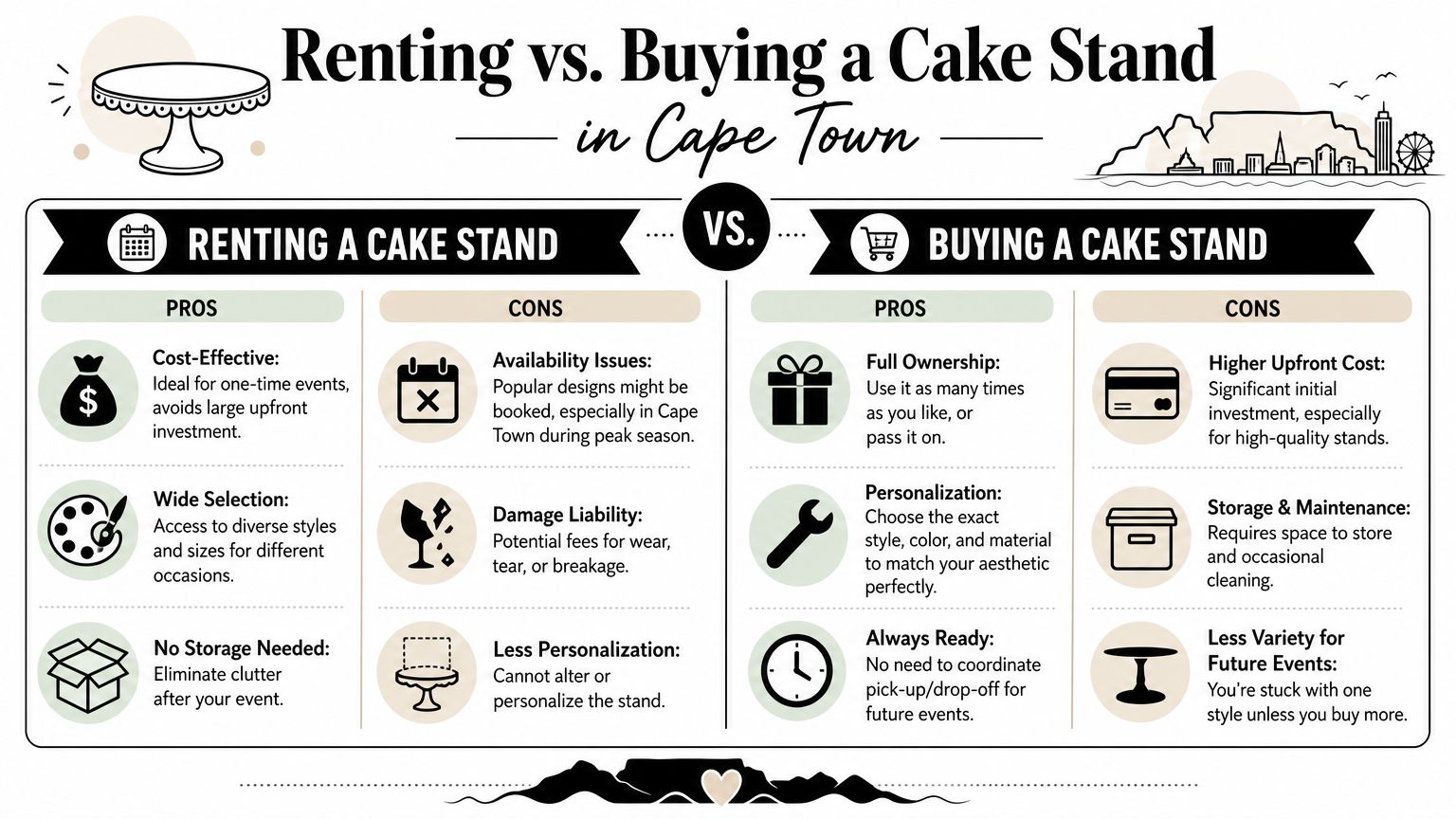
Renting vs Buying a Cake Stand in Cape Town
For most events, the better question isn't whether a cake stand with dome looks good. It's whether it makes more sense to rent one or buy one. In Cape Town, the answer usually depends on frequency of use, storage space, and how much variety you need across different jobs.
Renting suits most one-off events
If you're planning a wedding, milestone party, matric dance, or a once-off corporate function, renting is usually the practical option. You get the style you need for that specific brief without having to store a fragile dome afterwards or hope the same look works for the next event.
That matters more than people think. Large domes take up awkward shelf space, and glass pieces don't age well when they're packed badly or moved often between cupboards, garages, and venues.
Renting also makes sense because the category isn't disappearing or becoming irrelevant. One industry report valued the global cake stands market at US$1.53 billion in 2025 and projected it to reach US$2.43 billion by 2034, with a 5.2% CAGR, according to this cake stands market outlook. For local event suppliers, that points to presentation ware remaining a live category rather than a short-lived styling fad.
Buying makes sense for repeated use
Buying works better for a bakery showroom, a venue that hosts regular in-house celebrations, or a planner who repeatedly uses the same display language. Ownership gives control. The piece is always available, and you can build your styling kit around it.
But buying has trade-offs:
- Storage becomes your problem when the dome is bulky or fragile
- Cleaning standards stay with you after every event
- Style flexibility drops if your purchased stand only suits one kind of brief
A glass dome can still be worth owning if you use it often enough. This practical look at a glass cake dome for events and display is useful if you're weighing the handling and presentation side of that decision.
The local reality
Cape Town events vary wildly. One weekend can include a polished city launch, a wedding on a Stellenbosch estate, and a family celebration in Paarl. Renting lets you choose to fit the brief each time rather than forcing one stand to work across all of them.
For occasional use, that flexibility usually beats ownership.
Event Day Logistics and Setup Checklist
A cake stand with dome can leave the storeroom looking perfect and still fail on the day if the handling is sloppy. Most problems happen during transport, unpacking, or rushed placement on site. That's especially true at Winelands venues where access roads, gravel parking, and remote setup zones add another layer of risk.
Before the stand leaves for the venue
Pack the stand and dome separately. Never transport them assembled. Even when the fit is excellent, movement in transit puts stress on the rim and increases the chance of chips, hairline cracks, or internal shifting.
Use this pre-departure checklist:
- Clean the full set properly before packing, especially the inside of the dome where fingerprints and dust show immediately
- Wrap the dome independently so it can't knock against the base
- Check the handle or knob grip to make sure the lifting point feels secure and dry
- Confirm the cake dimensions with the baker or coordinator so the dome clearance matches the final decoration
If the stand arrives before the cake, keep the dome wrapped until final placement. Open glass attracts fingerprints during setup.
What to check on site
Venue tables aren't always level. Farm tables can have a slight bow, linen can hide surface issues, and outdoor stations can shift once the ground settles or wind picks up.
When you place the stand, check these points in order:
Surface stability
Press lightly on the table edge and centre. If the table rocks, the stand needs to move.Guest traffic
Keep the display away from bar queues, service doors, and child-height corners.Sun and heat
Don't place the cake where direct afternoon sun will hit the dome and warm the display.Wind exposure
Courtyards, verandas, and barn entrances can create steady airflow. A dome helps, but poor placement still causes problems.
Final setup before guests arrive
Once the cake is placed, lower the dome with both hands if it's a larger piece. Don't tilt it in from one side. Tilting increases the chance of catching florals, toppers, or piped borders.
Then do one last visual pass:
- Check for smudges on the glass
- Check the dome seat at the rim
- Check nearby décor height so nothing competes with the cake
- Check cutting access for the person removing the dome later
The most polished setups usually look calm because someone handled these small details early. That's what keeps the display elegant when the room fills up.
The Final Flourish for Your Memorable Event
A cake stand with dome does two jobs that matter equally. It gives the cake presence, and it gives the cake protection. That combination is what makes it more than a pretty extra on the table.
For Cape Town and Winelands events, the practical side matters as much as the styling. The right stand has to travel well, suit the venue, support the cake safely, and still hold its own in photographs. The dome has to fit properly, lift cleanly, and protect the finish without turning service into a fuss.
The strongest results usually come from simple decisions made well. Match the stand to the cake first. Choose a finish that suits the event rather than overpowering it. Think about setup conditions, not just the Pinterest version of the table. If it's a one-off event, renting often gives you the best balance of flexibility and polish.
When all of that lines up, the cake doesn't just sit on a table. It becomes part of the event atmosphere, which is exactly what a good display piece should do.
If you need reliable event-ready display pieces for weddings, corporate functions, or private celebrations in Cape Town and the Winelands, ABC Hire can help you choose the right option for the brief, the venue, and the practical demands of setup day.