Perfect Wooden Cake Stand for Your 2026 Event

The venue is booked. The florist has your brief. The cake order is sorted. Then one practical question lands right at the end of the planning list. What is the cake going to stand on?

That detail changes more than one might anticipate. A beautiful cake on an awkward, flimsy or badly sized base can make the whole dessert table feel unfinished. A well-chosen wooden cake stand does the opposite. It gives the cake presence, lifts it into the room, and ties the styling together without competing for attention.

In Cape Town and the Winelands, that choice also comes with local realities. Outdoor venues, gravel courtyards, farm tables, humid air, long delivery routes, and quick turnaround between events all affect what works in practice. The stand needs to look right, but it also needs to travel well, sit level, clean properly and hold steady when guests gather around for photos.

The Finishing Touch Your Event Deserves

A cake table often comes together last. That is exactly why the stand matters.

Many planners have seen the same moment. The linens are smooth, candles are placed, the cake arrives looking excellent, and then someone sets it down on a stand that is too small, too shiny, too cold, or wrong for the room. The cake is still lovely, but it loses impact.

A wooden cake stand solves that in a very particular way. It brings warmth. It softens modern tablescapes. It gives rustic venues structure and gives formal venues texture. On Cape farm venues, heritage estates, garden weddings and even neat corporate launches, wood tends to sit comfortably with the surroundings.

That instinct has deep roots locally. Wooden cake stands were not a recent styling trend in Cape Town. They were part of the social language of entertaining much earlier. Historical records from the late 19th century show that they appeared in over 65% of documented tea parties in Cape Town high society, often crafted from local woods such as yellowwood to signal opulence and stability, as noted in this historical account of tiered cake stands.

Why the stand matters as much as the cake

The stand does three jobs at once:

  • Presentation: It frames the cake and gives it visual importance.
  • Practical support: It keeps the cake elevated and easier to serve.
  • Theme control: It can pull a look towards rustic, modern, heritage-inspired or minimal.

A cake should never look like an afterthought on the table. The stand is what turns it into a focal point.

For Western Cape events, that is especially useful. A single piece can bridge different design elements, such as timber tables, white crockery, dried florals, brass candle holders, vineyard stonework or black corporate branding.

Why a Wooden Stand is Your Most Reliable Choice

A cake table gets handled by several people in a short window. The florist is adjusting candles, the venue team is straightening linen, the baker is checking the finish, and someone is usually asking for one last photo before guests arrive. In that kind of setup, reliability matters more than a stand that only looks good in a product shot.

Wood earns its place because it balances appearance with practical use. Metal can suit a very clean, modern brief, but it often feels harder and less forgiving in vineyard venues, garden weddings, and heritage spaces around Cape Town. Glass photographs well in controlled conditions, yet it is the option I watch most carefully during loading, setup, and collection.

Stability on real event floors

A good wooden stand usually has enough weight and surface area to sit confidently on the kinds of tables we see at events. That includes trestles with a slight bow, uneven decking, old farmhouse tables, and outdoor setups where the ground is not perfectly level underneath the flooring.

That matters in the Winelands. Venues in Stellenbosch, Paarl, and Franschhoek often combine beautiful settings with practical quirks such as gravel paths, cellar doors, lawn ceremonies, and quick room resets between functions. A wooden pedestal generally handles that movement better than lighter decorative stands that can shift too easily once the cake is in place.

Wood works across more event types

Wood also solves a styling problem without drawing too much attention to itself. It can support a soft, romantic wedding cake at a Constantia estate, a neat single-tier celebration cake at a baby shower in Durbanville, or a branded dessert display at a corporate function in the CBD.

It also connects well with other furniture already in the room. If the event uses timber pieces, the cake stand looks intentional rather than added at the last minute. That is especially useful when you are matching the display to wooden tables and chairs for event styling.

Practical trade-offs

Wood is reliable, but it is not maintenance-free. It can pick up marks if it is stacked badly in transport. Some finishes need careful wiping between hires. Coastal humidity can affect certain woods over time if they are stored poorly.

Those trade-offs are manageable, and for most events the upside is stronger.

Feature Wooden stand Metal stand Glass stand
Visual warmth High Lower Moderate
Stability on uneven setups Usually strong Varies by base Varies by thickness and base
Transport resilience Good Good Fragile
Range across event styles Wide More limited More limited

The main mistake I see is choosing a stand by colour and shape alone. Ask how heavy it is, whether the top plate is wide enough for the cake board, whether it sits flat, and how it will travel to a farm venue or private home. A wooden stand is often the safest answer because it handles both the styling brief and the logistics behind it.

A Guide to Wooden Cake Stand Styles and Materials

A wooden cake stand does more than hold the cake. It sets the tone of the table before guests even notice the flavour or the flowers. In Cape Town and the Winelands, where one weekend can include a polished city launch and a relaxed vineyard wedding, the style and finish of the stand need to suit both the brief and the venue.

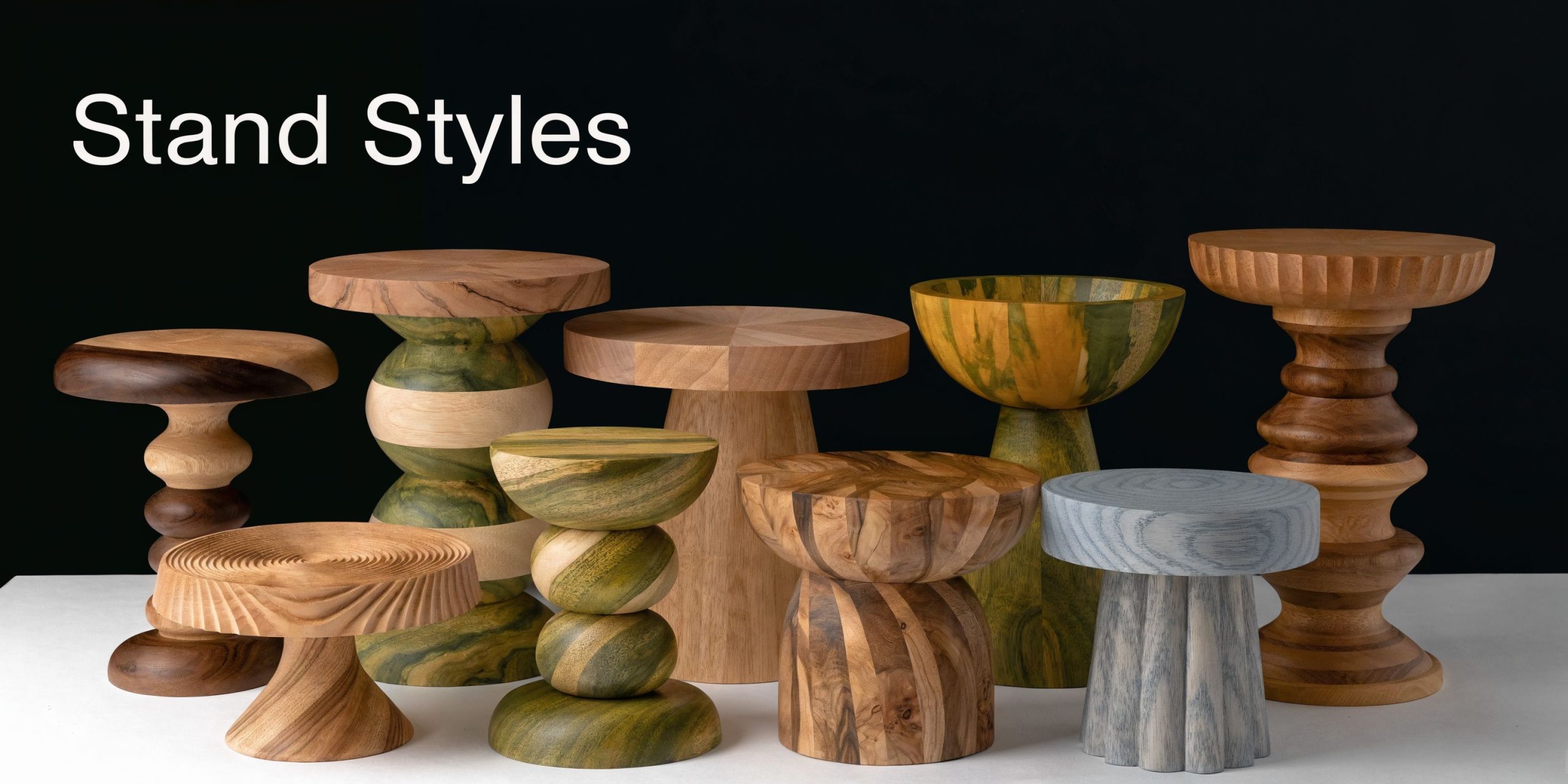
A collection of various artistic wooden cake stands arranged on a white surface against a black background.

Pedestal styles that suit different events

A round pedestal is still the most flexible choice. It works across weddings, kitchen teas, milestone birthdays and corporate dessert tables because it gives the cake a clear centre point without competing with the decor. If the client is undecided, this is usually the shape I recommend first.

A raw-edge or rustic slab style suits farm venues, cellar doors and outdoor celebrations where the rest of the setup already has texture. It looks best when the styling is slightly relaxed. Semi-naked cakes, pressed flowers and fruit-led finishes tend to sit naturally on this type of stand.

A painted or smooth-finish pedestal fits cleaner event styling. It works well for modern reception spaces, showroom launches, formal school functions and black-tie evenings where a rough timber edge would feel out of place.

A low riser often solves practical styling problems. It keeps the display grounded when the cake is tall, and it helps when guests need clear sightlines across long banquet tables.

Material choices and what they mean in practice

The timber itself changes how the stand reads in the room.

  • Oak has weight and a more refined look. It suits elegant setups, but it needs proper storage and careful handling in coastal humidity.
  • Acacia usually shows stronger grain and warmer variation. It works well when the brief calls for a natural finish that still feels considered.
  • Pine is lighter in both weight and visual presence. It can work well for casual events if the finish is clean and the construction feels solid.
  • Locally styled timber finishes often sit comfortably in Cape venues because they echo the natural materials already used in many estates, barns and garden spaces.

Finish matters as much as species. A glossy top can bounce too much light into photos, especially under marquee lighting or flash. A very rough surface may suit the look of the event, but it can trap crumbs and icing and takes longer to clean properly between hires.

The best rental pieces usually sit in the middle. They look natural on the table and still wipe down fast during pack-up.

Styles that work better for hire stock

Buying for a home kitchen and choosing for event hire are not the same job. For weddings in Franschhoek, private homes in Constantia, or functions that need delivery up staircases in the city, the stand has to travel well, pack efficiently and come back in usable condition.

For that reason, simpler pedestal shapes often outperform ornate ones in the rental market. Clean profiles stack better, store better and are easier for staff to wrap without damaging the edges. Stands with detachable parts can also make warehouse packing and vehicle loading easier, especially when several setups are going out on the same run.

If you want the cake display to feel connected to the rest of the venue, it helps to look at the wider timber palette too. The same styling principles show up in pallet wood furniture used for event setups, particularly when the goal is a consistent wood-led look rather than one standalone feature on the dessert table.

A practical filter before you choose

Use these questions to narrow the options quickly:

  1. Does the venue feel polished, rustic, or in between?
  2. Will the cake be photographed close-up from several angles?
  3. Is the finish smooth enough for quick cleaning after service?
  4. Can the stand handle transport to a farm venue, hotel, or private home without fuss?
  5. Does the stand shape support the cake style instead of distracting from it?

That shortlist usually gets better results than choosing from photos alone. In practice, the right stand is the one that suits the room, carries the cake cleanly, and still makes sense for delivery and collection around Cape Town and the Winelands.

Sizing Your Stand for a Flawless Cake Display

The cake arrives at a Franschhoek venue looking perfect, then the stand turns out to be too narrow for the board. That is how a polished setup starts feeling makeshift. Sizing the stand properly avoids that problem and makes service, transport, and photography easier on the day.

Infographic

Start with the cake board, not the cake

Bakers often quote the cake diameter first, but the stand has to suit the full base. That includes the board, any icing overhang, and decorative details that sit low around the edge.

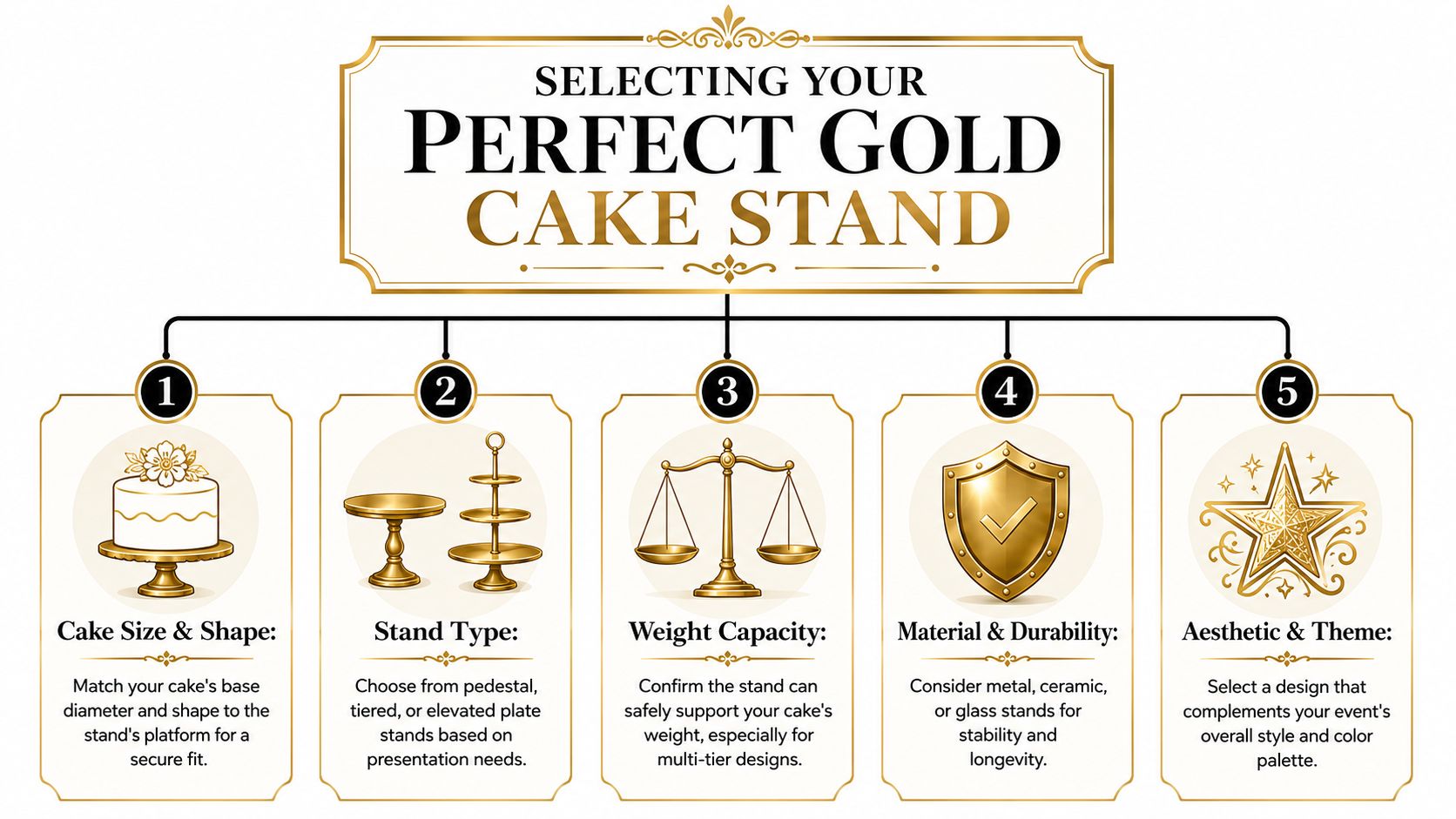
A reliable rule is to choose a stand that is 2 to 4 inches wider than the cake base. That border helps the cake sit comfortably, gives staff room when lifting or serving, and looks balanced in photos. For rented stands, that extra margin also reduces the risk of chips or pressure on the stand edge during setup.

Diameter matters first. Height comes second

Clients often ask for a taller stand because they want the cake table to feel more important. Height does help, but only after the top plate is wide enough.

Use this guide before you confirm the hire:

Cake size Better stand choice Why it works
Small cake Slightly larger stand Keeps a neat border around the base
Medium cake Moderately wider stand Balances the display without wasted surface area
Large single-tier cake Broad, stable top plate Improves support and leaves room for clean serving
Tall multi-tier cake Wide top plus firm base Gives the cake a safer footprint and better proportion

In practice, single-tier cakes need less drama and more support than clients expect. Tall cakes are different. Even if the diameter looks manageable, the overall weight and centre of gravity can change the stand you need.

Height changes the mood of the table

A low stand suits private dinners, smaller birthday tables, and venues where the cake sits close to guests.

A medium pedestal is usually the safest choice for weddings and corporate functions. It gives presence without making the cake difficult to cut or awkward to photograph across the table.

A taller stand earns its place when the cake is on a separate display table, the room has high ceilings, or the cake itself is narrow and needs visual lift. At Cape Town hotel venues and many Winelands estates, that works well if the florist keeps surrounding décor low.

If the cake already has several tiers, extra pedestal height can push the display too far upward. Width and stability usually solve the problem better than added elevation.

Check these details before you book or buy

Sizing errors usually come from missing one practical detail:

  • The cake board is wider than expected.
  • Fresh flowers, fruit, or piped details increase the footprint.
  • Product photos hide scale.
  • The stand looks solid but is not rated for a heavy cake.
  • The venue access involves gravel paths, stairs, or a long carry from parking to setup.

That last point matters more in the Winelands than many people realise. A stand that works in a studio photo may be a poor rental choice for a farm venue where staff have to carry it across uneven ground and set it level on site.

If you are adding finishing details, keep scale in mind there too. A delicate topper can disappear on a very broad stand, while an oversized topper can make a smaller cake feel crowded. This is one reason I like reviewing topper proportions at the same time as stand size. A vintage wood wedding cake topper can work beautifully on a timber display, but only if the stand, cake width, and topper size feel resolved together.

Good sizing protects the cake, improves the table layout, and saves stress during setup. For rentals in Cape Town and the Winelands, it also cuts down on last-minute stand swaps and delivery-day surprises.

Styling and Photography Tips for Your Cake Stand

A wooden stand does more than hold the cake. It shapes how the whole table reads in person and in photos.

A creamy cake topped with dried fruit on a stylish wooden cake stand against a dark background.

At weddings in the Winelands, the strongest setups are usually the simplest. A textured cake on a timber stand, one or two supporting décor elements, and enough negative space around it will almost always photograph better than an overcrowded dessert table.

Keep the styling close to the stand’s character

A dark-stained stand usually suits richer styling. Think figs, black grapes, deep greenery, brass accents or moody candlelight.

A pale or natural wood stand works well with:

  • white florals
  • soft linen napery
  • stoneware
  • fresh fruit
  • matte ceramics

If you are adding a topper, keep the material language consistent. A timber stand with an acrylic topper can work, but a wood-based topper often looks more resolved. For couples wanting that layered natural look, a vintage wood wedding cake topper is a useful reference point for how wood details can sit softly on a cake without overpowering it.

What photographers usually need from the setup

Photographers do not need a complicated cake table. They need separation, clean angles and good light.

A few practical choices make a big difference:

  • Leave space behind the table: Busy backgrounds fight with the cake.
  • Avoid reflective clutter: Metallic trays and mirrored décor can create harsh highlights.
  • Turn the best face of the cake outward: Especially if there is hand-painted detail or sugar work.
  • Keep florals low around the base: High arrangements often hide the stand itself.
  • Check the linen drop: A crumpled cloth under a beautifully styled cake table shows up immediately in close-up images.

Useful photo angles

Side-on shots often show the stand shape best. That matters if the pedestal has profile, carving or a notable finish.

Three-quarter angles tend to work best for:

  • wedding reveal photos
  • cake-cutting moments
  • detail shots for planners and venues

Overhead shots are less about the stand and more about overall table styling, so use them when the surrounding décor is part of the story.

If the stand has strong grain or a handcrafted finish, ask for at least one close shot that includes the pedestal edge and the lower part of the cake. That is where the texture shows.

The strongest cake tables feel edited, not overloaded. The stand should support the story, not fight for attention.

Renting a Wooden Cake Stand in Cape Town and the Winelands

You lock in the cake, the florist, and the venue. Then setup starts in Franschhoek or Constantia, and someone asks where the cake stand is, who is collecting it, and whether it will sit level on the table provided by the venue. That is usually the point where renting starts to look smarter than buying.

For one-off weddings, brand launches, birthdays, and matric functions, a hired wooden stand solves a practical problem. It gives you the right piece for the day without adding storage, transport, cleaning, and maintenance to your own checklist. In Cape Town and the Winelands, that matters because logistics are rarely simple. Venues have access times, farms have gravel and uneven ground, and city sites often have loading bays, stairs, or lift limits.

A gourmet fruit-topped cake sits on a rustic wooden cake stand outdoors on a sunny day.

Why renting is often the practical choice

A wooden cake stand is a small hire item, but it affects the full event flow. If the stand is too small, the cake board overhangs. If it is too delicate, it can wobble on an old harvest table. If pickup is unclear, it gets left behind during strike and turns into a chargeable problem later.

Renting works well when the stand needs to match the rest of the room, arrive with other furniture, and leave with the same supplier after the event. It also lets planners choose a finish that suits the brief without committing to one style for every future event.

The trade-off is simple. Buying gives you control and long-term access. Renting reduces admin and usually makes more sense when the stand is one piece inside a much larger setup.

What to check before confirming a rental

Ask these questions before you approve the hire:

  1. What is the exact usable top diameter?
    Get the cake board measurement from the baker, not just the tier size.

  2. What surface will it stand on?
    A flat banquet table at a hotel is different from a wine barrel, trestle table, or outdoor farm table.

  3. Who handles delivery, setup, and collection?
    In the Winelands, collection timing can be tight if the venue has a same-night strike requirement.

  4. What finish does the stand have?
    Sealed wood is easier to clean and usually better for repeated event use.

  5. Does it travel in one piece or in parts?
    Modular stands can help with transport, but somebody still needs to assemble them correctly on site.

Local logistics can change the right rental choice

Cape Town and the Winelands are close on a map, but event logistics differ sharply by venue.

A CBD hotel may need a timed delivery slot and quick lift access. A Stellenbosch or Paarl farm venue may allow more space but less margin for delays, especially if suppliers are all arriving through one service entrance. In summer, I also pay attention to heat and wind. A lightweight stand that looks fine indoors can become a poor choice for an outdoor cake table under a marquee.

That is why it helps to hire from a supplier who already works across the region and understands how cake display items fit into the wider furniture plan. ABC Hire is part of that local setup context, and their guide to round wooden event tables in Cape Town is a useful reference if the cake table needs to sit comfortably with the rest of the venue furniture.

Best uses for hired wooden stands

Different events call for different priorities.

Event type Main priority Best stand qualities
Wedding Finish and stability Refined surface, balanced proportions, steady base
Corporate activation Fast handling and clean presentation Easy-clean finish, simple transport, consistent look
Matric dance Straightforward logistics Durable build, quick setup, dependable footing
Private birthday Visual impact without fuss Correct size, attractive grain, uncomplicated styling

A good rental does not draw attention to itself for the wrong reasons. It arrives on time, suits the cake, works with the venue conditions, and leaves the site without creating extra work for the planner, venue coordinator, or family hosting the event.

Proper Care and Maintenance for Longevity

The stand often takes its hardest knock after the cake has been cut.

At a wedding in Stellenbosch or a birthday in Camps Bay, cleanup usually happens fast. Someone wipes the stand, another person stacks décor around it, and the item goes back into transport while there is still moisture on the surface. That is how good wooden stands pick up water marks, fine scratches, and wobble over time.

Wooden cake stands last well if they are cleaned and stored with a bit of discipline. That applies whether you bought one for regular use or hired one for a single event and want to avoid damage charges.

What works

  • Wash by hand: Use a soft cloth, mild detergent, and warm water only.
  • Dry straight away: Pay attention to the underside, join points, and rim where moisture tends to sit.
  • Condition unsealed timber when needed: A light coat of food-safe mineral oil can help maintain unfinished or lightly finished wood. Follow the maker or rental supplier's care instructions first.
  • Store on a flat surface: Keep the stand in a dry area away from direct sun, damp floors, or hot storerooms.
  • Protect it in transit: Wrap the top and base separately if the stand comes apart, and avoid letting metal items rub against the finish.

What shortens the life of a wooden stand

  • Dishwashers: Heat and prolonged water exposure can stress joints and damage finishes.
  • Soaking in a sink or tub: Wood absorbs water fast at exposed edges and joins.
  • Abrasive scourers: These leave visible scratches that show up badly in photos.
  • Carrying it by the top plate only: The join between the plate and pedestal is often the first place to loosen.
  • Stacking decor on top during pack-down: Candle holders, cutlery crates, and glassware can dent or chip the surface.

One practical check helps before every event. Set the stand on a level table, press lightly on opposite sides, and look across the top at eye level. If it rocks, leans, or shows a raised edge, pull it from use until it is repaired or refinished. Small faults become obvious once a tall cake is centred on top.

For Cape Town and Winelands events, storage conditions matter as much as cleaning. Sea air, damp winters, and hot delivery vans all affect timber differently. I have found that stands kept in dry indoor storage and packed properly between jobs stay presentable far longer than stands cleaned well but stored carelessly.

A well-kept wooden cake stand sits level, photographs cleanly, and does not distract from the cake. If you are hiring as part of a wider furniture order, ABC Hire is one local option to consider while planning the stand, table, and transport together.

Perfect Three Tier Cake Stand for Cape Town

The dessert menu is finalised. The florist has signed off. The venue has approved the floorplan. Then someone asks the question that changes the look of the whole table.

What are we putting the sweets on?

That detail often gets left late, but it shapes the entire presentation. A good three tier cake stand does more than hold cupcakes or petit fours. It gives height, creates order, controls guest flow around a dessert table, and turns scattered items into a focal point that feels intentional.

In Cape Town and the Winelands, that matters. A reception in Franschhoek, a corporate launch in the city, or a matric dance in Stellenbosch all need display pieces that work visually and practically. The stand has to travel well, sit level on a dressed table, handle service pressure, and still look polished in photographs.

The Centrepiece That Elevates Your Celebration

A dessert table can look expensive without being organised. It can also look organised without feeling memorable. The three tier cake stand is one of the few pieces that does both.

At weddings, it draws guests toward the sweet table without needing oversized styling. At corporate events, it gives branded treats a defined home instead of spreading them flat across linen. At private celebrations, it helps a modest menu feel fuller and more considered.

A three tier cake stand filled with assorted gourmet desserts set against a scenic mountain landscape backdrop.

Why guests notice it first

When the eye scans a table, it lands on height before detail. Flat platters can be beautiful, but they need more space and more styling to create the same impact. A three tier cake stand solves that quickly.

It also helps tie together the surrounding décor. If you are building a larger visual story, your dessert display should work with your florals, candles, charger plates, and table centrepiece ideas rather than sit apart from them.

Where it works best

Different events use the stand differently.

  • Wedding receptions: Best for macarons, mini tarts, cupcakes, and bite-sized cake portions that need a refined display.
  • Corporate functions: Strong for individually portioned branded desserts or canapés where neat presentation matters.
  • Matric dances and formals: Useful when organisers want a polished dessert station without covering the whole table in separate platters.
  • Milestone birthdays: Ideal when the host wants one anchor piece instead of a cluttered sweets setup.

Tip: If the dessert table feels busy, remove one or two lower platters before changing the stand itself. Better spacing usually improves the look faster than adding more décor.

Understanding the Three Tier Cake Stand

At an event, a three tier cake stand has a job to do. It must present desserts cleanly, hold its shape through service, and survive transport from store to venue without arriving loose, chipped, or awkward to assemble.

Infographic

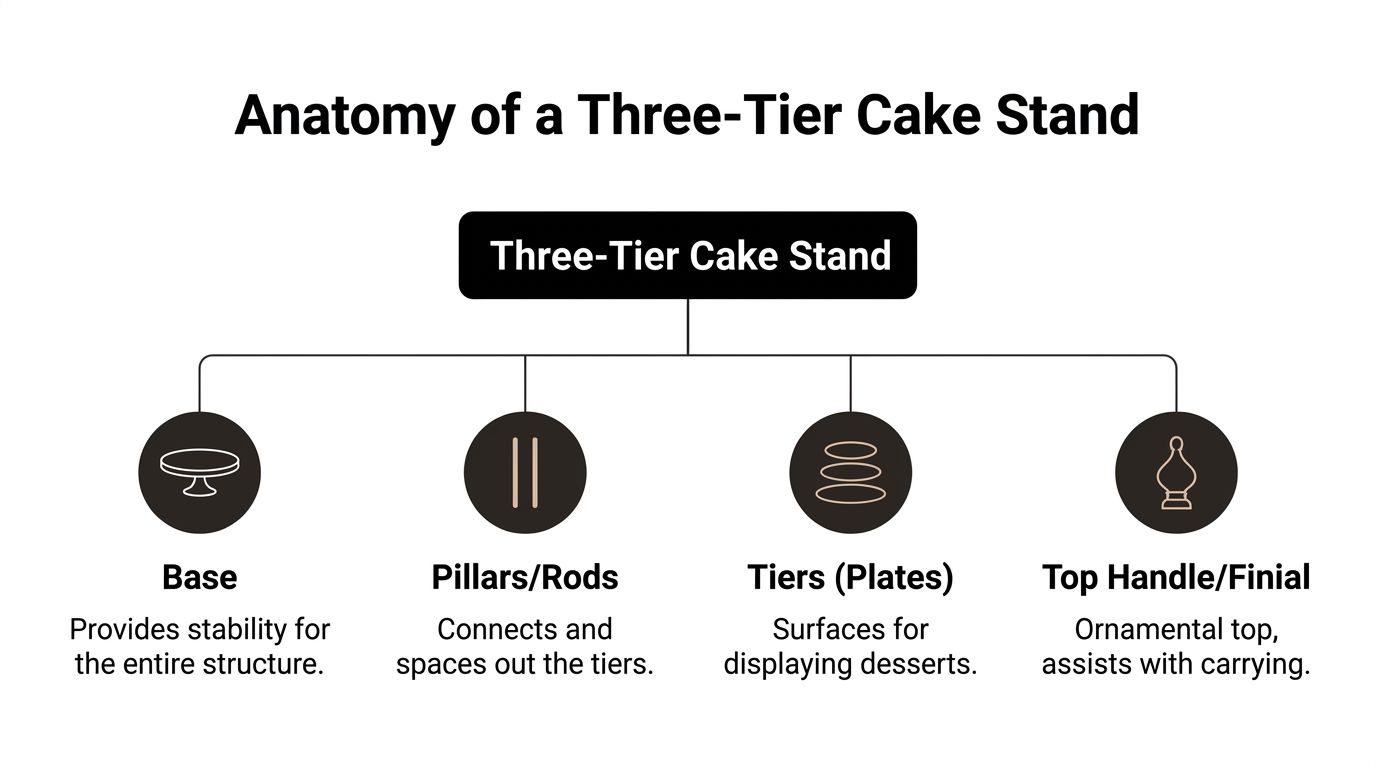
The basic anatomy

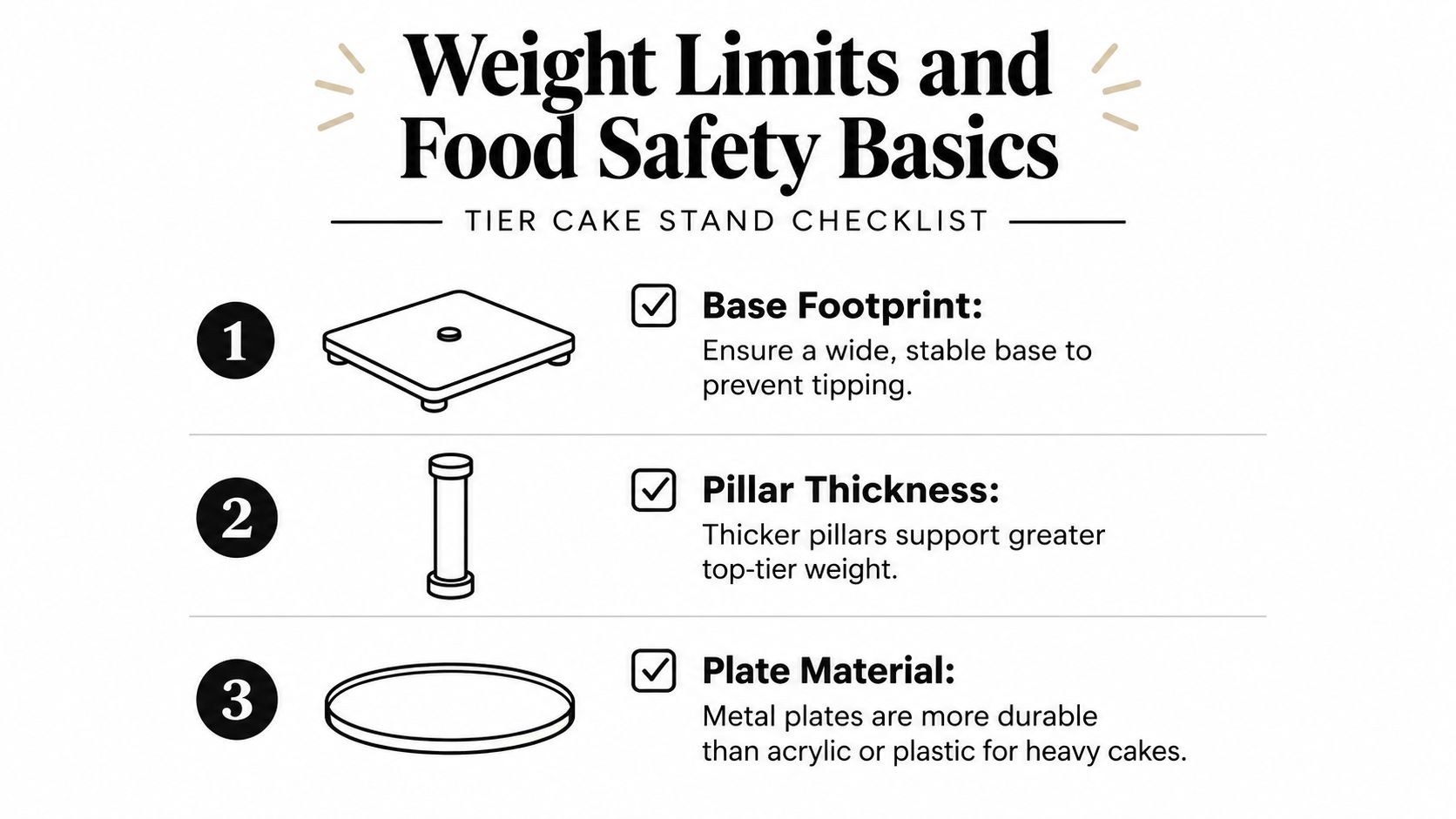
A proper stand is built around a central post with graduated plates fixed at set intervals. The plate sizes are not arbitrary. A wider base and smaller top create a balanced silhouette and give the lower tier the strength to carry the heaviest items, as outlined in this breakdown of three tier cake stand construction.

That structure matters even more in professional service. Caterers rarely load all three levels evenly. The bottom tier often carries denser items such as mini cakes or larger pastries, while the upper tiers hold lighter pieces that need visibility more than weight support.

Why the hardware matters

In rental and event work, the fittings tell you very quickly whether a stand is built for repeated use or just occasional display at home. Threaded rods, secure spacers, and plates that tighten properly give the stand a cleaner line and a steadier feel on the table.

They also solve practical problems behind the scenes:

  • More stable service: Plates stay aligned and are less likely to shift when guests serve themselves.
  • Better menu flexibility: Some stands can be configured as two tiers if the dessert count drops or the table feels crowded.
  • Safer packing: A stand that breaks down into separate components is easier to wrap, crate, and move between venues.

That last point matters in Cape Town and the Winelands. Vehicles are often loading for weddings in Franschhoek, corporate functions in Stellenbosch, and private events on farms where access roads, wind, and setup time all put pressure on the equipment. A stand that disassembles cleanly is far easier to transport without damage.

What separates event-grade stands from decorative home stands

Many retail stands are made to look attractive in a product photo. They are less convincing after two or three hires, especially if the rod loosens, the plates sit unevenly, or the top handle encourages staff to lift the whole stand the wrong way.

Event-grade stands are selected with service in mind. The base should sit flat on a dressed table. The centre rod should tighten firmly without wobble. The gap between tiers should suit what is being served, not just what looks elegant empty. The top finial should only be used as a lifting point if the design allows it.

I always judge a stand by how it behaves during setup, not by how it looks in storage. If it takes too long to assemble, shifts once loaded, or needs delicate handling every minute on site, it is the wrong stand for professional work.

Key takeaway: A three tier cake stand succeeds on structure, balance, and handling. Good styling helps, but reliable hardware is what keeps the display working through the full event.

Choosing the Right Material and Size

Material changes everything. It changes the mood of the table, the handling process, the cleaning method, and how well the stand copes with Cape conditions.

Some planners choose by look alone and regret it at load-in. A stand that matches the mood board but struggles outdoors, scratches easily, or shows every water mark is not the right stand.

Three different tiered cake stands made of metallic silver, dark green ceramic, and natural wood materials.

Porcelain, stainless steel, and acrylic

The strongest event choices usually fall into three groups.

Porcelain works well when you want a classic presentation. It suits weddings, teas, engagement celebrations, and venues with a softer, more traditional interior. It also has a practical advantage. Porcelain stands are often dishwasher-safe for high-volume use, according to this material and care reference.

Stainless steel is the workhorse option. It suits outdoor venues, coastal conditions, and repeated commercial handling. The same source notes that stainless steel offers superior corrosion resistance, making it a smart choice in humid South African venues such as Stellenbosch and Franschhoek, where humidity can sit in the often high range.

Acrylic suits modern displays where visibility matters. Clear acrylic can make a dessert table feel lighter and cleaner, especially when you are displaying colourful macarons, layered sweets, or branded treats. In event settings, it is often chosen for the visual effect and easier carrying compared with heavier materials.

The size decision that affects service

Size is not only about the outer look. It affects reach, stability, and menu planning.

A taller stand creates drama, but if the top tier ends up awkward for guests to reach, service becomes messy. A wider base gives more confidence, but it also needs enough table depth so the stand does not crowd signage, florals, or serving tongs.

When selecting size, check these factors first:

  • Menu type: Small pastries need less vertical clearance than iced cupcakes.
  • Guest interaction: Self-service tables need easier access than styled displays that staff serve from.
  • Venue conditions: Outdoor setups benefit from sturdier, less top-heavy materials.
  • Transport route: Stairs, gravel paths, and tight service passages all matter before setup starts.

Cake Stand Material Comparison

Material Aesthetic Best For Considerations
Porcelain Classic, refined, timeless Weddings, teas, milestone celebrations Heavier to handle, but often dishwasher-safe for volume use
Stainless steel Sleek, professional, polished Outdoor events, humid venues, high-turnover catering More utilitarian look in some décor schemes, but excellent durability
Acrylic Modern, light-looking, clean Contemporary functions, branded displays, layered desserts Can show scratches over time and needs careful handling to keep its finish crisp

What works in the Winelands

For Stellenbosch and Franschhoek, stainless steel usually wins when the venue is outdoors or partially exposed. Moisture and repeated handling punish decorative finishes quickly. Indoors, porcelain remains a favourite for formal wedding styling.

Acrylic is often strongest when the event brief is contemporary and the desserts themselves provide the colour. The stand almost disappears, which can be exactly the right move.

Planning Capacity for Catering Success

The first mistake people make is asking how many items a three tier cake stand can hold. The better question is how many items it can hold well.

A stand can be physically full and still look underplanned. Overcrowding hides detail, makes service awkward, and increases the chance of guests bumping the upper tiers while taking something from the base.

Think by category, not by total

Start with the menu shape.

Small, neat items such as macarons, petit fours, and compact biscuits usually sit comfortably across all three levels. Taller desserts need more headroom, especially on the middle and top tiers. Iced cupcakes often work best when the tallest decorations are kept off the upper tier.

When planning with caterers, divide the display this way:

  • Base tier: Heavier items and anything guests will reach for first
  • Middle tier: Medium-height pastries or items you want to feature
  • Top tier: Lightest and smallest pieces, or the most decorative selection

That approach keeps the stand balanced and makes the table feel deliberate.

Build abundance without overloading

Visual abundance comes from spacing and repetition. It does not come from squeezing every centimetre of plate space.

Leave enough room for guests to lift an item without brushing the next one. Alternate shapes and colours if the menu allows. Group similar desserts instead of mixing everything across all three levels.

Effective communication between event planning and catering teams is essential early in the process. If the stand is one element in a larger sweets display, it should carry the most photogenic pieces, not the entire dessert count. For broader dessert service planning, it helps to review the full mix of catering equipment for hire so the stand supports the setup rather than carrying too much responsibility on its own.

Practical checks before service

A quick run-through avoids most on-table problems.

  1. Put the heaviest loaded tier at the bottom first.
  2. Test guest reach from the front of the table, not just from the side during setup.
  3. Check whether serving utensils can sit neatly beside the stand.
  4. Step back and confirm the display still looks open, not cramped.

Tip: If the menu is generous, use the three tier cake stand as the hero piece and refill surrounding platters from back-of-house. The table looks fresh for longer and the stand stays orderly.

Styling and Placement for Maximum Impact

Guests notice placement before they notice detail. At a Stellenbosch wedding or a corporate launch in Cape Town, the same three tier cake stand can read as polished and intentional, or it can look squeezed in because the table plan was settled too late.

Cape Town and Winelands events usually benefit from a cleaner hand. Strong views, estate architecture, florals, branded elements, and candlelight already give the room plenty to work with. The stand should earn its place by drawing the eye and serving guests smoothly.

A elegant three tier cake stand filled with various small desserts surrounded by fresh flowers and greenery.

Position it where guests can use it

A three tier cake stand performs best as a focal point with space around it.

On a round dessert table, that usually means a central position with lower platters and décor kept beneath the stand's visual height. On a long buffet, a slight offset often works better, especially when the centre is already carrying a celebration cake, floral arrangement, or signage. That layout gives the display hierarchy without forcing guests to reach across other items.

Access matters as much as appearance. If coffee queues, bar traffic, or a narrow vineyard venue aisle will push guests against the dessert table, the stand needs a calmer position. I would rather place it half a metre away from the obvious spot and keep it usable than chase symmetry and invite breakage.

Style with discipline, not clutter

Many local event planners say tiered stands help a dessert table feel more refined. That result usually comes from restraint, not from adding more props.

A few styling choices consistently work well in professional setups:

  • Match the stand to the brief: Porcelain suits classic weddings and high tea service. Clear acrylic keeps modern corporate tables lighter. Polished metal works well for formal evening functions.
  • Dress the footprint, not the whole structure: Add linen texture, a low floral ring, or greenery at the base so the stand feels grounded without crowding the plates.
  • Repeat colours already in the room: Pull from florals, menus, branding, or table stationery so the dessert table feels connected to the rest of the day.
  • Protect the top tier visually: Leave it clean enough to finish the composition. If every level is busy, the stand loses shape in photos.

For weddings, dessert styling should sit comfortably with the rest of the detail choices. A broader guide to wedding accessories can help when the cake display needs to align with the overall look rather than feel like a separate idea.

Adjust placement for the event type

At weddings, softer framing works well, but flowers should not block guest access or hide the stand's outline in photographs.

At corporate events, cleaner spacing usually wins. Keep the stand clear of branded backdrops, coffee stations, and registration flow so guests can serve themselves without creating a bottleneck.

At matric dances and school formals, durability and traffic control matter more than delicate styling. Students tend to approach in groups, so the stand needs breathing room and a stable table with no loose linen corners nearby.

For covered outdoor service in the Winelands, also factor in wind. Lightweight signage, taper candles, and tall stems can make a dessert table feel unsettled fast. If the stand is paired with a dome for display or protection, this guide to using a glass cake dome effectively at events is useful for judging what suits the menu and setting.

The best styling still serves the food first. If guests can see the stand clearly, reach it easily, and remove an item without hesitation, the table is doing its job.

Mastering Assembly Transport and Care

A three tier cake stand often causes trouble during load-in, not during styling. In Cape Town and the Winelands, the pressure points are clear: long drives to farms and estates, uneven access roads, quick venue turnarounds, and staff who need the stand assembled and loaded without wasting service time.

That is why setup needs a simple, repeatable method.

Assemble in the right order

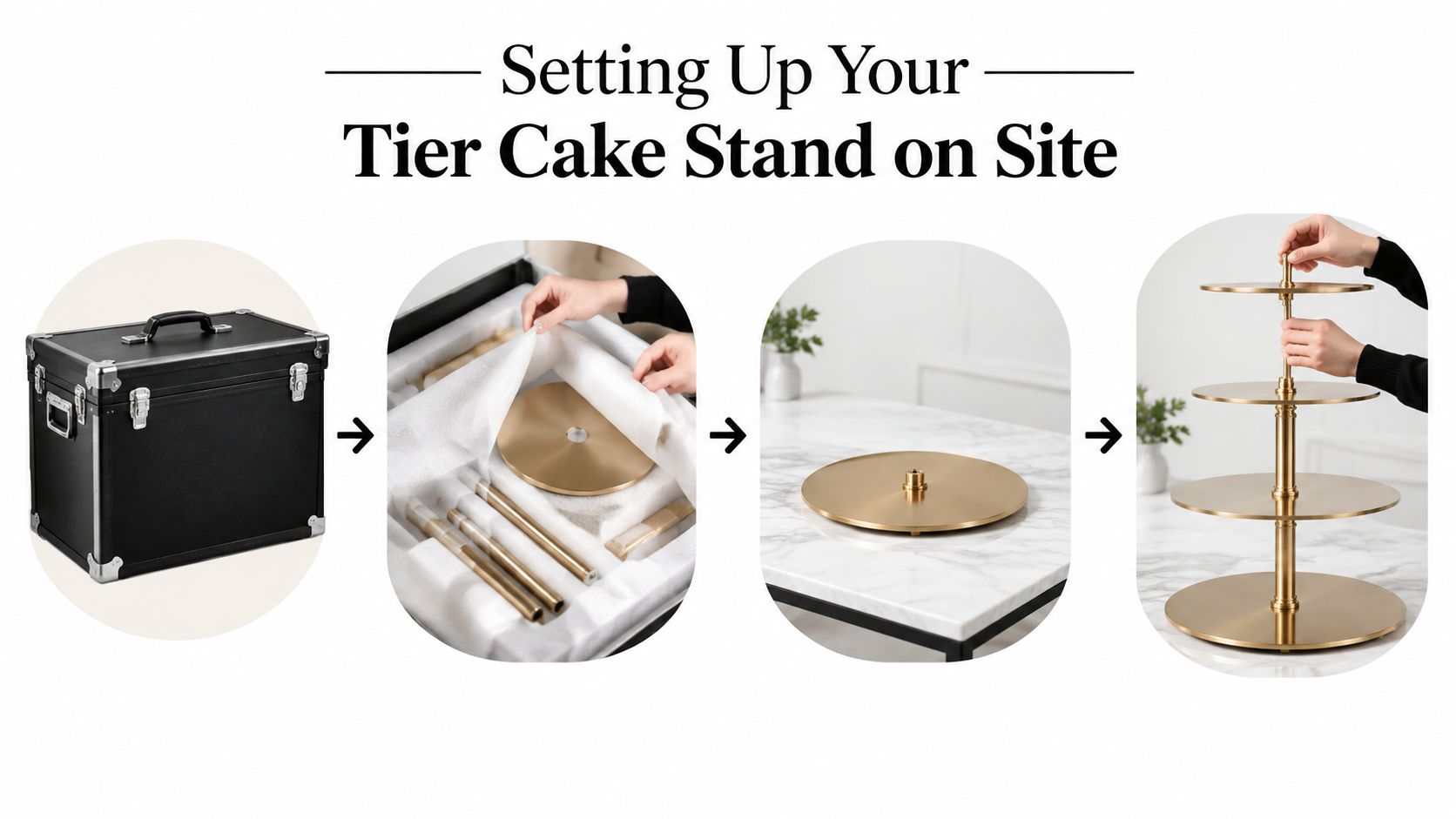
For drilled ceramic, porcelain, glass, or acrylic plates, the safest approach is to build from the bottom up. Set the base plate first, add the centre fittings, then secure the middle and top tiers in sequence. If the stand includes a dome or needs extra protection for display, this guide on using a glass cake dome effectively at events helps when planning the final setup.

The order matters because alignment starts at the base. A rushed top-down assembly usually leads to a crooked centre rod, uneven plate spacing, or a slight wobble that only shows once pastries are loaded.

Use a practical event-day routine:

  1. Lay out every plate, rod, spacer, washer, and handle before assembly starts.
  2. Check each part for chips, hairline cracks, or bent fittings.
  3. Tighten by hand until secure, then stop short of forcing delicate materials.
  4. Place the assembled stand on the dressed table before adding food.
  5. Test stability again after linen, risers, and nearby props are in position.

One final check saves embarrassment later.

Transport causes most breakages

Damage usually starts in transit. A stand can leave the prep kitchen in perfect condition and arrive at the venue with chipped edges, scratched plates, or missing hardware if it was packed like retail tableware instead of event equipment.

Professional crews separate plates, wrap metal components individually, and keep small fittings in labelled bags. They also avoid loading cake stands under heavier service stock. That matters on Winelands routes where corners, gravel sections, and repeated unloading can shift fragile items fast.

Flat packing is usually safer than transporting a fully assembled stand. The exception is a very short trip on a smooth route with a dedicated vehicle shelf and no rehandling.

Care standards that matter in service

Cleaning a three tier cake stand properly takes more attention than a quick rinse after dessert service. Crumbs and icing collect around threaded joins, undersides, and decorative rims. If those areas are missed, the stand may still look clean from a distance but fail basic service standards.

In practice, good care includes:

  • Food-safe washing: especially where petit fours, macarons, or slices sit directly on the plate
  • Full drying before storage: trapped moisture shortens the life of fittings and marks some finishes
  • Material-specific handling: glass, plated metal, porcelain, and acrylic do not all tolerate the same cleaning method
  • Allergen separation: important when the same stand rotates between different menus and event types

For occasional hosts, that workload rarely makes sense. For planners, caterers, and venues, it only makes sense if the stand is in constant use and there is a proper cleaning and storage system behind it.

This highlights the main trade-off. Owning the stand means owning the packing, transport risk, cleaning time, replacement parts, and storage discipline as well.

Why Renting From ABC Hire is the Smart Choice

Once you look past the photos, the true value of a three tier cake stand is operational. It needs to arrive on time, suit the event style, survive transport, assemble cleanly, and leave the venue without adding stress to pack-down.

That is where rental becomes the practical choice.

For weddings and private celebrations, hiring avoids the familiar pattern of buying a stand that looks right online but arrives lighter, weaker, or less refined than expected. For corporate teams and venues, rental keeps storage under control and removes the cleaning burden after service. For schools and formal event organisers, it reduces the risk that a key display item arrives chipped, incomplete, or unstable.

ABC Hire is built for that reality in Cape Town and the Winelands. The advantage is not only access to quality stock. It is access to event-ready stock that fits into real production timelines.

What hiring solves immediately

  • No storage problem: You do not need to keep bulky, fragile serving pieces between events.
  • No post-event cleaning burden: The stand goes back into a professional care process.
  • No guesswork on suitability: You can match the stand to the function, venue, and service style.
  • Less transport risk: Event rental items are selected and handled with repeated use in mind.

The result is simple. You get the visual payoff of a polished dessert display without inheriting the maintenance, replacement, and storage issues that come with ownership.

A three tier cake stand should help the event run better, not create another checklist item for your team.


If you are planning a wedding, corporate function, matric dance, or private celebration in Cape Town, Stellenbosch, Franschhoek, or Paarl, ABC Hire can help you choose event-ready display pieces that look polished and work under real service conditions. Browse the range, get practical advice for your venue, and hire with confidence.

📍 Cape Town + Winelands