Event Furniture Hire Cape Town: 2026 Guide

You've chosen the venue, confirmed the caterer and approved the colour palette. Then the venue manager asks for the final floor plan, and the problem appears: the chairs won't fit through the service entrance, the lounge furniture can't reach the upper level, or the collection window clashes with the venue's closing time. In Cape Town, event furniture hire isn't only a styling decision. It's a transport, access, comfort and timing decision that can determine whether the event feels effortless or improvised.

Cape Town's event market is substantial, with 1,540 permit applications recorded in the 2025/26 financial year, 983 approved events attracting about 4.1 million spectators and participants, according to city reporting on Cape Town's event economy. That volume creates regular demand for chairs, tables, lounge pieces, climate-control equipment and supporting logistics. It also means popular stock and reliable delivery windows can disappear well before the event date.

Why Event Furniture Hire Matters More Than You Think

A Winelands wedding can look straightforward on the floor plan: long tables, dark timber chairs and a lounge beside the dance floor. On site, the access road may be narrow, the unloading point far from the reception area, and the route across uneven ground. The design can still work, but only after the setup team changes its route, reduces furniture movement or adjusts the layout.

That is the difference between choosing pieces from a catalogue and planning them around the venue. Every hired item has a physical footprint, a handling requirement and a role in guest movement. Chairs affect how guests sit and dine. Bar tables determine where people gather. Sofas can create a comfortable networking area, yet block a service route if the room has not been measured properly.

Furniture shapes the guest experience

A corporate conference may need rows of matching chairs for clear sightlines and focused presentations. Between sessions, however, lounge seating, cocktail tables and a well-positioned registration desk can make the same room more useful for conversation. A wedding reception needs a different arrangement. Guests move between dining tables, the bar, dance floor and outdoor areas, so furniture must support circulation instead of occupying every open space.

Furniture also communicates the event's character. LED cubes, illuminated bars and modern ottomans can suit an evening activation, while timber tables and classic upholstered seating may fit a formal dinner or estate wedding. Stronger designs usually establish one dominant style and add one or two contrasting pieces. Combining every available finish often makes the room feel unplanned.

Practical rule: Choose furniture by zone first, then by appearance. A beautiful chair in the wrong position is still a planning error.

A site visit can expose issues that a catalogue cannot. Check the distance from the delivery vehicle to the setup area, the width of gates and doorways, changes in level, lift access and the time available for unloading. These details affect labour, setup order and whether a selected item is practical at all.

Cape Town rewards early decisions

Peak demand in the Western Cape runs from November to March, and ABC Hire recommends booking furniture four to six months ahead because access restrictions, delivery windows and after-hours collections become more difficult during busy months. The guidance appears in its Cape Town furniture hire planning advice.

That lead time is particularly useful for weddings, year-end functions and large brand activations. Early booking allows the floor plan to be confirmed before stock is allocated, rather than forcing the event around whatever remains. It also gives the supplier time to assess loading bays, lifts, stairs and setup labour.

Furniture is part of the event infrastructure. It affects atmosphere, accessibility, service routes and guest comfort. Treating it as a late styling choice often creates extra costs and compromises that could have been avoided during planning.

Understanding Your Furniture Inventory Options

A Cape Town venue can look spacious on a floor plan and still become difficult once furniture arrives. Start with the event's purpose, then divide the site into working zones. Formal dining, registration, a cocktail bar, catering, queueing and an outdoor lounge each need different pieces. This prevents the common mistake of ordering only by guest count, without planning where people will sit, stand, eat and move.
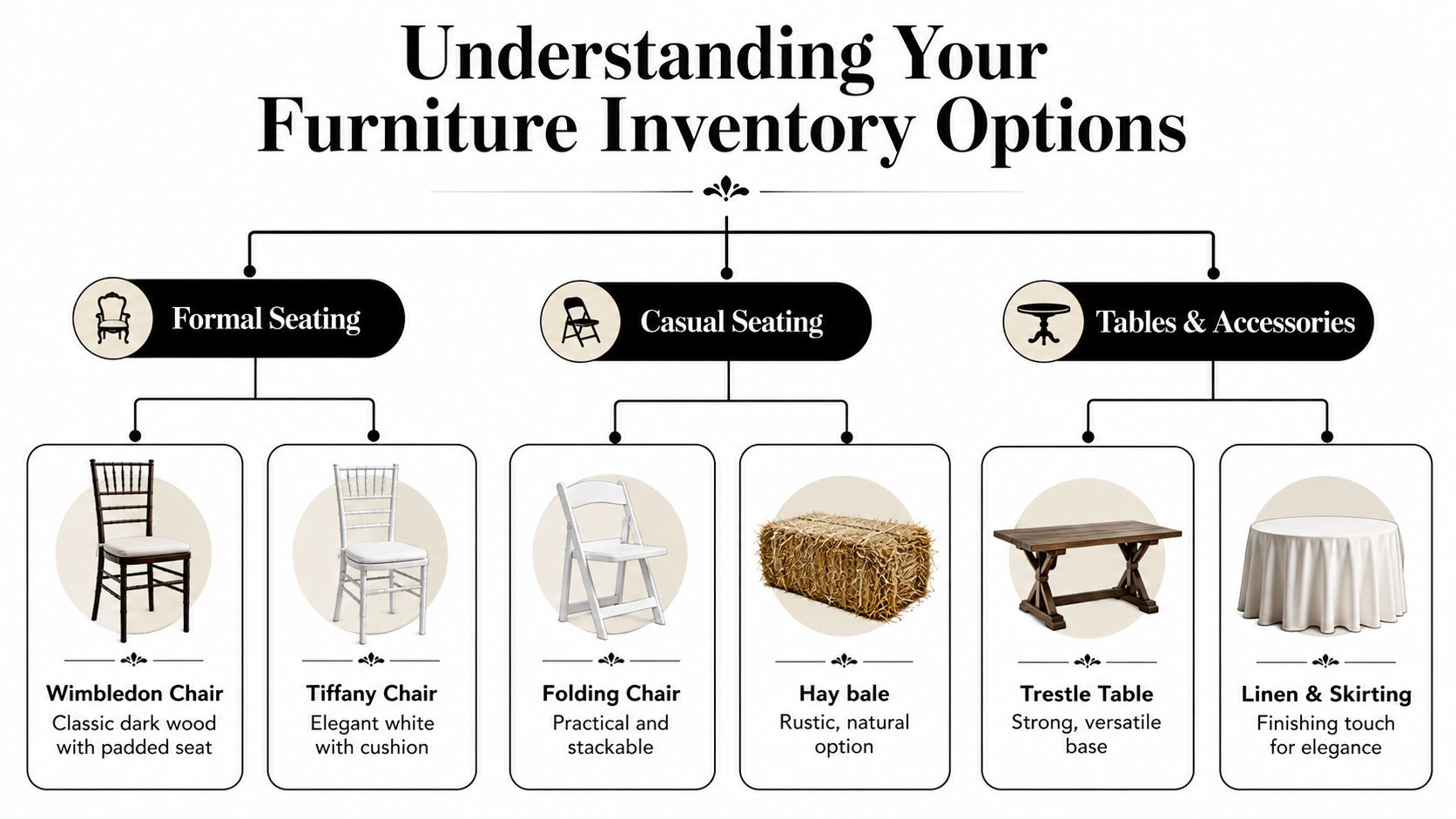
A flow chart outlining various furniture options for events, including formal chairs, casual seating, and table accessories.

Formal seating creates structure

Wimbledon chairs suit classic receptions and formal dinners, particularly where dark timber and a padded seat complement the venue. Tiffany chairs have a lighter appearance and cushion options, making them suitable for weddings, gala dinners and styled ceremonies where the seating should feel elegant without dominating the room.

Conference seating has a different test. Chairs must remain comfortable through presentations, while the layout needs clear sightlines and access to exits. A refined-looking chair that becomes uncomfortable during a long programme can affect attention and the overall guest experience.

Casual seating supports movement

Folding chairs work well for ceremonies, community functions and conference layouts that change between sessions. They stack easily and can be moved quickly, which helps when one room serves several purposes. Hay bales provide a rustic option for informal outdoor events, but they need sensible placement and protection from moisture.

Lounge furniture should form usable clusters, not fill empty corners. Sofas, armchairs, ottomans and coffee tables can define a networking area or provide a quieter space at a celebration. Leave enough clearance for guests to enter and leave without shifting the furniture.

Tables and accessories finish the plan

Trestle tables can serve dining, registration, gifts, catering and display areas. Confirm their dimensions and leg position against the available floor space before approving the hire list. Linens and skirting give a functional table a more formal finish, while bare timber supports a relaxed or rustic style.

ABC Hire's guide to renting furniture for events can help translate a visual brief into a practical hire list. Its inventory also includes LED furniture, umbrellas, heaters, air conditioners, red carpets and fairy lights. These items are not all furniture, but they can address comfort, branding and atmosphere problems that chairs and tables alone cannot solve.

A slush machine may suit a summer private function. Climate-control equipment can make a marquee or conference area more comfortable. The useful test is straightforward: each item should serve a guest need, a service requirement or a deliberate design feature.

Cape Town's event market requires suppliers to carry varied stock and turn orders around efficiently. Major events contribute more than R5 billion to the local economy, with flagship and large-scale events supporting substantial temporary and permanent employment. That demand comes from weddings, festivals, corporate gatherings and private functions competing for inventory during the same booking periods. For planners, a broad catalogue matters because a missing item can force a late design change, especially when venue access or seasonal availability limits replacement options.

Pricing Factors That Actually Affect Your Quote

The item price is only one part of an event furniture hire quote. Two orders containing similar chairs can produce very different totals because the supplier is pricing the work required to get those chairs to the right place, at the right time and in the right arrangement.

Distance is the first obvious variable. A small delivery within Cape Town's established metro routes may be straightforward, while a Winelands venue requires additional travel planning, a precise arrival window and more time for unloading. The supplier also has to consider whether the order justifies a dedicated trip or whether it needs to be combined with other deliveries.

Access changes the labour calculation

A ground-level venue with a wide loading entrance is simpler than a multi-floor function space with a restricted lift. If the team needs to carry furniture through a long corridor, use stairs or wait for a venue-controlled loading bay, the setup requirement changes. A quote should make clear whether delivery, placement and collection are separate services.

After-hours collection deserves particular attention. Weddings and evening functions often finish when ordinary venue access is no longer available. If the furniture must be collected late, the supplier may need to schedule a special crew or return at a different time. Leaving this discussion until the event week is a reliable way to create avoidable pressure.

Seasonality affects availability

November to March is the busiest period identified in ABC Hire's Cape Town guidance. During those months, the issue isn't only whether a chair is listed in a catalogue. The same item may already be allocated to another event, while transport teams and loading slots are also under pressure.

Quote-checking habit: Ask for the complete delivered and collected cost, then confirm what happens if the venue changes its access window.

Small or remote orders need the same scrutiny. A Cape Town event-hire source explains that there's no fixed minimum hire amount, but delivery may be declined when the location or transport cost isn't viable. Smaller orders may need to be collected instead, as outlined in this Cape Town hire logistics guidance.

Compare value, not only unit rates

A lower chair rate won't necessarily produce a lower final cost if delivery is difficult, setup is excluded or collection requires a separate trip. Compare suppliers using the same information:

  • Inventory: Confirm the exact chair, table or lounge piece, including colour, finish and cushion.
  • Transport: Check delivery, collection, distance charges and whether remote venues are included.
  • Labour: Establish whether placement follows your floor plan or stops at the unloading point.
  • Timing: Record the permitted delivery and collection windows, including weekend or evening requirements.
  • Risk: Read the damage, cancellation and replacement terms before approving the order.

The most economical hire is usually the one that fits the venue and schedule without requiring last-minute substitutions. A clear quote protects the design and the operational budget at the same time.

Delivery Zones and Logistics Across the Western Cape

Delivery planning should begin with the venue address, not the furniture list. Cape Town metro venues may offer relatively direct access, but the northern and southern suburbs still vary in loading space, road access and venue rules. Winelands estates introduce a different set of conditions, including narrow roads, long internal drives, uneven surfaces and unloading points that may be far from the reception area.
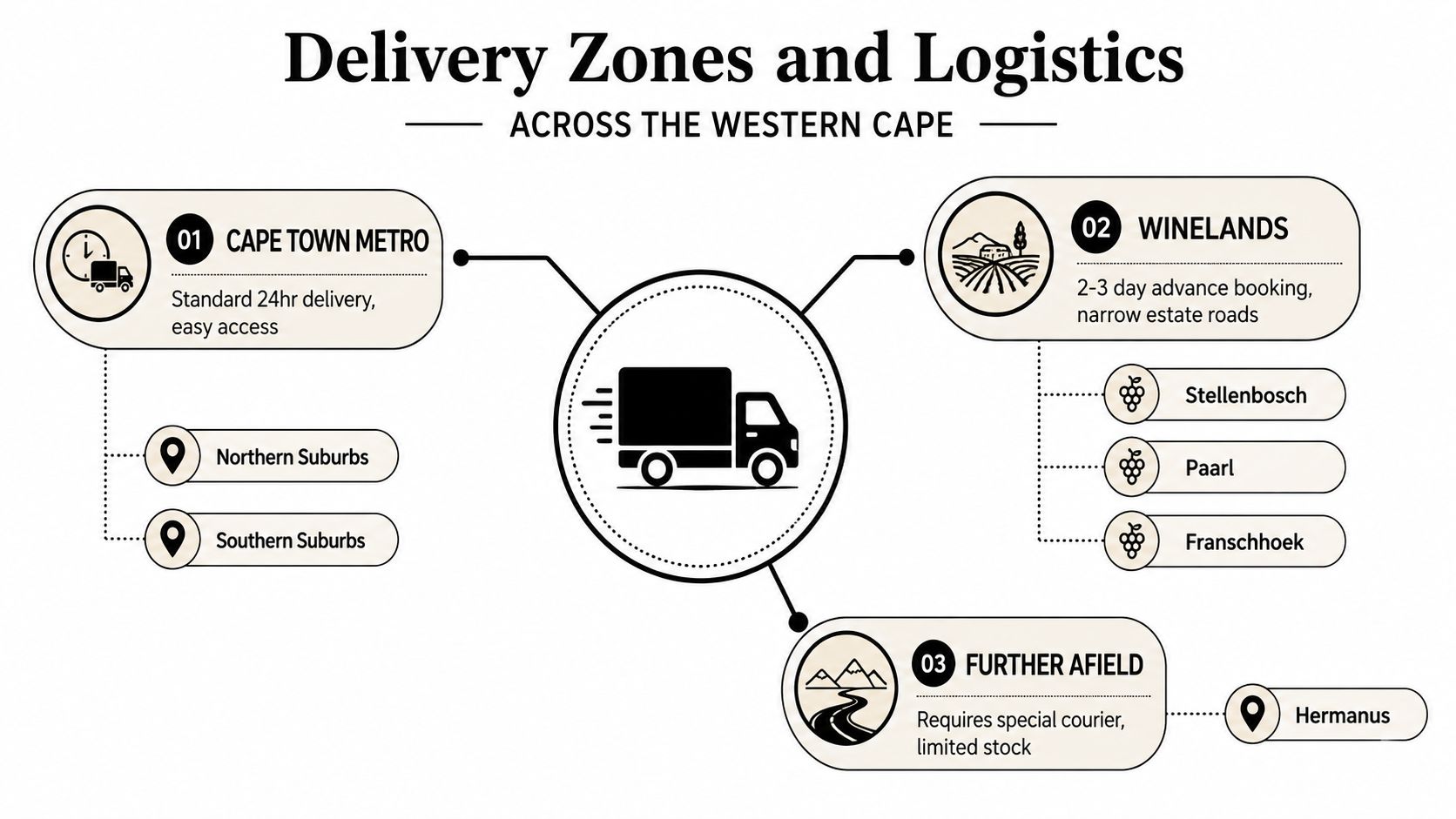
A diagram illustrating logistics and delivery zones for event furniture hire across the Western Cape region.

Send the supplier a venue access brief

A useful access brief should include:

  • The delivery entrance: Share the exact gate, loading bay or service entrance, not only the venue's public address.
  • Vehicle restrictions: Confirm any height, turning or parking limitations before the truck is dispatched.
  • Internal routes: Note stairs, ramps, narrow doors, long corridors and goods lifts.
  • Venue contact: Provide the name and mobile number of the person meeting the delivery crew.
  • Floor plan: Mark the final locations of tables, chairs, bars and lounge areas.

At a city conference venue, the loading bay may operate within a strict slot and the furniture may need to move through a service lift. At an estate venue near Stellenbosch, the truck may reach the property but still face a long internal route to the setup area. These details affect crew time and should be confirmed before inventory is packed.

Remote orders need a commercial decision

A small order can be perfectly reasonable for the client but inefficient for the supplier if the venue is far away or difficult to reach. The source cited earlier notes that a supplier may decline delivery when the location or cost isn't viable, and collection may be the practical alternative.

That doesn't mean a smaller function can't hire quality pieces. It means the planner should ask early whether delivery is available, whether the order can be grouped with another route and whether collection equipment or assistance is required. Same-day furniture delivery guidance can help frame the conversation, but same-day availability should never be assumed for a complex venue.

Build the setup around the access route

Place the heaviest or most awkward pieces closest to the easiest unloading path. Keep lounge groupings modular where possible, so the team can reposition them if an estate entrance or indoor route changes. For multi-level venues, confirm the lift dimensions rather than relying on a verbal assurance that “furniture will fit”.

A successful delivery is a coordinated handover between the planner, venue and supplier. The more accurately each party understands the route, the less likely the event team is to spend setup time solving problems that could have been identified in advance.

Booking Timeline for Cape Town's Peak Event Season

Once the date is locked, decide which furniture pieces need securing first. Availability is often shaped by the venue, access route and setup complexity, not only by the guest count. A small wedding at a Winelands estate may require earlier coordination than a larger function with a straightforward loading bay.

Reserve distinctive or limited-stock pieces before filling in the rest of the layout. Statement bars, specialist chairs, lounge groupings and LED furniture can determine the event's visual direction, while standard seating is usually easier to adjust later. ABC Hire's seasonal furniture planning guidance provides a useful reference for planning around Cape Town's busy event period.
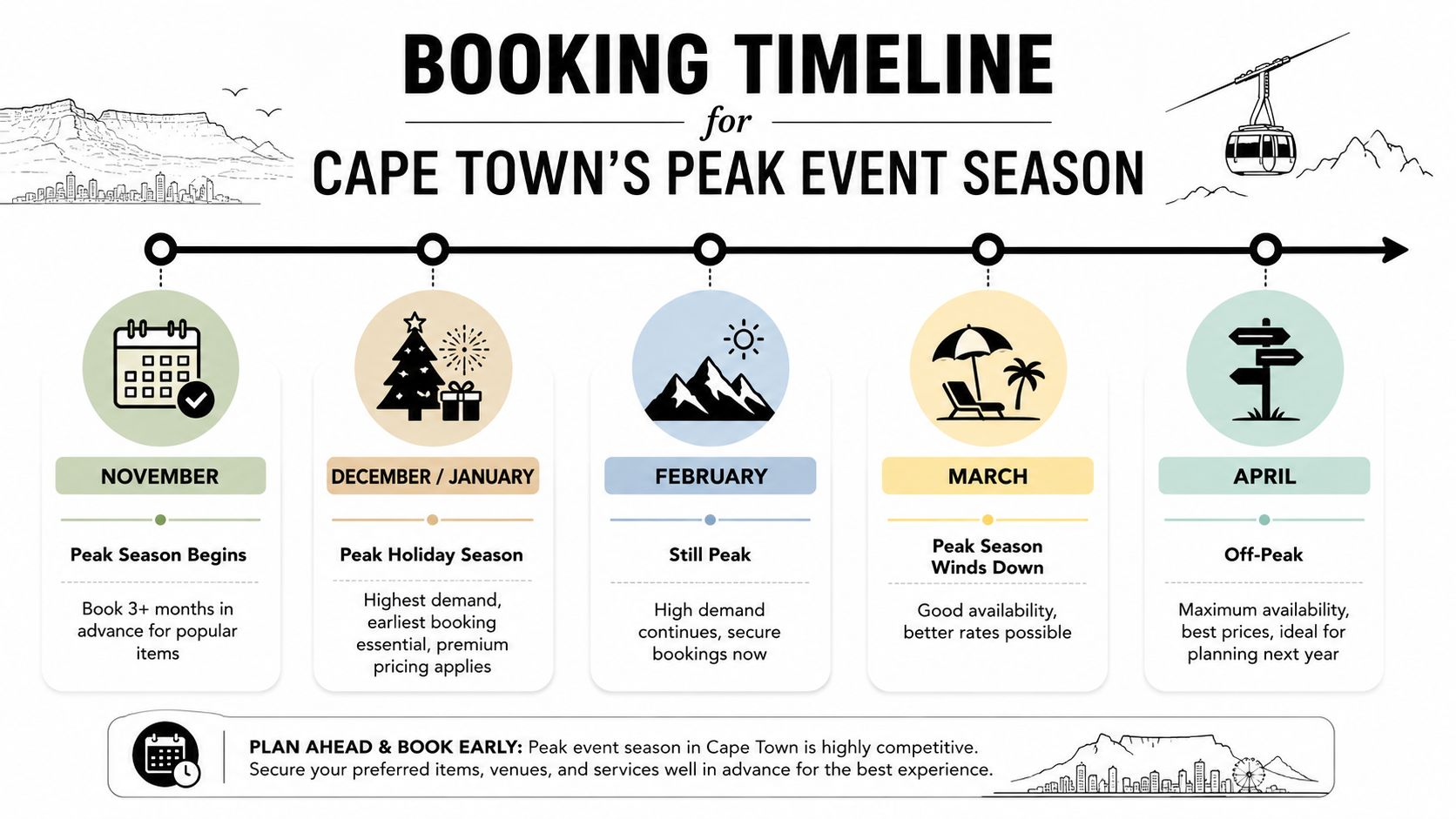
A timeline graphic illustrating the booking season for events in Cape Town, from November through April.

Four to six months before the event

Confirm the venue, event format and broad furniture direction. Identify requirements for formal dining, lounge areas, conference seating, branded zones or outdoor equipment. Request the venue's access rules, preferred delivery times and initial floor plan before confirming large or awkward pieces.

For weddings, prioritise distinctive chairs, statement bars and lounge furniture that may be needed across several dates. For corporate functions, confirm registration counters, branding surfaces and the difference between presentation seating and networking areas.

Two to three months before the event

Match the provisional inventory to a more accurate floor plan. Check table dimensions, seating density, service routes and the position of bars, catering stations and exits. Ask the venue to confirm the loading entrance, lift access and delivery window in writing.

Use this stage to resolve practical dependencies. A lounge arrangement may affect power access, catering circulation or the location of a presentation area. Confirm whether shelter, heaters or climate control is needed before the layout becomes difficult to change.

The final weeks

Send the supplier the final guest count, venue contact, access map and setup instructions. Confirm whether delivery stops at the entrance or includes placement throughout the venue. Reconfirm collection timing, especially when the event ends late or another booking follows immediately.

One final site check should establish where the vehicle can stop, how far furniture must be carried and whether an estate entrance imposes time or equipment limits. Good scheduling leaves room for controlled adjustments, rather than allowing the first access problem to appear during setup.

Weather Contingencies and Permit Requirements

A Cape Town outdoor setup can look finished at the venue inspection and still need a rapid change on event day. Wind, moisture and a sudden temperature drop affect exposed furniture first. Soft seating may need cover, lightweight pieces may require repositioning, and guests may avoid an outdoor area without a sheltered alternative.

Outdoor furniture should be selected for local conditions as well as appearance. Review weather-resistant outdoor furniture options for materials suited to Cape Town weather. In the Winelands, uneven estate surfaces, long distances between parking and the reception area, and limited covered space can make a weather move slower than expected. The operational guidance for covered placement, quick repositioning and contingency storage is also discussed in this outdoor and exhibition furniture resource.

Design the backup before the forecast changes

Set out the backup layout while planning the main one. Identify where furniture will move, who approves the change and how the crew will protect hired stock. A marquee, indoor room, covered storage area or marked alternative arrangement can prevent a weather response from becoming a full redesign.

Select pieces that can move without dismantling the guest area. Modular lounge sections can be separated and relocated, while outdoor tables and chairs need stable placement on grass, paving and uneven estate ground. Allow extra handling time where the route includes steps, narrow paths or soft surfaces.

Weather planning is a logistics decision, not a decorative extra. The furniture plan is incomplete until the response to rain and wind is clear.

Coordinate with the venue and public authorities

Private venues set their own requirements for access, noise, setup and breakdown. Public-space events may also require permits and coordination with the relevant authority. Confirm whether those conditions limit delivery times, vehicle access, public walkways or the placement of marquees and other structures.

Give the supplier the permit conditions and the venue's approved plan. A crew working from outdated instructions could block a public route, arrive outside the permitted window or place furniture where it must be moved later.

Hybrid events need the same joined-up planning. Guest seating, production equipment, camera sightlines and sheltered technical areas may compete for the same space. Confirm these requirements before furniture is loaded, particularly when an exposed venue has limited indoor capacity.

Your Complete Event Furniture Planning Checklist

Use this checklist before approving an event furniture hire Cape Town order:

  • Venue assessment: Measure the dining area, entrance, dance floor and service routes. Record doors, stairs, lifts and floor surfaces such as grass, carpet, paving or sand.
  • Inventory selection: Match chairs, tables and lounge pieces to the event style. Check comfort for long functions and choose modular options where the layout may change.
  • Access confirmation: Send the supplier the correct delivery entrance, loading restrictions, venue contact and internal route.
  • Weather planning: For outdoor events, identify covered placement, contingency storage and the route for rapid repositioning.
  • Booking timing: Reserve popular pieces four to six months ahead for the November-to-March peak period, following the seasonal guidance cited above.
  • Quote review: Confirm delivery, collection, setup, after-hours work, cancellation terms and responsibility for damage.
  • Event-day control: Give the setup team a labelled floor plan and appoint one person to approve changes on site.
  • Collection readiness: Group hired items where possible, check the inventory and record any new damage before handover.

The strongest plan connects style, access, timing and weather in one document. That's what prevents a beautiful furniture selection from becoming a difficult delivery.


ABC Hire supplies event furniture and supporting equipment for weddings, corporate functions, private celebrations and activations across Cape Town and nearby Winelands areas. Review the available tables, chairs, lounge pieces, LED furniture and climate-control options, then visit ABC Hire to discuss a practical delivery and setup plan for your venue.
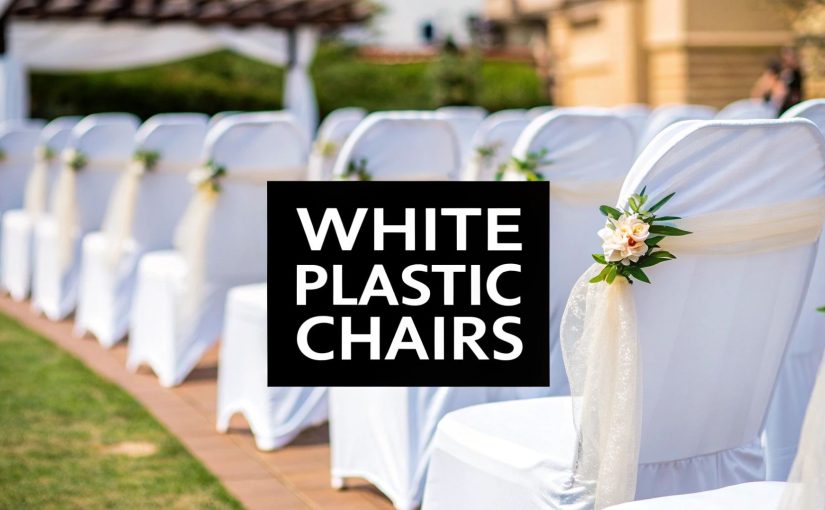
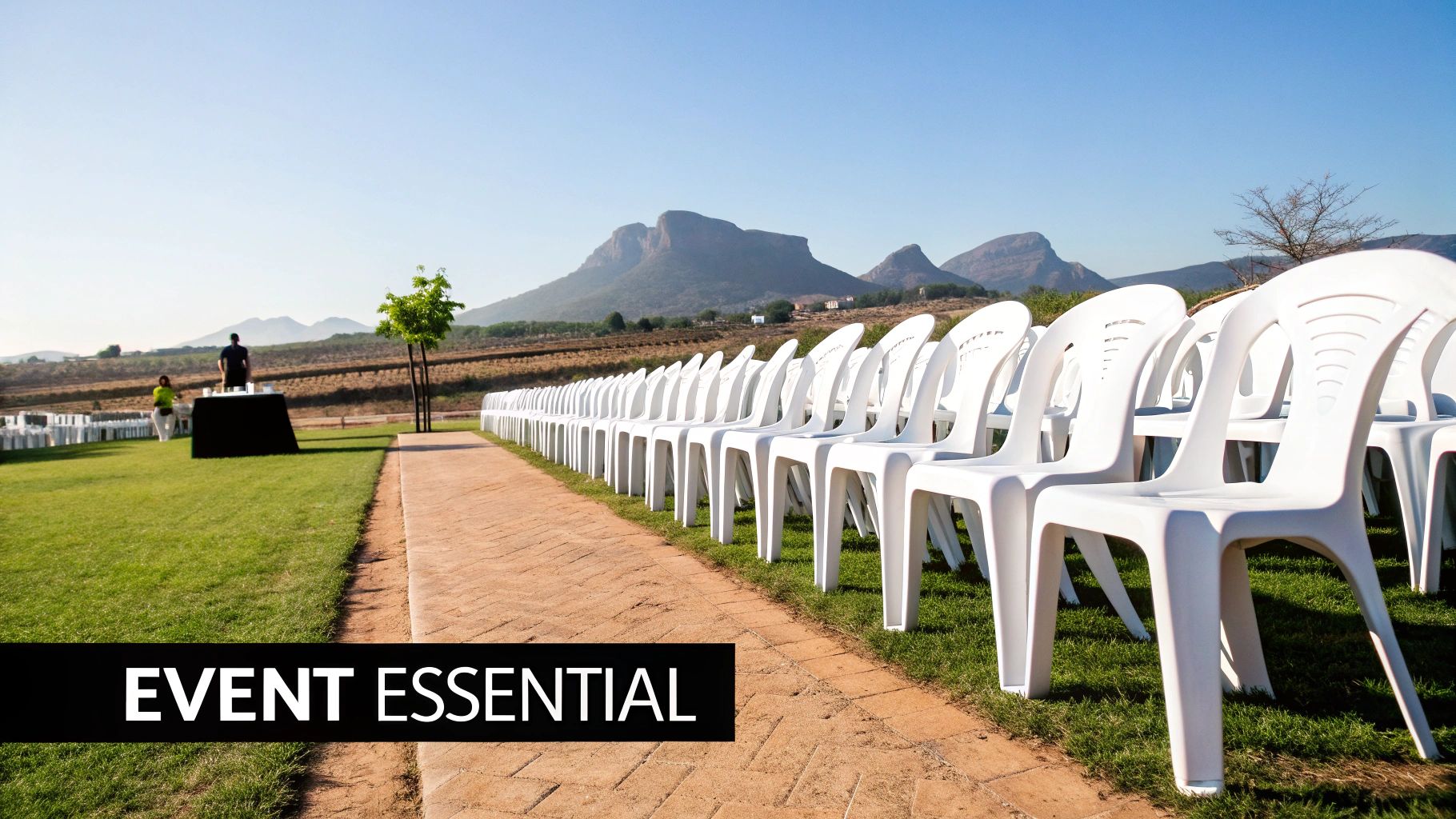
White Plastic Chairs: Elevate Cape Town Events with white plastic chairs

When you think of event planning in Cape Town, what comes to mind? Elegant Winelands weddings, maybe? Or sprawling corporate functions with Table Mountain as the backdrop? The secret weapon behind so many of these successful gatherings is surprisingly simple: the humble white plastic chair.

Far from being just a basic seat, these chairs are the reliable, budget-friendly workhorse of the local events scene. Their clean, simple design is like a blank canvas, ready to fit into any theme you can dream up.

The Unsung Hero of Cape Town Events

Rows of white plastic chairs arranged outdoors on grass for an event, with a mountain backdrop.

Let's be honest, sorting out the seating is often one of the biggest headaches when planning an event. You need something practical, affordable, and flexible enough to match your vision. For countless organisers across Cape Town and the Winelands, the white plastic chair is the go-to solution that just works.

Try to see them not just as something for guests to sit on, but as the very foundation of your event's layout. Their clean, neutral look means they can either fade into the background or be dressed up to become a key part of your décor. It's this chameleon-like quality that makes them a staple for just about any gathering you can imagine.

Why They Dominate the Local Scene

The reason you see these chairs everywhere isn't just a coincidence. It's a smart choice rooted in pure practicality, backed by a surprisingly robust local manufacturing industry. South Africa's plastic furniture market has been growing steadily, and it's on track to command a massive 35.69% share of Africa's entire market by 2025.

What’s driving this? A highly advanced manufacturing sector, particularly around Cape Town, that uses modern injection-moulding technology to produce tough, durable chairs perfect for our unique climate. You can read more about the plastic furniture market growth to see the trends for yourself.

For an event planner, this strong local supply chain is fantastic news. It means:

  • You save money. Hiring these chairs is incredibly cost-effective, freeing up your budget for the things that really make an impact, like amazing food or stunning floral arrangements.
  • They’re built for Cape Town weather. A bit of unexpected drizzle or the full force of the summer sun won’t faze them. That's a must-have for any outdoor event here.
  • Logistics are a breeze. They're lightweight and stackable, which makes delivery, setup, and breakdown so much simpler—whether your venue is in the CBD or on a remote wine farm.

In short, choosing white plastic chairs is a strategic move. It’s how you create a comfortable, great-looking seating arrangement without blowing your budget. It’s proof that the most practical choices often lead to the most perfect outcomes. This guide will walk you through exactly how to get it right.

Here is the rewritten section, crafted to sound completely human-written and natural, following the provided style guide.


Why Smart Planners Choose White Plastic Chairs

When you're putting together an event in Cape Town, every single choice matters. Your budget, your timeline, and the final look all hang in the balance. I’ve seen it time and time again: the most experienced planners know that the basics, like seating, can either cause a massive headache or make everything run smoothly. This is exactly why the humble white plastic chair is such a constant in the industry. It's not a lazy choice; it’s a strategic one.

Think of these chairs as the ultimate blank canvas. Their clean, simple look means they just work, no matter the theme or colour scheme you’ve spent months perfecting. I’ve set them up for rustic farm weddings out in Stellenbosch and for chic corporate launches at the V&A Waterfront. In both cases, the chairs fit right in, supporting the vision instead of fighting it.

This incredible adaptability saves you so much hassle. You don't need to hunt for different chairs for every different style of event. The same trusty stock works perfectly for a casual birthday braai, an elegant garden party, or even a formal matric dance. For planners and venues, that kind of efficiency is gold.

Built for Cape Town’s Unpredictable Climate

Let's be honest, one of the biggest stresses of any outdoor event in the Western Cape is the weather. One minute it's glorious sunshine, the next a gusty wind is blowing a shower sideways. This is where the simple brilliance of a white plastic chair really shines.

These chairs are made from a high-quality, UV-stabilised polypropylene, which is just a fancy way of saying they’re built to handle whatever the Cape throws at them.

  • Sun-proof: They won't go yellow or brittle after a few hours in that intense African sun.
  • Waterproof: A sudden downpour isn't a catastrophe. A quick wipe-down and they’re good as new, unlike wooden or upholstered chairs which could be completely ruined.
  • Stain-resistant: Spilt wine, a dropped piece of wors, or grass stains? No problem. They clean up easily without a trace.

This kind of resilience gives you incredible peace of mind. You can set up for that beautiful ceremony on a wine farm knowing your seating will look pristine, no matter what the notoriously fickle Cape Town weather decides to do. It’s practical, it’s durable, and it just works.

The Smart Choice for Your Budget

Every rand you can save on the basics is a rand you can put towards what your guests will really remember—the flowers, the food, the music. Hiring white plastic chairs is hands-down one of the most budget-friendly seating options out there, giving you a clean, uniform look for a fraction of the cost.

Let's put it in perspective: for an event with 150 guests, choosing standard plastic chairs over something like Tiffany or Wimbledon chairs can easily save you thousands of rands. That’s a serious chunk of cash you can now spend elsewhere. This kind of financial freedom is a total game-changer.

This affordability means you can properly seat everyone—including your photographers, DJs, and staff—without blowing your budget. It makes hosting a large, beautiful event on a sensible budget totally achievable. When you weigh their reliability and versatility against the low hire cost, the value is simply unbeatable.

Before we move on, let's break down exactly what makes these chairs such a smart, practical choice for any Cape Town event.

Feature and Benefit Analysis of White Plastic Chairs

This table highlights the core features of a standard white plastic chair and translates them into tangible benefits for your event planning process.

Feature Benefit for Your Event Ideal Scenario
Neutral White Colour Blends seamlessly with any theme or colour palette, from rustic to modern. A wedding where the floral arrangements and décor are the main focus.
Polypropylene Material Fully waterproof and UV-resistant, ensuring chairs look great in any weather. An outdoor garden party or beach ceremony with a chance of rain or intense sun.
Lightweight Construction Easy and quick for a small team to move, set up, and pack away. Venues with tight turnaround times or events requiring multiple layout changes.
Stackable Design Reduces transport costs and minimises storage space needed on-site. Large-scale festivals or functions in the Winelands where logistics are complex.
Low Hire Cost Frees up significant budget for other key areas like catering or entertainment. Any event, from community gatherings to corporate functions, on a tight budget.
Easy to Clean Spills and dirt can be wiped off in seconds, maintaining a pristine look. A family-friendly event with lots of kids, food, and potential for messes.

Ultimately, each feature is designed to make your life as a planner easier and your event a bigger success.

Logistics Made Simple

Finally, you just can't ignore the logistical genius of the white plastic chair. Their lightweight, stackable design is a massive plus for delivery, setup, and breakdown. I’ve seen a small team arrange hundreds of these chairs in the time it would take to handle a few dozen heavier, bulkier options.

This efficiency is a lifesaver at venues with tight schedules or tricky access—think inner-city rooftops or remote Winelands estates. And because they stack so well, more can fit on a single truck, which often means lower delivery fees. It seems like a small detail, but it adds up to real savings and a much smoother setup, letting your team focus on the million other things that need to get done.

How to Perfectly Calculate Your Chair Needs

Figuring out how many white plastic chairs to hire for your event in Cape Town seems easy enough. Just count your RSVPs, right? Well, that's the number one mistake people make, and it often leads to a last-minute scramble for seats or paying for chairs that just sit there empty.

The real secret is to stop thinking of your guest count as a single, static number. Instead, picture your event layout as a puzzle with moving parts. A solid calculation involves more than just your final guest list—it’s about planning for different zones, remembering everyone on-site, and making sure your guests can move around comfortably. Getting this right is what separates a smooth, seamless event from a logistical headache.

Start with Your Confirmed Guest Count

Your foundation is always your list of confirmed guests. Make sure you're working with the final RSVP count, not the number of people you initially invited. It's also smart to build in a small buffer for those unexpected plus-ones or last-minute deciders.

A good rule of thumb is to add 5% to your confirmed total. So, if you have 100 confirmed guests, you should plan for 105 seats. This little bit of surplus gives you peace of mind without forcing you to over-order.

Account for Separate Event Zones

Many events, especially those beautiful weddings out in the Winelands, have multiple phases or locations. You might have a separate area for the ceremony and another for the reception. While your guests will move between them, you probably won't have the time or manpower to move all the chairs.

  • Ceremony Seating: Plan for one chair per confirmed guest, plus that 5% buffer.
  • Reception Seating: If the reception is in a different spot, you’ll most likely need a completely separate set of chairs. Even if it’s just a short walk away, trying to move dozens of chairs during the cocktail hour is chaotic and disruptive.
  • Lounge or Breakout Areas: For corporate functions or more relaxed weddings, creating small, comfy seating clusters is a great touch. Think about adding an extra 10-15 chairs for these casual zones.

Remember, the goal is a smooth, easy transition between the different parts of your event. Having dedicated seating for each key area means no awkward delays and ensures your guests always have a place to sit back and enjoy themselves.

Don’t Forget Your Vendors and Staff

This is one of the most common oversights: forgetting to plan seating for the very people making your event happen! Your vendors are on their feet for hours, and they absolutely need a designated spot to take a quick break and have a meal.

Make a quick list of everyone who'll be on-site and make sure they have a seat:

  1. Photographer(s) and Videographer(s): They work incredibly long hours and will be grateful for a place to rest.
  2. DJ or Band Members: Musicians definitely need somewhere to sit during their breaks.
  3. Wedding Planner and Assistants: Your coordination team needs a home base to work from.
  4. Venue Staff: Always check if the venue provides seating for their staff or if you need to factor them in.

Forgetting vendor seating is an easy mistake to make, but it can reflect poorly on the host. A simple tally of your support team is a crucial final step in your total chair count. For a more detailed look at coordinating your rentals, have a look at our guide on tables and chair rentals for your event.

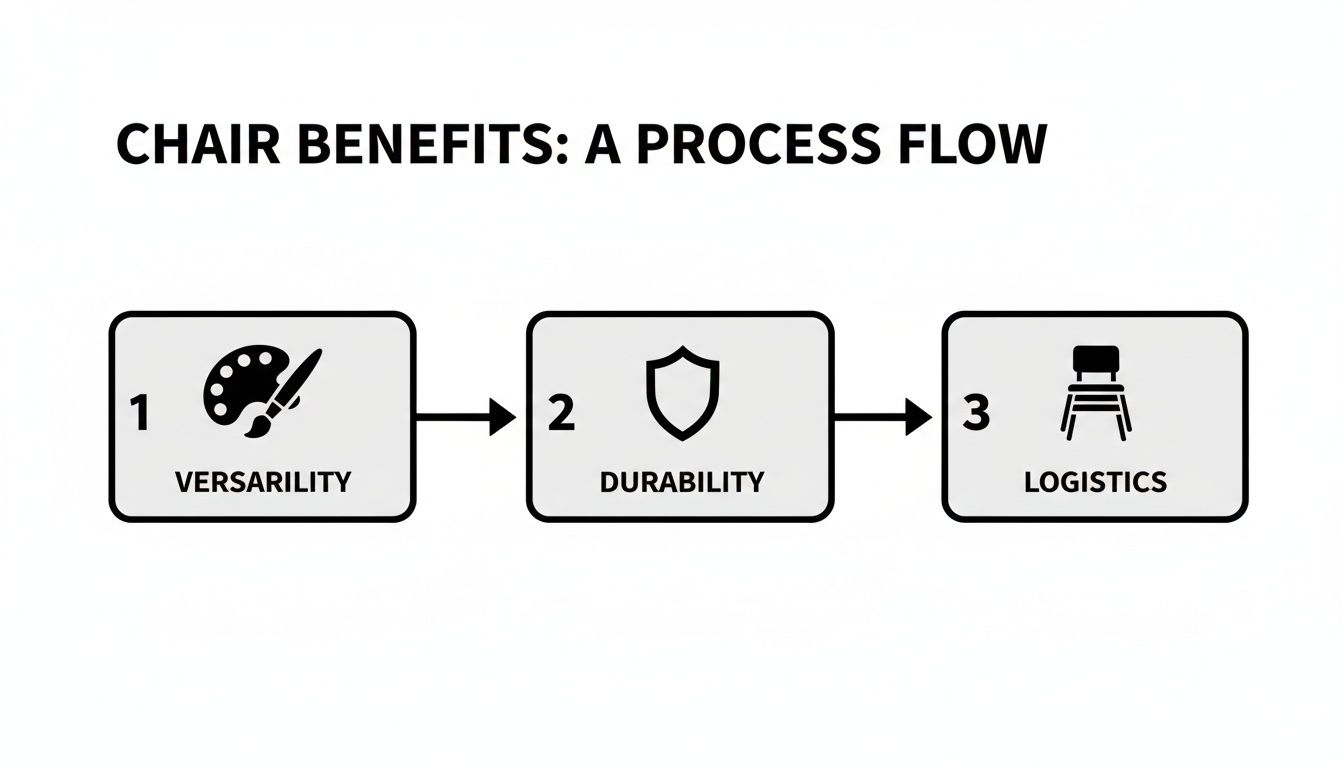
This flowchart breaks down the core benefits of choosing white plastic chairs, highlighting their versatility, durability, and logistical ease.

Flowchart showing chair benefits process: Versatility, Durability, and Logistics with corresponding icons.

The flow shows how these practical features contribute directly to a much smoother and more successful event, right from the planning stage to the final pack-up.

Transforming Chairs from Simple to Stunning

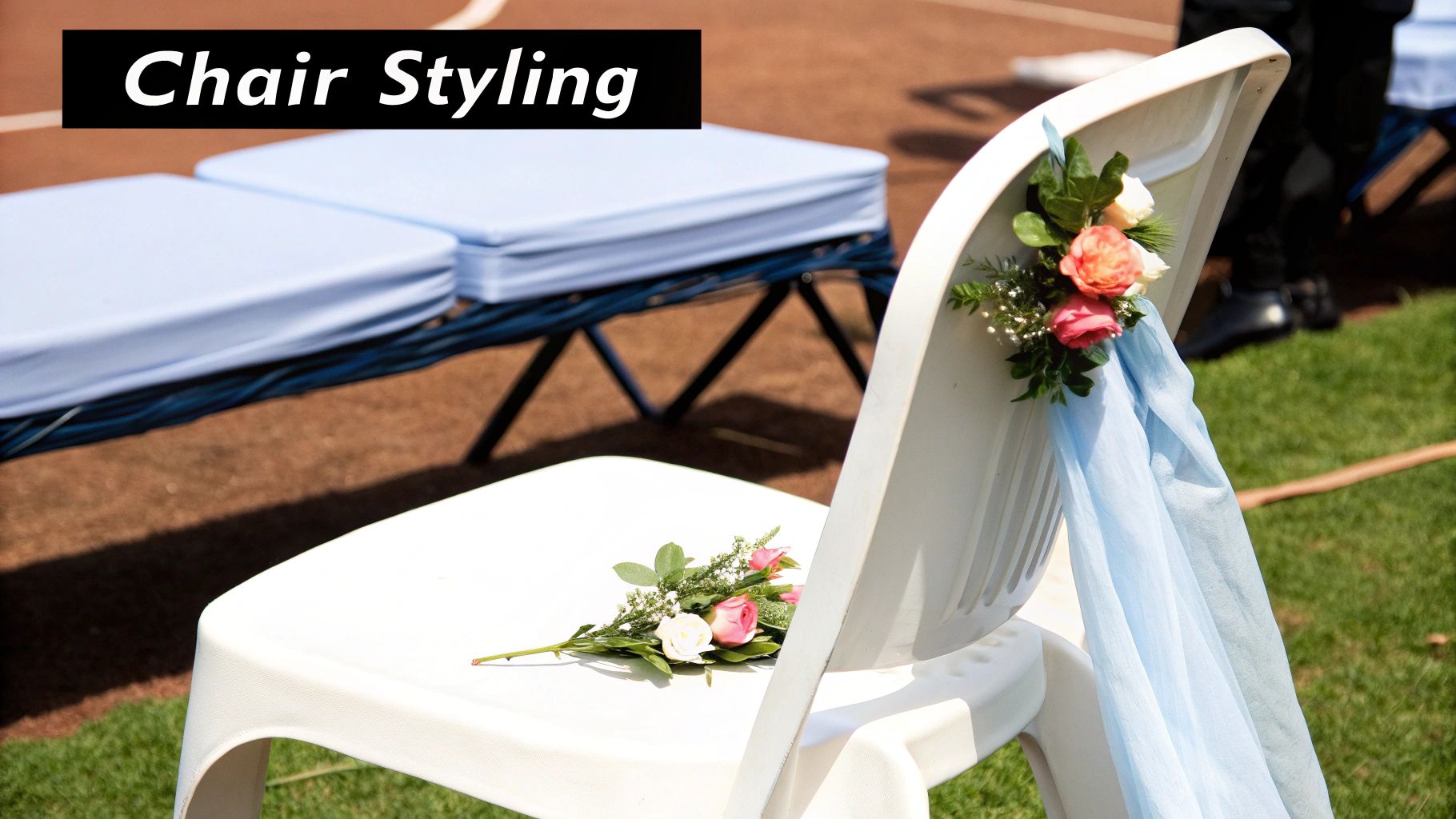
White plastic chairs are beautifully decorated with pink, white, and orange floral bouquets for an outdoor event.

This is where the real magic happens. Think of each white plastic chair not as just a seat, but as a blank canvas ready for your creative touch. Their simple, clean design is the perfect foundation for expressing your event's unique personality and colour scheme. You don’t need a massive budget to create a high-impact, memorable look; you just need a little inspiration.

With a few thoughtful additions, these practical chairs can be elevated from functional to fabulous, fitting in seamlessly with even the most elegant themes. From flowing fabrics to personalised details, the possibilities are endless. Let's get into some beautiful and budget-friendly ways to dress up your chairs.

Weaving in Colour and Texture with Fabrics

The fastest way to transform a sea of white plastic chairs is by introducing fabric. The contrast in texture and colour instantly adds softness, movement, and a sense of occasion. It’s an incredibly effective technique that can be adapted to suit any style you can dream of.

Here are a few popular options that always work a treat:

  • Flowing Sashes: A classic choice for a reason. A simple organza or chiffon sash tied in a neat bow or a casual knot on the back of the chair adds an immediate pop of colour and elegance.
  • Elegant Ribbons: For a more delicate touch, try cascading several long strands of satin or grosgrain ribbon down the back. This works beautifully for garden parties or whimsical wedding themes.
  • Rustic Drapes: If your event has a more relaxed, rustic vibe—perfect for a Winelands setting—draping a length of hessian or raw linen over the chair back creates a wonderfully textured, earthy look.

By picking fabrics that match your event's core colour palette, you create a powerful visual thread that ties the entire space together. This simple act turns individual chairs into a cohesive part of your overall design vision.

Adding Personalised and Natural Elements

It’s the small details that make a huge impact and make your guests feel truly special. Adding personalised touches or natural elements to your chairs shows a level of care and thoughtfulness that everyone will appreciate.

These ideas are simple to pull off but deliver a memorable experience:

  1. Custom Name Tags: Tie a beautifully designed name card to the back of each chair with a piece of ribbon or twine. It’s not just a place card; it’s a bespoke, decorative element.
  2. Small Floral Arrangements: A single fresh bloom or a small posy of local fynbos tied to the side of the chair can be breathtaking. This is a brilliant touch for aisle chairs during a wedding ceremony.
  3. Greenery Swags: For a lush, natural look, a simple swag of eucalyptus or olive branches draped across the chair back is both stylish and aromatic, adding another sensory layer to your event.

These little additions are where you can truly let your theme shine, whether it's a slick corporate function or a romantic, bohemian wedding.

Enhancing Comfort with Cushions

Beyond looks, guest comfort is everything. Adding seat cushions is a fantastic dual-purpose strategy. Not only does it make things much more comfortable for guests, especially during longer ceremonies or receptions, but it also gives you another chance to introduce colour and texture.

Imagine crisp white plastic chairs lined up for a ceremony, each with a cushion in a bold, contrasting colour. The visual effect is stunning and immediately makes the setting feel more luxurious and considered. Choose a colour that complements your floral arrangements or table linens to create a polished, professional look.

While standard white plastic chairs are a fantastic base, for those seeking a more ornate style, you can explore other options. You might be interested in learning more about white Tiffany chairs as an alternative for highly formal events.

Styling for Popular Cape Town Themes

Let's bring these ideas home by looking at some popular local event themes. The versatility of white plastic chairs means they can be adapted to fit perfectly into the unique vibe of Cape Town and its stunning surroundings.

  • Winelands Rustic: Pair the chairs with hessian drapes, sprigs of lavender, and handwritten wooden name tags. The chair’s simplicity lets the natural, rustic elements really stand out.
  • Beachside Boho: Think flowing white cheesecloth sashes that catch the sea breeze, with a single seashell or piece of driftwood tied to the back for a subtle coastal touch.
  • Elegant City Chic: For a sophisticated urban event, opt for sleek, dark satin ribbons tied in a sharp, modern knot. Add a simple, elegant cushion in a monochrome shade for comfort and style.

By using these simple but effective styling techniques, you can completely transform the look and feel of your event seating. The humble white plastic chair becomes a key player in your décor, proving that smart, practical choices can also be exceptionally beautiful.

Your Essential Chair Rental Checklist

Getting the practical side of hiring your white plastic chairs sorted can feel like a mission, but it really doesn't have to be. With a solid game plan, you can sidestep common headaches and make sure everything runs smoothly. Think of this as your go-to guide for a stress-free rental, making sure nothing gets missed from the first quote to the final pickup.

A good checklist is your best friend when working with a hire company. It clears up any confusion and gets everyone on the same page. This little bit of prep work guarantees the logistics of your seating are as seamless as the event itself.

Clarify Delivery and Collection Logistics

First things first, let's lock down the timing and access details. Vague plans are just asking for last-minute panic. You need to agree on exact delivery and collection windows that suit both you and your venue.

Be crystal clear about these details in your rental agreement. Are the chairs showing up on the morning of the event, or the day before? When, exactly, is the team coming back to fetch them? This is non-negotiable, especially for venues that have back-to-back bookings.

It's also smart to chat about any potential access issues upfront. Is your venue tucked away on a narrow street in the Cape Town CBD? Is there a ridiculously steep driveway at a Winelands farm? Giving the hire company a heads-up allows them to plan properly, ensuring they rock up with the right vehicle and enough hands on deck. This simple chat can save you from major delays on the day.

Key Takeaway: Treat your delivery and collection schedule like it’s set in stone. Confirming everything from parking availability to the exact drop-off spot takes all the guesswork out of the equation and makes for a smooth setup and breakdown.

Understand the Fine Print

Before you sign on the dotted line, it’s crucial to get your head around the policies that protect both you and the rental company. Don't just skim this part; read it properly to avoid nasty surprises down the line. The two big ones to watch for are the cleaning policies and the damage waiver.

Every company has its own rules for how chairs should be returned. Do they expect them to be wiped down and stacked, or is a basic clean part of the deal? Knowing this helps you plan what needs to happen after the party winds down. Some suppliers charge a hefty cleaning fee if the white plastic chairs come back looking like they've been through a mud-wrestling match, so clarity is key.

Next up is the damage waiver. Accidents happen—a chair gets cracked, a leg gives way. The damage waiver is basically your insurance for minor, accidental oopsies. Check what it covers and, more importantly, what it doesn't. Does it cover theft or major damage? Knowing the replacement cost for a single chair helps you understand what you might be on the hook for.

  • Cleaning Policy: Ask if you're responsible for wiping down chairs before they're collected.
  • Damage Waiver: Get clarity on what level of damage is covered and what the costs are for anything that falls outside the waiver.
  • Replacement Cost: Find out the fee for a lost, stolen, or completely wrecked chair.

Of course, chairs are just one piece of the puzzle. For a complete picture of everything you might need, it's worth checking out a broader catering equipment checklist to make sure you haven't forgotten anything.

Final Confirmation and Payment Schedule

Once you've nailed down all the logistics and policies, the last step is to lock it all in. A week or two before your event, give your hire company a quick call for a final confirmation. This is your chance to double-check the exact number of white plastic chairs, reconfirm the delivery times, and pass on any last-minute instructions for the venue.

Also, make sure the payment schedule is clear from the start. Most companies ask for a deposit (usually 50%) to secure your booking, with the final payment due just before or on the day of delivery. Knowing these dates helps you keep your event budget on track. Always get a final, itemised invoice that lists your full order and any other agreed-upon fees.

This final check-in gives you peace of mind and keeps things professional with your supplier. For a more complete guide to planning your big day, you can also have a look at our event planning checklist template to make sure every little detail is covered.

Keeping Your Chairs Spotless During the Event

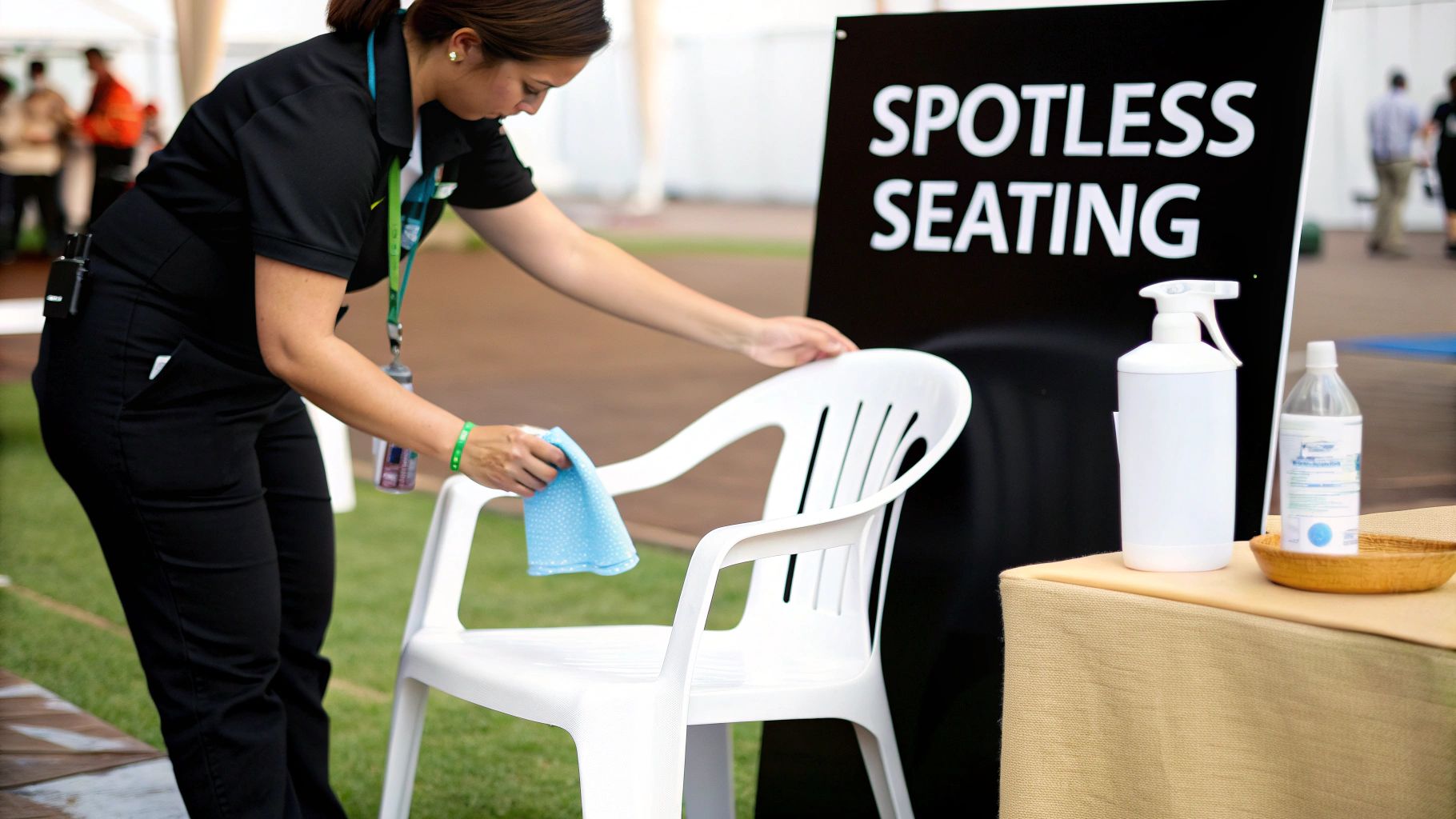
An employee cleans a white plastic chair with a blue cloth, promoting "SPOTLESS SEATING".

While any reputable hire company will deliver your chairs in pristine condition, a live event is… well, a live event. Spills happen, shoes scuff, and life unfolds. Keeping your chairs looking great from start to finish isn't hard, but it does pay to be prepared.

A little insider knowledge goes a long way here. Having a small, discreet cleaning kit on hand can be a lifesaver, letting you or your team sort out minor messes quickly and quietly. It’s this kind of attention to detail that guests notice and appreciate, contributing to the overall polished feel of your function. It really just reinforces the importance of overall cleanliness in event venues.

Quick On-Site Cleaning Hacks

Accidents are going to happen, but stains don't have to stick around. For most spills on these polypropylene chairs, a swift response is your best friend. Keep a small kit stashed away with a few key items for those quick fixes.

Here’s what we recommend having ready:

  • Microfibre Cloths: A few clean cloths are perfect for wiping away spills without leaving behind annoying lint.
  • Gentle Soap Solution: A small spray bottle filled with water and a couple of drops of dish soap will handle most food or drink marks.
  • Magic Eraser: Trust me on this one. For stubborn scuffs from shoes or grass stains, a damp magic eraser can lift the mark without scratching the plastic.
  • Baby Wipes: Excellent for quickly wiping away sticky fingerprints or residues.

Red wine spill? Blot it immediately, then use your soap solution. Grass stain from an outdoor ceremony? A gentle rub with that magic eraser will usually do the trick. A good rule of thumb is to always test any cleaning agent on a hidden spot first, like the underside of the seat.

Remember, the goal is a quick, effective clean that doesn't damage the chair's surface. Avoid harsh abrasives or strong chemical cleaners, as these can easily dull the finish on the white plastic.

Your Pre-Event Inspection Process

As soon as the chairs are delivered, it’s a good idea to do a quick spot-check before your team starts setting them up. This simple inspection makes sure every chair is up to scratch and helps you avoid any nasty surprises later on.

Run through this quick checklist:

  1. Count the Chairs: First things first, make sure the number delivered matches what’s on your rental agreement.
  2. Check for Stability: Give a few random chairs a gentle wobble. You want to be sure they are stable and safe for your guests.
  3. Inspect for Cleanliness: Just give the stacks a quick visual scan for any missed spots or dirt picked up in transit.
  4. Note Any Pre-Existing Damage: If you spot any significant cracks or deep scratches, let the hire company know straight away. This protects you from being held responsible for it later.

This entire process takes maybe five minutes, but it provides peace of mind and sets the stage for a flawless event.

Your Plastic Chair Hire Questions Answered

When you're in the thick of event planning, it's the little details that can bring up the most questions. We get it. To make sure you feel totally sorted, we've pulled together the queries we hear most often about hiring our white plastic chairs here in Cape Town. Let's get you some straight-up answers.

Is There a Minimum Number of Chairs I Have to Hire?

This one comes up a lot, especially for smaller, more intimate functions. The short answer is no, most hire companies (us included) don't force you into a minimum quantity. The real thing to keep an eye on, though, is the delivery fee.

Think of it this way: the delivery cost is usually a set amount to cover the truck and the team's time, whether they're dropping off 10 chairs or 100. This often means it makes more financial sense to bundle your chairs with a larger order, like tables or other gear. If you only need a handful, it might be worth asking if you can collect them yourself to save a few Rand.

Will the Chairs Be Okay for Heavier Guests?

Absolutely. Making sure every single guest is comfortable and safe is non-negotiable. Our standard white plastic chairs aren't your average garden-variety seats; they're commercial-grade, built from high-density polypropylene.

They're designed to be tough and stable, comfortably holding a weight of around 120 kilograms. This solid build makes them a dependable choice for any crowd, so you can be sure everyone has a secure seat. For total peace of mind, it never hurts to double-check the specific weight rating with your hire company.

A Quick Note: It's easy to confuse professional event chairs with the flimsy ones you'd grab from a retail shop. Ours are built for the demands of the event industry, meaning they're engineered for heavy, repeated use and are checked regularly to make sure they're safe and up to standard.

Can I Decorate the Chairs Myself?

Of course! We love seeing how creative our clients get. These chairs are basically a blank canvas waiting for your personal touch. Go wild with sashes, ribbons, gorgeous floral arrangements, or custom name tags to bring your theme to life.

That said, there are just a few ground rules to keep in mind to avoid any surprise charges later:

  • Keep it Temporary: Please don't use anything that will permanently mark or damage the chairs. Think glue, nails, or permanent markers – those are a definite no-go.
  • Mind the Tape: If you need to use tape, make sure it’s a low-tack type that peels off cleanly without leaving that awful sticky gunk behind.
  • Watch for Stains: Be a bit careful with materials that could stain the white plastic. Things like pollen from fresh lilies or certain fabrics with dyes that might run can be culprits.

Just remember to have all your decorations removed before we arrive for collection. This helps you avoid any extra fees for cleaning or labour.


Ready to lock in the perfect seating for your Cape Town event? At ABC Hire, we provide top-quality, sparkling white plastic chairs that are as easy on the eyes as they are on your budget. Book your chairs today and let's make your event a success!