
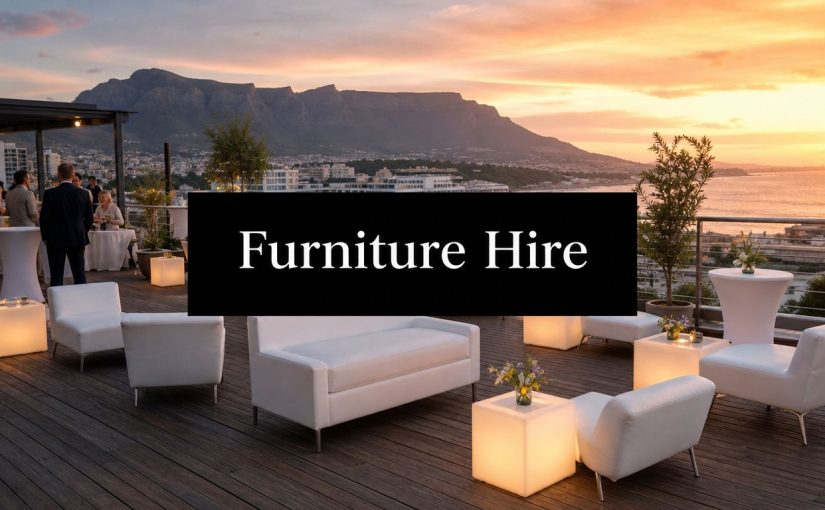
You've chosen the venue, confirmed the caterer and approved the colour palette. Then the venue manager asks for the final floor plan, and the problem appears: the chairs won't fit through the service entrance, the lounge furniture can't reach the upper level, or the collection window clashes with the venue's closing time. In Cape Town, event furniture hire isn't only a styling decision. It's a transport, access, comfort and timing decision that can determine whether the event feels effortless or improvised.
Cape Town's event market is substantial, with 1,540 permit applications recorded in the 2025/26 financial year, 983 approved events attracting about 4.1 million spectators and participants, according to city reporting on Cape Town's event economy. That volume creates regular demand for chairs, tables, lounge pieces, climate-control equipment and supporting logistics. It also means popular stock and reliable delivery windows can disappear well before the event date.
Why Event Furniture Hire Matters More Than You Think
A Winelands wedding can look straightforward on the floor plan: long tables, dark timber chairs and a lounge beside the dance floor. On site, the access road may be narrow, the unloading point far from the reception area, and the route across uneven ground. The design can still work, but only after the setup team changes its route, reduces furniture movement or adjusts the layout.
That is the difference between choosing pieces from a catalogue and planning them around the venue. Every hired item has a physical footprint, a handling requirement and a role in guest movement. Chairs affect how guests sit and dine. Bar tables determine where people gather. Sofas can create a comfortable networking area, yet block a service route if the room has not been measured properly.
Furniture shapes the guest experience
A corporate conference may need rows of matching chairs for clear sightlines and focused presentations. Between sessions, however, lounge seating, cocktail tables and a well-positioned registration desk can make the same room more useful for conversation. A wedding reception needs a different arrangement. Guests move between dining tables, the bar, dance floor and outdoor areas, so furniture must support circulation instead of occupying every open space.
Furniture also communicates the event's character. LED cubes, illuminated bars and modern ottomans can suit an evening activation, while timber tables and classic upholstered seating may fit a formal dinner or estate wedding. Stronger designs usually establish one dominant style and add one or two contrasting pieces. Combining every available finish often makes the room feel unplanned.
Practical rule: Choose furniture by zone first, then by appearance. A beautiful chair in the wrong position is still a planning error.
A site visit can expose issues that a catalogue cannot. Check the distance from the delivery vehicle to the setup area, the width of gates and doorways, changes in level, lift access and the time available for unloading. These details affect labour, setup order and whether a selected item is practical at all.
Cape Town rewards early decisions
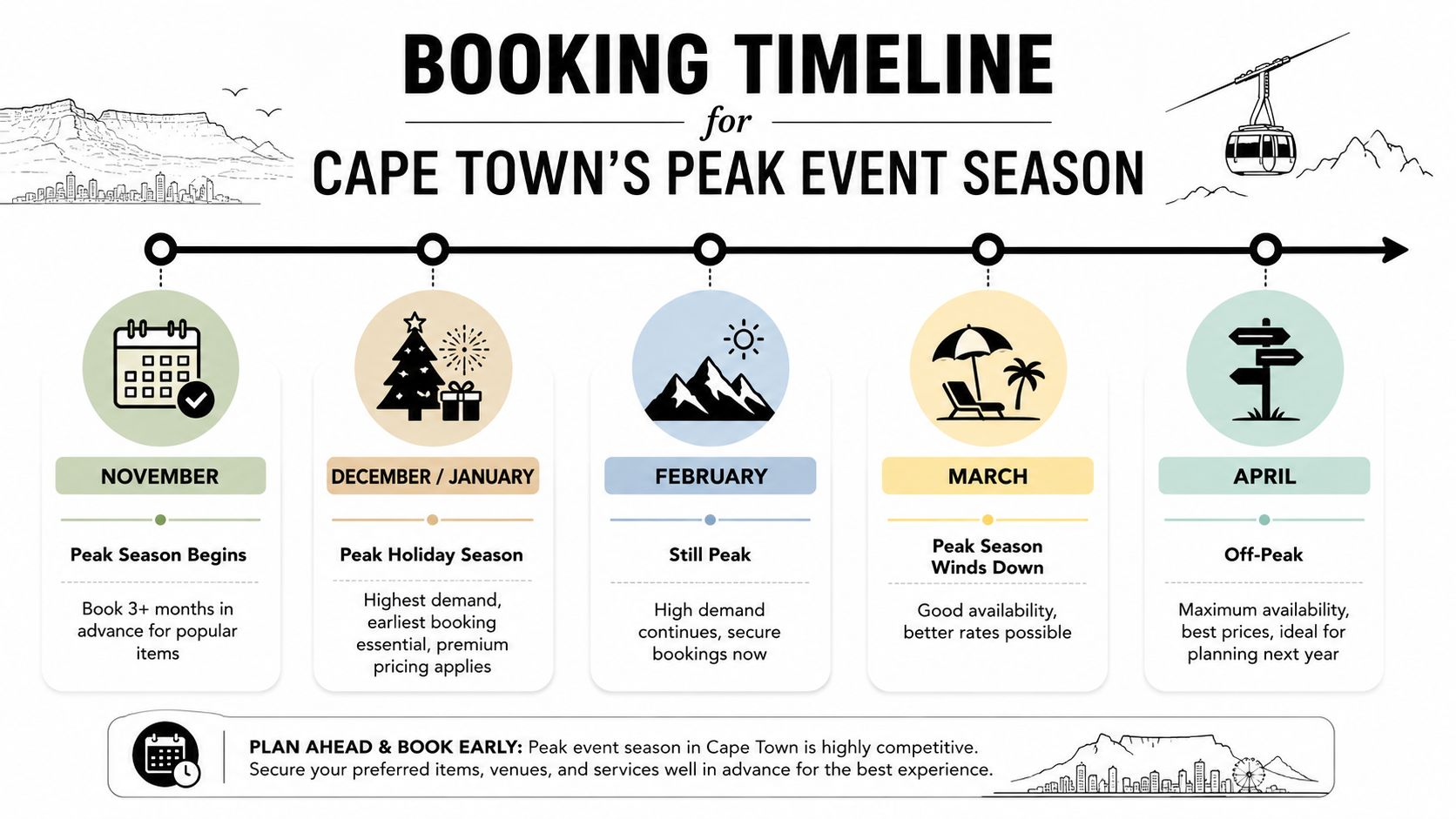
Peak demand in the Western Cape runs from November to March, and ABC Hire recommends booking furniture four to six months ahead because access restrictions, delivery windows and after-hours collections become more difficult during busy months. The guidance appears in its Cape Town furniture hire planning advice.
That lead time is particularly useful for weddings, year-end functions and large brand activations. Early booking allows the floor plan to be confirmed before stock is allocated, rather than forcing the event around whatever remains. It also gives the supplier time to assess loading bays, lifts, stairs and setup labour.
Furniture is part of the event infrastructure. It affects atmosphere, accessibility, service routes and guest comfort. Treating it as a late styling choice often creates extra costs and compromises that could have been avoided during planning.
Understanding Your Furniture Inventory Options
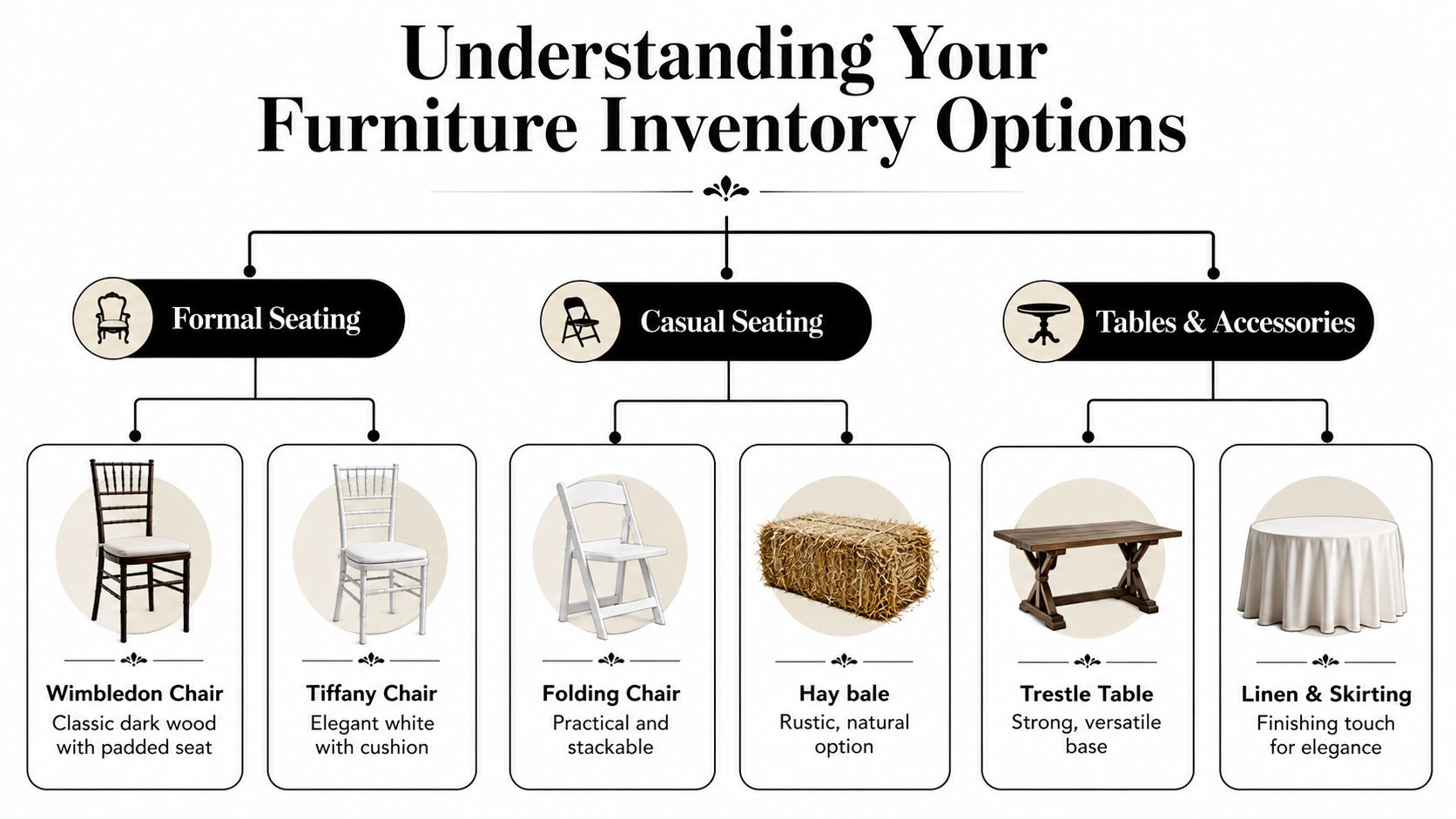
A Cape Town venue can look spacious on a floor plan and still become difficult once furniture arrives. Start with the event's purpose, then divide the site into working zones. Formal dining, registration, a cocktail bar, catering, queueing and an outdoor lounge each need different pieces. This prevents the common mistake of ordering only by guest count, without planning where people will sit, stand, eat and move.
Formal seating creates structure
Wimbledon chairs suit classic receptions and formal dinners, particularly where dark timber and a padded seat complement the venue. Tiffany chairs have a lighter appearance and cushion options, making them suitable for weddings, gala dinners and styled ceremonies where the seating should feel elegant without dominating the room.
Conference seating has a different test. Chairs must remain comfortable through presentations, while the layout needs clear sightlines and access to exits. A refined-looking chair that becomes uncomfortable during a long programme can affect attention and the overall guest experience.
Casual seating supports movement
Folding chairs work well for ceremonies, community functions and conference layouts that change between sessions. They stack easily and can be moved quickly, which helps when one room serves several purposes. Hay bales provide a rustic option for informal outdoor events, but they need sensible placement and protection from moisture.
Lounge furniture should form usable clusters, not fill empty corners. Sofas, armchairs, ottomans and coffee tables can define a networking area or provide a quieter space at a celebration. Leave enough clearance for guests to enter and leave without shifting the furniture.
Tables and accessories finish the plan
Trestle tables can serve dining, registration, gifts, catering and display areas. Confirm their dimensions and leg position against the available floor space before approving the hire list. Linens and skirting give a functional table a more formal finish, while bare timber supports a relaxed or rustic style.
ABC Hire's guide to renting furniture for events can help translate a visual brief into a practical hire list. Its inventory also includes LED furniture, umbrellas, heaters, air conditioners, red carpets and fairy lights. These items are not all furniture, but they can address comfort, branding and atmosphere problems that chairs and tables alone cannot solve.
A slush machine may suit a summer private function. Climate-control equipment can make a marquee or conference area more comfortable. The useful test is straightforward: each item should serve a guest need, a service requirement or a deliberate design feature.
Cape Town's event market requires suppliers to carry varied stock and turn orders around efficiently. Major events contribute more than R5 billion to the local economy, with flagship and large-scale events supporting substantial temporary and permanent employment. That demand comes from weddings, festivals, corporate gatherings and private functions competing for inventory during the same booking periods. For planners, a broad catalogue matters because a missing item can force a late design change, especially when venue access or seasonal availability limits replacement options.
Pricing Factors That Actually Affect Your Quote
The item price is only one part of an event furniture hire quote. Two orders containing similar chairs can produce very different totals because the supplier is pricing the work required to get those chairs to the right place, at the right time and in the right arrangement.
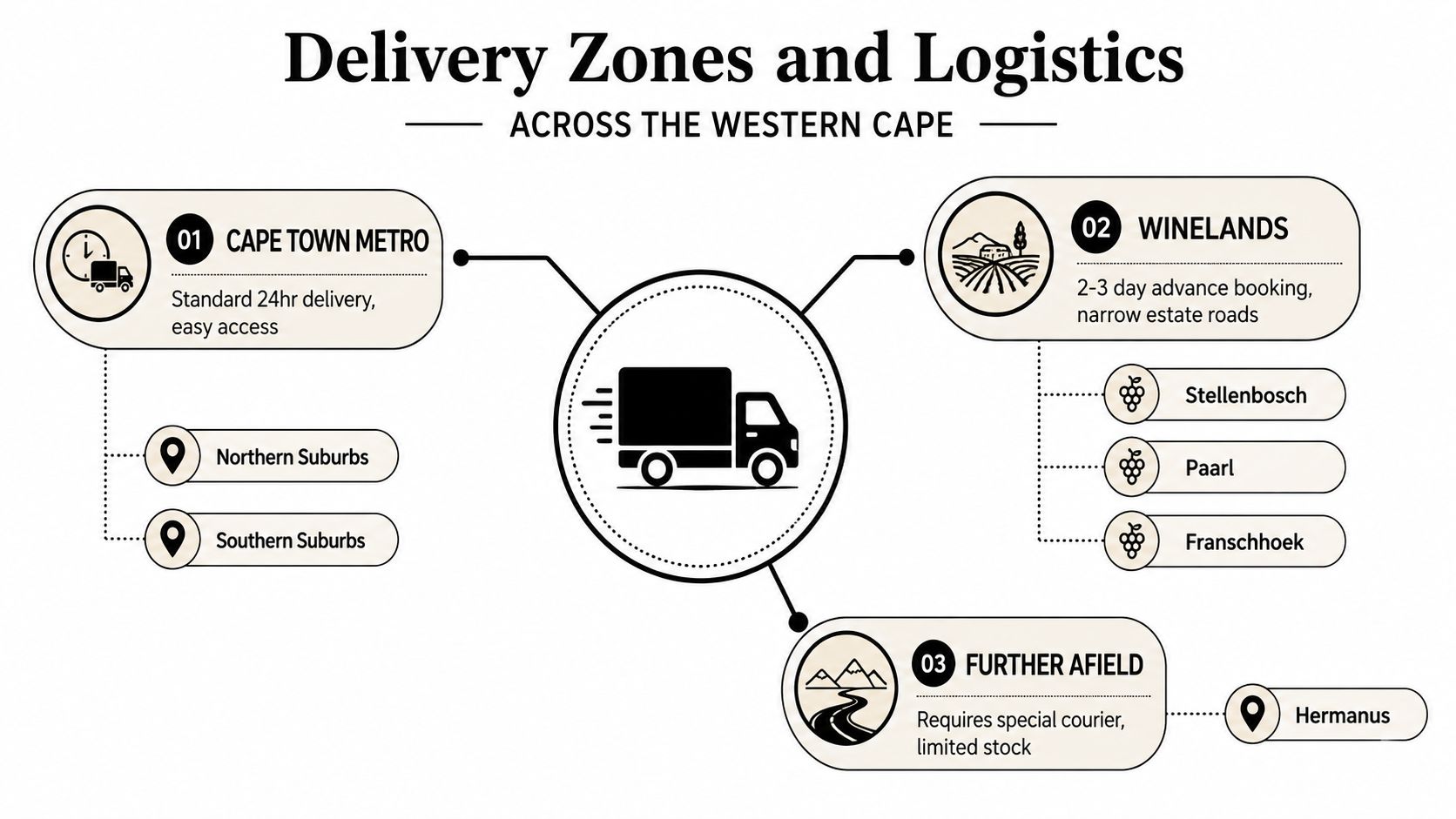
Distance is the first obvious variable. A small delivery within Cape Town's established metro routes may be straightforward, while a Winelands venue requires additional travel planning, a precise arrival window and more time for unloading. The supplier also has to consider whether the order justifies a dedicated trip or whether it needs to be combined with other deliveries.
Access changes the labour calculation
A ground-level venue with a wide loading entrance is simpler than a multi-floor function space with a restricted lift. If the team needs to carry furniture through a long corridor, use stairs or wait for a venue-controlled loading bay, the setup requirement changes. A quote should make clear whether delivery, placement and collection are separate services.
After-hours collection deserves particular attention. Weddings and evening functions often finish when ordinary venue access is no longer available. If the furniture must be collected late, the supplier may need to schedule a special crew or return at a different time. Leaving this discussion until the event week is a reliable way to create avoidable pressure.
Seasonality affects availability
November to March is the busiest period identified in ABC Hire's Cape Town guidance. During those months, the issue isn't only whether a chair is listed in a catalogue. The same item may already be allocated to another event, while transport teams and loading slots are also under pressure.
Quote-checking habit: Ask for the complete delivered and collected cost, then confirm what happens if the venue changes its access window.
Small or remote orders need the same scrutiny. A Cape Town event-hire source explains that there's no fixed minimum hire amount, but delivery may be declined when the location or transport cost isn't viable. Smaller orders may need to be collected instead, as outlined in this Cape Town hire logistics guidance.
Compare value, not only unit rates
A lower chair rate won't necessarily produce a lower final cost if delivery is difficult, setup is excluded or collection requires a separate trip. Compare suppliers using the same information:
- Inventory: Confirm the exact chair, table or lounge piece, including colour, finish and cushion.
- Transport: Check delivery, collection, distance charges and whether remote venues are included.
- Labour: Establish whether placement follows your floor plan or stops at the unloading point.
- Timing: Record the permitted delivery and collection windows, including weekend or evening requirements.
- Risk: Read the damage, cancellation and replacement terms before approving the order.
The most economical hire is usually the one that fits the venue and schedule without requiring last-minute substitutions. A clear quote protects the design and the operational budget at the same time.
Delivery Zones and Logistics Across the Western Cape
Delivery planning should begin with the venue address, not the furniture list. Cape Town metro venues may offer relatively direct access, but the northern and southern suburbs still vary in loading space, road access and venue rules. Winelands estates introduce a different set of conditions, including narrow roads, long internal drives, uneven surfaces and unloading points that may be far from the reception area.
Send the supplier a venue access brief
A useful access brief should include:
- The delivery entrance: Share the exact gate, loading bay or service entrance, not only the venue's public address.
- Vehicle restrictions: Confirm any height, turning or parking limitations before the truck is dispatched.
- Internal routes: Note stairs, ramps, narrow doors, long corridors and goods lifts.
- Venue contact: Provide the name and mobile number of the person meeting the delivery crew.
- Floor plan: Mark the final locations of tables, chairs, bars and lounge areas.
At a city conference venue, the loading bay may operate within a strict slot and the furniture may need to move through a service lift. At an estate venue near Stellenbosch, the truck may reach the property but still face a long internal route to the setup area. These details affect crew time and should be confirmed before inventory is packed.
Remote orders need a commercial decision
A small order can be perfectly reasonable for the client but inefficient for the supplier if the venue is far away or difficult to reach. The source cited earlier notes that a supplier may decline delivery when the location or cost isn't viable, and collection may be the practical alternative.
That doesn't mean a smaller function can't hire quality pieces. It means the planner should ask early whether delivery is available, whether the order can be grouped with another route and whether collection equipment or assistance is required. Same-day furniture delivery guidance can help frame the conversation, but same-day availability should never be assumed for a complex venue.
Build the setup around the access route
Place the heaviest or most awkward pieces closest to the easiest unloading path. Keep lounge groupings modular where possible, so the team can reposition them if an estate entrance or indoor route changes. For multi-level venues, confirm the lift dimensions rather than relying on a verbal assurance that “furniture will fit”.
A successful delivery is a coordinated handover between the planner, venue and supplier. The more accurately each party understands the route, the less likely the event team is to spend setup time solving problems that could have been identified in advance.
Booking Timeline for Cape Town's Peak Event Season
Once the date is locked, decide which furniture pieces need securing first. Availability is often shaped by the venue, access route and setup complexity, not only by the guest count. A small wedding at a Winelands estate may require earlier coordination than a larger function with a straightforward loading bay.
Reserve distinctive or limited-stock pieces before filling in the rest of the layout. Statement bars, specialist chairs, lounge groupings and LED furniture can determine the event's visual direction, while standard seating is usually easier to adjust later. ABC Hire's seasonal furniture planning guidance provides a useful reference for planning around Cape Town's busy event period.
Four to six months before the event
Confirm the venue, event format and broad furniture direction. Identify requirements for formal dining, lounge areas, conference seating, branded zones or outdoor equipment. Request the venue's access rules, preferred delivery times and initial floor plan before confirming large or awkward pieces.
For weddings, prioritise distinctive chairs, statement bars and lounge furniture that may be needed across several dates. For corporate functions, confirm registration counters, branding surfaces and the difference between presentation seating and networking areas.
Two to three months before the event
Match the provisional inventory to a more accurate floor plan. Check table dimensions, seating density, service routes and the position of bars, catering stations and exits. Ask the venue to confirm the loading entrance, lift access and delivery window in writing.
Use this stage to resolve practical dependencies. A lounge arrangement may affect power access, catering circulation or the location of a presentation area. Confirm whether shelter, heaters or climate control is needed before the layout becomes difficult to change.
The final weeks
Send the supplier the final guest count, venue contact, access map and setup instructions. Confirm whether delivery stops at the entrance or includes placement throughout the venue. Reconfirm collection timing, especially when the event ends late or another booking follows immediately.
One final site check should establish where the vehicle can stop, how far furniture must be carried and whether an estate entrance imposes time or equipment limits. Good scheduling leaves room for controlled adjustments, rather than allowing the first access problem to appear during setup.
Weather Contingencies and Permit Requirements
A Cape Town outdoor setup can look finished at the venue inspection and still need a rapid change on event day. Wind, moisture and a sudden temperature drop affect exposed furniture first. Soft seating may need cover, lightweight pieces may require repositioning, and guests may avoid an outdoor area without a sheltered alternative.
Outdoor furniture should be selected for local conditions as well as appearance. Review weather-resistant outdoor furniture options for materials suited to Cape Town weather. In the Winelands, uneven estate surfaces, long distances between parking and the reception area, and limited covered space can make a weather move slower than expected. The operational guidance for covered placement, quick repositioning and contingency storage is also discussed in this outdoor and exhibition furniture resource.
Design the backup before the forecast changes
Set out the backup layout while planning the main one. Identify where furniture will move, who approves the change and how the crew will protect hired stock. A marquee, indoor room, covered storage area or marked alternative arrangement can prevent a weather response from becoming a full redesign.
Select pieces that can move without dismantling the guest area. Modular lounge sections can be separated and relocated, while outdoor tables and chairs need stable placement on grass, paving and uneven estate ground. Allow extra handling time where the route includes steps, narrow paths or soft surfaces.
Weather planning is a logistics decision, not a decorative extra. The furniture plan is incomplete until the response to rain and wind is clear.
Coordinate with the venue and public authorities
Private venues set their own requirements for access, noise, setup and breakdown. Public-space events may also require permits and coordination with the relevant authority. Confirm whether those conditions limit delivery times, vehicle access, public walkways or the placement of marquees and other structures.
Give the supplier the permit conditions and the venue's approved plan. A crew working from outdated instructions could block a public route, arrive outside the permitted window or place furniture where it must be moved later.
Hybrid events need the same joined-up planning. Guest seating, production equipment, camera sightlines and sheltered technical areas may compete for the same space. Confirm these requirements before furniture is loaded, particularly when an exposed venue has limited indoor capacity.
Your Complete Event Furniture Planning Checklist
Use this checklist before approving an event furniture hire Cape Town order:
- Venue assessment: Measure the dining area, entrance, dance floor and service routes. Record doors, stairs, lifts and floor surfaces such as grass, carpet, paving or sand.
- Inventory selection: Match chairs, tables and lounge pieces to the event style. Check comfort for long functions and choose modular options where the layout may change.
- Access confirmation: Send the supplier the correct delivery entrance, loading restrictions, venue contact and internal route.
- Weather planning: For outdoor events, identify covered placement, contingency storage and the route for rapid repositioning.
- Booking timing: Reserve popular pieces four to six months ahead for the November-to-March peak period, following the seasonal guidance cited above.
- Quote review: Confirm delivery, collection, setup, after-hours work, cancellation terms and responsibility for damage.
- Event-day control: Give the setup team a labelled floor plan and appoint one person to approve changes on site.
- Collection readiness: Group hired items where possible, check the inventory and record any new damage before handover.
The strongest plan connects style, access, timing and weather in one document. That's what prevents a beautiful furniture selection from becoming a difficult delivery.
ABC Hire supplies event furniture and supporting equipment for weddings, corporate functions, private celebrations and activations across Cape Town and nearby Winelands areas. Review the available tables, chairs, lounge pieces, LED furniture and climate-control options, then visit ABC Hire to discuss a practical delivery and setup plan for your venue.