
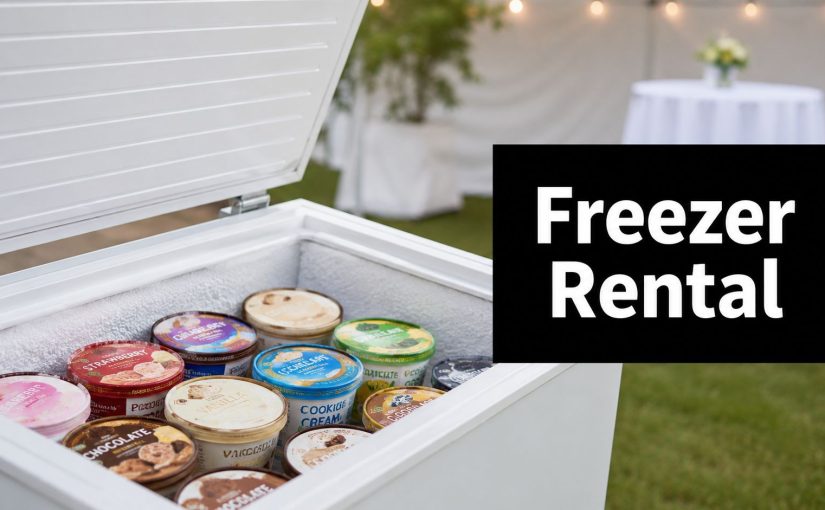
You've booked the venue, chosen a great caterer, and found an ice cream supplier that suits the mood of the event. Then one practical question starts to matter more than anticipated. What freezer do you need to keep that ice cream perfect from delivery to final service?
At weddings and corporate functions around Cape Town, the problem usually isn't the dessert itself. It's the holding. Ice cream that leaves the supplier in excellent condition can still arrive at service either too soft, too hard, or slightly damaged in texture because the freezer choice, placement, loading, or power setup was wrong.
That's why choosing the right freezer for ice cream matters. It protects texture, flavour, presentation, and service speed. On a wine farm in Paarl, a beachfront setup near Clifton, or a formal dinner in Stellenbosch, the right equipment makes dessert feel polished. The wrong equipment turns it into a recovery exercise.
Serving Flawless Ice Cream at Your Event
By 4 pm on a Cape Town wedding day, the pressure usually shows up in the dessert service first. A freezer has been wheeled across gravel at a wine farm, the staff have opened it too often during setup, and the afternoon heat has started working on every tub before the first scoop is served.
That is why flawless ice cream service starts long before guests reach the dessert station. It depends on temperature control, transport timing, power stability, and where the freezer sits once it arrives on site. Get those practical details right, and the ice cream holds its texture and serves cleanly. Get them wrong, and you end up with soft edges, icy patches, slow scooping, and product waste.
Cape Town and the Winelands add a few complications that generic advice often misses. Beach venues can mean wind, salt air, and longer cable runs to a reliable power point. Wine farms often have beautiful service areas, but not always the easiest vehicle access or the fastest setup path from unloading point to kitchen. On hotter summer days, even a short delay with the lid open can affect the first round of service.
Ice cream also needs different handling from other frozen stock. A unit that is acceptable for bagged ice or frozen snacks may still perform poorly for dessert service because ice cream reacts quickly to temperature fluctuation. For smaller functions or back of house reserve stock, a small chest freezer for event use often gives better holding stability than clients expect, provided it is pre-chilled, packed correctly, and opened with discipline during service.
Good ice cream service starts hours earlier, with the freezer fully cold, correctly loaded, and placed where staff can work quickly without exposing stock to heat.
The best results come from treating freezer planning as part of the event operations plan, not a last-minute equipment add-on. That approach keeps the product consistent from delivery to the final serving, which is what guests remember.
Choosing Your Ice Cream Freezer Type
The right unit depends on how you want to serve, how visible the dessert station will be, and how much stock you need to hold at once.
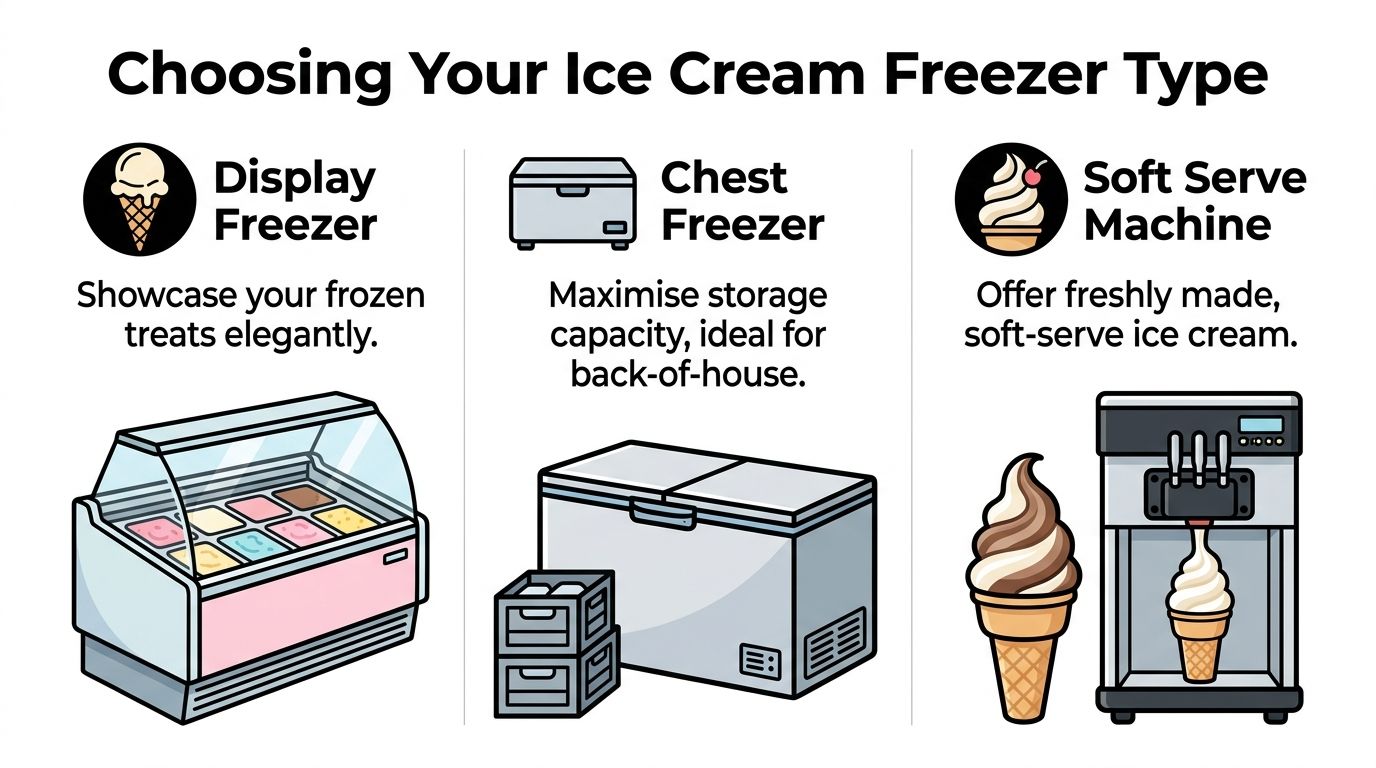
Chest freezer for back of house reliability
A chest freezer is the workhorse. It's usually the best option when the ice cream is being plated by catering staff behind the scenes or when you need reserve stock close to service.
It isn't glamorous, but it's dependable. The lid opens from the top, cold air stays inside better than with upright formats, and it handles busy service windows well if staff open it briefly and keep the contents organised.
This is also where size matters. In South Africa, 301 to 600 litre units accounted for 42.38% of the 2025 market value, showing a clear preference for medium-to-large freezers that suit practical event needs, according to Mordor Intelligence's commercial ice cream freezers market analysis. That lines up with what works on the ground for weddings, brand activations, and private functions. If you need a useful reference point, this guide to a small chest freezer helps frame where compact units fit and where they don't.
Display freezer for front of house presentation
A display freezer or dipping cabinet is for events where the dessert station should look like part of the experience. Guests see flavours, colours, and presentation immediately. That works well for garden weddings, premium launches, and corporate hospitality where the dessert station needs visual appeal.
The trade-off is operational. Display units need thoughtful placement, cleaner service discipline, and stronger supervision during peak periods. They're excellent when presentation matters. They're less ideal when the venue is cramped or the service team is stretched.
Soft serve machine for interaction
A soft serve machine is different from both. It isn't a storage freezer first. It's an interactive dessert format. Guests enjoy the novelty, and the queue often becomes part of the atmosphere.
That said, soft serve only works when the event is designed around it. It's not the best solution if your brief is artisan scoops, plated desserts, or multiple premium flavours in tubs. It also needs a team that can manage the machine properly during service.
A simple way to choose
Think of the options like this:
| Event need | Best fit |
|---|---|
| Hidden stock, reliable holding, practical service | Chest freezer |
| Guest-facing dessert station | Display freezer |
| Interactive novelty and live dispensing | Soft serve machine |
Selection rule: Choose the unit that matches the service style first. Capacity and appearance come after that.
Key Freezer Specifications for Perfect Ice Cream
Type matters, but specification matters more. A freezer can look suitable and still perform poorly for ice cream if the holding temperature, cooling method, or power requirement isn't right.
Temperature is the first filter
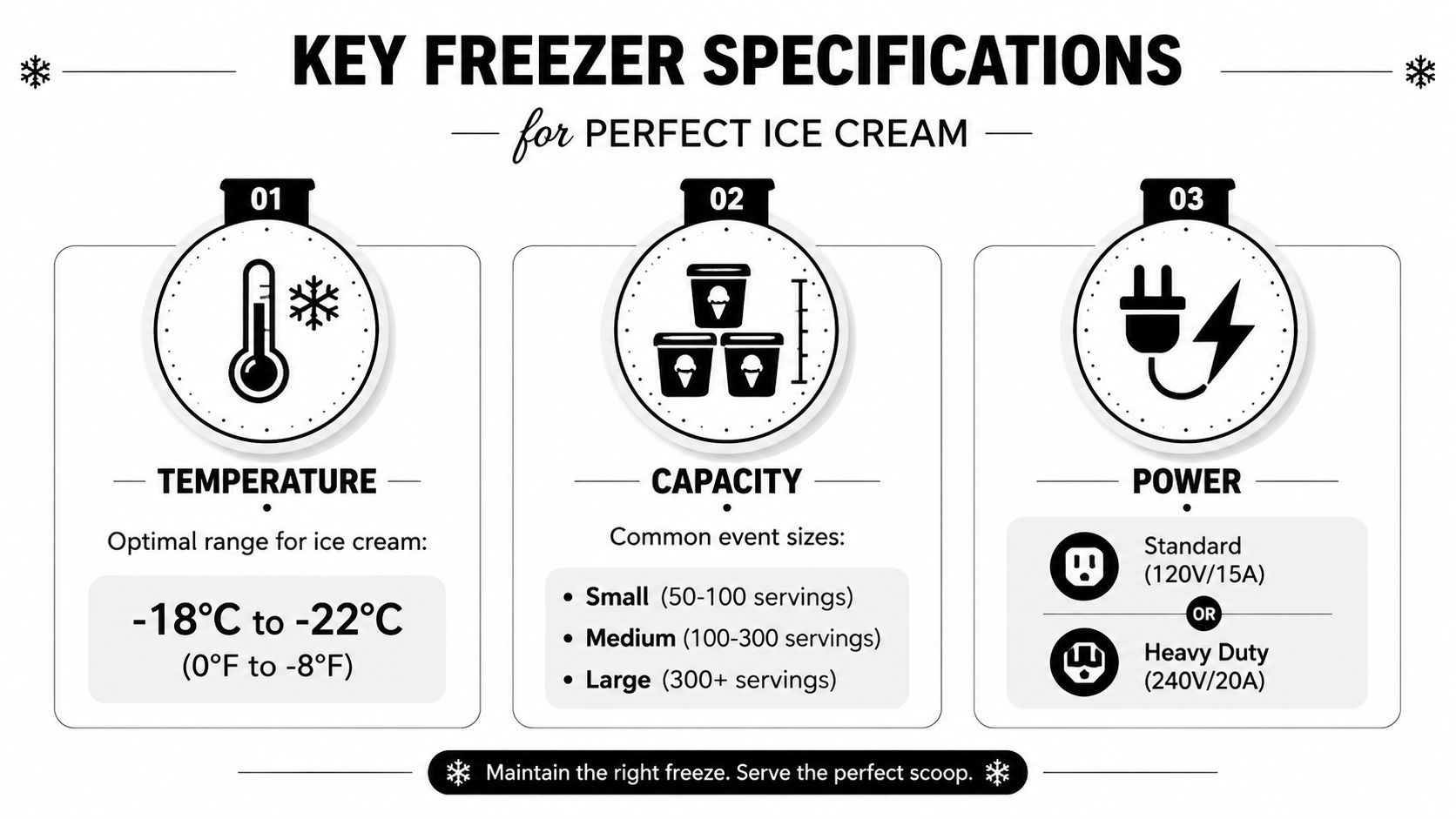
For proper preservation, ice cream needs a static air temperature of –18°C to –25°C, and that stability matters in South African conditions where ambient temperatures can reach +35°C, as outlined in the ISO 22043 summary from ANSI Blog. This is why a freezer for ice cream can't be judged by “cold enough” alone.
Too warm, and the product softens, refreezes unevenly, and loses its smooth finish. Too cold, and service becomes difficult because the scoop fights the product instead of cutting through it cleanly. The best event setups aim for holding conditions that preserve texture while still allowing efficient service.
ISO 22043 also distinguishes horizontal closed ice-cream freezers that use static air cooling from supermarket-style dynamic air systems. That distinction matters because the cooling pattern affects how well pre-packed ice cream keeps its shape and quality during storage and display.
Capacity isn't just about volume
Most clients start by asking how many litres they need. The better question is how the stock will move during the event.
If you choose a freezer that's too small, staff stack tubs too tightly and service slows down. If you choose one that's too large for the job, you create transport and placement headaches for no benefit. A sensible event freezer should give staff room to organise flavours, reserve stock, and open the lid without disrupting the whole contents.
A practical sizing discussion should include:
- Guest pattern: Are all guests likely to collect dessert in one rush, or will service be staggered?
- Menu format: Scooped cones, plated desserts, sandwich-style portions, and self-serve stations all place different pressure on the freezer.
- Stock rotation: Reserve tubs should be reachable without leaving the lid open for too long.
Power planning saves events
Power is where many outdoor functions come unstuck. Before the freezer arrives, confirm the supply, plug point location, extension routing, and whether other event equipment is sharing the same line.
If your venue team is also thinking through food safety generally, this guide on preventing bacterial growth in food is a useful companion resource. It's not ice-cream-specific, but it helps planners understand why temperature control discipline matters across the whole catering setup.
Ice cream quality drops quietly. Guests usually only notice at serving time, when there's no easy fix left.
Renting vs Buying a Freezer for Your Event
A wedding in Franschhoek and a brand launch in Camps Bay rarely need the same freezer setup. One venue may have a stable prep area and easy truck access. The other may involve stairs, soft ground, salt air, or a long cable run from the nearest plug point. That is why renting usually gives clients a better result than buying.
As noted earlier, the South Africa ice cream market, which was valued at USD 363.1 million for 2025, is projected to grow. For events, that growing demand usually makes specialist hire more practical than owning a unit that may only suit part of your calendar.
Why renting usually works better
Owned equipment only pays off if it is used often enough, stored properly, and moved by people who know how to handle refrigeration equipment. Many venues and planners underestimate that part.
In Cape Town event work, the freezer itself is only one cost. There is also collection or delivery, loading, offloading, storage between bookings, cleaning, maintenance, and the risk that the unit you own is wrong for the next job. A compact chest freezer may suit a 60-guest private lunch, then become a bottleneck at a 200-guest summer wedding. A larger unit solves capacity, but now access through cellar doors or into a beachside marquee becomes harder.
Renting lets you match the unit to the event.
It also gives you support when the cold chain is bigger than just dessert service. If the caterer needs separate chilled holding for toppings, dairy garnishes, or other perishables, it helps to plan the full refrigeration setup together with a mobile fridge for hire for event cold storage, instead of forcing one owned freezer to cover every need.
Renting versus buying at a glance
| Factor | Renting | Buying |
|---|---|---|
| Upfront commitment | Lower cost for occasional events | Large capital purchase |
| Flexibility | Choose size and format per booking | Limited to the unit you own |
| Maintenance | Usually handled by the hire company | Owner handles servicing and repairs |
| Storage | No long-term storage required | Needs secure, suitable storage space |
| Transport | Commonly arranged as part of the hire | Owner must organise vehicle and handling |
| Best fit | Weddings, launches, corporate functions, seasonal demand | Frequent in-house use with trained staff and reliable logistics |
When buying can make sense
Buying suits a narrow group. A venue with regular in-house dessert service, dedicated storage, steady staff, and a consistent event format can make ownership work. The same applies to a caterer running repeated activations with the same menu and the same operational footprint.
For everyone else, hiring is the safer commercial decision. It reduces mismatch, avoids dead storage, and makes it easier to handle Cape Town and Winelands venue variation from one booking to the next.
Commercial reality: Renting lets you choose the right freezer for the job, the weather, the site access, and the power setup, instead of forcing every event to fit one machine.
The Ultimate Event Freezer Logistics Checklist
A freezer can be technically perfect and still fail on the day because the logistics were handled casually. The venue path is too narrow. The plug is too far away. The freezer arrives late and gets loaded before it's fully cold. Those are the mistakes that cause service issues.
Power and placement basics
Commercial chest freezers suited to South African events are often rated climate class 7, need a 220–240V connection, and a typical 400L unit consumes around 256W, based on the equipment details summarised in this industrial ice cream freezer review. Those details matter when you're planning power on a lawn, in a temporary marquee, or at an older venue with limited infrastructure.
If your event setup includes broader cold-chain needs, a guide to a mobile fridge for hire is useful for thinking through how refrigeration zones should be separated across food and beverage service.
A working checklist for event day
Use this before sign-off with the venue and supplier:
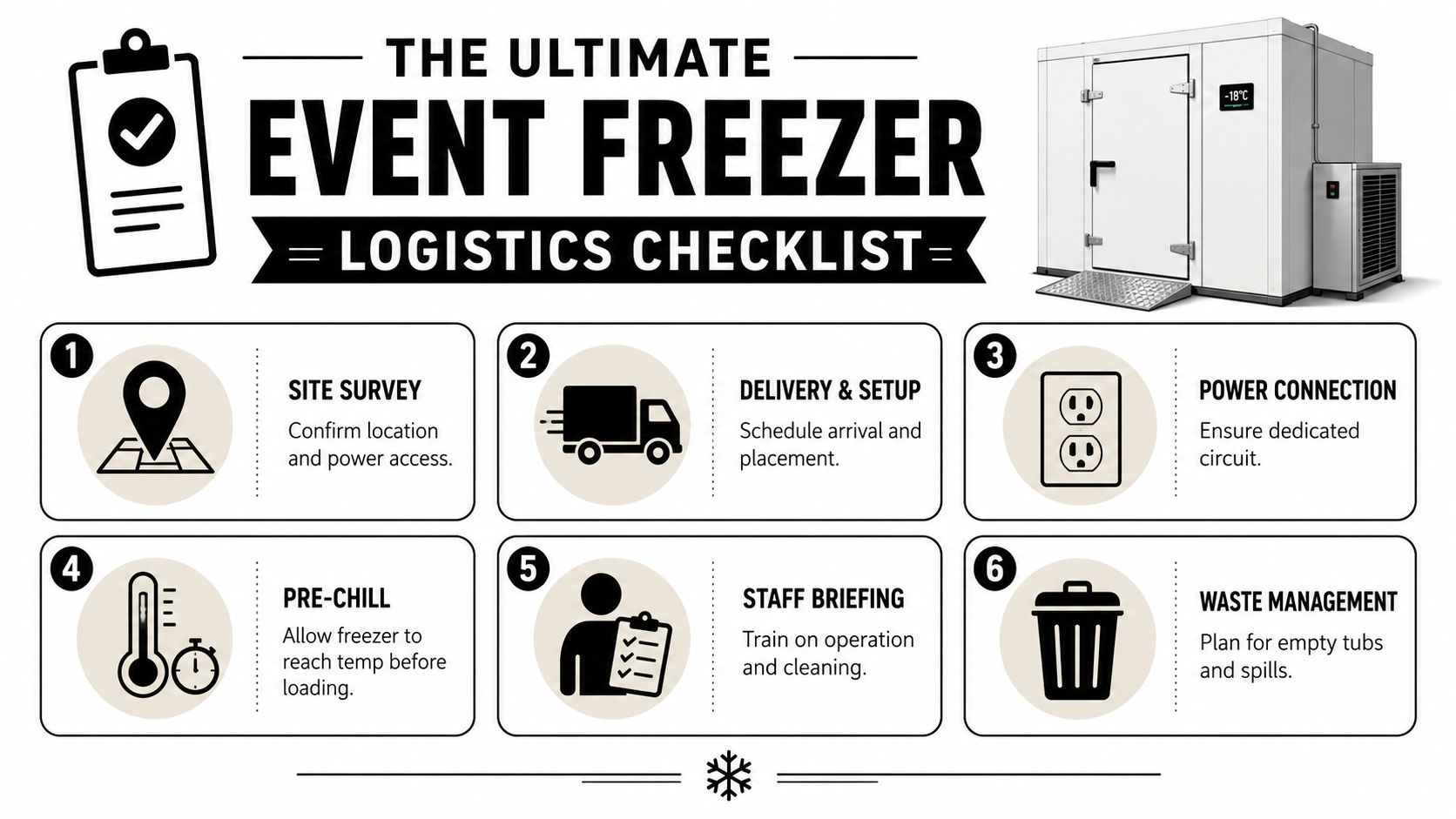
- Access route: Confirm gate width, stairs, lifts, gravel, grass, and the exact path from vehicle to setup point.
- Final position: Keep the freezer out of direct sun, away from dancefloor traffic, and close enough to service staff to avoid constant walking.
- Dedicated power: Don't share the freezer supply with lighting, sound, coffee machines, or catering appliances if you can avoid it.
- Arrival timing: Get the unit in early enough to settle and pull down to temperature before stock goes in.
- Service reach: Make sure staff can open the lid fully and scoop without bumping into guests, décor, or furniture.
The details people miss
A freezer should never be treated as just another drop item. Someone needs to own the refrigeration plan on the day. That person should know where the plug is, who has authority to move the unit, and what to do if the venue coordinator wants the layout changed at the last minute.
A few final checks help:
- Label flavours clearly so staff don't keep lids open while searching.
- Keep reserve stock nearby but not piled on top of active tubs.
- Plan waste flow for empty containers, napkins, spills, and used serving items.
Maintaining Quality and Hygiene on Event Day
Most ice cream failures happen after setup, not before it. The freezer is cold, the tubs are loaded, and everyone assumes the hard part is done. It isn't.
The fastest way to ruin event ice cream is to overload the freezer. In event settings, 68% of soft ice cream incidents are linked to freezer overload when capacity goes beyond 75%, according to the claim cited in this Instagram reel reference. That makes practical sense. When tubs are packed too tightly, airflow suffers, recovery slows after each lid opening, and the product softens during service.
Non-negotiable handling rules
These are the habits that protect quality:
- Stop at sensible loading levels: Leave enough room for air movement and staff access.
- Keep the lid closed: Open, retrieve, close. Browsing with the lid open is what weakens holding.
- Organise before guests arrive: Put best-selling flavours where staff can reach them first.
- Use clean service tools: Scoops, napkins, and portioning tools must be managed properly through the whole service.
- Separate allergen-sensitive flavours: Don't let one scoop drift between dairy, vegan, nut, and standard options without proper cleaning.
Hygiene isn't separate from quality
Good hygiene supports texture because it supports disciplined service. Staff who have a proper service plan work faster, keep the unit shut more often, and make fewer messy decisions under pressure.
If your dessert station forms part of a wider catering setup, this overview of catering equipment for hire is useful for thinking about the whole service environment rather than treating the freezer in isolation.
Don't judge the setup by how cold the freezer felt at handover. Judge it by how the last guest's scoop looks.
The myth to avoid
One assumption causes repeated trouble. People think a fuller freezer performs better because it looks “packed cold”. For ice cream service, that's often the opposite of what you want. A well-organised freezer outperforms an overfilled one every time.
Special Considerations for Cape Town and Winelands Events
A freezer that performs perfectly in a city venue can struggle badly at a wine farm in Franschhoek or a beach event in Camps Bay. In the Western Cape, ice cream service is shaped by distance, heat, wind, uneven access routes, and power points that are often far from the serving position clients want.

I see the same pattern across Cape Town and the Winelands. The visual setup gets approved first, then the practical refrigeration questions arrive late. That is where service starts to slip. A terrace with a view may be a long way from stable power. A lawn setup may look simple until the freezer has to cross gravel, steps, or soft ground. At private homes, the issue is often less about access and more about finding a shaded service point that staff can work from without guests crowding the unit.
Venue type changes the plan immediately. Indoor hotel functions usually give you controlled temperatures and easier cable runs. Wine estates often need more thought around delivery timing, loading paths, and where the freezer can sit without spoiling the guest-facing setup. Beach and coastal venues add another layer. Salt air, direct sun, and wind all push the unit harder, and sand around service equipment creates avoidable mess if the station is not protected properly.
Product choice matters more here too. Small-batch and artisan ice cream can be less forgiving during transport and service than a standard retail tub. Vegan ranges are another one to treat carefully. I always advise clients to confirm the supplier's recommended holding range before the event, especially for custom flavours or premium products made with different fat and sugar balances. One freezer does not suit every product.
A few local decisions prevent most problems:
- Confirm the exact power point before delivery day: "Nearby" can still mean a long cable run across a courtyard or through a service passage.
- Check the delivery route in advance: Cellars, garden venues, and older properties often have tight turns, steps, or uneven surfaces.
- Keep the freezer out of direct afternoon sun: Stellenbosch and Paarl heat can soften service faster than clients expect.
- Allow for transport timing from supplier to venue: Long summer drives and late setup windows shorten your margin for error.
- Brief venue staff and coordinators clearly: The freezer should stay plugged in, level, and in its assigned spot once loaded.
The best Cape Town event setups are rarely the fanciest. They are the ones planned around the venue's real conditions, with the freezer positioned for power, shade, staff access, and quick service.
If you need a freezer setup that fits your venue, power conditions, and dessert service style, ABC Hire can help you plan the practical side properly. From Cape Town functions to Stellenbosch, Franschhoek, and Paarl events, the right rental equipment makes ice cream service cleaner, calmer, and far more reliable on the day.