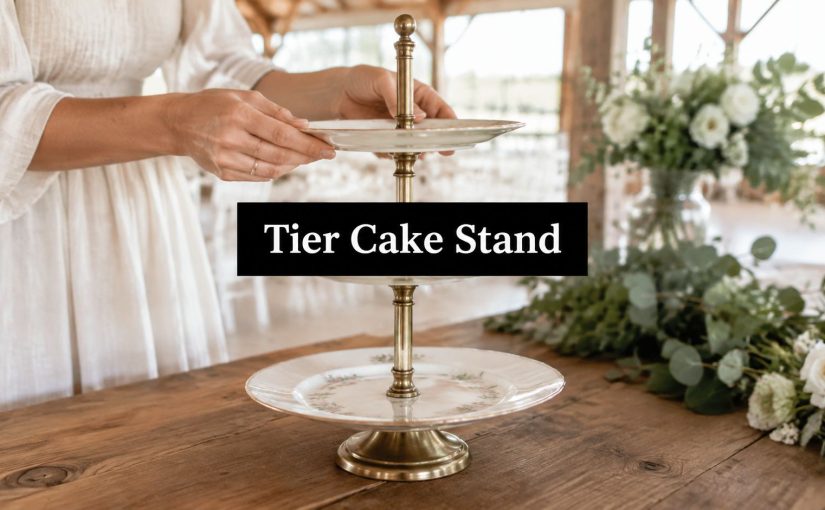
Tier Cake Stand Guide for Weddings and Events

The florist is still unloading eucalyptus when the baker arrives with a finished wedding cake, and the cake table is already causing trouble. It sits in a narrow corner of a Winelands venue, one leg is close to the edge of the dance-floor route, and the photographer wants a clean view from the entrance. The stand may look like a decorative detail, but its height, footprint, stability and handling will affect the entire display.

A tier cake stand is a structural part of an event setup. It can create height on a dessert table, separate the cake from surrounding décor and give guests a clear focal point. It can also block sightlines, invite accidental knocks or become difficult to return if the hire conditions weren't checked before collection. This guide focuses on the decisions that matter at Cape Town weddings, corporate launches, matric dances, birthdays and formal functions across Stellenbosch, Franschhoek, Paarl and the city.

What a Tier Cake Stand Does at Your Event

At a vineyard wedding, the cake table is often dressed before the florist has finished the ceremony arrangements. The planner places it near a wall or window, the baker checks the cake board, and the coordinator must choose between serving access and photographic height. That choice affects how the table works once guests, staff and suppliers share the room.

A tall stand gives the cake a clear focal point from across the venue, but it can obstruct a side-on photograph or make service awkward. A lower arrangement is easier for caterers to reach, yet dessert platters, menus and floral vessels can hide it. In tight Cape Town and Winelands venues, the right height depends on the table width, surrounding décor and the route staff will use.

At a Long Street gallery launch, the same stand can act as a clean riser for branded cupcakes or small desserts. In a school hall, it may share a trestle table with drinks, plates and a cake knife. South African suppliers stock 2-tier, 3-tier, glass, ceramic, dome and display stands, with options ranging from R199.99 for a 3-tier glass cake stand at MRP Home to R999.00 for single-tier display stands. The range covers everyday entertaining as well as formal styling, as shown in the local cake stand and dome catalogue.

Treat the stand as part of the floor plan

Confirm the display position before the cake arrives. Check it against:

  • Guest movement: Keep the stand away from routes used by waiters carrying trays or hot drinks.
  • Photographs: Leave the photographer room to work without leaning across the cake.
  • Service access: Ensure a caterer can remove slices, plates or decorations without lifting the full stand.
  • Visual height: Check that the tiers sit below nearby signage, floral arrangements and venue lighting.

For a lower-profile display, review this wood display stand guide. A local hire format with a compact 30 cm, 20 cm and 15 cm tier structure reaching about 50 cm high is listed in ABC Hire's tiered display hire information. It can look elegant on a broad reception table, but feel crowded on a narrow one.

Confirm the hire terms before collection as well. Check the deposit, packing requirements, cleaning expectations and return condition, especially when the stand will travel back from Franschhoek or Paarl. Photographing the item at pickup can also help record its condition.

Practical rule: Choose the stand after checking the table, traffic route, cake weight and return conditions.

The stand has to support service as well as styling. If a waiter can catch a sleeve on its base, or guests must reach around the cake for dessert plates, reposition the display before doors open.

Choosing the Right Format and Material

Start with the cake and venue, then select the format. Cape Town hire inventories commonly include round and square plates, scalloped porcelain, wrought iron, powder-coated steel, timber slabs with metal pillars, and gold or rose-gold pillar stands with glass tiers. Each material creates a different visual language and carries different transport and cleaning requirements.

Glass tiers are effective when you want the cake to appear light and suspended, especially in golden-hour photographs. They also need careful wrapping and firm separation during transport, particularly on a return journey from Paarl or Franschhoek. Timber feels natural at a rustic farm venue, while a raw pine slab may look out of place in a clean-lined city gallery.

Match the format to the event

  • Round plates: A safe choice for traditional wedding cakes and symmetrical floral styling.
  • Square plates: Useful when the cake has sharp-edged tiers or a geometric corporate identity.
  • Porcelain: Suits classic, romantic and garden-party themes, but needs careful handling.
  • Wrought iron: Adds visual weight and works well with industrial, heritage or darker décor.
  • Powder-coated steel: Offers a more controlled finish and can suit contemporary venues.
  • Wood and brass: A natural fit for farm weddings, grazing tables and rustic dessert displays.
  • Glass with gold or rose-gold pillars: Creates a polished focal point for weddings, launches and milestone celebrations.

Tier count should follow the composition, not a desire to use every available level. A two-tier stand can be enough for a cake and a small floral accent. A three-tier stand is often the most adaptable format for wedding and corporate tables because it gives height without demanding the footprint of a larger display. Four- and five-tier arrangements need a deliberate venue plan, since extra height can dominate a compact room.

Spacing also matters. A tall cake on a shallow gap may visually collide with the plate above it, while generous gaps can make a small cake appear lost. Ask the hire supplier for the plate diameters, tier spacing and assembled height, rather than relying on a product photograph.

Format Material Best for Hire band per tier
Round tiered stand Glass, metal or porcelain Traditional cakes and floral displays Confirm with the local supplier
Square tiered stand Metal, glass or timber Geometric cakes and modern launches Confirm with the local supplier
Pillar stand Gold, rose-gold or powder-coated steel Formal weddings and branded dessert tables Confirm with the local supplier
Timber slab stand Raw pine, timber and brass Rustic farm and Winelands styling Confirm with the local supplier
Covered display stand Glass dome and plate Protected cake presentation Confirm with the local supplier

The table avoids invented pricing for hire because suppliers quote according to the specific item, quantity and event arrangement. Local retail listings demonstrate a broad purchase market, but a hire quote should be judged against transport, cleaning, collection and breakage responsibility, not against the shelf price alone.

For a softer rustic display, compare the proportions and finish shown in ABC Hire's wooden cupcake stand guide. A wooden stand can be attractive, but don't place it beside glossy acrylic décor unless the contrast is intentional. The same applies to metallic finishes. Gold can warm a reception table, while rose-gold may compete with copper signage or pink florals.

Weight Limits and Food Safety Basics

A tier cake stand doesn't have one universal safe load. Capacity depends on the base footprint, pillar thickness, plate material, locking mechanism and how evenly the cake sits on the plate. A dense fruit cake creates a different load from a light sponge, and a narrow stand becomes less forgiving when the top tier carries heavy decoration.

The most common failures at busy events are practical rather than dramatic. A top-heavy three-tier stand can tip on an uneven lawn. A glass plate can crack under a dense cake if it has a damaged edge or receives a sharp point load. A polished banquet floor can allow the base to slide when a table is nudged.

A checklist for tier cake stands highlighting the importance of base footprint, pillar thickness, and plate material.

Make the stability decision before loading the cake

Use a simple inspection before the decorator places the cake:

  • Base footprint: A broad, level base is more stable than a narrow one, especially on temporary flooring.
  • Pillar thickness: A substantial centre support resists sway better than a delicate decorative post.
  • Plate material: Metal generally tolerates handling better than fragile acrylic or thin plastic.
  • Connection points: Check that collars, screws and couplings are fully engaged.
  • Surface contact: Place the stand on a level table, with a discreet non-slip layer if the supplier permits it.

The heaviest cake belongs on the bottom plate. That keeps the centre of gravity low and reduces the chance of a top-heavy display moving when someone brushes the table. The stand supplier provides the display structure, but the cake decorator remains responsible for internal dowel rods, boards and the construction of stacked cake tiers.

South African hygiene rules also affect the display. Food displayed or stored at food premises must not be in direct contact with a floor or ceiling, so the finished cake needs to remain raised and separated from non-food-contact surfaces under the national food-premises hygiene regulations. In practice, transport the cake from its base, use a cleanable platform and keep the display in a cool, shaded area where possible.

Don't place the stand beside open flames, heat lamps or another heat source. Outdoor displays should be protected from dust, insects and weather, while covered presentation may be appropriate when the venue layout exposes the cake to passing guests. In Cape Town, food businesses also need to meet municipal hygiene requirements and hold a Certificate of Acceptability, which makes cleanable surfaces, protected storage and controlled handling part of the wider service environment, as described in the government food hygiene notice.

For a covered presentation, a glass cake dome can protect the cake while keeping it visible, provided the dome and stand are clean, stable and suitable for the cake's dimensions.

Setting Up Your Tier Cake Stand on Site

Hire stands usually arrive with separate plates, pillars, collars or fittings packed in a crate, box or protective wrapping. Before signing a delivery note, open the container and compare the contents with the order. Look for chipped glass, bent metal, loose fittings, scratched finishes and missing non-slip components, then photograph any issue and report it immediately to the driver or hire desk.
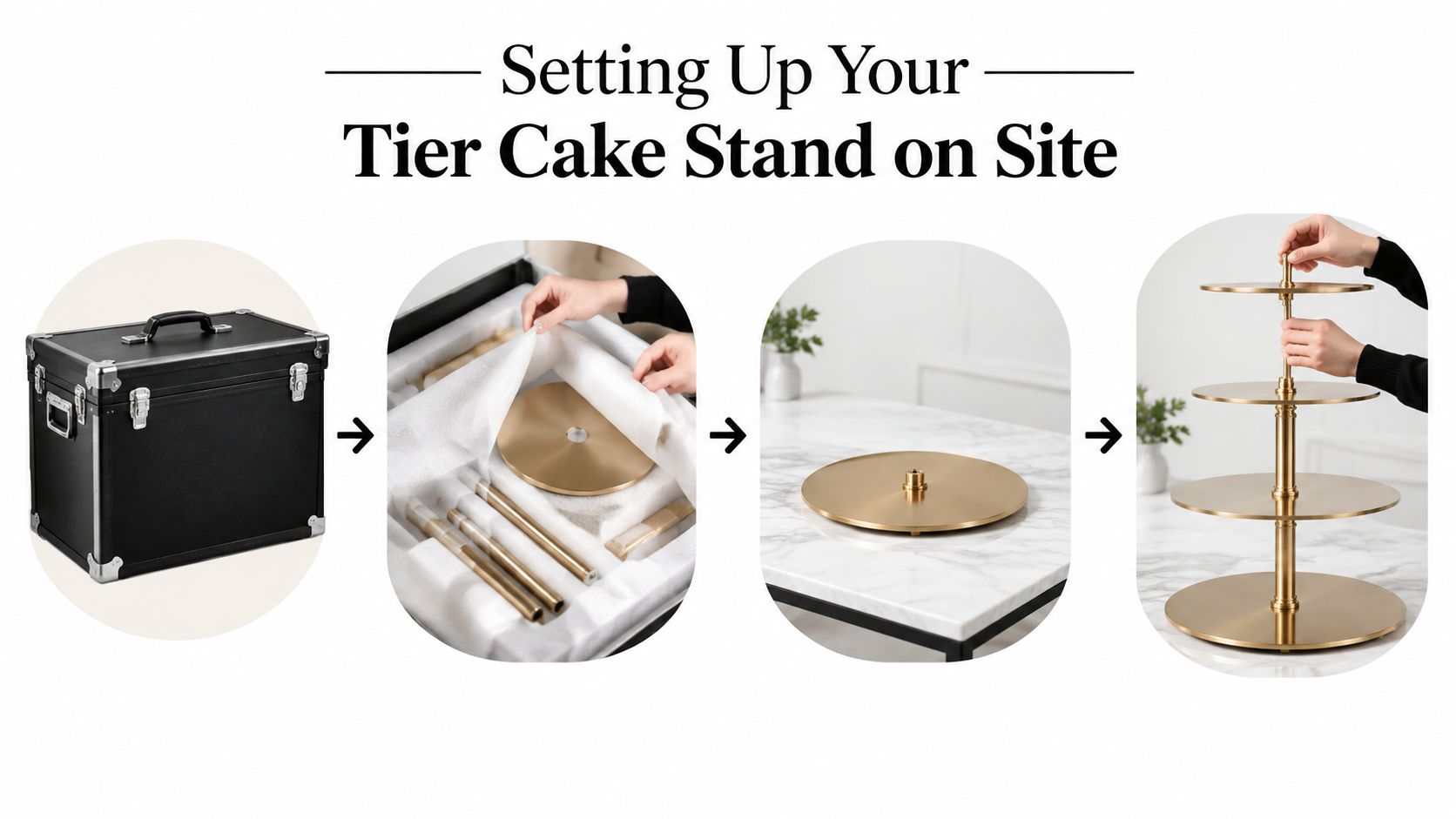
A four-step infographic showing how to unpack and assemble a gold-colored tiered cake stand on-site.

Don't assemble the stand on the most attractive part of the venue by default. A stable table in a serviceable position is more important than placing the cake directly beside the dance floor or in front of a window. Stable courtyards are usually easier than uneven thatched decks, while marquee floors may need extra checking because panels can sit slightly proud of one another.

Build on a level surface

A small spirit level is worth carrying in the event kit. Check the table in both directions, then use suitable foam shims beneath the table or approved non-slip material beneath the stand if the surface isn't even. Never force a tier into alignment by bending a pillar or tightening a fitting beyond its intended movement.

Set the centre post or lower support onto the base plate first. Fit the next plate, engage the locking collar or coupling fully, and check that the tier is horizontal before adding the next support. The assembled stand should feel firm when touched lightly, not spring sideways or rotate around the base.

Place the heaviest cake on the bottom tier and work upwards with lighter cakes, cupcakes or décor. The cake decorator must confirm that each tier has the correct internal support, cake board and dowels. A hire company can supply the stand, but it shouldn't be asked to engineer the cake itself.

What to do when something feels wrong

Stop loading the display if the stand sways, a plate tilts or a coupling arrives loose. Remove the cake or decorations, inspect the connection and contact the supplier rather than improvising with tape, glue or unrelated hardware. If the floor is the cause, relocate the table or correct the surface before continuing.

Leave enough room around the stand for a photographer and caterer to work without leaning on the table. Once the cake is in place, take a final photograph of the complete setup and note where the fittings and protective materials have been stored. That makes collection easier and helps prevent missing-part disputes.

Hiring vs Buying for One-Off Events

For a single wedding, hiring usually creates less work than buying. The purchase price is only one part of ownership. You also need a safe storage area, protective packaging, transport, cleaning supplies and a plan for what happens when the stand no longer suits the next event's colour palette or cake design.

A small Cape Town flat rarely has spare cupboard space for bulky plates and tall pillars. A custom finish may also be difficult to resell if it carries a couple's names, date or highly specific styling. Hire removes much of that storage burden and lets the planner choose a timber, glass, porcelain or metallic format for the particular venue.

Compare the responsibility, not just the rate

Cost factor Hiring Buying
Initial outlay A supplier quote for the selected stand and event period Full purchase cost paid upfront
Storage Returned after the agreed hire period Ongoing storage and protective packaging
Transport May be arranged by the supplier or added to the booking Managed by the owner
Damage exposure Deposit and return conditions may apply Owner carries repair or replacement risk
Styling flexibility Select a different finish for each event Limited to the owned item
Resale Not relevant to the client Resale may be uncertain, especially for customised pieces

Local rental listings show that suppliers may require deposits and return windows of 5 to 7 days, and some require the stand to return to the shop after the event in perfect condition, as set out in the local wedding cake hire information. Confirm who cleans the stand, who transports it, when the return clock starts and what counts as damage before paying.

Read the return clause carefully: Candle wax, chipped glass, missing collars and late returns can matter more than the advertised display price.

For one wedding, hire generally wins because the stand arrives as a managed event item and leaves with the supplier. For a brand activation that uses the same display across a weekend, hire can also reduce the need to pack and store a specialised piece between appearances. The organiser can focus on moving the product, dessert or branded message rather than protecting an asset after every service.

A planner who runs regular events may reasonably buy reusable polycarbonate or metal stands. That decision makes sense only when the same formats will be used repeatedly and the business has suitable storage and cleaning procedures. If you're also organising portrait outfits, a practical resource such as this client wardrobe for portraits illustrates the same planning principle. Reusable resources earn their place when they support many bookings, not when they create another item to manage for one occasion.

Styling Your Stand for Any Theme

A good tier cake stand should adapt to the event rather than dictate it. The same structure can feel botanical at a Winelands wedding, precise at a product launch, playful at a matric dance or restrained at an anniversary gathering.

Winelands weddings

Use trailing olive, eucalyptus or fynbos around the lower display, with low glassware so the cake remains visible. Warm Edison lighting can add depth after sunset, but keep cables away from the table legs and don't let hot bulbs sit close to buttercream.

Wire greenery into a controlled arrangement instead of laying loose stems directly across the cake. That keeps foliage from brushing the icing and makes removal cleaner. A timber stand suits an estate setting, while glass and metallic pillars create a lighter look against stone, linen and pale florals. For couples comparing venue styles and packages, the estate wedding packages from Kunde Winery provide useful context for how a dessert display needs to sit within a wider estate celebration.

Corporate launches

Treat the stand as a branded riser. Place the product or dessert at the most visible level, keep the colour palette controlled and use a small removable vinyl decal on the base plate rather than covering every surface with logos. The stand should support the campaign, not compete with the product.

Check the decal's removal method before applying it. Adhesive residue can affect cleaning and may create a return problem on hired metal or glass.

Matric dances and birthdays

Bolder colour, confetti and acrylic risers can work well for a school formal or milestone birthday. Keep loose confetti away from icing and avoid anything that can fall between stacked plates or interfere with a locking collar.

A bright cake may need a quieter stand. Conversely, a neutral cake can benefit from coloured plates, ribbons or carefully placed edible accents. Use removable styling pieces so the hire item returns in the same condition.

Memorials and anniversaries

A candlelit display calls for restraint. Choose a simple finish, low floral material and a clear cake board, then position candles well away from timber, fabric and the cake itself. Wax is difficult to remove from porous timber and can leave a hire item unsuitable for the next booking.

Powder-coated stands can also be marked by paint overspray, glitter adhesive and strong tapes. Protect the base with a removable liner approved by the supplier, keep wet décor off the plates and photograph the clean stand before packing it away.


ABC Hire supplies tiered cake stands and related event hire items for Cape Town, Stellenbosch, Franschhoek and Paarl, with options suited to weddings, corporate functions, school events and private celebrations. Visit ABC Hire with your venue layout, cake dimensions and event date so the team can help you select a stable format and clarify collection, delivery and return requirements before booking.

A Complete Guide to Glass Cake Dome Rentals in Cape Town

A glass cake dome is so much more than a simple cover. Think of it as a frame for your masterpiece, a touch of elegance that protects your beautiful creation while putting it on full display. It’s the final detail that turns a simple dessert table into a memorable highlight for any wedding or corporate event here in the Cape.

Why a Glass Cake Dome Is Your Event's Secret Weapon

Let’s be honest, a glass cake dome is the final, perfecting touch for your event's dessert table. It’s not just a practical piece of equipment; it’s a statement. It communicates care, quality, and a touch of sophistication that guests instantly notice.

Especially here in the Western Cape, where we're blessed with the most incredible outdoor venues—from sprawling Winelands estates to stunning coastal settings—a dome becomes absolutely essential.

A glass cake dome with a berry tart sits on a table in a vineyard at sunset, with wine glasses nearby.

It’s the simple thing that protects that delicate sugar work or buttercream icing from a sudden gust of wind, the humidity, or those ever-present curious insects. This ensures your cake looks just as perfect when you serve it as it did when it first arrived, keeping it fresh and hygienic throughout your event.

But it’s not all about practicality. A glass cake dome also turns the cake into a real showstopper. It builds a sense of anticipation, drawing everyone’s eyes and creating a buzz before the big reveal. It’s a simple addition that elevates the whole experience, making it feel less like just serving a cake and more like unveiling a work of art.

The Power of Presentation

In the vibrant wedding scene across Cape Town and the Winelands, a glass cake dome is non-negotiable for anyone serious about presentation. This is especially true when you're showing off those incredible dessert cakes, which are a massive deal in South Africa. In fact, they held a 54.81% revenue share of the cake market back in 2022. That’s huge.

The dome’s crystal-clear glass lets the beauty of the cake shine through while adding that polished, professional finish. And that visual appeal is everything—after all, the cake-cutting is one of the most photographed moments of any celebration. A dome makes sure your dessert is always camera-ready. To create truly memorable occasions, especially with top-tier food services, a glass dome is an indispensable part of your toolkit.

A glass cake dome is your silent partner in event excellence. It works quietly in the background to protect, preserve, and present your dessert, ensuring the final impression is one of effortless elegance and impeccable taste.

Whether you’re planning a sunset wedding in Stellenbosch or a sleek corporate launch in the city centre, the right presentation tools really do make all the difference. The good news? Getting your hands on one is easy. Rental solutions mean you can add this touch of class to your event without having to buy one yourself.

At-a-Glance Benefits of Using a Glass Cake Dome

To put it simply, a glass cake dome is one of the easiest ways to level up your event. Here's a quick look at the main advantages it brings to the table.

Benefit Impact on Your Event Ideal For
Protection & Freshness Keeps cakes safe from dust, wind, and insects while preserving moisture. Outdoor weddings, garden parties, and long events.
Enhanced Aesthetics Creates a sophisticated, gallery-like display, making the cake a true focal point. Luxury weddings, corporate galas, and brand activations.
Increased Hygiene Provides a sanitary barrier, reassuring guests about food safety. Buffets, dessert stations, and public-facing events.
Builds Anticipation Adds a touch of drama and elegance, making the cake reveal more special. Milestone birthdays, anniversaries, and product launches.

From protecting the goods to making them look incredible, it’s a small detail that delivers a big impact.

Choosing the Right Glass Cake Dome for Your Cake

Picking the perfect glass cake dome is a bit like choosing a frame for a beautiful painting. You want something that enhances the masterpiece—your cake—without stealing the show. It’s all about creating a sense of harmony between the cake, its stand, and the entire feel of your event.

Whether you're planning a rustic wedding out in the Stellenbosch Winelands or a sleek corporate function in the city centre, the right dome will pull your whole vision together. This guide will walk you through the sizes, shapes, and styles so you can choose with confidence.

Three small cakes on decorative cake stands, each perfectly covered by a clear glass dome on a wooden surface.

Matching Dome Size to Your Dessert

First things first: size is everything. A dome that’s too snug can easily smudge your delicate icing, but one that’s too large will make the cake look lost and underwhelming. You’re looking for that Goldilocks "just right" fit.

Start by measuring your cake stand’s diameter and the total height of your cake, including any toppers. A good rule of thumb is to choose a glass dome with an internal diameter at least 2-3 cm wider than your cake stand. For height, you’ll want to leave at least 2-3 cm of clearance above the highest point of your cake. This little bit of extra space is crucial—it prevents condensation from dripping onto your creation and keeps the final look clean and elegant.

You’ll typically find these common rental sizes:

  • Small Domes (15-20 cm): Perfect for showing off a single, magnificent cupcake, a delicate tartlet, or even a small wheel of cheese.
  • Medium Domes (22-28 cm): This is your workhorse. It’s the most versatile option and is ideal for standard 8-inch to 10-inch single-tier cakes you see at birthdays and smaller gatherings.
  • Large Domes (30-35 cm): When you need to make a statement. These are designed for grand, multi-tiered wedding cakes or generous cupcake displays that are meant to be the centrepiece of your dessert table.

Aligning Style with Your Event Theme

Once you’ve nailed the size, it’s time to think about style. The design of the dome itself can dramatically influence the mood of your display.

Think about the aesthetic you’re going for. Is it a modern, minimalist vibe, or something more ornate and traditional? The shape of the glass and the design of the handle play a huge role in setting that tone.

Here are a few popular styles to get you started:

  • Minimalist Cloche: This is a simple, handle-free bell shape. Its clean lines are perfect for modern, contemporary, or Scandi-themed events where the cake is the sole hero.
  • Classic Knob Handle: The most common design you’ll find, featuring a simple glass knob on top. It’s a true classic that suits almost any occasion, from elegant weddings to casual parties, making it a staple in rental inventories.
  • Ornate Vintage Domes: These beauties might have etched glass, pedestal bases, or elaborate handles. They add a touch of romance and nostalgia, which is ideal for vintage, bohemian, or opulent wedding themes.

The local event scene has definitely embraced high-quality presentation. Since the early 2000s, there's been a 40% rise in demand for premium display tools in Cape Town. This is largely driven by social media—where over 70% of weddings now feature share-worthy cake displays. As a result, rental companies like ABC Hire, which serves areas from Franschhoek to Paarl, make sure their inventory includes matching domes for popular 9-12 inch cake stands to meet this very demand. You can get more insights on the South African cake market from Grand View Research.

Pro Tip: Always consider the cake stand when choosing your dome. A sleek, modern dome might look odd on an antique, detailed stand. You want a cohesive pairing where both pieces work together to elevate the final look.

By carefully considering both size and style, you can find a glass cake dome that not only protects your cake but becomes a seamless part of your event’s décor, ensuring a flawless and impressive presentation every time.

Creative Ways to Style Your Cake Dome Display

A glass cake dome is so much more than a protective cover; it's a blank canvas for your event's creative vision. When you move beyond its basic function, you unlock a world of styling possibilities that can turn your dessert table from simply beautiful to truly unforgettable.

The secret is to think of the dome not as an afterthought, but as a central part of your decor story. With a little imagination, this simple piece of glass can amplify your event's theme, create magical moments, and leave a lasting impression on your guests.

White cake with fairy lights under a clear glass dome on a rustic wooden table.

Elevating Your Theme with Creative Elements

The real magic happens when you start weaving decorative elements directly into the display. Think about how you can use lighting, florals, and textures to tell a story. This approach turns the cake from a simple dessert into a dynamic centrepiece.

For a wedding reception that stretches into the evening, try intertwining delicate, battery-operated fairy lights around the base or even inside a larger dome. The soft glow creates an enchanting, romantic atmosphere that makes the cake look absolutely incredible in photos.

Florals work wonders, too. A simple wreath of fresh eucalyptus and baby's breath placed around the base of the dome immediately connects it to the natural beauty of a Winelands venue. For a more dramatic look, a skilled florist can create a small, asymmetrical arrangement to cascade partially over the top of the glass.

Don't be afraid to think beyond the cake itself. The space around and within the dome offers a unique opportunity to reinforce your event's theme and create a cohesive, immersive experience for your guests.

By layering these simple elements, you can elevate a standard display into a curated design feature that captures the very essence of your celebration.

Playing with Height and Groupings

A single glass cake dome is elegant, but a collection of them? That's where you create real visual impact. Using domes of varying sizes and arranging them at different heights adds dimension and interest to any dessert station, drawing guests in for a closer look.

This technique is particularly effective for showcasing smaller treats like macarons, gourmet cupcakes, or individual petit fours. Picture a long table with a series of domes, each protecting a different confection. It not only looks fantastic but also adds a welcome layer of hygiene.

You can achieve varied heights by using different cake stands or incorporating decorative risers. For a cohesive yet dynamic setup, plinths are an excellent choice. You can learn more about how to effectively use a plinth for hire in our detailed guide, as they're perfect for creating clean, modern, and staggered displays.

  • For Weddings: Group three domes of different sizes to display the main cake, a groom's cake, and perhaps some bridal-themed macarons.
  • For Corporate Events: Arrange a row of identical domes, each covering a branded dessert, to create a sleek, uniform look that reinforces your brand identity.

This approach is incredibly versatile. For corporate event managers, these domes add a polished touch to brand activations, where dessert cakes are served at an estimated 60% of functions. Schools organising large matric dances can rent them to display cupcakes—the fastest-growing dessert segment—boosting the visual appeal for 500+ attendees. Meanwhile, private hosts planning milestone birthdays love how a beautifully styled glass dome keeps treats fresh for hours. You can dig into more South African cake market trends to see what’s popular.

Contextual Styling for Different Venues

Finally, always consider your surroundings. The materials and textures you pair with your glass cake dome should complement the venue's existing decor and vibe.

For an event at a rustic farm or vineyard in Franschhoek, place your dome on a natural wood slab or a vintage-inspired metal stand. This pairing creates a warm, organic feel that just fits. In contrast, for a modern art gallery or a chic city venue in Cape Town, a crisp white or clear acrylic stand will produce a clean, contemporary aesthetic. The reflective nature of the glass will beautifully mirror the sleek surroundings, tying the entire look together.

The Practical Side of Using a Glass Cake Dome

Let's be honest, a stunning glass cake dome display is only a true success if it's completely stress-free for you. Behind all the beautiful styling, there are a few practical logistics that make all the difference. It's really about mastering the simple but crucial steps of handling, transporting, and placing the dome at your venue.

Getting these details right ensures your cake stays perfect and the dome remains a sparkling, crystal-clear cover. With a few insider tips, you can confidently manage this elegant centrepiece and sidestep any common headaches.

Flawless Handling and Care

The biggest enemy of a beautiful glass display? Fingerprints. Smudges and marks catch the light and really detract from the cake's beauty, especially in photos. Proper handling is your first line of defence.

Always handle the glass cake dome with clean, dry hands. Even better, do what the pros do and wear soft cotton or microfibre gloves. It might seem a bit extra, but it stops the oils from your skin from transferring to the glass, keeping it absolutely pristine.

Top Tip: If you do spot a smudge, don't panic. Just grab a clean, dry microfibre cloth and gently buff it out. Steer clear of paper towels, which love to leave lint behind, and avoid harsh chemical cleaners that can cause streaks or even damage the glass over time.

For a thorough clean before the event, a simple solution of warm water with a single drop of dish soap does the trick. Rinse it well, polish with a microfibre cloth, and you're guaranteed maximum clarity under any lighting.

Safe Transport Across the Cape

Getting a large, fragile glass dome from A to B requires a bit of planning, especially when you're navigating venues from the Cape Town city centre out to the winding roads of the Winelands. These domes are delicate and can easily chip or crack if they aren't handled with care.

This is exactly where relying on a professional hire company is worth its weight in gold. Reputable rental services have this down to a fine art:

  • Specialised Packaging: Your dome will arrive in a custom-fit, padded box or crate designed to absorb any bumps and prevent it from shifting around during the drive.
  • Professional Handling: The delivery teams are experienced. They know precisely how to load, secure, and unload fragile items safely, which massively minimises the risk of something going wrong.
  • Logistical Expertise: They’re familiar with the layouts and access points of most popular venues, ensuring a smooth delivery and collection without any last-minute surprises.

Trying to transport a dome yourself in a regular car is a huge risk. Trusting the experts not only eliminates the stress but also protects you from being liable for any potential damages.

Strategic Placement at Your Venue

Where you place the cake dome is just as important as how you style what's inside it. The right spot enhances its beauty and, most importantly, keeps the cake safe.

Think about the flow of your guests. You'll want to position the dessert table somewhere visible, but not in a high-traffic bottleneck where it could get accidentally bumped. Temperature is another key factor. To keep your cake looking its absolute best, avoid placing it in direct sunlight or near heat sources like kitchen doors or heaters.

For cakes that are particularly sensitive to heat, it's always wise to coordinate with your caterer. In fact, you might want to look into renting a fridge for your event to guarantee perfect storage right up until it's time for the big reveal. Proper placement ensures your beautiful creation stays safe, fresh, and ready for its close-up.

Hiring vs Buying: Which Is Right for Your Event?

It’s the classic debate every event planner faces: do you hire that stunning glass cake dome or buy it outright? The heart wants to own a beautiful piece you can use again and again, but the head knows it's rarely that simple. For most events here in the Cape, from a once-in-a-lifetime wedding to an annual corporate do, a quick look at the logistics makes the answer surprisingly clear.

That initial urge to buy is completely understandable. You spot the perfect dome and immediately picture it at all your future events. But the reality of owning delicate glassware comes with hidden strings attached, turning a beautiful object into a bit of a headache. This is where hiring really shines.

The True Cost of Ownership

When you purchase a glass dome, you’re not just buying the item itself; you're signing up for its lifetime care. That means finding safe, dust-free storage space (a real luxury in most homes and offices!), plus committing to the meticulous cleaning needed to keep it sparkling. And let's be honest, glass is fragile. The ever-present risk of a chip or crack during transport or even just moving it around the storeroom is real, and replacements are costly.

Of course, if you’re a busy venue or a caterer using domes every single weekend, buying your own might eventually pay for itself. For everyone else, though, that break-even point is much further off than you'd think. The sheer relief of having a pristine, event-ready dome delivered and collected can’t be overstated.

Hiring takes all of that stress off your plate. No storage, no transport worries, and no risk of accidental damage. You just choose the perfect dome for your theme, and we make sure it arrives looking flawless. This frees you up to focus on what really matters—creating a brilliant experience for your guests. We explore this very benefit in our guide to wedding decor hire.

A Clear Comparison for Your Cape Town Event

To make the decision a bit easier, let's break it down. For one-off events, the numbers speak for themselves. In the local market, hiring can save you up to 70% compared to buying a new dome and base. That’s a significant saving you can funnel into another part of your event budget, like flowers or guest favours.

This quick guide lays out the best way to handle these delicate items, covering everything from placement to transport.

Flowchart detailing the decision-making process for optimal cake dome care, covering handling, transport, and placement.

As you can see, professional hire services cover the riskiest steps, like transport and storage, so you don’t have to.

When you choose to hire, you’re essentially outsourcing the risk and the upkeep. It guarantees you get a perfect, high-quality glass dome for every single event without the long-term baggage or hidden costs of owning one.

Hiring vs. Buying a Glass Cake Dome: What Makes Sense for Your Event?

Still weighing it up? This side-by-side comparison should help clarify things for your next event in Cape Town or the Winelands.

Consideration Hiring from ABC Hire Buying Your Own
Upfront Cost Low, one-time rental fee. High initial purchase price.
Variety & Style Access a wide range of sizes and styles for any theme. Limited to the one or two styles you own.
Storage No storage required; we handle it all. Requires safe, dedicated space to prevent damage.
Maintenance Professionally cleaned and maintained for you. You are responsible for cleaning and upkeep.
Transportation Safe, professional delivery and collection included. High risk of damage during personal transport.
Convenience Ultimate convenience; delivered ready to use. Involves planning, transport, and post-event cleaning.

For the vast majority of hosts and event planners, the flexibility, cost savings, and sheer convenience of hiring make it the hands-down winner. It gives you access to a premium range of styles without any of the burdens that come with ownership.

Right, let's get those common questions sorted. When you're planning an event, the little details matter, and knowing exactly what to expect with your hire items makes everything run that much smoother. Here are the questions we hear most often about our glass cake domes, with straightforward answers to help you plan your Cape Town or Winelands event with confidence.

What Size Glass Cake Dome Do I Need?

This is the big one! Choosing the right size is what gives you that polished, professional look. The golden rule is to measure your cake after it's on its final stand, and don't forget to include any toppers. You need a dome that's comfortably wider and taller than the whole setup.

As a good rule of thumb, aim for at least 2-3 cm of breathing room on all sides and above the cake. This stops any delicate icing from getting smudged and just looks more elegant and balanced. If you're ever in doubt, it’s always better to go slightly bigger.

We stock a whole range of sizes, from domes perfect for a single-tier birthday cake to ones that can cover a towering display of cupcakes. Just give us your cake's final dimensions, and our team will point you to the perfect match.

How Is the Glass Dome Delivered?

You can relax on this one – we've got it covered. We know these domes are fragile, and the last thing you need to worry about is transporting one yourself. We handle all deliveries with extreme care to make sure your dome arrives at the venue looking absolutely flawless.

Our delivery service means you get:

  • Secure Packaging: Every dome travels in its own custom-fit, padded box. This stops it from shifting around and absorbs any bumps along the road.
  • An Experienced Team: Our crew knows how to handle delicate event gear. They’ll get your dome safely to its designated spot without a fuss.
  • Punctual Drop-off and Collection: We’ll coordinate directly with you or your planner to schedule delivery and pick-up times that fit perfectly into your event timeline.

This way, there’s zero risk of damage, and you can focus on the hundred other things on your to-do list.

Can I Use the Dome for More Than Just Cake?

Absolutely! Don't let the name limit your creativity. While they’re perfect for cakes, these domes are a fantastic tool for elevating any food display, adding a touch of class while keeping everything hygienic.

We've seen our clients in and around Cape Town get really inventive. Some of the most popular ideas include:

  • Cheese Displays: A large glass dome instantly turns an artisanal cheese board into a stunning centrepiece, keeping the cheese fresh and beautifully presented.
  • Macaron or Cupcake Towers: Why not use a few smaller domes to highlight different flavours? It creates a really engaging and organised dessert station.
  • Pastry or Savoury Bite Stations: Cover platters of croissants, gourmet pies, or delicate canapés to protect them during a brunch or cocktail hour.

By thinking beyond the cake, a glass dome becomes a multipurpose styling element. It works to protect, present, and perfect any edible feature at your event, from sweet to savoury.

This versatility makes hiring a glass dome a really smart choice for all kinds of celebrations.

What Happens if the Dome Gets Damaged?

We get it, accidents can happen. We have a clear and fair process for this. Your rental agreement will lay out all the terms, but typically, we hold a refundable security deposit to cover any minor issues like a small chip or crack.

When we deliver, we’ll ask you to inspect the dome with our team just to confirm it’s in perfect condition. If any damage happens during your event, please let us know as soon as you can. The cost to repair or replace the dome would then be deducted from your deposit. Thankfully, because we handle transport and our products are high-quality, this is a very rare occurrence.

Covered displays are becoming the new standard. In fact, 75% of Winelands private celebrations now feature covered cakes—that's a 25% jump since 2020, largely driven by a greater focus on hygiene. We've seen them used to elevate cupcake towers for 400 students at matric dances, and wedding planners love pairing them with LED tables to create a glow that wows an estimated 80% of guests. You can discover more about the appeal of glass domes at Mr Price Home.

How Should I Clean the Dome During My Event?

You don’t have to! We deliver every single dome professionally cleaned and sparkling, ready to go straight onto your display table.

If you happen to get a fingerprint or a small smudge on it during the event, a quick buff with a clean, dry microfibre cloth is all you need. Just use gentle, circular motions. It's best to avoid paper towels, which can leave lint, and definitely stay away from chemical sprays, as they can cause streaks under event lighting. A simple wipe-down will keep it looking crystal-clear.


Ready to add that touch of timeless elegance to your next event? At ABC Hire, we have a stunning selection of high-quality glass cake domes to make your dessert display truly unforgettable.

Explore our collection and book your perfect glass cake dome today!