Cabana Tent for Wedding: Perfect Celebrations 2026

You're probably somewhere between excited and slightly overwhelmed right now. You've found the venue, or at least narrowed it down to a few beautiful farms in Stellenbosch or Franschhoek. You can already see the ceremony on the lawn, the long lunch or elegant dinner, the photos under the mountains, and that soft white tented backdrop that makes the whole day feel polished without losing the outdoor atmosphere.

Then the practical questions start. Will guests be warm once the sun drops? What happens if the wind picks up? Will the tent fit the tables, bar, dance floor, and service space, or will it feel cramped the moment everyone sits down? These are the questions that matter in the Winelands, and they matter more than Pinterest usually admits.

A cabana tent often ends up being the right answer because it gives you shelter, shape, and a refined wedding look without closing off the setting that made you choose a Winelands venue in the first place. It works beautifully for couples who want something airy and elegant, especially for a classic white wedding style.

I've seen many couples arrive at the same point. They want the romance of an outdoor celebration, but they don't want to gamble on comfort. If you're drawing inspiration from destination celebrations, these Italian wedding weekend details are useful because they show how structure, flow, and atmosphere come together over several events, not just during the ceremony itself.

Your Dream Winelands Wedding Starts Here

A Winelands wedding usually starts with a feeling before it becomes a floorplan. It's the light on the vineyards, the mountain line behind the ceremony, the thought of guests gathering outside with a glass in hand while the reception space glows in white and warm gold.

That's exactly why so many couples land on a cabana tent for wedding celebrations. It protects the event without making it feel boxed in. You still get the outdoor scenery. You still get natural light. You still get that sense that the celebration belongs to the setting rather than being dropped on top of it.

The mistake is treating the tent as an afterthought. In the Winelands, the tent is part venue, part weather plan, part design framework, and part logistics puzzle. When it's chosen well, everything feels easy. When it's chosen badly, the problems show up fast. Guests queue awkwardly, caterers fight for space, draping hangs beautifully but the sides rattle in the evening breeze, and the dance floor steals room from the dining setup.

A good tent doesn't just cover the wedding. It helps the whole day flow properly.

Couples who plan best usually ask practical questions early. Not only “Will it look beautiful?” but also “Where will guests enter?”, “Where does catering work from?”, and “How will the space feel after sunset?” Those are the questions that separate a pretty setup from a comfortable one.

In the Cape, especially at exposed venues, comfort and elegance have to work together. You shouldn't have to choose between them.

What Is a Wedding Cabana Tent

A cabana tent for wedding use is a framed event tent designed to create a light, formal, open-sided setting. It's known for its clean lines, peaked roof profile, and the way it takes draping, florals, and lighting. For South African weddings, it has become closely tied to the classic white wedding look.

The visual appeal is straightforward. The frame gives structure. The roofline adds height. The open sides keep the setting connected to the surroundings. Decorative draping softens the interior and turns a plain frame into something romantic and polished.
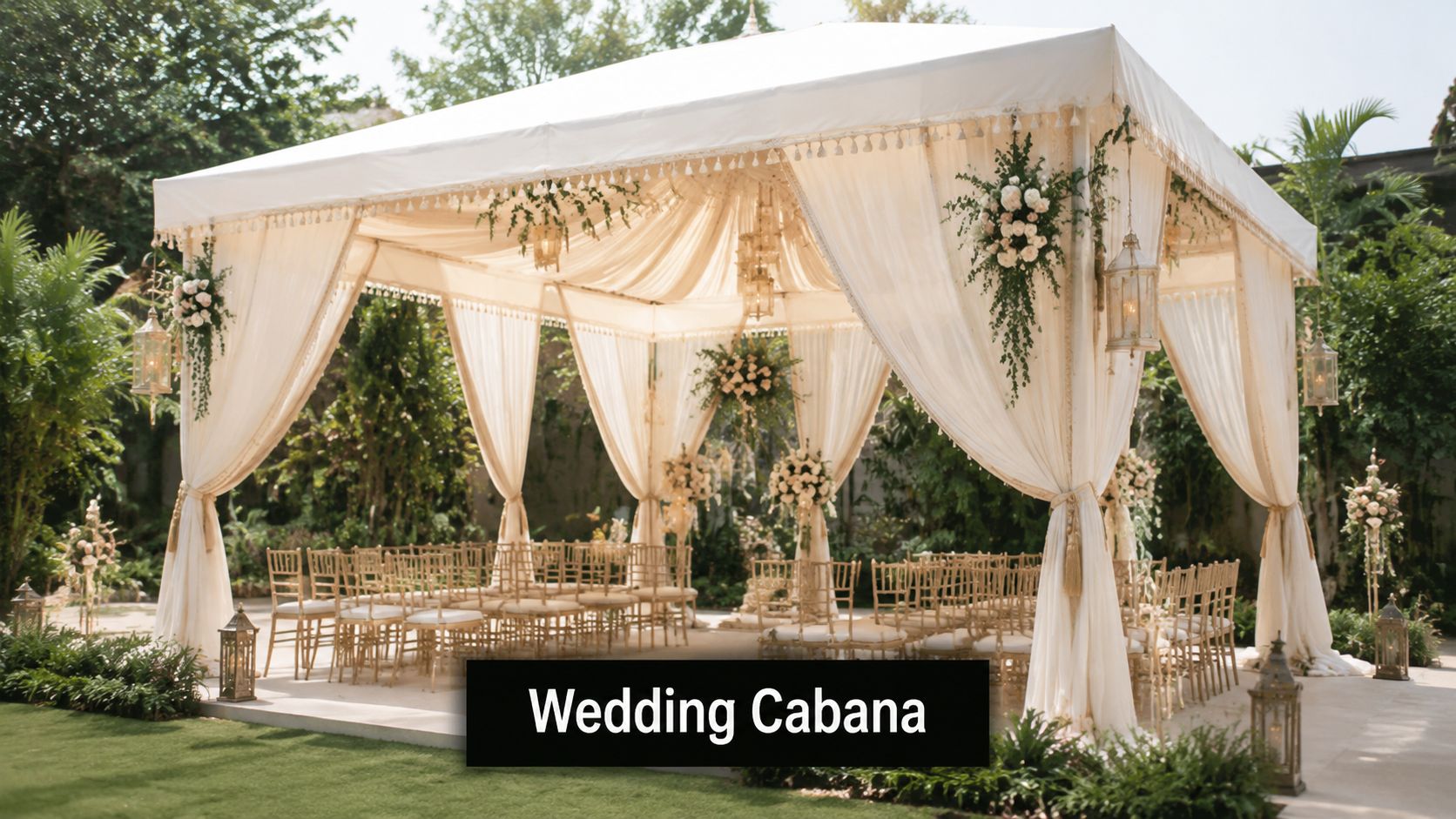
An elegant outdoor white wedding cabana tent decorated with flowers and gold chairs on a lawn.

Why couples choose this style

The strongest reason is aesthetic. The cabana tent is widely recognised as the top choice for the white wedding aesthetic in South Africa, and demand for white draping and fairy light decorations has seen a 40% increase over the past three years for engagements and formal wedding ceremonies, according to this South African wedding styling reference.

That increase makes sense on the ground. White fabric reflects light well during the day, photographs cleanly, and creates a neutral base for almost any floral palette. It also works across very different venue styles, from formal estates to more relaxed garden settings.

How it compares with other tent options

If you're deciding between tent styles, the biggest differences come down to shape, mood, and weather behaviour.

Tent type Best known for Where it works well Main trade-off
Cabana tent Elegant white wedding styling, draping, formal reception look Ceremonies, seated receptions, classic wedding layouts Open-sided feel can be less forgiving in wind and cold
Marquee More enclosed event shell Formal events where a sealed environment matters more Can feel heavier and less visually open
Stretch tent Organic shape and relaxed feel Cocktail-style events and less formal celebrations Different aesthetic, less suited to a crisp white wedding look

If you're comparing structures in more detail, this overview of different event tent styles is a useful starting point.

Practical rule: If the look in your head includes white draping, layered lighting, and a formal aisle or dining layout, a cabana tent usually gets you there more naturally than a stretch tent.

What a cabana tent does best

Cabana tents shine when you want the setting to feel dressed, not improvised. They work especially well for:

  • Ceremony and reception in one area where the tent needs to shift mood through the day
  • Classic round-table dining with a defined entrance and central visual focus
  • Layered décor schemes using ceiling draping, chandeliers, fairy lights, and floral installations

The style is elegant. The planning around it needs to be equally disciplined.

Choosing the Right Cabana Tent Size and Capacity

A couple books a beautiful Winelands venue, sees a 6×9 on a hire list, and assumes it will cover dinner, a bar, a DJ, and a bit of dancing. On installation day, the tables go in, the service aisles get marked out, and the tent suddenly feels far smaller than it did on paper.

That mistake is common because advertised capacity usually reflects a basic layout, not a real wedding floorplan. A cabana tent must carry furniture, staff movement, décor, and often a weather plan for the Cape. If we are planning for a Winelands wedding, I size for comfort first and headcount second.
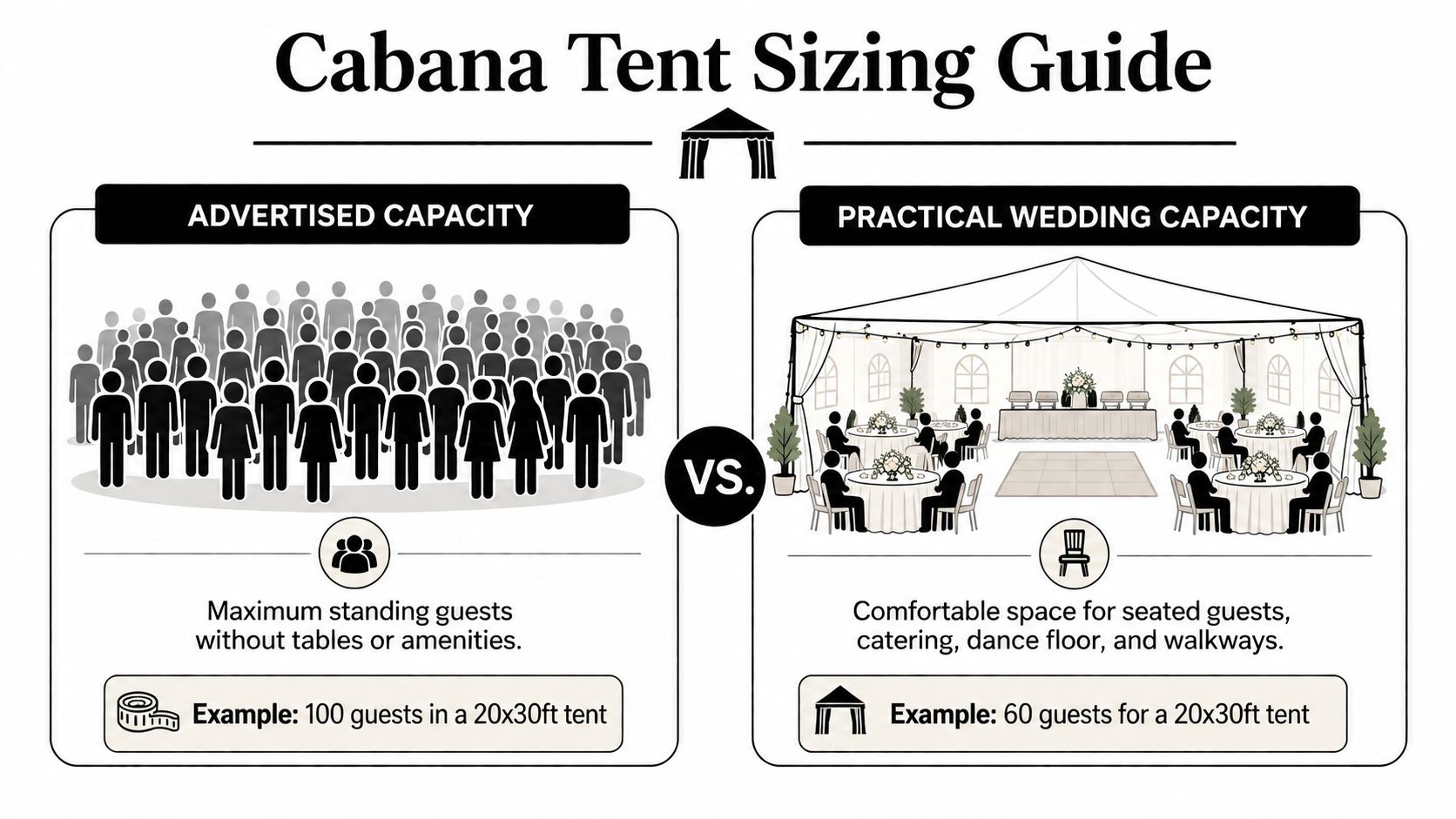
A sizing guide infographic comparing maximum standing capacity versus comfortable seated wedding capacity for cabana tents.

The sizes that matter most

A 6m x 9m cabana tent gives you 54 square metres of covered space and suits a smaller seated wedding if the layout stays disciplined. Suppliers such as Lillybees Events list a 6×9 cabana tent for intimate to medium functions, but the practical result depends on what else needs to live inside that footprint.

A 6m x 12m cabana tent is often the point where couples get useful breathing room. Hire companies in South Africa commonly position this size for mid-sized functions, and this 6×12 frame tent listing from Events Guys is a better reference for that size than a duplicated source elsewhere in the article. In practice, whether it handles around 100 guests depends on table shape, bar placement, and whether you are keeping one side more enclosed against the wind.

For a fuller reception with dining and a dedicated dance area, a 12×18 metre cabana tent is usually the safer starting point. It gives the planner more freedom to separate dining from circulation, which matters once staff are carrying plates and guests are leaving tables in heels on a cool evening.

Seated dinner versus cocktail flow

Guest count alone does not decide tent size. Layout does.

A formal seated wedding uses space quickly because the tent must accommodate:

  • Dining tables and chairs
  • Service aisles for catering staff
  • Clear routes to exits and bathrooms
  • A gift table, cake table, or welcome drinks station
  • Entertainment equipment, a DJ table, or a dance floor

Cocktail layouts can hold more people, but they also create pinch points. I see this often when the bar, grazing table, and lounge furniture all land in the middle of the tent. The result is not shortage of space. It is poor use of space.

Choose the size for your floorplan, not the maximum number printed on the quote.

A practical way to decide

Use this guide as a starting point:

Tent size Better suited to What usually works best
6x9m Intimate weddings Seated lunch or dinner for a smaller group, with limited extras inside the tent
6x12m Mid-sized gatherings Works well for a reception where the layout is planned carefully and circulation stays clear
12x18m Larger receptions Better for dining, dancing, and weather contingencies under one structure

If your wedding will blur into a more social, party-style setup later in the evening, this guide to tent hire for parties and events helps with the movement side of planning, which is usually where capacity assumptions fall apart.

What works in the Winelands

The Winelands adds its own constraints. A tent that works on a flat school field in town can lose usable capacity on a vineyard lawn with a slight slope, a row of uneven pavers, or a wind-exposed edge. Once the team widens aisles for safe service and adjusts table positions to keep chairs level, your original guest plan can tighten up fast.

There is also the Cape weather factor. If you expect a temperature drop after sunset and want heaters, side panels, or a more enclosed edge on the windward side, protect space for that from the start. Those decisions affect comfort, but they also affect how open and spacious the tent feels.

Start with your seating plan. Then add the bar, catering paths, entertainment footprint, and your bad-weather backup. That number is the one worth trusting.

Site Selection and Setup Logistics

The prettiest patch of lawn isn't always the right place for the tent. At Winelands venues, the best tent position usually comes from balancing the view with access, stability, and service flow.

The first thing to inspect is the ground itself. Cabana tents want a site that is as level as possible. Even a mild slope can complicate table setup, flooring, and guest comfort. Glassware, candle holders, and cake tables don't forgive uneven surfaces. Neither do formal dining chairs.

What to check on your site visit

Walk the route from the venue entrance to the setup point and look at it from the installer's perspective, not only the couple's.

  • Vehicle access: Delivery teams need a clear route for the tent frame, draping, tables, and any additional equipment. Narrow farm roads, soft verges, and sharp turns can slow setup.
  • Ground condition: Grass is fine if it's firm and reasonably even. Muddy, steeply sloped, or heavily rutted areas create avoidable problems.
  • Power availability: Lighting, sound, and any heating or cooling equipment need practical power access. Long cable runs need planning.
  • Drainage: If there's any chance of rain, low-lying areas can collect water and make the entire space uncomfortable.
  • Orientation: Position the open sides to capture the view without exposing dining guests directly to the strongest prevailing wind.

The view should work with the floorplan

Many couples choose a spot because the ceremony photos will be beautiful. That matters, but it's only half the story. The reception needs a sensible back-of-house rhythm too. Caterers need access. Staff need a service path that doesn't cut through family photos. Guests need to arrive without stepping around extension leads or stacked hire items.

A good layout often places the focal point toward the best view, while tucking practical areas to the least visible side of the structure. That could mean:

  • Bar to one side, not blocking the central sightline
  • DJ or band placed where sound projects well without dominating the room
  • Food service near the most efficient access point for kitchen or prep support

If installers have to fight the site, the wedding will feel harder than it needs to.

Questions worth asking the venue

Before you confirm the exact spot, ask:

  • Can vehicles reach the lawn safely for setup and breakdown?
  • Are there underground irrigation lines or restrictions on staking?
  • Where is the nearest power source?
  • Does the venue already know which areas become windy after midday?

Those answers save time, money, and stress. In the Winelands, local site knowledge is often more valuable than a pretty map.

Weatherproofing for the Cape Climate

You can have a calm, warm Stellenbosch afternoon at 4pm and a cold, gusty dinner service by 7pm. I see that shift catch couples out every season. With a cabana tent, weather planning starts at booking stage, because the same open look that suits the Winelands so well also lets wind move straight through the reception.
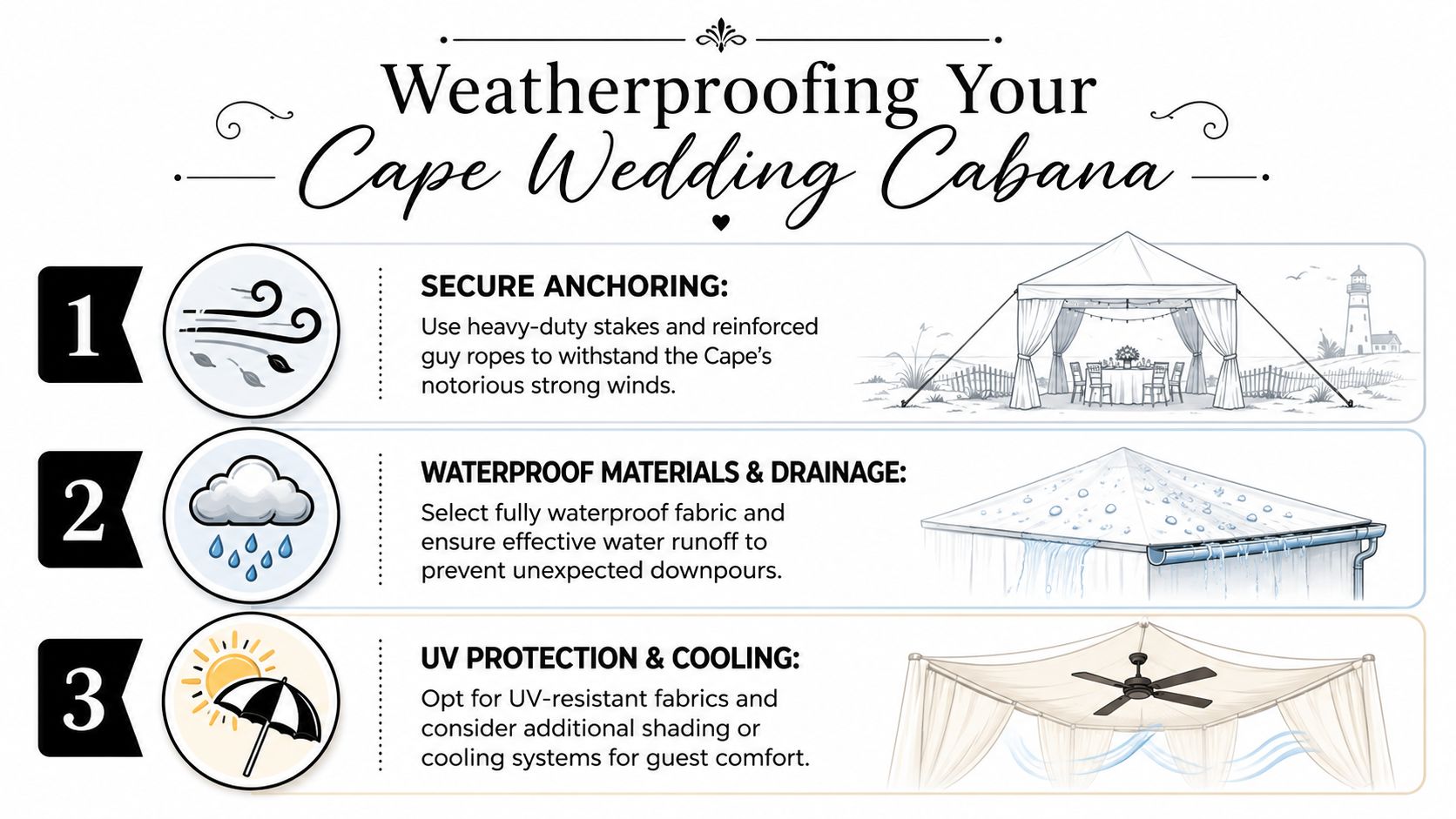
An infographic detailing three essential steps for weatherproofing a wedding cabana tent against wind, rain, and heat.

Wind needs a plan before decor goes in

Around Cape Town and the Winelands, wind is usually the first comfort problem, not rain. The structure may be secure, but guests still feel every draft during speeches, every flap in the sidewalls, and every temperature drop once the sun disappears behind the mountain.

A 6m x 12m steel-framed cabana can work well for a wedding setup of around 100 guests if it is installed correctly and suited to the site. The detail that matters is not the catalogue photo. It is the anchoring method, the exposure of the lawn, the condition of the ground, and whether side panels are available where the wind hits hardest. For frame and wind-loading guidance, I prefer to work from supplier specs and engineering notes such as those published by Tent Manufacturer, then match that to the venue conditions on the day.

On exposed estates, I usually advise couples to budget for more protection than they think they need. It is easier to leave a panel open than to wish one existed once glassware starts rattling.

Evening cold changes the mood fast

The Winelands can feel generous in late afternoon and sharply cold after sunset. That matters most at dinner, because guests are seated, less active, and often dressed for photographs rather than warmth.

The best fixes are practical:

  • Sidewalls ready on the windward sides, even if you keep them open at first
  • Portable climate-control hire, planned with enough power and the right placement
  • Dining tables positioned away from direct draft paths
  • A technician or hire team briefed to adjust the setup as conditions change

The weak approach is hoping body heat will warm the tent or leaving every side open because the room looked better earlier in the day.

Guest comfort shapes the memory of the night.

A weather plan that works on real wedding days

For Cape weddings, I recommend making three weather decisions well before the final week.

  1. Confirm how the tent will be secured
    Pegging, weighting, and site-specific installation all affect performance. A tent on soft lawn behaves differently from one on compacted ground or paving, and the installer should plan for that.

  2. Choose a sidewall strategy in advance
    Decide which sides protect the dining area, which side can stay open for the view, and who has authority to close panels if the wind picks up. That decision should not wait until guests are already seated.

  3. Treat heating or cooling as part of the floorplan
    Climate-control units need power, space, and sensible positioning so they do the job without creating noise or clutter. This is also worth coordinating with the evening programme, especially if you are planning creative wedding celebration ideas that keep guests moving between the dance floor, lounge areas, and outdoor spaces.

A good weatherproofing plan protects more than the structure. It protects the atmosphere.

Designing Your Dream Interior Decor and Lighting

Once the structure is right, the tent becomes a blank canvas in the best sense. At this point, a cabana tent for wedding styling earns its place. The frame gives you order, and the soft finishes create mood.

For a classic Winelands reception, white draping overhead with warm lighting is still one of the most reliable combinations. It flatters the room during daylight and then shifts gracefully into evening. The change feels natural rather than dramatic, which is exactly what you want at a wedding.
Screenshot from https://abchire.co.za/

The elements that make the space feel finished

A beautiful tent interior usually comes from layering, not from one oversized feature.

  • Ceiling draping: This softens the frame and draws the eye upward. It also helps the tent feel intentional from every angle.
  • Fairy lights or chandeliers: Fairy lights create warmth and softness. Chandeliers add formality. Some weddings use both, with chandeliers over key zones and softer lighting elsewhere.
  • Flooring: Flooring changes the feel more than generally anticipated. It gives guests confidence underfoot and visually anchors the room.
  • Furniture pockets: Lounge corners break up the dining layout and give older guests or non-dancers a place to settle comfortably.

How to avoid a flat-looking tent

The most common styling mistake is treating the whole interior as one visual note. White on white can be elegant, but it still needs contrast. That contrast can come from:

  • Gold or black chair frames
  • Textured table linen
  • Timber, mirrored, or gloss accents
  • A defined dance floor
  • Low lounge seating that shifts the silhouette of the room

A wedding tent should have movement inside it. Guests should be able to circulate from dining to dancing to quieter conversation without feeling like they're walking through one large blank rectangle.

Good décor creates zones without building walls.

Small details that lift the room

Some of the strongest results come from practical design choices rather than expensive floral excess. A well-lit entrance, a clear focal point behind the couple, and a lounge nook near the dance floor often do more for the atmosphere than scattering décor evenly everywhere.

If you're looking for ideas beyond flowers and tables, these creative wedding celebration ideas are helpful for thinking about how the reception can feel once guests are inside the space.

A strong tent interior always supports the way people use the wedding. That's why the best-styled spaces don't just photograph well. They host well too.

Your Cabana Tent Rental Checklist and Timeline

The smoothest wedding hires usually follow a simple rhythm. Decide early, confirm the practical details properly, and don't leave layout or weather items to the final week.

A cabana tent booking should happen as soon as your venue and approximate guest count are stable. Popular dates in the Cape fill quickly, especially for spring and summer weekends, so delay limits your options on tent size, flooring, and supporting items.

Early planning stage

When you first enquire, have these basics ready:

  • Your venue name and area
  • Estimated guest count
  • Whether the event is ceremony, reception, or both
  • Preferred style, especially if you want a formal white wedding finish
  • Any known site constraints, such as slopes, restricted access, or no-stake areas

This is also the moment to ask what is included in the tent setup. Some configurations include draping and installation, while others may require separate decisions on walls, flooring, lighting, or climate items.

Before you approve the final setup

Once your guest list firms up, review the tent layout with real wedding functions in mind.

Check for:

  • Dining configuration
  • Service aisles
  • Cake and gift table placement
  • Bar location
  • DJ or band footprint
  • Dance floor position
  • Weather side closures if needed

A useful planning companion at this stage is this broader wedding planning checklist, especially if multiple suppliers are feeding into the same setup window.

Final week checks

The week before the wedding should be for confirmation, not redesign.

Use this short final check list:

  • Reconfirm delivery and collection times
  • Verify the exact setup point with the venue
  • Confirm power access for lighting and any climate equipment
  • Check who is responsible for being on site at delivery
  • Make sure the quote reflects every required item
  • Review weather exposure and backup sidewall decisions

If rain or wind is in the forecast, don't improvise emotionally. Use the plan already agreed.

On the day and after the event

Leave enough setup time for proper installation and dressing of the tent. Rushed installs create avoidable stress for every supplier who follows. After the event, make sure personal décor items are separated clearly from hire stock before collection starts.

The goal isn't only to hire a beautiful structure. It's to remove uncertainty from a very full day. When the checklist is handled well, the tent fades into the background in the best possible way. Guests experience a wedding that feels comfortable, polished, and well organised.


If you're planning a Winelands celebration and want a cabana tent setup that looks refined and works properly in Cape conditions, ABC Hire can help with the practical pieces that make the biggest difference, including furniture, lighting support, and climate-control equipment for Cape Town, Stellenbosch, Franschhoek, Paarl, and surrounding areas.
A Guide to Picnic Table and Bench Rentals for Cape Town Events

When you're planning an event in Cape Town, you're not just booking a venue; you're creating an experience against one of the world's most beautiful backdrops. And nothing says "relaxed outdoor elegance" quite like the perfect picnic table and bench setup. It’s the kind of choice that can single-handedly shift the mood of your gathering, making it feel more communal, stylish, and memorable.

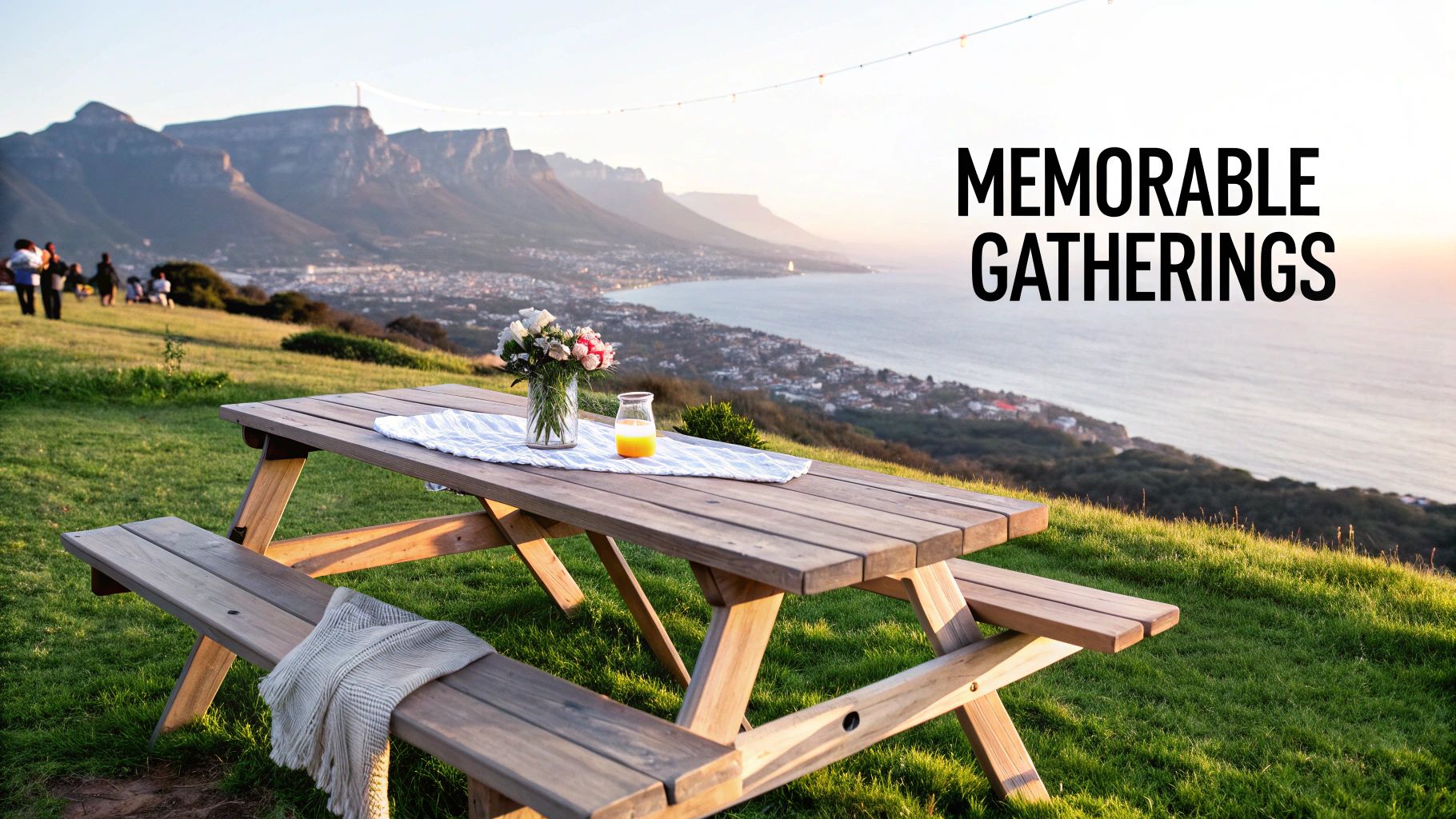
Crafting Memorable Gatherings with Picnic Seating

This isn't just about putting out some tables. It's about understanding how this classic seating arrangement can completely elevate your event. We've seen them work their magic everywhere, from rustic weddings tucked away in the Winelands to chic corporate picnics along the Foreshore. Why? Because picnic-style seating has an incredible way of encouraging people to connect, creating a shared, casual vibe that you just don't get with traditional tables and chairs.

A scenic outdoor picnic setup with a wooden table, flowers, and orange juice overlooking a coastal city at sunset.

Let's walk through what you need to know to get this right, ensuring everything runs smoothly from booking to breakdown.

Why Choose Picnic Seating?

The charm of a picnic table and bench goes way beyond just looking good in photos. It's a seriously practical and versatile option that savvy event planners have in their back pocket for good reason.

  • Fostering Connection: There's something about a shared bench that just gets people talking. It naturally breaks down those formal barriers and brings guests closer, literally and figuratively.
  • Versatile Style: These setups are a blank canvas. You can dress them up with elegant runners and floral arrangements for a wedding, or keep them bare and rustic for a laid-back birthday bash. The look is entirely up to you.
  • Space Efficiency: Because the benches are attached, you can forget about the fuss of arranging individual chairs. This often means you can fit more guests comfortably into a smaller area—a huge plus for many Cape Town venues.

The trend is catching on globally. The picnic table market is set to grow by 5% annually through 2033, a clear sign that people are embracing outdoor living. Here in South Africa, we're seeing a similar shift as people want their outdoor spaces to feel like a natural extension of their homes. This has definitely raised the bar for what guests expect from event furniture. You can learn more about the growing picnic table market from recent industry analysis.

This guide is here to help you nail every detail. From picking the right materials and calculating capacity to designing a layout that flows, you'll have all the insights you need to create an event that’s not just beautiful, but perfectly functional too.

Choosing the Right Picnic Furniture for Your Venue

Picking out the perfect picnic tables and benches is about so much more than just filling a space. Honestly, it’s one of the first big decisions that really starts to shape the entire atmosphere of your event. The right choice can make a rustic wedding at a Stellenbosch wine farm feel incredibly authentic and warm, while a different style can give a corporate launch in the city a modern, yet approachable, edge.

Your venue is always the best place to start. A sprawling lawn gives you a blank canvas with endless possibilities, but a paved courtyard or deck demands furniture that will sit flat and stay stable. Really think about the ground surface—gravel, grass, or even flagstone can be a nightmare for individual chairs. A well-built picnic table and bench set, on the other hand, provides a solid, unified base that prevents wobbly legs and keeps your guests comfortable.

Matching Furniture to Your Event's Vibe

The material and finish of your furniture play a massive role in nailing down your theme. A classic, solid wood picnic table and bench brings that timeless, natural feel that’s just perfect for outdoor weddings and big family celebrations. If you're going for a more contemporary look, you could look at options with cleaner lines, darker stains, or even some subtle metal accents.

Here are a few common scenarios we see all the time:

  • Rustic Wedding: Unfinished or lightly stained pine tables create a beautiful, earthy canvas. Just picture them paired with linen runners, wildflowers, and some twinkling fairy lights for a truly magical look. We've actually got a great article with more ideas for styling wooden outdoor benches that you might find super helpful.
  • Corporate Family Day: Here, durability and ease are everything. You’ll want sturdy, sealed tables that can easily handle spills and all the day's activities, creating a relaxed and informal environment for networking and fun.
  • Chic Garden Party: A sleek, dark-stained picnic table can feel incredibly sophisticated. Add some comfy cushions in your event’s colour palette to really elevate the whole guest experience.

Calculating Capacity and Sizing

One of the biggest mistakes I see people make is misjudging the seating. Too few tables and guests are uncomfortably crammed together; too many, and the space can feel empty and disconnected. As a rule of thumb, a standard 1.8-metre picnic table and bench comfortably seats six guests, or you can squeeze in eight if you don't mind a cosier arrangement.

Let's break that down with a real-world example. For a wedding with 150 guests, you'd be looking at needing around 25 of these tables to make sure everyone has a comfortable spot. For a smaller, 50-person networking event, about 8 to 9 tables would do the trick, which also leaves a bit more space between them for mingling.

To give you a quick reference, here’s a simple guide to help you estimate your needs.

Picnic Table and Bench Sizing Guide

Table Length Seats per Table Ideal for Event Type
1.8 metres 6-8 guests Weddings, corporate events, large family gatherings
2.4 metres 8-10 guests Festivals, school functions, community markets
1.2 metres 4 guests Kids' parties, small breakout areas, intimate picnics

This table should give you a solid starting point for planning your layout and guest flow.

A critical thing to keep in mind is that guest expectations are higher than ever. Here in South Africa, there's a strong preference for outdoor furniture that is not only stylish and comfortable but also durable and weather-resistant. For those of us in the events industry, this means the standard has been raised—people want the same quality they'd choose for their own homes.

Ultimately, when you're thinking about hiring tables and chairs for your upcoming event, it’s always a good idea to chat with your rental provider. Talk to them about your guest count and the specifics of your venue. It's the best way to make a smart, informed decision that perfectly brings your vision to life.

Designing a Layout That Encourages Connection

A great layout does more than just cram furniture into a space. It’s about creating an atmosphere, a vibe, that gets your guests mingling, chatting, and really connecting. The way you arrange your picnic tables and benches sets the stage for the entire event, subtly guiding how people interact. This is where you can be clever and design a floor plan that feels both intentional and completely natural.

Your first big decision is the configuration. Are you after a loud, communal feel, like a harvest festival or a big family-style wedding feast? If so, long, banquet-style rows are brilliant. Placing tables end-to-end creates this incredible visual and really gets conversation flowing down the line, building a true sense of togetherness. We’ve seen this work wonders in the Constantia Winelands, where the long rows echo the lines of the vineyards beautifully.

But what if you want something more intimate? For corporate networking events or a chilled birthday party, scattering smaller clusters of tables is the way to go. Arranging them in little groups of two or three creates cosy nooks where guests can gather in smaller circles. It breaks up the space and invites people to wander around and chat with different groups all evening.

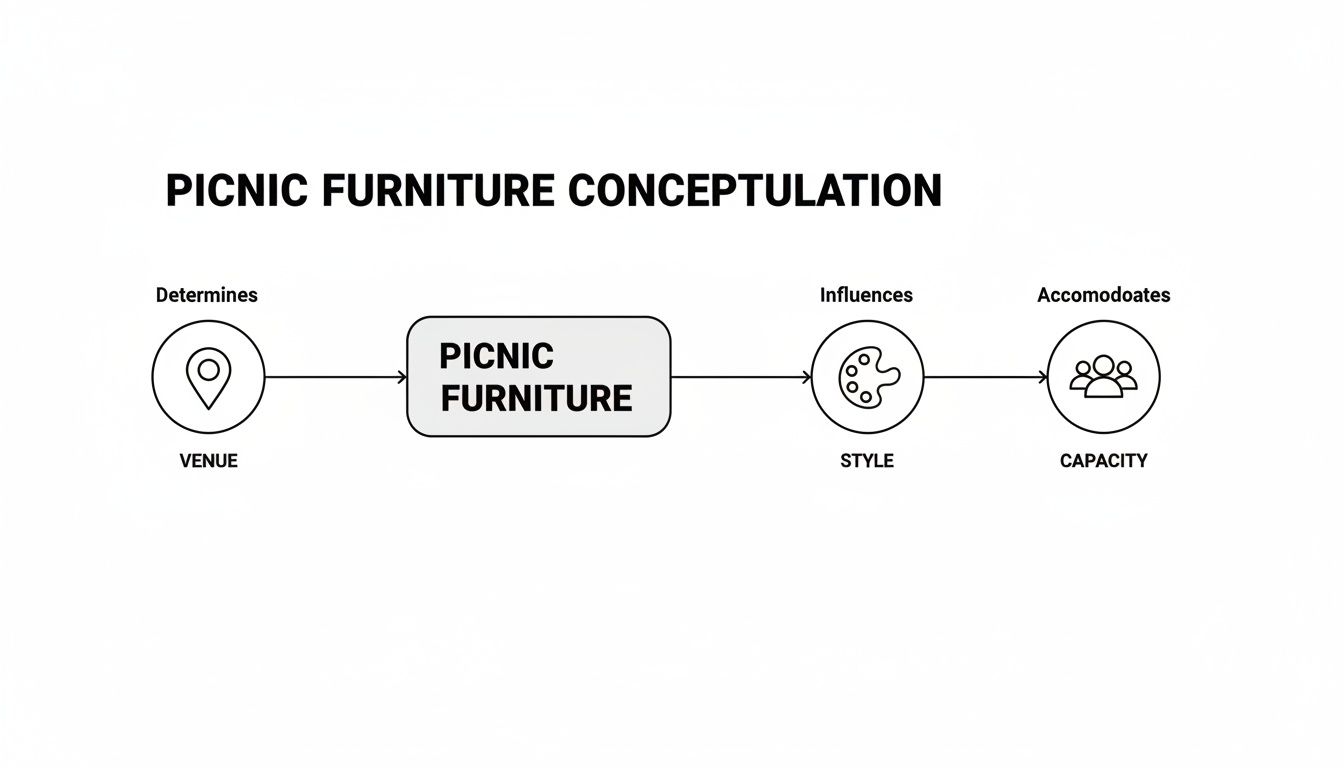
This little diagram shows how all the key elements flow together, starting with the venue itself.

Diagram illustrating how venue determines picnic furniture, which influences style and accommodates capacity.

As you can see, your layout choices are directly tied to the venue, which then shapes the style and number of furniture pieces you'll need.

Planning for Flow and Functionality

Beyond just the arrangement, spacing is the secret sauce for a successful layout. You absolutely need enough room for guests to slide in and out of benches without knocking knees, and—critically—for your catering staff to move about freely. A solid rule of thumb is to leave at least 1.5 metres of clear walkway between rows or clusters. This simple step keeps service smooth and stops any frustrating bottlenecks from forming.

Always play to the strengths of your Cape Town venue. If you've got a location with a jaw-dropping view of Table Mountain, make sure you orient your layout to show it off! For events on uneven ground, like a grassy field or a beach, picnic tables and benches are your best friend. They offer far more stability than individual chairs, which can wobble or sink. Their wider base makes them a much safer bet. For more practical tips, check out our guide to folding picnic tables, which are incredibly versatile for tricky spots.

A smart layout is all about anticipating what your guests will need. Think about the high-traffic zones—the path to the bar, the restrooms, the dance floor. Keep these main arteries clear to ensure a comfortable, seamless experience for everyone.

Real-World Layout Scenarios

Let's bring this to life with a couple of common event types:

  • Wedding Reception: Picture a U-shaped configuration with the head table at the top. This setup feels warm and inclusive, letting the wedding party see all their guests while also creating a natural focal point and a perfect central space for dancing later on.
  • Corporate Picnic: Here, a more scattered "lounge" style layout is ideal. Mix in a few standing cocktail tables among the picnic benches to encourage people to get up and network. This less rigid format makes it far easier for colleagues from different departments to mingle naturally.

By thinking strategically about your layout, you can turn a simple furniture arrangement into a dynamic, comfortable, and engaging environment that your guests will love.

Styling Your Tables to Create the Perfect Vibe

Right, the layout is sorted, the guest list is finalised… now for the really fun part. This is where you breathe life into your event’s theme and transform functional furniture into a truly breathtaking scene. Styling your picnic table and bench setup is all about creating an experience—turning a simple outdoor meal into a memorable, atmospheric event that your guests will be talking about for ages.

This is your chance to weave your creative vision into every little detail. Think elegant linen runners and lush floral centrepieces for a wedding, or maybe sleek, branded decor for a corporate launch. The trick is to find that sweet spot between beautiful aesthetics and practical functionality, making sure your setup looks incredible without getting in the way of a good time.

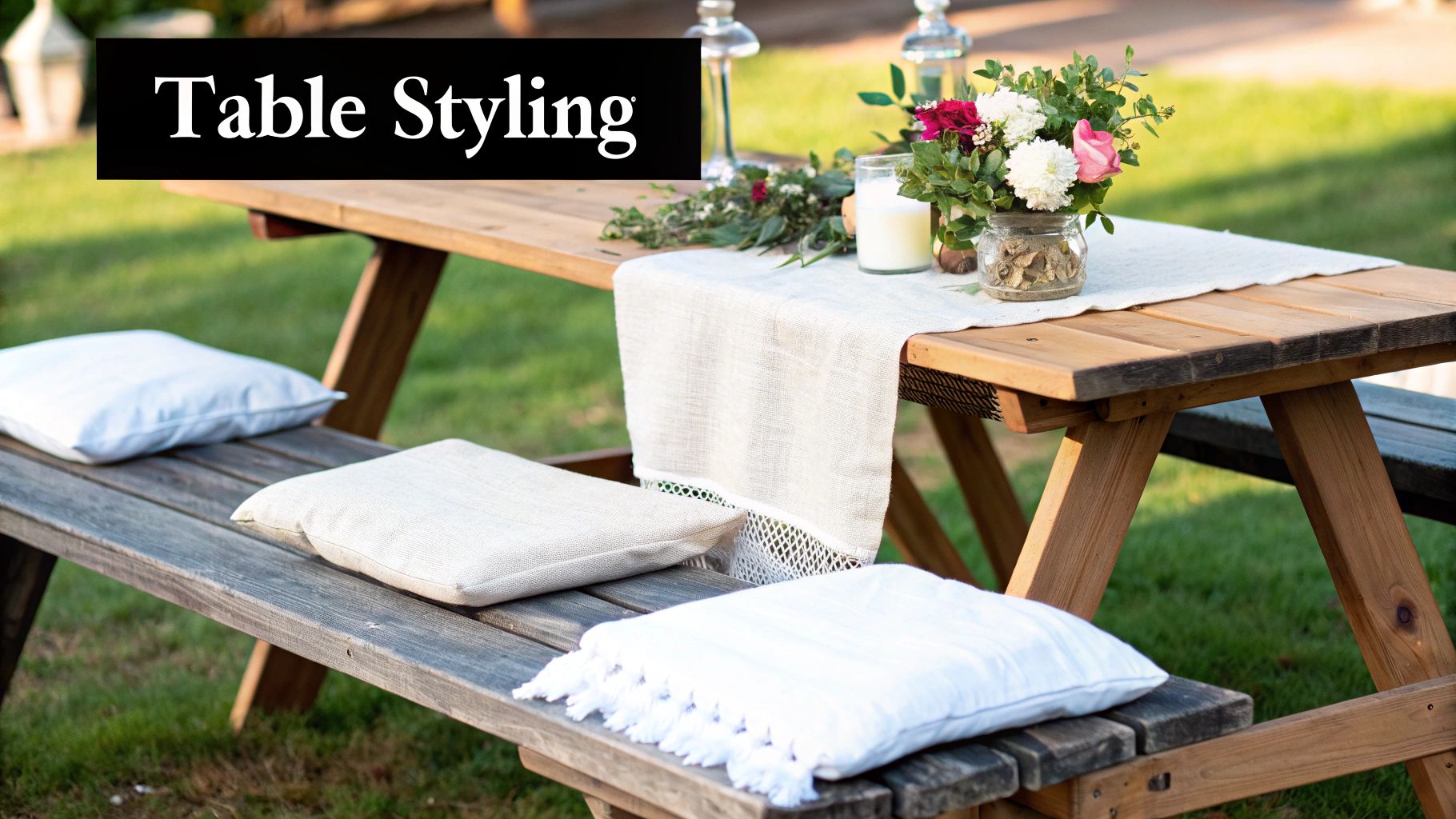
An outdoor picnic table in a garden, styled with a linen runner, flowers, candles, and cushions.

Let's get into the elements that will help you create that perfect atmosphere.

Building Your Tablescape From the Ground Up

Every great design starts with a solid foundation. Think of the bare wooden table as your blank canvas. The very first layer you add sets the tone for everything that follows.

For a rustic wedding, a simple gauze or linen runner adds a touch of softness and elegance, but it still lets the natural beauty of the wood shine through. If it's a corporate event, on the other hand, this is a brilliant branding opportunity. A custom-printed runner featuring your company's logo in a subtle pattern can look incredibly sharp and professional, reinforcing your brand in a way that feels stylish, not forced.

A little insider tip: always, always consider the wind, especially if your venue is anywhere near the Cape Town coast. Use some discreet table clips or even small, decorative weights at the ends of your runners to keep everything in place. Trust me, nothing ruins a beautiful tablescape faster than linens flapping about in the breeze.

Layering in Texture and Colour

With your base down, it's time to add some depth and personality. This is where you can really let the event's theme come to life through your choice of colours, textures, and decorative pieces.

  • Floral Arrangements: When it comes to picnic tables, low, sprawling floral arrangements are your best friend. They bring in that touch of nature and a pop of colour without blocking anyone's view, so guests can still chat easily across the table.
  • Cushions and Throws: Don't forget about comfort! It's a huge part of the guest experience. Adding cushions to the benches in your event’s colours not only makes seating more comfortable but also introduces another layer of texture. For evening events, draping a few soft throws over the benches is a thoughtful touch that people really appreciate when the sun goes down.
  • Place Settings: Keep the place settings practical. Woven placemats can add some lovely texture, while minimalist crockery lets the delicious food be the main attraction. For a more casual vibe, you could even consider high-quality, eco-friendly disposable plates and cutlery to make cleanup a breeze.

Picnic Table Styling Checklist by Event Type

To help you get started, here's a quick checklist with a few ideas broken down by the type of event you're planning.

Styling Element Wedding Corporate Event Private Party
Linens Gauze or linen runners Branded table runners Colourful patterned fabric
Centrepiece Low floral arrangements Sleek potted succulents Lanterns or candle clusters
Comfort Neutral-toned cushions Branded cushions Mix-and-match pillows
Lighting Fairy lights, candles LED uplighting String lights, paper lanterns
Place Setting Elegant, simple crockery Minimalist with branded napkin Fun, colourful plates

This table is just a starting point, of course. Feel free to mix and match to create a look that's uniquely yours!

Perfecting the Finishing Touches

It's the final details that truly take your design from good to great. Lighting is absolutely critical for any event that stretches into the evening. Stringing festoon or fairy lights above the tables creates a magical, intimate glow that can completely transform the space.

And don't overlook the small things that show you've really thought about your guests. Personalised place cards, unique napkin rings, or even just a small sprig of rosemary on each plate can make everyone feel special. The key is to create a cohesive look where every single element, from the biggest centrepiece to the smallest detail, works together to build a beautiful and inviting atmosphere for your gathering.

Nailing Down the Rental Logistics

A stress-free event day really comes down to seamless logistics. Once you’ve picked out the perfect picnic table and bench sets, the next step is to get the rental process sorted. This can feel a bit overwhelming, but with a clear plan, you'll sail right through it.

Think of it like choreographing a dance – every move needs to be timed just right, from that first quote right up to the final collection.

Your first chat with a rental company sets the tone for everything. When you ask for a quote, give them all the details. That means your event date, the venue address, your guest count, and exactly how many tables you need and what style you're after. This kind of clarity helps the rental team give you an accurate price and confirm availability on the spot, so there are no nasty surprises later.

Your Go-To Rental Checklist

To keep everything organised, a checklist is your absolute best friend. It breaks the whole thing down into smaller, manageable steps, making sure nothing gets missed. This isn’t just about ticking off boxes; it’s about making sure you and your rental partner are completely on the same page.

Here’s a practical checklist to keep you on track:

  • Lock in Delivery and Collection Times: Get precise drop-off and pick-up windows confirmed in writing. Don't forget to share these times with your venue manager so someone is ready to grant access.
  • Talk About Venue Access: Is the venue tucked away on a narrow street? Is there a ridiculously steep driveway? Let the rental company know about any potential headaches so they can plan ahead.
  • Go Through the Contract: Actually read the fine print. Make sure you understand their policies on damages, cancellations, and what happens if the weather turns. A solid contract protects both of you.
  • Finalise the Payment Schedule: Know exactly when your deposit and final payments are due. Pop those dates in your calendar to stay on top of your budget.

A solid plan is key, but so is being flexible. Cape Town’s weather is famous for being unpredictable. Always have a Plan B, whether that’s a marquee on standby or an indoor space ready to go. Chat about your backup plan with the rental company beforehand.

On-the-Day Setup and Safety

When the delivery team shows up, your main job is to direct them. Have your layout plan ready so you can show them exactly where each picnic table and bench needs to go. This one proactive step saves a massive amount of time and stops you from having to lug heavy furniture around yourself. A prepared host is a calm host, after all.

Once everything is in place, do a quick walk-through. Check that every table is stable and doesn't wobble, which is especially important if they're on uneven ground like grass or cobblestones. Any decent delivery team will sort this out, but it’s always smart to double-check for your guests' safety and comfort.

This kind of attention to detail is what takes an event from good to truly great. For more info on what to expect from the whole process, you might find our guide on tables and chair rentals useful, as it covers the topic more broadly.

By working through these logistical steps one by one, you can get rid of the guesswork and head into your event day feeling completely confident, knowing every little detail has been handled.

Got Questions About Picnic Table Rentals?

When you're in the thick of planning an event, questions are going to pop up. It's totally normal. Getting those questions answered quickly and clearly is key, especially when it comes to the basics like seating. We get asked a lot about our picnic table and bench rentals in Cape Town, so let's run through some of the most common ones.

How Many People Can Sit at One Table?

This is usually the first thing on everyone's mind. A standard 1.8-metre picnic table and bench can comfortably sit between six and eight adults. That breaks down to three or four people on each bench.

If you're planning a more formal sit-down dinner, like a wedding reception, you'll want to give guests a bit more elbow room. In that case, aim for six people per table. For something more relaxed, like a festival or a family fun day where people are coming and going, you can easily fit eight. Just think about the vibe of your event—a formal meal needs more personal space than a casual get-together.

Quick Tip: If you're on the fence, it’s always better to have one too many tables than to have your guests squeezed in. A cramped space can really kill the mood of an otherwise perfect event.

What Kind of Surfaces Do They Work On?

This is one of the best things about this style of seating. Of course, a picnic table and bench set looks right at home on a lush green lawn, but its real advantage is its stability on all sorts of surfaces you find at Cape Town venues.

  • Paved Courtyards: They sit perfectly flat and give you a really solid seating option.
  • Wooden Decks: You don't have to worry about chair legs getting stuck between the planks!
  • Gravel Areas: Individual chairs can wobble or sink into gravel, but the wide, solid base of a picnic table keeps everything steady.

Even if the ground isn't perfectly level, a professional delivery crew can make sure every table is secure. Because the benches are attached, there are fewer legs touching the ground, making them a much more reliable choice than separate tables and chairs for most outdoor spots.

What If the Weather Turns Bad?

Ah, classic Cape Town weather! One minute it's glorious sunshine, the next, the wind is howling. Having a solid backup plan is a non-negotiable for any outdoor event here.

The good news is that our rental furniture is built to handle the elements. Your guests, however, are not. We always recommend hiring a tent or marquee to go along with your furniture if there's even a slight chance of rain or scorching midday sun. It takes a massive amount of stress off your shoulders on the day, knowing your event can go ahead comfortably no matter what the weather decides to do.


Ready to create a memorable, stylish, and comfortable setting for your next event? At ABC Hire, we provide a premium selection of picnic tables and benches perfect for any occasion in Cape Town and the Winelands. Explore our full range of event furniture and let us help you bring your vision to life. Find out more at https://abchire.co.za.

Wedding Arch Hire Guide for Your Big Day

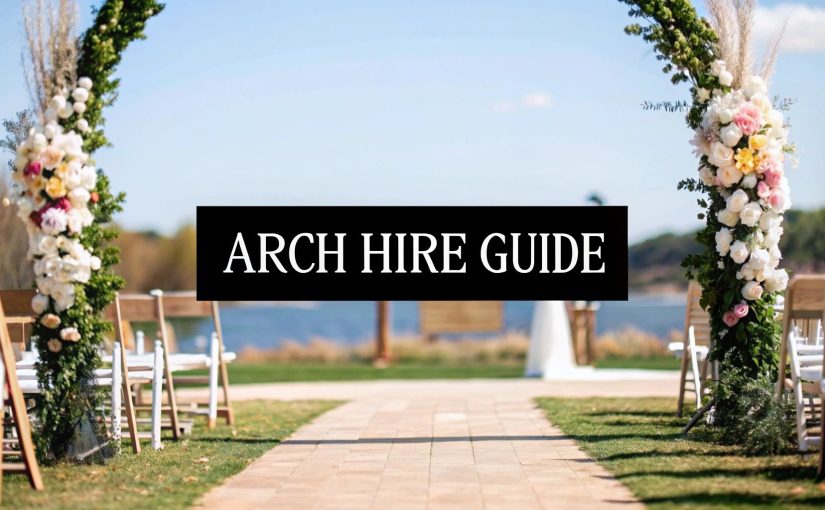
A wedding arch is so much more than just a pretty backdrop for your vows. Think of it as the heart of your ceremony space—the one element that frames the most important moment of your day. It has this incredible ability to take any location and instantly turn it into a dedicated spot for you to say, "I do."

Why a Hired Arch Is a Total Game-Changer

Hiring a wedding arch completely transforms your ceremony. It’s not just a piece of décor; it’s an architectural feature that creates a powerful focal point, pulling everyone's attention right where it should be: on you and your partner. This is especially true if you've chosen an outdoor venue that doesn't have a natural altar.

Picture a beautiful, sprawling venue in the Cape Winelands. A simple, rustic wooden arch can instantly create an intimate, sacred space for your ceremony, making it feel personal and contained. Or imagine a chic Johannesburg rooftop wedding—a minimalist gold hoop arch adds a touch of modern elegance that contrasts stunningly against the city skyline.

It's Not Just About the Looks

While a beautiful arch is definitely a visual treat, the practical benefits are just as compelling.

  • Creates Structure and Focus: An arch gives your ceremony a clear centre. It guides your guests' attention and provides a beautifully defined space for you to exchange your vows.
  • Picture-Perfect Moments: Let's be honest, it's a photographer's dream. An arch creates a stunning frame for your wedding photos, ensuring every shot of that first kiss is perfectly composed.
  • Your Personal Canvas: A hired arch is essentially a blank slate. You can adorn it with flowers, drape it in fabrics, or string it with lights to bring your unique wedding theme and colour scheme to life.

We're seeing more and more couples in South Africa embrace wedding arches for these very reasons. It's a trend that's growing fast. A 2022 survey showed that a massive 37% of outdoor weddings featured an arch, which is a huge leap from just 22% a few years back. This really shows how much couples want to create personalised, picturesque settings. You can find out more about how South African wedding trends are shaping modern ceremonies.

For so many couples, the arch is what visually anchors the entire ceremony. It's the backdrop for their promises and the first thing guests see, setting the tone for the whole day. Hiring one lets you make a huge impact without the stress and expense of buying one yourself.

Finding The Perfect Arch Style For Your Venue

Your wedding arch shouldn't just be a pretty backdrop; it needs to feel like it truly belongs there. The best arches work in harmony with your venue, tying your whole theme together without looking out of place. It's all about complementing the space, not competing with it.

Think about it this way: a rustic wooden arch, maybe draped with some fynbos and proteas, looks right at home at a farm wedding in the Cape Winelands. It just makes sense. But put that same arch in a sleek, modern industrial venue in downtown Johannesburg, and it would feel completely wrong. For that kind of space, a minimalist circular metal hoop would be a much better fit, adding that perfect touch of contemporary chic.

Matching Materials to Your Wedding Theme

The shape of the arch is only half the story—the material is just as crucial. If you're planning a beach ceremony with a breeze coming off the ocean, you'll need something heavy and stable that won't budge during your vows. But for a sheltered garden wedding, a more delicate, flower-heavy structure can create that dreamy, fairytale vibe you're after.

To give you a better idea, here's a look at how different styles fit into common wedding venues and themes.

Wedding Arch Styles vs. Venue Compatibility

Arch Style Best Suited For Common Materials Theme Pairing
Rustic/Bohemian Farms, forests, vineyards, outdoor settings Raw wood, birch, macramé Natural, relaxed, boho-chic
Modern/Minimalist Urban lofts, art galleries, industrial spaces Metal (gold, copper, black), geometric frames Contemporary, chic, sophisticated
Classic/Romantic Gardens, estates, historic homes, ballrooms White-painted wood, wrought iron Timeless, elegant, fairytale
Beach/Coastal Beachfronts, coastal resorts, seaside venues Driftwood, bamboo, sturdy wood Breezy, natural, nautical

This table should help you narrow down the options and find a style that not only looks beautiful but also feels authentic to your chosen location.

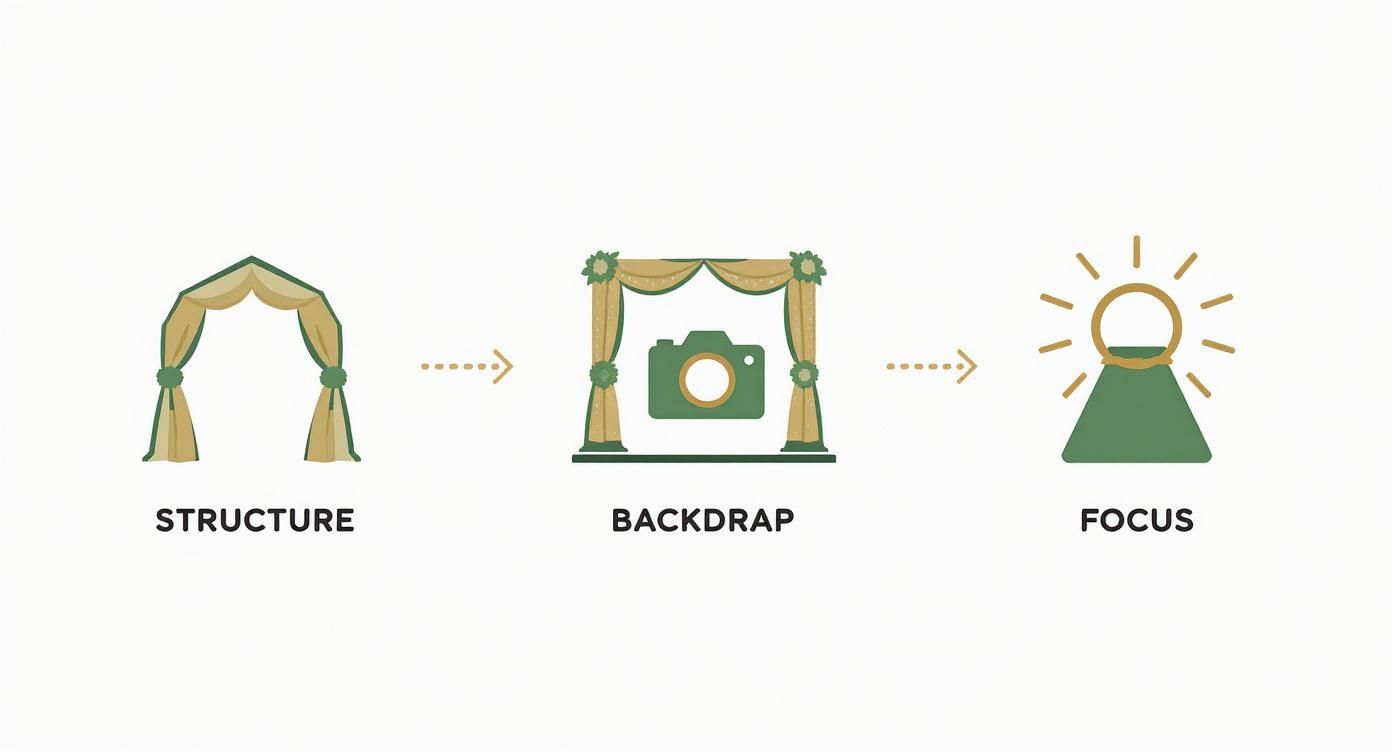
The right arch provides structure, creates a stunning backdrop for photos, and gives your ceremony a clear focal point. It's a surprisingly functional piece of decor.

Infographic about wedding arch hire

As you can see, the arch really does anchor the entire ceremony space. For a closer look at all the different shapes and creative designs available, check out our complete guide on arches for weddings.

Ultimately, you want your arch to feel like a natural extension of your venue. It's there to frame your special moment perfectly, not to steal the show from the beautiful surroundings you've chosen.

Right, let's talk about the money side of things. Figuring out your budget for a wedding arch doesn't have to feel like you're just guessing. Once you get a handle on the typical costs and what might be hiding in the fine print, you can put your money where it matters and avoid any nasty surprises.

First thing to realise is that not all arches are created equal, especially when it comes to price. A simple, unadorned wooden or metal frame is always going to be lighter on the wallet than a massive, elaborate structure already dripping with high-end silk florals. Your style choice is the biggest factor, so having a clear picture of what you want before you start asking for quotes is a game-changer.

Understanding the Price Breakdown

When that quote lands in your inbox, it's probably going to have more on it than just the rental fee. Knowing what these extra line items are is key to building a realistic budget.

Image

Here's what you'll likely see:

  • Base Rental Fee: This is the cost for the arch itself, usually for a 24-hour period.
  • Delivery and Collection: The charge for getting the arch to your venue and picking it up afterwards. This is almost always based on how far they have to travel.
  • Setup and Teardown: Some suppliers roll this into the price, while others will add it on as a separate labour fee. Always, always ask about this upfront.
  • Damage Deposit: This is a refundable amount they hold onto just in case the arch gets damaged during your event.

A quick tip from experience: Location really matters. Choosing a supplier who is based close to your venue can slash those delivery costs, freeing up more of your budget for the fun stuff, like flowers!

Here in South Africa, you'll see a fair bit of variety in pricing. A basic metal or wooden arch can start from around R300 to R450. If you're after something more intricate or pre-styled, you could be looking at upwards of R900. Most of these prices will come with a refundable deposit, anything from R100 to R1000, to cover any potential dings or breakages.

Smart Ways to Save a Bit of Cash

Saving money on your arch doesn't mean you have to settle for something you don't love. A really clever move is to pick a frame that's beautiful on its own and doesn't need much dressing up.

Think about it: a stunning geometric copper arch looks absolutely incredible with just a few sprigs of eucalyptus. That’s a far more budget-friendly option than smothering a plain frame in hundreds of expensive roses. For more practical ideas on making your décor budget work harder, check out our guide on décor hire in Cape Town. It’s packed with useful tips.

Key Questions to Ask Before You Book

You've found an arch that looks like it was pulled straight from your Pinterest board. But before you get too excited and click “book,” hold on for a second. Asking a few smart questions now can save you a world of stress on your actual wedding day.

Think of this as your pre-booking checklist. It’s all about making sure the beautiful arch you see online translates into a flawless, stress-free reality at your venue. The last thing you want is a last-minute panic because of a detail you overlooked.

Logistics and Coordination

First things first, let's talk about the practical side of things. It's so important to understand exactly what you're paying for beyond just the arch itself. This is where unexpected costs and logistical nightmares often sneak in.

Get clear on these key details:

  • Is setup and teardown included in the price? Some companies charge an extra labour fee for this. You need to know if it's part of the package or an add-on you'll need to budget for.
  • Can you coordinate directly with my florist? This is a huge one. If your hire company and florist can chat directly about delivery times and decoration needs, it's one less thing for you to manage on a very busy day.
  • What is your inclement weather policy? Let's be real, a sudden Cape Town gale can pop up out of nowhere. What's the plan? Ask if they have heavier weights for windy conditions or a policy for last-minute ceremony location changes.

A reliable supplier has seen it all before. Their answers should give you total confidence that they have a solid plan, no matter what the weather decides to do.

The Fine Print

Alright, before you sign on the dotted line, you need to get crystal clear on the contract details. A classic situation to avoid is discovering your "all-day" hire actually means they’re collecting it at 9 p.m., right in the middle of your reception. Awkward.

Ask specifically about the rental period—is it a full 24 hours, or is it a set number of hours? You also need to clarify the damage deposit policy, including exactly how and when it will be returned. Getting these details sorted means you can sign that agreement feeling completely secure, knowing there will be no unwelcome surprises later on.

Coordinating Logistics for a Flawless Wedding Day

Wedding arch decorated with white flowers set up for a ceremony

Alright, you've picked the perfect arch. Now for the final piece of the puzzle: making sure it arrives and gets set up perfectly on the day. Trust me, smooth logistics are the secret weapon for a stress-free ceremony, turning your vision into reality without a single hitch.

It all boils down to a simple, shared timeline. Your arch supplier, venue coordinator, and florist need to be on the same page to avoid any last-minute chaos. A quick email connecting all three parties can solve potential headaches before they even begin.

This is especially true in South Africa’s main event hubs like Cape Town, Johannesburg, and Durban, where it's common for multiple vendors to be working on the same event. Thankfully, many suppliers have streamlined their booking and logistics processes, which makes things much easier on your end.

Creating a Simple Day-Of Timeline

Don't overcomplicate it. Your timeline just needs to outline the key moments so everything flows seamlessly for your wedding arch hire and other suppliers.

  • Delivery Window: Lock in a specific 1-2 hour window for the arch to arrive.
  • Florist Access: Confirm exactly when your florist can get their hands on the arch to start decorating.
  • Final Checks: Block out time for your coordinator (or a trusted friend) to give the final setup a once-over.
  • Collection Time: Clearly state when the supplier will return for collection, which is usually the next day.

Pro Tip: Send your supplier a photo of the exact setup location or leave a small marker at the venue. This completely removes any guesswork for the delivery team, especially if you can’t be there to point them in the right direction.

A solid contingency plan is also non-negotiable. Chat with your supplier about backup options for unexpected wind or rain. A good hire company will have solutions ready, like extra weights for stability. Having this sorted beforehand means you can focus on saying "I do," knowing your stunning backdrop is secure.

For a complete guide to managing all your vendors, check out our comprehensive event planning checklist template.

Common Questions About Wedding Arch Hire

Diving into the world of wedding arch hire can definitely bring up a few questions as you start to lock down the finer details. Getting some clear, straight-to-the-point answers helps you tick another thing off your list with confidence, making sure your ceremony backdrop is completely sorted.

One of the first things couples ask is about decorations. Can you add your own flowers or fabric to a hired arch? The answer is almost always a big 'yes', but you absolutely have to confirm this with your supplier. Most companies love seeing their arches personalised, but they’ll have guidelines on how to attach things—usually with simple cable ties or floral wire—to avoid any damage.

What Happens With Bad Weather

Another major concern, especially for anyone planning an outdoor ceremony here in the Western Cape, is the weather. What if it’s just too windy on the day? Any professional hire company worth their salt will have a solid plan B.

This usually involves:

  • Bringing extra weights or sandbags to make sure the arch is securely anchored.
  • Suggesting a safer spot at your venue that might be more sheltered from the wind.
  • Having a clear policy for last-minute changes if you have to move the whole ceremony indoors.

Always ask about their bad-weather plan before you book. How a supplier handles the possibility of wind or rain is a brilliant sign of their professionalism and experience.

Understanding the Rental Period

It's also common to wonder about the nitty-gritty of delivery and collection. A standard wedding arch hire is typically for a 24-hour period, but this can differ between companies. It’s so important to clarify the exact timings.

Double-check if the price includes delivery, setup, and collection the next day. Knowing these details means you can coordinate everything smoothly with your venue and avoid any last-minute logistical headaches. It ensures your beautiful arch is up exactly when it needs to be and disappears without any fuss, leaving you to just enjoy your day.


Ready to find the perfect arch to frame your special day? ABC Hire offers a stunning selection of wedding arches and event furniture in Cape Town and surrounding areas. Explore our collection and let us help you create an unforgettable ceremony. Visit us at abchire.co.za to learn more.