A Guide to Prices for Stretch Tents in Cape Town

When it comes to stretch tent prices in Cape Town, you can expect to see costs starting from around R1,500 for a small, simple setup. For larger, more elaborate structures perfect for a wedding, prices can easily climb to R7,000 or more.

But that's just a ballpark figure. Your final quote will always depend on the tent's size, where your event is, and any extras you need to bring your vision to life.

Your Quick Guide to Stretch Tent Prices in Cape Town

Planning an event in the Western Cape is all about embracing the breathtaking scenery. But with our famously unpredictable weather, a solid shelter isn't just nice to have—it's essential. A stretch tent is the perfect solution, blending into any landscape while keeping your guests comfortable.

Before you get too far into planning, you need to understand the costs involved. It’s not a single, flat fee. Think of it like customising a car: the base model has a price, but the final cost is shaped by the size, the "trim" (like flooring and lighting), and even the delivery destination. This guide will give you a clear starting point for your budget.

At-a-Glance Rental Costs

Let's break it down into some typical price brackets to make things simple.

For a small, intimate garden party in Stellenbosch or Franschhoek with 20-30 guests, a 4m x 6m tent is a great fit. Prices for this usually start at around R1,500, making it a very accessible option.

Moving up, a medium-sized 12m x 15m tent, ideal for a wedding with about 100 guests, will typically range from R5,500 to R7,000. The per-square-metre rate often sits between R30 and R50. Interestingly, for bigger tents, you'll often see that rate drop to around R25 per m² to make larger bookings more attractive. You can learn more about how tent hire pricing is structured and what to expect for your specific event.

To give you a clearer picture, here’s a quick overview of what you can generally expect to pay based on tent size and guest numbers.

Estimated Stretch Tent Rental Prices in Cape Town

This table offers a snapshot of typical rental costs, helping you align your budget with your guest list.

Tent Size (Approx.) Guest Capacity (Seated) Typical Price Range (Rental)
5m x 10m 30 – 40 guests R2,000 – R3,500
10m x 15m 80 – 100 guests R4,500 – R6,500
15m x 20m 150 – 200 guests R8,000 – R12,000+

Keep in mind that these figures are a solid baseline for the tent rental alone. Your final quote will also include things like delivery fees, labour for more complex setups, and any accessories you choose to add to create the perfect atmosphere for your event.

What Really Influences Your Stretch Tent Quote

Getting a quote for a stretch tent is a bit like ordering a custom-built piece of furniture. The price isn't just a single number; it's a sum of all the parts that come together to create the perfect setup for your event. The base rental price is your starting point, but every choice you make from there—from the fabric to the location—adds another layer to the final cost.

Understanding these moving parts is the key to setting a realistic budget. It helps you see exactly where your money is going and make smart decisions that match your vision without breaking the bank. Let's pull back the curtain on the main factors that shape your stretch tent quote.

The Tent Itself: Quality and Material

Let's be clear: not all stretch tent fabrics are the same. The quality of the material is one of the biggest cost drivers, and for good reason. It directly affects the tent's safety, how it holds up, and how good it looks. A premium, fully waterproof, and fire-retardant fabric will always cost more than a standard, less durable option.

This is non-negotiable for events in the Western Cape, where you can get sunshine and a downpour on the same afternoon. Investing in a high-quality tent means your guests stay dry and comfortable, no matter what the weather throws at you. It’s the foundation of any great outdoor event.

Installation Complexity: Where You Pitch Matters

Where and how the tent goes up has a massive impact on your quote. A simple setup on a flat, grassy lawn where the team can easily hammer in pegs is the quickest and cheapest scenario. But let's face it, many of Cape Town’s most beautiful venues come with their own unique challenges.

Here are a few common complexities that will add to labour costs:

  • Hard Surfaces: Pitching on concrete, paving, or a rooftop? You can't use pegs. This means bringing in heavy weights or concrete blocks, which adds to the equipment, transport, and muscle needed.
  • Uneven Ground: Those gorgeous sloping gardens or sandy beaches require special rigging skills and extra time to get the tent perfectly level and secure.
  • Restricted Access: Venues with tight entrances, flights of stairs, or a long walk from the delivery van to the setup spot all increase the time and effort required from the crew.

Each of these situations demands more planning, more hands on deck, and often specialised gear, all of which will be reflected in the final price.

Hire Duration: How Long You Need It

The length of your rental is another key factor. A standard hire usually covers a single event over one to three days, which gives the team enough time for setup and takedown. If you need the tent for longer—say, for a multi-day festival or a week-long corporate event—the price will naturally go up.

The good news is that longer hire periods often come with a better daily rate. It’s always worth chatting to your rental company about your full event timeline to see if they can work out a more favourable price for an extended hire.

Key Takeaway: Your stretch tent quote is a dynamic figure built from multiple cost layers. Beyond size, factors like fabric quality, installation surface, delivery distance, and hire duration all contribute significantly to the final amount you pay.

Breaking down a quote can feel complicated, a bit like looking into how service providers determine their bill rates for other event needs. Every piece, from labour to logistics, is carefully calculated.

Delivery and Logistics: Location, Location, Location

Finally, where your event is happening directly affects the cost through delivery fees. A venue in the Cape Town city bowl will have a lower delivery charge than one out in Paarl, Stellenbosch, or deeper into the Cape Winelands.

This flowchart gives you a quick visual of how guest numbers, tent size, and price are all connected.

Flowchart illustrating tent price determination based on number of guests, size, and features.

As you can see, the more guests you have, the bigger the tent you'll need, and the higher the price will climb.

Delivery fees don't just cover petrol; they cover the time and labour for the transport team. If your event needs multiple trips for a huge tent or a lot of extras, these costs can start to add up. Always make sure your quote provides a clear, itemised delivery fee so there are no nasty surprises. This transparency is crucial for helping you accurately compare prices for stretch tents from different suppliers.

How Tent Size Actually Shapes Your Budget

When you’re looking at prices for stretch tents, size is easily the biggest line item on your quote. But just thinking in square metres doesn't give you the full picture. The real trick is to understand how the tent's footprint, your guest list, and the cost per head all work together.

It’s a classic case of economies of scale. You might think a smaller tent is automatically the cheaper choice, but that’s not always true when you break it down per guest. A massive tent for a corporate festival often works out cheaper per person than a small, intimate tent for a garden party. That’s because the fixed costs—like transport and the basic crew needed for setup—get spread over a much larger area.

Large white event tents and seating areas on a sunny green lawn with a 'SIZE AND COST' banner.

From Intimate Gatherings to Grand Festivals

The price gap between different sizes is pretty huge. For example, a little 4x6m tent might start from around R1,500—perfect for a private party with 20 guests, some bean bags, and a few tables. On the other end of the scale, a massive 30x20m structure for a corporate bash hosting over 300 people can easily push past R15,000 to R30,000, once you factor in delivery.

You can see this even more clearly in the per-square-metre rates. Smaller tents (under 100m²) often come in between R40 and R50 per square metre. But once you scale up to the big tents over 600m², that rate can drop right down to between R25 and R35. It all comes down to the efficiency gained when rigging larger canvases.

Calculating Your Required Space: A Real-World Example

Let's get practical. Say you're planning a wedding in the Cape Winelands for 100 guests. You can't just ask for a "100-person tent"; you have to think about what those 100 people will actually be doing inside it.

Here’s a simple way to figure out what you need:

  1. Seated Guests: If your guests will be sitting at round tables, a good rule of thumb is 1.2 square metres per person. This leaves enough space for everyone to sit comfortably and for waiters to get around.

    • Calculation: 100 guests x 1.2 m² = 120 m²
  2. The Essential Extras: Now, you need to add space for everything else that makes an event run smoothly. These aren't optional!

    • Dance Floor: You’ll want about 30 m² for a decent dance floor.
    • Buffet Station: Set aside at least 20 m² for the food service area.
    • DJ Booth or Small Stage: This usually needs another 10 m².

Add it all up, and you’re looking at a total of 180 square metres (120 + 30 + 20 + 10). This tells you that a 10m x 15m tent (150 m²) would feel tight, but a 12m x 15m tent (180 m²) would be just right. Getting the size correct from the start makes the difference between a great atmosphere and a crowded one. If you're weighing up your options, have a look at our complete guide on different tents for hire to see what might fit your layout best.

Pro Tip: Always chat through your event layout with your rental company. An experienced team can give you brilliant advice on space planning, helping you pick a tent that isn’t just big enough, but is perfectly laid out for how your event will flow.

Avoiding Common Sizing Pitfalls

Getting the size right is a bit of a balancing act. If you book a tent that’s too big, you’re paying for empty space that can make your event feel a bit dead and disconnected.

But underestimating your space is a much bigger problem. Squeezing guests into a tent that’s too small is the fastest way to create a chaotic, uncomfortable vibe. By thinking through every part of your event—from the dining tables to the dance floor—you can be sure that every rand of your budget is working hard to create a fantastic experience for everyone.

The Hidden Costs of Season and Location

It’s easy to focus on the tent itself, but two of the biggest factors that can swing your final quote have nothing to do with fabric or poles: when and where your event is.

Think of it like booking a holiday flight. The same seat to Durban costs a fortune in December but is a bargain in May. It's the exact same principle of supply and demand here in the Western Cape’s event industry. Your event date and its location can add significant costs, so understanding them is key to building a realistic budget and maybe even saving a bundle.

A large white stretch tent and van set up in a lush, misty vineyard.

Why Summer Weddings Command a Premium

The Western Cape has a very clear peak season. From the December holidays right through the summer wedding rush until about March, demand for stretch tents goes through the roof. The gorgeous weather brings a flood of weddings, corporate functions, and festivals, all competing for the same pool of quality tents.

Simple economics means prices go up. We often see demand surge by as much as 50% during these popular months. A standard 15m x 10m tent that might cost you R4,500 in the middle of winter could easily jump to R7,000 or more for a prime Saturday in February. On top of that, many suppliers add a 15-20% premium for weekend work and an extra 25% for public holidays to cover their staff costs.

To put this into perspective, here’s a quick look at how pricing can change for the same tent throughout the year.

Seasonal Price Variation for a Standard 100-Guest Tent

Season Time of Year Estimated Price Potential Saving
Peak Season November – March R6,500 – R7,500+
Off-Peak Season May – August R4,500 – R5,500 Up to R2,000+

As you can see, the savings are significant. If your dates are flexible, planning your event in the quieter months from May to August is one of the smartest ways to cut down your tent hire costs. You get a better price and often find suppliers have more availability and flexibility.

The Impact of Your Venue's Location

The second big "hidden" cost is geography. Where your venue is located has a direct impact on your quote, factoring in delivery, labour, and travel time.

A straightforward setup in the Cape Town city bowl will almost always be cheaper than rigging the same tent at a remote wine farm out in the Overberg. It just takes more time and resources.

Rental companies typically calculate these logistical fees based on a few things:

  • Distance and Travel Time: This is the big one. It covers fuel and the hours the crew spends on the road. A venue in Stellenbosch will naturally have a higher travel fee than one just down the road in Constantia.
  • Venue Accessibility: Is the setup area easy for a truck to get to? Or will the crew have to haul heavy equipment across fields or up stairs? Tricky access means more hands and more time, which adds to the cost.
  • Remote Labour Needs: For venues far from a supplier’s home base, especially for multi-day events, costs for the crew's overnight accommodation or higher travel stipends might be added to the bill.

These geographical costs can really add up, so it's crucial to be aware of them. When you get quotes, make sure the delivery and travel fees are clearly itemised. This is the only way to do a true apples-to-apples comparison, especially when weighing up the total cost of venues for weddings, as a venue with a cheaper hire fee might end up costing you more once tent logistics are factored in.

Essential Add-Ons That Complete Your Event

A stretch tent is a fantastic blank canvas, but it's the accessories that really turn an empty space into a proper, atmospheric venue. The base rental gets you the shelter, but to create a truly memorable experience, you’ll need to budget for a few key add-ons. It's a common mistake to overlook these details, which can lead to a lot of last-minute stress and unexpected costs.

Thinking about these extras from the get-go means a smoother setup and a much more accurate quote. Plus, bundling items like flooring and lighting with your tent hire can often get you better overall prices for stretch tents. It also ensures a cohesive look, as your supplier can make sure everything works together perfectly.
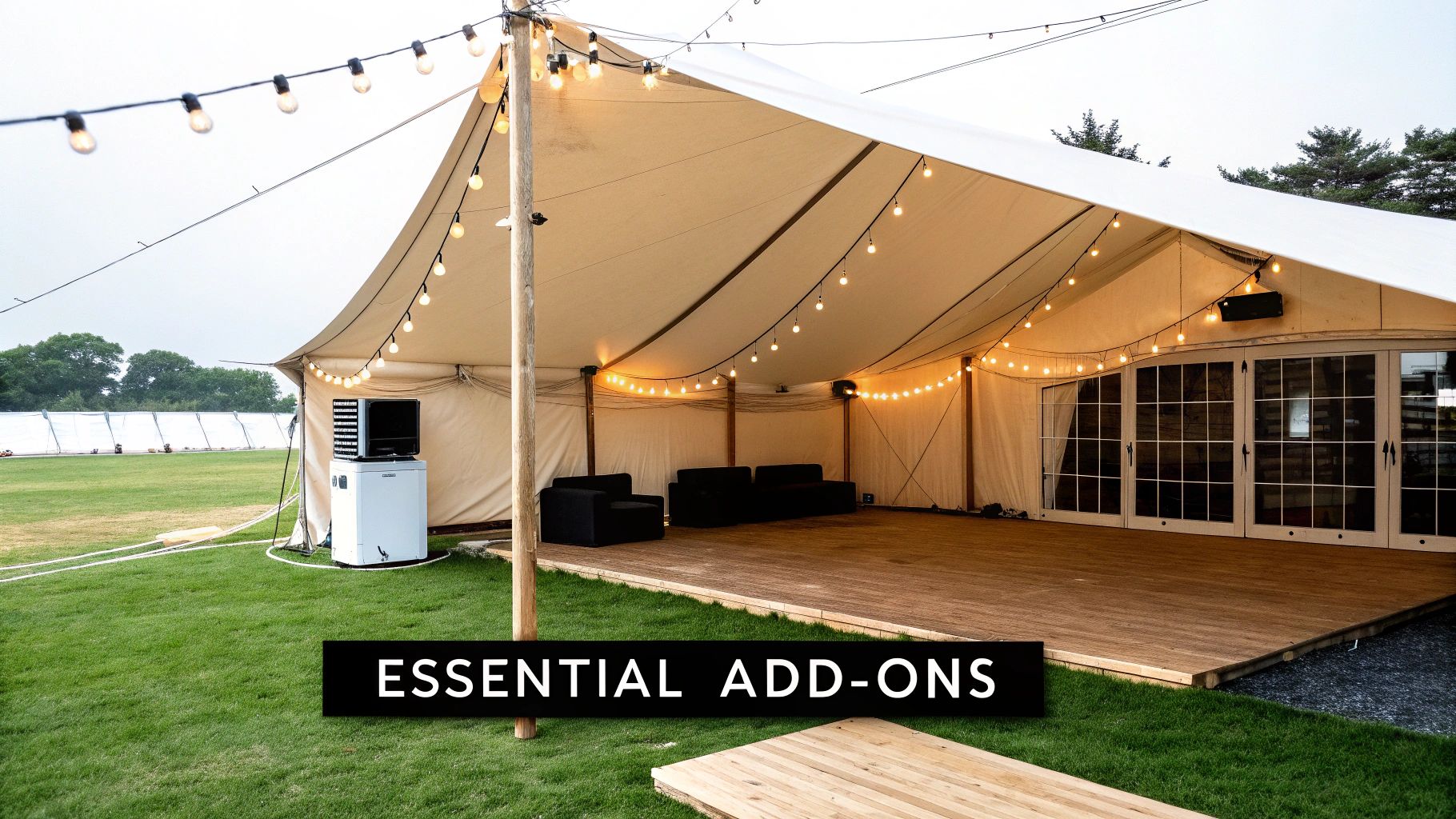
A stylish event tent interior with lounge seating, wooden flooring, and warm string lights.

Creating a Foundation with Flooring

Flooring is probably the most important add-on you'll consider. It’s not just about looks; it's about pure practicality and keeping your guests comfortable. Laying a temporary floor saves your guests' shoes from mud or damp grass, gives you a stable surface for tables and chairs, and instantly makes the space feel more like a proper indoor venue.

You've got a few options, each with a different price point:

  • Pro-Floor: This is a durable, interlocking plastic flooring. It's brilliant for high-traffic areas and for creating a solid, level base on slightly uneven ground.
  • Wooden Flooring: For a more rustic and elegant feel, wood is a fantastic choice, especially for weddings or upmarket corporate events. It’s also perfect for setting up a defined dance floor.
  • Artificial Grass or Astroturf: A great, cost-effective way to cover patchy ground while still keeping that outdoor vibe.

The cost will come down to the square metres you need and the material you pick, but it’s an absolute must for any event that isn’t on a perfectly manicured lawn.

Setting the Mood with Lighting and Climate Control

Lighting does so much more than just help people see – it creates the entire mood of your event. From warm, festive fairy lights to sophisticated uplighters that show off the tent’s graceful curves, your lighting choices are what bring the space to life after sunset.

Likewise, you can’t ignore Cape Town’s unpredictable weather. Even on a warm day, evenings in the Winelands can get seriously chilly. Having heaters on standby is non-negotiable for keeping your guests happy. For a bit more detail on what to look for, you can check out our guide on selecting a gas outdoor heater for your event space.

Crucial Consideration: Never underestimate the impact of climate control. Being too cold is one of the fastest ways to send guests home early. Budgeting for heaters is a small investment that pays off big time in guest comfort.

Final Touches for Weather and Atmosphere

To really complete your setup, think about adding sidewalls. They are invaluable for blocking wind or driving rain, effectively weatherproofing your venue and giving you total peace of mind. You can get solid walls for full protection or clear ones to make sure you don't lose that beautiful vineyard view.

Finally, there’s the furniture. From elegant dining tables and chairs to relaxed lounge pods with bean bags, the right furniture organises the space and defines how your guests will experience the event. Working with a single supplier for both your tent and furniture just makes the logistics so much simpler and guarantees a stylish, coordinated look for your big day.

Renting vs Buying a Tent: Which Makes More Financial Sense?

When you start looking at prices for stretch tents, you'll quickly hit a crossroads: should you hire or buy? At first glance, buying a tent might seem like a smart move for the long haul, especially if you're a venue owner or you host events often. But when you really dig into the numbers, the picture gets a lot more complicated.

For most people, especially if you're planning a once-off celebration or an annual festival, renting is almost always the smarter, more practical choice. The ticket price of a new tent is just the beginning—the real costs are lurking just below the surface, ready to sink your budget.

The Upfront Investment of Buying

Let's be clear: purchasing a professional-grade stretch tent is a serious capital expense. A top-quality tent, the kind built to handle the Western Cape’s wild and unpredictable weather, comes with a hefty price tag that just doesn't add up for infrequent use.

To put it in perspective, we've seen how the numbers stack up for our clients. For anyone at ABC Hire weighing their options, choosing to rent over buying—where upfront costs can easily hit R30,000 to R100,000—ends up being 70% more economical for single events. That’s after you factor in all the hidden extras like maintenance and storage. You can discover more insights about tent pricing structures to see the full breakdown for yourself, but that immediate saving is usually what seals the deal.

Uncovering the Hidden Costs of Ownership

Beyond that initial purchase, owning a stretch tent saddles you with a long list of ongoing headaches and expenses. When you hire from a company like ours, we take care of all of it. These are the costs that catch people out, adding up quietly but dramatically over time.

Think about these recurring costs:

  • Specialised Storage: These tents aren't small. They're bulky, heavy, and need a large, dry, and secure spot to live. Without it, you’re risking mould, mildew, and damage—a huge overhead to carry.
  • Regular Maintenance and Cleaning: After every single use, the tent needs a professional clean, a thorough drying, and a detailed inspection for any wear and tear. Even tiny holes or seam issues have to be fixed immediately to keep it waterproof.
  • Insurance and Liability: Putting up a massive structure like this comes with public liability risks. You’ll need comprehensive insurance, which is another significant cost you'll be paying every year.
  • Skilled Labour: Rigging a stretch tent properly and safely is not a DIY job. It takes a trained crew that knows exactly what they’re doing with tension, rigging, and safety protocols. That means either hiring and training your own team or outsourcing the job—both add to your operational costs.

When you hire a tent, you’re essentially paying for the temporary use of the asset without any of the long-term financial baggage. You get a perfect, professionally installed tent for your event, and then it simply disappears, taking all the costs and stress of ownership with it. For most, this makes renting the clear financial winner, hands down.

Your Stretch Tent Questions, Answered

Planning an event comes with a lot of questions. Here are the answers to the ones we hear most often about hiring a stretch tent in and around Cape Town. Think of this as your cheat sheet for planning with confidence.

How Far in Advance Should I Book a Stretch Tent for a Wedding?

For a wedding during Cape Town’s peak season (that's November through to March), you really need to be booking your stretch tent 6 to 9 months ahead. Believe me, the popular weekend dates get snapped up incredibly fast.

Getting in early doesn't just guarantee you get a tent; it also locks in the current price before any seasonal increases kick in. If you're planning for the off-peak season, 3 to 4 months is often fine, but booking sooner is always the smartest move.

Does the Rental Price Include Setup and Takedown?

Absolutely. Any professional quote you get should always include the cost of setup and takedown. This isn't just a nice-to-have; it's a critical safety standard. Proper installation by a trained crew is the only way to make sure the tent is stable and secure, especially with Cape Town's famously unpredictable wind.

Always double-check that this is part of your quote. If a company offers you a "tent-only" price without installation, consider it a major red flag. That's just not how the industry works safely.

Expert Advice: A good quote from a reputable supplier will be clearly itemised. The total price you see should cover the complete service—from delivery and professional rigging right through to the final collection after your event is over.

Are There Hidden Costs I Should Watch Out For?

A transparent quote should lay everything out, but it's always wise to ask about potential extras that might pop up. Common costs that aren't always in the initial tent price include:

  • Delivery Fees: These are usually calculated based on how far your venue is from the supplier's warehouse.
  • After-Hours Collection Charges: If your event runs late into the night, there might be a fee for a late takedown.
  • A Refundable Damage Deposit: This is standard practice for most hire companies and you'll get it back if everything is in order.
  • Fees for Complex Setups: Rigging a tent on a tricky surface like a rooftop or a weighted balcony often requires more work and gear.

And don't forget, add-ons like flooring, lighting, and sidewalls are typically billed separately. To keep your budget on track, always ask for a detailed quote so you can fully understand the prices for stretch tents and all the related services without any nasty surprises.

Can a Stretch Tent Be Set Up on Any Surface?

One of the best things about stretch tents is their versatility. They can be rigged on grass, sand, and even hard surfaces like concrete or paving. The type of surface just changes the installation method and, sometimes, the cost.

For soft ground like a lawn, we use long pegs to anchor the tent securely. On hard surfaces where we can't peg, we bring in heavy weights or concrete blocks to do the job. This might add a small charge to cover the extra transport and labour for the weights. It's always a good idea to chat with your supplier about your venue's surface right from the start.


Ready to create a stunning, weather-proof venue for your next event? The team at ABC Hire offers a wide range of high-quality stretch tents and event furniture to bring your vision to life. Explore our event hire solutions today and get a transparent quote for your Cape Town celebration.
Stretch Tents Hire Cape Town Your Complete Event Planning Guide

If you're planning an event anywhere in the Western Cape, getting the right shelter sorted is probably high on your list. And when it comes to stretch tents hire Cape Town has options that are more than just practical—they're incredibly stylish and a far better choice than old-school marquees for almost any event you can dream up.

Why Stretch Tents Are the Top Choice for Cape Town Events

Anyone who has planned an event in Cape Town knows that the venue is everything. The city and its stunning surrounds, from windswept beaches to tranquil Winelands estates, offer a spectacular natural canvas. The catch? That famously unpredictable weather. One minute you're basking in sunshine, the next the 'Cape Doctor' is blowing through with a vengeance. This is where a stretch tent really proves its worth.

Forget the rigid, boxy feel of a traditional marquee. A stretch tent gives you incredible adaptability. Their fluid, organic shapes aren't just for looks; they serve a vital purpose, allowing them to be set up in countless ways to work with the landscape, not fight against it.

Mastering the Elements with Style

The real magic of a modern stretch tent is how it handles Cape Town’s notorious "four seasons in a day." Any reputable local supplier will provide you with a structure properly engineered to stand up to the region’s powerful winds and sudden cloudbursts.

For example, companies like Cape Tents, who have been a key part of the local events scene since 2013, use materials that are completely waterproof, fire-retardant, and UV-resistant, all while meeting strict South African safety standards. It’s hardly surprising that industry estimates show stretch tents for weddings alone account for about 40% of all tent rentals in the Western Cape.

Here's a pro tip for any planner: a stretch tent’s stability comes down to the quality of the rigging. Always go with an experienced, insured company that truly understands the local conditions.

Versatility for Iconic Cape Town Venues

Beyond being weatherproof, it's their visual flexibility that really makes them stand out. A stretch tent can completely transform a space, creating an incredible atmosphere without blocking those million-dollar views.

Just picture these scenarios:

  • A Winelands Wedding: Think of a celebration at a beautiful Durbanville or Stellenbosch wine farm. You can rig a stretch tent over a courtyard, perfectly connecting indoor and outdoor areas while framing the views of the vineyards.
  • A Clifton Beach Party: A marquee would be a non-starter on uneven, sandy ground. But a stretch tent can be securely anchored to create a chic, sheltered lounge right on the sand.
  • A Corporate Event in the City Bowl: You can set up a tent over a rooftop terrace or in a historic garden, letting it blend with the existing architecture for a truly unique and sophisticated venue.

This adaptability is what makes them the smartest choice for event planners. If you're looking to coordinate every last detail of your function, our guide to event management in Cape Town has plenty more useful tips. The power to customise the setup ensures every event feels personal and perfectly designed.

How to Choose the Perfect Stretch Tent Size

Getting the size of your stretch tent right is probably the single most important decision you'll make. It’s about more than just fitting everyone inside; it's about crafting the entire atmosphere of your event. A tent that's too small will feel cramped and chaotic. Go too big, and even a packed event can feel strangely empty. The goal is to hit that sweet spot.

Your guest count is the obvious place to start, but the style of your event is what really dictates the space you'll need. A standing cocktail party is a world away from a formal seated dinner with round tables. You have to think about how your guests will actually use the space from start to finish.

Calculate Your Base Space Needs

Before you even look at tent dimensions, you need a baseline number. This calculation all comes down to what people will be doing inside the tent. Think of it as a simple formula: your number of guests multiplied by a specific space factor.

Here are the guidelines we use every day in the Cape Town events scene:

  • Standing Cocktail Function: Aim for about 1.0 square metre per person. This gives everyone enough room to mingle and chat without bumping elbows.
  • Seated Dinner (Rectangular Tables): Plan on roughly 1.5 square metres per guest. This layout is a bit more space-efficient.
  • Seated Dinner (Round Tables): You'll need a little more breathing room here—about 1.8 square metres per person. This allows for chairs to be pushed back and for people to move around the tables comfortably.

To help you get a quick estimate, we've put together this handy reference table.

Quick Guide to Stretch Tent Sizing for Cape Town Events

Use this table as a starting point to estimate the ideal tent size based on your guest count and event style.

Event Style Number of Guests Recommended Tent Size (m²) Typical Dimensions (m)
Cocktail Style 50 50 – 60 m² 6m x 10m
Cocktail Style 100 100 – 120 m² 10m x 12m
Seated (Rectangular Tables) 50 75 – 85 m² 7.5m x 10m
Seated (Rectangular Tables) 100 150 – 160 m² 10m x 15m
Seated (Round Tables) 50 90 – 100 m² 10m x 10m
Seated (Round Tables) 100 180 – 200 m² 10m x 20m or 12m x 15m

Remember, this is just for your guests. You still need to account for all the other elements that make an event tick!

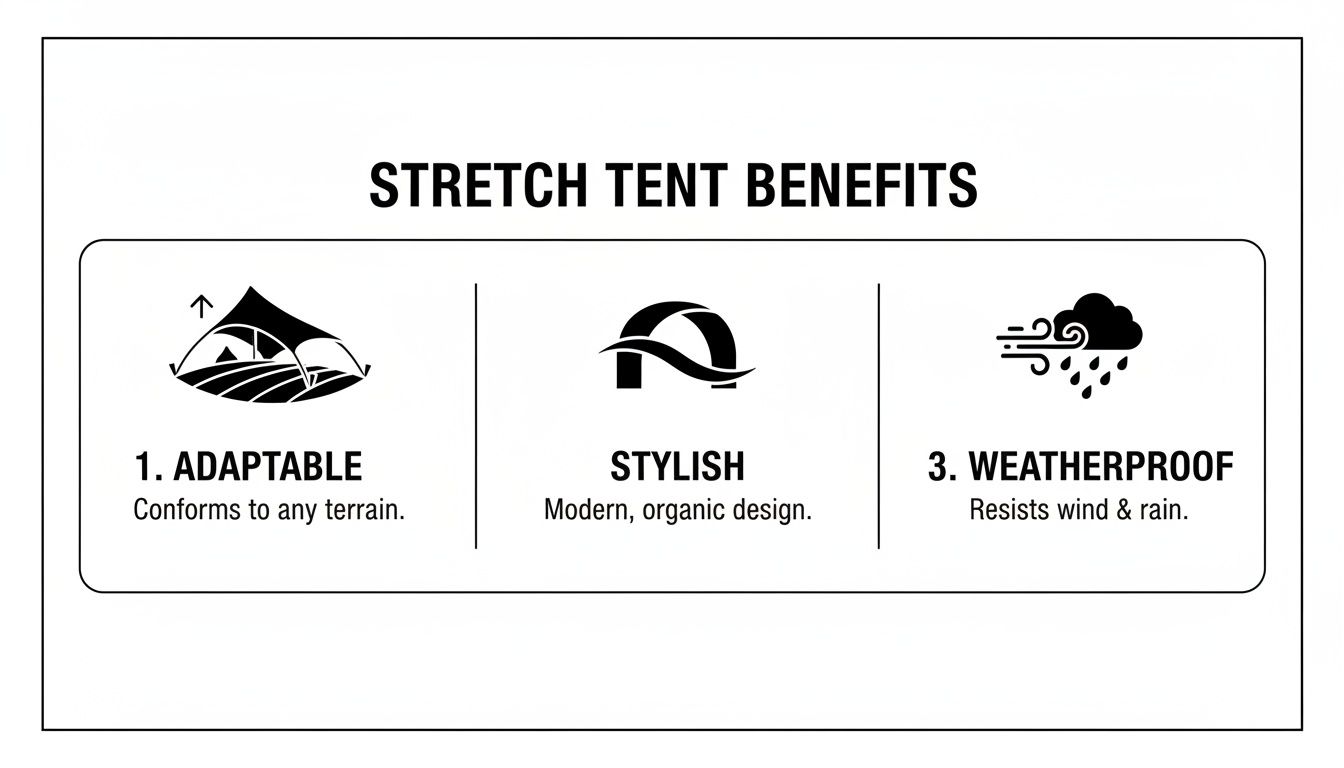
Graphic illustrating stretch tent benefits: adaptable to any terrain, stylish design, and weatherproof against wind and rain.

The real magic of a stretch tent is its adaptability. You can get creative with layouts and work with your venue, not against it, while ensuring everyone stays dry and comfortable.

Planning Beyond the Guest Count

Right, let's move past just the tables and chairs. This is a classic mistake we see all the time—forgetting to account for the functional areas that eat up floor space.

Think about adding extra square metres for these crucial elements:

  • Dance Floor: This is a big one. A good rule of thumb is to assume about a third of your guests will be on the dance floor at any given moment. Adding an extra 0.3 to 0.5 square metres per guest will give you a lively but comfortable space.
  • Catering and Bar Areas: Buffet tables, food stations, and especially a dedicated bar all have a surprisingly large footprint. Chat with your caterer to get a solid estimate of the space they need for setup and service.
  • Entertainment: Are you having a DJ or a live band? A simple four-piece band can easily need a 4m x 3m stage area (12 m²), and that’s before you even think about their gear or a small backstage spot.

By adding up your guest space requirements and your functional area needs, you arrive at a total square meterage. This number is your most powerful tool when you request a quote for a stretch tents hire in Cape Town, ensuring you get accurate pricing from the start.

If you want to dig deeper into the pros and cons of different structures, this detailed overview of tent hire in Cape Town is a great resource. It helps make sure you're not just guessing but making a choice based on solid calculations.

Getting to Grips with Your Venue and Site Assessment

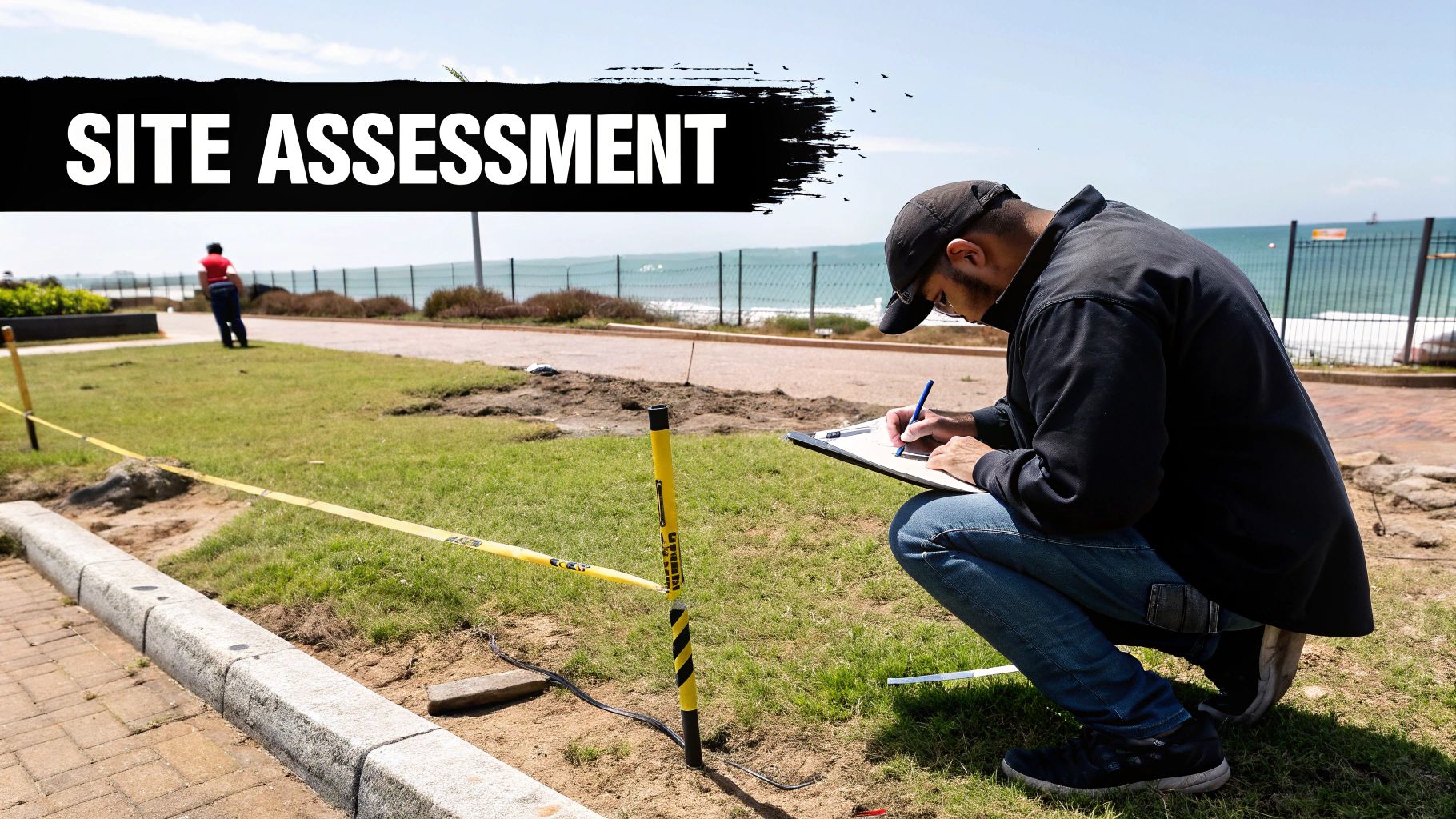
One of the best things about a stretch tent is its sheer versatility, but that flexibility only works if we start with a proper site assessment. Before you can lock in a booking for your stretch tents hire in Cape Town, any reputable supplier will insist on checking out your venue. Trust me, this isn't just a formality. It’s the single most important step to guarantee a safe, seamless setup that doesn't damage the venue.

A professional assessment is far more than just measuring a patch of grass. We're looking at the ground conditions, thinking about how the wind might behave on the day, and planning the logistics of getting everything into place. A little prep work here prevents a lot of headaches later.

Crouching man writes on a clipboard during a site assessment with caution tape and the ocean in the background.

What Lies Beneath: Checking the Ground Surface

The surface we're rigging on has a huge impact on how we anchor the tent—and what it will cost you. Every surface needs a different technique to make sure that tent isn't going anywhere.

  • Grass and Soil: This is the easiest canvas to work with. We use long, heavy-duty pegs driven deep into the earth to create a solid anchor. It's the standard, most affordable way to do things.
  • Sand: Got a beach wedding in mind? Fantastic, but it requires a bit more planning. We'll need to use specialised sand anchors or even bring in a weighted system to keep things secure. Rigging on sand is definitely more labour-intensive.
  • Paving, Concrete, or Decks: When we can't peg into the ground, we have to get creative. The crew will use incredibly heavy weights or find existing structural points to secure the tent. This needs careful calculation to ensure the load is distributed safely.

Before a single peg goes into the ground, it's absolutely crucial to know what's underneath. Hidden irrigation lines, electrical cables, or water pipes can turn a simple setup into a disaster. Always flag any known underground services with both your hire company and the venue manager.

Facing the Wind and Planning Access

In a city famous for its howling South-Easter, you can't ignore the wind. An experienced Cape Town crew knows the local wind patterns inside out. They'll know how to orient the tent to minimise the impact, maybe by dropping one side lower to create a windbreak. It makes all the difference.

The local stretch tent industry has been dealing with Cape Town’s unique weather for years. With some of the pioneers starting back around 2011, today's top suppliers have rigging down to a fine art, capable of handling gusts up to 100 km/h. It’s no surprise that research shows 75% of Cape Town clients now pick stretch tents over old-school marquees—they look incredible and offer far better protection from the elements. You can read more about how these structures have changed the local event scene over at Stretchi.co.za.

Lastly, let's talk about the simple stuff: access. How close can the delivery truck get to the setup spot? A long walk carrying heavy gear means more time and more hands, which will be reflected in your quote. Being upfront about access from the start helps everyone plan better.

Getting to Grips with Stretch Tent Hire Costs in Cape Town

Figuring out the cost of hiring a stretch tent in Cape Town isn't as simple as picking an item off a shelf. The final quote is a mix of a few key things, but it all starts with the base hire fee for the tent itself. Naturally, this comes down to size – the more square metres you need, the higher that initial cost will be.

But you're not just paying for the canvas. Professional rigging is an absolute must for safety and a flawless setup, so the cost of labour for an experienced crew is always part of the deal. These are the guys who make sure your tent is installed perfectly and can stand up to a surprise gust of the Cape Doctor.

What Really Shapes Your Quote

Beyond the basic tent size and the standard rigging, a few other factors will nudge the final price up or down. Knowing what these are helps you make sense of different quotes and plan your budget a lot more accurately.

Here’s what really influences the cost:

  • How long you need it: Most quotes cover a standard 1-3 day hire. If you’re planning a week-long festival or a lengthy corporate activation, the price will be adjusted for the longer period.
  • The complexity of the setup: Rigging a tent on a flat, open lawn is the most straightforward and budget-friendly option. Things get trickier—and a bit more expensive—when you're setting up on a sandy beach, a paved area that needs heavy counterweights, or a tricky multi-level deck. This kind of setup just takes more time, skill, and specialised gear.
  • The time of year: Cape Town’s peak event season, which generally runs from November to April, is when demand skyrockets. If you're planning a summer wedding or a festive season party, it's wise to book well in advance, as prices are often firmer during these busy months.

Don't Forget About Travel and Delivery

Most suppliers based in Cape Town will include delivery within a certain radius of the city bowl in their standard package. If your event is happening a bit further out, you can expect a travel surcharge to be added to your bill. It’s a fair charge that covers fuel and the crew’s extra travel time.

Planning an event in the Stellenbosch Winelands, Franschhoek, Paarl, or up the beautiful West Coast? A travel fee is pretty standard. It's always a good idea to confirm this right at the start when you ask for a quote, just to avoid any surprises.

Looking at the market, prices for stretch tent hire in Cape Town can swing from around R3,000 to over R25,000 per event, which really shows you how much the size and complexity can vary. Their stylish, versatile nature makes them the go-to choice, accounting for roughly 60% of all tent hire enquiries in the Western Cape. You can see more on these local market trends at Snupit.co.za.

While nailing down these specific costs is crucial, it’s just one piece of the puzzle. For the bigger picture on how to pull your entire event budget together, have a look at this a comprehensive guide to budgeting for an event. By understanding all the moving parts, you can compare quotes with confidence and find the perfect tent that fits both your vision and your wallet.

From Your First Call to the Final Takedown

So, you're ready to look into a stretch tent hire in Cape Town? Getting the logistics right might seem daunting, but it’s actually a pretty straightforward process when you know what to expect.

The golden rule, especially for an event during the busy season (that’s November to April for us), is to start your planning early. We always advise clients to begin making enquiries at least three to six months in advance. This gives you the best chance of securing your preferred tent and supplier without any last-minute panic.

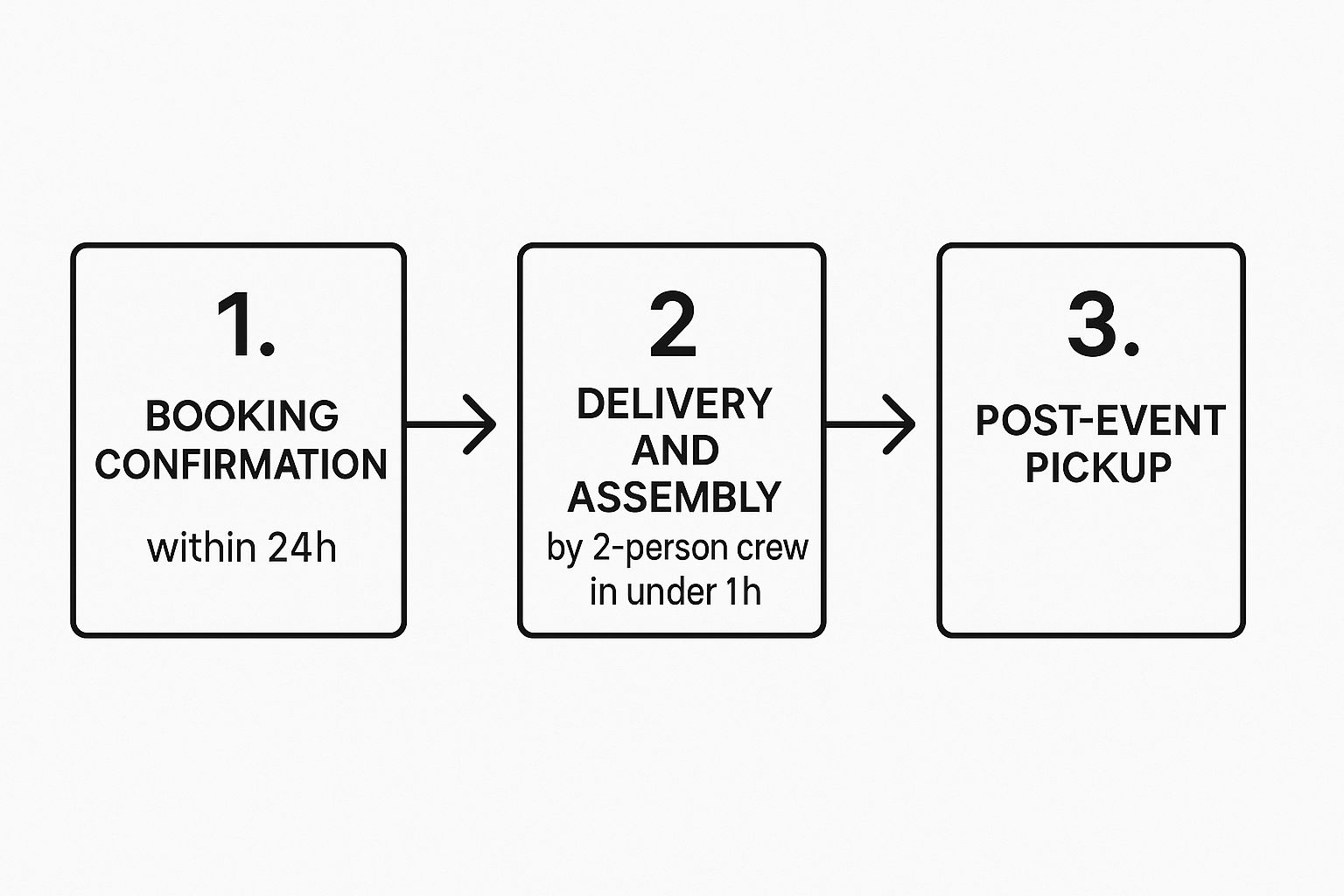
Your first step is usually to request a quote. To get an accurate first estimate, you'll need to have a few details ready: your event date, the venue’s location, a rough guest count, and an idea of the event style. Is it a sit-down dinner or a more casual cocktail party? This info helps us figure out what you’ll need right from the get-go.

From Quote to Confirmation

Once you've got an initial quote you're happy with, the next step is absolutely vital: the site visit. Honestly, any professional tent company will insist on this before confirming a booking, and for good reason. It’s our chance to get a proper feel for the space. We'll assess the ground surface, look out for any overhead branches or underground pipes, and figure out the safest, most effective way to rig the tent at your venue.

This is your time to ask all the questions. We’ll chat about everything from truck access for delivery to which way the wind typically blows across the property. It’s also the perfect moment to go through the rental agreement.

Pay close attention to these key details:

  • Payment Schedule: The industry standard is a 50% deposit to lock in your booking, with the final payment due just before we set up.
  • Cancellation Policy: Life happens. Make sure you understand the deadlines and terms if you need to make changes or cancel.
  • Damage Waiver: It's important to be clear on who is responsible for the tent while it’s in your care.

A solid rental agreement is there to protect everyone involved. Don't be shy about asking for clarification on anything that seems unclear before you sign on the dotted line and pay your deposit. Once that's done, your tent is officially reserved!

The Magic of Installation and Breakdown

On the day before your event, our installation crew will arrive to bring your vision to life. A typical setup for a medium-sized tent (around 150m²) takes our team of four to six riggers about three to five hours from start to finish. All you need to do is make sure the area is clear and accessible, and have someone on-site to give the final nod on the tent's position.

After your guests have gone home and the party is over, the takedown is usually much faster. Our crew will return at a pre-arranged time—often the next day—to dismantle and pack up the tent quickly and efficiently. We make sure to leave the venue exactly as we found it, marking the end of a successful event.

Essential Add-Ons to Elevate Your Event Space

A stretch tent gives you a stunning, weatherproof canvas, but the real magic is in the details. The right extras are what turn a functional shelter into an unforgettable atmosphere. When you're looking at stretch tents hire Cape Town companies, always ask what add-ons they have in their inventory—it can make your planning a whole lot simpler.

An outdoor event space with white stretch tents, wooden deck, string lights, and green field.

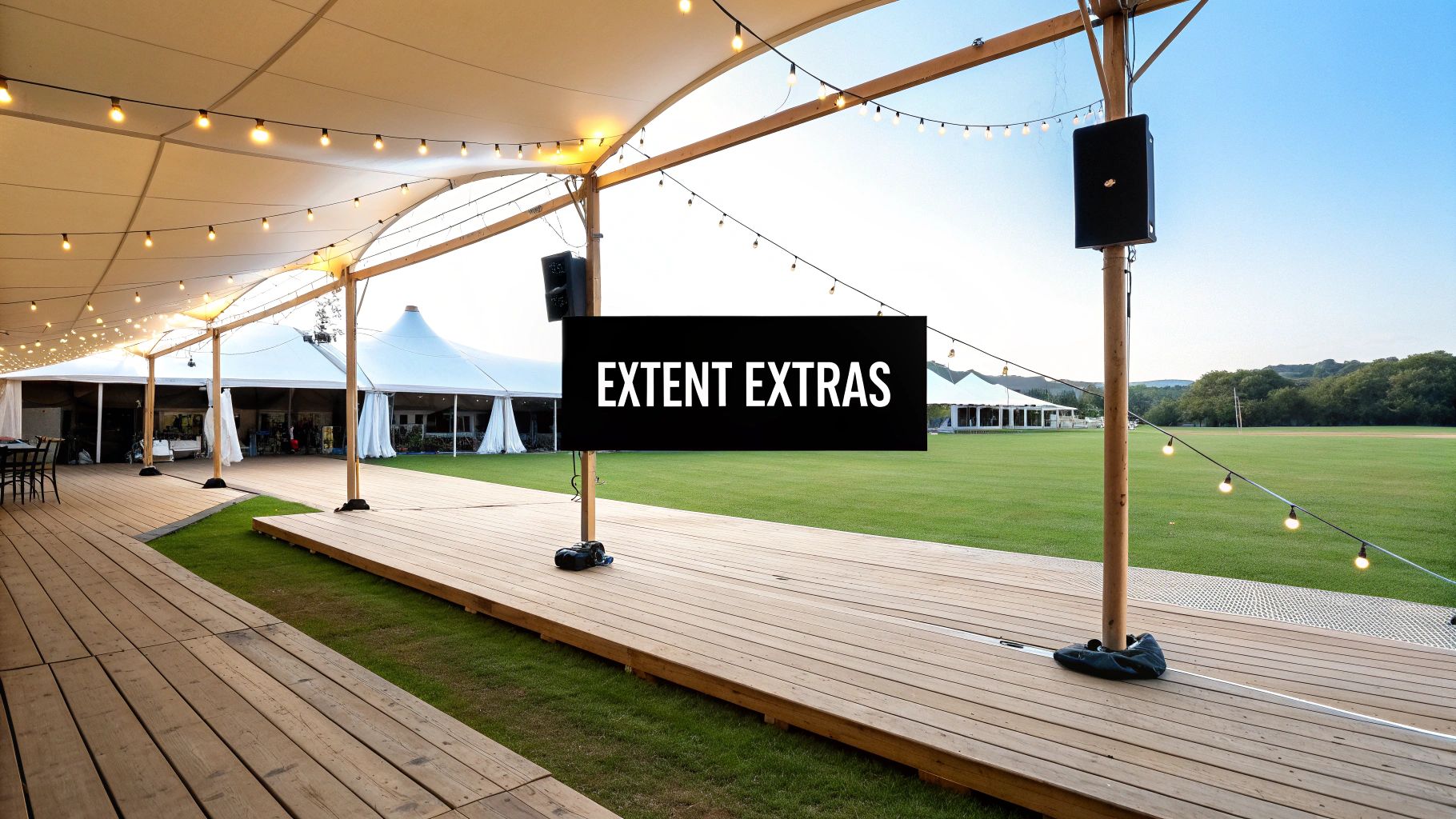
The foundation of any great tented event is, quite literally, the floor. As lovely as lush grass is, it’s not always the best friend to high heels or a dedicated dance area. Most suppliers offer flooring solutions that completely change the feel of the space.

Creating Comfort and Style from the Ground Up

You can go way beyond a simple groundsheet. Wooden flooring adds a touch of class and gives you a solid, level surface that's perfect for a formal dinner or a wedding reception. If you're after a more rustic vibe, options like coir matting work beautifully. And of course, a classic black-and-white dance floor creates a clear focal point for the party.

Atmospheric lighting is another non-negotiable for getting the mood right, especially as the sun goes down over the Cape. Simple, well-placed lighting can make a huge impact. To really nail the ambience, it's worth checking out this detailed guide to string lights for tents to see what’s possible.

Here are a few popular options you’ll find with local rental companies:

  • Festoon Lights: These classic, larger bulbs give off a warm, ambient glow and a celebratory, almost festival-like feel.
  • Fairy Lights: For something a bit more delicate and enchanting, you can have thousands of tiny lights wrapped around poles or strung across the ceiling.

You can see just how magical lighting can be by learning more about the effect of curtain fairy lights in our article.

A pro tip for Cape Town events: always plan for the cool evenings. Even after a beautiful, warm day, the temperature can drop quickly once the sun is gone. Mushroom heaters or other discreet climate control options are a must to keep your guests comfortable all night long.

Finally, think about functional furniture that helps define different zones within your tent. Chic lounge pods can create relaxed breakaway areas for guests to chat, while a stylish mobile bar quickly becomes a central social hub. It’s these thoughtful additions that really complete the experience.

A Few Common Questions About Stretch Tent Hire

When you're deep in event planning, a few questions are bound to pop up. Most stretch tent hire suppliers in Cape Town have seen it all, but getting quick answers to the common stuff can really set your mind at ease.

Do I Need a Permit for a Stretch Tent in Cape Town?

For an event on private residential property, you generally won't need a permit. But if you're planning something in a public space, on a beach, or at certain venues, you'll likely need an event permit from the City of Cape Town.

Your tent hire company is your best first call for this. Always have a chat with both your venue and your tent supplier about permits—they often have the inside track and can help with the paperwork.

Are Stretch Tents Waterproof and Wind-Resistant?

Yes, absolutely. Any reputable Cape Town supplier will be using high-quality, 100% waterproof fabric. These tents are also specifically engineered to handle our local winds, including the infamous 'Cape Doctor' south-easter.

The real secret to stability in windy conditions is professional rigging. It’s crucial to hire an experienced, insured company that knows exactly how to anchor a tent for Cape Town’s unique weather patterns.

Can You Put a Stretch Tent Up on Any Surface?

Pretty much! That's one of their biggest perks. Stretch tents can go up on grass, sand, paving, and even be rigged over pools or decks. The surface just changes the rigging method.

  • Soft Ground: Standard pegs are used to anchor it securely.
  • Hard Surfaces: This requires weights and sometimes bolts.

Just make sure you tell your supplier about the surface right from the start. It can affect the quote and the gear they bring on the day, so it's good to get it sorted early.


Ready to create an unforgettable event space? ABC Hire offers a premier selection of stretch tents and event furniture to bring your vision to life. Explore our options and get a quote today at https://abchire.co.za.

Gazebo For Hire A Complete South African Event Guide

When you’re planning an outdoor event in South Africa, a hired gazebo is almost always the smartest way to go. It’s a simple, stylish way to create a temporary shelter, saving you from the massive upfront cost of buying, the headache of storage, and the ongoing chore of maintenance.

Whether you’re hosting a small garden party or a big corporate do, hiring just makes sense.

Why Hiring a Gazebo is a No-Brainer for Your Next Event

Let’s be honest, South African weather is famously unpredictable. You can have glorious sunshine in Cape Town one minute, and a surprise downpour in Johannesburg the next. This makes having reliable shelter completely non-negotiable.

While buying a gazebo might seem like a decent investment, the reality of cleaning it, storing it, and dealing with potential damage often makes it a poor choice for a one-off event. This is where finding a quality gazebo for hire becomes a total game-changer. You’re not just getting cover; you’re getting convenience, value for money, and access to professional-grade gear you probably wouldn’t buy yourself.

The Practical Perks of Renting vs. Buying

Think about what owning a big gazebo actually involves. First, there’s the initial cost, which can be pretty steep for a model that won’t fall apart in the first gust of wind.

After the party’s over, you’ve got to clean the canopy and dry it properly to stop mould from setting in. Then comes the real challenge: where on earth do you store the bulky frame and all that fabric? For most of us, garage space is already jam-packed.

Hiring a gazebo sidesteps all of this drama. A professional rental company takes care of everything for you.

  • No Storage Headaches: The gazebo gets delivered right before your event and picked up right after. It never clutters up your home.
  • A Cost-Effective Choice: You only pay for the time you actually need it, making it far kinder on your budget than buying one outright.
  • Access to Pro-Quality Gear: Rental gazebos are usually commercial-grade. They’re built tougher and are way more weather-resistant than the models you’d find in a retail store.
  • Amazing Variety and Flexibility: Need a little 3x3m pop-up for a market stall? No problem. Planning a wedding and need a much larger, more elegant structure? You can get that too. You choose the perfect size and style for each specific event.

Real-World Scenarios Where Hiring Just Works

Let’s paint a picture. Imagine you’re organising a year-end corporate braai in the Winelands for about 30 people. You need a shelter that looks clean and professional. Hiring a sturdy, well-maintained gazebo ensures your setup looks the part without the company having to buy and store one.

Or maybe you’re a food vendor at a weekend market like the Neighbourgoods Market. Your needs can change from one week to the next. One Saturday you might need a single stall, but the next you might need two gazebos linked together with side walls for extra protection from the wind. A gazebo for hire service gives you that crucial flexibility.

The real beauty of hiring is that you can scale up or down whenever you need to. You’re never locked into one size or style, so you can perfectly match the shelter to the event, whether it’s an intimate family gathering or a massive public festival.

Ultimately, choosing to hire is a strategic move. It frees up your time, your budget, and your energy so you can focus on what really matters: creating an amazing experience for your guests. You get all the benefits of a top-quality shelter with none of the long-term burdens.

Choosing the Right Gazebo Size and Material

Image

Choosing the right gazebo is about so much more than just putting a roof over your guests’ heads. It’s about creating an atmosphere and making sure everyone is comfortable. Nail the size and material from the get-go, and you’ll avoid those last-minute logistical nightmares that can derail an otherwise perfect event.

One of the most common slip-ups we see is underestimating how much space is actually needed. A gazebo that’s too small feels cramped and unwelcoming. Go too big, and a smaller, intimate event can feel sparse and lost. The real trick is to think about what your guests will be doing in that space. Are they standing around mingling with a drink, or will they be sitting down for a proper meal?

Matching Gazebo Size to Your Event

First things first, get a headcount. But don’t stop there. You need to think about the layout. A cocktail-style event where everyone is standing means you can fit more people in. If you’re planning a seated dinner, you have to account for tables, chairs, and enough room for people to push their chairs back and walk around without bumping into each other.

A standard 3x3m pop-up gazebo is a brilliant, versatile choice for smaller needs. It’s spot-on for a vendor stall at a weekend market, a ticket booth, or even just a dedicated drinks station at a garden party. For anything bigger, you’ll want to look at a more substantial structure or even link multiple gazebos together to create a custom-sized venue.

A great rule of thumb is to allow roughly 1.5 square metres per person for a standing reception. If guests will be seated at tables, you’ll want to bump that up to around 2 square metres per person. This guarantees everyone has a bit of breathing room.

To make things a bit easier, here’s a quick reference table to help you visualise the space you might need.

Gazebo Size And Capacity Guide

This handy guide should give you a solid starting point for figuring out what size gazebo will best suit your guest list and event style.

Gazebo Size (Metres) Standing Capacity (Approx.) Seated At Tables (Approx.) Common Use Case
3m x 3m 10-12 people 6-8 people Market stalls, small garden parties, info booths
3m x 6m 20-25 people 15-18 people Medium-sized gatherings, buffet setups, bands
6m x 6m 40-50 people 30-35 people Small weddings, corporate functions, parties

Using a practical guide like this ensures that when you opt for a gazebo for hire, you’re getting a space that truly works for you. Here in South Africa, the event hire business is huge, and pricing reflects that versatility. You can expect to see daily rates ranging from R350 to R2,200. For that popular 3m x 3m size, you’re often looking at between R450 and R650 per day, excluding VAT. It’s always a good idea to learn more about typical rental rates to find a provider in your area.

Understanding Materials and Frames

The material of your hired gazebo is just as critical as its size, especially with South Africa’s famously unpredictable weather. Your choice here will directly impact how well your event holds up against sun, wind, and the occasional downpour.

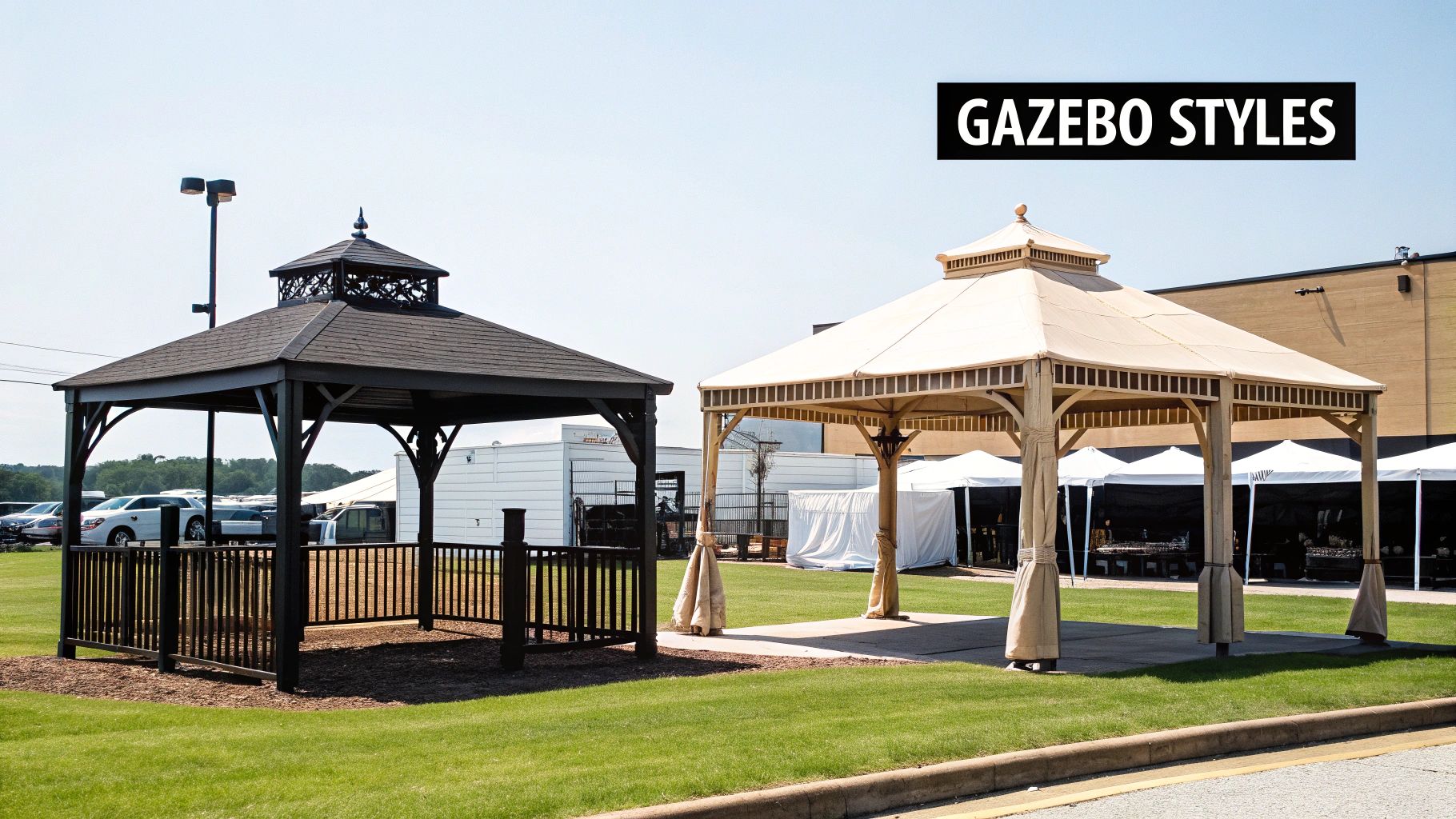
Most rental gazebos you’ll find have canopies made from one of two materials: polyester or PVC.

  • Polyester: This is a very common, lightweight option that gives you good UV protection and is water-resistant. It’s perfect for a sunny day with a chance of light showers – think casual daytime events where a massive storm isn’t a major worry.
  • Heavy-Duty PVC: When you need serious weather protection, PVC (polyvinyl chloride) is the undisputed champion. It’s 100% waterproof and far more durable than polyester. This makes it the go-to for weddings and corporate events where you absolutely cannot afford any weather-related mishaps.

Now, let’s talk about the frame. The frame is what gives the gazebo its stability. Aluminium frames are light and super easy to set up, which is great for the pop-up kind. But if you’re dealing with windy conditions, like a breezy afternoon in Cape Town or a Highveld thunderstorm, a heavier steel frame provides that essential sturdiness and gives you total peace of mind.

Lastly, don’t overlook the option of adding side walls. For many events, they’re a non-negotiable. They offer brilliant protection from wind and driving rain, give your event some privacy, and can help create a cosier, more enclosed atmosphere when you need it. Most hire companies offer them as an optional extra, and they are well worth the small additional cost for the flexibility they bring.

Getting to Grips with Gazebo Hire Costs in South Africa

Image

Figuring out the true cost of hiring a gazebo isn’t just about the daily rate you see advertised. While that number is a good starting point, a few other things can pop up and change the final invoice. Nailing down a clear budget is key for any event, so let’s walk through all the potential costs you should expect.

This way, you can confidently compare quotes from different companies, knowing you’re looking at the whole picture. From delivery fees that depend on distance to those optional extras that add a bit of flair, we’ll cover every part of the price.

The Basic Daily Hire Fee

At the heart of any quote is the daily fee for the gazebo itself. This price is mostly decided by the size and quality of the structure you pick. A simple 3x3m pop-up gazebo, for instance, is going to be your most budget-friendly choice, perfect for a market stall or a small get-together in the garden.

As you start looking at larger, tougher structures with heavy-duty PVC tops and solid steel frames, the price naturally goes up. Across South Africa, you’ll find a wide range of pricing that shifts based on your location, the scale of your event, and even the time of year.

Generally, you can expect to hire a smaller gazebo (like a 3m x 3m) for around R450 to R650 per day. For bigger setups, many companies charge per square metre—usually between R30 and R50. The good news is that larger tents often work out cheaper per square metre. You can dig a bit deeper into these costs by checking out typical marquee and tent rental rates in South Africa.

What Else Comes into Play? Added Service Costs

This is where you can get caught out if you’re not careful. Most quotes will list these services separately, so always read the fine print.

  • Delivery and Collection Fees: This is a big one. The cost is all about the distance from the company’s warehouse to your event spot. A delivery to Sandton will obviously be cheaper than a trip out to a remote farm in the Karoo. Always give an exact address to get a spot-on quote.
  • Setup and Takedown Labour: While you might be able to DIY a smaller gazebo, most professional hires include their team for setup and takedown. This fee covers the crew’s time to safely put up the structure and dismantle it afterwards. Honestly, it’s money well spent for the peace of mind.
  • Side Walls and Extras: Need side walls to block the wind or for a bit of privacy? They’re almost always an optional extra. The same goes for things like flooring, lighting, or weights to hold the gazebo down on hard surfaces like paving.

Don’t just glance at the main price on a quote. A daily rate that looks cheap at first might be hiding higher delivery or labour charges. Always compare the total, all-in cost before you make a decision.

How Timing and Duration Can Change the Price

When your event is happening can also make a real difference to the cost. Just like booking a venue, demand for gazebos goes up and down throughout the year.

Hiring a gazebo for a Saturday in December, right in the middle of wedding and year-end party season, is likely going to cost more than for a Wednesday in May. If you have some flexibility with your date, think about an off-peak or mid-week booking to possibly get a better deal.

Also, hiring for several days usually comes with a nice discount. The daily rate for a three-day festival will be much lower than paying the single-day rate three times over. Companies love longer bookings, so make sure you tell them your full required dates upfront to get the most accurate and budget-friendly price.

Navigating the Booking and Delivery Process

So you’ve picked out the perfect gazebo. Fantastic! Now comes the part that a lot of people find daunting: the logistics. But honestly, securing your gazebo hire should be the easy part. A smooth process from your first call right through to the final collection is what really sets a great hire company apart from a merely good one.

To get the ball rolling quickly and get an accurate quote, it’s a smart move to have a few key details handy before you even pick up the phone. A little bit of prep saves a ton of back-and-forth and makes sure the price you’re quoted is the price you’ll pay.

Securing Your Booking

When you first make contact, you can speed things up significantly by providing a few key pieces of information. Here’s what any good hire company will need to give you a solid quote:

  • Your Event Date and Times: Be precise. Knowing the exact day and the hours you need the gazebo lets the company check their inventory straight away.
  • The Full Venue Address: This is a big one. Delivery fees are almost always calculated based on travel distance from their warehouse, so an exact location is crucial.
  • Surface Type: Let them know if the team will be setting up on grass, paving, sand, or something else. This tells them exactly what anchoring equipment they need to bring to keep the structure safe and secure.
  • Your Specific Needs: Don’t forget to mention any extras. Do you need side walls for weather protection? What about flooring or lighting to complete the look?

With these details, any professional outfit can give you a comprehensive quote that covers everything. To lock in your booking, you’ll usually be asked for a deposit, which is often around 50% of the total cost. The remaining balance is typically due a few days before your event, or sometimes on the day of delivery.

Image

Preparing for Delivery and Setup

On the big day, good communication with the delivery crew is everything. Before they even set off, have a think about site access. Is it easy for their delivery vehicle to get close to the setup spot, or will they have a long trek carrying heavy equipment?

Do a quick sweep of the area and clear any potential obstacles out of the path. This might mean shifting some pot plants, moving garden furniture, or having a word with the venue manager to make sure a loading bay is free. The less time the team spends navigating a maze, the faster your gazebo goes up.

Here’s a pro tip: When the team arrives, take five minutes to do a quick inspection of the equipment with them. Check the canopy for any marks or tears and make sure the frame looks solid. This simple check protects both you and the hire company and prevents any awkward conversations about pre-existing damage later on.

Confirm the final placement with the crew before they start assembling. This is your last chance to make those small but important tweaks, like angling the entrance away from a breeze or making sure it lines up perfectly with a walkway. Once they start building, moving a whole gazebo becomes a much bigger job.

By being there and being proactive, you make sure your hired gazebo is set up exactly where and how you pictured it, ready for a brilliant event.

Gazebo Setup, Styling, and Safety Essentials

Image

Your hired gazebo is so much more than just a roof over your head; it’s the heart of your event’s atmosphere. Get the setup, styling, and safety right, and you can transform this simple structure into a show-stopping centrepiece. This is your chance to set the perfect mood while making sure your guests are comfortable and safe from the moment they arrive.

Whether you’re doing a DIY setup or just keeping an eye on the professional crew, knowing the basics is key. From anchoring the gazebo properly to adding those final magical touches, every little detail plays a part in making your day a huge success.

Mastering the Setup and Anchoring

Before you even think about fairy lights and drapes, you have to be absolutely sure the gazebo is secure. A sudden Highveld storm or one of Cape Town’s famous “South Easters” can turn an unsecured gazebo into a real danger. The right way to anchor it all comes down to the surface you’re working with.

For a classic garden party on a lawn, heavy-duty pegs or stakes hammered deep into the ground at an angle are your best bet. They offer fantastic resistance against the wind. Most professional gazebo for hire companies will provide these, but it never hurts to double-check.

Working with hard surfaces like paving, concrete, or a deck? That’s a different story. You can’t use stakes, so heavy weights are absolutely essential.

  • Sandbags are a popular choice, usually weighing 20kg or more for each leg.
  • Concrete blocks or custom-made weight plates give you even more stability.
  • Water-filled weights are another great option, as you can fill them up right there at the venue.

A common mistake is to only weigh down two legs—always secure a weight to each leg. This stops the structure from twisting in strong winds. A securely anchored gazebo is the first step to a safe event.

And if you’re planning a beach event, you’ll need special sand pegs. They’re much longer and wider than standard grass stakes, designed to get a solid grip in shifting sand.

Bringing Your Gazebo to Life with Style

Once your gazebo is standing strong, the fun can begin. Styling is all about injecting your personality and event theme into the space. Even a few simple, budget-friendly additions can make a huge difference to the overall vibe.

Lighting is probably the single most powerful tool for creating atmosphere, especially as day turns to night.

  • Fairy lights or string lights woven through the frame or draped along the edges cast a warm, inviting glow.
  • Uplighters tucked into the corners can wash the space with colour to match your theme.
  • Festoon lights strung across the ceiling give off a vintage, festive feel that’s perfect for weddings and parties.

Draping soft fabrics like tulle or organza can instantly soften the look of the metal frame and add a real touch of elegance. Try wrapping the legs or creating a beautiful swagged ceiling. Pair this with comfy seating, a few well-placed pot plants, and maybe a small pop-up bar, and you’ve created a complete, welcoming space. For a bit of extra fun, you could even look into a cotton candy machine hire to treat guests of all ages.

Your Final Pre-Event Safety Checklist

Safety doesn’t stop once the structure is up. Before your guests start arriving, do one last quick but crucial check to make sure everything is perfect. It only takes a few minutes and gives you total peace of mind.

  1. Check All Connections: Give the frame a gentle shake. Are all the poles locked in properly? Is the canopy pulled tight and fastened securely?
  2. Verify Anchoring: Go around and double-check that every single leg is properly staked or weighted down. Give the weights a nudge to make sure they’re heavy enough and won’t slip.
  3. Inspect the Area: Do a quick walk-through inside and around the gazebo. Keep an eye out for any tripping hazards, like loose lighting cables or exposed pegs.
  4. Monitor the Weather: Keep the weather forecast handy. If strong winds or heavy rain are on the way, you might need to add extra weights or attach side walls for more protection.

Common Questions About Gazebo Hire

Even when you think you’ve got all the big details sorted, a few last-minute questions always seem to surface right before you book. Getting these sorted is the final step to feeling completely confident in your choice.

Here, we’ll walk through the most common queries we get about hiring a gazebo, giving you practical answers to make sure you’re fully prepared.

What Happens if the Hired Gazebo Gets Damaged?

Accidents happen, we get it. But it’s always best to know what the process is just in case. Any good hire company will have a clear damage policy in their agreement. Typically, you’ll be responsible for damage that’s more than just standard wear and tear – think a nasty rip in the canvas or a bent frame.

Most companies take a refundable security deposit to cover these kinds of things. This is exactly why it’s so important to give the gazebo a quick once-over with the delivery team when it arrives.

Here’s a pro tip: snap a few quick photos of the gazebo right after it’s set up, especially if you spot any little scuffs or marks already there. It gives you a clear record and helps avoid any mix-ups about damages when the team comes to collect it.

Always take a moment to read the terms and conditions about liability in your hire contract. Some companies might even offer a damage waiver for a small extra fee, which can be great for peace of mind.

Do I Need a Permit to Set Up a Gazebo?

This is a big one, and the answer really comes down to your venue. If you’re hosting an event in your own garden or on private property, you almost certainly won’t need a permit. You’re free to set up as you wish.

However, things change completely if you’re using a public space.

  • Public Parks: Setting up in a municipal park in places like Johannesburg or Durban will definitely require getting permission from the local council.
  • Beaches: Events on the coast, especially popular beaches in Cape Town or along the Garden Route, have very strict rules.
  • Community Fields: Even open community spaces usually need to be booked, with formal approval needed for any structures.

It is always your responsibility to check with the local authority and get any permits you need well ahead of time. Don’t leave it to the last minute, because the application process can sometimes take a few weeks. Your best bet is to start with a quick call to your local municipality office.

Can I Hire a Gazebo for Multiple Days?

Yes, absolutely! This is something we handle all the time. Whether you’re putting together a weekend festival, a multi-day market, or a corporate event, longer hire periods are standard.

In fact, you’ll often find that hiring for a few days gives you better value. Most companies will offer a pretty good discount on the daily rate after the first day. The first day’s cost covers the heavy lifting of transport and labour, making each extra day much more affordable.

When you ask for a quote for your gazebo for hire, just be sure to give the full start and end dates. That way, the price you get is spot-on and includes any long-term hire discounts.

Are Rental Gazebos Fully Waterproof?

How much protection you get from the weather really depends on the quality of the gazebo. The commercial-grade gazebos you’ll find for hire are highly water-resistant and built to handle light to moderate rain just fine.

The real difference is in the material:

  • Polyester Canopies: These are fantastic for shade and will keep you dry during a short, light drizzle.
  • PVC Canopies: For proper rain protection, a heavy-duty PVC (polyvinyl chloride) canopy is the way to go. It’s 100% waterproof and the top choice for weddings and other important events where keeping everyone dry is a must.

If you want the best possible protection against a real downpour, we highly recommend hiring side walls. They stop rain from blowing in from the sides, keeping the inside space completely dry and comfortable. Always double-check the gazebo’s weather rating with the hire company, especially if your event is during a rainy season.


Planning an unforgettable event in Cape Town or the Winelands? Let ABC Hire provide the perfect shelter and furnishings to bring your vision to life. From stylish gazebos to elegant seating and unique LED furniture, we have everything you need.

Explore our full range of event solutions and get a quote today at https://abchire.co.za.

View full rental catalogue