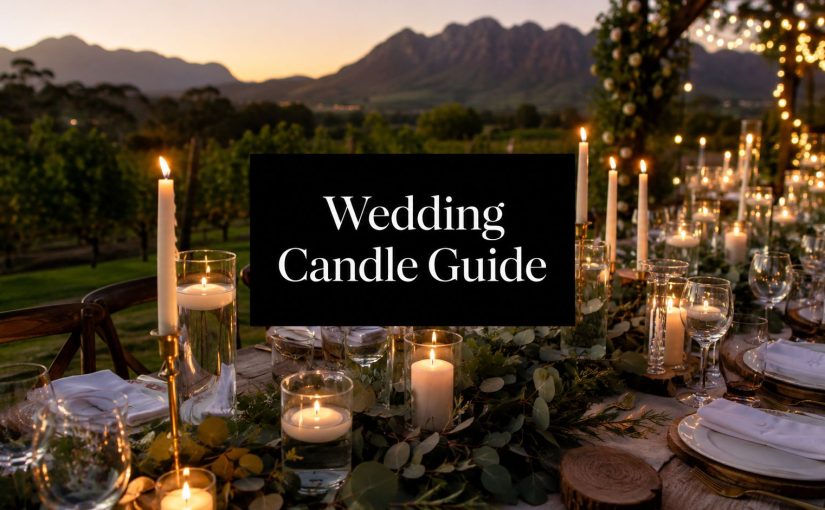
You've probably saved a dozen images of glowing tables, taper-lined aisles, and candlelit receptions that look effortless. Then the practical questions start. Which candles work in a Cape Town venue? What survives a Winelands breeze? What belongs on the table, and what only looks good in a styled shoot?
That's where candles for wedding décor either become magical or maddening.
Used well, candlelight makes a room feel warmer, more intimate, and more expensive than it is. Used badly, it creates clutter, blocks conversation, burns too fast, or gives your venue manager a reason to say no. The difference is rarely about taste alone. It's about scale, holders, placement, wind, burn time, and how the whole lighting plan fits your venue.
Setting the Scene with Candlelight
As the sun drops behind the mountains or off the Atlantic, candlelight changes a wedding from pretty to atmospheric within minutes. In Cape Town and the Winelands, that shift is especially noticeable because the natural light is already doing part of the work. Candles then take over gently, warming the room, softening hard venue lines, and giving tables a sense of depth that overhead lighting rarely achieves on its own.
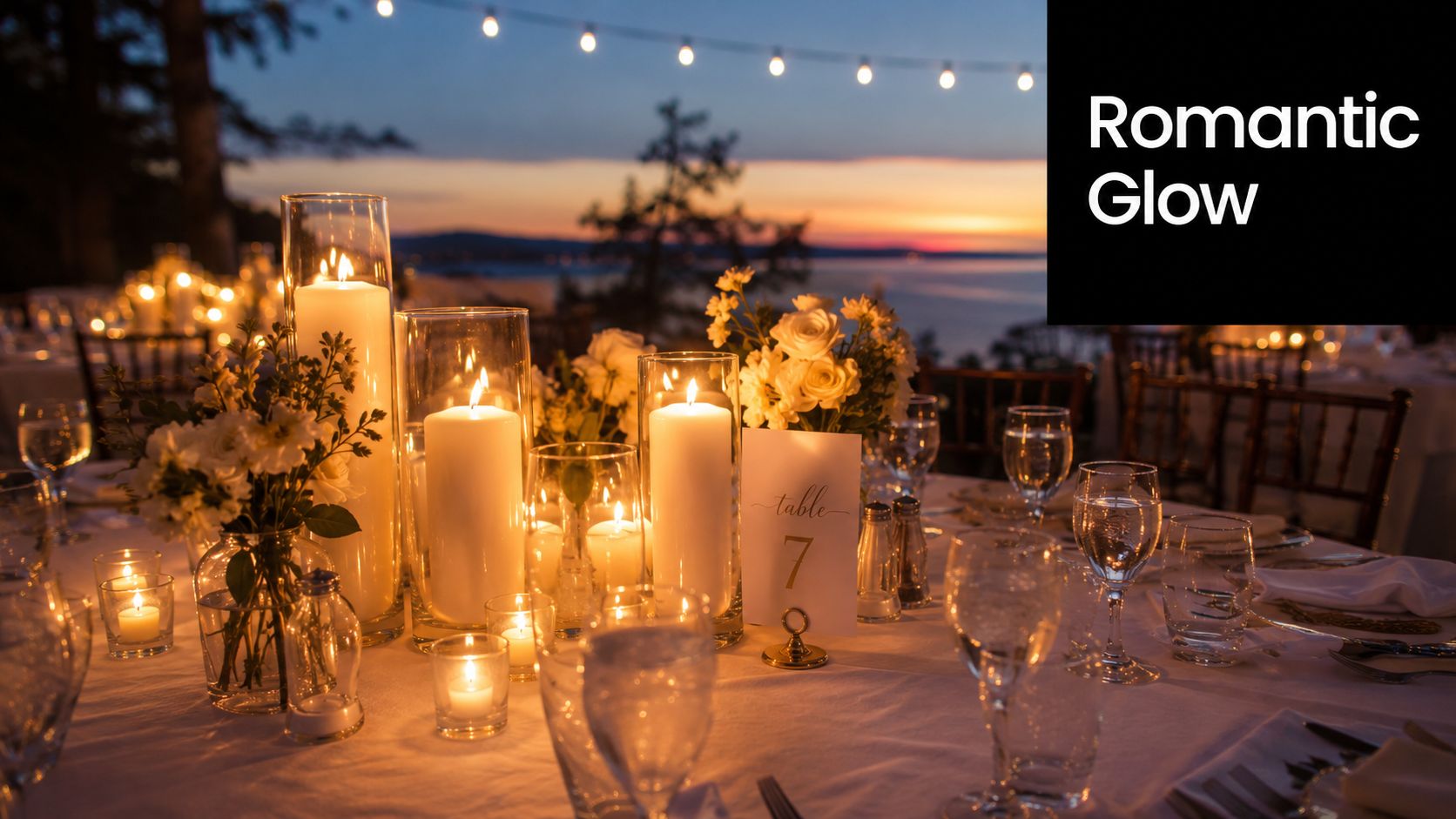
The strongest candle schemes usually begin with one area that carries the mood. That might be the head table, a long harvest table, the ceremony aisle, or the entrance where guests first step into the space. Once that focal point is right, the rest of the candles can support it rather than compete with it. The result feels polished instead of busy.
Couples often ask for "lots of candles" when what they really want is a room that feels intimate and flattering after sunset. Those are not always the same thing. Fifty small flames scattered without structure can read messy. Fewer candles, scaled properly and placed with intent, usually give a better result and are easier to light, protect, and clear with the venue team.
A candle plan needs to answer practical questions early:
- Where should candlelight matter most? Ceremony aisle, reception tables, bar, entrance, lounge areas, powder rooms.
- What will the venue allow? Some estates permit open flame on tables but not on floors or near draping.
- What will the weather do? Cape Town wind changes styling decisions fast, especially for tapers and exposed flames.
- Are you renting or buying? For one-night impact, hired hurricanes and holders often make more sense than purchasing mixed pieces you may never use again.
Intentional placement matters more than quantity.
Local context changes everything. A beachfront reception in Camps Bay needs sheltered flames, heavier holders, and less reliance on delicate taper moments. A cellar dinner in Franschhoek can carry richer density and lower, moodier pools of light because the environment is naturally protected. I also treat modern all-candle looks differently from classic floral-and-candle tables. The first demands stricter planning around burn time, replacement stock, and who manages relighting during service.
Good candle styling starts with the venue itself. The room tells you how much glow it can hold, where candlelight will be seen, and whether real flame is the right choice for the conditions. That is what makes the final effect feel romantic rather than forced.
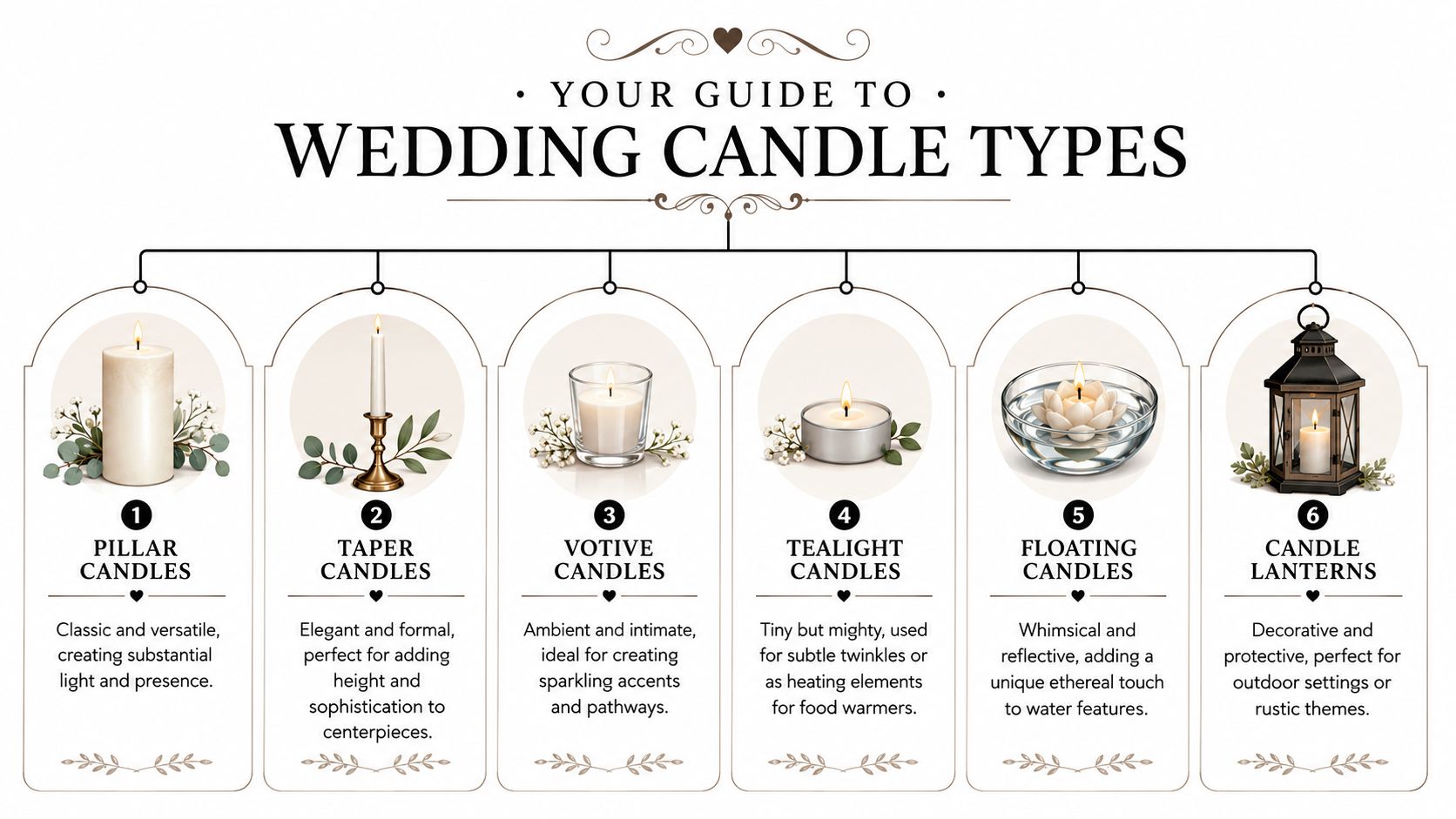
Your Guide to Wedding Candle Types
Each candle type solves a different styling problem. Choose the shape for the job first, then choose the finish and quantity.
Pillars for visual weight
Pillar candles give a table presence. I use them where a design needs body, especially on round guest tables, welcome displays, bars, ceremony plinths, and anywhere florals sit low.
They also photograph well because they read clearly from a distance. The trade-off is bulk. If every pillar is the same height and width, the arrangement can feel static very quickly.
They work well for:
- Low centrepieces with garden-style florals
- Lantern styling outdoors
- Mantel or staircase installations
- Aisle clusters in glass sleeves or hurricanes
Tapers for height and line
Taper candles bring height without adding visual heaviness. They suit long tables, formal dining layouts, and cleaner designs where the eye needs a vertical rhythm.
They are less forgiving than pillars. A slightly uneven holder, a soft table surface, or a breeze from an open barn door can make the whole row feel unsettled. In sheltered interiors, though, tapers sharpen a tablescape beautifully and give floral designs a stronger frame.
A practical rule I use often: low, loose flowers usually benefit from a few disciplined taper lines.
Votives and tealights for atmosphere
Votives and tealights do the quiet work. They fill the gaps between larger elements and create that scattered glow guests notice once the room dims.
Votives usually give a richer result because the holder becomes part of the styling and the flame sits high enough to be seen. Tealights are useful for layering, especially in large numbers, but they can disappear on oversized tables or in venues with strong ambient lighting.
If the budget is tight, I would usually keep fewer pillars and protect the spend on votives. The room often feels warmer because of it.
Floating candles for reflection
Floating candles are strongest where water already belongs in the design. They suit bowls at an entrance, troughs on a bar, fountain details, and lounge areas where guests pass close enough to notice the reflection.
Used well, they add movement and softness that standard table candles cannot. Used badly, they look like an afterthought. The vessel matters as much as the candle. Scale, water depth, and the surrounding light all affect whether the effect feels polished or makeshift.
Lanterns and LED alternatives
Lanterns are not a candle type, but they change how candlelight performs. They shield the flame, add structure, and make outdoor styling feel considered, especially at Cape Town venues where wind can shift during the course of one evening.
Then there are LED candles. For some weddings, they are the sensible choice. I recommend them for high-traffic areas, venues with strict flame policies, installations near fabric, and late-night spaces where no one wants to manage relighting. Good LED candles still need editing. Skip the bright blue-toned versions and use warm, realistic options in proper holders so they read as part of the design, not a compromise.
Choosing Candles for Your Venue and Theme
The best candle choice isn't the prettiest one on its own. It's the one that suits the room, the weather exposure, and the tone of the wedding.
Wine estates and heritage venues
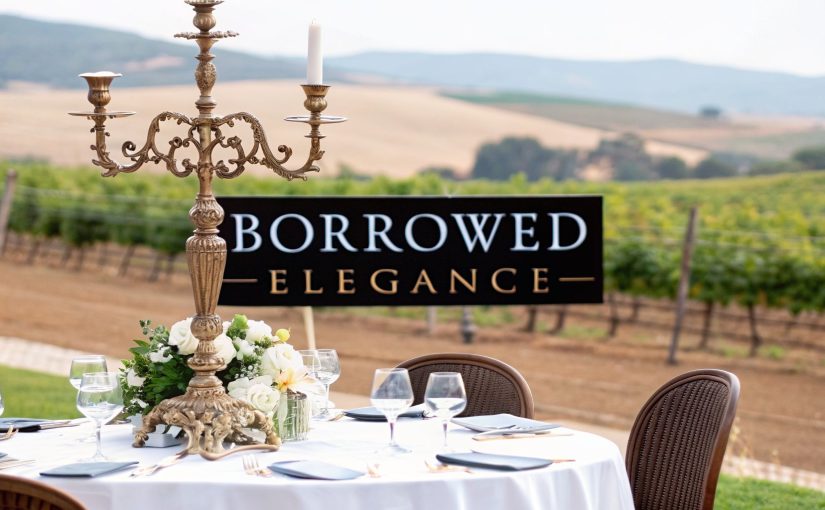
Historic Winelands venues tend to suit candlelight naturally. Stone walls, old wood, textured plaster, and long dining tables all respond well to warm, low light. In those settings, pillar candles in glass sleeves or lanterns usually look right at home. They add warmth without fighting the architecture.
For a Stellenbosch or Franschhoek estate wedding, a good approach is to keep the candle shapes slightly organic. Mixed pillar heights, soft ivory tones, and a few metal or ceramic holders often feel more grounded than ultra-polished crystal.
Modern city venues and clean-lined spaces
Contemporary Cape Town venues often need a crisper hand. If the room has steel, concrete, glass, or sharp architectural lines, go cleaner with your candle choices. Tapers in sleek candlesticks and disciplined clusters of votives usually work better than bulky, rustic arrangements.
The mistake here is over-softening the room. Too many mixed holders can make a modern venue lose its edge.
A better fit often looks like this:
- Minimalist theme: black, clear, or brushed metal holders with evenly spaced tapers
- Modern chic: a restrained mix of tapers and votives, with symmetry doing most of the work
- Editorial styling: statement candle groupings that feel sculptural rather than decorative
Beach, garden, and exposed outdoor venues
Outdoor weddings need a tougher candle plan. The prettier the open-air setting, the more disciplined you need to be.
At beachside venues, open tapers are usually the first thing I remove from a design draft unless the ceremony and dinner areas are very sheltered. For gardens and courtyards, lanterns and enclosed cylinders give a much more reliable result. They still feel romantic, but they don't spend the evening fighting the breeze.
If your venue manager starts talking about wind patterns before you've even discussed flowers, take that seriously and adapt the candle plan early.
Matching the candle language to the theme
A few combinations tend to work consistently well:
| Theme | Candle approach |
|---|---|
| Classic romance | Tapers, pillars, and votives in a soft layered mix |
| Minimalist elegance | Fewer candles, cleaner holders, stronger spacing |
| Bohemian or garden style | Clusters of pillars and votives with softer variation in height |
| Black-tie modern | Tall tapers, reflective surfaces, disciplined repetition |
The common thread is cohesion. Candles for wedding décor should echo the room and the styling language already in place. They shouldn't try to rescue a mismatched concept.
Designing with Light Styling and Centrepiece Ideas
Good candle styling isn't about quantity alone. It's about layering light at different heights so the eye moves across the table and around the room.
A reliable recipe for round guest tables
For 5 ft round intimate wedding tables, a strong benchmark is 2 to 3 large pillar candles or 4 to 5 small pillars, paired with 5 to 7 votive candles and 3 to 4 taper candles to balance glow and safety, according to wedding candle table benchmarks.
That formula works because each type handles a different visual task:
- Pillars build the centre of the arrangement
- Votives spread light outward and fill the dead space
- Tapers lift the eye and stop the design from feeling squat
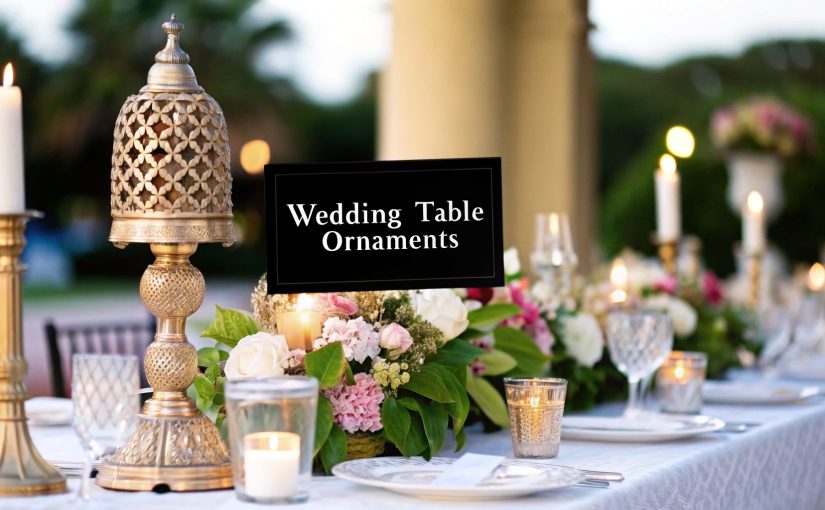
If you're planning your table décor in detail, it also helps to consider what sits underneath the candles. Reflective bases and warm metallic accents can make a candle grouping feel far richer. A useful reference for that layered look is this guide to Wedding gold charger plates, especially if you want the place setting to carry some of the warmth.
How to keep centrepieces elegant, not crowded
The most common styling mistake is putting every decorative element in the middle of the table at once. Candles, flowers, menus, table numbers, favours, and charger plates all compete for the same visual space. The result looks expensive in pieces and messy as a whole.
A cleaner method is to choose one hero element and let the candles support it. If the florals are lush, reduce the number of large candles. If the candles are the main statement, keep the flowers lower and looser.
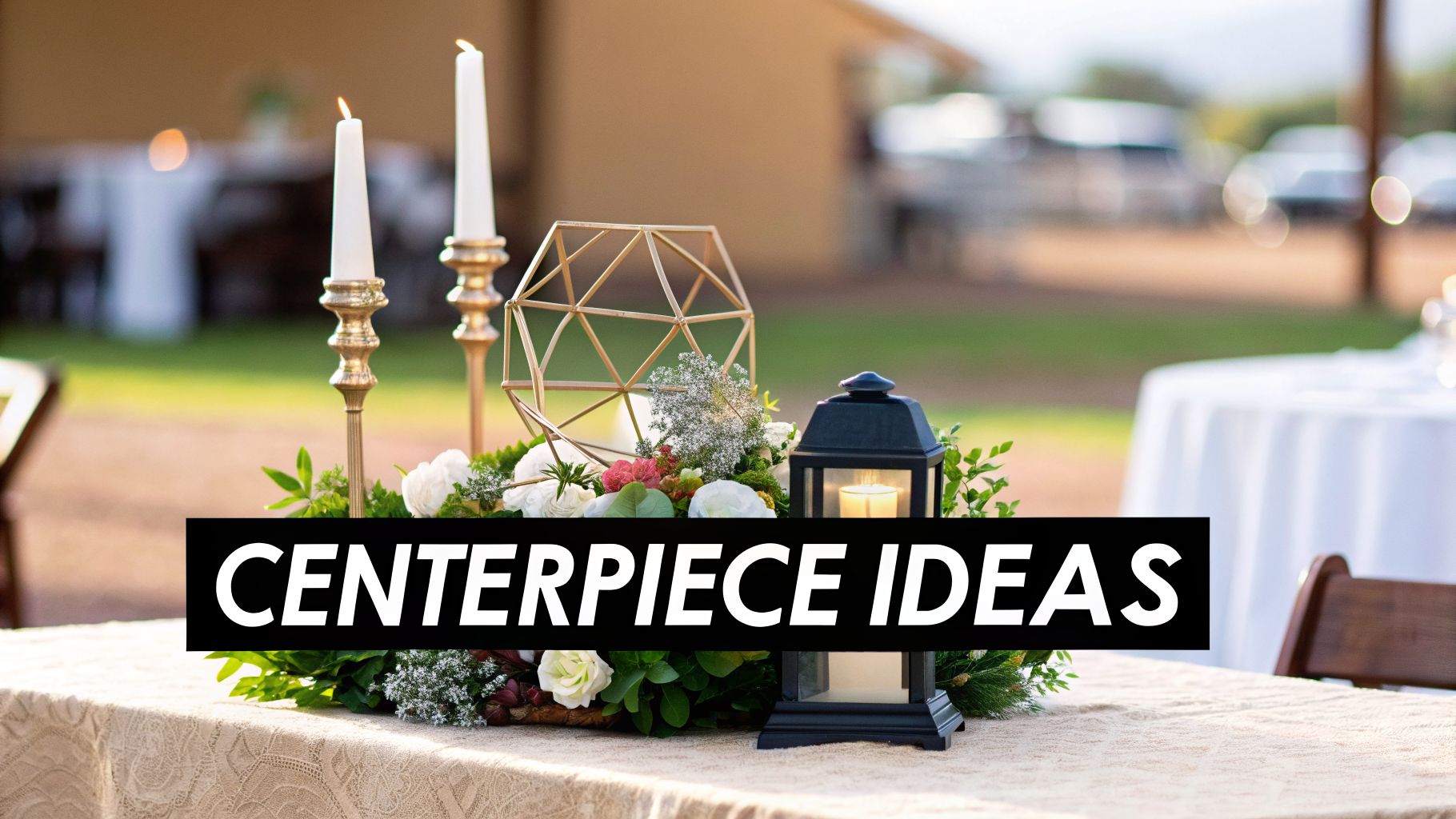
For couples who want more table arrangement ideas beyond candles alone, this roundup of a centrepiece for table styling is a helpful planning reference.
Creating candle moments beyond the table
Some of the best candle styling happens away from the guest tables.
Consider using candles in these areas:
- Ceremony aisle edges: Keep the spacing consistent and use protected holders if there's any breeze.
- Entrance styling: A grouped lantern or pillar installation creates a strong first impression.
- Cake or champagne table: Candles frame details beautifully in photographs.
- Lounge corners: Small clusters help these areas feel finished rather than forgotten.
A room feels immersive when candlelight appears in repeating pockets, not only at the dining tables.
Height, repetition, and restraint
Professional-looking candle design usually follows three principles.
First, repeat shapes. If every holder is different, the table looks unsettled. Second, vary height deliberately. Too much sameness kills the glow. Third, leave negative space. The eye needs a place to rest.
That's what separates a romantic candle setup from a decorative pile-up.
The Practicalities of Burn Time and Safety
The candles looked perfect at sunset. By the time mains were served, half the votives were low, two tapers had gone crooked in the breeze, and wax had marked the linen on the family table. I see versions of this often at Cape Town and Winelands weddings. Candlelight is romantic, but it only works when the practical side has been planned just as carefully as the styling.
Burn time starts with your event schedule
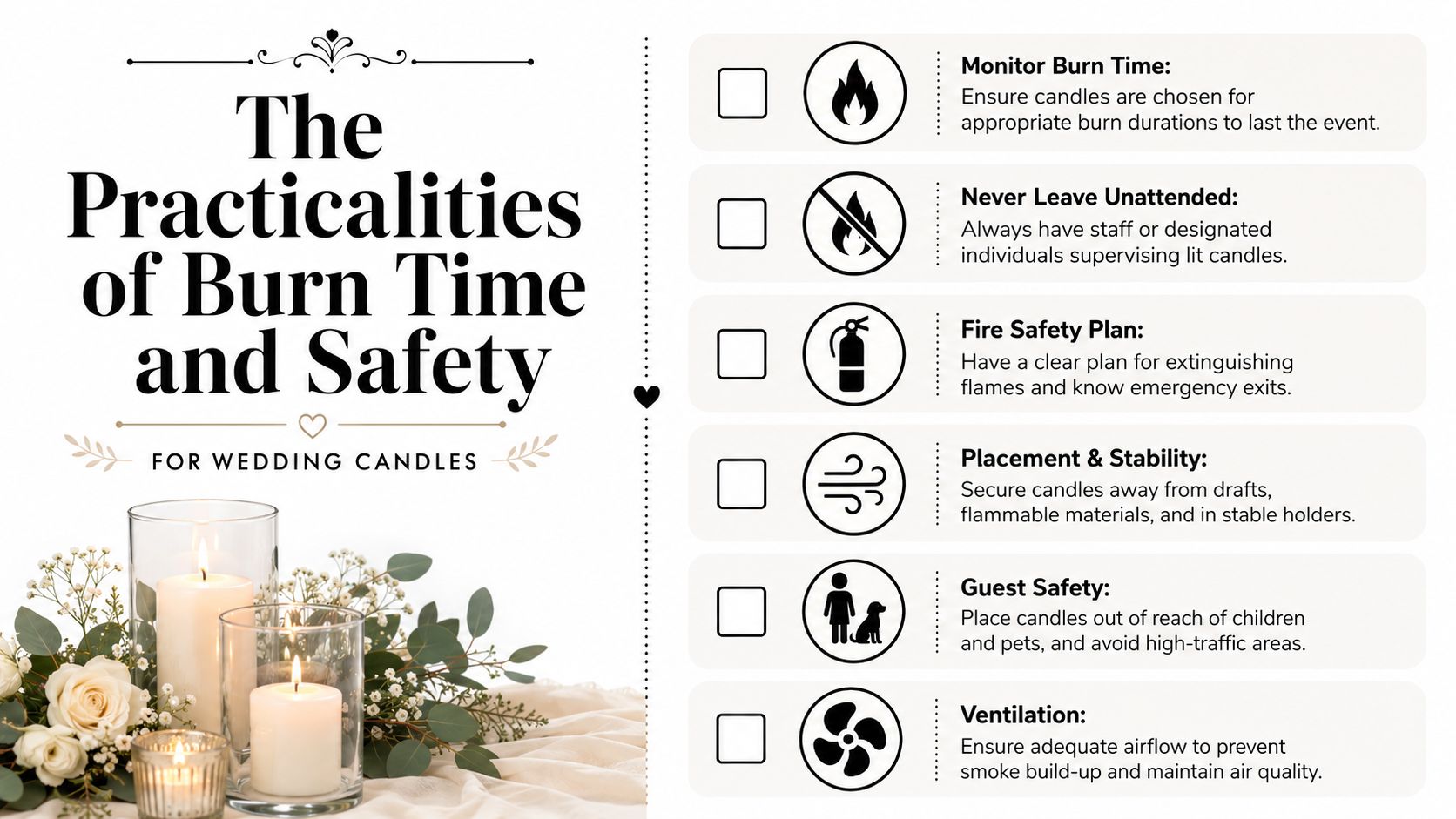
Burn time should be matched to the actual flow of the wedding day. That means setup, guest arrival, any delay to the ceremony, dinner service, speeches, and the point when photographs of the room are still being taken. A candle may technically burn for hours and still be the wrong choice if it tunnels badly, throws off too much heat, or looks tired halfway through service.
Ask suppliers for the expected burn range of the exact candle size you are ordering, not a general promise across the whole range. Wax blend, wick size, draft exposure, and container shape all affect performance. In practice, I would rather use a candle with a consistent, tidy burn than chase an impressive number on paper.
A simple rule helps. If the candle needs to perform for a five-hour guest-facing window, build in a margin rather than buying to the minimum.
Wind changes everything in the Western Cape
Generic wedding advice often ignores the local problem. Cape Town wind can turn an elegant candle plan into a maintenance job within minutes, especially on wine farms, coastal venues, and terraces that feel sheltered until the temperature drops.
Open flames on exposed tables are rarely the best use of budget in those settings. The flame flickers hard, wax burns unevenly, and staff end up relighting candles instead of serving the room. Tall, unprotected tapers are usually the first to struggle.
The safer options are usually the most reliable-looking ones too:
- Hurricane vases for tables with any cross-breeze
- Heavy lanterns for entrances and pathways
- Glass sleeves around pillar candles
- Flameless candles in thoroughfares, near draping, or around children
Treat wind as part of the brief from the start. If the venue coordinator says, "It gets breezy after six," believe them and plan accordingly.
Safety rules that matter on the night
Venue rules should be checked before you place a single order. Some venues allow only enclosed flames. Others permit real candles on tables but not along aisles, staircases, or bars. Those restrictions affect the design, staffing, and budget.
Keep flames clear of hanging florals, loose napkins, dried foliage, and guest traffic routes. Use stable holders that cannot tip if a table is bumped. Assign one person or one team to light, monitor, and extinguish candles. Shared responsibility usually means nobody owns the job.
For a general reference, this guide to safe candle enjoyment covers sensible flame-care basics.
Real flame is not always the best answer
Some weddings absolutely benefit from live candlelight. Others are better served by a mix of real candles and alternatives. If the venue is windy, the tables are tight, or staff access will be limited once dinner starts, portable lighting often gives a calmer result and better consistency in photos.
For couples who want warmth without open flame in problem areas, rechargeable table lamps for events are a practical option for bars, lounge pockets, and outdoor dining tables.
The best candle plan is the one that still looks composed at 9 pm.
Cape Town and Winelands Candle Logistics
The candle plan often looks simple on paper. Then the south-easter picks up at cocktail hour, the venue only allows enclosed flames on the veranda, and someone realises the quote covered wax but not cylinders, lighters, transport crates, or the team to light everything on time.
That is why logistics deserve their own budget line. In Cape Town and the Winelands, candles are rarely just a styling purchase. They are a styling and operations decision.
What candles usually cost locally
Local candle spend varies widely because the final number depends less on the candle alone and more on the full setup around it. A few dinner tables with tealights and hired holders is one budget. A large reception with premium pillars, storm cylinders, aisle lanterns, backup stock, and setup labour is another entirely.
Couples often underestimate four line items:
- holders and wind protection
- delivery and collection
- setup and strike time
- breakage or wax damage to hired pieces
That is usually where budgets drift. The wax is visible. The support system is what changes the quote.
Rent or buy depends on the job
Buying works well when the candle itself is part of the design brief. Specific ivory tones, hand-finished tapers, oversized pillars, or a particular wax texture can justify the spend if those details matter in person and in photographs.
Renting usually makes more sense for the infrastructure. Glass hurricanes, lanterns, cylinders, mirror bases, and protective vessels are bulky to transport and annoying to store after one event. For outdoor receptions and estates with long setup routes, hiring those pieces is often the cleaner decision.
Here is the practical trade-off.
| Factor | Buying Candles | Renting Candles & Holders |
|---|---|---|
| Design control | Best for exact wax colour, size, and finish | Best when the vessels and support pieces shape the look |
| Budget shape | Higher product spend as quantities grow | Easier to manage for one-day use |
| Transport | You still need safe packing and delivery | Often simpler if pieces arrive event-ready |
| Outdoor use | Risky without proper protection | Better suited to wind covers and enclosed options |
| After the wedding | Leftovers need storing, reselling, or disposal | Nothing to keep afterwards |
The hybrid approach works well here
For many Cape Town weddings, the strongest plan is a split one. Buy the candles that carry the visual identity. Rent the technical pieces that make them work safely and neatly in the venue.
I use that approach often for Winelands properties and coastal venues because conditions can change between site visit and wedding day. A calm courtyard at noon can be exposed by sunset. A cellar venue may need candlelight moved quickly from ceremony to reception. Hired holders and lanterns give far more flexibility in those situations than a purchase-only plan.
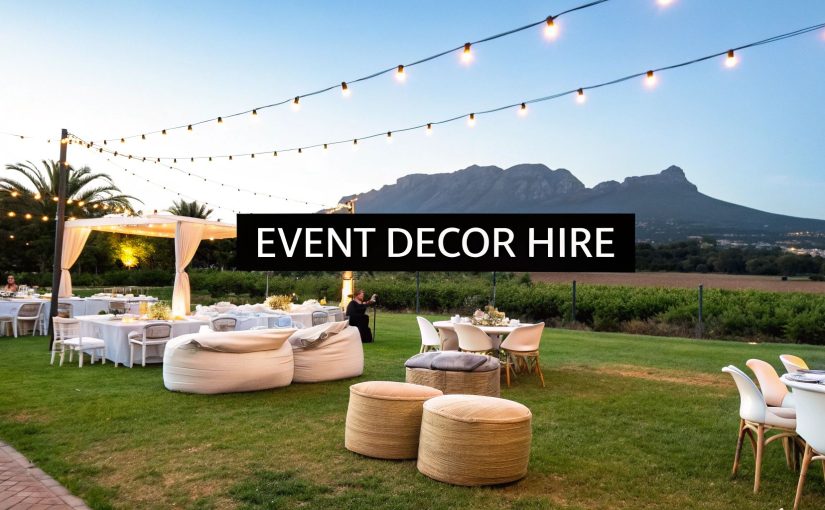
If you are comparing candles with other rental items, this guide to wedding decor hire in Cape Town helps put the broader styling costs in context.
Local planning choices that save stress
A few decisions make a noticeable difference on the day:
- Order by zone, not only by quantity. Ceremony, dining tables, bars, bathrooms, and entrance points each need different holders and burn plans.
- Check access times before confirming quantities. Some estates allow long setup windows. Others compress everything into a tight afternoon turnaround.
- Ask who is responsible for relighting or replacing candles after sunset. If nobody owns that task, half the room can look uneven by the first course.
- Keep backup stock for wind-exposed areas. Outdoor candles rarely burn at the same pace across a full event.
The most polished candle styling in this region is not always the most elaborate. It is the plan that still looks composed once the wind changes, dinner runs late, and the room is full.
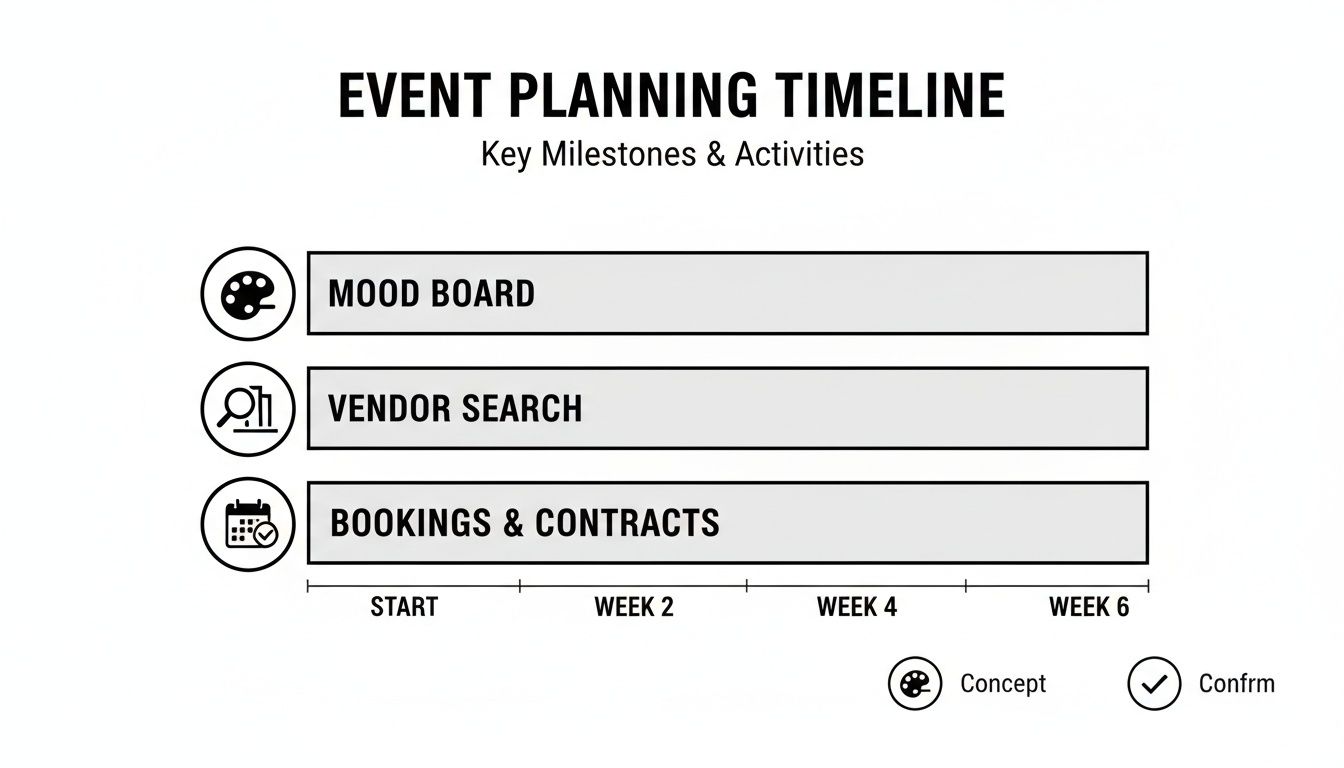
Your Wedding Candle Checklist and Timeline
By the time guests walk into dinner, candlelight should feel effortless. It only looks that way when the planning is done early, the quantities are realistic, and someone specific is responsible for lighting, checking, and clearing it.
Six to eight months before
Start with venue rules and access. Ask where open flame is allowed, whether every candle must be enclosed, and which areas are usually affected by wind after sunset. In Cape Town and the Winelands, that last question matters more than couples expect. A courtyard that feels calm at a site visit can become exposed once the temperature drops and the breeze shifts.
Set your styling direction at the same time. Decide whether candles are there to soften the room, frame key moments, or carry the whole atmosphere after dark. That choice affects everything from holder style to setup time.
Three to four months before
Map the candle plan by area, not just by item count.
Use practical zones:
- Ceremony: aisle, signing table, altar, entrance
- Reception: guest tables, main table, bar, cake table
- Secondary spaces: bathrooms, lounge corners, pathways, welcome table
Then confirm the format. Buy candles if you want full control over colour and finish. Rent holders if you want flexibility, less storage, and fewer breakages to manage. For outdoor sections, a mixed plan often works best, with real flame in protected spots and LED candles where wind or venue rules make live flame unreliable.
The neatest installations are planned with purpose. Every candle should already have a place and a job.
One month before
Review quantities against your floor plan and your schedule. Careful analysis here often reveals over-ordering. A long imperial table needs a different rhythm of candlelight from round tables, and a late winter dinner needs more coverage than a midsummer reception that starts in daylight.
Confirm responsibilities in writing:
- Who lights the candles
- What time each zone is lit
- Who replaces or relights candles outdoors
- Who extinguishes everything at the end of the night
If any part of the wedding is outside, test one arrangement in real conditions if possible. I have seen beautiful taper groupings fail on a Stellenbosch lawn because the holders were too light and the flame too exposed.
In the final week
Pack and label by zone. Ceremony candles should be separate from reception candles, and outdoor spares should be easy to grab without opening every box. Include lighters, matches, cloths, drip trays if needed, and a printed lighting list for the setup team.
Edit the plan if timing is tight. A smaller candle scheme, lit properly and placed well, looks far better than an ambitious one rushed in the last twenty minutes.
On the day, place candles according to the floor plan, light them in sequence, and do one final check once guests are seated. That last walk-through catches the details that matter. A table left unlit, a lantern blown out at the entrance, wax drips on a linen runner.
If you're planning a wedding in Cape Town, Stellenbosch, Franschhoek, or Paarl and want the wider décor and lighting pieces around your candle styling to feel just as polished, ABC Hire can help with event furniture, LED options, and practical rental support that makes the whole setting work beautifully.