
You’re probably following a common pattern when you search for a podium for sale. You’ve got an event coming up, someone senior is speaking, and you want the setup to look polished without wasting money on the wrong equipment.
That’s sensible. It’s also where buyers often make the wrong call.
A podium looks simple. In practice, it creates a chain of decisions around transport, storage, maintenance, venue fit, and presentation quality. In Cape Town and the Winelands, those details matter even more because event locations vary wildly. One day you’re loading into a city conference venue. The next you’re trying to place equipment at a wine estate, a school hall, or a wedding venue with awkward access and limited back-of-house space.
If you only compare purchase prices, you’ll miss the true cost. The smarter question is this: should you even buy one, or are you better off renting?
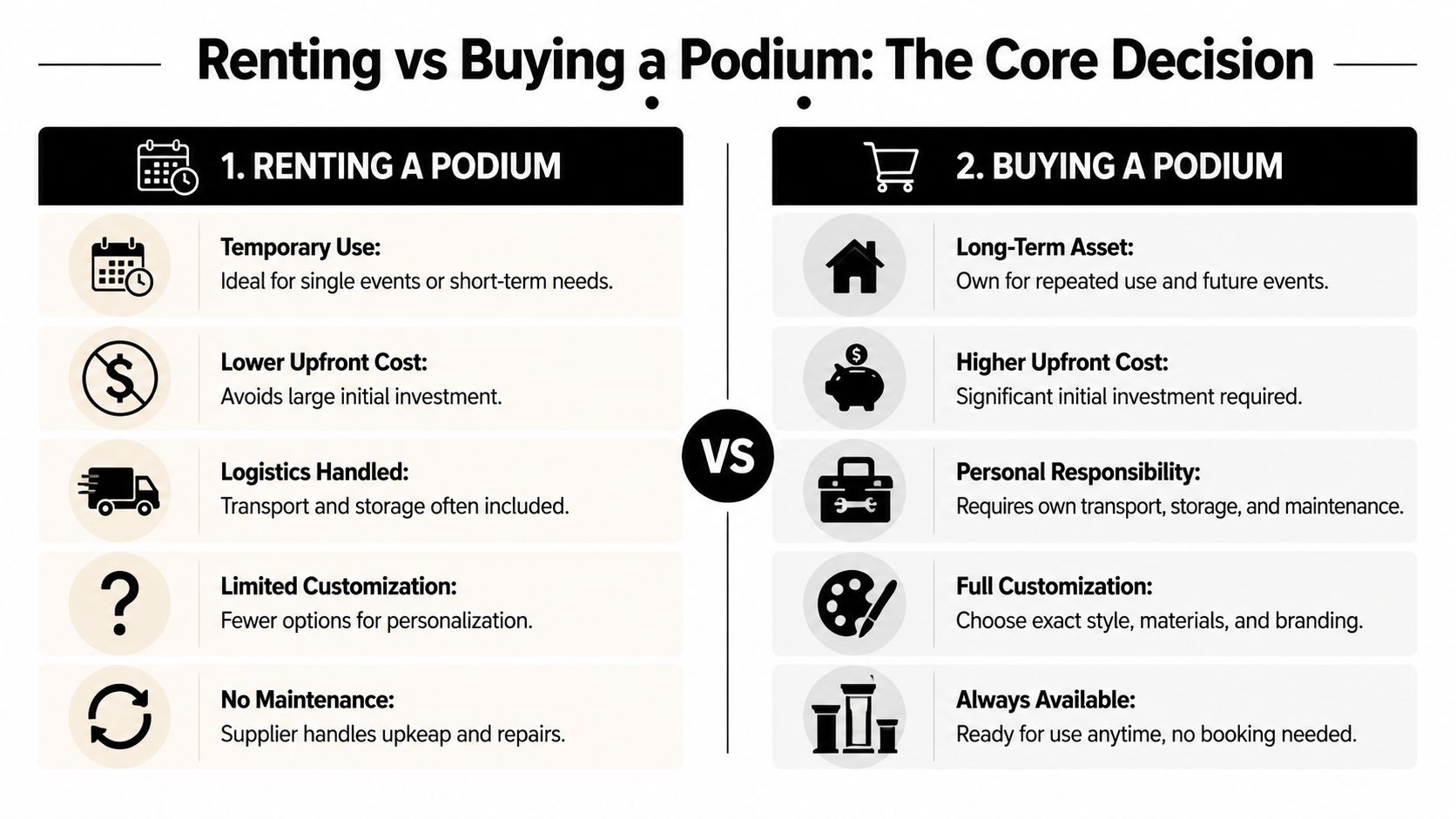
Renting vs Buying a Podium The Core Decision
The first decision isn’t which podium to choose. It’s whether ownership makes sense at all.
For most event planners, venues, couples, schools, and marketing teams, renting is the more practical option. Buying feels efficient because you solve the problem once. But that logic falls apart if the podium sits in storage, gets scratched in transit, or doesn’t suit the next event’s style.
Here’s the quick comparison.
| Decision factor | Renting a podium | Buying a podium |
|---|---|---|
| Upfront spend | Lower initial outlay | Higher initial outlay |
| Availability | Requires booking ahead | Ready when you own it |
| Style flexibility | Easier to match each event | You’re locked into one look |
| Transport | Usually handled by supplier | Your team must move it |
| Storage | Not your problem after the event | You need secure, clean storage |
| Maintenance | Supplier handles wear and repairs | You carry repair and upkeep responsibility |
| Best for | Occasional events, mixed venue types, changing briefs | Very frequent repeat use in one consistent environment |
When renting makes more sense
Rent if your event profile changes.
That includes weddings, corporate launches, school functions, graduation-style events, tasting-room presentations, and conference sessions where the setup changes by venue and audience. A black lectern for a formal awards evening won’t necessarily suit a bright brand activation or a vineyard ceremony.
Renting also protects you from operational creep. The podium itself isn’t the only item to think about. Once there’s a speaker, there’s usually a microphone, a laptop, a confidence monitor, or some form of display support nearby. If you want a useful reference point for the bigger technical picture, this guide to AV hire for conferences shows how quickly presentation equipment becomes a bundled logistics issue rather than a single-item purchase.
When buying can work
Buying works if your use case is repetitive and controlled.
A venue with recurring in-house talks, a church with a fixed presentation space, or a school that uses the same hall and same visual style throughout the year may justify ownership. In those cases, you’re not chasing variety. You want consistency and immediate access.
Practical rule: Buy only if you’ll use the same podium often enough, in similar spaces, with staff who can store and transport it properly.
There’s also the matter of what else you’ll need around it. If you’re comparing whether to own focal event pieces or source them per event, this article on plinths for sale is useful because the buying versus renting logic is almost identical.
My recommendation
If you’re searching podium for sale because of a single event, stop and reassess. Buying for one occasion is usually a convenience impulse, not a sound event decision.
If you run frequent events in one venue, ownership can work. If your events move around Cape Town, Stellenbosch, Franschhoek, and Paarl, renting is normally the smarter business move because it gives you flexibility without adding another bulky asset to manage.
Choosing the Right Podium for Your Event
Once you’ve decided how you’ll source it, the next issue is fit. A podium can look excellent in a product photo and still be wrong on event day.
Style matters, but function matters more. The speaker needs somewhere stable for notes, a microphone setup that doesn’t look improvised, and enough room to work without turning the front of house into a tangle of wires.
Match the podium to the event type
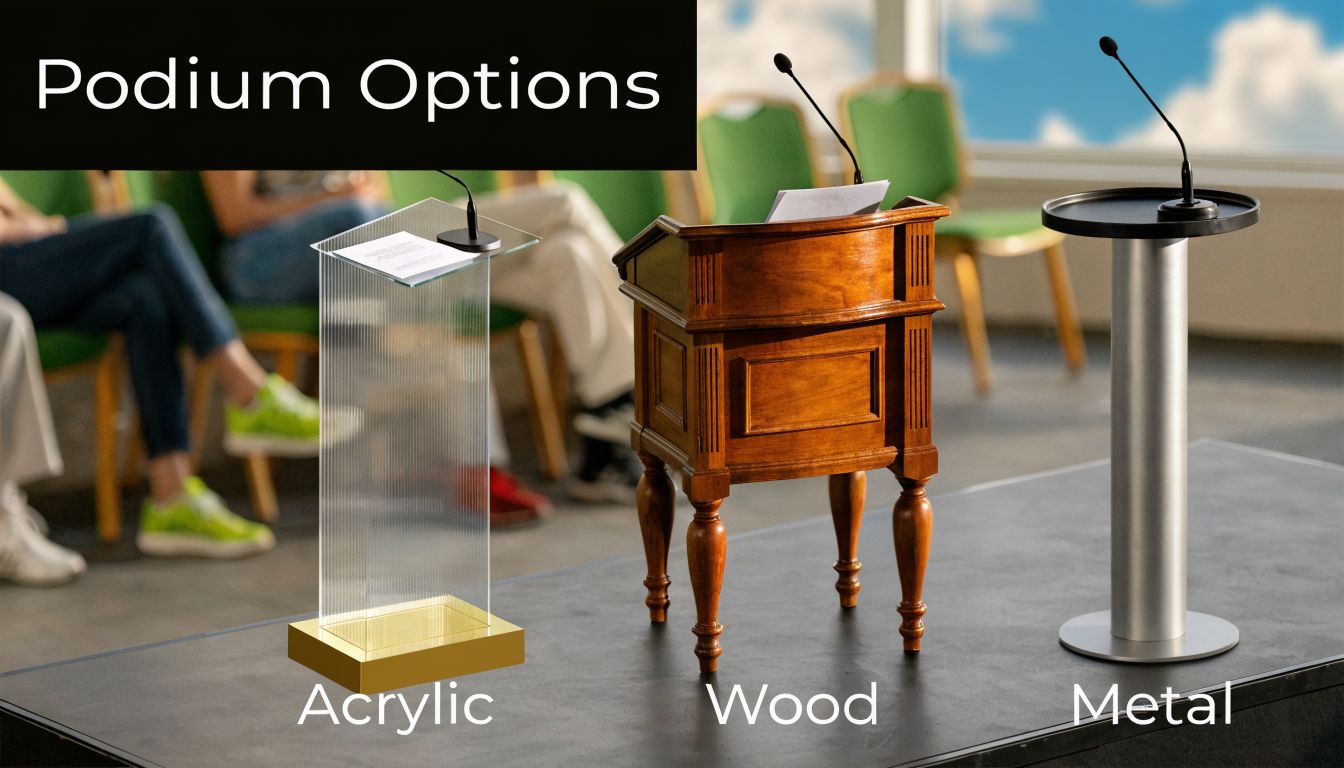
Acrylic works well when you want a lighter visual footprint. Brand activations, media events, and modern corporate spaces often benefit from that look because it doesn’t dominate the stage.
Wood feels more formal. It suits ceremonies, traditional venues, school functions, and occasions where the room already has a classic finish. Metal or truss-style units feel more technical and stage-oriented. They fit production-led events better than intimate wedding speeches.
Don’t overcomplicate this. Ask what the audience should notice first. The speaker, the branding, or the furniture. Then choose accordingly.
Check practical features before appearance
A mobile podium designed for event use often includes three-shelf storage and integrated cable management, which makes a real difference when microphones, laptops, and control devices need to stay tidy. Standard dimensions are typically around 29 inches wide by 25 inches deep by 46 inches high, which gives a compact footprint without sacrificing function, according to the Intellitouch ML100 podium specification sheet.
That combination matters in real venues. A compact podium is easier to place in a narrow conference room, beside a stage riser, or at the front of a wedding reception without blocking sightlines. The shelving matters because speakers always arrive with more than they planned to bring.
Consider these features before you commit:
- Cable routing: If the microphone lead and laptop power cable have nowhere to go, the setup looks messy fast.
- Shelf access: Notes, water, clickers, and backup batteries need a place out of sight.
- Base stability: A podium must feel planted when someone leans on it.
- Visual finish: Glossy, rustic, modern, matte, transparent. The finish changes the room more than people expect.
A good podium disappears into the event. A bad one steals attention for all the wrong reasons.
Think beyond the lectern itself
The podium often sits inside a wider stage environment. If your event includes musicians, choirs, or live performers, the support equipment around the speaker needs the same level of planning. This reference on equipment platforms for musical ensembles is useful because it shows how presentation and performance infrastructure should be treated as part of one coordinated setup.
Don’t ignore speaker comfort
The wrong podium height makes speakers look awkward. Too low, and they hunch. Too bulky, and they seem boxed in.
You don’t need to obsess over design trends. You need a podium that suits the room, supports the speaker, and leaves enough working space for AV integration. If it does those three things, you’re already ahead of most buyers.
The True Cost of Owning a Podium
The purchase price is the least interesting part of ownership.
What matters is what happens after the podium arrives. Someone has to move it, protect it, clean it, repair surface damage, and keep it looking acceptable for public-facing events. If nobody owns that responsibility internally, the asset deteriorates faster than buyers expect.
The hidden costs buyers overlook
Storage comes first. A podium isn’t flat-pack decor you can slide behind a cupboard. It needs dry, secure, accessible space. If it’s stored badly, the finish suffers. If it’s stacked near other equipment, it gets chipped. If it’s tucked away too well, nobody wants to retrieve it for smaller events and the asset stops being useful.
Then there’s handling. Podiums get damaged in loading bays, in lifts, at service entrances, and in the back of vehicles. Even careful teams work under event pressure. Tight schedules don’t produce gentle furniture handling.
The financial issue is simple:
- You buy one unit.
- Your team transports it repeatedly.
- Cosmetic wear builds up.
- Repair or replacement becomes your problem.
Material choice affects long-term value
In Cape Town’s coastal conditions, material selection isn’t cosmetic. It’s a cost decision.
For longevity in coastal climates like Cape Town’s, podiums with brushed stainless steel frames and aluminium extrusions significantly outperform standard powder-coated finishes, which directly affects long-term ownership value, as noted by EZ Podium’s product information.
That matters if your equipment lives near sea air, moves between suburbs, or gets stored in spaces with inconsistent environmental control. A cheaper finish can become an expensive mistake if the podium needs refurbishment earlier than expected.
Owner’s warning: If you buy for the lowest entry price, you often buy again sooner than planned.
Ownership only works with discipline
Owning a podium can make sense, but only if you run it like an asset. That means assigning responsibility, protecting it during transport, and choosing materials that can tolerate your operating conditions.
If you’re not prepared to manage all of that, then the cheaper-looking purchase can become the more expensive option over time. That’s why so many buyers who start by searching podium for sale end up realising they were in fact looking for a short-term event solution, not another item to maintain.
Event Logistics Transport and Storage Considerations
Event day exposes weak decisions. Podium ownership is one of them.
Take two common Western Cape scenarios. In the first, a planner owns the podium. In the second, the planner rents it. The difference is rarely about the object itself. It’s about what the team must do before the first guest arrives and after the last one leaves.

Scenario one with an owned podium
The event is at a wine estate outside Stellenbosch. The podium has been stored off-site. Someone must fetch it, load it, secure it, and hope there’s no rubbing damage in transit. On arrival, the team discovers the access route is gravel, the service entry is tighter than expected, and the stage placement needs adjustment because the florist changed the layout.
After the event, nobody wants to deal with it. The room is clearing, suppliers are leaving, and the podium becomes one more item that must be wrapped, reloaded, and taken back into storage.
That’s the part buyers underestimate. The podium is still work after the applause.
Scenario two with a rented podium
Now take the same event with rented equipment. Delivery is planned around access, placement, and collection. The podium arrives event-ready, goes into position, and leaves the site once the job is done.
The planner keeps attention where it belongs. On timings, guest flow, speaker prep, catering, and weather backup.
If you’ve ever looked into self-storage as a fallback for event stock, it helps to read broader logistics comparisons like this guide on comparing storage units in Perth. Different city, same operational reality. Storage only solves part of the problem. You still have movement, access, handling, and condition management.
Storage is never just storage
People talk about “having space” as if that settles it. It doesn’t.
A useful storage setup needs to be:
- Accessible: Staff must be able to retrieve the podium without unpacking half the storeroom.
- Clean: Dust and grime show quickly on presentation furniture.
- Dry: Moisture and poor ventilation shorten the life of finishes and fittings.
- Secure: Public-facing event items are expensive to replace and easy to damage.
For a broader local perspective on why temporary event sourcing often beats ownership, this article on renting furniture for events makes the same point from the furniture side of the business.
Logistics decides whether an event item is useful or burdensome. Most owned podiums become burdensome long before they become unusable.
Finding Podiums in Cape Town and The Winelands
The online search can be frustrating. You type podium for sale, but what you need is an event-grade unit that looks good in person, works with your venue, and can be sourced without turning into a procurement project.
Cape Town isn’t short on events. It is short on easy, walk-in access to specialised presentation furniture for sale. General furniture retailers aren’t built for this category, and many podiums sold online are aimed at office or institutional use rather than the realities of moving between venues.

The local buying problem
If you buy locally, you’ll usually face one of three issues.
The first is limited choice. You may find a podium, but not the right podium. The second is mismatch. A unit might suit a boardroom but look wrong at a wedding or awards evening. The third is fulfilment friction. Delivery, handling, and after-sales support often sit outside the neat online transaction that made the product look convenient.
That’s why ownership tends to favour buyers with stable, repeat needs. Everyone else ends up compromising on style, transport, or practicality.
Why rental fits this region better
The Cape Town and Winelands market rewards flexibility. Venues differ in access, mood, power layout, and floorplan. A city hotel ballroom, a Paarl estate, a Franschhoek restaurant venue, and a school hall don’t ask for the same front-of-stage look.
Rental aligns with that reality because it lets planners match the podium to the event instead of forcing every event to fit one purchased item.
That’s also true across the rest of the event brief. If you’re planning the full look and not just the speaker position, this guide to event decoration hire is worth reading because it reflects how local planners build cohesive event environments.
What local planners should prioritise
Forget the thrill of owning a podium. Prioritise the decision criteria that matter on event day:
- Venue compatibility: Can the podium work in formal, outdoor, and mixed-layout spaces?
- Appearance under pressure: Does it still look polished after transport and setup?
- Operational ease: Can the item be sourced, placed, and removed without draining your team?
- Adaptability: Will it still suit the next booking, not just the current one?
If you’re based in Cape Town or servicing the Winelands, rental usually wins because it respects how events operate here. The region rewards people who stay flexible, not people who fill storerooms with underused equipment.
Your Next Step Making the Smart Choice
You don’t need a complicated decision tree. You need a blunt one.
If you host frequent events in the same venue, with the same presentation style, and you have proper storage plus staff who can manage transport and upkeep, buying can be justified.
If that’s not your setup, renting is the better call.
Use this checklist
Ask yourself these questions before buying any podium:
- How often will it really be used? Not the optimistic answer. The real one.
- Will the same style suit every event? Formal lecterns don’t magically fit modern launches or weddings.
- Who will move it? If the answer is “we’ll figure it out”, ownership is already shaky.
- Where will it live between events? A spare corner isn’t a storage plan.
- Can your team maintain presentation quality? Public-facing furniture must stay clean and sharp.
The most common mistake
Buyers treat podiums as if they’re permanent assets with obvious value. Many aren’t. They’re occasional-use items tied to event presentation, venue access, and changing aesthetics.
That’s why renting usually delivers the better outcome. You keep flexibility. You avoid dead storage. You reduce handling risk. You match the setup to the event instead of forcing the event to accommodate the equipment you happen to own.
Rent when variety, convenience, and clean execution matter. Buy only when repetition and control are built into your operation.
If you searched podium for sale, the right answer may still be “don’t buy one”. That isn’t a compromise. It’s often the more organised and more cost-aware decision.
If you’d rather skip the storage headache, transport admin, and maintenance burden, speak to ABC Hire. Their Cape Town-based event rental service supports weddings, corporate functions, private celebrations, and Winelands events with practical, polished hire stock that lets you focus on the event instead of managing another asset.