Round Cocktail Tables: A Cape Town Event Planner’s Guide

You're probably planning an event where guests won't stay in one place for long. A Cape Town wedding on a lawn in Constantia, a cellar-door reception in Stellenbosch, a brand launch in the city, or a matric dance where everyone starts formal and ends up moving between photo spots, the bar, and the dance floor. In all of those setups, round cocktail tables do a lot of quiet work.

Get them right and the room feels easy. Guests have somewhere to rest a drink, conversation forms naturally, and the venue feels full without feeling cramped. Get them wrong and you'll see it fast. People balance glasses on window ledges, crowd around too few tables, or avoid areas that looked good on a floorplan but don't work in real life.

In the Western Cape, the details matter even more. Wind changes outdoor layouts. Uneven terraces punish flimsy furniture. Farm venues often require fast setup over long walking routes. That's why round cocktail tables shouldn't be treated as an afterthought. They're part furniture choice, part crowd management tool, and part styling surface.

Sizing Up Your Options for Guest Comfort

Two dimensions matter most with round cocktail tables. Height affects comfort. Diameter affects how many people can use the table without elbowing each other or parking handbags where drinks should go.

The standard height for cocktail service is 42 inches (106.7 cm), which aligns with the natural elbow position of an average adult and helps reduce upper-body strain during long standing conversations, according to round cocktail table specifications from Forever Redwood. That's why this height works so well for launches, canapés, pre-dinner drinks, and networking functions. Guests don't need to hunch over, and they don't feel like they're eating off a side table.

Height first, then diameter

If your event is built around standing and mingling, start with the standard cocktail height. If people will dine at the tables, that's a different furniture decision entirely.

Diameter is where planners often go wrong. A compact top keeps the room airy, but it also limits what the table can carry. Once you add glasses, a small floral arrangement, perhaps a candle, and the odd phone or clutch bag, space disappears quickly.

Here's a practical guide I use when planning layouts in Cape Town venues:

Table Diameter Best For (Standing Guests) Common Use Case
60 cm 2 to 4 guests Tight terraces, pre-ceremony drinks, matric dance mingling zones
About 70 cm to 72.4 cm Up to 4 guests with more usable surface area Corporate networking, longer cocktail hours, bar-adjacent clusters

The smaller option is common for compact venues. The Dash 60cm Round model lists a 60 cm diameter and is a useful benchmark for the local market, especially where planners need a compact profile for circulation, as shown on Takealot's 60 cm cocktail table listing.

The slightly larger format is the more generous social table. A standard round cocktail table size of 28.5 inches (72.4 cm) with a 42-inch height is a strong all-purpose choice when guests will be standing around the table for longer periods, especially in premium venues where comfort matters as much as appearance.

Practical rule: If the event includes canapés, welcome drinks, and long conversations, a slightly larger top usually works better than the smallest option that fits the floorplan.

What works in real venues

On a wine farm terrace, smaller tables can look elegant, but only if they're not expected to do too much. They suit short-form mingling well. At a city event where guests hold drinks, name badges, phones, and canapé plates, a larger top often makes the room feel calmer because guests aren't fighting for space.

If you're comparing materials and styles, this guide to metal cocktail tables is useful for understanding how the table's look affects the event feel. Metal can read sleek and contemporary. Covered tables feel softer and more formal. Neither is automatically better. It depends on the room, the dress code, and how long people will use the tables.

How Many Cocktail Tables Do You Really Need

Many still guess. They look at the guest list, picture a few clusters, and order what feels right. That approach causes problems more often than acknowledged.

A 2025 SEPA study found that 68% of wedding planners in Cape Town incorrectly assume a standard 60 cm round cocktail table accommodates 6 guests comfortably, and the study recommends a maximum of 4 guests for optimal comfort. That's the stat I'd keep in mind before signing off a rental quantity. It's a simple correction with a big effect on how the room feels.
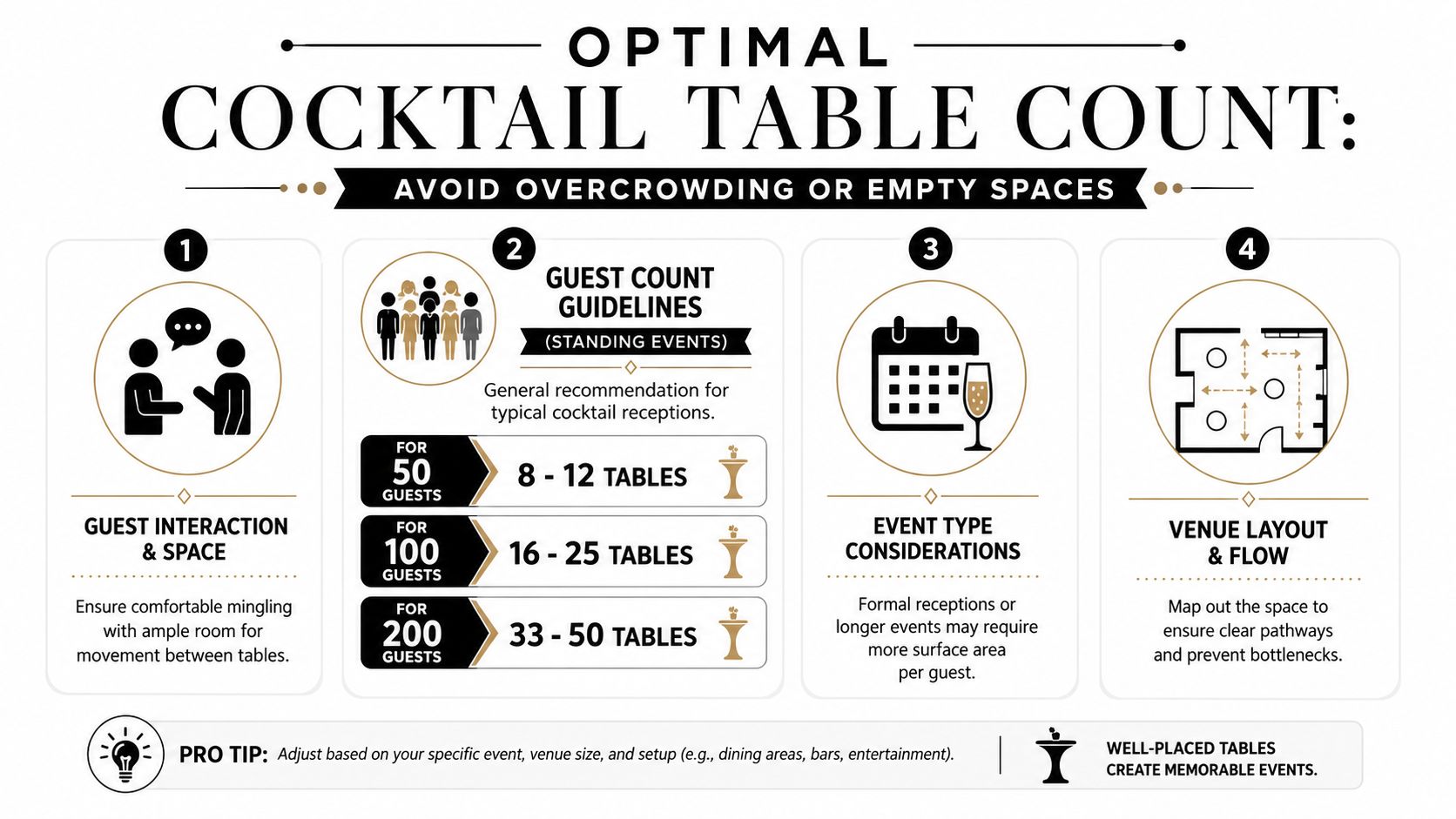
An infographic showing the optimal number of round cocktail tables based on guest counts for events.

Start with behaviour, not guest count

The right number depends less on the total headcount and more on what guests will be doing. At a corporate mixer, people circulate constantly and need more touchdown points. At a wedding, guests may use cocktail tables mainly before dinner, after the ceremony, and later near the dance floor or bar.

A practical framework is to ask:

  • Will most guests stand at the same time? If yes, increase your table count.
  • Will there be plated food or just drinks and canapés? Food needs more usable surface area.
  • Is there formal seating elsewhere? If yes, cocktail tables can support movement rather than carry the whole event.
  • Are guests likely to linger outdoors? If the answer is yes, people need enough surfaces to settle into conversation.

A better planning method

Rather than saying “one table can take six”, plan around actual comfort. For standard round cocktail tables, assume up to 4 standing guests per table when you want the event to feel relaxed rather than crowded. That keeps spacing honest.

I also split the room mentally into three categories:

  1. Core mingling zone
    These tables carry the event. Put enough here that guests don't circle awkwardly.

  2. Support tables near service points
    Bar queues, coffee stations, and terrace exits all need nearby surfaces.

  3. Overflow pockets
    Small clusters prevent one busy area from doing all the work.

If a floorplan looks spacious only because every table is over-assigned, it isn't spacious. It's under-furnished.

For weddings in the Winelands, the mistake is often underestimating pre-reception congregation. Everyone comes out of the ceremony at once. They collect drinks at once. They move toward shade or the view at once. If your cocktail tables aren't there waiting for that moment, the event feels disorganised even when everything else is beautiful.

For corporate events, I'd rather see a few extra well-placed round cocktail tables than a polished venue with nowhere practical to put a drink. Guests notice function before they compliment styling.

Strategic Placement for Optimal Event Flow

Placement changes how people move, where they pause, and which parts of the venue come alive. You can have the right quantity of round cocktail tables and still get the room wrong if they're dropped into the space without a plan.

A group of professional people networking outdoors on a terrace at an event with round cocktail tables.

The social hub

This layout suits launches, networking evenings, and high-energy receptions. Group tables in the centre of the room or terrace in loose clusters, not rigid rows. The aim is to create a natural magnet point where people enter, pause, join conversations, and keep moving.

It works especially well in a ballroom or on a broad wine farm deck where there's enough width for circulation around the groupings. The cluster becomes part conversation engine, part visual anchor.

The perimeter flow

Some events need an open middle. A dance floor, speech area, presentation screen, or ceremony turnaround all benefit from keeping the centre clear.

In those cases, place round cocktail tables around the edges and near transition points. Along walls, beside bar stations, just off the dance floor, or under verandas. Guests still have functional standing spots, but the room keeps its breathing space.

For teams mapping movement in larger venues, these effective event planning tactics are helpful for thinking through bottlenecks, entry points, and guest flow in a more deliberate way.

Quiet corners that actually get used

Not everyone wants to stand in the busiest part of the room. A pair of cocktail tables tucked under trees, near a side courtyard, or on the quieter end of a terrace gives guests another social mode. Older relatives, introverted colleagues, and people catching up properly will gravitate there.

Use these quieter pockets carefully:

  • Near but not inside the busiest route so guests can peel off naturally
  • Away from service congestion because no one wants deep conversation beside a queue
  • With enough visual connection that the area feels included, not forgotten

A good layout guides people without making the planning visible. Guests should feel that moving around the event is easy, even if every table has been placed with intent.

Styling Your Tables for a Signature Cape Town Look

Styling changes the role of a cocktail table completely. The same round table can feel formal on a Stellenbosch estate, architectural at a Waterfront launch, or playful at a birthday party after dark. That's why I never style them in isolation. I style them against the venue, the light, and the way guests will use the space.
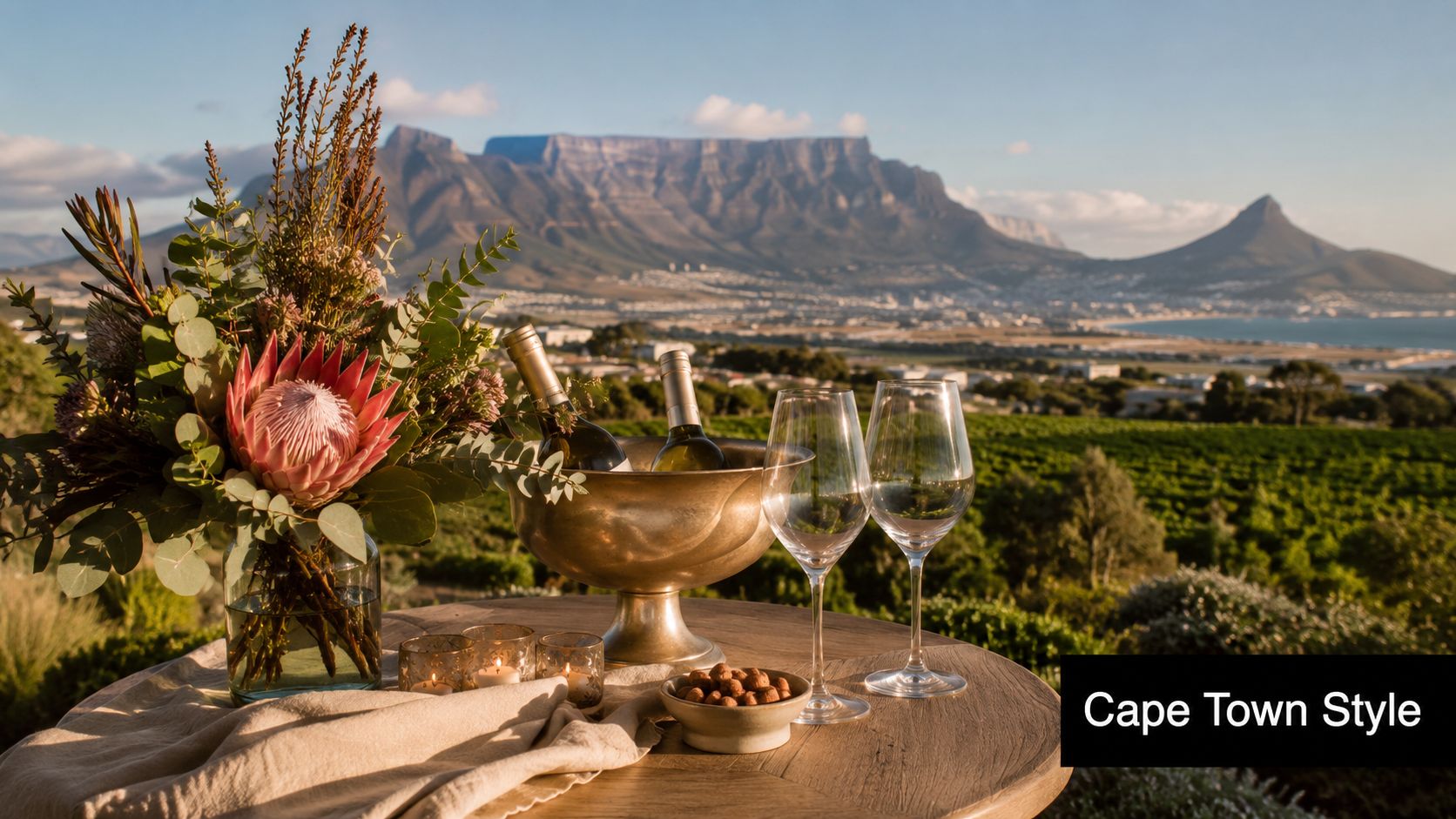
A scenic view of Table Mountain overlooking a vineyard with wine, flowers, and snacks on a table.

The classic Winelands wedding

On a wine estate, round cocktail tables often look best when styling feels restrained. Floor-length linen in white, stone, or soft neutrals works because the setting is already doing a lot visually. Add a small fynbos arrangement, keep the top uncluttered, and let the view stay part of the design.

Heavy centrepieces are usually the wrong move here. They block sightlines and fight the relaxed elegance that Winelands venues do so well.

A clean cloth fit matters more than people think. If you're choosing linen for different table sizes and event moods, this guide to tablecloths for round tables helps clarify what creates a polished finish instead of a rushed one.

The city launch

For a corporate event in Cape Town, especially in a modern venue with glass, concrete, or harbour views, I often prefer a more stripped-back look. Bare cocktail tables or sharply fitted covers can work beautifully. Keep florals minimal. Let branding, lighting, and the architecture carry the visual identity.

Discipline matters. If every table has menus, promo cards, oversized florals, candles, gift items, and product literature, the event starts looking busy rather than premium. One strong styling idea is enough.

Styling cue: If guests are standing, leave more open table surface than you think you need. Function is part of the aesthetic.

The birthday or matric dance setup

Evening parties allow more drama, a setting where LED cocktail tables come into their own. They shift the room after sunset and help zones feel intentional without adding bulky decor. A dance floor edge, chill area, or entrance cluster instantly reads as part of the event design rather than random furniture placement.

For more casual finishing touches, I also like looking outside the local event bubble for practical styling ideas. This resource for UK hospitality paper napkins is useful when you're thinking about colour, texture, and disposable service details that still need to feel considered.

The strongest styling choices don't try to force one look onto every event. They use round cocktail tables as flexible surfaces that support the venue's character instead of competing with it.

Local Rental Considerations for the Cape

In the Western Cape, furniture hire isn't just about availability. It's about whether the stock can handle the venue, the weather, and the setup conditions on the day.

That's especially true outdoors. A 2024 University of Cape Town report found that 72% of aluminium round cocktail tables rented for outdoor events in Cape Town's coastal areas showed significant surface degradation within 18 months due to salt spray and UV exposure, which is a strong reminder that climate-appropriate materials matter in this region. Coastal venues look fantastic, but they're hard on furniture.

Material matters more near the sea

A glossy table that looked perfect in a warehouse can age fast after repeated use in Clifton, Camps Bay, or any exposed coastal site. Salt air, direct sun, and wind don't care what looked good in the quote.

Ask rental partners practical questions:

  • What finish is on the table? Not all metal surfaces hold up the same way.
  • How is the stock maintained between hires? Maintenance standards show up in the condition on site.
  • Is the table suitable for outdoor use in exposed areas? Some stock is better kept for indoor or sheltered venues.

Logistics decide whether setup stays calm

A standard 30-inch wood round cocktail table weighs about 25 lbs (11.3 kg) and can be used at 30-inch dining height or 42-inch belly-bar height, according to Event Seating's product specifications. Those details matter when your crew is carrying tables through side gates, up staircases, across lawns, or into venues with tight loading access.

That weight is manageable, but not irrelevant. On a wine farm, where parking may be well away from the reception area, setup time often depends on how many trips crews must make and how easy the tables are to move and assemble.

The smoothest rental jobs in the Cape usually come from planning around the venue's constraints before delivery day, not solving them during setup.

Price isn't the full decision

The cheapest quote can become the expensive choice if stock arrives tired, unsuitable for the weather, or awkward for the venue access. A reliable local supplier should understand city bowl loading windows, farm-road delivery challenges, and the practical difference between a neat indoor launch and a wind-exposed terrace.

If you're comparing furniture packages across event types, this overview of tables and chair rentals is a useful starting point for thinking beyond single-item hire and planning the room as a whole.

Your Final Cocktail Table Rental Checklist

Before confirming your order, run through the event like a guest would. Where will they enter, collect a drink, stop to talk, and put something down? That simple mental walk-through catches most layout mistakes.

Use this final check before you lock in round cocktail tables:

  • Confirm the height: For standing receptions, standard cocktail height works best for comfort and natural conversation.
  • Choose the right diameter: Smaller tops suit tighter spaces. Larger tops handle longer mingling and more drinkware.
  • Check realistic capacity: Don't overload a table because it fits on paper.
  • Match quantity to behaviour: Order for how people will use the room, not just the size of the guest list.
  • Map placement properly: Decide which tables belong in hubs, on the perimeter, and in quieter corners.
  • Style for the venue: Winelands linen, urban minimalism, or LED impact should all support the setting.
  • Ask about outdoor suitability: Coastal and exposed venues need tougher, well-maintained stock.
  • Think through access: Stairs, gravel, narrow roads, and long carry distances affect setup more than most clients expect.
  • Confirm the rental partner understands Cape Town conditions: Local knowledge saves stress on event day.

The best round cocktail tables don't draw attention to themselves. They make the event feel natural, organised, and easy to enjoy.


If you need round cocktail tables, LED furniture, or a full event furniture solution for Cape Town, Stellenbosch, Franschhoek, Paarl, or the surrounding areas, ABC Hire is a strong local partner to speak to. Their range suits weddings, corporate functions, matric dances, and private celebrations, and they understand the practical realities of Western Cape venues that generic suppliers often miss.

Your Guide to Cutlery Crockery Hire in Cape Town

When you're planning an event in Cape Town or the beautiful Winelands, the to-do list can feel a mile long. But sorting out your tablescape shouldn't add to the stress. The secret? Cutlery and crockery hire offers a practical, stylish, and budget-friendly alternative to buying, storing, and then scrubbing hundreds of items yourself. It’s the easiest way to create a stunning dining experience without the long-term headache.

Why Renting Tableware Is the Smart Choice for Your Event

Elegant outdoor event table setting with plates, forks, and wine glasses, blurred background shows guests.

Whether you’re putting together an intimate birthday party or a grand Winelands wedding, your focus should be on creating amazing memories for your guests. The last thing you need is the logistical nightmare of buying, storing, and cleaning mountains of plates and forks. This is exactly where hiring your tableware comes in.

Think about it this way: you wouldn't buy a marquee just for one garden party, or a massive sound system for a single corporate gala. You hire what you need, when you need it. Tableware is exactly the same. Renting gives you access to gorgeous, professional-grade collections without the huge upfront cost.

The Clear Advantages of Hiring

Choosing a rental service turns a major chore into a simple, creative part of your planning. The benefits are instant, letting you focus on what really matters—hosting an event to remember.

  • It’s Cheaper: Buying quality tableware for dozens, or even hundreds, of guests is a massive expense. Renting turns that big investment into a predictable, manageable line item on your budget.
  • No Storage Headaches: Let's be honest, where are you going to keep 150 dinner plates and all the matching cutlery after the party? Hiring completely sidesteps this problem. Everything is delivered before your event and collected right after.
  • Forget the Post-Event Cleanup: This might just be the best part. No washing up! A good hire company handles all the cleaning, which saves you hours of work and ensures every single item is hygienically clean for the next event.

Elevate Your Event with Endless Style Options

Beyond just being practical, hiring opens up a whole world of style possibilities. You’re no longer stuck with what you have in your cupboards. Instead, you can pick tableware that perfectly matches your event's theme and colour scheme. Think rustic stoneware for a farm-style wedding or elegant gold cutlery for a sophisticated corporate dinner.

This flexibility is a big reason why the rental industry here is booming. In Cape Town’s buzzing event scene, the demand for top-notch rentals is through the roof. It mirrors a national trend, with South Africa's commercial tableware market projected to hit USD 382.7 million by 2030. Event planners and venues have realised that renting can slash these costs by 30-50% compared to buying new. You can explore more insights into the commercial tableware market to see how this is changing events across the country.

At the end of the day, cutlery and crockery hire is about getting a premium look without the premium price tag or the post-party pain. It's a smart, efficient, and stylish choice for any host.

Matching Tableware to Your Event Theme

Let's be honest, the tableware you choose does far more than just hold the food. It’s a massive part of your event's design and feel. Think of your tables as blank canvases. The cutlery and crockery you lay out are the brushstrokes that bring your whole theme to life, setting the mood long before anyone even takes a bite.

For anyone planning an event here in Cape Town, whether it’s a rustic wedding out in the Winelands or a slick corporate launch in the city, getting your cutlery and crockery hire right can make all the difference. Your choice of plates and cutlery should tell a story that fits perfectly with your vision. It’s all about creating a cohesive atmosphere where every little detail feels deliberate.

Decoding Your Event's Style

Before you even think about scrolling through rental catalogues, you need to pin down your event's aesthetic. Are you going for a relaxed, bohemian vibe, or is this a formal, black-tie affair? Once you have a crystal-clear theme in mind, choosing the right tableware becomes so much easier.

Let’s run through some popular Cape Town event styles and how you can match your tableware to them:

  • Rustic Winelands Charm: This style is all about earthy, natural textures. Picture stoneware plates with lovely organic shapes and a matte finish. You could pair these with simple, elegant cutlery in classic silver or even go for a trendy matte black to create a look that feels both grounded and sophisticated.
  • Modern Minimalist: Perfect for corporate events or contemporary weddings where clean lines are everything. Your best bet is crisp white porcelain plates, maybe with a subtle geometric shape like a square or rectangle. Sleek, unadorned cutlery in polished stainless steel will pull this polished look together.
  • Luxe and Glamorous: If you want to create an atmosphere of pure opulence, don't be shy with metallics. Gold or rose gold cutlery is an instant game-changer, adding a touch of glamour. Pair it with fine bone china or porcelain plates that have a delicate gold or platinum rim for a truly dazzling effect.
  • Coastal Chic: This is Cape Town, after all! Reflect our beautiful seaside setting with a light, airy colour palette. Choose crockery in soft blues, sandy beiges, or clean whites. You could even find glassware with a subtle blue tint. Simple, elegant silverware keeps the focus on that fresh, breezy atmosphere.

Your tablescape is a direct reflection of your event's personality. Don't just pick what's available; select pieces that actively contribute to the story you want to tell. A well-chosen plate and fork can communicate elegance, fun, or sophistication just as effectively as your lighting or floral arrangements.

Creating Cohesion Through Materials and Finishes

Once you've settled on a style, the real fun begins: mixing and matching materials and finishes. This is where you can add layers of texture and make your tables really pop. For instance, pairing a rough, textured stoneware plate with smooth, polished silverware creates a beautiful contrast that feels dynamic and modern.

Think about how your cutlery finish works with your crockery, too. A matte black fork and knife against a classic white plate can look incredibly dramatic, perfect for an edgy, modern event. On the other hand, brushed gold cutlery can warm up a cool-toned porcelain set, adding a layer of inviting luxury.

Of course, these details need to work with everything else on the table. To make it all come together, you'll want to ensure your linens and centrepieces also fit the theme. A great place to start is with the foundation – learn more in our detailed guide on tablecloths for round tables.

Visualising the Final Look

Trying to picture how all these elements will look together can feel a bit overwhelming, but it doesn’t have to be. Most rental companies have showrooms or great online galleries where you can see how different combinations look in real life. It’s also incredibly helpful to think about the entire table setting.

To help you envision the perfect arrangement for your special occasion, you can explore expert advice on how to set a formal dining table. This will give you a better sense of how each piece, from the side plate to the dessert spoon, plays its part.

By thoughtfully curating your choices, you ensure that your cutlery crockery hire does more than just serve a purpose—it becomes a central part of your event's decor, leaving a lasting impression on every single guest.

How Much Cutlery and Crockery Should You Hire?

This is the big question, isn't it? "How much do I actually need?" It's a classic event planning dilemma, caught somewhere between the nightmare of running out of forks mid-main course and the sting of paying for stacks of plates that never see the light of day.

Getting your numbers right isn't about guesswork. It’s a simple, logical system that all starts with one thing: your service style. A formal, multi-course plated dinner is a world away from a relaxed buffet or a buzzing cocktail party. Each format dictates not just what you need, but exactly how many of each item you'll need per guest.

Think of it like packing a specialised kit for your event. You want everyone to have precisely what they need, right when they need it. The style of your event also plays a huge role in what that kit looks like.

Diagram showing three event themes for events: Rustic, Modern, and Luxe, with descriptions.

As you can see, your theme directly influences your choices. A rustic Winelands wedding might call for earthy stoneware, while a chic corporate launch leans towards sleek, modern lines. Each choice affects your final count.

Calculating for Different Service Styles

Let's get down to the practical formulas. These are the industry standards we use as planners and caterers across Cape Town to make sure every event runs like clockwork.

  • Plated, Multi-Course Dinner: This is the most straightforward. For a three-course meal (starter, main, dessert), you'll need one of each item, per guest, per course. That’s one starter plate, one main plate, one dessert bowl, and a complete set of cutlery for each part of the meal. Simple.
  • Buffet-Style Meal: Things get a little more fluid with a buffet. People love to go back for seconds, or they might grab a fresh plate for a different dish. The safe bet here is to hire 1.5 main plates per guest. This ensures a clean stack is always ready without going overboard.
  • Cocktail or Canapé Party: At a standing event with passed bites, guests will be picking up and putting down plates all evening. Plan for at least 2-3 side plates per guest so there's always a clean one within reach. For cutlery, you'll likely only need small cocktail forks, and about 1.5 forks per guest is plenty.

The Golden Rule of Event Hire: Always, always add a 10% buffer to your final numbers. This little surplus is your safety net for those unexpected plus-ones, an accidental drop, or a fork that just vanishes into thin air. It’s a small price to pay for total peace of mind.

To make this even easier, here's a quick cheat sheet you can reference.

Guest Tableware Calculation Cheat Sheet

Item Plated Dinner (Per Guest) Buffet Style (Per Guest) Cocktail Party (Per 10 Guests)
Main Plates 1 1.5 N/A
Side Plates 1 1 20-30
Dessert Bowls/Plates 1 1 15-20
Main Cutlery Set 1 set 1 set N/A
Dessert Cutlery 1 set 1 set N/A
Cocktail Forks N/A N/A 15
Coffee/Tea Cups 1 1 10

This table should give you a solid foundation for building your preliminary order list.

Building Your Order Step by Step

Once you've got the basic formula down, it's time to build your detailed list. Don't just focus on the main event; walk through every single moment your guests will be eating or drinking.

  1. Pre-Dinner Drinks & Canapés: Will you need water glasses and champagne flutes for welcome drinks? What about side plates and cocktail forks for the snacks?
  2. The Main Meal: Tally up every plate, bowl, knife, and fork needed for each course, using the formulas above for your specific service style.
  3. Dessert and Coffee: Don't forget dessert spoons, cake forks, and the all-important coffee cups and saucers. It's such a common oversight and can lead to a real last-minute scramble.
  4. The 10% Buffer: Once you have your grand total for each item, calculate 10% and add it on top. If you need 100 dinner plates, order 110.

Getting these numbers spot-on is a game-changer for your budget and logistics. The South African kitchenware market was valued at a massive USD 973.2 million in 2026, with tableware making up 55.58% of that. For a typical Winelands wedding, purchasing the necessary items could easily top R50,000, which makes hiring the obvious, economical choice. With weddings driving 41% of the global tableware rental demand—a trend we definitely see here in the Cape—calculating your hire accurately is key to a financially savvy event. You can discover more insights on the South African kitchenware market to see just how big this industry is.

By following this simple framework, you can approach your cutlery crockery hire with confidence, knowing every detail is covered so you can get back to planning a fantastic party.

Navigating the Rental Process: From Booking to Return

A man in an apron checks a tablet next to a white delivery van with crates for event setup.

Hiring your tableware should be one of the easiest, most satisfying ticks on your event checklist. A good, organised process means you get exactly what you need, right when you need it, with zero last-minute panic.

Let’s walk through the key steps, from your first quote to the final collection, so you can manage your cutlery and crockery hire like a seasoned pro.

The Booking Timeline

Timing is everything, especially during Cape Town’s buzzing event season between November and April. To get your first choice of items and avoid that dreaded "sorry, we're booked out" email, you need to plan ahead.

For weddings and other large-scale functions, you’ll want to finalise your hire 3-4 months out. If you're planning a smaller private party, booking 4-6 weeks in advance is usually a safe bet.

To get the ball rolling with a quote, you'll need a few key details handy:

  • Event Date and Venue Address: This is non-negotiable for checking stock and calculating delivery fees.
  • Guest Count: Give your best estimate. You can almost always tweak this number closer to the date.
  • Your Wish List: A detailed list of every plate, bowl, glass, fork, and spoon you've got your eye on.
  • Delivery and Collection Times: Make sure these line up with your venue’s access hours.

A professional hire company will send over a detailed rental agreement. It's crucial to read this carefully. It covers everything from payment terms to policies on damages, loss, and cancellations. Think of it as your roadmap to a smooth partnership.

Once you’ve paid the deposit, your order is locked in. Those beautiful items are officially reserved just for you, which is a massive weight off your shoulders! And if you're sorting out the kitchen side of things, our guide on hiring the right catering equipment for your event is packed with more useful tips.

Delivery, Collection, and That All-Important Inventory Check

On the day, your chosen tableware will arrive at your venue, neatly packed in protective crates. The delivery team will drop them off in a pre-arranged spot, ready for your caterer or setup crew to work their magic. It's essential that someone is there to receive the delivery.

As soon as the items arrive, you or your event coordinator need to do an inventory check. Grab the delivery note and count everything to make sure the order is 100% correct and nothing got damaged on the way. If you spot any issues or breakages, let the hire company know immediately. This protects you from being held responsible later.

And now for the best part: after the party, you don’t have to wash a single dish! Simply scrape off any leftover food, pop the used items back into their crates, and you’re done. The hire company takes care of all the professional cleaning and sanitising.

Understanding the Damage and Loss Policy

Let's be realistic—accidents happen. A plate gets dropped in the kitchen, or a dessert fork mysteriously vanishes. Every rental company has a policy for these little mishaps, and it’s smart to know what it is from the get-go.

Typically, you’ll be charged a replacement fee for any items that are broken, chipped, or lost during your event. These fees are clearly listed in your rental agreement, so there are no nasty surprises. Some companies also offer a small, optional "damage waiver" fee that can cover minor accidental breakages, giving you extra peace of mind. Knowing the score upfront ensures a transparent and stress-free end to your hire experience.

Let's Talk Budget: Planning Your Tableware Hire

Pulling off a successful event all comes down to a solid, realistic budget. When you're planning your tablescape, getting a handle on the costs of cutlery and crockery hire means you can make smart choices that bring your vision to life without breaking the bank. Let’s look at how pricing typically works here in Cape Town and the Winelands.

Most rental companies you’ll come across offer two ways to pay: per-item rates or all-inclusive packages. Per-item pricing is fantastic for customisation. It gives you the freedom to hire exactly what you need, whether that’s 150 dinner forks or just 75 dessert bowls. It's the perfect choice when you have a very specific look in mind.

Package deals, on the other hand, are all about convenience. They usually bundle plates, cutlery, and sometimes glassware into a set price per guest. For standard events like weddings or corporate dinners, this can make planning a breeze and often works out to be better value.

What Shapes Your Final Quote

A few key things will influence the final cost of your tableware hire. Knowing what they are helps you make sense of quotes and spot places where you might be able to save a few Rand.

  • The Look and Feel: Standard stainless steel cutlery and classic white porcelain plates are always your most budget-friendly starting point. If you want to level up to premium materials like bone china or exclusive designs—think gold-rimmed plates or stylish matte black cutlery—you can expect the price to climb.
  • How Much and For How Long: It's simple: the more you hire and the longer you need it, the more it will cost. That said, most companies build a standard event duration (usually 1-3 days) right into their pricing, so you don't have to worry about daily rates for a weekend wedding.
  • Delivery and Collection: This fee really just depends on where your venue is. A wedding out in beautiful Franschhoek will naturally cost more for delivery than a party in the middle of Cape Town.
  • The Extras: Always ask about additional charges. These could include things like after-hours collection, setup services, or a damage waiver—which is a small, optional fee that gives you peace of mind by covering any accidental breakages.

A smart budget isn't about spending less; it's about spending wisely. When you understand these cost factors, you can put your money where it matters most and get that beautiful tablescape you've been dreaming of, without any nasty surprises.

Why Hiring is Just Smart Economics

Honestly, choosing to hire your tableware is one of the biggest cost-saving moves you can make. While the cutlery market in Africa is growing, renting saves event hosts a huge amount of money. To buy a quality stainless steel cutlery set, you'd be looking at R20+ per set—imagine that for a 300-guest wedding!

Since 2020, event planners across South Africa have increasingly turned to rentals for their flexibility. In fact, some analyses show that hiring can slash logistical and capital costs by up to 40%. You can read the full research about the African cutlery market to get a better sense of the trend.

This kind of financial know-how gives you the confidence to plan an incredible event, knowing your decision to hire cutlery and crockery isn't just stylish and convenient—it's also exceptionally budget-friendly.

Your Essential Tableware Hire Checklist

To make hiring cutlery and crockery completely seamless, we've boiled everything down into a final, actionable checklist. Think of it as your step-by-step guide to follow from the first browse to the post-event collection, making sure no detail gets missed.

This practical tool is broken down by planning stage, so you can feel confident and in control every step of the way.

Phase 1: Initial Selection

Your journey starts by defining your vision and getting your basic numbers sorted. This first phase is all about making smart choices that match your event's style and size.

  • Confirm Your Guest Count: Start with your best guess for guest numbers. Don't forget to apply the 10% buffer rule—it's a lifesaver for last-minute RSVPs or the odd dropped fork.
  • Finalise Your Event Style: What’s the vibe? Rustic, modern, or pure luxury? Your answer here will guide you toward the right materials and finishes for your plates and cutlery.
  • Determine Your Service Style: Are you planning a sit-down plated dinner, a relaxed buffet, or a chic cocktail party? This is a crucial decision, as it directly impacts what you’ll need and how much of it.
  • Create Your Wish List: Dive into your hire company’s catalogue. Start a detailed list of every single item you need, from the main dinner plates right down to the coffee spoons.

Phase 2: Booking and Confirmation

Once your selections are made, it’s time to lock in your order and make it official. This stage is critical for securing the items you want, especially during the busy season here in the Cape.

This is where you need to read the fine print. Go through the rental agreement carefully, paying close attention to the payment schedule, cancellation policy, and the replacement costs for any damaged or lost items. A bit of focus now prevents any nasty surprises later on.

  • Request a Formal Quote: Send over your wish list, event date, venue, and guest count to get a detailed quote that includes delivery and any other fees.
  • Review and Sign the Agreement: When you're happy with the numbers, sign the rental agreement to formalise the booking.
  • Pay Your Deposit: Secure your order by paying the deposit. This is what guarantees that your chosen items are reserved just for you on your event date.

Beyond the perfect table setting, remember to think about the bigger picture. Things like reliable guest transport are just as crucial. For a full picture, it's worth seeing how you can provide a smooth experience with a dedicated service like a wedding bus hire.

Phase 3: The Final Stretch

In the weeks leading up to your big day, it's time to confirm all the final details with your suppliers.

  • Finalise Guest Numbers: Give your hire company your final, confirmed guest count about two weeks before the event. This allows them to adjust the order accordingly.
  • Coordinate Logistics: Confirm the delivery and collection times with both your venue and the hire company. You want to make sure access is easy and everything runs smoothly.
  • Share Contact Details: Choose a specific person to be the point of contact for the delivery and give their details to the rental company.

This checklist really does simplify the whole process. For an even more detailed timeline, our complete event planning checklist and template covers absolutely every aspect of your event from start to finish.

Your Tableware Hire Questions, Answered

Planning an event involves a lot of moving parts, and we get that you'll have questions. To help you get everything sorted, here are the answers to the queries we hear most often from our clients in Cape Town. We want you to feel completely at ease with the whole process.

What Happens If an Item Gets Broken or Lost?

It’s one of the first things people ask, and it's a fair question! Don't stress—accidents are a normal part of any lively celebration. Every hire company has a straightforward policy for breakages, which you'll find laid out in your rental agreement.

Typically, you'll just be charged a set replacement fee for any item that gets damaged or goes missing. These costs are fixed beforehand, so you won’t get any nasty surprises. For extra peace of mind, some companies offer a damage waiver for a small fee, which often covers minor accidental breakages.

Do I Need to Clean Everything Before It Goes Back?

Here's the best part: absolutely no washing up for you! This is one of the biggest conveniences of hiring tableware. All we ask is that you scrape any leftover food off the plates before popping everything back into the delivery crates.

The hire company takes care of all the professional cleaning and sanitising back at the warehouse. It saves you a mountain of time and hassle when all you want to do is put your feet up after a successful event.

Just remember, while you don't need to wash anything, it's your responsibility to make sure all the items are packed up and ready for collection at the agreed-upon time. A smooth pickup makes wrapping up your event completely stress-free.

How Far in Advance Should I Book?

Good timing makes all the difference, especially during Cape Town's buzzing event season which runs from November through to April. To make sure you get the styles you really want and aren't left disappointed, it’s always best to book ahead.

As a general guide:

  • Weddings & Large Corporate Functions: Try to lock in your booking 3-4 months in advance.
  • Smaller Parties & Gatherings: Booking 4-6 weeks ahead is usually plenty of time.

If you leave it too late, you might find that popular items like gold cutlery or unique plate styles are already booked out.

Can I Change My Order After I’ve Booked?

Of course! Most hire companies are pretty flexible because they know guest numbers can shift. You can usually tweak your order—adding a few more plates or removing some glasses—up until a week or two before your event.

Just be sure to check the specific policy with your rental company regarding final numbers. This flexibility means you can fine-tune your cutlery crockery hire to match your final RSVPs, so you're not paying for items you don't end up needing. It's a key benefit of working with the pros.


Ready to create a beautiful table for your next event without any of the fuss? At ABC Hire, we have a stunning selection of cutlery, crockery, and glassware to suit any theme. Explore our collection and get a quote today!