
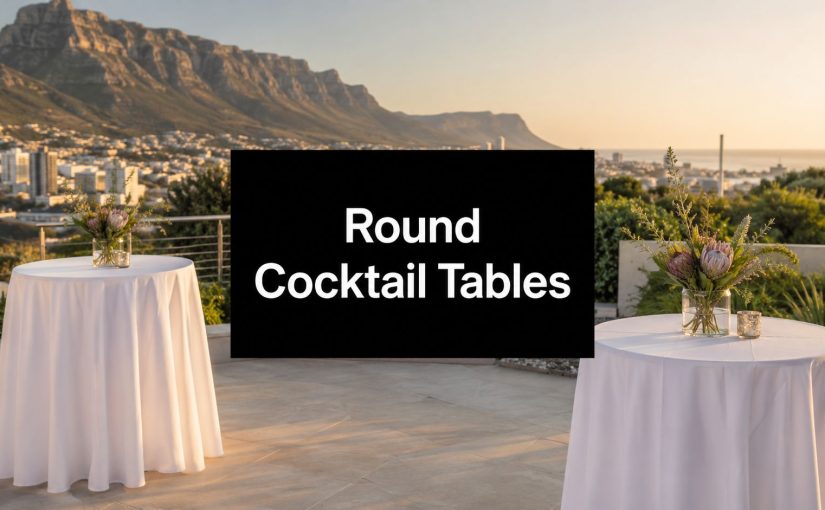
You're probably planning an event where guests won't stay in one place for long. A Cape Town wedding on a lawn in Constantia, a cellar-door reception in Stellenbosch, a brand launch in the city, or a matric dance where everyone starts formal and ends up moving between photo spots, the bar, and the dance floor. In all of those setups, round cocktail tables do a lot of quiet work.
Get them right and the room feels easy. Guests have somewhere to rest a drink, conversation forms naturally, and the venue feels full without feeling cramped. Get them wrong and you'll see it fast. People balance glasses on window ledges, crowd around too few tables, or avoid areas that looked good on a floorplan but don't work in real life.
In the Western Cape, the details matter even more. Wind changes outdoor layouts. Uneven terraces punish flimsy furniture. Farm venues often require fast setup over long walking routes. That's why round cocktail tables shouldn't be treated as an afterthought. They're part furniture choice, part crowd management tool, and part styling surface.
Sizing Up Your Options for Guest Comfort
Two dimensions matter most with round cocktail tables. Height affects comfort. Diameter affects how many people can use the table without elbowing each other or parking handbags where drinks should go.
The standard height for cocktail service is 42 inches (106.7 cm), which aligns with the natural elbow position of an average adult and helps reduce upper-body strain during long standing conversations, according to round cocktail table specifications from Forever Redwood. That's why this height works so well for launches, canapés, pre-dinner drinks, and networking functions. Guests don't need to hunch over, and they don't feel like they're eating off a side table.
Height first, then diameter
If your event is built around standing and mingling, start with the standard cocktail height. If people will dine at the tables, that's a different furniture decision entirely.
Diameter is where planners often go wrong. A compact top keeps the room airy, but it also limits what the table can carry. Once you add glasses, a small floral arrangement, perhaps a candle, and the odd phone or clutch bag, space disappears quickly.
Here's a practical guide I use when planning layouts in Cape Town venues:
| Table Diameter | Best For (Standing Guests) | Common Use Case |
|---|---|---|
| 60 cm | 2 to 4 guests | Tight terraces, pre-ceremony drinks, matric dance mingling zones |
| About 70 cm to 72.4 cm | Up to 4 guests with more usable surface area | Corporate networking, longer cocktail hours, bar-adjacent clusters |
The smaller option is common for compact venues. The Dash 60cm Round model lists a 60 cm diameter and is a useful benchmark for the local market, especially where planners need a compact profile for circulation, as shown on Takealot's 60 cm cocktail table listing.
The slightly larger format is the more generous social table. A standard round cocktail table size of 28.5 inches (72.4 cm) with a 42-inch height is a strong all-purpose choice when guests will be standing around the table for longer periods, especially in premium venues where comfort matters as much as appearance.
Practical rule: If the event includes canapés, welcome drinks, and long conversations, a slightly larger top usually works better than the smallest option that fits the floorplan.
What works in real venues
On a wine farm terrace, smaller tables can look elegant, but only if they're not expected to do too much. They suit short-form mingling well. At a city event where guests hold drinks, name badges, phones, and canapé plates, a larger top often makes the room feel calmer because guests aren't fighting for space.
If you're comparing materials and styles, this guide to metal cocktail tables is useful for understanding how the table's look affects the event feel. Metal can read sleek and contemporary. Covered tables feel softer and more formal. Neither is automatically better. It depends on the room, the dress code, and how long people will use the tables.
How Many Cocktail Tables Do You Really Need
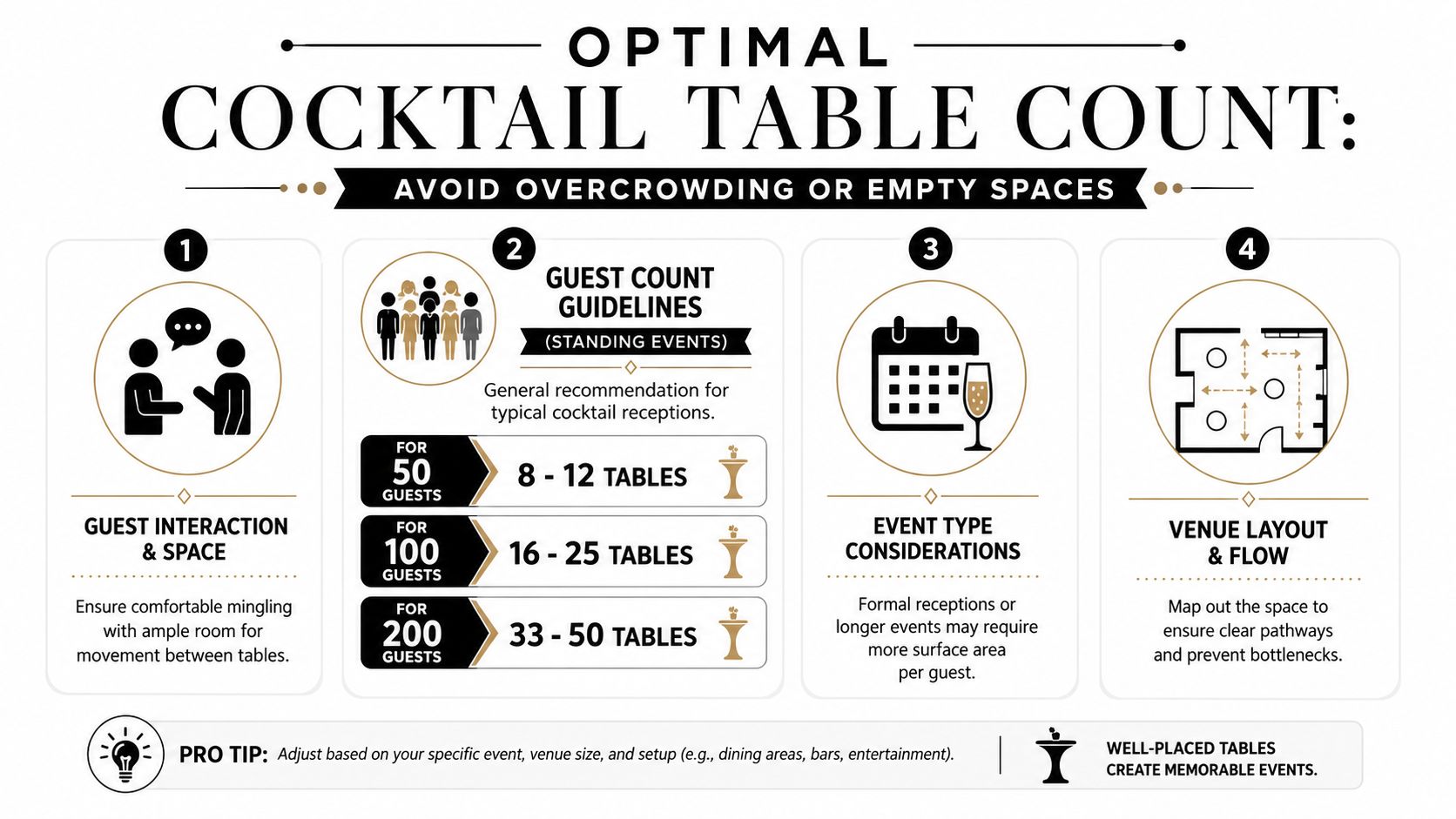
Many still guess. They look at the guest list, picture a few clusters, and order what feels right. That approach causes problems more often than acknowledged.
A 2025 SEPA study found that 68% of wedding planners in Cape Town incorrectly assume a standard 60 cm round cocktail table accommodates 6 guests comfortably, and the study recommends a maximum of 4 guests for optimal comfort. That's the stat I'd keep in mind before signing off a rental quantity. It's a simple correction with a big effect on how the room feels.
Start with behaviour, not guest count
The right number depends less on the total headcount and more on what guests will be doing. At a corporate mixer, people circulate constantly and need more touchdown points. At a wedding, guests may use cocktail tables mainly before dinner, after the ceremony, and later near the dance floor or bar.
A practical framework is to ask:
- Will most guests stand at the same time? If yes, increase your table count.
- Will there be plated food or just drinks and canapés? Food needs more usable surface area.
- Is there formal seating elsewhere? If yes, cocktail tables can support movement rather than carry the whole event.
- Are guests likely to linger outdoors? If the answer is yes, people need enough surfaces to settle into conversation.
A better planning method
Rather than saying “one table can take six”, plan around actual comfort. For standard round cocktail tables, assume up to 4 standing guests per table when you want the event to feel relaxed rather than crowded. That keeps spacing honest.
I also split the room mentally into three categories:
Core mingling zone
These tables carry the event. Put enough here that guests don't circle awkwardly.Support tables near service points
Bar queues, coffee stations, and terrace exits all need nearby surfaces.Overflow pockets
Small clusters prevent one busy area from doing all the work.
If a floorplan looks spacious only because every table is over-assigned, it isn't spacious. It's under-furnished.
For weddings in the Winelands, the mistake is often underestimating pre-reception congregation. Everyone comes out of the ceremony at once. They collect drinks at once. They move toward shade or the view at once. If your cocktail tables aren't there waiting for that moment, the event feels disorganised even when everything else is beautiful.
For corporate events, I'd rather see a few extra well-placed round cocktail tables than a polished venue with nowhere practical to put a drink. Guests notice function before they compliment styling.
Strategic Placement for Optimal Event Flow
Placement changes how people move, where they pause, and which parts of the venue come alive. You can have the right quantity of round cocktail tables and still get the room wrong if they're dropped into the space without a plan.

The social hub
This layout suits launches, networking evenings, and high-energy receptions. Group tables in the centre of the room or terrace in loose clusters, not rigid rows. The aim is to create a natural magnet point where people enter, pause, join conversations, and keep moving.
It works especially well in a ballroom or on a broad wine farm deck where there's enough width for circulation around the groupings. The cluster becomes part conversation engine, part visual anchor.
The perimeter flow
Some events need an open middle. A dance floor, speech area, presentation screen, or ceremony turnaround all benefit from keeping the centre clear.
In those cases, place round cocktail tables around the edges and near transition points. Along walls, beside bar stations, just off the dance floor, or under verandas. Guests still have functional standing spots, but the room keeps its breathing space.
For teams mapping movement in larger venues, these effective event planning tactics are helpful for thinking through bottlenecks, entry points, and guest flow in a more deliberate way.
Quiet corners that actually get used
Not everyone wants to stand in the busiest part of the room. A pair of cocktail tables tucked under trees, near a side courtyard, or on the quieter end of a terrace gives guests another social mode. Older relatives, introverted colleagues, and people catching up properly will gravitate there.
Use these quieter pockets carefully:
- Near but not inside the busiest route so guests can peel off naturally
- Away from service congestion because no one wants deep conversation beside a queue
- With enough visual connection that the area feels included, not forgotten
A good layout guides people without making the planning visible. Guests should feel that moving around the event is easy, even if every table has been placed with intent.
Styling Your Tables for a Signature Cape Town Look
Styling changes the role of a cocktail table completely. The same round table can feel formal on a Stellenbosch estate, architectural at a Waterfront launch, or playful at a birthday party after dark. That's why I never style them in isolation. I style them against the venue, the light, and the way guests will use the space.
The classic Winelands wedding
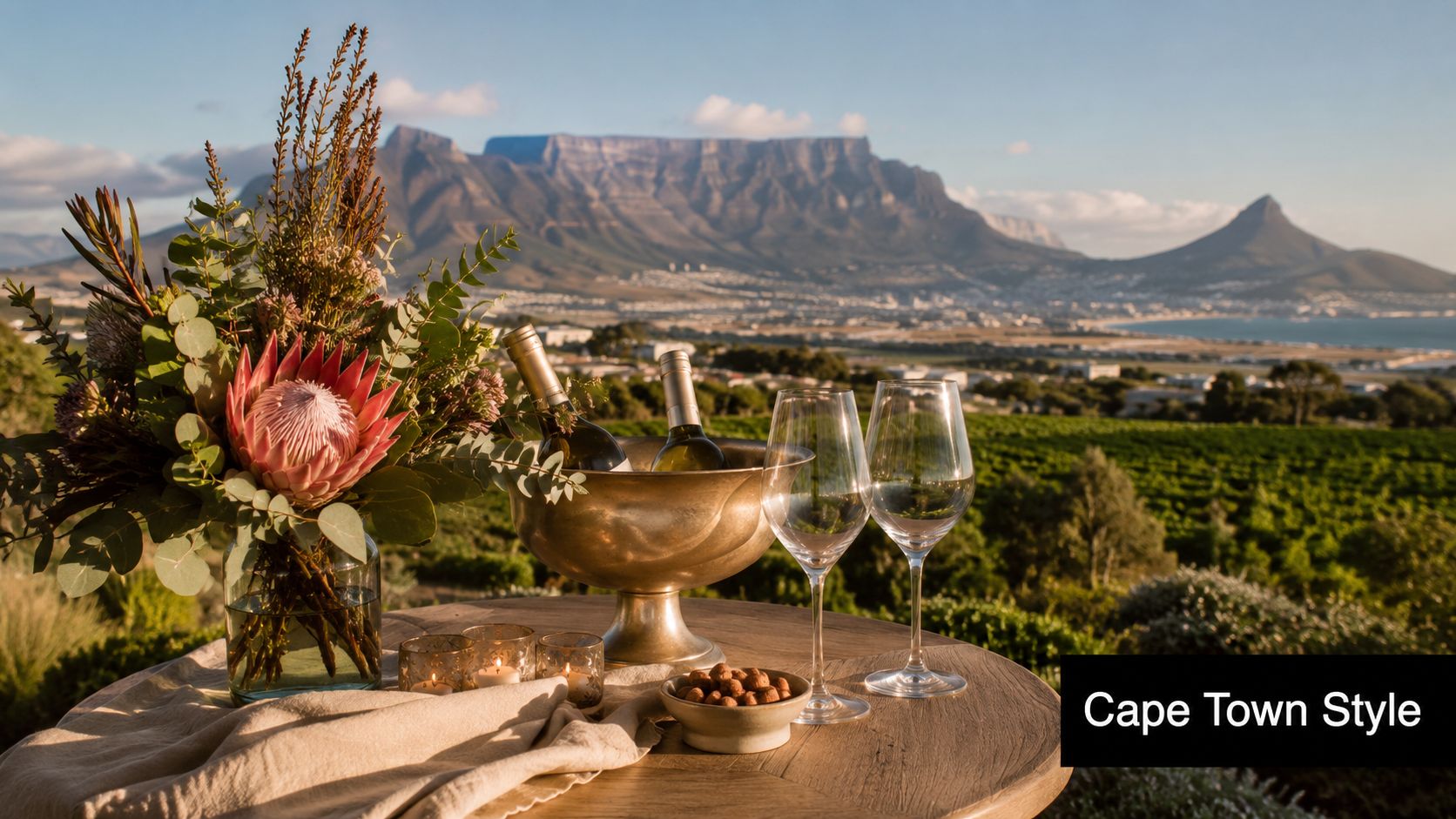
On a wine estate, round cocktail tables often look best when styling feels restrained. Floor-length linen in white, stone, or soft neutrals works because the setting is already doing a lot visually. Add a small fynbos arrangement, keep the top uncluttered, and let the view stay part of the design.
Heavy centrepieces are usually the wrong move here. They block sightlines and fight the relaxed elegance that Winelands venues do so well.
A clean cloth fit matters more than people think. If you're choosing linen for different table sizes and event moods, this guide to tablecloths for round tables helps clarify what creates a polished finish instead of a rushed one.
The city launch
For a corporate event in Cape Town, especially in a modern venue with glass, concrete, or harbour views, I often prefer a more stripped-back look. Bare cocktail tables or sharply fitted covers can work beautifully. Keep florals minimal. Let branding, lighting, and the architecture carry the visual identity.
Discipline matters. If every table has menus, promo cards, oversized florals, candles, gift items, and product literature, the event starts looking busy rather than premium. One strong styling idea is enough.
Styling cue: If guests are standing, leave more open table surface than you think you need. Function is part of the aesthetic.
The birthday or matric dance setup
Evening parties allow more drama, a setting where LED cocktail tables come into their own. They shift the room after sunset and help zones feel intentional without adding bulky decor. A dance floor edge, chill area, or entrance cluster instantly reads as part of the event design rather than random furniture placement.
For more casual finishing touches, I also like looking outside the local event bubble for practical styling ideas. This resource for UK hospitality paper napkins is useful when you're thinking about colour, texture, and disposable service details that still need to feel considered.
The strongest styling choices don't try to force one look onto every event. They use round cocktail tables as flexible surfaces that support the venue's character instead of competing with it.
Local Rental Considerations for the Cape
In the Western Cape, furniture hire isn't just about availability. It's about whether the stock can handle the venue, the weather, and the setup conditions on the day.
That's especially true outdoors. A 2024 University of Cape Town report found that 72% of aluminium round cocktail tables rented for outdoor events in Cape Town's coastal areas showed significant surface degradation within 18 months due to salt spray and UV exposure, which is a strong reminder that climate-appropriate materials matter in this region. Coastal venues look fantastic, but they're hard on furniture.
Material matters more near the sea
A glossy table that looked perfect in a warehouse can age fast after repeated use in Clifton, Camps Bay, or any exposed coastal site. Salt air, direct sun, and wind don't care what looked good in the quote.
Ask rental partners practical questions:
- What finish is on the table? Not all metal surfaces hold up the same way.
- How is the stock maintained between hires? Maintenance standards show up in the condition on site.
- Is the table suitable for outdoor use in exposed areas? Some stock is better kept for indoor or sheltered venues.
Logistics decide whether setup stays calm
A standard 30-inch wood round cocktail table weighs about 25 lbs (11.3 kg) and can be used at 30-inch dining height or 42-inch belly-bar height, according to Event Seating's product specifications. Those details matter when your crew is carrying tables through side gates, up staircases, across lawns, or into venues with tight loading access.
That weight is manageable, but not irrelevant. On a wine farm, where parking may be well away from the reception area, setup time often depends on how many trips crews must make and how easy the tables are to move and assemble.
The smoothest rental jobs in the Cape usually come from planning around the venue's constraints before delivery day, not solving them during setup.
Price isn't the full decision
The cheapest quote can become the expensive choice if stock arrives tired, unsuitable for the weather, or awkward for the venue access. A reliable local supplier should understand city bowl loading windows, farm-road delivery challenges, and the practical difference between a neat indoor launch and a wind-exposed terrace.
If you're comparing furniture packages across event types, this overview of tables and chair rentals is a useful starting point for thinking beyond single-item hire and planning the room as a whole.
Your Final Cocktail Table Rental Checklist
Before confirming your order, run through the event like a guest would. Where will they enter, collect a drink, stop to talk, and put something down? That simple mental walk-through catches most layout mistakes.
Use this final check before you lock in round cocktail tables:
- Confirm the height: For standing receptions, standard cocktail height works best for comfort and natural conversation.
- Choose the right diameter: Smaller tops suit tighter spaces. Larger tops handle longer mingling and more drinkware.
- Check realistic capacity: Don't overload a table because it fits on paper.
- Match quantity to behaviour: Order for how people will use the room, not just the size of the guest list.
- Map placement properly: Decide which tables belong in hubs, on the perimeter, and in quieter corners.
- Style for the venue: Winelands linen, urban minimalism, or LED impact should all support the setting.
- Ask about outdoor suitability: Coastal and exposed venues need tougher, well-maintained stock.
- Think through access: Stairs, gravel, narrow roads, and long carry distances affect setup more than most clients expect.
- Confirm the rental partner understands Cape Town conditions: Local knowledge saves stress on event day.
The best round cocktail tables don't draw attention to themselves. They make the event feel natural, organised, and easy to enjoy.
If you need round cocktail tables, LED furniture, or a full event furniture solution for Cape Town, Stellenbosch, Franschhoek, Paarl, or the surrounding areas, ABC Hire is a strong local partner to speak to. Their range suits weddings, corporate functions, matric dances, and private celebrations, and they understand the practical realities of Western Cape venues that generic suppliers often miss.