Elevate Events with Glass Water Jugs: Rental Tips 2026

You're probably in that final planning stretch where the big elements are sorted, but the details still decide whether the event feels polished or pieced together. The venue is booked. The florals are discussed. The menu is nearly signed off. Then someone asks a deceptively small question: what are we using for water on the tables?

In Cape Town and the Winelands, that question matters more than people think. At a summer lunch in Stellenbosch, guests reach for water constantly. At a harbour-facing launch, the room might look immaculate, but a table crowded with mismatched plastic bottles can flatten the whole visual effect. Even at a beautifully styled wedding, hydration can feel like an afterthought unless it's handled with the same care as glassware, linen, and lighting.

That's where glass water jugs earn their place. Done well, they make water service feel intentional. They catch the light, suit almost any table design, and help hosts offer something practical without losing elegance. Done badly, they create spills, clutter, and unnecessary staff pressure.

I've seen both versions. The difference usually comes down to choosing the right jug, the right setup, and the right service plan for the venue, weather, and guest flow.

Setting the Scene for Stylish Hydration

A Winelands wedding lunch has a rhythm of its own. Guests arrive from the ceremony slightly warm, the first glasses of bubbly are poured, and by the time they sit down, they want water immediately. Not later, and not after a waiter eventually circles back. If each table already has a clear, chilled glass jug in place, guests settle faster and the whole reception feels more considered.

The same applies in a very different setting. A corporate launch overlooking the Cape Town harbour calls for clean lines, sharp branding, and a room that feels controlled. Water service needs to support that look, not interrupt it. A good glass jug blends into the tablescape while still signalling quality. It says the host thought about comfort, not just presentation.

Why guests notice it

Guests rarely compliment “water logistics” out loud, but they absolutely notice when it's off. They notice warm water. They notice a sticky bottle sweating onto menus. They notice when they have to flag staff for something that should already be there.

With glass water jugs, the service feels calmer. Tables look dressed rather than stocked. Guests pour for themselves naturally, which reduces friction during speeches, plated courses, and long networking stretches.

Water service is one of those details that disappears when it's done properly. That's exactly why it matters.

Why planners care

For planners and hosts, jugs solve two problems at once. They support guest comfort, and they tidy up the visual language of the event. Instead of multiple branded bottles, random labels, or half-open containers, you get one consistent object repeated across the room.

That consistency is especially useful in Cape Town venues where the backdrop is already strong. A vineyard, mountain view, or city skyline doesn't need visual clutter on the table. It needs restraint. A well-shaped glass jug gives you that restraint while still doing a very practical job.

The Enduring Appeal of Glass Water Jugs

Glass water jugs have staying power because they do more than hold water. They change how the table reads. Clear glass reflects candlelight at dinner, picks up natural light at lunch, and gives even a simple table setting a cleaner finish.

There's also a tactile quality to glass that plastic does not offer. Weight matters. Clarity matters. A guest lifting a proper jug feels a sense of substance, and that translates into a more premium hospitality experience.

Why glass suits South African hospitality

In South Africa, glass already carries strong associations with quality service because of the country's long-established wine and soft-drink packaging sectors. That history made glass a familiar choice in hospitality and events, not a niche styling decision. It sits comfortably in local service culture, especially in venues where durable tableware and polished presentation are expected. The wider industry context matters too. Glass packaging is reported as 100% recyclable without loss of quality, and the Glass Recycling Company has stated that millions of tonnes of glass have been recovered for recycling since its launch in 2005, which reinforces glass as part of a broader reuse and recycling culture rather than a purely decorative choice (history of glass and recycling context).

That's one reason glass water jugs feel so natural in the Cape Town and Winelands event space. They don't look imported from some unrelated trend. They fit the region's hospitality language.

What glass does better on the table

A few things happen visually when you use glass instead of disposable or opaque alternatives:

  • It shows the water clearly. Guests can see what's available without lifting lids or asking staff.
  • It showcases garnishes. Lemon wheels, cucumber ribbons, mint, and rosemary look intentional rather than gimmicky.
  • It works across styles. Minimal corporate breakfast, black-tie dinner, harvest table lunch, or contemporary wedding. Glass adapts.

There's also a practical styling advantage. Because glass is visually quiet, it doesn't fight with florals, stationery, or plated food. It complements rather than competes.

The message it sends

A host who uses glass water jugs usually signals three things at once: attention to detail, respect for the guest experience, and confidence in the event design. That matters at weddings, where every object gets photographed, and at brand events, where every object contributes to perception.

Practical rule: If an item sits on the guest table for hours, it isn't just service equipment. It's part of the décor.

That's why glass remains the default for well-styled events. It solves a practical need while improving the room.

A Practical Guide to Jug Sizes and Styles

The wrong jug size creates work. Too small, and staff are constantly topping up. Too large, and guests struggle to lift and pour it neatly, especially across crowded tables. The sweet spot depends on table layout, service style, and whether the event is indoors or exposed to wind and uneven ground.

For most event setups, it helps to think in terms of table behaviour, not just litres. A long shared banquet table behaves differently from a round guest table. A conference break station behaves differently from plated wedding service.

Choosing by capacity
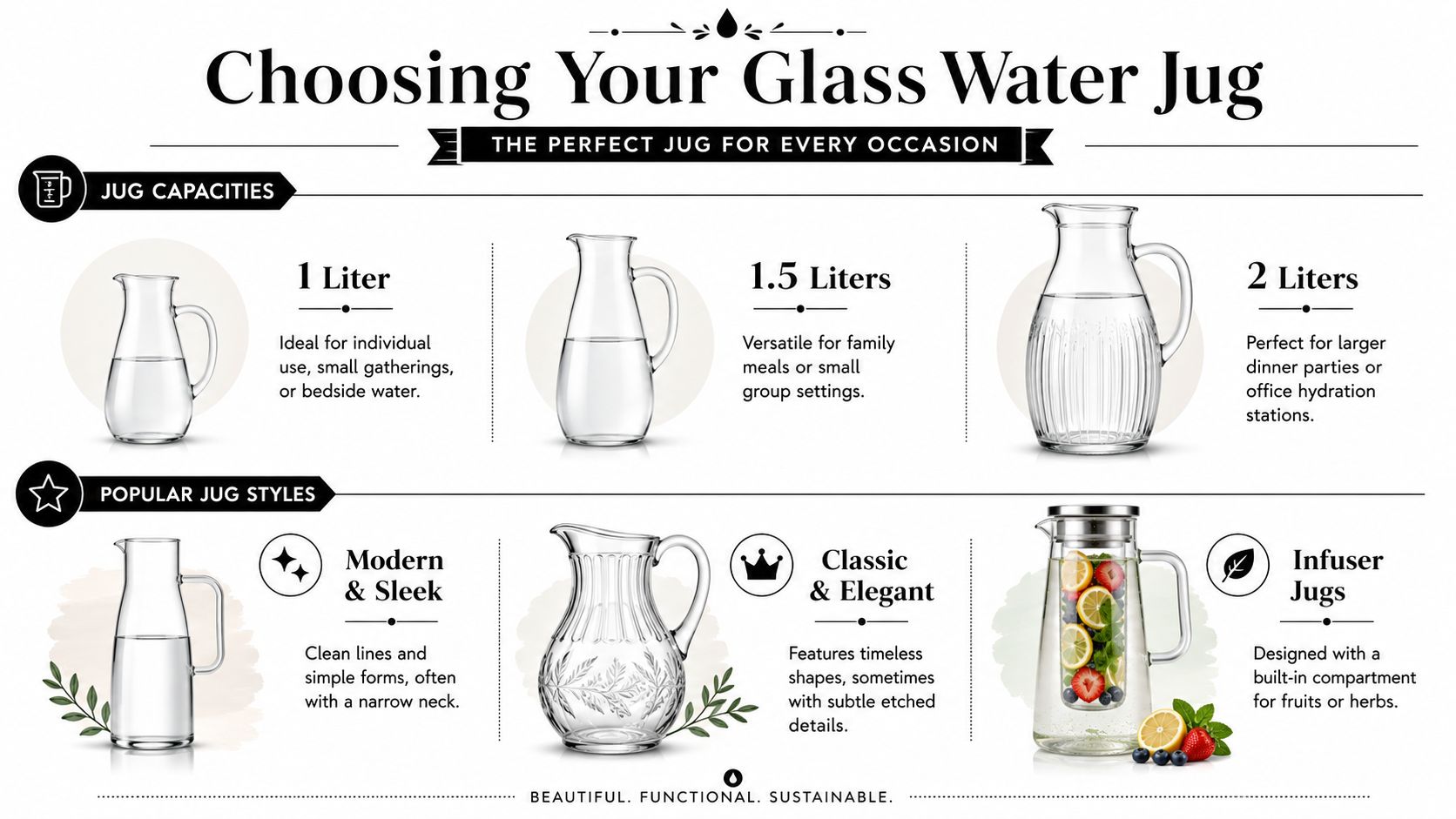
An infographic displaying different glass water jug capacities and popular styles for various occasions and home decor.

A simple sizing framework works well:

  • 1 litre works best for smaller settings, side stations, boardroom use, or tables where space is tight.
  • 1.5 litres is often the most balanced option for event tables. It gives enough volume without becoming awkward to lift.
  • 2 litres suits larger dinner parties, buffet points, or self-service hydration stations where fewer refills matter more than delicate handling.

If you want a useful comparison point when reviewing stock styles, these durable beverage jugs show the kind of practical mid-capacity format that often works well in service. The main lesson isn't the brand. It's the proportion. A jug can look elegant and still be easy to carry, stack, pour, and clear.

Choosing by event style

Not every jug shape behaves the same way in service.

Style Best for Watch out for
Modern narrow-neck jug Corporate functions, contemporary venues Harder to clean quickly if the neck is very tight
Classic curved jug Weddings, formal lunches, mixed-use events Can feel bulky on small tables
Infuser-style jug Wellness events, summer parties, daytime activations Fruit can block the pour if overloaded
Open carafe-style jug Fast table reset and minimalist styling More exposed outdoors

A frequently missed question is whether glass water jugs are practically better than alternatives in Cape Town and the Winelands, because most advice stops at looks and size. In reality, breakage risk, handling, and cleanup logistics matter, especially in winter when wetter surfaces can increase slip and break concerns, and when water costs are under pressure enough that container choice becomes part of cost control rather than just styling (practical jug considerations).

Lid choices that actually help

For Cape conditions, lids deserve more attention than they get.

  • Open top jugs look elegant indoors and work well for quick meal service.
  • Cork or stopper-style closures can look beautiful, but they slow staff down if they're removed and replaced constantly.
  • Flip or fitted lids are often the most useful for outdoor events because they help protect water from windblown dust and reduce accidental contamination.

If the event is on a lawn, gravel path, or damp winter surface, avoid overly delicate shapes with narrow bases. They may photograph well, but they're less forgiving in live service.

Essential Hygiene and Care for Event Water Service

Stylish water service only works if guests trust it. That's where many hosts get nervous, especially with shared table jugs. The concern isn't irrational. People are more aware of safe storage, clean water handling, and repeated-use hygiene than they were a few years ago.

Glass helps, but the material alone doesn't guarantee clean service. The standard depends on how the jug is washed, stored, filled, transported, and presented on the day.

What clean service looks like

A proper event jug should be spotless inside and out, free of chips, cloudiness, and rough edges, and filled as close to service time as practical. Lids and closures matter too. Many people ask whether glass is cleaner than plastic, but the more useful question is how long any jug stays hygienic in repeated rental circulation, what closure reduces contamination, and how sanitation should change when the same stock is used across multiple events. That's particularly relevant in South Africa, where public messaging has emphasised water quality and safe storage practices (food-safety and reusability context).

For hosts, that translates into a few essential requirements:

  • Use food-service-ready jugs only. Decorative vessels aren't automatically suitable for repeated water service.
  • Check every rim and handle. A tiny defect becomes a service problem fast.
  • Fill with fresh, properly handled water. The jug can be flawless and the water still disappoint if the supply setup is neglected.

If your venue relies on filtered water systems, this guide to the importance of water filter maintenance is a useful reminder that clean presentation starts behind the scenes, long before the jugs reach the tables.

Reducing contamination during service

Open jugs can work beautifully, but they need the right context. Indoors, with seated dining and quick turnover, they're usually fine. Outdoors, near pathways, dance floors, or buffet movement, some form of closure is a safer choice.

Service teams should also separate refill areas from used-glass collection areas. It sounds basic, but that's where standards slip. If you're planning a broader drinks setup, the same operational thinking that applies to ice buckets and stands for event service applies here too. Keep cold service organised, contained, and easy for staff to maintain without cross-traffic.

A beautiful jug on the table means nothing if the refill process behind the scenes is chaotic.

Why professional preparation matters

Home-scale cleaning is fine for a dinner party. It's not the same as preparing dozens of matching jugs for a formal event. Repeated-use service items need consistency. One cloudy jug or one stale-smelling lid can undermine the whole table.

That's why experienced planners tend to favour professional event stock rather than pulling together mixed vessels from different sources. Consistency is a hygiene issue as much as a styling one.

How Many Water Jugs Does Your Event Need

A common pitfall in ordering occurs when hosts often think in guest numbers only, then forget duration, weather, table turnover, and whether the water is meant to sit on tables or be fetched from a station. The result is usually one of two problems. Either staff are chasing refills all day, or there are too many jugs taking up space and budget.

A better approach is to work backwards from service style.

Start with the event pattern

Ask these questions first:

  1. Is water pre-set on tables or served from stations?
  2. Will guests remain seated for long periods?
  3. Is the event in warm afternoon sun, shaded garden space, or an indoor venue?
  4. Will alcohol, coffee, or dancing increase demand for water?

Cape Town and Winelands events vary sharply. A midday wedding in Paarl places different demands on service than an evening awards dinner in the city. The room temperature, travel time between bar and tables, and whether guests are outdoors all affect how quickly jugs empty.

A simple planning method

For table service, plan by guest density per table plus refill rhythm. In practice:

  • Smaller tables usually need fewer, more frequently topped-up jugs.
  • Larger shared tables often need more jugs spread evenly so guests don't have to reach.
  • Hot weather events need headroom. Running out is far more visible than having one spare jug in service.

Here's a working planning table you can adapt with your venue manager or caterer.

Event Type (150 Guests) Duration Total Water Needed Number of 1.5L Jugs
Seated wedding lunch Shorter daytime service Moderate to high, with table refills Enough for table placement plus back-of-house refill rotation
Corporate conference Half-day indoor event Steady, spread across sessions Fewer on tables, more useful at stations and break areas
Summer garden party Afternoon outdoor event High and continuous More jugs in active circulation to avoid empty tables
Formal evening dinner Night-time plated service Moderate, with peaks during speeches and meals Table jugs plus reserve stock for swift reset

That table is intentionally qualitative, because exact demand changes too much from one guest list and venue setup to the next. The useful part is the pattern. Outdoor afternoon events almost always need a more aggressive refill plan than indoor evening functions.

Where planners usually under-order

The most common misses are predictable:

  • Arrival period: Guests often want water as soon as they sit.
  • Post-ceremony service: Wedding guests arrive thirsty after standing in sun or wind.
  • Speech blocks: Nobody wants to interrupt a formal moment to ask for a refill.
  • Dance floor transitions: Water demand spikes when guests leave the floor and look for relief quickly.

If your event also includes freestanding hydration points, it helps to compare table service with a broader water dispenser rental option so you're not forcing every glass of water through one format.

For most events, the safest plan isn't “exactly enough”. It's enough on the tables, plus a quiet reserve the guests never have to think about.

A smooth water setup feels effortless. Behind the scenes, it's carefully over-prepared.

Creative Styling and Infusion Ideas

A plain jug of water can still look good, but glass really comes alive when you style it with intention. This is one of the easiest places to add freshness to the table without making the décor feel busy. The key is restraint. One or two ingredients nearly always look better than a crowded mix.

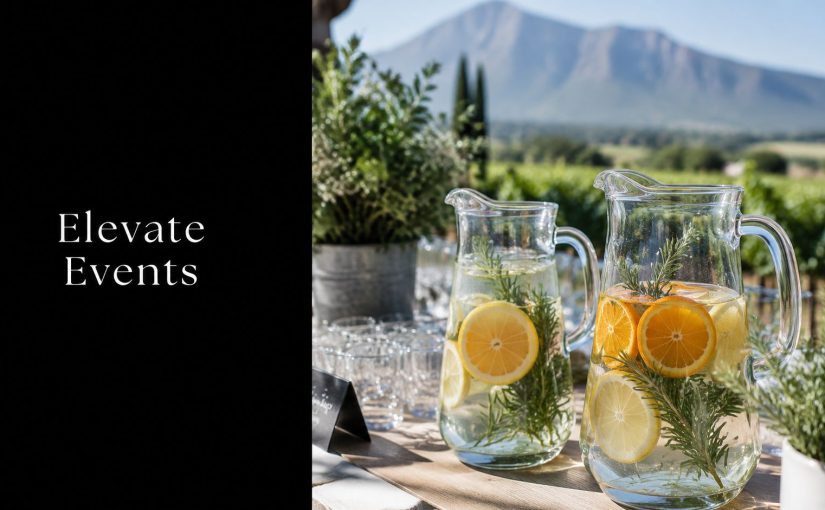
At a Stellenbosch wedding lunch, lemon and rosemary in a clear glass jug can echo the natural setting and look beautiful against white linen. At a city product launch, cucumber slices keep the look clean and modern. At a family milestone celebration, berries and mint can bring colour without needing extra props.

Pair the infusion to the event mood

A glass pitcher and a glass of water infused with fresh orange slices, lemon, and green mint.

Some combinations consistently work well:

  • Lemon and rosemary for classic weddings, vineyard lunches, and elegant rehearsal dinners
  • Cucumber for conferences, wellness events, and minimalist brand activations
  • Orange and mint for daytime birthdays and summer garden gatherings
  • Berry and basil or mint for celebratory tables that need a bit more colour

The goal is visual clarity. Guests should recognise the flavour profile at a glance. If the water looks murky or overloaded, the effect is lost.

Styling details that matter

A few small decisions make a big difference:

  • Cut fruit neatly. Thick, uneven slices can look heavy in the jug.
  • Don't overfill garnishes. Too much fruit interferes with pouring and looks messy by mid-service.
  • Match garnish colour to table palette. Green herbs suit neutral and botanical styling. Citrus works beautifully with crisp white and gold tables.
  • Use chilled ingredients. Warm fruit dropped into cold water dulls the result quickly.

Keep infused water elegant by choosing ingredients that smell fresh, hold their shape, and won't disintegrate during service.

What works in the Cape climate

In hotter conditions, simple combinations hold better than fussy ones. Cucumber keeps its shape. Citrus slices stay attractive for longer. Delicate berries can soften fast if they sit too long before guests arrive.

For windy outdoor events, avoid loose herb sprigs floating near the lip of the jug if you're not using lids. They can end up on the tablecloth instead of in the water. For formal dinners, keep the infusion subtle enough that it complements the meal rather than becoming a talking point for the wrong reason.

Glass water jugs do this job well because they let the colour and shape of the infusion become part of the styling. You're not hiding the contents. You're using them.

Why Renting Glass Jugs in Cape Town Makes Sense

Buying your own event jugs sounds practical until you deal with the full chain of ownership. You have to source matching stock, store it safely, transport it without breakage, wash it properly, sort out replacements, and then find space for it all again after the event. That's manageable for a private dinner. It becomes a burden at event scale.

Cape Town and Winelands events add another layer. Transport routes can include gravel drives, farm roads, stairs, loading constraints, and long setup windows. Fragile stock doesn't just need to look good at arrival. It needs to survive handling, reset, and collection.

The hidden work behind ownership

Most hosts underestimate four things:

  • Storage: Glass takes up space, especially if you want consistent sizes and shapes.
  • Breakage management: One missing or chipped jug can throw off an entire table plan.
  • Cleaning standards: Repeated-use water vessels need more than a quick rinse.
  • Transport logistics: Packing and unpacking glass correctly takes time and labour.

For event use in South Africa, potable-water containers are effectively shaped by the food-contact framework. Glass used for drinking-water jugs should comply with SANS 169 for glass packaging for food and beverages, and repeated-service jugs should be food-contact compliant and visibly defect-free. That's exactly the sort of standard a professional rental operation is equipped to maintain more consistently than an ad hoc collection assembled for one-off use (food-contact compliance guidance).

Why rental is usually the smoother option
Screenshot from https://abchire.co.za

Rental makes sense because it removes the least glamorous parts of the job. You get consistency of style, cleaner presentation across the room, and fewer post-event headaches. That matters whether you're planning a wedding, formal school function, corporate gathering, or private celebration.

It also gives you better design control. If your wider setup includes lounge furniture, tables, bars, or styling pieces, it's easier to keep everything visually aligned when your service items are part of the same rental conversation. That's also why event teams often plan hydration as part of the broader event decoration hire approach rather than as a last-minute catering extra.

When buying still makes sense

Buying can work if you host frequent small events in one fixed location and have reliable cleaning and storage systems. It can also suit venues with a permanent in-house service model and trained staff.

For everyone else, renting is usually the more sensible route. It protects time, simplifies logistics, and helps maintain standards without adding another fragile category to your to-do list.

A good event doesn't feel effortful to the guest. Renting supports that outcome because the practical work has already been handled before the first table is ever set.


If you're planning an event in Cape Town, Stellenbosch, Franschhoek, Paarl, or the surrounding areas, ABC Hire can help you create polished, stress-free water service with stylish event rentals that suit the rest of your setup. Whether you're organising a wedding, corporate function, matric dance, or private celebration, the right glass water jugs and event accessories make the room feel considered from the first pour.
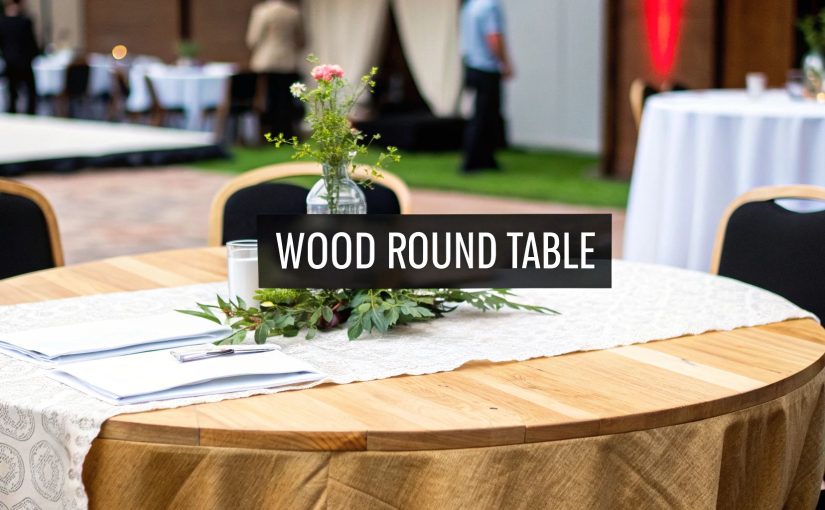
Your Complete Guide to the Wood Round Table for Events

A wood round table is so much more than just a place to sit. It’s the heart of your event, a centrepiece that creates a warm, inviting, and genuinely interactive atmosphere. The magic is in its shape; a circle naturally does away with the formal, rigid feel of a rectangular table, encouraging a more communal and engaging vibe for everyone. This simple fact makes it a fantastic choice for any occasion, from weddings to corporate get-togethers.

Why a Wood Round Table Elevates Any Event

There’s a good reason event planners here in Cape Town and beyond keep coming back to the classic wood round table. Unlike long, straight tables that can feel a bit like a boardroom and limit conversation to the person next to you, a round table pulls everyone together. This simple change in geometry has a huge impact on the feel of an event.

Think of it this way: a rectangular setup is like a lecture hall, while a round table is like gathering around a campfire. One feels formal and structured, the other encourages shared stories and makes sure everyone is part of the conversation. Every guest can see everyone else, so interactions feel more natural and inclusive. This is absolute gold for events where connection is key, like weddings, anniversary dinners, or even collaborative workshops.

The Power of Inclusive Design

A circle is democratic by its very nature. There’s no head of the table, which means every seat is just as important as the next. This subtle detail is brilliant for breaking down social barriers and creating a relaxed, communal mood. Guests stop being just attendees and become part of one big, connected group.

Beyond the social perks, wood round tables are incredibly versatile when it comes to style. The natural grain and texture can be used to create all sorts of looks:

  • Rustic Charm: An unfinished or reclaimed wood table is the perfect anchor for a farm-style wedding or an outdoor event in the beautiful Cape Winelands.
  • Modern Elegance: A sleek, dark-stained wood table brings an organic warmth to a slick, contemporary corporate gala.
  • Bohemian Flair: Lighter woods, like pine or ash, look amazing dressed up with eclectic runners and centrepieces for a chilled, chic celebration.

A round table’s design inherently promotes interaction. By eliminating sharp corners and a designated 'head,' it creates a continuous flow that makes every guest feel equally included in the conversation and the celebration.

At the end of the day, choosing a wood round table isn't just about logistics; it's a deliberate design choice. It shows you want to create an event built around warmth, connection, and shared experiences – setting the stage for a truly unforgettable day.

Choosing the Right Size for Your Guest List

Getting the table size right is one of those make-or-break decisions when you're planning an event. It's not just about fitting everyone in; it's about the entire vibe of the day. A table that's too small feels cramped and uncomfortable, but one that’s too big can make even a lively gathering feel a bit empty and disconnected.

The trick is finding that sweet spot. You want a setup that feels welcoming and makes it easy for guests to chat and move around. Before you book anything, take a moment to picture the kind of experience you're trying to create.

A casual, stand-up cocktail party can get away with a cosier arrangement. But if you're planning a formal wedding dinner with multiple courses, you absolutely have to give your guests enough elbow room. It's all about matching the table size to what the event actually needs.

Decoding Table Dimensions and Seating Capacity

Standard wood round tables come in a few key sizes, and each is designed to seat a different number of guests. Knowing these dimensions is your first step to a flawless floor plan. A classic mistake we see is people trying to squeeze in the maximum number of guests, which almost always ends up feeling a bit tight.

Take the 1.8-metre (or 6-foot) diameter table – it's the workhorse of the event world for a reason. This size is perfect for seating 8 to 10 guests. Eight guests will have plenty of space, which is ideal for a formal dinner. If you push it to ten, you create a more buzzy, intimate feel that’s great for social get-togethers.

If you're working with smaller groups, a 1.5-metre (5-foot) diameter table is a fantastic choice, comfortably seating 6 to 8 guests. These are brilliant for creating little conversation zones within a larger event or for those more intimate celebrations where you want everyone to feel connected.

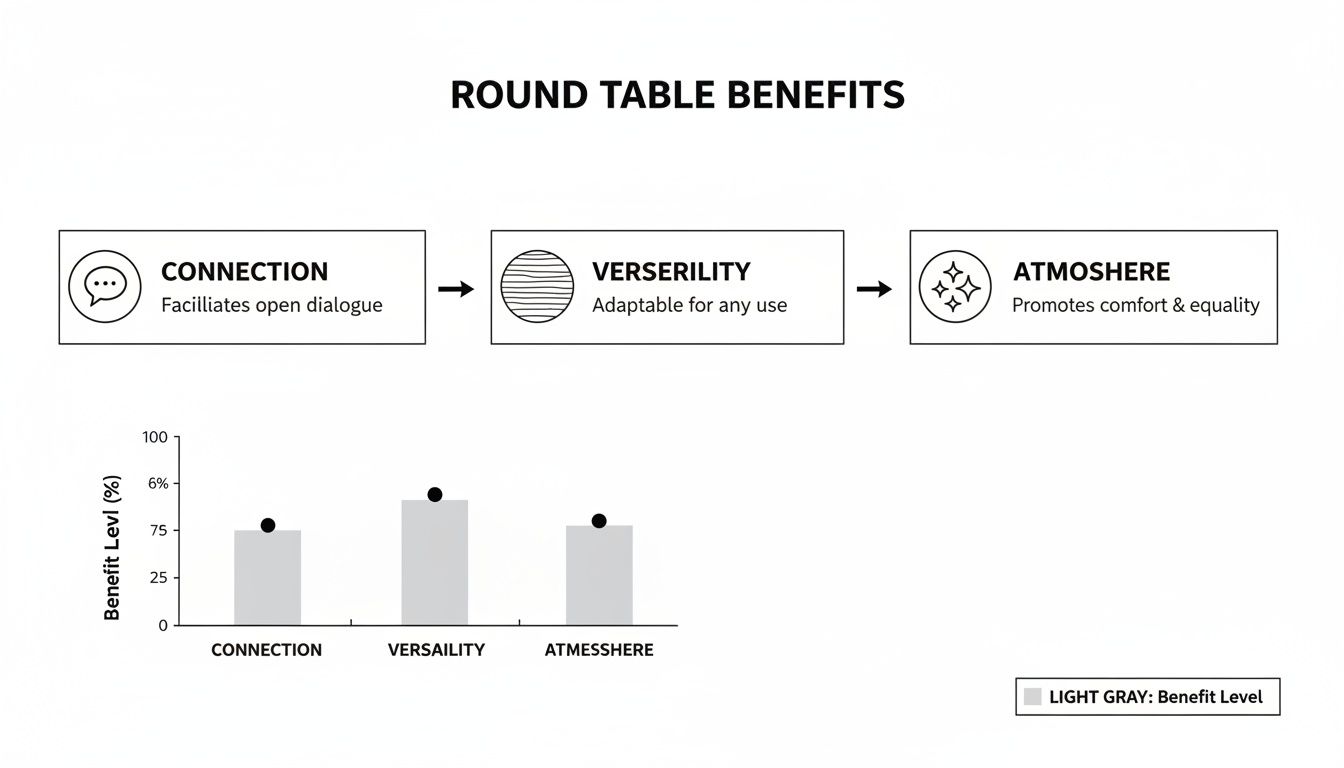
This infographic really nails why round tables are such a go-to choice for creating a great atmosphere.

Infographic detailing round table benefits: connection, versatility, and atmosphere, supported by a bar chart.

As you can see, the shape itself naturally encourages conversation and just works with so many different styles and themes.

Pro Tip: Don't forget to account for your centrepieces! A big, beautiful floral arrangement will eat up table space. You might need to seat one less person per table or just go for the next size up to make it work.

To make things a bit easier, here’s a quick guide to help you choose the right wood round tables for your event.

Wood Round Table Seating Capacity Guide

This little chart is your cheat sheet for matching our standard table sizes with how many guests they can comfortably accommodate.

Table Diameter (cm) Comfortable Seating (Guests) Maximum Seating (Guests) Ideal For
150 cm (5 ft) 6-7 8 Smaller gatherings, intimate dinners, breakout areas
180 cm (6 ft) 8-9 10 Weddings, corporate galas, standard event seating
210 cm (7 ft) 10 12 Large celebrations, maximising venue space

Keep this handy when you’re sketching out your floor plan – it’ll save you a lot of guesswork!

Calculating Your Space and Table Count

Okay, so you've got your guest count and you know which table size you prefer. Now it's time to map it all out. It’s not just about squeezing the tables in; you have to think about the chairs and, most importantly, the space people need to walk around. A good rule of thumb is to leave at least 1.5 metres of space between each table.

This buffer zone is non-negotiable, and here’s why:

  • Guest Movement: It lets guests pull their chairs out without knocking into someone behind them.
  • Service Flow: Waiters and catering staff need clear paths to serve food and clear plates without a fuss.
  • Accessibility: It ensures everyone can get to the dance floor, restrooms, or the bar without having to squeeze past other tables.

To figure out how many tables you’ll need, just divide your total number of guests by how many people you're seating at each table. For instance, if you have 120 guests and you want to seat 8 people comfortably at each table, you'll need 15 tables (120 ÷ 8 = 15). If you end up with a decimal, always round up. It’s far better to have an extra table with slightly fewer people than to cram everyone in. A little bit of planning here goes a long way in making your setup feel both beautiful and practical.

Exploring Different Wood Types and Finishes

The real heart and soul of a wood round table comes from the timber it’s made from and how it’s been treated. This choice goes way beyond just how the table looks; it dictates its weight, how durable it is, and the entire feeling it brings to your venue.

Think of the wood as the table's personality. Is it light and cheerful, or rich and formal? It's all about matching the material to your event's aesthetic. Each wood has its own grain, colour, and texture, giving you a completely different canvas for your tablescape. A rustic, textured wood might be perfect for a wedding in the Cape Winelands, while a sleek corporate function in the city centre probably calls for something more polished and uniform.

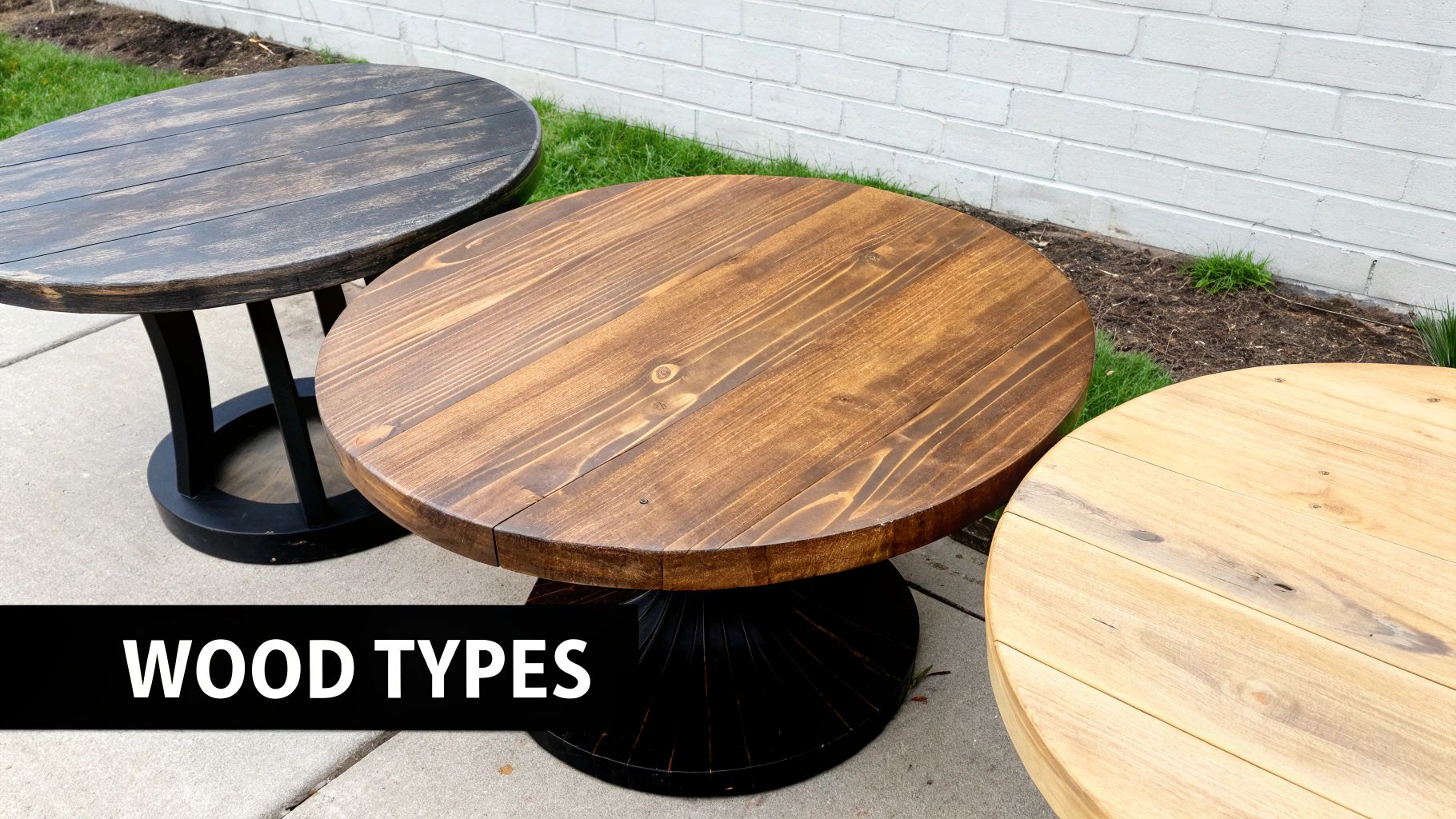
Three round wooden tables display various wood types and finishes outdoors next to a white brick wall.

Common Woods for Event Tables

Here in South Africa, we're lucky to have access to some incredible local timbers for event furniture. Pine is a hugely popular choice for a wood round table, loved for its light colour and affordability. It’s a softer wood, which gives it a charming, rustic look—especially when it shows a few signs of character from past celebrations.

Oak, on the other hand, is a classic hardwood. It's known for its strength, heavier weight, and beautiful grain patterns. An oak table feels substantial and traditional, bringing a sense of timeless elegance to any setting. It's tough, so it can handle the hustle of countless events, making it a reliable and sophisticated choice.

Locally, our timber industry is a big deal. In a single year, South Africa produced around 18.21 million cubic metres of timber, with pine and eucalyptus leading the charge. This strong local supply, especially from regions like Mpumalanga and KwaZulu-Natal, means we have a steady stream of beautiful materials to craft our event tables.

Understanding Finishes and Their Impact

The finish is what truly brings the wood to life. It protects the timber, but more importantly, it defines the final look. This is what makes a table feel raw and organic or refined and luxurious. The finish can completely transform the mood of your event.

Here are a few common finishes you’ll come across:

  • Natural/Unfinished: This style is all about celebrating the wood in its raw state. It’s perfect for rustic, bohemian, or outdoor themes where you want to highlight natural textures.
  • Stained: Stains change the wood's colour while letting the natural grain show through. This can be anything from a light wash to a deep, dark espresso, allowing you to perfectly match the table to a specific colour scheme.
  • Polished/Varnished: A clear varnish or lacquer adds a protective layer and a noticeable sheen. A high-gloss polish creates a formal, reflective surface, while a satin or matte varnish offers protection with a more subtle, modern feel.

The finish on a wood round table does more than just protect the surface; it sets the tone. A rustic, matte finish invites a casual, communal atmosphere, while a dark, polished gloss suggests formality and elegance.

The choice of finish is a powerful styling tool. A dark-stained wood round table, for instance, can anchor a dramatic, moody theme, while a light, natural finish keeps the space feeling bright and airy. It’s crucial to think about how the table’s finish will play with your lighting, linens, and centrepieces to create a cohesive look. When you understand the various options, selecting the perfect wooden tables and chairs for your event's theme becomes so much easier.

Ultimately, it’s the combination of wood type and finish that gives each table its unique identity. By considering these elements, you can pick a wood round table that not only does its job but also becomes a key part of your décor, perfectly aligning with your event’s vision.

How to Style Your Table with Linens and Centrepieces

This is where the magic happens. Styling your wood round table is where its personality truly shines, turning a beautiful piece of furniture into a show-stopping focal point that sets the tone for your entire event. Your first big decision? Linens. This choice will fundamentally shape the table's final look.

How you approach linens can range from covering the table completely to letting the natural wood be the star of the show. Each option creates a totally different vibe, so the right path really depends on the theme and formality you're aiming for at your Cape Town gathering.

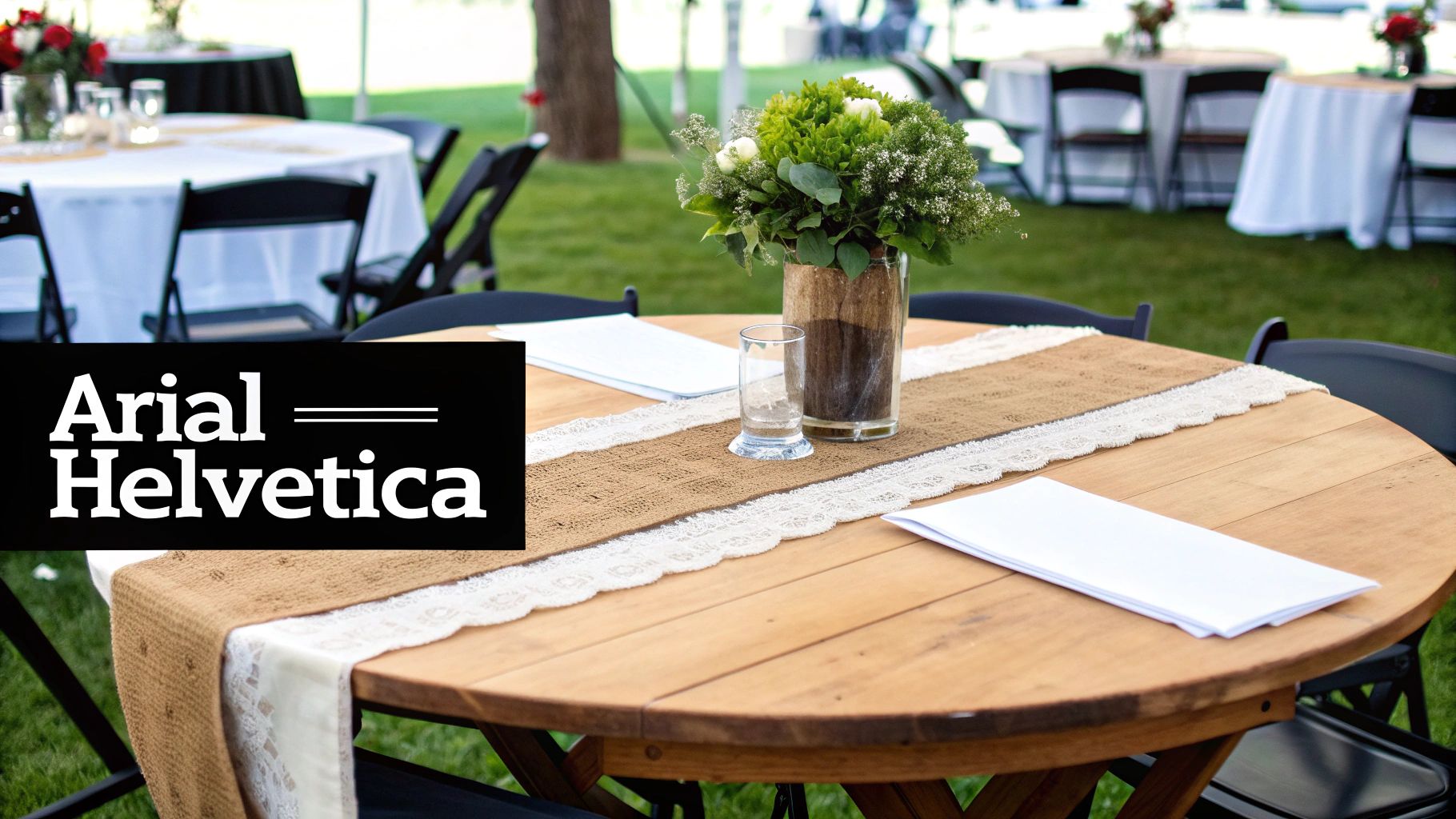
A round wooden table set for an outdoor event with a burlap runner, floral centerpiece, and glasses.

To Cover or Not to Cover: The Linen Decision

When you've hired a gorgeous wood table, deciding whether to cover it is all about balancing elegance with authenticity. You've really got three main options, and each brings its own unique flavour.

  1. Full Tablecloth: This is your go-to for classic, formal events like weddings or corporate galas. A crisp, floor-length tablecloth in white, ivory, or even a bold colour adds a layer of sophistication and creates a clean, polished look across the room.
  2. Table Runner: We love a runner—it's the perfect compromise! You get to add a pop of colour and texture down the middle while still letting that beautiful wood grain peek through on the sides. This works brilliantly for semi-formal events or rustic-chic themes.
  3. Bare Wood: Sometimes, less is more. If you've chosen a table with a stunning grain or a unique rustic finish, letting the wood speak for itself creates an organic, warm, and effortlessly cool look.

Your choice of linen is a key styling moment. A full cloth signals formality and tradition. A bare table feels modern and connected to nature, celebrating the material itself.

For a rustic farm wedding, a simple hessian runner or one of these beautiful natural round linen tablecloths can be the perfect touch. On the other hand, a sleek corporate dinner might demand the sharp, clean finish of a full, dark-coloured tablecloth. If you're still on the fence, our complete guide on tablecloths for round tables has plenty more tips to help you decide.

Choosing the Perfect Centrepiece

Once your linen choice is sorted, the centrepiece is the crowning glory. A round table is practically made for a central arrangement, but it does come with one challenge: making sure your guests can still see each other!

The goal is to create a visual impact without building a floral wall that kills conversation. A great centrepiece draws the eye and ties the theme together, but never gets in the way of your guests connecting.

When you're picking a centrepiece, think in terms of two height options:

  • Low and Lush: Arrangements that stay below eye level are always a safe—and beautiful—bet. Think sprawling garlands of eucalyptus, clusters of pillar candles at different heights, or a collection of small bud vases with single, delicate stems.
  • Tall and Slender: If you want drama, the trick is to go above your guests' sightlines. Use tall, slim vases with minimal fuss at the base. This lets the main floral feature float high above the table, creating that wow-factor without blocking anyone's view.

Styling Inspiration for Your Event Theme

Your event's theme is your North Star for all styling decisions. When everything on the table tells the same story, your event feels thoughtful, cohesive, and completely immersive.

To get your creative juices flowing, we’ve put together a quick guide to matching your styling to your theme.

Linen and Styling Choices for Different Event Themes

Event Theme Recommended Linen Centerpiece Idea Best Wood Finish
Rustic Farm Wedding Hessian Runner or Bare Wood Wildflower bouquet in a mason jar, lantern cluster Natural or Reclaimed
Modern Corporate Gala Black or White Full Tablecloth Single tall orchid in a slim vase, geometric candles Dark Stain, Polished
Bohemian Celebration Macramé Runner, Coloured Gauze Eclectic mix of bud vases, scattered tea lights Light Pine or Ash
Elegant Formal Dinner Ivory Full Tablecloth Low, classic rose arrangement, silver candelabra Cherry or Oak, Varnished

Ultimately, styling your wood round table is about creating harmony. The wood, the linens, the centrepiece—they should all work together to bring your vision to life, making your tables more than just a place to sit, but a key part of a beautiful, unforgettable experience.

Mastering Your Event Layout and Logistics

Having the perfect wood round table is one thing; knowing how to arrange them to create a space that feels both beautiful and effortless is another game entirely. The layout is the invisible architecture of your event's atmosphere. A well-planned floor plan gets your guests mingling, ensures service runs like clockwork, and makes the whole venue feel balanced and intentional.

On the flip side, a poor layout can create frustrating bottlenecks, awkward empty pockets, or a cramped feeling that kills the mood. You're aiming for a design that not only looks incredible but also works for every single person in the room, from your guests to the catering staff. It’s all about creating flow.

This isn't just about plonking tables down wherever they fit. It’s a strategic game that considers traffic routes, sightlines to key spots like the stage or dance floor, and the overall guest experience.

Crafting the Perfect Floor Plan

Every venue in Cape Town, whether it’s a historic wine estate in Stellenbosch or a slick city centre ballroom, has its own unique footprint. The first rule is to work with the venue's dimensions, not against them. A great layout makes the most of the space while respecting its natural flow and features.

The priorities for your floor plan will change depending on the kind of event you're hosting.

  • Weddings: Here, the layout needs to feel romantic and connected. Think about arranging tables so everyone has a great view of the head table and, of course, the dance floor. You’ll want to create clear pathways to the bar, bathrooms, and any outdoor areas to avoid guest traffic jams.
  • Corporate Galas: For these events, the focus might be on a stage or presentation area. A tiered or chevron-style arrangement is brilliant for ensuring clear sightlines for all attendees. The layout should feel professional and organised, with plenty of room for networking.
  • Conferences: If you're running workshops or collaborative sessions, grouping a few wood round tables together can create fantastic breakout zones. This encourages small-group discussion while still keeping everyone connected to the main event.

A successful floor plan is all about pathways. Try to imagine tracing the journey of a guest from their arrival to their seat, over to the bar, and then to the dance floor. If that path is clear, easy, and logical, you've nailed it.

No matter the event, always prioritise movement. A good rule of thumb is to keep at least a 1.5-metre gap between tables. This isn't just for comfort; it’s absolutely essential for efficient food service and lets guests move around freely without bumping into others.

Nailing the Logistics in Cape Town

Once your floor plan is sorted, the focus moves to the practical side of things: getting your tables on-site and set up perfectly. This is where clear, upfront communication with your rental supplier—like us here at ABC Hire—is non-negotiable for a stress-free experience.

Coordinating the logistics well in advance saves you from any last-minute chaos. You need a solid plan for delivery, setup, and breakdown that works with your venue’s specific rules and your event's timeline.

Key Logistical Steps

  1. Coordinate Delivery Times: Pin down a precise delivery window with your vendor and the venue. Make sure someone is on-site to receive the tables and guide the delivery team according to your floor plan. This simple step stops tables from being dropped in the wrong spot.
  2. Plan for Setup: Don't underestimate how long setup takes. Placing each wood round table, arranging the chairs, and then dressing the tables with linens and centrepieces all add up. Schedule this with plenty of buffer time before guests are due to arrive.
  3. Handle with Care: Wooden tables, especially ones with beautiful finishes, need to be handled carefully to avoid scratches or dings. Check that the setup crew knows how to move and place them correctly to protect both the furniture and the venue's floors.
  4. Organise Breakdown: The end of the night needs just as much planning. Coordinate a pickup time that suits the venue and have a clear process for breaking down tables and stacking them for collection. A smooth exit is just as important as a grand entrance.

Getting these logistical details right means the vision you created on paper becomes a flawless reality, letting you relax and focus on hosting an event to remember.

Budgeting for Your Table Rentals in Cape Town

Let's be honest, figuring out the budget is a massive part of planning any successful event here in Cape Town. When it comes to hiring a wood round table, the final cost isn't just a single number. To avoid any nasty surprises, you need to understand what actually goes into that price.

Think of it this way: the price is a mix of the table's unique features and the services you’ll need. Things like the type of wood, the table's diameter, the finish you choose, and how long you need it for all play a big role. It makes sense, right? A huge, solid oak table with a fancy polished finish is naturally going to cost more to hire than a smaller, rustic pine one.

Key Factors Influencing Rental Costs

To put together a budget that actually works, you need to break down what you're paying for. It’s less about a single price tag and more about a handful of variables you can often tweak to fit what you want to spend.

Here are the main things to keep in mind:

  • Table Size and Type: Bigger tables that can seat more guests simply use more material and are heavier to move around, and the rental price reflects that. Likewise, premium woods like oak will always be a bit pricier to hire than more common options like pine.
  • Finish and Condition: If you're after a table with a special finish, like a dark stain or a high-gloss varnish, expect to pay a little more than for one with a simple, natural look.
  • Rental Duration: Most companies work on daily rates, but if you're planning a multi-day event, you can often negotiate a better overall price for a longer hire period.
  • Delivery and Collection Fees: This is a big one that people often forget. The cost here depends on how far your venue is from the supplier's warehouse, how easy it is to get to, and whether you need them to deliver or collect outside of normal business hours.

When you're budgeting, always, always ask for a fully itemised quote. This transparency is your best friend. It shows you exactly where your money is going and helps you spot any potential hidden costs, like damage waivers or setup charges, before you've signed anything.

A great way to get a handle on your budget is to gather a few quotes from different suppliers. You can easily obtain a table quote to start comparing your options. Getting a full picture of the costs is so important, and our guide on tables and chair rentals dives even deeper into this.

Renting Versus Buying A Wood Round Table

For most one-off events like weddings or corporate functions, renting is almost always the smarter move, both financially and logistically. Buying a whole set of high-quality wood tables is a massive upfront cost, and that's before you even think about where you'll store them, how you'll maintain them, and how you'll get them to your venue. Renting just makes all that hassle disappear.

The furniture market in South Africa is also growing. The national market was valued at around US$2.47 billion in 2024 and is expected to keep climbing. This will likely push up the demand for timber and could affect both the cost and availability of a new wood round table if you were looking to buy.

Renting gives you incredible flexibility. You get access to a huge range of styles without the long-term commitment. This means you can pick the absolute perfect table for your event's theme, and when the party's over, it simply gets taken away. It’s a practical, wallet-friendly solution for creating a beautiful event space.

Your Questions Answered

When you're in the final stages of planning your event, a few last-minute questions always seem to come up. It's completely normal! Getting these details sorted is the key to booking your wood round table hire with total peace of mind.

Here are a few of the things we get asked most often.

How Far in Advance Should I Book?

This is a big one. For the best selection, especially during Cape Town's peak wedding season from October to April, we always suggest booking your tables at least 3 to 6 months ahead. This gives you a much better chance of securing the exact style and number of tables you've got your heart set on.

Rental and Logistical Details

What about the practical side of things, like delivery and setup? We’ve got you covered. We offer a full delivery and collection service across Cape Town and the beautiful surrounding Winelands. While setup isn't included as standard, we can absolutely arrange it for an extra fee to make sure your floor plan comes to life just as you pictured it.

And what if something gets damaged? We get it, accidents happen! Your quote includes a standard damage waiver to cover the usual minor wear and tear. If something more significant happens, we’ll simply chat about the repair or replacement cost as laid out in your rental agreement.

A quick tip from our team: Always double-check venue access times with your coordinator before you finalise delivery and collection slots with us. It’s a simple step that saves a world of stress on the day.

Finally, let's talk linens. While our passion is beautiful furniture, we know the right tablecloths and runners complete the look. We’ve built up a great network of trusted local suppliers and we’re more than happy to point you in the right direction. Just ask, and we'll help you find the perfect linens to go with your chosen wood round tables.


Ready to create an unforgettable atmosphere for your next event? For the finest selection of event furniture in Cape Town, explore the beautiful range at ABC Hire. Find your perfect tables and chairs today at https://abchire.co.za.

A Guide to Picnic Tables with Benches for Events

The right seating can make all the difference, turning a good outdoor event into a truly memorable one. When it comes to picnic tables with benches, picking the perfect style is all about matching the material to your event's theme, your guests' comfort, and your own logistical needs. It's a choice that needs to be both practical and stylish.

Choosing the Right Picnic Tables for Your Event

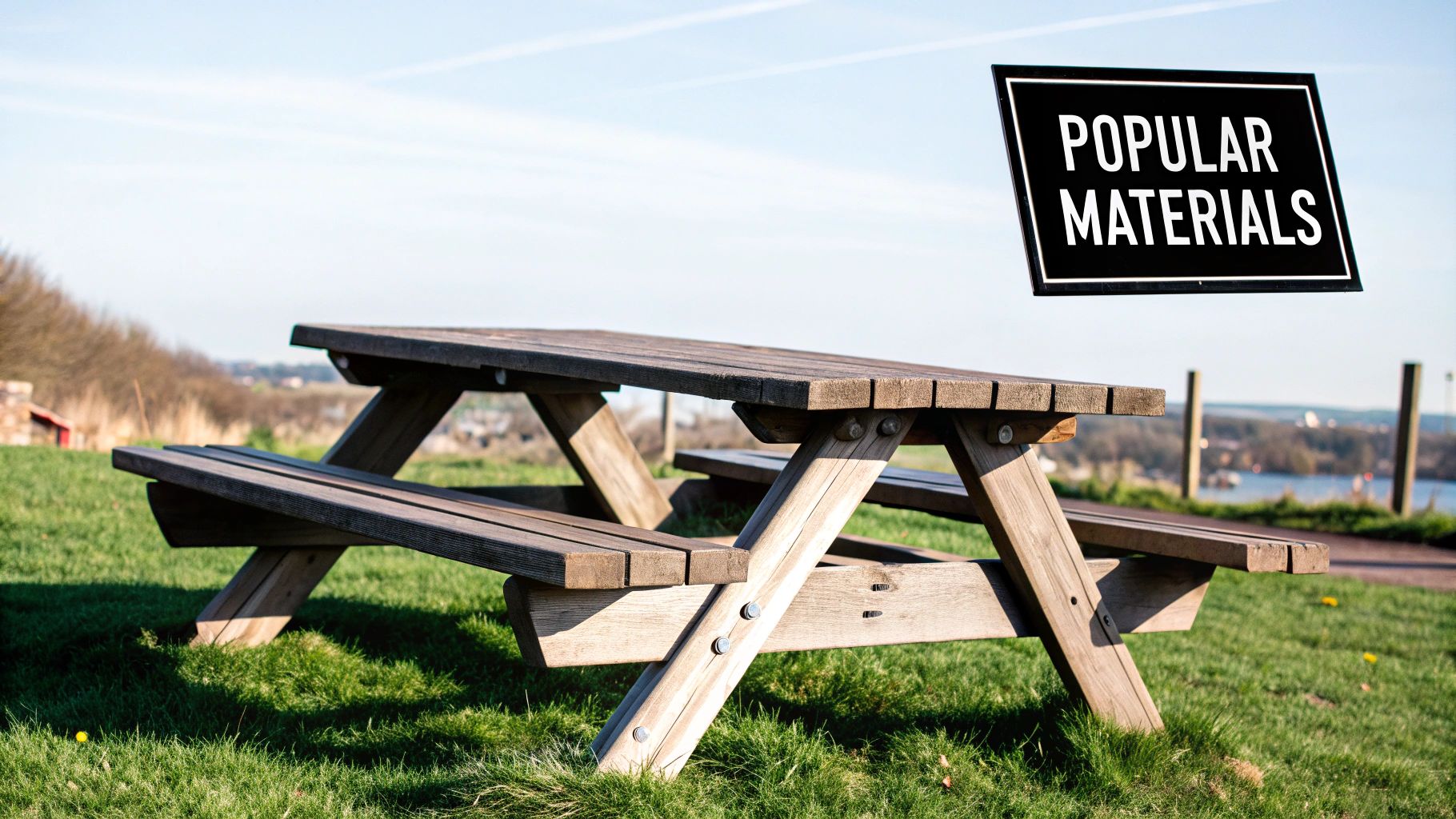
When you're planning an event, the material of your picnic tables plays a huge role in both how they look and how they function. Each option has its own unique vibe and benefits, so it's important to align your choice with what your gathering really needs.

What's Your Event's Vibe?

Think about the atmosphere you want to create.

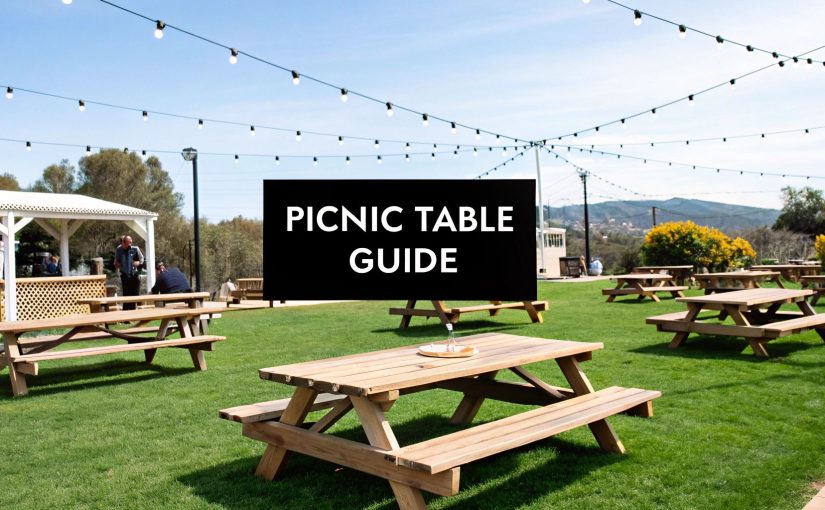
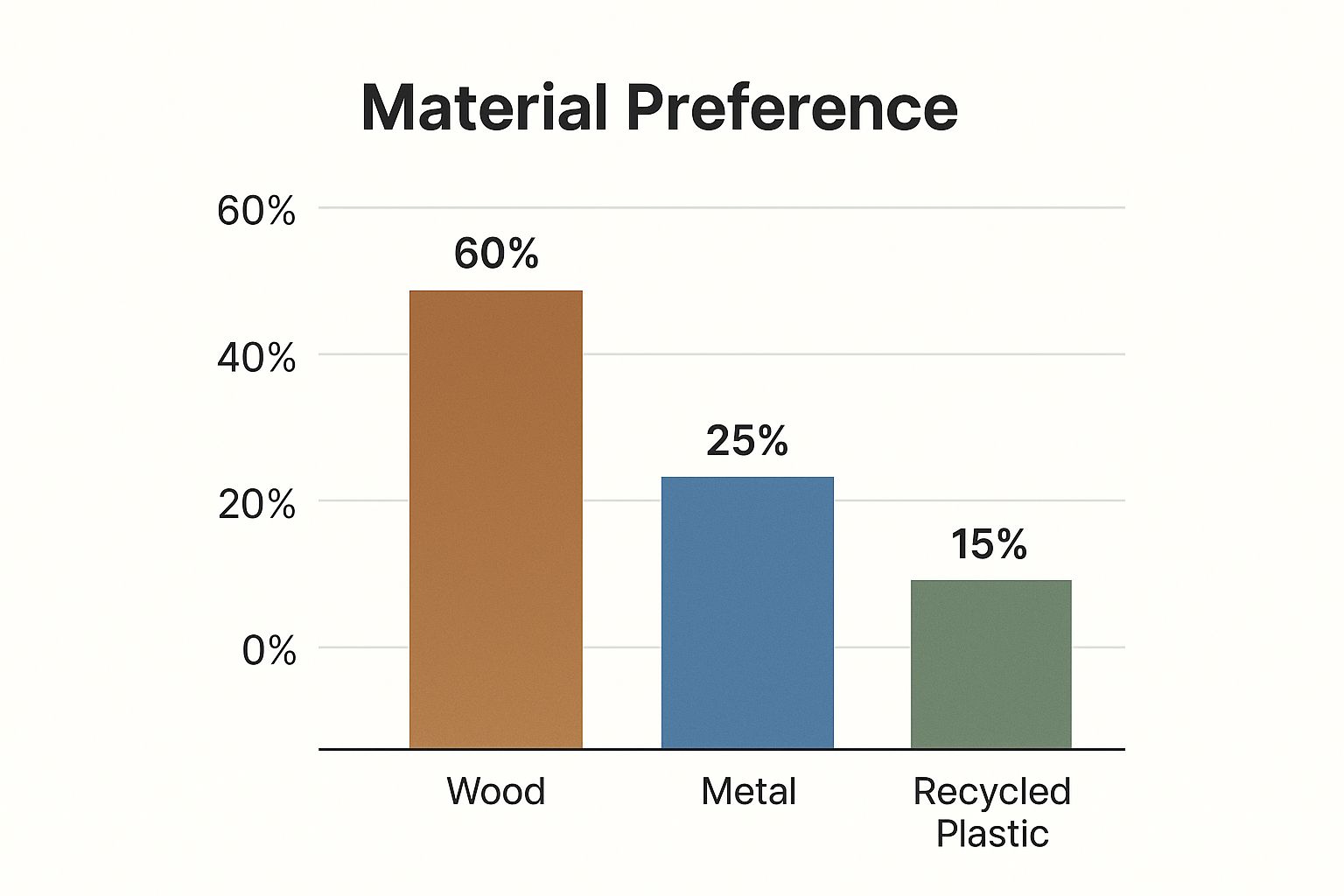
  • Rustic & Relaxed: For a farm wedding or a chilled family braai, you can't go wrong with the classic charm of wood. Wooden tables have a timeless, inviting look that just feels right in natural surroundings. They’re sturdy, reliable, and create that warm, communal feeling that encourages guests to relax and chat for hours.

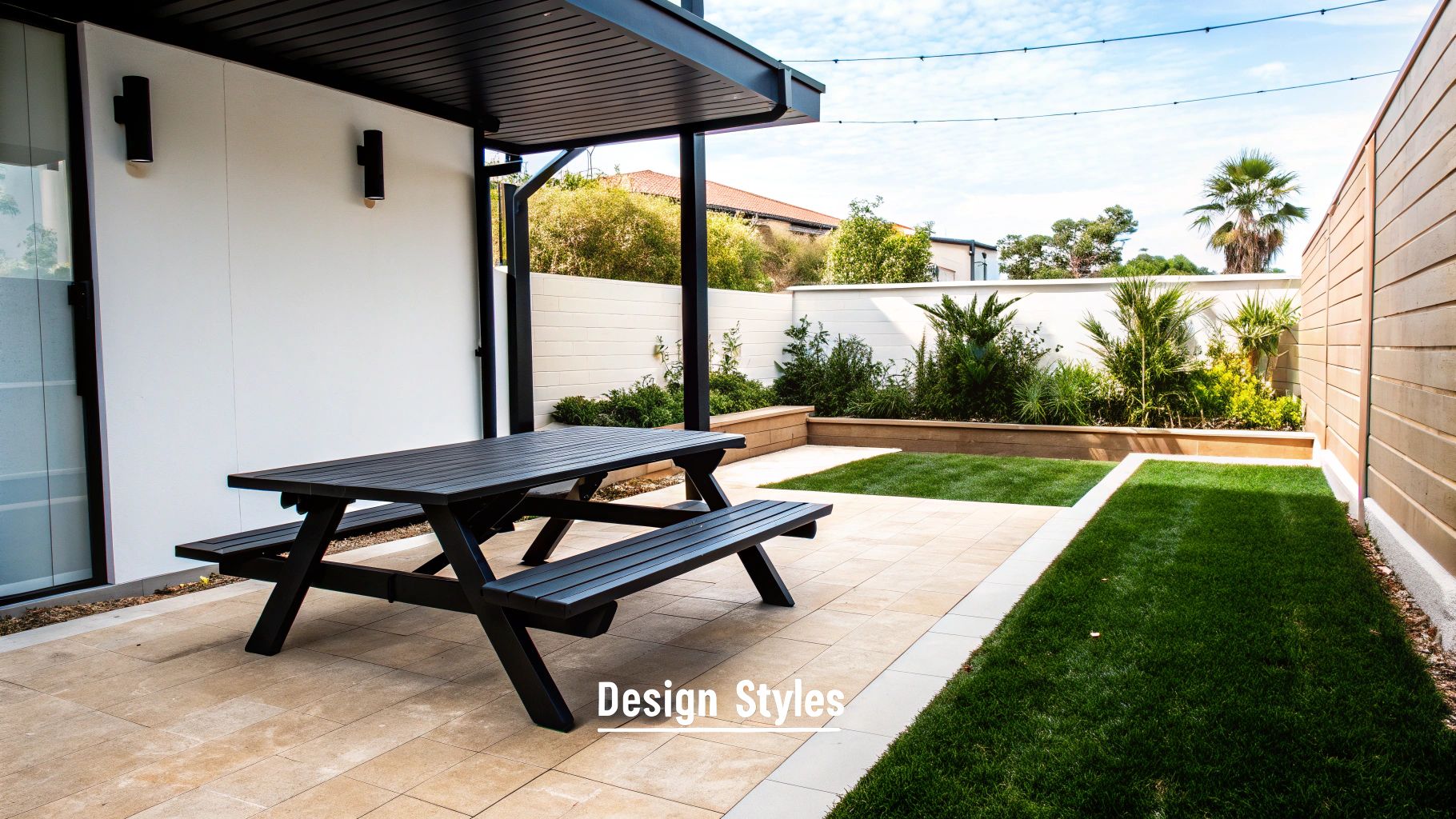
  • Modern & High-Traffic: If you're expecting a big crowd at a corporate fun day or a community festival, you need something that can handle the action. Durable steel or metal-framed tables are a fantastic choice here. They offer serious sturdiness and stay stable on different surfaces, from grass to gravel, while their clean lines add a modern, professional touch.

  • Fun & Fuss-Free: Hosting an eco-conscious event or a vibrant kids' party? Recycled plastic is a brilliant, low-maintenance option. These tables often come in a range of bright colours, are a breeze to clean, and resist stains. Plus, their weather-resistant nature makes them a worry-free pick for unpredictable coastal weather.

Image

Picnic Table Material Comparison

To help you decide what's best for your event, here's a quick comparison of the most common materials.

Material Aesthetics Durability & Weather Resistance Best For
Wood Classic, warm, natural, and inviting. Good durability but requires treatment against weather. Can be heavy. Rustic weddings, family braais, outdoor gatherings that call for a traditional feel.
Steel/Metal Modern, sleek, and industrial. Excellent durability, very weather-resistant, and stable. High-traffic events, corporate functions, community festivals, and modern-themed parties.
Recycled Plastic Colourful, casual, and eco-friendly. Highly durable, waterproof, stain-resistant, and lightweight for easy moving. Kids' parties, casual picnics, school events, and any setting needing easy cleanup.

Ultimately, the right material will feel like a natural extension of your event's style and practical needs.

Match the Material to Your Venue

Don’t forget to consider the setting itself. A beautiful coastal wedding in the Cape Winelands, for example, needs materials that won't warp or rust in the salty air. In contrast, a corporate picnic in a Johannesburg park calls for sturdy, professional-looking tables that reflect the company's image.

The key is to think beyond just what looks good. Your choice impacts guest comfort, event logistics, and the overall vibe. A well-chosen table feels like a natural part of the experience, not just a piece of furniture.

In South Africa, there's a clear preference for durability and classic style. In public spaces, approximately 70% of picnic tables are either wooden or steel-framed to stand up to our local weather cycles. It's also great to see that an encouraging 25% now feature accessible designs for wheelchair users.

For a deeper dive into furnishing your entire venue, you can explore our complete guide on renting furniture for events.

Planning Your Seating Capacity and Layout

Image

One of the easiest ways to disrupt the flow of an event is to get the seating wrong. It’s a classic pitfall. To create a space that feels comfortable and actually works for your guests, you need to think beyond a simple headcount. The real goal is to make sure people can move around freely without causing frustrating bottlenecks.

A good starting point is figuring out exactly how many picnic tables with benches you’ll need. A standard 1.8-metre table is usually perfect for six adults, giving everyone enough room to relax. If you need a bit more space, the larger 2.4-metre option comfortably fits eight. For a bustling community festival where people are coming and going, you might get away with a tighter arrangement. But for a wedding, where guests will be seated for a good while, generous elbow room is a non-negotiable.

Mapping Out a Functional Space

Now, let's talk layout. This is where you can really shape the experience. It's not just about cramming in tables; it's about creating a vibe. Picture a backyard wedding – arranging tables in a U-shape facing a central point for speeches just makes sense. On the other hand, a big corporate fun day would work much better with clusters of tables scattered around to encourage mingling, leaving wide, obvious pathways to the food stations and loos.

Here are a few practical tips I've picked up over the years:

  • Create Clear Pathways: Always leave at least 1.5 metres between tables or rows. This gives guests and any staff plenty of room to walk through without squeezing past people.
  • Accommodate Special Needs: Make sure you've designated a few spots that are easy to get to for guests who might need extra space for a high chair or a wheelchair.
  • Group Logically: Position tables near key areas like the buffet, the bar, or the stage. It keeps queues short and stops people from crowding in one spot.

A great layout does more than just seat people; it directs the energy of your event. Getting the placement right prevents chaos and makes the whole day smoother for everyone.

Guest comfort is everything, and local standards often give us great clues. For example, visitor feedback from SANParks surveys highlighted the importance of features like a bench height of around 450 mm and table lengths between 1800 and 2400 mm, which are ideal for our regional ergonomic preferences.

Of course, your seating plan doesn't have to stop with picnic benches. For a bit of extra flexibility, mixing in other types of seating can be a game-changer. You might find our guide on hiring chairs near me has some useful ideas for rounding out your setup.

Arranging Tables to Enhance Ambiance and Flow

Image

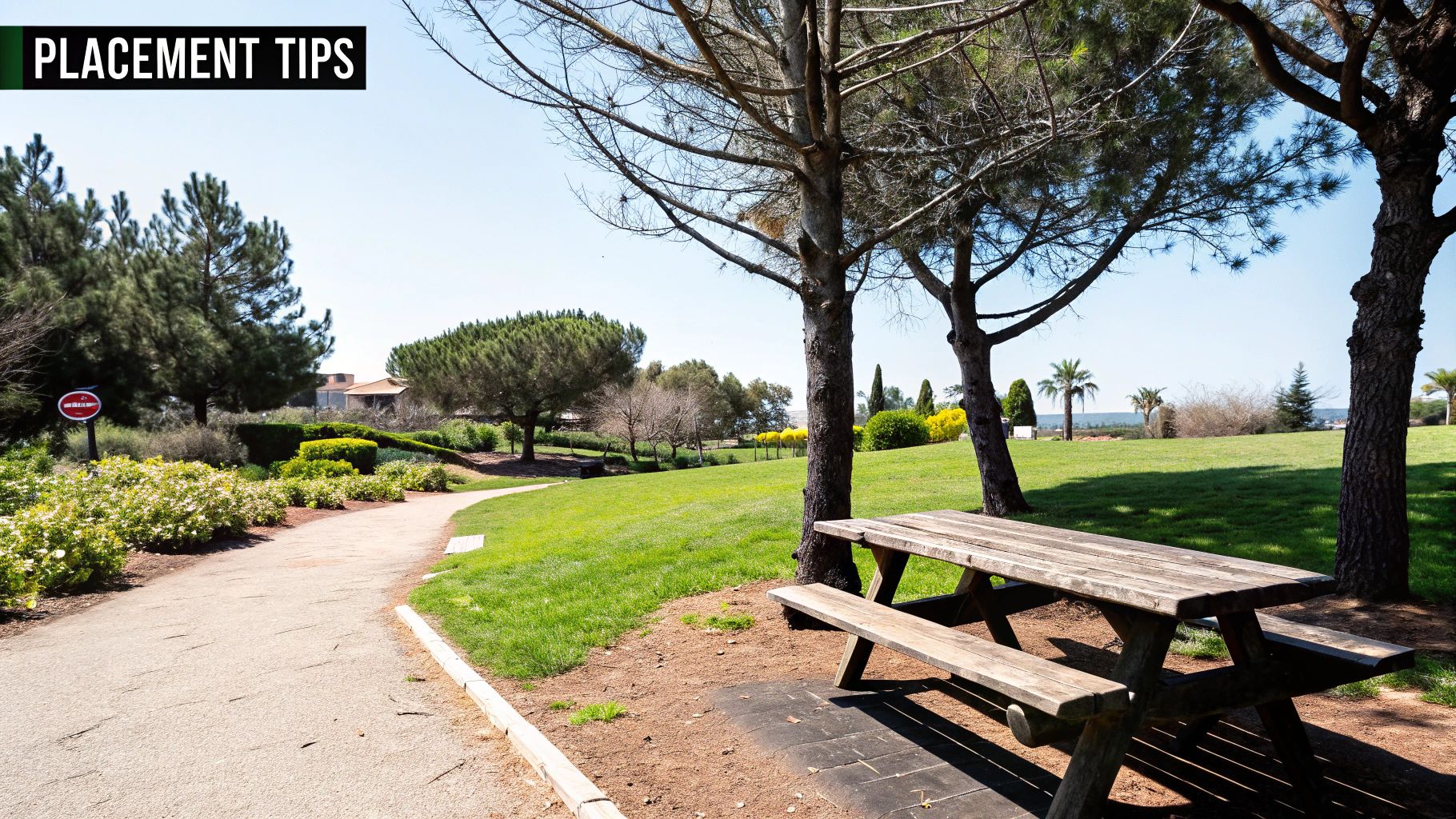
Don't underestimate the power of placement. Where you put your picnic tables is just as important as the tables themselves. A bit of strategic thinking here can completely transform the atmosphere, turning a basic setup into a space that feels organised, inviting, and just works. It's all about creating a natural, easy-going environment for your guests.

Take a good look at your venue and use its best features. For a daytime event, find those lovely big trees and position your tables underneath for some welcome shade. If you're planning a sunset dinner, face them towards the best view. It creates a stunning backdrop that people will be talking about long after the event is over.

Designing a Logical Layout

A smart arrangement does more than just look good; it guides your guests effortlessly around the event. Think about the natural pathways you want to create between the food stations, the loos, and any entertainment areas. The last thing you want is a bottleneck. The goal is a smooth, logical flow that feels completely intuitive.

So, how do you choose the best layout? It really comes down to the vibe you're going for:

  • U-Shape: This is your go-to for events with a clear focal point, like speeches or a presentation. It naturally directs everyone's attention forward while still feeling connected and inclusive.
  • Scattered Clusters: Absolutely perfect for encouraging guests to mingle. This informal setup lets people move between smaller groups, making it brilliant for corporate picnics or casual parties where you want conversations to spark.
  • Long Rows: This is the classic family-style arrangement. It creates a powerful sense of community and is just beautiful for big feasts, weddings, or large family braais.

Your layout isn't just about placing furniture; it's about choreographing the guest experience. A smart arrangement feels intuitive and makes the entire space feel more connected and organised, encouraging guests to relax and enjoy themselves.

You'll also want to think about shelter, especially to protect guests from the sun. Our guide on choosing a gazebo for hire has some great advice that ties in perfectly with planning your table layout. Getting the placement of your picnic tables with benches just right is the final touch that truly brings your whole vision to life.

Styling Your Picnic Tables to Fit the Occasion

A bare picnic table is really just a blank canvas, full of potential. With a few thoughtful touches, you can transform it from simple seating into a beautiful focal point that perfectly captures the spirit of your event. The styling choices you make will set the tone for the entire gathering.

Image

The real trick with styling picnic tables with benches is finding that sweet spot between beautiful and practical. Since the benches are attached, you can forget about traditional floor-length tablecloths – they just won't work.

A fantastic alternative is a long table runner right down the centre. This adds a pop of colour and texture without getting in the way of people sitting down.

For a more polished look, you can also find fitted vinyl or fabric covers designed specifically for this type of table. These are brilliant for kids' parties; they're durable and an absolute breeze to wipe clean.

Creating the Perfect Vibe

Your decorations should tell a story. Before you do anything else, think about the mood you want to create and choose items that reflect it. A little bit of creativity here can make a massive impact on your guests' experience.

Here are a few ideas to get you started for different occasions:

  • Elegant Wedding: Picture this: a long, flowing cheesecloth runner draped down the centre of a wooden table. Weave delicate floral garlands and battery-operated fairy lights through it for a romantic, warm glow. Simple, low-profile centrepieces, like single-stem flowers in small bud vases, ensure guests can still see each other and chat easily across the table.
  • Kids' Birthday Party: Go for bright and bold! A durable, colourful tablecloth is practically essential. Use playful, themed centrepieces like balloon weights or even buckets filled with crayons and colouring pages to keep the little ones entertained between snacks.
  • Corporate Retreat: Here, you'll want to aim for a clean, minimalist aesthetic. A simple linen runner in the company's brand colours always looks professional. Add small, branded elements like custom-printed napkins or a tasteful succulent in a pot at the centre of each table to tie it all together.

"Styling isn't just about making things pretty; it's about creating an atmosphere. A well-dressed table invites guests to sit down, relax, and connect. It shows you've thought about their experience from start to finish."

Functional and Beautiful Table Settings

Beyond the main decorations, you still need to think about the practical bits and pieces that make a table useful. Organising these elements in a stylish way keeps everything looking tidy and makes things easy for your guests.

A great approach is to set up small "stations" with cutlery caddies, napkin holders, and condiment trays. Using matching containers or baskets creates a cohesive look and prevents clutter from taking over. This way, everything is within easy reach, and your beautifully styled picnic tables with benches remain the star of the show.

Creating an Accessible and Inclusive Event Space

A truly great event isn't just about the décor or the food; it's about making every single guest feel welcome, valued, and comfortable. When you're planning an outdoor event, this means thinking beyond just the aesthetics to create a space that's genuinely inclusive for everyone, no matter their mobility needs. It’s not about ticking boxes – it’s simply about being a thoughtful host.

The easiest place to start is with your picnic tables with benches. Look for designs that have extended tabletops at one or both ends. This small detail makes a huge difference, as it allows someone using a wheelchair to pull right up to the table. They become part of the group and the conversation, instead of feeling like they’re stuck on the end of a row.

Planning for Easy Navigation

Of course, accessibility is about more than just the tables themselves. You have to think about the entire flow of the event space. Make sure you leave wide, clear pathways between your seating areas, the food stations, and any other key spots. You should aim for at least 1.5 metres for your main walkways.

This gives plenty of room for wheelchairs, prams, or guests with walkers to get around without any hassle. Don't forget to check the ground surface, too. Firm, stable ground like paving or compacted gravel is much easier to navigate than soft grass where wheels can easily get stuck.

Thoughtful hosting means anticipating the needs of all your guests. Placing accessible tables in prime, central locations—not tucked away in a corner—sends a powerful message of inclusion and ensures everyone can fully participate in the celebration.

Since the early 2000s, there's been a big shift in design to prioritise accessibility, thanks to legislation like the Persons with Disabilities Act of 2005. Today, many local guidelines suggest that at least one in every four picnic tables in public spaces should accommodate wheelchair users, a great step forward for inclusive event planning. If you're interested, you can learn more about the history of inclusive amenities in this detailed overview of park design.

Got Questions About Using Picnic Tables? We've Got Answers

When you're planning an event, the little details can make all the difference. If you're thinking of using our picnic tables with benches, you probably have a few practical questions. Let's get them sorted so your setup is seamless and stress-free.

How Many People Can I Seat at a Standard Picnic Table?

This is usually the first question on everyone's mind! Our standard 1.8-metre (that's 6-foot) picnic table is perfect for seating six adults comfortably, with three on each side.

If you're expecting a bigger crowd, the longer 2.4-metre (8-foot) table can easily accommodate eight adults, four per bench. Simple as that.

Just a pro tip: if guests are settling in for a longer affair like a wedding feast or a seated dinner, giving them a bit of extra elbow room is always a nice touch. It keeps everyone comfortable and happy.

What's the Best Way to Clean the Wooden Tables?

You’ll want your tables looking spotless for your guests, and thankfully, it’s easy to do. For a quick refresh before the event kicks off, a wipe-down with a damp cloth is all you need to get rid of any dust.

Need a deeper clean? Grab a soft brush and a mix of mild soap and water. Scrub gently with the grain of the wood, then give it a final rinse with a clean, damp cloth. The key is to let the tables air dry completely before you lay down any runners or decorations.

How Do I Handle Tablecloths on Tables with Attached Benches?

Ah, the classic puzzle! Don't worry, you have a few really stylish options. You can find fitted tablecloths made specifically for picnic tables, which give a very neat, tailored appearance.

Another trick is to use a normal rectangular cloth and secure it with tablecloth clips or some decorative weights. But honestly, one of the most popular and chic solutions is to skip the full cloth altogether. Just lay a beautiful table runner down the centre of the table. It adds a pop of colour and style without you having to wrestle with fitting a cloth over the benches.

The goal is to enhance the table, not fight its design. A simple runner often provides the perfect balance of elegance and practicality for picnic tables.

How Can I Make Picnic Bench Seating More Comfortable?

Benches are wonderfully practical, but a few simple touches can really boost the comfort factor for your guests. Why not add some custom bench pads or outdoor cushions? It’s a great way to introduce your event's colour scheme while making things cosier.

If your event is stretching into the evening, having a few decorative throw blankets on hand is a thoughtful gesture your guests will definitely appreciate. Lastly, and this is crucial, make sure the tables are on level, solid ground. It’s a small detail that prevents any annoying wobbling and makes the whole experience better for everyone.


Ready to create the perfect, relaxed seating arrangement for your next event? ABC Hire has a fantastic selection of high-quality picnic tables and all the other event essentials you need to bring your vision to life.

Check out our collection at https://abchire.co.za and let's start planning something unforgettable together