
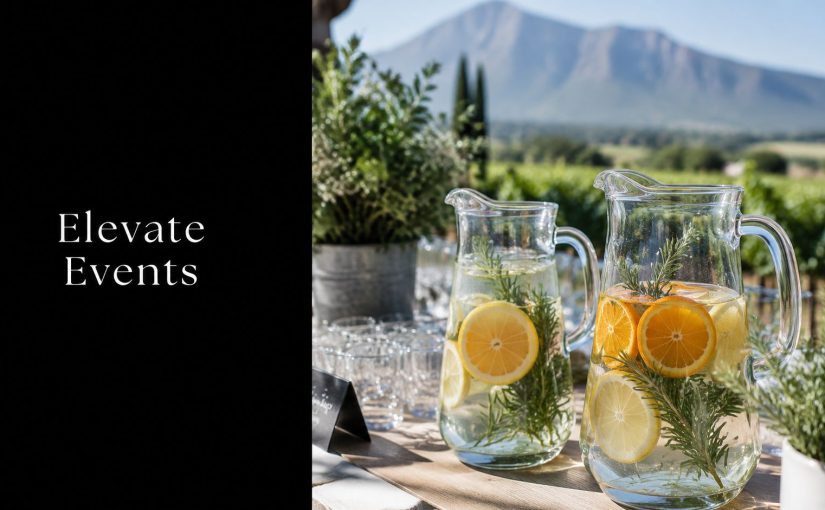
You're probably in that final planning stretch where the big elements are sorted, but the details still decide whether the event feels polished or pieced together. The venue is booked. The florals are discussed. The menu is nearly signed off. Then someone asks a deceptively small question: what are we using for water on the tables?
In Cape Town and the Winelands, that question matters more than people think. At a summer lunch in Stellenbosch, guests reach for water constantly. At a harbour-facing launch, the room might look immaculate, but a table crowded with mismatched plastic bottles can flatten the whole visual effect. Even at a beautifully styled wedding, hydration can feel like an afterthought unless it's handled with the same care as glassware, linen, and lighting.
That's where glass water jugs earn their place. Done well, they make water service feel intentional. They catch the light, suit almost any table design, and help hosts offer something practical without losing elegance. Done badly, they create spills, clutter, and unnecessary staff pressure.
I've seen both versions. The difference usually comes down to choosing the right jug, the right setup, and the right service plan for the venue, weather, and guest flow.
Setting the Scene for Stylish Hydration
A Winelands wedding lunch has a rhythm of its own. Guests arrive from the ceremony slightly warm, the first glasses of bubbly are poured, and by the time they sit down, they want water immediately. Not later, and not after a waiter eventually circles back. If each table already has a clear, chilled glass jug in place, guests settle faster and the whole reception feels more considered.
The same applies in a very different setting. A corporate launch overlooking the Cape Town harbour calls for clean lines, sharp branding, and a room that feels controlled. Water service needs to support that look, not interrupt it. A good glass jug blends into the tablescape while still signalling quality. It says the host thought about comfort, not just presentation.
Why guests notice it
Guests rarely compliment “water logistics” out loud, but they absolutely notice when it's off. They notice warm water. They notice a sticky bottle sweating onto menus. They notice when they have to flag staff for something that should already be there.
With glass water jugs, the service feels calmer. Tables look dressed rather than stocked. Guests pour for themselves naturally, which reduces friction during speeches, plated courses, and long networking stretches.
Water service is one of those details that disappears when it's done properly. That's exactly why it matters.
Why planners care
For planners and hosts, jugs solve two problems at once. They support guest comfort, and they tidy up the visual language of the event. Instead of multiple branded bottles, random labels, or half-open containers, you get one consistent object repeated across the room.
That consistency is especially useful in Cape Town venues where the backdrop is already strong. A vineyard, mountain view, or city skyline doesn't need visual clutter on the table. It needs restraint. A well-shaped glass jug gives you that restraint while still doing a very practical job.
The Enduring Appeal of Glass Water Jugs
Glass water jugs have staying power because they do more than hold water. They change how the table reads. Clear glass reflects candlelight at dinner, picks up natural light at lunch, and gives even a simple table setting a cleaner finish.
There's also a tactile quality to glass that plastic does not offer. Weight matters. Clarity matters. A guest lifting a proper jug feels a sense of substance, and that translates into a more premium hospitality experience.
Why glass suits South African hospitality
In South Africa, glass already carries strong associations with quality service because of the country's long-established wine and soft-drink packaging sectors. That history made glass a familiar choice in hospitality and events, not a niche styling decision. It sits comfortably in local service culture, especially in venues where durable tableware and polished presentation are expected. The wider industry context matters too. Glass packaging is reported as 100% recyclable without loss of quality, and the Glass Recycling Company has stated that millions of tonnes of glass have been recovered for recycling since its launch in 2005, which reinforces glass as part of a broader reuse and recycling culture rather than a purely decorative choice (history of glass and recycling context).
That's one reason glass water jugs feel so natural in the Cape Town and Winelands event space. They don't look imported from some unrelated trend. They fit the region's hospitality language.
What glass does better on the table
A few things happen visually when you use glass instead of disposable or opaque alternatives:
- It shows the water clearly. Guests can see what's available without lifting lids or asking staff.
- It showcases garnishes. Lemon wheels, cucumber ribbons, mint, and rosemary look intentional rather than gimmicky.
- It works across styles. Minimal corporate breakfast, black-tie dinner, harvest table lunch, or contemporary wedding. Glass adapts.
There's also a practical styling advantage. Because glass is visually quiet, it doesn't fight with florals, stationery, or plated food. It complements rather than competes.
The message it sends
A host who uses glass water jugs usually signals three things at once: attention to detail, respect for the guest experience, and confidence in the event design. That matters at weddings, where every object gets photographed, and at brand events, where every object contributes to perception.
Practical rule: If an item sits on the guest table for hours, it isn't just service equipment. It's part of the décor.
That's why glass remains the default for well-styled events. It solves a practical need while improving the room.
A Practical Guide to Jug Sizes and Styles
The wrong jug size creates work. Too small, and staff are constantly topping up. Too large, and guests struggle to lift and pour it neatly, especially across crowded tables. The sweet spot depends on table layout, service style, and whether the event is indoors or exposed to wind and uneven ground.
For most event setups, it helps to think in terms of table behaviour, not just litres. A long shared banquet table behaves differently from a round guest table. A conference break station behaves differently from plated wedding service.
Choosing by capacity
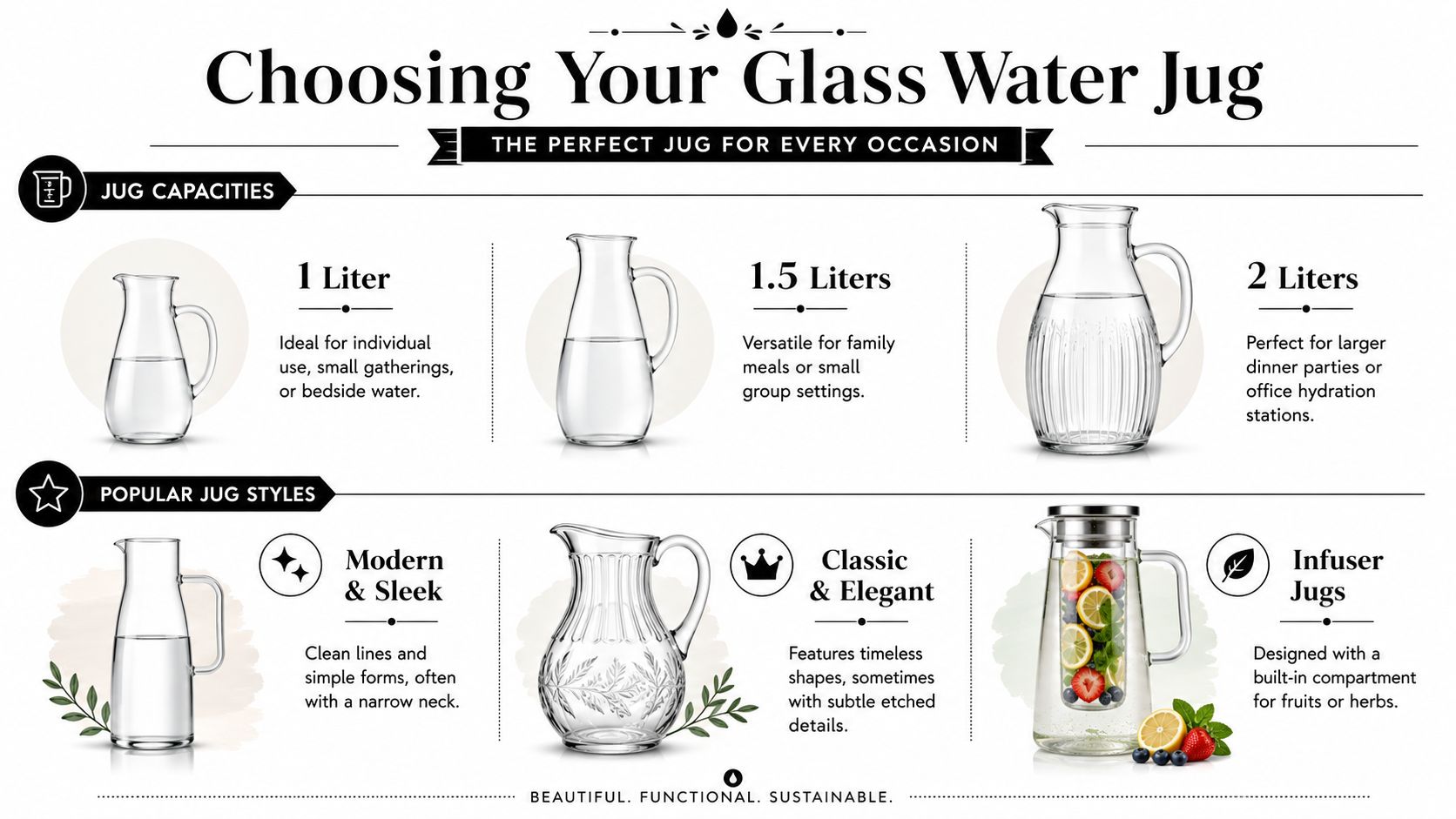
A simple sizing framework works well:
- 1 litre works best for smaller settings, side stations, boardroom use, or tables where space is tight.
- 1.5 litres is often the most balanced option for event tables. It gives enough volume without becoming awkward to lift.
- 2 litres suits larger dinner parties, buffet points, or self-service hydration stations where fewer refills matter more than delicate handling.
If you want a useful comparison point when reviewing stock styles, these durable beverage jugs show the kind of practical mid-capacity format that often works well in service. The main lesson isn't the brand. It's the proportion. A jug can look elegant and still be easy to carry, stack, pour, and clear.
Choosing by event style
Not every jug shape behaves the same way in service.
| Style | Best for | Watch out for |
|---|---|---|
| Modern narrow-neck jug | Corporate functions, contemporary venues | Harder to clean quickly if the neck is very tight |
| Classic curved jug | Weddings, formal lunches, mixed-use events | Can feel bulky on small tables |
| Infuser-style jug | Wellness events, summer parties, daytime activations | Fruit can block the pour if overloaded |
| Open carafe-style jug | Fast table reset and minimalist styling | More exposed outdoors |
A frequently missed question is whether glass water jugs are practically better than alternatives in Cape Town and the Winelands, because most advice stops at looks and size. In reality, breakage risk, handling, and cleanup logistics matter, especially in winter when wetter surfaces can increase slip and break concerns, and when water costs are under pressure enough that container choice becomes part of cost control rather than just styling (practical jug considerations).
Lid choices that actually help
For Cape conditions, lids deserve more attention than they get.
- Open top jugs look elegant indoors and work well for quick meal service.
- Cork or stopper-style closures can look beautiful, but they slow staff down if they're removed and replaced constantly.
- Flip or fitted lids are often the most useful for outdoor events because they help protect water from windblown dust and reduce accidental contamination.
If the event is on a lawn, gravel path, or damp winter surface, avoid overly delicate shapes with narrow bases. They may photograph well, but they're less forgiving in live service.
Essential Hygiene and Care for Event Water Service
Stylish water service only works if guests trust it. That's where many hosts get nervous, especially with shared table jugs. The concern isn't irrational. People are more aware of safe storage, clean water handling, and repeated-use hygiene than they were a few years ago.
Glass helps, but the material alone doesn't guarantee clean service. The standard depends on how the jug is washed, stored, filled, transported, and presented on the day.
What clean service looks like
A proper event jug should be spotless inside and out, free of chips, cloudiness, and rough edges, and filled as close to service time as practical. Lids and closures matter too. Many people ask whether glass is cleaner than plastic, but the more useful question is how long any jug stays hygienic in repeated rental circulation, what closure reduces contamination, and how sanitation should change when the same stock is used across multiple events. That's particularly relevant in South Africa, where public messaging has emphasised water quality and safe storage practices (food-safety and reusability context).
For hosts, that translates into a few essential requirements:
- Use food-service-ready jugs only. Decorative vessels aren't automatically suitable for repeated water service.
- Check every rim and handle. A tiny defect becomes a service problem fast.
- Fill with fresh, properly handled water. The jug can be flawless and the water still disappoint if the supply setup is neglected.
If your venue relies on filtered water systems, this guide to the importance of water filter maintenance is a useful reminder that clean presentation starts behind the scenes, long before the jugs reach the tables.
Reducing contamination during service
Open jugs can work beautifully, but they need the right context. Indoors, with seated dining and quick turnover, they're usually fine. Outdoors, near pathways, dance floors, or buffet movement, some form of closure is a safer choice.
Service teams should also separate refill areas from used-glass collection areas. It sounds basic, but that's where standards slip. If you're planning a broader drinks setup, the same operational thinking that applies to ice buckets and stands for event service applies here too. Keep cold service organised, contained, and easy for staff to maintain without cross-traffic.
A beautiful jug on the table means nothing if the refill process behind the scenes is chaotic.
Why professional preparation matters
Home-scale cleaning is fine for a dinner party. It's not the same as preparing dozens of matching jugs for a formal event. Repeated-use service items need consistency. One cloudy jug or one stale-smelling lid can undermine the whole table.
That's why experienced planners tend to favour professional event stock rather than pulling together mixed vessels from different sources. Consistency is a hygiene issue as much as a styling one.
How Many Water Jugs Does Your Event Need
A common pitfall in ordering occurs when hosts often think in guest numbers only, then forget duration, weather, table turnover, and whether the water is meant to sit on tables or be fetched from a station. The result is usually one of two problems. Either staff are chasing refills all day, or there are too many jugs taking up space and budget.
A better approach is to work backwards from service style.
Start with the event pattern
Ask these questions first:
- Is water pre-set on tables or served from stations?
- Will guests remain seated for long periods?
- Is the event in warm afternoon sun, shaded garden space, or an indoor venue?
- Will alcohol, coffee, or dancing increase demand for water?
Cape Town and Winelands events vary sharply. A midday wedding in Paarl places different demands on service than an evening awards dinner in the city. The room temperature, travel time between bar and tables, and whether guests are outdoors all affect how quickly jugs empty.
A simple planning method
For table service, plan by guest density per table plus refill rhythm. In practice:
- Smaller tables usually need fewer, more frequently topped-up jugs.
- Larger shared tables often need more jugs spread evenly so guests don't have to reach.
- Hot weather events need headroom. Running out is far more visible than having one spare jug in service.
Here's a working planning table you can adapt with your venue manager or caterer.
| Event Type (150 Guests) | Duration | Total Water Needed | Number of 1.5L Jugs |
|---|---|---|---|
| Seated wedding lunch | Shorter daytime service | Moderate to high, with table refills | Enough for table placement plus back-of-house refill rotation |
| Corporate conference | Half-day indoor event | Steady, spread across sessions | Fewer on tables, more useful at stations and break areas |
| Summer garden party | Afternoon outdoor event | High and continuous | More jugs in active circulation to avoid empty tables |
| Formal evening dinner | Night-time plated service | Moderate, with peaks during speeches and meals | Table jugs plus reserve stock for swift reset |
That table is intentionally qualitative, because exact demand changes too much from one guest list and venue setup to the next. The useful part is the pattern. Outdoor afternoon events almost always need a more aggressive refill plan than indoor evening functions.
Where planners usually under-order
The most common misses are predictable:
- Arrival period: Guests often want water as soon as they sit.
- Post-ceremony service: Wedding guests arrive thirsty after standing in sun or wind.
- Speech blocks: Nobody wants to interrupt a formal moment to ask for a refill.
- Dance floor transitions: Water demand spikes when guests leave the floor and look for relief quickly.
If your event also includes freestanding hydration points, it helps to compare table service with a broader water dispenser rental option so you're not forcing every glass of water through one format.
For most events, the safest plan isn't “exactly enough”. It's enough on the tables, plus a quiet reserve the guests never have to think about.
A smooth water setup feels effortless. Behind the scenes, it's carefully over-prepared.
Creative Styling and Infusion Ideas
A plain jug of water can still look good, but glass really comes alive when you style it with intention. This is one of the easiest places to add freshness to the table without making the décor feel busy. The key is restraint. One or two ingredients nearly always look better than a crowded mix.
At a Stellenbosch wedding lunch, lemon and rosemary in a clear glass jug can echo the natural setting and look beautiful against white linen. At a city product launch, cucumber slices keep the look clean and modern. At a family milestone celebration, berries and mint can bring colour without needing extra props.
Pair the infusion to the event mood
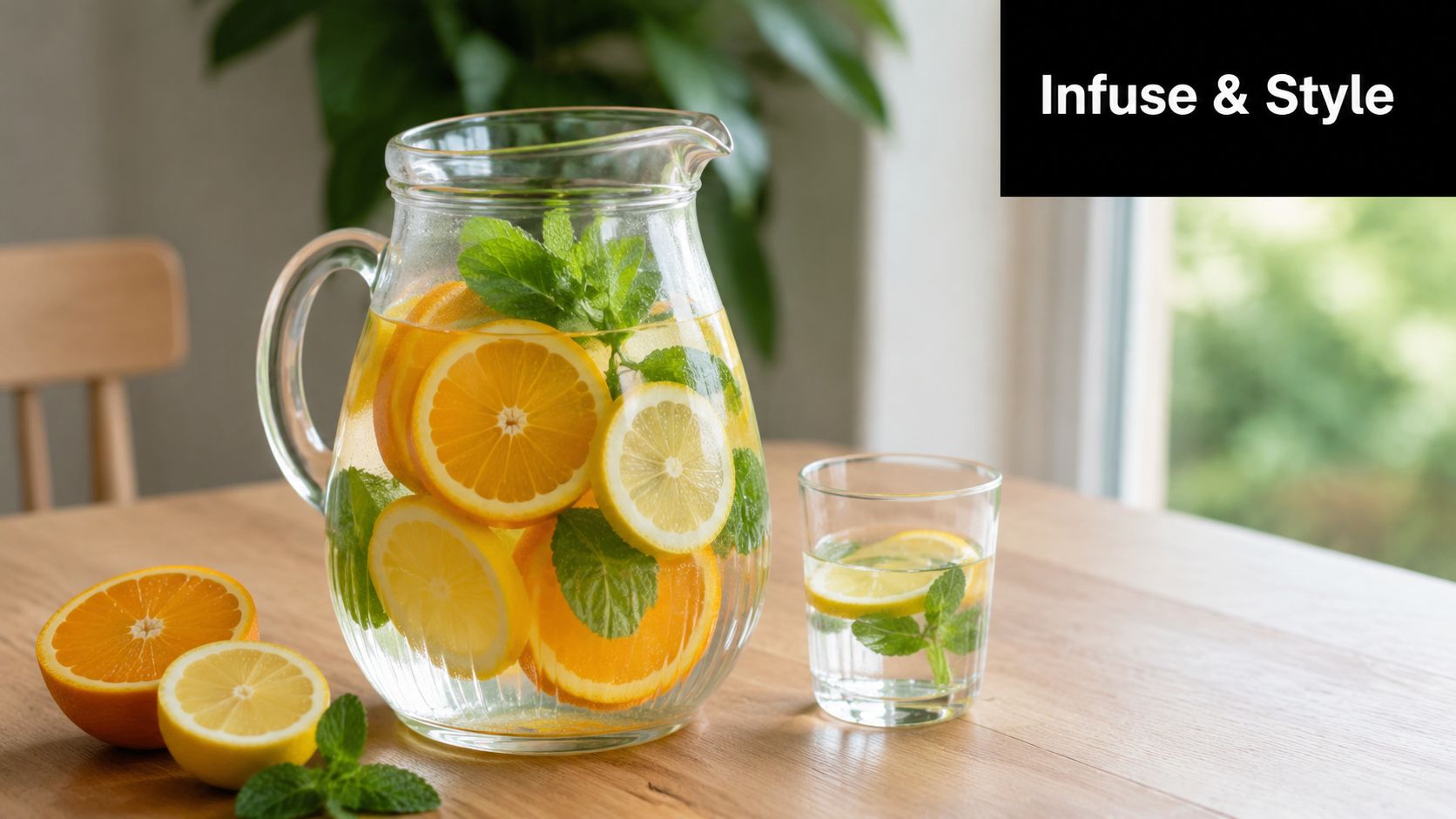
Some combinations consistently work well:
- Lemon and rosemary for classic weddings, vineyard lunches, and elegant rehearsal dinners
- Cucumber for conferences, wellness events, and minimalist brand activations
- Orange and mint for daytime birthdays and summer garden gatherings
- Berry and basil or mint for celebratory tables that need a bit more colour
The goal is visual clarity. Guests should recognise the flavour profile at a glance. If the water looks murky or overloaded, the effect is lost.
Styling details that matter
A few small decisions make a big difference:
- Cut fruit neatly. Thick, uneven slices can look heavy in the jug.
- Don't overfill garnishes. Too much fruit interferes with pouring and looks messy by mid-service.
- Match garnish colour to table palette. Green herbs suit neutral and botanical styling. Citrus works beautifully with crisp white and gold tables.
- Use chilled ingredients. Warm fruit dropped into cold water dulls the result quickly.
Keep infused water elegant by choosing ingredients that smell fresh, hold their shape, and won't disintegrate during service.
What works in the Cape climate
In hotter conditions, simple combinations hold better than fussy ones. Cucumber keeps its shape. Citrus slices stay attractive for longer. Delicate berries can soften fast if they sit too long before guests arrive.
For windy outdoor events, avoid loose herb sprigs floating near the lip of the jug if you're not using lids. They can end up on the tablecloth instead of in the water. For formal dinners, keep the infusion subtle enough that it complements the meal rather than becoming a talking point for the wrong reason.
Glass water jugs do this job well because they let the colour and shape of the infusion become part of the styling. You're not hiding the contents. You're using them.
Why Renting Glass Jugs in Cape Town Makes Sense
Buying your own event jugs sounds practical until you deal with the full chain of ownership. You have to source matching stock, store it safely, transport it without breakage, wash it properly, sort out replacements, and then find space for it all again after the event. That's manageable for a private dinner. It becomes a burden at event scale.
Cape Town and Winelands events add another layer. Transport routes can include gravel drives, farm roads, stairs, loading constraints, and long setup windows. Fragile stock doesn't just need to look good at arrival. It needs to survive handling, reset, and collection.
The hidden work behind ownership
Most hosts underestimate four things:
- Storage: Glass takes up space, especially if you want consistent sizes and shapes.
- Breakage management: One missing or chipped jug can throw off an entire table plan.
- Cleaning standards: Repeated-use water vessels need more than a quick rinse.
- Transport logistics: Packing and unpacking glass correctly takes time and labour.
For event use in South Africa, potable-water containers are effectively shaped by the food-contact framework. Glass used for drinking-water jugs should comply with SANS 169 for glass packaging for food and beverages, and repeated-service jugs should be food-contact compliant and visibly defect-free. That's exactly the sort of standard a professional rental operation is equipped to maintain more consistently than an ad hoc collection assembled for one-off use (food-contact compliance guidance).
Why rental is usually the smoother option
Rental makes sense because it removes the least glamorous parts of the job. You get consistency of style, cleaner presentation across the room, and fewer post-event headaches. That matters whether you're planning a wedding, formal school function, corporate gathering, or private celebration.
It also gives you better design control. If your wider setup includes lounge furniture, tables, bars, or styling pieces, it's easier to keep everything visually aligned when your service items are part of the same rental conversation. That's also why event teams often plan hydration as part of the broader event decoration hire approach rather than as a last-minute catering extra.
When buying still makes sense
Buying can work if you host frequent small events in one fixed location and have reliable cleaning and storage systems. It can also suit venues with a permanent in-house service model and trained staff.
For everyone else, renting is usually the more sensible route. It protects time, simplifies logistics, and helps maintain standards without adding another fragile category to your to-do list.
A good event doesn't feel effortful to the guest. Renting supports that outcome because the practical work has already been handled before the first table is ever set.
If you're planning an event in Cape Town, Stellenbosch, Franschhoek, Paarl, or the surrounding areas, ABC Hire can help you create polished, stress-free water service with stylish event rentals that suit the rest of your setup. Whether you're organising a wedding, corporate function, matric dance, or private celebration, the right glass water jugs and event accessories make the room feel considered from the first pour.