Black Table Runner Styling Guide for Cape Town Events

You're standing in a Cape Town venue with beautiful views, a table layout that's already approved, and one stubborn decision left on the list. The flowers are set, the crockery is chosen, and the tables still feel a little too open, a little too bright, or too plain for the mood you want. That's usually the moment a black table runner earns its keep.

A well-chosen black runner can pull a whole tablescape into focus without shouting for attention. Used badly, it can make the setup feel severe, flat, or overly formal. In Cape Town and the Winelands, where venues range from sun-washed estates to moody indoor spaces, that difference matters. For practical decor guidance, it's also useful to look at decor store startup advice if you're thinking about how black linens fit into a broader product mix or rental inventory.

Why a Black Table Runner Anchors Your Event Design

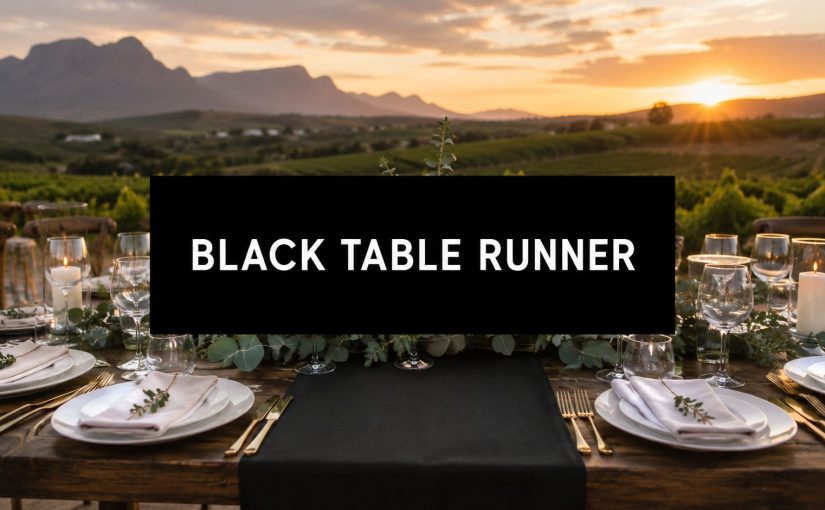
At a recent Winelands wedding reception, the room had everything going for it, vineyard views, warm timber tables, and soft evening light. The first mock-up looked polished, but the table still felt visually loose until the black runner went down the centre of each table. The change was immediate. Crockery stood out more clearly, florals looked richer, and the whole setting felt deliberate instead of scattered.

That is the job of a black runner. It anchors the visual hierarchy of the table, especially when the rest of the palette is light, reflective, or visually busy. In South African events, that can be the difference between a table that reads cleanly in person and one that only works from one angle.

Why black works as a design anchor

Black suppresses visual noise. It gives the eye a resting place, which helps when you are mixing candles, glassware, florals, and branded elements. In a wedding, it can support romance without making everything feel sugary. In a corporate setting, it sharpens the table's edges and helps logos, menus, or display pieces stand out.

The same logic matters if you are thinking about supply and rental stock. South Africa's textiles industry still supports a meaningful local home and event fabric ecosystem, with 143,000 people employed in the clothing and textiles, footwear and leather subsector by late 2022, according to the TIPS manufacturing data study. That matters because black table linen is not just a decorative afterthought, it sits inside a real domestic supply chain.

What often gets overlooked is how black behaves under venue lighting. In a bright conservatory, a matte runner can disappear if the tableware is also dark. In a candlelit room, the same runner can look luxurious, but only if the fabric has enough texture or weight to catch light at the edges. Cape Town venues are especially unforgiving here because daylight shifts quickly, and what looked crisp during setup can read flat by the time guests are seated.

A black runner is strongest when the rest of the table does some of the storytelling.

If you are sourcing or reselling table decor, that logic also fits broader decor store startup advice, because the strongest product mix is not just about colour, it is about how the piece performs in a finished room. For Cape Town and Winelands rentals, that usually means checking whether the runner has enough weight, the edge finish holds its shape, and the fabric suits the lighting you are likely to get at the venue. An item that looks plain on a hanger can be exactly what holds a tablescape together once the linens, glassware, and centrepieces are in place.

If the runner is going into ABC Hire's rental inventory, that same standard applies. Black pieces need to read cleanly from a distance, not just photograph well in a close crop, because they are often the element that stops the table from feeling unfinished.

Choosing the Right Fabric and Dimensions

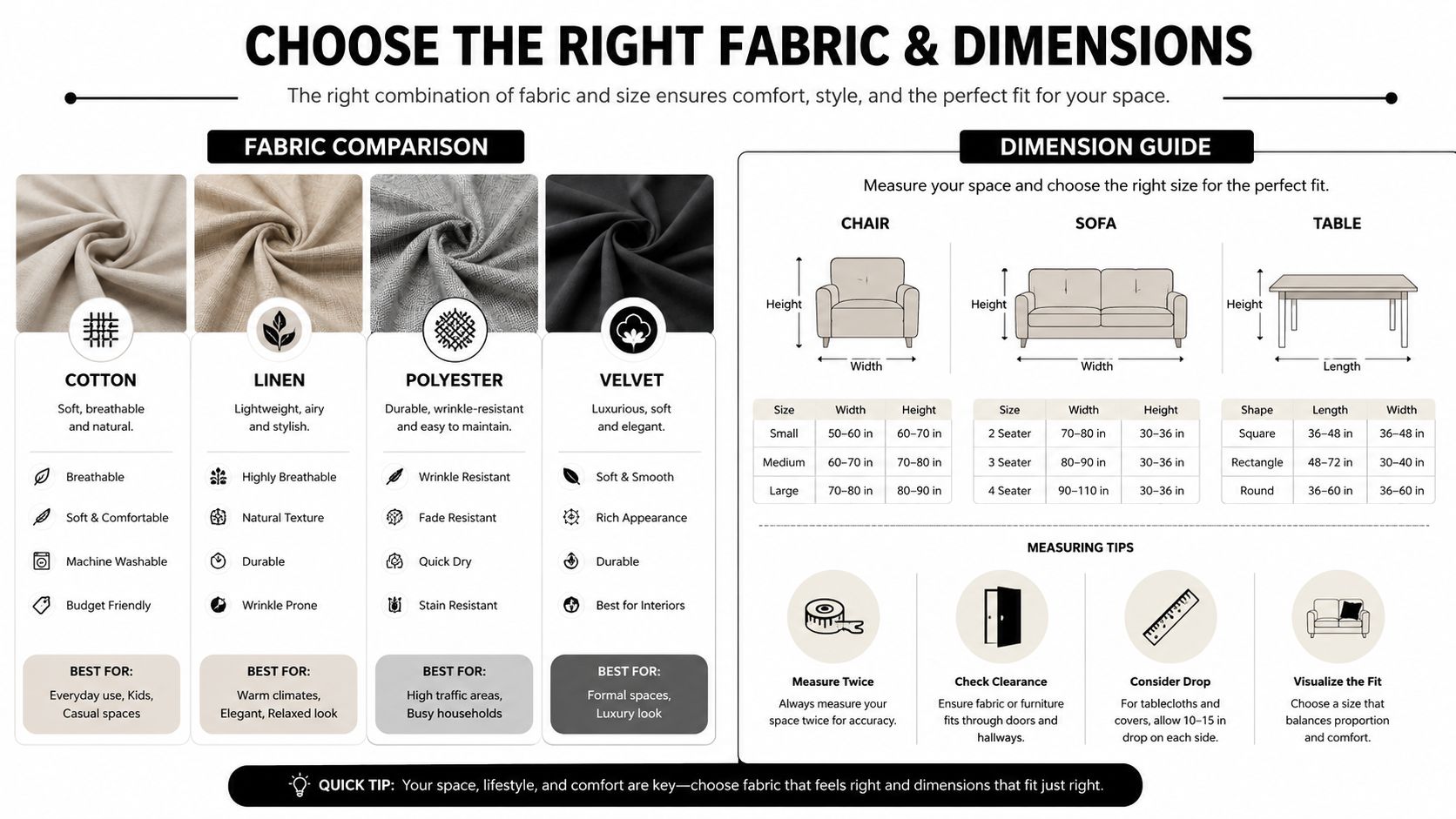
A comprehensive guide illustrating fabric types and furniture dimension measurements for choosing the right home decor.

The first mistake people make with a black runner is choosing by colour alone. The second is picking a length that looks right on a catalogue page but fights the table in real life. Fabric, weight, edge finish, and overhang all affect how the runner behaves once the venue lights switch on.

What the fabric changes

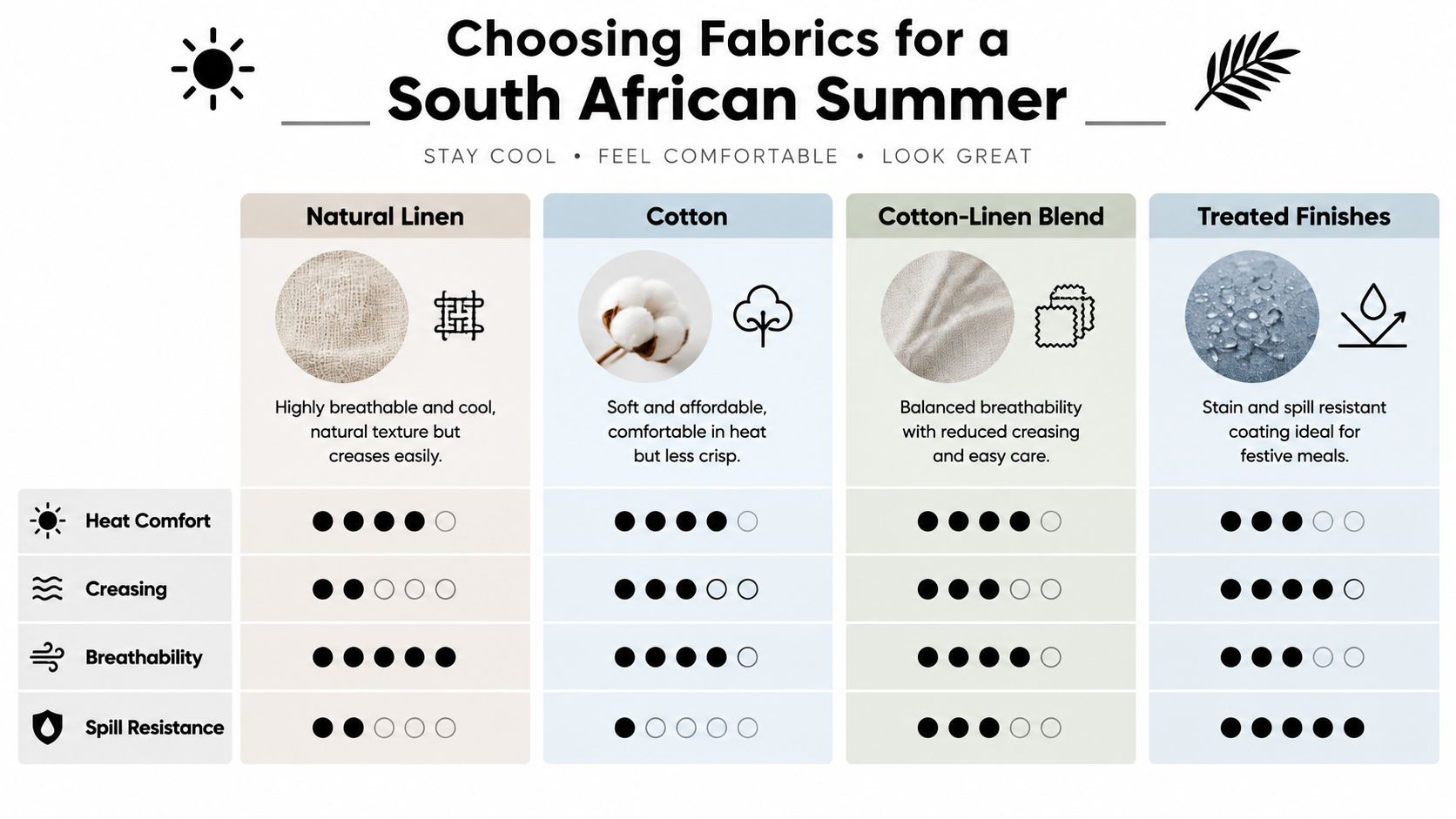
Regionally available black runners come in polyester, chiffon, jute, cotton, or PVC-blend constructions, and each one behaves differently. A denser woven polyester or cotton runner is a better fit for repeated hire use because it is easier to launder and tends to hold its shape more reliably. Sheer chiffon works when you want softness or layering, but it needs more careful handling. Jute reads as textured and rustic, while PVC blends suit more functional or wipe-clean applications.

For high-turnover event stock, the practical commercial benchmark is often 150 to 220 GSM, with serged or hemmed edges to help prevent fraying and improve tear resistance during repeated setup and teardown. That construction matters because black shows damage quickly when the edge starts to go. You can see similar runner specifications in commercial listings such as The Fabric Company batting options, which is useful as a reference point when you're comparing make-up rather than just colour.

How to size it correctly

Standard event runners are often supplied in formats like 33 cm × 150 cm or 70 cm × 300 cm, and width matters as much as length. A useful rule of thumb is that the runner should be about one-third of the table width with 15 to 30 cm of overhang per side. That proportion keeps the drape clean and avoids the awkward look of a runner that's either too narrow to register or so long that it swamps the setting. Commercial product guidance from a local-style rental reference such as table runner sizing guidance points to the same practical balance.

For planners who want a quick cross-check, this simple rule helps:

  • Banquet tables, choose a longer runner with enough overhang to stay elegant when chairs are pulled out.
  • Dining tables, keep the width restrained so plates, chargers, and centrepieces don't feel crowded.
  • Layered tablescapes, go a little wider if the runner is meant to read as a central feature rather than a subtle base.

For related table dressing basics, ABC Hire's own black table cloths guide is a useful companion read when you're matching runners to base linens.

Styling Approaches for Weddings, Corporate Events, and Formals

A black runner can look romantic, disciplined, or bold depending on what sits around it. That's why the same piece works across weddings, board dinners, launches, and school formals, but only if the surrounding materials are chosen with intent.

Weddings call for contrast and softness

On wedding tables, black usually performs best against white or ivory base linens, especially when you want the runner to frame rather than dominate the setting. Gold or brass cutlery, clear glassware, and lush florals stop the table from feeling too hard-edged. The runner becomes the visual spine, while the flowers and candlelight supply warmth.

The trick is to avoid pairing black with too many other matte dark elements unless you have strong ambient lighting. When everything is dark, detail disappears. If the venue is a Winelands estate with timber furniture, black can look exceptionally rich, but only when you offset that darkness with reflective surfaces or pale florals.

Corporate and formal events need cleaner lines

For product launches, gala dinners, and branded functions, black suppresses reflections and makes branded items easier to read under stage light or LED furniture. ABC Hire's range includes lighting and furniture solutions that suit these settings, and a planner looking for book corporate events can use that same logic to build a sharper, more controlled visual field. The runner should frame the message, not compete with it.

Matric dances and school formals usually ask for the most disciplined budget choices. In those settings, the runner works hardest when paired with a strong accent colour, a simple floral line, or a repeated metallic detail. You do not need a lot of decoration if the base linen, runner, and centrepiece are coordinated properly.

Keep the runner quiet when the decor is loud, and make it more textural when the rest of the table is simple.

Layering Linens, Centrepieces, and Lighting for Maximum Impact

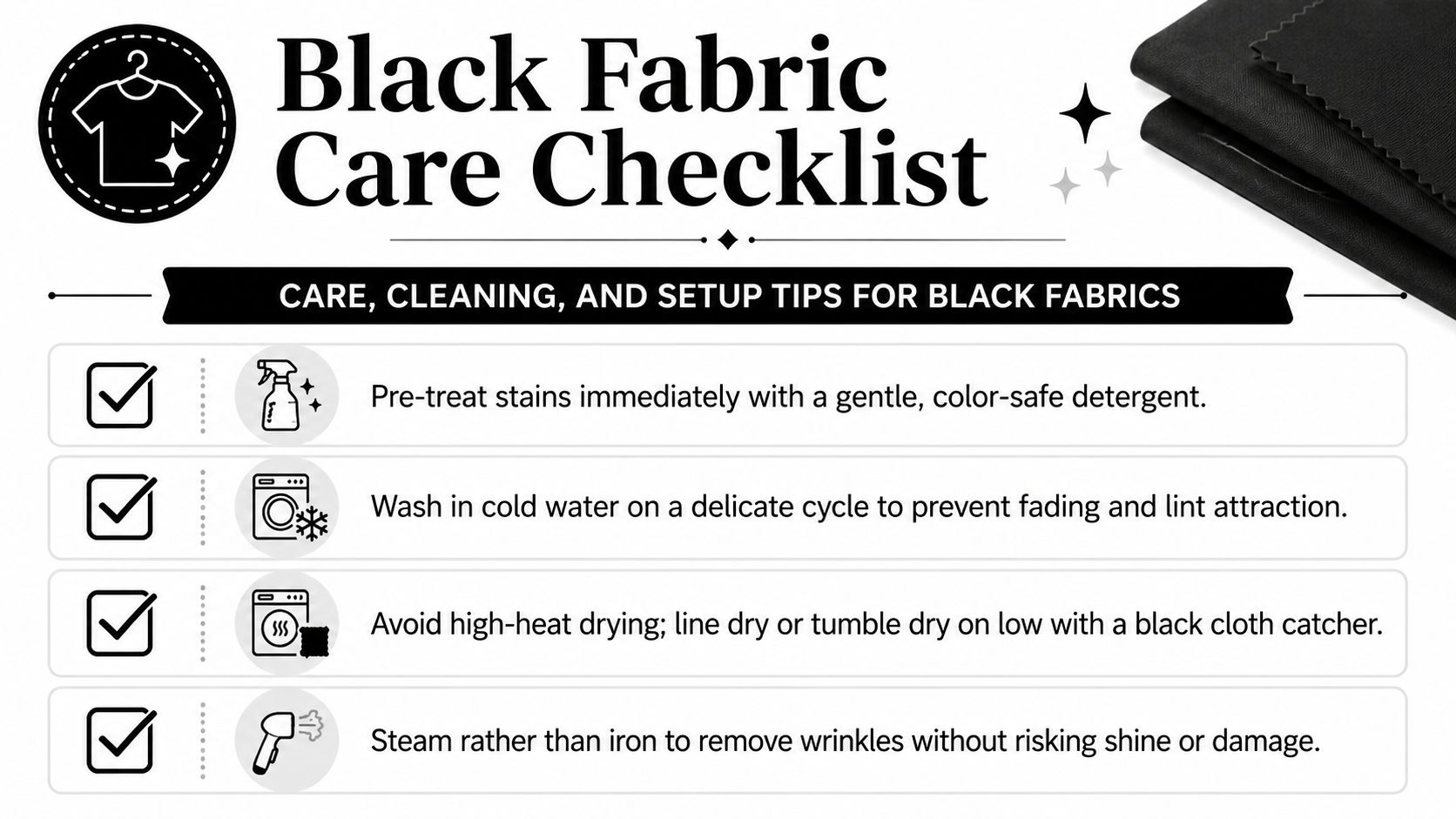
A checklist infographic providing essential care, cleaning, and maintenance tips for black fabric textiles and clothing.

The hardest part of using black linen isn't choosing it, it's keeping it from disappearing into the table. Black absorbs a lot of visual energy, so the surrounding materials have to do more work. The runner needs contrast, texture, or height to register properly in the room and in photographs.

Table surface changes everything

A black runner on wood can look grounded and refined, especially if the timber grain still shows around the edges. On glass, the runner can feel sharper and more contemporary, but it also risks looking like a floating strip if there's nothing layered over it. On white tablecloths, the contrast is strongest, which is useful when you want a bold centre line. On LED-lit tables, black helps suppress glare and lets the light appear cleaner.

Cape Town venues often shift lighting during an event. Daytime receptions can move into sunset, then into ambient night lighting or uplighting. Black is stable across those transitions, but only if you've introduced enough texture, metallic reflection, or floral volume for the table to keep reading clearly as the light changes.

Centrepieces need height and texture

If the runner is black, low and monochrome centrepieces can disappear. Use varied height, organic shape, and at least one reflective or pale element to break the field. A single row of candles can work, but only if the glassware or holders catch enough light. Florals with strong contrast, such as pale blooms against dark linen, are easier to read from across the room.

For more layout ideas, ABC Hire's centrepiece for table reference helps when you're deciding how much verticality the runner needs to support.

Practical rule: if the runner is dark and the venue is dim, the centrepiece has to carry more of the design weight.

Care, Cleaning, and Setup Tips for Black Fabrics

Black fabric can be generous and unforgiving at the same time. It hides some stains better than white linen, but it also exposes lint, fold lines, dust, and powder under bright venue lighting. That means prep matters just as much as styling.

What to do before the event

Steam the runner early enough for it to relax before use, then lint-roll it with care. If the runner has been packed tightly, let it hang so the creases fall out before you dress the table. A table clip can help on slippery surfaces, but use it discreetly so the finish still looks clean.

The best maintenance habit is simple. Deal with marks immediately, don't wait for them to dry into the weave. Candle wax, makeup transfer, and food spills all become harder to handle once they've set into black fibres.

How different fabrics should be handled

Machine-washable polyester and cotton are the easiest for repeat event use, especially when turnover is tight. Chiffon and jute need more care, and they're less forgiving if you're dealing with frequent laundering or rushed pack-downs. Black polyester also benefits from a gentle wash cycle and low-heat drying, because excessive heat can make sheen or wear more noticeable over time.

The care logic is simple. The more formal and delicate the fabric, the more time it takes to keep it photo-ready. That's why many hirers prefer commercial-grade stock for fast-moving weekends and multiple venue changes.

Renting Versus Buying for Cape Town and Winelands Events

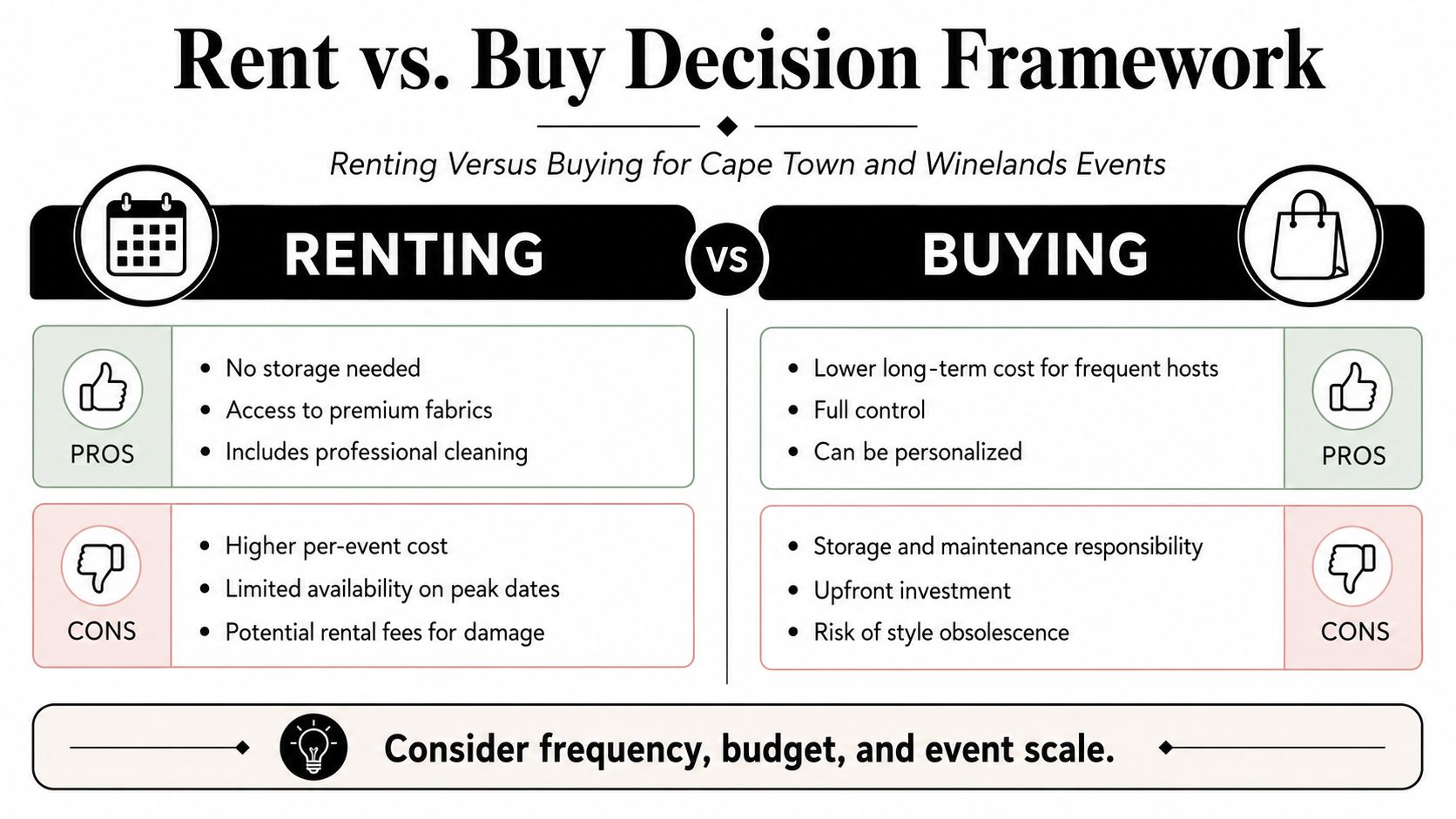
A decision framework chart comparing pros and cons of renting versus buying items for event decor.

The right choice depends on how often you host, how much storage you have, and how much handling you want to take on. A single wedding, a recurring corporate calendar, and a venue's permanent linen stock all call for different answers.

When renting makes more sense

If you only need black runners for one event, rental usually removes the most annoying parts of the job. There's no long-term storage, no laundering after the event, and no need to worry about keeping stock matching across different tables. For planners moving between Cape Town, Stellenbosch, Franschhoek, and Paarl, that also means fewer transport headaches.

ABC Hire fits into that model as one practical option because it provides table and chair hire alongside broader event furniture and accessories, which makes it easier to build a coordinated setup without owning every piece outright. That matters when you're trying to keep the linen plan aligned with the rest of the room, not just with the runner itself.

When buying is the better call

Buying only starts to win when the same runner is used often enough to justify storage, cleaning, and replacement. Even then, ownership means you're responsible for damage, fading, and style drift over time. If your events change tone often, black can stay useful because it's adaptable, but the fabric choice still has to be maintained carefully.

For a useful comparison point, table runners for sale shows how product decisions start to matter once you're not renting on a one-off basis. That's the inflection point where frequency, budget, and scale have to be weighed together.

Consider frequency, budget, and event scale before you decide. The cheapest option on paper is not always the easiest one on event day.

Bringing Your Event Vision to Life

A black runner is never just a strip of fabric. It's a visual tool that can make a table feel grounded, expensive, modern, or romantic, but only if the rest of the design is doing its part. The strongest results come from the right fabric, the right width, and a clear plan for contrast, texture, and light.

Before your event, check five things: fabric choice, runner dimensions, table surface, lighting, and cleaning logistics. If any one of those is ignored, the runner can flatten the whole setting instead of elevating it. In Cape Town and the Winelands, where venues change so much from one booking to the next, that planning step is what keeps the final table from feeling accidental.


If you're planning a wedding, corporate function, or formal event and want your tables to look composed under real venue lighting, talk to ABC Hire about the furniture and event pieces that support a black table runner properly. They can help you match your table setup to the scale of your event, so the final result feels deliberate, practical, and ready for guests.

Cape Town Event Overlays for Tables: Style Guide 2026

You're often at this point when overlays become relevant. The venue is booked, the chairs are sorted, the tables are practical, and the room still feels flat. In Cape Town and the Winelands, that happens all the time. A wine farm dining hall can feel too bare in daylight, and a beachside venue can look washed out once the wind starts moving everything except the furniture.

That's where overlays for tables earn their keep. They change the read of a room quickly, without forcing you into a full linen replacement. For weddings, that can mean softening a hard venue. For corporate events, it can mean pulling brand colour into the room without making every table look heavy-handed. For private celebrations, it's often the easiest way to make standard hire furniture feel intentional.

What Is a Table Overlay and Why Use One

A table overlay is a smaller decorative cloth placed over a base tablecloth. It doesn't replace the main cloth. It sits on top of it and adds another visible layer. That sounds simple, but in styling terms it changes everything.

The easiest way to think about it is this. The base cloth handles the foundation. The overlay adds a second dimension. In data presentation, a table starts with rows and columns, then an overlay can add another layer of meaning without rebuilding the whole structure, as outlined in this data literacy guidance on table structure. Event styling works in a similar way. Your undercloth gives you the base surface, and the overlay adds colour, texture, or theme without starting from scratch.

What an overlay does differently

A runner gives you a strip through the centre. A full cloth covers the whole table. An overlay sits between those two ideas.

It usually shows more fabric than a runner, creates more shape than a flat topper, and lets the undercloth still do part of the visual work. That layered look is why stylists use it so often for receptions, tasting events, school functions, and launch dinners.

Practical rule: If the room needs more depth, not more clutter, add an overlay before you add more décor.

That matters in local venues. At a Stellenbosch or Franschhoek wine estate, the room already has enough character from timber, stone, barrels, or vineyard views. A heavy full-linen change can fight the venue. An overlay gives you contrast without burying the setting.

Why planners keep coming back to overlays

There are a few reasons overlays work so well in practice:

  • They add colour cleanly: A white or neutral base cloth becomes warmer, sharper, or more romantic with one top layer.
  • They introduce texture: Matte linen, shimmer satin, lace detail, or soft sheer fabric each changes the mood.
  • They stretch a styling budget: You can shift the whole look of a room without replacing every tablecloth.
  • They help unify mixed furniture: If your event has rounds, trestles, buffet tables, and cocktail tables, overlays can tie them together visually.

If you're comparing fabrics and finishes, this piece with expert advice on table linens is a useful companion because it helps you think beyond colour alone and pay attention to texture, drape, and occasion.

What works and what doesn't

The best overlay choices support the event brief. They don't try to rescue a confused theme.

A crisp white base with a muted sage, stone, champagne, or dusty blue overlay works beautifully for Cape Winelands weddings because it feels grounded. A glossy fuchsia overlay on a rustic oak table setup usually doesn't. At a waterfront corporate function, sharp brand-colour overlays on cocktail tables can look polished. The same treatment on every dining table can feel overdone.

Use overlays to create intention, not noise. That's the difference between a styled room and a room with extra fabric.

A Guide to Overlay Materials and Styles

Fabric choice decides whether your tables feel soft, formal, modern, romantic, or high energy. It also decides how much work your setup team is dealing with on the day. In South African event rentals, that trade-off is real. Decorative effect matters, but so do creasing, stains, handling, and turnaround. One rental-focused fabric source notes that polyester is often favoured because it is stain- and wrinkle-resistant and machine washable, which is especially relevant for high-turnover use in events, as noted by The Party Peeps' overlay rental guidance.

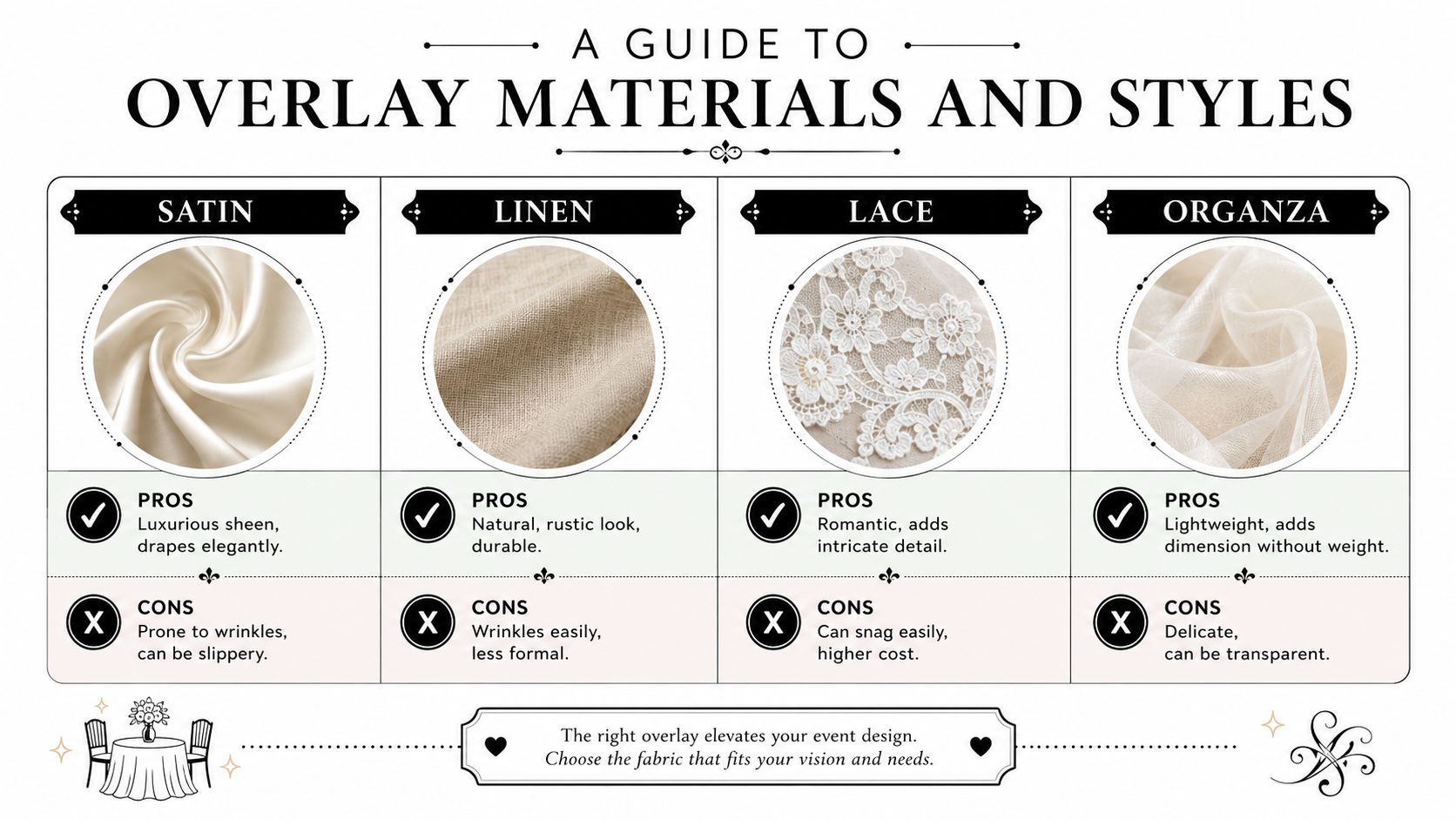
Here's a quick visual comparison before the practical breakdown.

A helpful chart detailing the pros and cons of different tablecloth overlay materials including satin, linen, lace, and organza.

Satin, organza, sequins and taffeta

Satin gives you sheen. It catches candlelight and evening lighting well, which makes it popular for formal dinners, gala-style functions, and black-tie leaning events. The problem is that satin shows creases fast and can shift during setup if the base cloth underneath is very smooth.

Organza is lighter and more forgiving visually. It adds softness without making the table feel heavy. For beachside receptions, garden ceremonies, and daytime Winelands weddings, organza can work beautifully because it creates lift and movement. The catch is that it can look too flimsy in strong wind or too casual if the rest of the room is very formal.

Sequins create instant theatre. For matric dances, awards evenings, and statement cake or gift tables, they do the job. But they need restraint. If every guest table is glittering, centrepieces and lighting have to compete. Sequins are strongest when they're targeted.

Taffeta sits in a more structured category. It holds shape better and brings a slightly architectural feel to the table. In corporate spaces or formal banquet rooms, that can be useful because it reads neat and intentional.

The fabric decision in real venues

Cape Town events are rarely styled in a vacuum. The room, weather, and traffic matter.

  • Wine farms: Textured fabrics usually sit better in these spaces than high-shine options. Linen-look overlays, matte polyester, or subtle lace often feel more at home than a glossy satin.
  • Beachside locations: Wind changes everything. Lightweight sheer fabrics can look lovely until they start lifting. In exposed spaces, secure fabrics with a bit more body tend to behave better.
  • School and university formals: In these settings, visual impact often matters more than subtlety. Sequins or satin can work, especially under event lighting.
  • Brand activations: Clean colour is often more important than ornate texture. A smooth, consistent finish usually photographs better for branded setups.

A useful outside reference on hospitality finishing is Afida for UK hospitality napkins. It's not about overlays specifically, but it's helpful for understanding how fabric choice affects the overall table read, especially when napkins and overlays need to feel like they belong together.

A quick selection guide

Event feel Overlay style that usually works Watch out for
Romantic and airy Organza or lace Wind, transparency, snagging
Formal and polished Satin or taffeta Creases, slippage, glare
Rustic and refined Linen-look or matte fabric Too much wrinkling if not prepped
High-glam celebration Sequins Visual overload across all tables

If guests notice the fabric before they notice the table styling as a whole, the overlay is probably working too hard.

How to Choose the Right Overlay Size

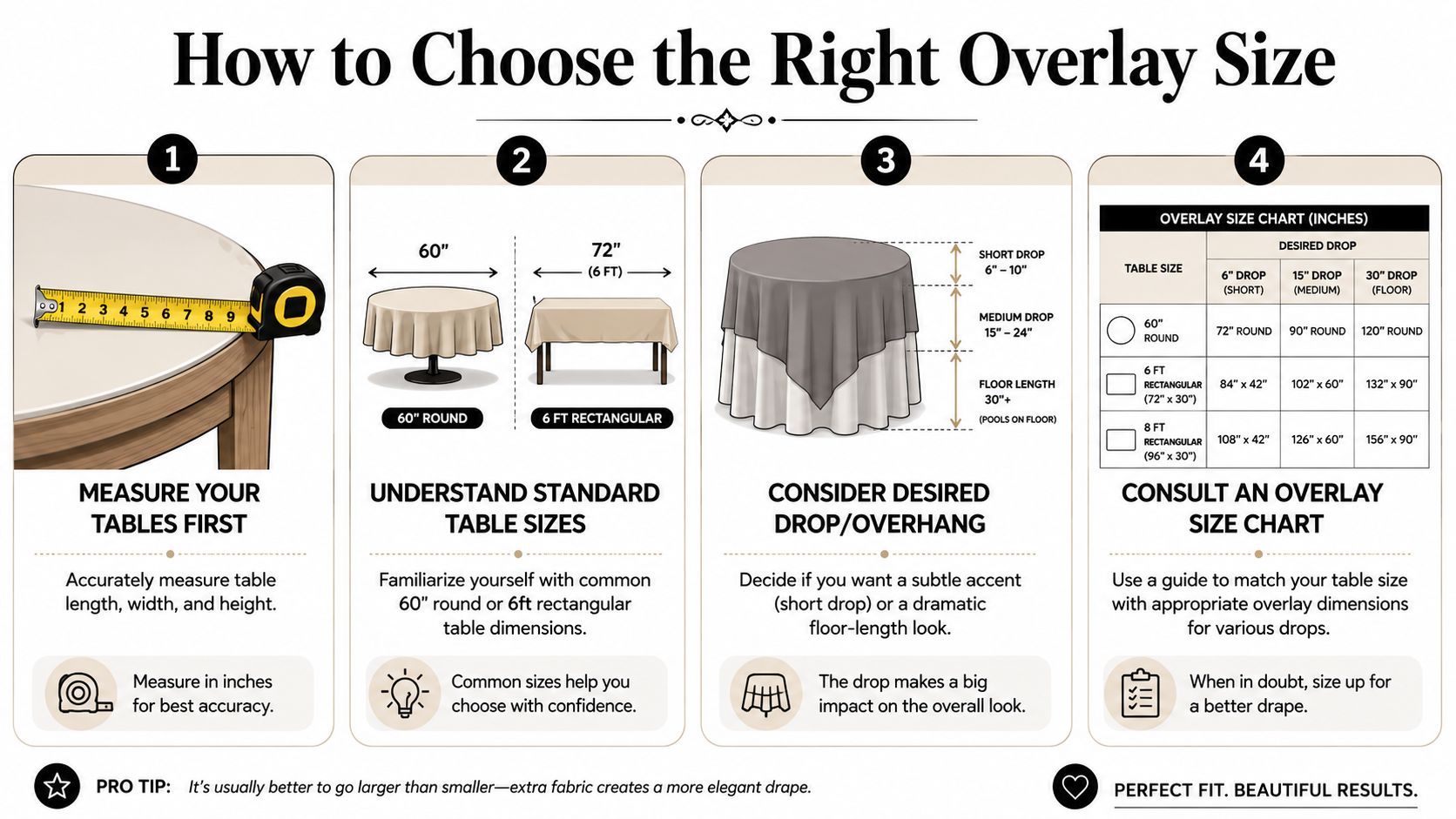
Sizing is where many good styling plans go sideways. The fabric may be perfect, but if the drop is wrong, the table looks accidental. This is also where local planners often get frustrated, because most online guidance focuses on standard round tables and gives broad recommendations such as 72-inch to 90-inch overlays for 60-inch round tables and 90-inch or 108-inch overlays for 72-inch round tables, while leaving out the mixed-table reality many South African events deal with, as noted in this overlay sizing reference from CV Linens.

In Cape Town, you'll often have a mix of rounds, banquet tables, trestles, cake tables, and buffets in one event. You can't style that by guessing.

A step-by-step guide on how to choose the right table overlay size for various table dimensions.

Start with the drop you want

Before you measure fabric, decide the effect.

  • Short drop: Best when you want the overlay to act as a decorative top accent.
  • Half drop or lap-length look: Good for guest tables where you want softness without the overlay reaching too low.
  • Longer dramatic drop: Better for cake tables, signing tables, gift tables, or focal points.

A floor-length overlay can look luxurious, but on a busy dining table it can also tangle with chairs and guests' knees. That's why I usually keep the dramatic drops for tables that won't be used heavily.

How to measure properly

For a round table, measure the diameter of the tabletop first. Then decide how far you want the overlay to fall on each side. Add that drop amount to both sides of the table.

For a rectangular trestle or banquet table, measure the length and width. Then add the desired drop to all exposed sides where the overlay will hang. If the table is against a wall, don't size the back drop the same way unless that back edge will be seen.

Use this simple process:

  1. Measure the actual table on site, not what you think the venue owns.
  2. Check whether a base cloth is already adding bulk because that can change how an overlay sits.
  3. Decide if the table is practical or decorative because functional tables need cleaner, safer drops.
  4. Account for the room because windy lawns and uneven cellar floors change how fabric behaves.

Common mistakes on local setups

The biggest mistake is using the same overlay size across every table format. It saves admin time, but it often looks sloppy in the room.

Another mistake is choosing by online label only. “Round overlay” doesn't tell you enough if your venue tables vary. For round-table planning specifically, this guide on tablecloths for round tables helps clarify how top size and drop work together.

A well-sized overlay should look deliberate from standing height. If guests only notice the mismatch when seated, it's still a mismatch.

A working rule for mixed layouts

When the venue has both rounds and trestles, assign overlays by table role, not only by table shape.

Table type Best sizing mindset Why
Guest dining rounds Moderate drop Elegant without interfering with place settings
Buffet tables Cleaner top emphasis Keeps serving access simple
Cake or statement tables Longer or fuller drop Creates a focal point
Cocktail tables Tighter, balanced fit Avoids fabric movement and shifting

If the event includes several venue zones, mock up one table of each type before final confirmation. That single check saves a lot of stress on setup day.

Styling Overlays for Unforgettable Events

The strongest table styling always responds to the venue. Cape Town and the Winelands give you very different backdrops, so the same overlay won't suit every event. A cellar wedding needs a different hand than a sea-facing terrace or a city launch.

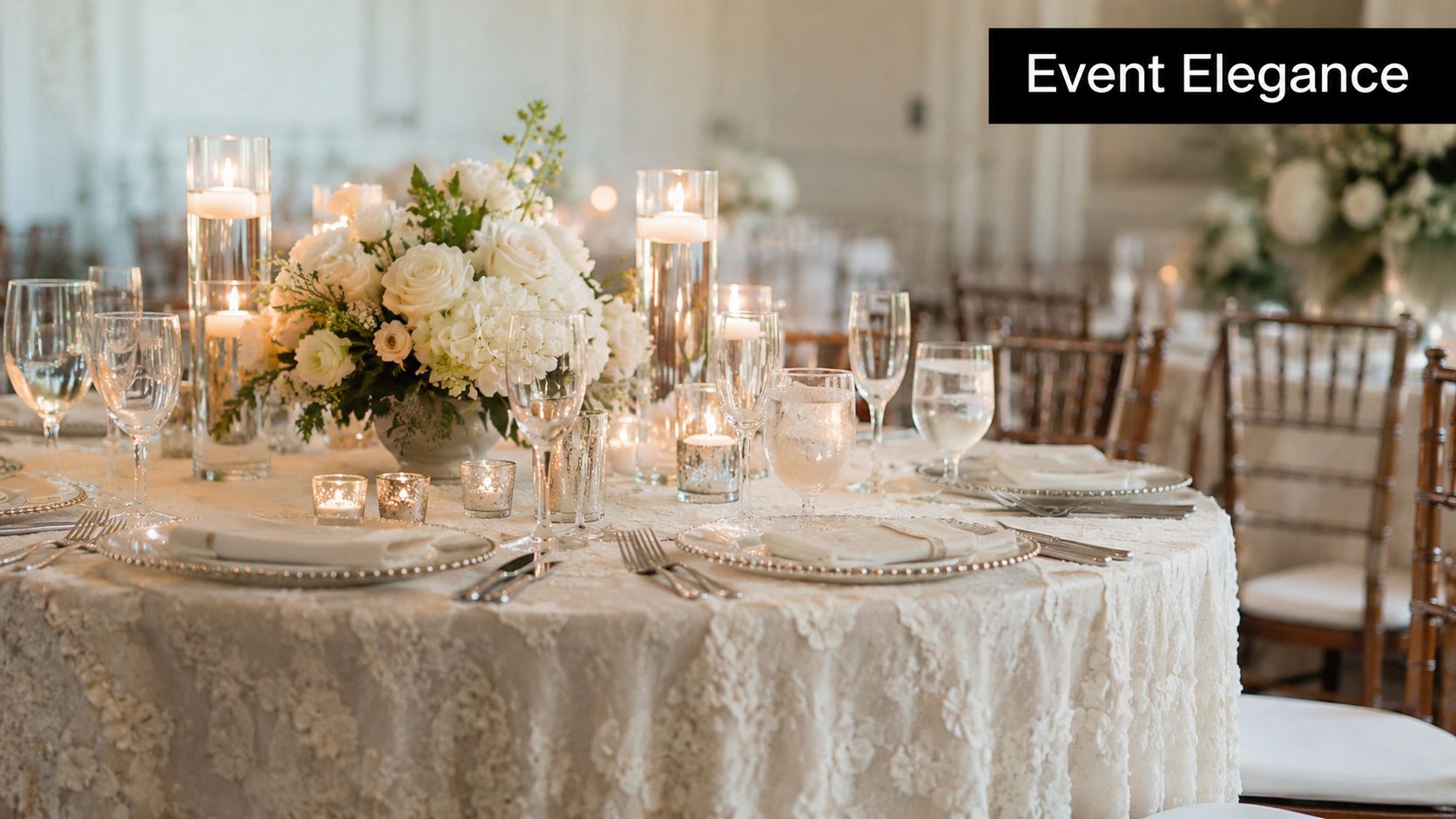
This kind of table can set the tone for the whole room.

An elegant wedding reception table set with white lace tablecloth, floral centerpieces, candles, and fine dining glassware.

Stellenbosch wine farm wedding

A white base cloth with a textured neutral overlay works beautifully in wine country. Think oat, stone, soft taupe, muted olive, or dusty sage. These shades sit comfortably with vineyard greens, old wood, and natural stone.

The mistake here is going too shiny. Rustic-chic spaces don't need gloss to feel refined. They need softness, depth, and materials that echo the venue instead of competing with it.

V&A Waterfront corporate launch

Overlays can become a branding tool without turning the room into a billboard. On cocktail tables, bold satin or crisp matte overlays in brand colours can create strong visual repetition. Keep dining tables calmer. Use the colour on touchpoints rather than saturating the full room.

If your event includes product display tables, pair the overlay colour with black, white, or charcoal undercloths so the brand shade feels intentional. For broader table styling ideas around event décor layers, this guide to decor for table is useful because it shows how linens, centrepieces, and accessories need to support one another.

Constantia matric dance

Matric dances want impact. Guests expect glamour, photos, sparkle, and a sense of occasion. This is one of the few settings where sequin overlays can make complete sense across more than a focal table, especially if the venue lighting is part of the look.

That said, edit carefully. If the overlay sparkles, the charger plate, napkin fold, and centrepiece don't all need to shout. Let one element lead. Usually, the overlay should either support the lighting or reflect it, not fight it.

In formal school functions, students remember the atmosphere before they remember the table details. Use overlays to build that atmosphere, not to show off fabric.

Camps Bay birthday at home

A private celebration at a home near the coast often benefits from a looser hand. Here I'd lean into lighter overlays on buffet tables, welcome-drink stations, and dessert setups. Organza in bright but edited colour can work well if the event is playful and daytime-focused.

The key is not to force every table to match exactly. In home events, some variation looks more natural. Keep the dining tables more settled, then let the service and feature tables carry the brighter overlay moments.

Four looks at a glance

  • Wine farm reception: White undercloth, linen-look neutral overlay, soft candlelight, natural florals.
  • Waterfront launch: Dark base linen, brand-colour overlay on cocktails, sharp glassware, minimal florals.
  • Matric dance: Black or white base cloth, sequin overlay on feature tables, mirrored details, dramatic lighting.
  • Coastal birthday: Clean base cloth, airy coloured overlay on buffet or drinks stations, relaxed floral styling.

The common thread is balance. The best overlays for tables support the room's identity. They don't erase it.

Renting vs Buying Your Table Linens

Buying sounds sensible when you first price a single overlay. The decision gets less attractive once you factor in cleaning, pressing, transport, storage, replacement, and whether you'll still want that exact fabric after the trend shifts.

For most events, renting is the more practical move. You get access to range and flexibility without owning stacks of fabric you'll need to maintain. That matters for wedding planners with changing briefs, corporate teams managing different brand looks, and private hosts who only need the setup once.

When buying makes sense

Buying can work if you run frequent in-house events with the same look and the same table inventory. A venue with a fixed style direction may prefer to own a narrow linen range. Even then, upkeep becomes part of the job.

If your events vary by season, audience, and venue, ownership becomes restrictive fast. The stock you bought for one Franschhoek wedding brief may feel wrong for a modern conference or a birthday at home.

Why renting suits layered styling

A useful way to think about it comes from how hybrid communication evolved. Tables remain the base structure, and layered additions help communicate more without rebuilding the whole thing. In a similar spirit, this discussion of hybrid visual layering in modern reporting helps explain why layered solutions are efficient. In event terms, renting overlays lets you move from a static setup to a more flexible, layered presentation.

That's the main advantage. You can change texture, colour, and mood according to the event rather than forcing every event into the stock you own.

  • Less admin: No long-term storage, no maintaining a linen cupboard, no pressing before every use.
  • More choice: You can style a wine farm wedding differently from a city awards dinner.
  • Lower risk: If the brief changes, you're not stuck with fabric that no longer fits.
  • Cleaner execution: Rental stock is chosen for event use, not for surviving in the back of a household cupboard.

For a practical look at linen rental options and how they fit into event planning, this guide on table cloths hire is worth reading.

Simple Setup and Care for a Flawless Look

Good fabric can still look poor if the setup is rushed. Most overlay problems aren't styling problems. They're placement problems.

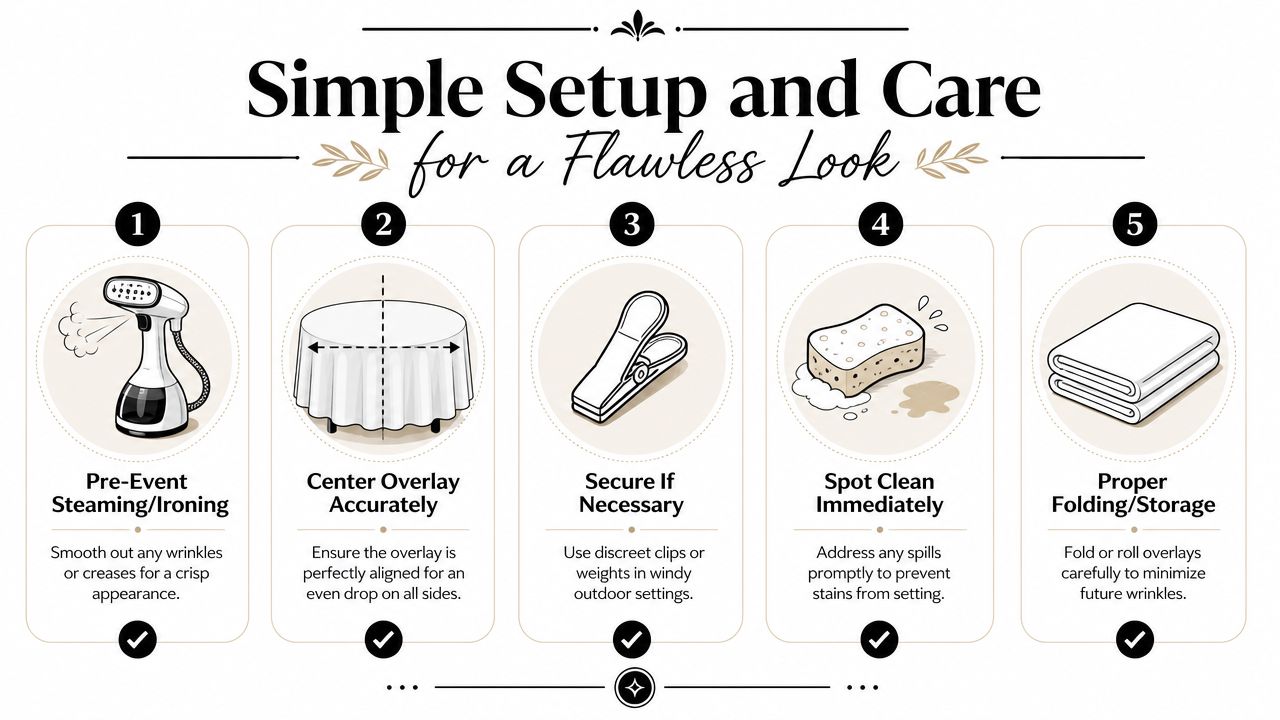
Use this checklist on the day.

A five-step guide on how to set up and care for table overlays to ensure a flawless look.

A quick event-day routine

  • Steam before placement: Even a beautiful overlay looks tired if it arrives creased. Steam first, then dress the table.
  • Centre it visually, not only by eyeing one corner: On round tables, check the drop from several points. On trestles, stand back and view the full length.
  • Secure outdoor setups: Beach air and mountain wind don't care how pretty the fabric is. Use discreet methods when needed.
  • Sort spills fast: Blot immediately. Don't rub. Most linen disasters get worse because someone panics.
  • Handle returns properly: Shake out debris, separate damp items if necessary, and bag them neatly.

What polished setup looks like

On a round table, the overlay should read evenly from all sides. On a rectangular table, the lines should feel intentional, especially on buffet and signing tables where guests approach from one dominant angle.

If you need to keep adjusting the overlay after centrepieces go down, it wasn't centred properly to begin with.

For rental items, care is also simpler. You don't need to deep-clean and store them for the next season. You just need to return them in good order, which is one of the biggest reasons professionals favour hired linen for event work.


If you're planning a wedding, launch, matric dance, or private celebration in Cape Town, Stellenbosch, Franschhoek, Paarl, or the surrounding Winelands, ABC Hire can help you build a polished event setup with the right tables, linen options, and rental pieces to suit the venue and the mood.