
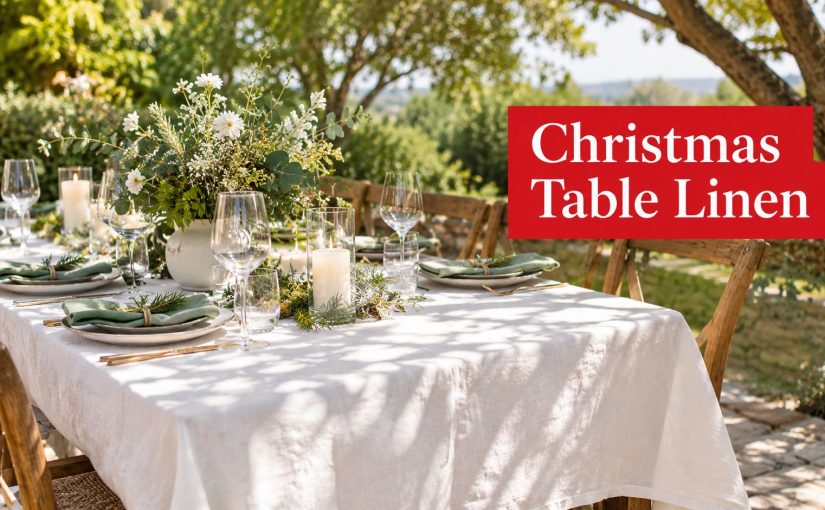
A December lunch in Cape Town can change character quickly. At midday, the sun is bright, a breeze is moving across the patio, and a glass of chilled wine leaves a ring beside the salad bowl. You want the table to feel like Christmas, but you don't want thick, fussy cloths that trap heat, flap in the wind or demand hours of ironing before guests arrive.
Christmas table linen solves more than a decorating problem. It protects the table, softens the setting, gives plates and glassware a visual anchor, and helps a simple outdoor meal feel intentionally hosted. The right combination can work equally well at a family lunch in Constantia, a Winelands wedding, a corporate year-end function or an evening gathering beside the coast.
Table linen also connects a summer celebration to a much older domestic tradition. One history of table linen traces its use to the Carthaginian Empire about 2,000 years ago, while white linen remained a standard tablecloth choice in many households until the mid-1930s, as described by this history of table linen. That long continuity explains why a pale cloth still feels timeless, even when you add local greenery, bright fruit or relaxed woven textures.
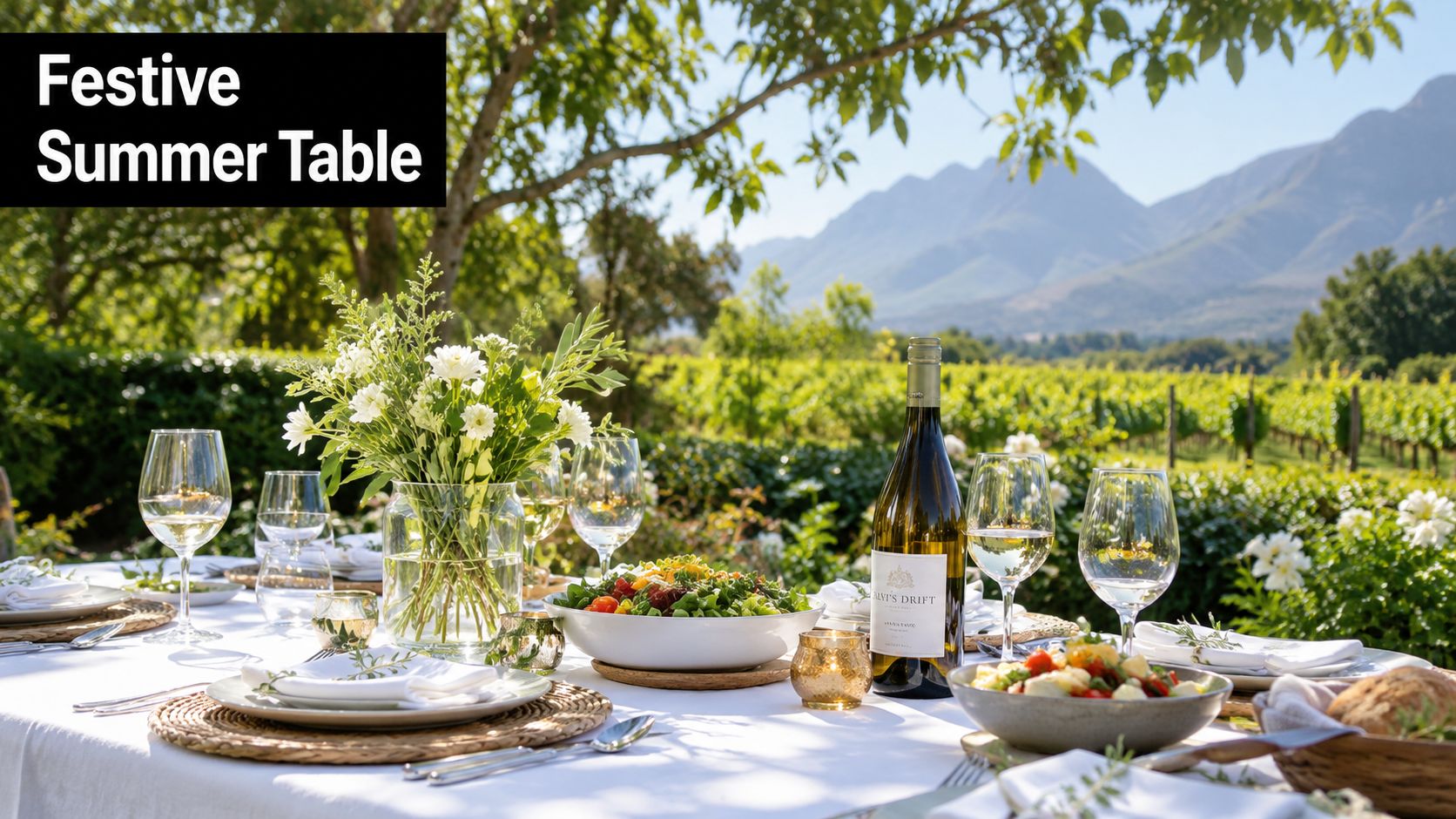
Start with the fabric, then choose a palette, build the layers and decide whether ownership makes sense for your event. Your drinks and menu will shape the mood too, so a practical holiday wine pairings guide can help you plan beverages that sit comfortably within the table's colour and service style.
Introduction to Christmas Table Linen for Summer Celebrations
Understanding What Christmas Table Linen Includes
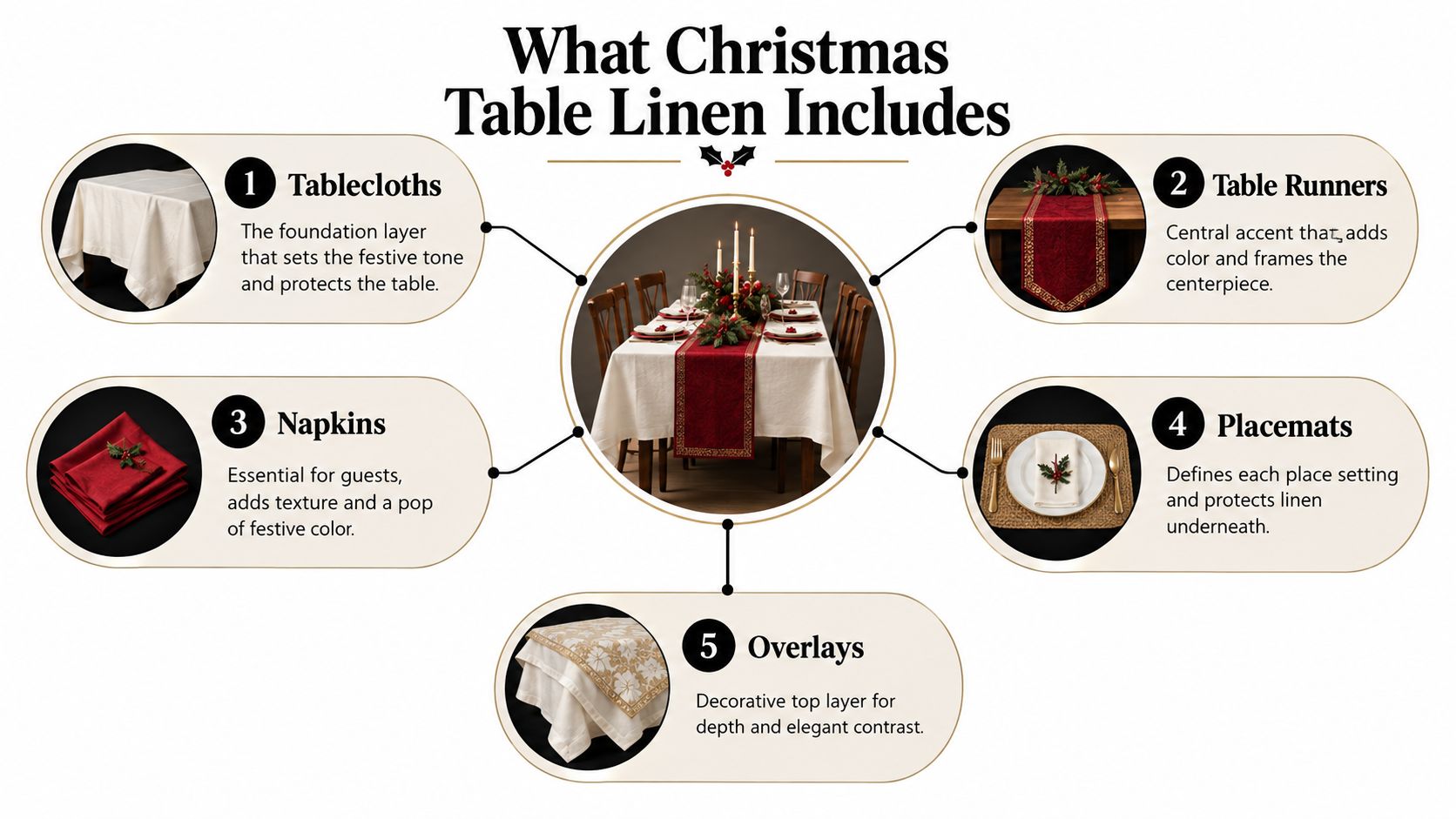
Think of your table as an outfit. The tablecloth is the base layer, the runner is the statement piece, napkins are the accessories and placemats define each guest's personal space. This analogy keeps the decision simple because you can ask what each layer is doing before adding another decorative item.
Start with the foundation
A tablecloth covers the main surface and establishes the visual temperature of the meal. White, ivory, sand and natural flax shades keep a South African summer table light, while a deeper colour can create a richer evening setting. A cloth also protects the surface from serving dishes, condensation and small spills.
A table runner narrows the focus. Place it down the centre of a rectangular table to connect the flowers, candles and serving bowls, or use runners across the width to mark individual settings. A runner is useful when you want festive colour without covering the whole table in red or green.
Add the guest-facing pieces
Napkins need to be practical first. They sit beside the plate, inside a glass or across the place setting, and they bring in a small, controlled burst of colour. Red napkins on a pale cloth can feel festive without making the entire table look themed.
Placemats frame each setting and protect the cloth beneath. They work particularly well for relaxed outdoor meals because they give plates a clear landing zone and help prevent cutlery, crumbs and small drips from spreading across the table.
An overlay is a decorative cloth placed over the foundation layer. It can add contrast, texture or a subtle pattern, but it isn't compulsory. On a warm December table, one well-chosen overlay usually looks more considered than several competing layers.
Practical rule: Choose one strong seasonal element, then let the other linen pieces support it.
Festive linen differs from everyday linen through its colour, weave, trim or motif, not necessarily through a Christmas print. A botanical napkin, green border or metallic thread can signal the season while remaining useful beyond December. This approach reduces overbuying and gives classic white or natural pieces a longer life across birthdays, weddings and Sunday lunches.
Choosing Fabrics That Work in South African Summer
Fabric changes the way a table behaves. In Cape Town or the Winelands, the best Christmas table linen must cope with heat, bright light, outdoor movement, food spills and the practical reality of washing it after the event.
Natural linen
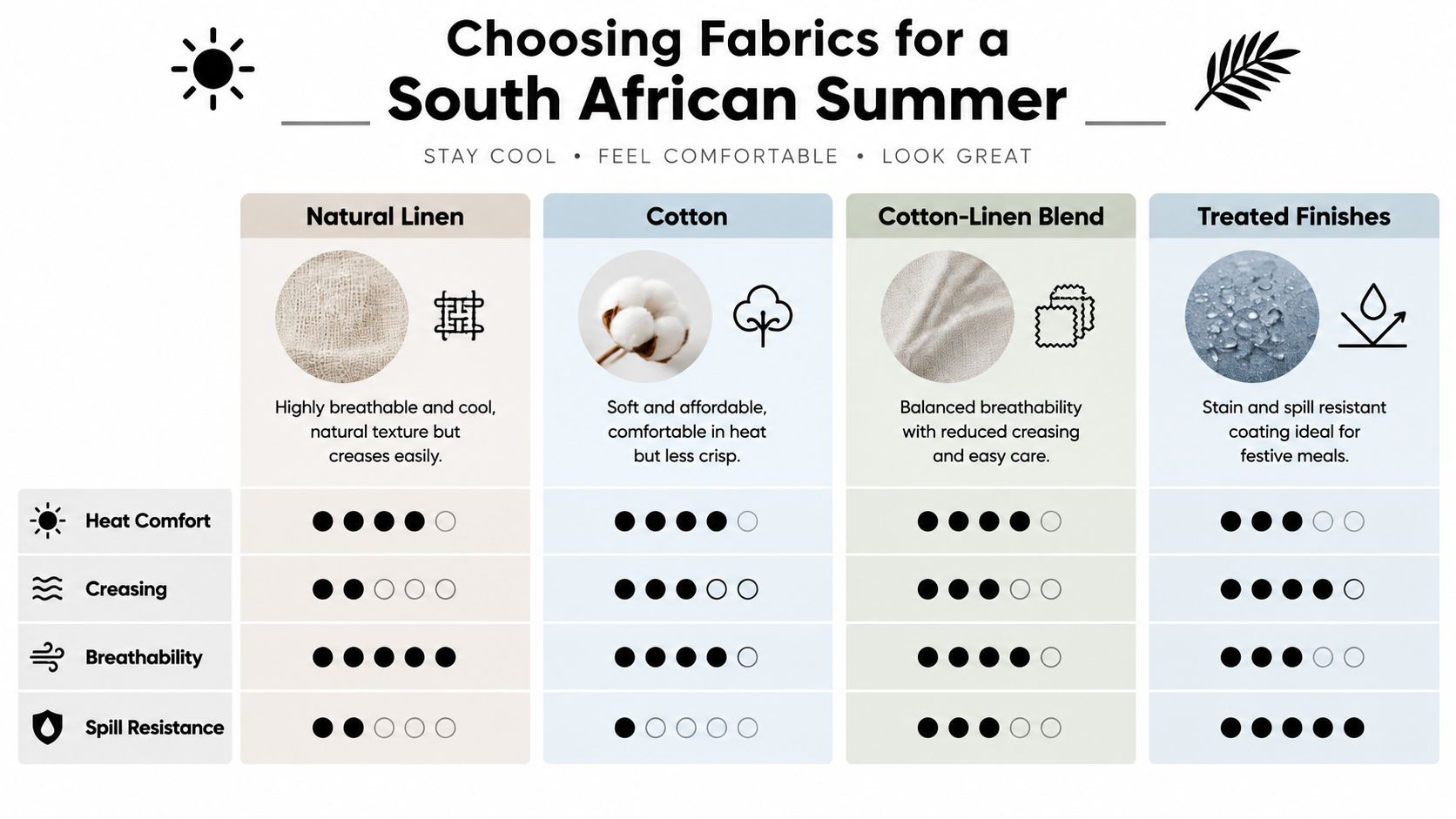
Natural linen has a relaxed, breathable feel and a visible texture that suits timber tables, farm venues and coastal settings. Its relaxed creasing can look intentional, especially at a daytime lunch where polished formality would feel out of place. It does, however, require a host who accepts a softer finish rather than expecting a perfectly smooth surface.
Linen also needs careful handling. Local care guidance recommends low or lukewarm washing, a gentle cycle, mild detergent and enough space for the cloth to move freely. Washing above 40°C can cause shrinkage, while line-drying or low-heat drying helps reduce fibre stress and colour fade, according to Mungo's linen care guidance.
Cotton
Cotton feels soft and familiar, making it a practical choice for family lunches and informal celebrations. It can absorb small spills, but that same absorbency means stains need attention rather than being left until the next day. Cotton can also lose its crisp appearance sooner than a smoother blend, particularly when the table is used outdoors and the cloth is handled repeatedly.
Cotton-linen blends
A cotton-linen blend offers a middle ground. You still get some natural texture and breathability, but the cloth may be easier to manage than pure linen. This makes it useful for a host who wants a relaxed summer appearance without accepting every crease that comes with a fully natural linen surface. Ask about the care label and test how the cloth looks after washing before using it for an important event.
Treated finishes
Treated or coated finishes can help festive meals withstand splashes from gravy, juice and wine. They're especially useful for large groups, children's tables and outdoor service, where a quick wipe can prevent a small spill from becoming a permanent mark. Check whether the finish changes the hand-feel or washing instructions, because spill resistance doesn't remove the need for proper laundering.
| Fabric choice | Summer feel | Creasing | Best suited to |
|---|---|---|---|
| Natural linen | Cool and textured | More visible | Elegant relaxed lunches and vineyard tables |
| Cotton | Soft and familiar | Moderate | Family meals and casual entertaining |
| Cotton-linen blend | Balanced and adaptable | Usually easier to manage | Hosts wanting texture with simpler care |
| Treated finish | Practical at spill-prone meals | Depends on the base fabric | Outdoor events and larger guest groups |
For a more detailed look at a related table-surface option, see ABC Hire's guide to woven table mats. The same principle applies to every fabric decision: match the material to the weather, the menu and the amount of washing you can realistically manage.
Finding Your Festive Colour Palette and Pattern
Begin with the surface that will occupy the most visual space. White, ivory or natural linen gives you a quiet background, much like a pale wall behind artwork. It reflects summer light, photographs cleanly and allows greenery, crockery and flowers to provide the Christmas signals.
Build the palette in layers
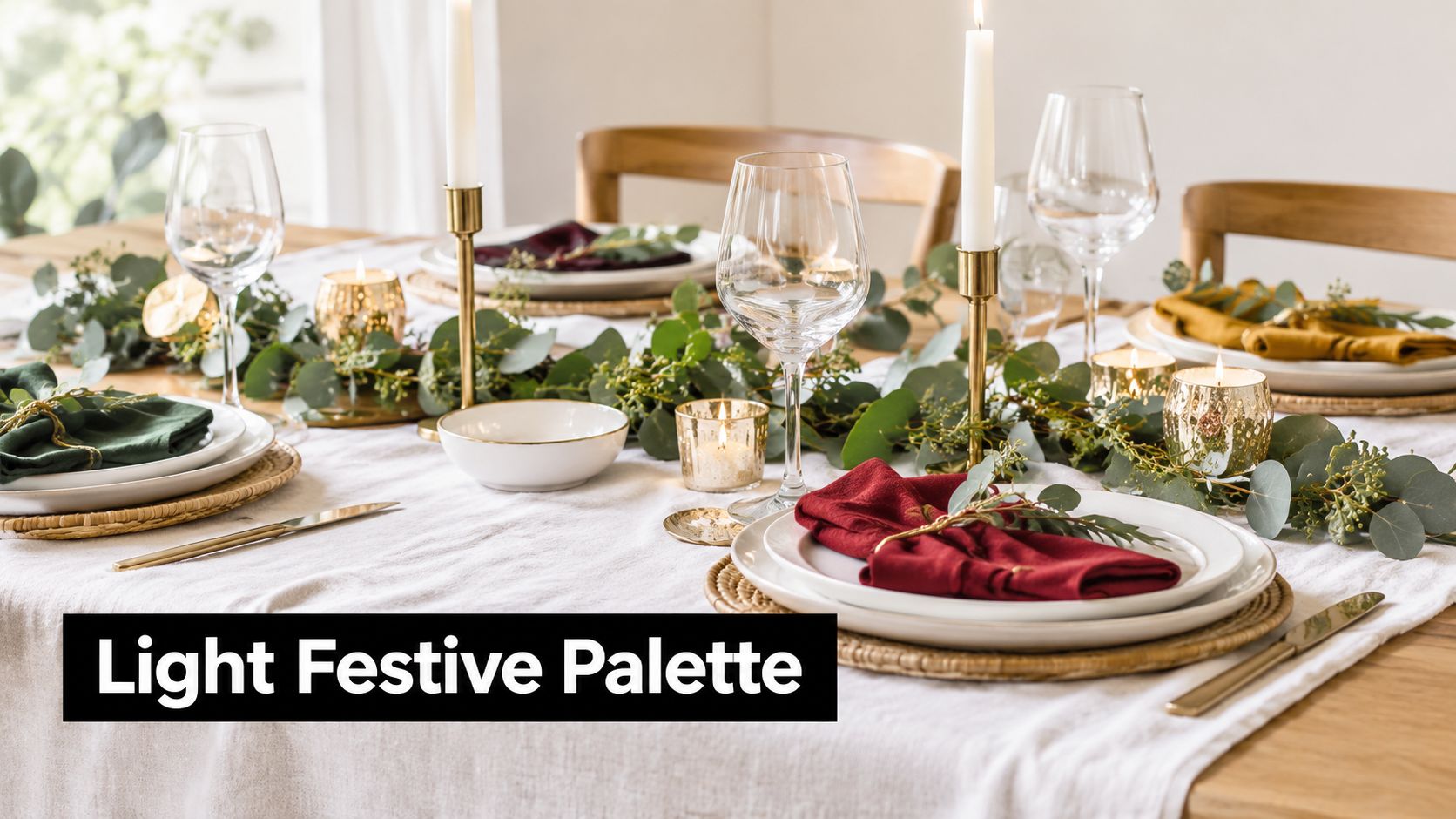
Choose one base, one seasonal colour and one supporting accent. A coastal table might use white linen, soft eucalyptus green and a muted terracotta or berry red. A Winelands table could pair natural flax, olive foliage and warm burgundy, while a modern Cape Town setting might use white, deep green and brushed metallic details.
The seasonal colour doesn't need to cover the whole table. Use it in napkins, a runner border, place cards or a few flowers. This keeps the setting festive without making the cloth the loudest guest at the table.
Match colour to light
Daylight reveals texture and pale colour, so natural shades and soft greens work beautifully for lunch. Evening light allows deeper reds, green napkins and restrained metallic accents to show more clearly, particularly beside warm candlelight. If your table moves from afternoon into evening, select a base that looks fresh in sunlight and add removable accents later.
Patterns need similar discipline. A botanical print can echo garden surroundings, while a small check or stripe adds structure to plain crockery. If the cloth already has a strong motif, keep the napkins simple. If the base is plain, a patterned napkin can provide the seasonal detail without crowding the table.
Use the surroundings as part of the palette
A vineyard, garden or coastal terrace already supplies colour. Take a cue from the setting instead of fighting it. Greenery can connect the table to the surrounding area, while pale linen keeps the arrangement from becoming visually heavy.
A useful test is to place the cloth, napkin and one plate together before buying multiples. View them in the actual event space, first in daylight and then under the intended evening lighting. If the combination looks calm before flowers and glassware arrive, it will usually remain balanced once the table is complete.
How to Layer and Style Your Christmas Table With Confidence
A bare table becomes easier to style when you work from broad surfaces to small details. Don't begin with candles or ornaments. Start with the layer that controls the table's proportions.
Dress the surface first
Lay the tablecloth evenly, checking that the drop looks balanced on every side. Outdoor tables often sit on uneven paving, so smooth the cloth from the centre outward and secure it discreetly if wind is likely. Avoid allowing excess fabric to pool where guests may catch it with a shoe.
Add the runner next. Keep its direction aligned with the table unless you deliberately want crosswise runners for individual place settings. The runner should guide the eye towards the centrepiece, not compete with it.
Define each place
Place a placemat or charger at every seat, then set the dinner plate on top. Napkins can sit beside the plate, across it or inside a glass, depending on the formality of the meal. A simple fold often works better outdoors because elaborate folds can lose their shape in a breeze.
Leave enough open space for shared dishes and serving utensils. Guests need to pass bowls, reach for bread and place a glass down without disturbing the linen. The table should look composed, but it still needs to behave like a working surface.
Finish with the centre
Keep the centrepiece low enough for conversation. Greenery, seasonal fruit and small candleholders create interest without blocking sightlines. For more ideas on proportions and focal points, explore these stylish dining ideas from Everti.
If the event has a long table, repeat a simple visual rhythm instead of placing one oversized arrangement in the middle. Small clusters can be moved when food arrives, and they create a sense of continuity from one end to the other. ABC Hire's table centrepiece guide can help you think through the relationship between linen, flowers and table shape.
Outdoor check: Test the finished table with a breeze, a serving platter and a guest pulling out a chair. A beautiful arrangement that shifts, catches or blocks service needs editing.
Deciding Whether to Buy or Hire Christmas Table Linen
A Christmas lunch on a sunny Cape Town patio may use linen for only one day, while a family host may bring the same cloth out for future lunches. That difference should guide the choice more than the label on the fabric. Also consider the heat, outdoor spills and storage space involved after the guests leave.
Buying gives you control over the exact colour, fabric and size. It can suit hosts who entertain regularly or want a consistent look for future celebrations. Before ordering, see this guide to table linen for sale for sizing and fabric tips. The purchase price is only one part of the calculation. Washing, pressing, storage and replacing stained pieces also take time or money.
Hiring works like borrowing equipment for a once-off event. It can be practical for a wedding, brand event, venue function or large Christmas gathering that needs matching cloths and napkins without leaving you with a cupboard full of textiles. ABC Hire offers tablecloths and napkins through its linen service, with guidance on table shapes and drop lengths. Confirm availability, fabric, colour, sizing, delivery and collection before finalising the table plan.
| Decision Factor | Buy | Hire from ABC Hire |
|---|---|---|
| One-day event | You keep the linen afterwards | Useful when future reuse is uncertain |
| Repeated celebrations | Reuse can make the purchase worthwhile | Convenient when styles change |
| Storage | Needs clean, dry cupboard space | No long-term home storage |
| Washing and ironing | Your responsibility after spills | Check return and care requirements |
| Stain or damage risk | You pay for replacement | Confirm the supplier's damage terms |
| Large guest list | You must source matching pieces | Can simplify matching stock |
| Custom styling | You keep the chosen pieces | Choose from available colours, fabrics and drops |
Count the work after lunch
Buying can appear cheaper until the table is cleared. Allow for sorting stained cloths, washing them according to their care instructions, drying them fully, ironing them and folding them without sharp creases. Outdoor meals can add grass, sunscreen, food and drink marks, so a low purchase price does not remove the maintenance task.
Hiring reduces that home workload, but it brings its own checks. Ask who handles marks, what happens if a piece is damaged, and when the linen must be returned. For a business replacing stock at scale, fibre composition and import classification may also affect purchasing decisions. Table linen falls within HS 6302 in South African tariff references, including a cotton table-linen subheading, as outlined in the South African HS classification reference. For a private host, the practical test remains simple: compare the full cost, effort and storage burden with how often you will use the linen again.
Caring for Your Linen and Keeping It Beautiful Year After Year
Good care starts before the cloth reaches the washing machine. Remove food scraps, separate dark or strongly coloured pieces from pale linen, and deal with spills according to the fabric's care instructions. Don't leave damp, stained linen sealed in a bag after an outdoor event, because trapped moisture can make marks and odours harder to remove.
A simple post-event checklist
- Clear gently: Shake off crumbs outdoors and lift cutlery rather than dragging it across the cloth.
- Sort early: Separate whites, colours, delicate trims and pieces with special finishes.
- Wash carefully: Use a low or lukewarm temperature, mild detergent and a gentle cycle. Avoid overloading so the fabric can move freely.
- Dry with restraint: Line-dry where possible or use low heat to reduce fibre stress and colour fade.
- Store completely dry: Fold clean linen loosely and keep it in a dry, ventilated cupboard away from direct sunlight.
If a cloth has a serious wine, oil or candle-wax mark, professional cleaning may be safer than aggressive home treatment. A service such as Tumble Laundry drycleaning illustrates the type of specialist option hosts can consider for delicate or heavily marked textiles, although you should always confirm that the service accepts your particular fabric and finish.
For hired linen, follow the supplier's return instructions rather than applying your own stain products. For owned pieces, record which cloths worked well outdoors, which colours faded and which fabrics needed the most pressing. That short note will make next summer's planning faster and protect the value of what you already have.
The most sustainable linen is the linen you can care for, store and reuse confidently.
A calm summer table doesn't require heavy winter styling. It needs a suitable base, a controlled palette, sensible layering and a care plan that begins before the first guest arrives.
ABC Hire provides tablecloths and napkins for event table dressing, with options suited to functions in Cape Town and the Winelands. Visit ABC Hire to review the available event-hire options and enquire about linen for your Christmas celebration.