How to Choose a Trestle Table Cloth That Fits

You're standing in a Cape Town venue with the tables delivered, the florals ready, and a stack of cloths that looked “about right” in the catalogue. Then the first cloth goes on. The trestle legs show, the front edge hangs unevenly, and the wedding breakfast suddenly looks like a warehouse setup.

A trestle table cloth is easy to choose once you stop guessing. Start with the standard local footprint, about 180 cm long, 76 cm wide, and 76 cm high, then decide whether you want a practical half-drop or a formal full-drop. From there, fabric, finish, laundering, and hire-day handling become straightforward decisions.

Why the Right Trestle Table Cloth Matters

A standard trestle table gives you a useful starting point. South African event guidance commonly uses a rectangular trestle measuring 180 cm by 76 cm, with a height of 76 cm. That fixed footprint means your main styling decision isn't the table itself. It's the amount of fabric you want falling from the tabletop.

A short cloth can work on a buffet where guests need clear access to the frame, but it can look unfinished on a formal dining table. If the cloth stops high above the floor, guests may see folding legs, braces, or uneven table edges. A longer cloth hides the structure and makes the table read as one deliberate surface.
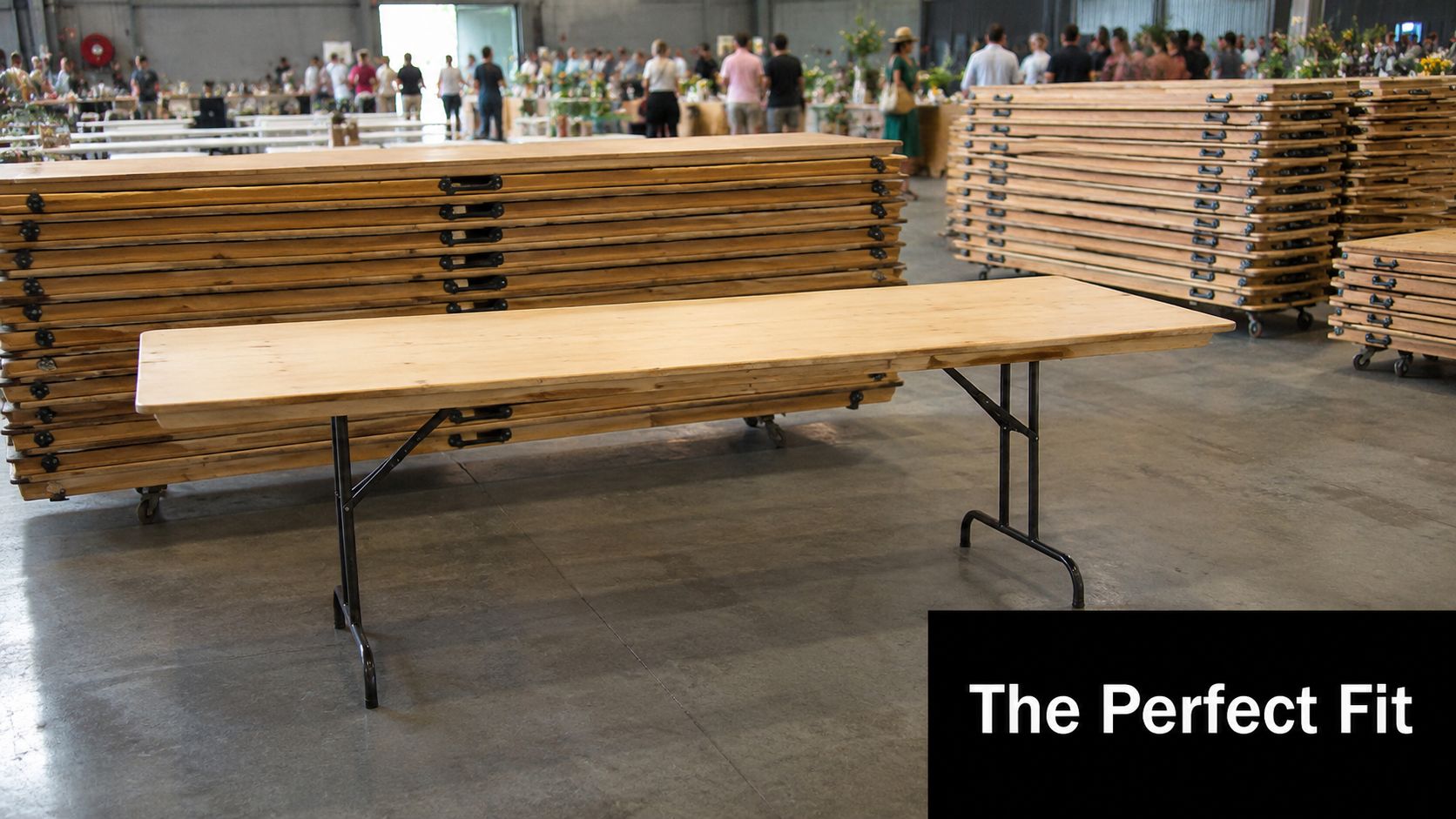
A wooden trestle table set up in a warehouse with stacks of folded tables in the background.

Start with the table, not the catalogue

Measure the tabletop, choose the drop, and only then select a cloth. The common mistake is buying a nominal “banquet” cloth without checking how it will sit on your actual trestle. A cloth that looks generous on a round table can expose the folding frame on a rectangular one.

For Cape Town weddings, corporate functions, and school formals, I'd make the drop decision before spending time on colour or overlays. A half-drop keeps the setup practical and gives chairs and guests better clearance. A full-drop creates a cleaner formal line and photographs better from the side.

If you're arranging tables through a local supplier, you can also review ABC Hire's trestle table hire guide to confirm the table type before ordering linen. The cloth must follow the table you're receiving, not the table you assumed was in the booking.

Practical rule: If guests will see the long side of the table in photographs, choose the drop for that view first.

South African sizing guidance gives roughly 40 cm of side drape as a minimum and about 15 cm per side as a tighter modern maximum, with end drape ranging from approximately 50 cm to 30 cm depending on the intended look. Local table-linen sizing guidance reinforces the important point: fit depends on the table footprint and the target drape, not the label on the packaging.

Measuring Your Trestle Table the Right Way

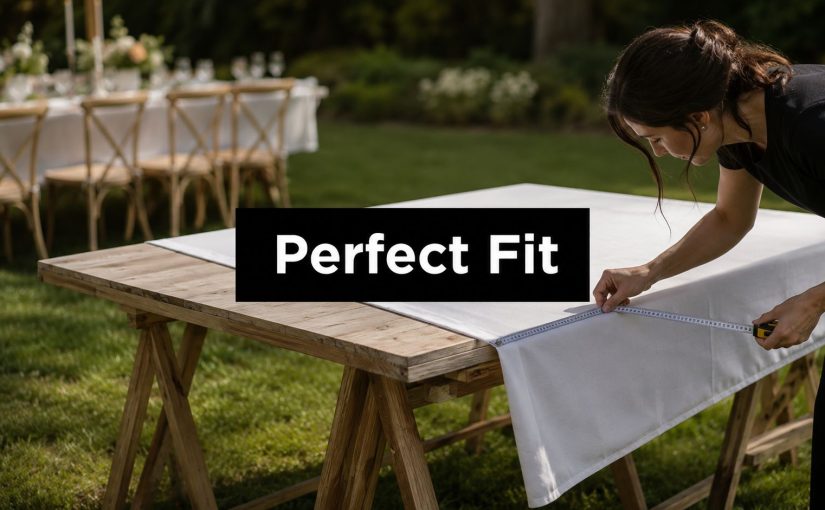
Take a steel tape measure to the venue or warehouse. A fabric tape can stretch and leave you working with an inaccurate measurement, especially across the long edge. Measure the tabletop only. The legs, braces, and folding mechanism don't belong in the cloth calculation.

For the common Cape Town hire trestle, record:

  • Table length: 180 cm
  • Table width: 76 cm
  • Table height: 76 cm

Write those figures down with the event name. Don't rely on memory at load-out, particularly when several table styles are being collected at the same time.
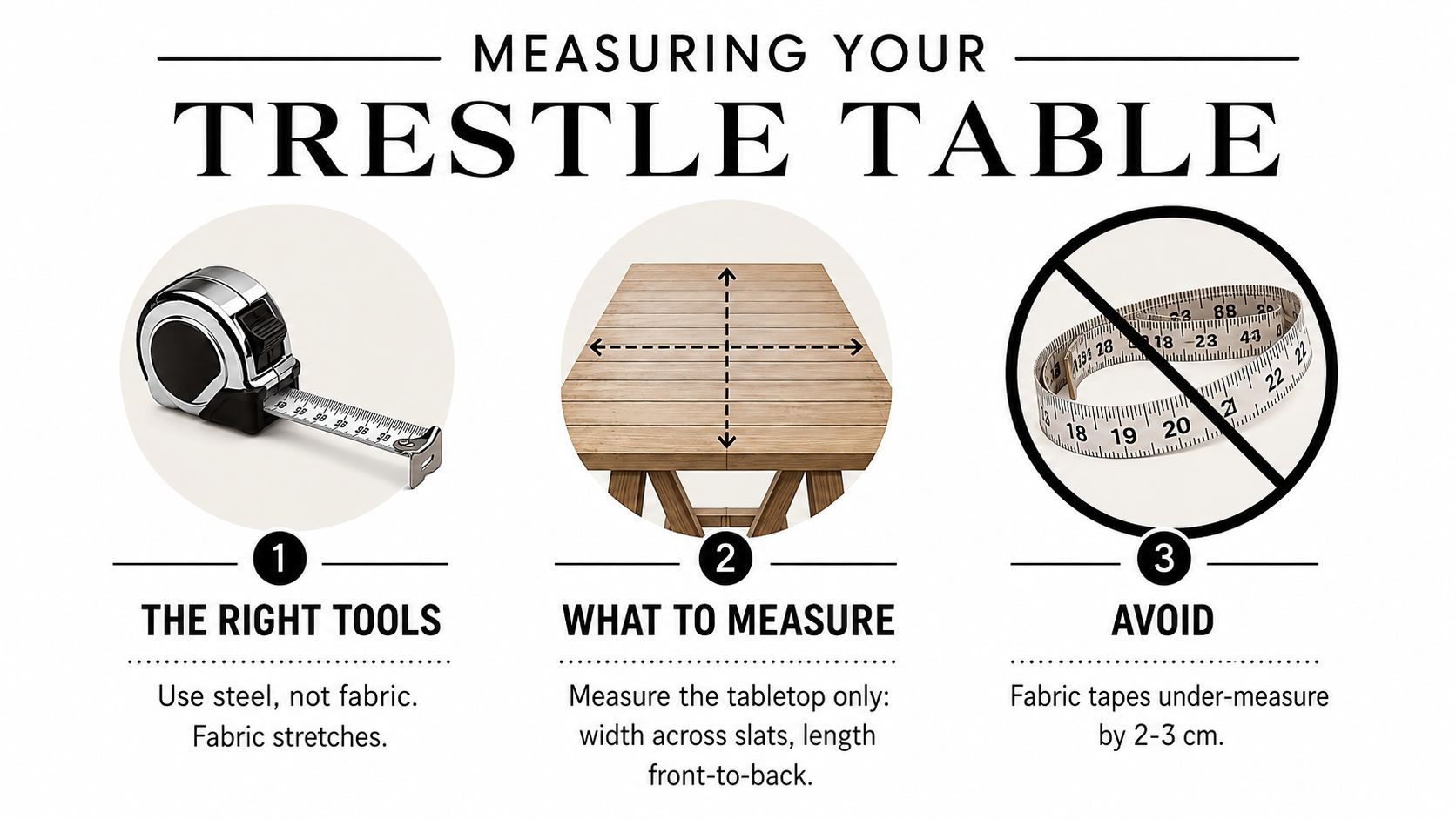
A guide on how to measure a trestle table correctly using a steel tape measure.

Add the drop twice

The basic formula is simple:

Required cloth width = table width + twice the side drop

Required cloth length = table length + twice the end drop

If you want a side drop of about 30 to 35 cm, add that amount to both long sides. For a floor-skimming look, plan for approximately 72 to 75 cm from the tabletop edge to the hem. South African guidance also places a practical minimum side drape around 40 cm, while tighter styling can use a shorter fall. The local size guide is useful when your calculated measurement sits between standard stock sizes.

A cloth around 140 x 250 cm is mapped locally to tables approximately 60 to 110 cm wide and 150 to 190 cm long. A larger 165 x 400 cm cloth suits tables around 85 to 135 cm wide and 300 to 340 cm long. Those ranges are benchmarks, not permission to skip measuring.

Allow for the job the cloth must do

A made-to-order cloth needs seam and hem allowance. A hire cloth needs enough tolerance to survive handling, movement, and repeated laundering. Confirm the finished measurement with the supplier, because the advertised cut size may not equal the usable finished size.

Avoid measuring around the legs. That adds fabric where it won't improve the drape and can create unnecessary bulk. Measure the top, select the fall, calculate both dimensions, then compare your result with the nearest available standard size.

Choosing a Fabric and Finish That Works

The right fabric depends on the event, the laundry process, and the venue lighting. Don't choose linen because the word sounds premium, or polyester because it sounds purely practical. Each fabric creates a different surface, fold, and photograph.

Fabric Typical Hire Cost Crease Recovery Wash Cost On-Camera Look
Polyester satin Usually the most economical hire option Recovers reasonably well with careful steaming Generally economical for routine event laundering Slight sheen, modern, can catch warm uplighting
Cotton Usually a mid-range option Creases readily and needs more pressing Higher handling demand than basic polyester Matte, soft, well suited to rustic and boho styling
Linen Usually the premium option Natural creasing is part of the look Requires careful handling and specialist pressing Textured, relaxed, refined, especially for formal tables

Polyester earns its place

For a large corporate setup or a rental stockroom, polyester satin is the dependable workhorse. It holds colour well and gives planners a consistent finish across multiple bookings. Steam it carefully, and it can look crisp without demanding the same pressing time as a natural fibre.

The trade-off is shine. Under warm venue lighting, satin can reflect bright patches or look more contemporary than intended. Test a sample under the actual lights if the table will sit beneath amber uplighting or strong spotlights.

Cotton and linen need a clear brief

Cotton gives you a flatter, more muted surface. That makes it a strong choice for farm weddings, vineyard dinners, and natural styling where a glossy cloth would feel out of place. It also creases more readily, so allow time for pressing and transport protection.

Linen has the most distinctive fall and texture. Slight wrinkles can look intentional, but deep transport creases don't. For an outdoor section, ask whether the cloth has a soil-release finish, especially where red wine, coffee, or rooibos will be served. Untreated natural fibres can hold stains stubbornly.

For a broader local comparison of sizing and hire considerations, use ABC Hire's table-cloth hire guide. My recommendation is direct: choose polyester for volume and consistency, cotton for a matte styled look, and linen when texture is central to the design and the laundry plan is already in place.

Half-Drop or Full-Drop for Your Event

Choose the drop according to how the table will be used. A half-drop of roughly 30 to 40 cm is practical for buffets, conference lunches, school formals, and setups where chairs need to slide tightly beneath the tabletop. It leaves the lower structure more accessible and reduces loose fabric around feet.

A full-drop falls close to the floor, usually around 70 to 75 cm on a standard-height trestle. It conceals the frame and creates a strong vertical line along the long side. That's the look I'd choose for a wedding head table, cake table, registration desk, black-tie setting, or brand activation where the table acts as part of the visual backdrop.

Event Scenario Recommended Drop Reason
Buffet or serving station Half-drop Keeps access practical and avoids fabric interfering with service
Corporate lunch Half-drop Gives guests and staff clearer leg space
School formal or matric dance Half-drop or full-drop, depending on the table's role Half-drop suits active service tables, while full-drop suits display tables
Wedding head table Full-drop Hides the trestle frame and creates a formal photographed edge
Cake or gift table Full-drop Makes the table a clean visual feature
Registration desk Full-drop Conceals storage and equipment beneath the table

Why I avoid the middle ground

A mid-drop between approximately 45 and 60 cm often looks accidental. It doesn't give you the practical openness of a half-drop, and it doesn't create the anchored floor-length line of a full-drop. The hem can sit awkwardly against chair seats and make the table look underdressed.

For broadside viewing, such as a buffet or presentation row, choose half-drop. For a table that faces the room as a feature, choose full-drop. Check chair clearance before confirming the order, particularly when the venue supplies bulky banquet chairs.

Use table overlays from ABC Hire when you want to add colour or contrast without changing the base cloth's main function. Keep the base cloth disciplined. An overlay should add structure, not distract from an unresolved drop.

Fitting, Caring for, and Storing the Cloth

Fit the cloth before the tables leave the warehouse. Place the seam parallel to the table length, then centre the cloth so the overhang matches on both long sides and both ends. If the cloth shifts during transport, clips or discreet pegs can hold the excess without creating visible bunching.

A useful fit check is to stand at the end of the trestle and look down the long edge. The hem should run consistently, the corners should hang at matching heights, and the seam shouldn't cut across the table in an obvious direction.
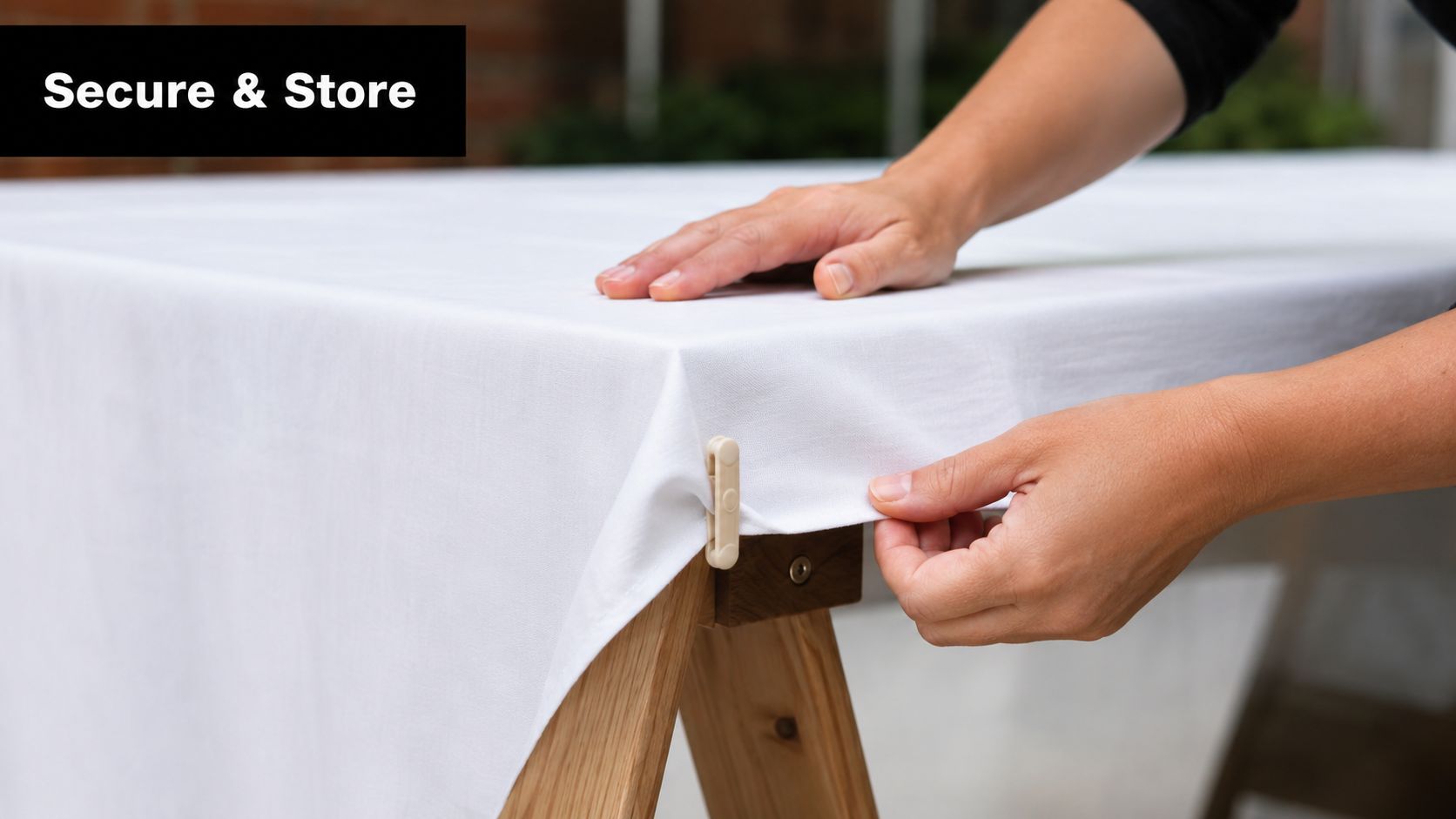
A person securing a white tablecloth onto a wooden trestle table using a small plastic clip.

Follow the label, not appearance

South African textile procurement documentation expects care-labelling compliance under the Consumer Protection Act and the national care-labelling standard, with permanent wash-care symbols and instructions aligned to SABS 011 and SANS 10011-style requirements. The Mr Price Group quality manual also highlights why fibre classification matters before laundering.

Use this sequence:

  1. Identify the blend. Confirm whether the cloth is polyester-rich, cotton-rich, linen-rich, or a mixed fabric.
  2. Read the permanent label. Match the wash temperature, agitation, bleach, drying, and ironing instructions.
  3. Separate by fibre behaviour. Don't process every cloth together because all the pieces are white.
  4. Test the cycle. Run repeated wash checks before putting a large batch into hire rotation.

Cellulose fibres can weaken under excessive agitation and chlorine bleach. Protein fibres can suffer from alkaline chemistry and heat. Treat the laundering process as part of stock control, not an afterthought.

Store for the next booking

Shake crumbs off outdoors before sorting stained cloths. Fold along established creases, wrap clean stock in breathable cotton sheeting, and store it flat in a dry, ventilated cupboard. Avoid leaving folded linen in a hot vehicle or sealed container, because heat and pressure can deepen creases and encourage stale odours.

Rotate the stock. If the same cloth always sits on the outer edge of a stack, that edge will take more handling damage than the rest. Record stains, pulled threads, and damaged hems before the items return to circulation.

Quick Hire-Day Checklist and Common Questions

Use the morning of delivery to check the cloths against the brief, not just against the invoice. Confirm the quantity for each table run, verify the selected drop, and inspect the fold lines under good light. Stains often show first where fabric has been folded tightly or stored against another piece.
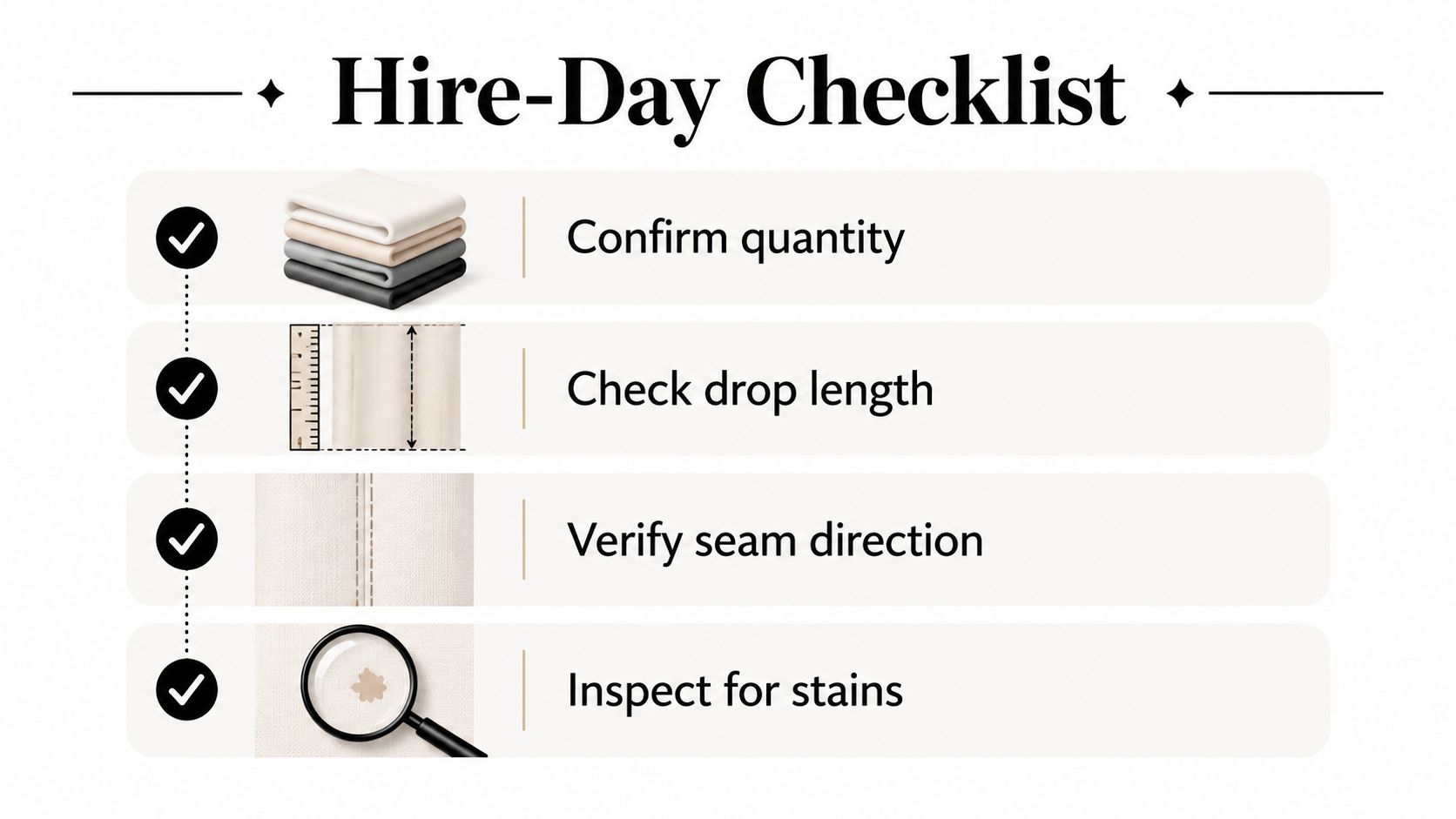
A Hire-Day Checklist infographic featuring four steps: confirm quantity, check drop length, verify seam direction, and inspect for stains.

The handover check

  • Confirm quantity: Match the cloth count to each table length and identify any pieces allocated to the head table or registration desk.
  • Check drop length: Put one cloth on the actual trestle before loading the rest. A catalogue image can't confirm the finished fall.
  • Verify seam direction: Keep the seam parallel to the long edge so the table looks balanced from the room.
  • Inspect for stains: Look at hems, corners, and fold lines before signing for the hire.
  • Pack clips and spares: Keep the fastening pieces with the linen, and carry replacement cloths for last-minute swaps where the budget allows.
  • Record return condition: Count clips, note damage, and separate food-stained pieces before the stock goes back into rotation.

Questions planners usually ask

Will a 180 x 230 cm cloth fit one standard trestle at full-drop? It can suit a single 76 cm-wide trestle for a full-drop arrangement, but confirm the table length, finished cloth dimensions, and desired hem position with the supplier before ordering.

Can two cloths cover a longer banquet run? Yes, they can overlap at the centre, provided the colour and finish match closely. Ask for pieces from the same dye batch where colour consistency matters.

Can I use chlorine bleach on polyester? Don't. Follow the permanent care label and use a suitable oxygen-based brightener where the fabric instructions allow it. Chlorine can damage fibres and create uneven results.

Why does white linen look blue in photographs? Coloured uplighting changes the appearance of white fabric. Test a swatch at the venue, under the actual lighting, before approving the full order.

What should the hire agreement include? Confirm the replacement cost per cloth and any cleaning surcharge for food stains. That removes an unpleasant argument after the event.


ABC Hire can help you match tables, cloths, and practical event accessories for weddings, corporate functions, school formals, and private celebrations across Cape Town and the Winelands. Visit ABC Hire with your table dimensions and preferred drop, and ask the team to help you plan the correct hire combination before delivery day.
Linens and Tablecloths for Events: A Complete Styling

You've chosen the venue, confirmed the menu and spent hours refining the colour palette. Then the first tablecloths arrive at a Winelands venue, and the fabric is creased, the drop is too short and the white napkins are packed with dark linen. By the time guests arrive, the styling team is solving a laundry problem instead of finishing the tables.

That situation is avoidable. Linens and tablecloths are both a design decision and an operations decision. The fabric must suit the venue, the colour must work with lighting and photography, the size must fit the furniture, and the rental partner must manage laundering, inspection and transport with discipline. Cape Town events move between hotels, farms, schools, marquees and coastal venues, so a linen plan that looks good on paper can still fail during setup.

Why Linen Choices Define Your Event Atmosphere

At a bright wedding venue in Stellenbosch, a crisp ivory cloth can make timber furniture look polished and let floral arrangements take centre stage. At a Cape Town product launch, a charcoal cloth may give branded signage more contrast and make LED furniture feel intentional rather than playful. The table covering changes the visual weight of the room before a guest notices the crockery.

That's why I advise clients to choose linens before they finalise smaller styling details. Fabric affects how candlelight reflects across the table, whether a napkin holds a fold and how much visual space a centrepiece appears to occupy. A heavy cloth creates a grounded, formal look. A lighter layer can feel relaxed, but it also shows creasing and movement more readily during delivery and setup.

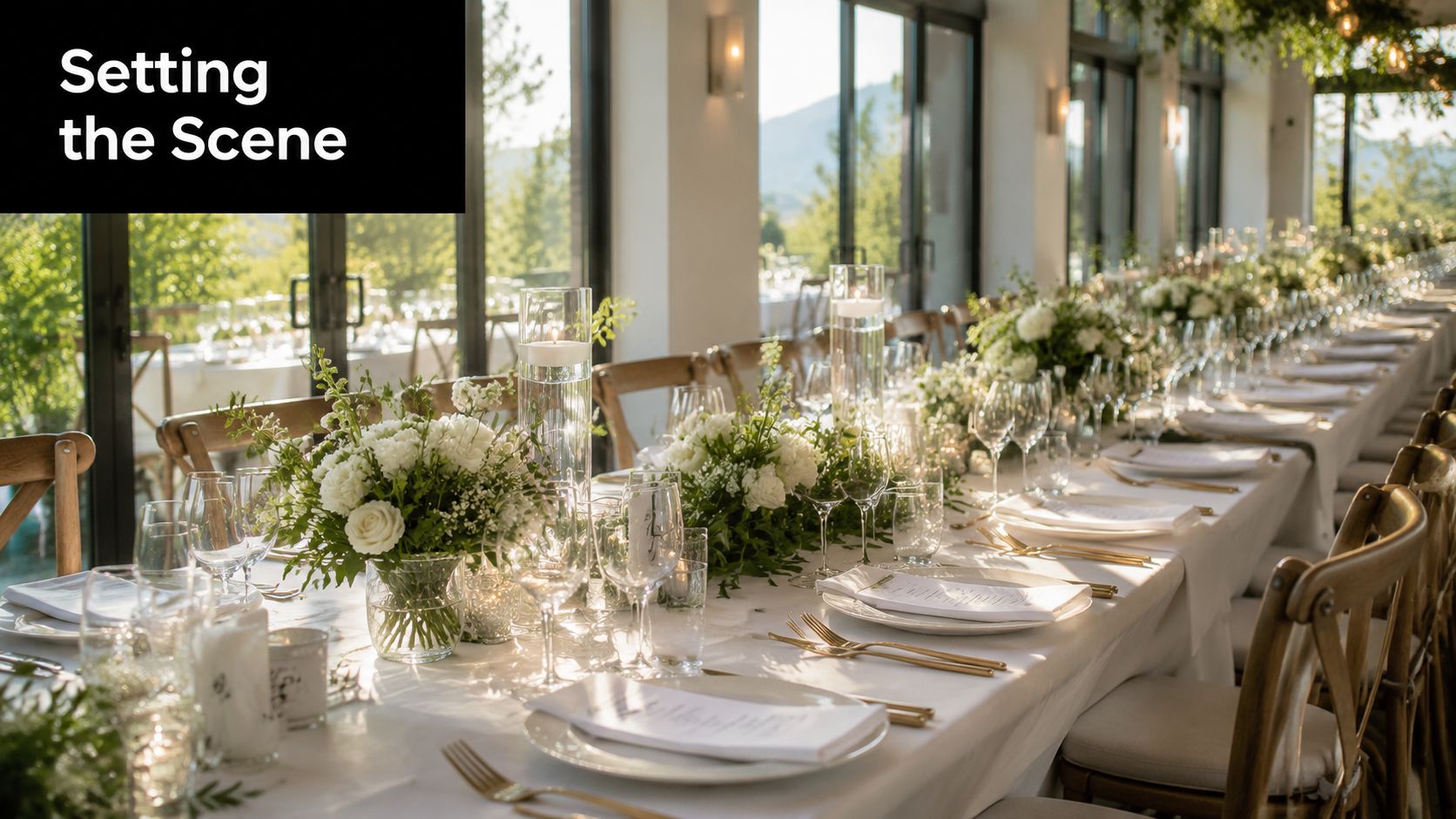
An elegant wedding dinner table setting featuring white floral arrangements, candles, and gold cutlery in a bright room.

Treat the table as a complete composition

A cloth doesn't work in isolation. It sits beneath crockery, glassware, cutlery, stationery, florals and lighting, while the table itself may be timber, white, clear acrylic or illuminated. Before approving a colour, place a fabric sample beside the actual chairs, charger plates and centrepiece materials.

For planners working through the wider tabletop concept, ABC Hire's guidance on decor for the table is a useful companion to the linen decision. The practical question isn't whether a cloth is attractive in a catalogue. It's whether the cloth supports the entire setting at the venue.

Colour decisions should survive the room

A pale neutral can look warm under daylight and grey beneath cool venue lighting. Black can create strong contrast, but it also makes lint, dust and marks easier to see. Saturated colours may suit a brand activation, while a wedding palette usually benefits from one dominant linen colour and a restrained accent through napkins or runners.

I've seen couples change their chair styling because the linen was selected too late. That creates unnecessary cost and pressure. Choose the base cloth early, test it in the venue's light and then build the rest of the table around it.

Practical rule: If the linen sample only looks right in a phone photo, it hasn't been tested properly.

Choosing the Right Fabric and Colour for Your Event Type

Start with the venue and the handling conditions, not the mood board. A farm reception, ballroom dinner and evening gala place different demands on drape, crease resistance, sheen and stain visibility.

Match the fabric to the job

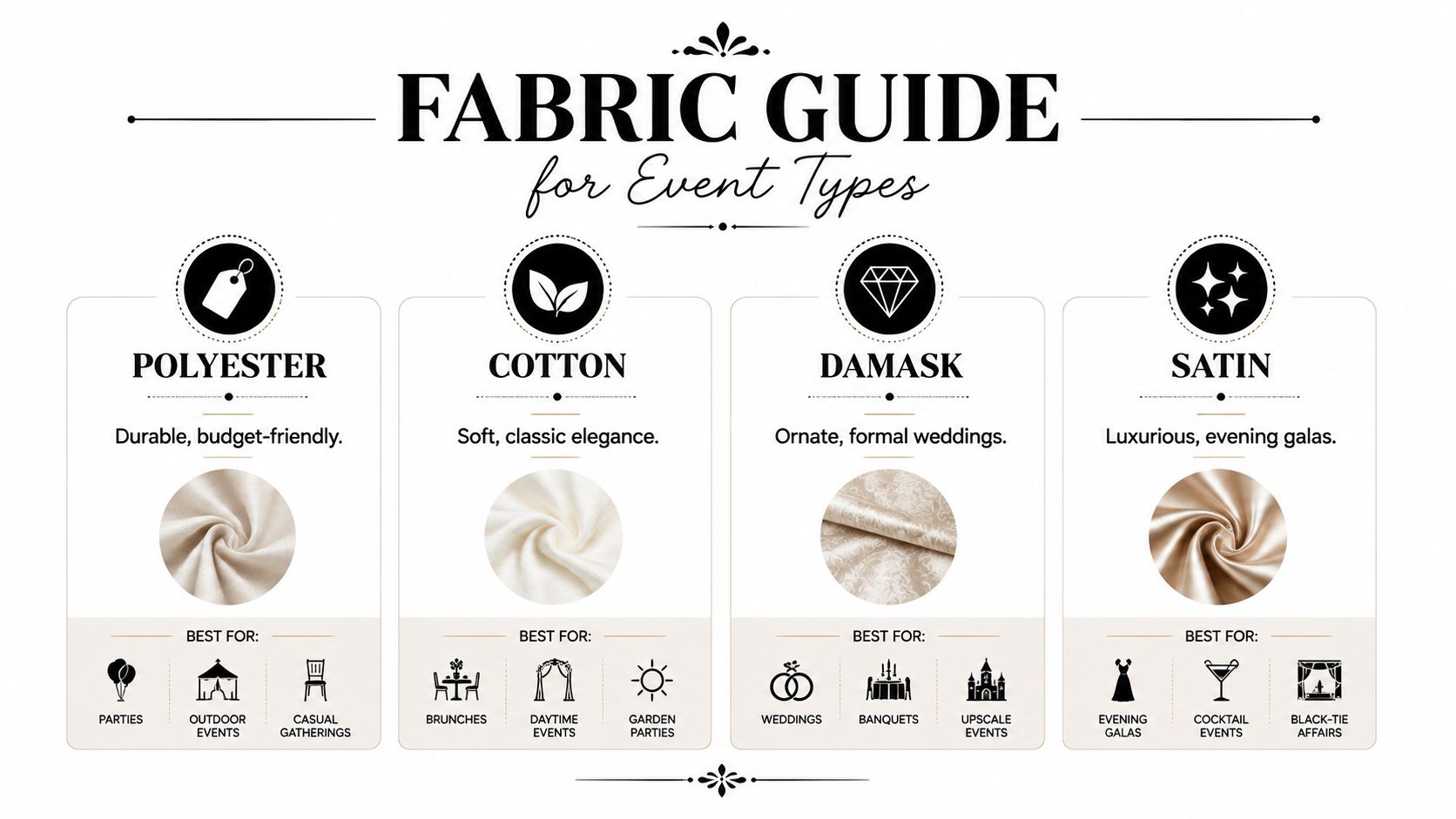
Polyester is the dependable workhorse for large weddings, school functions and outdoor catering. It tolerates repeated handling, offers consistent colour and is usually easier to manage when tables must be dressed well before guests arrive. It's a sensible choice for long summer setups in Stellenbosch or Franschhoek, where wind, transport and extended installation can expose creases.

Cotton has a softer, more natural appearance and suits relaxed weddings, vineyard lunches and settings built around timber, ceramics and seasonal florals. It can look beautifully understated, but its texture and crease behaviour need to be checked before hire. Ask to see the actual rental stock, not just a studio image.

Damask brings a woven pattern and formal presence without relying on a bright sheen. It works well for refined weddings, gala dinners and venues with traditional architecture. Keep the surrounding décor quieter, because an ornate cloth already provides visual detail.

Satin reflects light and creates a more theatrical finish for evening galas, matric dances and milestone celebrations. It can pair effectively with LED furniture, but colour-changing lights may exaggerate its shine. Test the cloth under the exact lighting programme where possible.

Organza and lace are best treated as overlays, not universal base cloths. They add softness and dimension over a stable foundation, particularly for weddings, but they can look fussy if combined with patterned crockery, elaborate florals and highly reflective furniture.

A fabric guide infographic detailing suitable uses for polyester, cotton, damask, and satin linens for various event types.

Build colour around light and photography

For a corporate event, begin with the brand palette, then choose a linen tone that supports signage rather than competing with it. For weddings, warm whites, stone, muted greens and deeper neutrals tend to give photographers flexibility across daylight and candlelit portions of the event. That doesn't mean every wedding needs a neutral cloth. It means the colour must be tested beside skin tones, flowers and the venue's existing finishes.

Black linens deserve deliberate styling rather than automatic approval. ABC Hire's guide to black tablecloths can help you assess whether the contrast suits your furniture and décor. Use black when you want structure and contrast, and specify lint inspection as part of the rental conversation.

A useful test: Lay the fabric beside the napkin, plate and centrepiece under daylight, warm indoor light and the venue's coloured lighting. If one element dominates every test, simplify the combination.

Sizing, Layering and Pairing Linens with Event Furniture

A tablecloth should follow the table's proportions and the event's formality. Don't order from the guest count alone. Confirm the table diameter or the length and width, then decide how far the cloth should fall from the edge.

For a formal dinner, a longer drop creates a finished, grounded appearance. For a casual lunch or a setup where guests need clearer legroom, a shorter drop can be more practical. The calculation is straightforward: add twice the desired drop to the relevant table measurement. For a rectangle, apply the drop to both length and width. For a round table, add it twice to the diameter.

Compare the main configurations

Table Type Recommended Drop Length Layering Suggestion Best For
Round banquet Formal floor-length or a controlled shorter drop Base cloth with a contrasting napkin Weddings and gala dinners
Rectangular dining Moderate to long drop, depending on chair clearance Base cloth with a centred runner Corporate dinners and long-table receptions
Cocktail table Short fitted cloth or tailored cover Minimal layering, use a branded napkin or small accent Launches and networking events
Trestle table Long drop with careful corner alignment Base cloth with a narrow runner or restrained overlay Buffets, school functions and family celebrations

For a more detailed sizing reference, use this guide to table overlays while comparing your measurements with the rental company's stock. A cloth that is technically close in size may still sit badly if the table has an unusual thickness, folding mechanism or support structure.

Layer with restraint

Layering works when each piece has a clear role. A plain base cloth can support a textured runner, while a tonal overlay can add depth without introducing another competing colour. Napkins are the easiest place to bring in a secondary shade because they occupy less surface area and can be changed without replacing every table covering.

LED cube tables and illuminated cocktail tables need special care. A bright blue or magenta light under a glossy satin cloth can produce an unintended colour cast, while a matte neutral may diffuse the effect more evenly. Curved LED benches usually work better with clean, simple table linen nearby, because the furniture already supplies a strong shape.

For matric dances and brand activations, choose the lighting programme before the final linen approval. A palette that works under static warm light may clash once the furniture changes colour. The cloth should frame the furniture, not compete with it.

Hygiene Standards and Laundering Practices for Rental Linens

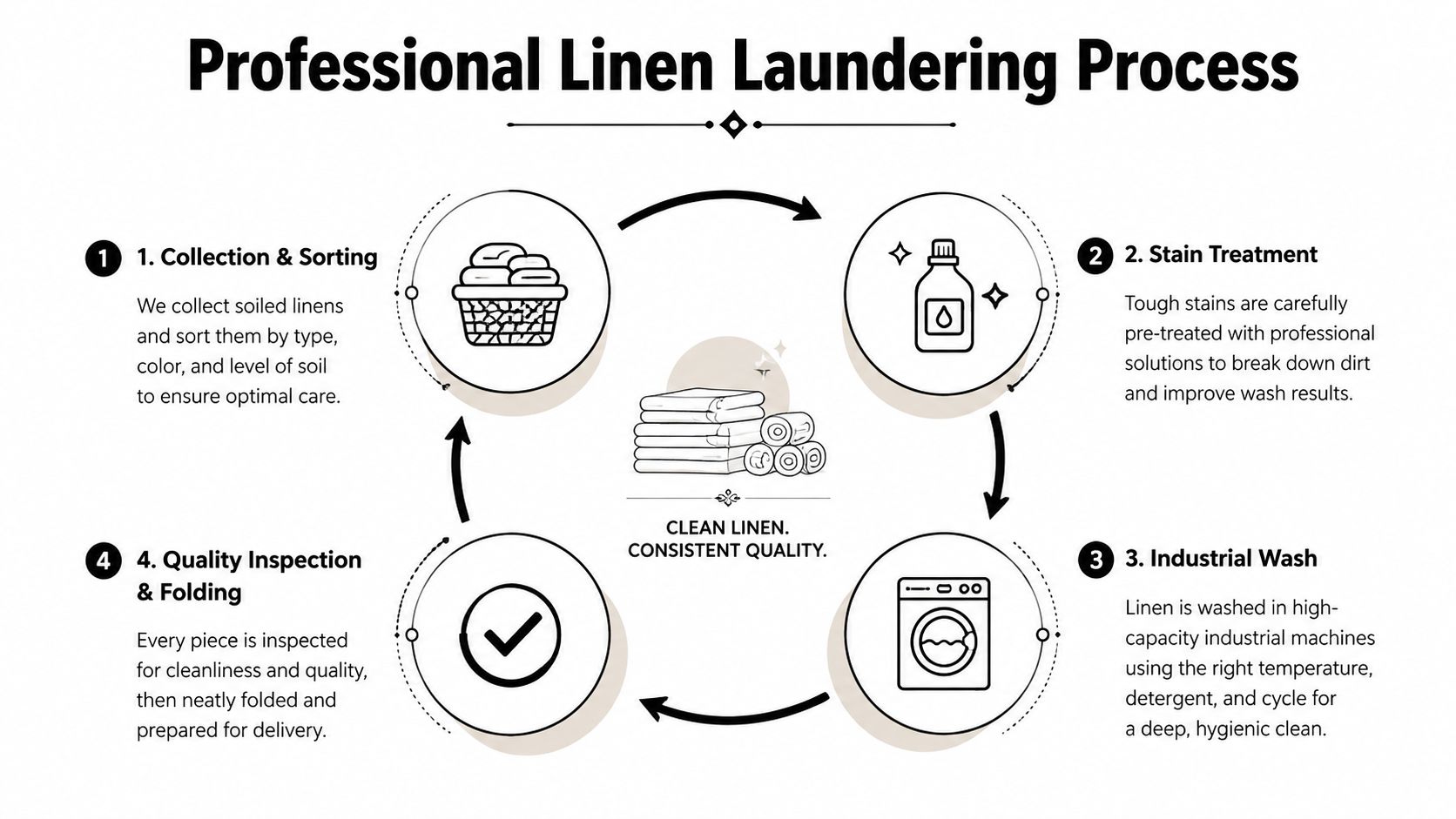
Professional linen hire is not a wash-and-fold arrangement. The rental operator must control the dirty stream, identify contamination risks, treat stains correctly, wash to an appropriate disinfection standard and inspect the finished stock before packing.

South African laundry guidance based on SANS 10146-1:2020-style controls requires contaminated linen to be isolated from ordinary soiled linen, placed in water-soluble or colour-coded bags and sent directly for washing. The same guidance specifies thermal disinfection at 80°C for at least 10 minutes, while chemical routes may use sodium hypochlorite in a dedicated bleach step or peracetic acid in the main wash at 71°C for at least 5 minutes. These requirements and handling controls are described in South African linen laundry guidance.

Drying and ironing don't count as disinfection. The wash phase must do the microbiological work. That distinction matters because a cloth can look perfectly pressed while still having been processed incorrectly.

A circular infographic detailing the professional linen laundering process, including collection, stain treatment, washing, and quality inspection.

Ask how the rental company controls the stream

The most useful supplier questions are operational:

  • Segregation: How are contaminated, soiled and clean linens separated during collection, processing and storage?
  • Machine preparation: Are machines chemically disinfected before daily use?
  • Stain treatment: What happens to heavily stained tablecloths that don't return to an acceptable presentation standard?
  • Packing: Are tablecloths, napkins and overlays packed separately by type and set?
  • Turnaround: How much time is allowed for washing, inspection and repacking before your delivery?
  • Reject policy: Does visibly damaged or permanently stained stock leave the dispatch batch?

South African catering specifications require tablecloths and napkins to be laundered separately to limit lint transfer. They also call for sorting, washing, drying, ironing, laying flat and segregating by type before packing. The South African laundry and dry-clean specification also identifies caustic hard-wash treatment for heavily stained items, with persistent stains clearly labelled.

For a plain-language explanation of wash temperature considerations, planners can consult the BacteriaFAQ.com bed sheet washing guide. The principle remains practical: clean and dirty articles must stay separate through collection, transport, storage and setup.

Rental Logistics and Planning Timeline for Cape Town Events

A linen order isn't complete until the supplier knows the venue, access conditions, table inventory and return process. Cape Town hotels may have loading restrictions, while farms in Franschhoek and Stellenbosch can require longer travel, tighter access windows or setup coordination with caterers.

Use a written schedule rather than relying on a message thread.

Build the order around the actual furniture

Confirm every table type with the venue or furniture supplier. A “standard round” may not match the diameter your linen provider expects, and trestle tables can vary in width. Count tablecloths, napkins, runners and overlays separately, then confirm whether the supplier is providing replacements for last-minute table changes.

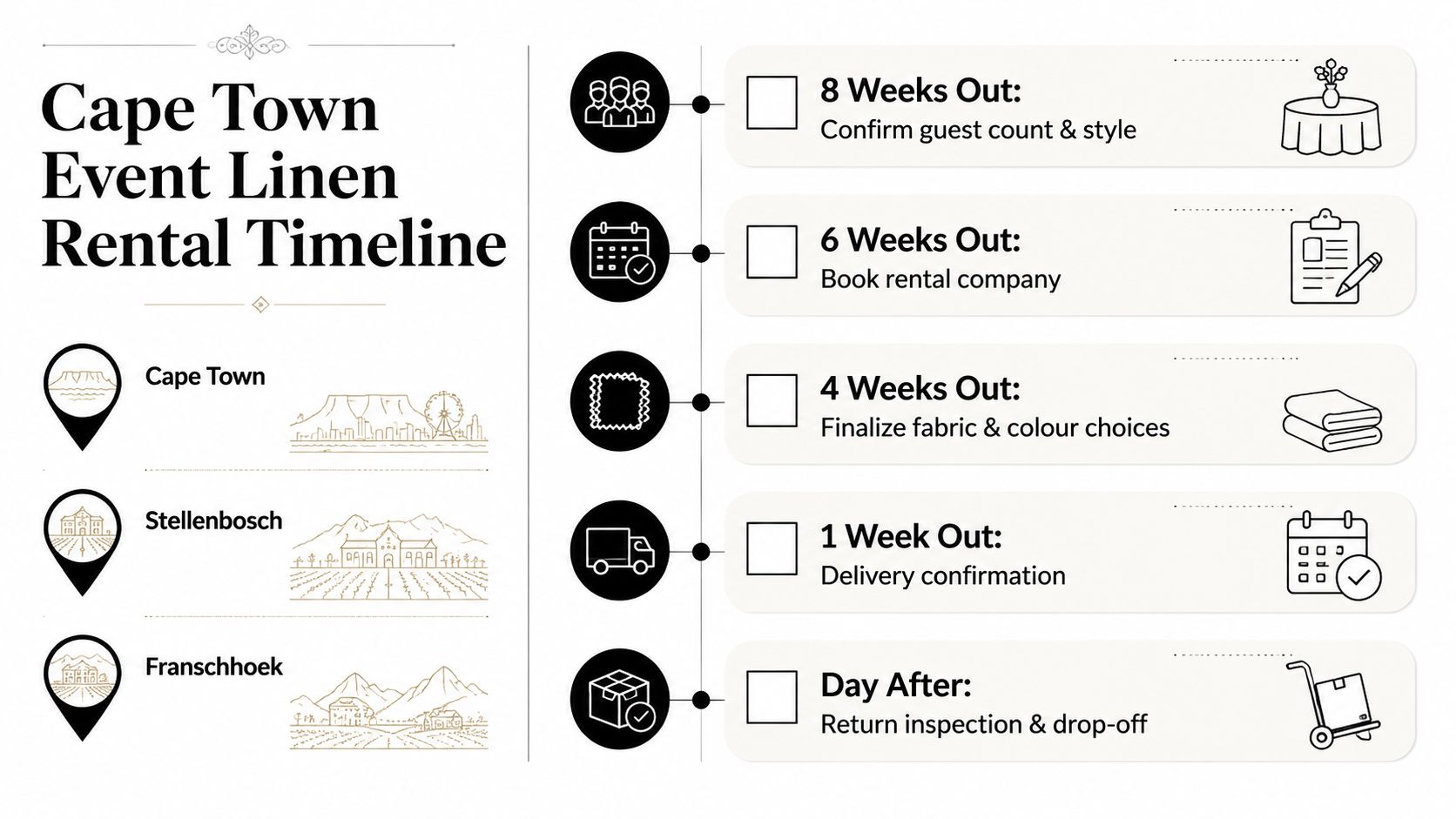
The supplied planning sequence provides a useful working framework:

  • 8 weeks out: Confirm guest count, table plan and visual direction.
  • 6 weeks out: Book the rental company and hold the required stock.
  • 4 weeks out: Finalise fabric, colour, sizing and any layered pieces.
  • 1 week out: Confirm delivery address, access window, contact person and venue setup time.
  • Day after: Complete the return inspection and drop-off according to the supplier's instructions.

A structured timeline infographic for planning event linen rentals in Cape Town, Stellenbosch, and Franschhoek.

Inspect before the styling team starts

Open representative pieces as soon as the delivery arrives. Check colour consistency, visible marks, odour, tears, missing napkins and the finished fold. If the event uses several shades of white, compare them side by side before placing them on different tables.

Keep the clean stock in its packaging until setup, and assign one person to manage linen handling. Don't place folded cloths on a venue floor or next to catering waste. During breakdown, shake off loose food carefully where the venue permits, separate heavily soiled pieces and follow the rental company's return instructions instead of improvising with plastic bags or mixed bundles.

A fortnightly laundry and dry-cleaning requirement for Airports Company of South Africa's IICC tablecloths demonstrates how institutional users treat linen care as a recurring operational process, not an occasional cleanup task. The South African event linen procurement example is a useful benchmark when assessing a supplier's seriousness about scheduled care and accountability.

Key Takeaways for Confident Linen Decisions

Good event linen sits at the intersection of visual control and operational discipline. A beautiful cloth that arrives late, fits badly or carries visible staining still fails the event.

Use these checks before you sign off the order:

  • Venue check: Test the fabric and colour against the actual chairs, crockery, furniture and lighting.
  • Fabric check: Choose polyester for dependable handling, cotton for a softer natural finish, damask for formal texture and satin for controlled evening shine.
  • Sizing check: Measure the table itself and confirm the intended drop. Don't rely on table names or guest counts.
  • Layering check: Give each runner, overlay and napkin a clear purpose. Remove one layer if the setting starts to look crowded.
  • Hygiene check: Ask how the supplier separates dirty and clean streams, disinfects wash equipment, treats stains and inspects finished stock.
  • Logistics check: Confirm delivery access, venue contact details, setup timing, packing requirements and post-event returns in writing.
  • Quality check: Inspect the stock before installation, especially white, black, satin and textured fabrics where marks or inconsistencies are easy to notice.
  • Contingency check: Allow enough processing time for stain rejection, colour changes and table-plan adjustments. A rushed replacement is rarely as neat as an organised order.

Wedding planners should request samples and approve the tabletop in venue light. Corporate teams should document the supplier's laundering and packing process for procurement. Schools and private hosts should nominate one person to manage delivery, setup and returns.

The right question isn't, “Which tablecloth looks best?” It's, “Will this linen still look intentional after transport, installation, dinner service and collection?” Make that question part of the brief, and your styling decisions become far more reliable.


ABC Hire supplies event furniture and accessories for weddings, corporate functions, matric dances and private celebrations across Cape Town, Stellenbosch, Franschhoek and Paarl. Review the available ABC Hire options, then confirm your table sizes, linen requirements and delivery conditions before booking.