
You're halfway through a Saturday setup at a Stellenbosch estate. The ceremony furniture is in place, the florist is asking where the welcome sign should go, and someone has just discovered that the cake table rocks on the barn floor. A well-chosen set of wooden boxes and crates can solve several of those problems at once, but only if you've specified the right units, planned their placement, and checked their condition before guests arrive.
For Cape Town weddings, corporate functions, birthdays, and Winelands celebrations, crates aren't just rustic decoration. They're practical event infrastructure. They create height, define zones, support signage, conceal awkward surfaces, and give a temporary venue a more considered finish without permanent construction.
Why Wooden Boxes and Crates Work So Well at Events
At a vineyard venue, an open slatted crate can turn a bare entrance into a welcome station. Two crates beside the path can hold florals, a guest book, or escort cards, while deeper wine crates behind the bar provide storage and visual height. On a rooftop in Cape Town, solid boxes can lift a cake display above table level and help disguise cable runs without introducing bulky staging.
The important distinction is that these products aren't interchangeable.
- Apple-crate style units are open, slatted, and visually light. They work well for florals, small display items, signage, and layered shelves.
- Wine crates are usually deeper and more substantial. They suit bottle displays, cake plinths, bar backs, and gift tables.
- Solid storage boxes offer a cleaner face and better concealment. Use them where loose equipment, packaging, or cables need to disappear.
- Pallet-style plinths create broad, low platforms for lounge groupings, product displays, or larger installations.
The hire-counter mistake is ordering by appearance alone. A crate that looks perfect in a photograph may have the wrong depth for a cake stand, an unstable base for a floral arrangement, or a surface that marks linen.
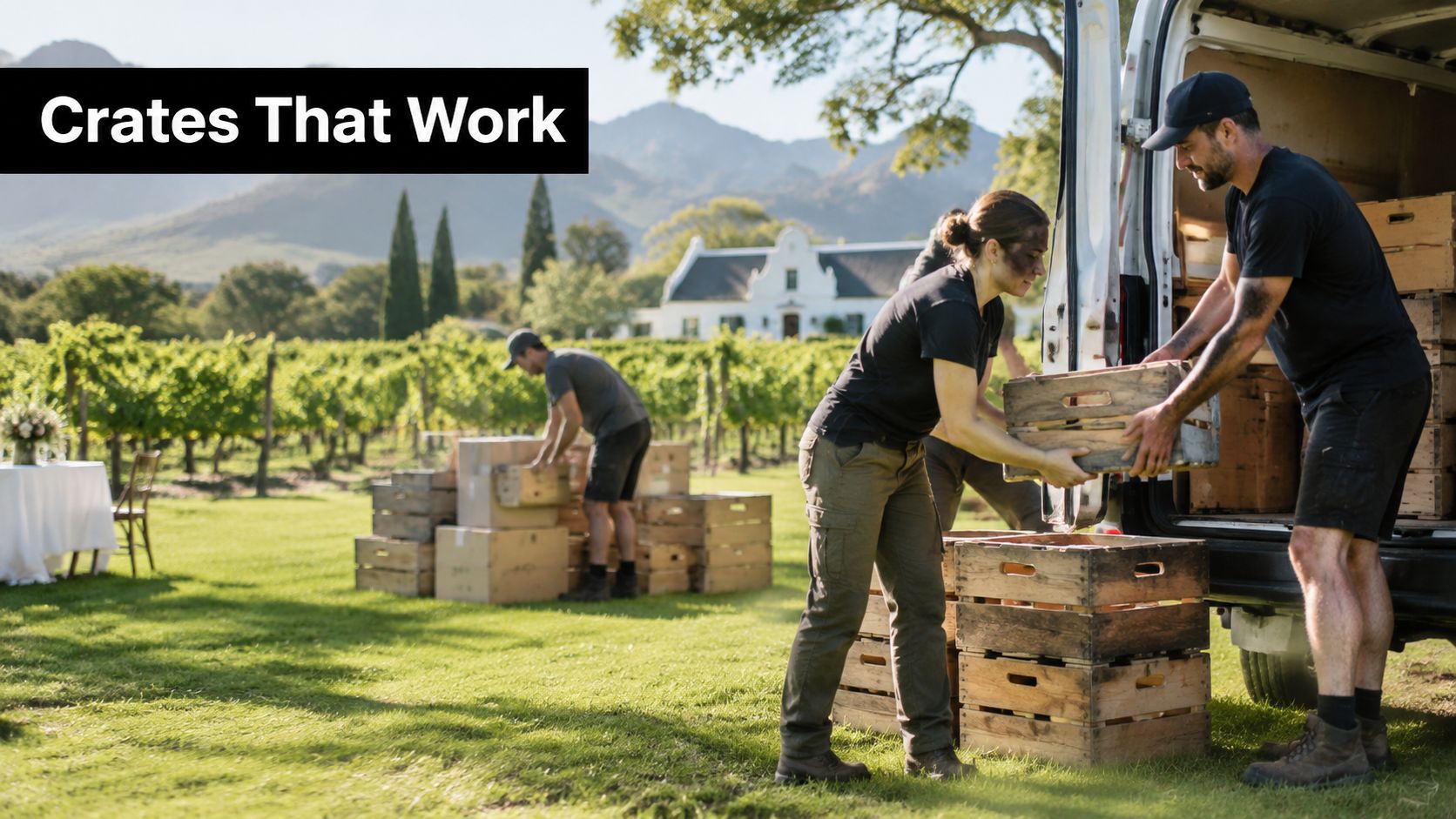
One hire item, several jobs
Crates earn their place because they can work throughout the event. A wine crate used for ceremony signage can move to the bar later. A display box can become a gift-table anchor, then hold blankets or candles during the evening. That flexibility matters when the venue has terraces, gravel paths, barn floors, and garden areas rather than one level, finished room.
Wood also suits the Winelands because it reinforces the venue's agricultural character. You can create texture and height without commissioning a custom build or adding large quantities of floristry. Open crates soften a practical setup, while solid boxes keep the space tidy.
For heavier transport or storage requirements, it's useful to understand the difference between decorative event crates and purpose-built shipping containers. This guide to heavy duty boxes for ultimate protection explains why construction, protection, and load handling matter when the contents are valuable or movement is demanding.
Practical rule: Choose the crate for the job first, then choose the finish. A pretty crate with the wrong structure still creates an on-day problem.
Choosing the Right Sizes, Finishes, and Load Ratings
Start with the object you're supporting, not the look you're trying to create. Measure the cake stand, signage base, serving trays, floral vessel, or display product. Then allow enough surface area for safe placement and enough clearance for guests to move around it.
For a smaller celebration, small slatted crates around 40 x 30 x 25 cm can hold favours, escort cards, or compact floral displays. A medium unit around 50 x 40 x 30 cm gives a centrepiece or welcome arrangement more presence. Larger wine crates around 60 x 45 x 35 cm are better suited to cake plinths, bar-back displays, and substantial signage. These are practical hire descriptions, not universal manufacturing standards, so confirm the supplier's actual dimensions before approving the quote.
Match the unit to the event
An event for around 80 guests may need only a few small crates at the entrance and gift table, with medium units supporting floral moments. For a gathering of around 150 guests, plan more deliberately around bar storage, signage, cake height, and multiple guest-flow points. A 250-guest event typically needs broader platforms or repeated crate runs, especially when the venue has separate ceremony, drinks, dining, and dancing areas.
Oversized pallet-style platforms are useful for lounge furniture and product displays, but they need a stable, level base. Don't stack small decorative units to imitate a platform unless the supplier has confirmed that the construction and load path are suitable.
Finish changes the entire reading of the event:
- Raw pine feels relaxed and photographs warmly, but inspect it closely for splinters, rough corners, and resin.
- Sealed oak suits an upscale wedding or corporate launch because it looks deliberate rather than improvised.
- Whitewashed timber works for garden parties and lighter palettes, particularly with linen and soft florals.
- Charred timber finishes create a darker, graphic look for evening events, moody lighting, and brand activations.
Treat load capacity as a specification
Never assume that a larger crate automatically carries more weight. Ask for the supplier's safe load guidance for the exact unit, especially if crates will be stacked or used under a heavy cake, bar stock, audio equipment, or display product.
| Crate Size (approx.) | Common Use | Finish Options | Safe Load |
|---|---|---|---|
| 40 x 30 x 25 cm | Favours, escort cards, small florals | Raw pine, whitewashed | Supplier-rated only |
| 50 x 40 x 30 cm | Centrepiece bases, welcome displays | Raw, sealed, painted | Supplier-rated only |
| 60 x 45 x 35 cm | Cake plinths, bar backs, signage | Wine-crate finish, sealed oak | Supplier-rated only |
| Pallet-style platform | Lounge groupings, broad displays | Pine, stained, painted | Confirm structural rating before use |
For a wider furniture plan, review how wooden tables and chairs are specified alongside your crate hire. The same principle applies. Dimensions, surface condition, stability, and intended use should appear in the conversation before the quote is signed.
Styling Ideas for Weddings, Corporate Events, and Birthdays
The same wooden crate can look romantic, corporate, or playful. The difference comes from the finish, what sits around it, and how deliberately the installation is composed.
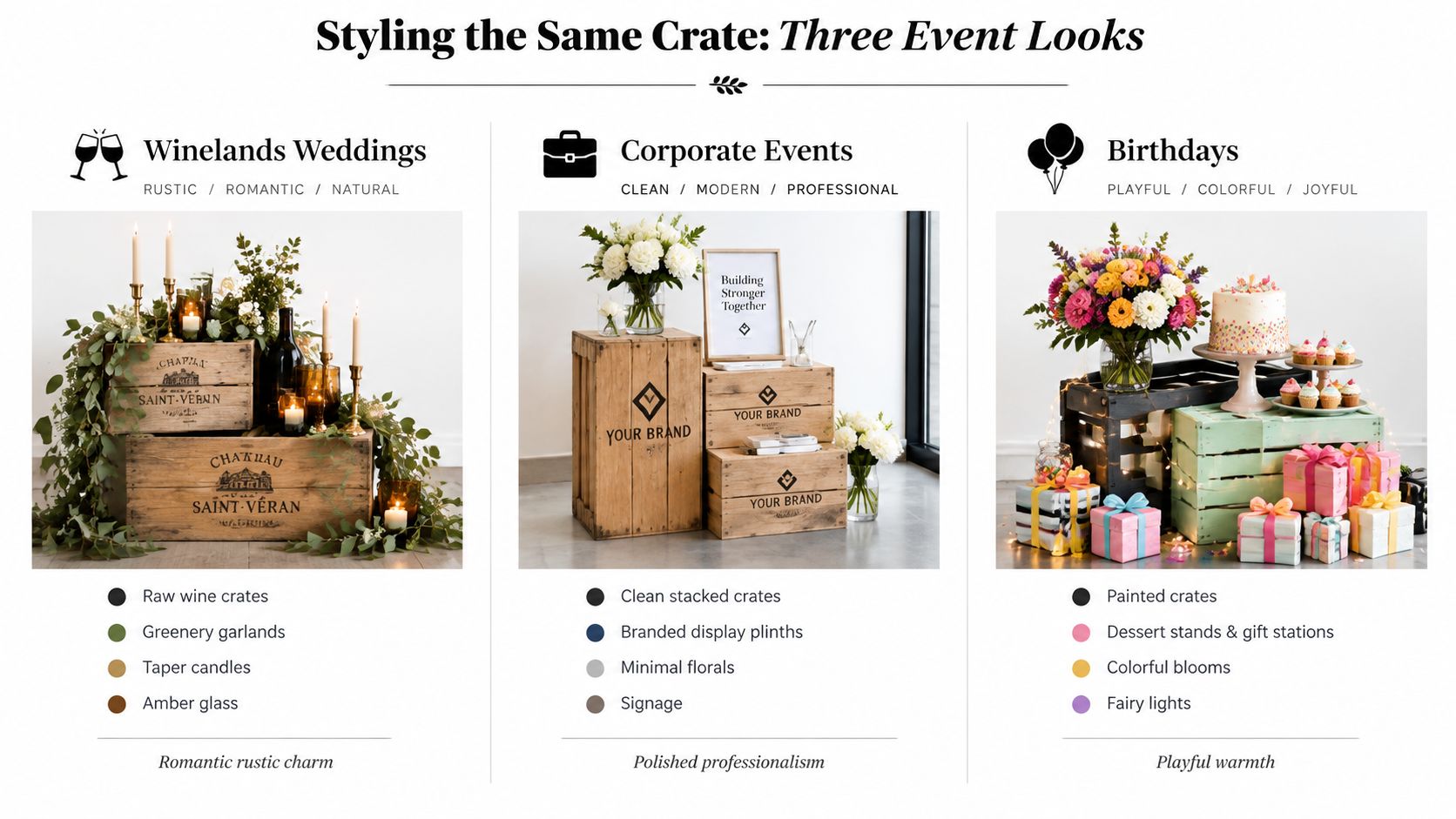
Winelands weddings
Raw wine crates are the natural fit for a vineyard wedding, but rustic doesn't mean untidy. Pair them with greenery garlands, taper candles, and amber glass to build warmth around the timber. Use staggered heights for a welcome table or dessert display, then keep the palette restrained so the arrangement looks connected to the venue rather than like a prop collection.
For daylight ceremonies, raw or lightly sealed timber usually photographs well against stone, vines, and pale linen. In the evening, candles and warm festoon lighting bring out the wood grain. Keep open crates away from exposed flame unless the venue and safety team have approved the arrangement, and use stable candle vessels rather than placing loose candles directly on rough timber.
Corporate launches
Corporate events need more control. A stack of untreated crates can make a product launch look like a farmers' market, even when that wasn't the intention. Sealed oak, matte black, or a consistent painted finish gives the same modular flexibility a sharper visual language.
Use crates as product pedestals, bar backings, plinths for branded collateral, or weight bases for a step-and-repeat structure. Add minimal florals, clean signage, and controlled lighting. Leave enough negative space around the product so the display reads as a brand environment rather than storage.
Design decision: If the event message is polished, use repetition. Matching finishes and aligned edges look intentional. Random crate combinations look accidental.
Birthdays and milestone parties
Birthday styling gives you more freedom to layer colour. Painted crates can support dessert stands, gifts, party favours, or a photo-booth platform. For children's events, seal the surfaces, remove sharp edges, and top working surfaces with linen, board, or another smooth covering.
Fairy lights, colourful blooms, balloons, and coordinated tableware can make the crates feel playful without losing their practical role. For an adult milestone celebration, use deeper tones, one strong floral colour, and a dessert arrangement at varied heights.
The styling should also follow the lighting plan. Pale finishes disappear under bright daylight less readily than under dim, coloured uplighting. Dark finishes can look refined in a cocktail room but become visually heavy in a sunny garden. If you're also hiring serving pieces, compare the crate treatment with wooden serving trays so the display materials feel consistent.
Placement Planning and Layout Decisions
Start with the venue floorplan and mark the fixed points first. Place the bar, cake table, gift table, DJ or band zone, registration desk, and primary entrances before deciding where decorative crates belong. Those anchors determine guest movement, sightlines, power access, and the locations where a crate installation can help.
A common mistake is scattering crates wherever there's an empty corner. That creates visual noise and can narrow circulation. Treat crate runs as soft wayfinding. They can lead guests towards the welcome area, frame a dessert station, or give a long dining room a grounded perimeter.
Build from the edges of movement
For a Winelands barn, two medium apple crates can flank the entrance path and hold welcome signage or flowers. Keep the walking line clear, particularly where gravel meets timber or where guests may arrive in formal shoes. On a Cape Town hotel ballroom floor, a continuous line of long pine crates behind long-table seating can create a display or storage edge without interrupting the dining plan.
Check every surface. Grass can hide dips, gravel can shift under a narrow foot, and tiled stoep areas can make a crate rock if one corner is slightly high. Use approved levelling methods, not folded napkins or loose packing material that guests can catch with a shoe.
| Layout | Footprint | Best Venue Type | Guest Count Range |
|---|---|---|---|
| Central cluster | Compact, concentrated area | Barns, courtyards, lounge zones | Small to medium gatherings |
| Perimeter run | Long, shallow edge | Ballrooms, dining halls, galleries | Medium to large gatherings |
| Aisle marker | Narrow repeated points | Gardens, vineyard paths, ceremony entrances | Any size, if circulation remains clear |
Protect exits and service routes
Never place crates in front of emergency exits, fire hose reels, access panels, ramps, or service doors. Keep a clear route behind bars and catering stations so staff aren't forced to carry hot trays around a decorative installation.
Use the venue's real measurements, not a supplier catalogue image. Mark the crate footprints with tape during a walkthrough, then photograph the test layout. That simple exercise reveals whether the stack blocks a view, catches a door swing, or sits too close to a guest's chair.
Layout rule: If a crate feature makes guests walk around it instead of past it, it's probably in the wrong place.
Safety, Transport, and Rental Logistics in Cape Town
A crate installation is still temporary event infrastructure. It needs the same practical discipline as furniture, staging, and display equipment. Confirm that the supplier carries public liability cover, and ask whether the crates meet the relevant SANS structural loading requirements for their intended use, particularly where units will be stacked or used as seating.
Request documented load guidance for each crate type. Don't put a heavy cake, beverage stock, speaker, or product display on an unrated box because its timber looks thick. Inspect every unit before guests arrive for splinters, protruding nails, loose boards, unstable feet, mould, and strong treated-timber odours.
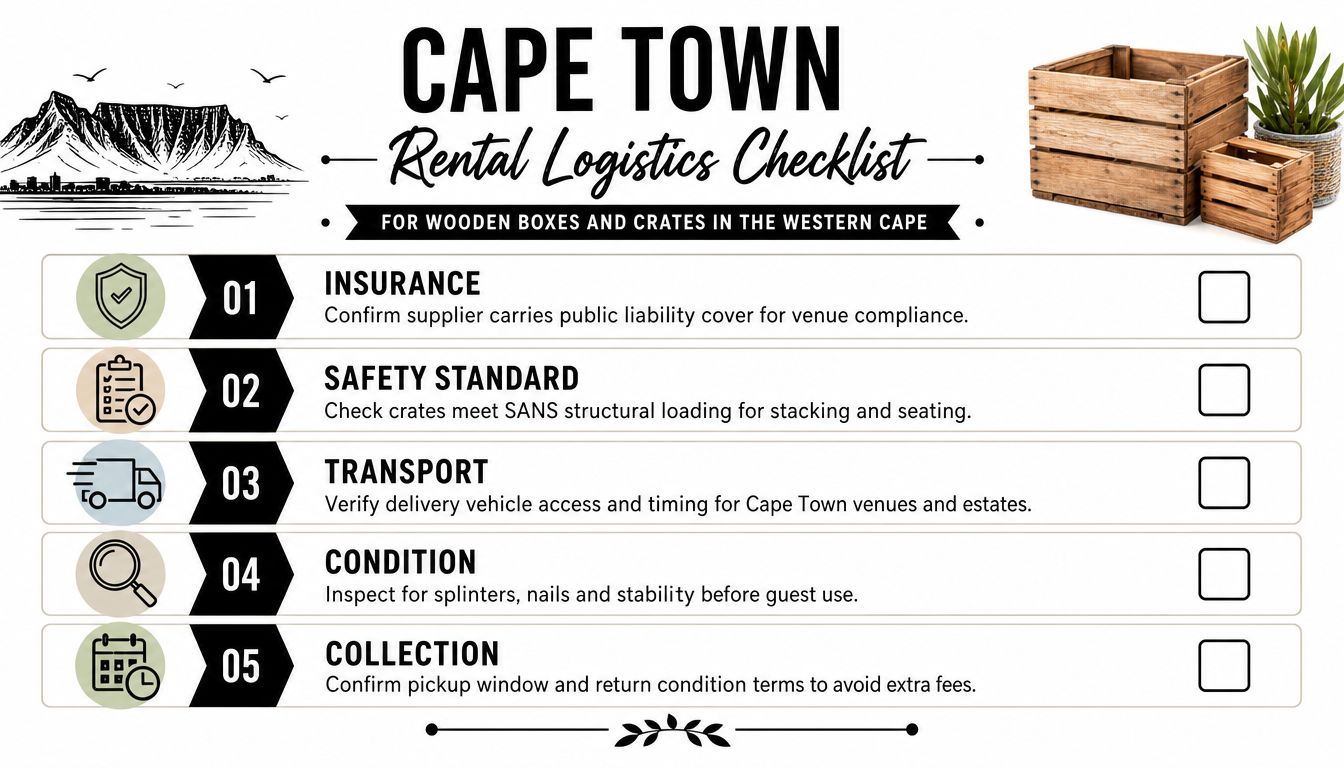
Plan the Western Cape route
Transport between Cape Town, Stellenbosch, Paarl, and Franschhoek isn't just a mileage question. Farm venues may have narrow gates, steep driveways, gravel access, or limited unloading space. Confirm the vehicle type, arrival window, parking location, and whether the crew will carry the crates from the vehicle to the setup area.
Ask the supplier to state clearly whether delivery, setup, breakdown, and collection are included in the quoted service. Clarify weekend surcharges, after-hours collection, venue curfews, and the contact person responsible for decisions if the event runs late.
Outdoor events need an extra weather conversation. Crates should be protected from damp ground, and tall stacks need a suitable securing plan where wind is a concern. A ventilated crate isn't automatically stable, and an open structure can still tip if it's placed on uneven ground or loaded unevenly.
Record condition and responsibility
Take date-stamped photographs when the crates arrive. Capture corners, faces, feet, and any existing marks. Repeat the process at collection, especially if other suppliers have handled the items during the event.
For a broader checklist covering event furniture hire in Cape Town, use the same questions you'd ask for chairs and tables. Who delivers, who sets up, who collects, what condition is expected, and what happens if access changes at the last minute?
South African export packaging follows a different compliance path from event décor. For cross-border shipments, solid wood packaging thicker than 6 mm must be ISPM 15 compliant, and accepted treatments include heat treatment, dielectric heating, or methyl bromide fumigation. The visible mark needs the IPPC symbol, the country code ZA, a unique provider code, and the treatment code. South African guidance specifies heat treatment at a minimum core temperature of 56°C for 30 minutes. These requirements are documented in South African ISPM 15 guidance for export crates.
Quick Wins and Common Pitfalls Before You Sign
Give the final checklist to the coordinator, venue manager, and supplier representative. Everyone should be working from the same crate count, floorplan, access window, and collection agreement.
Before signing, confirm:
- Count: Match the final crate quantity to the floorplan and each display function. Don't rely on a rough visual estimate for a busy Winelands wedding.
- Timing: Check delivery and collection against the venue's actual loading access and curfew. A late collection can create a problem after the guests have left.
- Finish: Keep timber colour, crate depth, and surface treatment consistent in photographs. Mixed finishes can look messy when placed beside pale linen.
- Condition: Photograph every crate on arrival, then inspect for splinters, nails, rocking corners, staining, and moisture before styling.
- Contract: Clarify the damage deposit, cancellation terms, replacement responsibility, after-hours contact, and return condition in writing.
Untreated timber can bleed tannin onto light linen, particularly when damp or freshly exposed to moisture. Test any crate that will sit directly on a tablecloth, and use a protective layer where necessary. Don't wrap linen around crates for the first time at the venue. Pre-tie and label those wraps offsite so the setup crew isn't improvising with pins, tape, or loose fabric.
A site walkthrough is also essential. Test the actual ground where the crates will stand, including grass, gravel, stone, timber decking, and tiled surfaces. Check the bakkie route at farm venues, measure narrow gates, and confirm where the delivery vehicle can unload.
Best backup: Keep one spare crate and a small styling kit onsite. A spare unit can replace a damaged box, support a last-minute sign, or stabilise a display without delaying the programme.
The wider South African wood-products industry includes 50 large, 53 medium, and 516 small companies, with total employment of 19,485 in 2014, according to a sector profile citing a Fibre Processing and Manufacturing SETA update. The profile also records Stats SA sales for products of wood at R1.712 billion in April 2016. That context reinforces the value of using an established supplier with clear condition records, documented construction, and a dependable delivery process rather than treating crates as disposable décor. See the South African wood-products sector profile for that background.
Wooden packaging also supports regional movement into nearby markets including Botswana, Namibia, Zambia, Lesotho, and Eswatini, according to South African trade data for wooden goods. For repeat regional shipments, reusable wooden packaging can make more sense than a one-off disposable solution when repairability, durability, and compliance matter across the route.
For wooden boxes and crates, ABC Hire can help you coordinate practical event furniture and styling across Cape Town, Stellenbosch, Franschhoek, and surrounding areas. Review your floorplan, confirm your crate functions and access requirements, then visit ABC Hire to organise the hire equipment your event needs.