
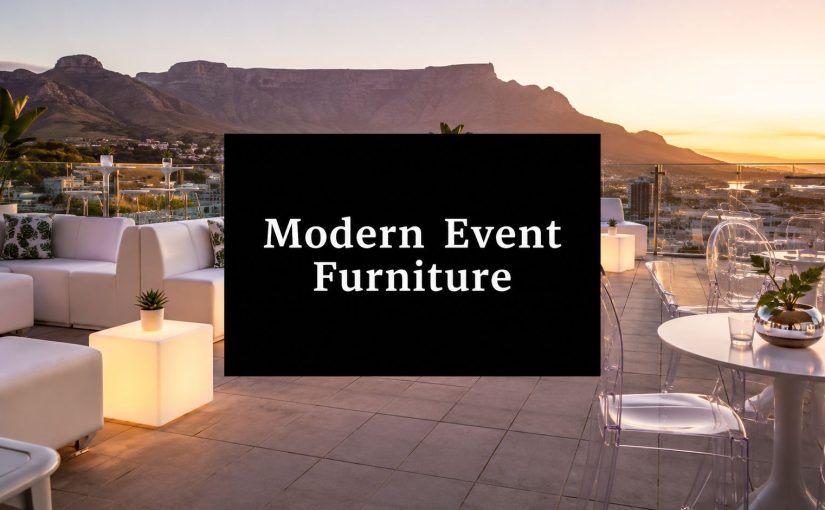
You've booked the venue. The mountain or vineyard backdrop is doing its job. Catering is sorted, lighting is on the way, and then you look at the floor plan and realise the room still feels generic. Standard banquet chairs and plain trestles can keep people seated, but they won't shape the atmosphere you promised your client or guests.
That's where modern event furniture changes the job. In the Western Cape, it's not only about style. It's about choosing pieces that can handle a windy lawn in Franschhoek, an indoor hall with insurance requirements, a corporate guest list that needs fast-flowing networking zones, or a matric dance budget that has to stretch without looking cheap.
The local context matters more than most overseas guides admit. A beautiful chair that catches dust, a lounge set that feels too bulky for a cellar door entrance, or LED pieces that look exciting online but don't fit your power plan can create problems very quickly. Good furniture choices solve more than décor. They influence guest movement, setup time, weather resilience, safety, and how the event photographs from the first welcome drink to the final dance.
Beyond the Ballroom Chair An Introduction
The difference between an ordinary event and a memorable one often comes down to what people interact with physically. Not the invitation. Not the menu card. The chair they sit in, the bar they gather around, the lounge corner where they finally relax and stay longer than planned.
That's why modern event furniture matters. It isn't just newer-looking furniture. It's furniture selected to build mood, support flow, and help a venue feel considered rather than merely filled. In a Cape Town gallery launch, that might mean transparent chairs and sharp cocktail tables that keep the room visually open. At a Winelands wedding, it could mean low lounge clusters that soften a large lawn and encourage conversation between formal moments.
Modern event furniture also suits the way events work now. South African event trends have shifted towards LED-embedded furniture and modular designs for night events and flexible corporate spaces, with those options increasingly treated as essential for memorable guest experiences, according to Ventura Rental's event furniture trend overview.
Practical rule: If a furniture choice only looks good in a supplier photo but doesn't improve flow, comfort, or atmosphere at your actual venue, it's the wrong choice.
In the Western Cape, function and finish have to work together. You're often planning across mixed conditions. Bright midday sun. Sudden wind. Damp evening air. Tight urban load-in points. Historic venues with strict access. Modern furniture succeeds here when it's chosen with those realities in mind.
A planner who understands that balance makes better calls from the start. They don't hire furniture by category alone. They hire by purpose. The ceremony needs one energy. The canapé hour needs another. The dance floor edge, the VIP area, the speaker holding zone, the after-party courtyard, each one asks for a different furniture language.
What Exactly Is Modern Event Furniture
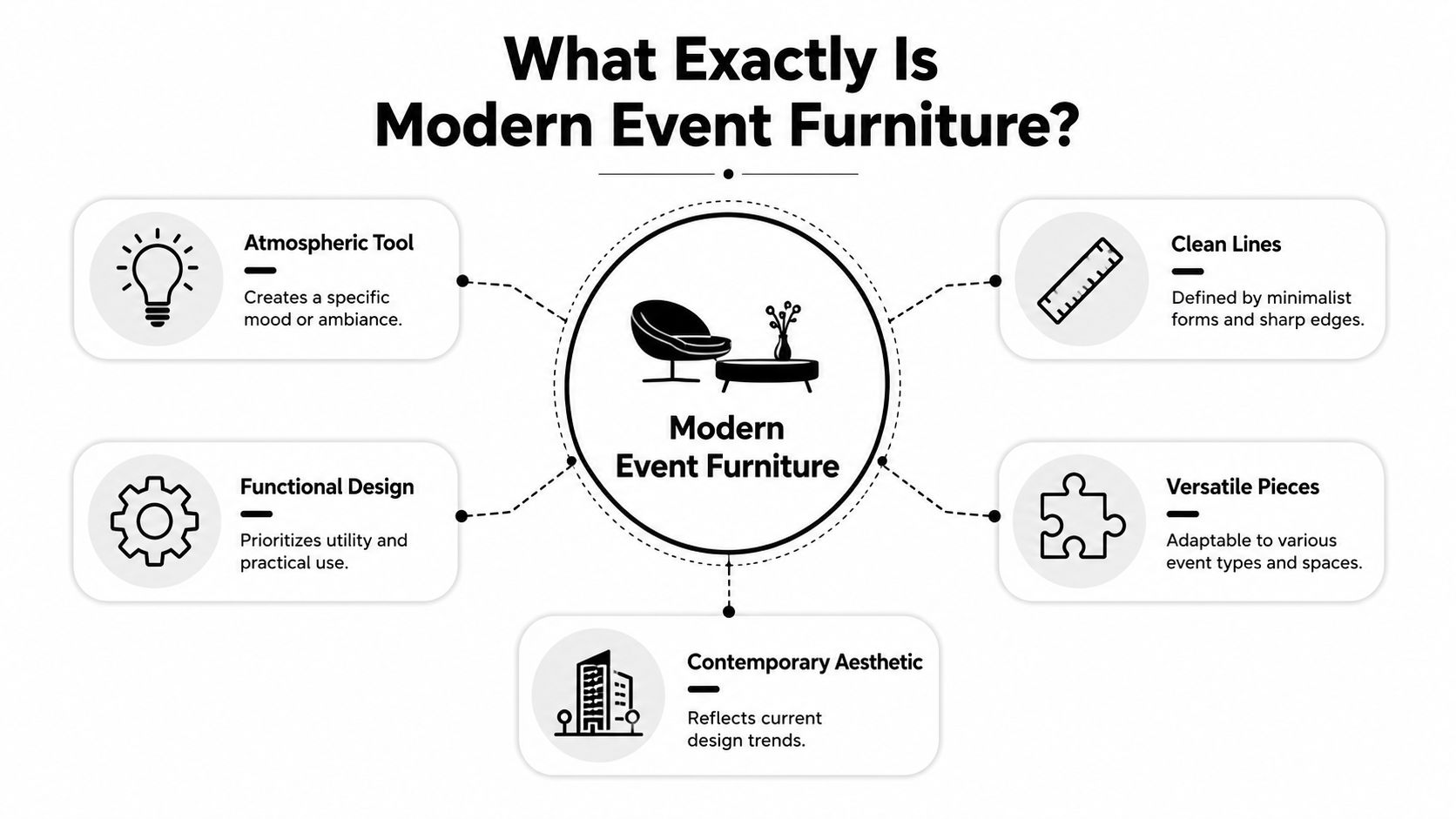
Modern event furniture is best understood as an atmospheric tool. Traditional event furniture tends to fill a requirement. You need 120 seats, 15 tables, a bar, a stage set. Modern furniture still does that, but it also shapes the emotional read of the room.
A heavy carved chair says one thing. A clear chair says another. A fixed three-piece lounge suite limits you. A modular seating system lets you build around the venue, the guest mix, and the programme.
It's defined by how it behaves in a room
The easiest way to identify modern event furniture is to ignore labels like “luxury” or “designer” and look at function.
- Clean lines: Pieces have a lighter visual footprint. They don't crowd a room or fight the architecture.
- Versatility: One ottoman can become lounge seating, a side perch, or part of a larger arrangement.
- Contemporary finish: Acrylic, powder-coated metal, crisp upholstery, and illuminated elements all read current rather than traditional.
- Event adaptability: Good modern furniture can move from wedding to launch to private party without looking out of place.
That flexibility is why modular and LED-based pieces have gained ground in South African events. They answer two common local needs at once. Night-time atmosphere and room reconfiguration.
It's less about ornament and more about experience
New planners sometimes think modern means cold, sparse, or overly trendy. It doesn't. Done well, it feels intentional and easy. Guests notice that they have somewhere comfortable to perch near the bar, that the networking zone doesn't bottleneck, and that the event looks polished in photographs without feeling over-styled.
Here's a simple comparison:
| Approach | Traditional furniture | Modern event furniture |
|---|---|---|
| Visual effect | Decorative, often heavy | Open, clean, composed |
| Layout style | Mostly fixed | Reconfigurable |
| Guest use | Sit and stay | Sit, mingle, move |
| Evening impact | Needs more external styling | Can create mood on its own |
The best modern furniture doesn't shout for attention. It makes the whole event feel sharper.
The most useful test
Ask one question before you hire anything: does this piece improve the event once guests arrive?
If the answer is yes, you're likely in modern-furniture territory. It might create a focal point, free up visual space, support branding, or help a room shift from day to night. If it only exists because “every event has them”, it's probably filler.
A Catalogue of Modern Event Essentials
A strong modern setup usually comes from a small group of pieces doing specific jobs well. You don't need a huge catalogue in play. You need the right mix.
Start with seating. It carries more design weight than most planners expect. A room full of standard chairs can flatten even a beautiful venue, while the right selection can make the whole space feel lighter or more architectural.
Seating that earns its floor space
For ceremonies and formal dining, modern chairs work best when they disappear visually but still feel considered. Clear chairs, slim-profile dining chairs, and monochrome options are useful because they don't block sightlines or compete with florals and table styling.
For pre-drinks and receptions, lounge seating does the heavier lifting. Modular sofas, ottomans, and bench seating allow you to create temporary “rooms” within a larger venue. If you're planning a networking evening or a wedding with a long cocktail hour, these clusters help guests settle without making the event feel static.
A useful reference when planning those lounge areas is this piece on modern lounge furniture ideas for events, especially if you're trying to avoid the common mistake of placing all soft seating against perimeter walls.
Tables that do more than hold glassware
Modern tables tend to fall into three practical groups.
| Table type | Best use | What to watch |
|---|---|---|
| Cocktail tables | Networking, bar spillout, standing receptions | Leave enough breathing room for circulation |
| Communal dining tables | Long shared meals, family-style service | They need disciplined place-setting and aisle planning |
| Low lounge tables | Softer social areas | Size them to the seating, not the other way round |
LED cocktail tables can work beautifully at evening functions, especially where you want light integrated into the furniture rather than adding more free-standing décor. Long tables suit Winelands dinners because they anchor the setting and create a stronger visual line than small scattered rounds, but they need service space planned properly.
Accent pieces that create the finish
Many events either come together or become cluttered; the distinction often lies in the details of their arrangement. Accent furniture should solve a problem or create a clear moment.
Some pieces that regularly justify themselves:
- LED cubes: Useful as seating, side tables, or soft visual markers around bars and dance floors.
- Curved benches: Good for softening hard venue lines and building social corners.
- Statement chairs: Ideal for a photo area, bridal suite corner, or speaker holding zone.
- Bar stools: Strong around activation counters, tasting bars, and high drink rails.
One mistake I see often is over-ordering feature pieces and under-ordering practical support furniture. The event then looks styled in pockets but feels inconvenient to use. A statement chair can't rescue a reception where guests have nowhere to place a drink.
A furniture plan is successful when the “wow” pieces and the workhorse pieces are in balance.
Decoding Materials Features and Functionality
Materials matter more in rental furniture than they do in showroom furniture. A piece can look excellent in a product photo and still perform badly on event day if it scratches too easily, traps heat, stains too fast, or becomes awkward to move during changeover.
That's why the technical side of modern event furniture deserves attention. Good planners don't choose only by silhouette. They choose by finish, weight, cleanability, and venue suitability.
Materials that work in real event conditions
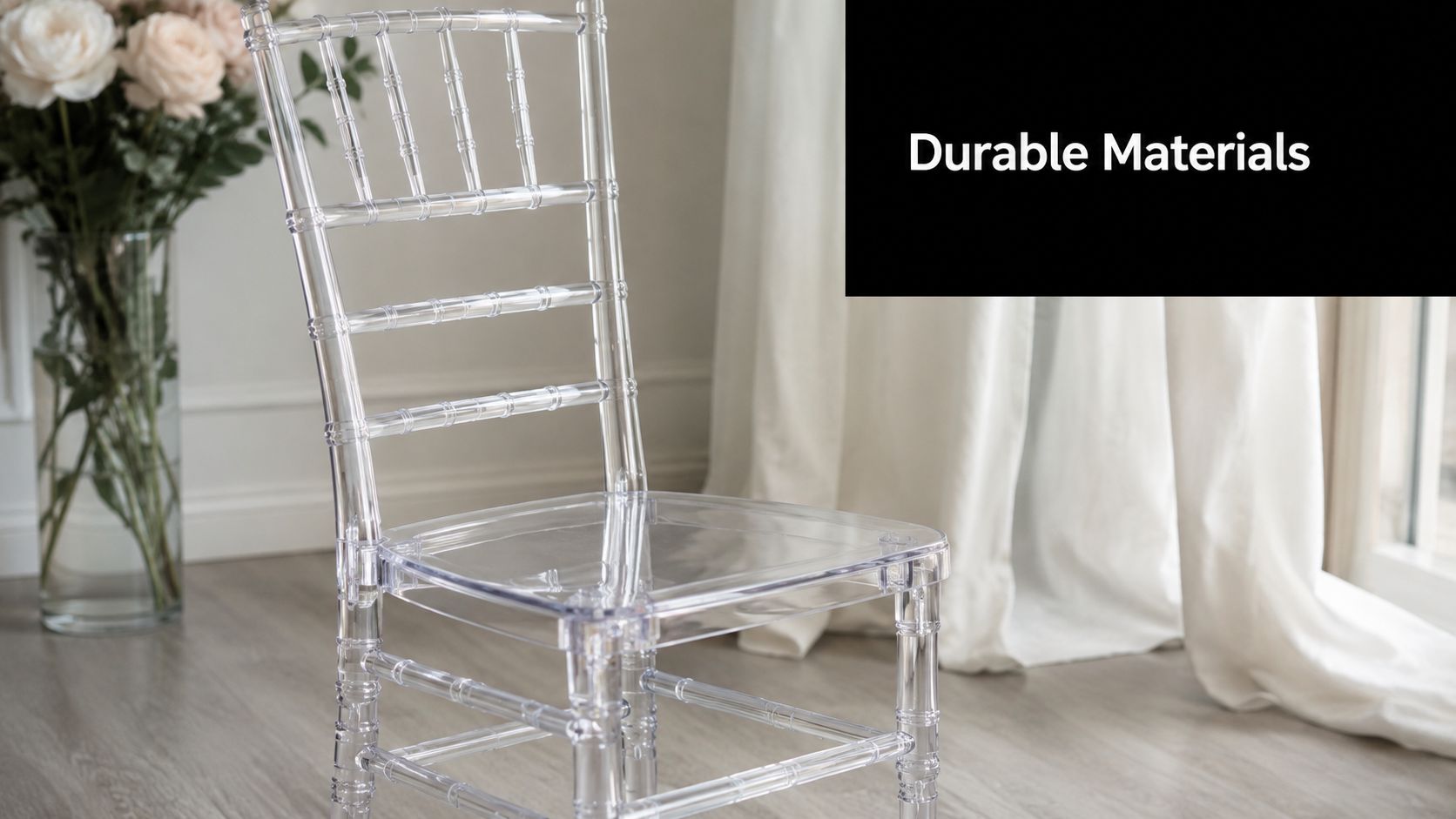
Acrylic and polycarbonate chairs are popular because they keep a room visually open. They work especially well in venues with strong architecture or dramatic views, where you don't want furniture blocking the room's best asset. They can, however, show dust and fingerprints quickly, so they need proper handling and a clean final wipe during setup.
Powder-coated metal frames are useful where furniture needs a crisp profile and more structural confidence. They're often a safer choice for high-turnover events because they cope well with repeated handling.
Upholstered lounge furniture introduces another level of practicality. It must look soft without becoming high-risk. For indoor venues, that's not only a design concern. It's a compliance issue. Upholstered lounge items used indoors in South Africa must meet SANS 10149 fire-resistance standards, and non-compliant furniture can void venue insurance in Cape Town and the Winelands, as noted in this fire-resistance compliance reference.
Features that change how a room functions
Some furniture features sound impressive online but only a few make a real operational difference.
- Modularity: This is one of the most valuable features you can hire. Modular units let you build a long conversation pit, two compact pods, or an L-shaped lounge around a structural obstacle.
- Integrated LED lighting: Useful when evening ambience matters and you want furniture to contribute to the lighting scheme.
- Stackability: Often ignored, but hugely important for quick resets and efficient load-out.
- Lightweight construction: Essential when crews have to move pieces through tight passages, up ramps, or across lawns.
For outdoor planning, material choice becomes even more important. This overview of weather-resistant outdoor furniture considerations is useful if you're weighing visual appeal against exposure to sun, damp, and dust.
What works and what doesn't
A simple decision guide helps here:
| Material or feature | Works well when | Works poorly when |
|---|---|---|
| Clear acrylic | You want visual lightness | The venue is dusty or handling is rough |
| Metal frames | You need strength and a sharp silhouette | The event requires a softer, warmer feel |
| Vinyl or easy-clean upholstery | Turnaround is fast, spills are likely | The brief demands a highly textured luxury finish |
| LED integration | Night-time atmosphere matters | The event depends on a minimalist, non-lit mood |
Rent for the venue first, then for the mood. If you do it the other way around, logistics will punish you.
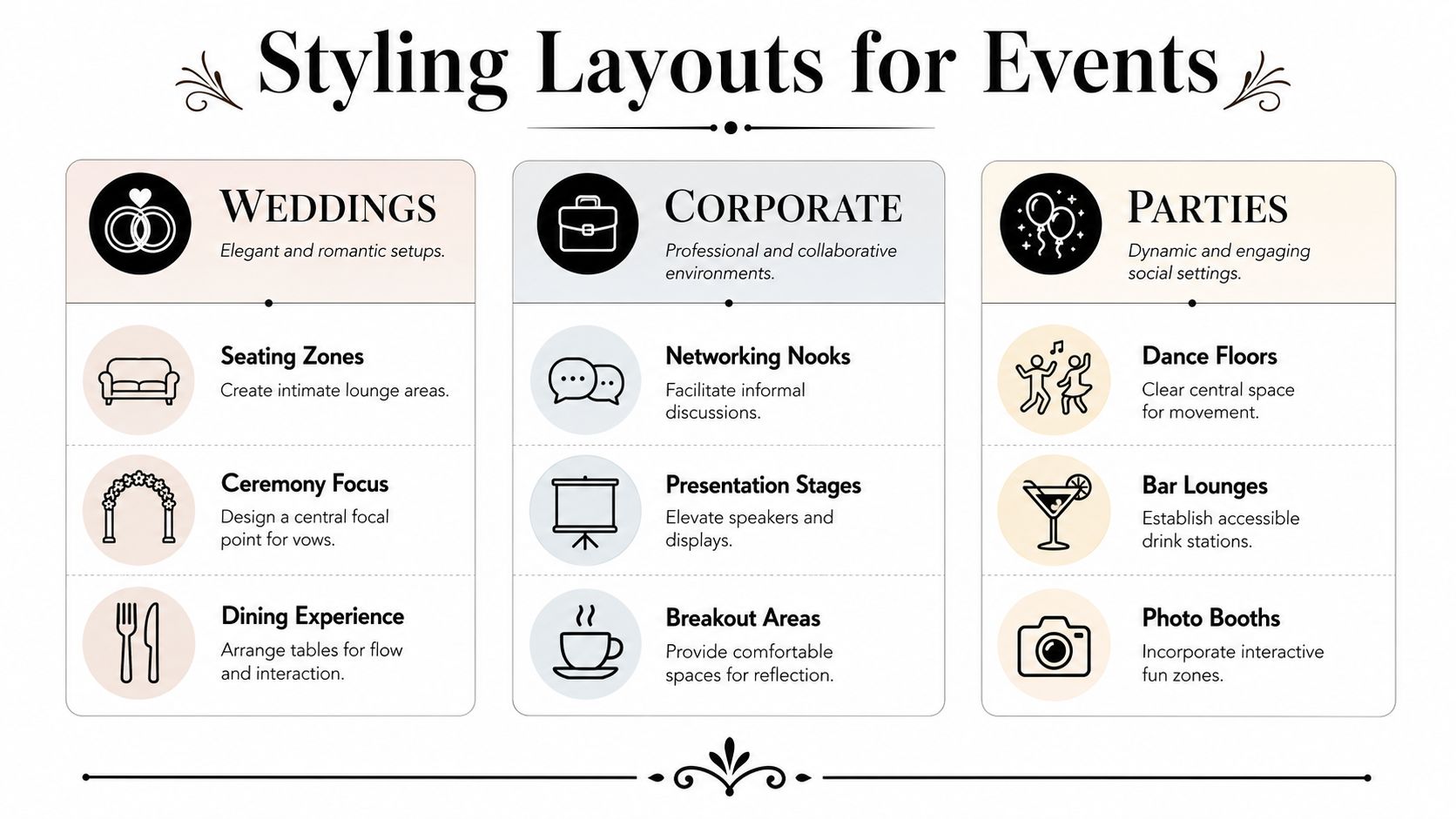
Styling Layouts for Weddings Corporate and Parties
Furniture only starts working once the layout supports the event's purpose. A beautiful chair in the wrong place is still a problem. So is a lounge cluster that blocks service, a bar setup with no spill space, or a dance floor ringed too tightly for guests to move comfortably.
Different event types need different furniture rhythms. Weddings want softness and emotional pacing. Corporate events want flow, visibility, and zones that support conversation without looking casual. Private parties and matric dances need energy, movement, and enough seating to rest without draining momentum.
Weddings that feel polished but not stiff
At weddings, modern furniture works best when it softens the formality rather than erasing it. Lounge pods near the bar, coffee station, or dance-floor edge give guests somewhere to reset between scheduled moments. Ceremony seating can also be more contemporary than many couples assume, particularly in venues with strong natural scenery.
A good wedding layout usually includes:
- A clear ceremony focal line: Chairs should frame the aisle and preserve the view.
- A transition zone for canapés: Cocktail tables and light lounge seating serve well.
- A reception plan with breathing space: Don't let décor consume all circulation.
If you're deciding between round and rectangular tables for guest interaction and room shape, this guide to choosing event table seating is useful because it frames layout as a functional decision, not only a visual one.
Corporate setups that support movement
Corporate events often fail when planners over-furnish. The room starts feeling expensive but hard to use. For launches, conferences, and brand activations, keep pathways obvious and use furniture to define purpose-built zones.
Consider this layout logic:
- Arrival zone: High-top tables or clean reception counters.
- Main content area: Seating with unobstructed sightlines.
- Networking pockets: Compact lounges set slightly away from speaker or traffic areas.
- Brand moments: LED bars or colour-led furniture only where they reinforce the identity.
The furniture should support fast turnover between agenda items. If the room needs to convert from keynote to drinks, modular pieces and lightweight seating will save time and labour.
Parties and matric dances need restraint as much as flair
Planners are often tempted to overdo LED furniture. It can be highly effective, but not every item needs to glow. In Cape Town, 68% of school event organisers struggle to plan LED furniture confidently because local guidance on pricing, energy use during load-shedding, and cost-effectiveness is lacking, according to this overview of LED planning challenges for school events.
That uncertainty is real, so the best approach is selective use.
- Put LED pieces where guests gather naturally, like bars, photo zones, and perimeter lounge points.
- Keep the dance floor edge clean, so furniture supports energy instead of crowding it.
- Use ordinary support pieces elsewhere, especially where budget matters more than spectacle.
LED furniture works best as punctuation, not as the whole sentence.
The Cape Town and Winelands Rental Playbook
In the Western Cape, location should lead the furniture conversation. Before colour palette, before style references, before the client's saved Pinterest board. You need to know what the site allows, how the weather behaves there, and how the load-in will happen.
That approach sounds less glamorous, but it prevents most expensive mistakes.
Start with access before aesthetics
A narrow city venue and a wide wine-estate lawn require completely different furniture logic. In older parts of Cape Town, stairs, courtyards, and tighter service entries can turn oversized lounge units into a delivery headache. In Paarl or Stellenbosch, you may have easier access but longer transport paths across gravel, grass, or uneven surfaces.
This is why planners should ask practical questions early:
- What is the delivery route? Gate, cellar, courtyard, lift, service passage.
- What is the ground surface? Lawns and gravel affect setup speed and furniture stability.
- Where can items be staged? If there's no nearby holding area, your setup sequence has to be tighter.
- Who is moving what during flips? If the venue team won't help, your furniture choices need to reflect that.
If you're comparing serviced setups with collection-only or equipment-only arrangements, this guide to event equipment dry hire gives helpful context on where responsibilities usually sit.
Plan for Cape weather like it's part of the brief
This is the point generic overseas advice misses. In this region, weather isn't background. It directly affects furniture performance and layout decisions. A significant 73% of Cape Town wedding planners report climate-related furniture damage as a top event risk, according to Cater Event's discussion of modern event furniture challenges.
That figure makes sense to anyone who has planned here. Stellenbosch humidity, Franschhoek winter cold, coastal wind, and summer dust all ask different questions of the same inventory.
Some practical rules help:
| Local condition | Safer furniture approach | Riskier approach |
|---|---|---|
| Windy outdoor site | Lower-profile seating, weighted layouts | Tall lightweight pieces on exposed edges |
| Humid setting | Easy-clean surfaces, less absorbent upholstery | Heavily textured soft goods left out too long |
| Dusty summer venue | Smooth finishes that wipe down quickly | Dark glossy surfaces that show every mark |
| Cold evening event | Layouts near heaters or sheltered zones | Sparse seating across open exposure |
A useful planning reference for broader local logistics is this article on renting furniture for events in Cape Town, especially when you need to think through timing, placement, and support equipment together.
Budget smarter by placing premium pieces where they matter
A local-first playbook also helps with budget. You don't need premium modern furniture everywhere. You need it where guests notice it, use it, and photograph it.
Put your strongest pieces in the arrival sequence, key lounge moments, bar area, and focal backdrop zones. Use simpler support furniture in hidden service-adjacent areas or short-stay spaces. That's how experienced planners hold the design line without wasting spend on corners that won't carry the event.
Create Your Unforgettable Event Atmosphere
Modern event furniture works because it sits at the intersection of design and operations. It can open a room visually, improve comfort, define movement, support a lighting scheme, and make a venue feel current without relying on excessive décor. In the Western Cape, it also has to survive real conditions. Access constraints, shifting temperatures, wind, dust, and indoor compliance aren't side notes. They're part of the brief.
That's why local judgment matters so much. The South African furniture market was valued at $2.47 billion in 2024 and is projected to reach $3.65 billion by 2032, supported by demand for sustainable and customised products, according to Fortune Business Insights on the South African furniture market. For planners, that growth means better access to considered pieces, but it also means more choices to evaluate properly.
The right furniture doesn't just make an event look modern. It makes the event feel organised, comfortable, and deliberate from the moment guests arrive.
If you're planning a wedding, corporate function, matric dance, or private celebration in Cape Town or the Winelands, ABC Hire can help you choose furniture that fits the venue, the weather, and the atmosphere you want to create. Their range covers modern seating, LED furniture, tables, lounge pieces, and practical event extras, so you can build a setup that looks sharp and works on the day.