

Guests are due in a few hours. The florist has finished. The bar is stocked. The dance floor lighting is ready. Then the room still feels unfinished because the lounge area has nowhere for a drink to land, nowhere for a shared platter, and no visual centre to pull the seating together.
That's usually the moment hosts and planners realise the small pieces aren't small at all.
In Cape Town and across the Winelands, I've seen the same pattern at weddings, launches, private birthdays, and campus formals. Sofas and occasional chairs can make a venue look dressed, but living room cocktail tables are what make a lounge usable. They turn scattered seating into a social zone. They help guests settle. They also stop the awkward balancing act of glasses on chair arms and handbags on the floor.
Crafting the Perfect Event Lounge Starts Here
A good event lounge rarely happens by accident. Someone has usually worked through the practical questions behind the scenes. Where will guests sit when they want a proper conversation? How will drinks service move through the room? Which corners should feel energetic, and which should feel calmer?
That's where the cocktail table earns its place. In event work, it isn't just décor. It's the anchor around which a lounge pod starts to make sense.
What planners often get wrong
The most common mistake is treating the lounge table as a filler item. A planner books sofas first, then adds whichever low tables are left in stock. The result is often familiar. A table that's too small looks stranded. One that's too large blocks knees, bags, and service access. A beautiful table with the wrong finish can fight the entire look of the room.
A stronger approach is to choose the table as part of the seating plan, not after it.
For a Winelands wedding, that might mean round timber tables softening a formal seating layout under a marquee. For a product launch in the city, it might mean darker, cleaner-lined tables that support branded styling and evening lighting. For hosts building out a full lounge concept, this overview of modern lounge furniture ideas is a useful place to compare mood, shape, and event fit.
Practical rule: If guests are expected to sit for more than a brief drink, they need a surface within easy reach.
Why this matters in Cape Town venues
Local venues make the decision even more important. Cape Town loft spaces often have tighter footprints and stricter loading schedules. Wine farms can offer generous room, but they also need furniture that won't get lost visually in a large hall, lawn marquee, or cellar venue. At private homes, lounge areas usually need to work around existing architecture, patio doors, or pool edges.
The table helps solve all of that. It creates a centre point, controls spacing, and gives your event lounge a purpose beyond “extra seating”.
That's what this piece focuses on. Not generic decorating advice. Real rental decisions, local layout judgement, and the small trade-offs that separate a lounge that only photographs well from one that works for guests.
Understanding the Role of the Cocktail Table
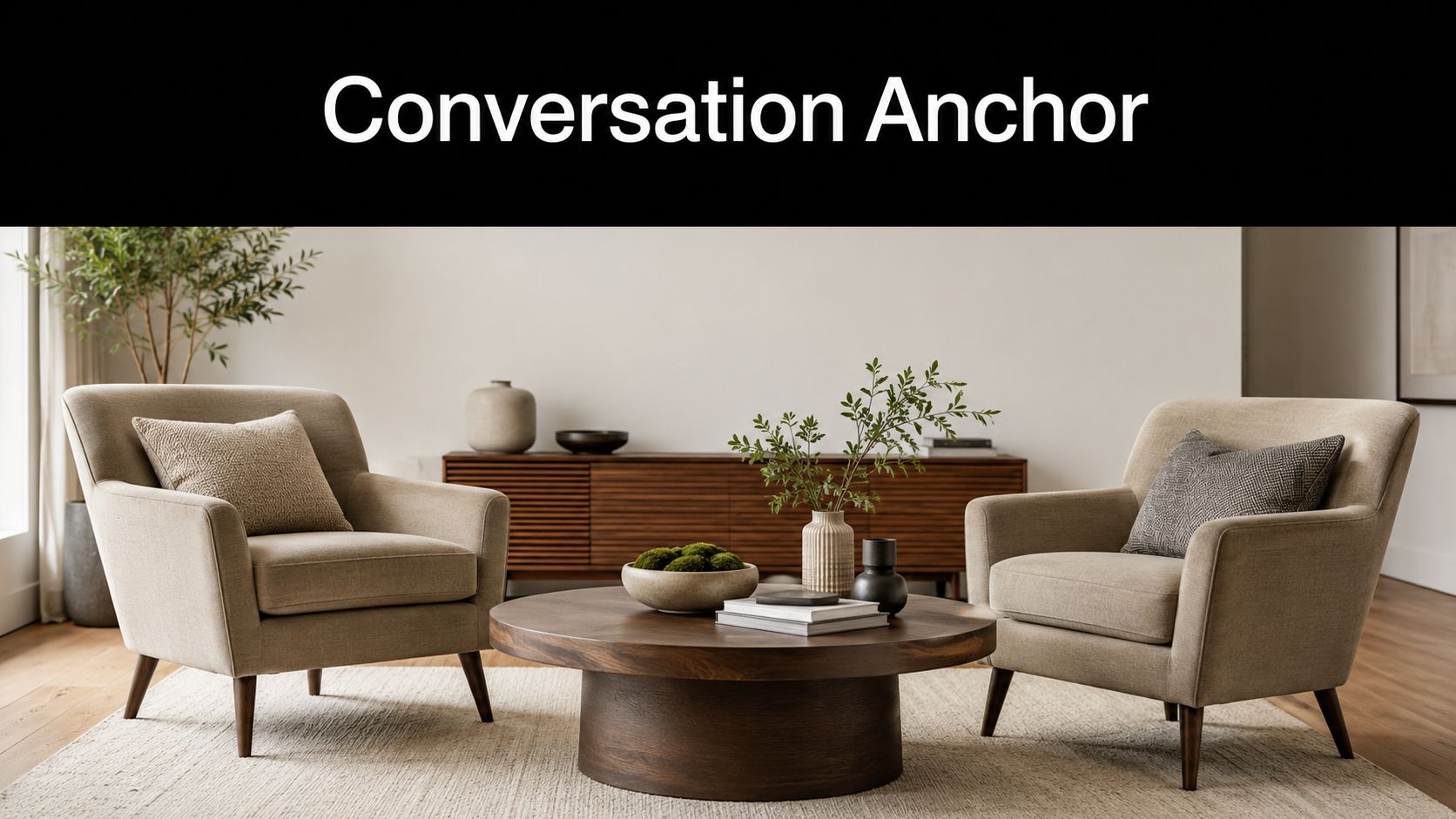
A living room cocktail table in an event setting is a low central surface designed for seated use. That sounds obvious, but the distinction matters. It doesn't do the job of a café table, dining table, or poseur table. It supports a different kind of guest behaviour.
When you place one inside a lounge grouping, you're signalling that people can pause there, put something down, and stay for a while.
It changes how people use the room
Tall cocktail tables encourage standing, short conversations, and constant movement. Low cocktail tables do the opposite. They invite guests to sink into a sofa, turn toward one another, and use the area as a real social base.
That's why they're so useful at events with mixed energy levels. A corporate function may need a standing networking zone near the bar and a calmer seated zone for longer conversations. A wedding might need a stylish escape from the dance floor for older relatives, parents with young children, or guests who want to hear each other speak.
The table is what makes that seated zone functional.
The idea has old roots and a very current purpose
The format didn't appear out of nowhere. The modern living room cocktail table evolved from a low-table tradition established in Victorian England in the 19th century, when small tea tables held cups, books, candles, and other lounge items. One documented milestone came in 1867, when E.W. Godwin created a piece he called a “coffee table,” an early known use of the term that helped shape the format still recognised today, as noted in this history of the coffee table.
That history matters because the purpose hasn't really changed. It is still a low, shared surface for relaxed social spaces.
Guests don't think about furniture categories. They just feel whether a lounge lets them relax or keeps them unsettled.
How to use the table strategically
A cocktail table works best when you assign it a role inside the floor plan:
- Conversation anchor. It gives each lounge pod a clear centre.
- Service surface. It holds drinks, canapés, napkins, and small styling items.
- Visual organiser. It stops a loose cluster of seating from looking random.
- Traffic guide. It subtly tells guests where to sit and where not to walk.
Shape matters too. If you're comparing curved and elongated layouts, these examples of oval cocktail tables for event lounges are especially useful when you need softer movement through tighter spaces.
A room with no low central surfaces often feels under-planned. A room with the right ones feels settled within minutes of guests arriving.
How to Choose the Right Table Size and Quantity
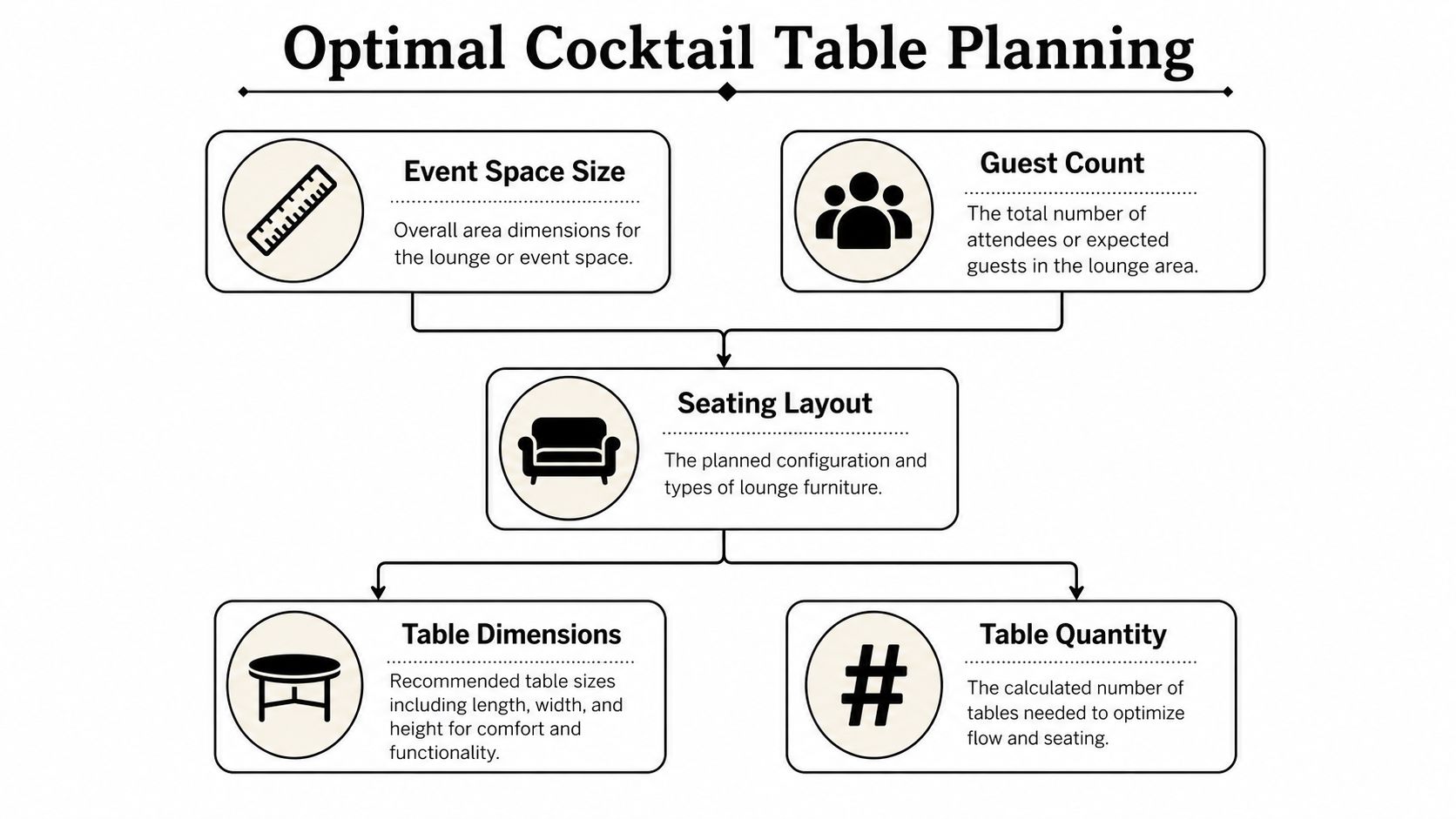
The fastest way to spoil a lounge layout is to choose a table by appearance alone. Scale comes first. A beautiful finish won't rescue a table that forces guests to stretch too far for a glass or squeeze their legs around the corners.
Start with sofa proportion
The most useful sizing benchmark is the sofa. Design guidance commonly recommends a cocktail table length of about two-thirds of the sofa length, with the table height matched to the seat cushions or slightly lower. In practice, many cocktail tables fall in the 16 to 21 inch height band, according to this coffee table sizing guide.
For event planners, that translates into a simple test. When guests sit down, the table should feel close enough for easy reach and low enough that it doesn't dominate the seating.
What usually works and what usually fails
Here's the practical version used on event floors:
- Too long and the table starts to pinch the lounge, especially when guests cross their legs or place handbags nearby.
- Too short and it looks decorative rather than useful.
- Too high and the whole pod feels stiff.
- Too low and guests lean awkwardly every time they set down a drink.
If you're hiring timber pieces, these examples of a round wood cocktail table show the sort of shape that can solve access issues in tighter or more organic seating plans.
The right size table disappears into the experience. Guests use it without thinking about it.
Work out quantity by lounge behaviour
Quantity depends less on a universal formula and more on how many true seated conversation areas you want. At a wedding, guests tend to rotate through lounge pods. At a launch or VIP event, the same groups often hold a spot for longer. That means you should plan for enough central surfaces in each intended seated cluster, not just enough furniture to fill the room.
A useful rule in practice is this: if a seating grouping reads as its own social pod, it usually needs its own cocktail table.
| Guests in Lounge Area | Recommended Lounge 'Pods' | Minimum Cocktail Tables |
|---|---|---|
| Small lounge area | 1 to 2 pods | 1 to 2 tables |
| Medium lounge area | 2 to 4 pods | 2 to 4 tables |
| Large lounge area | 4 or more pods | Match at least one table to each main pod |
Adjust for event type
Different events put different pressure on the surface:
- Wedding lounges need room for drinks, clutch bags, and occasional plated snacks.
- Corporate lounges often need space for notebooks, branded items, and coffee service.
- Private parties usually need forgiving layouts because guests move furniture more casually.
- Matric dances and formals benefit from cleaner, sturdier surfaces that can handle fast turnover and photo traffic.
If there's any doubt, add another table before adding another chair. An extra seat without a reachable surface often creates more frustration than value.
Matching Table Style to Your Event Theme
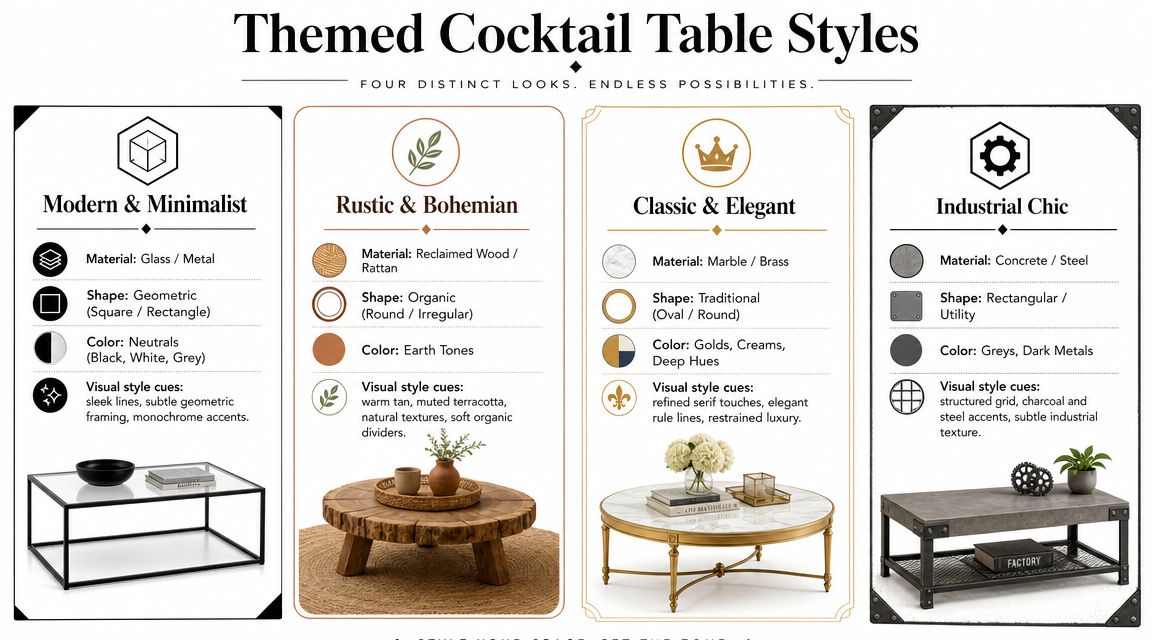
Style choices on low tables do more than fill visual space. They tell guests how formal, relaxed, contemporary, or playful the lounge is supposed to feel. Material, shape, finish, and even edge detail all influence that first impression.
Why modern event tables look the way they do
After 1945, cocktail-table and coffee-table designs became wider and larger to suit modern living spaces and practical entertaining. Sources describe a move toward simple, functional centre tables that could hold drinks, décor, and magazines while fitting around sofas, as outlined in this discussion of cocktail table and coffee table design changes.
That shift still shows up in event furniture hire. The tables that perform best are usually the ones that combine a clean silhouette with enough usable top surface.
Four common event directions
| Event feel | Table choices that fit | Where they work well | Watch-outs |
|---|---|---|---|
| Modern and minimal | Glass-look, acrylic, metal, black or white finishes | Product launches, gallery events, city venues | Smudges and scratches show quickly under lighting |
| Rustic and warm | Wood tones, rounded edges, textured surfaces | Winelands weddings, farm venues, garden marquees | Wrong stain tone can clash with flooring or harvest tables |
| Classic and polished | Gold accents, marble-look tops, oval shapes | Formal dinners, engagement parties, hotel lounges | Too many glossy finishes can look over-styled |
| Night-time statement | LED tables, illuminated cubes, glowing accents | Birthdays, matric after-parties, brand activations | Needs restraint so the lounge doesn't compete with the dance floor |
LED versus traditional finishes
LED cocktail tables work best when the event already has a contemporary lighting language. They suit parties, launches, and younger crowds, especially when the lounge forms part of the entertainment rather than a quiet retreat. They don't suit every wedding. In a heritage venue or vineyard setting, they can look disconnected unless the rest of the design also leans modern.
Traditional timber or metallic finishes are usually easier to blend across mixed-use events. They also photograph more softly during the daytime.
For hosts considering multi-use furniture at home or at hybrid events, these styling tips for lift coffee tables offer useful thinking around flexibility, especially when a surface may need to handle more than one task.
Match the shape to the mood
A square or rectangular table tends to feel structured. It suits cleaner layouts and formal lounge groupings. Round and oval tables feel easier and more social. They soften conversation zones and reduce visual clutter.
That's the trade-off. Sharp geometry brings order. Softer shapes improve movement and usually make a lounge feel more welcoming.
Professional Styling for Cocktail Tables
An empty cocktail table makes a lounge look unfinished. An over-styled one makes guests nervous to use it. The sweet spot is a table that looks considered but still leaves obvious room for drinks, plates, and personal items.
Build around function first
At events, function has to lead styling. A home décor approach often adds books, sculptures, candles, and layered objects that look good in a photograph but collapse once guests start interacting with the table.
Start with the practical questions. Will waiters pass canapés through the space? Will guests set down wine glasses, coffee cups, or dessert bowls? Is the lounge meant for quick pauses or longer conversations?
Use these as your base rules:
- Keep the centre low so guests can see each other across the table.
- Leave landing space on at least part of the tabletop for active use.
- Contain loose décor in a tray so items don't drift across the surface.
- Choose sturdy pieces that won't topple if someone brushes the table getting up.
A styled table should still look usable from two metres away. If it looks precious, guests avoid it.
Use layers without crowding the surface
A reliable event styling formula is one structured base, one softer element, and one functional detail. For example, a tray, a small floral arrangement, and branded coasters. Or a runner, a candle cluster, and a small bowl for wrapped sweets.
That mix gives the table shape without turning it into a display stand.
Styling elements that tend to work well
- Trays keep candles, votives, or small branded items contained.
- Low florals add freshness without blocking conversation.
- Coasters look thoughtful and protect the finish.
- Small lamps or soft LED accents can help in dim evening lounges.
- A single textural object such as beads, moss, or ceramic can stop the surface from feeling flat.
Items that often cause trouble
- Tall centrepieces interrupt sightlines.
- Loose petals or confetti migrate into drinks and handbags.
- Overhanging fabrics catch glasses and sleeves.
- Heavy scent candles can fight with plated food and wine service.
Adapt styling to the rental piece
Not every hire item arrives in the exact finish you'd choose for a permanent interior. Sometimes the answer is smart surface treatment rather than replacing the furniture type entirely. If you're planning a custom look for a photoshoot, activation, or one-off branded event, this guide to applying adhesive film to furniture is useful for understanding what temporary finish changes involve and where they make sense.
That said, most event lounges need fast, reliable styling. The simpler route is often the better one.
A good cocktail table styling scheme should survive guests leaning in, staff clearing glasses, and the room looking slightly different at the end of the night than it did at the start. If the table still looks intentional after real use, the styling has done its job.
Rental Logistics in Cape Town and The Winelands
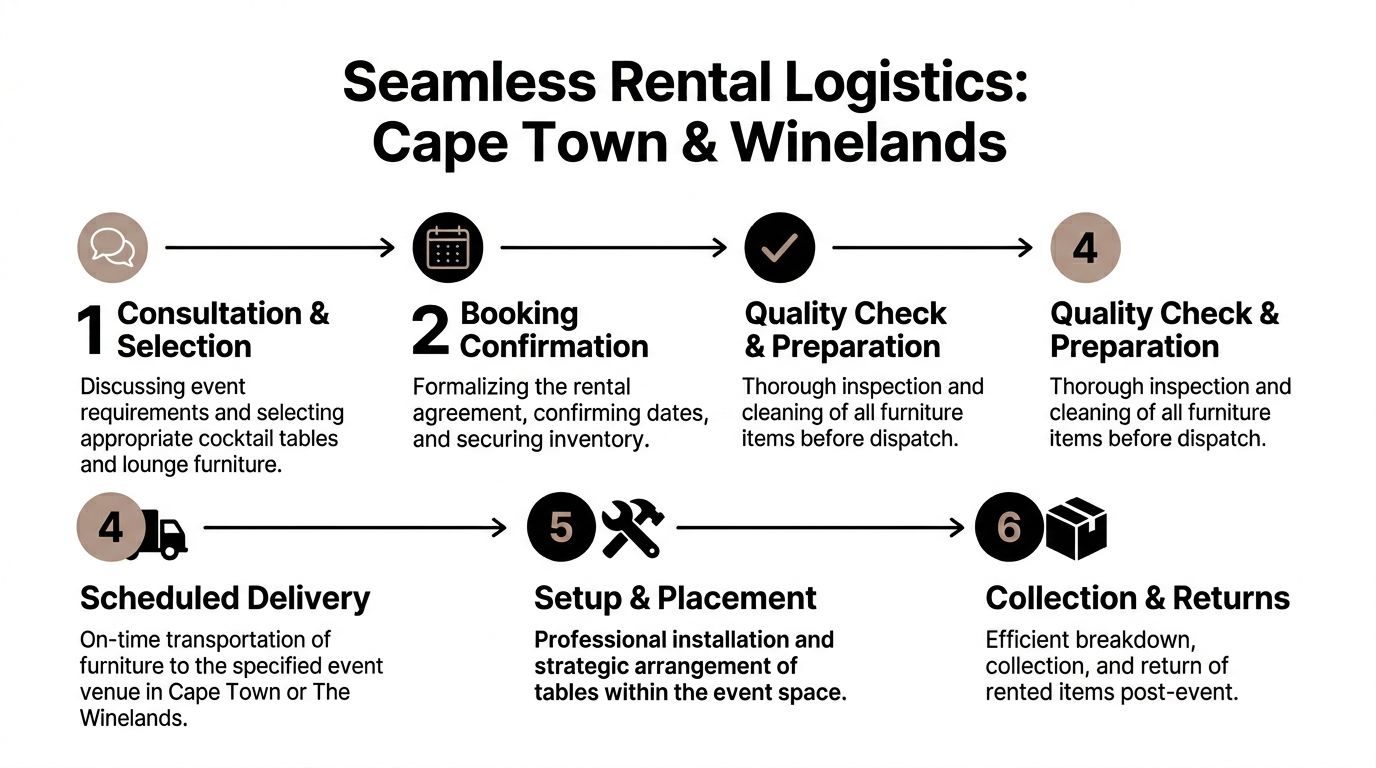
A lounge can look perfect on a floor plan and still fail on install day. The usual reasons are simple. The truck cannot get close to the venue, the setup window is shorter than expected, or the tables chosen for the look are awkward for the site conditions.
That happens often in Cape Town and the Winelands.
City venues regularly work with strict loading times, shared service corridors, basement parking, and passenger lifts that are too small for bulky items. Out in Stellenbosch, Franschhoek, and Paarl, the challenge shifts. Gravel approaches, lawns, cellar courtyards, and longer push distances all affect what can be delivered quickly and placed safely.
That is why table choice is partly a logistics decision. A heavier feature piece may suit the concept, but it is not always the practical option for a venue with stairs, uneven ground, or a fast room reset between ceremony and reception. For many events, a lighter, stable cocktail table that crews can position quickly is the better call.
The rental process tends to run well when these steps are clear from the start:
- Consultation and item selection based on the guest count, service style, and venue access.
- Booking confirmation so stock is held for your date, especially in peak wedding and year-end periods.
- Pre-dispatch checks to confirm quantities, finishes, and condition.
- Timed delivery that matches the venue access window.
- On-site placement using the agreed layout, rather than leaving pieces stacked for later decisions.
- Post-event collection once the venue allows breakdown access.
ABC Hire supplies event furniture for Cape Town and surrounding Winelands areas, including Stellenbosch, Franschhoek, and Paarl.
One practical tip saves a lot of stress. Confirm delivery time and collection time at the same moment you sign off the furniture list. If those two points stay vague, the problems usually show up at venue level, not on the quote.
Before delivery day, settle these details with your rental partner and venue coordinator:
- Access route. Loading bay, staircase, service lift, grass path, or cellar entrance.
- Placement responsibility. Rental crew placement or later styling by your production team.
- Ground surface. Decking, lawn, carpet, concrete, cobbles, or mixed surfaces.
- Protection needs. Weather cover, indoor holding area, or delayed load-in if rain is expected.
- Collection window. Immediate strike after the event or next-morning pickup.
For Cape Town planners, these checks are what keep an elegant lounge from turning into a rushed install. The cocktail table may be a small line item on the inventory, but getting it to the right spot, at the right time, in the right condition is what makes the whole lounge work.
Frequently Asked Questions for Event Planners
Some of the most useful questions come up late in planning, when the mood board is approved and the practical compromises begin.
The questions that matter on real event floors
| Question | Answer |
|---|---|
| What shape works best in a compact lounge area? | Round and oval tables are often easier in tight spaces because they soften movement and reduce hard corners around busy walkways. Rectangular tables work well when the seating layout is linear and the room is narrow. |
| Can one cocktail table serve two sofas? | Sometimes, but only if the seating reads as one shared pod. If guests on one side have to lean forward or twist to reach it, split the grouping and use two tables. |
| Should every lounge pod match exactly? | No. Symmetry can look polished, but slight variation often feels more natural. Keep one common thread such as finish, height family, or shape language. |
| How much styling should stay on the table during service? | Less than you think. Leave clear usable space. If catering is substantial, reduce décor further so guests don't start moving items onto the floor. |
| What matters most for hybrid entertaining and occasional work use? | Surface stability, easy-clean finishes, and enough top area for a drink plus a laptop or plate matter more than decorative detail. Multi-use tables need to look good and handle changing tasks without fuss. |
| Are low tables worth it for short events? | Yes, if you're creating any seated lounge at all. Even brief events feel more complete when seated guests have a central surface for drinks and personal items. |
Final planning note
The best rental choice usually isn't the boldest table in the catalogue. It's the one that fits the seating, suits the venue, and still works once guests arrive. That's the standard worth planning for.
If you're planning an event lounge and want furniture that suits the venue, guest flow, and overall look, speak to ABC Hire about cocktail tables, lounge seating, delivery, setup, and collection across Cape Town and the Winelands.