
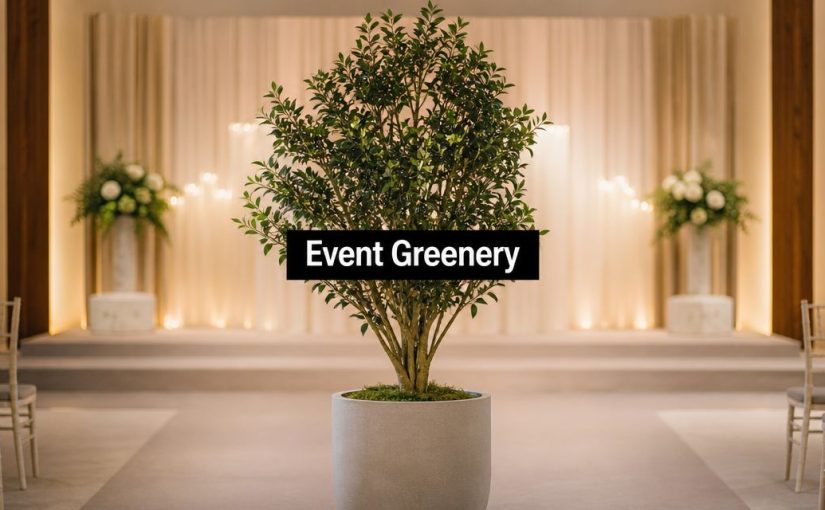
A lot of Cape Town venues photograph beautifully when they're empty. They don't always feel complete once the floorplan goes in.
That's usually the moment clients start looking for something to soften hard corners, frame an entrance, fill dead space near a stage, or give a lounge area some height without adding floral maintenance, soil, or last-minute drama. A good fake potted tree solves that quickly. It brings shape, texture, and balance into a room, and if it's chosen properly, guests don't read it as “artificial décor”. They read it as a finished event.
In the Winelands, this matters even more. Estate venues often have striking architecture, generous ceiling height, stone, glass, and clean white walls. In the city, you get industrial spaces, hotel ballrooms, rooftop venues, and polished corporate rooms that need warmth. In both settings, a fake potted tree works best when it's treated as a design tool, not an afterthought.
Why Your Next Event Needs Lifelike Greenery
A venue can be expensive, well run, and still look bare. That happens often with ceremony spaces, pre-drink areas, registration points, and stage wings. You don't always need more furniture. You often need vertical styling.
That's where a fake potted tree earns its place. It adds height without building a full set, softens lines without making a room feel cluttered, and gives you a natural visual break between functional zones. For weddings, it can make a hall feel romantic instead of stark. For brand launches, it can stop a room from looking like a conference setup with nicer lighting.
Artificial trees are no longer a niche decor choice. The category has become a mass-market standard internationally, with U.S. sales reaching about 14.7 million fake trees in one year according to the National Christmas Tree Association quick facts. For event professionals, that matters less as a Christmas fact and more as a signal that artificial greenery is now a normal commercial product category with broad design acceptance.
Where they work best in Cape Town events
A fake potted tree is useful when the room needs structure. Common examples include:
- Ceremony framing: Two matching trees can anchor a signing table, altar area, or aisle entrance.
- Lounge definition: Trees help separate a seating cluster from a dining or dance zone without hard barriers.
- Photo moments: A plain wall becomes usable once greenery gives it depth.
- Venue problem-solving: Trees can distract from service doors, cable runs, or awkward corners.
For couples planning a woodland or nature-led look indoors, an enchanted forest wedding guide is a useful visual reference for how greenery creates atmosphere without relying only on florals.
A room rarely feels finished when every decorative element sits at table height. Greenery fixes that by lifting the eye.
Why planners keep using them
Real plants can be beautiful, but event timelines are tight. Deliveries run late, venues have access windows, and the person managing the setup also has ten other things happening. Artificial trees bring consistency. You know what they'll look like when they arrive, and that reliability matters on a one-day install.
The best results come when the tree is believable in scale, suitable for the venue style, and properly potted. When those three things line up, the greenery reads as polished, not fake.
Real vs Fake Trees The Event Planners Verdict
The debate isn't philosophical. It's operational.
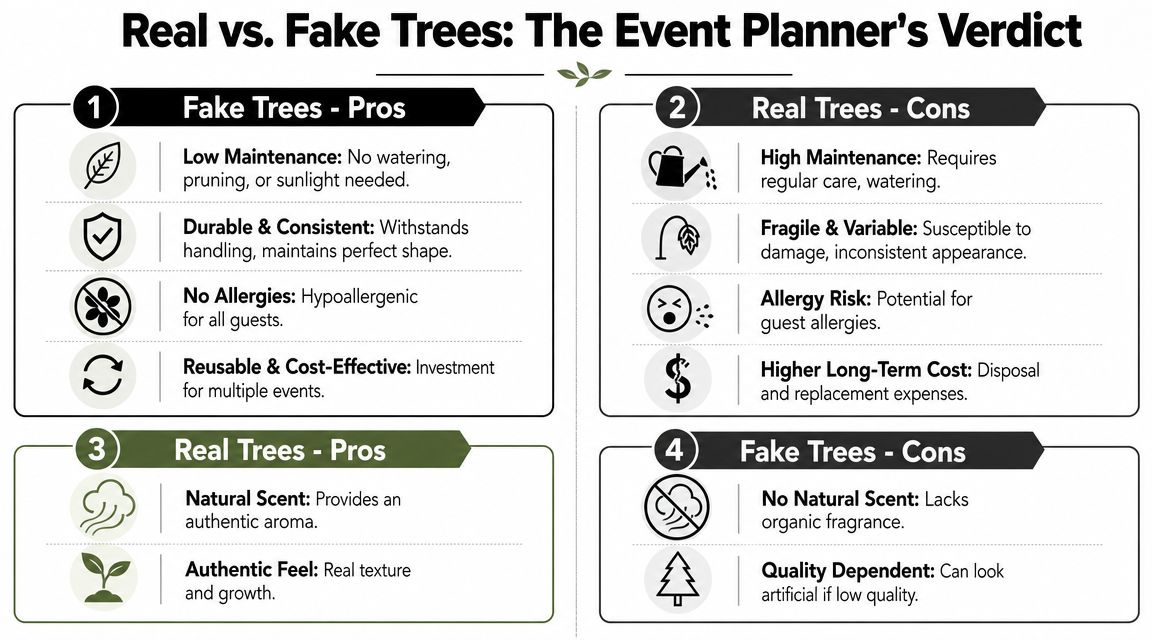
For events in Cape Town and the Winelands, the right choice depends on setup time, transport, venue rules, weather exposure, and how close guests will get to the styling. Real trees give you scent and natural irregularity. Fake trees give you control.
The side-by-side view
| Factor | Real trees | Fake potted trees |
|---|---|---|
| Appearance on arrival | Can be beautiful, but variable | Consistent if the quality is good |
| Maintenance | Needs watering and care | No watering, no pruning |
| Transport stress | Branches and leaves can bruise | Usually handles load-in better |
| Guest sensitivities | Can trigger allergies for some guests | Usually a safer choice for mixed crowds |
| Scent | Natural scent | No natural scent |
| Reuse | Limited for one-off events | Suitable for repeat use and hire stock |
| Mess factor | Soil, shedding, water risk | Cleaner setup |
What works in real event conditions
For a wedding on a wine estate, real trees can look stunning in the right season and the right weather. But they can also arrive uneven, drop leaves, mark floors, or look tired by the end of the night. In a corporate ballroom or school formal, that unpredictability is usually more trouble than it's worth.
Fake trees win in these situations:
- Tight install windows: You don't have time to groom or rescue a live product.
- Multiple room flips: A reusable tree can move from foyer to stage to photo area if needed.
- Uniform styling: Matching pairs are easier to achieve with artificial stock.
- Remote venues: The less care needed on site, the easier the event day runs.
Where real trees still have an edge
There are still cases for using live greenery.
- Natural scent matters: A small, intimate event may benefit from it.
- Close guest interaction: If guests will touch and inspect the styling constantly, live foliage has a tactile advantage.
- Permanent installs: A venue with staff and care systems may prefer living plants in fixed areas.
Practical rule: If the plant must survive transport, stand perfectly for hours, and still look identical in photos from the first guest to the last, artificial usually wins.
The verdict from an event floor
For temporary events, fake potted trees are usually the smarter working option. Not because they're “better” in every abstract sense, but because they're easier to manage under pressure.
What doesn't work is choosing a cheap artificial tree and expecting it to pass. Low-grade foliage, shiny leaves, weak trunks, and tiny nursery pots are the usual giveaways. A strong fake tree needs the right species, proper fluffing, and a planter that suits the scale.
Choosing the Perfect Fake Potted Tree for Your Venue
Choosing the wrong tree is how a clean event design starts looking theatrical in the wrong way. The right tree should suit the venue, the traffic flow, and the style language of the event.
Start with the room before you start with the tree. A Cape Town CBD launch venue and a Franschhoek estate don't need the same foliage profile.
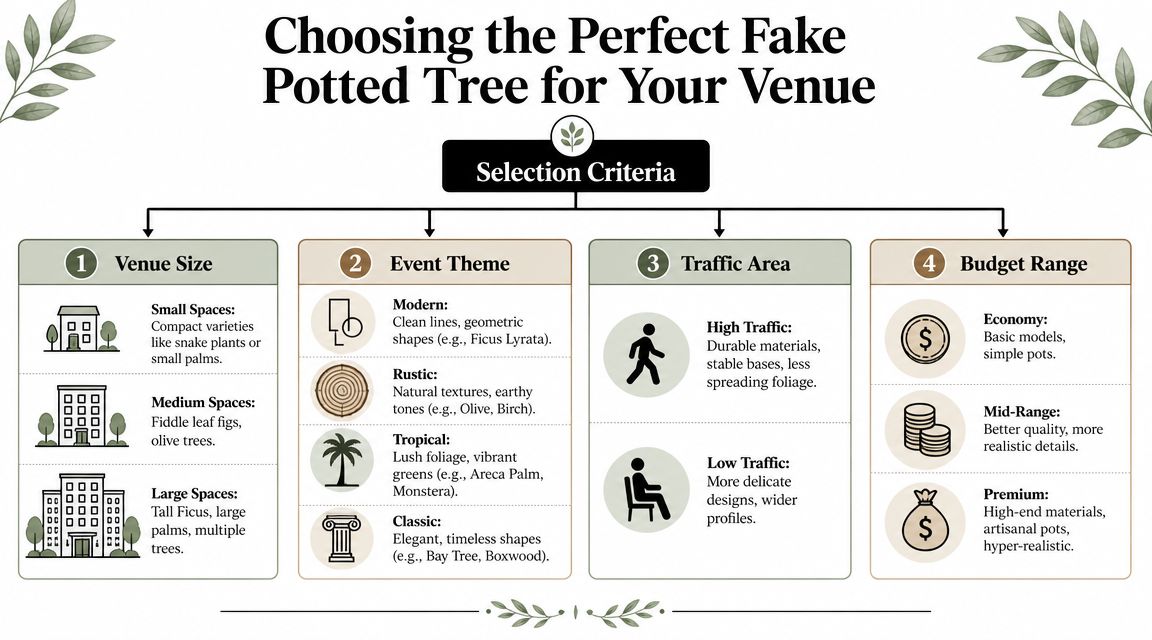
Match the tree to the event style
Some tree shapes are easier to place than others.
Fiddle leaf fig for modern interiors
A fiddle leaf fig works well in cleaner interiors with contemporary furniture, white plinths, black-framed glazing, or neutral lounges. It has broad leaves and a sculptural profile, so it reads well in photos. It's a strong option for indoor weddings, launch events, and hotel spaces.
The risk is that a low-quality version looks synthetic quickly. Large leaves show flaws more easily, so this is one tree where quality matters.
Olive tree for Winelands and rustic elegance
Olive trees suit estate venues, harvest tables, natural linens, stone buildings, and layered neutral styling. They don't dominate a room. They add movement and softness.
This is often the safer choice when you want greenery that supports the look rather than becoming the focal point.
Palm for summer and brand events
Palms work in rooftop events, summer parties, poolside functions, and tropical brand activations. They bring energy. They also take up more visual space because of the frond spread, so placement needs discipline.
Use them where guests read the silhouette from a bit of distance. In narrow aisles or compact dining layouts, they can become intrusive.
Get the scale right
This is the part people rush, and it shows. A fake tree can be the right species and still look wrong because the pot is too small or the canopy is too wide for the room.
Retail guidance on artificial trees notes that a 60-inch tree is a common indoor size, and that realism depends on height-to-footprint balance rather than height alone, as outlined in this artificial potted tree sizing example. In event terms, that means a good tree should look anchored, not perched.
A quick venue guide
- Small spaces: Choose slimmer profiles. Narrow ficus forms or compact olives work better than wide palms.
- Medium rooms: Most event trees sit comfortably. You've got enough room for presence without overpowering the floorplan.
- Large venues: One tree alone often looks lost. Grouping or repeated placement usually works better than a single oversized piece.
If guests notice the pot before they notice the tree, the proportions are off.
What to look for before you approve it
Use this shortlist when selecting a fake potted tree:
- Leaf finish: Matte or softly finished leaves usually look more convincing than highly glossy ones.
- Trunk detail: A textured trunk hides the artificial nature far better than a smooth moulded one.
- Pot quality: The standard supplier pot is rarely good enough for a styled event unless it's hidden inside a larger planter.
- Branch flexibility: Branches should open and shape naturally, not sit flat from storage.
A good tree should still look right from multiple angles, not only from the front where the product photo was taken.
Styling and Placement for Maximum Impact
A fake potted tree shouldn't be dropped into a room just because there's an empty corner. It needs a job.
The strongest event styling uses greenery to frame, direct, soften, or conceal. Once you think in those terms, placement gets easier and the event starts feeling designed rather than decorated.
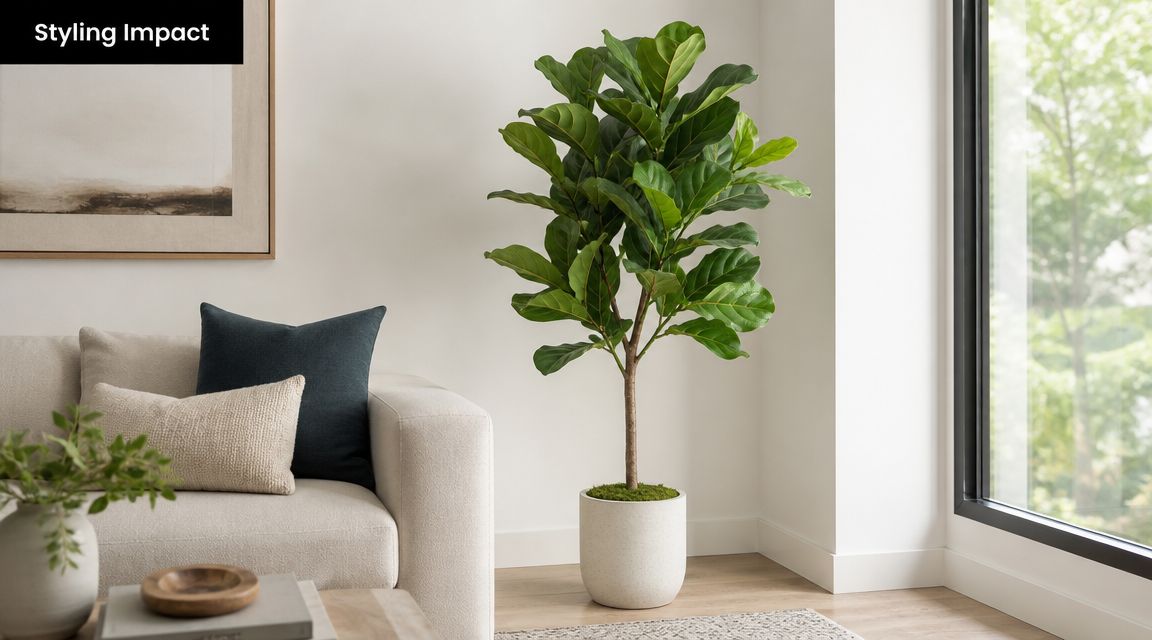
Use trees to frame key moments
At weddings, pairing trees often works better than scattering singles. Two matching trees at the ceremony entrance create a clear threshold. Two behind a sweetheart table can widen the backdrop without building a full greenery wall.
At corporate events, one tree on each side of a stage can make the setup feel deliberate and polished. That's especially useful when the AV setup is technically strong but visually cold.
High-impact placement ideas
- Entrance styling: Place one or two trees where guests first enter. It sets tone immediately.
- Photo area softening: Add greenery to hard walls, branded backdrops, or step-and-repeat zones.
- Lounge zoning: Use trees at the edges of couches and occasional chairs to define the area.
- Service-area screening: Position greenery where you need to distract from operational spaces without blocking access.
Work with the venue, not against it
Cape Town venues vary wildly. Some have dramatic views that shouldn't be crowded. Others need visual help because they're practical spaces first and beautiful spaces second.
In the Winelands, a fake potted tree often looks best when it echoes the architecture. Olive trees and softer, looser forms work well against timber, plaster, and stone. In urban venues, cleaner silhouettes such as fiddle leaf figs or structured ficus types tend to hold their own against glass, steel, and LED lighting.
If you're layering textures underfoot, pairing greenery with something like fake grass carpet for event flooring can make a lounge, kids' area, or activation zone feel more complete.
Don't make these placement mistakes
Some placements fail every time.
- Blocking circulation: A tree can't sit where waiters, photographers, or guests need to turn.
- Forcing symmetry: Symmetry is useful, but not every room needs matching pairs.
- Ignoring sightlines: A tree that blocks the ceremony, screen, or speaker view becomes a nuisance.
- Using one lonely tree in a huge room: Large spaces usually need repetition or grouping.
The best placement often feels obvious only after the room is finished. Before that, it's usually a strategic decision about what the eye needs to land on.
A before-and-after way to think about it
A blank registration area with one desk and two staff members can feel temporary. Add a tree beside the desk, another at the far edge, and the same area feels hosted.
A stage with only branding can feel hard. Add greenery at floor level and the visual line becomes softer.
A lounge with chairs alone can feel like furniture storage. Add two trees at the outer corners and it becomes a destination within the room.
Renting vs Buying for Your Event Budget
For most events, renting makes more sense than buying. Not because buying is always wrong, but because ownership comes with costs people forget to count.
When someone buys a fake potted tree for a once-off event, they usually focus on the purchase price. They don't always account for storage, transport, cleaning, repairs, or where that tree goes after the event. A hired tree leaves after the event. An owned tree becomes your problem.
Why renting usually wins
A temporary event needs flexibility more than ownership. One month you may need olives for a Stellenbosch wedding. Next month you may need palms for a summer activation. Renting lets the style shift with the brief.
It also lowers risk. You're not committing to one look and hoping it suits future events.
The hidden costs of buying
- Storage: Artificial trees need dry, clean storage or they gather dust and deform.
- Transport: Large planters and taller trees are awkward to move without the right vehicle and handling.
- Maintenance: Branches need refluffing, pots scuff, and decorative top layers get tired.
- Style lock-in: One tree choice can date quickly or clash with the next event concept.
When buying does make sense
Buying can work for businesses or venues with ongoing use. A hotel lobby, tasting room, office reception, or permanent venue lounge may get enough use from the same tree to justify ownership.
There's a similar logic in interiors and property presentation. If you're weighing one-off styling against repeated use, this breakdown of the cost of staging a home is a useful parallel. The core question is the same. Are you paying for a permanent asset, or for a temporary result?
The practical hire advantage
For event clients, rental keeps the decision simple:
- You choose for the brief, not for forever
- You don't need to store anything after breakdown
- You can match the greenery to the furniture and room style
- You avoid ending up with damaged décor after one use
If you're already hiring the rest of the event setup, the same logic applies to greenery. This is also why many planners prefer renting furniture for events rather than buying pieces they'll only use occasionally.
The only time buying becomes the obvious answer is when the tree will live in one place for a long period and someone is responsible for keeping it presentable. For most weddings, launches, school functions, and private celebrations, renting is the cleaner decision.
Installation Transport and On-Site Safety
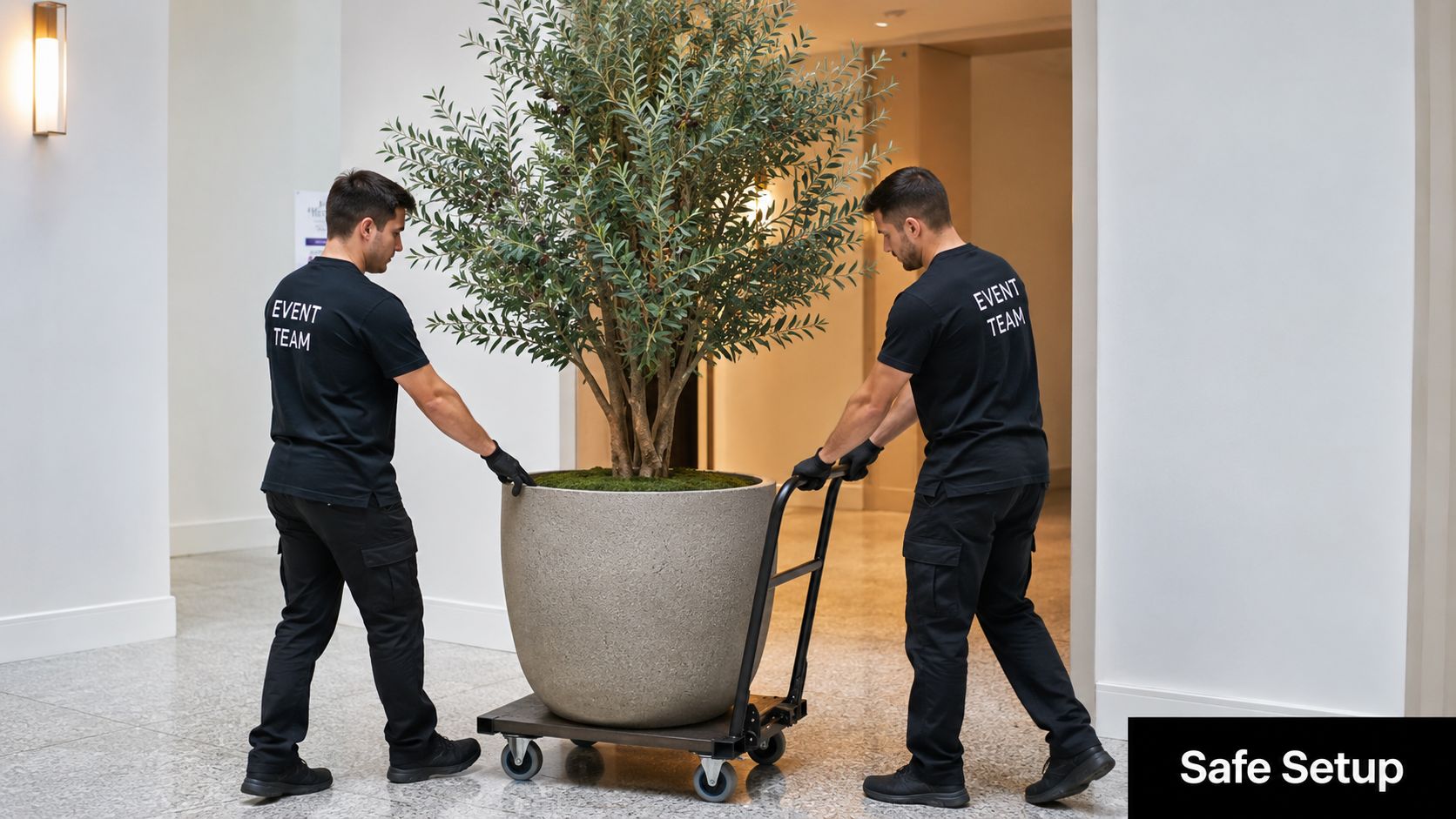
A fake potted tree can look perfect in the warehouse and poor on site if it's handled badly. Most problems come from transport damage, rushed fluffing, weak ballast, or careless placement.
That's why the install process matters just as much as the tree choice.
Stability first
For a stable event setup, the decorative pot should typically be 2 to 4 inches wider than the starter base, and trees over 6 feet need ballast such as sand or gravel to reduce tip-over risk, as outlined in this guide to potting a faux tree securely.
That matters in real venues. Guests brush past décor. Waiters turn quickly. Floors aren't always perfectly even. In the Winelands, load-ins may also involve uneven surfaces before the tree reaches the final room.
A working install checklist
Before transport
- Wrap foliage lightly: Protect leaves and branches from crushing.
- Secure the pot: Movement inside the vehicle can loosen the base.
- Keep trees upright where possible: That reduces reshaping time on arrival.
On site
- Place first, then finish: Once ballast and dressing are added, the pot gets harder to move.
- Fluff branches by hand: Open the silhouette and remove flat storage lines.
- Check from guest angles: Front-of-house view matters more than back-of-house convenience.
- Test for rocking: A gentle nudge tells you immediately whether the base is safe.
In public areas
- Keep clear of exits and aisles: Greenery can't obstruct circulation.
- Respect venue fire rules: Placement near heat sources, lighting clusters, and escape routes needs care.
- Avoid narrow pinch points: Trees should never create a snag point for dresses, cables, or serving trays.
On-site check: If a tree wobbles during setup, it's already a hazard. Fix the base before guests arrive.
Transport and compliance in Cape Town conditions
Cape Town events come with practical variables. Wind at a courtyard venue. Tight stair access in the city. Load-in slots at hotels. Gravel approaches at estates. A large fake potted tree may be lightweight in foliage but awkward in shape, so proper dollies and handling matter.
For outdoor-adjacent spaces, the same thinking used for stable outdoor umbrella stands at events applies here too. Weight at the base matters more than appearance alone.
Fire and material awareness
Artificial trees are often made from PVC plastic. Illinois Extension notes that PVC is commonly fire-retardant but not fire-resistant, which is an important distinction for indoor venues with lighting and public access, as explained in these Christmas tree material and safety facts.
In practice, that means you shouldn't assume any faux tree is automatically suitable for every venue condition. Ask about material details. Keep décor away from ignition risks. Treat large greenery installations as part of the venue safety plan, not as harmless filler.
Your Fake Potted Tree Questions Answered
Can a fake potted tree work outdoors in Cape Town
Sometimes, yes. But “outdoors” is too broad. A sheltered courtyard and an exposed Winelands lawn are not the same thing. Wind is the deciding factor. If the event is outdoors or partially outdoors, use heavier bases, protected placement, and don't rely on a decorative pot alone to keep the tree stable.
Are fake trees suitable for guests with allergies
They're often a practical choice for mixed guest groups because they don't bring pollen in the same way live plants can. That said, dust and material quality still matter. In enclosed venues, indoor air quality is worth considering, so it's smart to use suppliers who are clear about materials and product condition.
How do I make artificial greenery feel more premium
Three things matter most. The tree type, the pot, and the styling around it. A believable fake potted tree usually has a textured trunk, natural branch shaping, and a planter that suits the room. The cheapest-looking setup is almost always a decent tree left in a flimsy starter pot.
What's the most responsible way to use artificial décor
Use it repeatedly, handle it properly, and choose pieces with a longer service life. A well-kept rental item that works across many events is usually a better practical choice than buying low-grade décor for one function and discarding it later.
How do I know if a rented tree will look realistic
Ask for actual event photos, not only supplier cut-outs. Check the canopy shape, trunk finish, and planter scale. Also ask whether the tree is dressed on site. Good artificial greenery often needs final fluffing and positioning after delivery to look convincing.
If you want your event greenery to look polished, practical, and venue-appropriate, ABC Hire can help you choose rental pieces that suit your layout, style, and setup requirements across Cape Town, Stellenbosch, Franschhoek, Paarl, and surrounding areas.