
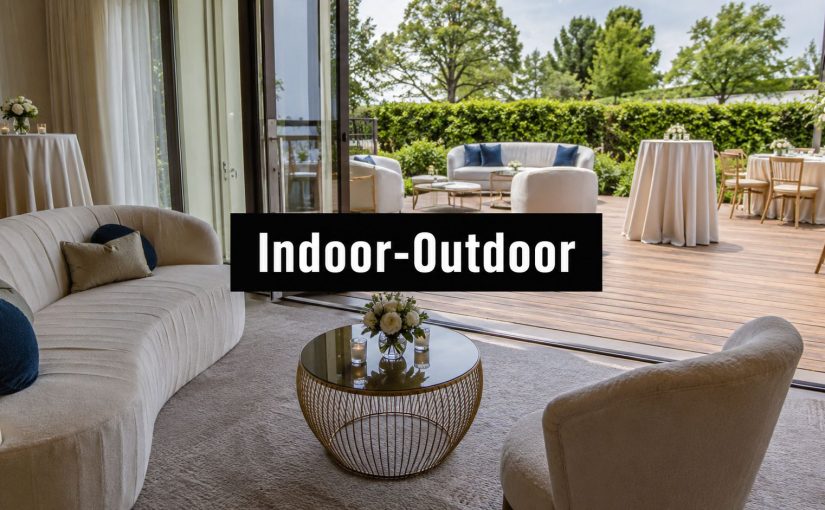
Guests rarely stay where you planned. They drift from the tasting room to the terrace, from the dance floor to the lawn, from the bar to whatever corner feels comfortable and well lit. That's why indoor outdoor furniture matters so much at Cape Town events. It isn't just about matching chairs and tables. It's about making the whole venue feel intentional, usable, and resilient when the weather changes halfway through service.
In the Winelands, a setup can look perfect at noon and struggle by late afternoon. Sun bakes dark cushions. Wind shifts light pieces. A sudden shower sends everyone under cover, and furniture that looked “good enough” starts showing exactly where the compromises were made. Most international styling advice skips this reality because it isn't written for coastal salt, hard UV, and local wind patterns.
The mistake I see most often is treating outside areas like a softer version of indoors. They aren't. A veranda in Franschhoek, a lawn in Stellenbosch, and a coastal-facing patio in Cape Town all ask different things from the same furniture. If you want the event to feel polished from first arrival to last drink, you need pieces that look refined but are built for abuse.
Creating Flawless Indoor-Outdoor Events
A strong indoor outdoor furniture plan starts with movement. Guests need a reason to step outside, but they also need to feel that the outside space is as finished as the room they've just left. If the patio feels like an afterthought, they won't linger. If it feels comfortable, sheltered, and visually connected to the main event, they'll use it naturally.
That matters more in Cape Town than many planners realise. Local conditions punish the wrong rental stock quickly. Local data indicates that 68% of Cape Town event planners report premature furniture degradation when outdoor rentals are not specifically climate-rated for the region's unique micro-zones (local Cape Town planning insight). That shows up as fabric rotting, wood warping, and a general drop in presentation at exactly the point when guests are posting photos and venues are trying to impress.
Where planners usually get caught out
The problem usually isn't one dramatic failure. It's a string of smaller ones that make the event feel tired before it's over.
- Soft furnishings absorb too much weather: Cushions look elegant at setup, then feel damp, saggy, or tired by evening.
- Lightweight pieces move too easily: A breezy courtyard can turn a neat layout into a constant reset job for staff.
- Indoor-style finishes deteriorate fast: Veneers, decorative woods, and untreated metals don't hold their appearance outdoors.
- Mixed zones feel disconnected: A sleek dining room paired with random garden furniture makes the flow feel accidental.
Practical rule: If a piece only works when the weather behaves, it isn't suitable for a Cape Town event.
What a successful setup feels like
The best events don't make guests think about furniture at all. People sit where they should sit. They gather where the host wants energy. They can move indoors when the weather turns without the aesthetic collapsing. Good planning creates that ease.
For weddings, that usually means lounge seating that photographs well but can handle a full afternoon outside. For corporate functions, it means pieces that can shift from welcome drinks to networking without looking temporary. For private celebrations, it means balancing comfort with low maintenance so the host isn't babysitting the setup.
Indoor outdoor furniture should solve three jobs at once. It must hold up physically, tie the venue together visually, and support how guests behave. If one of those three is missing, the event starts working against itself.
Choosing Materials That Endure the Elements
A Cape Town event day can feel like packing for four seasons. You might start with bright sun, pick up wind by mid-afternoon, and end with coastal damp or a late shower. Furniture has to be chosen the same way you'd dress for that day. Not for the nicest hour, but for the full range of conditions.
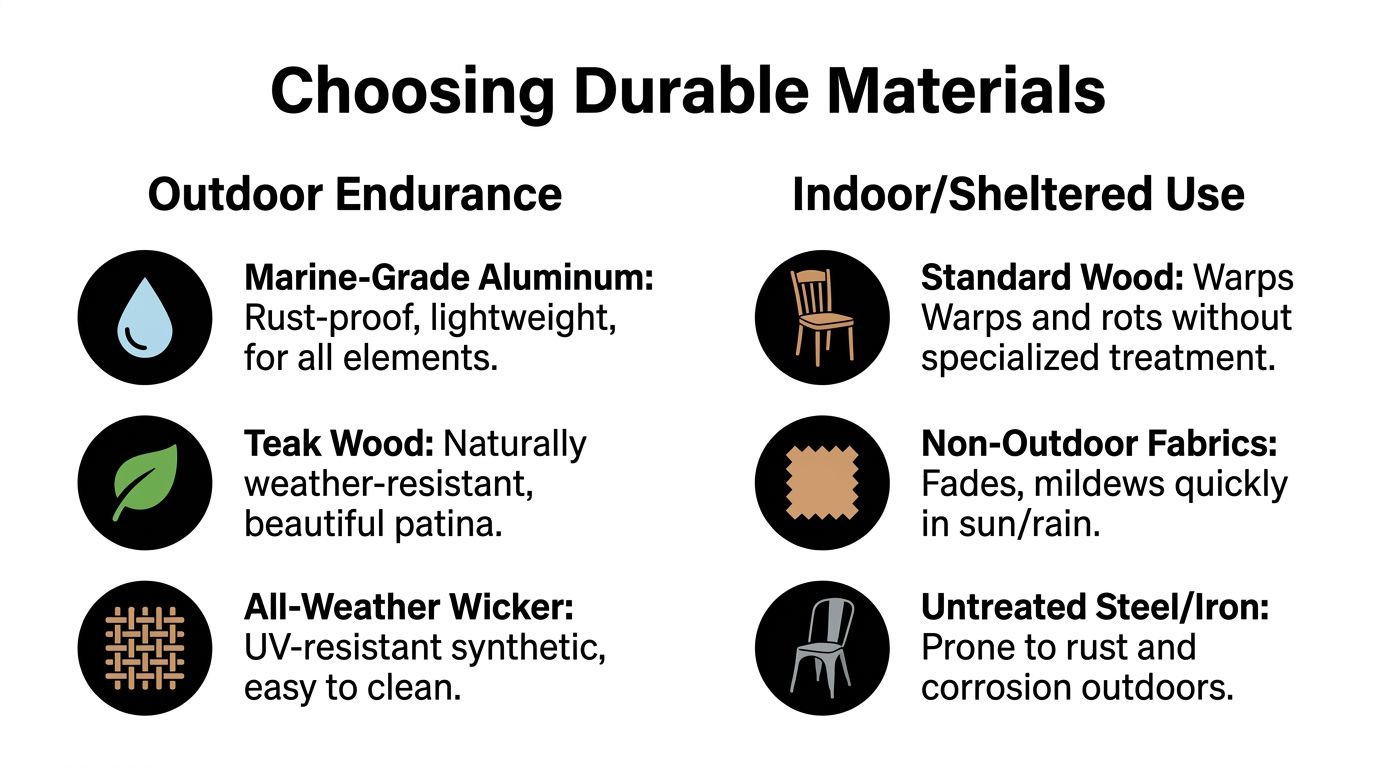
The quickest way to spot quality is to stop looking at colour first and start with construction. For South African outdoor conditions, specifications should include thick-walled welded frames, solution-dyed acrylic fabrics, and powder-coating, while cushion zip closures should be treated with caution because they often fail before the fabric does (South African patio furniture guide).
What to ask about frames and finishes
Plenty of rental pieces look solid in photos and fail in handling. A hollow tube frame with screwed joints might be acceptable in a sheltered room. Outside, with repeated transport and uneven ground, it becomes a liability.
Look for these details first:
- Welded frames: They handle movement, loading, and repeated setup better than pieces held together mainly by fittings.
- Thick-walled construction: Heavier-duty frames resist flexing and feel steadier on lawns, decking, and stone surfaces.
- Powder-coated metal: In Cape Town's coastal air, this isn't decorative. It's protective.
- No vague “outdoor suitable” claims: Ask what the frame is made from and how the finish is applied.
If you work near the coast or in exposed venues, surface protection matters even more. For a useful overview of protective finishing systems, it helps to learn about APEX NANO's durable coatings and compare that thinking with what your rental supplier offers.
Fabrics and woven materials that hold up
Outdoor cushions are where many otherwise good setups start losing ground. Standard upholstery might look plush on delivery, then fade, hold moisture, or deteriorate at the seams. Solution-dyed acrylic is the spec worth knowing because the colour is built into the fibre rather than sitting only on the surface. In local conditions, that's a major advantage.
Rattan is another category where wording matters. PE rattan is often treated as a catch-all, but unreliable grades don't age well outdoors. If woven furniture is part of the look, ask whether it is explicitly HDPE-grade. If the answer is vague, assume the finish may not last.
The phrase “all-weather” means very little unless the supplier can explain the frame, fabric, coating, and weave.
For more practical buying criteria suited for local conditions, this guide on weather-resistant outdoor furniture options is a useful companion when you're comparing stock lists.
Indoor-Outdoor Furniture Material Comparison
| Material | UV Resistance | Moisture & Salt Resistance | Wind Stability | Best For |
|---|---|---|---|---|
| Thick-walled powder-coated metal frame | Strong when properly specified | Strong when powder-coated | Good to very good | Dining sets, bar furniture, high-use seating |
| Solution-dyed acrylic fabric | Strong | Good for outdoor use | Depends on base furniture | Cushions, lounge seating, accent pads |
| HDPE-grade woven synthetic rattan | Good when properly specified | Better suited than lower-grade PE rattan | Moderate | Lounge sets in sheltered to semi-exposed areas |
| Standard indoor upholstery fabric | Poor outdoors | Poor outdoors | Depends on frame | Indoor rooms only |
| Untreated or lightly finished metal | Variable | Weak in coastal conditions | Good weight, poor longevity | Temporary sheltered use only |
| Standard wood with no outdoor-focused specification | Variable | Vulnerable to warping and moisture issues | Good if heavy | Covered spaces, not open exposure |
The detail most people miss
Zip closures on cushions sound convenient. In practice, they're often the first part to fail. A planner may assume the fabric is the weak point, but local guidance says otherwise. If the event format requires heavy use, frequent moving, or back-to-back hires, cushion construction deserves the same scrutiny as the frame.
That's the key lesson with indoor outdoor furniture in this market. Don't buy or hire categories. Hire specifications.
Styling Seamless Indoor-Outdoor Event Spaces
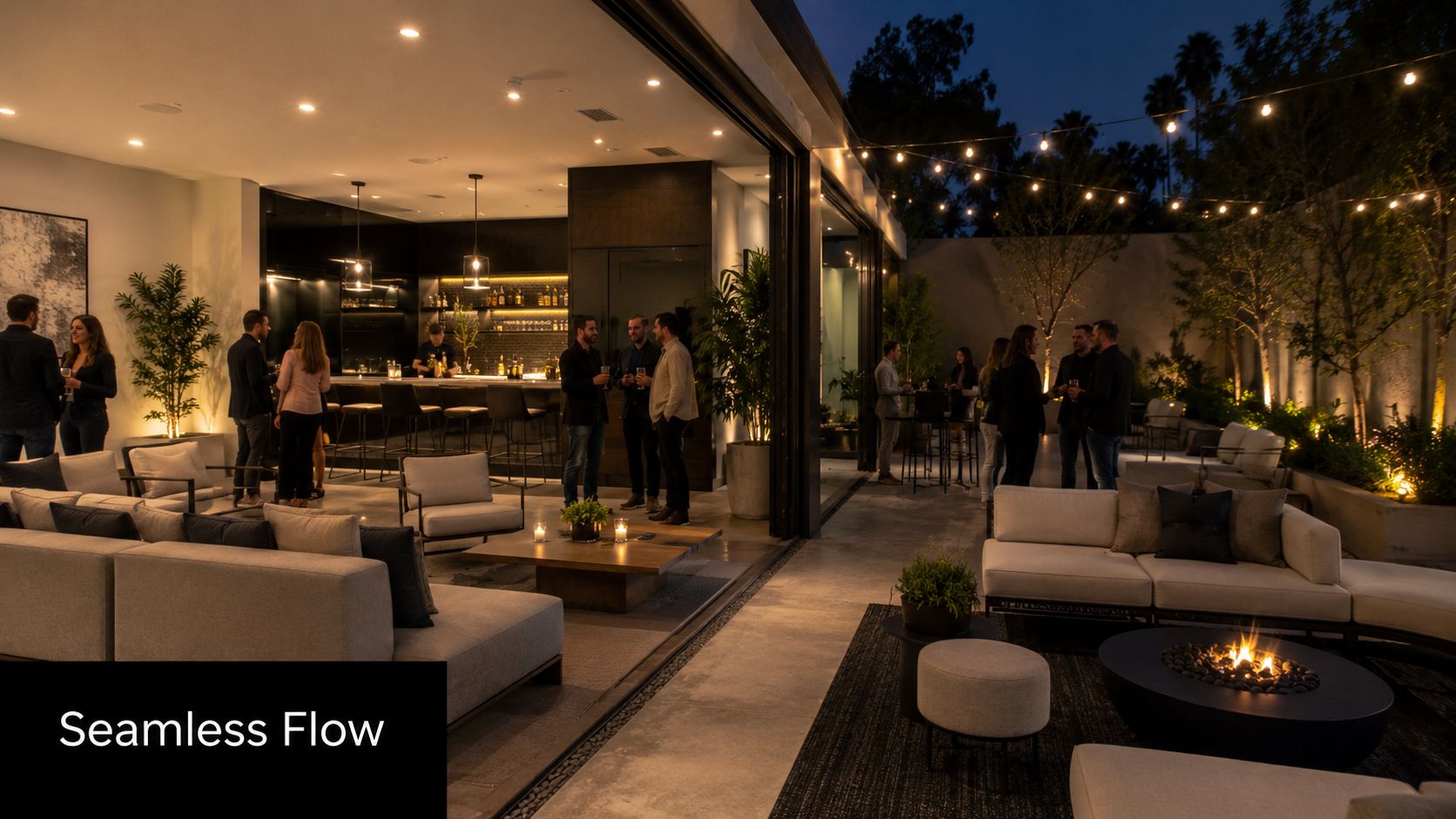
The easiest way to make a venue feel bigger is to stop treating inside and outside as separate design problems. Guests should feel one event mood from the first room to the last corner of the patio. That doesn't mean everything must match exactly. It means the spaces should speak the same visual language.
A wedding in the Winelands often needs three distinct moods at once. Ceremony calm. Cocktail looseness. Reception polish. The furniture should support those changes without looking like it came from three different suppliers.
Build zones, not clutter
A clean indoor outdoor furniture layout usually works best when each area has one job.
A tasting veranda might need upright cocktail seating and a few lean points for drinks. A garden edge might want low lounge seating for conversation. A courtyard near the dance floor can handle pieces that let guests rest without disconnecting from the energy. When every area has a purpose, guest flow feels natural.
Try these zone types:
- Arrival zone: Small clustered seating, occasional tables, and clear access routes.
- Social lounge: Softer shapes, lower seating, and enough surfaces for glasses and small plates.
- Dining spill-out space: Chairs and benches that can cope with movement between courses and speeches.
- Quiet edge: A calmer pocket for older guests, families, or anyone escaping the speakers.
Transitional pieces do the heavy lifting
The best styling pieces are the ones that look refined indoors and still make sense on a veranda. Clean-lined armchairs, upholstered-look outdoor seating, neutral benches, and simple occasional tables usually outperform overly themed “garden furniture”. They give you range. You can style them with florals and linen for weddings, or with sharper branding and lighting for corporate events.
I'm cautious with highly ornate sets outdoors in the Winelands. They can look beautiful in a still photograph, but once they meet dust, wind, and constant use, they often feel precious rather than practical. Transitional pieces are easier to place and easier to protect.
A seamless event space doesn't need more furniture. It needs fewer, better pieces placed with intent.
Sustainable choices that still look premium
There's also a noticeable shift in what clients want the furniture to say about the event. Sustainable material choices are no longer a side note at corporate functions. Eco-friendly materials now command a 25% premium in client satisfaction for socially conscious corporate activations in Cape Town (Cape Town eco-conscious event trend). That matters when a brand wants the setup to reflect its values without sacrificing finish.
Well-designed recycled plastic furniture can work well for modern lounges, poolside events, and outdoor breakout areas, especially when paired with textured cushions, warm lighting, and natural planters. It won't suit every black-tie wedding, but for many launches and day events it's a smart styling tool.
If you're planning layouts around comfort and guest dwell time, this article on transforming backyards with seating offers useful thinking on how seating placement shapes behaviour. For more local inspiration on balancing form and function, browse these ideas on deck and patio furniture.
Illuminate Your Night with LED Furniture
Once the sun drops, furniture stops being only functional. It becomes part of the lighting plan. That's why LED pieces earn their keep at events. They don't just give guests somewhere to sit or place a drink. They create wayfinding, define atmosphere, and turn ordinary corners into usable evening spaces.
A dark lawn with standard cocktail tables can feel disconnected from the main event. Add illuminated cubes or glowing bar units and that same area starts pulling guests toward it. The furniture creates its own invitation.
Where LED furniture works best
LED furniture is strongest when it solves a visibility problem and a styling problem at the same time.
For example:
- Bars: A lit bar becomes an anchor point immediately. Guests can find it from across the venue.
- Garden paths and terraces: Glowing cubes and tables help guide movement through darker outdoor sections.
- Brand-led events: Colour-adjustable pieces can echo a campaign palette without extra printed clutter.
- Milestone birthdays and matric functions: LED seating adds energy without needing heavy décor.
This is the kind of visual effect planners often underestimate until they see it live.
The practical checks that matter
LED furniture only feels polished when the basics are handled. Ask about charging, battery duration, brightness control, and whether the pieces are suited to the event duration and weather exposure. If the event runs late, a fading unit can make the whole setup look underpowered.
Also check the finish in daylight. Some LED items look fantastic after dark and cheap before sunset. If guests arrive for a daytime drinks reception and stay into the evening, the furniture has to carry both phases.
A few practical points help:
- Test colour temperature early: Cool white, warm white, and saturated colour all create very different moods.
- Use restraint: One LED bar and a few accent pieces often look better than flooding the venue with glow.
- Match event style: Sharp, colour-changing effects suit launches and parties. Softer tones suit weddings and dinners.
- Plan power and charging logistics: Staff need a clear handling plan before setup begins.
Why it changes guest behaviour
Light draws people. That's why an illuminated bar becomes a hub and why LED cocktail tables can make a quiet terrace start working after dark. Guests feel more comfortable using an outdoor area when they can read the space clearly. They don't need floodlights. They need enough visual structure to understand where to go and where to gather.
For broader ideas on how exterior lighting shapes ambience, this piece on expert exterior lighting for Austin homes is worth a look. The setting is different, but the design principle holds. Light should guide use, not just decorate surfaces.
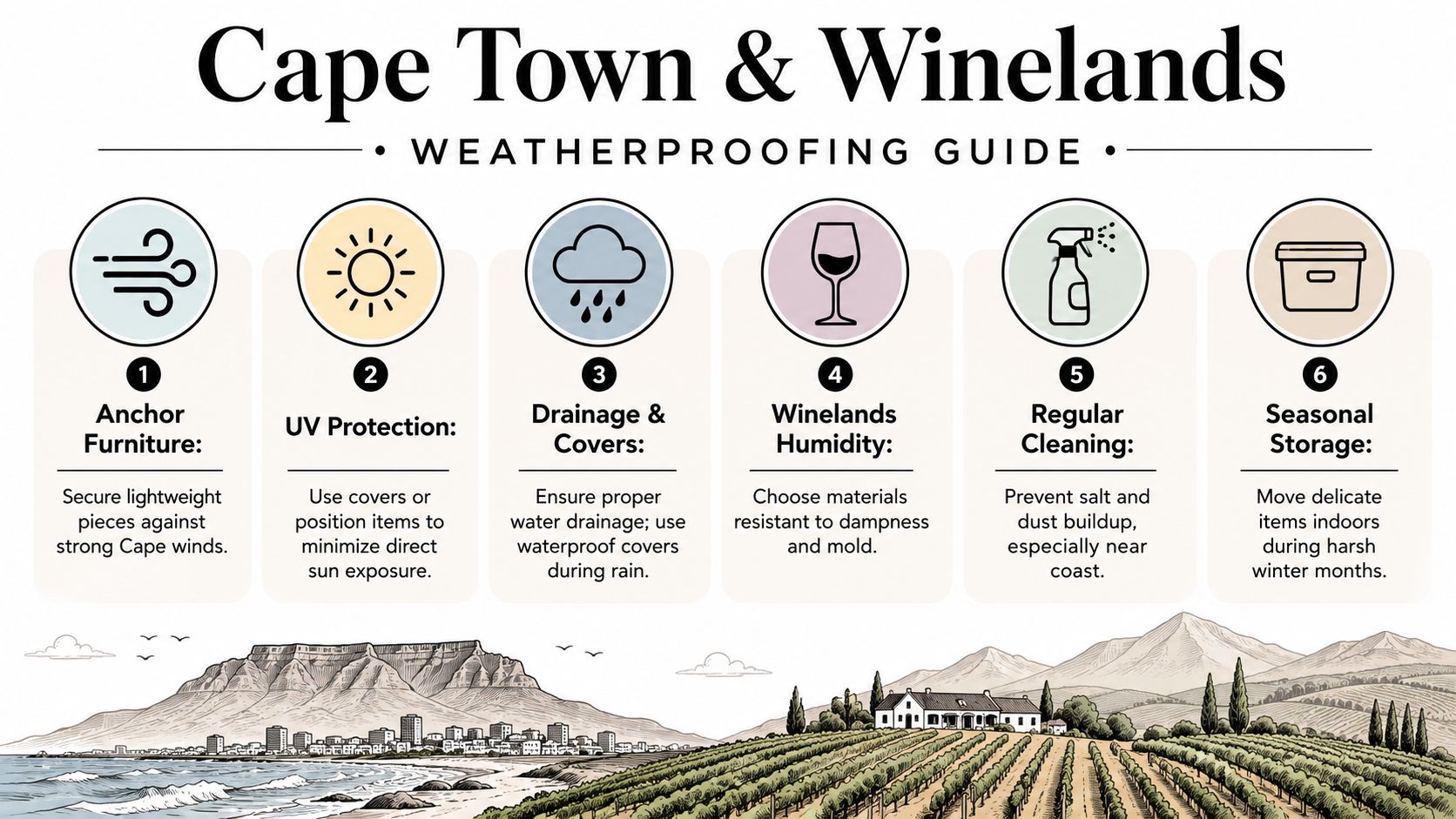
Your Cape Town and Winelands Weatherproofing Guide
Local weather doesn't behave the same way across the region, so your furniture plan shouldn't either. A sea-facing setup near the Peninsula deals with salt and wind. A Winelands estate often deals with stronger sun, pockets of damp, and quick changes later in the day. The same inventory can perform very differently depending on where you place it.
The aim isn't to remove all risk. It's to reduce the obvious failures before they happen.
Cape Peninsula priorities
On exposed Cape Town sites, wind is often the first issue to solve. Lightweight chairs, loose décor, and top-heavy cocktail setups can become awkward quickly. Lower-profile furniture with a broader stance usually performs better than delicate statement pieces.
Place lounges where buildings, hedges, screens, or tent walls help break the airflow. If the venue has a known wind corridor, don't fight it with fragile styling. Shift the social zone instead. Guests won't care that the original sketch placed the bar in that corner. They will care if they can't stand there comfortably.
Salt is less dramatic but just as important. Coastal air attacks finishes over time, especially on lower-grade metal stock. That's why outdoor-rated coatings and well-protected surfaces matter on recurring hires.
Winelands priorities
In Stellenbosch, Franschhoek, and Paarl, the bigger pressure is often UV and surface temperature. Dark fabrics, black frames, and exposed metal arms can heat up fast in afternoon sun. If the event begins in full daylight, test not only how pieces look, but how they feel to touch and use.
Rain is the second issue. Winelands weather can shift quickly, particularly on open lawns and farm venues. Fast-drying surfaces, quick-clear layouts, and sensible under-cover overflow areas help more than heroic last-minute reshuffling.
Don't weatherproof only for the ceremony or only for dinner. Weatherproof for the transition between them.
A practical local setup approach
Use this checklist when placing indoor outdoor furniture on site:
- For windy venues: Choose lower seating, avoid narrow pedestal tables in exposed spots, and cluster furniture so pieces support each other visually and physically.
- For hard sun: Keep lounge areas near shade transitions where possible, and avoid fabrics that will punish guests by mid-afternoon.
- For possible showers: Leave staff with a simple move plan. Which pieces stay put, which move under cover, and which can remain outside.
- For mixed surfaces: Check lawns, gravel, timber decks, and stone patios before finalising chair and table selection.
Small layout changes that save an event
Weatherproofing often comes down to placement rather than product. Turn a lounge away from direct gusts. Shift dining slightly closer to a covered edge. Put occasional tables where guests can use them without crossing wet grass after dark. These aren't glamorous decisions, but they protect the guest experience.
A beautiful setup that ignores local conditions asks the venue team to rescue it all day. A smart setup lets the event run.
The Smart Furniture Rental Checklist
A rental quote can look straightforward until the event day exposes every missing detail. Good indoor outdoor furniture hire isn't just about what's available. It's about what condition it arrives in, how it's handled, and whether the supplier understands your venue and your risk points.
Cheap stock gets expensive when staff spend the whole function correcting problems.
Questions to ask before you book
Start with the practical questions that reveal how a company operates, not just how it markets itself.
- What condition is the furniture in right now? Ask for recent images of the actual range, not only catalogue shots.
- Has this stock been used outdoors regularly? Outdoor use leaves wear in very specific places, especially on feet, arms, corners, and woven sections.
- Who handles setup and strike? Delivery alone isn't the same as competent placement.
- What happens if weather forces a layout change on the day? You want to know whether the team can adapt.
- How are damages and loss handled? Get that in writing before confirming.
Inspect for wear like a planner, not a shopper
When you inspect rental furniture, don't focus only on the obvious. Sit in the chairs. Check wobble. Press cushion seams. Look for finish wear where salt, sun, and repeated cleaning usually show first. If it's a lounge set, assess whether the full grouping still looks cohesive or whether pieces have aged unevenly.
A quick venue visit also saves time. Access routes, stairs, gravel paths, lawn softness, and loading restrictions all affect what furniture will work smoothly. Considering these factors allows many planners to avoid costly mistakes. They choose for the mood board, then discover the site punishes the product.
Value is not the same as the lowest quote
The best-value rental usually comes from the supplier who reduces friction. Furniture arrives clean, matching, stable, and ready to use. Staff know where it goes. Collection doesn't interfere with venue close-out. That's what planners remember.
Use this short hiring filter:
| Checkpoint | Why it matters |
|---|---|
| Condition consistency | Mixed wear levels make the event look pieced together |
| Outdoor suitability | Prevents failures in exposed sections |
| Delivery competence | Reduces setup delays and placement errors |
| Damage clarity | Avoids disputes after collection |
| Backup options | Helps if guest numbers or weather change |
For a broader look at selecting event-ready stock for open-air functions, this guide to garden furniture hire is worth reviewing before you sign off your final order.
Price matters. But once guests arrive, nobody can see the savings. They can see the wobble, the rust, the sagging cushion, and the layout that doesn't work.
Event Planners FAQs Answered
How do wedding planners balance beauty and durability?
Choose silhouettes that photograph well, then insist on outdoor-capable construction behind the scenes. A refined lounge chair with the right frame and fabric will always outperform a fragile statement piece that only survives the setup window. For weddings, ceremony chairs, cocktail seating, and after-dark lounges all need to work hard without looking heavy.
Which furniture pieces give corporate events the biggest branding impact?
Start with the bar, cocktail tables, and one hero lounge or activation area. Those zones carry the most guest interaction and the most photos. If budget is tight, spend on the areas guests gather around rather than trying to upgrade every corner. Evening functions also benefit from furniture that contributes to lighting and wayfinding.
Can you mix venue furniture with hired stock?
Yes, if you edit ruthlessly. Don't mix pieces solely because they are available. Keep the venue's strongest items and replace whatever clashes in shape, finish, or scale. Consistency matters more than volume. If the venue chairs are tired but the tables are solid, keep the tables and bring in seating that lifts the whole room.
What works best for the Winelands specifically?
Furniture that can handle strong sun in the afternoon and still look fresh by dinner. Covered spill-out areas matter. So does a layout that allows quick movement under shelter if the weather turns. In practice, low-maintenance surfaces, stable frames, and cushions that don't become a problem after a temperature shift usually win.
How far in advance should you book?
Book as early as you can once the venue, guest flow, and general style direction are clear. Cape Town's busy event periods compress availability quickly, especially for matching sets and specialised items. The more specific your wishlist, the less room you have to leave it late.
What's the biggest mistake private hosts make?
They over-prioritise appearance and under-plan comfort. Guests forgive a less dramatic chair more quickly than they forgive nowhere to put a drink, nowhere to escape the wind, or seating that feels damp by evening. A good event setup should still look sharp in photos, but it must first work for real people over real hours.
Should sustainable furniture always be part of the brief?
Not automatically. It should fit the event style, brand position, and venue setting. When it does fit, it can add meaning as well as function. The best sustainable choices don't ask guests to compromise. They look considered and perform well.
If you're planning an event in Cape Town, Stellenbosch, Franschhoek, Paarl, or the surrounding Winelands, ABC Hire offers furniture and event hire solutions designed for real local conditions. From stylish seating and LED furniture to practical event essentials, their team can help you build a setup that looks polished and stands up to the day.