
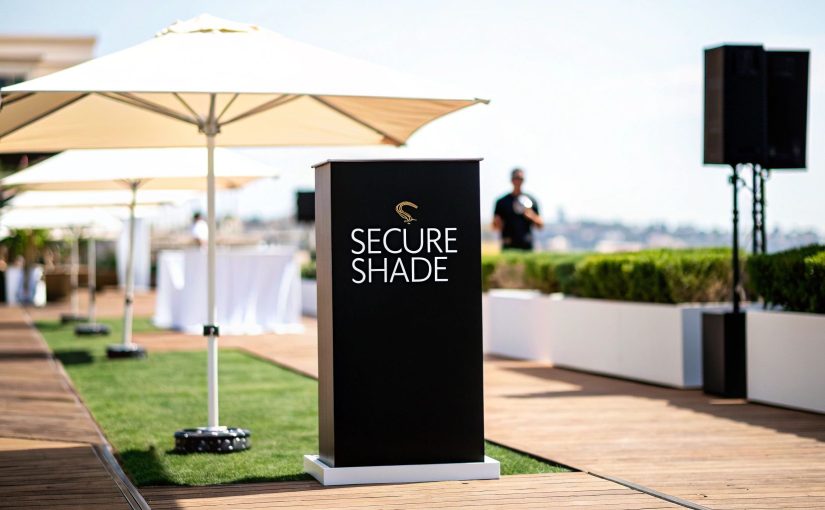
As any seasoned event planner knows, the real magic is in the details. And when you're working outdoors, few details are as sneakily important as the humble outdoor umbrella stand. It’s so much more than an accessory; it's a non-negotiable piece of safety gear, especially when you're up against Cape Town’s famously fickle weather. Getting the stand right means happy guests, no damage, and your reputation intact.
Why Your Event's Success Hinges on the Right Umbrella Stand

Think of an umbrella stand as the anchor for your event's shade. On a perfectly calm, sunny day, you barely notice it's there. But the moment an unexpected gust of wind tears through your venue, that anchor becomes the only thing preventing total chaos. An inadequate stand can turn a chic setup into a dangerous disaster, fast.
The risk of using flimsy, underweight stands can't be overstated. A sudden breeze can snatch an unsecured umbrella, turning it into a giant, airborne projectile. That's a serious threat to your guests, staff, and the venue itself, creating an immediate safety hazard and opening you up to liability issues that can haunt your career.
The Real-World Consequences of a Bad Choice
Picture this: a perfect wedding in the Stellenbosch Winelands. The décor is stunning, guests are sipping MCC, and everything is running like clockwork. Then, out of nowhere, the "Cape Doctor" arrives. An improperly secured umbrella lifts, topples, and crashes onto a table, sending glassware flying and narrowly missing a guest. The beautiful atmosphere is shattered in an instant, replaced by alarm and frantic apologies.
This is exactly why treating umbrella stands as an afterthought is a rookie mistake. The fallout goes way beyond the immediate safety scare:
- Guest Experience: Nothing kills the vibe like a flying umbrella. It creates panic and leaves a lasting, negative memory for everyone there.
- Venue Damage: A toppled umbrella can smash tables, crack paving, or even break windows, leading to expensive repairs and a very awkward conversation with the venue manager.
- Reputation Damage: Word gets around quickly about an unsafe, poorly managed event, and that can seriously hurt your chances of booking future clients.
The Professional Approach to Stability and Peace of Mind
On the flip side, when you invest in the right professional-grade outdoor umbrella stands, you're buying peace of mind. Whether you’re setting up for a corporate function on the Foreshore or a garden party in Constantia, knowing your shade is locked down lets you focus on the million other things that need your attention.
A robust, correctly weighted umbrella stand is your first line of defence against weather-related mishaps. It transforms an unpredictable variable—the wind—into a managed risk, ensuring your event runs smoothly and safely from start to finish.
By making stability and safety a top priority, you show clients and venues that you're a true professional. It’s one of those fundamental parts of event planning that, when done right, no one ever notices—and that's exactly the point.
A Guide to the Different Types of Outdoor Umbrella Stands
Choosing the right umbrella stand isn't just about picking an accessory; it's about selecting the right tool for the job. For event planners, this one decision can impact everything from the event's look and feel to your guests' safety. The world of umbrella stands is surprisingly diverse, and each type comes with its own set of pros and cons depending on the situation.
Think of it like choosing shoes. You wouldn’t wear stilettos for a hike, and you definitely shouldn't use a flimsy plastic base for a huge umbrella at a windy coastal venue. Getting to grips with the basic types is the first step in making a smart, professional decision for any event, whether it's a small garden party or a massive corporate function.
Free-Standing Weighted Bases
This is the category you’ll see most often. These are the workhorses of the event world, relying on sheer weight to keep an umbrella exactly where you put it. They aren’t attached to any other furniture and come in two main flavours.
-
Concrete or Granite Bases: These are the heavy hitters. Made from solid, dense material, they offer serious stability right from the get-go. Their hefty weight makes them a fantastic choice for large outdoor umbrellas or any venue that gets a bit of wind. The only real downside is their weight—moving them around requires some muscle, making transport and placement a bit more labour-intensive.
-
Water or Sand-Filled Bases: These are a logistical dream. Usually made from tough plastic, they're wonderfully light and easy to move around when empty. Once you've got them in place, you simply fill them up with water or sand to get the weight you need. While this flexibility is a massive plus for setup and teardown, they can sometimes feel a little less solid than a concrete base of the same weight, especially when the wind starts to pick up.
A water-filled base is perfect for a sheltered courtyard event, but for a classic gusty afternoon in Camps Bay, a solid concrete base offers that extra peace of mind.
Through-Table Stands
A through-table stand works together with a patio table that has a hole in the centre. The umbrella pole goes straight through the table and into the base underneath, creating an incredibly stable setup.
The table itself acts like a wide, low brace, making it much harder for the umbrella to tip over. But—and this is a big but—you must still use a properly weighted base below. Just relying on the table for support is a classic mistake and a recipe for disaster if a strong gust of wind decides to lift both the umbrella and the table. To learn more about how to pair them effectively, have a look at our detailed guide on selecting large outdoor umbrellas.
Cantilever Umbrella Bases
Cantilever (or offset) umbrellas are brilliant for lounge areas or dining setups where you don't want a pole in the middle of everything. They have an arched or jointed pole off to one side, letting the canopy hang freely over your space.
Because of this off-centre design, they need specialised, extra-heavy bases to balance the load.
- Cross Bases with Pavers: Many cantilever umbrellas come with a metal cross-shaped frame. This isn't a stand on its own; you have to weigh it down with heavy concrete or granite pavers, which are often included in a hire package or rented separately.
- Dedicated Fillable Bases: You'll also see custom-moulded plastic bases, often with built-in wheels to make them easier to move. These are filled with hundreds of kilograms of water or sand to provide the serious counterweight needed for a large, offset canopy.
The need for solid shade solutions is huge all along South Africa's coastline. Think of all the hotel pools, beach clubs, and wedding venues in places like Camps Bay and Clifton—they all rely on tough, reliable stands. As a rough guide, a 200 sqm coastal deck might need 16–20 properly anchored umbrellas to keep guests safe and comfortable.
To help you decide at a glance, here’s a quick breakdown of the most common options.
Quick Comparison of Umbrella Stand Types
This quick-reference table compares common umbrella stand types, their ideal uses, typical weights, and key considerations for Cape Town events.
| Stand Type | Typical Weight Range (kg) | Best Use Case | Key Consideration |
|---|---|---|---|
| Concrete/Granite | 30 – 100+ | Windy venues, large umbrellas, long-term setups | Heavy to transport and position |
| Water/Sand-Filled | 20 – 90+ | Events requiring easy transport and setup | Can be less stable than solid bases in high wind |
| Through-Table | 15 – 30 | Dining or cafe-style patio setups | Requires a compatible table; base is still essential |
| Cantilever Base | 100 – 250+ | Lounge areas, poolside, anywhere a central pole is intrusive | Requires a very heavy, specialised base for safety |
Ultimately, the best stand is the one that fits your specific venue, umbrella size, and weather conditions. Taking the time to choose correctly is a small step that makes a massive difference.
Calculating the Right Weight for Wind and Safety
So, how heavy does your umbrella stand really need to be? This isn't just a trivial question; getting it right is probably the single most important decision you'll make for the safety of your event. If you misjudge this, it's not just an oops-moment – it's a massive liability, especially when one of Cape Town's famous winds decides to show up uninvited.
The physics are actually pretty simple. Imagine a seesaw. On one end, you have the big umbrella canopy acting like a sail, catching every bit of wind. On the other end, you have the outdoor umbrella stand, your crucial counterweight. If the wind's push is stronger than the base's weight, that seesaw tips, and you've got a flying umbrella. Your job is to make dead certain your side of the seesaw is always heavier.
From Sheltered Courtyards to Windy Coastlines
There's no single "right" weight for an umbrella stand. It all comes down to the size of your umbrella and how exposed your venue is. The kind of stand you'd buy at a retail store might be okay for a small brolly on a protected patio at home, but for a professional event? It's dangerously out of its league. We all know how the "Cape Doctor" can gust, and an underweight umbrella can turn into a spear in a split second.
Here’s a practical guide we use to match umbrella size with the minimum base weight you should be looking at for different venues:
- Sheltered Venues (e.g., an enclosed Stellenbosch courtyard): For a standard 2.5 to 3-metre umbrella, a 25-30 kg base is the absolute rock bottom. And that's assuming it's properly tucked away from direct wind.
- Moderately Exposed Venues (e.g., a suburban garden in Paarl): Here, you need to step it up. We'd recommend at least 40-50 kg for the same size umbrella to give you a much safer buffer against any surprise gusts.
- Highly Exposed Venues (e.g., anywhere on the Llandudno coastline or an open Winelands farm): Don't even think about using anything less than a 50-70 kg base. And if you're using larger umbrellas (3.5 metres or bigger), you're often looking at weights of 100 kg or more.
Pro tip: Always, always err on the side of caution. I’ve never heard an event planner say, "I wish I'd chosen a lighter umbrella stand," but I've heard plenty of horror stories from those who went too light.
This is where professional hire companies really prove their worth. There's a growing demand in the global patio umbrella bases market, which means rental specialists have a huge inventory to choose from. They can supply the right gear for everything from a small garden party to a massive corporate gala.
This is the kind of thinking that helps you choose the right outdoor umbrella stands for your specific event and venue.
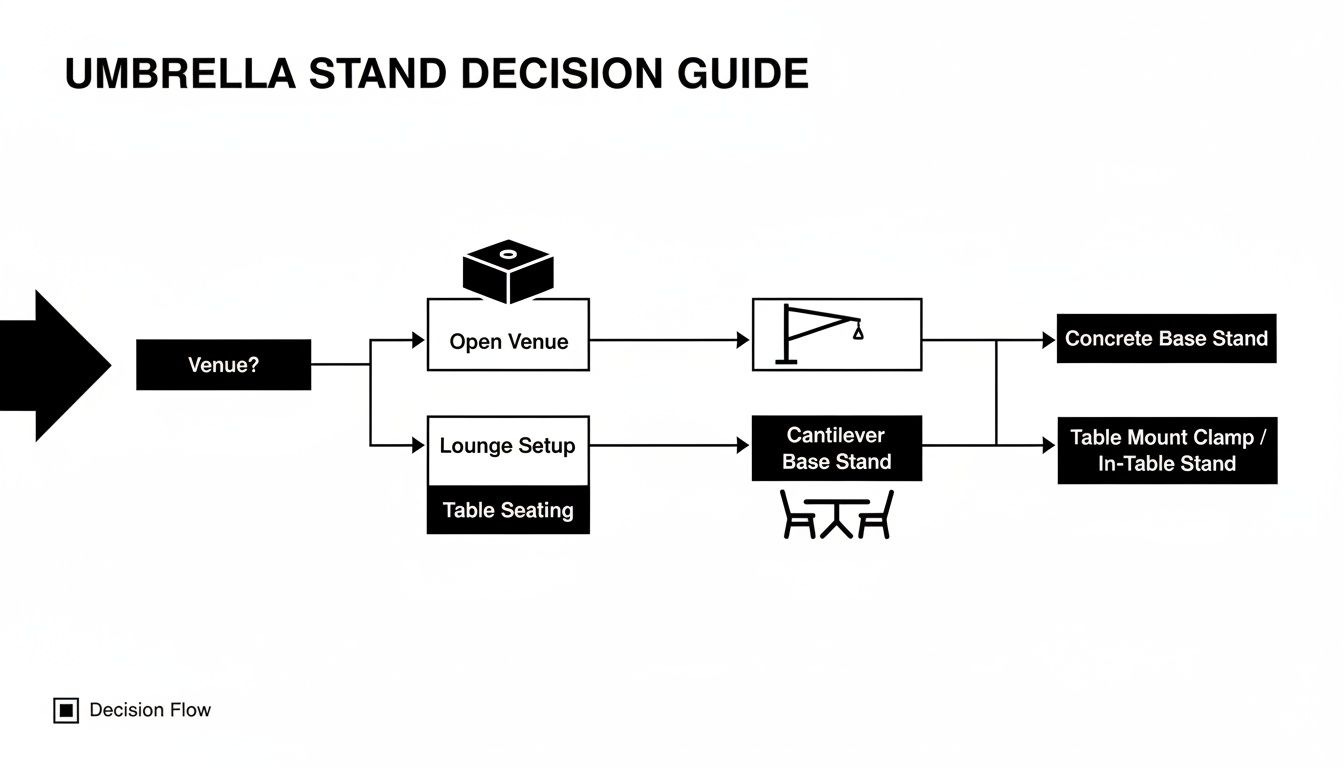
As you can see, the type of venue—whether it's wide open, a relaxed lounge area, or a formal dining setup—plays a huge part in choosing the safest and most suitable stand.
Beyond Just Kilograms
While pure weight is king, a couple of other things make a big difference to how stable your stand is: its centre of gravity and its footprint.
Centre of Gravity: This is just the balance point of an object. For the best stability, you want a stand with a really low centre of gravity. It’s why flat, dense materials like solid concrete or granite work so well—they keep the weight hugged to the ground, making the whole setup much harder to knock over.
Footprint Size: This is simply how wide the base is. A wider base gives you a more stable platform because it spreads the weight over a larger area, making it much more resistant to tipping. A tall, skinny stand will always be less stable than a short, wide one, even if they weigh exactly the same.
When you put these ideas together, you get the full picture of stability.
- Optimal Stability: You'll get this with a heavy, low, and wide outdoor umbrella stand.
- Risk of Instability: This comes from using a light, tall, or narrow stand.
Once you get these principles, you stop guessing and start making smart, safety-first decisions. You can pick an outdoor umbrella stand that not only looks good but gives you the solid, reliable anchor you need for your event and your guests—no matter what the Cape Town weather decides to throw at you.
Why Stand Materials Matter for Durability and Design
When you're choosing an outdoor umbrella stand, it's easy to think only about the weight. But the material it's made from is just as critical—it says a lot about your event's style and how well the setup will hold up. Think of the stand as more than just a heavy anchor; it's a piece of functional decor. Its texture, finish, and overall substance play a huge part in both its performance and the atmosphere you're creating.
Every material brings its own personality and purpose to the table. For an event planner, getting this right is as crucial as matching the linens to the floral arrangements. The right choice pulls your whole design together, while the wrong one can stick out like a sore thumb or, even worse, fail when you need it most.
A Look at Common Stand Materials
Let's break down the practical differences between the most common options you'll find when hiring gear for your Cape Town events. Understanding these is key to making a smart choice.
-
Cast Iron: With its classic, often decorative designs, cast iron brings a timeless elegance. It’s absolutely perfect for a romantic wedding in Franschhoek or a historic venue in Constantia. Just remember, it’s heavy, so moving it is often a two-person job, and it needs a bit of care to keep rust at bay.
-
Concrete: This is the undisputed champion of stability. Concrete bases are heavy, tough, and won't break the bank, offering fantastic security when the wind picks up. While the basic models can be a bit plain, many newer versions come with stylish finishes or covers that fit right in with modern event designs.
-
Granite: If you're going for a premium, high-end feel, nothing beats polished granite. It offers serious weight with a sleek, sophisticated finish that's ideal for a luxury corporate function or an exclusive event at a top wine estate. It's naturally durable and weather-resistant, making it a reliable—though pricier—option.
Functionality Meets Style
The material you pick has real-world consequences that go way beyond just looking good. For instance, a powder-coated steel stand looks modern and is pretty durable, but one little scratch can let the salty coastal air in, leading to rust. On the other hand, high-density plastic bases, which you can fill with water or sand, are a dream for logistics because they're so easy to move, but they might not have the premium feel you need for a black-tie gala.
The material of your outdoor umbrella stand is a deliberate choice. A rugged concrete base projects an image of solid reliability, while a polished granite stand whispers elegance and luxury. Choose the material that best aligns with your event's narrative.
This idea of matching materials to the environment is true for all your outdoor furniture choices. To get a better sense of how different materials hold up and contribute to a design, this article on Why Teak is the Best Material for Garden Furniture offers some great insights into weather resistance and aesthetics that apply here, too.
Think about how your stand’s material will vibe with the other textures at your event. If you’re using natural, woven furniture, a stand with a matte, earthy finish will feel much more cohesive. You can see how different textures work together by checking out our guide to wicker furniture for outdoor events. At the end of the day, picking the right stand material is all about creating an environment for your guests that is cohesive, safe, and effortlessly stylish.
Smart Placement Strategies for Maximum Stability

Getting a heavy-duty outdoor umbrella stand is only half the job done. Where you actually put it on the day is just as critical for safety and stability.
Smart placement isn’t just about finding an empty spot; it's about actively reading the venue and spotting potential risks before guests even show up. This is what separates a smooth, secure event from one that’s at the mercy of a sudden gust of wind.
It all starts with the ground underfoot. Always, always look for the most level surface you can find for each stand. A bumpy or soft patch of grass might not seem like a big deal, but it can make the base sit at a slight angle. This completely messes with its centre of gravity, making it surprisingly easy to tip over, no matter how heavy it is.
Finding the Safest Spots
Think about the flow of people at your event. It's a classic mistake to place umbrellas too close to busy areas like entrances, buffet tables, or the pathways to the loos. A little nudge from a guest or a catering trolley can be all it takes to destabilise an umbrella and create a hazard.
For the best stability and shade, you need to be as strategic with your placement as designers are when they plan a room layout for perfect flow and safety.
Look for natural allies at your venue. Can you tuck an umbrella up against a building, a high wall, or a thick hedge? These features act as fantastic windbreaks, seriously cutting down the force of the wind hitting the canopy. Using the venue’s existing structures is a clever, no-cost trick to make your setup that much safer.
A well-placed umbrella stand uses its surroundings as an ally. By positioning it strategically, you add an extra layer of security that weight alone cannot provide, turning a potential liability into a securely anchored asset.
Pre-Event Safety Checklist
Before your first guest arrives, do a quick but vital safety check on every single umbrella. This final once-over can catch small issues before they turn into big problems.
Your On-Site Stability Checklist:
- Ground Check: Make sure the base is on solid, level ground. If you find a slight slope, move it until it’s perfectly flat and stable.
- Pole Security: Give the umbrella pole a good, firm shake. Is it tightened securely in the stand? If you feel any wobble at all, get back in there and tighten the knob until it's rock-solid.
- Extra Reinforcement: If the wind is picking up even slightly, chuck some sandbags over the base. It’s a simple move that adds an extra 20-30 kg of stability right where you need it most.
- Clear Wind Protocol: Your whole team needs to be on the same page. Assign someone to keep an eye on the wind and have a clear plan to lower and secure all umbrellas the moment the gusts get too strong.
This careful approach to placement and pre-event checks ensures your umbrellas do their job properly, providing reliable shade and peace of mind all day long.
Renting Versus Buying Outdoor Umbrella Stands
As an event planner, every decision you make hits your budget and your schedule. When it comes to outdoor umbrella stands, you’re faced with that classic question: should you buy your own, or is hiring the smarter play? For most, the answer comes down to how you operate and how often you actually need them.
If you’re running a fixed venue with a permanent outdoor spot—think a wine farm restaurant or a hotel pool deck—buying your own stands is a no-brainer. Having them on-site, ready to go whenever you need them, is a huge convenience. They become a part of your assets, something you can use every day without paying a fee each time.
The Strategic Advantages of Hiring
But for the rest of us in the events game, where every gig has a new client and a different location, renting just makes more sense. It’s less of an expense and more of a strategic move that simplifies everything. Hiring means you don't have to sink a huge amount of cash into building up your own collection of stands.
Instead of tying up money in gear that you then have to store, fix, and haul around, you only pay for what you need, right when you need it. It’s a lean approach that keeps your business flexible and your finances in good shape.
Think of it this way: hiring turns a hefty capital investment into a manageable operational cost. You get instant access to a full range of professional gear without the headaches of owning it—no storage fees, no maintenance, no watching its value drop over time.
The global market for outdoor umbrellas is tipped to grow from US$1.09 billion to around US$2.03 billion by 2033, which tells you just how much people are investing in quality shade. This trend makes professional-grade stands more critical than ever. You can dig into the numbers in this patio umbrella market analysis. For a hire company, keeping up with this demand is our job, not yours.
Key Benefits of Renting Your Stands
Choosing to rent your umbrella stands solves several of the biggest logistical headaches in event management.
- Zero Storage Headaches: Let's be honest, these stands are heavy and awkward. Renting means you don't have to find or pay for a place to keep them.
- No Maintenance Costs: A professional hire company takes care of all the upkeep. You’ll never have to deal with rust, repairs, or broken parts.
- Access to a Diverse Inventory: Need a massive 100 kg cantilever base for a lounge setup this weekend? And twenty 40 kg concrete bases for a wedding next month? A rental partner has the right style and weight for any job, ready to go.
- Ultimate Flexibility and Scalability: You can scale your order up or down to match any event, from a small garden party to a huge corporate festival. You always have the right amount of the right gear.
By hiring, you’re not just getting equipment; you’re saving yourself a ton of work. If you’re planning events in the Western Cape, our guide on Cape Town umbrella hire has more local tips. At the end of the day, renting is a smart, efficient way to make sure you have the correct, safe, and professional gear for every single event.
Your Umbrella Stand Questions, Answered
Even the best-laid plans have a few question marks. When you're dealing with outdoor umbrella stands in Cape Town, getting quick, clear answers on the day is what lets you act fast and keep everyone safe. Here are a few of the most common things we get asked by event planners.
Think of this as your go-to guide for those last-minute worries, reinforcing the safety basics that make sure your event goes off without a hitch.
What’s the Minimum Safe Weight for an Umbrella Stand in Cape Town?
For a standard 2.5m to 3m umbrella tucked away in a sheltered spot, the absolute lightest we'd ever suggest is a 25kg to 30kg base. This might work in a completely enclosed courtyard where the wind is a non-issue.
But let's be realistic. For any venue that gets a taste of the infamous Cape Doctor – think coastal spots or open-air wine farms – you have to go heavier. We strongly recommend a 40kg to 50kg base, or even more, in those kinds of settings. It’s always, always better to have too much weight than not enough. A heavy base is your best line of defence against a sudden gust.
Does Putting an Umbrella Through a Table Make it More Stable?
Yes, it definitely helps a lot, but it’s no replacement for a properly weighted base. A solid, sturdy table acts like a low, wide brace, making it much harder for the umbrella to tip over. When you combine a heavy base with a table, you create an incredibly secure setup for your guest seating areas.
You must still use a correctly weighted outdoor umbrella stand underneath the table. The base is the anchor; the table is just bonus support. Never rely on a table alone to hold an umbrella – a strong gust can lift the whole lot.
How Do I Make Sure the Umbrella Pole Fits the Stand I Hire?
Getting the right fit between the pole and the stand is non-negotiable for safety. The good news is, when you hire both your umbrellas and stands from a professional supplier, we match them up for you. No guesswork needed.
If you're using your own umbrellas with hired stands, you'll need to measure your pole's diameter accurately beforehand. Most quality rental stands come with adjustable tightening systems or different inserts to fit various pole sizes. Just be sure to double-check compatibility with your rental company before they deliver to avoid any nasty surprises on setup day.
What’s the Plan if the Wind Picks Up During the Event?
Your one and only priority is the safety of your guests. If the wind gets strong enough to make the umbrellas strain or wobble, they need to be lowered and secured right away. There is no grey area here.
Make it one person's specific job to keep an eye on the weather throughout the day. It's far better for guests to be in the sun for a bit than to risk an accident with a flying umbrella. Professional event umbrellas are designed for quick and easy takedown, so your team can act fast the moment it's needed.
At ABC Hire, we have a full range of professional-grade outdoor umbrella stands to make sure your event is as safe as it is stylish. Whether you need heavy-duty concrete bases for a windy beach wedding or something more elegant for a garden party, we have the right gear for the job. Let us worry about the safety logistics so you can focus on creating a day to remember. Check out our full inventory and get a quote for your next Cape Town event at https://abchire.co.za.