
A patio space heater usually becomes urgent at the exact wrong moment. The ceremony is done, the canapés are moving, the bar is busy, and the venue looks perfect. Then the sun drops behind the mountain, the damp air settles in, and guests start choosing corners that feel less exposed instead of using the spaces you spent hours planning.
That shift happens fast in Cape Town and the Winelands. A courtyard that felt mild at sunset can feel sharply colder once wind moves through it. A terrace in town behaves differently from a lawn in Franschhoek. A covered area can hold comfort well, while an open gravel section can lose heat almost immediately.
Good event heating isn't about blasting warmth into the night and hoping for the best. It's about matching the heater type to the venue, the layout, the wind direction, the guest flow, and the length of the event. When planners get that right, guests stay where they should stay. They linger at the cocktail area, sit through speeches comfortably, and keep using the outdoor zones that make the event memorable.
Keeping Guests Warm at Your Cape Town Event
A winter wedding in the Winelands often looks effortless from the guest side. Candlelight flickers, glassware catches the last of the sunset, and the outdoor section feels like the best part of the venue. Then the cold starts working against the atmosphere.
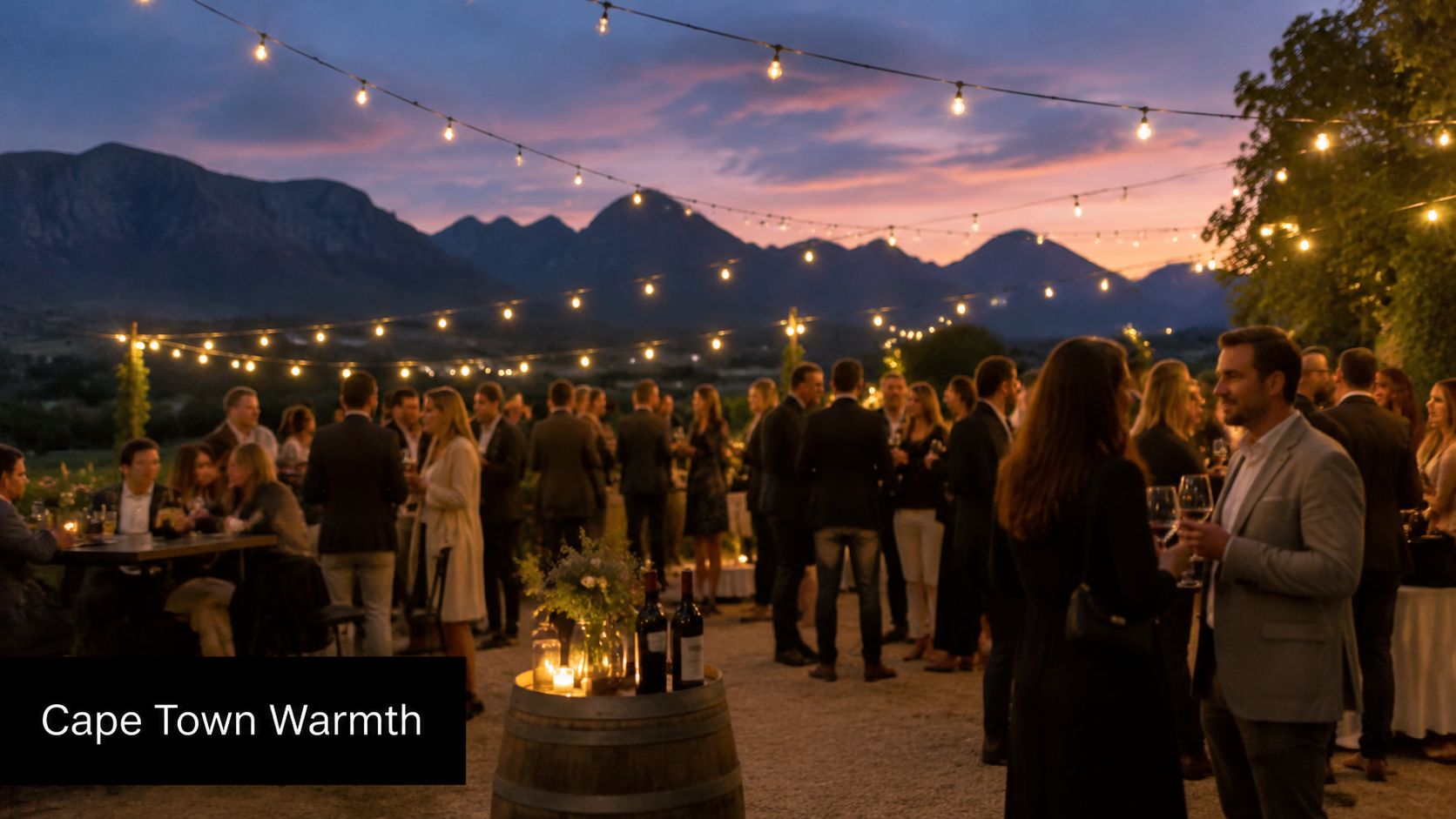
I've seen the same pattern across weddings, corporate launches, and private parties. Guests don't always say they're cold. They stop using the outdoor lounge, pull chairs closer together, or drift indoors earlier than planned. That's when the patio space heater stops being a background rental item and becomes part of the event design itself.
The practical goal isn't to make the entire outdoors feel like an indoor room. It's to keep key guest areas comfortable enough that people want to stay in them. That means focusing on cocktail pockets, dining edges, smoking areas, waiting zones, and any spot where people stand still for longer than a few minutes.
Comfort has to match the look of the event
Planners usually worry, rightly, that heating equipment can ruin a clean layout. Oversized units in the wrong spot can interrupt sightlines, crowd furniture, and compete with floral or lighting elements. The answer isn't to skip heating. It's to choose fewer, better-positioned units and support them with softer comfort layers.
For seated events, textiles still matter. If you want to enhance your outdoor comfort without changing the visual tone of the venue, throws and blankets can help bridge the gap between decorative styling and thermal comfort.
Practical rule: Guests forgive cool air. They don't forgive being cold while seated, waiting, or trying to socialise.
A well-planned heating setup protects the event flow. It keeps speeches from feeling rushed, dinner from turning stiff, and open-air mingling from collapsing into one crowded indoor fallback space.
Choosing Your Heater Type Gas vs Electric
Heater choice affects far more than temperature. In Cape Town, it affects whether guests stay on the terrace at 8 pm or drift toward the bar inside once the south-easter starts cutting across the venue.
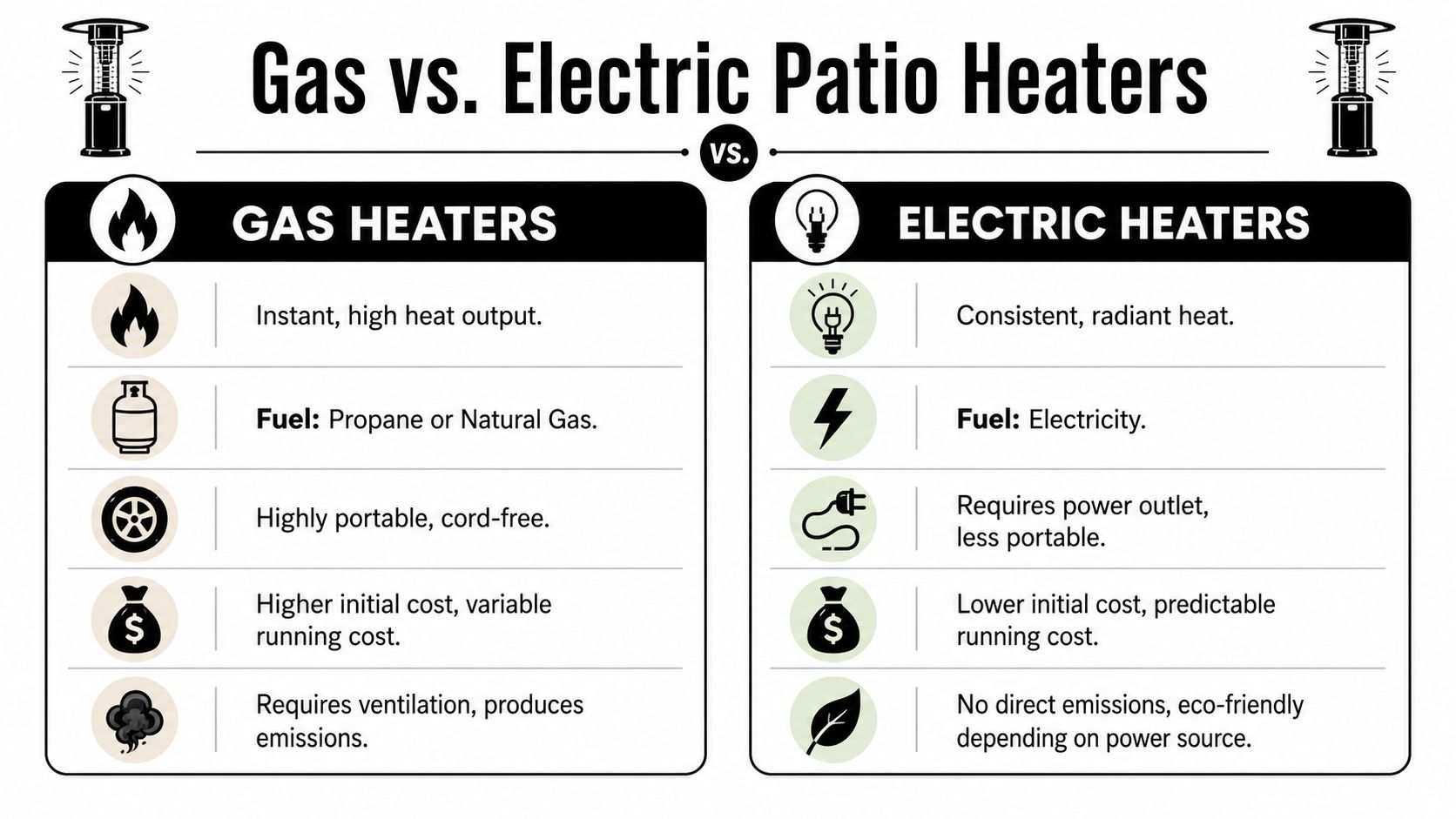
A planner usually needs to decide between broad, movable heat and targeted, fixed heat. Gas handles the first job well. Electric handles the second. The right answer depends on exposure, power access, ceiling height, and how much the layout might shift during setup.
Gas heaters for open event spaces
For lawns, courtyards, farm venues, and open terraces, gas is usually the safer rental choice. Freestanding propane units are portable, need no trailing extension cords, and can be repositioned if the wind changes or a floor plan gets revised late. Product guidance from Patio Kingdom's gas heater specification notes typical use with 20 lb propane tanks and describes the familiar broad heat pattern these units are known for.
That makes gas practical for:
- Cocktail areas where guests cluster and move around
- Perimeter dining tables that cool down faster than central seating
- Venues with weak power distribution or too few outdoor plug points
- Load-in setups where planners want fast placement without cable management
Gas also copes better with real event friction. If a supplier adds a bar, if a DJ position shifts, or if a windbreak goes up late, the heating plan can move with it.
Electric heaters for controlled zones
Electric infrared heaters work best where the heating target stays fixed. They warm people and surfaces directly, which suits covered patios, verandas, entrance canopies, and seated zones tucked out of the wind. They are quieter than gas and visually cleaner, which matters at private homes and tighter venues where freestanding units can feel bulky.
The trade-off is practical, not theoretical. Electric only works well if the power supply is reliable and the heater can be mounted or placed where people will feel it. On an exposed terrace in Green Point or along a damp Constantia slope, electric often underperforms unless the area has decent shelter.
Planners using visual layout tools such as ai backyard patio design should still pressure-test the plan against wind direction, cable routes, and actual power access. A neat rendering does not solve a cold corner.
| Heater type | Best use | Main limitation |
|---|---|---|
| Freestanding gas | Open patios, standing events, flexible layouts | Needs safe tank handling and more floor space |
| Electric infrared | Covered seating, entrances, fixed zones | Depends on nearby power and shelter |
| Pyramid-style gas | Styled events, arrival areas, visible ambience | Often looks better than it heats in windy spots |
| Mushroom-style gas | General event coverage across open areas | Less decorative in design-led setups |
Mushroom vs pyramid style
This choice matters because the two styles do not behave the same way on site.
Mushroom heaters are the standard event unit for a reason. They throw heat outward in a practical pattern and suit mixed-use spaces where guests stand, chat, then drift between tables. For most winter functions, they are the workhorse.
Pyramid heaters earn their place when the event brief puts more weight on appearance. They look good at entrances, brand activations, and wedding lounges. But in a windy Cape Town venue, visible flame can give a false sense of warmth. They often add atmosphere faster than they add comfort.
What works in Cape Town conditions
Cape Town microclimates change fast over short distances. A courtyard in the City Bowl can be still and mild, while a venue 20 minutes away in Noordhoek can feel damp and exposed. Humidity in the Winelands also changes how cold guests feel once they stop moving.
A simple rental rule works well:
- Choose gas for exposed venues, shifting layouts, and broad guest movement
- Choose electric for covered zones with fixed seating and solid power access
- Use both when the event combines an open mingling area with a sheltered dining or waiting zone
That mixed setup usually gives the best result. Open areas get the stronger, movable heat they need. Sheltered corners get quieter, more precise warmth without cluttering the floor plan.
Calculating Heat Coverage for Your Event Layout
Heating errors often start with guesswork. A planner books a few units, parks them where there is open floor space, and ends up with warm equipment but cold guests. In Cape Town, that gap shows up fast because a courtyard in Green Point, a terrace in Camps Bay, and a lawn in Constantia can all behave differently on the same night.
Start with the area guests actually use
Measure the zones where people will stand, sit, queue, or linger. Skip the decorative lawn, unused corners, and service areas unless guests will spend time there.
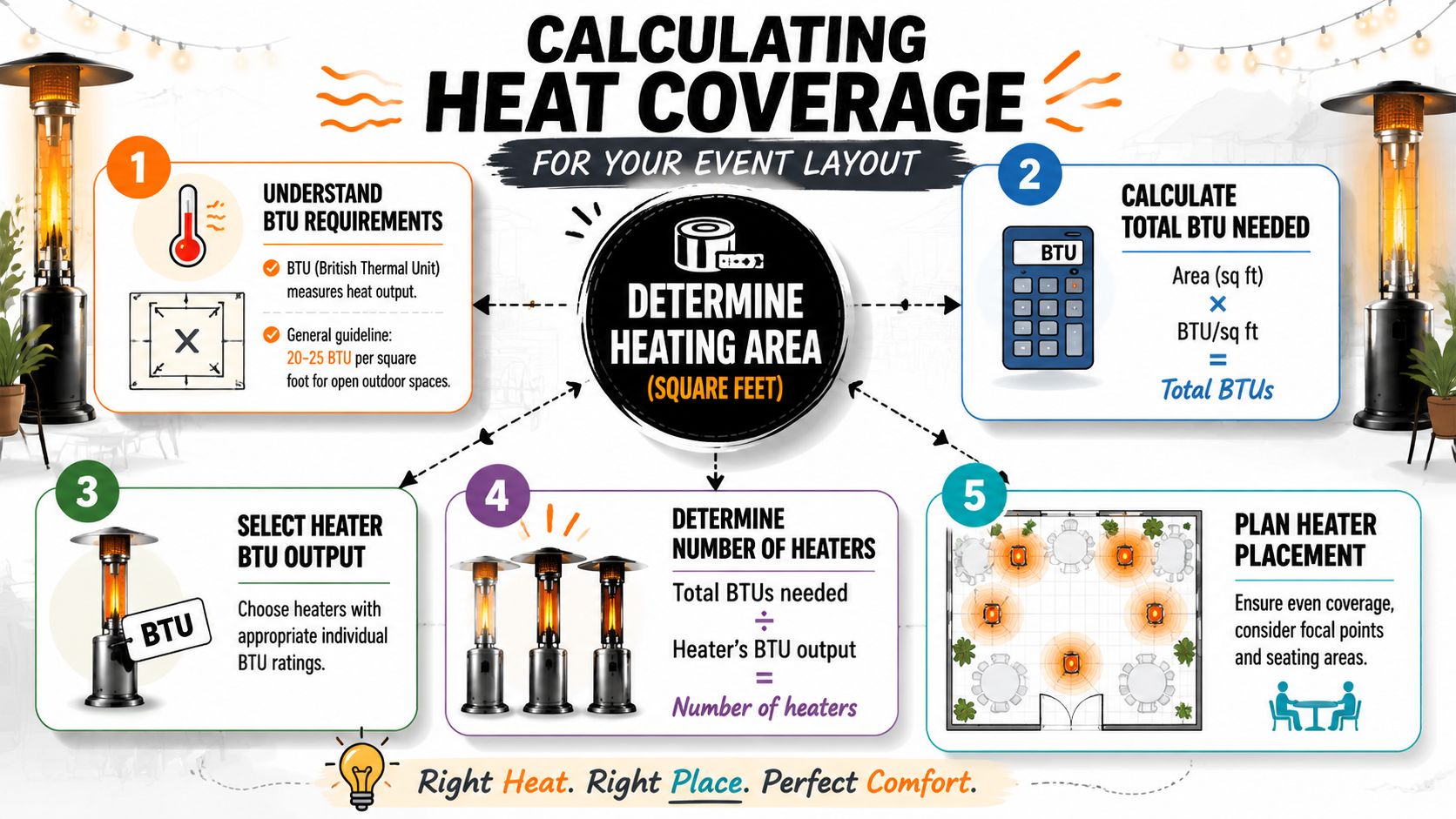
Industry guidance from Lowe's patio heater buying guide suggests about 20 BTUs per square foot for a 15 to 20°F temperature rise in patio spaces. The same guide notes that a 1,500 sq ft area needs at least 30,000 BTUs, which can come from one 48,000-BTU propane heater or several smaller units.
Use that as a starting point, not a final answer. Cape Town wind exposure, damp air, and broken-up event layouts often mean the floor plan matters more than the raw BTU total.
A simple working method helps:
- Measure the active heating area in square feet.
- Multiply by 20 BTUs for a baseline.
- Place that output across the layout based on where people stop moving.
Map heat by behaviour, not by venue outline
Treat the site as a set of guest zones, not one large shape. On event plans, I usually break it into arrival, bar, dining, lounge, and any waiting points such as shuttle collection or registration.
That matters because guests feel cold in different ways. Standing groups on a drinks terrace can tolerate brief gaps in warmth. Seated guests in a Winelands courtyard feel the cold faster, especially once the air turns damp after sunset. Transitional spaces also matter more than planners expect, because people often bottleneck there.
If you are sketching options early, a visual planning tool like ai backyard patio design can help you test zones before the final site meeting. For practical unit options, it also helps to review common gas porch heater rental setups so the layout matches what is available for hire.
Layout problems I see repeatedly on Cape Town event sites
Marquee receptions in Franschhoek or Paarl
Planners often assume the marquee interior is the main heating job. The colder problem areas are usually the entrance flap, sidewall edges, bar opening, and any lounge spill-out section where guests drift outside cover. Heat the pause points first.
Waterfront and Atlantic Seaboard terraces
These terraces can look compact on paper and still feel cold in practice. Wind strips heat off rail-side clusters and exposed corners. Two heaters grouped near the bar rarely solve that. A wider spread around the social footprint usually works better.
Garden functions in Constantia
The layout often looks relaxed and open, but loose furniture kills heat efficiency. If seating pockets are too scattered, each heater serves dead space between groups instead of the guests themselves. Tighten the furniture plan, then place heaters around those occupied pockets.
Useful rental rule: Reduce the heated footprint before adding more units. A tighter guest layout often improves comfort more than one extra heater.
Avoid the small-space mistake
Compact patios and side courtyards get underquoted all the time. They look easy to heat, but they often have the worst combination of crosswind, hard surfaces, and guests sitting still close to openings.
Before you confirm the hire count, check four things:
- Where will guests stay still for more than 10 minutes?
- Which side of the venue takes the wind first?
- What built elements block, trap, or redirect warmth?
- Will the layout change after speeches, dinner, or dancing?
That is the difference between counting heaters and planning heat coverage.
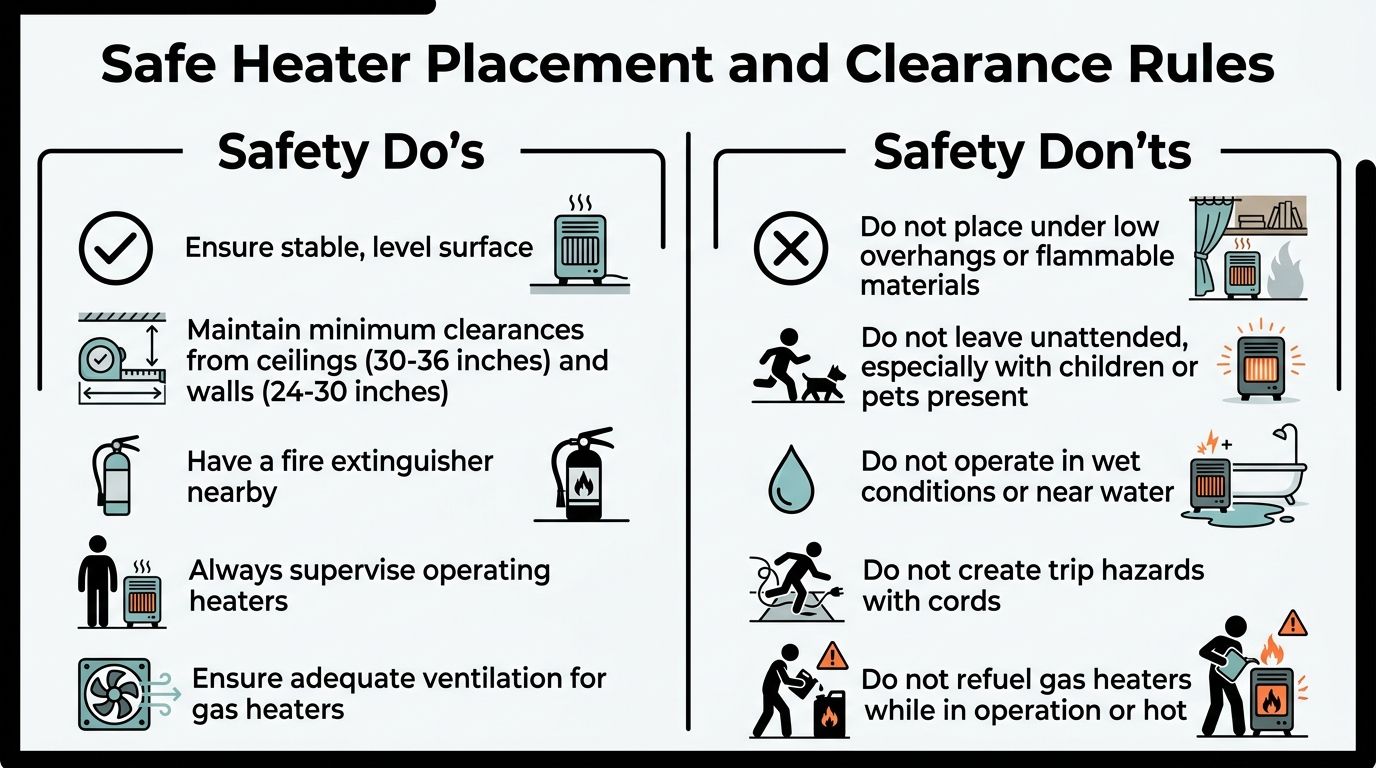
Safe Heater Placement and Clearance Rules
A patio space heater can solve a comfort problem and create a safety problem at the same time if it's placed carelessly. At events, the risks usually come from pressure and speed. Furniture gets shifted at the last minute, florals expand into service space, cables appear where none were planned, and a heater ends up too close to fabric, foliage, or foot traffic.
The clearance rule that matters
The mandatory standard is 3-foot clearance from flammable materials, as highlighted in the NFPA heating safety guidance. That distance matters around draping, table linen, foliage, umbrellas, timber details, marquees, and decorative installations that get added after the technical plan is signed off.
The same NFPA guidance notes that portable space heaters were involved in only 3% of home heating fires but in 41% of fatal heating fires. For event planners, the lesson is simple. The incident may be unlikely. The consequence can be severe.
Placement rules that work on live event sites
Use a physical walk-through, not a paper plan only. On site, confirm these basics:
- Stable base: Put each unit on a flat, level surface that won't shift under guest movement or service traffic.
- Protected edges: Keep heaters away from narrow guest pathways, dancefloor entries, and busy bar queues.
- Ventilated setup: Gas units need open-air use and proper airflow. Don't squeeze them into improvised enclosed pockets.
- Clear overheads: Check what sits above the heater after styling is complete, not before.
- Service access: Staff must be able to turn units off quickly without reaching through guests or furniture.
Common mistakes during setup
Some problems only show up once the room is dressed. A heater that looked safely placed in an empty venue can become a hazard when the florist adds hanging greenery or when a planner pulls lounge seating tighter around it.
This is also where specialist guidance on gas porch heaters is useful, especially for understanding how outdoor gas units behave in partially sheltered entertainment areas.
Never sign off heater placement before the final furniture and styling layout is in position.
A short safety check before guests arrive
Run this check in order:
- Stand where guests will stand and look for low fabric, branches, signage, and cords.
- Test access around the unit so staff can move safely near it.
- Confirm clearances again after styling because that's when many risks are introduced.
- Keep a fire extinguisher nearby and make sure the responsible team knows where it is.
- Assign ownership so one person is responsible for heater oversight during service.
Warmth helps the event. Safe placement protects everyone in it.
Renting vs Buying Your Patio Space Heater
For most planners, buying a patio space heater sounds sensible until the practical details pile up. You don't just buy a heater. You take on storage, transport, maintenance, cleaning, fuel logistics, and the risk of owning the wrong type for the next venue.
Renting keeps your options open
Events change from job to job. One week you may need freestanding gas units for an exposed courtyard. The next, the venue may only suit electric infrared units in fixed positions. Ownership pushes you toward using what you have, even when it isn't the best fit.
Renting lets you match equipment to the brief instead:
- A wedding lawn needs broad outdoor coverage.
- A product launch may need sleek units that don't dominate branding.
- A birthday dinner may only need focused warmth around seated clusters.
That flexibility matters more than many planners expect.
Ownership costs more than the purchase
A typical mushroom-style propane patio heater uses 45,000 BTUs per hour, while heated furniture can use around 2,500 BTUs per hour, according to this analysis of patio heater inefficiency. That doesn't mean every event should swap heaters for heated furniture. It does show why occasional ownership of high-consumption equipment often makes less sense than accessing the right setup per event.
Storage is another issue. Freestanding heaters are awkward to keep, easy to damage in the off-season, and rarely stored as carefully as technical gear should be. Then there's transport. A heater that looks manageable in a warehouse becomes a nuisance when it has to move through narrow venue access, stairs, gravel, or late-night pack-down.
Renting usually produces a cleaner event operation
The strongest reason to rent isn't convenience alone. It's operational clarity. You can size correctly, scale up when the weather turns, and avoid building your event around whatever equipment is sitting in storage.
If you're weighing the broader pros and cons of fuel-based outdoor heating, this guide to gas patio heater options is a useful reference point.
Buy if you run the same kind of outdoor setup repeatedly and have proper storage, handling discipline, and a maintenance routine. Rent if the venue, guest flow, and exposure change from event to event.
For most weddings, launches, school functions, and private parties, renting is the more practical choice because it keeps the heating plan responsive instead of fixed.
Cape Town and Winelands Climate Considerations
Cape Town doesn't give planners one winter pattern. It gives several. A city terrace can feel sharp because of wind exposure. A Winelands venue can feel colder because damp air settles in after sunset. The same patio space heater layout that works in one suburb can underperform badly in another.
Wind changes everything
The biggest local mistake is treating heater placement as static. It isn't. Wind strips comfort from outdoor zones faster than many planners expect, especially in open courtyards, vineyard-facing lawns, and harbour-side venues.
A 2025 study by the Cape Town University of Technology found that 68% of event planners in the region report guest discomfort due to inadequate heater placement during windy conditions. That local reality explains why generic international guides often fall short here.
When the site is windy:
- Pull guests into tighter heat zones instead of heating every metre of open space.
- Use structures already on site such as walls, screens, or built corners to protect the warm area.
- Avoid placing heaters in direct wind channels like gate openings, corridor gaps, and terrace edges.
- Rehearse placement at the actual event time when possible, because late afternoon calm can become a very different evening pattern.
For semi-enclosed setups, practical weather barriers such as solar screen porch solutions can also help reduce exposure and improve heater performance when a venue allows them.
Damp cold in the Winelands behaves differently
Franschhoek, Stellenbosch, Paarl, and Constantia often produce a more penetrating chill than the thermometer alone suggests. Guests feel it most when seated. That's why dining layouts need more deliberate thermal planning than standing cocktail events.
The fix usually isn't “more heaters everywhere”. It's a combination of better siting, more compact seating groups, and less exposed lounge placement. Planners who already think carefully about shelter, surfaces, and furniture tend to get better heating outcomes too. This is one reason weather-aware setup choices, like those discussed in weather-resistant outdoor furniture, matter beyond furniture durability alone.
What works best locally
A heater plan for the Western Cape should answer these questions before hire is confirmed:
| Local condition | Better response |
|---|---|
| Exposed wind line | Create protected guest clusters and heat those, not the whole boundary |
| Damp evening cold | Prioritise seated zones, dining edges, and lounge pockets |
| Remote power access | Favour portable solutions rather than long cable runs |
| Venue with multiple micro-zones | Mix heater types instead of forcing one model across all areas |
In Cape Town, heater performance depends as much on where the air moves as on what the heater can produce.
That's the local difference. You're not heating a generic patio. You're heating a temporary event in a shifting microclimate.
Your Pre-Event Heater Checklist for Planners
By the day before the event, the heating plan should already be settled. The final job is execution. A short checklist catches most of the problems that lead to cold guests or unsafe setups.
Final checks worth doing every time
- Confirm delivery timing: Make sure heaters arrive early enough for placement before florals, furniture, and guest signage start blocking access.
- Walk the site at the likely event hour: Conditions after sunset matter more than a midday inspection.
- Check final placement against the live layout: Bars, lounge sets, draping, and umbrellas often shift after the original plan.
- Verify clearances: Recheck all surrounding fabric, foliage, and overhead elements.
- Test every unit: Ignition, stability, and access should be confirmed before guests enter the space.
- Review fuel or power requirements: Gas supply and power access should match the agreed setup.
- Assign one responsible person: Someone on the planner or venue team should know who monitors heaters during service.
- Keep troubleshooting contacts ready: If a unit fails, the response should be immediate, not improvised.
One last planner habit
Don't wait for guests to tell you the space feels cold. Stand in the least protected part of the venue and stay there for a few minutes. If that area feels uncomfortable before the event starts, it will feel worse once people stop moving and night settles in.
A good patio space heater plan doesn't draw attention to itself. Guests stay comfortable, and the event keeps flowing.
If you're planning an outdoor wedding, corporate function, matric dance, or private celebration in Cape Town or the Winelands, ABC Hire can help you choose the right event heating setup for your venue, layout, and weather exposure. Their rental range covers practical climate-control solutions that work with real event logistics, not generic showroom assumptions.