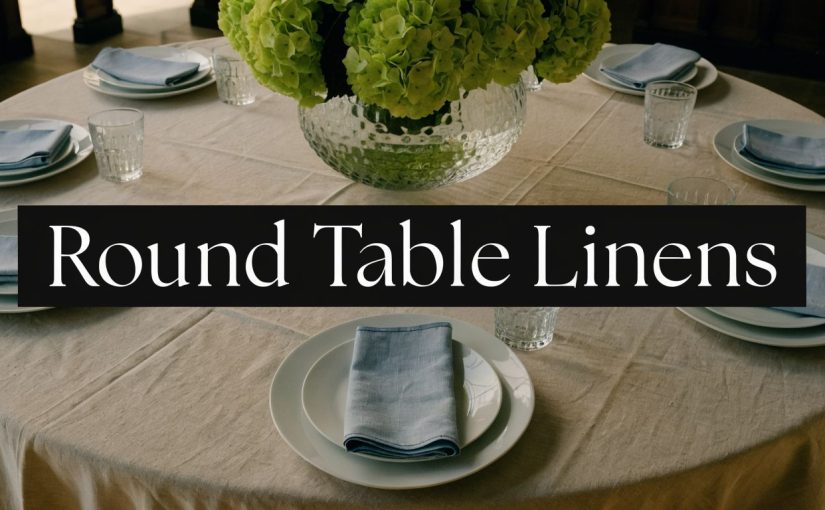
Stunning Round Table Linens for Cape Town Events

You're often standing in an empty venue when the hardest styling decisions happen. The tables are in place, the light is doing something beautiful through the windows, and yet the room still feels unfinished. At that point, many people focus on flowers first, or candles, or charger plates. In practice, the round table linens usually decide whether the room reads polished, relaxed, formal, modern, or slightly off.

That matters more in Cape Town than people expect. A vineyard venue in Stellenbosch, a glass-fronted hotel ballroom in the city, and a lawn reception in Franschhoek all ask different things of the same table. Generic linen advice doesn't help much when the wind picks up, when suppliers use mixed table sizes, or when your event needs to look premium in photographs from every angle.

The Foundation of Your Event's Style

A round table without linen looks like furniture. A round table with the right linen looks like part of the event design.

That's the difference couples and planners notice during a site visit, even if they don't say it in those exact words. In a Cape Town hotel, a smooth full cloth can make the room feel clean and architectural. In a Winelands venue, a softer drape can make timber, stone and glass feel warmer. The linen becomes the base layer that everything else sits on, from candles to cutlery to florals.

Why linen still signals quality

There's a reason table linen still carries such visual weight. Historically, tablecloths were tied to status in European dining culture, and in medieval Europe the whitest linen signalled the highest rank because keeping cloth bright white required serious labour before modern washing methods, as noted in this history of the tablecloth. That legacy still shows up in South African event culture. In Cape Town and the Winelands, a properly dressed round table still reads as premium service.

That doesn't mean every event needs white. It means linen still communicates standard, intention and finish before a guest sits down.

Practical rule: If you want guests to feel that an event is elevated, don't treat the linen as a background item. Treat it as the visual floor of the room.

The tablecloth is the canvas

In real event work, the cloth usually decides how all the smaller details behave. Metallic cutlery feels sharper on matte neutrals. Glassware pops more on darker tones. Florals either float or fight, depending on the base colour under them.

If you're refining your place setting as well, ideas around incorporating gold charger plates in your wedding can help you think through how metallic accents sit against linen colour and texture. That combination often makes the difference between a table that looks assembled and one that looks designed.

What works in Cape Town venues

A few patterns show up again and again:

  • Classic estates: Crisp neutrals and controlled drape usually work better than overly shiny finishes.
  • Urban launches: Stronger contrast, darker cloths, or textured fabrics can hold their own against modern interiors.
  • Private celebrations: Softer tones often make a room feel less hired-in and more considered.

The key isn't choosing the most dramatic cloth. It's choosing the one that gives the rest of your styling somewhere solid to land.

Perfecting the Fit How to Measure for Round Tables

The fastest way to make an expensive setup look wrong is poor fit. Too short, and the table feels underdressed. Too long, and guests catch it with chairs, heels or bags.

The sizing method itself is simple. Use this formula:

Table diameter + (desired drop x 2)

That gives you the required linen size.

Start with the drop, not the cloth size

Many hosts ask, “Do I need a 90-inch or 108-inch round?” The better question is, “How far do I want the cloth to fall?”

The drop is the amount of fabric hanging from the table edge. That one choice affects the look, guest comfort, setup speed and safety.

For a typical 60-inch round table that's roughly 30 inches high, a 90-inch cloth gives a formal 15-inch drop, and 90-inch to 102-inch round cloths are used on about 78% of premium wedding bookings in the region, according to this linen sizing guide. The same source notes that a 120-inch cloth on a 30-inch table can pool heavily on the floor, which is especially problematic at outdoor Winelands venues.

A quick guide you can actually use

Here's a practical reference for 76 cm/30-inch high tables.

Round Table Linen Sizing Guide (for 76cm/30" High Tables) Lap Drop (30cm) Full Drop (76cm)
76cm table / small round 136cm cloth 228cm cloth
90cm table / small round 150cm cloth 242cm cloth
120cm table / 4 to 6 guests 180cm cloth 272cm cloth
152cm table / 8 to 10 guests 212cm cloth 304cm cloth
183cm table / larger round 243cm cloth 335cm cloth

For smaller dining setups, this guide to a small round table is useful when you're matching linen proportions to compact floorplans and tighter guest counts.

Which drop suits which event

A lap-length or half-drop often makes more sense than people think.

  1. Outdoor receptions
    Shorter drops are easier to manage in wind and high foot-traffic areas. They also reduce the chance of guests stepping on the cloth when tables are tightly spaced.

  2. Formal seated dinners
    A longer, cleaner drop gives a more finished look, especially in venues with polished flooring, chandeliers or strong symmetry.

  3. Brand activations and networking events
    Movement matters more than drape. If people will be circulating constantly, a practical drop usually wins.

If guests will move chairs in and out repeatedly, test the linen with a real chair before sign-off. The chair tells you more than the measuring tape does.

The mistake to avoid

The common error isn't measuring badly. It's choosing by appearance in isolation. A cloth can look luxurious in a sample room and become a nuisance the moment service starts.

What works is simple. Measure the actual table. Decide the drop based on venue conditions. Then check the result with chairs, foot traffic and weather in mind. That's how round table linens look intentional instead of improvised.

Choosing Your Fabric and Colour Palette

Fabric choice changes how a table behaves, not just how it looks. In Cape Town, that matters because the same event can begin in still air and end with a breeze pushing through an open venue.
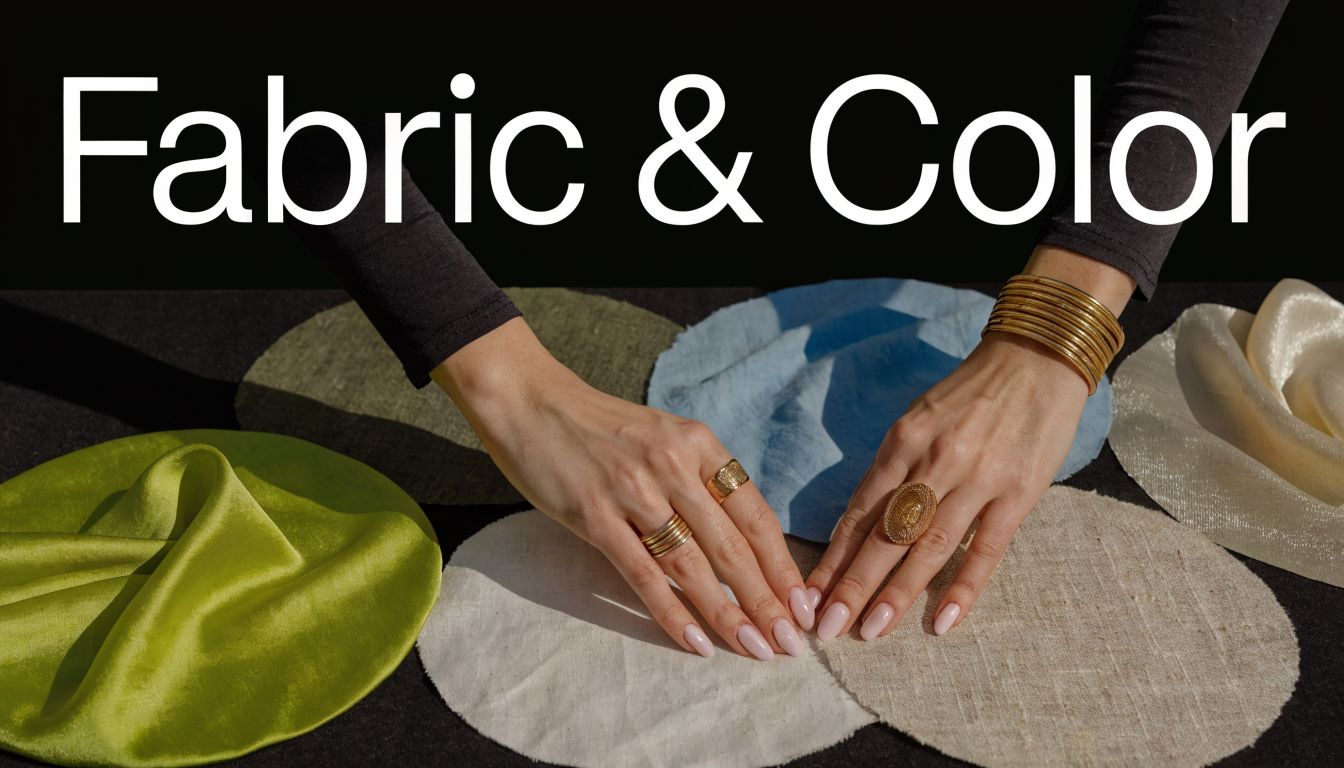
A person with elegant jewelry arranging colorful fabric circles on a dark tabletop surface.

Most generic guides stop at colour and drop. That misses the practical side. For South African events, linen choice needs to balance elegance with local conditions, especially the Western Cape's weather volatility and growing sustainability awareness, as discussed in this piece on weather-resistant and sustainable event planning angles.

What different fabrics do in the real world

Not every fabric earns its place at every event.

  • Polyester blends work hard. They're generally easier to manage, hold colour well, and suit events where setup speed and repeated handling matter.
  • Cotton-rich options can feel softer and more natural, but they usually ask for more care to keep them looking crisp.
  • Satin and high-sheen finishes catch light dramatically. In evening venues, that can look glamorous. In harsh daylight, it can sometimes feel too reflective.
  • Velvet or crushed textures add depth fast, especially in winter functions or moody indoor rooms, but they can feel heavy if the rest of the table styling is already visually busy.

Matching fabric to venue conditions

The easiest way to choose is to think about pressure points.

Outdoor settings

A heavier cloth is often more stable on exposed terraces, lawns and wine farm courtyards. Lightweight fabric may move too much, especially when guests stand, sit or brush past.

Fast-turnaround events

Corporate functions, school formals and multi-phase celebrations usually benefit from fabrics that recover well after transport and handling. A material that looks good only when perfectly steamed can create unnecessary stress.

Sustainability-minded planning

Reusable linen has clear practical value when the same event infrastructure moves through multiple hires. The trade-off is maintenance. Some fabrics wash and press more easily than others, so durability and laundering demand should be part of the decision, not an afterthought.

The smartest fabric is the one that still looks right after delivery, setup, guest use and pack-down.

Building a colour palette for Cape Town venues

Colour isn't only about trend. It's about what the venue already gives you.

A few dependable pairings:

  • Wine estates and farm venues: warm neutrals, soft stone, muted green, dusty tones
  • City hotels and modern venues: black, charcoal, crisp white, deep navy, metallic accents
  • Coastal or summer events: sand, pale blue, sage, off-white, restrained texture
  • Matric dances and formal evenings: richer jewel tones or contrast combinations with stronger lighting response

If you're exploring layered colour combinations and pattern relationships, these artisan blanket design ideas are surprisingly useful for thinking through balance, contrast and warmth in event styling too.

The best palette usually has one quiet base, one supporting tone and one accent. If every element tries to lead, the table gets noisy. If the base cloth does its job well, the rest of the styling can breathe.

Advanced Styling with Linens

Once the base cloth is right, styling gets interesting. At this point, round table linens stop being a practical item and start doing design work.
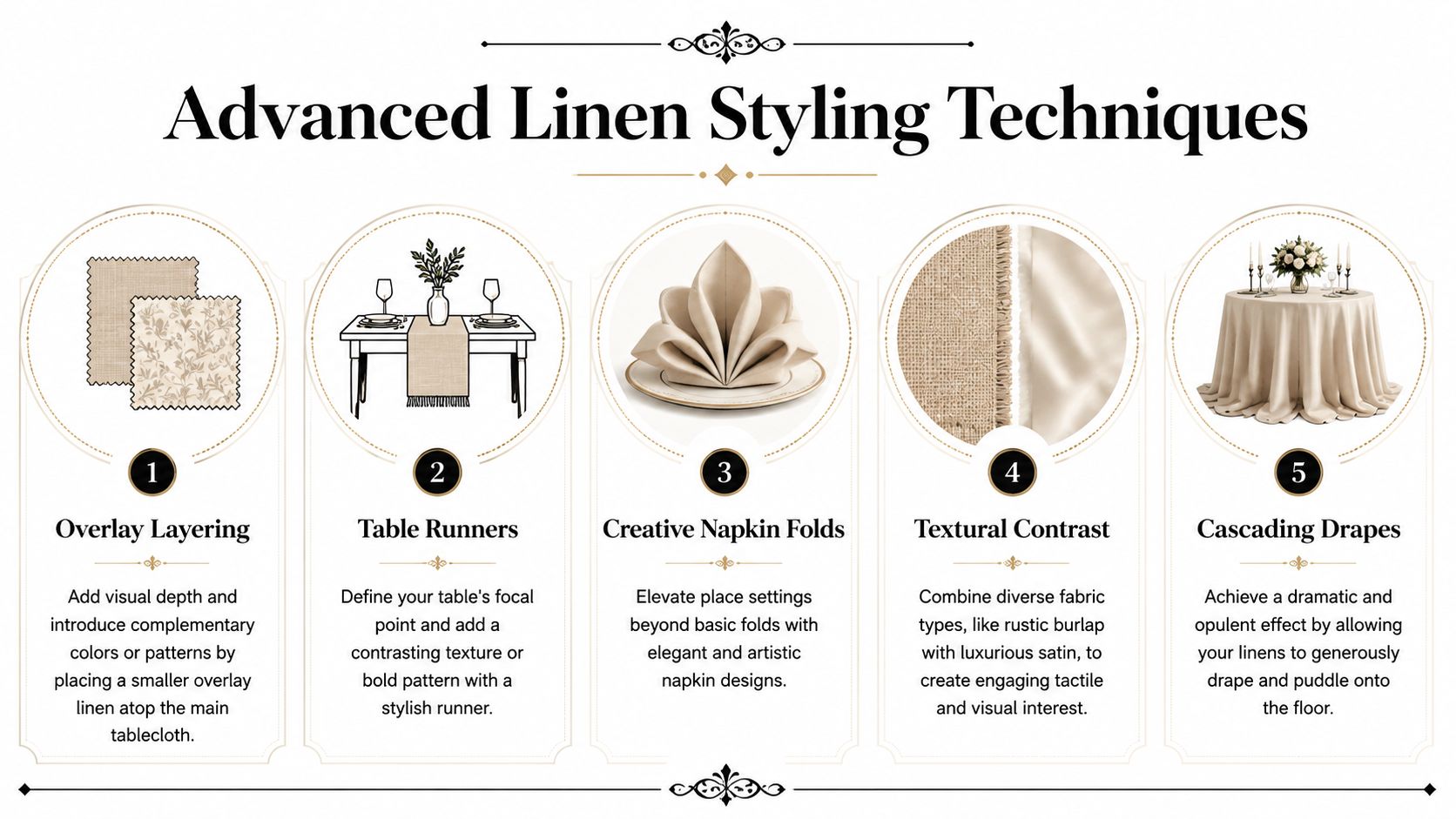
A guide illustrating five advanced styling techniques for decorative table linens including layering, runners, and drapes.

The trick is restraint. A layered table should look considered, not crowded. In mixed-format Cape Town events, that becomes even more important because many layouts include different table sizes, tighter footprints, or unusual room shapes. Most guides assume standard rounds, but planners often need more operational guidance for irregular setups, as highlighted in this discussion of linen decisions for mixed inventories and venue constraints.

Five styling moves that hold up on event day

Overlay layering

An overlay can add depth without changing the whole cloth inventory. This works well when the base linen is neutral and you want a secondary tone on selected tables such as a cake table, registration point or VIP area.

Runners with purpose

Runners are most effective when they create direction. On a round table, they can frame a low centrepiece, separate candle groupings, or introduce texture where the main cloth is plain.

Napkins as the accent

If the room already has strong architecture, use the cloth as the anchor and let napkins carry the colour accent. That often feels cleaner than adding another full textile layer.

Texture contrast

Pairing a matte base with a more tactile element usually works better than combining several glossy surfaces. For example, a soft woven runner over a smooth cloth can add detail without glare.

Controlled drape

A dramatic drop can be beautiful, but only where circulation allows it. On sweetheart tables or display tables, extra drape can look generous. In compact guest seating, it quickly becomes impractical.

Good styling solves a room. It doesn't just decorate a table.

Handling mixed table sizes without visual chaos

Experienced planners save an event in this scenario. If one supplier sends smaller rounds and another sends larger ones, using identical linen sizes can make the room look inconsistent very quickly.

A better approach is to build consistency through these elements:

  • Keep the base colour constant across all guest tables.
  • Vary only the drop intentionally where layout demands it.
  • Repeat one texture or accent tone so the eye reads the room as connected.
  • Use feature tables strategically so visual emphasis goes where you want it.

For additional tabletop styling ideas that pair well with linen decisions, these woven table mats are useful when you want to define place settings without overloading the table.

Styling examples that work

A black base cloth with a metallic or sequin runner can suit a matric dance or evening gala. White or soft ivory with a natural-texture runner can suit a farm wedding. A muted neutral cloth with precise napkin colour can sharpen a corporate dinner without making it feel wedding-like.

The room doesn't need more elements. It needs the right relationship between the elements already there.

Renting vs Buying Your Linens

Buying sounds sensible until you deal with volume, storage, stain management and colour consistency. For most once-off or occasional events, renting is the more practical route.

That isn't just a modern convenience. The broader history of table linen points in the same direction. Textile production became more accessible during the 18th and 19th centuries, and modern rental continues that shift by giving planners access to coordinated linen packages without needing to own everything, as noted in this brief history of table linens.

Two neat stacks of colorful round table linens placed side by side against a dark background.

When buying makes sense

Buying can work if you host the same style of event repeatedly and control your venue conditions closely. A restaurant group, venue operator or event business with stable inventory needs may prefer ownership for standard white or neutral basics.

Even then, ownership only pays off if you can manage:

  • Storage conditions that keep cloth clean and dry
  • Laundry and pressing
  • Replacement planning for stains, tears and fading
  • Accurate quantity control across event dates

Why renting is usually easier

For weddings, milestone functions, school events and most corporate bookings, renting removes the least glamorous parts of linen management.

You gain flexibility on colour, quantity and size without carrying long-term responsibility for the stock. That matters when guest numbers change, layouts shift, or a planner wants to refine the look closer to the date.

A few practical advantages stand out:

  • Variety without commitment
    You can match linen to the venue and mood instead of forcing one owned stock range onto every event.

  • No post-event laundry problem
    After a full event, the last thing most hosts need is fabric recovery logistics.

  • Better fit for mixed requirements
    One event may need guest table cloths, cake table linen, buffet draping and cocktail table covers in different proportions.

  • Cleaner coordination
    A rental partner can often align tables, seating and linen choices more efficiently than separate suppliers working in isolation.

If you're comparing options, this guide to table cloth hire gives a useful overview of what to ask before confirming quantities and styles. For Cape Town event setups, ABC Hire is one local option for coordinating furniture and related event equipment alongside linen planning.

The real trade-off

Buying gives control. Renting gives adaptability.

For most clients, adaptability wins. Events change. Venues differ. Weather interferes. Guest counts move. Linen is one of those categories where flexibility often saves more stress than ownership ever removes.

Event Day Logistics and Final Checks

Even the right round table linens can fall flat if the final checks are rushed. Event day is where styling decisions meet real conditions.

Use a simple sequence and the room will settle faster.

The checks that matter

  • Confirm delivery timing early so the setup team isn't dressing tables around other suppliers.
  • Open and inspect a few cloths first before the full room is laid. Look for obvious creasing, colour mismatch or incorrect sizing.
  • Dress one sample table completely with chairs pushed in and then pulled out. Problems show up quickly at that stage.
  • Keep a handheld steamer available for minor travel wrinkles, but don't rely on last-minute steaming to fix a poor fabric choice or wrong fold method.
  • Walk the room from guest height rather than only from standing height. Seated sightlines reveal bunching, uneven drops and cluttered layering.

What planners often miss

The final visual check should happen after place settings and centrepieces are in. A cloth can look perfect on its own and then feel too dark, too shiny or too busy once the table is fully built.

If one table looks wrong, stop and correct it before the whole room is finished. Small linen issues multiply fast.

For broader run-sheet planning, transport timing and supplier coordination, a comprehensive event planning checklist can help you keep the day organised around more than just styling.

Returns are usually straightforward when linen is rented. The important part is knowing what the supplier expects after service, especially if the event runs late or includes outdoor use. Clarify collection timing, packing instructions and any separation needed for heavily soiled items before the event starts, not after it ends.

Round table linens do a lot of quiet work. They shape the mood, support the styling, influence guest comfort and help the room feel finished. Get the size right, choose fabric for the venue you have, and style with discipline. That's usually what separates a good-looking table from one people remember.


If you're planning an event in Cape Town or the Winelands and want help matching tables, linen sizing and venue conditions, ABC Hire can help you build a practical setup that looks polished on the day.
Your Guide to a Wedding with Arch in South Africa

A wedding arch is so much more than just the latest trend. It’s a powerful statement piece, the one element that truly frames the most important moment of your entire ceremony. An arch has this incredible ability to transform any space—from a sprawling Cape Winelands vineyard to a chic Johannesburg rooftop—into a deeply personal, almost sacred, spot for your vows.

Why an Arch Is the Heart of Your Ceremony

Image

Sure, it makes for a beautiful backdrop in photos, but a wedding arch serves a much deeper purpose. It becomes the visual and emotional centre of your ceremony, drawing everyone's gaze to the exact spot where you'll make your lifelong promises. This single structure creates a defined, intimate space, almost like an open-air chapel, focusing all the energy and emotion right on the two of you.

There's also some powerful symbolism at play. Arches have always represented a gateway, a new beginning—what could be more fitting for a wedding day? As you stand beneath it, you’re symbolically stepping through a doorway into your new life together. It’s a touch that creates a memorable and meaningful experience for both you and your guests.

The Rise of the Wedding Arch in South Africa

The explosion in popularity of wedding arches here in South Africa has gone hand-in-hand with our love for outdoor ceremonies. As more and more couples choose our country's stunning natural landscapes for their venues, an arch provides that essential focal point. It complements the scenery, rather than competing with it.

The numbers really back this up. A 2022 survey showed that 37% of outdoor weddings in SA featured an arch. That’s a huge jump from just 22% back in 2015. It's no coincidence that this happened as outdoor venue bookings shot up by 15% over the same time. These days, couples are putting aside 8-12% of their total wedding budget just for ceremony décor, and the arch often eats up nearly half of that. You can find more insights into how wedding trends and budgets are being allocated across the country.

An arch does more than just decorate a space; it anchors the moment. It tells your guests, "This is it. This is the place where our forever begins." It’s the silent witness to your vows and the frame for your first kiss as a married couple.

Ultimately, choosing to have a wedding with arch is about creating a deliberate, beautiful, and completely unforgettable setting for the most important promises you will ever make.

Choosing the Perfect Wedding Arch Style

Let's talk about the heart of your ceremony space: the wedding arch. Picking the right one is so much more than just choosing a structure; it's about finding a design that truly captures the soul of your wedding day. Your arch needs to feel like it belongs, whether you're going for rustic charm on a Karoo farm or sleek elegance at a Cape Town city venue.

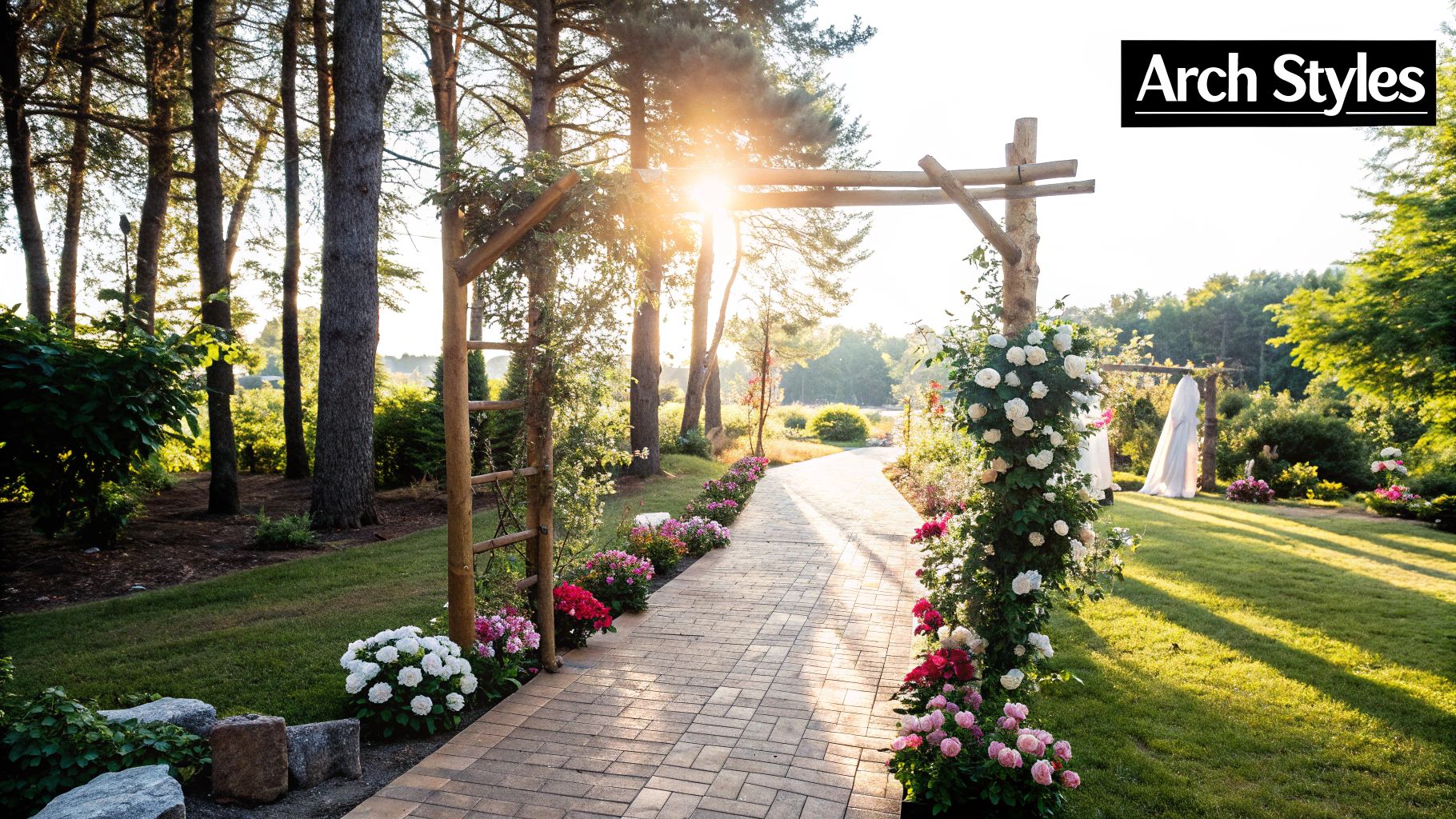
A great place to start is by looking at your venue. What's the existing vibe? A raw, wooden arbour draped in flowing fabric just sings in a bohemian or rustic setting. On the other hand, if your wedding is more modern and minimalist, a clean metallic frame—like a dramatic circular moon gate or a sharp hexagonal design—might be the perfect fit.

Matching Your Arch to Your Wedding Theme

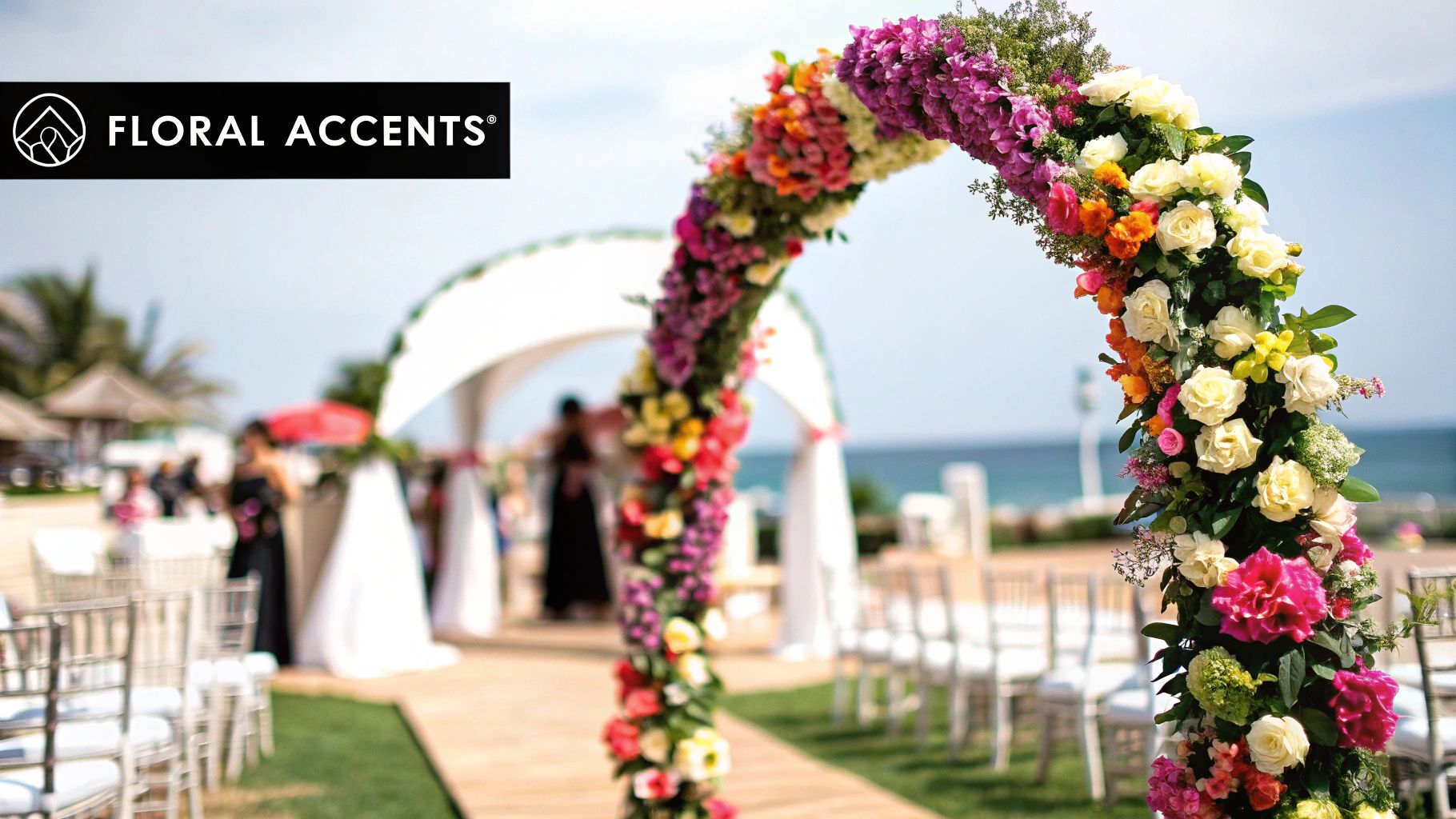
Think of your arch as the first big statement your guests will see. The shape alone sets a powerful tone. Traditional square or rectangular arches have a classic, timeless feel, while circular or semi-circular designs often symbolise eternity and unity, making them a huge favourite for modern, romantic ceremonies.

Here are a few ideas to get you started:

  • For the Rustic and Bohemian Bride: You can't go wrong with a wooden triangle arch (often called an "A-frame"). It looks absolutely stunning styled asymmetrically with pampas grass, dried palms, and a few magnificent king proteas.
  • For Timeless Elegance: A classic four-post arbour or a simple curved design is pure sophistication. Imagine it adorned with lush white roses, soft greenery like eucalyptus, and delicate, draping fabric.
  • For the Modern and Minimalist Couple: This is where sleek metal structures shine. A gold hoop, a black hexagonal frame, or even a clear acrylic "ghost" arch can look incredible. Decorate it sparsely with just a few perfect orchids or calla lilies for a high-impact, low-fuss look.

We've seen the arch become a true centrepiece in South Africa. In fact, there's been a documented 25% rise in outdoor ceremonies featuring prominent floral or wooden arches between 2015 and 2023. This goes hand-in-hand with a growing love for sustainable design, with demand for locally sourced blooms like proteas and fynbos shooting up by 40% in the same period. You can read more on how wedding arch trends have evolved.

To help you visualise the options, here's a quick comparison of some popular arch styles and what they're best for.

Wedding Arch Style Comparison

Arch Style Best For Theme Common Materials Popular Floral/Decor
Classic Square/Arbour Traditional, Elegant, Garden Wood, Metal Roses, Peonies, Eucalyptus, Draping Fabric
Circular "Moon Gate" Modern, Romantic, Bohemian Metal (Gold/Copper), Wood Asymmetrical florals, Pampas Grass, Greenery
Hexagonal Arch Geometric, Modern, Industrial Metal (Black/Gold), Wood Minimalist florals, Dried Palms, Orchids
Triangular "A-Frame" Rustic, Bohemian, Free-Spirited Raw Wood, Birch Proteas, Fynbos, Macrame, Asymmetrical sprays
Driftwood Arch Beach, Coastal, Natural Natural Driftwood Shells, Soft Linens, Air Plants, Tropical Foliage

This table is just a starting point, of course. The real magic happens when you start mixing and matching to create something that's uniquely yours.

Infusing Local South African Flair

No matter which style you lean towards, bringing in local elements is what will make your wedding with arch feel distinctly South African. Picture a rustic wooden frame adorned with fragrant fynbos and proteas, perfectly framing a view of the Stellenbosch mountains. Or, for a coastal wedding, imagine a beautiful driftwood arch decorated with delicate shells and soft fabrics catching the sea breeze.

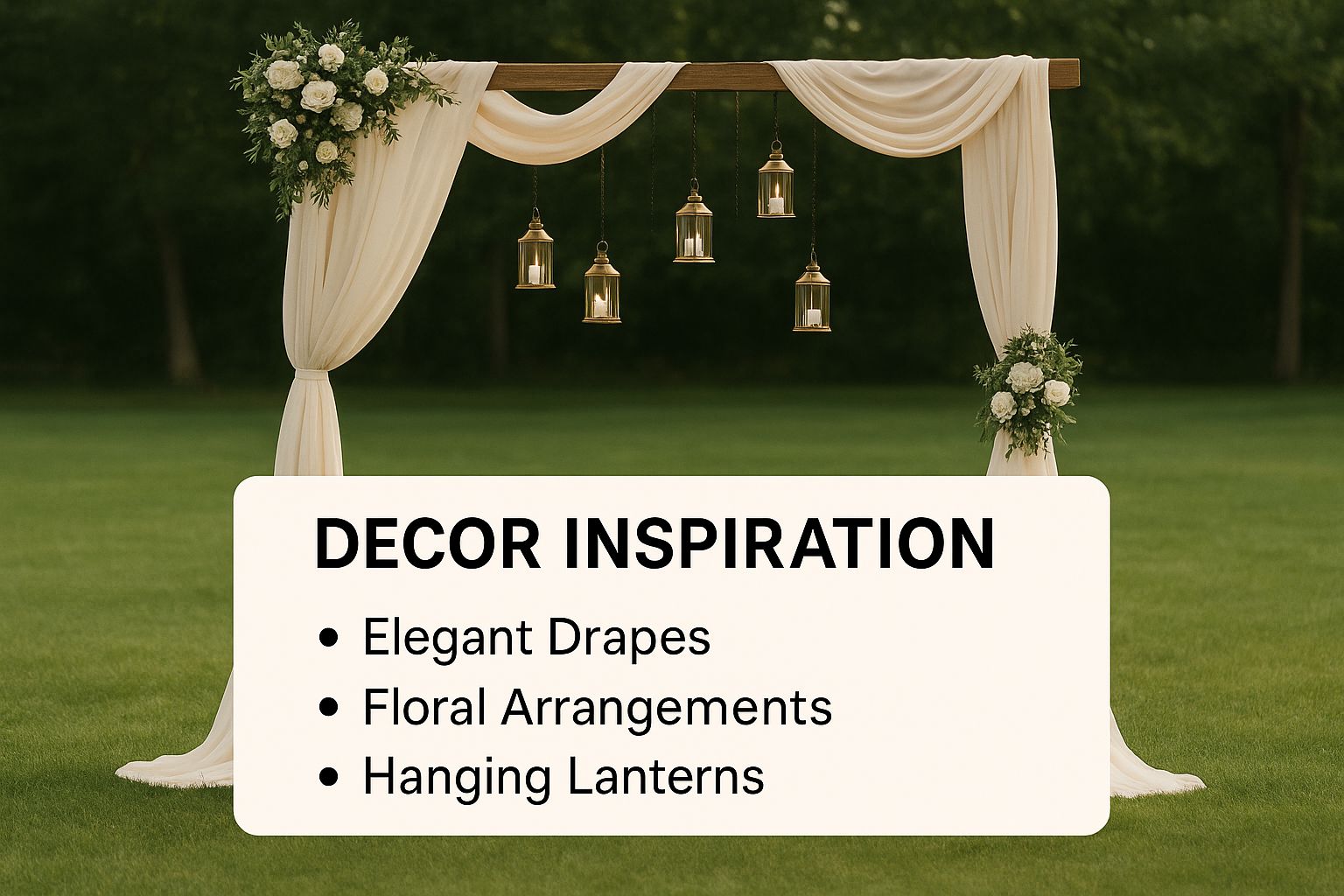
Here’s a little visual inspiration for your ceremony centrepiece.

Image

This just goes to show how simple touches like draping fabric and a few well-placed lanterns can completely transform a structure into a breathtaking focal point.

The most beautiful wedding arch is one that reflects your personality as a couple. Don’t be afraid to mix materials, combine different floral styles, or choose a shape that feels unconventional. Your arch frames your promises—make sure it feels like you.

Ultimately, it’s all about creating a cohesive look that ties your whole ceremony space together. Your arch is the heart of it all, setting the stage for the magical moments ahead.

To Hire or To DIY? A Practical Cost Breakdown

Image

Once you’ve got that perfect wedding arch vision in your head, the next big question is a practical one: do you hire a professional, or do you build it yourself? This decision really comes down to your budget, your timeline, and just how much you want to be involved in the hands-on details.

Both routes can get you a stunning result, but they are worlds apart when it comes to the investment of your time and money.

The Professional Hire Route

Let’s be honest, hiring a professional vendor is the stress-free option. For so many couples, that peace of mind during the hectic run-up to the wedding day is worth its weight in gold. Rental companies and florists take care of everything, from the first design chat to the final teardown after your ceremony.

Hiring an arch here in South Africa usually means you’re getting a full-service package. This is a massive plus, as it completely frees you from worrying about the logistics.

Here’s what you can typically expect to be included in a rental package:

  • The Arch Structure: A high-quality, stable arch in the style you've chosen, whether it's rustic wood or sleek, modern metal.
  • Delivery and Collection: The vendor brings the arch to your venue and, just as importantly, picks it up afterwards. No fuss.
  • Professional Setup: An experienced team puts the arch together safely and securely, right where you want it.
  • Teardown: After you’ve said "I do," they dismantle and remove it, leaving you to get on with celebrating.

When it comes to the numbers, hiring a basic arch structure in South Africa can range from ZAR 2,000 to ZAR 6,000. Once you factor in florals and other decorations, the total cost often lands somewhere between ZAR 5,000 and ZAR 15,000, depending on how elaborate you want to go. It might sound like a lot, but that price covers materials, labour, transport, and expertise, ensuring a flawless result.

Hiring an arch is more than just renting an item; you're investing in convenience and professional execution. It eliminates the stress of sourcing materials, construction, and day-of setup, which is a massive relief for most couples.

Taking the DIY Approach

Building your own wedding arch can be an incredibly rewarding project. It’s a chance to create something deeply personal for your ceremony. But, you have to be realistic about your skills, time, and what you have in the toolbox.

A DIY arch can certainly be cost-effective. You could potentially keep material costs under ZAR 1,500 for a simple wooden design. However, that budget can creep up fast if you need to buy or hire tools you don’t already own.

Thinking about the DIY route? Here’s a practical checklist to consider first:

  • Essential Skills: You'll need some basic carpentry know-how. Think measuring, cutting angles accurately, and securely joining pieces of wood or piping.
  • Necessary Tools: A drill, a saw (a mitre saw is brilliant for getting those angles perfect), a measuring tape, and a staple gun for attaching decor are pretty much non-negotiable.
  • Sourcing Materials: You'll need to research suppliers for quality wood (like pine 2x4s), copper piping, or whatever you plan to use. Don't forget screws, brackets, and maybe some weights for stability.
  • Time Commitment: Be realistic. Building the arch could take up a full weekend. Then you still have to figure out how to transport it and assemble it on-site on your wedding day.

While a DIY arch adds a beautiful, personal touch, it’s worth remembering that other ceremony structures are a different story. Gazebos, for instance, are almost always better to hire due to their complexity. If you want to dive deeper into this, you can learn more about hiring a gazebo for your event and see why some things are just best left to the pros.

Ultimately, the hire-versus-DIY decision comes down to balancing your budget against your available time and your desire for a hands-on project.

Styling Your Arch with South African Flair

An undecorated arch is just a frame; it’s the styling that breathes life and personality into your ceremony’s focal point. This is where you can truly make it your own, weaving in elements that speak to your story as a couple. Moving beyond traditional florals opens up a world of creativity, especially when you start drawing inspiration from South Africa’s rich textures and vibrant culture.

Imagine a rustic wooden arch not just with flowers, but with swathes of elegant fabric catching the breeze in the Cape Winelands. Or picture a modern metal frame adorned with the bold, iconic patterns of Shweshwe fabric, creating a striking visual that honours local heritage. These thoughtful touches are what transform a beautiful structure into a meaningful centrepiece.

Incorporating Local Textures and Flora

South Africa’s natural landscape offers an incredible palette to work with. Think beyond the usual roses and consider incorporating indigenous elements for a look that feels authentic and grounded. This approach connects your wedding with arch directly to the beautiful setting you’ve chosen.

Here are a few ideas to get you started:

  • Indigenous Flowers: You can’t go wrong with the magnificent King Protea, our national flower. Pair it with delicate fynbos, striking pincushions, or silver-leafed Brunia for a bouquet that’s both wild and elegant.
  • Natural Grasses: Pampas grass is incredibly popular for a reason. Its soft, feathery plumes add texture and a dreamy, bohemian feel. Mix it with dried palms for a more modern, structural look.
  • Eucalyptus and Greenery: The silvery-green leaves of eucalyptus (which you might know as "blue gum") provide a fragrant and beautiful base for any floral arrangement, draping beautifully over any arch shape.

We're seeing more and more couples in South Africa blending symbolic meaning with decoration. For instance, arches decorated with indigenous flora like proteas alongside traditional cloths such as Shweshwe fabric are chosen to honour cultural heritage in about 27% of weddings surveyed. In multicultural weddings, particularly in big cities, hybrid arches with both Western-style florals and African artistic elements are used in roughly 35% of ceremonies. You can explore more about what's coming next in floral arch trends for 2025.

Creating a Magical Evening Glow

If your ceremony is set for late afternoon or you plan to repurpose the arch for your reception, lighting is an absolute must. It creates a magical, romantic atmosphere as the sun goes down and the celebration kicks into gear.

Good lighting can highlight the beautiful details of your arch and cast a warm, inviting glow over the entire area, making it a stunning feature well into the night.

Lighting Options to Consider:

Light Type Best For Styling Tip
Fairy Lights Romantic, whimsical, and dreamy themes. Weave them delicately through your flowers or wrap them tightly around the arch's frame for a sparkling effect.
Edison Bulbs Rustic, industrial, or modern aesthetics. Hang them at different heights from the top of the arch for a stylish, warm, and slightly retro vibe.
Uplighting Creating dramatic, colourful effects. Place small, coloured LED uplighters at the base of the arch to light it up from below, adding real depth and drama.

Pro Tip: When securing your decor, especially heavier floral arrangements or lighting, always use more than you think you need. Floral wire and sturdy cable ties will be your best friends. Make sure everything is tightly fastened to prevent anything from shifting or falling, particularly at an outdoor venue where you might have to deal with a bit of wind.

Achieving a Balanced and Beautiful Design

The secret to a stunning arch is balance. Whether you prefer a symmetrical, classic look or a more modern, asymmetrical arrangement, the goal is to create a design that looks intentional and polished from every single angle. Don't forget, your photographer will be capturing this from the front, sides, and even from behind.

Before you get started, take a step back and consider the arch's shape and its surroundings. An asymmetrical design, with a large floral spray on one corner and a smaller one lower down on the opposite side, can look incredibly chic and dynamic. For a more traditional feel, simply mirror your decorations on both sides.

Whatever you choose, just make sure the final result frames you and your partner beautifully without overwhelming the space.

Right, let's get this sorted. Even the most stunning wedding arch can fall flat if you just plonk it down anywhere. The final piece of the puzzle is positioning it perfectly—not just for the photos, but for safety and the whole vibe of your ceremony. Where this beautiful centrepiece ends up matters just as much as what it's made of.

Think of your venue as a stage and your arch as the main event. The first thing you absolutely have to consider is the backdrop. Are you framing a breathtaking view of the Stellenbosch mountains? Or maybe the rolling waves of the KZN coast? The arch should complement the view, not block it. It's a great idea to visit the spot at the same time of day as your ceremony to see exactly what your guests (and your photographer!) will be looking at.

Getting the Light and Environment Just Right

For an outdoor ceremony, the sun is your main spotlight, and its position can make or break your photos. If the sun is sitting directly behind the arch, you and your partner might end up as silhouettes. On the other hand, if it's shining straight into your eyes, you’ll be squinting all the way through your vows. Not ideal.

What you're aiming for is soft, even light on your faces. Have a chat with your photographer beforehand—they are the experts when it comes to light and can give you some brilliant advice on the best orientation. Often, just a slight angle to the sun is all it takes.

Beyond the sun, you need to check out the ground itself. Is it level? An uneven surface can make an arch wobbly and unsafe, which is the last thing you want.

Always, always have a plan for securing your arch, especially if you're in a breezy spot like Cape Town. Talk to your rental company or coordinator about options like sandbags, weights, or stakes to make sure it’s completely stable before anyone arrives.

Working with Your Team of Vendors

Getting this right is a team effort. Clear communication between your photographer, florist, and venue manager is non-negotiable. They all have a part to play in where the arch ends up, so everyone needs to be on the same page.

  • Your Photographer: They need to know the location to plan their shots and check the lighting. They might suggest shifting it slightly to avoid a random dustbin in the background or to catch that perfect golden hour glow.
  • Your Florist: They need to know the final spot to figure out how wind and sun will affect the flowers. It also helps them make sure their arrangements are properly secured to the structure.
  • Your Venue Manager: This person is your on-the-ground expert. They know the property inside and out—where the sprinklers pop up, which spots get blasted by the wind, and where you can find a power source for any lighting. They're your go-to for placing the arch safely and securely.

A quick chat on the day or a detailed email chain with everyone involved can save a world of last-minute stress. This way, when you walk down that aisle, your arch isn't just a pretty backdrop—it's a safe, secure, and perfectly placed frame for one of the biggest moments of your life.

Common Questions About Wedding Arches

Building your ceremony backdrop often throws up a handful of practical queries. Clearing these up early means you’ll glide through final decisions with confidence—and without last-minute panic.

From budgeting to bad-weather back-ups, here’s a closer look at what couples tend to ask when they choose an arch as their focal point.

How Much Does Arch Hire Cost In South Africa

Pricing depends on a few big factors: structure, style and styling. If you go for the basics—a bare frame in wood, metal or acrylic—you’re generally looking at ZAR 2,000 and ZAR 6,000.

Add florals, draping and design flair, and the numbers climb quickly. A fully dressed arch can run from ZAR 5,000 to ZAR 15,000, especially when you pick premium blooms like proteas or long-stem roses.

Before signing off on a quote, double-check whether it includes delivery, installation and pack-down. Those line items can catch you by surprise.

Can I Reuse My Arch At The Reception

Reusing your arch instantly ties your ceremony and reception spaces together. It’s also a clever way to stretch your décor budget. Here are a few crowd-pleasers:

  • Behind The Head Table: Creates a stunning backdrop for speeches and snaps
  • Cake Feature: Frame your dessert display for extra impact
  • DIY Photo Booth: Add props and let guests capture candid moments

Map out the move in advance—whether you enlist your planner, venue team or a couple of trusty helpers.

What Is The Plan For Rain

No matter how perfect the forecast, it’s wise to have a rain strategy. First, chat with your venue about covered options—a patio, hall or marquee.

Next, confirm your arch is easy to relocate or that its décor elements can shift indoors without wilting. Some fabrics and flowers don’t take kindly to moisture, so ask your florist for hardy alternatives.

Finally, if you end up under a marquee, make sure the ground stays firm. Mud underfoot is no friend to any precious focal point.


Ready to find the perfect arch or other essential hire items for your special day? ABC Hire offers a wide range of high-quality event furniture and decor to bring your wedding vision to life in Cape Town and beyond. Explore our collection at https://abchire.co.za.

📍 Cape Town + Winelands